
The Overwhelm Recovery ProtocolWellness & Routines · ~5 min
About this template · Updated September 2026
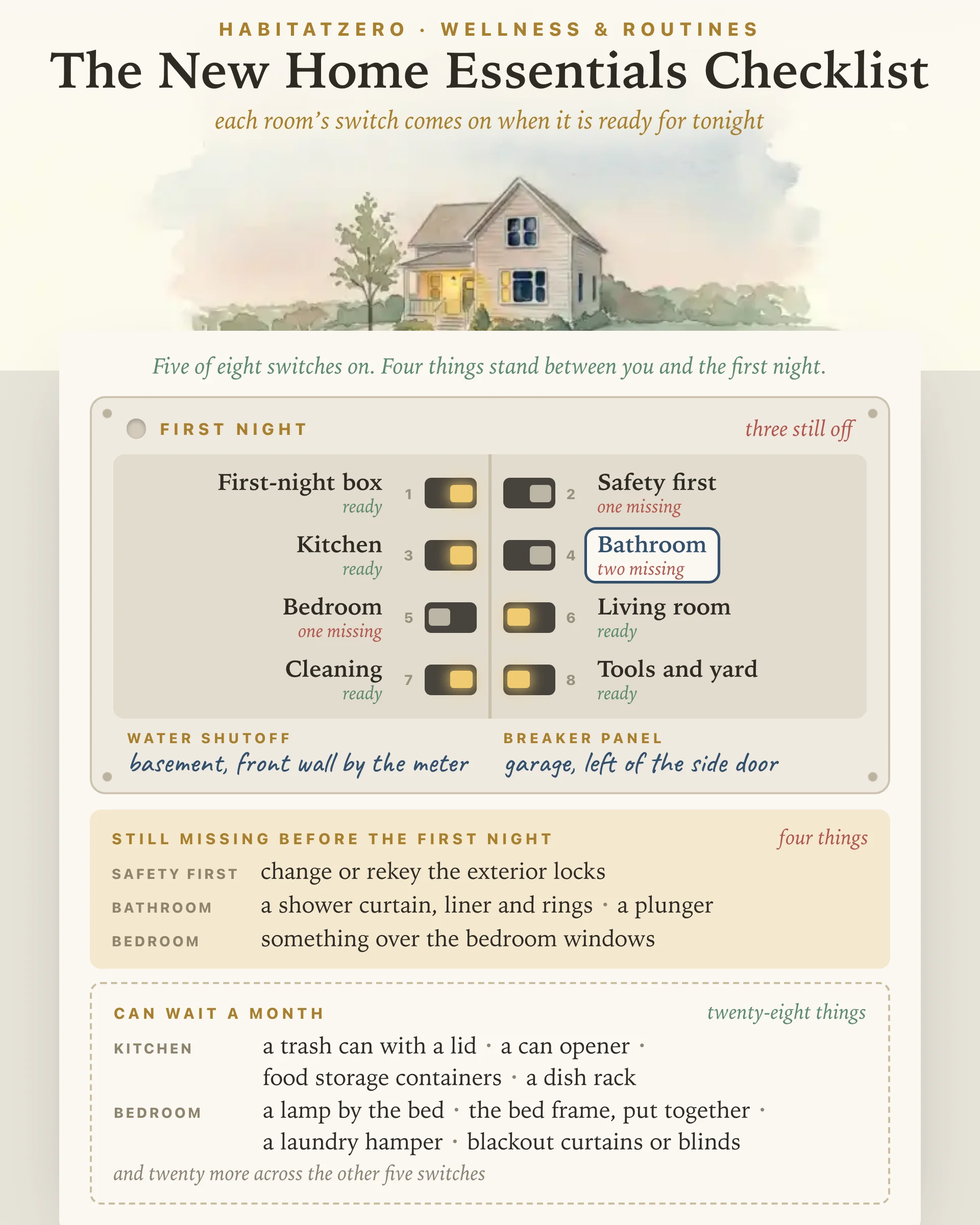
The first night in a house you own has its own kind of quiet. The rooms echo, the light switches sit in odd places, and the sheets are in one of forty boxes. When you rented, someone else knew where the water shutoff was. Now that someone is you.
This checklist is built around that night. It sorts every essential into two piles: what the house needs before you sleep in it, and what can wait a month. Most new home lists skip that split and hand you two hundred things to buy at once.
Pack one box that rides in the car with you, not on the truck. It holds what you would otherwise hunt for at eleven at night: chargers, medications, toilet paper, soap and a towel, sheets, a flashlight, snacks, tomorrow's coffee, a change of clothes and a box cutter, plus the closing papers and every key. If it will not fit on the passenger seat, something in it can wait.
A house comes with systems that were never your job as a renter.
Some safety jobs can wait a few days. The Consumer Product Safety Commission urges setting the water heater to 120°F to prevent tap water scalds, which matters before small children bathe in the house. A kitchen fire extinguisher, new garage door codes and the gas shutoff belong in the first weeks.
Only a few lines in each room are needed before bed: dish soap, paper towels and the coffee maker in the kitchen; a shower curtain, towels, toiletries and a plunger in the bathroom; the mattress, a lamp and something over the bedroom windows, since new neighbors can see in after dark. Bring light bulbs for bare sockets, cleaner and a broom to wipe down before you unpack, and one tool: a screwdriver.
Tools and yard get their own switch because they are the jobs a landlord used to do: a hammer, a ladder, a drill, a hose, a snow shovel, a mower and the trash day. None is urgent tonight. All of them turn up within the month.
More than you think: rugs, curtains beyond privacy, a floor lamp, a dish rack, even the bed frame. Furniture bought before you have lived in the rooms is the classic mistake: a couch that looked right in the store can block a doorway you never noticed. A month in the house shows you where the light falls and what you keep reaching for.
The page is a breaker panel with eight switches, from the first-night box to tools and yard. Tap a switch to open its list and mark what you already have. Every line carries a flag, tonight or can wait, and a tap changes it. Someone who works from home may need internet on day one, and a family with a baby needs the crib before the rug.
A switch comes on when nothing flagged for tonight is missing from its part of the house, and when all eight are on, the lamp at the top of the panel lights. Below the panel, one card gathers what tonight still lacks, grouped by room: your list for a single store run. A second card holds everything that can wait. Skip lines that do not fit your house, add up to four of your own under each switch, and note where the water shutoff and breaker panel are.
The alarm and water heater guidance comes from the agencies linked above. The rest is practical judgment, not research: no study says a plunger belongs on night one, though anyone who has needed one will argue for it. Treat the tonight flags as a starting point.
Open it the week you close, and keep it handy the day you get the keys. If you are renting instead, The First Apartment Checklist is built for that, landlord included. If you close in the fall, The Winterize Your Home Checklist covers what the first freeze will test. Once the boxes are gone, The Household Chore List helps split the upkeep a house asks of everyone in it.
Start with what the first night needs: toilet paper, soap, towels, sheets, chargers, medications, a flashlight and a shower curtain. Then add the safety jobs a house brings with it, such as rekeying the locks and finding the water shutoff, and after that the basics for each room. Furniture and decor come last.
A made bed, one working bathroom, some light and a way to charge your phone. Pack those in a single box that travels with you in the car rather than on the truck, so nobody is opening thirty boxes at midnight to find the sheets.
Change or rekey the exterior locks, find the main water shutoff and the breaker panel, and test the smoke and carbon monoxide alarms. The US Fire Administration advises testing smoke alarms every month and replacing each one ten years after its manufacture date.
More than most lists admit. Rugs, art, patio furniture, a second TV and fresh paint all wait better than they rush, and a few weeks of living in the rooms shows you where the light falls and what you actually reach for.
The page shows a filled-in example of the panel you can look through. To check off your own house, keep notes on where your shutoffs are and watch the switches come on, open it in HabitatZero, which is free.
By the team behind Fabulous, the science-based self-care app used by over 30 million people.


