The Overwhelm Recovery ProtocolWellness & Routines · ~5 min
About this template · Updated September 2026
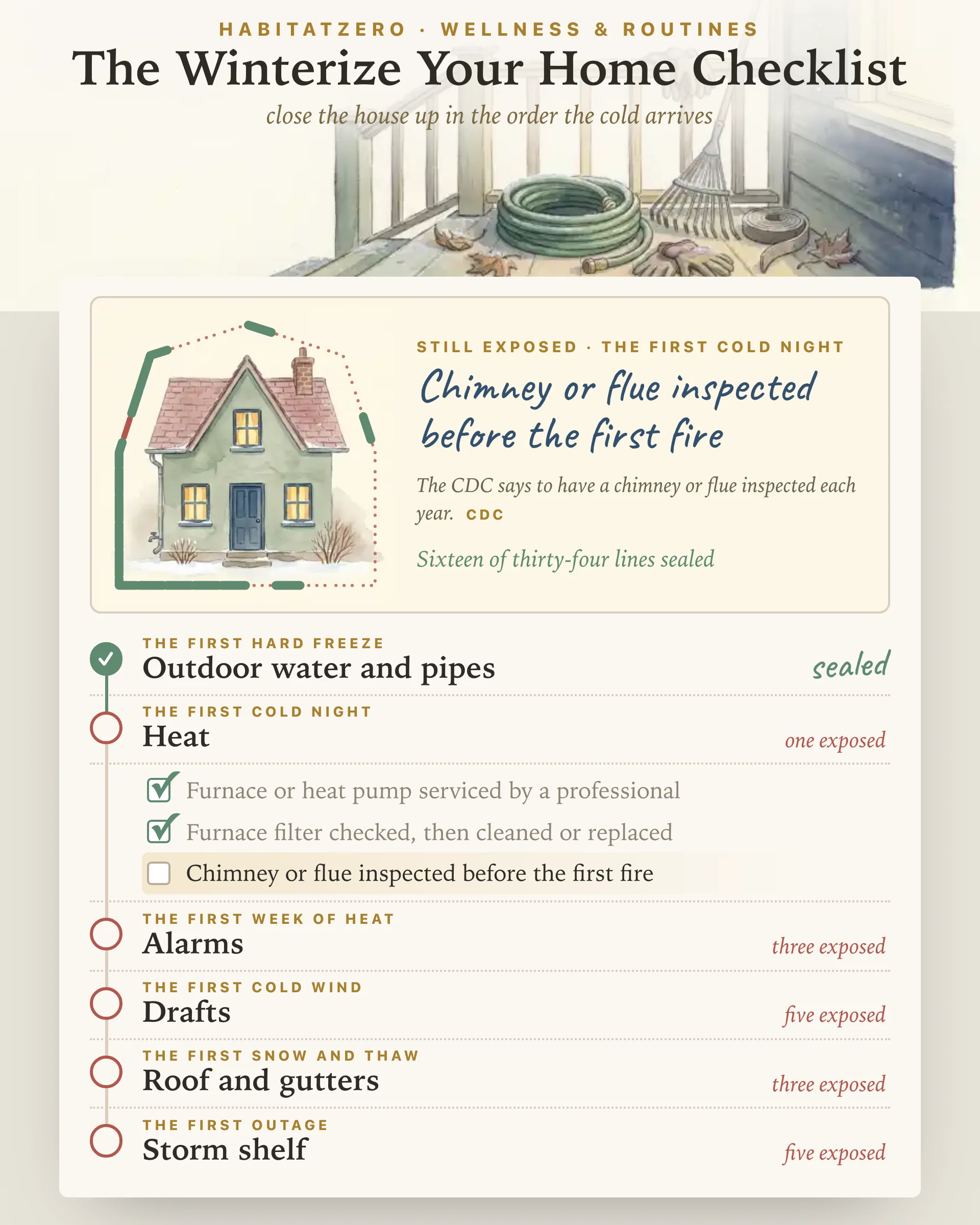
Most winterizing lists are sorted by room or by whatever the writer thought of first. The cold is not. It arrives in an order: the first hard freeze goes for the water outside, the first cold night tests the furnace, the first week of steady heat is when alarms start to matter, and the first heavy snow finds the roof. This checklist is sorted the same way, so whatever you finish before the weather turns was the urgent part.
Outdoor water and pipes. The American Red Cross names the pipes that freeze most often: outdoor hose bibs, sprinkler and pool supply lines, water lines in unheated garages, crawl spaces and cabinets, and pipes along poorly insulated outside walls. Its frozen pipe guidance is the backbone of the first front: take hoses off, drain and store them, close the inside valve that feeds each spigot, then open the spigot and leave it open so any water still in the pipe can expand without splitting it. If you travel in cold weather, the same page says to leave the heat on, set no lower than 55°F.
Heat. The Department of Energy's home energy checklist asks for professional maintenance on a furnace or heat pump every year and a filter that gets cleaned or replaced. The CDC adds a yearly chimney or flue inspection if you burn anything.
Alarms. FEMA's Ready.gov winter page says to install and test smoke alarms and carbon monoxide detectors with battery backups. The CDC's rhythm is a test every month and fresh batteries twice a year.
Drafts. The Energy Department says to go after the biggest leaks first, the ones that whistle on windy days. It adds that the worst culprits are usually not windows and doors but the holes cut for pipes, gaps around chimneys and recessed ceiling lights.
Roof and gutters. The National Weather Service notes that clean gutters let melting roof snow drain through the downspouts. That is not the whole ice dam story. University of Minnesota Extension explains that ice dams begin with heat leaking out of the house, which warms the upper roof while the eaves stay frozen. Its long-term fix is to make the ceiling airtight first and add attic insulation second, so the attic has a line here next to the gutters.
Storm shelf. Ready.gov's test is simple: could you stay home for several days without power? Food, water, flashlights, a radio, spare batteries, medications and pet supplies go on one shelf, and a generator gets its spot outdoors, away from windows, before you ever need it.
At the top sits a small painted house inside a dotted red outline, one stroke for every line on the checklist. Seal a line and its stroke turns solid green; the gaps that remain are exactly where the house is still open to the weather.
Beside the house, a card names the line the cold would reach first, the reason behind it and the agency that reason comes from. Tap sealed and the card moves on. Work only from that card and you finish the list in freeze order.
Houses differ, so every built-in line has a not here button: a condo has no gutters, and plenty of homes have no chimney or sprinkler system. Crossing a line off removes its stroke, which means the outline can actually close for the house you live in. A front folds shut once nothing in it is exposed, and five lines of your own cover the jobs no national list knows about, like a rain barrel or a plow contract.
You will not find a promised percentage off your heating bill on this page. Savings depend on the house, the fuel and the climate, and a number that fits one home misleads the next. The only temperature on the sheet is the Red Cross figure for an empty house.
Two pieces of advice look like they clash and do not. The Energy Department suggests letting a programmable thermostat set the heat back at night. The Red Cross says that in severe cold you should hold the thermostat steady around the clock and accept a higher bill to protect the pipes. One is for ordinary nights, the other for dangerous ones, when the Red Cross also suggests shutting the garage door if water lines run through the garage, opening the cabinet doors under sinks, and letting a faucet fed by exposed pipes run at a trickle.
Furnace service, chimney inspection and anything on the roof belong to professionals. The Minnesota extension page is blunt that people working on winter roofs get hurt.
Start a few weekends before your area's usual first freeze and take one front per weekend, outdoor water first. Renters can seal the alarms, the drafts and the storm shelf, cross off the rest, and pass the pipe and furnace lines to the landlord. If the work is shared, a Chore Chart splits the fronts between people, and the Home Routines Journal is a good home for the monthly alarm test once winter settles in. Fall is not only chores, either: The Fall Bucket List holds the half of the season you will actually remember.
Six areas cover most houses: outdoor water and exposed pipes, the heating system, smoke and carbon monoxide alarms, drafts, the roof and gutters, and supplies for a power outage. This page orders them by how soon the cold punishes a gap, so the garden hose and outdoor spigots come before the storm windows.
Begin a few weekends ahead of the usual first freeze in your area, and do the outdoor water first, because spigots and sprinkler lines are among the first pipes to freeze. Furnace service is the other early job, since it is easier to book before every furnace in town is running.
The American Red Cross advises removing and draining hoses, closing the inside valve to each outdoor spigot and leaving the spigot open, and insulating hot and cold lines in unheated spaces. In severe cold it suggests open cabinet doors under sinks, a trickle from faucets on exposed pipes, and a steady thermostat. For trips, it says to leave the heat on at no lower than 55°F.
Only partly. The National Weather Service says clear gutters and downspouts let melting roof snow drain away. University of Minnesota Extension traces ice dams to heat escaping from the house into the attic, so its lasting fix is sealing air leaks in the ceiling and then adding insulation. The checklist carries both lines.
It costs nothing. The public page displays a sample house that is about half sealed, and opening the checklist in HabitatZero gives you a copy that remembers what you have done. Renters can mark the pipe, furnace and roof lines as not here, which shrinks the outline to the alarms, drafts and storm shelf they control.
By the team behind Fabulous, the science-based self-care app used by over 30 million people.