
The Overwhelm Recovery ProtocolWellness & Routines · ~5 min
About this template · Updated September 2026
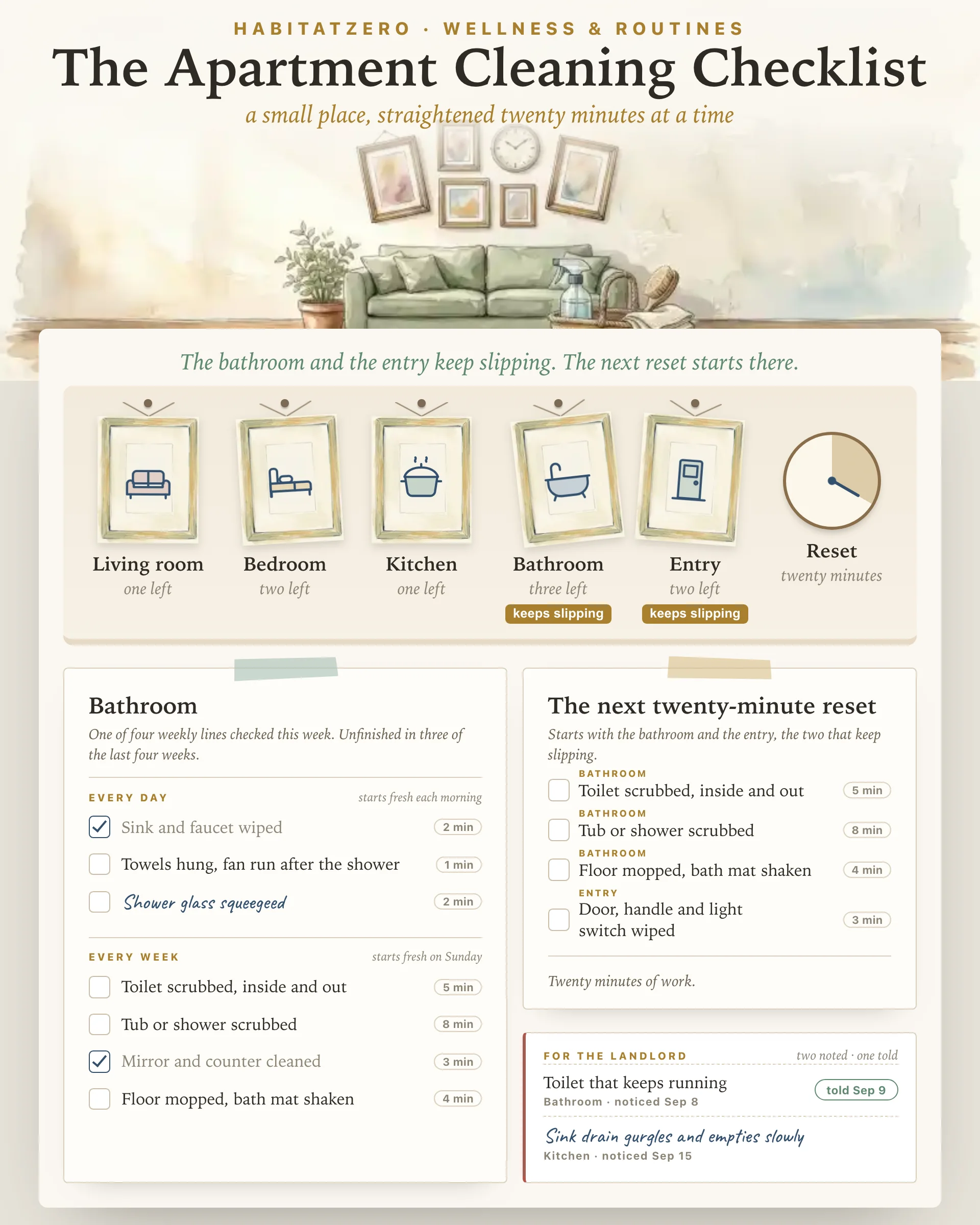
A small apartment shows mess fast and forgives it fast. One pan in the sink covers the only counter, and one bag on the chair takes over the only seat, yet a whole studio can be reset in less time than it takes to vacuum a house. The size of the job is rarely the problem. The problem is that the same corner keeps falling behind while you tidy the rooms you look at every day.
This checklist is built to catch that. It lists your rooms, splits each one into daily, weekly and monthly lines, and keeps track of which room has been left behind.
Pick studio, one bedroom or two bedrooms, and the page hangs one framed picture for each room on a small gallery wall, with a clock at the end. Open the room you are standing in and check lines as you do them. Daily lines start fresh every morning, weekly lines every Sunday and monthly lines on the first, so the list never pretends that last week's scrubbing covers this week.
The frames are the point. When a week ends with a room's weekly lines still open, that frame tips on its nail, and the more recent the missed weeks, the further it tips. Check this week's lines and it swings back to level. A room that has slipped in two of the last four weeks gets a small tag that says it keeps slipping, and the line at the top of the page names it.
Tap the clock when you have twenty minutes. The page builds a reset from the weekly lines of the rooms that have slipped, the worst first, then the daily lines still open today, adding them until the minutes reach twenty, and tells you where it starts. Start the timer, check each line as it gets done, and stop when time runs out. Whatever you finish counts toward its room, so two or three short resets can straighten a crooked frame before Sunday.
Renting changes the list. A useful rule of thumb: you keep the place clean, and the landlord keeps it working. Each room carries a short strip of things that are usually repairs rather than cleaning, such as a leak under the sink, a fridge that stops keeping cold, a toilet that keeps running or a lock that will not catch. Tap one and it lands on the landlord note with the date you noticed it. Mark it told once you have reported it, and that date is kept as well. A written report with a date is what protects you if a problem gets worse, and many leases ask tenants to report repairs rather than make them. Your lease and the rules where you live have the final word.
Mold sits on the line between the two jobs. The EPA guide written for homeowners and renters says a moldy patch smaller than about 10 square feet is usually something you can clean up yourself, and also that mold tends to come back when the water problem behind it is left unfixed (A Brief Guide to Mold, Moisture and Your Home). In a rental that water problem is usually the landlord's, which is why mold that comes back after cleaning sits on the report strip. The same guide warns never to mix chlorine bleach with cleaners that contain ammonia, because the mixture can give off toxic fumes, so use one product at a time.
Two monthly lines are about safety rather than looks. The U.S. Fire Administration says to test smoke alarms every month, which takes a few seconds with the test button. The CDC advises a battery-powered or battery backup carbon monoxide detector near every sleeping area, with its batteries checked when the clocks change each spring and fall (Carbon Monoxide Poisoning Basics). If there is no carbon monoxide alarm near your bedroom, that goes on the landlord note too.
There is no research behind the exact rhythms, so a weekly bathroom and a monthly fridge are common practice, not findings. Change any line that does not fit your place. There is some evidence that the state of a home follows people through the day, though. In a study of 60 dual-income spouses who gave self-guided tours of their homes, the wives who described their homes as cluttered and unfinished had flatter daily cortisol curves and a depressed mood that rose over the day (Saxbe and Repetti, 2010). It is a small, correlational finding about how people talk about their homes, not proof that cleaning lowers stress, but it fits what many people feel walking into a room that has been let go.
Set it up the week you move in, while you are still learning where the dust gathers. After that, open it whenever you have twenty minutes and let the crooked frames decide where the time goes. If you share a two-bedroom, agree on who does what with the Roommate Chore Chart and keep this page for your own rooms. When the bathroom needs more than a reset, the Bathroom Cleaning Checklist goes deeper, and when the lease ends, the Move-Out Cleaning Checklist covers what an inspection looks for.
Every room you have, split by rhythm. Daily lines keep the place usable: dishes, counters, the bed, shoes by the door. Weekly lines do the real cleaning, like the toilet, the floors and the sheets. Monthly lines catch what builds up slowly, such as fridge shelves, the range hood filter and baseboards, along with a press of the smoke alarm test button.
A few minutes a day, one proper pass through each room every week and a slower round once a month is a common rhythm, not a rule. In a small place the daily part matters most, because one sink of dishes takes over the whole kitchen. When a room keeps falling behind, visit it more often rather than cleaning it harder.
Inside each room, work from high to low and from dry to wet: dust shelves and sills before you vacuum, and wipe counters before the floor. Save the floors for last and finish at the door. On a short reset, begin with the room that has slipped the longest, since that is where twenty minutes shows most.
Under most leases, keeping the apartment clean falls to you and keeping it working falls to the landlord. Leaks, pests, a heater or appliance that quits and mold that returns after cleaning are usually repairs to report in writing, with the date, rather than fix yourself. Your lease and local rules settle the details.
No. This page shows a filled-in example of the wall, the reset and the landlord note. To check off your own rooms, keep the record from week to week and run the timer, open it in HabitatZero, where personalizing it is free.
By the team behind Fabulous, the science-based self-care app used by over 30 million people.


