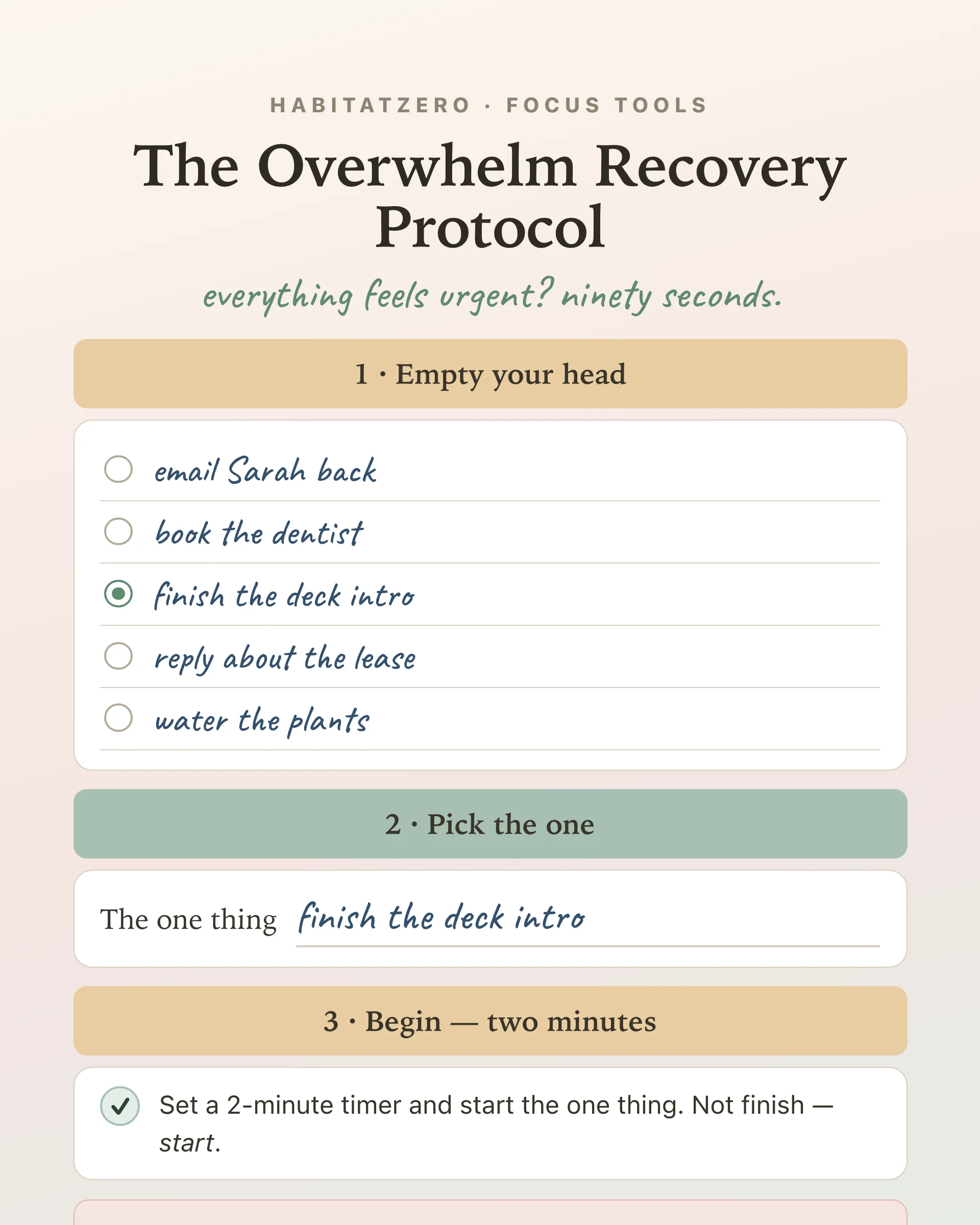
The Overwhelm Recovery ProtocolWellness & Routines · ~5 min
About this template · Updated September 2026
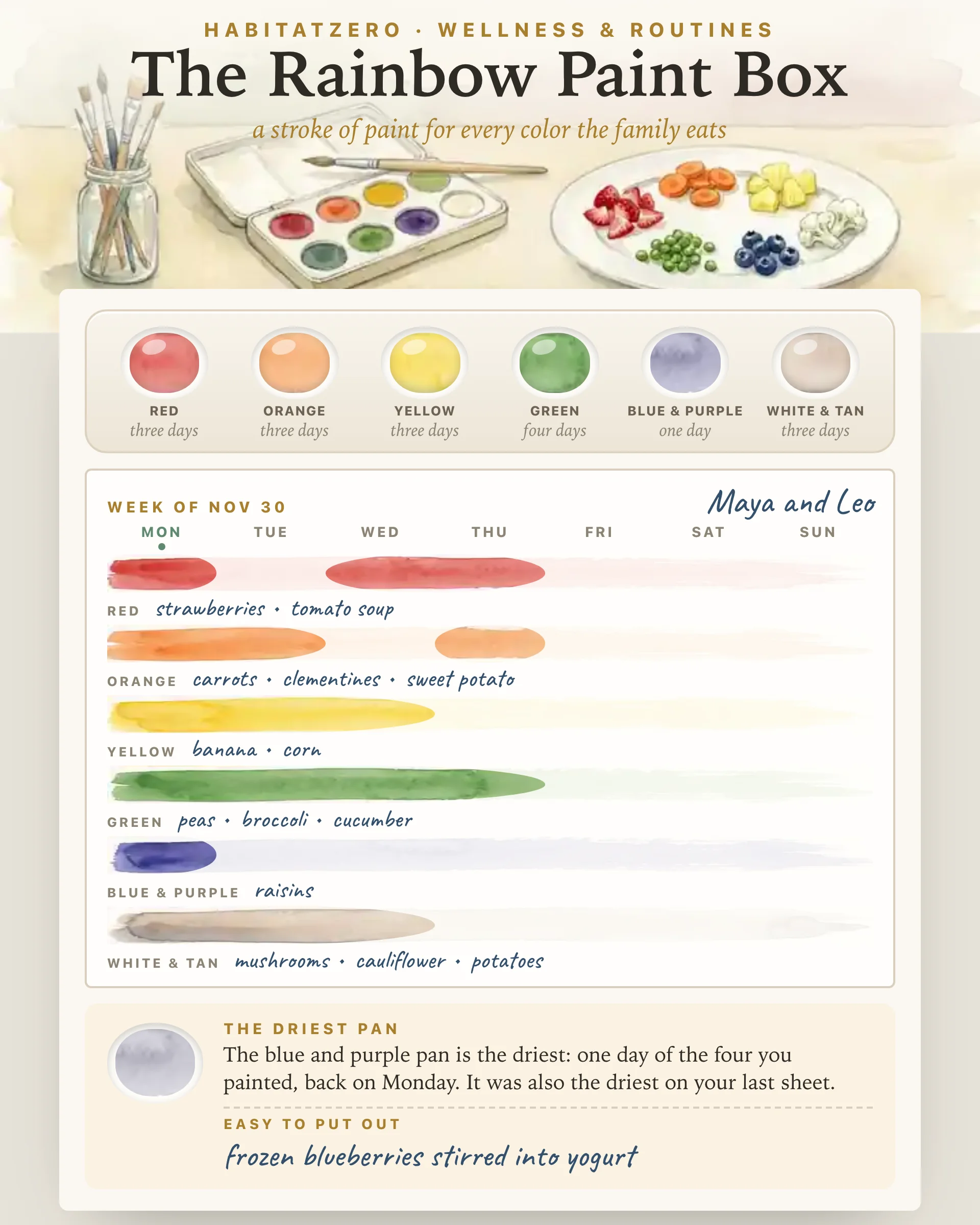
Most parents have heard the advice to eat the rainbow. The hard part is noticing, halfway through the week, that nobody has eaten anything purple since Sunday. This eat the rainbow chart turns the week into a painting. Each time someone eats a fruit or vegetable, you tap its color, pick the food by the name your family uses, and a stroke of watercolor lands on that day. By Thursday you can see which stripes run long and which one stays pale.
Color works as a stand-in for variety. Harvard Health's guide to painting your plate with the colors of the rainbow sorts produce into color groups and makes a point worth keeping in mind: no single color outranks the others, so the aim is a spread across all of them. The same guide notes that frozen fruit and vegetables count, which helps on the nights when the crisper drawer is empty.
Color is also something a four-year-old can track. A child who cannot read a label can still tell you that peas are green and that nothing blue has happened yet.
Be honest with yourself about the limits. Color is a rough guide to variety, not a nutrient count. The chart counts the days a color showed up, not portions, servings, protein or iron, and a week with all six stripes can still fall short in plenty of ways. Pale foods are not second-class either: cauliflower, onions, mushrooms and potatoes get their own row here for that reason.
Color groups also differ from chart to chart. Harvard's guide puts orange and yellow together, while this page splits them so there are more colors to hunt for. If your child insists a banana belongs with the whites because of its inside, let them file it there.
The tin at the top holds six pans: red, orange, yellow, green, blue and purple, and white and tan. Tap a pan, choose the day, then tap the food. Suggestions are there to save typing, but the names you write stick around, so Nana's tomato soup or dinosaur trees become one-tap choices for the rest of the week and the one after. A square holds up to three foods and then locks, since the chart only needs to know that the color showed up.
Days in a row of the same color join into one sweep of paint, and days without it leave bare paper, so the gaps show without any counting. Each pan in the tin looks wetter the more days its color appeared. Under the painting, the page names the driest pan: the color that came up least, with ties going to whichever has been missing longest. It suggests one easy food to put out for that color, and another if the first will not fly in your house.
When the week ends, start a fresh sheet. The page keeps a summary of the old one, so you can see whether the same pan dries out again. That repeat is the useful signal. One quiet week is noise; the same dry pan three weeks running is a pattern worth planning around.
The chart is for your planning, and the paint is for your child's fun. It should never turn into a scoreboard of what anyone refused. The American Academy of Pediatrics puts the division of labor plainly in its tips for parents of picky eaters: providing the food is the parent's job, and whether to eat it is the child's call. The same page notes that a toddler can need ten or more tastes before accepting a new food.
The research points the same way. In a lab study with preschoolers, children ate more soup when nobody asked them to finish it and made far fewer negative comments about it. In a randomized trial with parents of two- to six-year-olds, a small daily taste of a disliked vegetable over two weeks raised children's liking and intake of it more than giving parents nutrition advice did.
So when the chart says the blue and purple pan is dry, put a few blueberries on the table next to something your child already likes, say nothing about them, and paint the stroke only if someone eats them. If nobody does, that offer still counts as a step toward the next one. And if picky eating worries you, whether because of weight, a very short list of accepted foods or gagging at meals, bring it to your child's pediatrician. A painted week or two makes a handy record to take along.
Paint the day's colors at dinner or bedtime, while the day is fresh, and hand the tapping to your child. Look at the driest pan on the weekend, then work that color into the days ahead with the Meal Planner, or with the Fridge Door Meal Plan if your house runs on a short list of go-to dinners. For younger children who like to see their day in pictures, a fruit-at-snack step fits neatly into a Kids Daily Routine Chart.
It is a weekly chart with a row for each fruit and vegetable color, usually red, orange, yellow, green, blue and purple, and white and tan. Every day someone eats a food of that color, its row gets marked, so the colors your family skips stand out by the end of the week.
Red: strawberries, tomatoes, watermelon. Orange: carrots, oranges, sweet potatoes. Yellow: bananas, corn, pineapple. Green: broccoli, peas, spinach. Blue and purple: blueberries, blackberries, raisins. White and tan: cauliflower, mushrooms, onions. If your child files a food under a different color, go with their answer.
No. Color is a rough guide to variety, not a nutrient count. A week with every stripe painted says nothing about portions, protein, calcium or iron, and pale foods like cauliflower still earn their place. Treat the chart as a nudge to vary the plate, and take specific nutrition questions to your pediatrician.
Let your child do the painting, and keep the chart about what the family ate rather than what anyone refused. Set the dry color on the table beside a food they already like, again and again, without pushing. If picky eating worries you, talk it over with your pediatrician.
The public page shows a sample week that is already painted. To paint your own week, keep your family's food names and compare one sheet with the next, personalize it in HabitatZero. It is free.
By the team behind Fabulous, the science-based self-care app used by over 30 million people.