ADHD Daily Task OrganizerFocus & ADHD · ~10 min
About this template · Updated September 2026
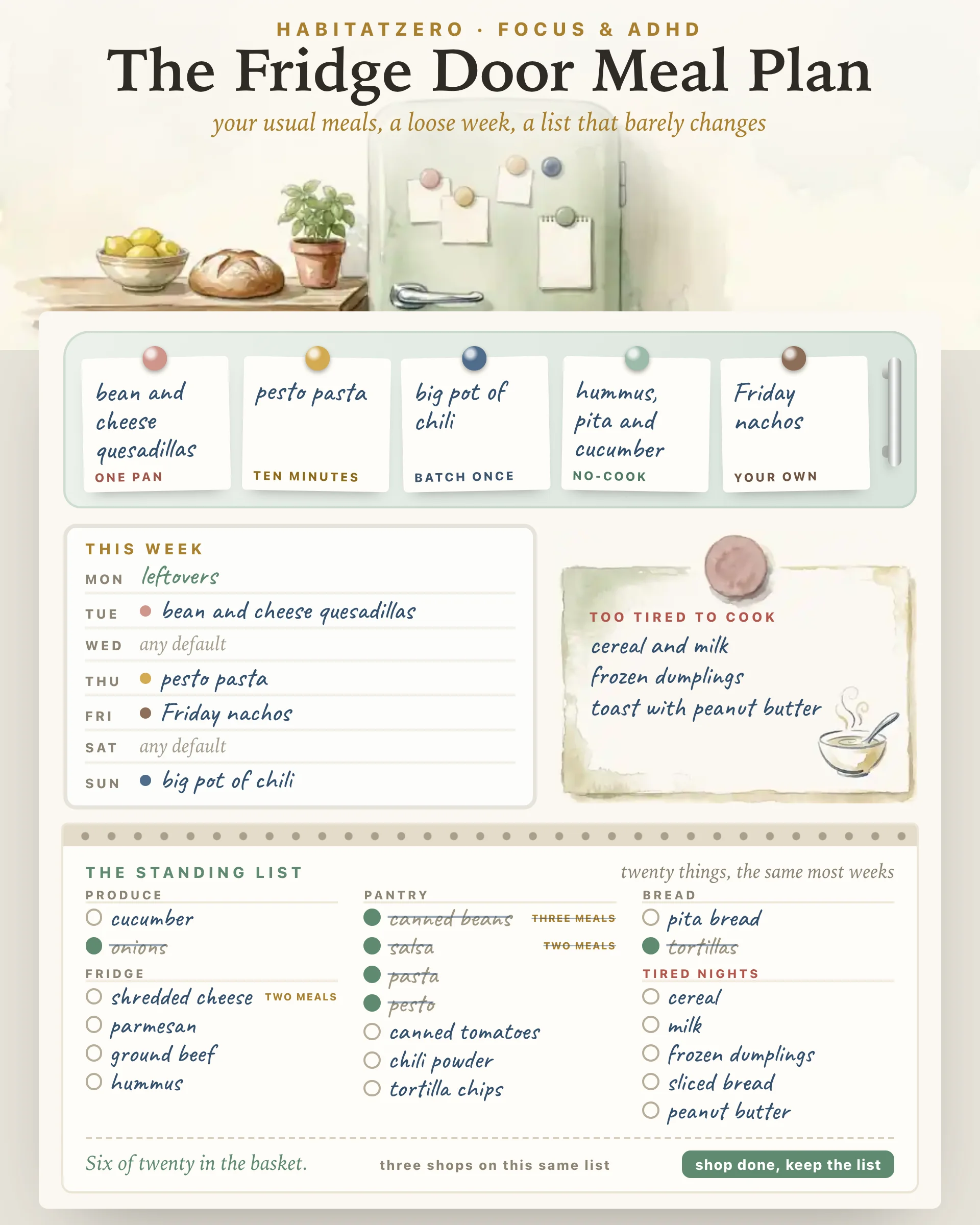
Most meal plans assume the hard part is knowing what to cook. With ADHD, the recipe is rarely the problem. The trouble sits on either side of it: choosing, at six in the evening, from every dinner you could possibly make, and then actually starting. A plan that hands you a fresh menu each week only adds to the choosing. This page goes the other way. It helps you pick a small set of meals you already eat, lets them repeat, and gives you a grocery list that barely changes.
A default meal is one you could make half asleep and would not mind eating again on Thursday. Most people already have three or four. Writing them down turns the evening question from an open one into a short multiple choice. Repeating them is the whole idea, not a failure of imagination.
The ideas are sorted by effort rather than cuisine, because effort is what changes from day to day: no-cook plates, one-pan dinners, ten-minute meals, and a batch-once pot that covers two or three nights. Mix the effort levels so the door holds something for a good evening and something for a flat one.
Tap an idea and it sticks to the door as a paper slip, with the few groceries it needs written underneath. Write in a meal of your own and the page asks what it takes: tap a staple or type a line, up to six things. The door holds six meals. When it fills up it tells you so, because a longer list would bring back the deciding you came here to remove.
Below the door sits the week. Tap a day to give it one of your defaults or leftovers, or leave it open. An open night is not a hole in the plan. It means any default will do. Planning two nights and leaving five loose still counts.
The part a paper planner cannot do is the grocery pad. It builds itself from whatever is on the door: every item once, sorted by aisle with the cold things last, and a small tag when two or three meals share an ingredient. That overlap is worth chasing. Meals that share tortillas, beans and cheese make a shorter list and leave less to go soft at the back of the fridge. Because your defaults stay put, the list does too, and after a few weeks you stop rewriting it. Tick things off in the store, press shop done, and the ticks clear while the list waits for next time.
Last comes the card for tired nights: three dinners that need no cooking, such as cereal, frozen dumplings or toast with peanut butter. Their groceries join the list as a shelf to keep stocked, so a bad evening ends in food instead of a debate with the fridge.
A meta-analysis of eighty-three studies found that groups with ADHD, on average, did worse on tasks of planning and working memory, the same skills a weekly menu quietly leans on. The differences were moderate, and not everyone with ADHD showed them, so read this as a reason to move planning out of your head and onto the door, not as a verdict on your own.
You may also have read that every decision drains a limited store of willpower, leaving nothing for dinner by evening. Hold that story loosely. It grew out of ego-depletion research, and a replication run across twenty-three labs found an effect close to zero. The case for defaults does not need it: a decision made on Sunday cannot stall you on Wednesday.
Deciding the when ahead of time has firmer support. Plans that pair a situation with a response, such as Tuesday means quesadillas, are what psychologists call implementation intentions, and a meta-analysis of ninety-four tests of this kind of if-then planning found a medium-to-large effect on reaching goals, including on getting started. The week strip is that idea with magnets on.
If you take ADHD medication, appetite deserves a plain word too. Loss of appetite is listed among the common side effects of methylphenidate, and a meal nobody feels hungry for is an easy one to skip. Having food ready when hunger does turn up can help, but questions about eating, timing or appetite belong with your prescriber, not with a worksheet.
Set up the door on an ordinary afternoon rather than on a Sunday reserved for becoming organized. Come back on shopping day, and whenever you open the fridge with no plan, because the slips and the card have already answered the question.
If you would rather have one page of seven dinners to print and pin up, the Printable Meal Planner is built for that. If the kitchen itself is what stops you cooking, the ADHD Cleaning Planner breaks a reset into five-minute moves. And the tired-night card borrows its logic from The Dopamine Menu: make the choice on a steadier day, so a flat one only has to pick.
None of this is a diet. It is a way to make sure more of your evenings end with food, with less arguing with yourself on the way there.
It plans around deciding and starting, the two places dinner usually stalls, instead of around recipes. That means a short rotation of meals you already like, repeats on purpose, open nights that any default can fill, and a grocery list that stays the same most weeks.
Begin with two or three meals you already make or buy, and put them somewhere you will see at six in the evening. Plan a night or two, leave the rest open, and keep three no-cook dinners in reserve for the evenings when even easy feels like too much.
No. Nothing here cuts foods, counts anything or promises a change in symptoms. If you are thinking about changing what you eat for ADHD reasons, plan it with a registered dietitian or your prescriber rather than with a worksheet.
It can. Loss of appetite is one of the common side effects listed for methylphenidate, a stimulant often prescribed for ADHD. If eating has become hard to fit around your medication, raise it with your prescriber, who can look at timing and dose with you.
You can explore the filled example on this page to see how the door, the week and the list fit together. To keep your own defaults, week and standing list between visits, personalize it in HabitatZero, which is free.
By the team behind Fabulous, the science-based self-care app used by over 30 million people.