The Overwhelm Recovery ProtocolWellness & Routines · ~5 min
About this template · Updated September 2026
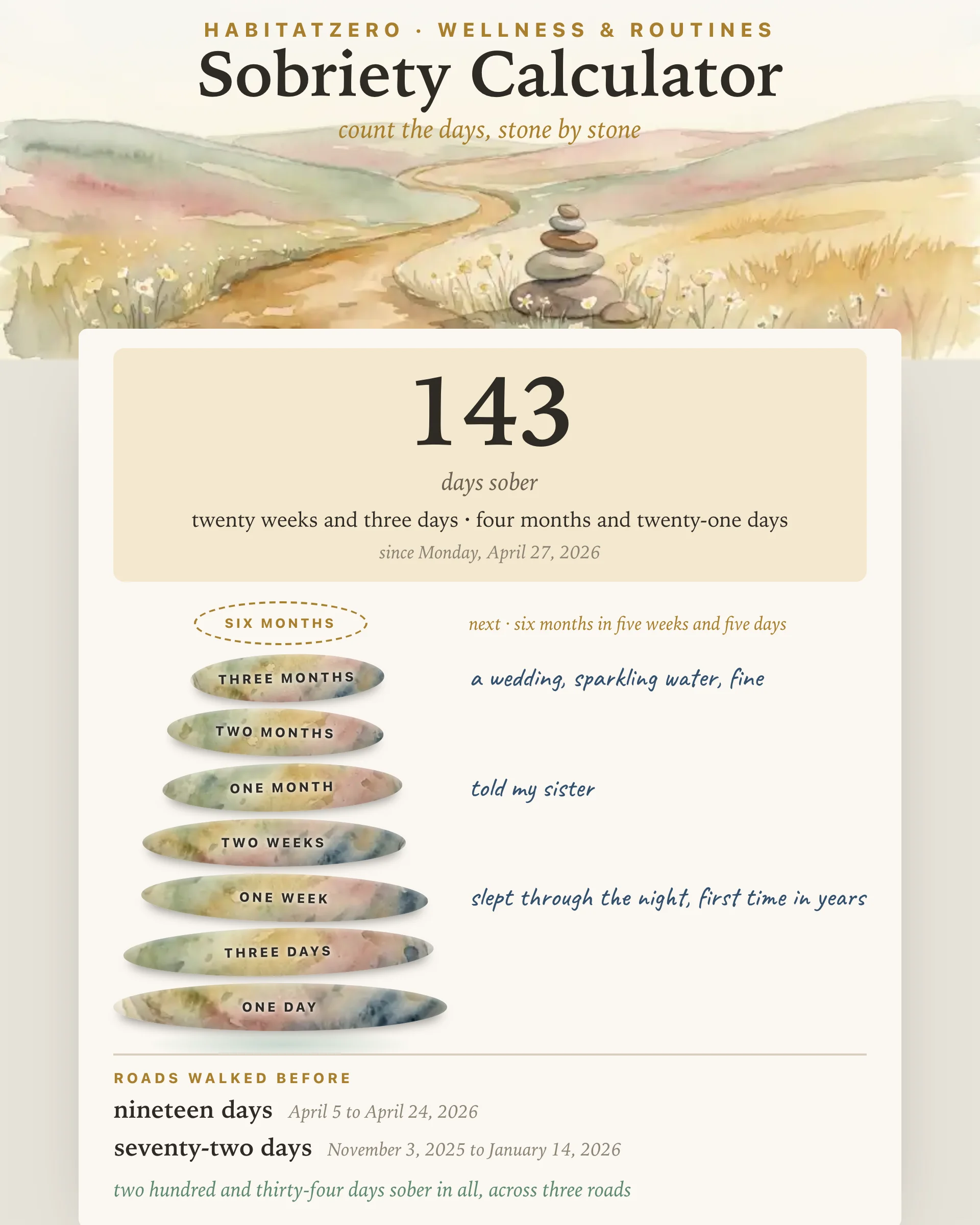
A sobriety calculator does one small, stubborn thing: it takes the date you stopped and tells you how long it has been. That number is not a grade and it is not a cure. It is a fact about your life that is surprisingly easy to lose track of, and people in recovery have always found it worth knowing. This page keeps the fact for you and gives it somewhere to live.
Set your first sober day by tapping today or yesterday, or by choosing a date. From then on the page subtracts that day from the current one and shows the full days in between. On the day you begin it reads day one, because you are living it, and the first stone arrives once a whole day has passed.
Below the big number, the same span is spelled out two ways: in weeks and days, and in calendar months. The months follow the calendar rather than a flat thirty days, so one month sober means the same date next month and a year means the anniversary. That matters once you reach the milestones people actually say aloud.
Walkers stack stones beside a path to say that someone came this way. Here each milestone you pass becomes a stone: one day, three days, a week, two weeks, a month, then two, three, six and nine months, a year, eighteen months, and every year after that. The newest stones sit on top, and a dotted outline shows the one still ahead with the day it lands.
Tap any stone and you can leave a short private note on it. Not a journal entry, just a line: who you told, what you slept through, which party turned out fine. Months later those lines are the most honest record you will have of what each stretch cost and what it gave back.
The spacing borrows from a long tradition. Twelve-step fellowships hand out chips at twenty-four hours, thirty, sixty and ninety days, six and nine months, and a year, and many treatment programs mark similar dates. This page is an independent tool from HabitatZero; it is not affiliated with Alcoholics Anonymous or any recovery program, and it is not a substitute for one.
Most people who resolve a drinking or drug problem did not manage it on the first try. In a national survey of American adults who had put such a problem behind them, the average number of serious attempts was around five and the typical person needed two, with wide variation from one person to the next. The same research group found that recovery is common: roughly one adult in eleven reported having resolved a significant alcohol or drug problem.
Relapse prevention research adds a second point. In the model developed by G. Alan Marlatt and Katie Witkiewitz, what happens after a lapse depends a great deal on how the person reads it. Treat one drink as proof that the whole effort was fake and the slide tends to continue; treat it as a single event with causes you can look at, and the road tends to resume sooner. A counter that drops to zero and forgets everything nudges you toward the first reading. This one is built for the second.
Choose begin a new count and confirm. The stretch you just finished moves to roads walked before, with its dates, its days and every note you left on its stones. The fresh count starts from today, and a total across all your roads keeps adding up underneath. Nothing is erased, because nothing was undone: the sober days were real while you lived them, and they are still real now.
If the slip happened a few days back, begin the new count and then change the date. The earlier road will end where the new one begins.
A counter is company, not treatment. If stopping has left you shaky, sick or frightened, that is a reason to speak with a doctor or nurse promptly rather than a reason to push on alone. And if you would rather talk than count, a call to a helpline or a conversation with someone who has walked the same road is worth more than any number on this page.
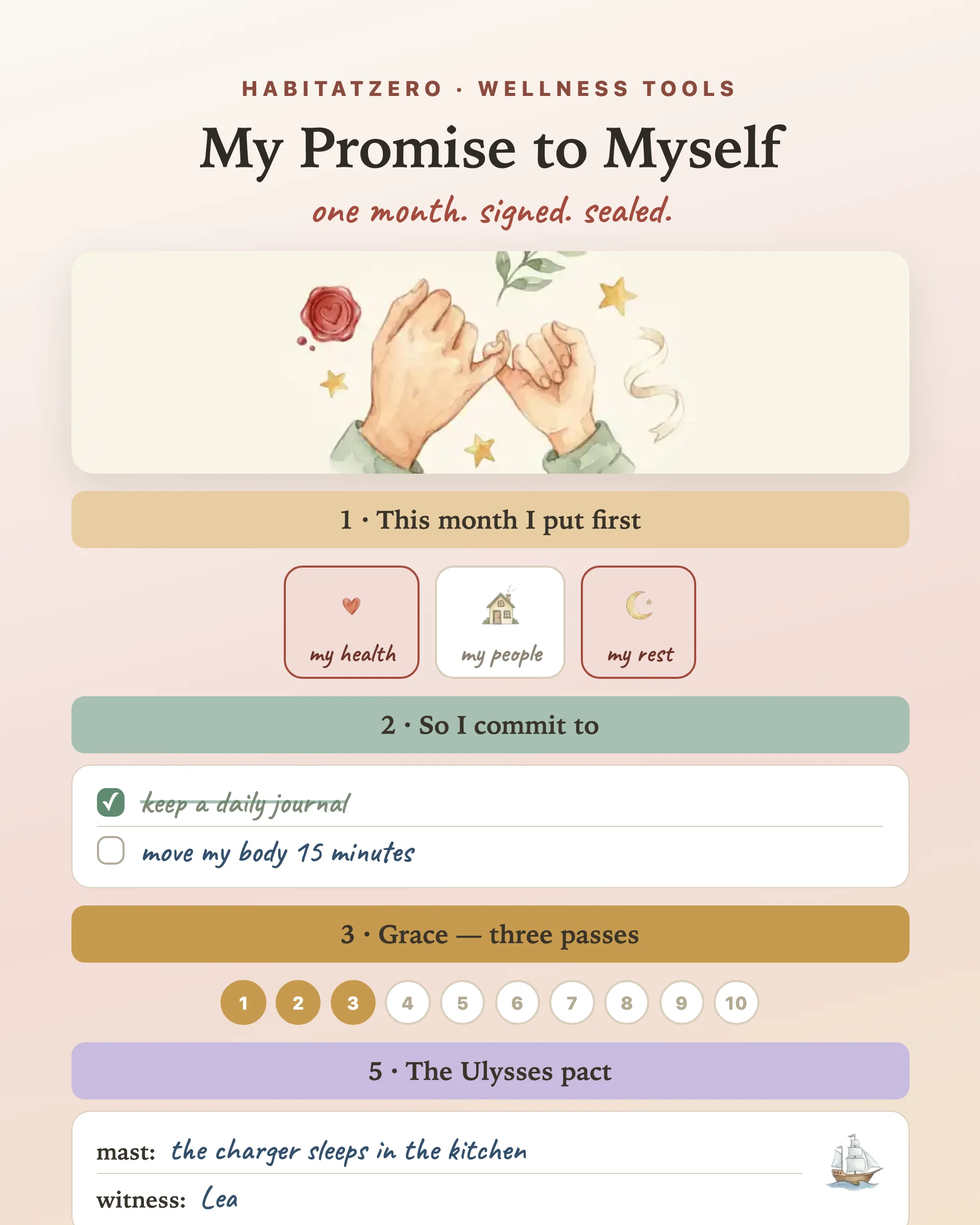
Set the date on the day you decide to count, or the day after, while the decision is still fresh. Open it again whenever the number would help: a hard evening, an anniversary, a moment when you are not sure it was worth it. When a craving is rising right now, the Urge Surfing timer is built for the next fifteen minutes; when you want the decision written down and signed, My Promise to Myself is the contract to pair with this count.
The stones are small. Stacked, they are the shape of a road.
It subtracts your first sober day from today and shows the number of full days in between. On the day you begin it reads day one rather than zero, and the first stone arrives once a full day has passed. The weeks and months lines use the calendar, so one month means the same date a month later.
The first day you did not drink or use, by your own reckoning. If you are unsure, pick the date you can stand behind; you can change it later and the stones recompute from the new date.
Most people mark one day, one week, one month, then three, six and nine months, one year, and every year after that. This cairn adds three days, two weeks, two months and eighteen months so the stones keep coming during the early stretch, when a marker every few weeks matters most.
The count starts again from today, but nothing is deleted. The stretch you just finished moves to roads walked before with its notes, and the page keeps a running total of sober days across every road. Many people need more than one attempt, and each attempt is time you were sober.
You can read the filled example here without signing in. To count from your own date and keep the stones and notes between visits, personalize the page in HabitatZero, which costs nothing.
By the team behind Fabulous, the science-based self-care app used by over 30 million people.