
The Overwhelm Recovery ProtocolWellness & Routines · ~5 min
About this template · Updated September 2026
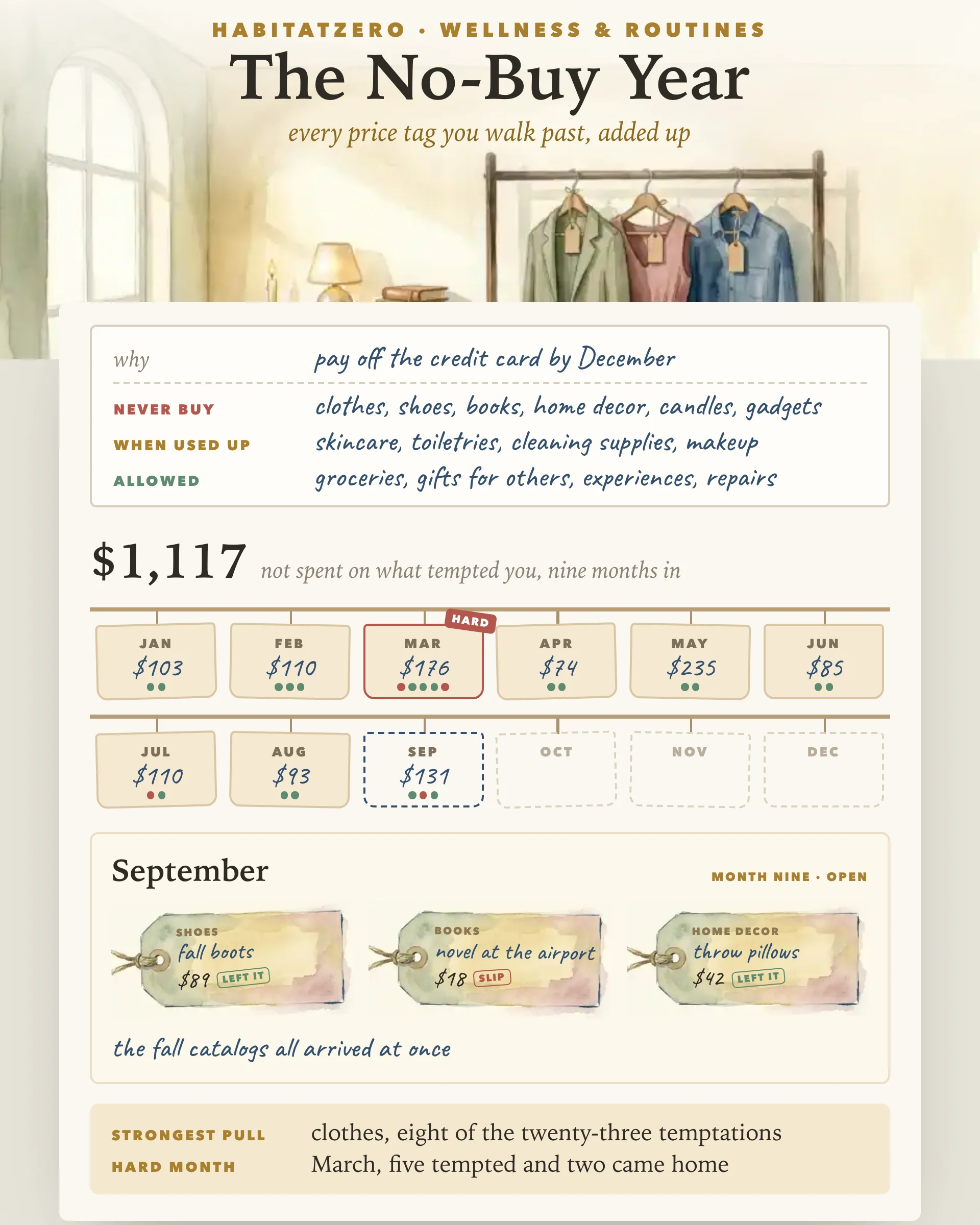
A no-buy year is a bargain you strike with yourself: for twelve months, you stop buying things outside a short list you settle in advance. You still buy food, pay rent and replace the toothpaste. What stops is the steady trickle of extras, the sweater on sale, the third candle, the gadget that looked clever at eleven at night. People do it to pay down a card, to stop filling closets, or to learn what they reach for when a purchase is not the answer.
It sounds severe. The rules are what make it livable: short, specific and written before the first temptation shows up.
Many shared no-buy rule sets come down to three lists, and this sheet uses the same three.
Each list holds eight kinds at most. A rule set you can recite in a checkout line is one you will keep, and one you have to look up is one you will argue with. Above the lists sits a single line for why you are doing this. Write it in words you will want to reread in a rough week.
Every month has its own counter of price tags. When something calls to you, tap its kind, write what it was and what it cost, then choose left it or bought it. The rules do the judging. Buy from your never list and the tag is stamped as a slip. Buy from the used-up list and the sheet first asks whether the old one had actually run out; if it had, the purchase is within the rules. Allowed purchases go through without comment.
Each price you walk away from adds to the running figure at the top, and the twelve months hang on a rail, so the whole year shows at a glance, slips included. When a month ends, add a line about how it went and close it. A closed month keeps its tags exactly as they were and takes no new ones. If you change a rule in June, the change counts from June on, and the tags from March keep the verdict they got in March.
Once a few temptations are on record, the sheet reads them back to you: which kind of thing pulls hardest, and which month pushed back. The second answer is usually the more useful one, because a month with a birthday, a tax refund or a hard stretch at work comes around again.
Be wary of anyone promising a transformation: the evidence covers the pieces a no-buy year is built from, not the year as a whole. Writing a rule before you meet the situation is a form of if-then planning, and a meta-analysis of 94 tests found that plans like these improved goal attainment by a medium-to-large margin, and such plans helped shield a goal from unwanted influences. Checking in helps too: a meta-analysis of 138 studies found that monitoring progress promoted goal attainment, with larger effects when the progress was physically recorded.
The hard months deserve a kinder reading than a lack of willpower. Research on retail therapy found that a bad mood made unplanned treats for yourself more likely, and that those purchases did improve mood, with little regret afterward. Shopping can work as comfort, which helps explain why a rough month tempts you most. Knowing which month that was lets you line up a different comfort for it next time.
If you hope owning less will leave you happier, a large meta-analysis did find that people who place more weight on money and possessions report somewhat lower well-being. That link is correlational, though, so it cannot promise that a year without shopping will make you happier.
The running figure adds up the prices of the things you walked away from. It can keep you going, but it is not money saved until you move it, say to a savings account or an extra card payment. This sheet is a planning tool, not financial advice. If buying ever feels out of your control, or you hide purchases from the people you live with, raise it with a doctor or therapist.
January is a common choice because it follows the gift-buying season, and if December usually runs away from you, The Christmas Budget can steady the run-up. Any month works, though: pick it on the sheet and the rail starts there. Before the first month opens, The Declutter Challenge is a good way to see how much you already own. And when the urge to buy something arrives mid-month, Urge Surfing gives you a few minutes of breathing room before you decide.
It is a twelve-month promise to stop buying anything outside a short list you choose in advance. Groceries, bills and replacements for what runs out usually continue. What stops is casual shopping for extras such as clothes, decor and gadgets.
Three lists cover most people. Never buy holds the kinds of things you tend to overbuy. Only when used up holds consumables like skincare or cleaning supplies, replaced once the old one is finished. Allowed holds the essentials plus anything you decide to keep open on purpose, such as gifts or experiences.
A no buy year closes whole categories for twelve months. A low buy year keeps them open with a limit, such as one new book a month. This sheet handles both: put the looser category under allowed and write its limit into the name, for example books, one a month.
You record it and carry on. On this sheet a slip is simply a purchase that broke one of your own rules. It gets its own stamp, it never resets the year, and the reading uses slips to show which month needed more support.
The sample year on this page is free to look through. To write your own rules and keep all twelve months of tags together, personalize the sheet in HabitatZero, which costs nothing.
By the team behind Fabulous, the science-based self-care app used by over 30 million people.


