
The Overwhelm Recovery ProtocolWellness & Routines · ~5 min
About this template · Updated November 2026
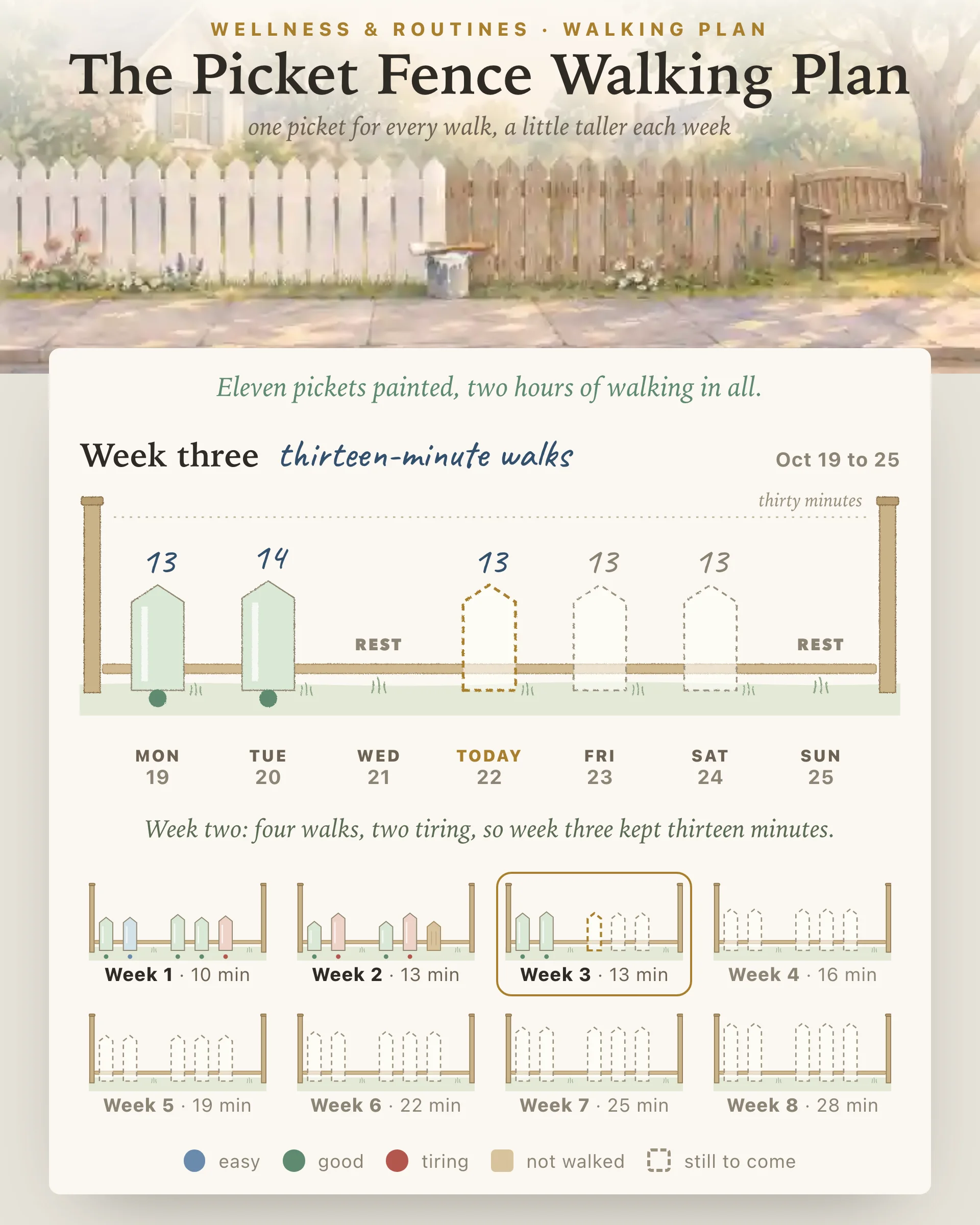
Walking is the exercise most older adults can begin tomorrow morning, with no class to find and no gear beyond shoes. What decides whether it lasts is pace: too much too soon, and sore knees or one draining week can end the habit early. This page lays out eight weeks of walks as a picket fence, one picket for each walk, and lets the way each walk felt decide how fast the fence grows.
Talk with your doctor or a physical therapist before you begin if you have had a fall, get dizzy spells, have had a hip or knee replaced, live with a heart or blood pressure condition, or have pain that keeps coming back. Stop any walk that hurts. If you notice chest pain, feel faint, or stay short of breath after slowing down, sit and get help. Choose routes with somewhere to sit or hold on, and if you loosen up at home first, do it beside a sturdy chair or a counter you can grip.
The Physical Activity Guidelines for Americans set out 150 to 300 minutes of moderate activity a week for adults, and they ask older adults to fold in balance training and muscle strengthening too. Thirty minutes on five days meets the first of those figures, so thirty is where this fence stops climbing.
You choose the starting height: about five, ten or fifteen minutes, whichever you can walk today without needing to stop. Pick the comfortable one rather than your best effort. Every week holds five walks and two rest days, and each week the walks grow by three minutes. From ten minutes, eight smooth weeks reach thirty. From fifteen, thirty arrives in week six. From five, week eight lands at twenty-six minutes, and the same gentle climb can carry on afterward.
Each walking day starts as a pencil outline drawn to the height of its minutes. After the walk, tap how it went: easy if you could have kept going, good if you were warm but could still talk, tiring if you needed a rest or felt it later in the day. The picket is painted in that color. A walking day that passes without a walk turns to bare wood: information, not a scolding.
Three plain rules shape the weeks.
Weeks you have not reached stay in pencil, so you can watch one hard week level the line and a good one raise it again. A forgotten walk can still be painted up to a week later.
Every walk goes out and back. Walk for half the day's minutes, then turn for home, and you are never further from your door than your legs can carry you back.
Below the fence sits a card for your usual walk, a dry indoor choice for wet or icy days, and six things worth having in place: level ground and good light, a bench or low wall halfway, a phone in your pocket, someone who knows your route, shoes with good grip, and water when it is warm. It names whichever are still missing.
The LIFE study enrolled inactive adults aged seventy to eighty-nine who had some physical limits but could still walk a quarter mile. Their program built toward thirty minutes of walking a day, with strength, flexibility and balance work alongside. Over about two and a half years, roughly three in ten of them lost the ability to walk a quarter mile, against a little over a third of a group who attended health education workshops instead. That gap came from a supervised program that held more than walking.
Falls are a separate question. A Cochrane review of exercise for preventing falls pooled more than a hundred trials and found that balance and functional exercises cut the rate of falls by about a quarter, while the effect of walking programs by themselves remained uncertain. So this plan makes no promise about falls. If steadier footing is part of why you walk, add a short balance routine on a few days a week, such as The Balance Ladder or the counter-side steps of The Counter Walk.
Open the page once to choose your start and fill in the route card, then briefly after each walk. If you would rather count steps than minutes, The Daily Steps Ladder builds a plan from the count your phone or watch already keeps. Once your walks feel steady, The Brisk Walking Metronome helps you find a brisker pace by tapping your steps for a minute.
Eight weeks from your first picket, the fence should stand near thirty minutes, painted mostly in the colors of walks that felt about right. Those colors matter more than the height.
The US Physical Activity Guidelines ask adults for 150 to 300 minutes of moderate activity a week, and thirty minutes on five days reaches the first of those numbers. If thirty sounds far away, begin with five or ten minutes and add a few each week. This plan adds three a week and stops at thirty.
Walking covers the aerobic part well, but the same guidelines ask people over 65 to add muscle strengthening and balance training. Trials that cut falls used balance and strength work, and a Cochrane review could not say whether walking programs alone change falls. Pair your walks with a short balance or strength routine on a couple of days.
Start shorter than you think you need to, on level ground close to home, and walk out for half the time before turning back. Rest two days a week and follow a tiring walk with an easy one. Talk with your doctor first if you have had a fall, dizzy spells, a joint replacement, a heart or blood pressure condition, or pain.
Let your breathing set the speed rather than a number. A moderate pace leaves you able to talk in whole sentences but not sing, and slower is right on an easy day. Stop and sit if you feel chest pain, faintness or breathlessness that does not settle, and get help.
Many older adults can, but this plan keeps two rest days a week so feet, knees and hips recover while the walks are getting longer. A short stroll on a rest day is fine. If you miss a walk, skip it rather than adding its minutes to the next day.
By the team behind Fabulous, the science-based self-care app used by over 30 million people.


