
The Overwhelm Recovery ProtocolWellness & Routines · ~5 min
About this template · Updated November 2026
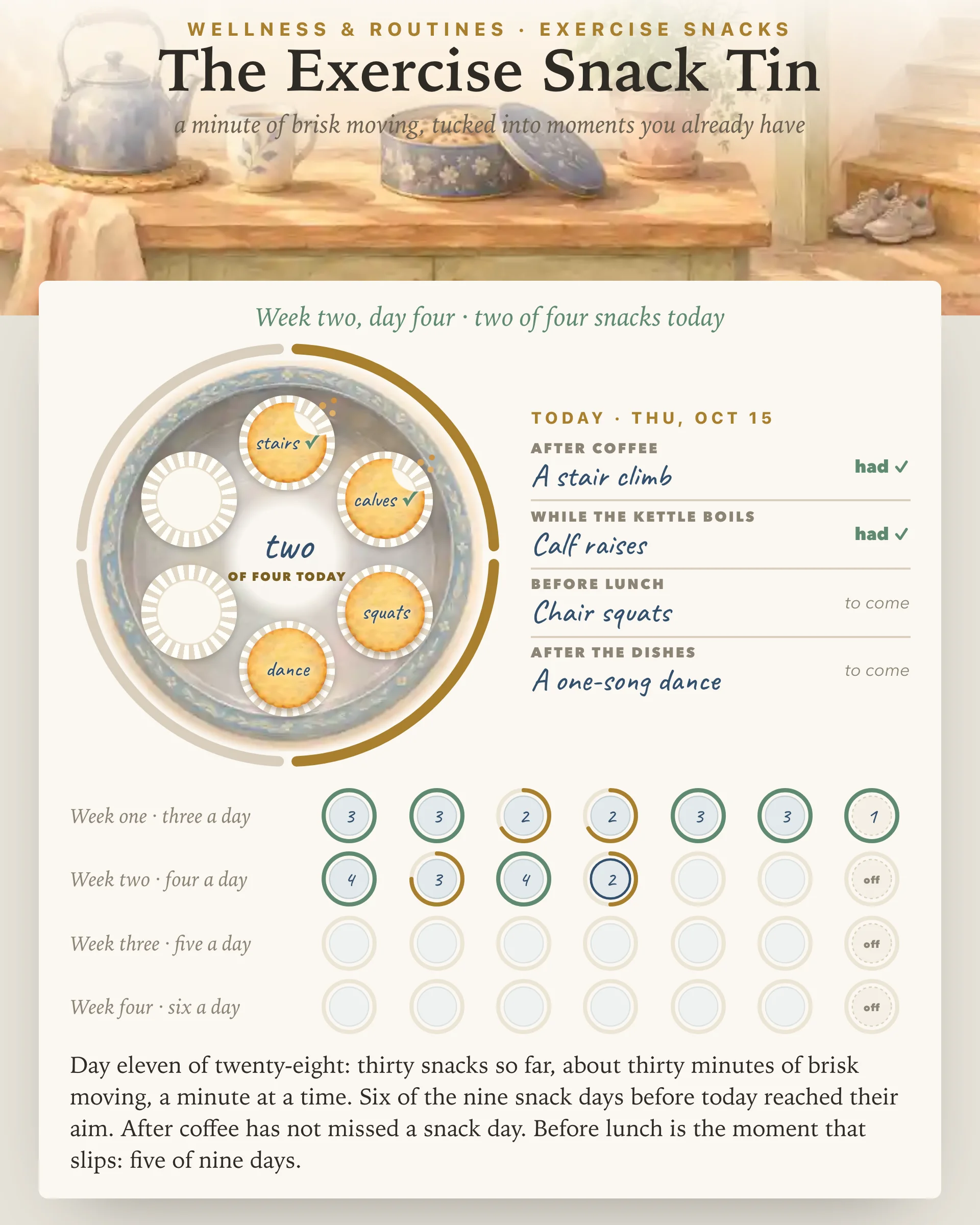
An exercise snack is a minute of brisk moving, had between the meals of your day instead of a full workout. You climb a flight of stairs a little faster than you need to, sit and stand from a chair fifteen times while the pasta water heats, or march hard in place until the kettle clicks off. Each one is too short to need finding time for. You only have to remember, and remembering is what this page is built to help with.
A 2022 review by exercise researchers in Canada defines exercise snacks as isolated bouts of a minute or less of vigorous exercise, spread through the day, and is candid that the support so far comes from small proof-of-concept studies. Vigorous means your breathing picks up enough that you could say a few words but not hold a conversation, which a fast stair climb or a quick set of chair squats reaches within the minute.
You will also see the phrase movement snacks. It is looser, and usually means any break from sitting, like a stretch or a walk to refill your water. On a stiff morning a gentler snack still beats none, but the brisker kind is where the research below comes from.
The painted tin holds six paper cups. Each cup is one moment you already have every day, such as after coffee, while the kettle boils or before lunch, with one snack waiting in it. You pick the moment, then tap a snack on the menu to pack it, or write your own. Pinning a snack to something that already happens is the whole trick: the moment does the remembering, not your willpower.
When you have had a snack, tap its cookie. A bite comes out of it, and the ring around the rim fills toward the day's aim. Took the stairs on a whim at the library? Count it as one off the menu.
The plan runs four weeks. Week one asks for three snacks a day, and each week adds one until week four asks for six, with the seventh day of every week off. At about a minute a snack, the daily total climbs from three minutes to six. Below the tin, each day becomes a small tin of its own, and a short reading adds up your snacks, counts the days that met their aim and names the moment that keeps slipping. A slipping moment rarely needs more effort; it needs a sturdier anchor, one that comes around every day without fail.
The best-known figures come from the UK Biobank. Researchers studied 25,241 adults who did no formal exercise, with an average age of about sixty-two, using a wrist tracker worn for a week. Short bursts of vigorous everyday activity, like hurrying up stairs or carrying heavy groceries, were common: the typical person had about three a day, each lasting one or two minutes. Over roughly seven years, people with that typical amount had a 38 to 40 percent lower risk of dying from any cause or from cancer than people with none, and a 48 to 49 percent lower risk of dying from cardiovascular disease. That study is observational: it shows a link, not that the bursts caused the lower risk, and people who move briskly may be healthier in ways no tracker measures.
The trials are much smaller. In one, inactive young adults raced up a three-flight stairwell three times a day, with one to four hours between climbs, on three days a week for six weeks. Their peak fitness was higher afterward, though the authors called the gain modest. A second group kept to its usual routine for comparison, and each group had only twelve people. In a pilot with healthy adults around seventy, twice-daily snacks at home for twenty-eight days raised how many times they could rise from a chair in one minute by 31 percent, with no change in a comparison group. Twenty people took part.
The honest summary: snacks are a reasonable way to move more when a full workout keeps not happening, and the early trials point the right way. Nobody has shown that a month of snacks changes your health over the years by itself, or that snacks can stand in for the fuller weekly amounts in national activity guidelines. Treat them as a start, or as the brisk part of days otherwise spent sitting.
Hold the rail for every stair snack, and keep a counter or chair within reach for squats and calf raises. If you have a heart or blood pressure condition, have had a fall or dizziness, or have pain, talk with your doctor before you start, and stop any snack that hurts.
Pack the tin on a day with five spare minutes, then let your day open it for you. It suits long desk days and anyone coming back to exercise after time away. If one snack deserves to grow into a habit of its own, The Wall Push-Up Ladder builds that move week by week. With seven minutes in one go, The 7-Minute Workout strings short efforts together, and The Daily Steps Ladder is the better fit if walking is where you would rather add your minutes.
They are short bursts of brisk movement, about a minute or two each, spread through your day instead of saved up for one workout. Hurrying up a flight of stairs, a quick set of chair squats or a fast lap of the block all count when they leave you a little out of breath.
The early evidence is encouraging but small. In a six-week trial, three fast stair climbs a day on three days a week raised fitness modestly in inactive young adults, and a pilot with people around seventy found stronger legs after four weeks. Large studies link everyday vigorous bursts with a lower risk of early death, but they show an association, not proof.
This plan starts at three a day, about a minute each, and adds one a week until week four asks for six, with one day off each week. In a large study of adults who did no formal exercise, the typical person had about three short vigorous bursts a day, and that amount was linked with lower risk than none at all.
People use the words loosely. Movement snacks often means any short break from sitting, like a stretch or a stroll to refill your water. Exercise snacks usually means a brisker minute that raises your breathing. The tin holds both, so pack gentler ones for stiff days and brisker ones as you settle in.
Most people can begin with the gentler snacks on the menu, such as calf raises at the counter or chair squats. Hold a rail or counter, keep to a pace where you can still say a few words, and talk to a doctor first if you have a heart or blood pressure condition, have had a fall or dizziness, or have pain.
By the team behind Fabulous, the science-based self-care app used by over 30 million people.


