
The Overwhelm Recovery ProtocolWellness & Routines · ~5 min
About this template · Updated September 2026
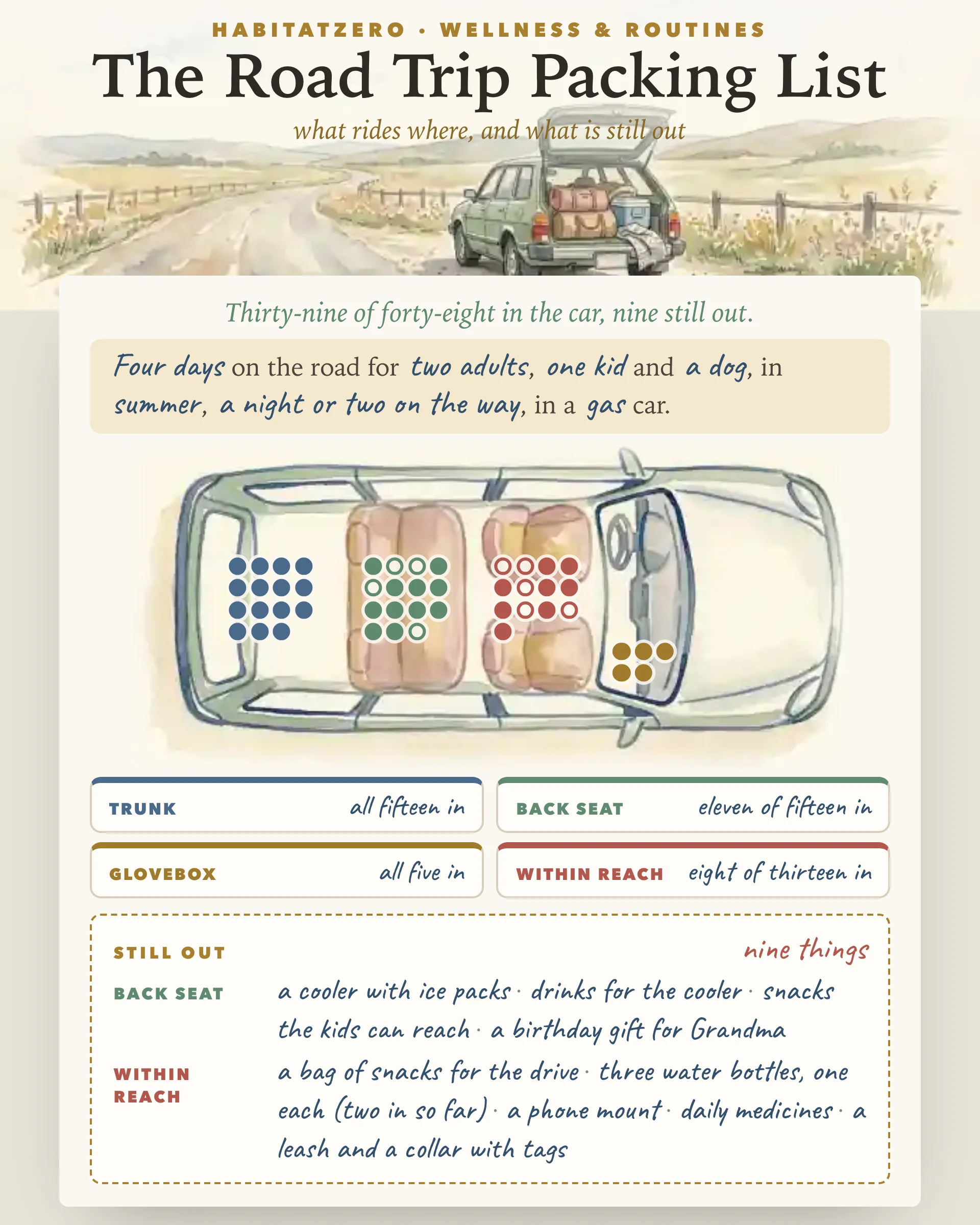
A packing list for a flight is about what fits in the bag. On a road trip the car is the bag, and where each thing rides matters as much as whether it came. The cooler that ends up under two duffels, the charger at the bottom of the trunk, the insurance card nobody can find: none of those were forgotten. Each one was packed into the wrong place.
This page treats the load as the plan. It builds your list from the trip, then sorts every line into one of four places in the car, so you can load it zone by zone and see, before you pull away, what is still sitting in the driveway.
Before any bag goes in, the car needs its own gear. NHTSA's summer driving and road trip tips list what to carry for a breakdown: a cell phone and charger, first aid supplies, a flashlight, flares, cables to jump a dead battery, a tire pressure gauge, a jack, work gloves and a few tools, water, nonperishable food and blankets. The same page asks you to check the spare, not only the four tires on the ground. For cold months, the agency's winter driving tips add a snow shovel, an ice scraper and sand or kitty litter for traction, and they warn that a bulky coat gets in the way of a car seat harness: dress children in thin warm layers and lay a blanket over the buckled straps.
So the list opens with roadside safety, and two of its lines are checks rather than things to pack: the spare holds air, and the jack and lug wrench are where you think.
Everything goes to the trunk, the back seat, the glovebox, or within reach of the front seats. Heavy bags go low in the trunk and go in first. The cooler, pillows and whatever the kids need ride in the back. Papers, the paper map, the tire gauge and the flashlight live in the glovebox. Snacks, water bottles, the phone mount and daily medicines stay within reach, because most of a road trip happens between exits.
You will read warnings that every loose bag turns into a missile in a crash. The research is calmer than that. An analysis of sixteen years of US crash investigations found that cargo was not a major source of injury in frontal crashes, though loose objects in the cabin did hurt some back-seat passengers, and the cases included a bicycle riding in the third row of a station wagon and an unsecured fan. The sensible reading is plain: keep hard, heavy things in the trunk, not on the seat beside a child.
The trip line is handwriting you can tap: days on the road, adults and kids, a dog or a cat, the season, nights stopped on the way, and gas or electric. Every change rebuilds the list. More riders means more water bottles and bags, four days or more adds a laundry bag, and winter swaps the emergency blanket for warm ones, a shovel and something for traction.
Tap a line as it goes into the car and a pip fills in its zone on the painted car. Tap a zone's card to see only what rides there, which is how loading really goes: standing at the open trunk, then at the back door. Anything can move to another zone, though a cooler never fits the glovebox, which stops at eight small things.
If the trip changes after you have loaded, the list follows. Add a second kid once the bags are in, and the bags line changes to four, one each, with three in so far. Swap the dog for a cat and the leash you already loaded shows up as still in the car but off this trip's list; it stops counting until you take it out or switch back.
Before you leave, the still-out card names what has not made it into the car, zone by zone. Back home, tap whatever never came out: the page counts them by zone, so you might read that two things never left the trunk, and the next trip starts with them left home, one tap from coming back. Roadside safety gear stays out of that count, since riding along unused is its job.
An electric car adds its charging cord and adapters to the trunk, plus two lines that live on the phone: charging apps set up with a way to pay, and a charging stop planned for each leg. The Department of Energy's station locator maps public chargers across the United States and Canada, so you can check a route before trusting one app.
Set the trip the evening before, while the car is still in the driveway, and load the trunk then; the cooler, the snacks and the medicines go in the morning. What goes inside each bag is its own job, and the Packing List counts clothes to the days. If the drive ends at a new home, the Moving Out of State Checklist keeps the rest of the move in order. For the quiet middle of the drive, Conversation Starters for Family gives the back seat something better to ask than whether you are there yet.
The car's own gear comes first: a spare with air in it, a jack, cables for a jump start, first aid supplies and a flashlight. After that come water and snacks, a cooler, a phone mount and charger, music and maps downloaded for dead zones, and a bag for each rider. Kids and pets each add a short list of their own.
NHTSA suggests a phone and charger, first aid supplies, a flashlight, flares, cables for a jump start, a tire pressure gauge, a jack, work gloves, basic tools and duct tape, water, food, medicines, extra washer fluid, maps and blankets. In winter it adds a snow shovel, an ice scraper and sand or kitty litter for traction.
Sort by where things ride rather than by what they are. Heavy bags go low in the trunk, the cooler and pillows ride in the back seat, papers and a paper map live in the glovebox, and snacks, water and the phone mount stay within reach, so nobody unpacks the trunk at a rest stop.
It is a rule of thumb passed around among RV drivers, not an official standard: no more than three hundred miles in a day, arrive by three in the afternoon, and stay three nights before moving on. Fewer moves also means fewer mornings spent repacking the trunk.
The example on this page shows a family trip already half loaded. To set your own trip, load your own car and keep the list for the drive home, personalize it in HabitatZero, which is free.
By the team behind Fabulous, the science-based self-care app used by over 30 million people.


