The Overwhelm Recovery ProtocolWellness & Routines · ~5 min
About this template · Updated July 2026
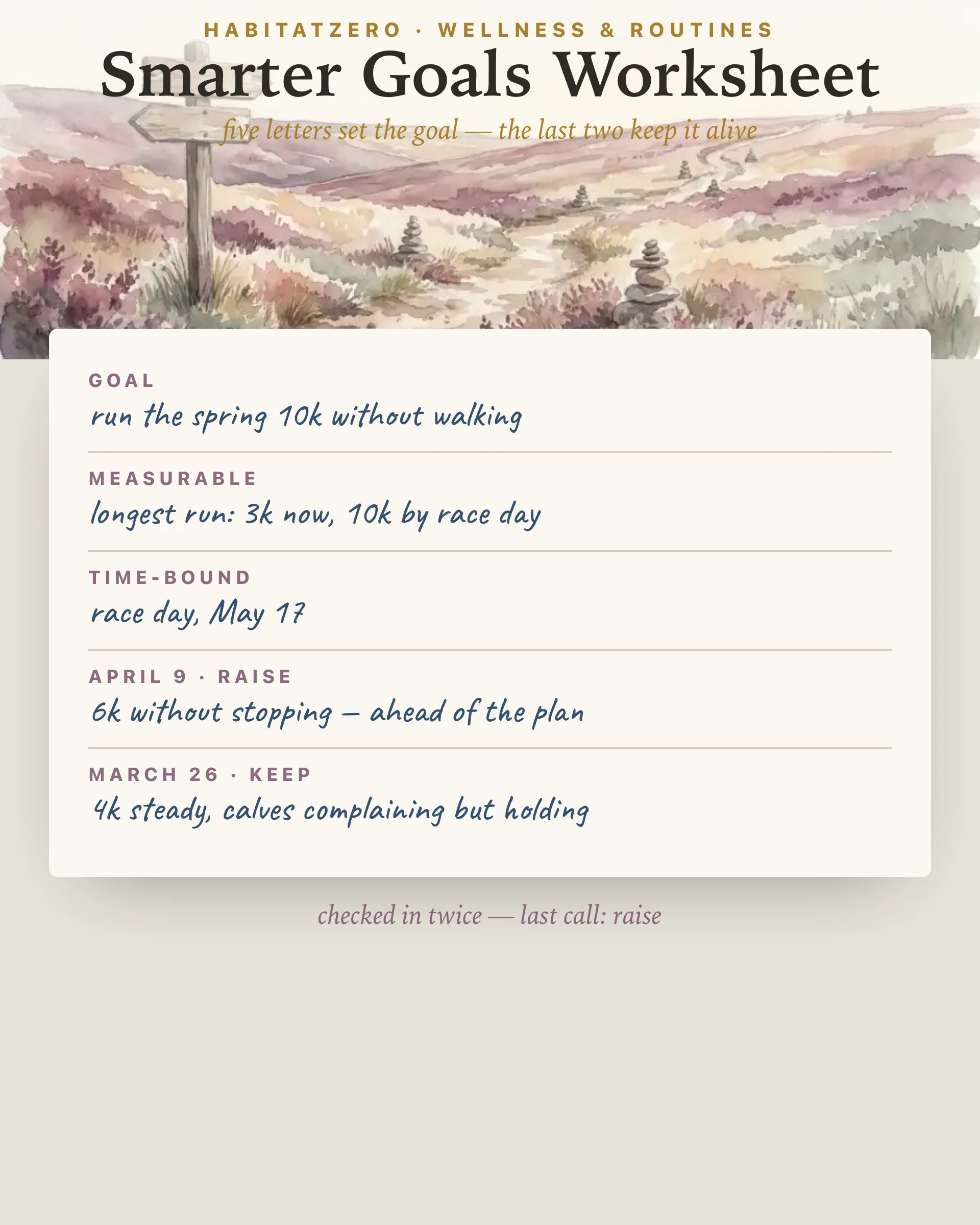
Every January produces the same artifact: a beautifully specified goal that nobody ever looks at again. The classic five-letter framework is genuinely good at the writing part — it forces edges onto a fuzzy wish — but it ends exactly where most goals die: the morning after. SMARTER keeps the framework and adds the two letters that do the surviving. Evaluate puts a recurring date on reading your own numbers. Readjust makes changing the target a legitimate move instead of a quiet failure.
The worksheet walks one goal through the classic letters, each as a single pointed question with room for one honest line. What exactly gets done, and what is out of scope. Which number moves, from what to what. What the real odds are. Why this goal in this season. And a date on the calendar, not a mood. Decades of research back the underlying mechanics: goal-setting theory's core finding is that specific, appropriately difficult goals reliably outperform vague encouragements to do your best — the specificity you write at these stations is the active ingredient, not paperwork.
Here is where this sheet parts ways with its SMART sibling. At Evaluate, you commit to a rhythm — weekly, every two weeks, or monthly — and the worksheet dates your next check-in from your last one. That single mechanical detail carries surprising weight: a meta-analysis of 138 studies found that prompting people to monitor their progress reliably increased goal attainment, and that the effect grew when the monitoring was recorded rather than merely noticed. The log is the intervention.
At Readjust, each check-in gets one line — what the numbers actually said — and one call: keep, raise, lower, or pivot. Raising is for the happy surprise of being ahead. Lowering is not surrender; an adjusted target you still chase beats an intact one you avoid opening. Pivoting is for when the season changes underneath the goal. The stack of dated calls becomes something no fill-once worksheet can produce: the story of how the goal met reality, told in your own handwriting.
Set the goal once, properly — five minutes. Then let the check-in date do the remembering. When it arrives, read the number with both eyes open, write the line, make the call. If you are still sharpening the goal itself before committing, the SMART goals worksheet runs each letter through a live check first, and pairs well as the drafting step before this sheet takes over the long game. For goals that are really systems in disguise — daily reps rather than a finish line — the daily habit tracker is the better instrument; and if the goal spans a season, the twelve-week year gives it a container.
A goal is a bet about the future. This worksheet just insists you come back and settle it.
The five classic letters — Specific, Measurable, Achievable, Relevant, Time-bound — plus Evaluate and Readjust. The extension turns a one-time writing exercise into a review loop: scheduled looks at the number, followed by an explicit decision about the target.
A SMART worksheet is finished the evening you fill it in. This one is designed for the weeks after: it adds a check-in cadence and a running log where each entry records what the numbers said and the call you made — keep, raise, lower, or pivot.
Match the cadence to how fast your number moves. Training and study goals usually earn a look every week or two; slower targets like savings suit monthly. The worksheet dates your next check-in from the previous one, whichever rhythm you pick.
That is the worksheet working, not failing. Lower the target and keep moving, or pivot if the season changed underneath you — an adjusted goal you still pursue beats an untouched one you quietly abandon.
By the team behind Fabulous, the science-based self-care app used by over 30 million people.