The Overwhelm Recovery ProtocolWellness & Routines · ~5 min
About this template · Updated July 2026
Credit where it belongs: JournalSpeak is the creation of Nicole Sachs, LCSW — psychotherapist, author, and host of the podcast that carried the method around the world. Her work lives at The Cure for Chronic Pain, and that is where the method itself — the books, the courses, the community — should be learned. This page is an independent writing sheet inspired by the practice's public shape, offered with plain credit; it is not affiliated with, endorsed by, or connected to Nicole Sachs. And one thing said early, because it matters: nothing here treats, diagnoses, or promises anything about pain or any other symptom. If you are hurting, your doctor comes first.
What this page does offer is the part of the practice that is simply good writing hygiene for a heavy heart: prompts worth twenty uncensored minutes, and a place to write them where nothing is ever kept.
People who practice JournalSpeak-style writing describe the same discovery: the censor is the problem. Write in a journal that keeps things and some part of you is always drafting for the record — softening the sentence about your mother, balancing the complaint with fairness, performing perspective you do not yet have.
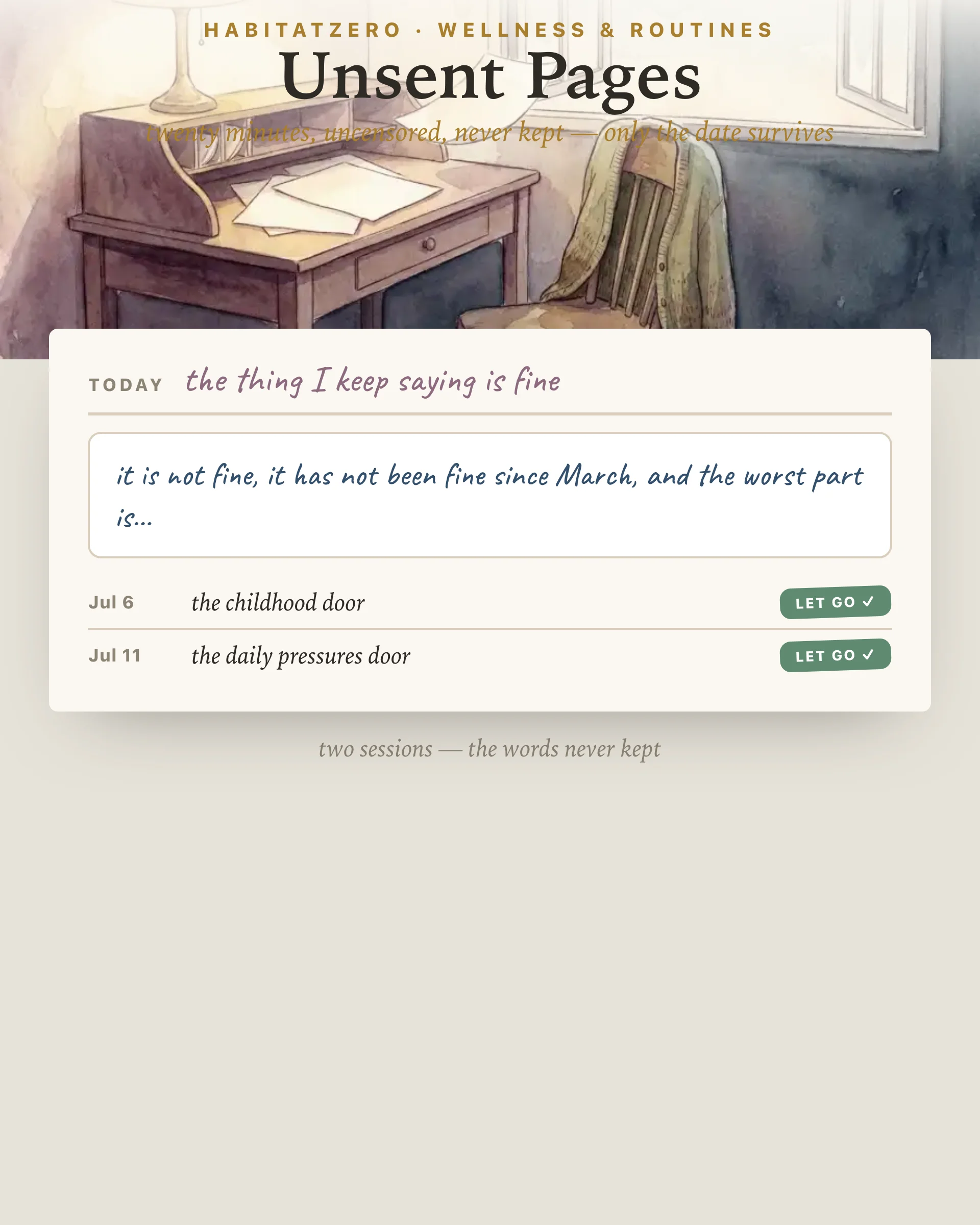
So this sheet removes the record. The prompts come from three wells the method classically draws on — childhood (the rule our house never said out loud), daily pressures (the thing I keep saying is fine), personality (what my anger is usually protecting). Pick a door, set a real timer for twenty minutes, and write without lifting the pen: messy, unfair, repetitive, honest. Do not reread. Do not edit. Nobody reads this — including tomorrow's you.
The writing page and the prompt line are never saved. Not synced, not stored, not recoverable. When the timer ends, one tap lets the pages go, and the words stop existing anywhere. What survives is a single dated ledger line — July 14, the childhood door, let go — which over weeks becomes something quietly valuable: proof of a practice with no transcript attached.
The idea that writing helps because you keep the writing turns out to be backwards. In the study that founded the expressive-writing field, James Pennebaker and Sandra Beall had students write about their most disturbing experiences for four brief sessions — and the writing was collected away, never returned, never reread. The benefits that followed came from the act of confrontation on the page: putting the unsaid into words, in full, once.
Decades of research since have kept circling that finding: it is the saying, not the keeping. Which means the destruction step — Sachs herself tells people to throw the pages away — is not theater. It is the removal of the last audience. A page that will not exist in ten minutes is the only page some sentences will ever agree to be written on.
Two honest cautions live alongside that. First, this kind of writing can stir real sediment; if what comes up feels bigger than a page can hold, that is a signal to bring a therapist into the picture, not to write harder. Second, the boundary matters as much as the depth — twenty minutes, then the close, then back to your day. The practice is a controlled burn, not a house fire.
When the pages go, the sheet offers two quiet lines and asks for one slow breath. Do not skip that minute. The method's own rhythm follows the writing with deliberate self-kindness — a settling, a hand on the chest, whatever form gentleness takes for you — because the point was never to marinate in what you wrote but to say it and set it down.
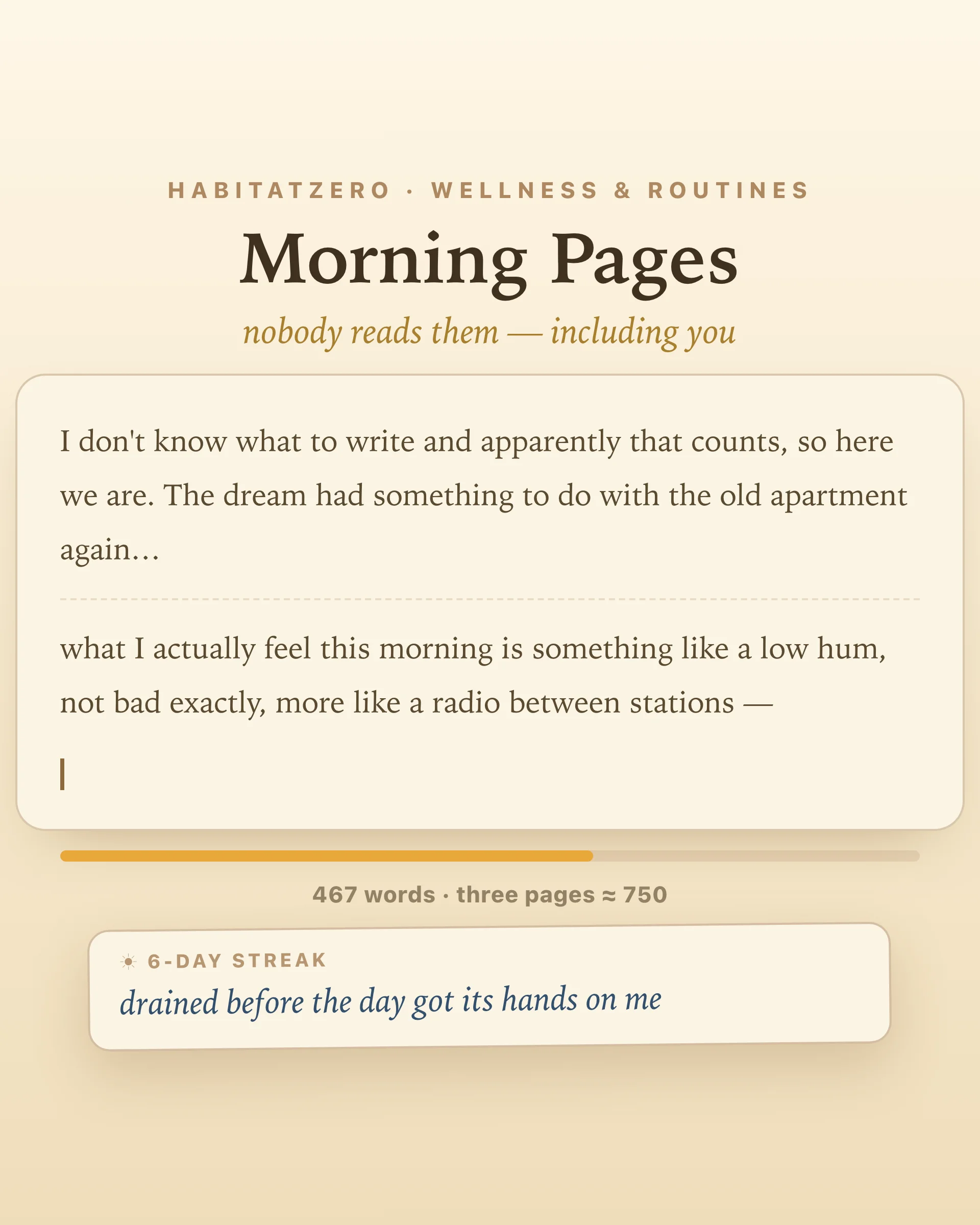
If you find you want a daily writing practice with lower stakes between sessions, morning pages run the gentler everyday version of the uncensored pen, and a mood journal catches the day in one honest line when twenty minutes is more than you have.
Pick the door with the pull to it. Set the timer. Say the unsayable to a page that will keep no evidence — and then take the breath, and go back to your life a little lighter than the ledger will ever show.
No. JournalSpeak is the creation of Nicole Sachs, LCSW, and her books, podcast, and courses are the official home of the method. This page is an independent writing sheet inspired by the practice's public shape, with credit given plainly; it is not affiliated with, endorsed by, or connected to Nicole Sachs. For the method itself, go to her resources directly.
Really. The prompt line and the writing page never touch storage — nothing you type there is saved, synced, or transmitted anywhere, and letting the pages go simply erases them from the screen. The only thing kept is a dated ledger line saying which door you wrote through. The privacy is not a feature of the exercise; it is the exercise.
Because the writing does the work, not the keeping. Expressive-writing research going back to James Pennebaker's foundational studies found that putting disturbing experiences into words for a few sessions changed how people carried them afterward — the benefit came from the confrontation on the page, not from owning a transcript. Destroying the pages removes the last reason to self-censor.
This page makes no promises about pain, and you should not use it in place of medical care — if you are hurting, see your doctor, and bring the whole story. What can be said honestly: JournalSpeak grew out of work with people whose distress and symptoms were entangled, and expressive writing is a well-studied practice for processing what goes unsaid. Whether and how that intersects with any symptom of yours is a conversation for you and a clinician, not a worksheet.
Yes. The doors, the pages, and the ledger are free, no account needed. Print the prompt lists if you prefer to write on paper — burning or shredding the pages afterward is the analog version of the same letting-go.
By the team behind Fabulous, the science-based self-care app used by over 30 million people.