The Overwhelm Recovery ProtocolWellness & Routines · ~5 min
About this template · Updated July 2026
Months end the way most things end in a busy life: unnoticed, mid-scroll, with the calendar flipping somewhere in the background. And that's a quiet loss — because the edge of a month is the most useful moment it contains. It's far enough to see patterns a daily check-in can't, close enough to actually steer, and it comes with a built-in psychological tailwind that January hoards for itself.
A monthly reset is twenty minutes at that edge: harvest what happened, close it on purpose, travel light into the next one. This is the version that remembers everything so you don't have to.
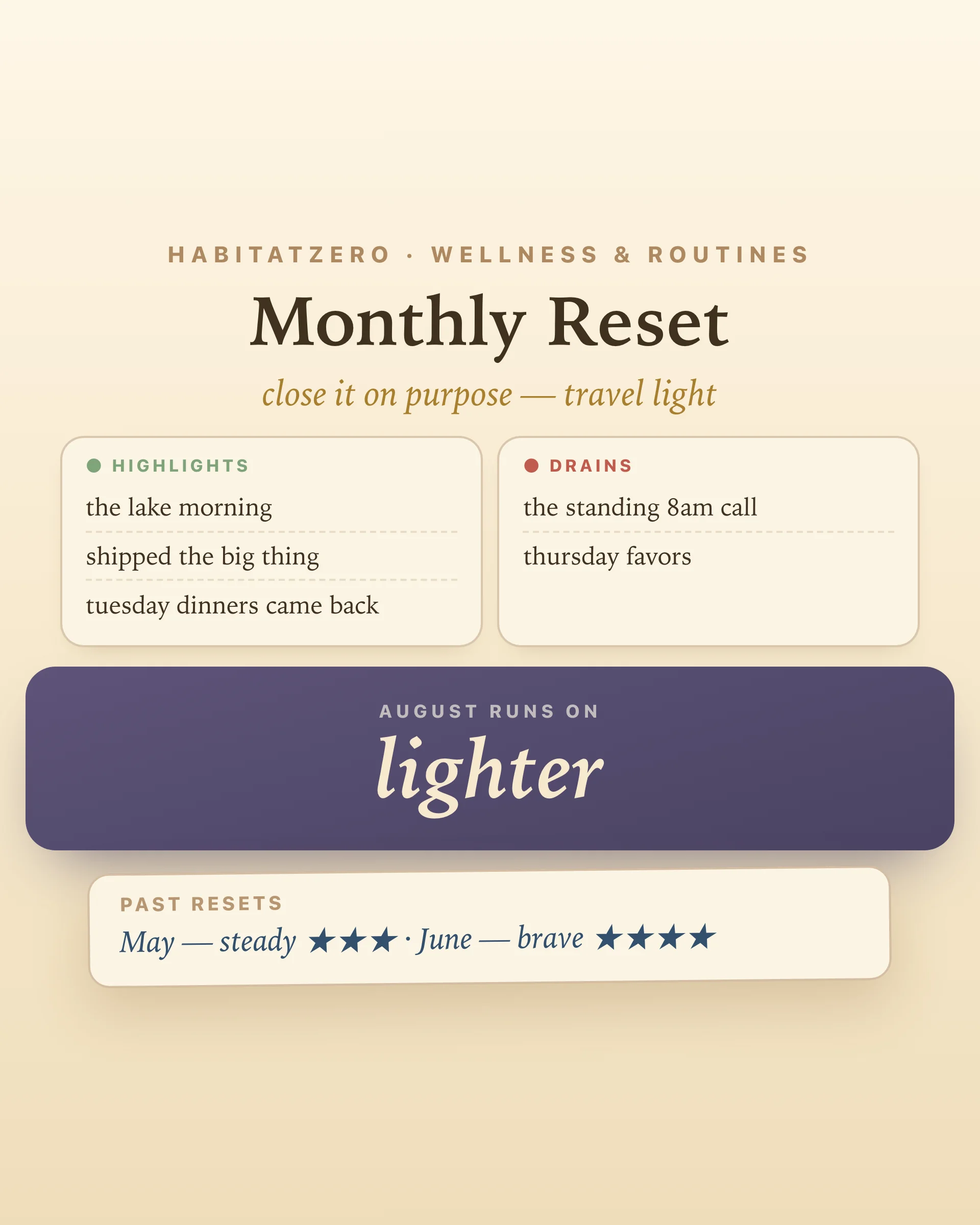
Harvest. Rate the month honestly, one to five — no month is a five, and that's fine. Then two lists. Highlights: what was actually good, however small — the dinner, the finished thing, the afternoon that surprised you. Small ones count double; the noticing is the benefit. And drains: what consistently cost you — a recurring task, a commitment that curdled, the meeting that should be an email. The drains list is secretly the most valuable thing you'll write all month: it's next month's quiet fixes, pre-diagnosed.
One word. Pick a word for the month ahead — steady, lighter, brave, deliberate — or write your own. The word isn't a goal; it's a tiebreaker. Goals live in documents; a word fits on a sticky note and inside a hard Tuesday, quietly voting on the small decisions goals never reach.
Three intentions, keepable ones. Not resolutions — intentions sized for ordinary weeks. Walk on non-gym days. One drain removed. Call, not text, twice. Three is the ceiling because four is a list, and lists get filed.
Download the reset card if you want it visible. Then live the month — and when the next edge arrives, the tool archives this reset into your history automatically. Six months in, the row of words and ratings reads like a story: steady (3), lighter (4), brave (2), brave again (4)… That story is the long-term product.
The reset leans on two findings. The first is the fresh-start effect: people are measurably more likely to begin goal pursuits at temporal landmarks — new weeks, new months, birthdays — because the boundary lets you file the old self's failures under "last chapter." January owns the brand, but the effect fires twelve times a year, and the monthly dose comes with lower stakes and fresher information. A resolution broken in March waits nine months for repair; a monthly intention gets mended at the next edge.
The second is quieter: simply reviewing progress regularly is one of the most reliable levers in the goal-pursuit literature. Not planning harder — looking more often. The reset is a looking ritual with a calendar anchor, which is exactly the combination that survives.
Anchor it to something that already happens: the last Sunday evening, the first coffee of the 1st, payday. Keep it under twenty minutes — a reset that becomes a production gets skipped in busy months, and busy months are the ones that need it. And carry one thing forward deliberately: either the word (words are allowed to repeat; brave again is a fine chapter title) or one unfinished intention, renewed without guilt.
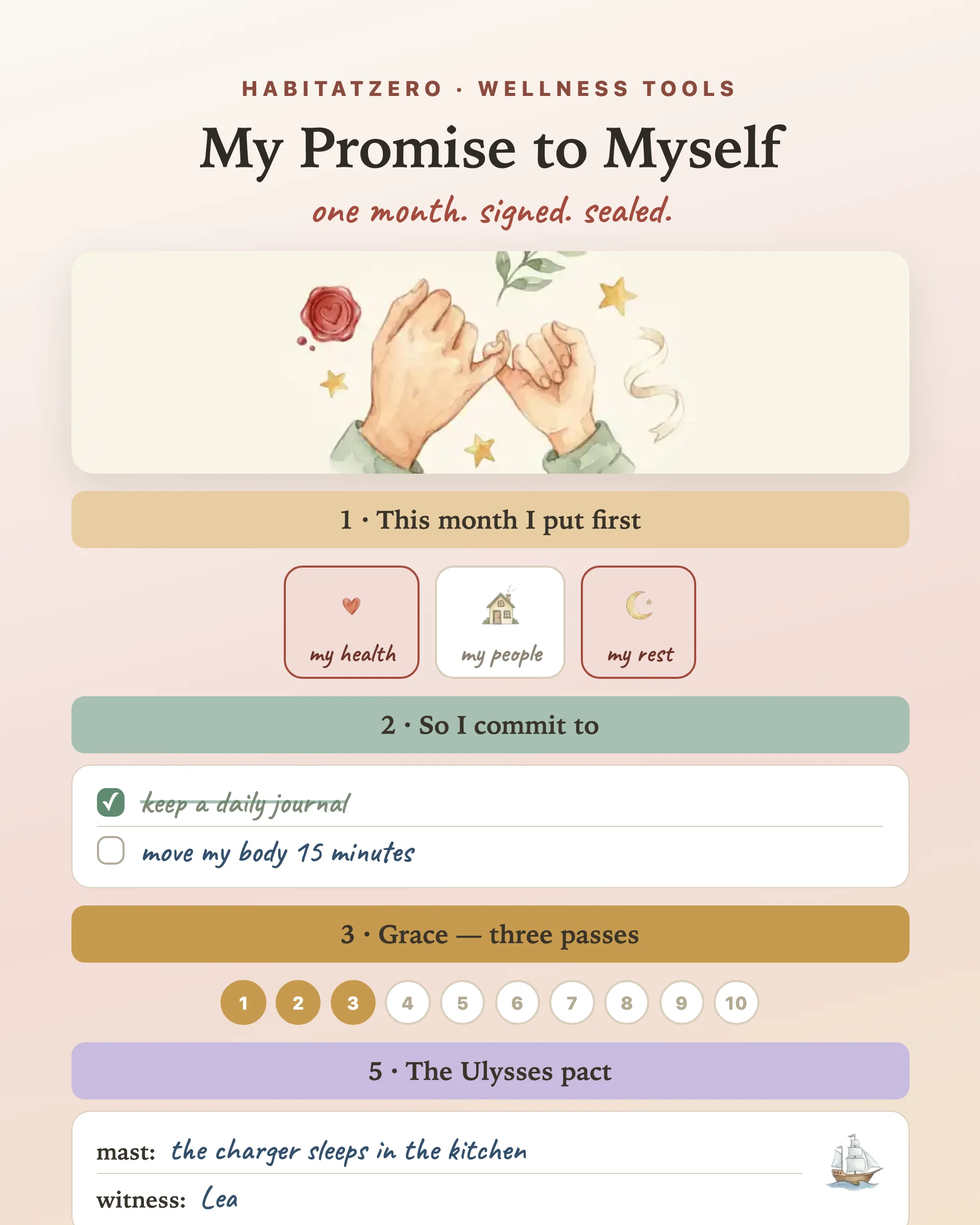
The monthly sits in a family of rhythms. Daily closing lives in Tend Your Day; the reset is its zoom-out. If one intention deserves teeth, make it a signed promise in My Promise to Myself — and if it's a repetition habit, give it a row on the Weekly Habit Tracker with a target it can hit. When an intention needs edges and a date, run it through the SMART Goals Worksheet — a reset intention is often a SMART goal waiting for its number.
Twenty minutes, twelve times a year. The months were always going to end — the reset just makes sure they end somewhere.
A short ritual at the month's boundary: look back at what the month held, close it deliberately, and set a light intention for the next one. It sits between the daily check-in (too small to see patterns) and the year review (too far apart to steer with) — twelve chances a year to notice drift while it's still cheap to correct.
Four parts cover it: an honest rating of the month, its highlights (small ones count — research on savoring suggests the noticing itself is the benefit), what drained you, and a light setup for next month. This template adds the word-of-the-month, which earns its place by being the only goal format that fits inside a bad Tuesday.
Because the fresh-start effect — the well-documented boost in motivation at temporal landmarks — fires at every month boundary, not just January. Twelve small resets beat one grand one: each carries lower stakes, fresher information, and a shorter distance to fall. A January resolution abandoned in March waits nine months for repair; a monthly intention gets fixed at the next edge.
The ones this reset asks, roughly: What actually happened that was good, however small? What consistently drained me — a task, a person, a habit? What does last month suggest the next one needs? And the sleeper question: which drain could next month simply not include? Reviewing progress regularly is one of the most reliable levers in goal research — the questions just make the review honest.
Yes — free, in your browser, no signup. Each reset archives when the next month begins, your words and ratings build a year-long record, and the reset card downloads as an image. In the Fabulous app the history syncs across devices.
By the team behind Fabulous, the science-based self-care app used by over 30 million people.