
Menopause, Muscle Loss, and Insulin Resistance
Menopause Is a Muscle Problem, Not Just a Hormone Problem
▶ Listen to the full episode More from The Dr. Gabrielle Lyon Show
The brief
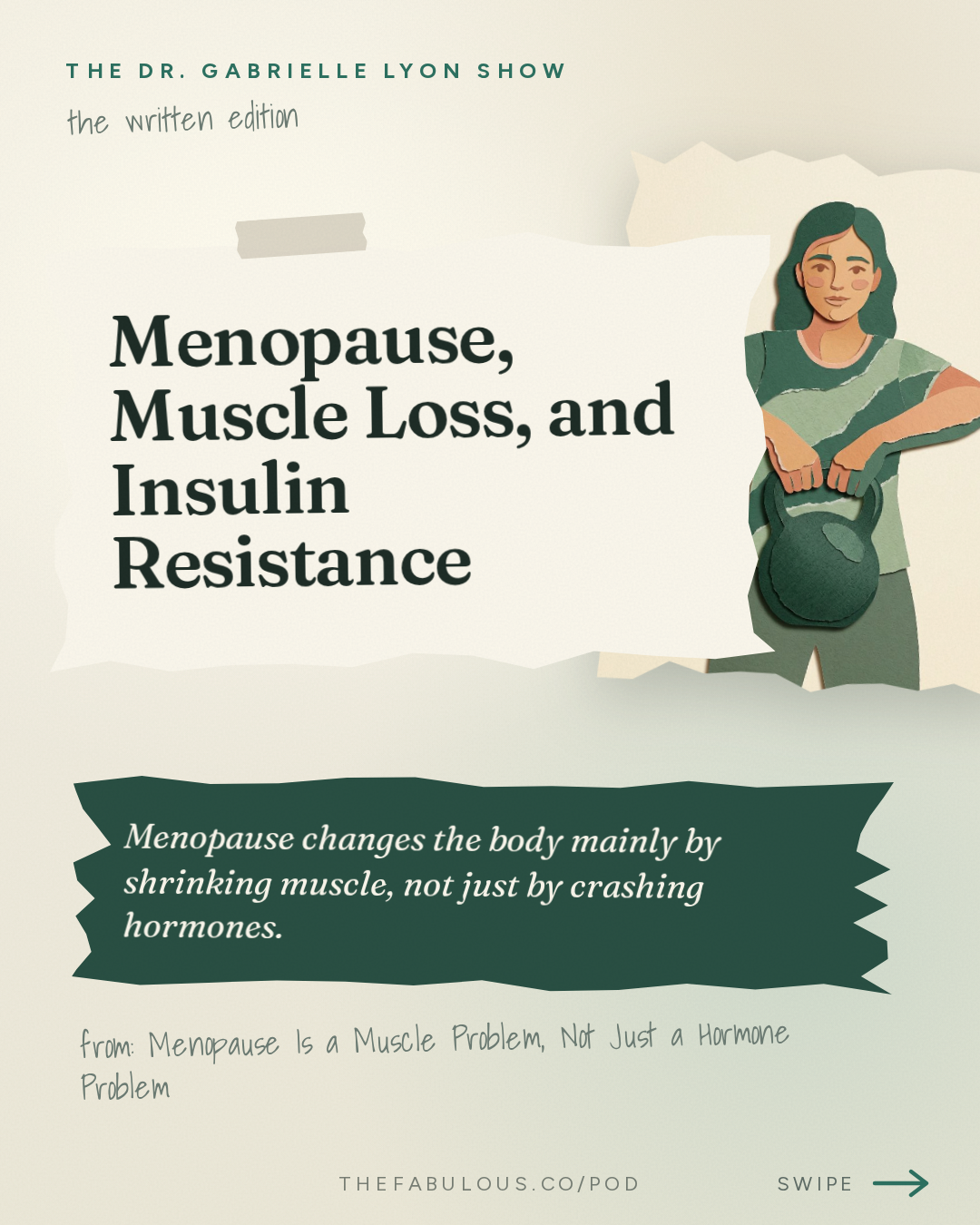
Menopause changes the body mainly by shrinking muscle, not just by crashing hormones. Dr. Gabrielle Lyon argues that muscle loss, which starts speeding up about two years before a woman's final period, drives the insulin resistance, bone loss, and fat gain often blamed on menopause alone, and that resistance training and higher protein intake are the direct countermeasures.
Ask this episode anything
Pod's AI answers from the episode itself, with the minute mark so you can hear it yourself.
Or start with one of these
Ask this episode
Pod's AI listens to the whole episode to answer, and points you to the minute it comes from.
The rest of this answer, and any question after it
Answers come from the episode itself, never from a summary of it.
Continue
Key takeaways
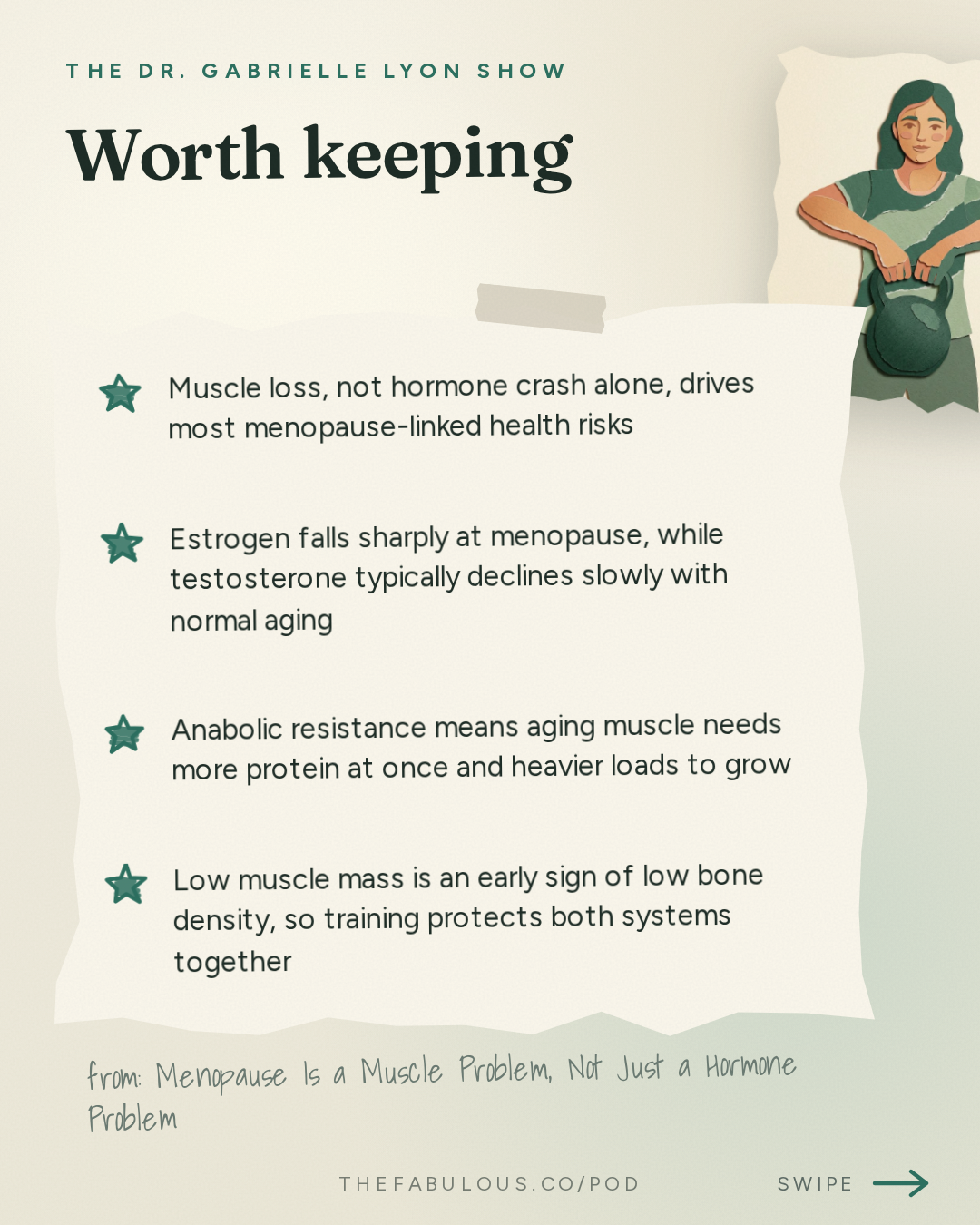
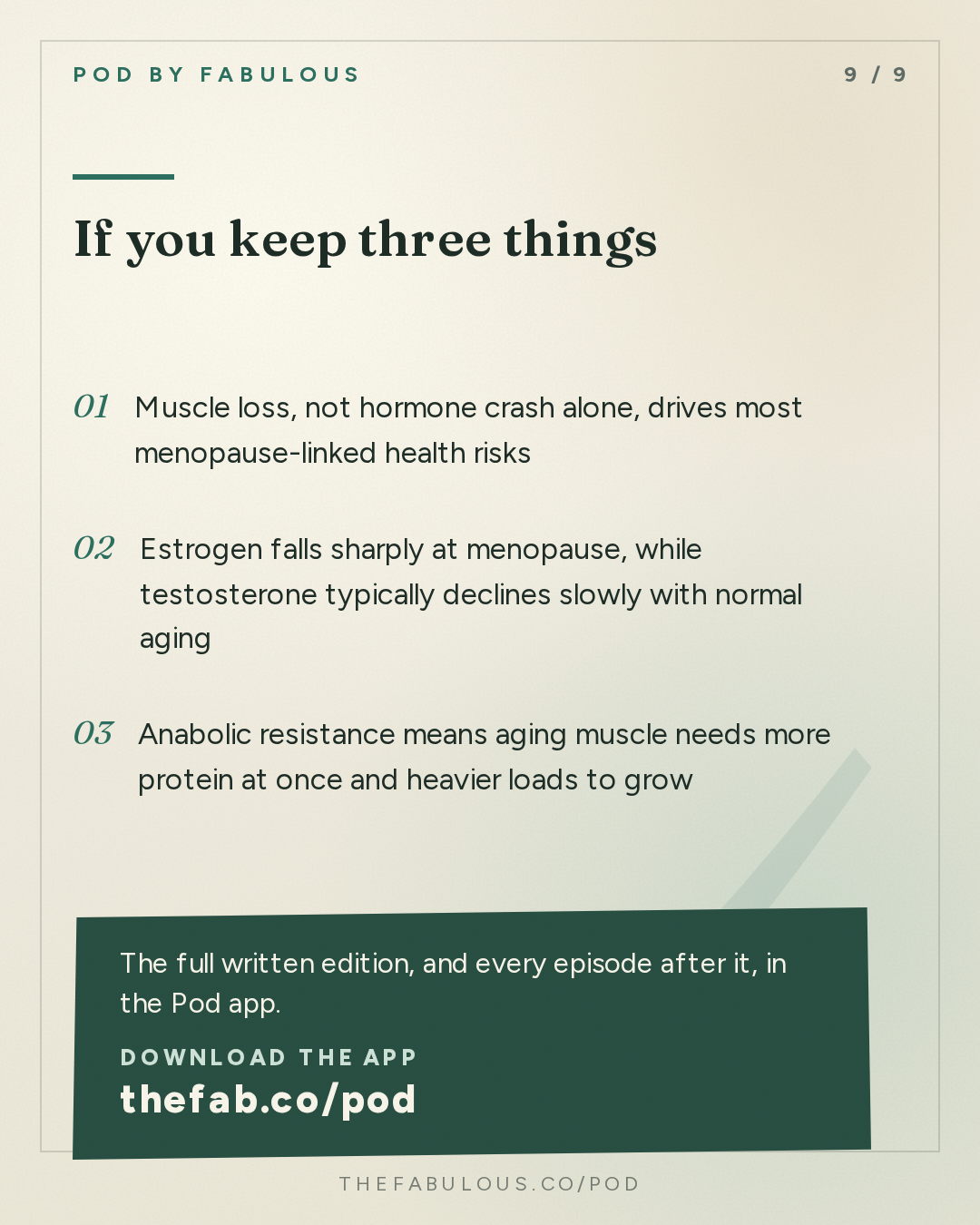
- Muscle loss, not hormone crash alone, drives most menopause-linked health risks
- Estrogen falls sharply at menopause, while testosterone typically declines slowly with normal aging
- Anabolic resistance means aging muscle needs more protein at once and heavier loads to grow
- Low muscle mass is an early sign of low bone density, so training protects both systems together
- Two to three full-body strength sessions a week is the baseline protocol Dr. Gabrielle Lyon recommends
The episode in cards
A friend calls Dr. Gabrielle Lyon in a small panic. She is fifty. She has just tried to lift her suitcase into an airplane's overhead bin and cannot do it. Nobody else on the plane notices. She notices. It takes her three tries. Nothing about this shows up on a hormone panel, and no doctor's appointment gets scheduled because of it, but something in her body has quietly changed. That small, unglamorous failure is the opening of Lyon's argument: the conversation about menopause has been aimed at the wrong target for years.
Lyon, a physician, has spent the public conversation on menopause watching it collapse into a single fork in the road: hormone therapy, yes or no. She thinks that framing misses the more useful, more actionable story, which is happening in skeletal muscle. "We can't treat it as if it's a hormonal problem, a yes or no, do I treat or do I not," she says, because while a woman waits for an appointment or a prescription, she already has access to two levers she controls herself: how she eats and how she trains.
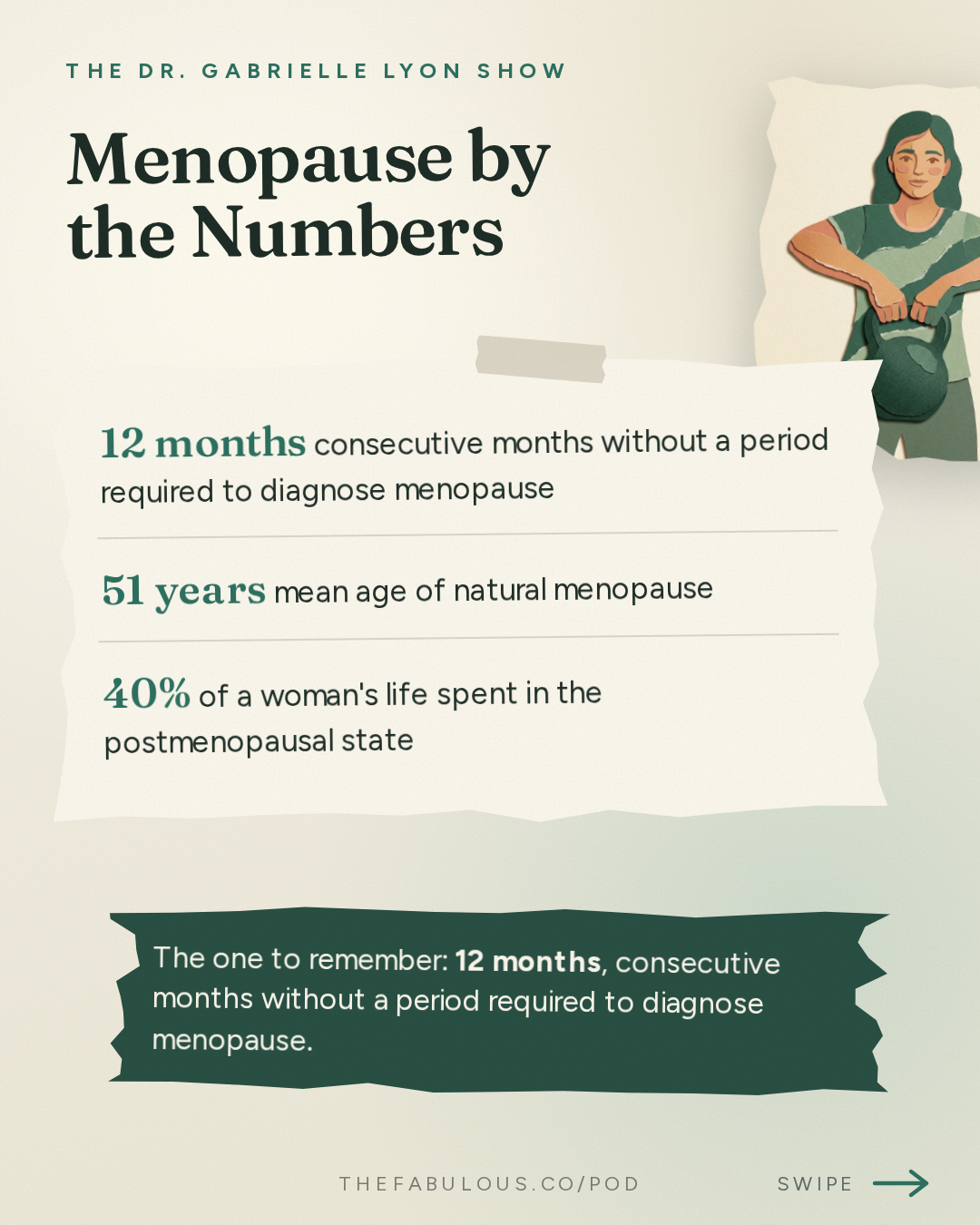
Start with the basic facts, because they are stranger than they sound. Menopause is not a single event you can schedule around. It is diagnosed retrospectively, only after twelve consecutive months without a period (03:50). The average age of natural menopause is fifty one (04:02), and because life expectancy runs well past that, women spend roughly 40 percent of their lives in a postmenopausal state (04:02). That is not a brief transition. It is a second half of adulthood with its own physiology.
"Menopause arrives like tax day, on schedule for some, early for others, late for a few, but it arrives whether or not you are prepared for it." - Dr. Gabrielle Lyon [01:25]
The body composition story starts earlier than most people expect. Lyon says the fastest loss of lean mass tends to happen during perimenopause, the stretch of hormonal fluctuation before periods stop entirely (04:52), and she suspects that for an inactive woman the decline can begin as early as thirty five (05:06). The largest study of this transition in the United States, called SWAN, found that muscle mass drops and fat mass rises beginning about two years before a woman's final period (05:33). That gives a narrow, identifiable window where the shift is measurable, even though current testing, mostly DEXA scans, is not sensitive enough to show what is happening to muscle quality, only muscle quantity.
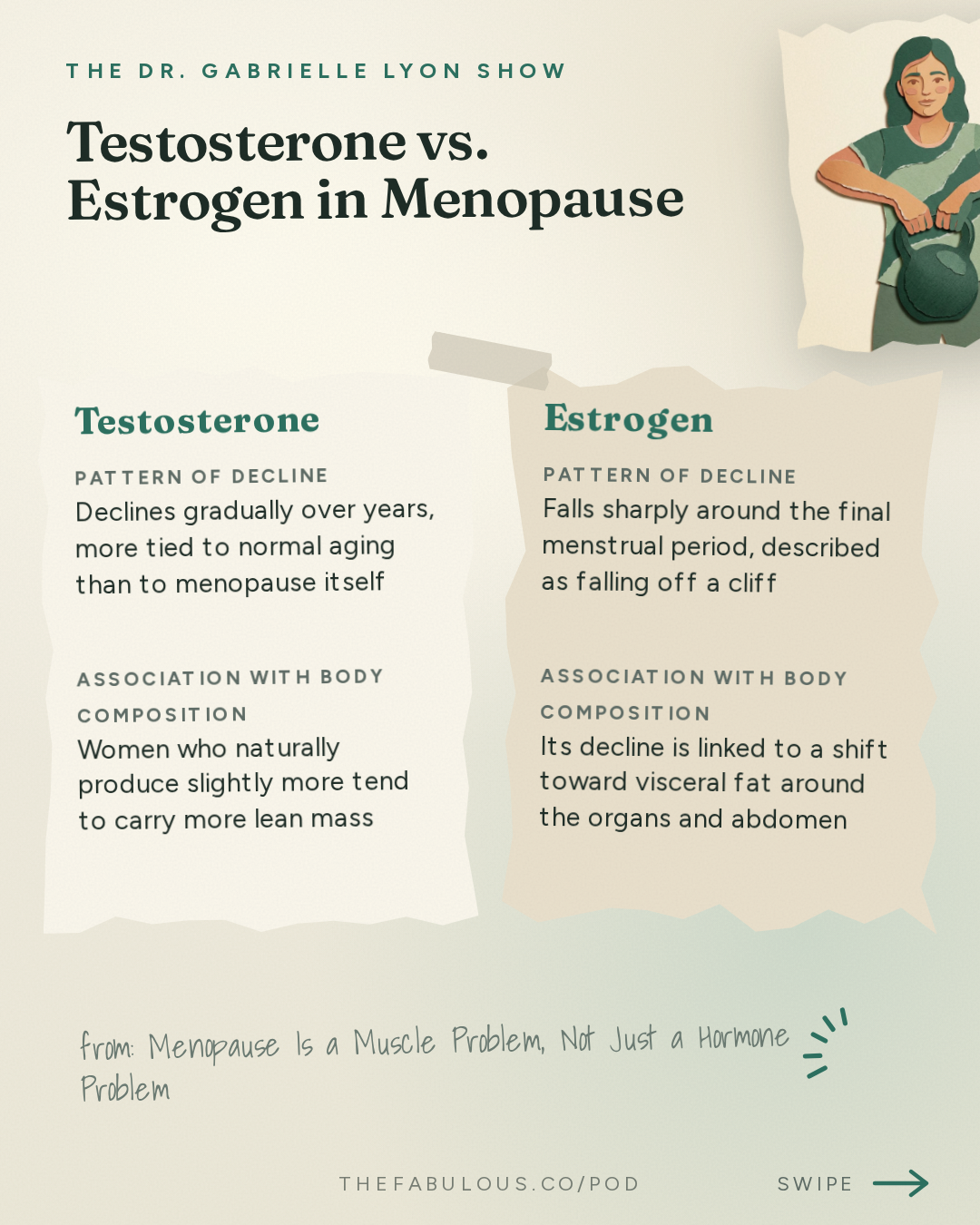
Untangling menopause from ordinary aging is genuinely hard, because both processes run at the same time. Lyon is careful here: a lot of what circulates online attributes every midlife change to menopause itself, and she says that is not well established (06:09). What does seem specific to the hormonal transition is a rise in fat mass and a fall in lean tissue around the time periods stop. The popular image of testosterone as the crashing hormone turns out to be backward. "Testosterone... doesn't actually crash for most people at menopause," Lyon says. "Estrogen is the one that typically falls off a cliff" (07:18). Testosterone decline looks more like an ordinary aging story, gradual and individual, and women who naturally produce slightly more of it tend to carry more lean mass. That is not, she stresses, an argument for testosterone therapy at a female dose, since the evidence does not show it reliably builds meaningful muscle or strength (07:53).
Anabolic Resistance: Why Old Rules Stop Working
The more useful concept, in Lyon's telling, is anabolic resistance. Anabolic simply means tissue building. Anabolic resistance means muscle becomes harder to build because it responds less to the two inputs that normally grow it, protein and mechanical load (08:32).
"Anabolic resistance means your muscle becomes harder to build because it responds less, and primarily less to the two inputs that normally grow it, which are protein and mechanical load." - Dr. Gabrielle Lyon [08:32]
Think of it as a parallel to insulin resistance, except the currency is muscle instead of blood sugar. In a younger body, an ordinary protein meal or one hard training session is enough to flip a molecular switch that starts building tissue. In an aging or menopausal body, that switch gets sticky. It takes a bigger dose of protein consumed at one sitting and more mechanical tension during training to get the same result (09:31). Estrogen appears to play some role here, partly through receptors in joints and tendons. Lyon points to research by her colleague Dr. Jocelyn Whitten showing that as estrogen declines, joints and tendons stiffen and become more prone to injury (10:28), which is one more reason the standard training approach from someone's twenties or thirties may not translate cleanly into their fifties.
The muscle story connects to two other systems that rarely get mentioned in the same breath as menopause: blood sugar and bone. Muscle is the primary site where the body disposes of glucose from carbohydrates. Lose muscle, and there is simply less tissue available to absorb the sugar from a meal, which drives insulin resistance directly (13:41). Lyon recalls a patient in her New York practice years ago: thin, about 18 percent body fat, and pre-diabetic (13:56). The woman was not eating an unusual diet. She had so little muscle mass that a moderate carbohydrate intake overwhelmed her capacity to store it. Bone tells a parallel story. Low muscle mass is an early indication of low bone density (15:14), and a European framework for osteoporosis research treats bone loss and muscle loss as one combined problem, addressed with one combined intervention: mechanical loading plus adequate protein. Lyon notes that the protein target this research points to sits above the standard RDA of 0.8 grams per kilogram of body weight, a threshold she thinks is set too low for maintaining bone through midlife (15:55).
Fat distribution shifts too. As estrogen declines, fat tends to move toward the visceral space, around the organs and abdomen, rather than staying under the skin (16:10). Layered on top of that, research in the Journal of Physiology points to lower resting and sleeping energy expenditure and reduced fat oxidation across the menopause transition, independent of age alone (16:47). Estrogen appears to support energy expenditure, fat burning, and possibly satiety, so its decline can touch all three at once (17:11). Recent reviews also point to a rise in follicle-stimulating hormone, or FSH, as a possibly independent contributor to these metabolic shifts, though the field has not sorted out how much weight FSH carries versus estrogen itself (17:58). None of this, Lyon is careful to add, means a woman who says she has gained weight without changing anything is imagining it. The biology has actually shifted under her.
Training as the Prescription
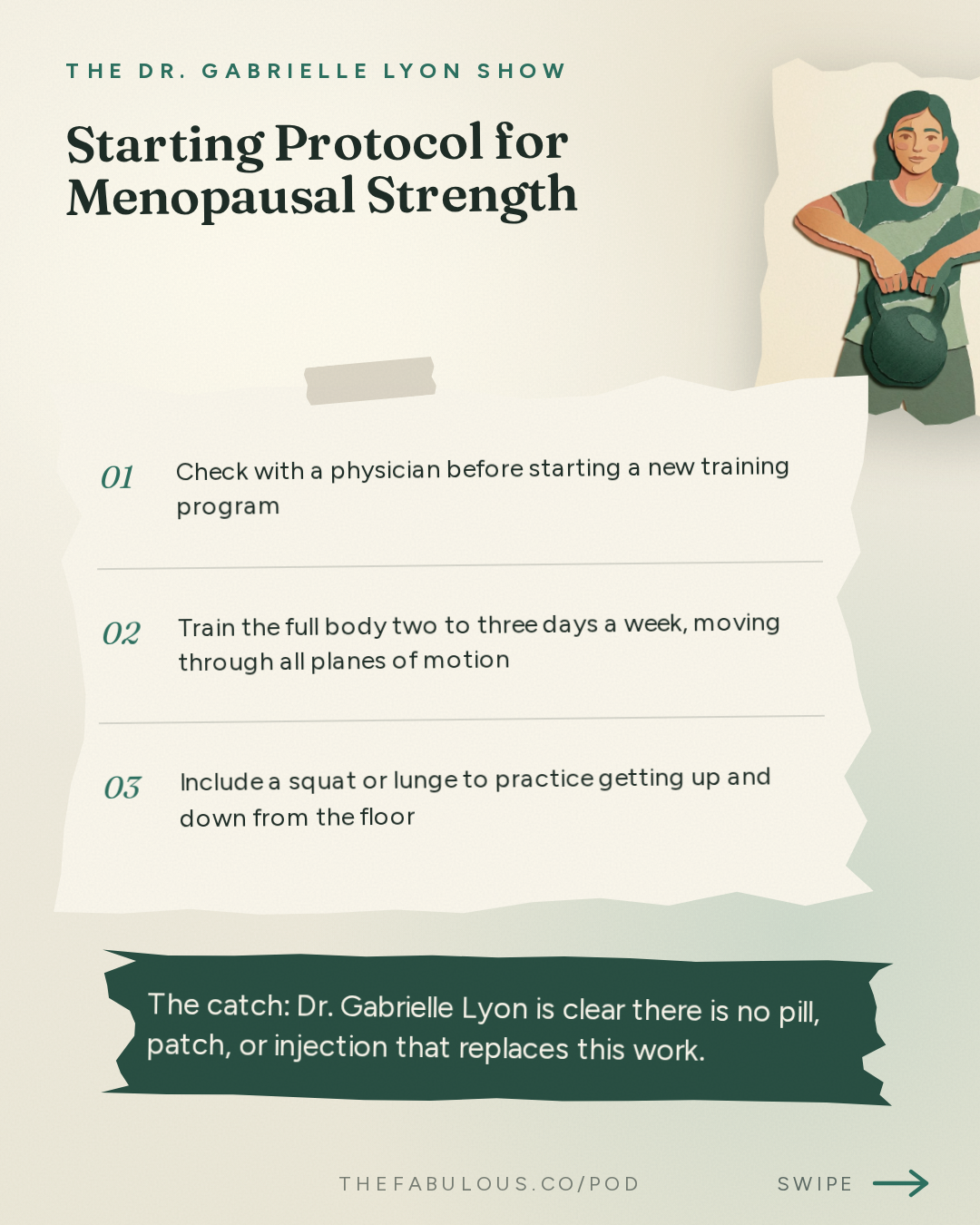
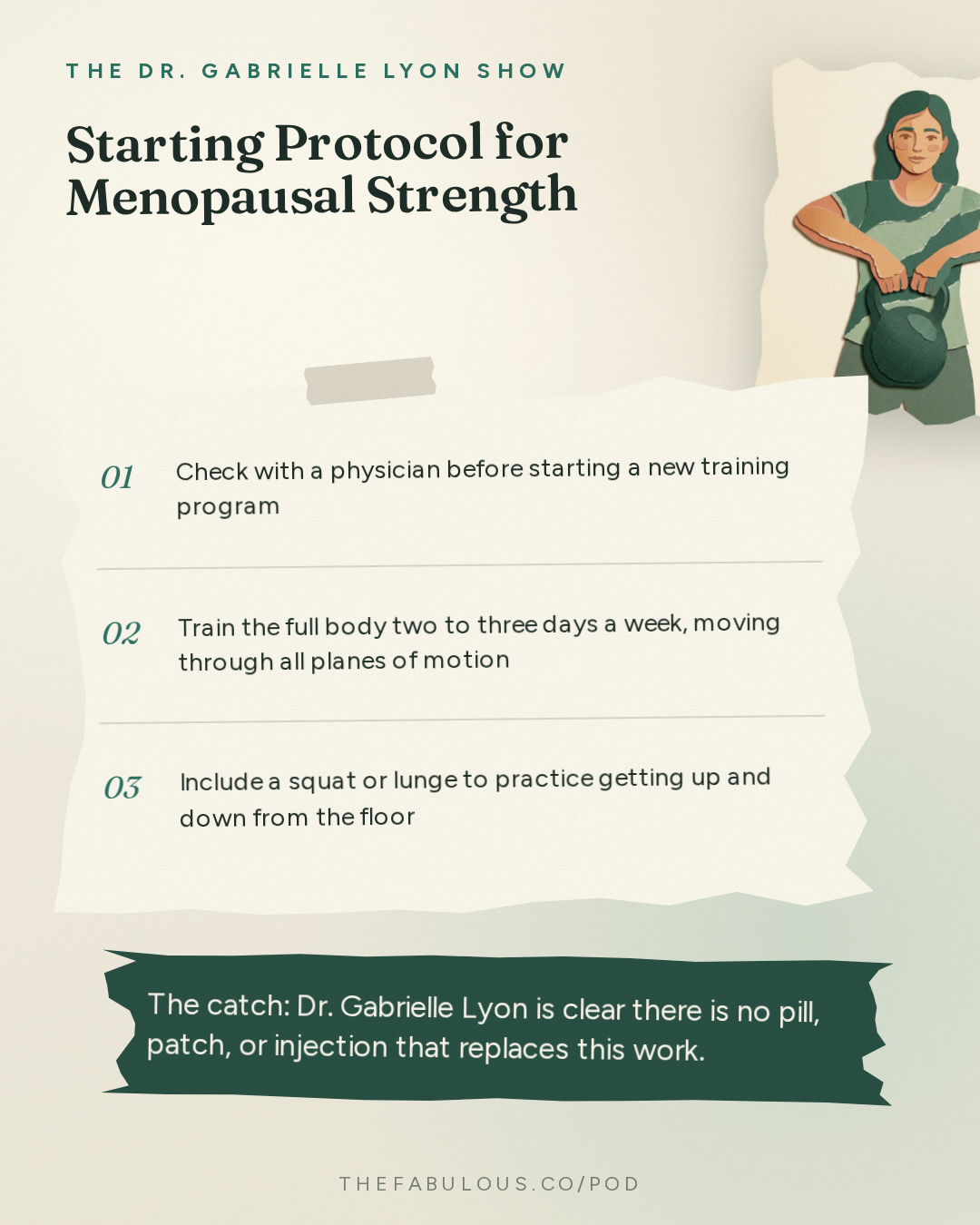
The practical response Lyon offers is not complicated, which is part of her point. She recommends baseline blood testing, so a woman knows where her hormone and metabolic markers actually sit instead of managing her body in the dark (18:16). From there, she suggests two or three days a week of full-body resistance training, moving through all the planes of motion the body needs for ordinary life (18:59): a squat or lunge to get up and down from the floor, a hinge or deadlift to pick something up, a push, an overhead lift, and rotation or carrying movements (19:30). The goal is not aesthetic. It is keeping the body capable of the tasks it already does, from lifting a child to hoisting a suitcase into an overhead bin.
"If you stop moving your body through space in ways that you did when you were younger, then you will get to a place where you will no longer be able to move your body through space in the way that you once did." - Dr. Gabrielle Lyon [20:11]
What makes this framing worth sitting with is not that it denies hormones matter. It is that it refuses to let hormones be the only lever on the table. A woman does not need a prescription to start a squat pattern or eat more protein at breakfast. She needs to know that the loss of strength she is noticing, the suitcase she suddenly cannot lift, is not a mysterious failing of her body or her willpower. It is a specific, describable physiological shift, with a specific, describable response. Menopause, on this account, is still coming for everyone who lives long enough to reach it. What changes is whether a woman spends the 40 percent of her life on the other side of it strong or not.
By the numbers
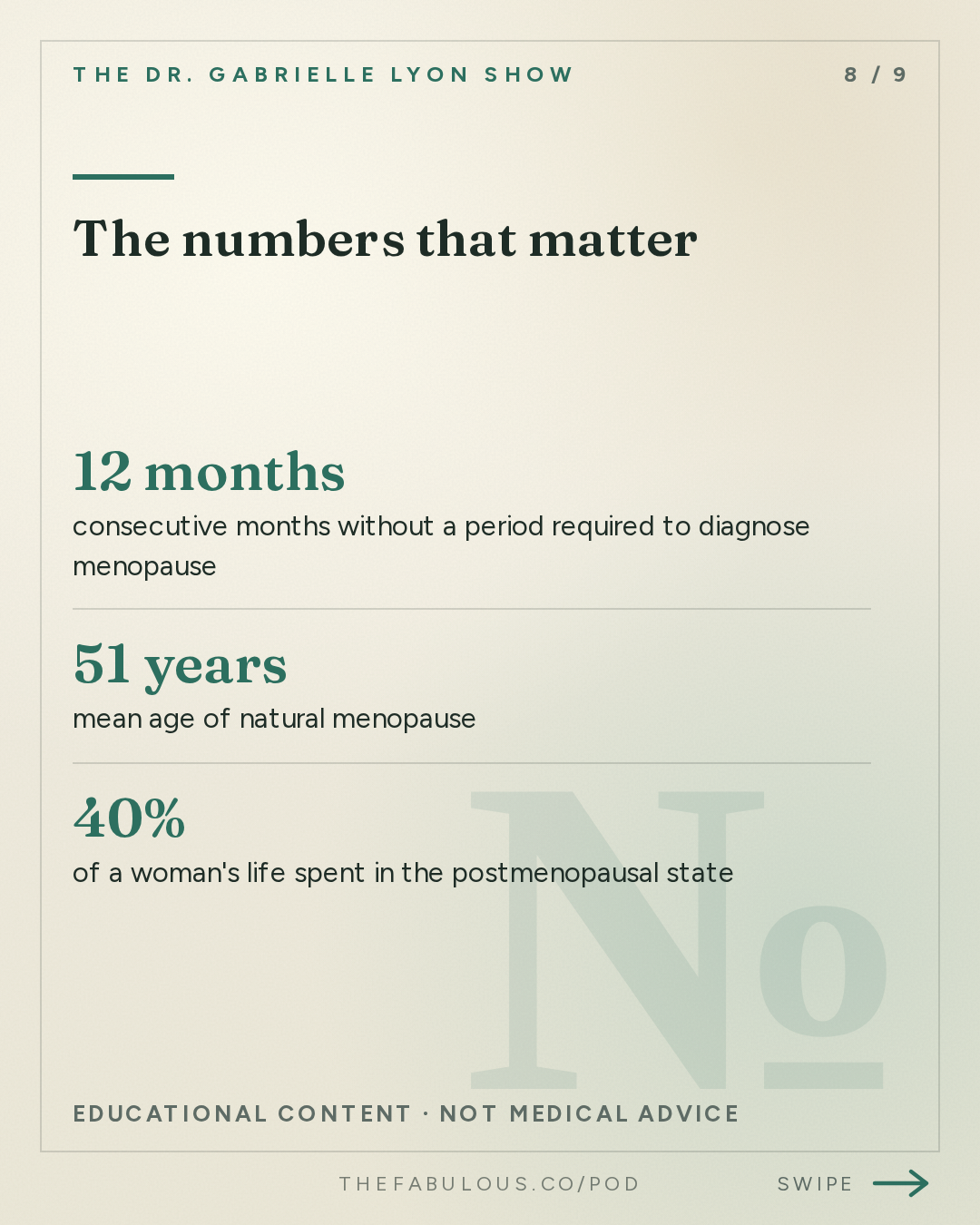
- 12 months consecutive months without a period required to diagnose menopause
- 51 years mean age of natural menopause
- 40% percent of a woman's life spent in the postmenopausal state
In their words
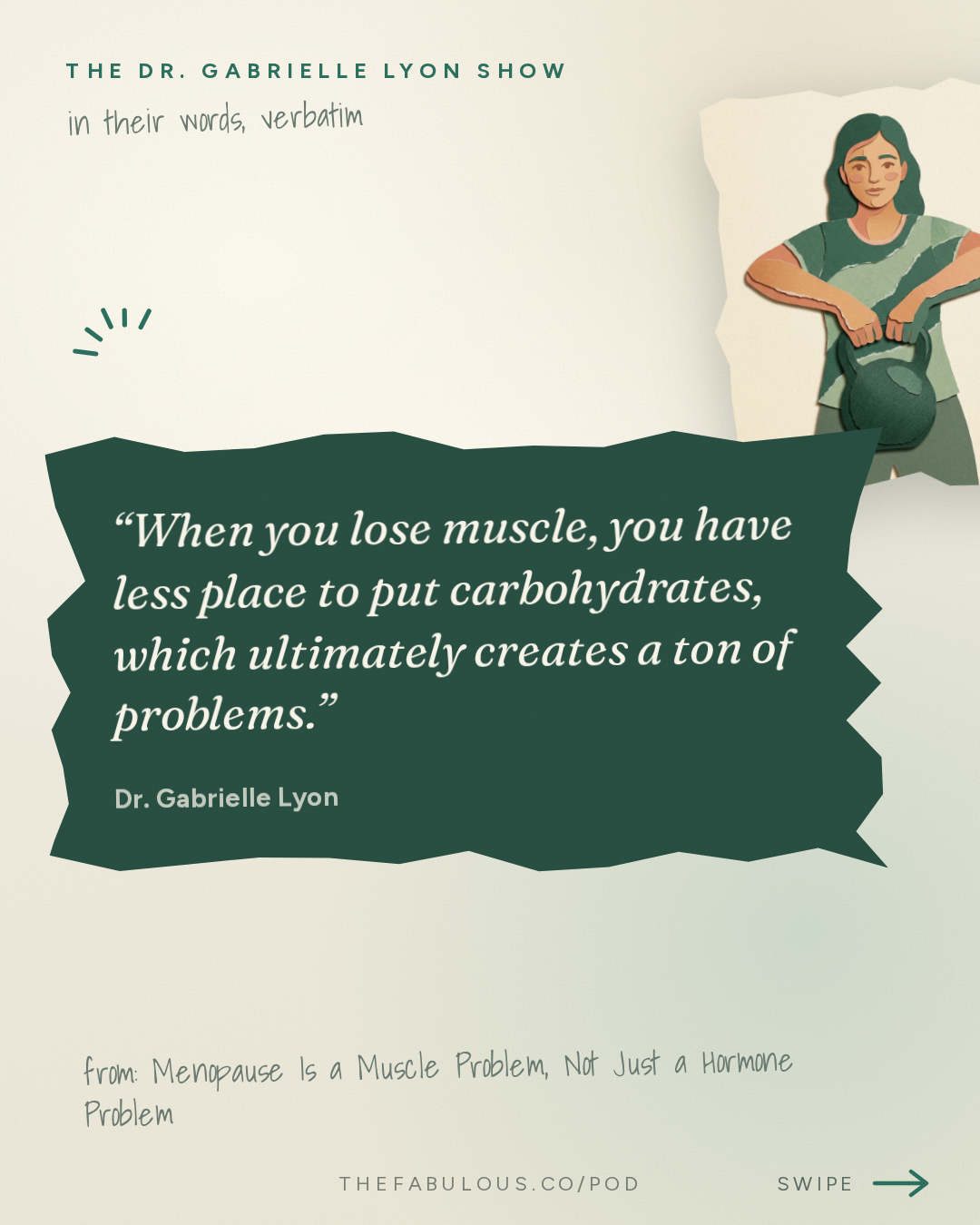
“When you lose muscle, you have less place to put carbohydrates, which ultimately creates a ton of problems.”
“Menopause arrives like tax day, on schedule for some, early for others, late for a few, but it arrives whether or not you are prepared for it.”
“Anabolic resistance means your muscle becomes harder to build because it responds less, and primarily less to the two inputs that normally grow it, which are protein and mechanical load.”
“If you stop moving your body through space in ways that you did when you were younger, then you will get to a place where you will no longer be able to move your body through space in the way that you once did.”
Protocols
-
Full-Body Strength Training Baseline
Dr. Gabrielle Lyon recommends training the full body two to three days a week, moving through all major planes of motion rather than isolating single muscle groups.
2-3 days per week
-
Functional Movement Checklist
Lyon says a session should cover a squat or lunge to get up and down from the floor, a hinge or deadlift to pick something up, a push, an overhead lift, and a rotation or carry movement, since these preserve the ability to move through daily tasks.
each training session
-
Protein Above the RDA for Bone
Lyon points to osteoporosis research suggesting protein intake above the standard RDA of 0.8 grams per kilogram supports bone density alongside muscle during and after menopause.
daily
-
Baseline Blood Testing
Lyon advises getting blood testing done in midlife to know where hormone and metabolic markers actually stand, because training and eating the way a woman did in her twenties may not work the same way in her fifties.
periodic, before adjusting training or nutrition
Questions this episode answers
Does menopause cause muscle loss, or is it just normal aging?
The SWAN study, the largest US cohort on this transition, found muscle mass dropping and fat mass rising beginning about two years before a woman's final period (05:33). Dr. Gabrielle Lyon notes the two processes overlap so much that it is genuinely hard to separate menopause-specific change from ordinary aging, and that not everything blamed on menopause online is well established (06:09).
What is anabolic resistance in menopause?
Anabolic resistance is when muscle responds less to the two normal triggers for growth, protein intake and mechanical load, so a bigger stimulus is needed to get the same result (08:32). Dr. Gabrielle Lyon compares it to insulin resistance, except the currency being handled poorly is muscle tissue instead of blood sugar (08:44).
Does testosterone crash during menopause like estrogen does?
No. Dr. Gabrielle Lyon says testosterone does not typically crash at menopause and its decline looks more like a gradual aging story, while estrogen is the hormone that falls off sharply around the final period (07:18). She adds that testosterone therapy at a female dose has not been shown to reliably build meaningful muscle or strength (07:53).
How much protein do postmenopausal women need for bone health?
Dr. Gabrielle Lyon points to a European osteoporosis framework suggesting the target sits above the standard RDA of 0.8 grams per kilogram of body weight, which she considers too low for maintaining bone through midlife (15:55). That framework treats bone and muscle loss as one combined problem addressed with loading plus protein (15:14).
How often should postmenopausal women strength train?
Dr. Gabrielle Lyon recommends a baseline of two to three full-body training sessions a week, covering movements like the squat, lunge, deadlift, overhead lift, and rotation or carry patterns (18:59, 19:30). She frames this as a starting protocol to check with a physician before beginning, not a finished prescription.
Why does losing muscle raise the risk of insulin resistance?
Muscle is the primary site where the body disposes of glucose from carbohydrates, so less muscle means less capacity to absorb sugar from meals, which drives insulin resistance directly (13:41). Dr. Gabrielle Lyon describes a pre-diabetic patient with only 18% body fat whose low muscle mass, not her diet, was the underlying problem (13:56).
The full read, in cards
Go deeper
- SWAN (Study of Women's Health Across the Nation) — Found muscle mass dropping and fat mass rising beginning about two years before the final menstrual period
- The Lancet Diabetes & Endocrinology review — Linked muscle loss to higher risk of falls, fractures, osteoporosis, and cardiovascular disease in postmenopausal women
- Journal of Physiology review — Reported lower resting and sleeping energy expenditure and reduced fat oxidation across the menopause transition
- European Study for Clinical and Economic Aspects of Osteoporosis and Osteoarthritis — Treats bone loss and muscle loss as one problem requiring a combined loading and protein intervention
Mentioned
Dr. Gabrielle Lyon · SWAN · Baylor · Dr. Jocelyn Whitten · The Lancet Diabetes & Endocrinology · Journal of Physiology · DEXA · Starretts
More from this show and category

ED as an Early Predictor of Heart Attack Risk
Erectile dysfunction predicts a future heart attack better than chest pain does, especially in younger men (11:11). Urologist Tobias Kohler describes two cheap early-warning tests, a coronary calcium scan and a Mayo Clinic ceramide blood test, plus the cardiac damage caused by high-dose testosterone abuse (12:49, 44:55).
Vaginal Estrogen for UTI Prevention
Urologist Dr. Kelly Casperson explains that genitourinary syndrome of menopause (GSM) affects 50% to 90% of postmenopausal women. Vaginal estrogen cuts recurrent urinary tract infections by half, lowers hospitalization and death risk, and is safe for most breast cancer survivors, yet only 9% of women diagnosed with GSM get a prescription.

Physiology of Grief and Heart Attack Risk
Grief is not just an emotion, it is a measurable physiological event: a 21-times spike in heart attack risk in the first 24 hours after a loss, elevated cortisol for months, and a brain that keeps treating the dead as still out there somewhere.

Gabrielle Lyon: Muscle Is the Longevity Organ
Dr. Gabrielle Lyon argues that skeletal muscle, not body fat, is the organ that determines how well women age. She explains that muscle drives glucose disposal, releases hormone-like myokines, and needs at least 100 grams of daily protein plus resistance training to stay healthy after midlife.
