
unPAUSED with Dr. Mary Claire Haver
Gabrielle Lyon: Muscle Is the Longevity Organ
Muscle is the Organ for Longevity with Dr. Gabrielle Lyon
▶ Listen to the full episode More from unPAUSED with Dr. Mary Claire Haver
The brief
Dr. Gabrielle Lyon argues that skeletal muscle, not body fat, is the organ that determines how well women age. She explains that muscle drives glucose disposal, releases hormone-like myokines, and needs at least 100 grams of daily protein plus resistance training to stay healthy after midlife.
Ask this episode anything
Pod's AI answers from the episode itself, with the minute mark so you can hear it yourself.
Or start with one of these
Ask this episode
Pod's AI listens to the whole episode to answer, and points you to the minute it comes from.
The rest of this answer, and any question after it
Answers come from the episode itself, never from a summary of it.
Continue
Key takeaways
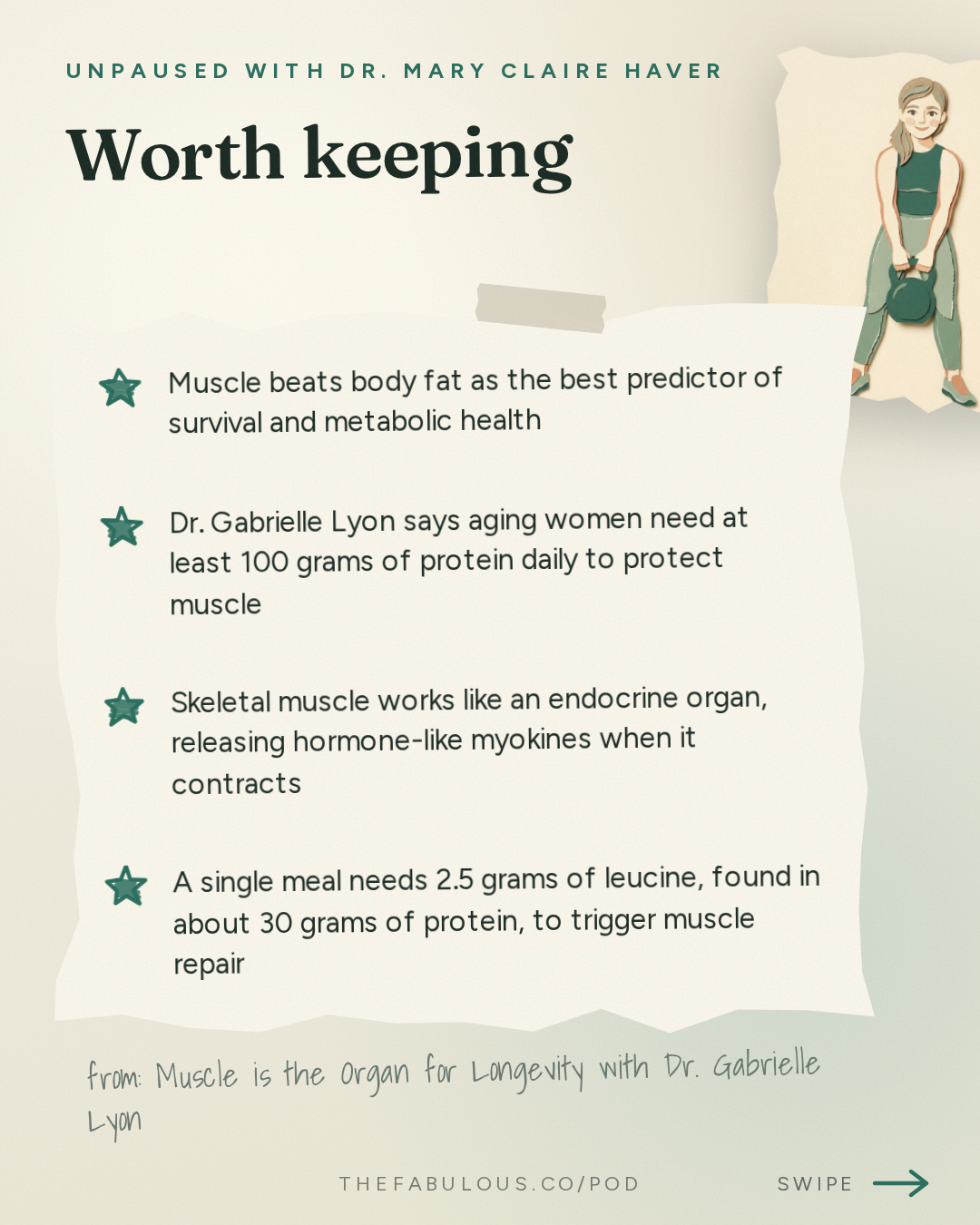
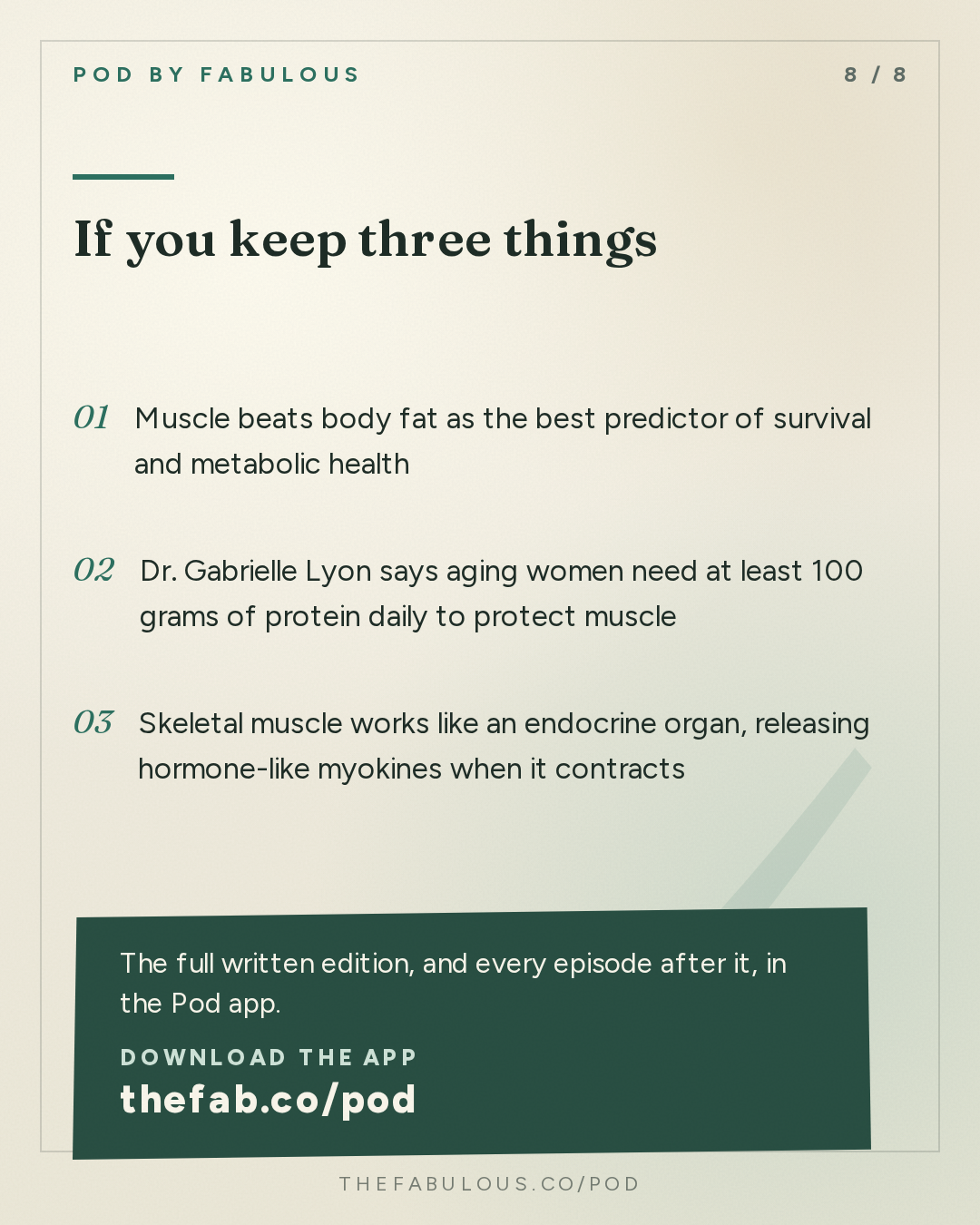
- Muscle beats body fat as the best predictor of survival and metabolic health
- Dr. Gabrielle Lyon says aging women need at least 100 grams of protein daily to protect muscle
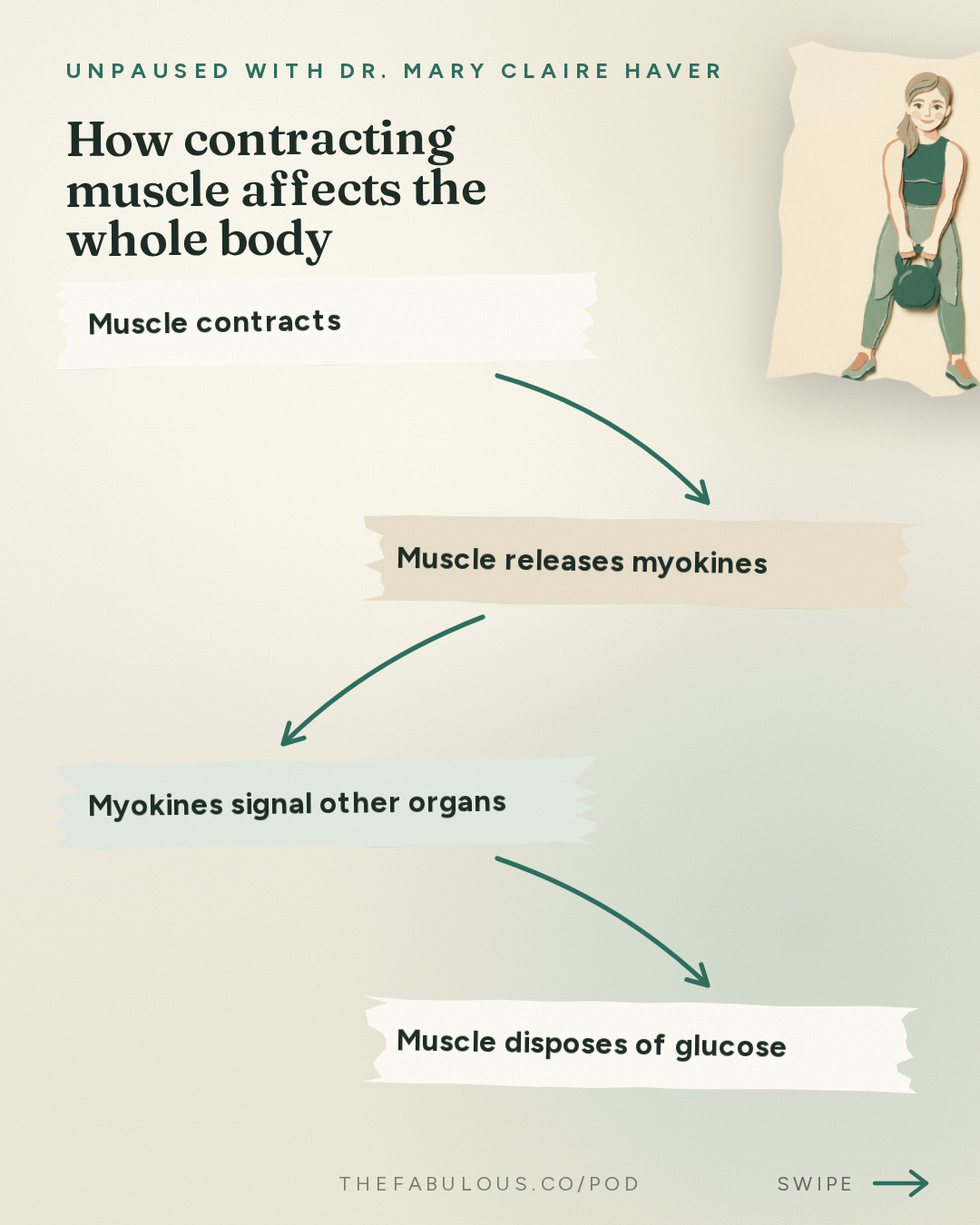
- Skeletal muscle works like an endocrine organ, releasing hormone-like myokines when it contracts
- A single meal needs 2.5 grams of leucine, found in about 30 grams of protein, to trigger muscle repair
- Exercise improves muscle quality even without changes in weight or body composition, Lyon found
The episode in cards
Years before she wrote a bestselling book about muscle, Dr. Gabrielle Lyon was waking up at 4 a.m. to run brain scans on strangers. She was a geriatrics fellow at Washington University in St. Louis, a doctor training to specialize in the care of older adults, and her assigned project paired body composition data with brain imaging (06:31). One patient stayed with her: a mother in her mid-50s who had done everything she was told, lost and regained the same 30 pounds for three decades, and prioritized cardio over almost everything else. When Lyon imaged her brain, it looked like the early stage of Alzheimer's disease (07:28). The woman did not have a fat problem. She had a muscle problem, and nobody had told her.
That moment is the spine of Lyon's argument, laid out here in conversation with Dr. Mary Claire Haver, an OB-GYN and certified menopause practitioner. The show's frame is blunt.
"The crisis facing women in midlife is not too much fat. It's not enough muscle. We're not over fat, we're under-muscled." — Dr. Mary Claire Haver [01:52]
Lyon's case rests on redefining what skeletal muscle actually does. It is not just the tissue that lets someone lift a suitcase. It behaves like an endocrine organ, meaning it releases hormones into the blood, and it releases anti-inflammatory signals every time it contracts (02:18). It is also the body's main site for glucose disposal, the process of clearing sugar out of the bloodstream after a meal (12:10). Haver says 40 percent of American women over 60 are protein deficient, and the average American woman eats only 60 to 70 grams of protein a day (02:44), a number she says will not maintain muscle even in a teenager, let alone a perimenopausal woman.
She illustrates the stakes with a patient from her early practice in New York: a lean woman showing signs of type 2 diabetes despite an unremarkable body fat percentage, around 20 percent (13:17). A body scan called an InBody test showed the real story: her muscle mass was near sarcopenic, the clinical term for severe age-related muscle loss (12:28). The takeaway, Lyon says, is that someone can have normal body fat and still be metabolically sick, because the muscle, not the fat, was doing the damage.
The Marbled Steak Problem
Lyon's more surprising claim is that muscle mass alone is not the full story. What matters just as much is muscle quality, meaning how much fat has crept into the muscle tissue itself. She describes it as looking like a marbled steak (14:43), a condition that develops when muscle sits unused. A standard DEXA scan, the common bone density and body composition test, cannot detect this; only CT or MRI imaging can, and that technology is not yet routine in clinics (15:56).
"There is no such thing as sedentary healthy muscle. Muscle must move. It must contract to use those fats and those fuels." — Dr. Gabrielle Lyon [15:02]
There is good news buried in this. Lyon says muscle quality can improve through exercise even when weight and body composition stay exactly the same (19:00). A 30-minute daily walk can cut the risk of type 2 diabetes by half for someone who was sedentary (19:26), and Lyon says the mechanism is not calorie burn, since a short walk barely dents daily energy expenditure. It is muscle being asked to do its job. Still, walking has a ceiling. Lyon points to research tracking three aging trajectories: people who do nothing decline fastest, people who stay active with walking or gardening decline more slowly, and only the group that does regular resistance training avoids disability altogether (20:14).
The reason movement matters so much beyond weight loss comes down to a class of molecules most listeners have never heard of: myokines, hormone-like proteins that muscle releases when it contracts (27:22). Training produces hundreds of them, including interleukin-6 and BDNF, and they carry signals between muscle and other organs, what Lyon calls organ crosstalk. Science currently understands only about 5 percent of what these molecules do (30:09). BDNF, short for brain-derived neurotrophic factor, is released directly in the brain during exercise and acts like fertilizer for neural connections (31:04). Lyon even argues that moving fast, not just moving often, matters for the brain, a concept she calls cognitive velocity (32:16).
How Much Protein Is Enough
The second half of the conversation turns to food, and Lyon starts with a number designed to unsettle: the average American eats about 300 grams of carbohydrates a day, more than double the RDA's recommendation of 130 grams (36:29). Muscle at rest burns mostly fatty acids, not carbohydrates, so without exercise the body can only safely dispose of about 40 to 50 grams of carbohydrate over a two-hour window (38:21). Anything beyond that, Lyon says, has to be earned through movement, or it pushes toward insulin resistance.
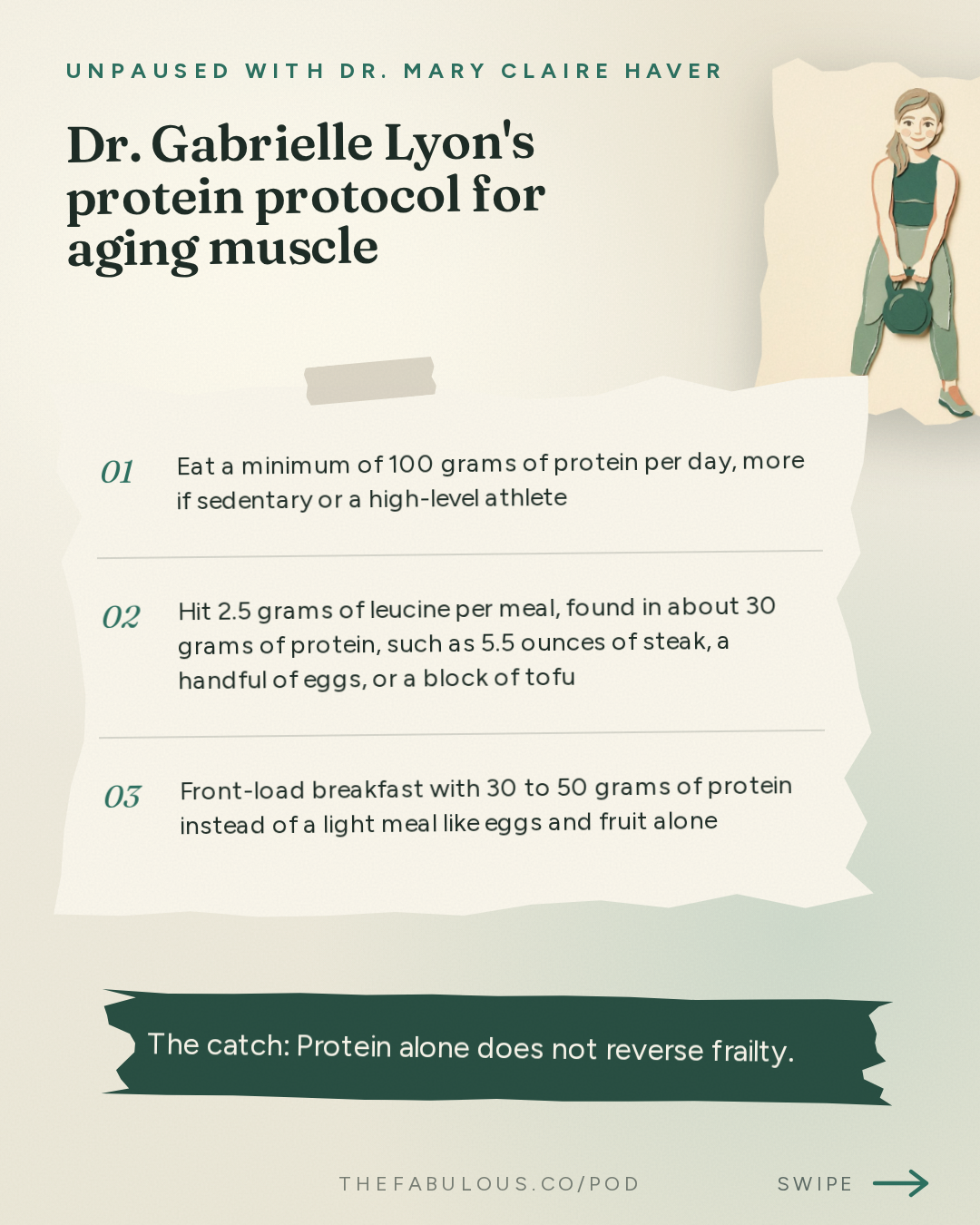
On protein, Lyon draws a hard floor. She says no one, and especially no aging woman, should eat less than 100 grams of protein a day (46:38). The number is tied to a specific biochemical trigger: a single meal needs about 2.5 grams of leucine, an amino acid, to switch on muscle protein synthesis, the process of building new muscle tissue. That amount of leucine shows up in roughly 30 grams of protein, the equivalent of 5.5 ounces of steak, a handful of eggs, or a block of tofu (47:18).
"If someone wakes up in the morning and they have two eggs and then fruit and go on their day, they have not stimulated muscle." — Dr. Gabrielle Lyon [47:18]
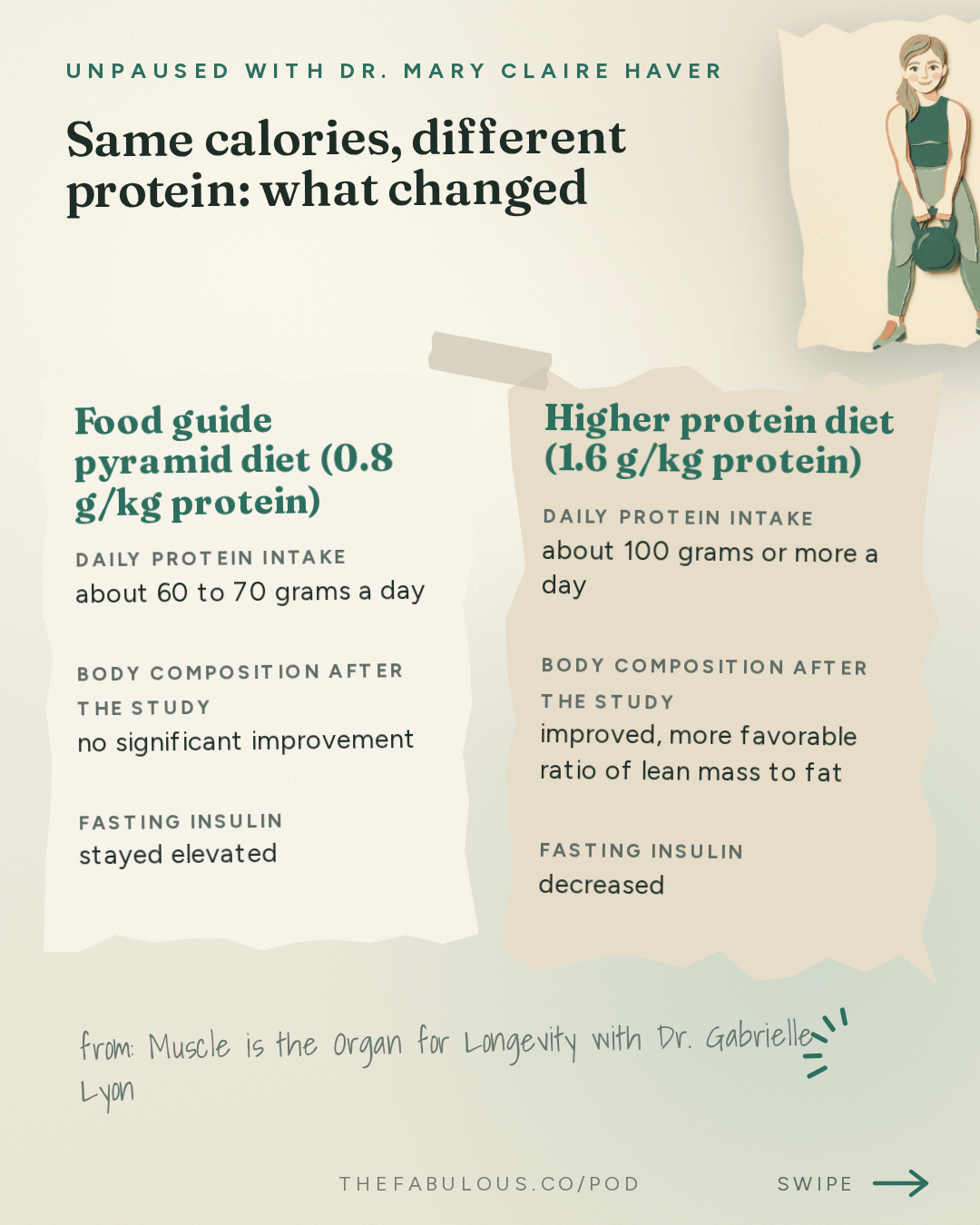
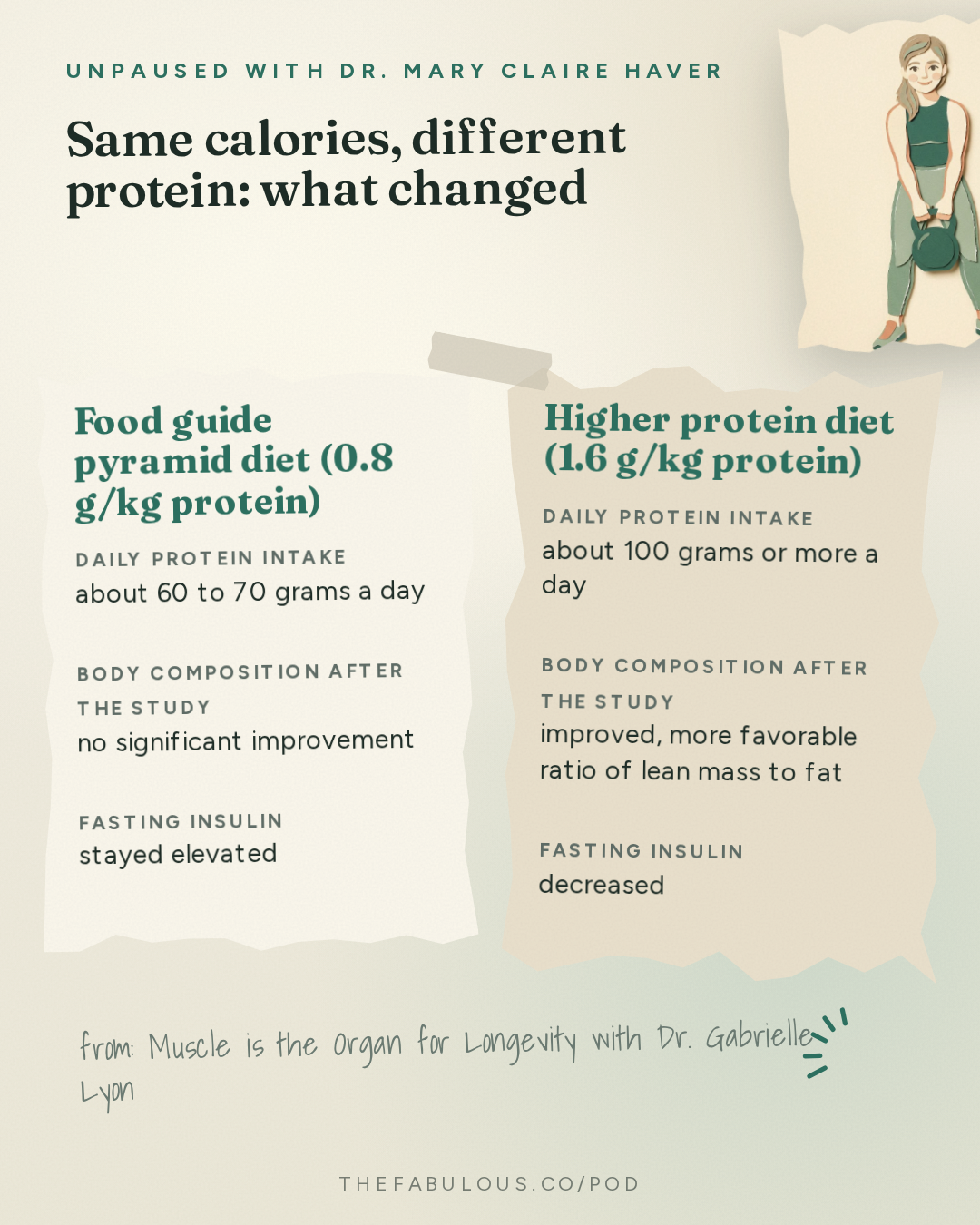
Lyon backs this with research from her time at the University of Illinois, where two groups ate the same number of calories, between 1,600 and 1,800 a day, but different amounts of protein: one group followed the old food guide pyramid at roughly 0.8 grams per kilogram of body weight, the other ate 1.6 grams per kilogram, putting them near or above 100 grams a day (49:37). The higher protein group improved body composition, lowered fasting insulin, and improved triglycerides, with no change in total calories (50:38). A separate look at long-running national health datasets found that women with lower lifetime protein intake had a higher risk of frailty, and protein alone did not reverse it. Only protein paired with resistance training did (51:05).
Lyon also pushes back on a claim she says she has heard from other physicians: that protein eaten beyond the federal minimum turns into fat if a person is not lifting weights. She calls this false. Excess protein, she says, is mostly oxidized for energy or converted to glucose through a process called gluconeogenesis, not stored as fat (53:52). The combination she considers most damaging is specific and, she suggests, common.
"The worst of all worlds is a sedentary aging female with a low protein diet." — Dr. Gabrielle Lyon [52:27]
What connects the fMRI scan from decades ago to the protein math at the end of the conversation is a single reframing: the questions women in midlife have been trained to ask, about weight, about willpower, about restriction, are aimed at the wrong tissue. Lyon's argument is not that fat is irrelevant. It is that fat has absorbed all the attention while muscle, the tissue actually driving glucose control, hormone signaling, and brain support, went unmeasured and underfed. The fix she describes is not exotic: eat enough protein, hit it at the right threshold, and move enough to make muscle use what it is given.
By the numbers
- 40% percent women over 60 in the US who are protein deficient, per Lyon
- 50% percent reduction in type 2 diabetes risk from a 30-minute daily walk
In their words
“The crisis facing women in midlife is not too much fat. It's not enough muscle. We're not over fat, we're under-muscled”
“There is no such thing as sedentary healthy muscle. Muscle must move. It must contract to use those fats and those fuels.”
“Regardless if body composition changes or not, you can improve muscle quality simply by doing exercise.”
“The worst of all worlds is a sedentary aging female with a low protein diet.”
Protocols
-
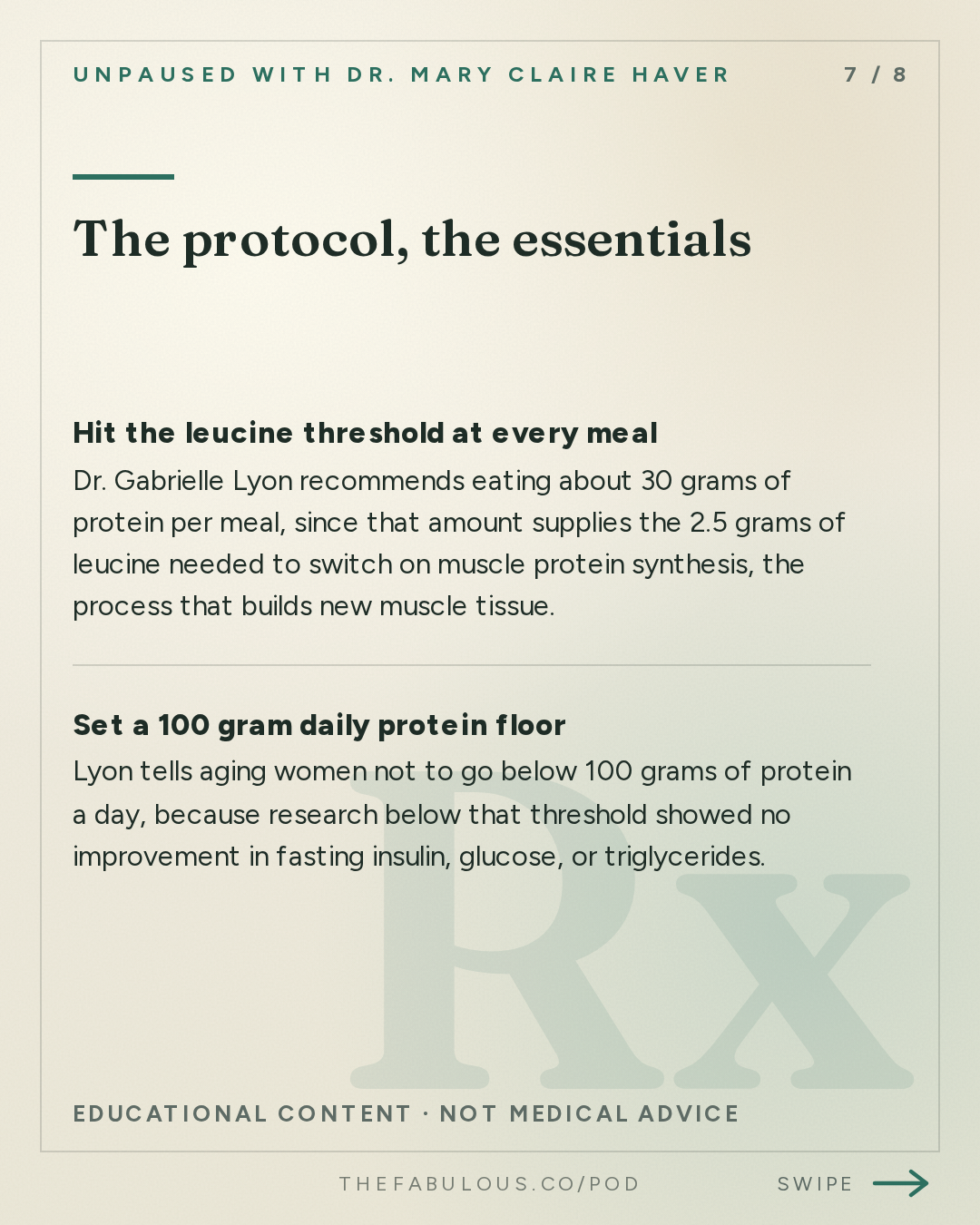
Hit the leucine threshold at every meal
Dr. Gabrielle Lyon recommends eating about 30 grams of protein per meal, since that amount supplies the 2.5 grams of leucine needed to switch on muscle protein synthesis, the process that builds new muscle tissue.
every meal
-
Set a 100 gram daily protein floor
Lyon tells aging women not to go below 100 grams of protein a day, because research below that threshold showed no improvement in fasting insulin, glucose, or triglycerides.
daily
-
Front-load protein at breakfast
Lyon recommends 30 to 50 grams of protein at breakfast instead of a light meal like two eggs and fruit, since a light breakfast does not supply enough leucine to stimulate muscle.
daily, at breakfast
-
Cap carbohydrates on sedentary days
Lyon advises keeping carbohydrate intake to roughly 40 to 50 grams over a two-hour window on days without exercise, since that is the upper amount the body can safely clear from the blood at rest.
on days without exercise
Questions this episode answers
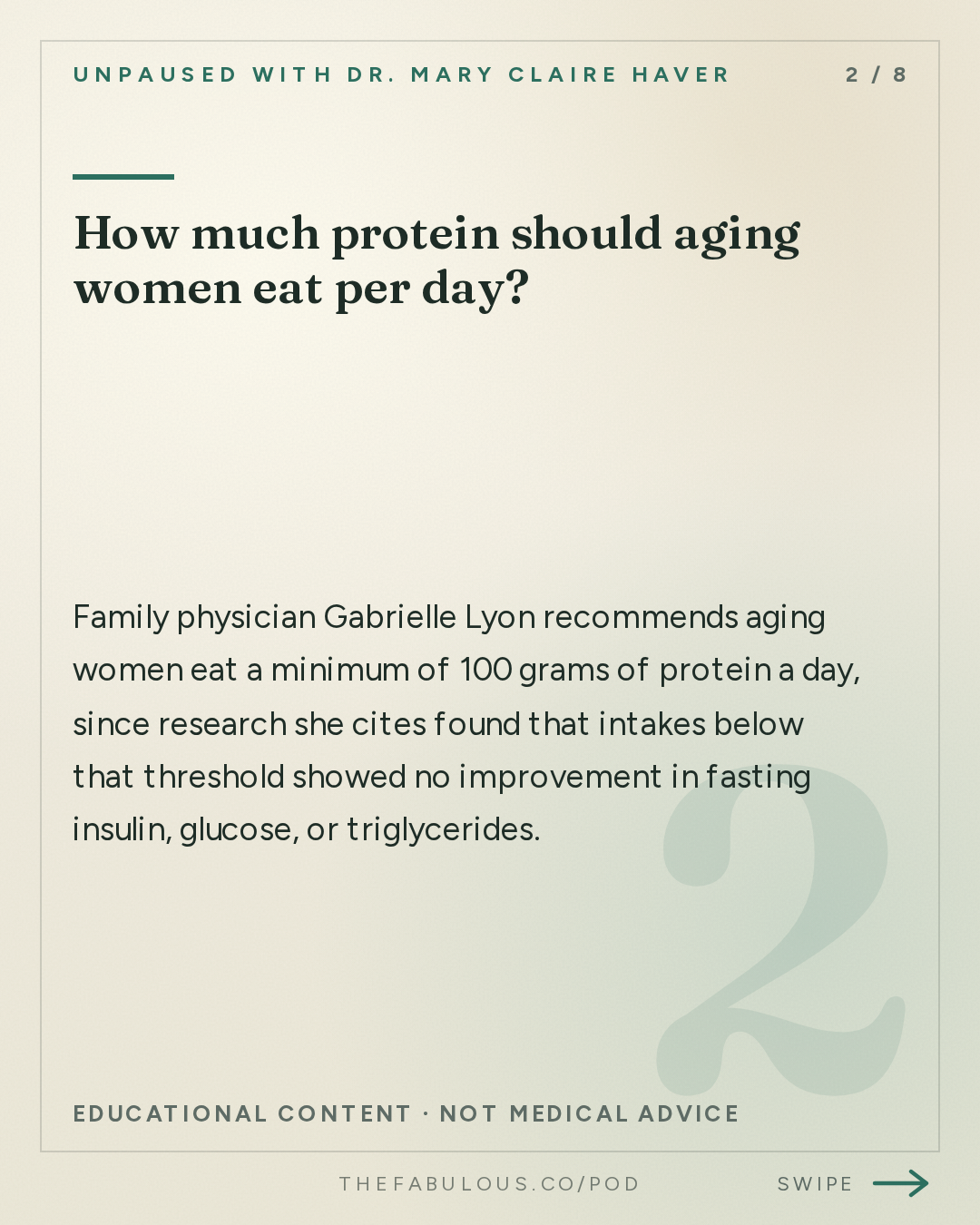
How much protein should aging women eat per day?
Family physician Gabrielle Lyon recommends aging women eat a minimum of 100 grams of protein a day, since research she cites found that intakes below that threshold showed no improvement in fasting insulin, glucose, or triglycerides (46:38).
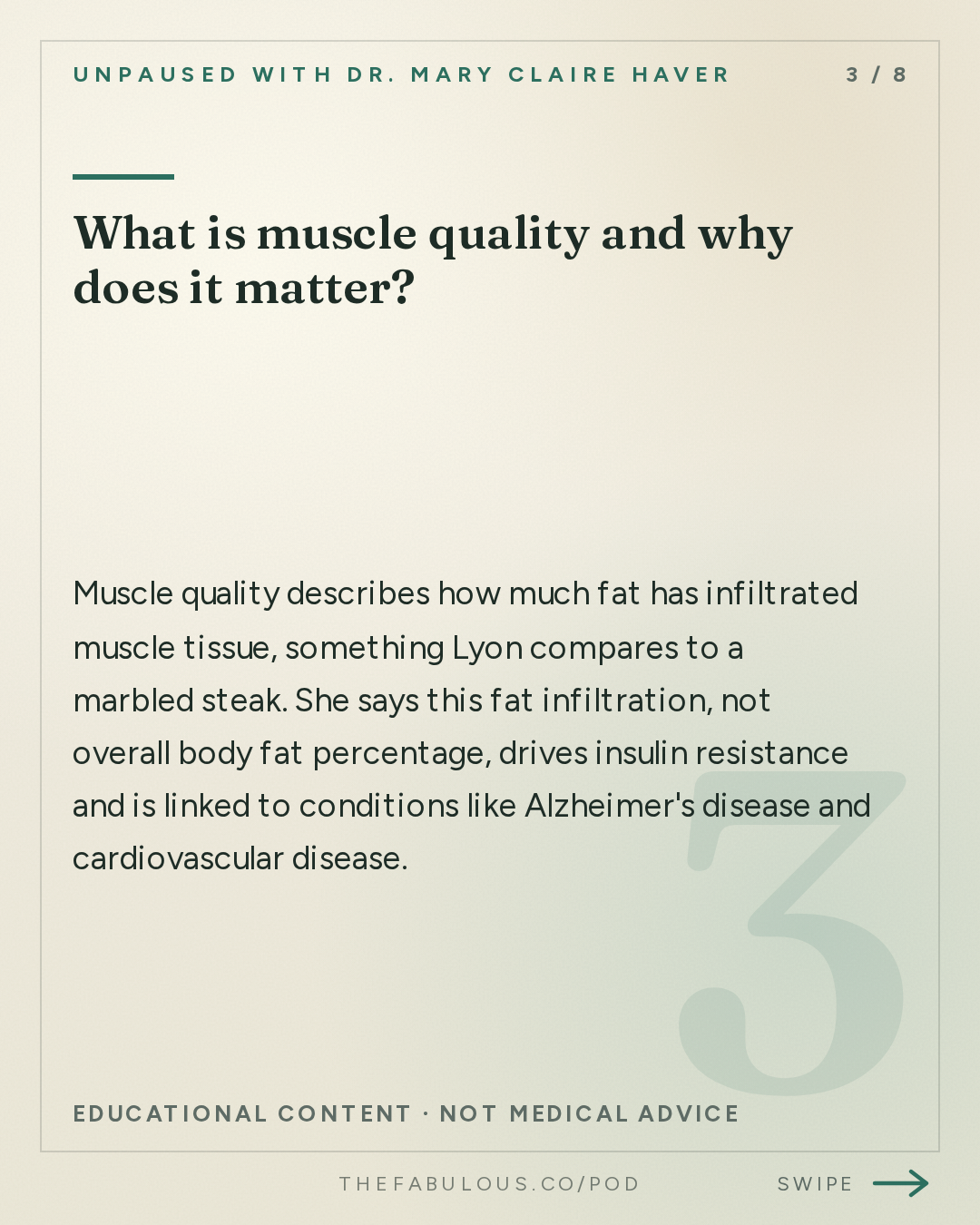
What is muscle quality and why does it matter?
Muscle quality describes how much fat has infiltrated muscle tissue, something Lyon compares to a marbled steak. She says this fat infiltration, not overall body fat percentage, drives insulin resistance and is linked to conditions like Alzheimer's disease and cardiovascular disease (14:43).
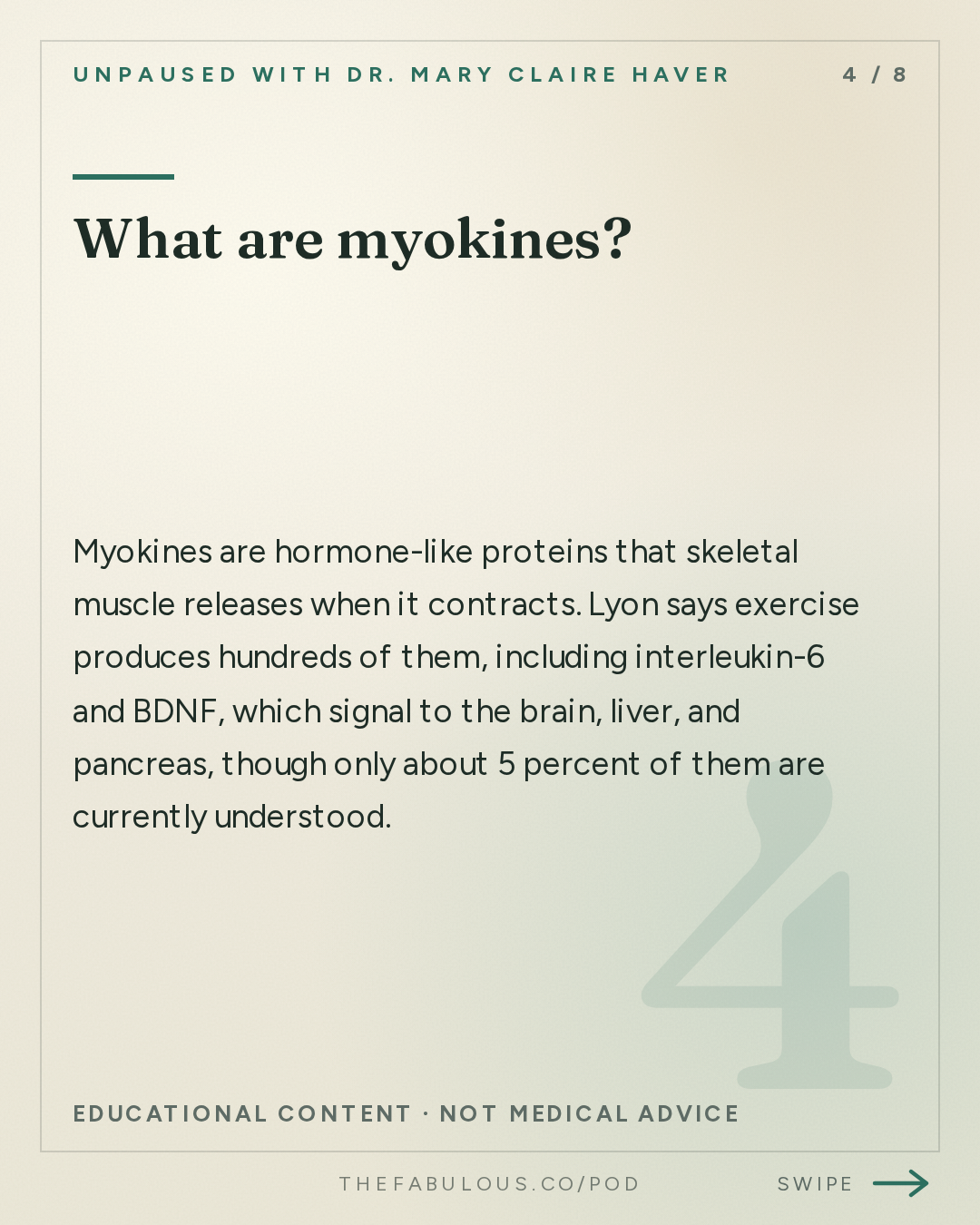
What are myokines?
Myokines are hormone-like proteins that skeletal muscle releases when it contracts. Lyon says exercise produces hundreds of them, including interleukin-6 and BDNF, which signal to the brain, liver, and pancreas, though only about 5 percent of them are currently understood (27:22).
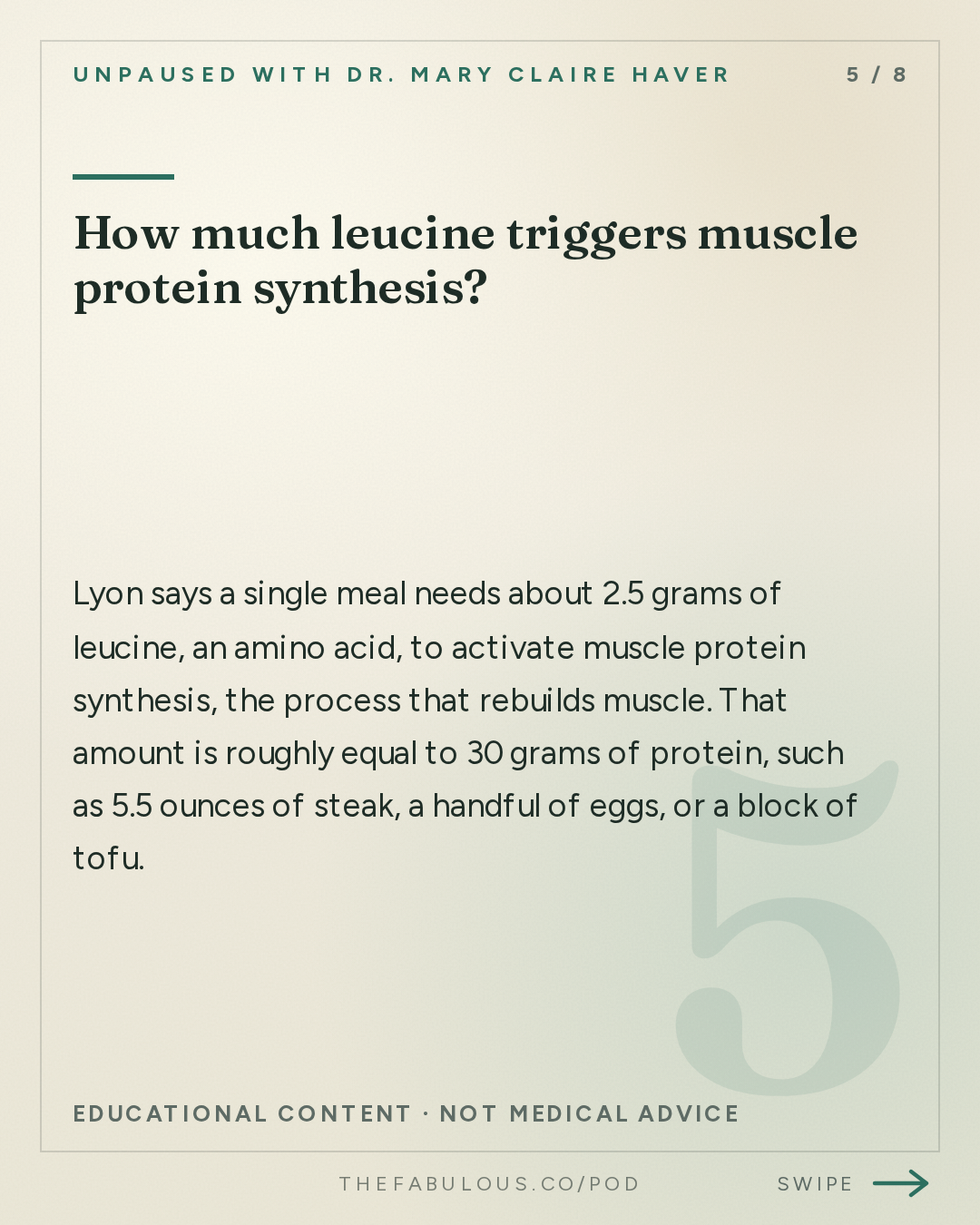
How much leucine triggers muscle protein synthesis?
Lyon says a single meal needs about 2.5 grams of leucine, an amino acid, to activate muscle protein synthesis, the process that rebuilds muscle. That amount is roughly equal to 30 grams of protein, such as 5.5 ounces of steak, a handful of eggs, or a block of tofu (47:18).
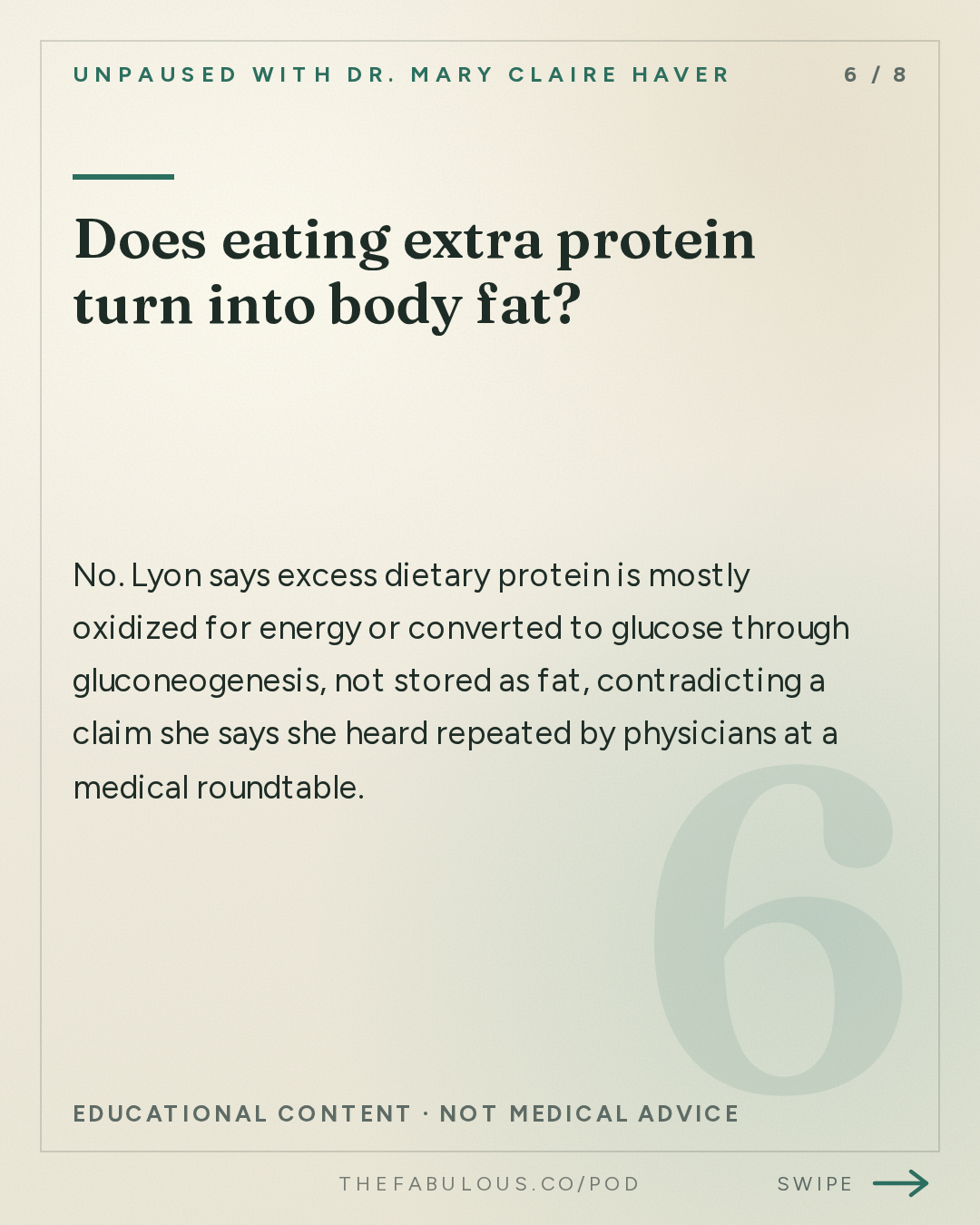
Does eating extra protein turn into body fat?
No. Lyon says excess dietary protein is mostly oxidized for energy or converted to glucose through gluconeogenesis, not stored as fat, contradicting a claim she says she heard repeated by physicians at a medical roundtable (53:52).
Is walking enough to prevent muscle loss with age?
A daily 30-minute walk can cut the risk of type 2 diabetes by 50 percent for someone who was sedentary, largely through improved glucose disposal in muscle (19:26). Lyon says walking alone is not enough to prevent disability in old age, since data she reviewed showed only people who did regular resistance training avoided that decline (20:14).
The full read, in cards
Go deeper
- University of Illinois protein and insulin study — Compared isocaloric diets at 0.8 grams per kilogram versus 1.6 grams per kilogram of protein and found the higher protein group improved body composition, fasting insulin, and triglycerides.
- NHANES and Women's Health Initiative frailty analysis — Tracked women's protein intake over decades and found lower intake linked to higher frailty risk, reversible only with protein plus resistance training.
- Updated U.S. Dietary Guidelines protein section — Nutrition researcher Don Layman wrote the protein portion of the newly revised federal dietary guidelines.
- Forever Strong — Dr. Gabrielle Lyon's book arguing skeletal muscle, not body fat, is the key organ for healthy aging.
Mentioned
Dr. Gabrielle Lyon · Dr. Mary Claire Haver · Institute for Muscle-Centric Medicine · Forever Strong · Don Layman · University of Illinois · Washington University in St. Louis · American College of Sports Medicine · InBody · DEXA
More from this show and category

Protein Needs for Muscle in Menopause: Dr. Lyon's Guide
Dr. Gabrielle Lyon says women need 30 to 50 grams of protein in their first meal after an overnight fast to switch on muscle building. She explains why aging muscle grows resistant to protein and exercise, why resistance training beats hormone therapy for long-term independence, and why suppressing mTOR is the wrong longevity strategy.

ED as an Early Predictor of Heart Attack Risk
Erectile dysfunction predicts a future heart attack better than chest pain does, especially in younger men (11:11). Urologist Tobias Kohler describes two cheap early-warning tests, a coronary calcium scan and a Mayo Clinic ceramide blood test, plus the cardiac damage caused by high-dose testosterone abuse (12:49, 44:55).

Vaginal Estrogen for UTI Prevention
Urologist Dr. Kelly Casperson explains that genitourinary syndrome of menopause (GSM) affects 50% to 90% of postmenopausal women. Vaginal estrogen cuts recurrent urinary tract infections by half, lowers hospitalization and death risk, and is safe for most breast cancer survivors, yet only 9% of women diagnosed with GSM get a prescription.

Physiology of Grief and Heart Attack Risk
Grief is not just an emotion, it is a measurable physiological event: a 21-times spike in heart attack risk in the first 24 hours after a loss, elevated cortisol for months, and a brain that keeps treating the dead as still out there somewhere.
