
Vaginal Estrogen for UTI Prevention
389. Vaginal Estrogen and DHEA: What Works, Who It Helps, and Why the Myths Need to Die
The brief
Urologist Dr. Kelly Casperson explains that genitourinary syndrome of menopause (GSM) affects 50% to 90% of postmenopausal women. Vaginal estrogen cuts recurrent urinary tract infections by half, lowers hospitalization and death risk, and is safe for most breast cancer survivors, yet only 9% of women diagnosed with GSM get a prescription.
Ask this episode anything
Pod's AI answers from the episode itself, with the minute mark so you can hear it yourself.
Or start with one of these
Ask this episode
Pod's AI listens to the whole episode to answer, and points you to the minute it comes from.
The rest of this answer, and any question after it
Answers come from the episode itself, never from a summary of it.
Continue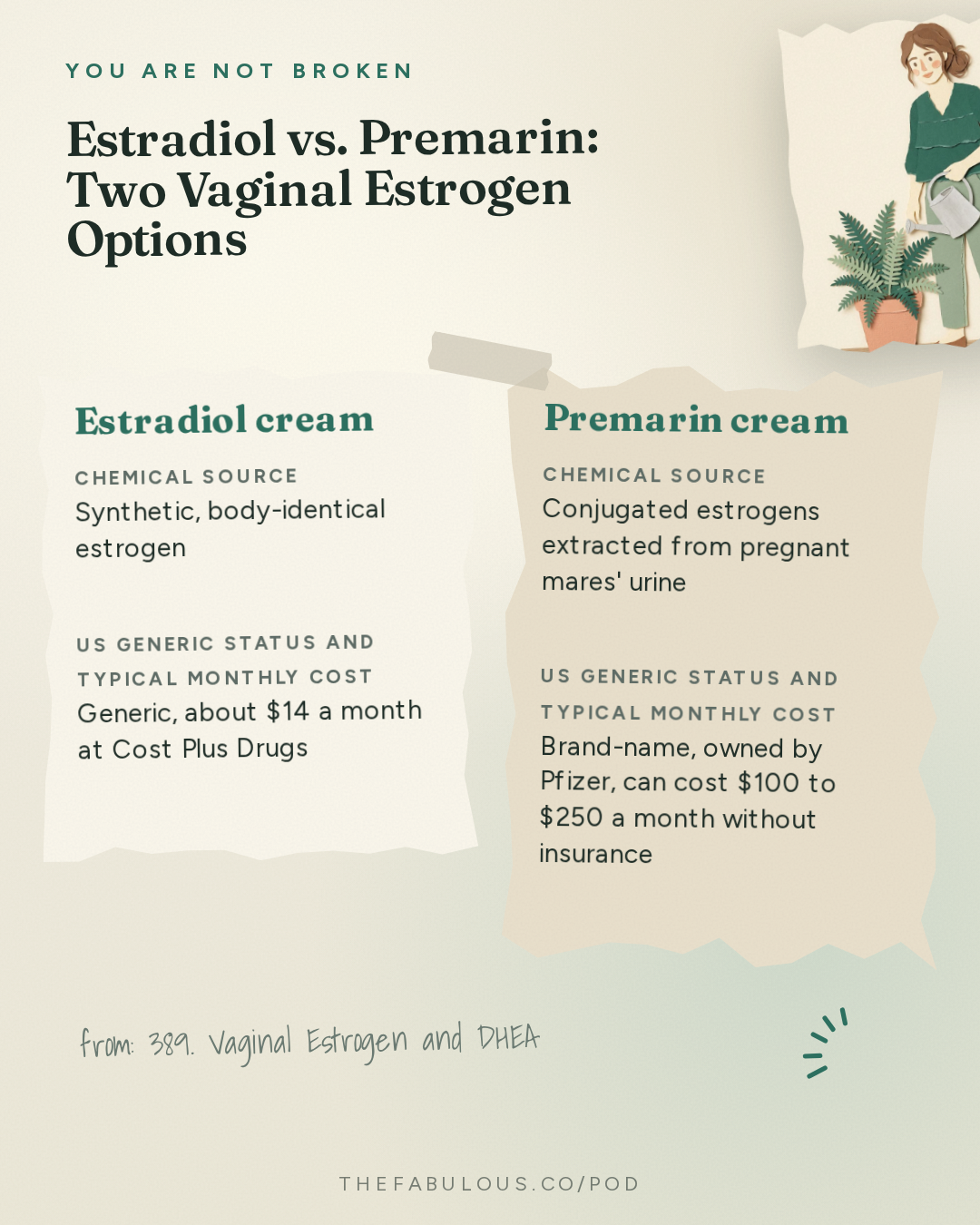
Key takeaways
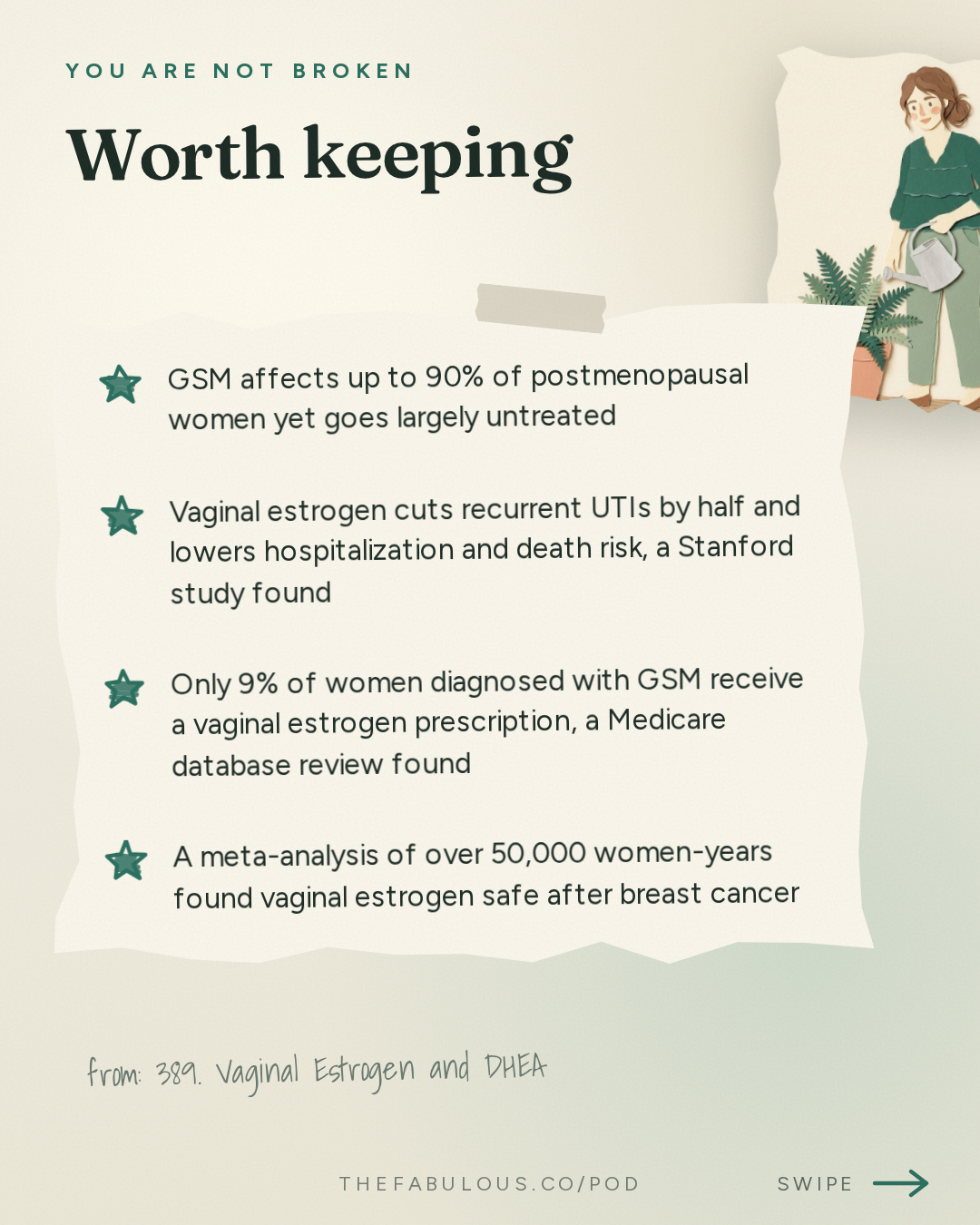
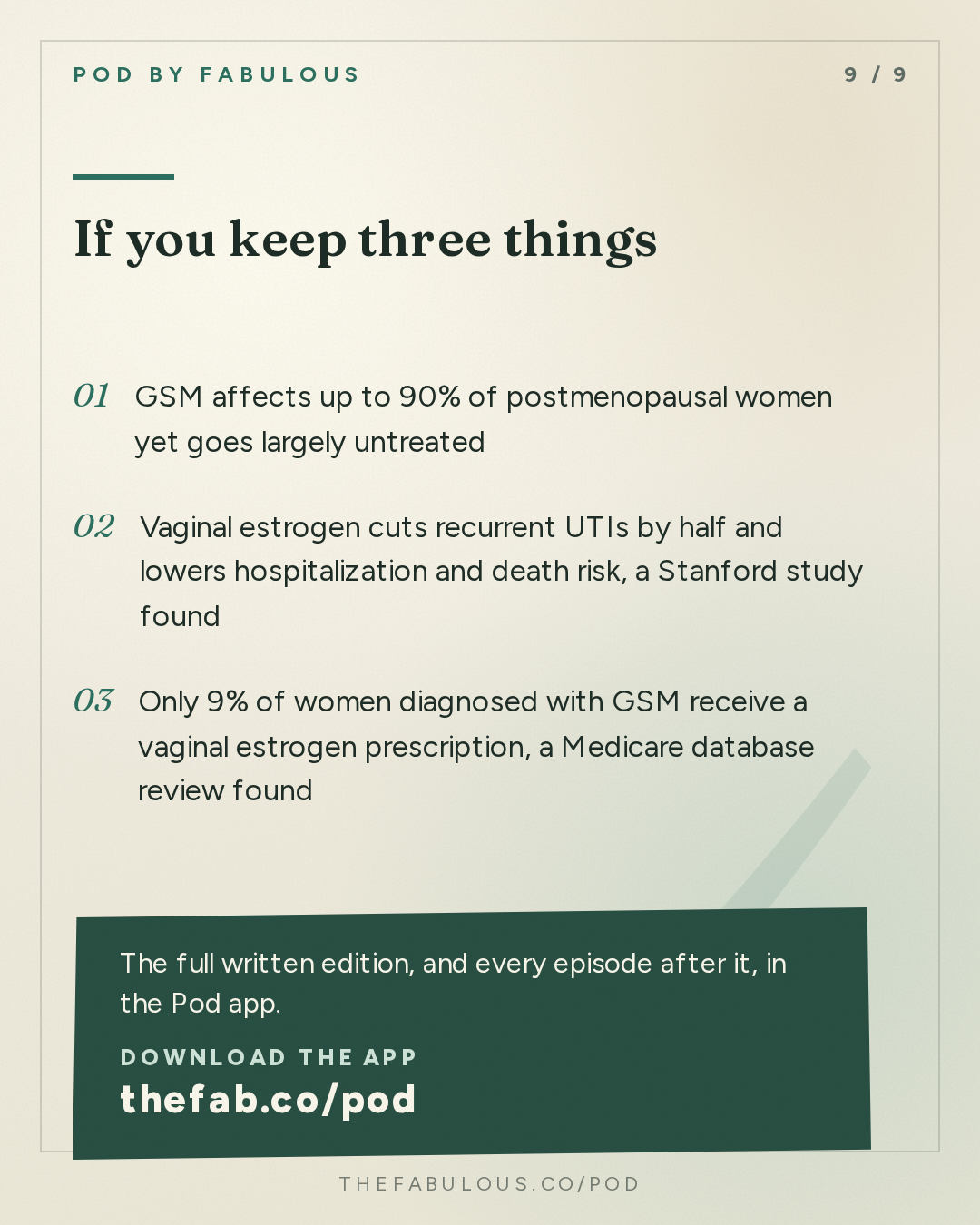
- GSM affects up to 90% of postmenopausal women yet goes largely untreated
- Vaginal estrogen cuts recurrent UTIs by half and lowers hospitalization and death risk, a Stanford study found
- Only 9% of women diagnosed with GSM receive a vaginal estrogen prescription, a Medicare database review found
- A meta-analysis of over 50,000 women-years found vaginal estrogen safe after breast cancer
- Vaginal DHEA (prasterone) converts to testosterone and estrogen locally, helping reverse atrophy
The episode in cards


Before 2014, doctors had a name for the cluster of symptoms that shows up in the vagina, vulva, and bladder after menopause: the senile vagina. Urologist Dr. Kelly Casperson still gets a laugh from clinicians when she says it out loud during talks (14:41). The term later softened to vulvovaginal atrophy, which was better but still missed something. At a 2014 consensus conference, urologist Dr. Irwin Goldstein pushed the group to add one more word: urinary. The condition does not stop at the vagina. It also drives urinary tract infections, urgency, and leakage. The result was genitourinary syndrome of menopause, or GSM (14:09).
That renaming matters because it changes what a doctor sees walking through the door. A 78 year old with bladder urgency, occasional infections, and pain during sex used to look like three separate problems, each with its own specialist and its own prescription pad. Casperson argues she is one problem with one cause: falling estrogen and testosterone thin and dry out the tissue that lines the vagina, vulva, urethra, and bladder neck (13:42). Fix the hormone deficiency, and all three symptoms tend to improve together. GSM, by her account, affects somewhere between 50 and 90 percent of women at menopause or after (17:27), which makes it one of the most common and least discussed conditions in medicine.
Casperson calls the myths that keep treatment rates low zombie myths, a phrase she credits to physician Dr. Jim Simon (10:54): ideas that should be dead but keep shambling back into exam rooms. The biggest one is that a history of breast cancer rules out vaginal hormones. It does not. A meta-analysis covering more than 50,000 women years of data found vaginal estrogen safe in women with a history of the disease (11:16). The American College of Obstetricians and Gynecologists said as much in a 2016 committee opinion, and in 2025 the American Society of Clinical Oncology's annual meeting reported that local estrogen does not reduce survival among breast cancer patients (60:06). Casperson sounds almost tired repeating it: we have been saying it is safe for over a decade, and the doubt keeps returning anyway (60:29).
What the UTI Data Actually Show
The strongest new evidence in the episode concerns urinary tract infections. Vaginal estrogen is topical, meaning it acts locally and does not circulate through the bloodstream the way a pill or patch does. A database study out of Stanford, led by a researcher Casperson calls Dr. Day, compared women with recurrent UTIs who used vaginal estrogen against those who did not (18:26). Recurrent UTI has a specific medical definition: two infections in six months, or three in a year (21:05). The women on vaginal estrogen had lower risk not just of another infection, but of hospitalization, ICU admission, and death.
"Women on vaginal estrogen, statistically significant decreased risk of death, admission to the hospital, admission to the ICU, and sepsis death." (Dr. Kelly Casperson, [19:32])
The likely mechanism: estrogen keeps the tissue of the urethra and vaginal wall thick and well supplied with blood, and it supports a healthy vaginal microbiome that can crowd out the bacteria responsible for UTIs. Antibiotics, ironically, can wipe out that microbiome, which is one reason Casperson thinks vaginal estrogen may help even younger, premenopausal women who get repeat infections after a course of antibiotics (19:32). The Stanford data showed a benefit down to age 20, which suggests the mechanism is not limited to menopause itself.
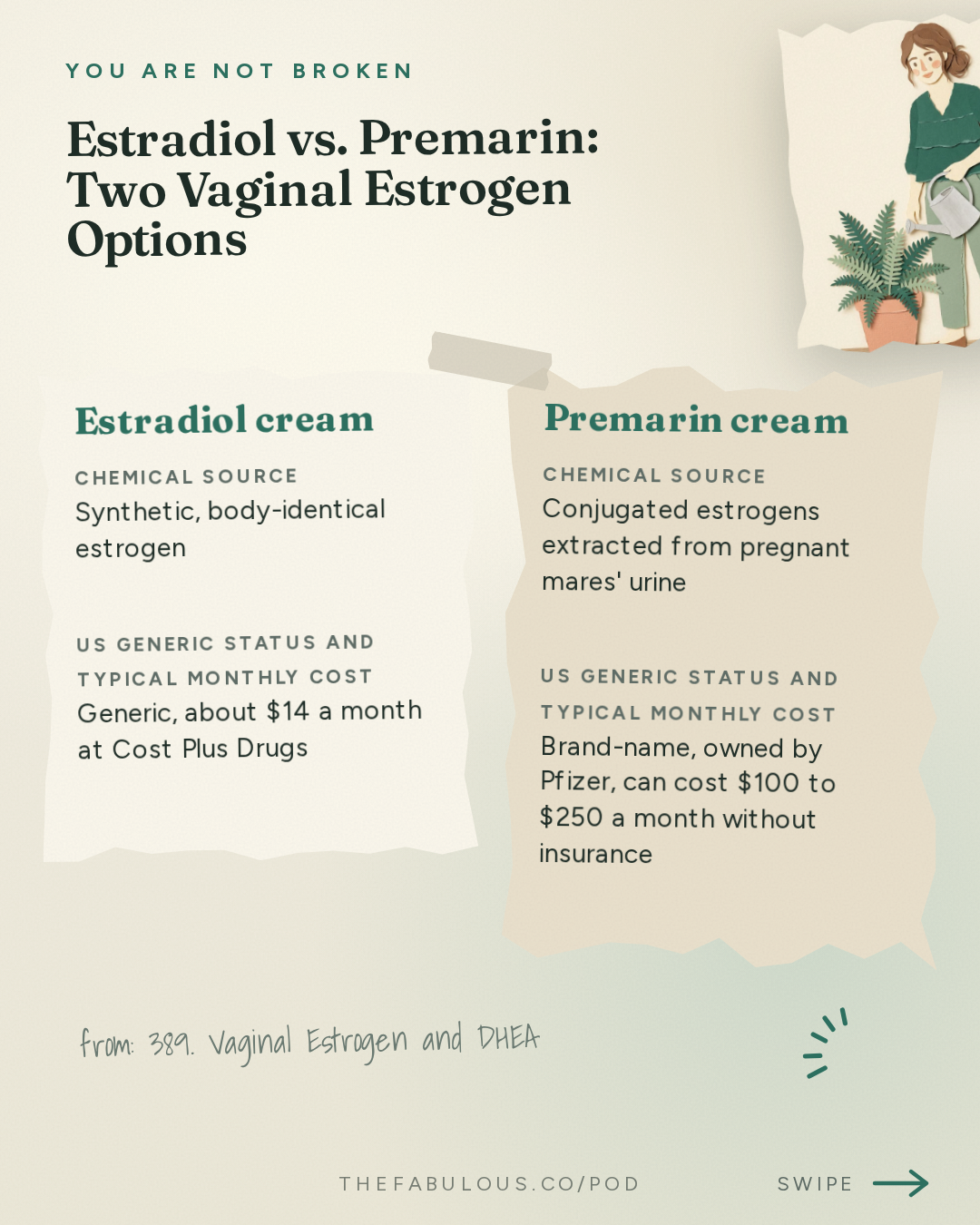
Despite all this, treatment is rare. A separate Medicare database study, also from Stanford and also published at the end of 2025, followed women 65 and older who had already cleared two hurdles: they saw a doctor, and they received a correct diagnosis of GSM. Of that group, only 9 percent received a prescription for vaginal estrogen (20:32). Part of the problem is cost confusion. Generic estradiol cream runs about $14 a month at Cost Plus Drugs, the online pharmacy founded by Mark Cuban (22:21), while some patients report paying $100 to $250 for brand name Premarin, which is owned by Pfizer and has no US generic (27:49). Part of the problem is silence: Casperson cites data showing the average woman waits seven to eight years before telling a doctor about bladder leakage, and she suspects the wait is just as long, or longer, for pain during sex (12:51).
Choosing and Using the Right Product
Not every vaginal hormone product is identical. Estradiol, the generic cream widely available in the US, is chemically identical to the estrogen the body makes. Premarin is a mix of conjugated equine estrogens, extracted from the urine of pregnant mares (27:26). In Europe, the more common option is estriol, a weaker form of estrogen with its own body of published research. Casperson says head to head trials comparing all three do not exist, but her working assumption is that all three are likely equivalent, and all beat doing nothing (27:26).
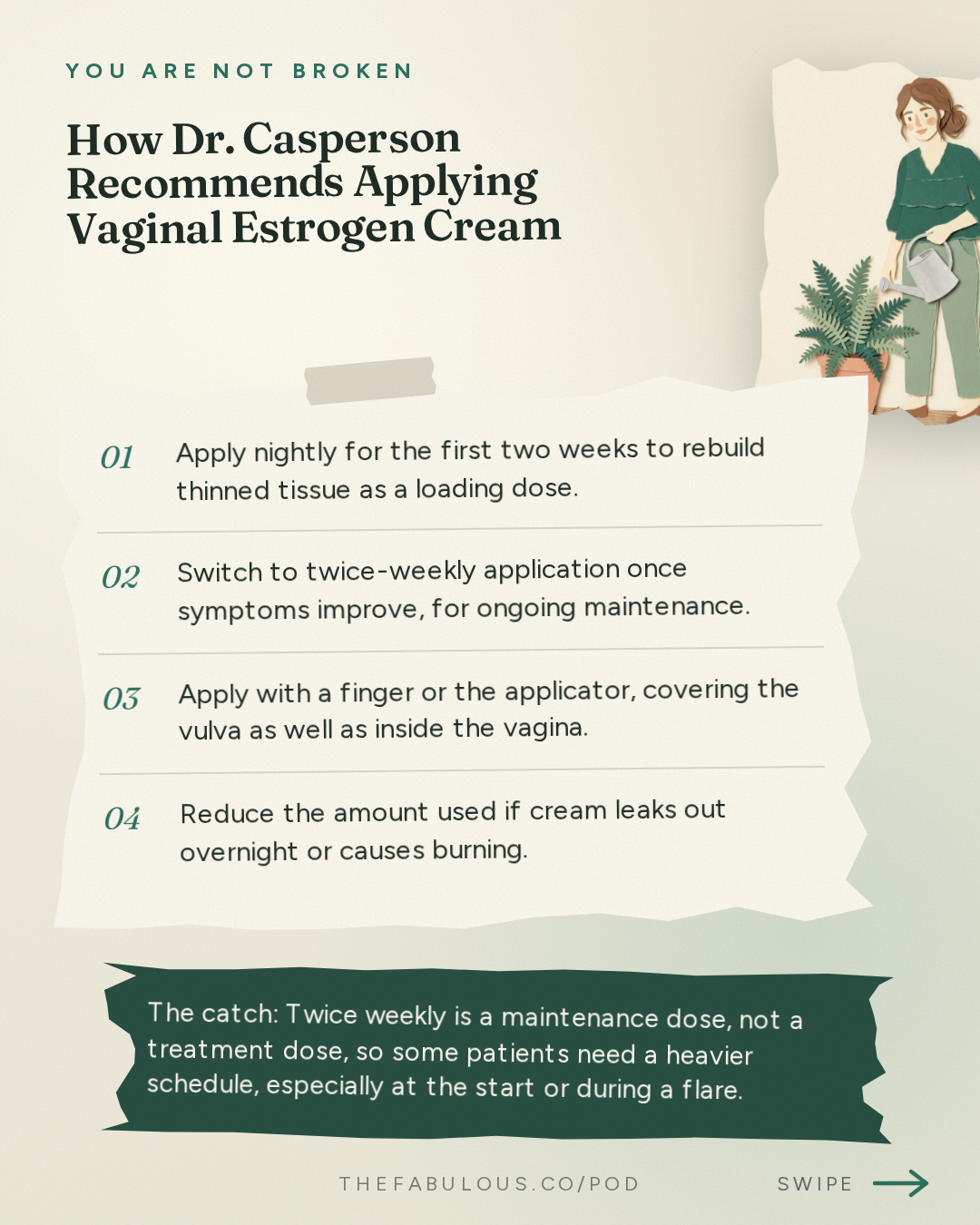
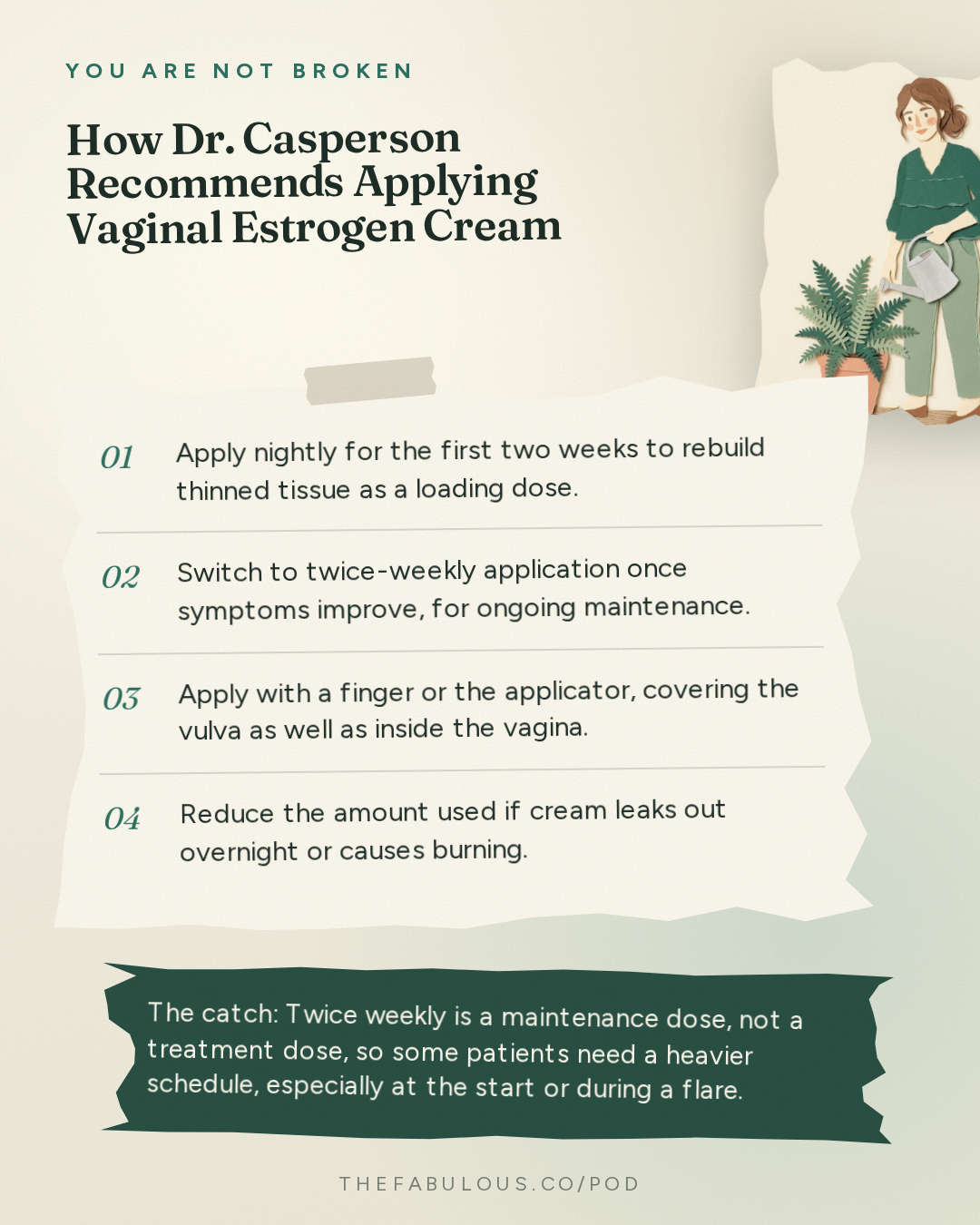
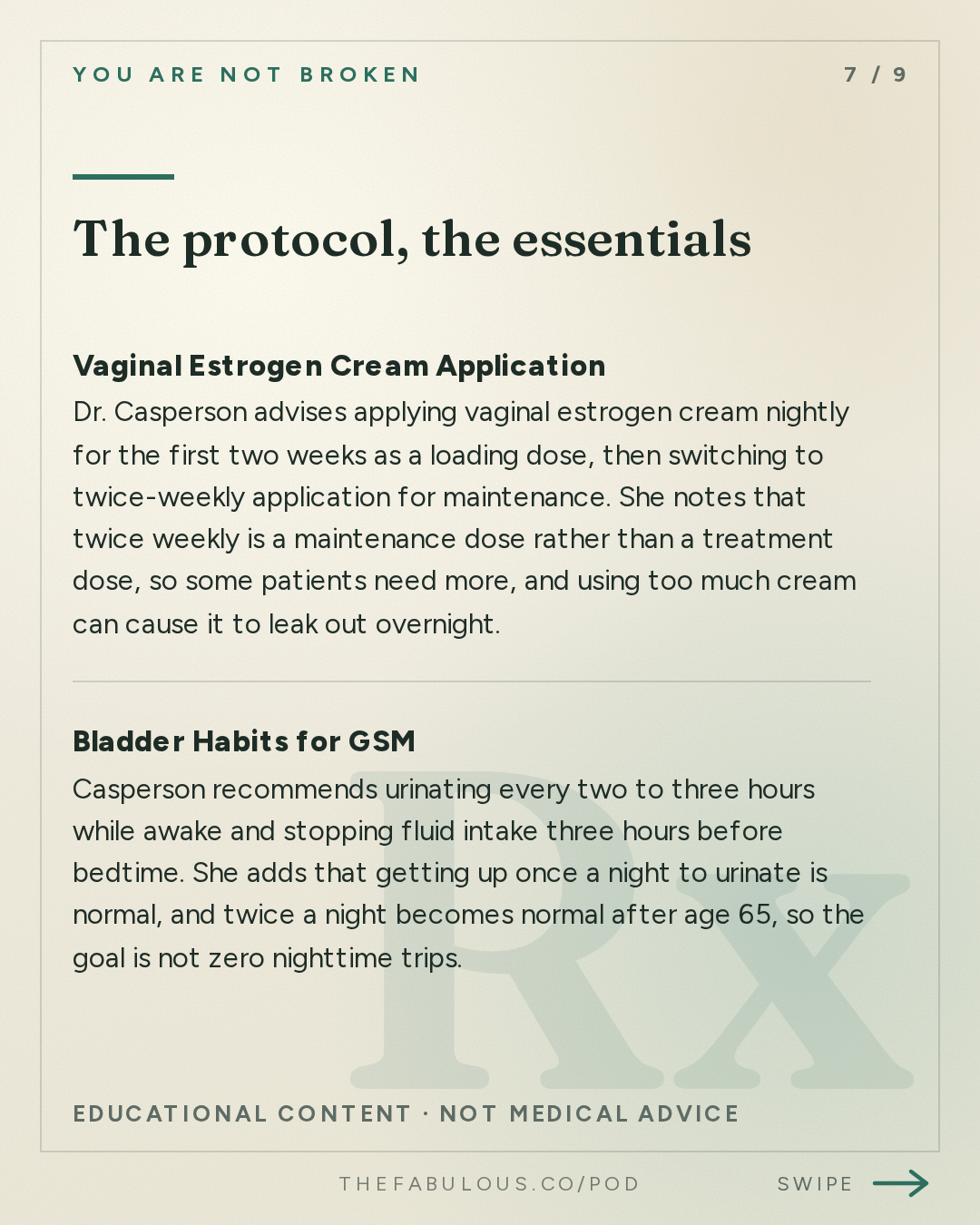
Application matters as much as the product. Casperson recommends a loading dose, applied nightly for the first two weeks, to rebuild atrophied tissue, then a maintenance schedule of twice a week (39:20). She is clear that twice a week is a maintenance dose, not a treatment dose. Some patients need more, and reverting to a heavier schedule when symptoms return is common and appropriate (56:04). Cream can go on with a finger instead of the applicator, and can be applied to the vulva as well as inside the vagina, since the labia and clitoris are also hormone sensitive tissue that can lose volume and function without estrogen and testosterone (26:03).
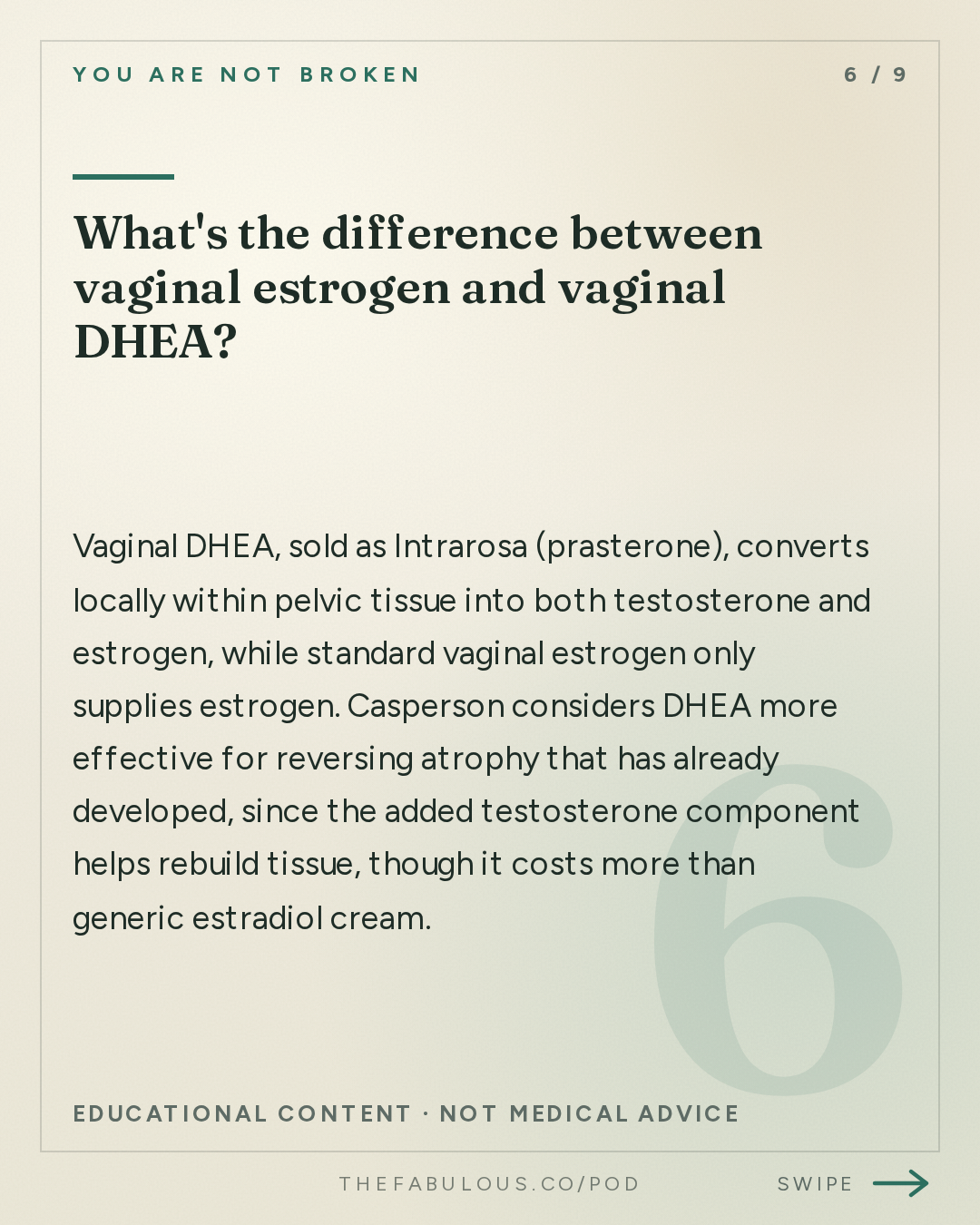
For deeper atrophy, Casperson turns to vaginal DHEA, sold in the US as Intrarosa (prasterone). Unlike estradiol, DHEA converts locally, inside pelvic tissue, into both testosterone and estrogen (61:45), which is why she considers it more effective for reversing atrophy that has already set in, rather than simply preventing it (30:33). The catch is price: in Australia, where Casperson recently spoke at the Sydney Opera House, insurance covers the drug for about $40 a month, while in the US the same medication costs roughly $80 a month with insurance and up to $300 without it (59:18). For patients who cannot manage a twice weekly cream, whether from arthritis, memory loss, or limited mobility, she recommends two alternatives: an oral pill called Osphena (ospemifene), or a vaginal ring that only needs changing every three months (58:06).
Casperson is direct about where caution is real and where it is not. Local vaginal hormones, she says, do not enter the bloodstream in meaningful amounts, which is why they are considered safe for patients on dialysis (40:42), why they do not affect bone density (47:36), and why they no longer carry the warning that still scares people. The FDA boxed warning linking vaginal estrogen to blood clots, stroke, and cancer was removed after more than a decade of advocacy, because the underlying data never supported it for local, low dose products (60:54). Genuine caution belongs elsewhere: a history of blood clots or pulmonary embolism warrants a specialist visit before starting any hormone therapy (50:04), while dense breasts or a family history of breast cancer are not, on their own, reasons to withhold treatment (51:20).
She is most pointed about a different gap in care: the roughly 5 percent of women who have their ovaries removed for benign reasons, not cancer, who are actually offered hormone therapy afterward, according to research from UK menopause specialist Dr. Louise Newson's group (44:25). Casperson, who as a urologist removes testicles for cancer, makes the comparison explicit.
"If a urologist ever removed testicles and did not replace testosterone in a man, that's malpractice. Use that information how you will." (Dr. Kelly Casperson, [44:25])
That line captures the whole argument. GSM is not a mystery condition waiting on more research. It has a defined name, a known cause, cheap and well studied treatments, and, by Casperson's account, more than a decade of safety data even in breast cancer survivors. What is missing is not evidence. It is the plumbing that gets evidence from a study to a prescription pad, and from a prescription pad to a patient who has spent years assuming her symptoms are simply what happens after fifty.
By the numbers
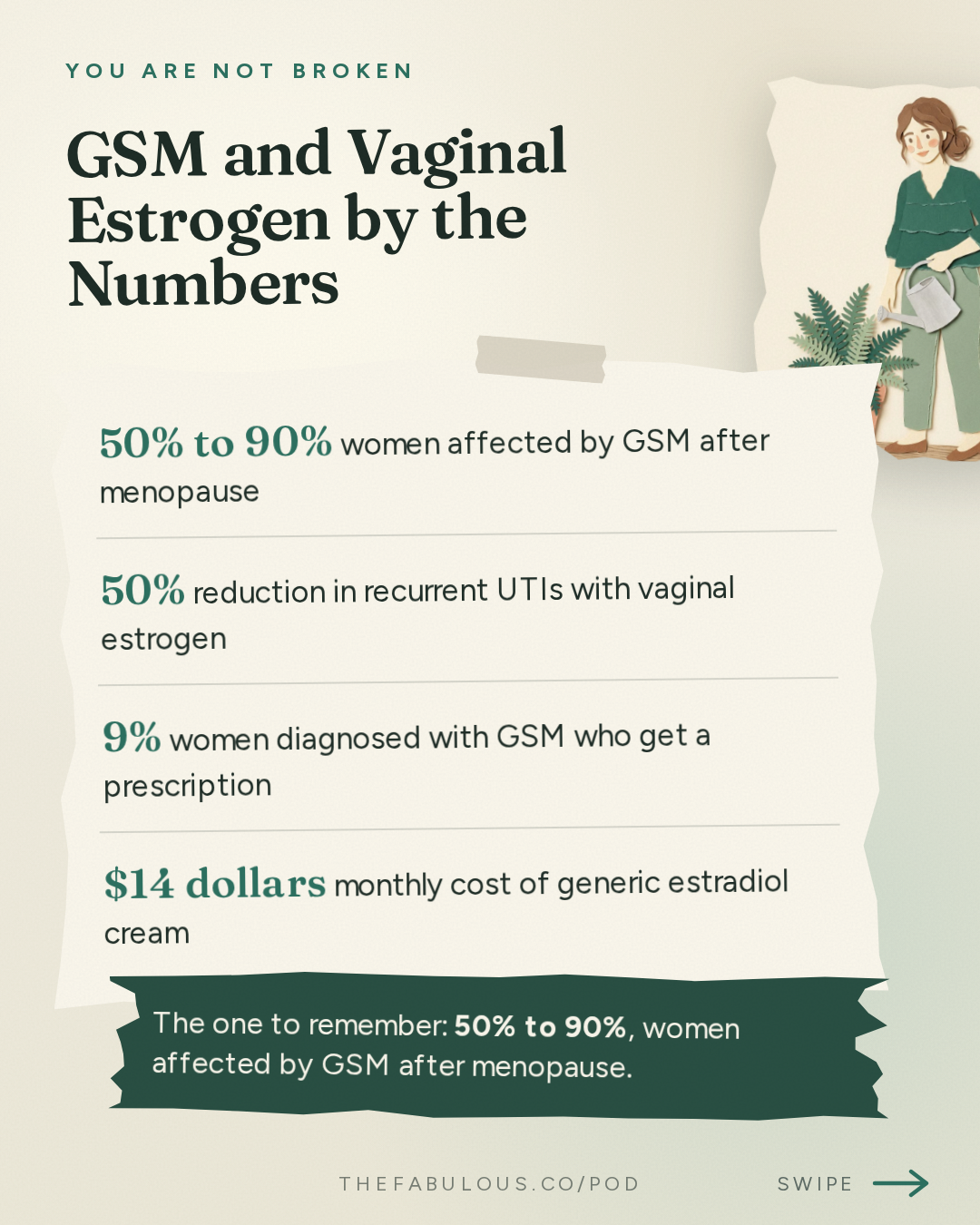
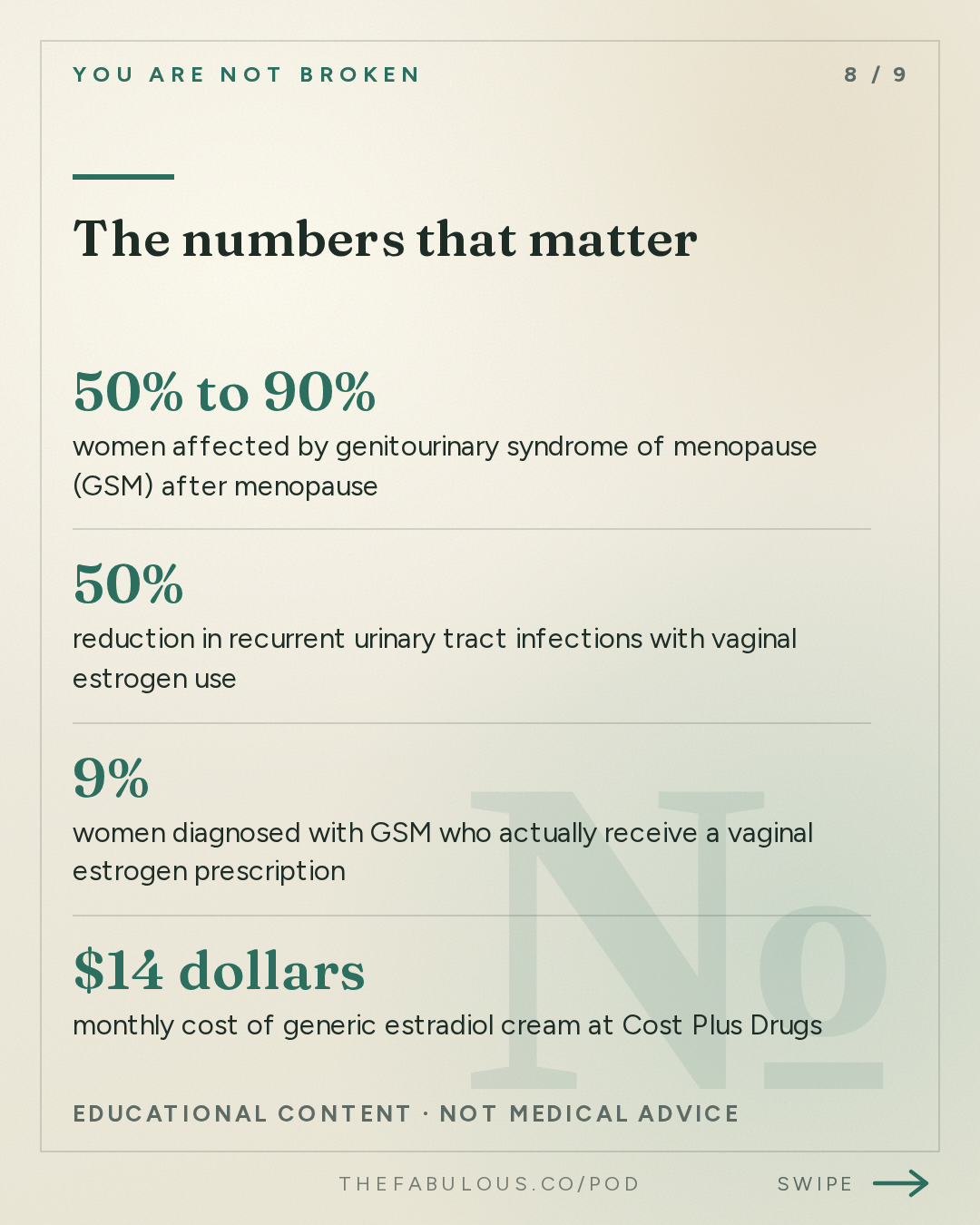
- 50% to 90% percent women affected by genitourinary syndrome of menopause (GSM) after menopause
- 50% percent reduction in recurrent urinary tract infections with vaginal estrogen use
- 9% percent women diagnosed with GSM who actually receive a vaginal estrogen prescription
- $14 dollars monthly cost of generic estradiol cream at Cost Plus Drugs
- 50,000 women-years size of the meta-analysis showing vaginal estrogen is safe after breast cancer
In their words
“We've come a long way since the senile vagina, but I get a laugh every time I say that when I'm doing a talk.”
“Women on vaginal estrogen, statistically significant decreased risk of death, admission to the hospital, admission to the ICU, and sepsis death.”
“If you're paying $100 for your vaginal estrogen, you're paying too much.”
“If a urologist ever removed testicles and did not replace testosterone in a man, that's malpractice. Use that information how you will.”
Protocols
-
Vaginal Estrogen Cream Application
Dr. Casperson advises applying vaginal estrogen cream nightly for the first two weeks as a loading dose, then switching to twice-weekly application for maintenance. She notes that twice weekly is a maintenance dose rather than a treatment dose, so some patients need more, and using too much cream can cause it to leak out overnight.
nightly for 2 weeks, then twice weekly
-
Bladder Habits for GSM
Casperson recommends urinating every two to three hours while awake and stopping fluid intake three hours before bedtime. She adds that getting up once a night to urinate is normal, and twice a night becomes normal after age 65, so the goal is not zero nighttime trips.
every 2-3 hours while awake, fluids cut off 3 hours before bed
-
Vaginal Hormone Delivery for Elderly Patients
For patients with cognitive decline, arthritis, or limited mobility, Casperson suggests oral Osphena (ospemifene) or a vaginal estrogen ring changed every three months instead of cream. She points out that twice-weekly cream application is often too difficult for patients who cannot reach their pelvis or remember the schedule.
ring changed every 3 months, or daily oral Osphena
Questions this episode answers
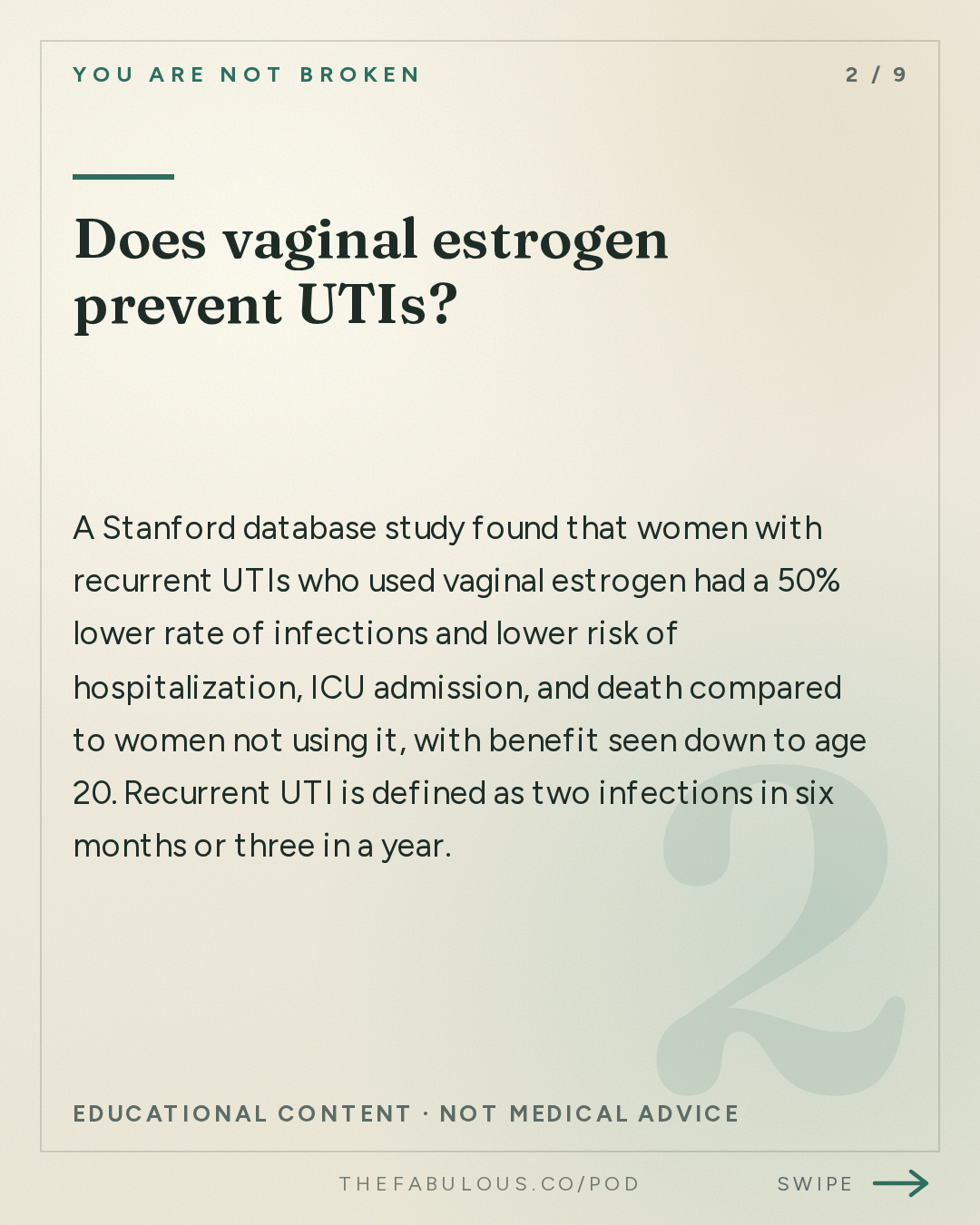
Does vaginal estrogen prevent UTIs?
A Stanford database study found that women with recurrent UTIs who used vaginal estrogen had a 50% lower rate of infections and lower risk of hospitalization, ICU admission, and death compared to women not using it, with benefit seen down to age 20 (21:05, 18:26). Recurrent UTI is defined as two infections in six months or three in a year (21:05).
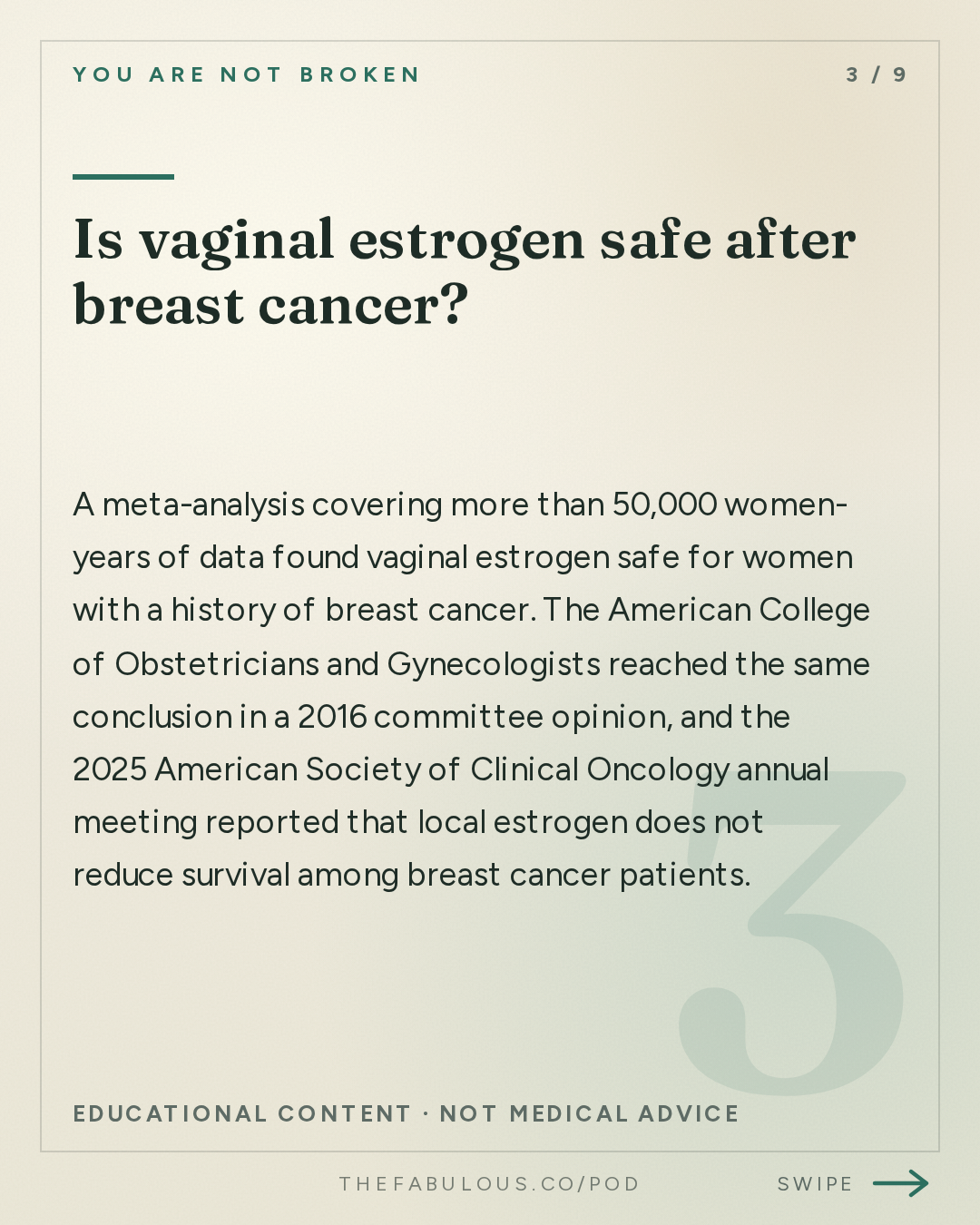
Is vaginal estrogen safe after breast cancer?
A meta-analysis covering more than 50,000 women-years of data found vaginal estrogen safe for women with a history of breast cancer (11:16). The American College of Obstetricians and Gynecologists reached the same conclusion in a 2016 committee opinion, and the 2025 American Society of Clinical Oncology annual meeting reported that local estrogen does not reduce survival among breast cancer patients (60:06).
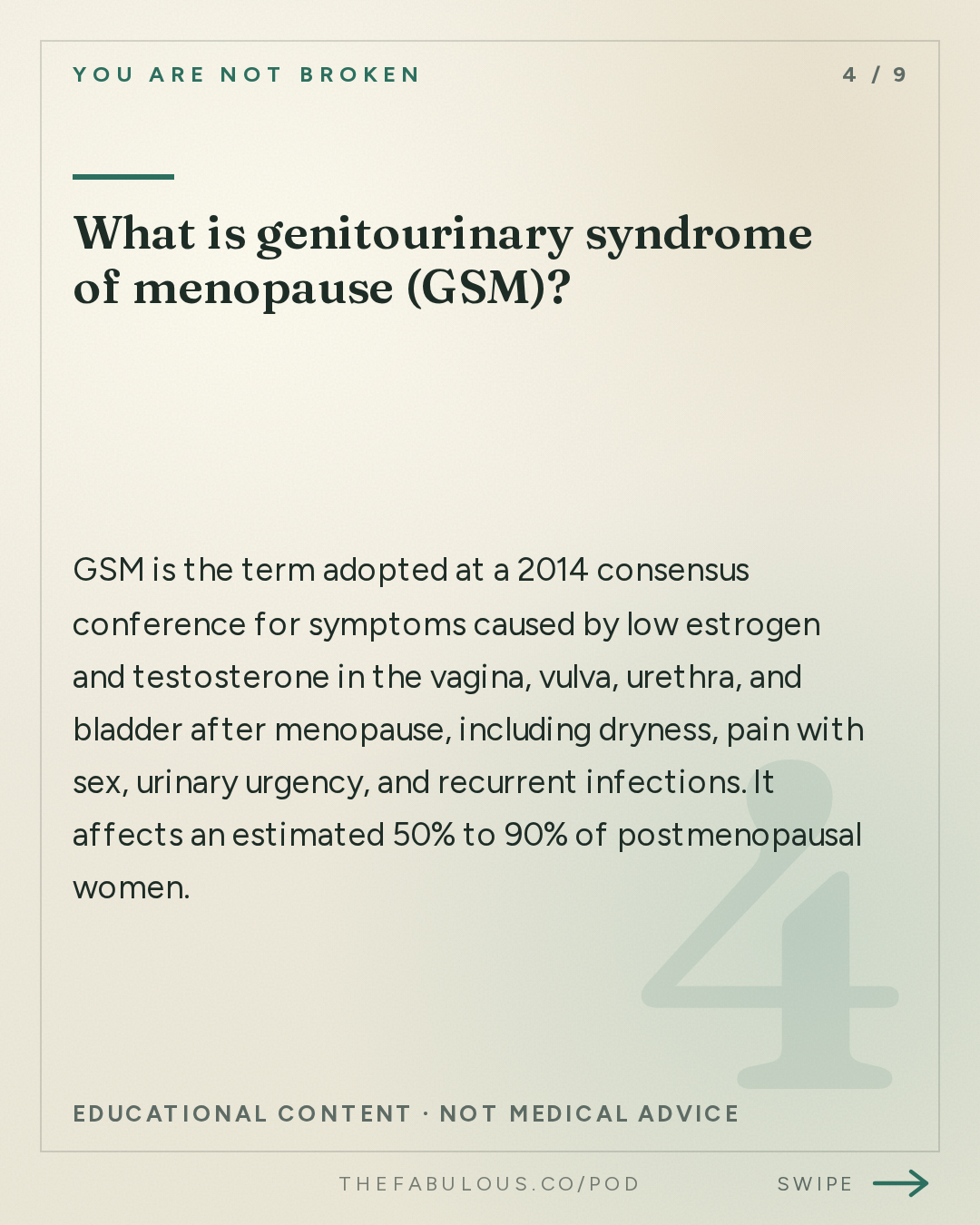
What is genitourinary syndrome of menopause (GSM)?
GSM is the term adopted at a 2014 consensus conference for symptoms caused by low estrogen and testosterone in the vagina, vulva, urethra, and bladder after menopause, including dryness, pain with sex, urinary urgency, and recurrent infections (13:42). It affects an estimated 50% to 90% of postmenopausal women (17:27).
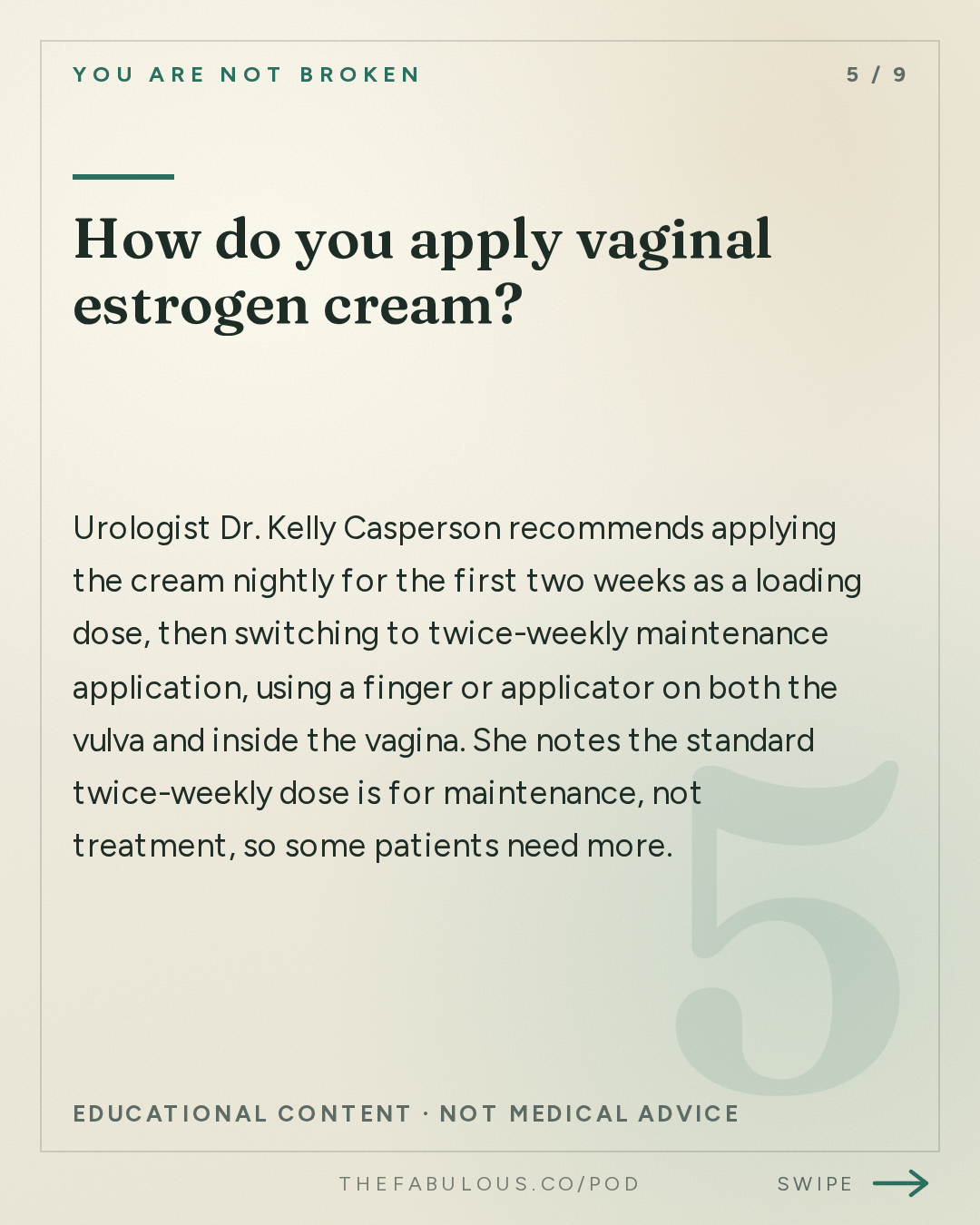
How do you apply vaginal estrogen cream?
Urologist Dr. Kelly Casperson recommends applying the cream nightly for the first two weeks as a loading dose, then switching to twice-weekly maintenance application, using a finger or applicator on both the vulva and inside the vagina (39:20, 26:03). She notes the standard twice-weekly dose is for maintenance, not treatment, so some patients need more.
What's the difference between vaginal estrogen and vaginal DHEA?
Vaginal DHEA, sold as Intrarosa (prasterone), converts locally within pelvic tissue into both testosterone and estrogen, while standard vaginal estrogen only supplies estrogen (61:45). Casperson considers DHEA more effective for reversing atrophy that has already developed, since the added testosterone component helps rebuild tissue, though it costs more than generic estradiol cream (30:33, 59:18).
The full read, in cards
Go deeper
- Stanford database study on vaginal estrogen and recurrent UTI outcomes — found lower hospitalization, ICU admission, and death among women with recurrent UTIs on vaginal estrogen, with benefit down to age 20
- Stanford Medicare database study on GSM treatment rates — found only 9% of women diagnosed with GSM received a vaginal estrogen prescription
- Meta-analysis of vaginal estrogen safety in breast cancer survivors — found vaginal estrogen safe across more than 50,000 women-years of data
- ACOG Committee Opinion on vaginal estrogen in breast cancer history — concluded vaginal estrogen is appropriate for women with a history of estrogen-dependent breast cancer
- 2025 ASCO annual meeting report — found local estrogen does not diminish survival among breast cancer patients
- UK research from Dr. Louise Newson's group on post-oophorectomy hormone therapy — found only 5% of women who had ovaries removed for benign reasons were offered hormone therapy
Mentioned
Dr. Kelly Casperson · Dr. Irwin Goldstein · Dr. Jim Simon · Dr. Linda Bosserman · Dr. Louise Newson · Dr. Day · Intrarosa · Osphena · Vagifem · Premarin · Mark Cuban's Cost Plus Drugs · ISSWSH · ACOG · ASCO
More from this show and category

ED as an Early Predictor of Heart Attack Risk
Erectile dysfunction predicts a future heart attack better than chest pain does, especially in younger men (11:11). Urologist Tobias Kohler describes two cheap early-warning tests, a coronary calcium scan and a Mayo Clinic ceramide blood test, plus the cardiac damage caused by high-dose testosterone abuse (12:49, 44:55).

Physiology of Grief and Heart Attack Risk
Grief is not just an emotion, it is a measurable physiological event: a 21-times spike in heart attack risk in the first 24 hours after a loss, elevated cortisol for months, and a brain that keeps treating the dead as still out there somewhere.
Gabrielle Lyon: Muscle Is the Longevity Organ
Dr. Gabrielle Lyon argues that skeletal muscle, not body fat, is the organ that determines how well women age. She explains that muscle drives glucose disposal, releases hormone-like myokines, and needs at least 100 grams of daily protein plus resistance training to stay healthy after midlife.
Protein Needs for Muscle in Menopause: Dr. Lyon's Guide
Dr. Gabrielle Lyon says women need 30 to 50 grams of protein in their first meal after an overnight fast to switch on muscle building. She explains why aging muscle grows resistant to protein and exercise, why resistance training beats hormone therapy for long-term independence, and why suppressing mTOR is the wrong longevity strategy.
