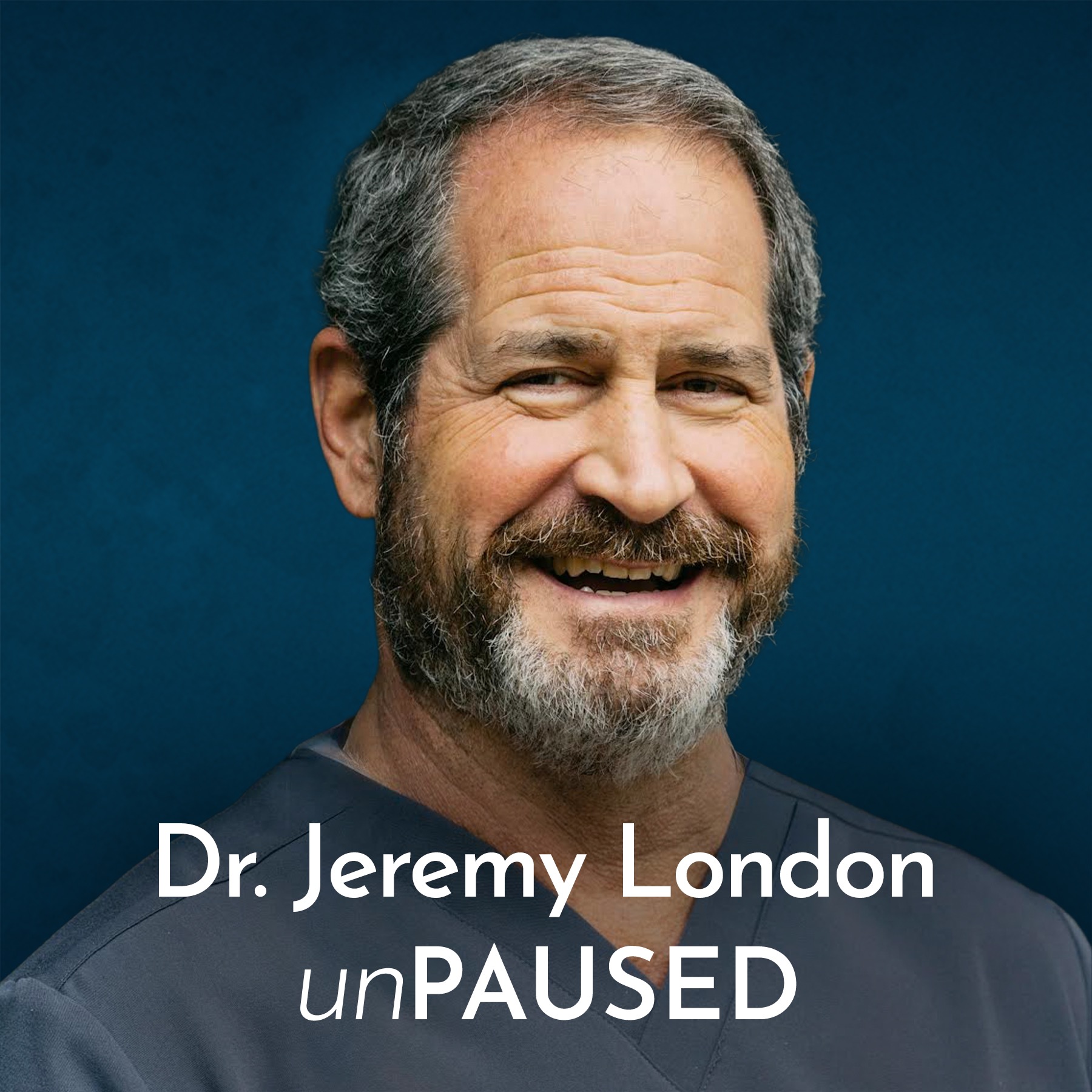
unPAUSED with Dr. Mary Claire Haver
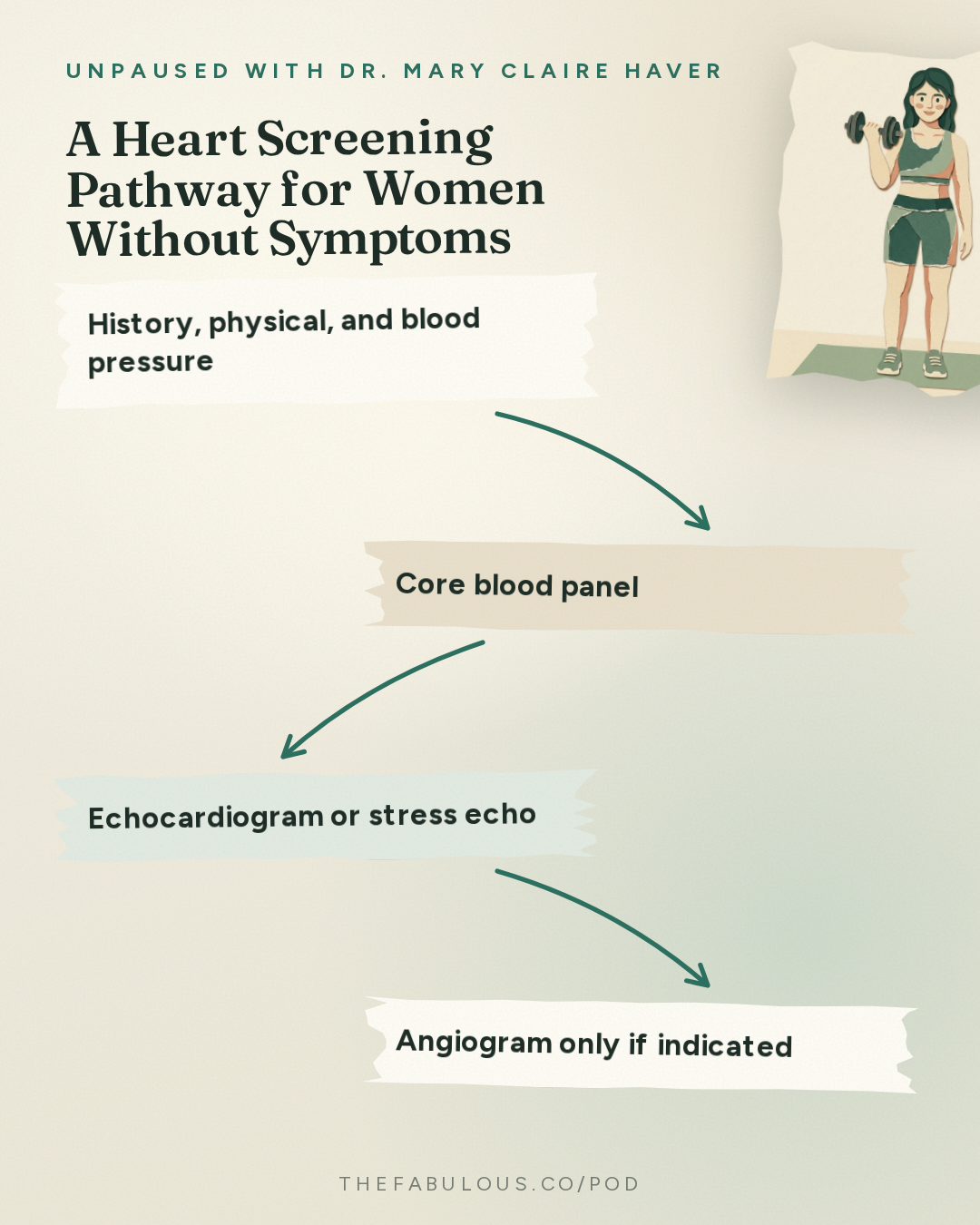
Women's Heart Health After Menopause Guide
How Women Can Protect Their Hearts with Dr. Jeremy London
▶ Listen to the full episode More from unPAUSED with Dr. Mary Claire Haver
The brief
Cardiologist Jeremy London breaks down the 2026 cardiovascular guidelines and explains why early menopause now counts as a heart disease risk factor. He also details which blood tests, ApoB, Lp(a), and fasting insulin, catch risk earlier than standard cholesterol panels, and outlines exercise, nutrition, and sleep protocols for protecting the heart through menopause.
Every airport runway exists for one reason: to give a plane room to pick up speed before it must do anything irreversible. Dr. Jeremy London, a cardiologist, uses the same image for heart disease. The years between a bad gene and a heart attack are a runway. The question is not whether the plane eventually leaves the ground. The question is how much runway a person has left, and whether anyone bothered to measure it before takeoff.
That is the real subject of this conversation between London and Dr. Mary Claire Haver: not one scary statistic, but the architecture of time. The occasion is the 2026 update to the American Heart Association and American College of Cardiology guidelines on cholesterol management, the first major revision in eight years (00:43). London calls it a great first step rather than a breakthrough, the kind of understatement a doctor uses after watching big institutions move slowly for twenty years (00:53).
The update adds a risk calculator called PREVENT, which turns a patient's demographic and health data into a single number (01:41). London is polite about its limits. He remembers something a pulmonologist told him early in his career.
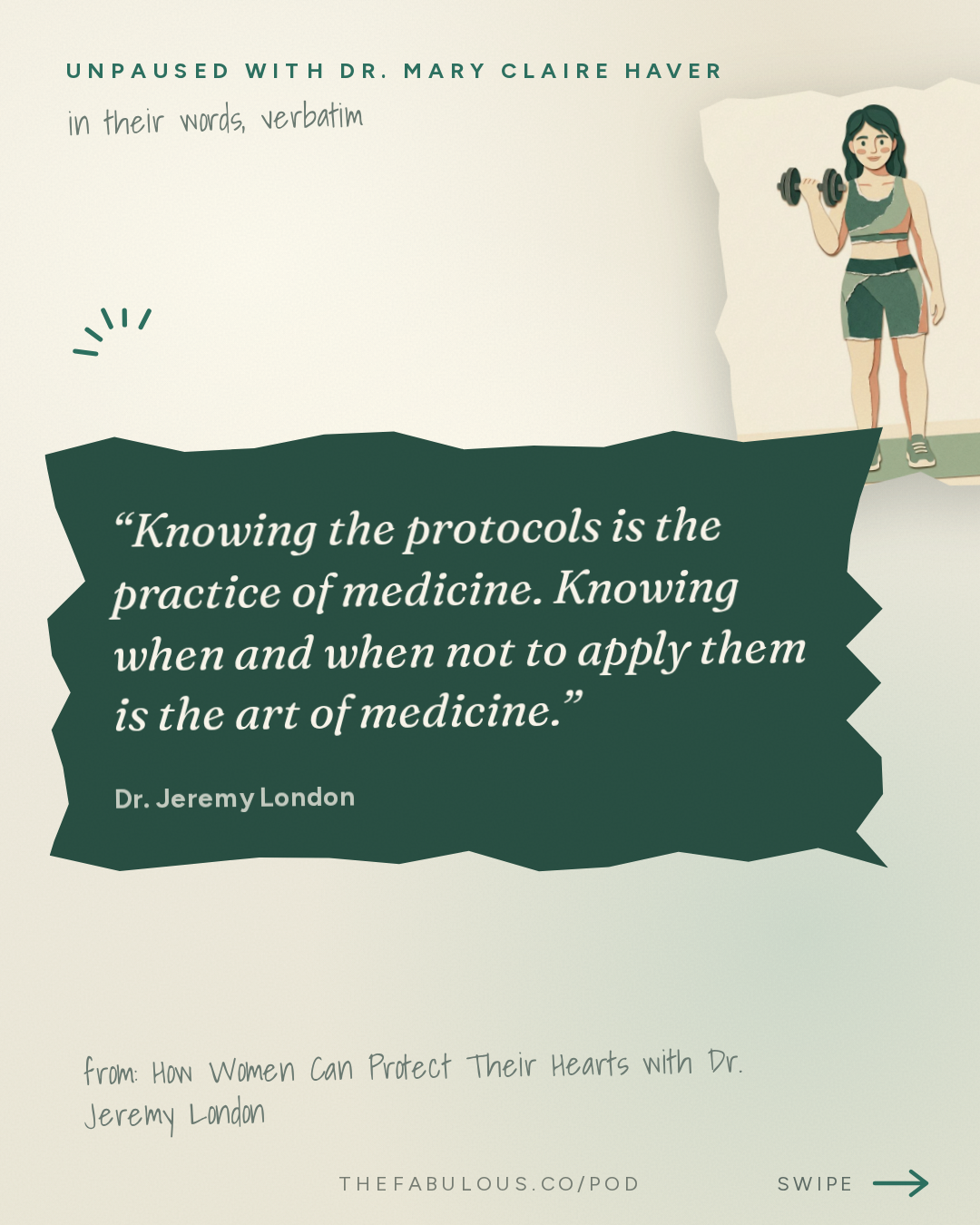
"Knowing the protocols is the practice of medicine. Knowing when and when not to apply them is the art of medicine." - Dr. Jeremy London [02:36]
A calculator, he says, is a starting point, not a verdict. The more consequential change is what the guidelines now ask doctors to test. Lp(a), pronounced L-P-little-a, is a cholesterol particle controlled almost entirely by genetics. For years doctors skipped testing it, reasoning that nothing could be done about a gene. London disagrees with that logic now. Lp(a) makes blood more prone to clotting and inflames artery walls, the perfect storm, as he puts it, and knowing the number early lets a patient attack every other risk factor harder to compensate (03:47).
The guidelines also add ApoB, short for apolipoprotein B, a protein that sits on every particle capable of lodging cholesterol in an artery wall. A standard LDL panel measures the amount of cholesterol. ApoB measures the number of particles carrying it, which London says is the number that actually predicts damage.
"It's about the trucks on the road. It's about how many dangerous particles do you have, and for how long floating in your bloodstream." - Dr. Jeremy London [04:31]
Menopause Enters the Chart
The detail likely to matter most to women listening is smaller and, in its way, bigger. For the first time, the guidelines classify early menopause before age 45 as a cardiovascular risk enhancer, a formal flag that changes how aggressively a doctor should treat other numbers (04:57). Premature menopause, before 40, carries even more weight, and so does polycystic ovary syndrome and starting periods before age 10 (09:19). London calls this a huge first step, though he is candid that a new guideline does not automatically change what a cardiologist does in an exam room after twenty years of habit (05:20).
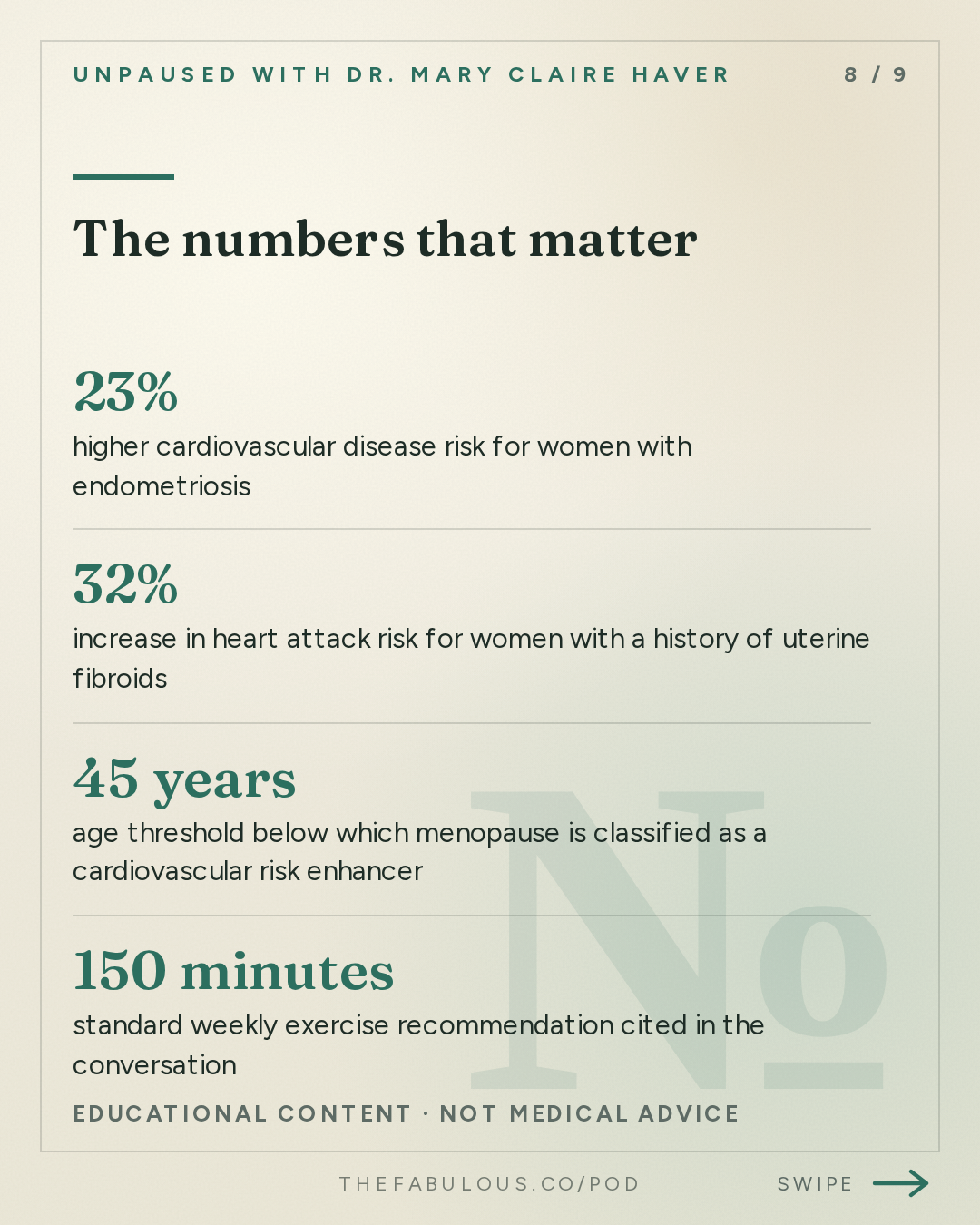
Two findings in this section are easy to miss and hard to forget. Endometriosis, a condition where uterine-like tissue grows outside the uterus, is linked to a 23 percent higher risk of cardiovascular disease, likely from chronic inflammation (06:42). A history of uterine fibroids, benign growths that affect up to two-thirds of women of reproductive age, carries a 32 percent increase in heart attack risk (07:08). London points out an uncomfortable gap: women with both diagnoses often leave their gynecologist's office with no referral to a cardiologist at all, because the two specialties rarely talk to each other about the same patient (07:08).
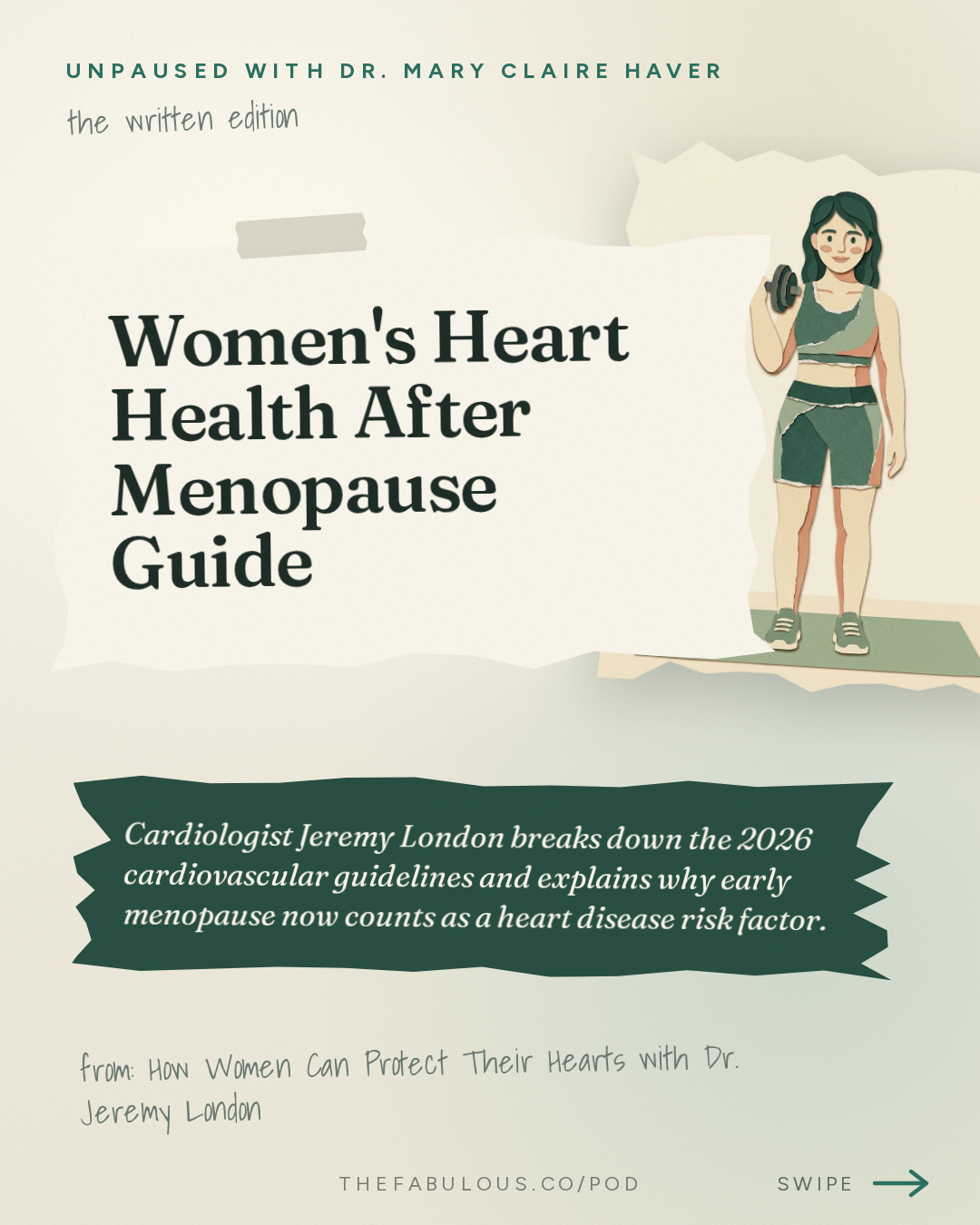
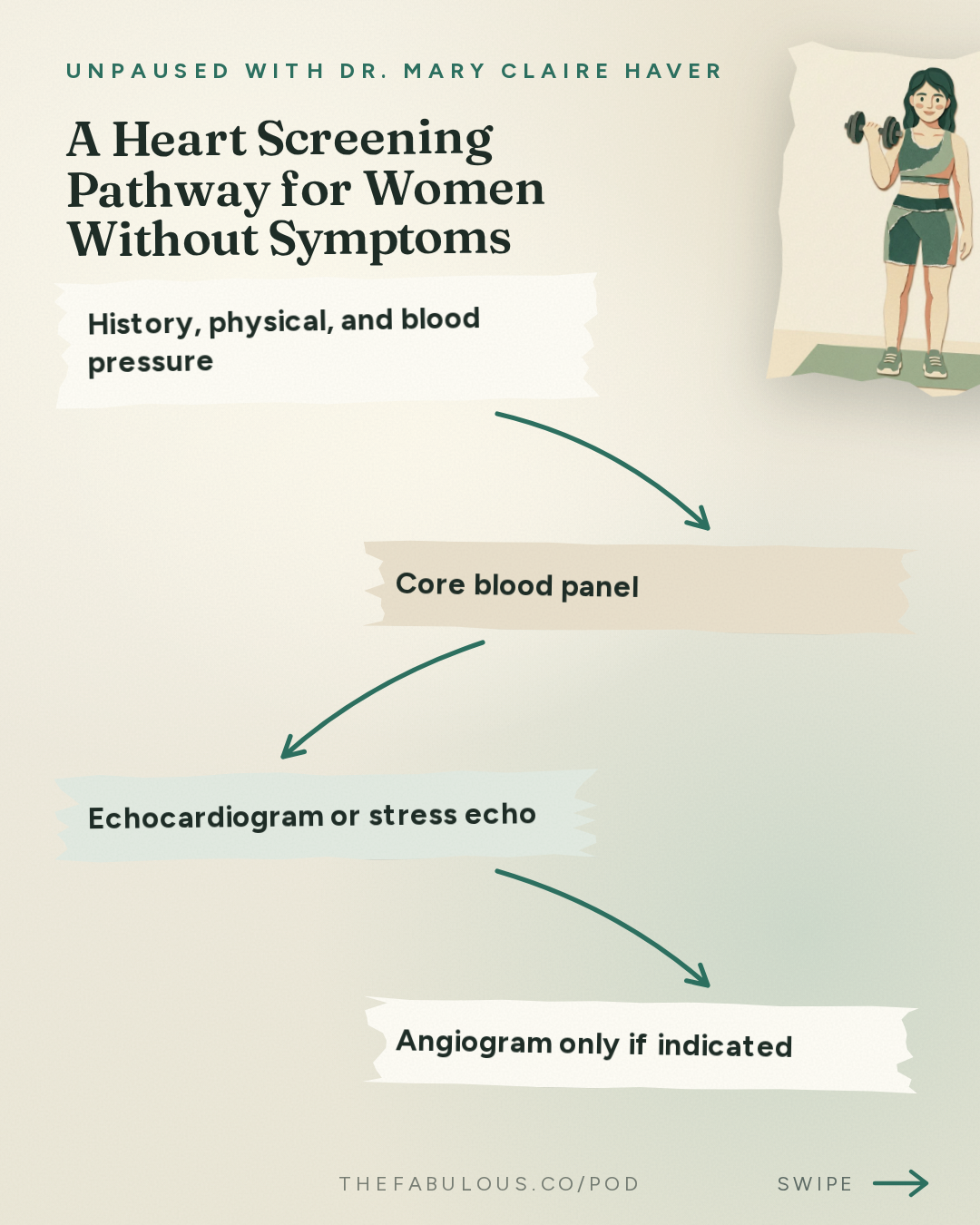
None of this works as a warning unless someone actually orders the right tests. London lists the core panel: ApoB, Lp(a), fasting glucose, hemoglobin A1C, a measure of average blood sugar over roughly three months, and fasting insulin. The insulin number matters most to people who assume their numbers are fine because their glucose looks normal. Insulin can run high for years while the pancreas compensates, masking the early stage of insulin resistance until it cannot keep up anymore (11:14).
What a Scan Can and Cannot See
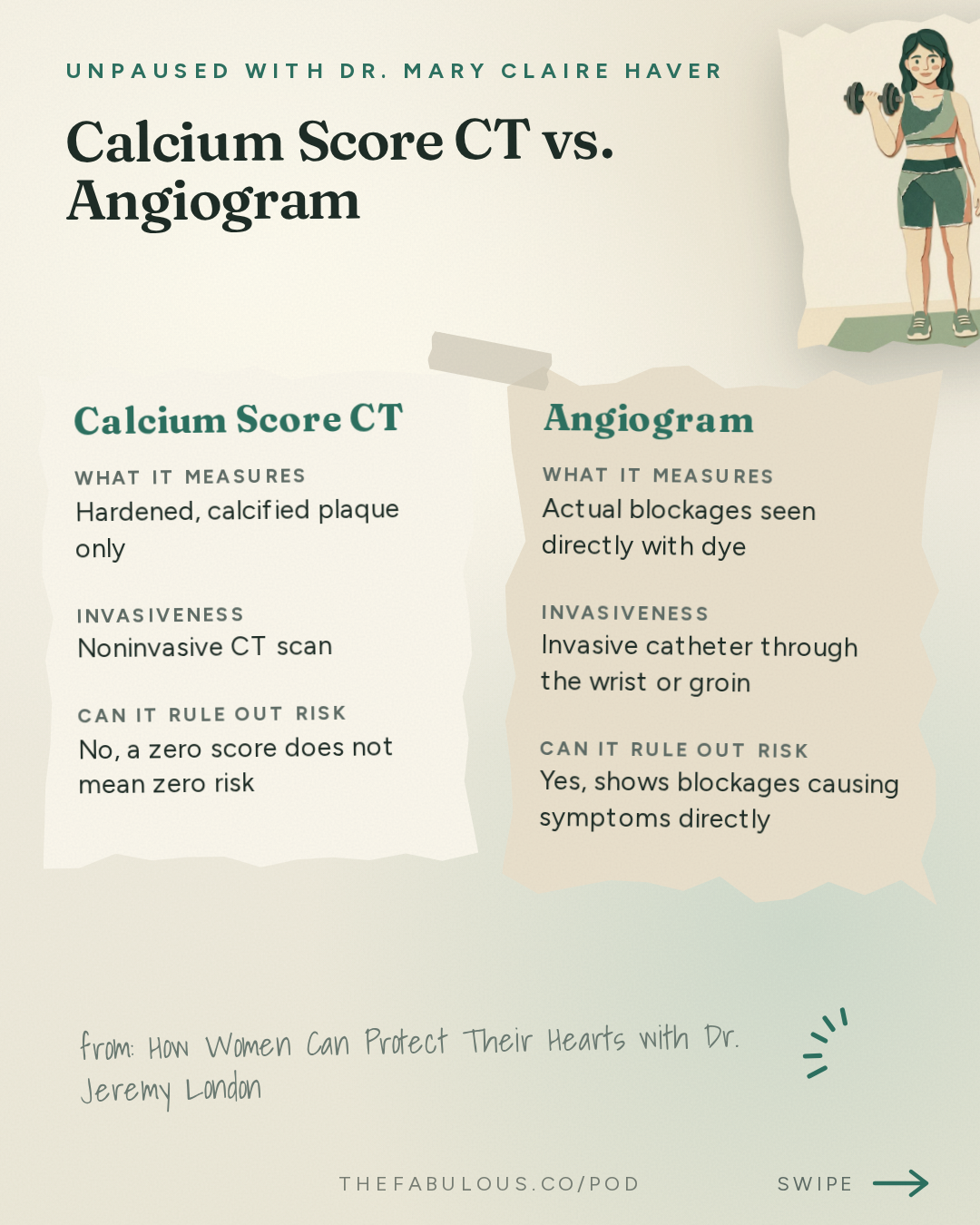
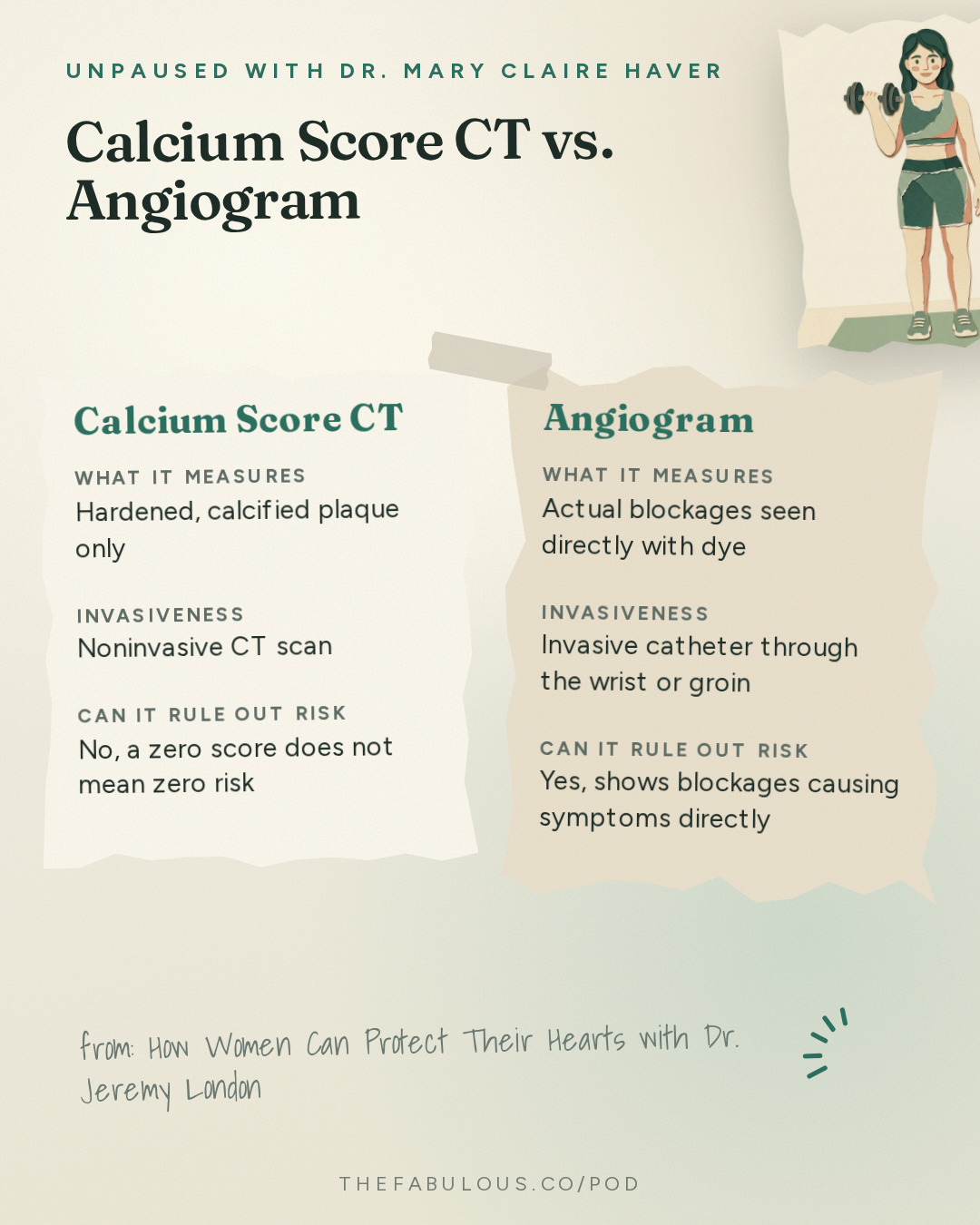
Patients often ask for a calcium score, a CT scan that measures hardened, calcified plaque in the coronary arteries (12:10). London is blunt about its blind spot: the scan cannot see soft plaque, the kind that has not yet hardened and is, in some cases, more likely to rupture. A score of zero, he says, does not mean a patient has no risk for a heart attack (13:56). He is visibly frustrated that some practices use a high calcium score to deny hormone therapy, a use of the test he says he cannot justify (13:56).
The angiogram, by contrast, is the gold standard: a catheter threaded through the wrist or groin injects dye directly into the coronary arteries so a cardiologist can see blockages in real time (14:25). It is accurate and it is invasive, which is why London reserves it for people with chest pain or a positive stress echocardiogram, a test that watches the heart's wall motion while a patient exercises on a treadmill or bike (16:06). For someone without symptoms, he starts with history, blood pressure, and the blood panel before reaching for imaging, because imaging without the right context may create a false sense of security (18:13).
On medication, London does not hedge. Statins lower ApoB, and the outcome data, not just the lab values, show fewer heart attacks as a result.
"Statins, in my opinion, and I think in the data it would be supported, have saved and helped more people than they have harmed." - Dr. Jeremy London [18:48]
He also lists alternatives for patients who cannot tolerate statins: bempedoic acid, ezetimibe, and PCSK9 inhibitors, injectable or now oral drugs that stop the liver from destroying the receptors that clear ApoB particles from the blood (21:14). London takes one himself after getting a stent. On GLP-1 drugs, originally developed for diabetes and now widely used for weight loss, he admits he was wrong the first time around. He expected a shortcut with side effects. Instead he has watched patients transform, and newer data shows benefits beyond weight loss, including lower cardiovascular risk and reduced incidence of certain cancers (29:26).
Hormone therapy gets a careful answer. No guideline recommends estrogen purely to prevent heart disease, and London thinks that is reasonable given the lack of outcome trials (24:30). But he treats it as a real lever when paired with lifestyle changes, not a replacement for them. Hormone therapy without nutrition, movement, sleep, and community, he says, is likely not going to do much over twenty years (26:18).
The lifestyle section is where the conversation gets practical. London cites exercise physiologist Ben Levine's study of sedentary, middle-aged adults who did two years of high-intensity training: their echocardiograms improved and their VO2 max, a measure of how efficiently the body uses oxygen during exercise, went up (32:50). The heart, in other words, can get younger at an age most people assume is past help. He does not chase the familiar 150-minutes-a-week number. He cares more about consistency: movement that raises a heartbeat to the point of breathlessness once or twice a week, resistance training two to three times a week, and a nutrition approach that holds to a plan about 80 percent of the time (37:52). Muscle, he reminds listeners, does not grow during the lift. It grows during sleep and rest, when the body repairs the fibers torn during exercise.
"You're actually tearing those muscle fibers at that point. It's during the recovery phase where you are giving your body adequate protein for building blocks, hydrating, and allowing those body, those muscle groups to rest, that's where the magic is." - Dr. Jeremy London [36:43]
Sleep gets its own warning. An estimated 83 million people have sleep apnea, and only 10 to 20 percent are treated or even diagnosed (43:18). Apnea is a documented cardiovascular risk factor on its own, and London notes that women are underdiagnosed because the condition does not always come with obvious snoring or body size. His own fix for a career spent on call is a short nighttime sauna session, 11 to 12 minutes at a moderate temperature, which raises core body temperature just enough that its natural drop afterward helps trigger sleep (44:05).
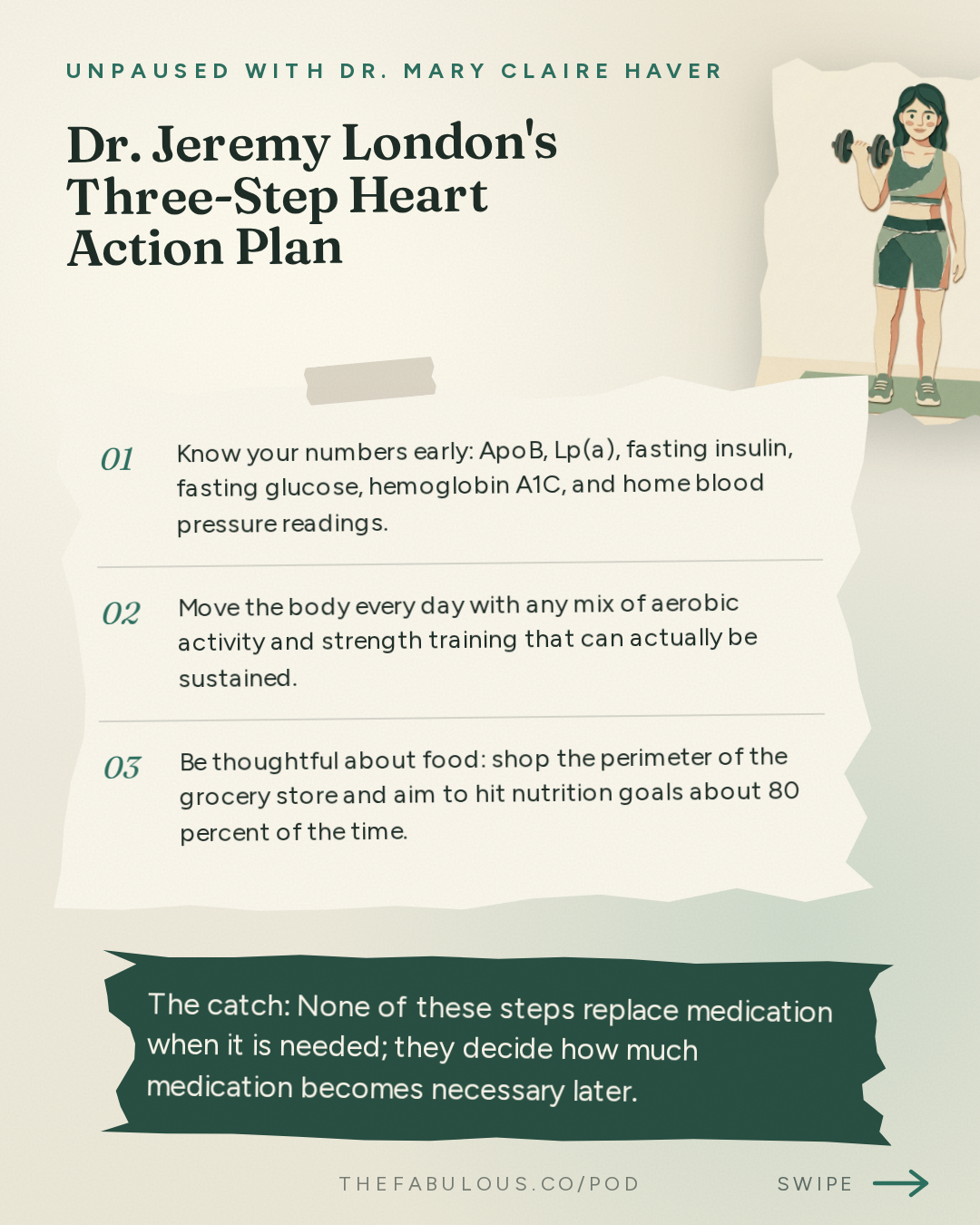
By the end, London reduces a dense hour to three habits for anyone young enough to still have runway left: know the numbers early, move the body daily in whatever form will actually stick, and pay attention to what goes in the mouth (45:49). None of it replaces medicine. All of it decides how much medicine will eventually be needed.
"Doctors can save you, but we can't heal you. Only you can heal yourself." - Dr. Jeremy London [49:15]
That line lands less like a slogan than like a job description. A cardiologist can stop the plane from crashing. Whether it needed to come down that hard in the first place was decided years earlier, on a runway most people never knew they were standing on.
Ask this episode anything
Pod's AI answers from the episode itself, with the minute mark so you can hear it yourself.
Or start with one of these
Ask this episode
Pod's AI listens to the whole episode to answer, and points you to the minute it comes from.
The rest of this answer, and any question after it
Answers come from the episode itself, never from a summary of it.
ContinueKey takeaways
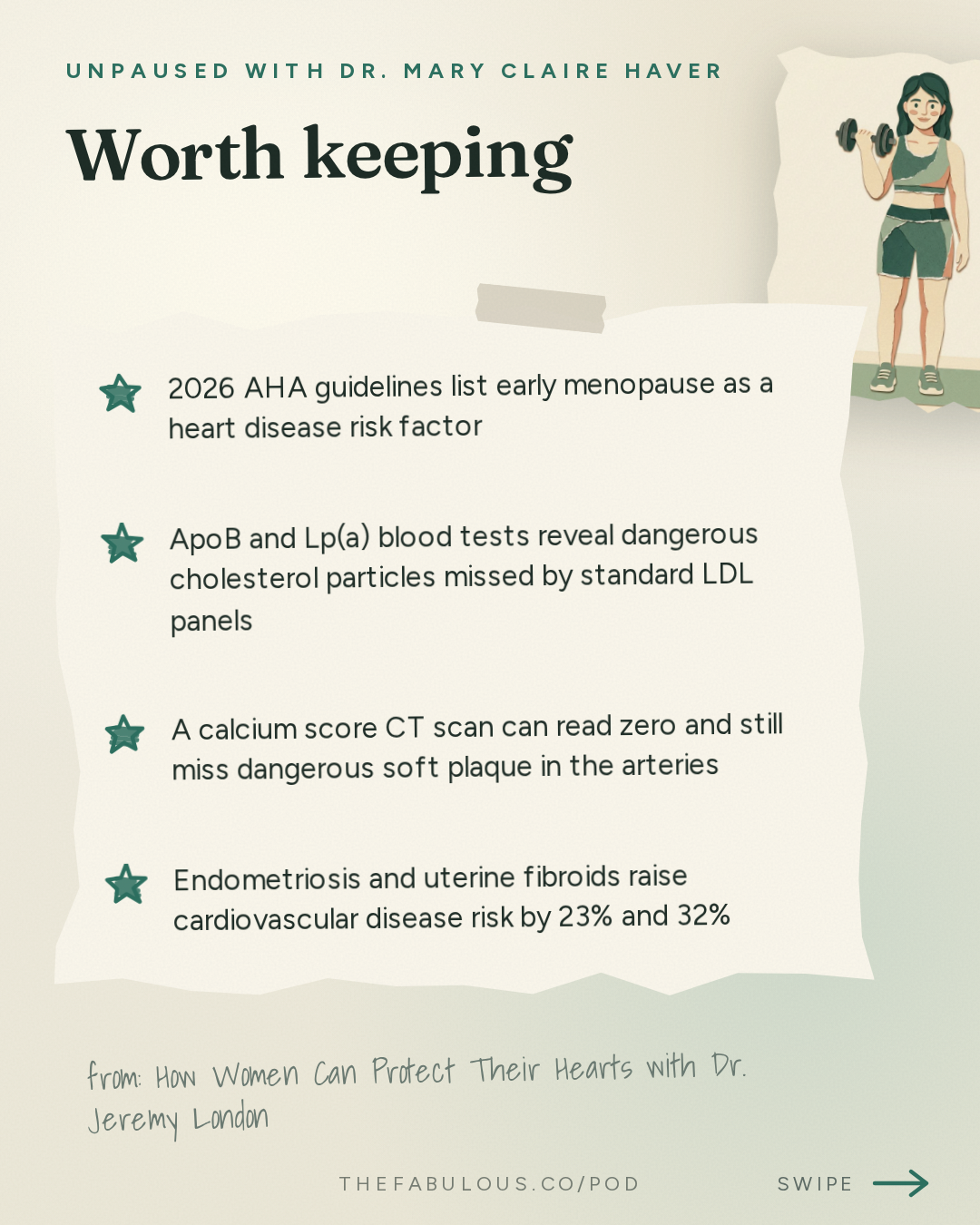
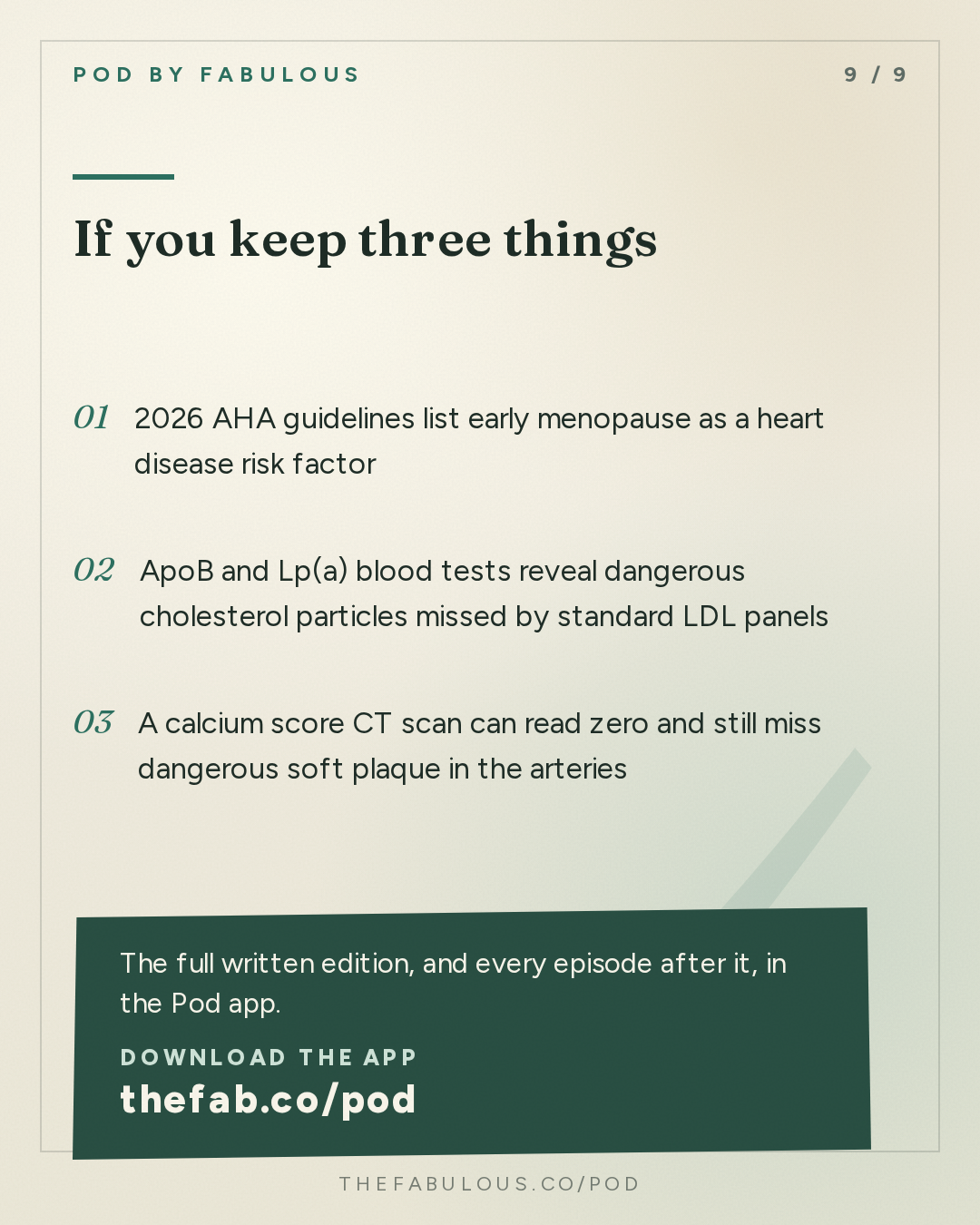
- 2026 AHA guidelines list early menopause as a heart disease risk factor
- ApoB and Lp(a) blood tests reveal dangerous cholesterol particles missed by standard LDL panels
- A calcium score CT scan can read zero and still miss dangerous soft plaque in the arteries
- Endometriosis and uterine fibroids raise cardiovascular disease risk by 23% and 32%
- Only 10 to 20% of the estimated 83 million people with sleep apnea get diagnosed or treated
The episode in cards

By the numbers
- 23% percent higher cardiovascular disease risk for women with endometriosis
- 32% percent increase in heart attack risk for women with a history of uterine fibroids
- 45 years age threshold below which menopause is classified as a cardiovascular risk enhancer
- 150 minutes standard weekly exercise recommendation cited in the conversation
- 83 million people estimated number of people with sleep apnea
- 10 to 20% percent share of sleep apnea cases that are actually diagnosed or treated
In their words
“Knowing the protocols is the practice of medicine. Knowing when and when not to apply them is the art of medicine.”
“It's about the trucks on the road. Mm-hmm. It's about how many dangerous particles do you have, and for how long floating in your”
“You're actually tearing those muscle fibers at that point. It's during the recovery phase where you are giving your body adequate protein for building blocks, hydrating, and allowing those body, those muscle groups to rest, that's where the magic is.”
“Doctors can save you, but we can't heal you. Only you can heal yourself.”
Protocols
-
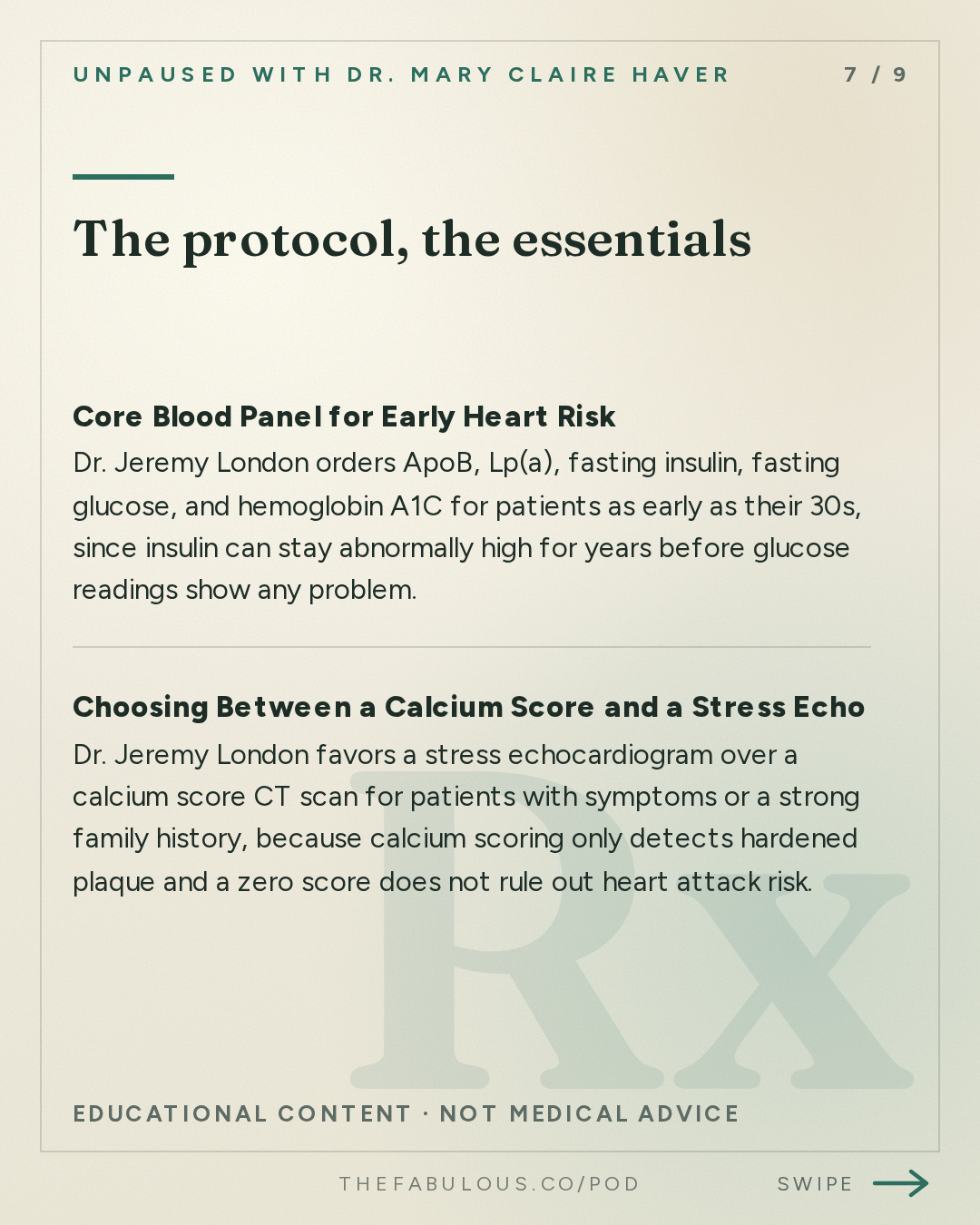
Core Blood Panel for Early Heart Risk
Dr. Jeremy London orders ApoB, Lp(a), fasting insulin, fasting glucose, and hemoglobin A1C for patients as early as their 30s, since insulin can stay abnormally high for years before glucose readings show any problem.
Baseline test, repeated as a physician recommends
-
Choosing Between a Calcium Score and a Stress Echo
Dr. Jeremy London favors a stress echocardiogram over a calcium score CT scan for patients with symptoms or a strong family history, because calcium scoring only detects hardened plaque and a zero score does not rule out heart attack risk.
As needed when risk factors or symptoms appear
-
Nighttime Sauna for Sleep
Dr. Jeremy London takes an 11 to 12 minute sauna session at a moderate temperature before bed, then lets his core body temperature fall naturally for 15 to 20 minutes before showering and sleeping, since a dropping core temperature is one trigger for sleep.
Nightly
-
Three-Step Heart Action Plan for Younger Women
Dr. Jeremy London advises women in their 30s to know their numbers early using a home blood pressure cuff and the core blood panel, to move their body every day with any enjoyable mix of aerobic and strength activity, and to be thoughtful about what they eat.
Daily habits, with numbers checked periodically
Questions this episode answers
What is ApoB and why does it matter more than LDL?
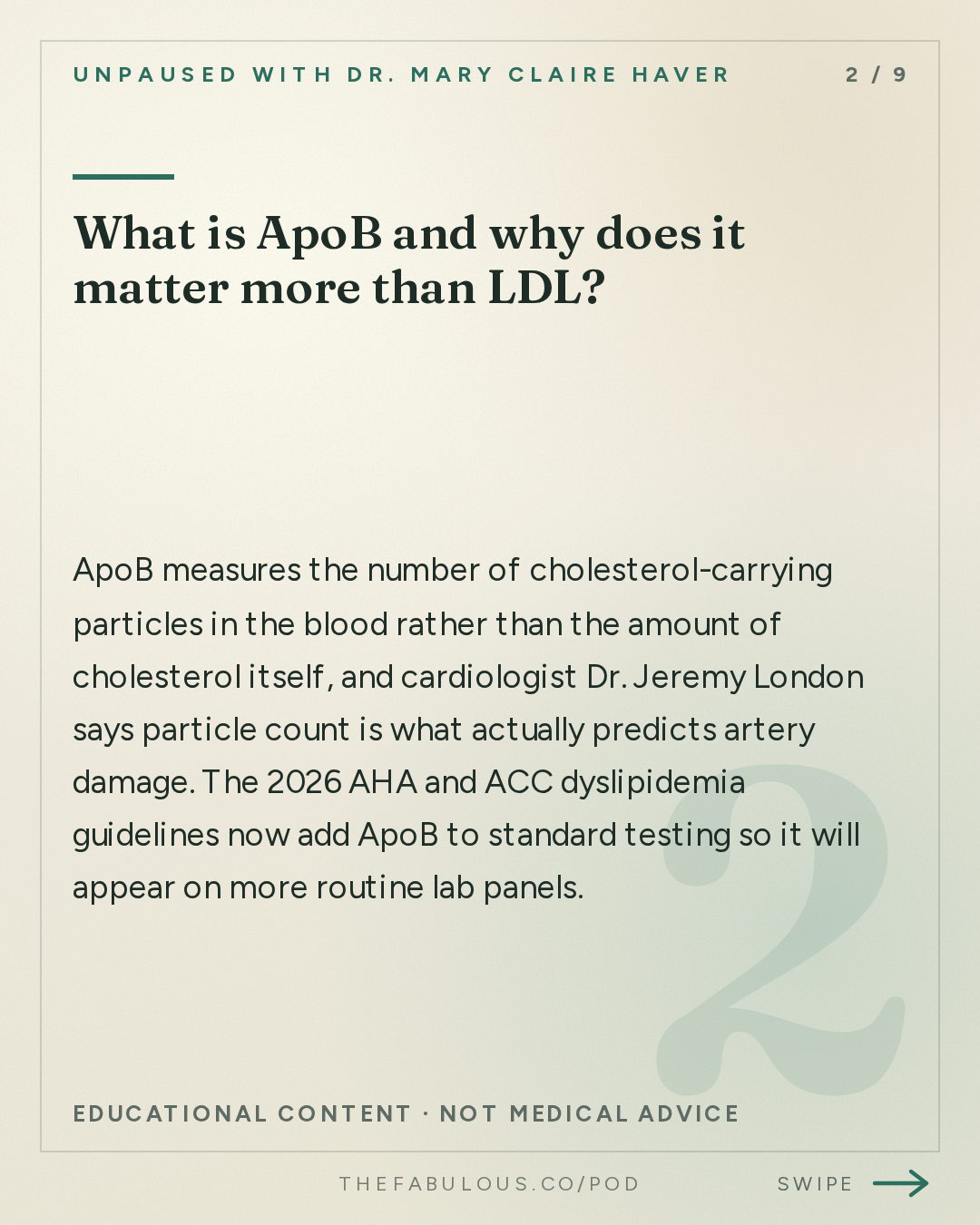
ApoB measures the number of cholesterol-carrying particles in the blood rather than the amount of cholesterol itself, and cardiologist Dr. Jeremy London says particle count is what actually predicts artery damage (04:31). The 2026 AHA and ACC dyslipidemia guidelines now add ApoB to standard testing so it will appear on more routine lab panels (04:31).
Does early menopause increase heart disease risk?
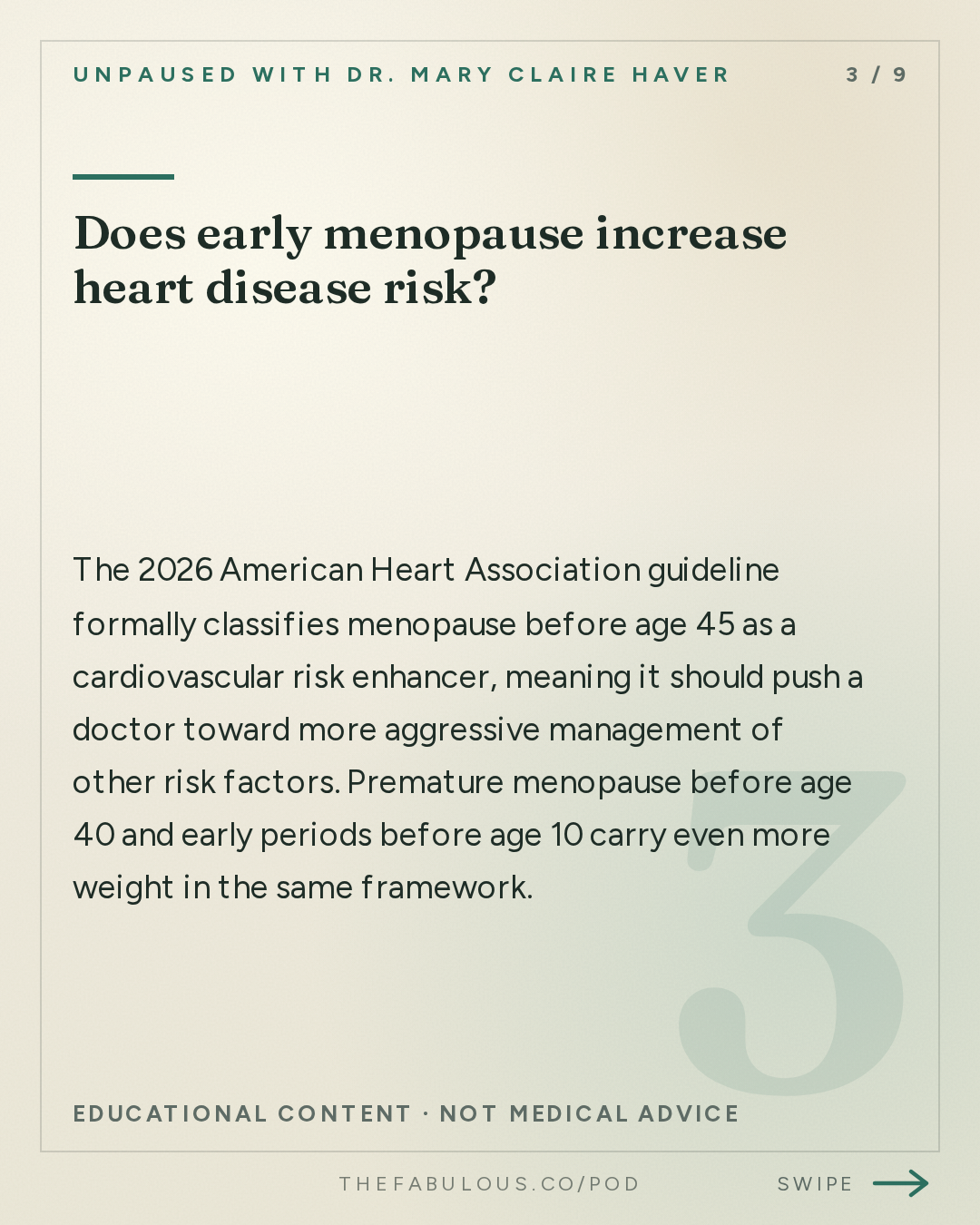
The 2026 American Heart Association guideline formally classifies menopause before age 45 as a cardiovascular risk enhancer, meaning it should push a doctor toward more aggressive management of other risk factors (04:57). Premature menopause before age 40 and early periods before age 10 carry even more weight in the same framework (09:19).
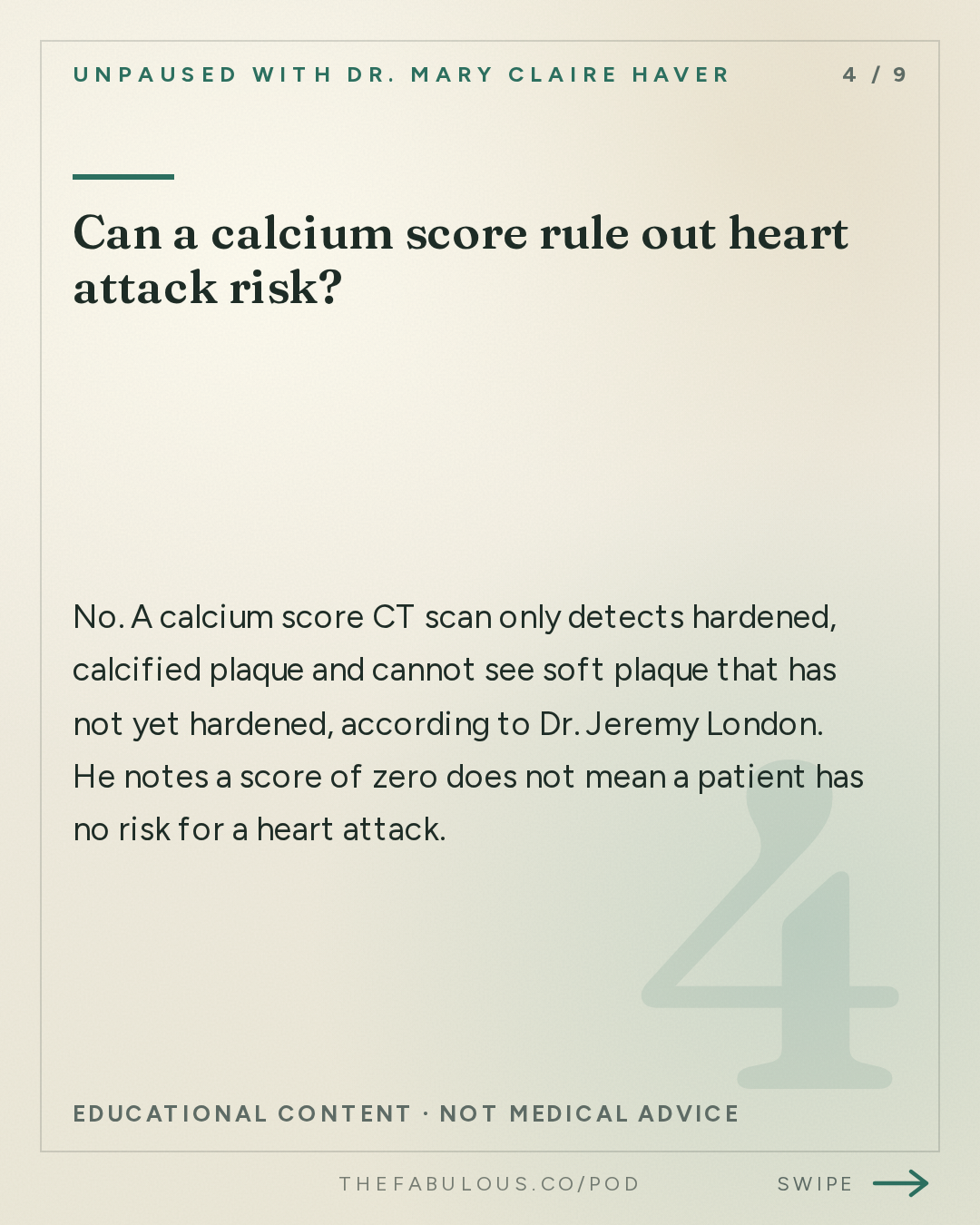
Can a calcium score rule out heart attack risk?
No. A calcium score CT scan only detects hardened, calcified plaque and cannot see soft plaque that has not yet hardened, according to Dr. Jeremy London (12:10). He notes a score of zero does not mean a patient has no risk for a heart attack (13:56).
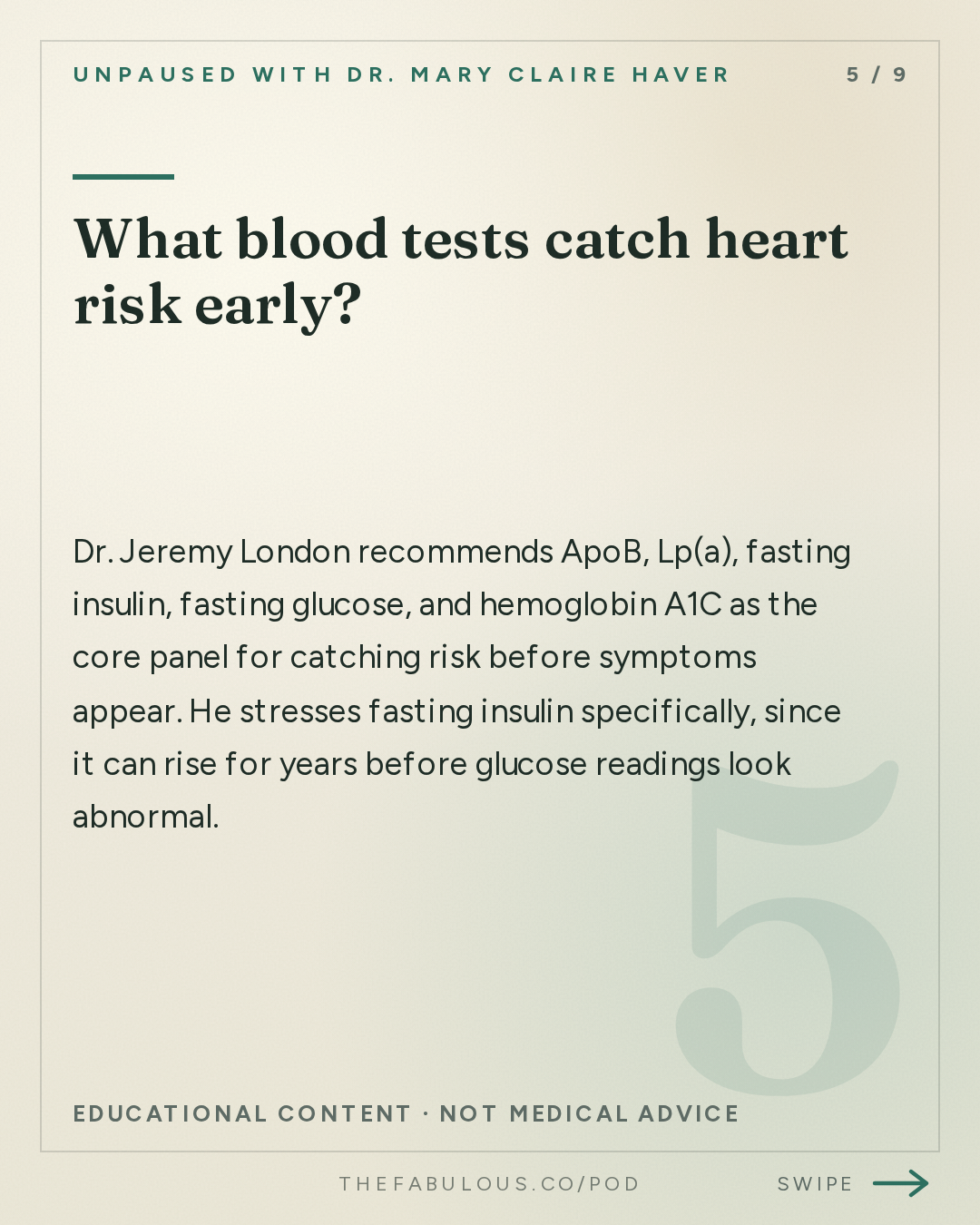
What blood tests catch heart risk early?
Dr. Jeremy London recommends ApoB, Lp(a), fasting insulin, fasting glucose, and hemoglobin A1C as the core panel for catching risk before symptoms appear (10:49). He stresses fasting insulin specifically, since it can rise for years before glucose readings look abnormal (11:14).
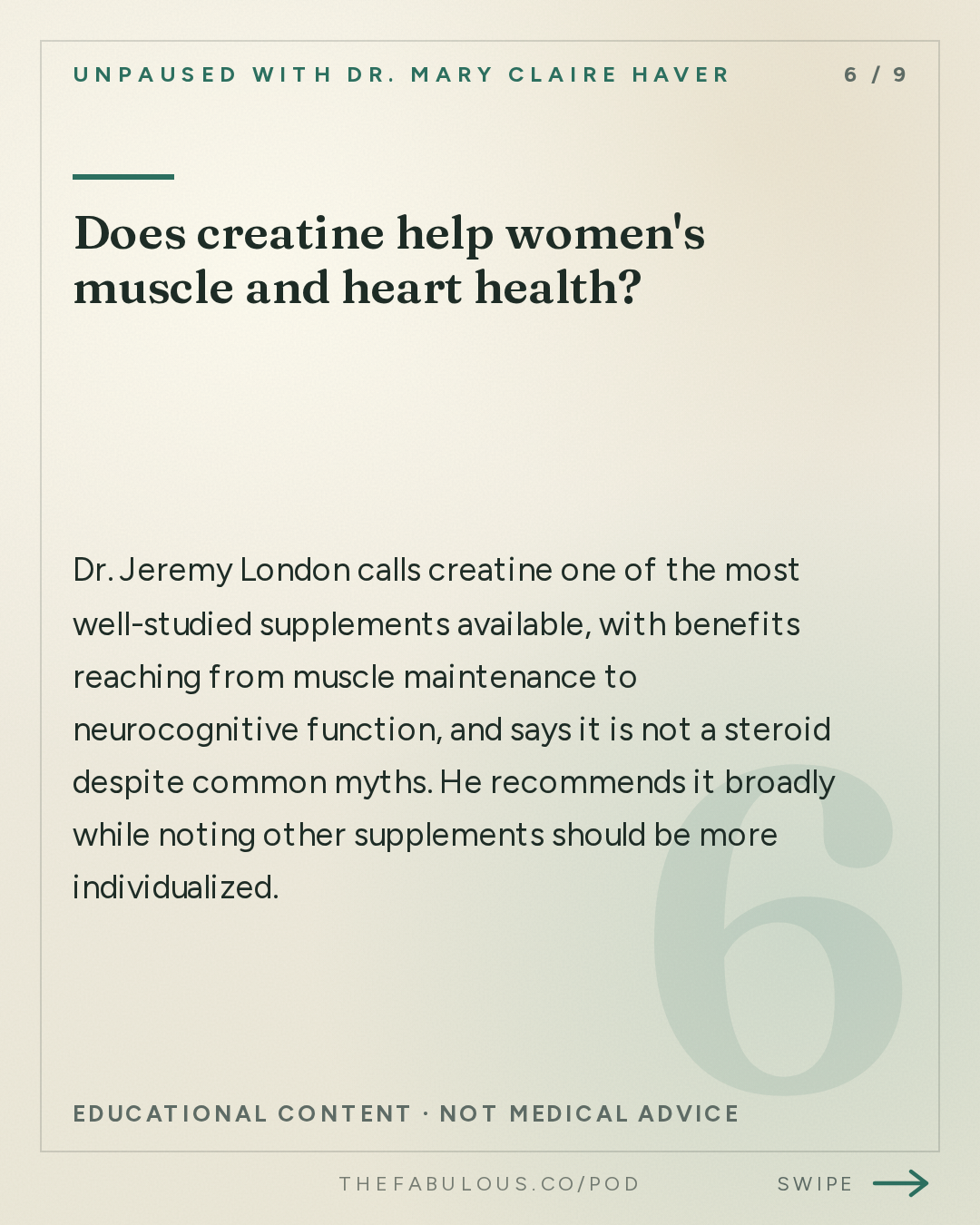
Does creatine help women's muscle and heart health?
Dr. Jeremy London calls creatine one of the most well-studied supplements available, with benefits reaching from muscle maintenance to neurocognitive function, and says it is not a steroid despite common myths (38:50). He recommends it broadly while noting other supplements should be more individualized (39:39).
Why does endometriosis or fibroids raise cardiovascular risk?
Endometriosis carries a 23 percent higher cardiovascular disease risk, likely driven by chronic systemic inflammation, and a history of uterine fibroids carries a 32 percent increase in heart attack risk, according to Dr. Jeremy London (06:42, 07:08). He notes many women with these diagnoses never have a cardiovascular conversation with any physician (07:08).
The full read, in cards
Go deeper
- 2026 ACC/AHA Guideline on the Management of Dyslipidemia — Replaced the 2018 guideline and added universal Lp(a) screening, ApoB measurement, and early menopause as a cardiovascular risk enhancer
- Ben Levine's cardiac training study — Found that sedentary, middle-aged adults improved echocardiogram findings and VO2 max after two years of high-intensity exercise
Mentioned
Dr. Mary Claire Haver · Dr. Jeremy London · American Heart Association · American College of Cardiology · ApoB · Lp(a) · Ben Levine · Creatine · GLP-1
More from this show and category
Menopause and Heart Disease Risk Explained
Heart disease kills more women than all cancers combined, and the risk trajectory shifts hard during perimenopause, when falling estrogen raises LDL by an average of 18% and stiffens blood vessels (01:29, 30:39). Cardiovascular surgeon Dr. Jeremy London explains why, and what to do about it.
IUD for Perimenopause Symptoms and HRT
An IUD thins the uterine lining, protects it during hormone therapy, and prevents pregnancy, a three-in-one fix for perimenopause. OB-GYN Dr. Fran Haydanek also flags abnormal bleeding as a cancer red flag, notes PCOS raises endometrial cancer risk five times, and cites WHI data showing only nine extra breast cancers per 10,000 women yearly on combined hormone therapy.
GSM Treatment: Vaginal Estrogen Explained
Genitourinary syndrome of menopause (GSM) affects 50 to 80% of postmenopausal women but only 7% of those diagnosed are prescribed its safest fix, vaginal estrogen (37:09, 11:00). The FDA dropped a 27-year boxed warning on low-dose vaginal estrogen in November 2025, and OB-GYN Dr. Mary Claire Haver says the condition is cheap and almost always treatable.
Dense Breasts and Real Breast Cancer Risk
Most breast cancer is not hereditary, only 5 to 10% of cases are (01:58). Oncologist Eleonora Teplinsky explains how family history, genetic testing, and breast density shape real risk, and why previvors with BRCA mutations can safely use hormone therapy after their ovaries are removed.
