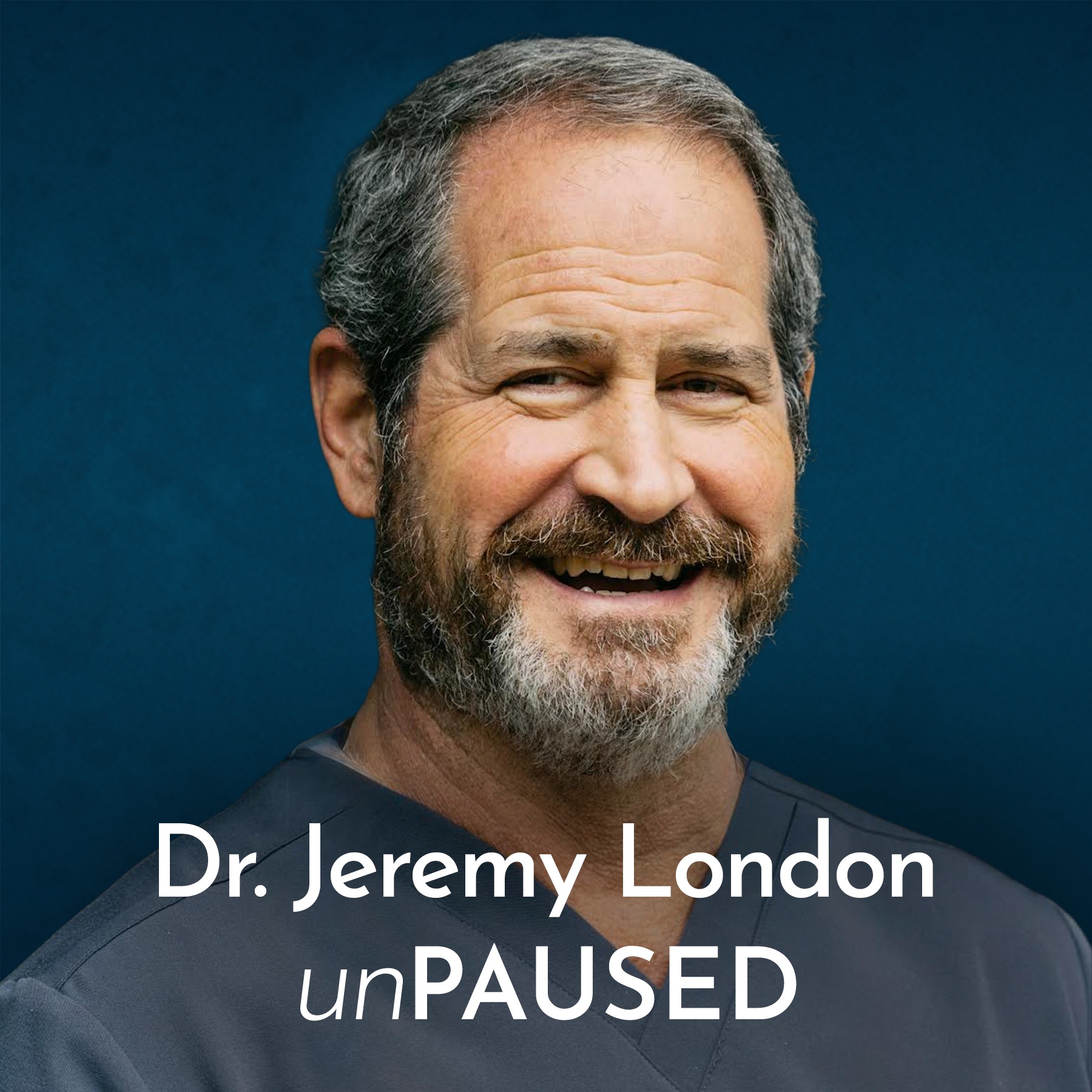
unPAUSED with Dr. Mary Claire Haver
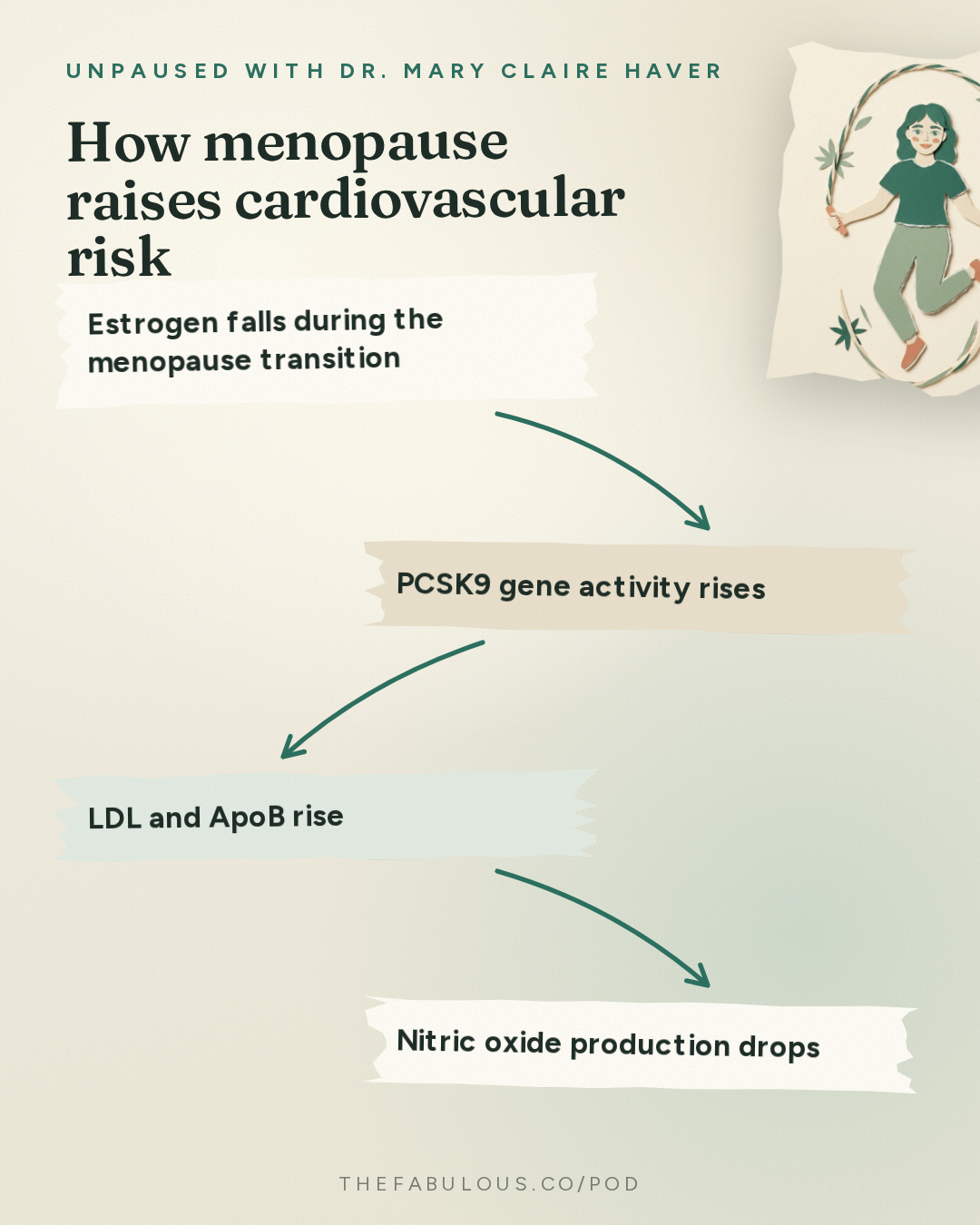
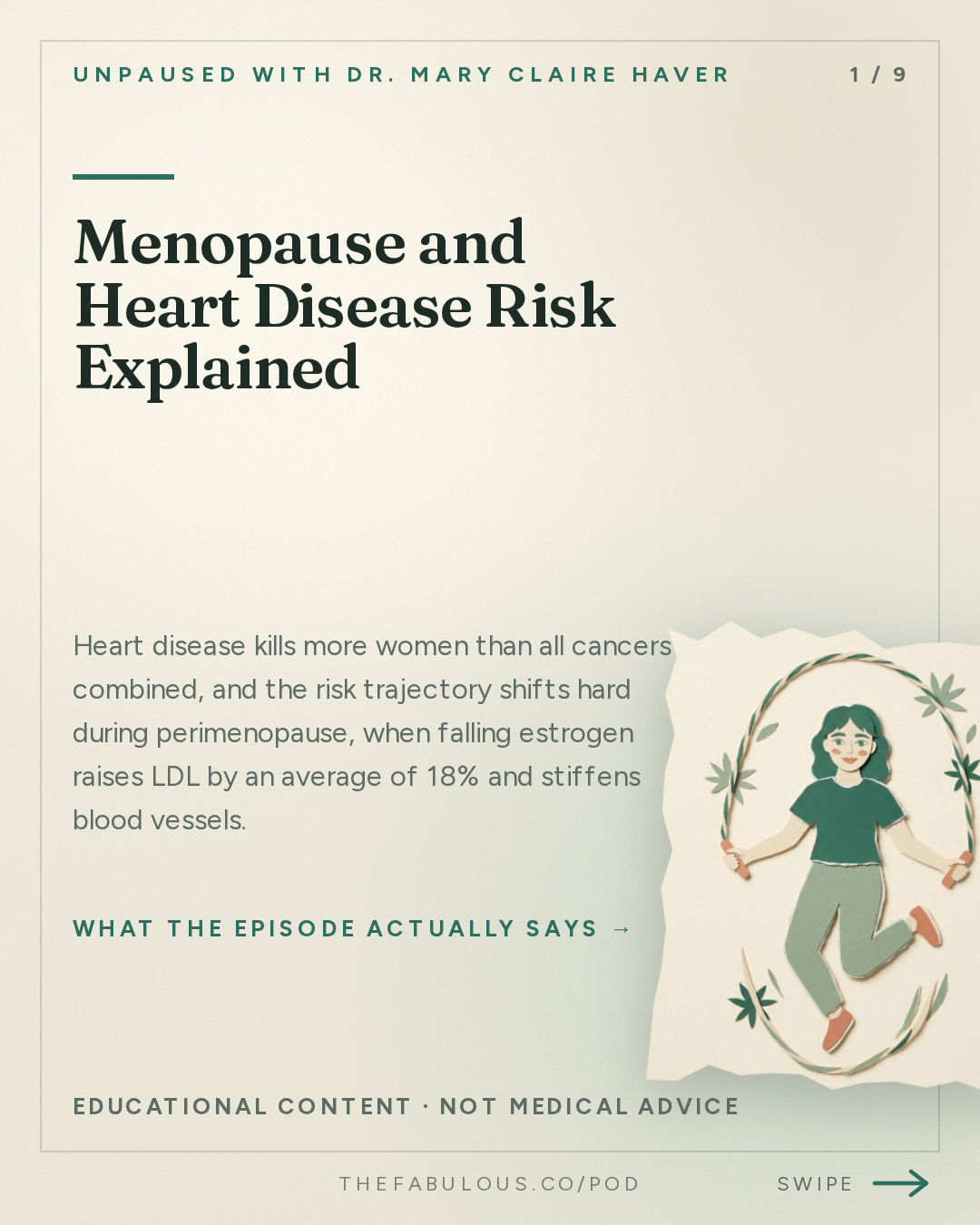
Menopause and Heart Disease Risk Explained
Why Heart Disease Risk Rises in Menopause with Dr. Jeremy London
▶ Listen to the full episode More from unPAUSED with Dr. Mary Claire Haver
The brief
Heart disease kills more women than all cancers combined, and the risk trajectory shifts hard during perimenopause, when falling estrogen raises LDL by an average of 18% and stiffens blood vessels (01:29, 30:39). Cardiovascular surgeon Dr. Jeremy London explains why, and what to do about it.
Cut open the aorta of an otherwise healthy three-year-old and you will likely find a fatty streak already forming, the first mark of a disease most people assume arrives decades later. Cardiovascular surgeon Dr. Jeremy London cites autopsy data showing this in 65 to 75% of small children (11:30), and a study of young military recruits and trauma victims, the PEDA study, found the same thing in coronary arteries of people in their late teens and twenties (11:54). The lesions were not yet causing blockages. But they were there, which is the point. Atherosclerosis, the buildup of plaque that narrows arteries, is not something that switches on at sixty. It is a slow-moving process that starts in childhood and either stays dormant or accelerates, depending on decades of exposure.
"Atherosclerosis is something that we have, not something that we get." — Dr. Jeremy London [10:55]
That reframing matters because it changes the question from "will I get heart disease" to "how long is my runway before it causes a problem." And for women, London argues, that runway gets dramatically shorter at a specific, predictable moment: the menopause transition. On Dr. Mary Claire Haver's podcast Unpaused, London, a board-certified cardiovascular surgeon with more than twenty-five years in the operating room, sits down with Haver, an OBGYN and certified menopause practitioner, to explain why heart disease remains the leading cause of death for American women, ahead of every cancer combined (00:00), and why the hormonal shift of midlife is central to that story rather than incidental to it.
The mechanism behind the rise
London starts by narrowing the target. Heart disease is not one disease. It splits into three categories: structural problems with the heart's valves, electrical problems like atrial fibrillation, and atherosclerotic coronary disease, meaning blockages in the arteries that feed the heart muscle itself. That third category accounts for 80 to 90% of all heart disease cases and deaths worldwide, among both men and women (06:21). So when London and Haver talk about prevention, they mean preventing blockages, specifically.
Blockages form through two forces working together: something attacking the artery wall, and the wall's own vulnerability to that attack. The attacker is a cholesterol-carrying particle called ApoB, short for apolipoprotein B. London uses a trucking metaphor to explain why a standard LDL cholesterol number, the figure on every lipid panel, can be misleading on its own.
"What makes a particle dangerous or not dangerous is the truck it's in." — Dr. Jeremy London [14:08]
Cholesterol cannot travel through blood unescorted, so the liver packages it into lipoprotein particles, the trucks. London offers a hypothetical: two patients both have an LDL level of 100 mg/dL (15:15). In one, that cholesterol rides in fifty small ApoB trucks. In the other, it rides in three. Same LDL number, very different risk, because it is the number of particles battering the artery wall that predicts damage, not the total cholesterol they carry. A related particle, Lipoprotein(a), or LPA, is structurally similar to LDL but carries an extra molecular tail that makes it more likely to penetrate the vessel wall and more prone to triggering clotting (16:53).
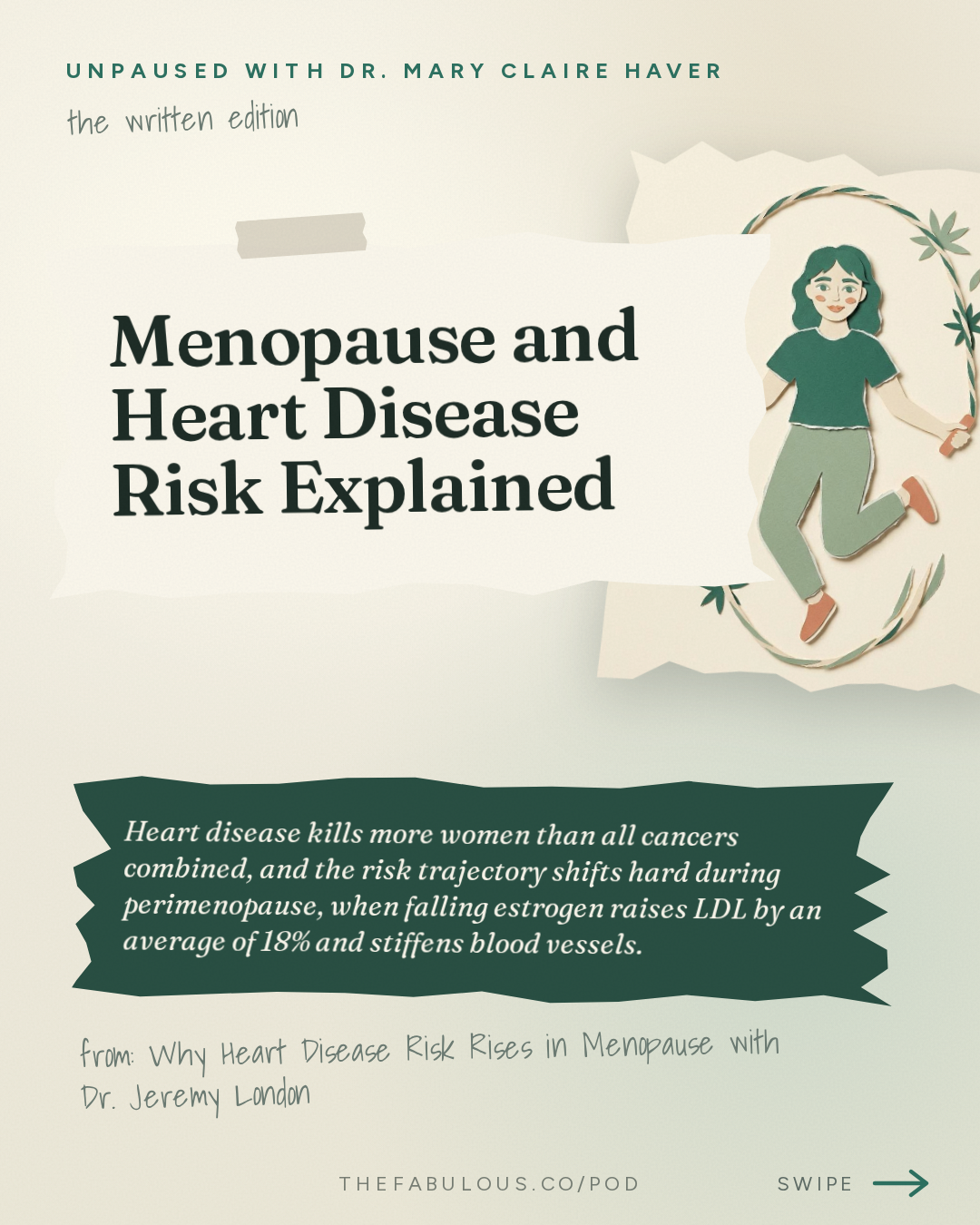
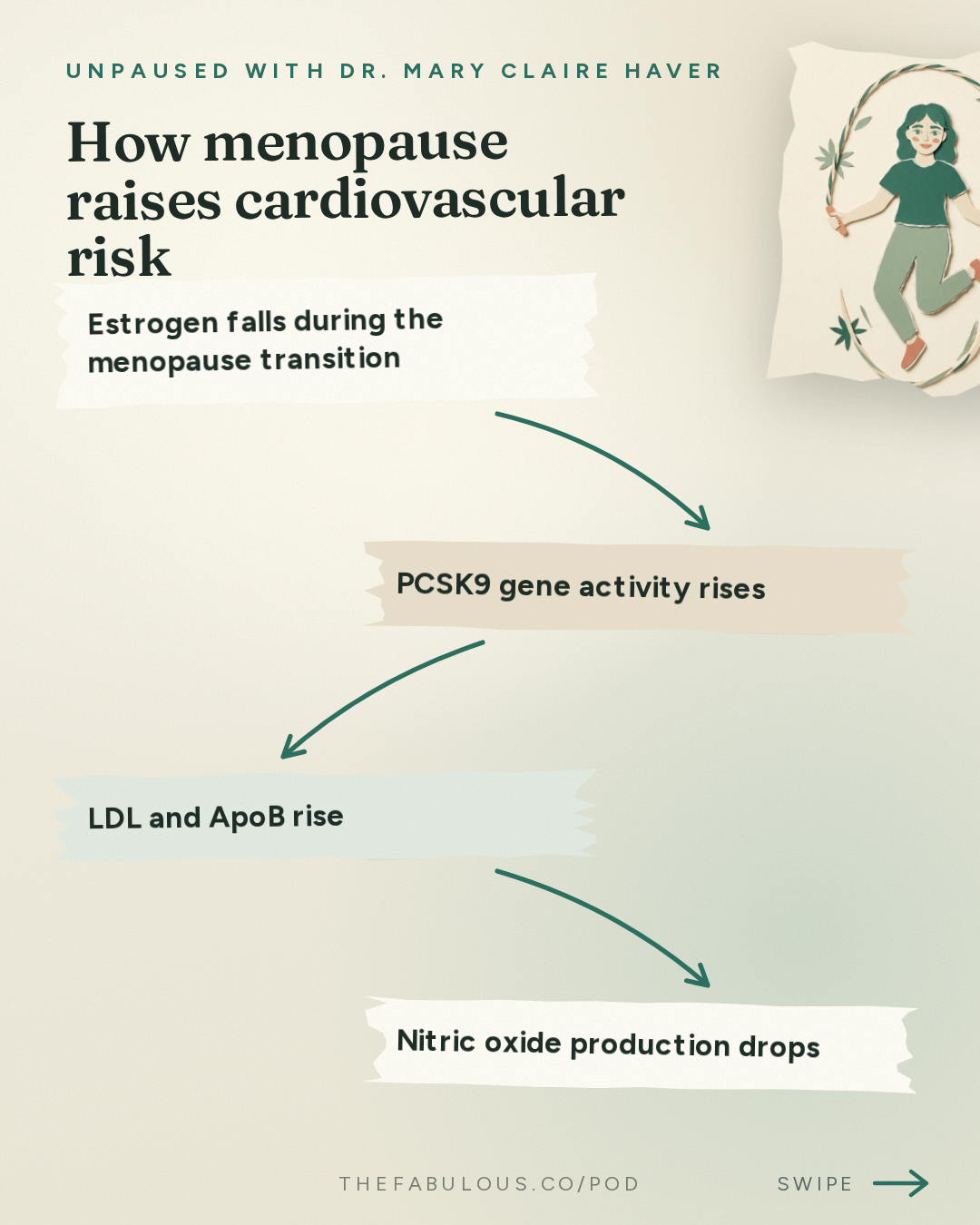
Here is where menopause enters directly. The liver does two jobs with cholesterol: it makes it, and it clears it, pulling ApoB particles back out of the bloodstream through receptors. Estrogen regulates a gene called PCSK9, which controls how many of those clearing receptors are available. As estrogen falls during the menopause transition, PCSK9 activity rises, receptors drop, and the liver clears less ApoB than before (17:44).
"As estrogen drops, there's less receptors to pull that ApoB out of the bloodstream." — Dr. Jeremy London [17:44]
The result is not that the body suddenly manufactures more cholesterol. It is that clearance slows. LDL cholesterol rises an average of 18% during the menopause transition as a consequence (01:29), often in women whose diet and exercise habits have not changed at all, which is precisely the pattern Haver says she saw for years in patients without understanding why (28:29).
Estrogen's retreat affects more than the liver. It also governs nitric oxide, a molecule that relaxes blood vessel walls. Less estrogen means less nitric oxide, which means vessels stiffen, which is part of why blood pressure, stable for decades, often starts climbing in a woman's mid-to-late forties (30:39). Add visceral fat and insulin resistance, common in this window too, and a third mechanism kicks in: high insulin levels damage the kidneys directly and drive sodium retention, which expands blood volume and pushes blood pressure up further (31:19). London calls the combination of rising ApoB, stiffening vessels, and insulin resistance a "perfect storm," three separate mechanisms converging on the same arterial wall at the same time in a woman's life.
The consequences are not abstract. Breast cancer survivors, London and Haver note, are statistically more likely to die of cardiovascular disease than of their cancer (20:37), a fact that runs against what most women assume is their biggest threat. Part of the problem is diagnostic: women's heart attacks more often involve smaller, more distal blood vessels than men's, producing symptoms that do not look like the textbook crushing chest pain. Fatigue, nausea, abdominal pain, sweating, and a vague sense of not feeling right are common instead (25:53). Because these symptoms do not trigger the same alarm, diagnosis and treatment get delayed, and in heart attacks, delay has a direct physiological cost: "time equals heart muscle saved" (23:50), since blood-starved tissue that is not reperfused quickly simply dies.
What changes the trajectory
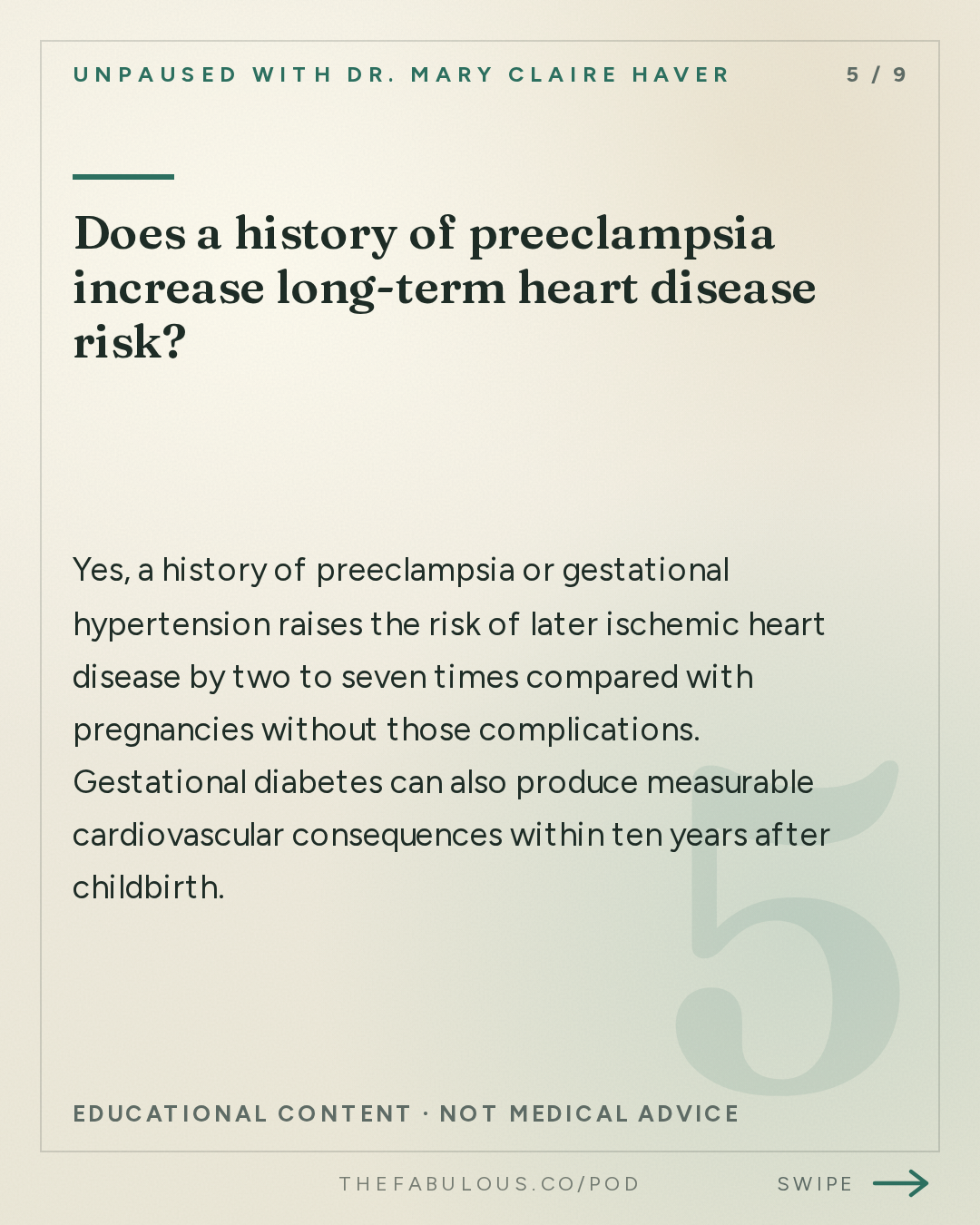
London is emphatic that none of this is fixed fate, even if the hormonal shift itself is inevitable. What is modifiable is how aggressively a woman and her clinicians respond, and how early. Pregnancy, it turns out, is one of the earliest windows into future cardiovascular risk. A history of preeclampsia or gestational hypertension raises the risk of later ischemic heart disease by two to seven times compared with a pregnancy without those complications (38:43). Gestational diabetes can produce measurable cardiovascular consequences within ten years of childbirth (38:43). London's working theory is that these pregnancy complications are not separate risks so much as an early, magnified preview of the same underlying vulnerability, compressed into a nine-month window, that shows up again later in life.
Other groups carry disproportionate risk for reasons that are only partly biological. Black women have significantly higher cardiovascular mortality than white women even at equivalent calcium scores, a coronary artery imaging measure of existing plaque buildup, which London and Haver attribute partly to unequal access to care and uneven application of treatment guidelines, and partly to the cumulative physiological toll of chronic stress, sometimes called the weathering phenomenon (41:30). Endometriosis carries a 23% higher cardiovascular disease risk, attributed to chronic systemic inflammation (00:24), and autoimmune diagnoses such as lupus or rheumatoid arthritis, which disproportionately affect women, carry a 50% higher cardiovascular risk, also inflammation-driven (43:28).
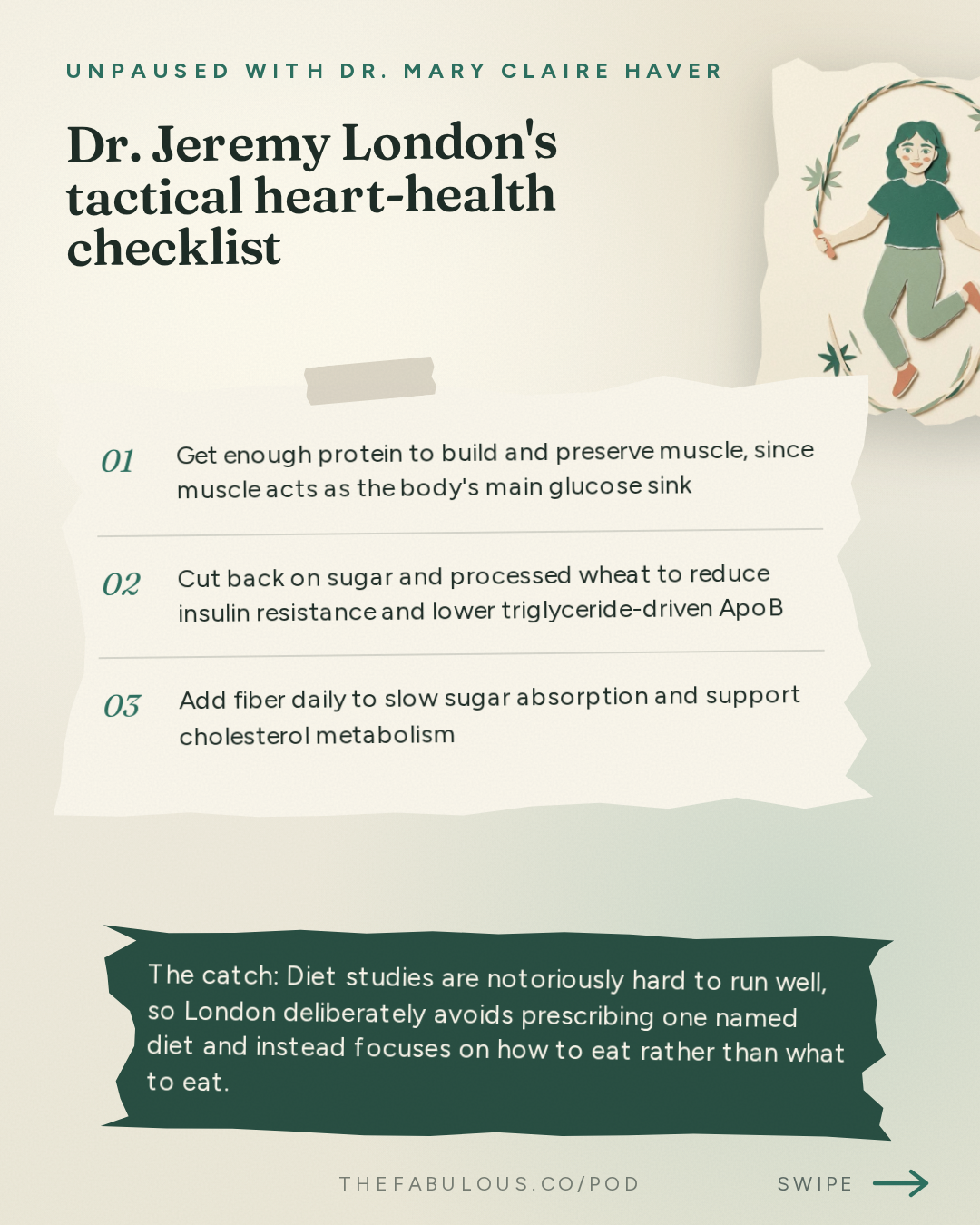
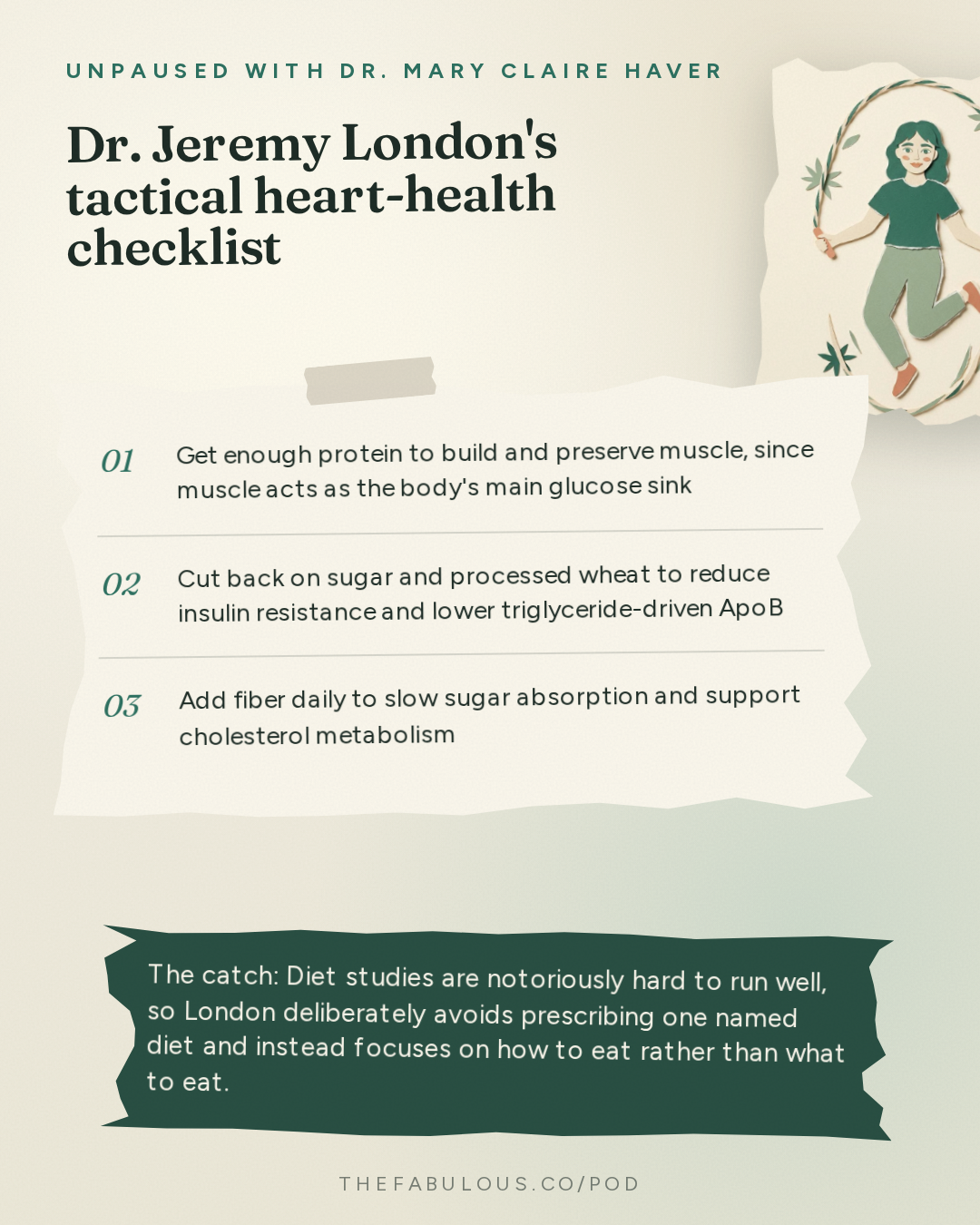
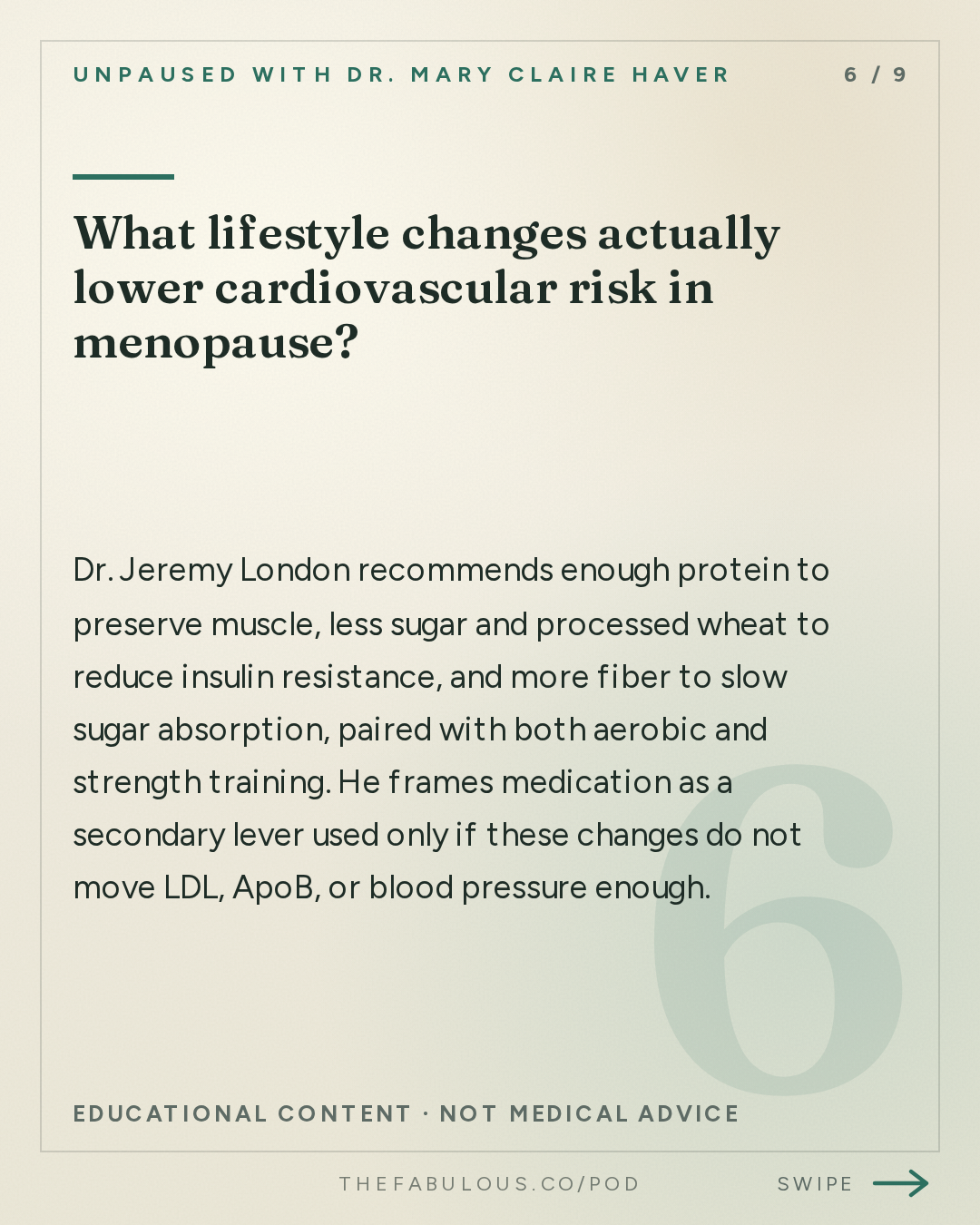
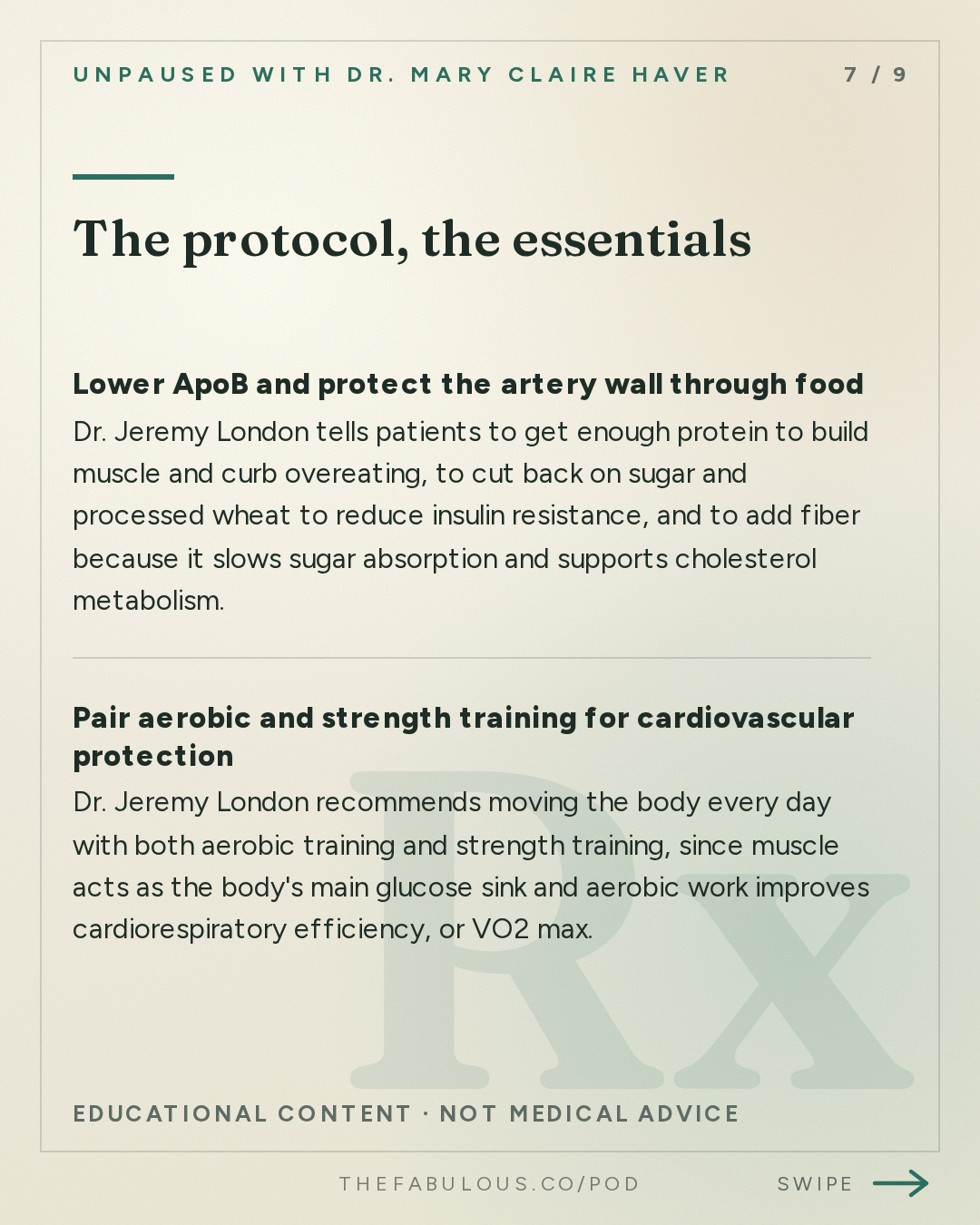
Against all of this, London's prescription stays almost defiantly simple: diet, movement, sleep, relationships, and stress management, applied earlier and more aggressively once risk factors are identified. On food, he avoids ideology and focuses on three levers: enough protein to preserve muscle and manage appetite, less sugar and processed wheat to blunt insulin resistance, and more fiber, which slows sugar absorption and supports cholesterol metabolism (34:29). On movement, he insists on pairing aerobic training with strength training, since muscle functions as the body's primary glucose sink, a phrase he borrows from physician Gabrielle Lyon to describe muscle's role in soaking up blood sugar, which is part of why he calls muscle an organ of longevity (36:08). If lifestyle changes do not move the numbers enough, medication becomes the next lever, not the first one (37:23).
What makes this conversation land is the shift in framing it offers rather than any single statistic. Heart disease in women is not a sudden event that strikes without warning. It is a decades-long process that most people, and until recently most clinicians, were not watching closely enough during the one window when it reliably accelerates. London's point, stripped of jargon, is that the runway toward trouble is long, and menopause is when it visibly starts shortening. The data he and Haver walk through suggest that the shortening is not the same thing as inevitability. It is, instead, the strongest possible argument for treating the perimenopausal years as a hinge point worth watching closely, rather than a vague biological inconvenience to get through.
Ask this episode anything
Pod's AI answers from the episode itself, with the minute mark so you can hear it yourself.
Or start with one of these
Ask this episode
Pod's AI listens to the whole episode to answer, and points you to the minute it comes from.
The rest of this answer, and any question after it
Answers come from the episode itself, never from a summary of it.
ContinueKey takeaways
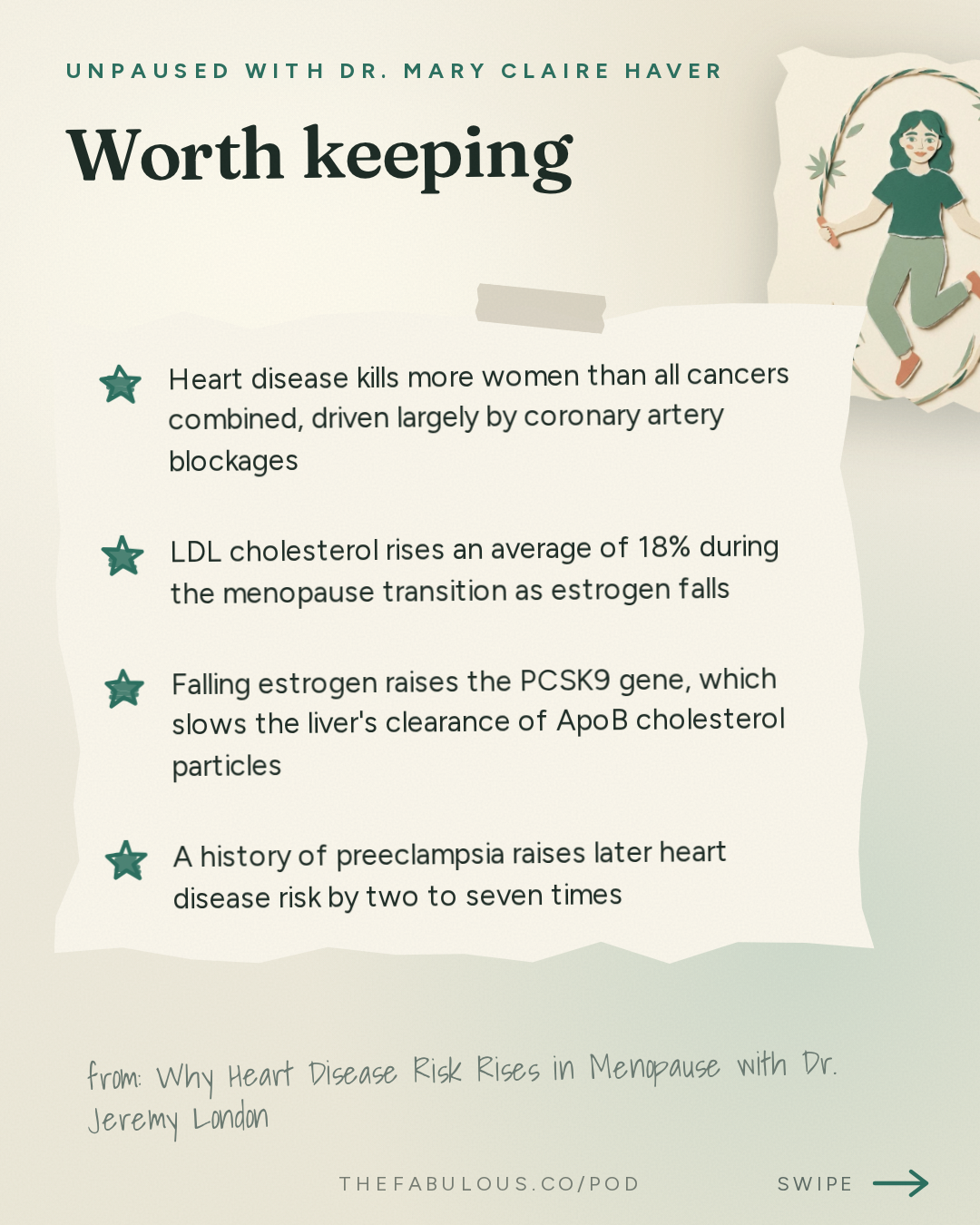
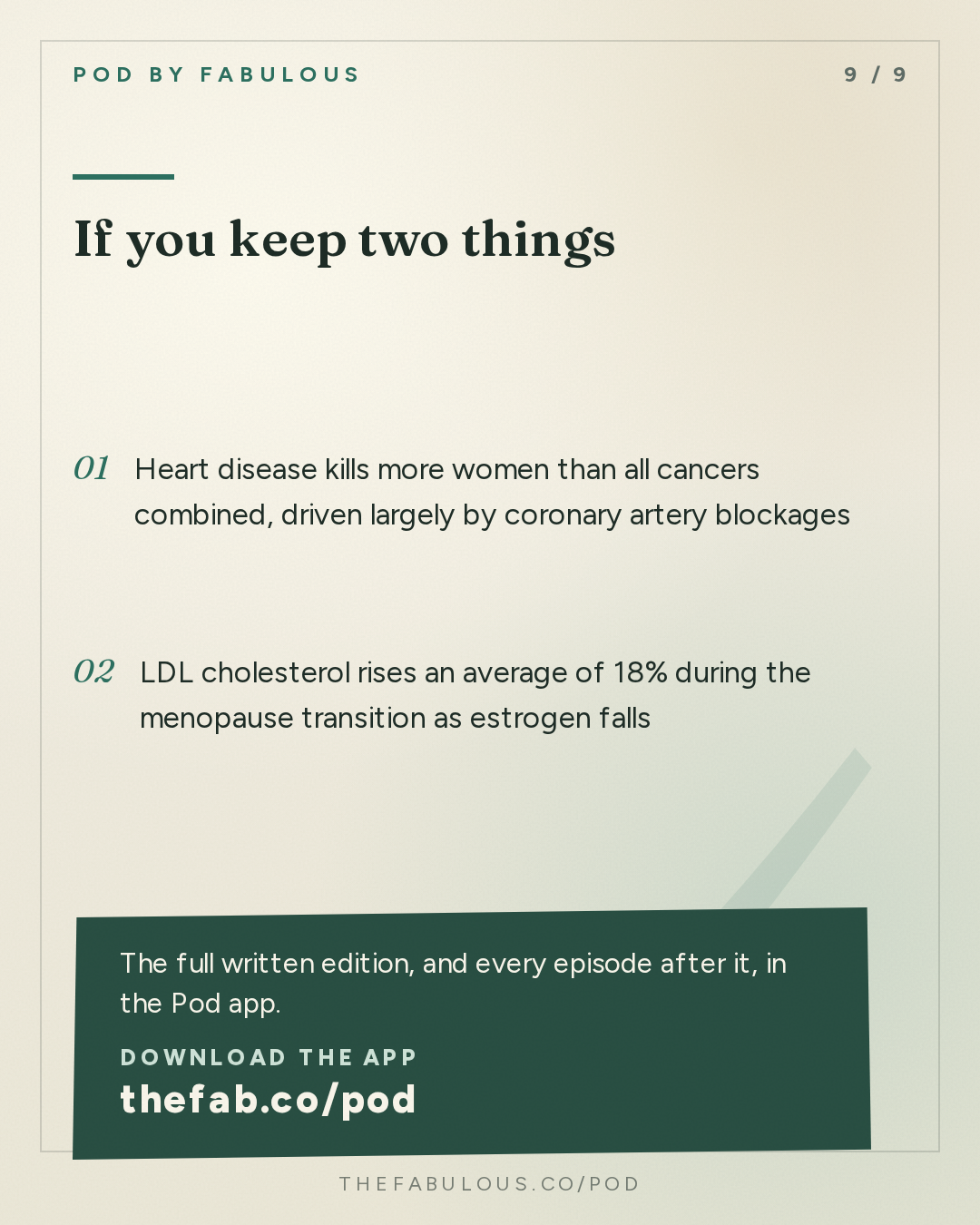
- Heart disease kills more women than all cancers combined, driven largely by coronary artery blockages
- LDL cholesterol rises an average of 18% during the menopause transition as estrogen falls (01:29)
- Falling estrogen raises the PCSK9 gene, which slows the liver's clearance of ApoB cholesterol particles (17:44)
- A history of preeclampsia raises later heart disease risk by two to seven times (38:43)
- Women's heart attacks often cause vague symptoms like fatigue and nausea instead of classic chest pain (25:53)
The episode in cards


By the numbers
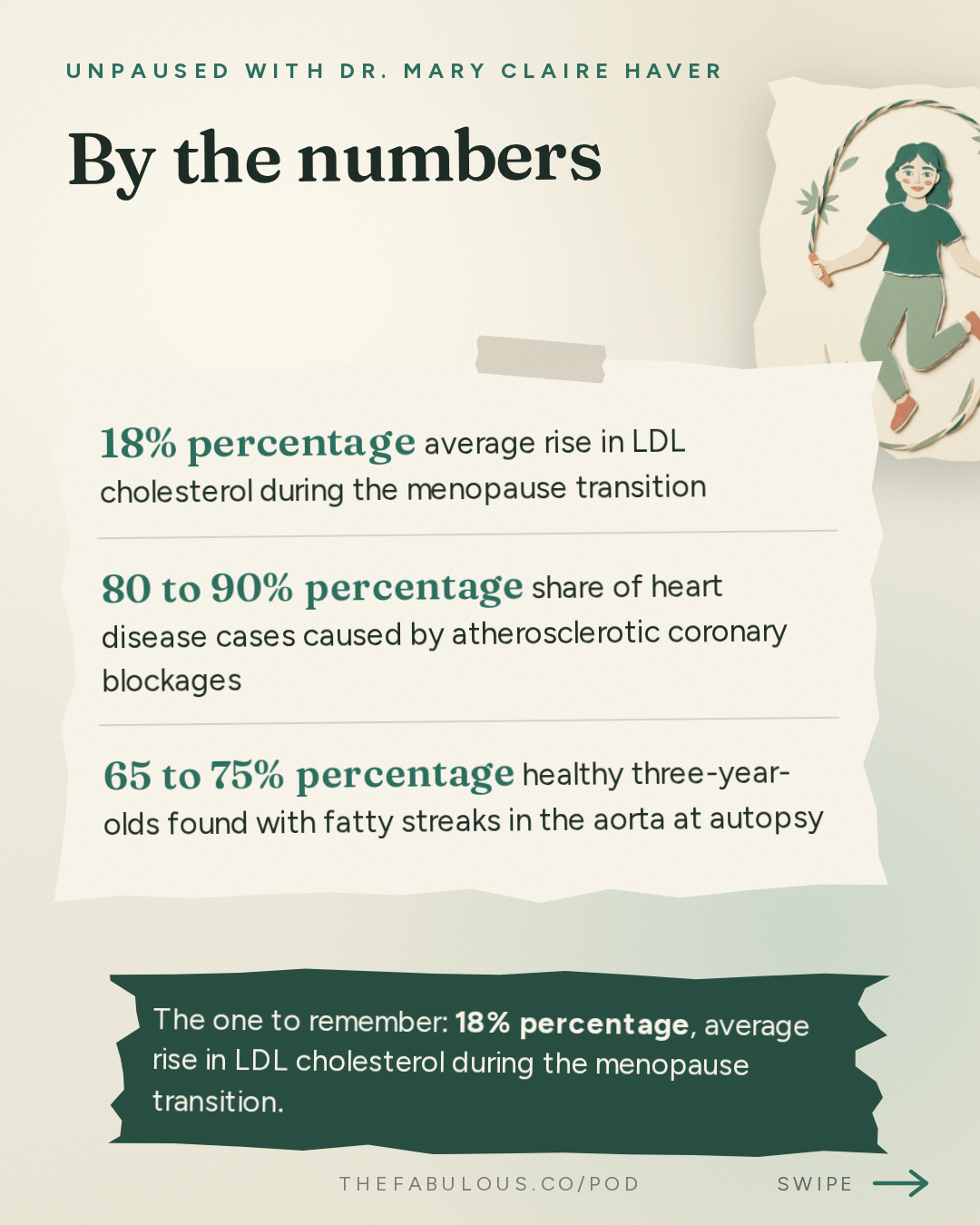
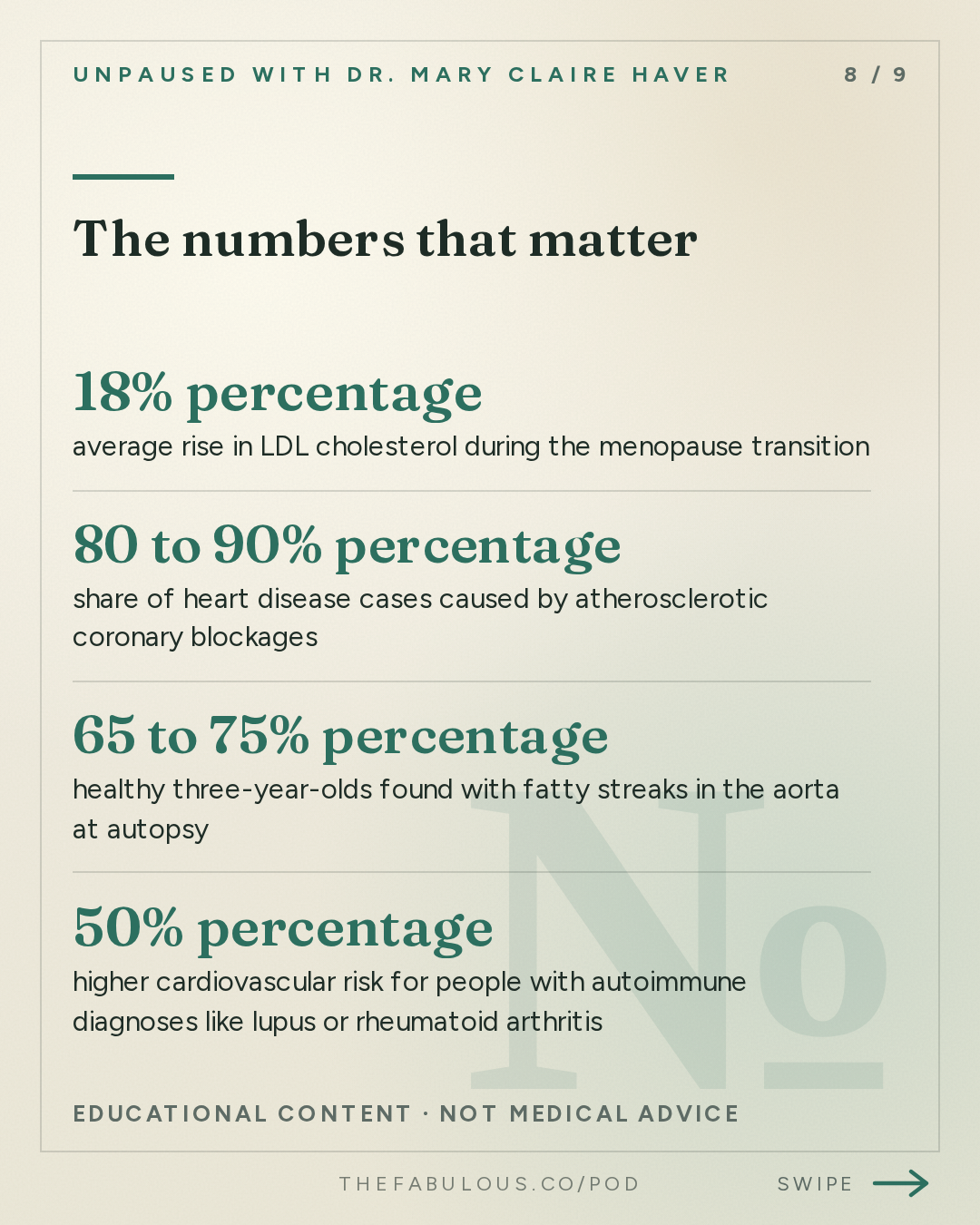
- 18% percentage average rise in LDL cholesterol during the menopause transition
- 80 to 90% percentage share of heart disease cases caused by atherosclerotic coronary blockages
- 65 to 75% percentage healthy three-year-olds found with fatty streaks in the aorta at autopsy
- 50% percentage higher cardiovascular risk for people with autoimmune diagnoses like lupus or rheumatoid arthritis
- 23% percentage higher cardiovascular disease risk linked to endometriosis
In their words
“Atherosclerosis is something that we have, not something that we get.”
“What makes a particle dangerous or not dangerous is the truck it's in.”
“As estrogen drops, there's less receptors to pull- Okay ... that ApoB out of the bloodstream”
“A breast cancer survivor is most likely to die from cardiovascular disease- That's right ... not from her breast”
“Time equals heart muscle saved.”
Protocols
-
Lower ApoB and protect the artery wall through food
Dr. Jeremy London tells patients to get enough protein to build muscle and curb overeating, to cut back on sugar and processed wheat to reduce insulin resistance, and to add fiber because it slows sugar absorption and supports cholesterol metabolism.
daily, as a standing dietary pattern
-
Pair aerobic and strength training for cardiovascular protection
Dr. Jeremy London recommends moving the body every day with both aerobic training and strength training, since muscle acts as the body's main glucose sink and aerobic work improves cardiorespiratory efficiency, or VO2 max.
daily movement, combining both training types
-
Flag pregnancy history as a cardiovascular red flag
Dr. Jeremy London advises treating a history of preeclampsia, gestational hypertension, or gestational diabetes as grounds for earlier and more aggressive cardiovascular risk management, even in women who are not yet near typical screening age.
once, at the point the history is identified, then ongoing monitoring
Questions this episode answers
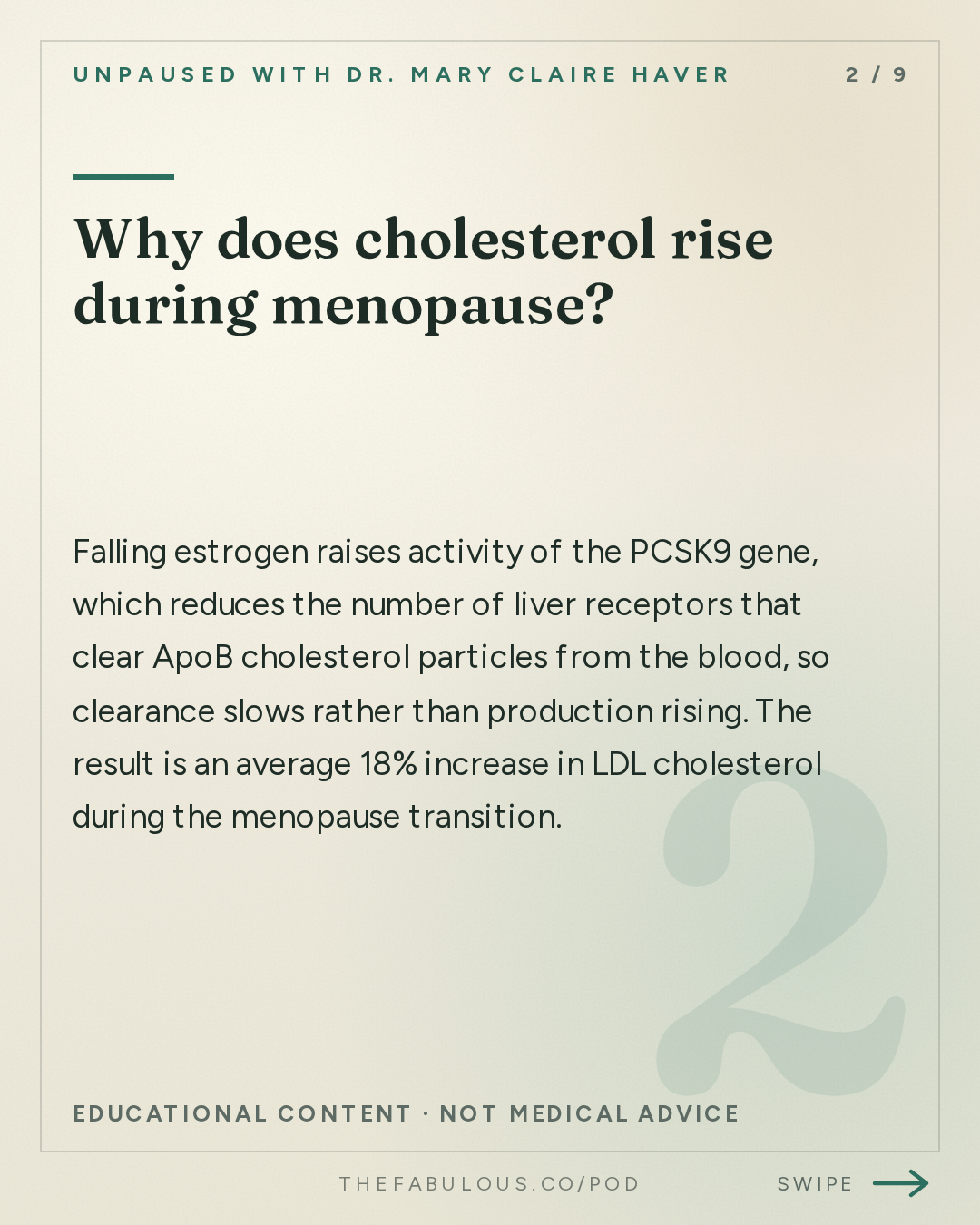
Why does cholesterol rise during menopause?
Falling estrogen raises activity of the PCSK9 gene, which reduces the number of liver receptors that clear ApoB cholesterol particles from the blood, so clearance slows rather than production rising (17:44). The result is an average 18% increase in LDL cholesterol during the menopause transition (01:29).
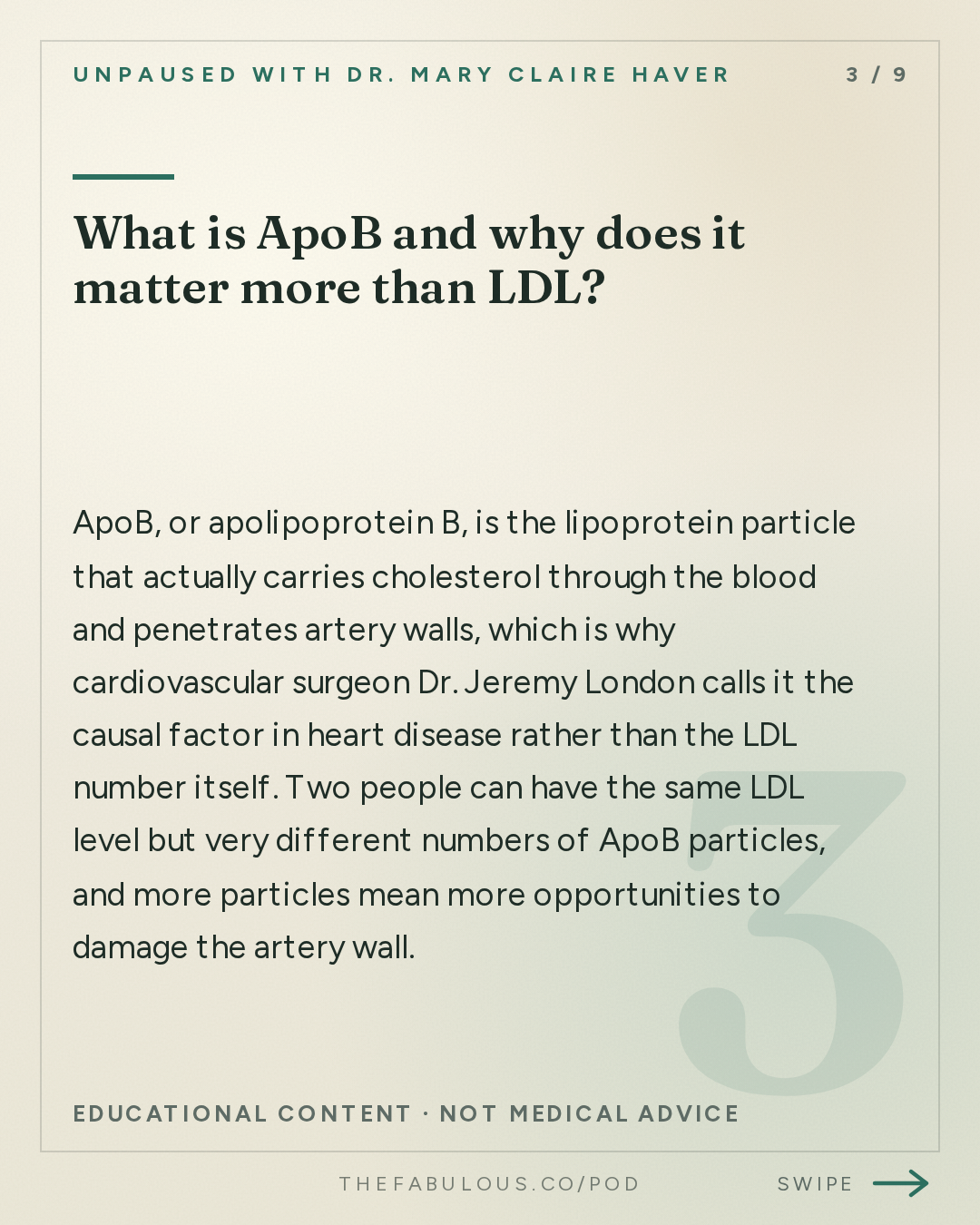
What is ApoB and why does it matter more than LDL?
ApoB, or apolipoprotein B, is the lipoprotein particle that actually carries cholesterol through the blood and penetrates artery walls, which is why cardiovascular surgeon Dr. Jeremy London calls it the causal factor in heart disease rather than the LDL number itself (13:43). Two people can have the same LDL level but very different numbers of ApoB particles, and more particles mean more opportunities to damage the artery wall (15:15).
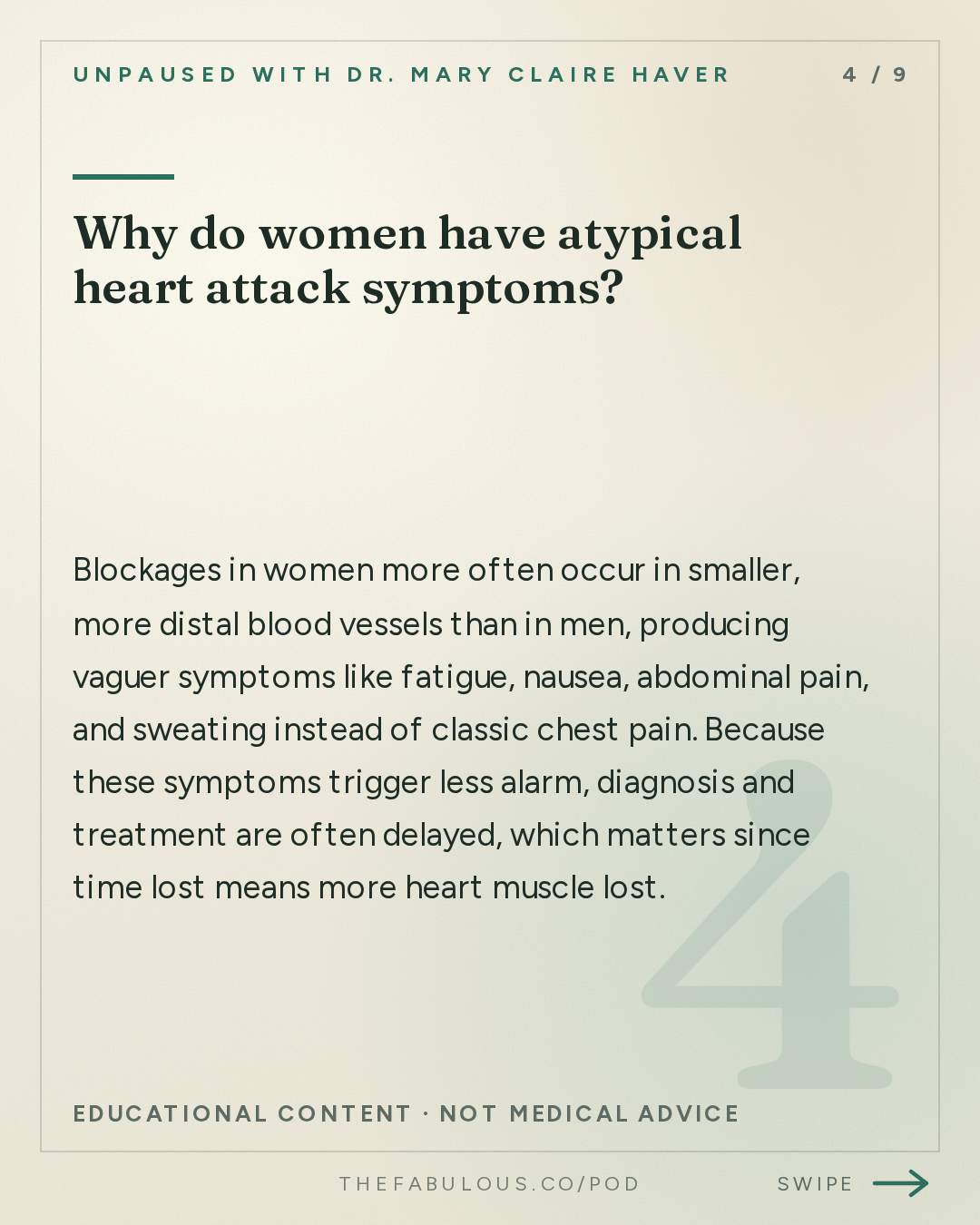
Why do women have atypical heart attack symptoms?
Blockages in women more often occur in smaller, more distal blood vessels than in men, producing vaguer symptoms like fatigue, nausea, abdominal pain, and sweating instead of classic chest pain (25:53). Because these symptoms trigger less alarm, diagnosis and treatment are often delayed, which matters since time lost means more heart muscle lost (23:50).
Does a history of preeclampsia increase long-term heart disease risk?
Yes, a history of preeclampsia or gestational hypertension raises the risk of later ischemic heart disease by two to seven times compared with pregnancies without those complications (38:43). Gestational diabetes can also produce measurable cardiovascular consequences within ten years after childbirth (38:43).
What lifestyle changes actually lower cardiovascular risk in menopause?
Dr. Jeremy London recommends enough protein to preserve muscle, less sugar and processed wheat to reduce insulin resistance, and more fiber to slow sugar absorption, paired with both aerobic and strength training (34:29, 35:39). He frames medication as a secondary lever used only if these changes do not move LDL, ApoB, or blood pressure enough (37:23).
The full read, in cards
Go deeper
- PEDA study — found fatty streaks in the coronary arteries of 18 to 25 year old military recruits and trauma victims, showing atherosclerosis begins young
- American Heart Association graph on rising ischemic disease deaths in younger women — published via the Wall Street Journal, showing climbing cardiovascular mortality in younger women
Mentioned
Dr. Mary Claire Haver · Dr. Jeremy London · Dr. Gabrielle Lyon · Dr. Sharon Malone · American Heart Association · ApoB · PCSK9 · Lipoprotein(a)
More from this show and category

IUD for Perimenopause Symptoms and HRT
An IUD thins the uterine lining, protects it during hormone therapy, and prevents pregnancy, a three-in-one fix for perimenopause. OB-GYN Dr. Fran Haydanek also flags abnormal bleeding as a cancer red flag, notes PCOS raises endometrial cancer risk five times, and cites WHI data showing only nine extra breast cancers per 10,000 women yearly on combined hormone therapy.

GSM Treatment: Vaginal Estrogen Explained
Genitourinary syndrome of menopause (GSM) affects 50 to 80% of postmenopausal women but only 7% of those diagnosed are prescribed its safest fix, vaginal estrogen (37:09, 11:00). The FDA dropped a 27-year boxed warning on low-dose vaginal estrogen in November 2025, and OB-GYN Dr. Mary Claire Haver says the condition is cheap and almost always treatable.
Dense Breasts and Real Breast Cancer Risk
Most breast cancer is not hereditary, only 5 to 10% of cases are (01:58). Oncologist Eleonora Teplinsky explains how family history, genetic testing, and breast density shape real risk, and why previvors with BRCA mutations can safely use hormone therapy after their ovaries are removed.
GSM: Menopause's Most Undertreated Condition
Genitourinary syndrome of menopause (GSM) is a cluster of vaginal, vulvar, and urinary changes caused by falling estrogen and testosterone, affecting 50% to 80% of postmenopausal women (11:00). Low-dose vaginal estrogen is the frontline treatment, cuts recurrent UTIs in half, and lost its FDA black box warning on November 10, 2025, after 27 years (14:54, 38:36).
