
How Mitochondria Control Metabolism: Jared Rutter
How Mitochondria Control Your Metabolism | Dr. Jared Rutter
The brief
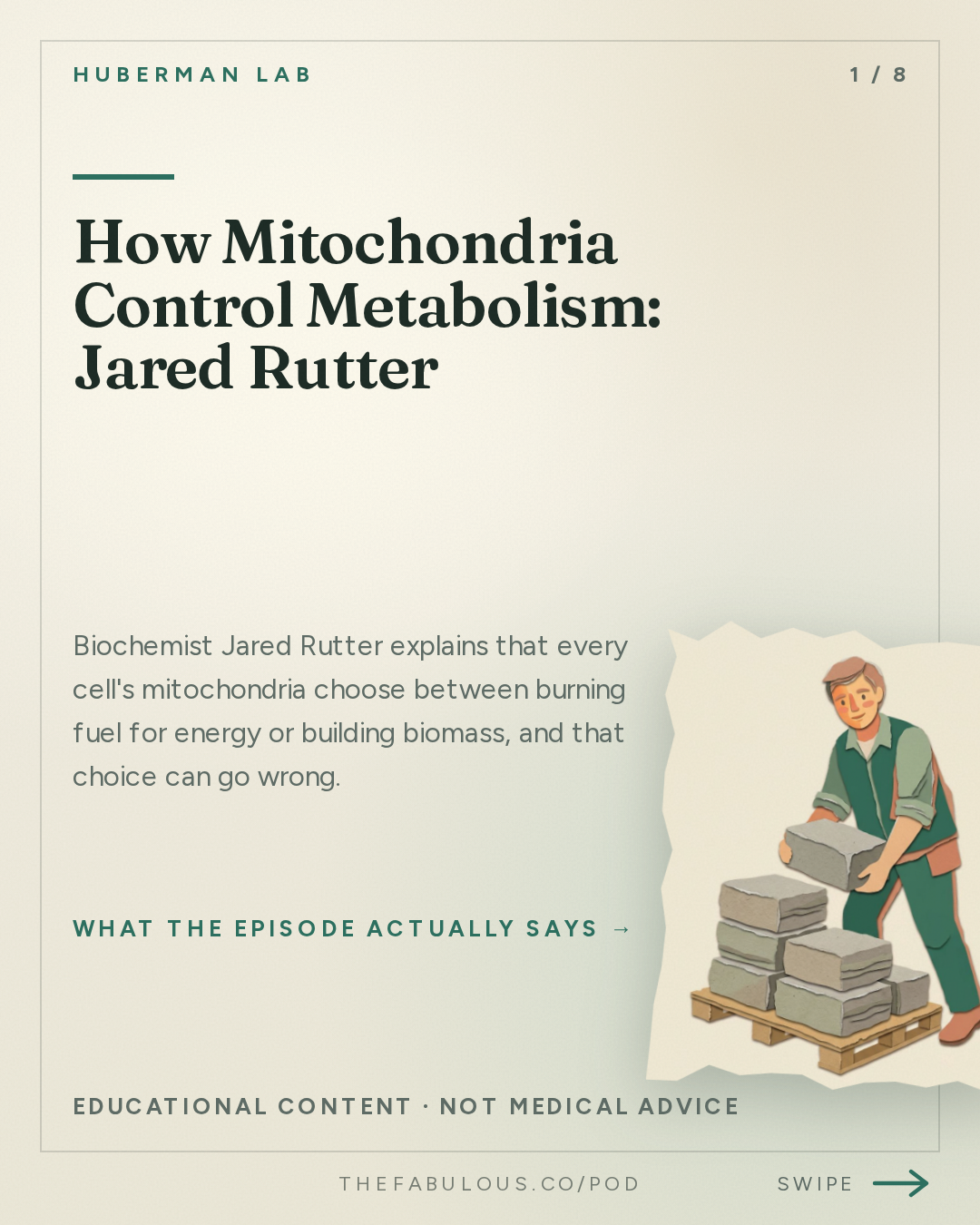
Biochemist Jared Rutter explains that every cell's mitochondria choose between burning fuel for energy or building biomass, and that choice can go wrong. When heart cells lose the mitochondrial pyruvate carrier, they build instead of burn, grow enlarged, and fail; cancer cells make the same choice on purpose, fueling uncontrolled growth.
Many, many years ago, a free-living bacterium was swallowed by another cell and did not die. It stayed. Over unimaginable stretches of time it became a permanent tenant, then a partner, then simply a part of us. That bacterium's descendants are the mitochondria living in every cell of the human body today. Jared Rutter, a biochemist at the University of Utah and an investigator with the Howard Hughes Medical Institute, calls this an endosymbiotic event, a case of one cell absorbing another without digesting it.
"Mitochondria are believed to have been the result of an endosymbiotic event where a bacterium, a free-living bacterium, was engulfed by another cell, and in a way, kind of domesticated by that cell." — Jared Rutter [09:26]
That ancient merger left a fingerprint still visible in every one of us. Mitochondria carry their own small loop of DNA, shaped like a bacterial genome, separate from the main genome sitting in a cell's nucleus. Because sperm lose their cytoplasm at fertilization, that loop of DNA comes only from the mother (17:46). Every mitochondrion in a person's body is a copy of the ones passed down along an unbroken maternal line.
The textbook shorthand for mitochondria, "the powerhouse of the cell," is not wrong, Rutter says, just badly incomplete. The bigger idea he wants listeners to sit with is that the body does not really have one metabolism. What we call metabolism is the sum of roughly 30 trillion separate decisions, one happening inside each of our cells (04:37). A heart muscle cell, which never stops contracting, wires its mitochondria to squeeze out every unit of usable energy, called ATP, from whatever fuel arrives (22:36). A stem cell lining the gut, which must completely rebuild the intestinal lining every five to seven days, wires its mitochondria differently, using them to produce the raw material for new cells rather than energy (23:16). Even a single neuron manages this trade at scale: some projections stretch a full meter, and mitochondria physically travel down them to power nerve signaling at the far end (19:27).
The fork in the road
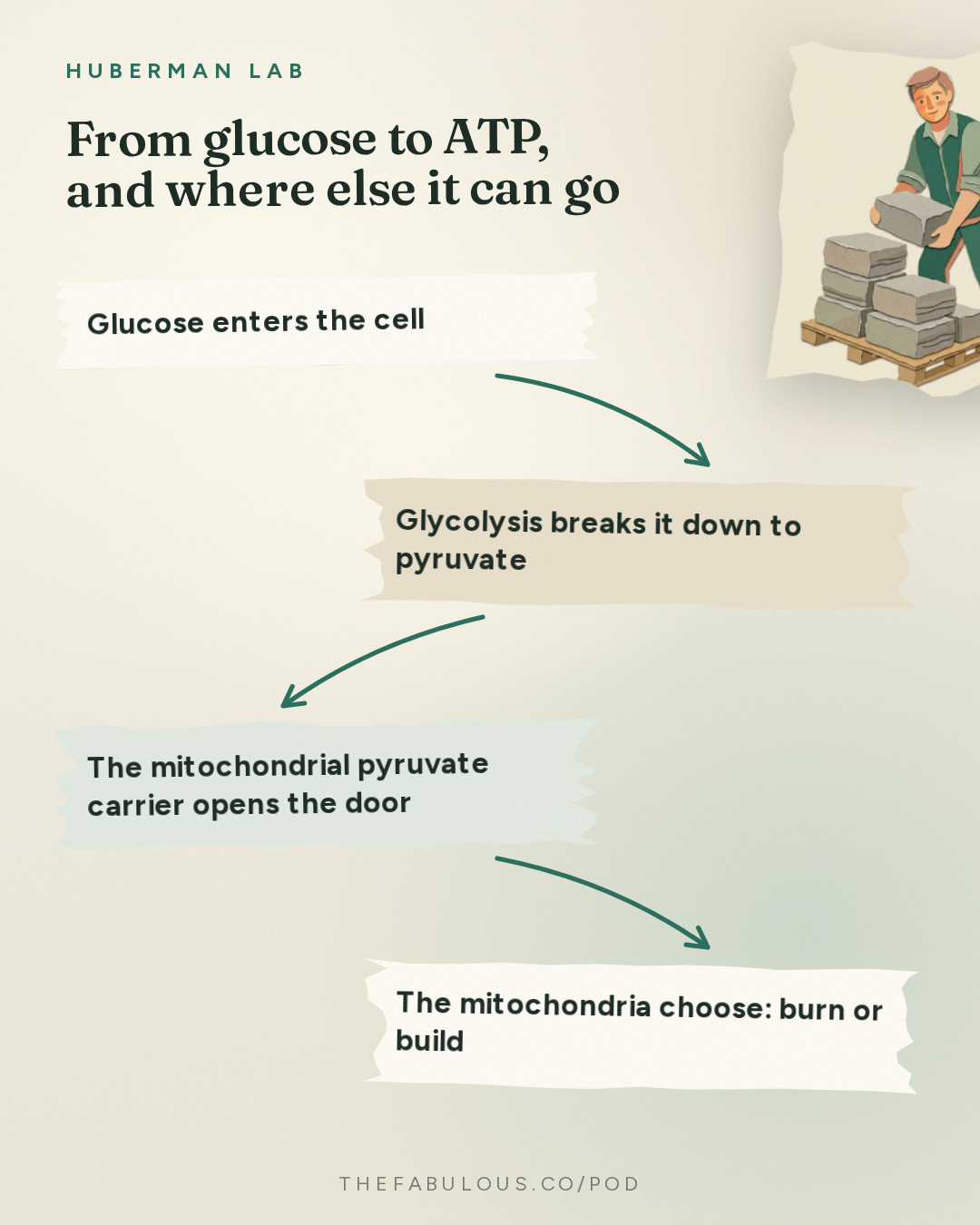
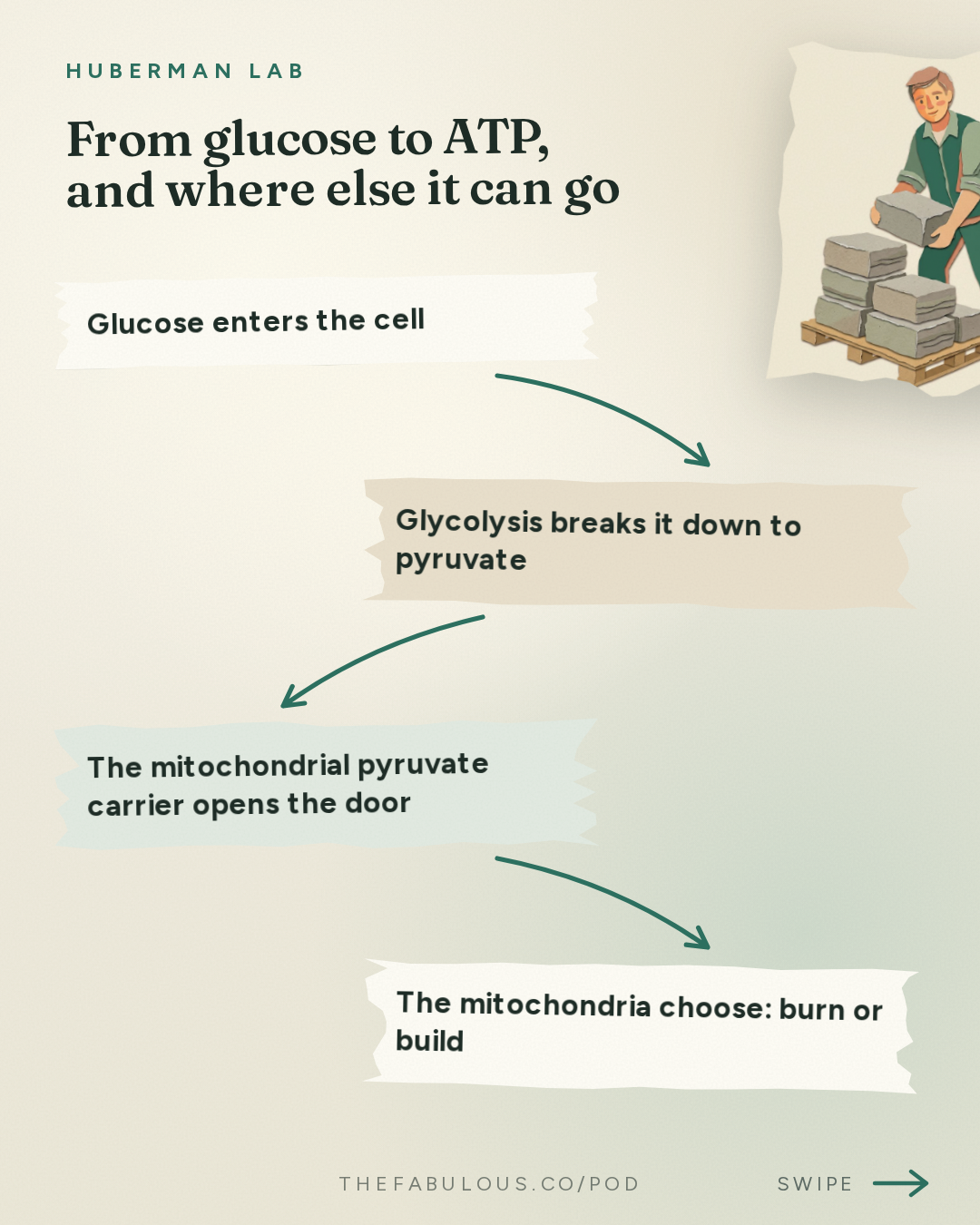
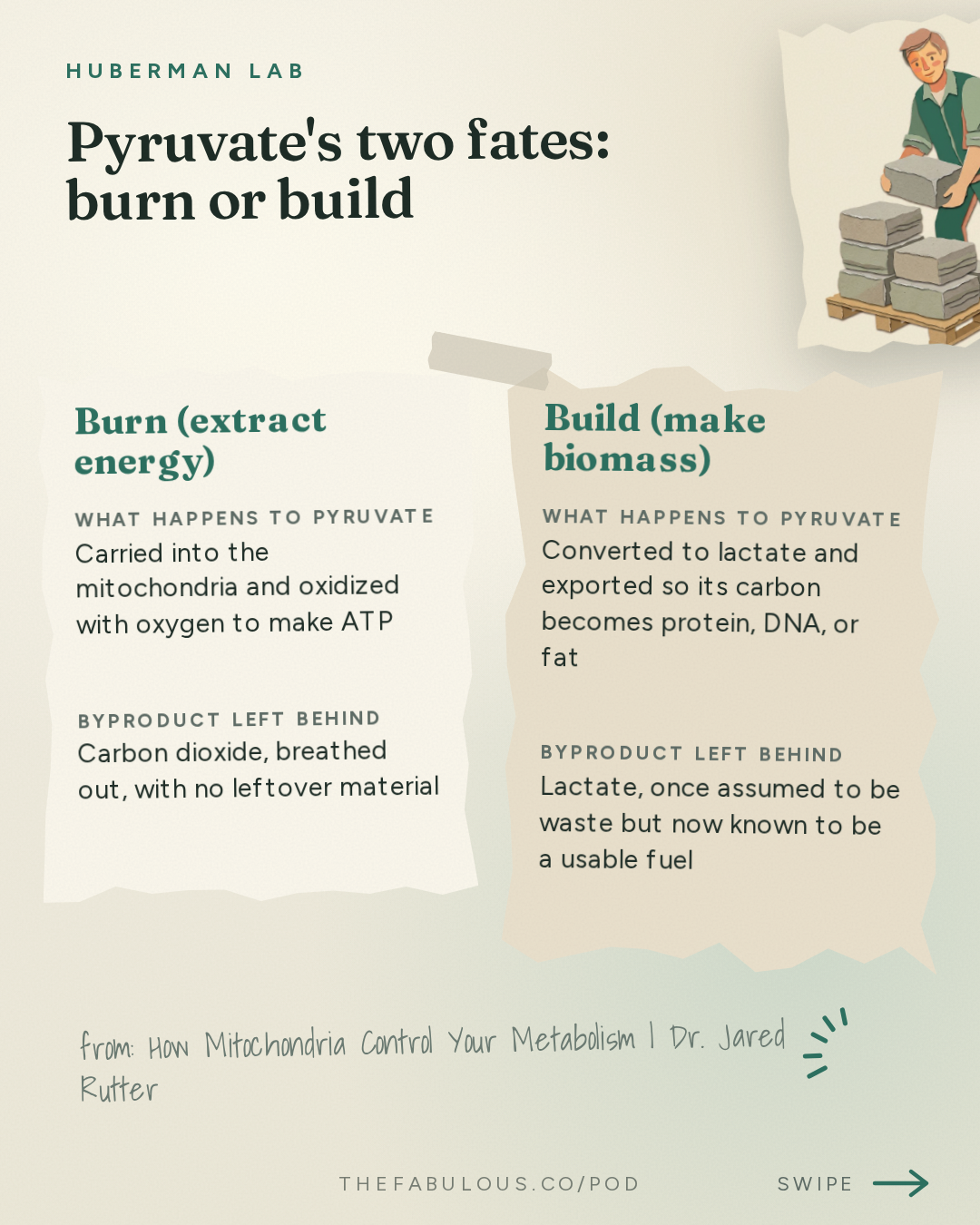
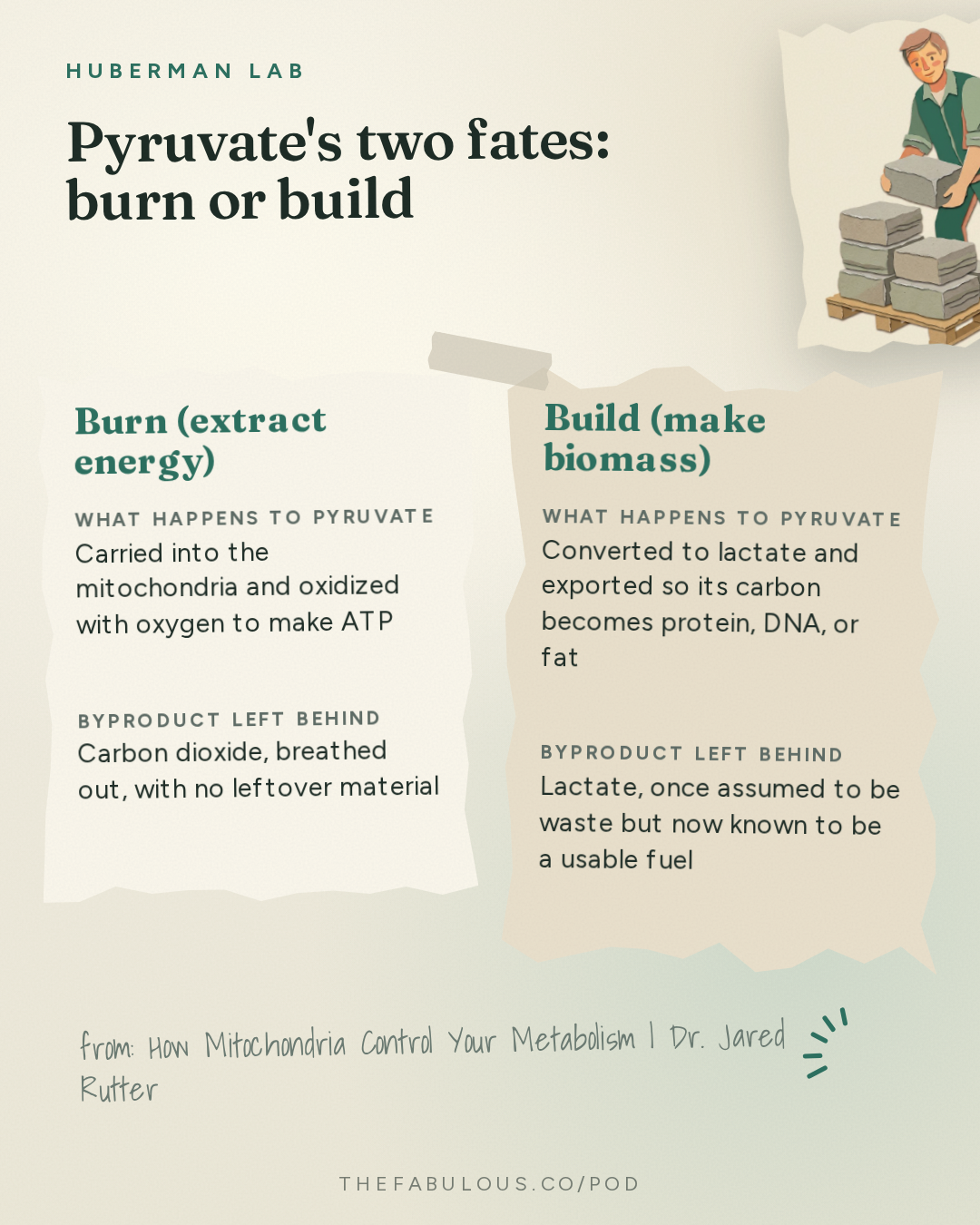
The hinge point for all of this is a small molecule called pyruvate, the leftover once a cell has broken down a molecule of glucose through a chain of reactions called glycolysis (32:52). Pyruvate has two possible fates. It can be pulled into the mitochondria and oxidized, essentially burned with oxygen, to extract maximum energy as ATP. Or it can be converted into lactate and exported, keeping its carbon intact so it can later become protein, DNA, or fat, the raw stuff of a new cell (85:12). Rutter frames the whole of cellular life as a constant negotiation between these two options: "Food can either be converted to energy or it can be converted to biomass" (35:13).
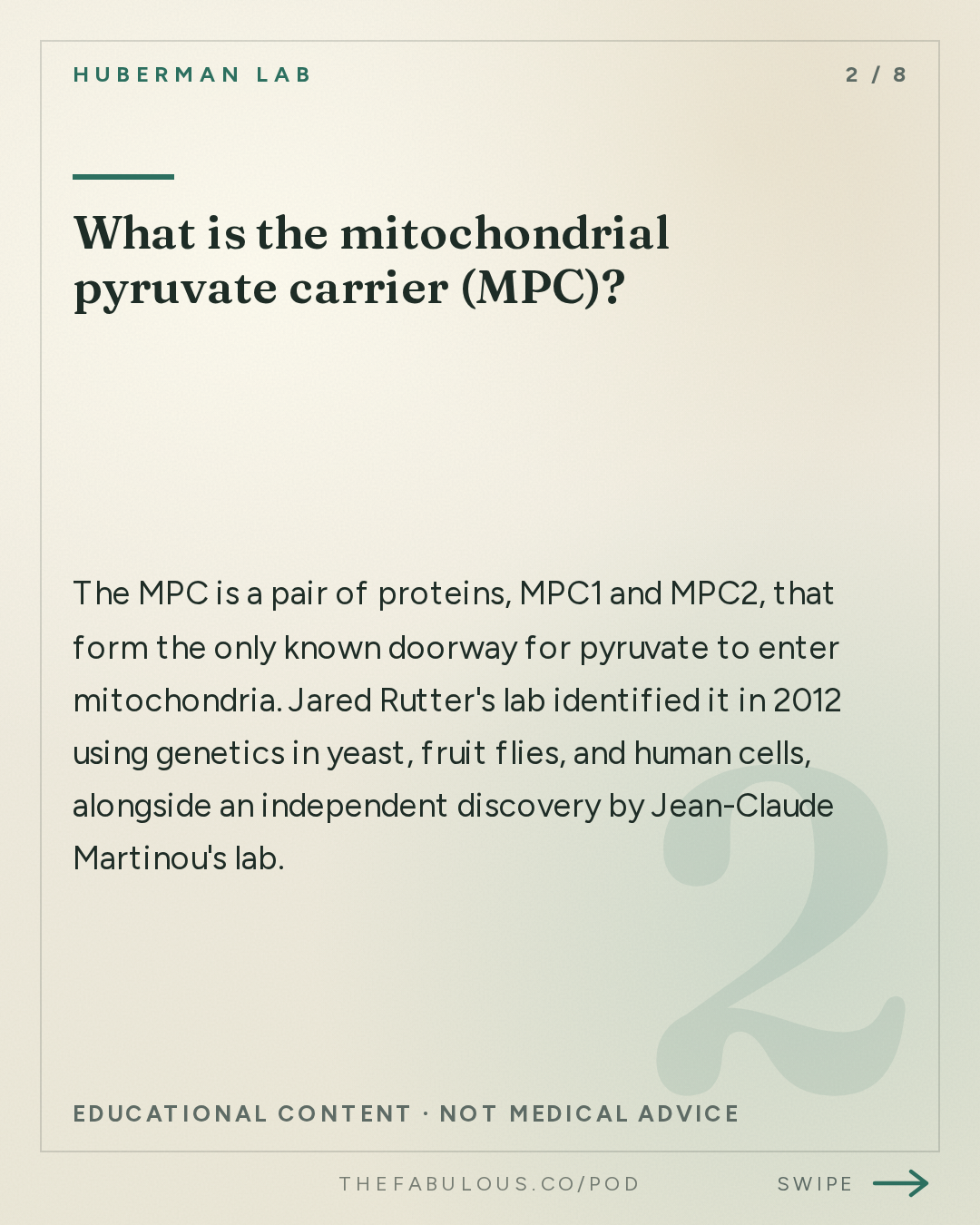
For decades, scientists knew mitochondria needed a doorway to let pyruvate in, but nobody could find it. That changed around 2008, when Rutter's lab, newly curious about unidentified mitochondrial proteins, began investigating two candidates present in every organism that has mitochondria, from yeast to humans. Working with fly geneticist Carl Thummel, whose lab built fruit flies lacking the genes, and testing the same genes in yeast and human cells, the team triangulated results across all three systems. A parallel effort by Jean-Claude Martinou's lab in Geneva reached the same conclusion. In 2012, both groups published the discovery of the mitochondrial pyruvate carrier, MPC, the specific protein pair, MPC1 and MPC2, that opens a hole in the mitochondrial membrane for pyruvate to pass through (53:19, 82:47).
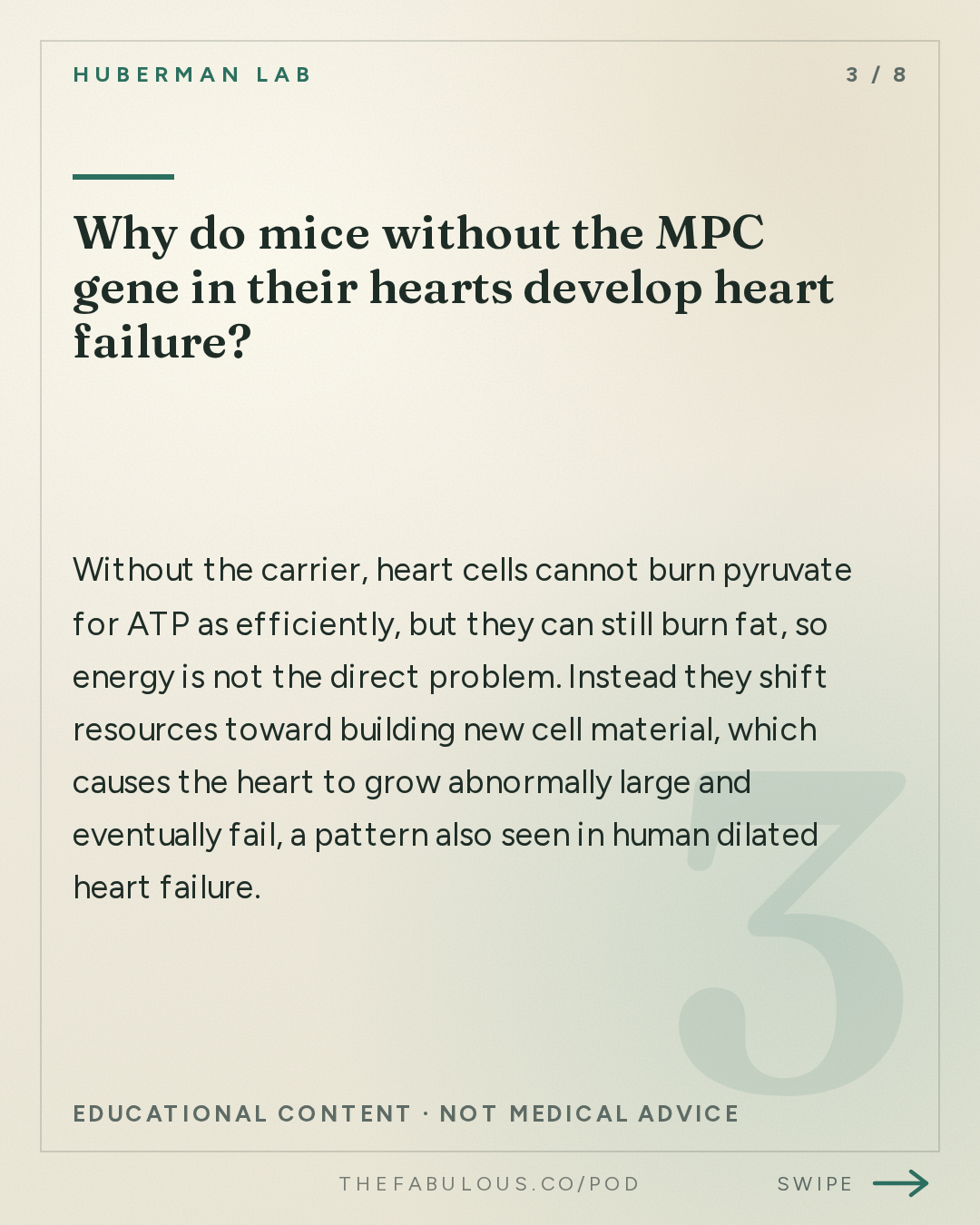
Finding the doorway let Rutter's lab test what happens when it is bricked shut. Mice engineered to lack MPC everywhere die before birth, around 12 or 13 days of gestation, roughly two-thirds of the way to term (67:31). But newer tools allow researchers to delete MPC only in specific organs. Deleting it only in the heart produces a stranger, slower story: the animals live for weeks. When they eventually die, they die of heart failure, with hearts that have grown abnormally large (68:58). The cardiomyocytes are not short on ATP, since they can still burn fat perfectly well. What seems to happen, in Rutter's words, is that the cells make "a resource allocation decision that turns out to be pathological": unable to easily burn the glucose-derived pyruvate, they shift toward building instead, and the resulting growth is exactly the kind of structural problem seen in human heart failure (69:47).
When building wins that should not
Lactate has a branding problem. For most of the twentieth century it was treated as a waste product, the residue left when muscles run short of oxygen during hard exercise. Rutter, along with researchers like Princeton's Josh Rabinowitz, has helped show that framing is wrong. Lactate is an active fuel, and the heart in particular is very good at burning it.
"The heart is an omnivore. Fats, glucose, lactate, ketones, amino acids, it will make ATP out of just about anything that ATP can be made out of." — Jared Rutter [66:20]
That omnivorous quality matters because glucose regulation is a matter of life and death on very different timescales. Chronically high blood glucose, the hallmark of diabetes, causes damage over years. Glucose that drops too low can kill within minutes, largely because the brain depends on a steady glucose supply and has very limited ability to burn fat instead (65:21). The heart's willingness to eat almost anything, including lactate, is part of what keeps it beating through both feasting and fasting; under normal conditions it draws 70 to 80 percent of its energy from fat, with the remainder made up by glucose, lactate, and other fuels (63:51).
The same burn-or-build fork explains a finding that puzzled scientists for a century. In the 1920s, German scientist Otto Warburg noticed that tumor cells consume less oxygen than expected and concluded their mitochondria must be broken. That observation, now called the Warburg effect, is still accurate, but the interpretation was backward (94:22). Rutter's work suggests cancer cell mitochondria are not broken at all. They are simply reallocated: instead of burning fuel and consuming oxygen, they favor building new biomass, the proteins, membranes, and DNA needed to make another cancer cell (95:30). Cancer, in this telling, is a cell that has made the same building decision a heart cell makes when its MPC is disabled, except cancer often makes that choice deliberately, as part of an evolutionary strategy to divide faster and evade the immune system (98:46).
That evolutionary framing also explains why cancer drugs stop working. A drug that kills 99.9 percent of cells in a tumor can still fail if the surviving 0.1 percent carries a resistance mutation, since that fraction can simply repopulate the tumor (100:12). Rutter points to HIV treatment as a model for what comes next: just as triple-drug combinations make it nearly impossible for the virus to develop resistance to all three at once, cancer therapy may increasingly rely on combinations of drugs, chosen based on a tumor's specific mutations, that make simultaneous resistance far less likely (101:22).
The episode's opening claim ties all of this together. Mitochondria that take in more energy than a cell can use become prone to producing reactive oxygen species, unstable oxygen molecules that damage proteins and DNA (00:28). An "overpowered" mitochondrion, in Rutter's phrase, is not a stronger one. It is one pushed past the point where its resource allocation still works. Whether that imbalance shows up as a heart that grows itself into failure or a cell that builds itself into a tumor, the underlying arithmetic is the same: every cell, all the time, is deciding what to do with what it has, and there is no version of cheating that arithmetic for long.
Ask this episode anything
Pod's AI answers from the episode itself, with the minute mark so you can hear it yourself.
Or start with one of these
Ask this episode
Pod's AI listens to the whole episode to answer, and points you to the minute it comes from.
The rest of this answer, and any question after it
Answers come from the episode itself, never from a summary of it.
ContinueKey takeaways
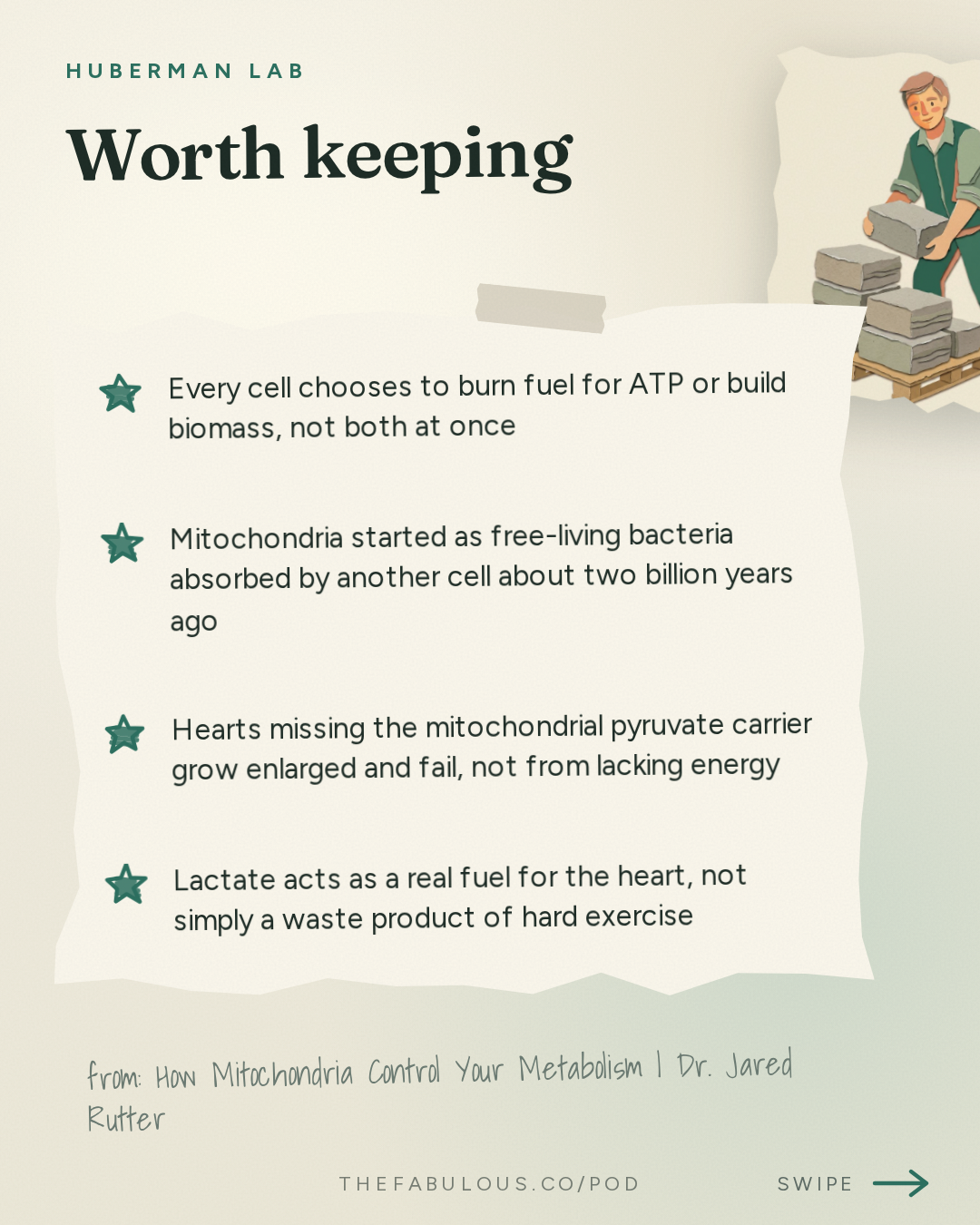
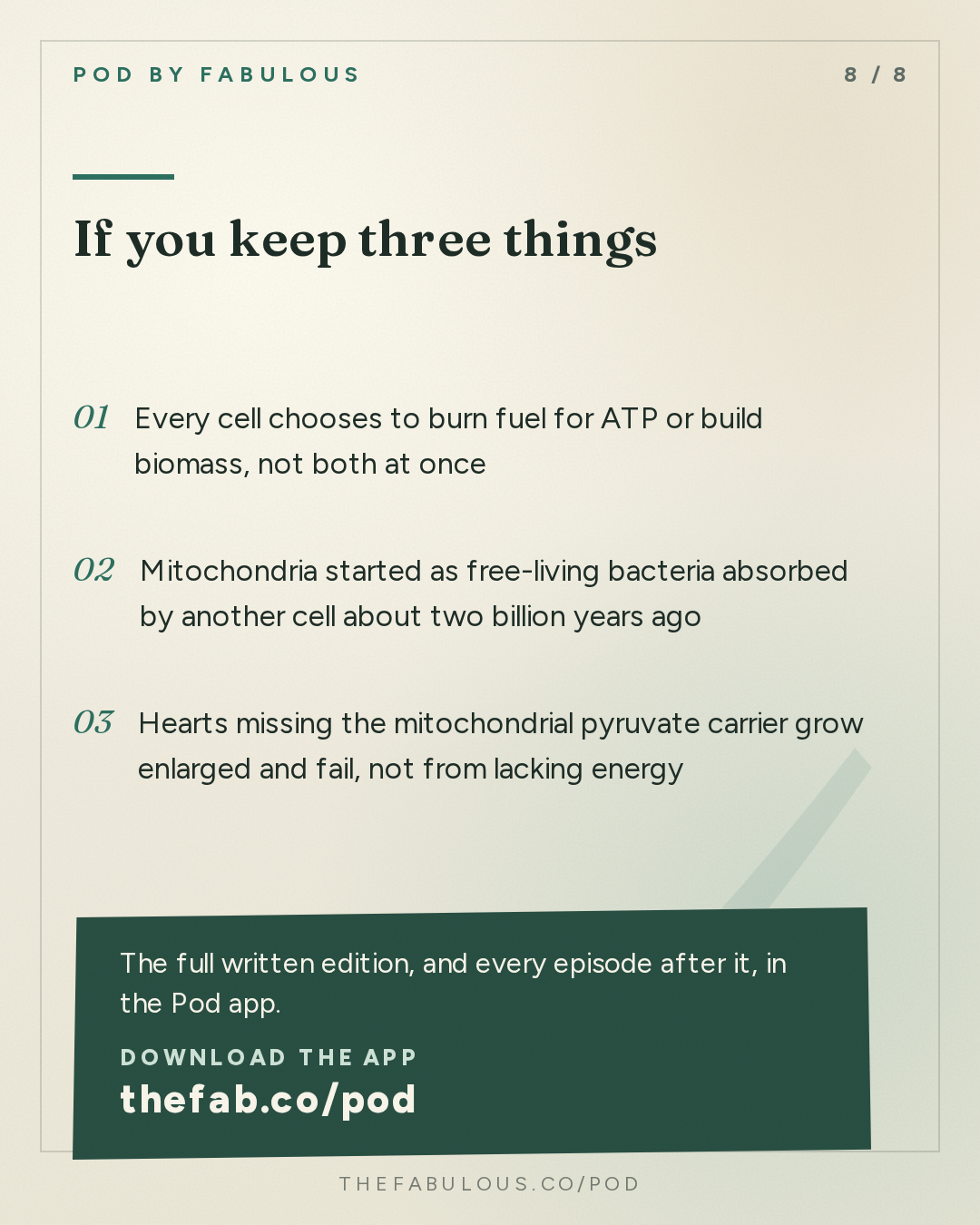
- Every cell chooses to burn fuel for ATP or build biomass, not both at once
- Mitochondria started as free-living bacteria absorbed by another cell about two billion years ago
- Hearts missing the mitochondrial pyruvate carrier grow enlarged and fail, not from lacking energy
- Lactate acts as a real fuel for the heart, not simply a waste product of hard exercise
- The Warburg effect shows cancer cells favor building new cells over burning fuel for ATP
The episode in cards
By the numbers
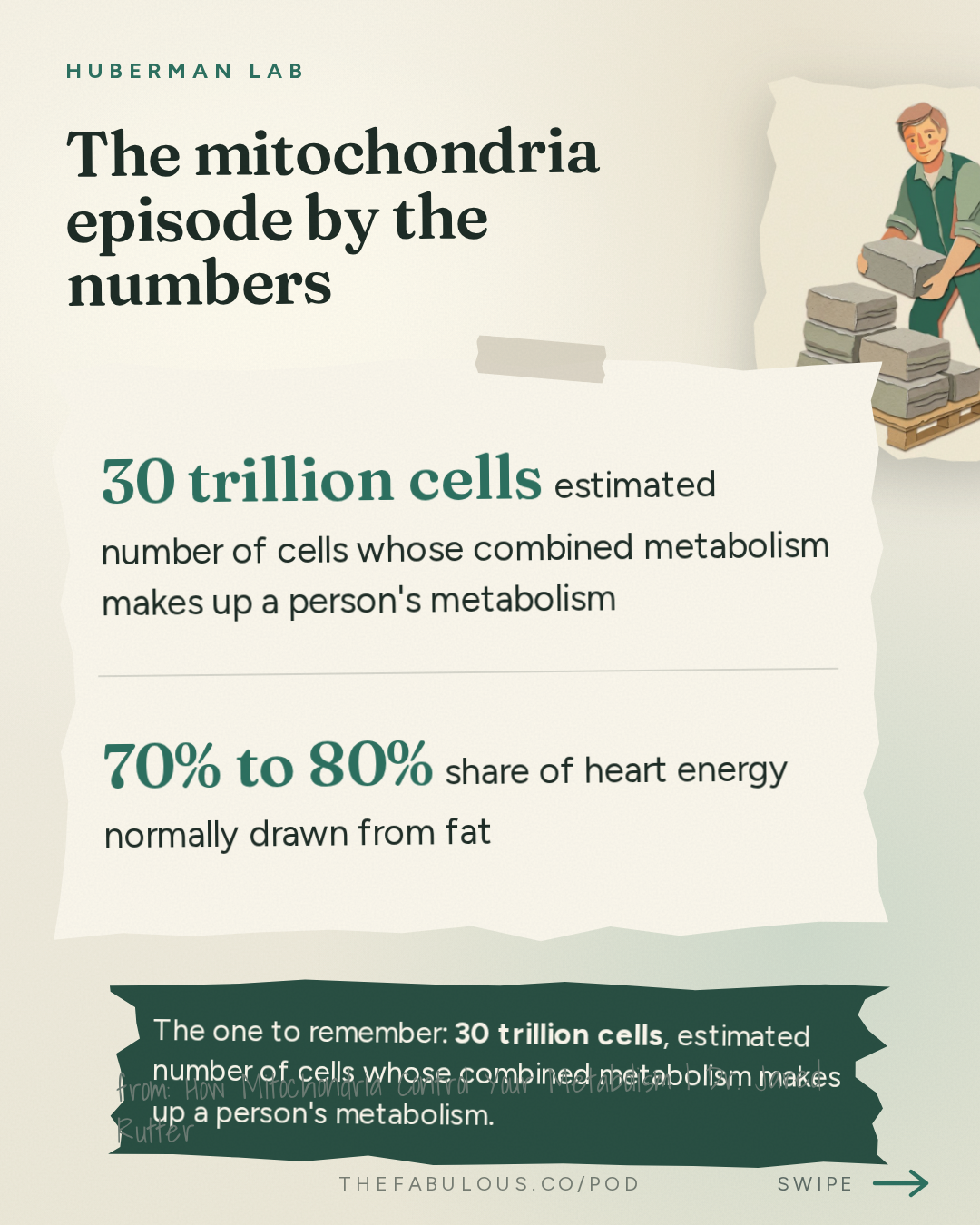
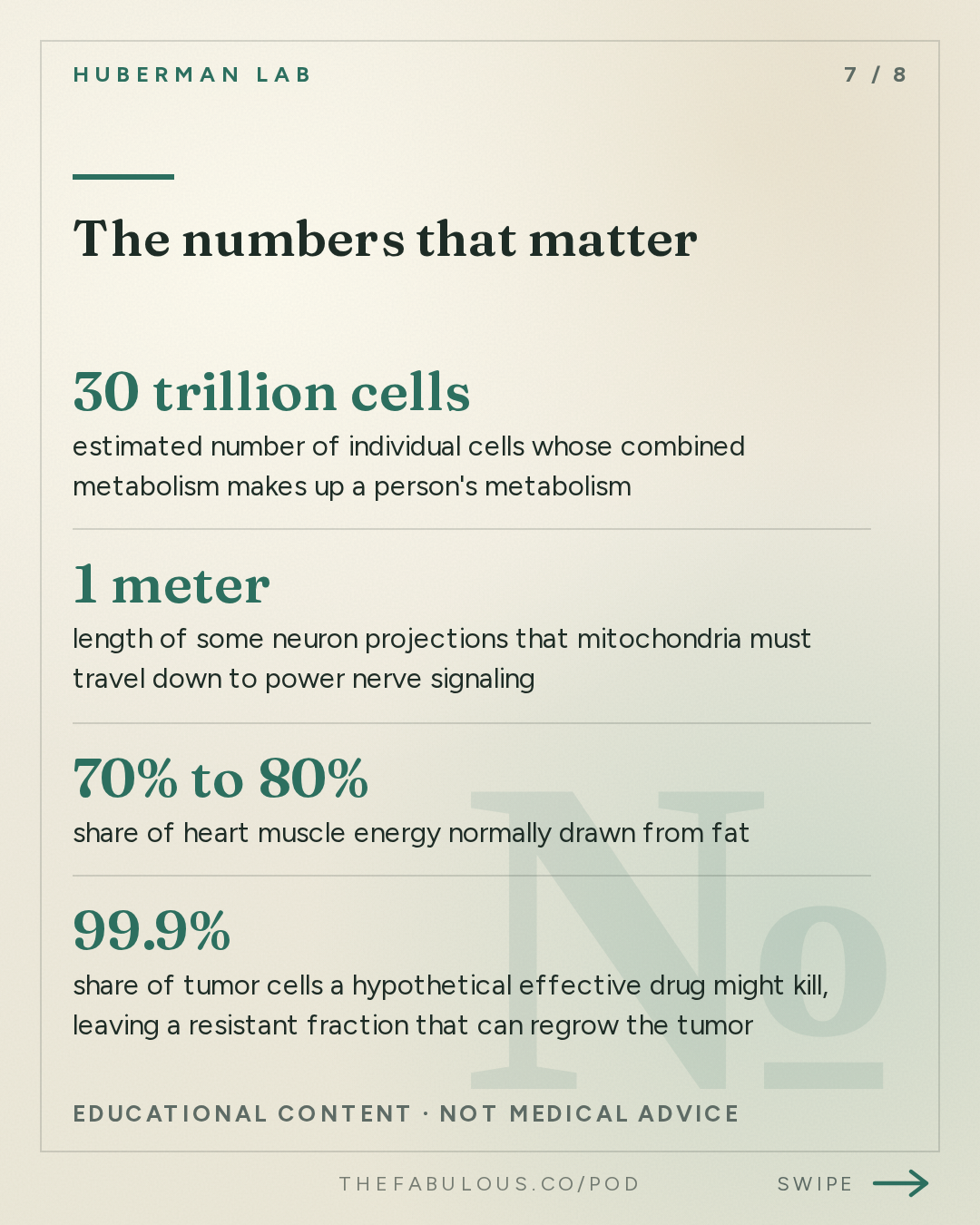
- 30 trillion cells estimated number of individual cells whose combined metabolism makes up a person's metabolism
- 1 meter length of some neuron projections that mitochondria must travel down to power nerve signaling
- 70% to 80% percent share of heart muscle energy normally drawn from fat
- 99.9% percent share of tumor cells a hypothetical effective drug might kill, leaving a resistant fraction that can regrow the tumor
In their words
“Living cell. Mitochondria are believed to have been the result of an endosymbiotic event where a bacterium, a free-living bacterium, was engulfed by another cell, and in a way, kind of domesticated- So”
“Food can either be converted to energy or it can be converted to biomass. I think that's maybe a bit overly simplistic, but I think a good baseline way to think about the, what we get out of the food that we eat.”
“Eat anything. It's an omnivore. Fats, glucose, lactate, ketones, amino acids, it will make ATP out of just about anything that ATP can be made out of”
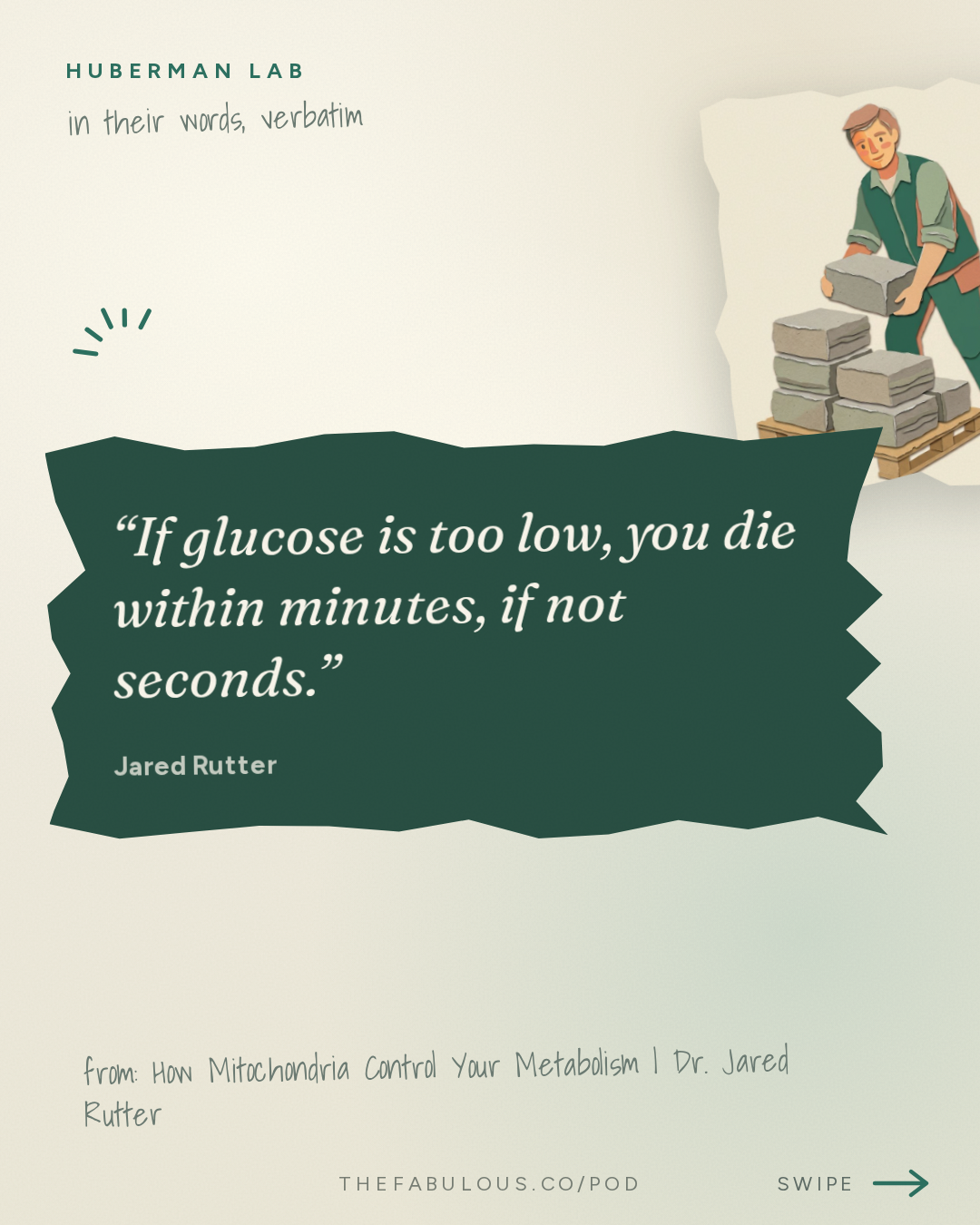
“If glucose is too low, you die within minutes, if not seconds.”
Questions this episode answers
What is the mitochondrial pyruvate carrier (MPC)?
The MPC is a pair of proteins, MPC1 and MPC2, that form the only known doorway for pyruvate to enter mitochondria. Jared Rutter's lab identified it in 2012 using genetics in yeast, fruit flies, and human cells, alongside an independent discovery by Jean-Claude Martinou's lab (53:19).
Why do mice without the MPC gene in their hearts develop heart failure?
Without the carrier, heart cells cannot burn pyruvate for ATP as efficiently, but they can still burn fat, so energy is not the direct problem. Instead they shift resources toward building new cell material, which causes the heart to grow abnormally large and eventually fail, a pattern also seen in human dilated heart failure (69:47).
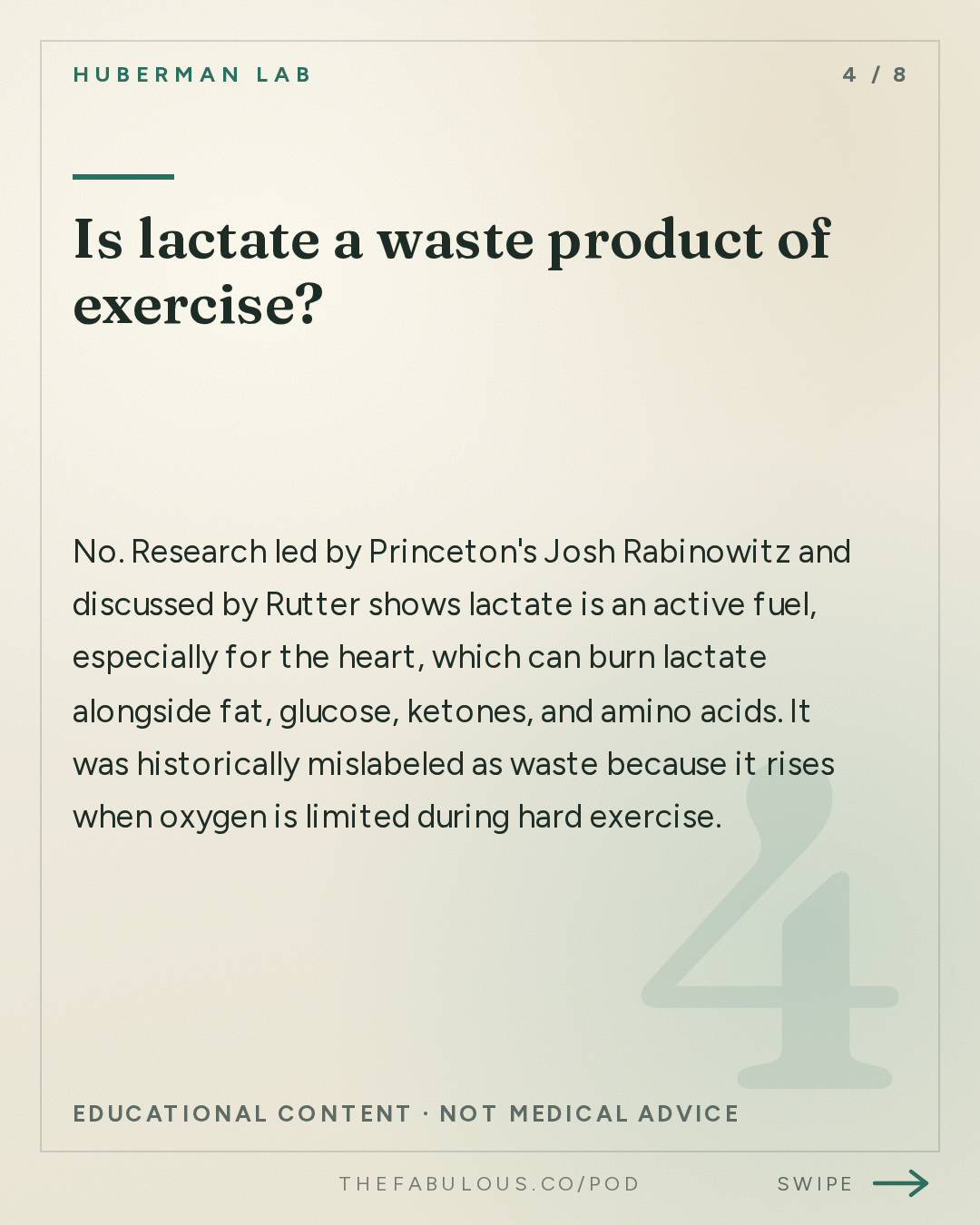
Is lactate a waste product of exercise?
No. Research led by Princeton's Josh Rabinowitz and discussed by Rutter shows lactate is an active fuel, especially for the heart, which can burn lactate alongside fat, glucose, ketones, and amino acids (66:20, 87:24). It was historically mislabeled as waste because it rises when oxygen is limited during hard exercise.
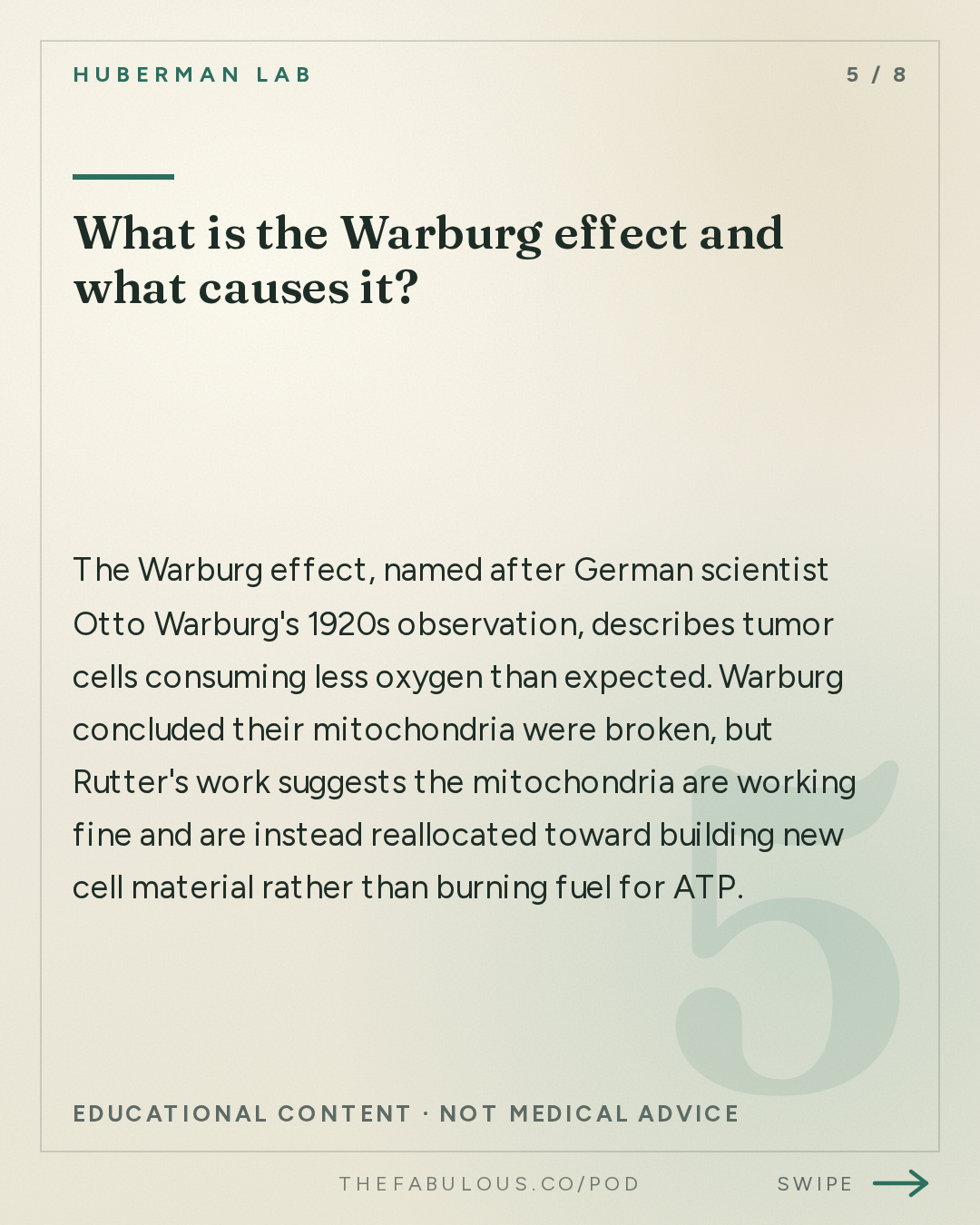
What is the Warburg effect and what causes it?
The Warburg effect, named after German scientist Otto Warburg's 1920s observation, describes tumor cells consuming less oxygen than expected. Warburg concluded their mitochondria were broken, but Rutter's work suggests the mitochondria are working fine and are instead reallocated toward building new cell material rather than burning fuel for ATP (94:22, 95:30).
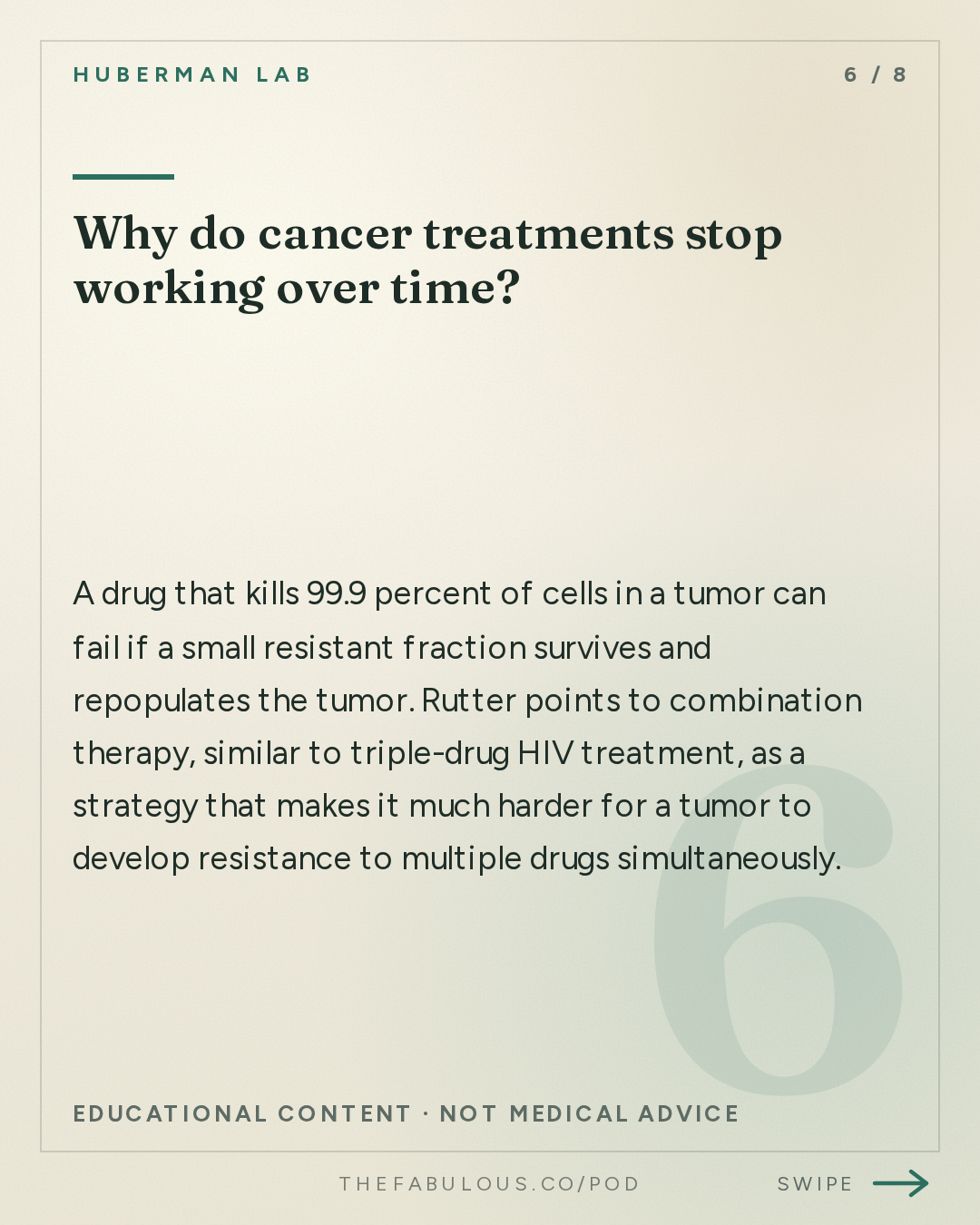
Why do cancer treatments stop working over time?
A drug that kills 99.9 percent of cells in a tumor can fail if a small resistant fraction survives and repopulates the tumor. Rutter points to combination therapy, similar to triple-drug HIV treatment, as a strategy that makes it much harder for a tumor to develop resistance to multiple drugs simultaneously (100:12, 101:22).
Why is mitochondrial DNA inherited only from the mother?
Mitochondria live in the cytoplasm of the egg, and sperm lose their cytoplasm when they fertilize an egg, so only the egg's mitochondria and their circular DNA get passed on. This means every person's mitochondrial genome traces back through an unbroken maternal line (17:46).
The full read, in cards
Go deeper
- Discovery of the mitochondrial pyruvate carrier (MPC1/MPC2) — Rutter's lab, using yeast, fly, and human cell genetics, identified the protein pair that carries pyruvate into mitochondria, published in 2012 alongside an independent discovery by Jean-Claude Martinou's lab
- Otto Warburg's oxygen consumption observations — 1920s finding that tumor cells consume less oxygen than expected, later named the Warburg effect and reinterpreted as a building-versus-burning resource choice rather than broken mitochondria
- Craig Thompson's work on dual mitochondrial populations — Showed a single cell can contain two distinct types of mitochondria, one more biosynthetic and one more energy-extracting
- Josh Rabinowitz's lactate fuel research — Recent experiments demonstrating lactate is an actively used fuel, especially for the heart, rather than a metabolic waste product
Mentioned
Jared Rutter · Howard Hughes Medical Institute · MPC1 · MPC2 · Otto Warburg · Mario Capecchi · Carl Thummel · Jean-Claude Martinou · Craig Thompson · Josh Rabinowitz · David Fajgenbaum · Every Cure
More from this show and category

Huberman's Rational Guide to Supplements
Andrew Huberman's framework ranks behavior, then nutrition, then supplements, then prescription drugs, arguing supplements only work once the first two are solid (00:42). He gives exact doses for sleep, hormone, and focus compounds, and insists on testing one ingredient at a time (35:08).
Jared Diamond on Leadership: Why Charisma Isn't Required
Charisma is optional for great leadership, biologist and historian Jared Diamond argues, pointing to the uncharismatic dictators Stalin and Pinochet as proof (00:26). Diamond, 89, applies a 'natural experiment' method from biology to politics, religion, business, and sports, showing only 2 of 22 modern political leaders stepped down voluntarily and that coaches and CEOs get too much credit or blame for outcomes that are mostly random (95:37).

Neuralink Trials for Quadriplegia: What Comes First
Neuralink's head neurosurgeon Matt MacDougall explains that the implant's first job is letting quadriplegic patients move a cursor and type by thought alone, not reconnect limbs. He also covers the robotic surgery that makes this possible, the safety case made in pigs and monkeys, and his own subdermal RFID chip.
How Diet Affects Memory and the Hippocampus
USC neuroscientist Scott Kanoski says the hippocampus, the brain's memory hub, tracks recent meals via the vagus nerve to judge hunger and fullness. Sugar, heat-processed foods, and artificial sweeteners early in life can impair that memory system and its gut bacteria, while exercise and simple recall of a recent meal can help restore or harness it.
