
Surgical Prehabilitation Protocol Guide
How to Prepare Your Body for Surgery: Protein, Prehab and the 5 Days That Change Your Recovery | Dr. Rebecca Knackstedt
▶ Listen to the full episode More from The Dr. Gabrielle Lyon Show
The brief
Prehabilitation, the practice of preparing the body before surgery instead of only recovering after it, can measurably change outcomes. Duke University surgeon Rebecca Knackstedt recommends 2 grams of protein per kilogram of body weight daily (34:26), a vitamin D level near 70 ng/mL (25:47), targeted muscle training, and five days of immunonutrition before major operations (69:01) to cut complications and speed healing.
A surgeon named Rebecca Knackstedt tells a story about a patient who, on paper, was doing everything right. Knackstedt, a plastic and reconstructive microsurgeon at Duke University, met the young woman during chemotherapy: upbeat, hopeful, with a clear plan for breast reconstruction already in place. Then, in the months before her operation, the patient's life came apart. She developed metabolic syndrome, lost her hair, went through a divorce, lost her mother to breast cancer, lost her job, and became homeless (05:51). Knackstedt operated anyway, confident that good technique and a nudge toward more protein would be enough to heal her. It wasn't (06:10).
That failure reorganized her career. Knackstedt is a rare figure in academic medicine: an MD-PhD surgeon who also trained in functional medicine, a field she defines plainly as the belief that diet, sleep, stress, and disease are all connected rather than separate problems to be treated one at a time (03:50). Out of her humbling case, she built a research focus on what she calls prehabilitation, or prehab: doing before surgery the same work patients are normally assigned only afterward, in physical therapy.
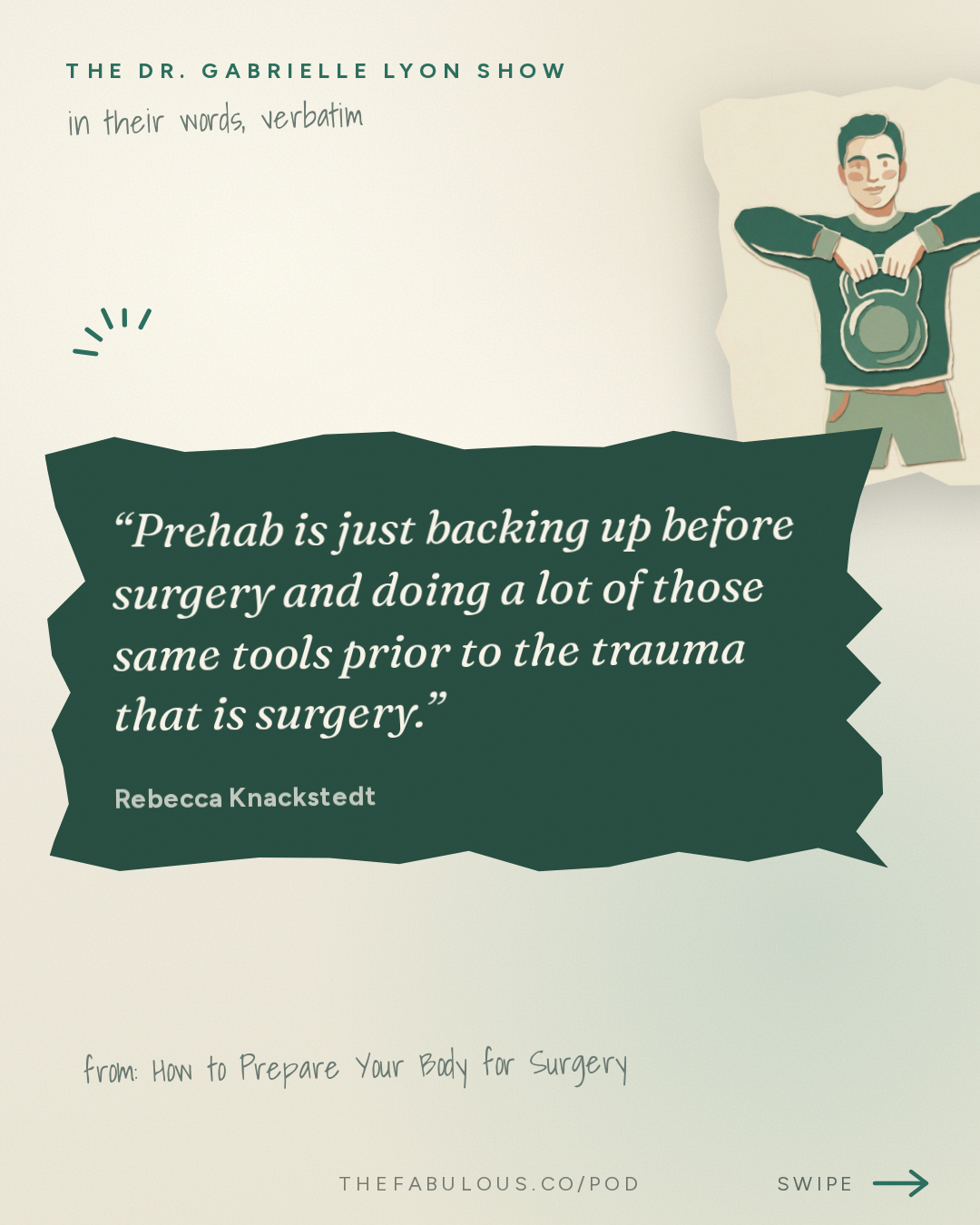
"Prehab is just backing up before surgery and doing a lot of those same tools prior to the trauma that is surgery." — Rebecca Knackstedt [08:57]
The idea sounds soft until it gets specific. Knackstedt no longer tells patients to simply "get in the gym." She asks what movements they'll need after their particular operation and trains those muscles directly. A patient facing a flap reconstruction, which removes fat and skin from the abdomen and uses it to rebuild a breast, will lose core strength for weeks. So Knackstedt has her squat and strengthen her legs beforehand, since she'll need those muscles to get out of bed and off the toilet without her arms or her core (09:22). Patients who can already manage the small tasks of daily life, she has found, recover faster than patients who cannot, regardless of how much muscle mass a scan might show (11:31).
The Muscle Math
Surgery itself, Knackstedt explains, is a catabolic event, meaning the body breaks down protein rather than building it.
"Surgery in and of itself is a catabolic experience. As soon as you have surgery, you are going to experience protein breakdown." — Rebecca Knackstedt [65:18]
Some of that breakdown is useful: the body needs those amino acids to fight infection and heal wounds. But it draws down a limited reserve, and skeletal muscle is the reserve's biggest bank account. Muscle also absorbs glucose from the bloodstream, functioning as what Knackstedt calls a "sink" for blood sugar.
"Your muscle is your sink for your glucose, and if you're going to decrease your muscle mass, you're going to have high blood sugar." — Rebecca Knackstedt [66:03]
Less muscle means higher blood sugar, which is linked to worse healing, which then triggers more carbohydrate cravings and more blood sugar spikes. Knackstedt's answer is to raise the starting reserve before the surgical hit ever lands. She recommends surgical candidates aim for 2 grams of protein per kilogram of body weight daily, roughly one gram per pound (34:26). By contrast, national health survey data (NHANES) show the average American woman eats only 60 to 70 grams of protein a day, barely enough for one and a half meals (35:51). She has patients track their food for three days before changing anything, just to see the real gap (35:30).
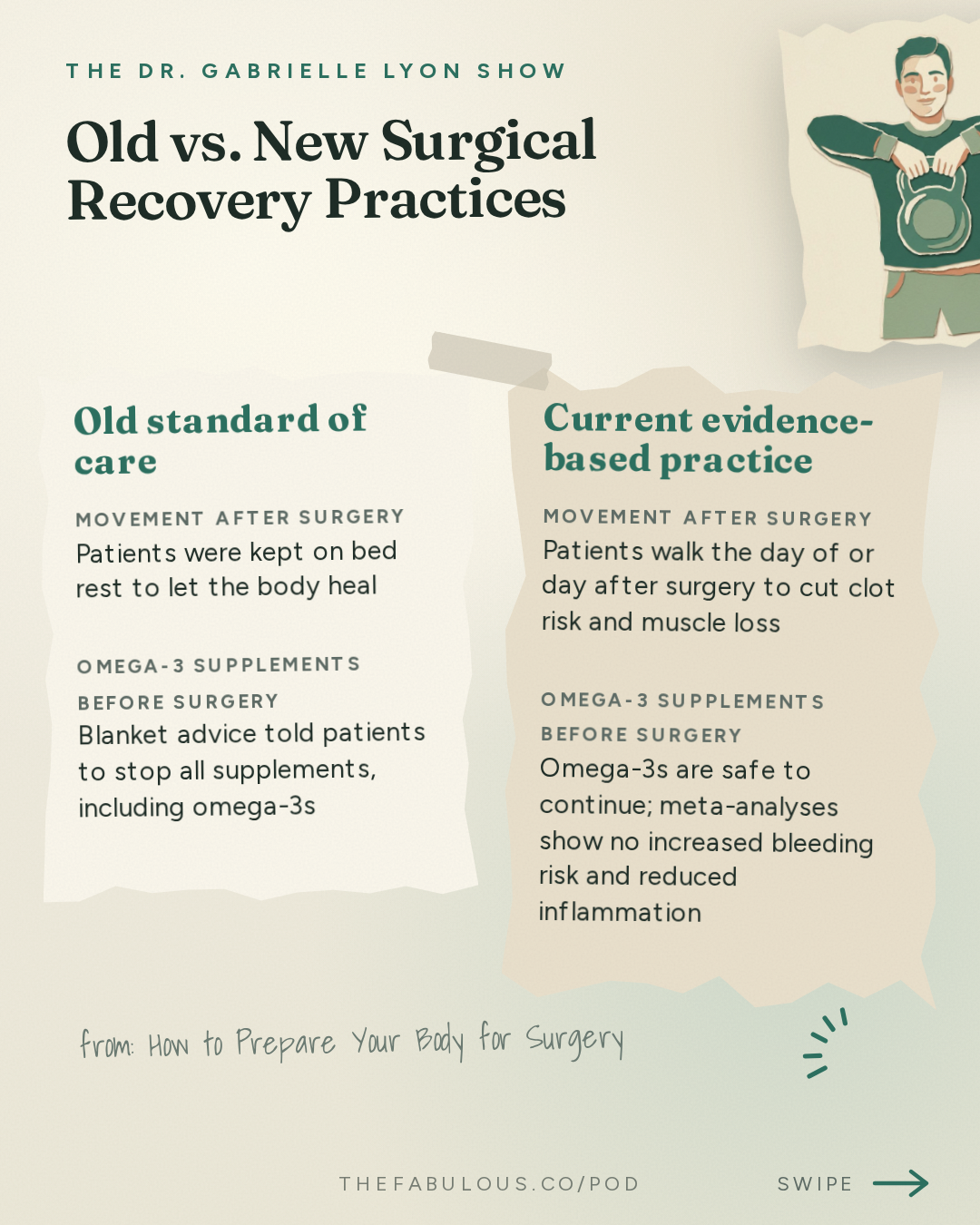
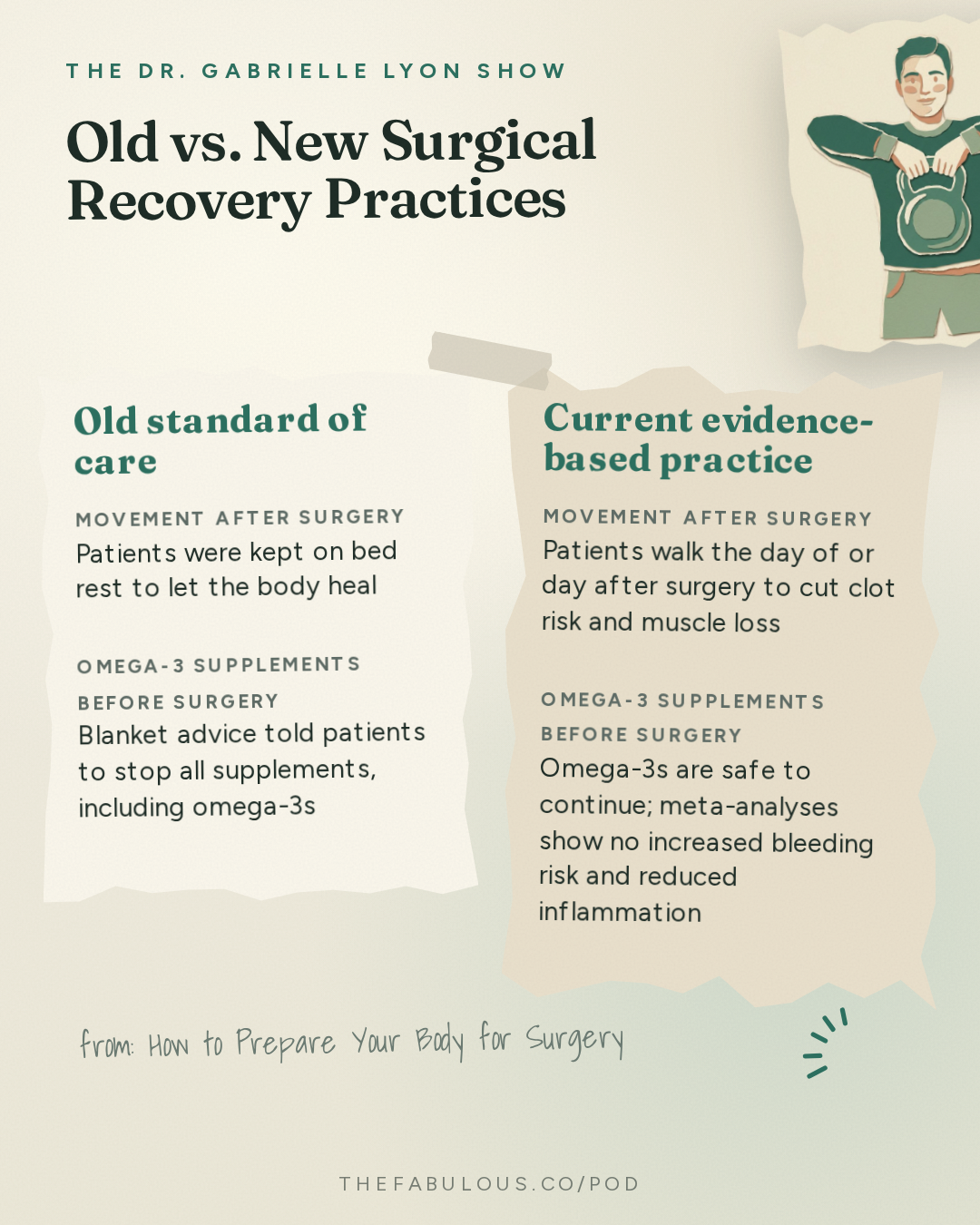
Vitamin D gets the same upward revision. The standard lab range prevents bone problems like rickets, but Knackstedt argues it isn't high enough to support healing. She targets a level around 70 ng/mL for her surgical patients, both before and after their operation, a number she says aligns with what functional medicine physicians like Mark Hyman recommend (25:47). And she has helped push back against an older practice: routine bed rest. Surgical teams once assumed stillness let the body heal. The evidence now says the opposite. Early ambulation, meaning getting up and walking soon after surgery, lowers the risk of blood clots, shortens hospital stays, and slows the loss of lean muscle that bed rest accelerates (23:20).
The Five Days That Count
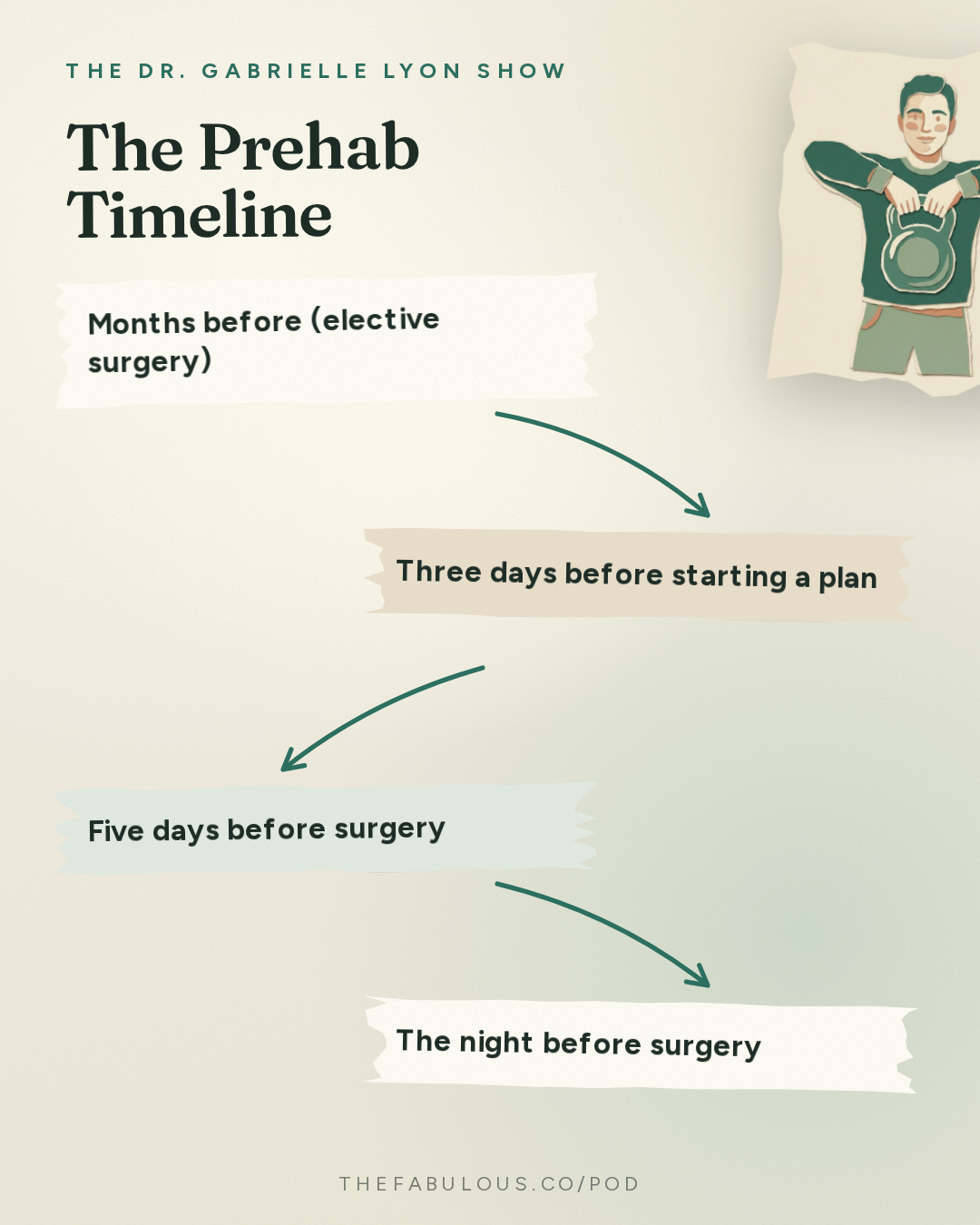
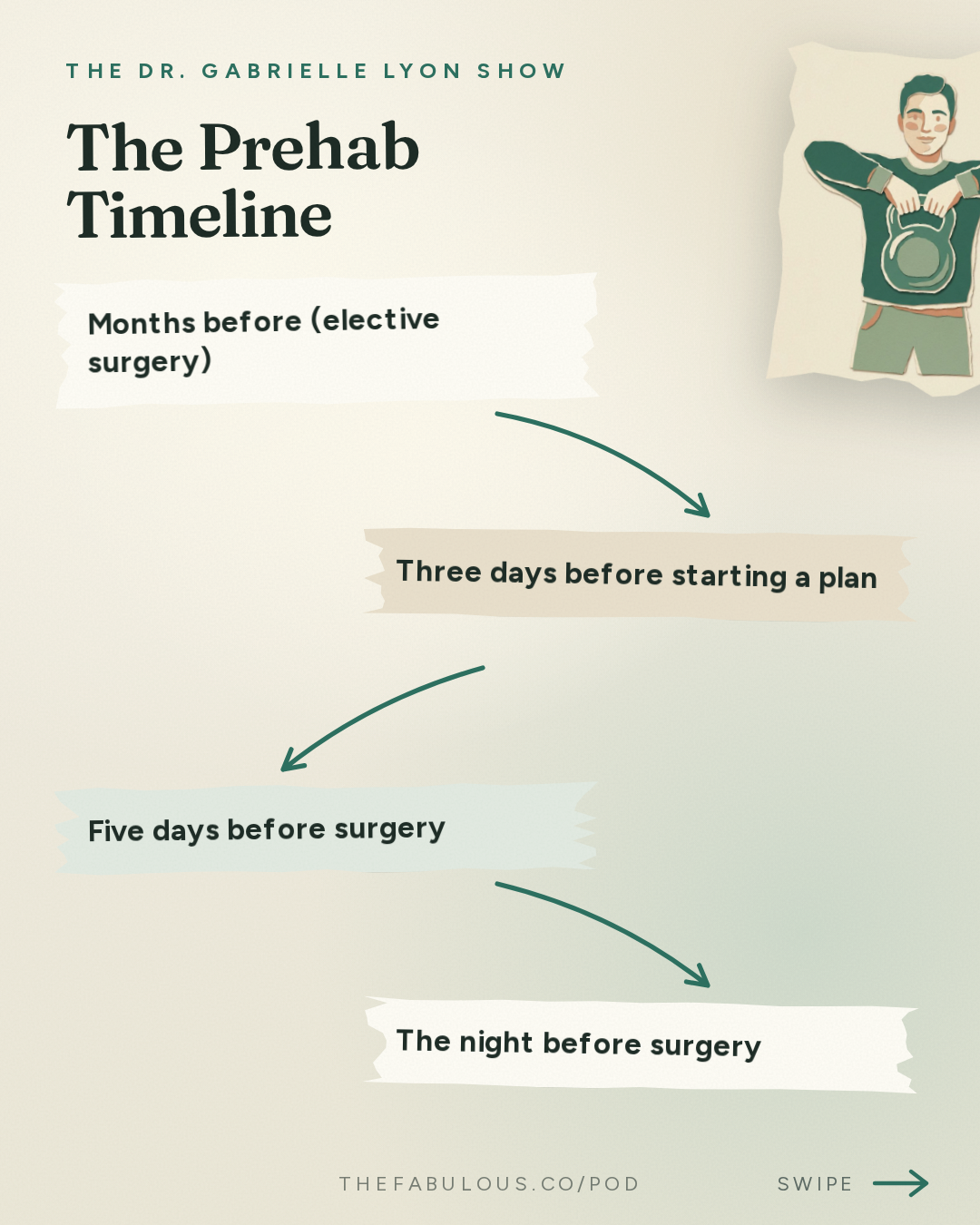
The most common pushback Knackstedt hears, including from fellow surgeons, is that none of this matters when a cancer patient has only a week before their operation. The literature disagrees. In studies of head and neck cancer patients, a notably sick population, just five days of immunonutrition, a mix of protein, healthy fats, and specific micronutrients, before surgery reduced complications, shortened hospital stays, and even lowered mortality (68:33). The five-day window was originally an arbitrary choice by researchers, but later studies kept confirming it (69:01).
Even one day counts. The night before surgery, once eating and drinking are about to be cut off, Knackstedt recommends a dose of 50 grams of simple carbohydrates, a practice called carbohydrate loading. It sounds counterintuitive for blood sugar, but she says it stabilizes glucose around the time of surgery, shortens hospital stays, and reduces post-operative pain, as long as the patient isn't diabetic or already struggling with blood sugar control (67:46).
Surgery also disrupts the gut microbiome, the community of bacteria living in the digestive tract, through antibiotics, anesthesia gases, pain medication, and diet changes (70:09). Knackstedt has patients take a probiotic before and after surgery, spaced four hours from any antibiotic dose so the antibiotic doesn't kill it. The specific strain matters less than the dose: large meta-analyses suggest at least 10 billion colony-forming units (CFU) is the threshold that actually does something (71:19).
Some of the newer tools sit at the more technical edge of her practice. Wound VACs, devices that apply gentle negative pressure over an incision, appear to speed healing and reduce fluid buildup; Knackstedt says she can often tell which patients had one within a week of surgery just by looking (54:17). Hyperbaric oxygen therapy, delivered in a hard chamber rather than the softer portable pods sold online, can soften radiation-damaged tissue (52:39), and a specialized installation wound VAC can help save infected breast implants over a course of one to five days (55:57). Both are backed by evidence for specific complications, not for general wellness (56:18).
None of this happens in a vacuum of pure biology. Knackstedt also spends time on subjects surgeons rarely raise: whether vaginal estrogen is safe for breast cancer patients (it is, and it prevents the urinary infections that can turn into life-threatening sepsis, at 12:40), why thermography, a heat-imaging technique promoted on social media, still isn't an adequate substitute for mammograms as a screening tool (28:48), and what she calls "anesthesia-associated depression," a low mood after surgery that she says is common, poorly understood, and worth naming in advance so patients aren't blindsided by it (45:23).
Why isn't any of this standard practice yet? Knackstedt names three obstacles. Insurance doesn't cover most of it, so recommending it can feel like asking financially strained cancer patients to spend more money. Surgical training doesn't teach it, so most surgeons simply don't know the evidence exists. And even willing surgeons struggle to fit it into overloaded clinics where physical therapists are booked six months out (74:29). Yet she argues the economics actually favor prevention: studies show that investing in prehabilitation saves money overall by avoiding complications, extra emergency visits, and longer hospital stays (76:13).
Knackstedt treats her patients' surgeries as routine.
"It is another day at work for me, but it is the biggest day in their lives, and it's an honor and privilege to be part of that." — Rebecca Knackstedt [77:06]
The gap in that sentence, between a Tuesday on her calendar and the most consequential day in someone else's life, is where prehabilitation lives. It doesn't promise a different outcome. It promises that whatever the outcome is, the body meets it from a stronger starting point.
Ask this episode anything
Pod's AI answers from the episode itself, with the minute mark so you can hear it yourself.
Or start with one of these
Ask this episode
Pod's AI listens to the whole episode to answer, and points you to the minute it comes from.
The rest of this answer, and any question after it
Answers come from the episode itself, never from a summary of it.
ContinueKey takeaways
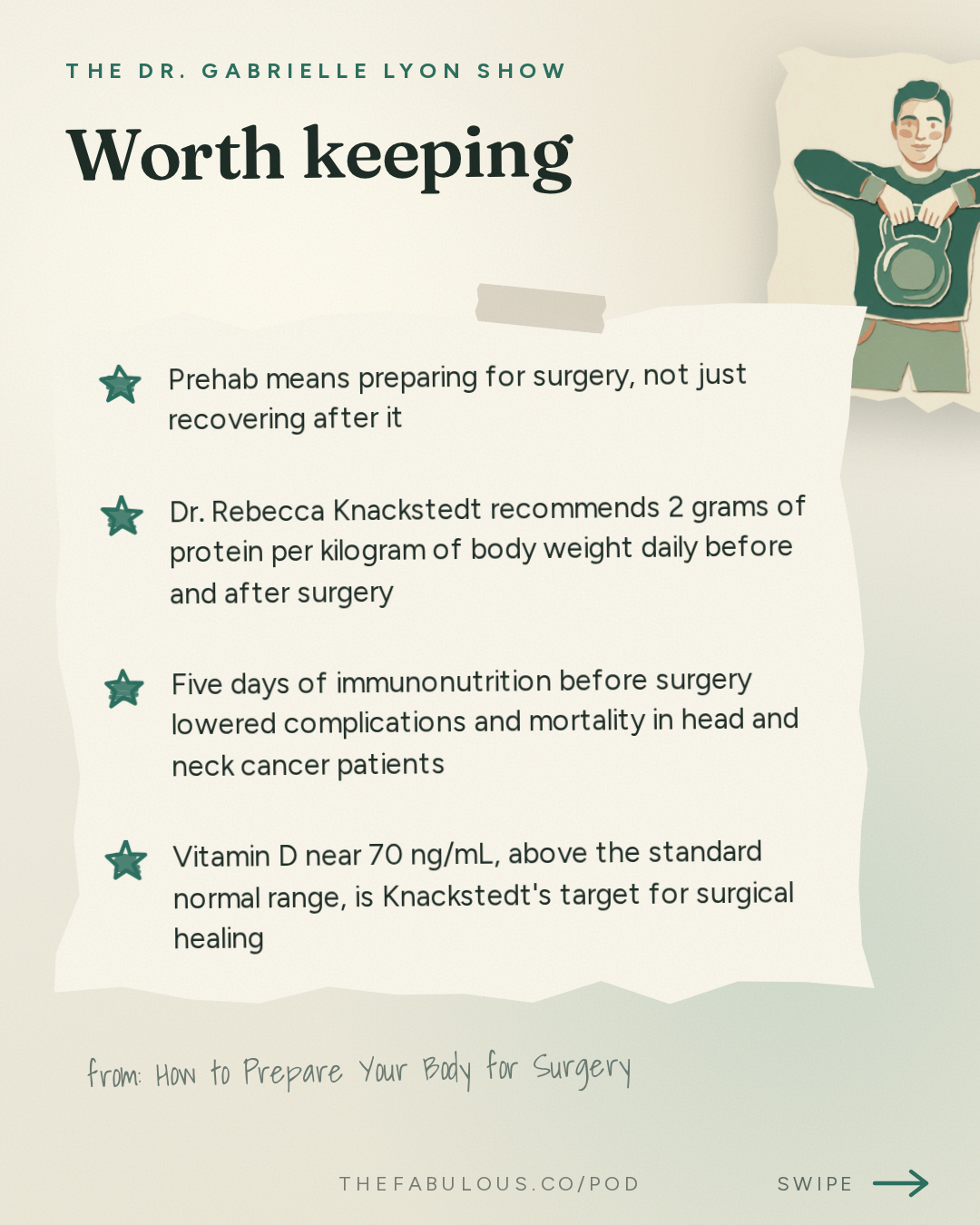
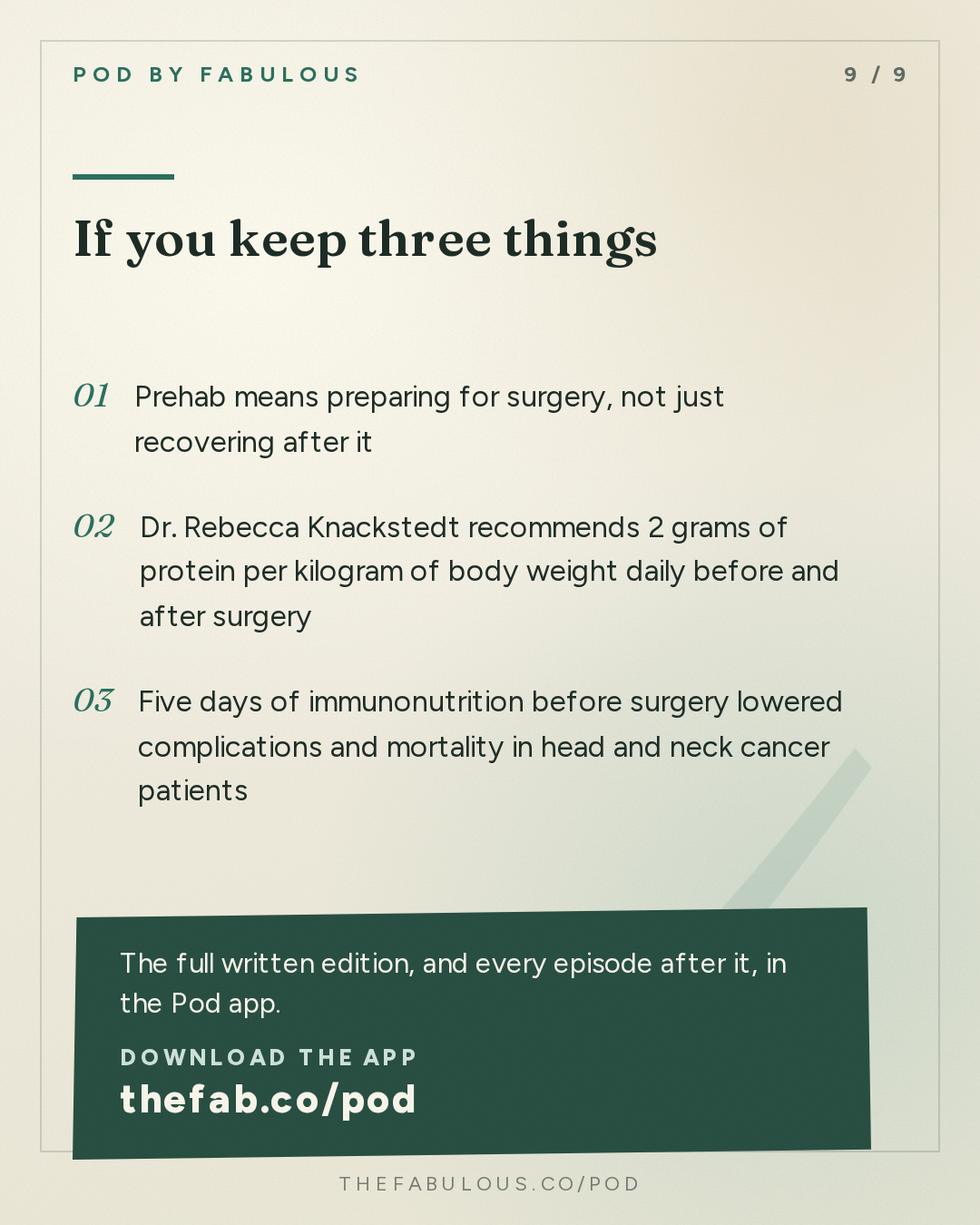
- Prehab means preparing for surgery, not just recovering after it
- Dr. Rebecca Knackstedt recommends 2 grams of protein per kilogram of body weight daily before and after surgery
- Five days of immunonutrition before surgery lowered complications and mortality in head and neck cancer patients
- Vitamin D near 70 ng/mL, above the standard normal range, is Knackstedt's target for surgical healing
- Early walking after surgery cuts blood clot risk and muscle loss, replacing the old bed-rest standard
The episode in cards

By the numbers
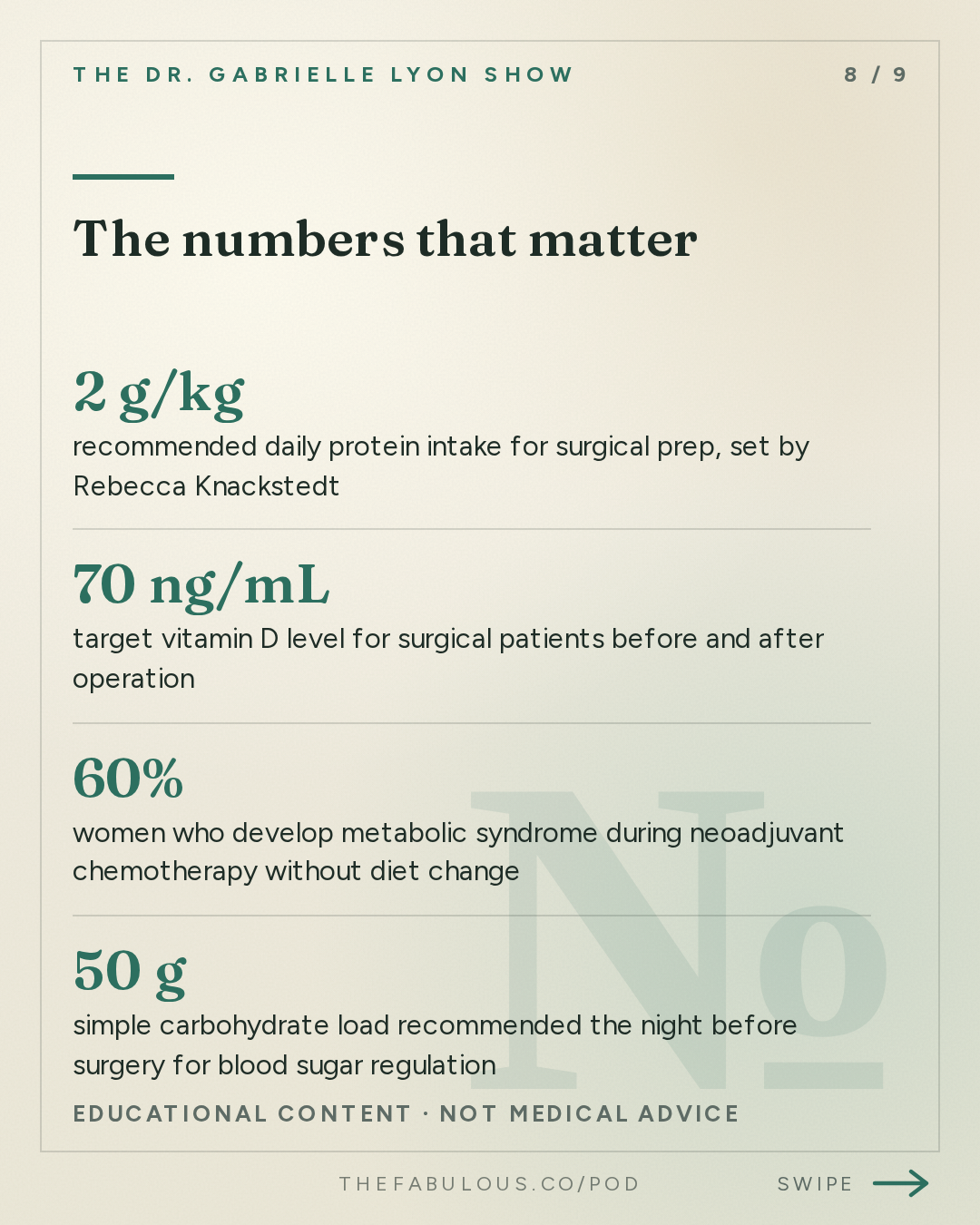
- 2 g/kg recommended daily protein intake for surgical prep, set by Rebecca Knackstedt
- 70 ng/mL target vitamin D level for surgical patients before and after operation
- 60% percent women who develop metabolic syndrome during neoadjuvant chemotherapy without diet change
- 50 g simple carbohydrate load recommended the night before surgery for blood sugar regulation
- 10 billion CFU minimum probiotic dose shown to be effective in meta-analyses
In their words
“Prehab is just backing up before surgery and doing a lot of those same tools prior to the trauma that is surgery.”
“Surgery in and of itself is a catabolic experience. As soon as you have surgery, you are going to experience protein breakdown.”
“Your muscle is your sink for your glucose, and if you're going to decrease your muscle mass, you're going to have high blood sugar.”
“It is another day at work for me, but it is the biggest day in their lives, and it's an honor and privilege to be part of that.”
Protocols
-
Protein loading before and after surgery
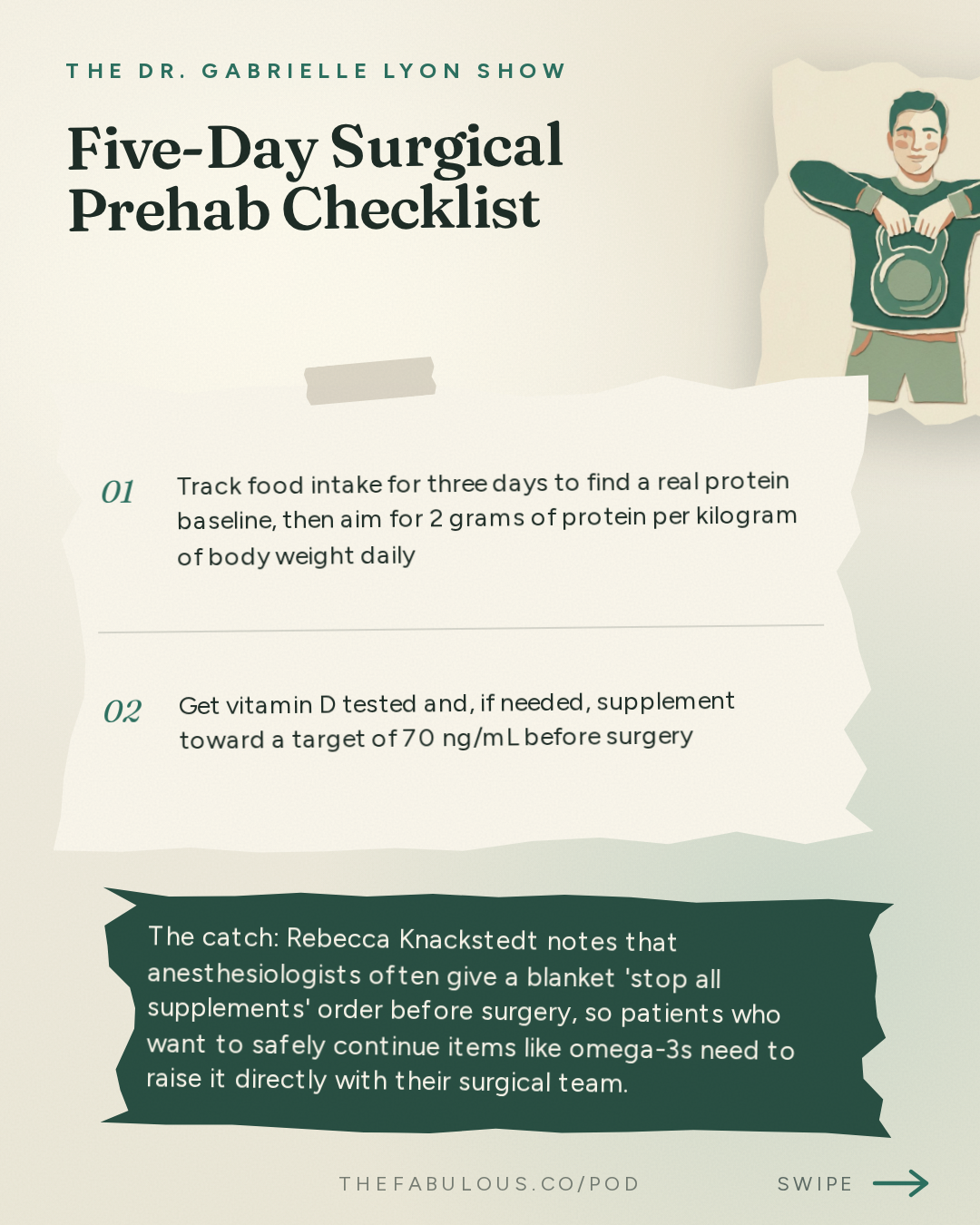
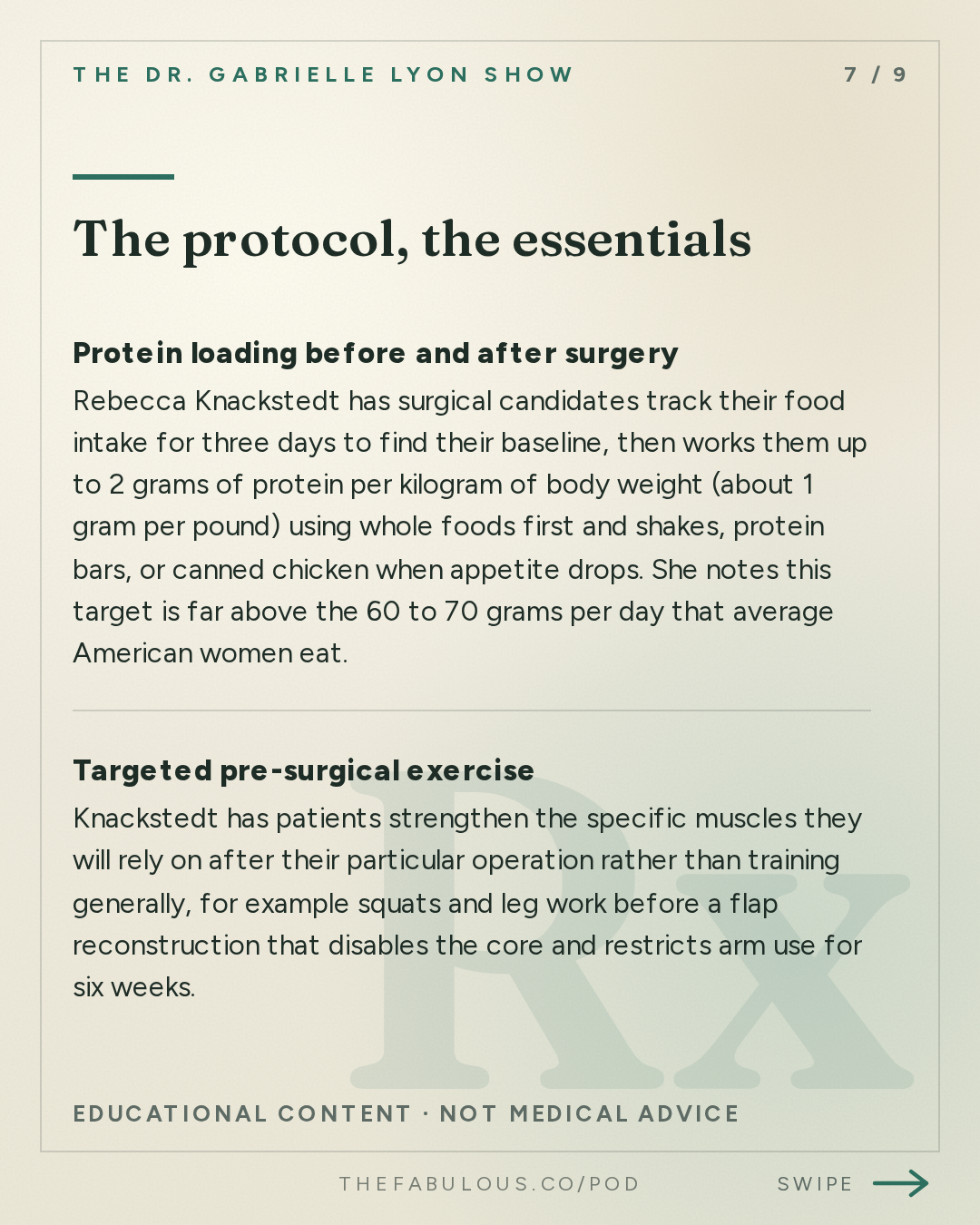
Rebecca Knackstedt has surgical candidates track their food intake for three days to find their baseline, then works them up to 2 grams of protein per kilogram of body weight (about 1 gram per pound) using whole foods first and shakes, protein bars, or canned chicken when appetite drops. She notes this target is far above the 60 to 70 grams per day that average American women eat.
Daily, starting before surgery and continuing through recovery
-
Targeted pre-surgical exercise
Knackstedt has patients strengthen the specific muscles they will rely on after their particular operation rather than training generally, for example squats and leg work before a flap reconstruction that disables the core and restricts arm use for six weeks.
As many days per week as the patient can manage before surgery
-
Vitamin D optimization
Knackstedt aims to get every surgical patient's vitamin D level to around 70 ng/mL before and after surgery, well above the standard range used to prevent bone disease, because she believes this higher level supports healing.
Ongoing supplementation until the target level is reached and maintained
-
Carbohydrate loading the night before surgery
Knackstedt recommends 50 grams of simple carbohydrates the night before surgery, once eating and drinking are about to be restricted, because studies show this stabilizes blood sugar, shortens hospital stays, and reduces post-operative pain. She cautions that patients with diabetes or unregulated blood sugar should not do this.
One time, the night before surgery
-
Probiotic dosing around surgery
Knackstedt tells patients to take a probiotic containing at least 10 billion CFU before and after surgery, since large meta-analyses show that dose threshold matters more than strain or species. She has patients space the probiotic four hours apart from any antibiotic dose so the antibiotic does not kill it.
Daily before surgery and continued after, spaced from antibiotics
Questions this episode answers
How much protein should someone eat before surgery?
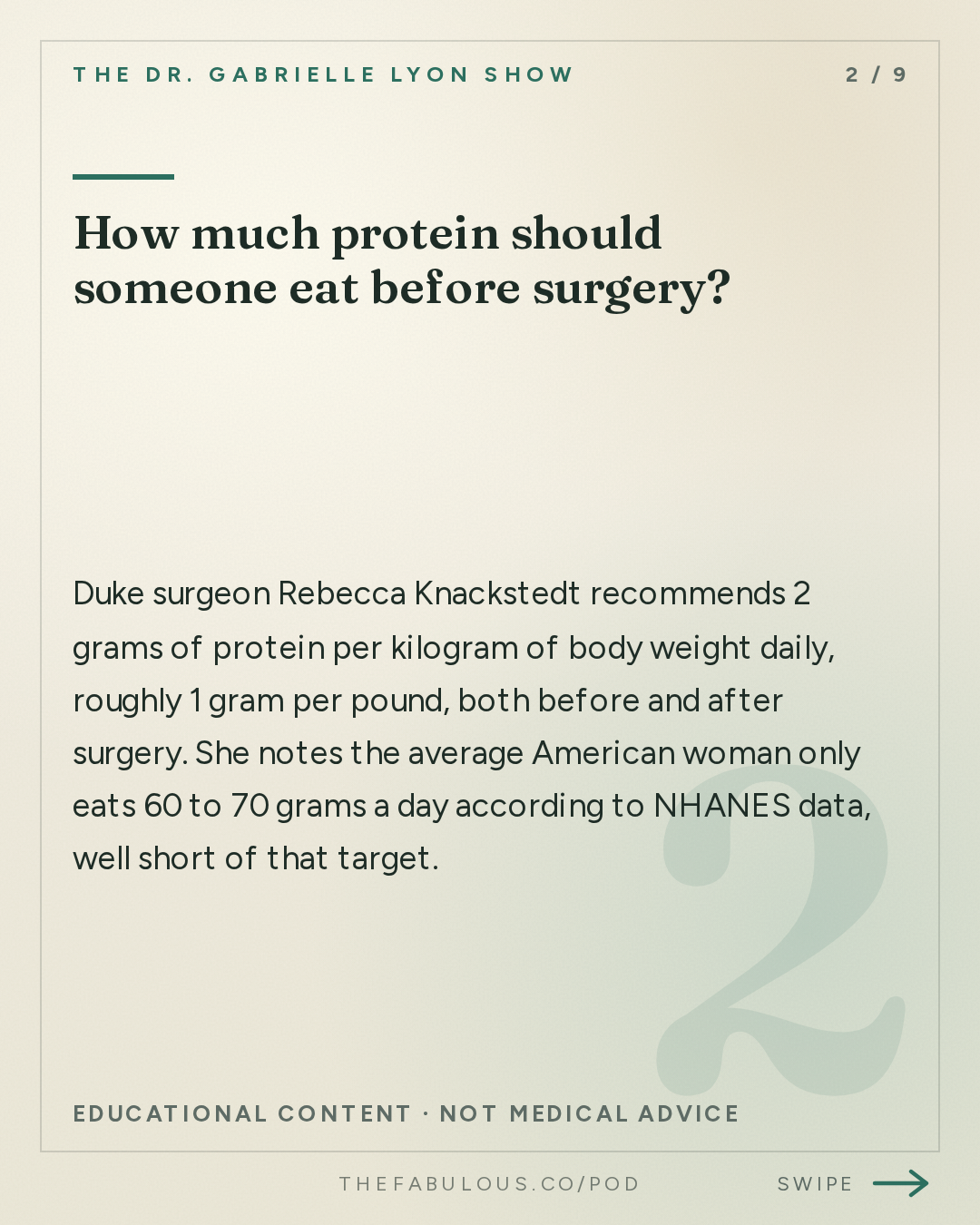
Duke surgeon Rebecca Knackstedt recommends 2 grams of protein per kilogram of body weight daily, roughly 1 gram per pound, both before and after surgery (34:26). She notes the average American woman only eats 60 to 70 grams a day according to NHANES data, well short of that target (35:51).
Does immunonutrition before surgery actually reduce complications?
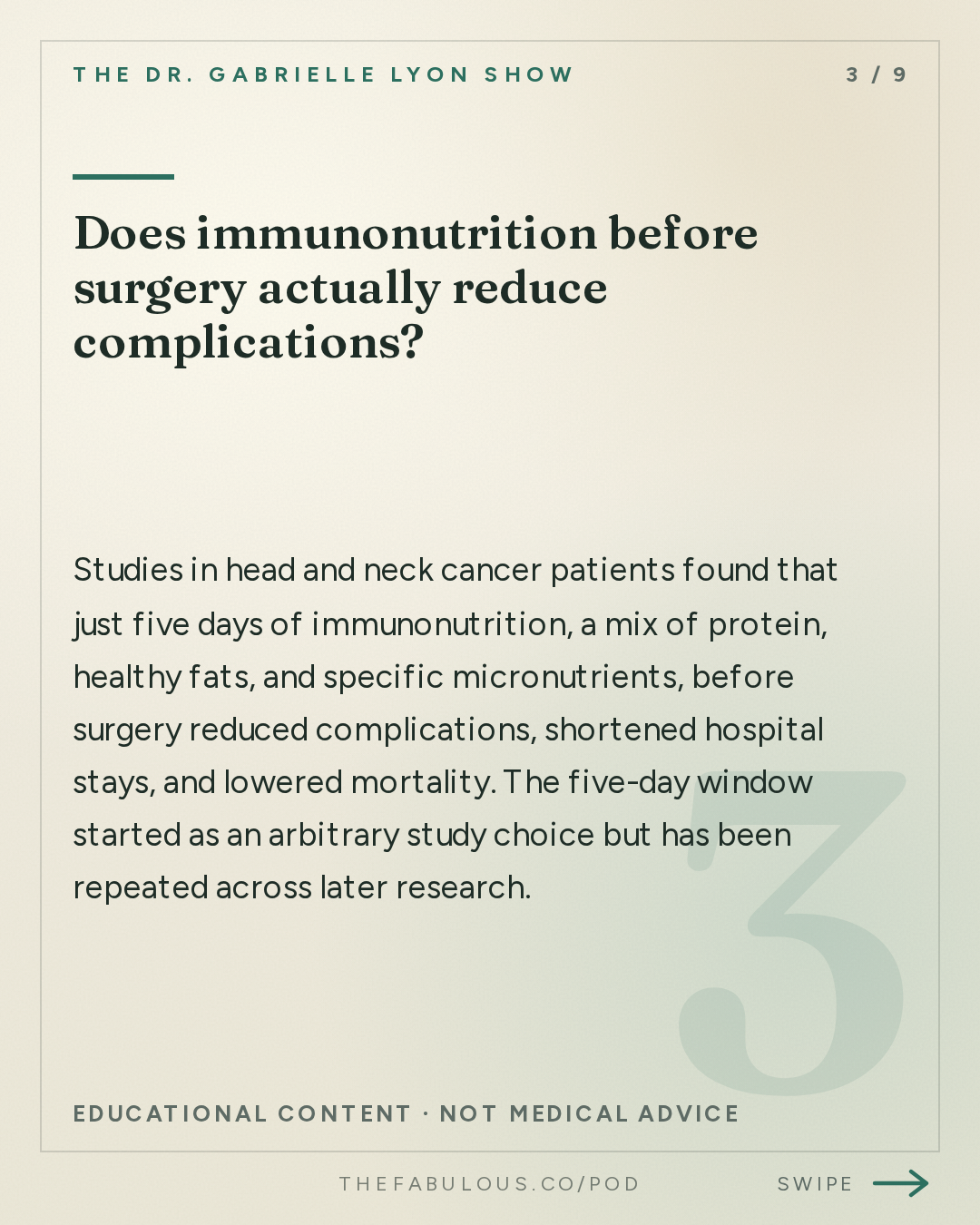
Studies in head and neck cancer patients found that just five days of immunonutrition, a mix of protein, healthy fats, and specific micronutrients, before surgery reduced complications, shortened hospital stays, and lowered mortality (68:33). The five-day window started as an arbitrary study choice but has been repeated across later research (69:01).
Do omega-3 supplements increase bleeding risk during surgery?
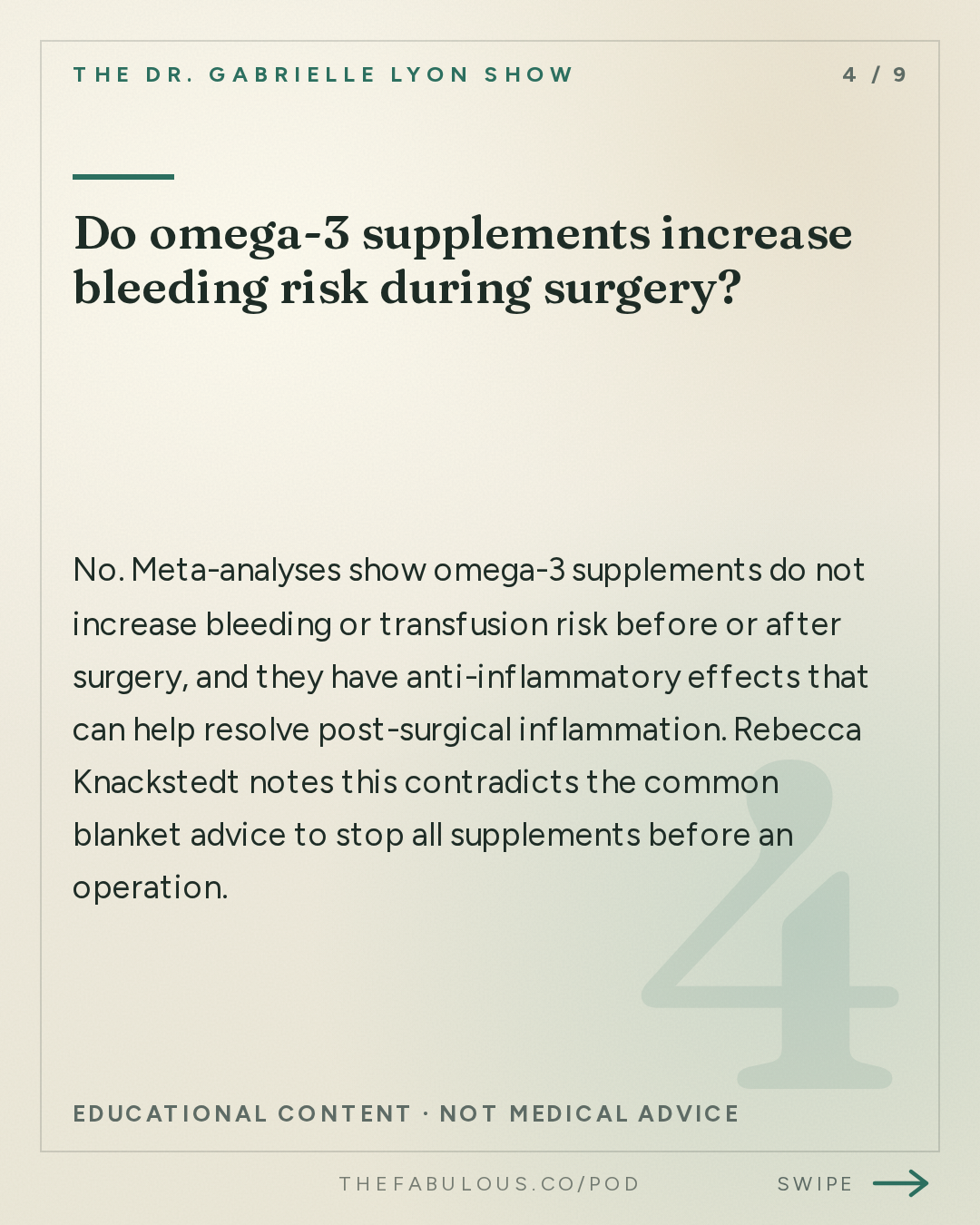
No. Meta-analyses show omega-3 supplements do not increase bleeding or transfusion risk before or after surgery, and they have anti-inflammatory effects that can help resolve post-surgical inflammation (39:49). Rebecca Knackstedt notes this contradicts the common blanket advice to stop all supplements before an operation (40:40).
What vitamin D level is best for surgical healing?
Rebecca Knackstedt targets a vitamin D level of about 70 ng/mL for her surgical patients, both before and after their operation, higher than the standard range used to prevent bone problems like rickets (25:47). She says the surgical literature does not yet have strong data to confirm an exact optimal number.
Is carbohydrate loading before surgery safe?
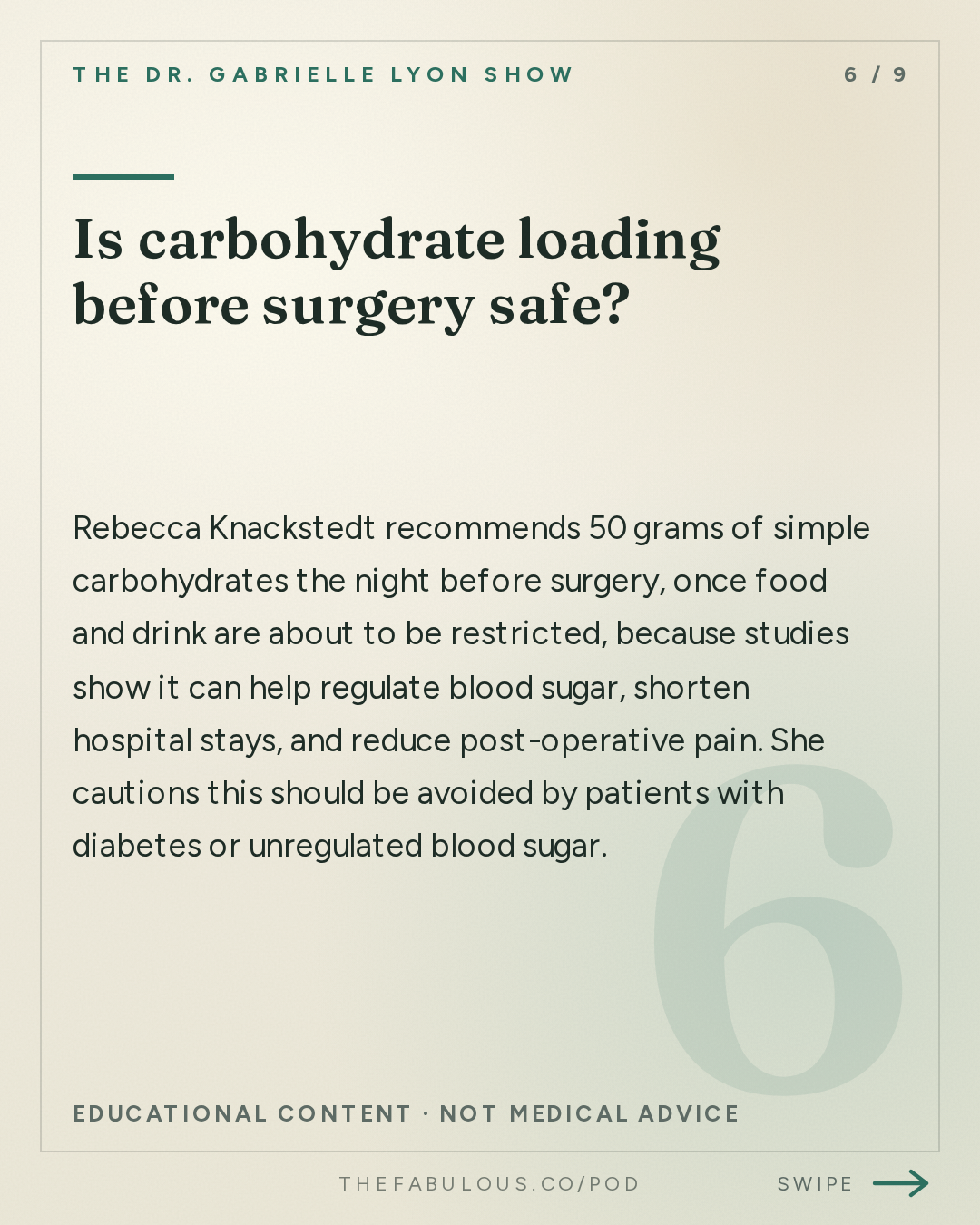
Rebecca Knackstedt recommends 50 grams of simple carbohydrates the night before surgery, once food and drink are about to be restricted, because studies show it can help regulate blood sugar, shorten hospital stays, and reduce post-operative pain (67:46). She cautions this should be avoided by patients with diabetes or unregulated blood sugar.
Should someone stop taking supplements before surgery?
The blanket instruction from many anesthesiologists is to stop all supplements two weeks before surgery and two to four weeks after, but Rebecca Knackstedt says this is an oversimplification (39:49). She flags vitamin E and ginkgo as genuine bleeding risks, while noting omega-3s and probiotics are generally safe to continue.
The full read, in cards

Go deeper
- NHANES national dietary survey data — shows the average American woman eats only 60 to 70 grams of protein a day
- Immunonutrition studies in head and neck cancer patients — found five days of pre-surgical immunonutrition reduced complications and mortality
Mentioned
Rebecca Knackstedt · Duke University · Cleveland Clinic · Mark Hyman · NHANES · Wound VAC · Dale Bredesen · Journavx
More from this show and category

ED as an Early Predictor of Heart Attack Risk
Erectile dysfunction predicts a future heart attack better than chest pain does, especially in younger men (11:11). Urologist Tobias Kohler describes two cheap early-warning tests, a coronary calcium scan and a Mayo Clinic ceramide blood test, plus the cardiac damage caused by high-dose testosterone abuse (12:49, 44:55).

Menopause, Muscle Loss, and Insulin Resistance
Menopause changes the body mainly by shrinking muscle, not just by crashing hormones. Dr. Gabrielle Lyon argues that muscle loss, which starts speeding up about two years before a woman's final period, drives the insulin resistance, bone loss, and fat gain often blamed on menopause alone, and that resistance training and higher protein intake are the direct countermeasures.

Menopause Skin Changes: Causes and Fixes
Menopause triggers a 30% collagen loss in skin within five years, driven by falling estrogen and steady testosterone levels. Dermatologist Erica Kelly explains the barrier breakdown behind dryness and jawline acne, and recommends sunscreen and retinoids as the best-evidenced treatments, with topical estriol and spironolactone for targeted fixes.

Strength Training for Hypermobility, Done Safely
Hypermobile joints move past normal range because ligaments are too loose, so strength training, not stretching, is the primary fix. Dr. Stephanie Estima recommends training within 80% of available range of motion, using slow eccentrics and isometric holds, plus adequate protein and vitamin C to support connective tissue repair.
