unPAUSED with Dr. Mary Claire Haver
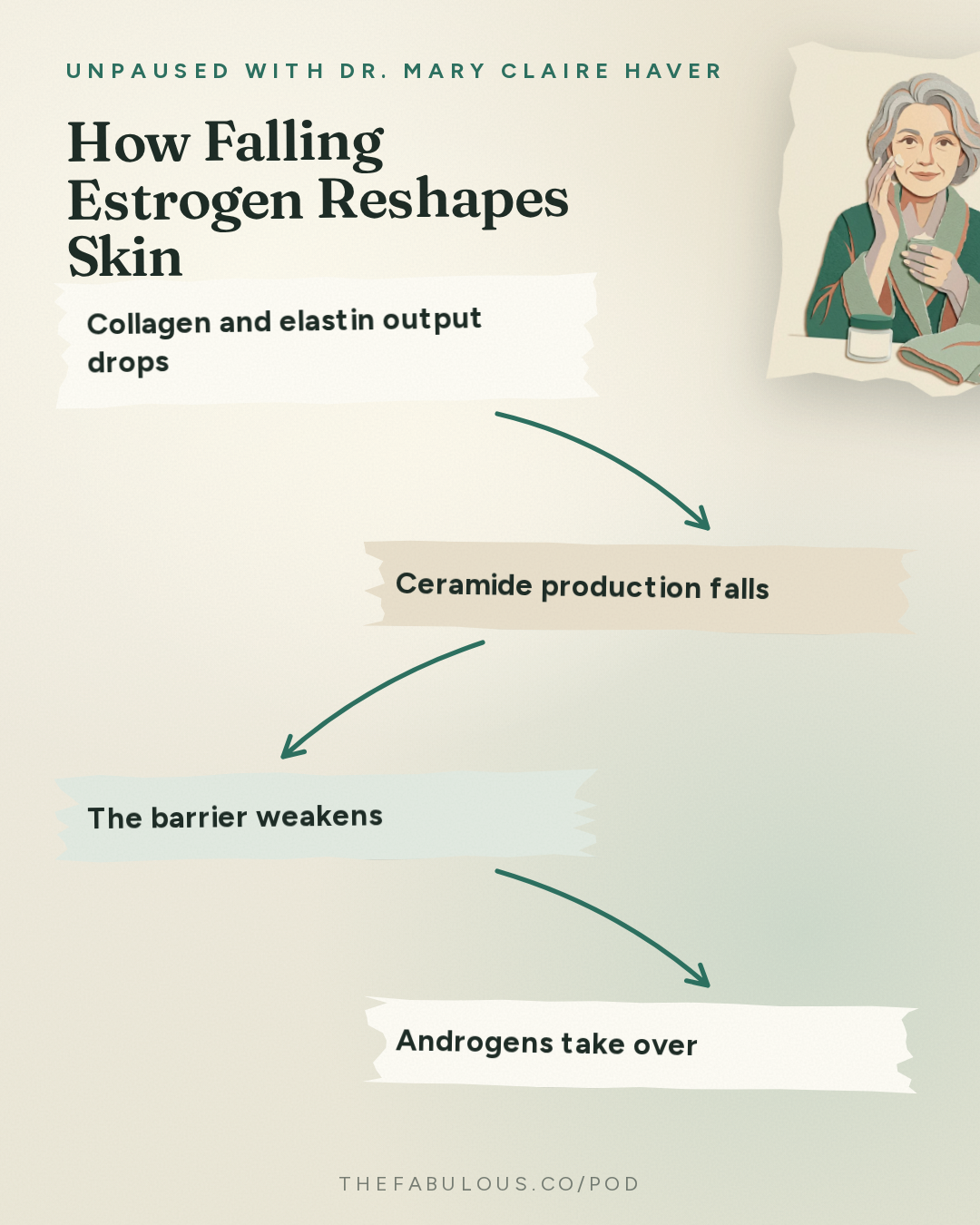
Menopause Skin Changes: Causes and Fixes
Menopause Skin Changes and the Science of Skincare
▶ Listen to the full episode More from unPAUSED with Dr. Mary Claire Haver
The brief
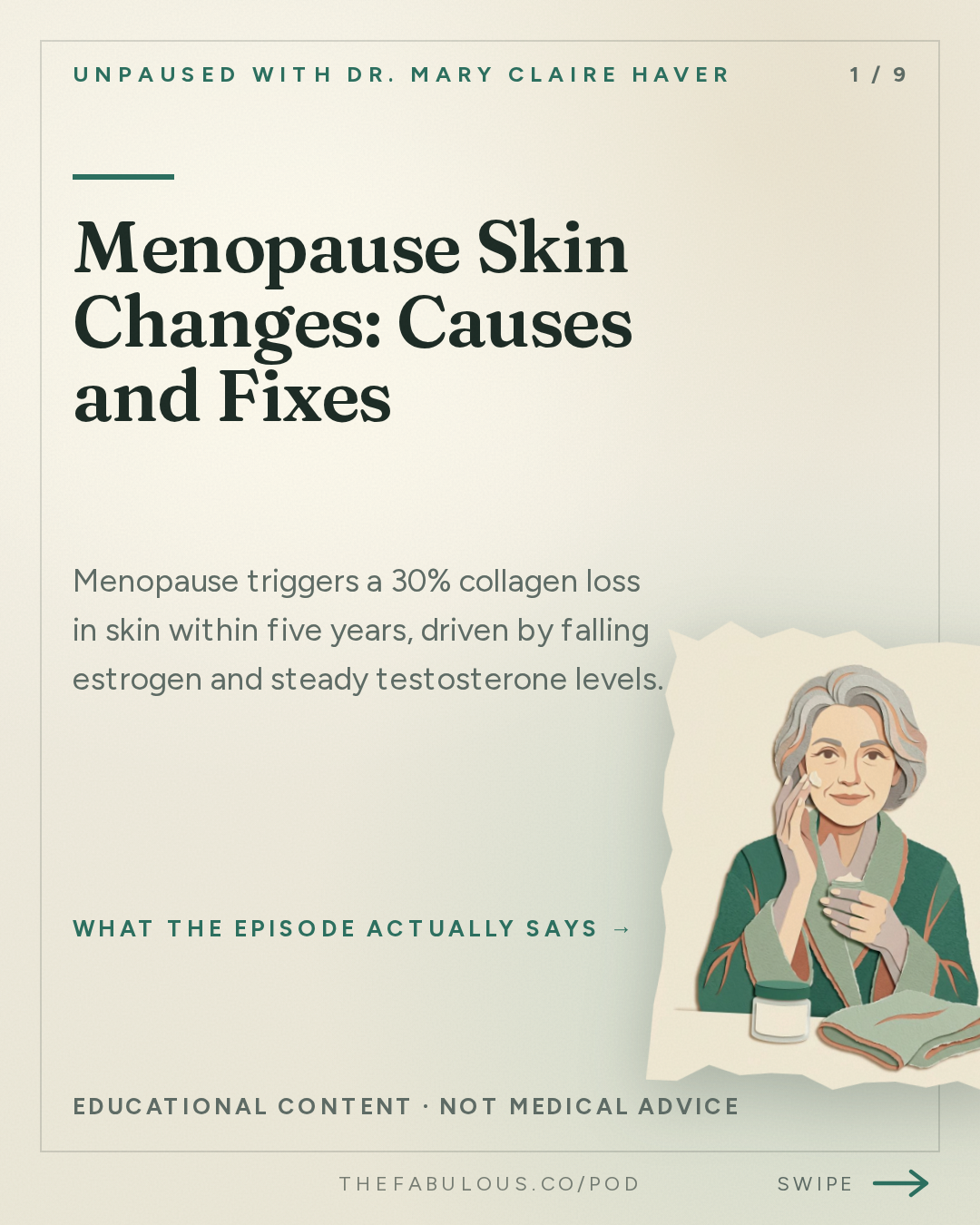
Menopause triggers a 30% collagen loss in skin within five years, driven by falling estrogen and steady testosterone levels. Dermatologist Erica Kelly explains the barrier breakdown behind dryness and jawline acne, and recommends sunscreen and retinoids as the best-evidenced treatments, with topical estriol and spironolactone for targeted fixes.
Dr. Erica Kelly has a trick for patients who complain about getting old. She lays their forearm next to their stomach and says, "They're the same age." The forearm looks decades older, spotted and thin, while the stomach skin looks smooth. The difference is not time. It is sun (05:12). That small demonstration sets up the real subject of this episode: how much of what people call skin aging is actually two separate processes running on different clocks, one lit by ultraviolet light and one switched on by falling estrogen.
Kelly is a dermatologist who founded the Cosmetic Dermatology Division at the University of Texas Medical Branch. Kelly opens with the number that reorganizes the whole conversation: women lose 30 percent of their skin's collagen, the structural protein that gives skin its firmness, in the first five years after menopause (00:00), a fact her cohost, OB/GYN and menopause specialist Mary Claire Haver, later credits her for (03:13). Collagen loss does not trickle in over decades. It falls off a cliff right when estrogen does, and it happens to every woman, not just the ones who show up worried about wrinkles.
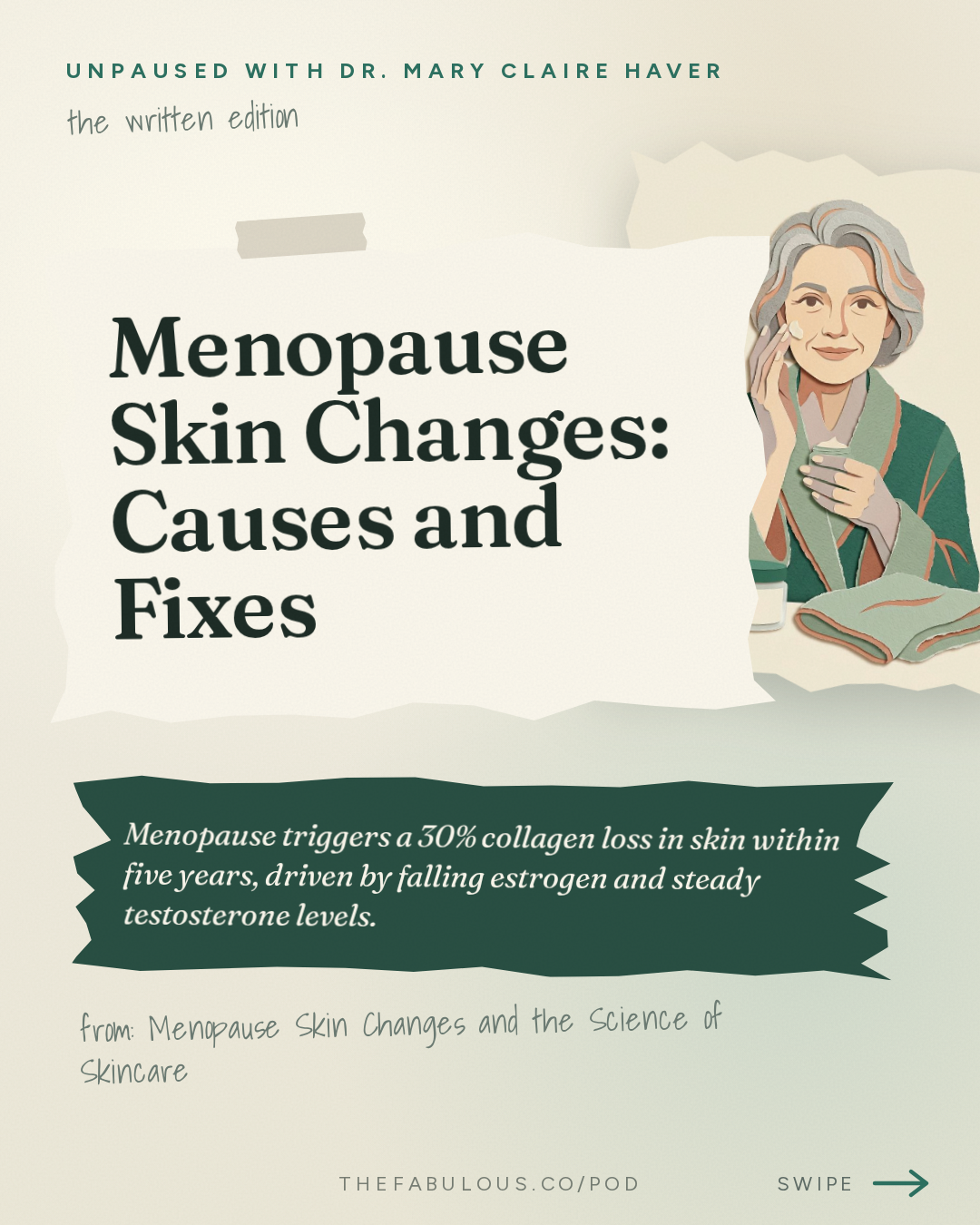
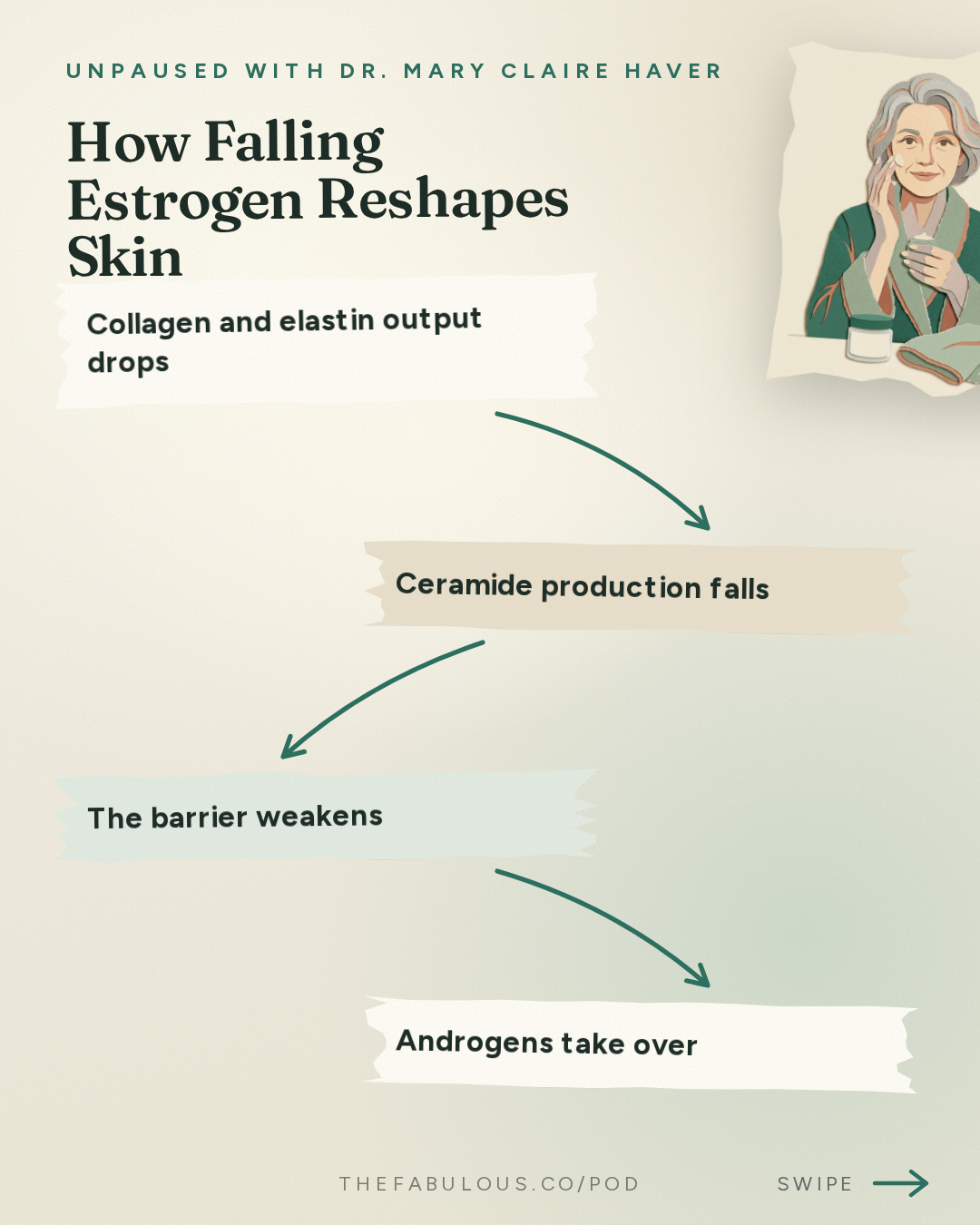
The reason estrogen matters this much is architectural. Estrogen receptors sit on the fibroblasts that manufacture collagen and elastin, on the keratinocytes that form the skin's outer layer, and on the glands and follicles underneath. Their density peaks in three places: face, scalp, and vagina (07:51). When estrogen drops, fibroblasts make less collagen, less elastin, and less hyaluronic acid, the water-loving molecule that keeps skin plump (06:12). Kelly's metaphor for what collagen actually does is the clearest moment in the conversation.
"The collagen is kind of like your inner spring mattress... When that declines, then you get an uneven surface." Dr. Erica Kelly, 12:16
A second metaphor explains the dryness so many women notice, including the itchy ears that Haver says "broke the internet" when she posted about it (13:21). The skin's outer layer works like a brick wall: dead skin cells are the bricks, and ceramides, a type of fat molecule, are the mortar. Estrogen tells skin cells to make ceramides. Less estrogen means less mortar, and a crumbling wall lets moisture escape, a process dermatologists call transepidermal water loss (14:04). Meanwhile testosterone, which does not fall nearly as fast as estrogen, keeps stimulating oil glands. The result is a strange in-between period Kelly calls relative androgen excess: oilier skin, jawline acne, thinning scalp hair, and new coarse hair on the chin, all at once (09:01). The itchy ears turn out to be a side effect of that same oil shift, a yeast that lives on everyone's skin overgrowing in response to the extra sebum and causing seborrheic dermatitis (15:41).
Not every hormonal skin story runs in the same direction. Melasma, the patchy facial pigmentation sometimes called the mask of pregnancy, is driven partly by estrogen receptors on pigment-producing cells called melanocytes, so it typically fades after menopause rather than worsening (22:07). Rosacea instead tends to track hot flashes, since the flushing and extra blood flow of a hot flash can aggravate it, and it often calms once hot flashes stop (22:55).
The Architecture Underneath
Wrinkles and dryness are the visible symptoms, but Kelly spends part of the conversation on what is happening underneath, structurally. Facial jowling is not just sagging skin. It is fat pads shrinking and bone resorbing in the maxilla and mandible, the bones of the cheeks and jaw (17:03). The face effectively gets smaller while the skin covering it does not shrink to match, which is why Kelly tells patients, "your face has gotten too small for your skin" (17:55). Around age 50, skin pH also shifts, becoming more alkaline as fatty acids decline, which is part of why long-used products suddenly start causing reactions or breakouts (18:42).
Hormonal acne gets its own explanation, because it shows up differently than teenage acne: fewer blackheads, more deep, inflamed bumps along the jawline, often alongside dry skin (19:28). Kelly's favored prescription is spironolactone, which blocks androgen and progesterone receptors in the hair follicles and oil glands, cutting sebum production at the source (20:15). It is a prescription drug, but she notes a primary care doctor can write it, not just a dermatologist (20:36).
What Actually Works
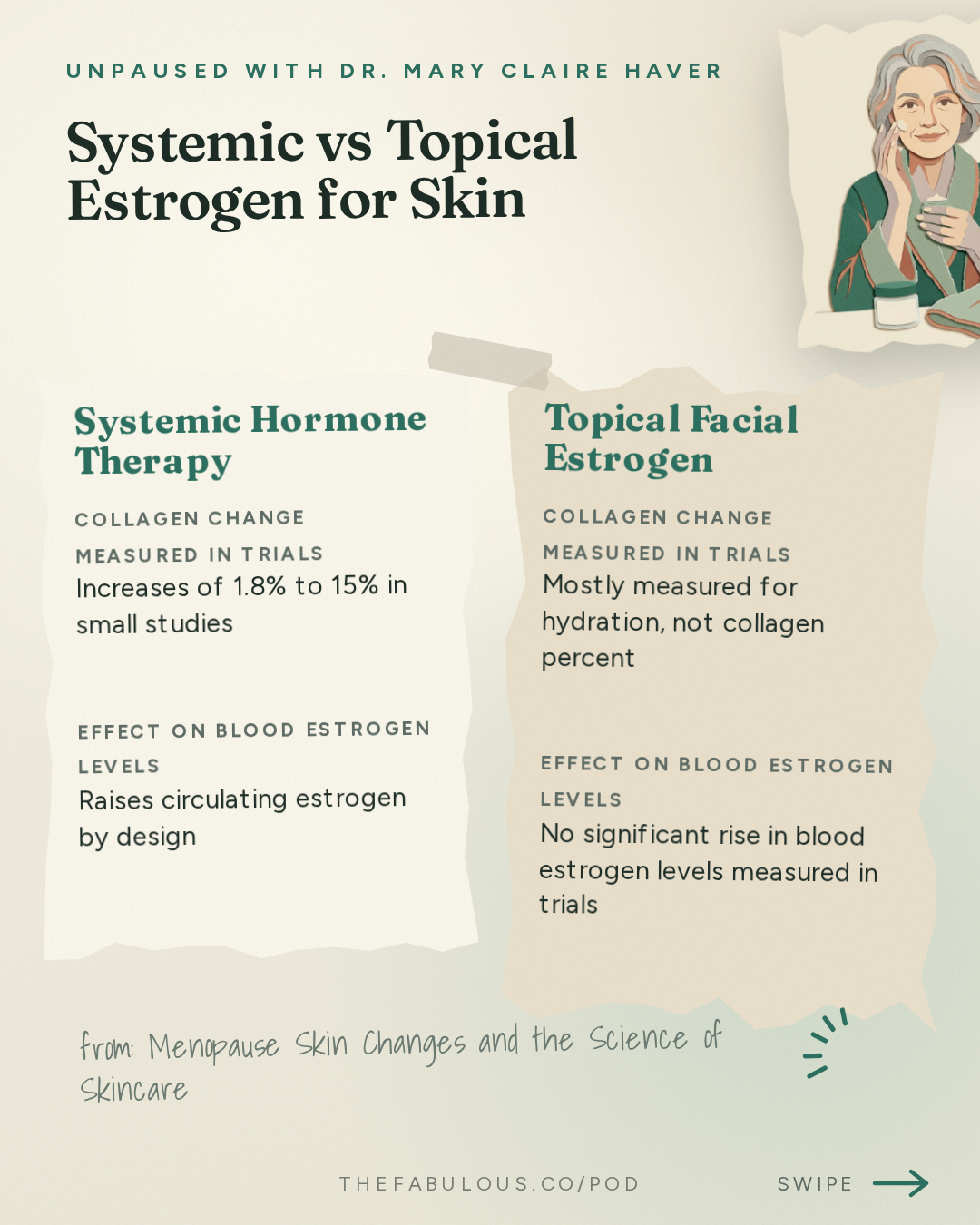
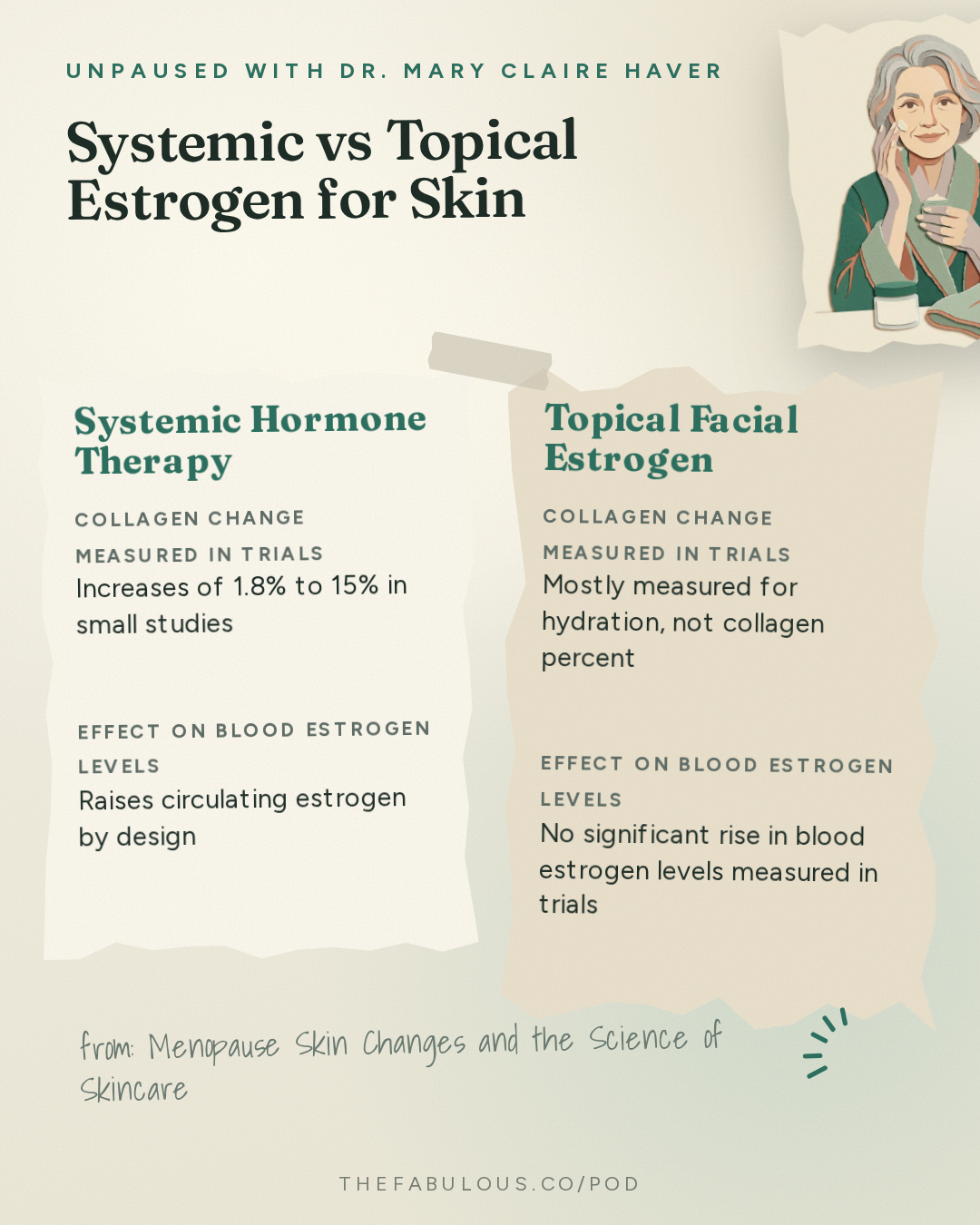
The hormone therapy question is where the science gets genuinely uncertain, and Kelly is careful to say so. Small trials of systemic hormone replacement therapy show collagen increases ranging from 1.8 percent to 15 percent, along with gains in elastin and hydration (24:52). But the largest, longest study, the KEEPS trial, a four-year randomized controlled trial of about 700 women comparing oral and transdermal estrogen against placebo, found no significant benefit on a visual wrinkle scale, except that women with darker skin tones scored better across the board (24:52). Kelly's read is that the trial may have measured the wrong thing at the wrong time: every participant started less than five years after menopause, the exact window when the body loses collagen fastest, so a flat result might mean the hormone therapy was preventing decline rather than failing to help.
Topical estrogen, applied directly to the face rather than taken systemically, shows a similar pattern of scattered small studies pointing the same direction without proving much. Kelly reviewed nine trials that met her criteria, only three of them placebo-controlled, using different forms of estrogen at different strengths. In the trials that measured blood estrogen levels, none found a significant systemic increase (27:26), meaning the treatment seemed to stay local. Kelly's own practice is telling: she uses compounded estriol, a milder form of estrogen, on her face, after developing visible dilated blood vessels from using vaginal estradiol on her skin, a product formulated for mucosa and alcohol-based, not meant for facial skin (30:20).
Whatever the treatment, patience matters. Kelly says hydration improves first because ceramides are relatively simple molecules to manufacture, but visible thickening takes far longer.
"Collagen is a huge molecule that takes like six months to make. So that's like six months or later until you may notice an improvement." Dr. Erica Kelly, 32:17
Against that backdrop of modest, slow-moving hormone effects, Kelly is blunt about which over-the-counter ingredients actually have data behind them.
"What has the most science behind it, is sunscreen and a retinoid. By far. I mean, they're light years ahead of everything else." Dr. Erica Kelly, 33:25
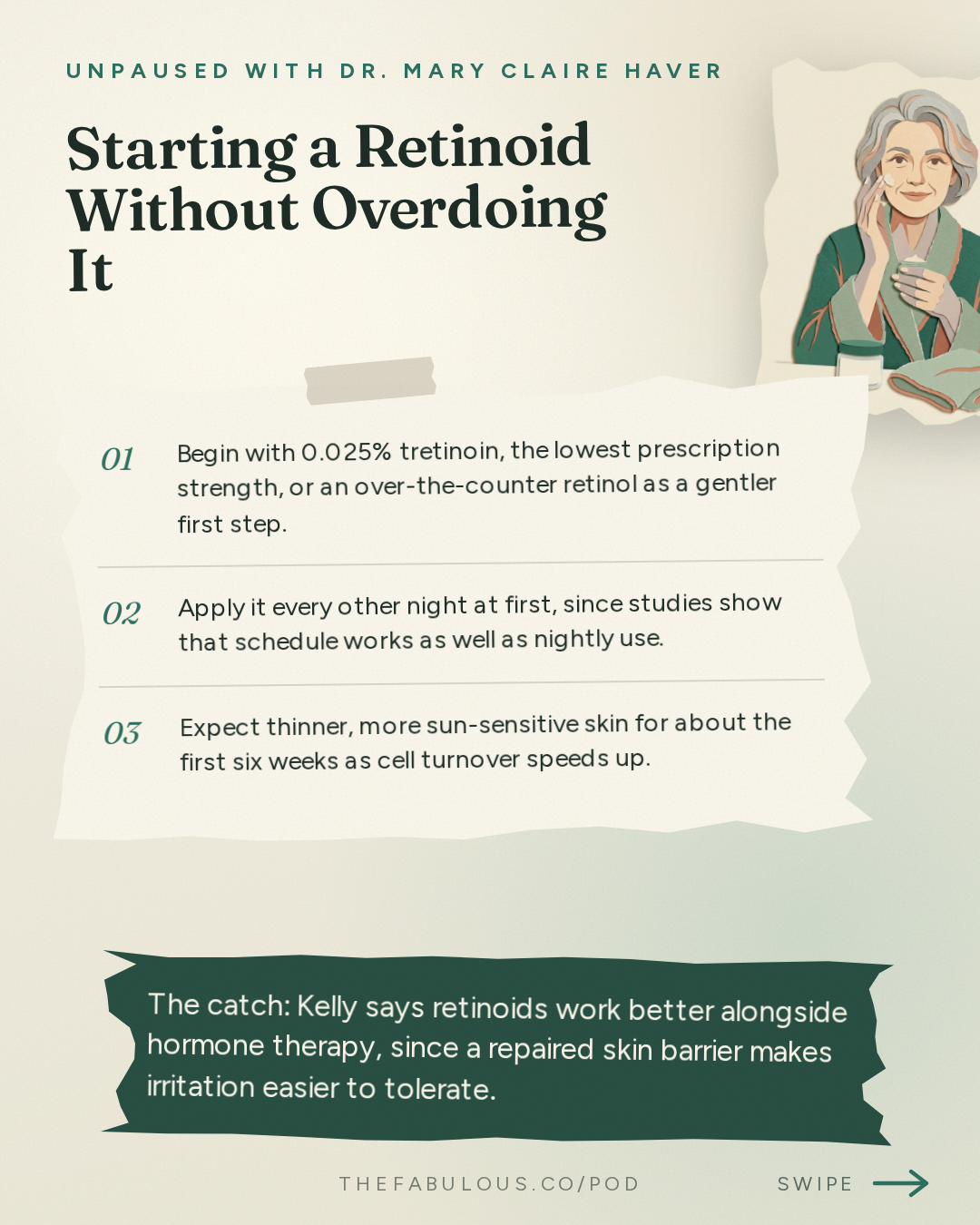
Retinoids, a class of vitamin A derivatives that includes prescription tretinoin, stimulate collagen production, speed up skin cell turnover, and have even been shown to reverse some ultraviolet-caused DNA damage in skin cells (34:10). Kelly starts most patients at the lowest tretinoin strength, 0.025 percent, and raises the dose only if skin tolerates it (35:01). Vitamin C is a useful second-tier ingredient but a fussy one: it is unstable and loses its effect if exposed to light, heat, or oxygen, which is why serums come in small dark bottles and why the chemist Sheldon Pinnell figured out at Duke University in the 1980s that pairing it with vitamin E or ferulic acid keeps it active longer (42:21). Peptides, short chains of amino acids like the ingredient Matrixyl, mimic fragments of procollagen and show modest evidence of stimulating new collagen, though Kelly is candid that much of the peptide marketing outruns the research (44:29).
One piece of advice needs no hedging. Kelly tells patients to stop using gritty physical scrubs, the kind with sand-like exfoliating beads, because they tear at an already thinning barrier.
"I don't ever recommend exfoliating physically... physically, not those rough, gritty, you know, sandy [scrubs]." Dr. Erica Kelly, 43:30
What emerges across the conversation is less a shopping list than a way of thinking about skin as an organ with its own hormone receptors, its own clock, and its own slow chemistry. The 30 percent collagen loss is not a cosmetic inconvenience. It is a measurable biological event tied to a specific five-year window, and the treatments that help, sunscreen, retinoids, targeted hormone therapy, spironolactone, work by nudging that chemistry rather than overriding it. None of it happens fast. All of it is worth understanding before the mirror delivers the news first.
Ask this episode anything
Pod's AI answers from the episode itself, with the minute mark so you can hear it yourself.
Or start with one of these
Ask this episode
Pod's AI listens to the whole episode to answer, and points you to the minute it comes from.
The rest of this answer, and any question after it
Answers come from the episode itself, never from a summary of it.
ContinueKey takeaways
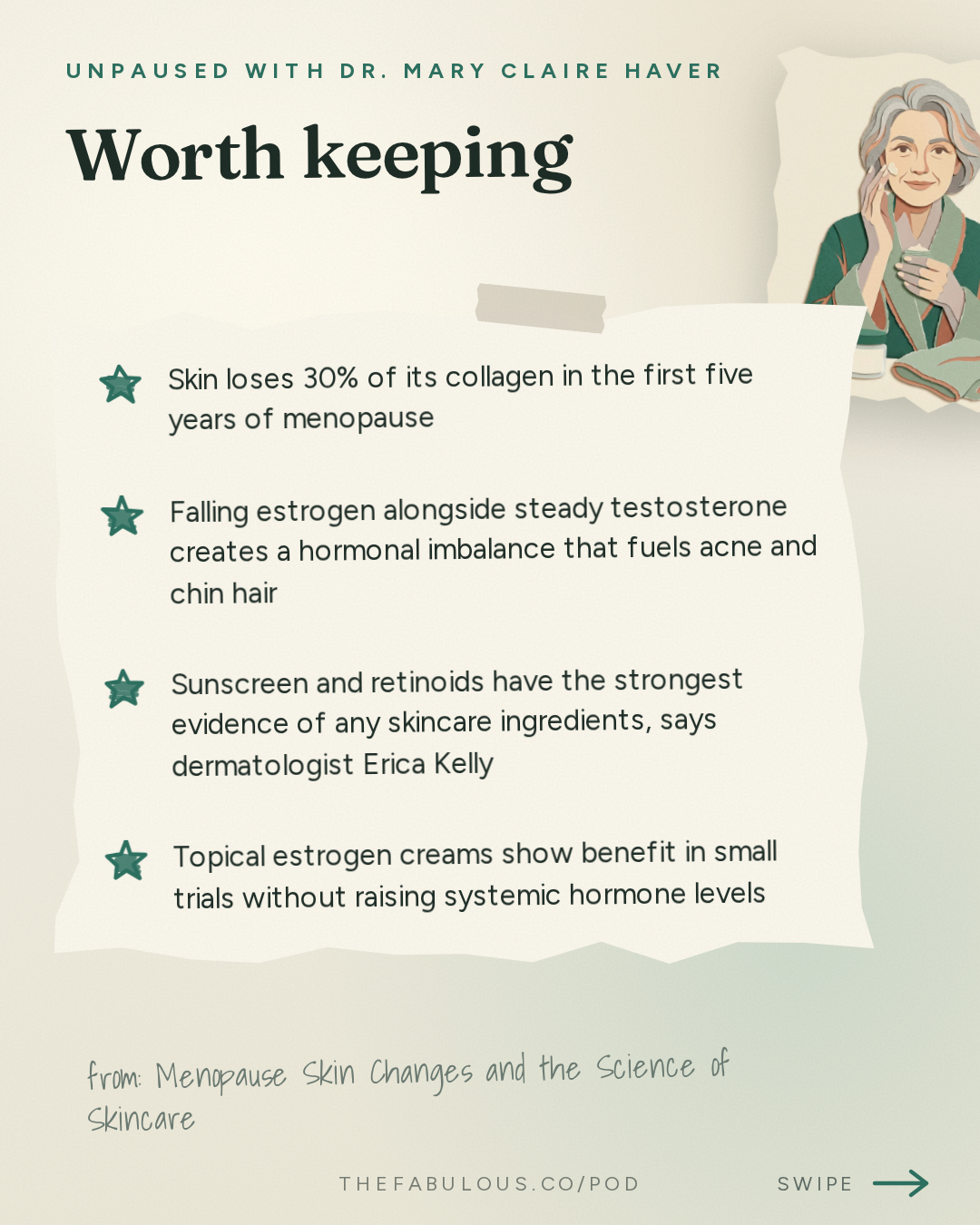
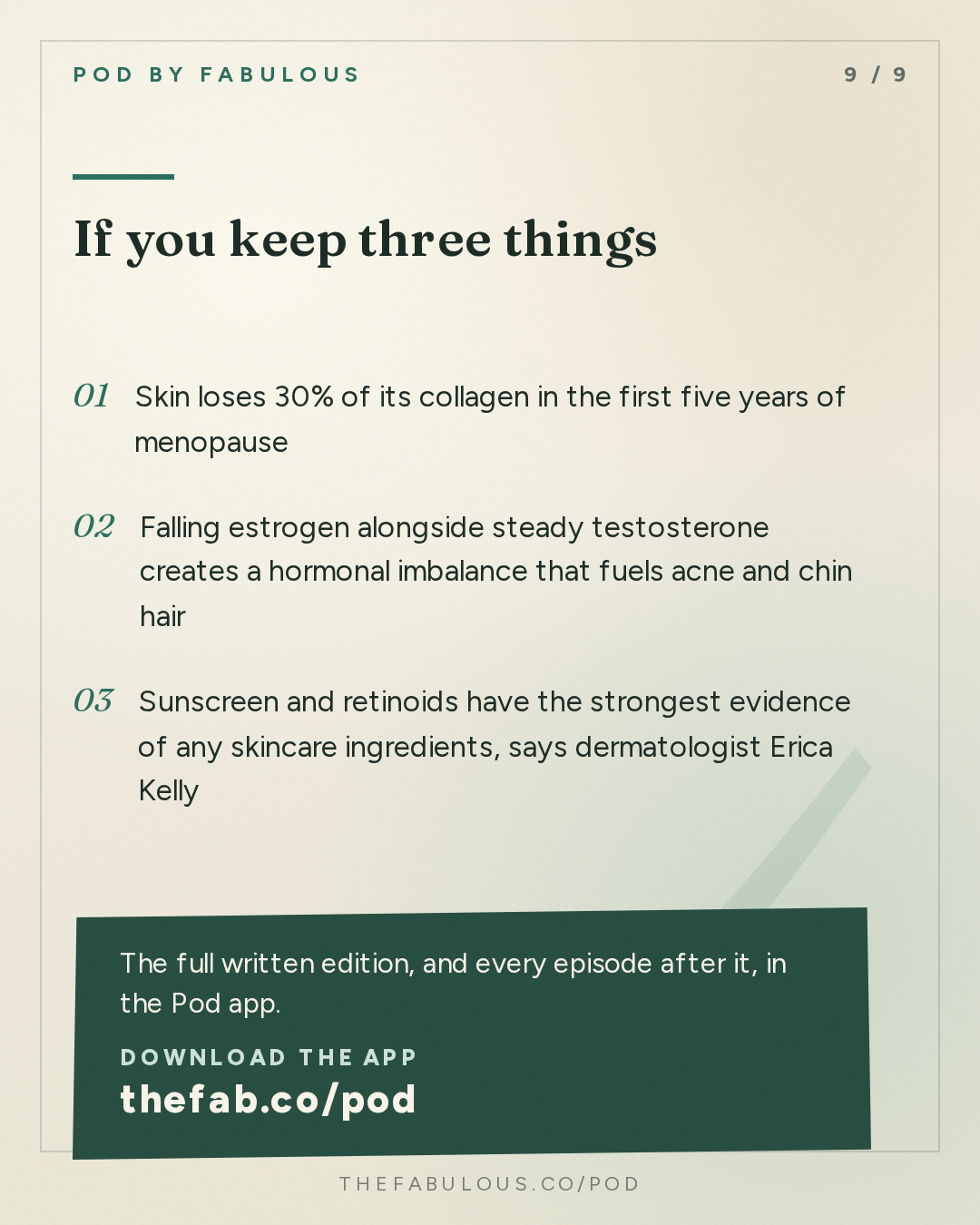
- Skin loses 30% of its collagen in the first five years of menopause
- Falling estrogen alongside steady testosterone creates a hormonal imbalance that fuels acne and chin hair
- Sunscreen and retinoids have the strongest evidence of any skincare ingredients, says dermatologist Erica Kelly
- Topical estrogen creams show benefit in small trials without raising systemic hormone levels
- Spironolactone treats jawline hormonal acne by blocking androgen and progesterone receptors, Kelly says
The episode in cards

By the numbers
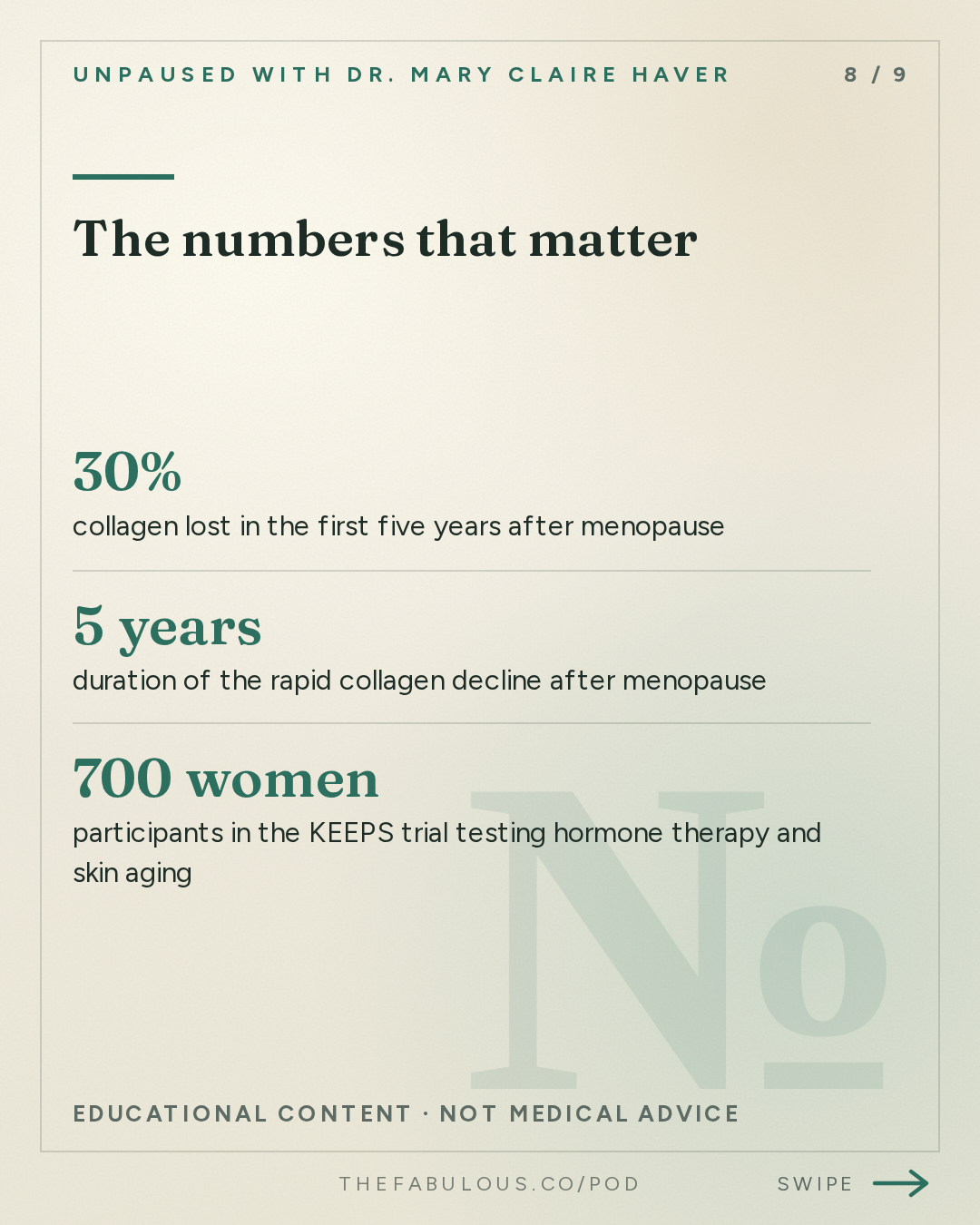
- 30% collagen lost in the first five years after menopause
- 5 years duration of the rapid collagen decline after menopause
- 700 women participants in the KEEPS trial testing hormone therapy and skin aging
In their words
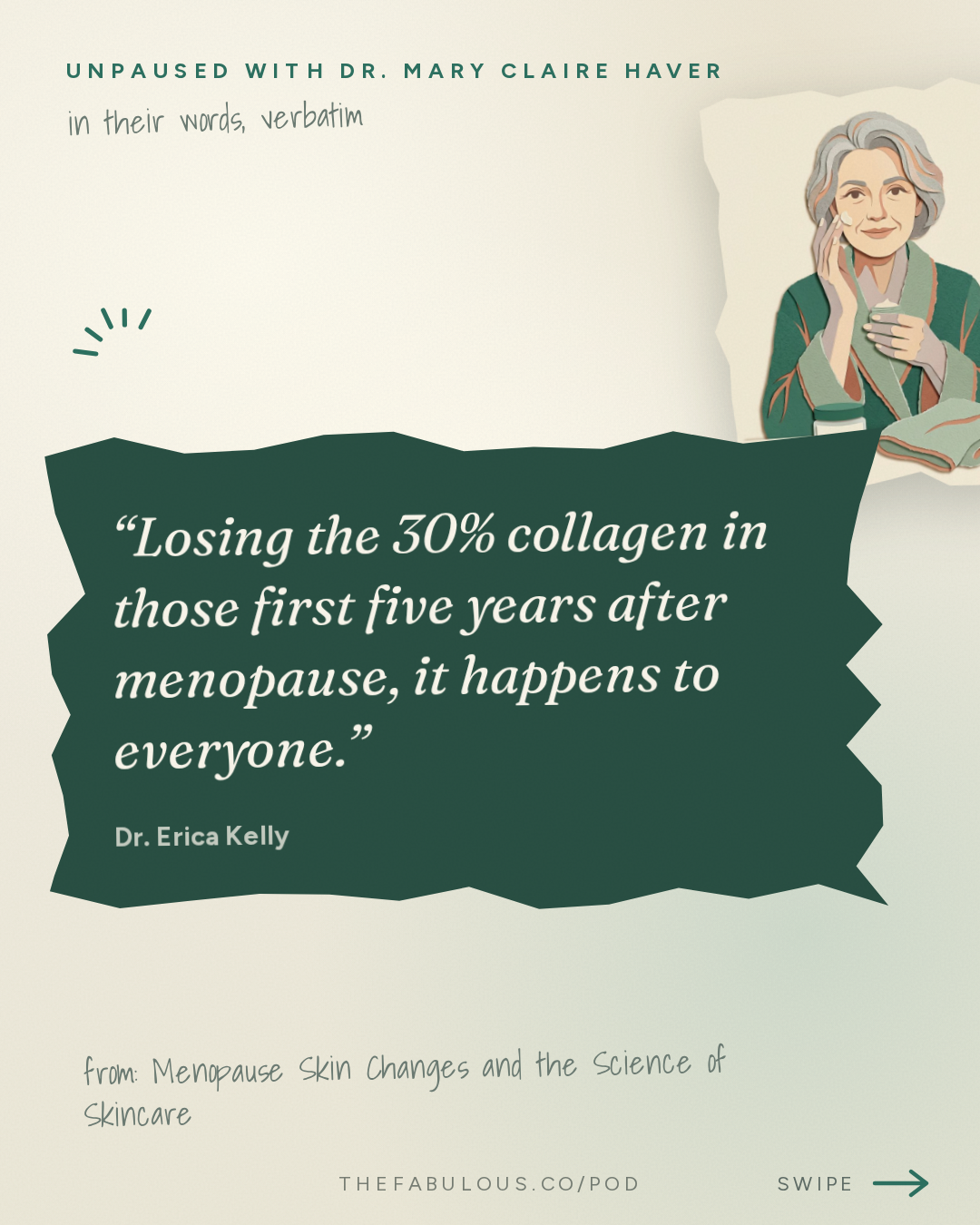
“Losing the 30% collagen in those first five years after menopause, it happens to everyone.”
“"What has the most science behind it, is sunscreen and a retinoid." Mm-hmm. By far. I mean, they're light years ahead of everything”
“Collagen is a huge molecule that takes like six months to make. So that's like six months or later until you may notice an improvement.”
Protocols
-
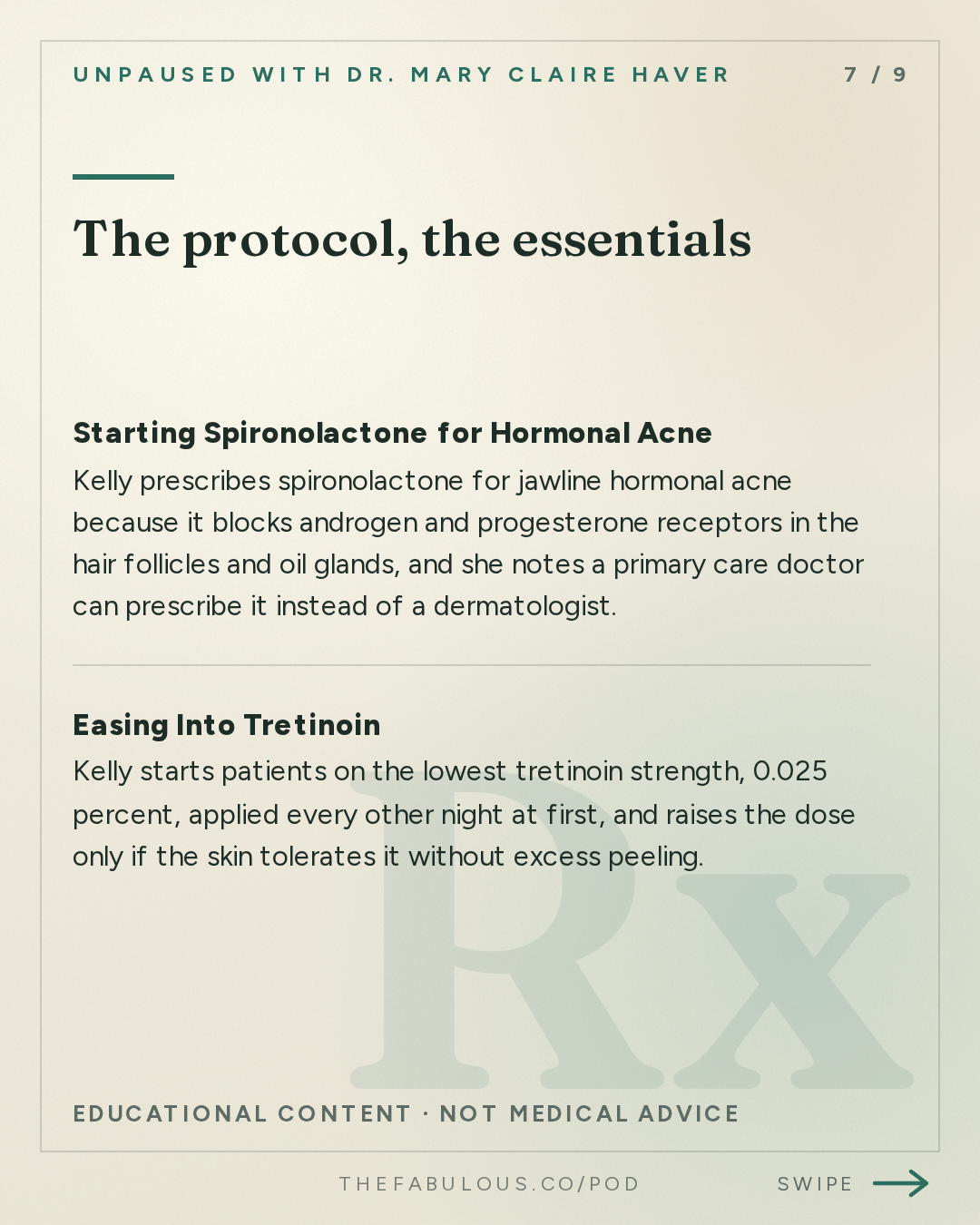
Starting Spironolactone for Hormonal Acne
Kelly prescribes spironolactone for jawline hormonal acne because it blocks androgen and progesterone receptors in the hair follicles and oil glands, and she notes a primary care doctor can prescribe it instead of a dermatologist.
ongoing prescription
-
Easing Into Tretinoin
Kelly starts patients on the lowest tretinoin strength, 0.025 percent, applied every other night at first, and raises the dose only if the skin tolerates it without excess peeling.
every other night, adjusted over weeks
-
Using Vitamin C Correctly
Kelly recommends applying vitamin C in the morning as L-ascorbic acid combined with vitamin E or ferulic acid, kept in small dark bottles away from light, heat, and oxygen, since the ingredient goes inactive once exposed.
daily, morning
-
Avoiding Physical Exfoliation
Kelly tells patients to stop using gritty physical scrubs and to rely on chemical exfoliants like glycolic or lactic acid instead, because rough scrubbing damages an already weakened skin barrier.
as needed, chemical only
Questions this episode answers
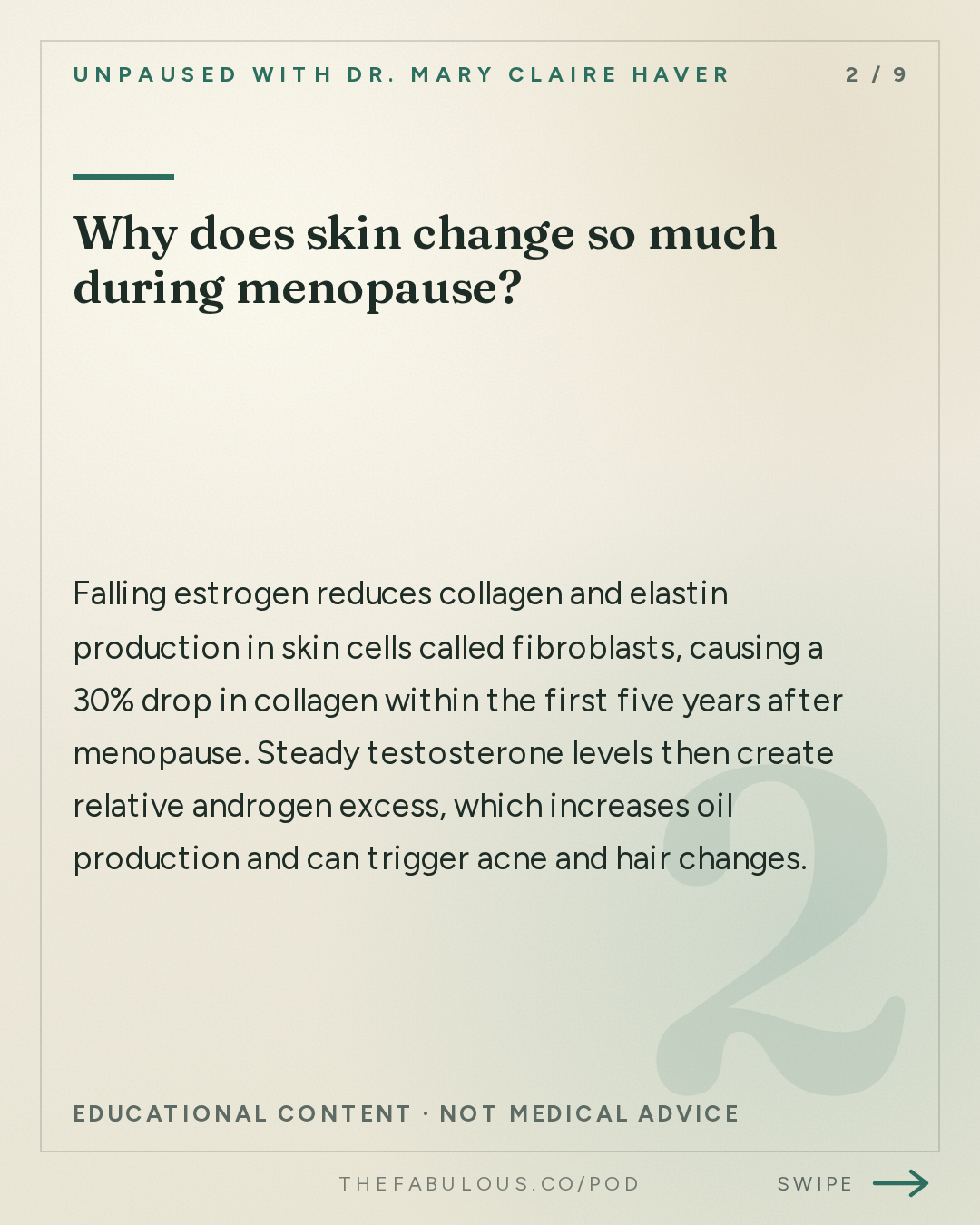
Why does skin change so much during menopause?
Falling estrogen reduces collagen and elastin production in skin cells called fibroblasts, causing a 30% drop in collagen within the first five years after menopause (00:00). Steady testosterone levels then create relative androgen excess, which increases oil production and can trigger acne and hair changes (09:01).
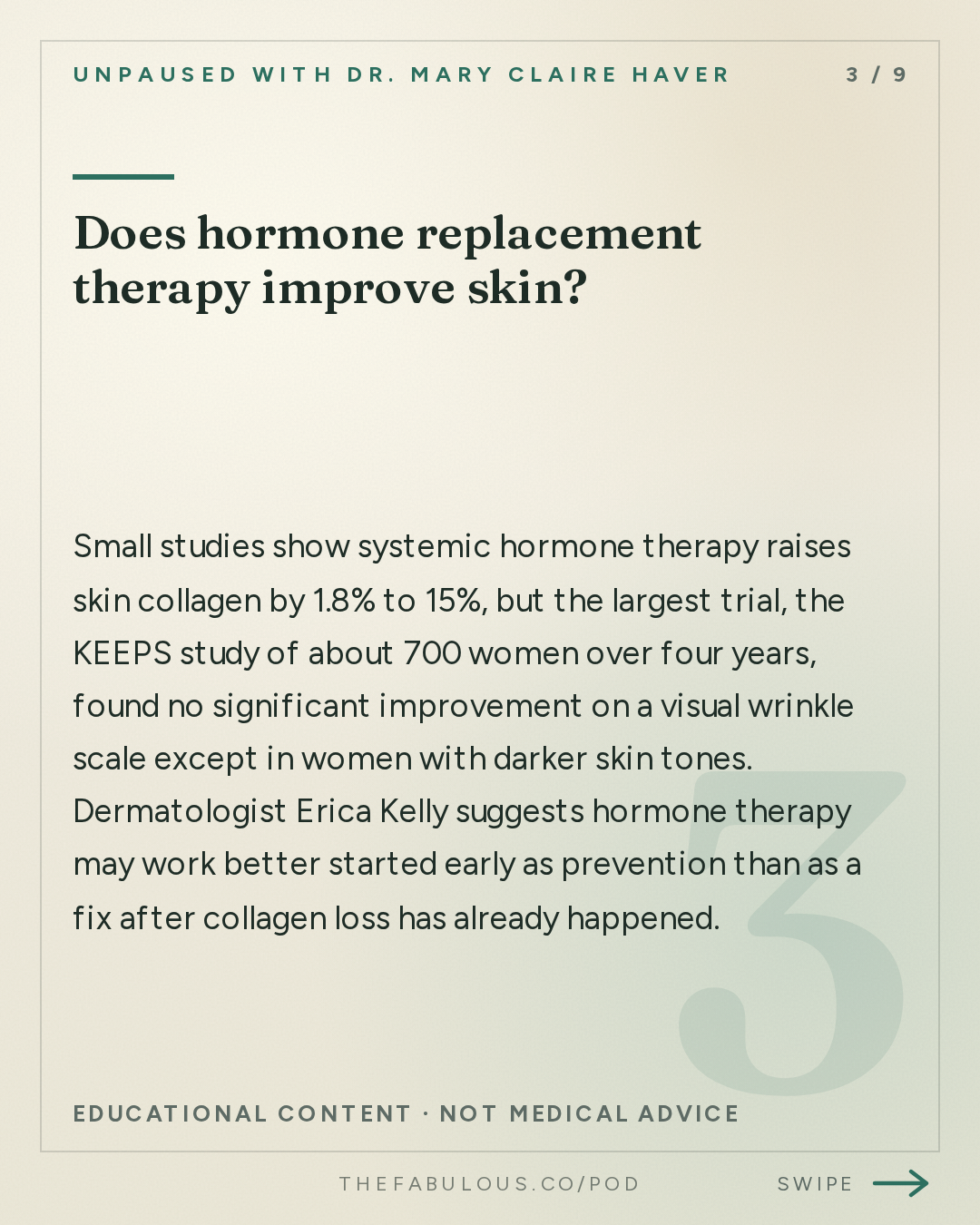
Does hormone replacement therapy improve skin?
Small studies show systemic hormone therapy raises skin collagen by 1.8% to 15%, but the largest trial, the KEEPS study of about 700 women over four years, found no significant improvement on a visual wrinkle scale except in women with darker skin tones (24:52). Dermatologist Erica Kelly suggests hormone therapy may work better started early as prevention than as a fix after collagen loss has already happened.
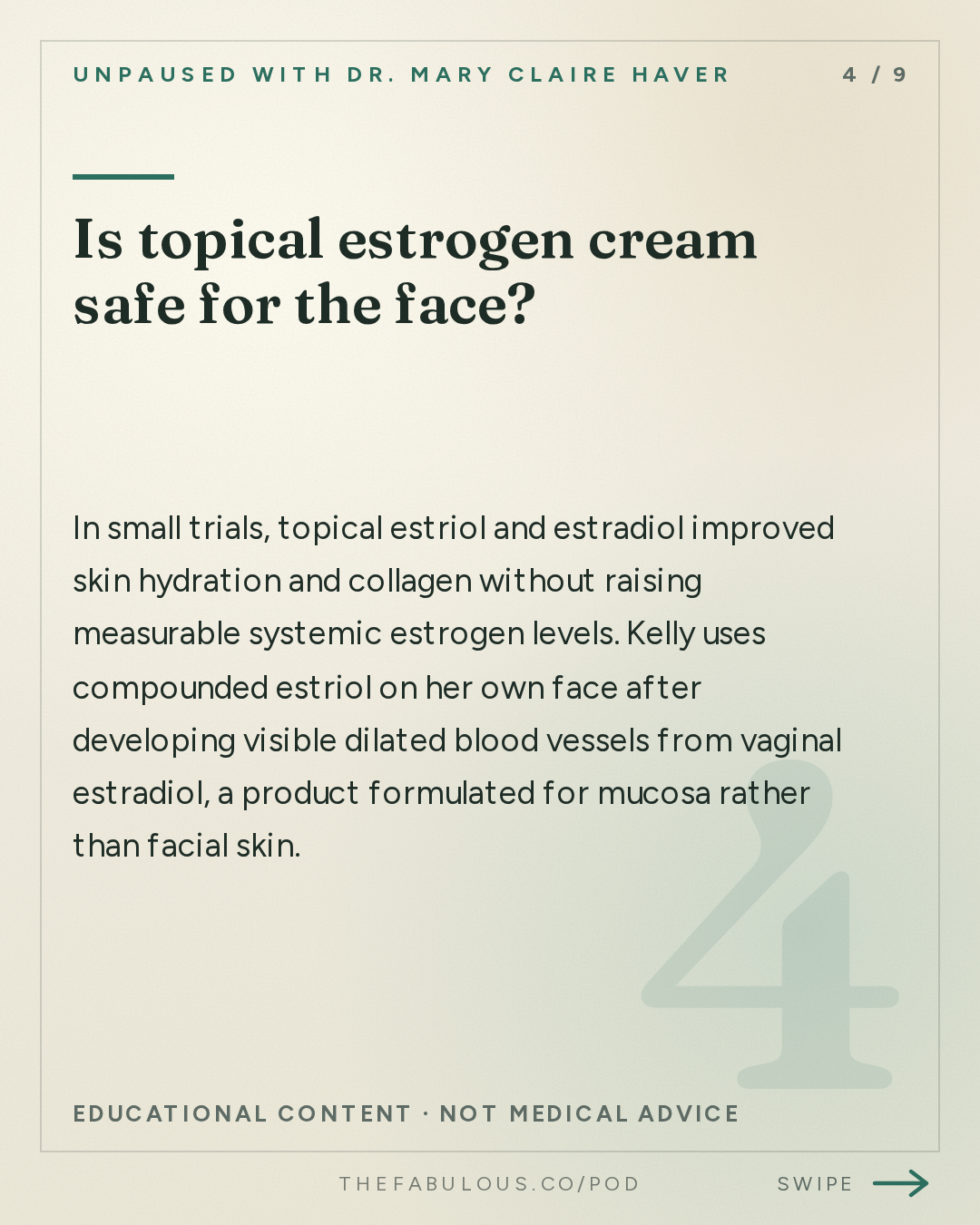
Is topical estrogen cream safe for the face?
In small trials, topical estriol and estradiol improved skin hydration and collagen without raising measurable systemic estrogen levels (27:26). Kelly uses compounded estriol on her own face after developing visible dilated blood vessels from vaginal estradiol, a product formulated for mucosa rather than facial skin (30:20).
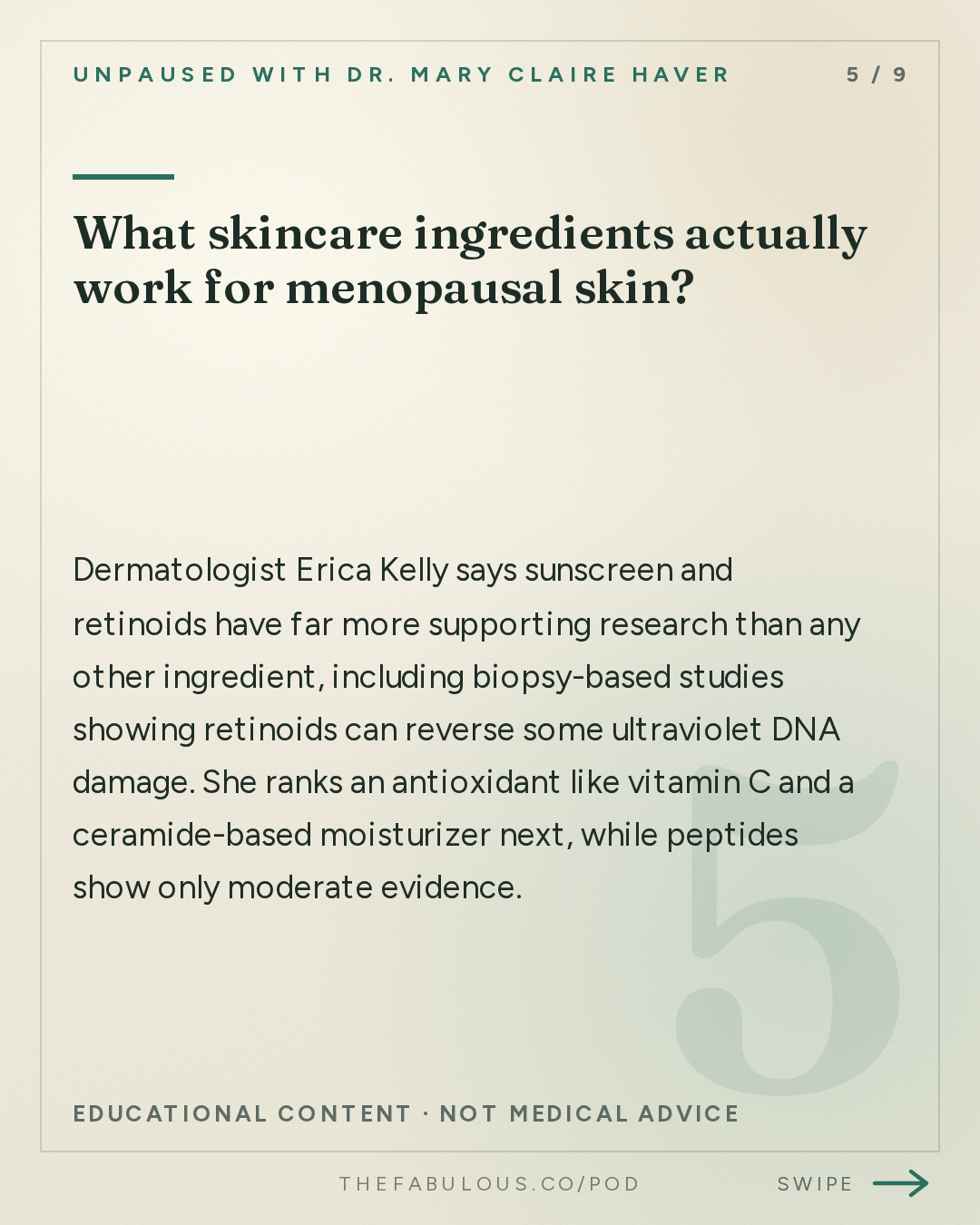
What skincare ingredients actually work for menopausal skin?
Dermatologist Erica Kelly says sunscreen and retinoids have far more supporting research than any other ingredient, including biopsy-based studies showing retinoids can reverse some ultraviolet DNA damage (34:10). She ranks an antioxidant like vitamin C and a ceramide-based moisturizer next, while peptides show only moderate evidence (44:29).
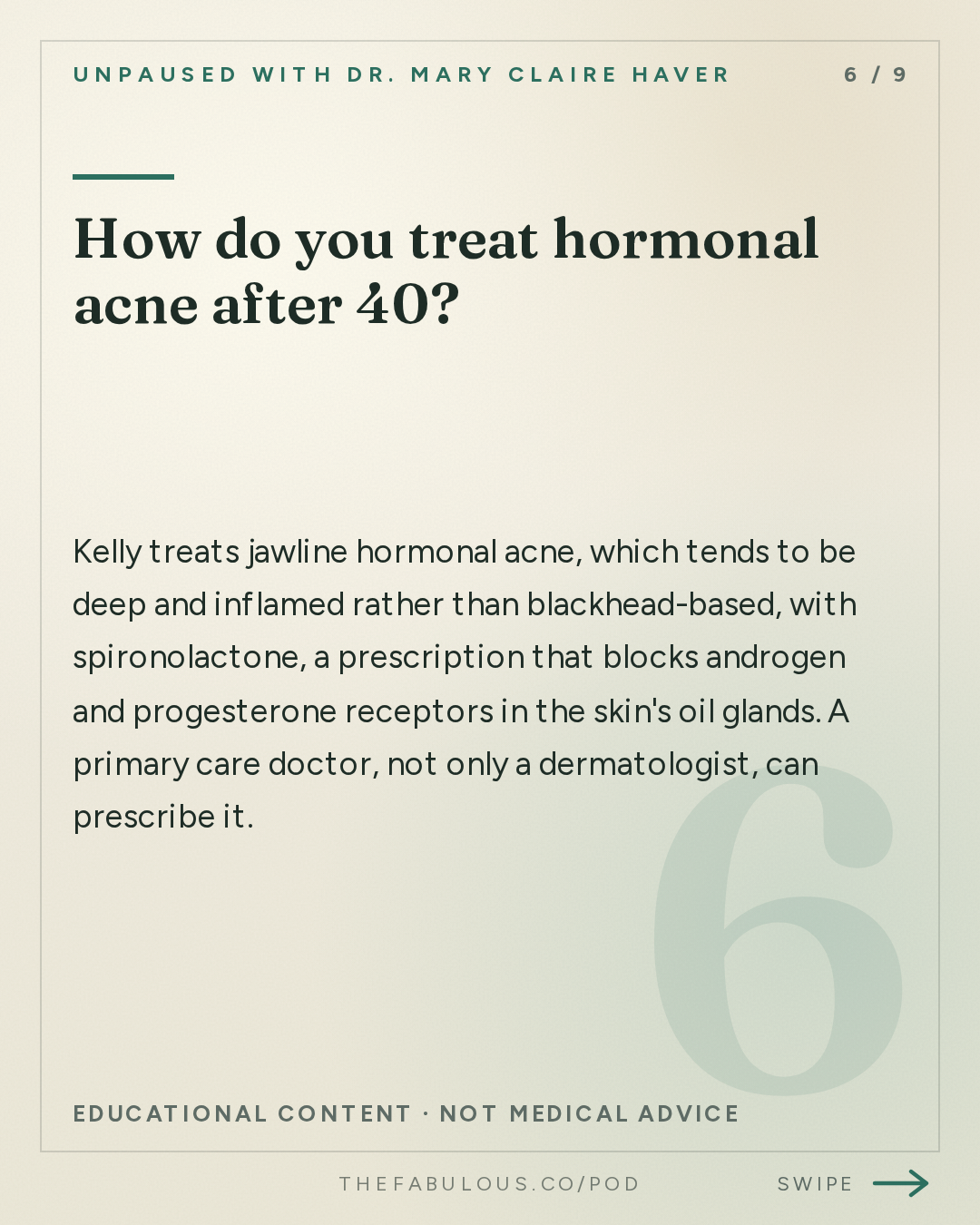
How do you treat hormonal acne after 40?
Kelly treats jawline hormonal acne, which tends to be deep and inflamed rather than blackhead-based, with spironolactone, a prescription that blocks androgen and progesterone receptors in the skin's oil glands (20:15). A primary care doctor, not only a dermatologist, can prescribe it (20:36).
Why are my ears suddenly itchy in menopause?
Kelly says itchy ears are usually seborrheic dermatitis, caused when a naturally occurring yeast overgrows in response to the extra oil production that comes with relative androgen excess after menopause (15:41).
The full read, in cards
Go deeper
- KEEPS trial — Four-year randomized controlled trial of about 700 women found no significant hormone therapy benefit on a visual skin wrinkle scale, except lower scores in darker skin tones
- Sheldon Pinnell's vitamin C research at Duke University — Established the pH, concentration, and L-ascorbic acid form needed for stable, effective topical vitamin C
Mentioned
Dr. Erica Kelly · Dr. Mary Claire Haver · University of Texas Medical Branch · KEEPS trial · Spironolactone · Tretinoin · Emepel · SkinCeuticals · CeraVe · Matrixyl · Sheldon Pinnell
More from this show and category

Gabrielle Lyon: Muscle Is the Longevity Organ
Dr. Gabrielle Lyon argues that skeletal muscle, not body fat, is the organ that determines how well women age. She explains that muscle drives glucose disposal, releases hormone-like myokines, and needs at least 100 grams of daily protein plus resistance training to stay healthy after midlife.

Protein Needs for Muscle in Menopause: Dr. Lyon's Guide
Dr. Gabrielle Lyon says women need 30 to 50 grams of protein in their first meal after an overnight fast to switch on muscle building. She explains why aging muscle grows resistant to protein and exercise, why resistance training beats hormone therapy for long-term independence, and why suppressing mTOR is the wrong longevity strategy.

Strength Training for Hypermobility, Done Safely
Hypermobile joints move past normal range because ligaments are too loose, so strength training, not stretching, is the primary fix. Dr. Stephanie Estima recommends training within 80% of available range of motion, using slow eccentrics and isometric holds, plus adequate protein and vitamin C to support connective tissue repair.

Lloyd Klickstein on How New Drugs Get Made
Physician-scientist Lloyd Klickstein maps the full arc of drug development, from spotting an unmet need to FDA approval, using the muscle drug bimagrumab as his case study. Paired with semaglutide, it cut body fat by 45.7% over 72 weeks (125:28), rivaling bariatric surgery, while exposing the economics of patents, manufacturing, and phase one risk.
