
Blueberries for Brain and Vascular Health
#115 The Science of Blueberries for Brain and Vascular Health
The brief
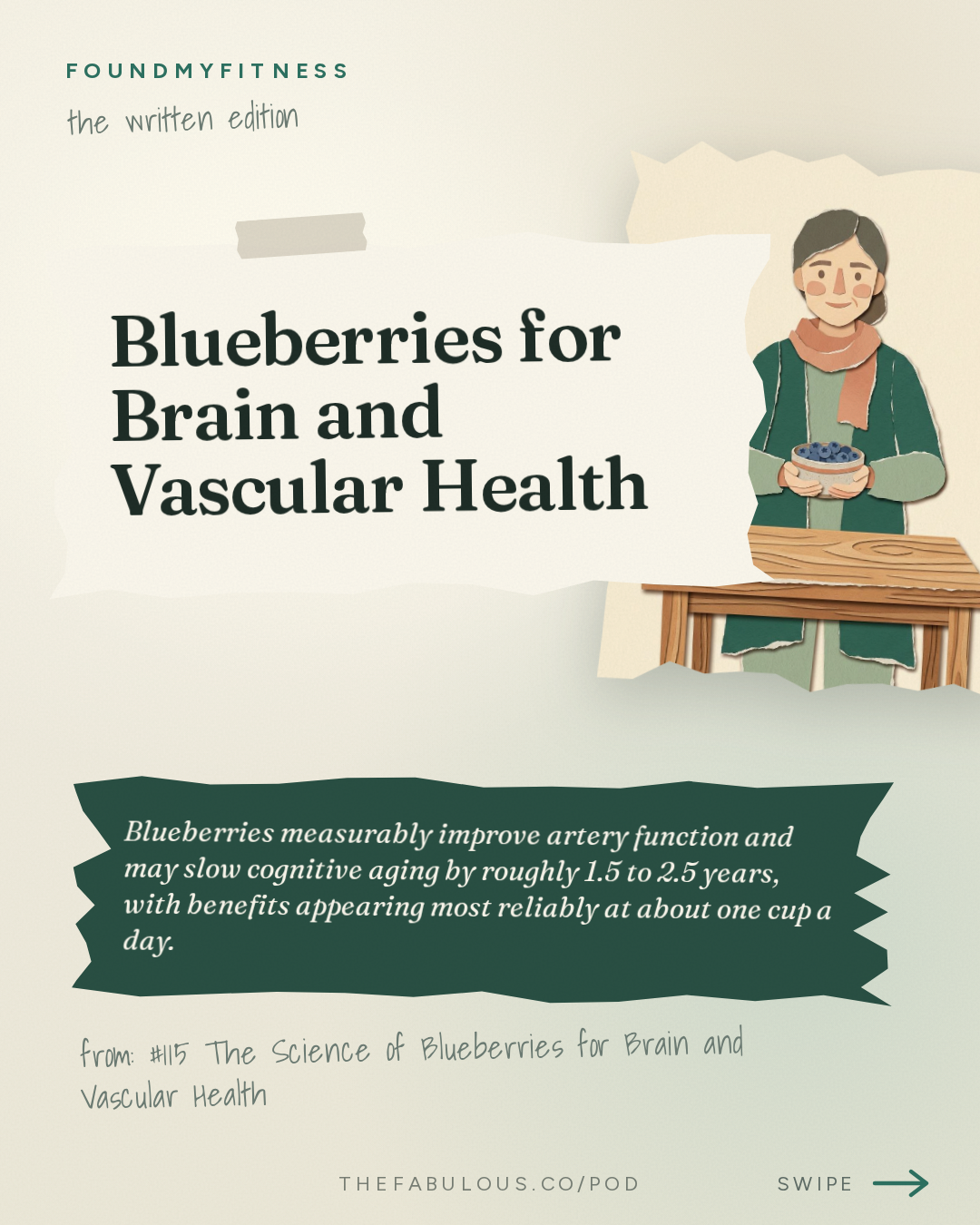
Blueberries measurably improve artery function and may slow cognitive aging by roughly 1.5 to 2.5 years, with benefits appearing most reliably at about one cup a day. Effects look strongest for vascular health, more mixed for blood sugar, and vulnerable to a surprising kitchen variable: blending with ripe banana.
A blueberry does not look like a signaling molecule. It looks like a snack. But the most interesting claim in this episode of FoundMyFitness is that the old story about berries, the one where "antioxidants" mop up damage like a sponge, is mostly the wrong picture. Host Dr. Rhonda Patrick argues that blueberry polyphenols, the plant compounds responsible for that deep blue-purple color, do something more specific once they reach the gut. They get broken down and reassembled into new molecules that behave like chemical messengers, the same category of signal as lactate after a hard run or ketones during a fast.
"The resulting metabolites of those polyphenols actually behave less like antioxidant sponges, and they act more like signaling molecules," Patrick says (04:32). That reframing matters because it changes what a blueberry is supposed to do in the body. It is not a free-radical cleanup crew. It is closer to a dispatcher, nudging nitric oxide production, gene expression, and inflammation in specific directions.
The clearest evidence for this sits in the arteries. Patrick walks through a measurement called flow-mediated dilation, or FMD: a blood pressure cuff temporarily blocks flow in the arm, then releases it, and researchers track how much the artery widens in response to the rush of blood. A healthy, flexible artery expands well. A stiff one does not. Across two meta-analyses, roughly a cup of blueberries a day was associated with a 1 to 1.5 percentage point improvement in that widening response (22:38), and separately, each one percentage point increase in FMD tracks with a 12 percent lower risk of future heart attacks and strokes (23:07). Patrick is careful about the stakes here: "Heart disease does remain the leading cause of death in the United States. And cardiovascular disease does not generally begin with a heart attack. It develops over years, over decades" (19:37).
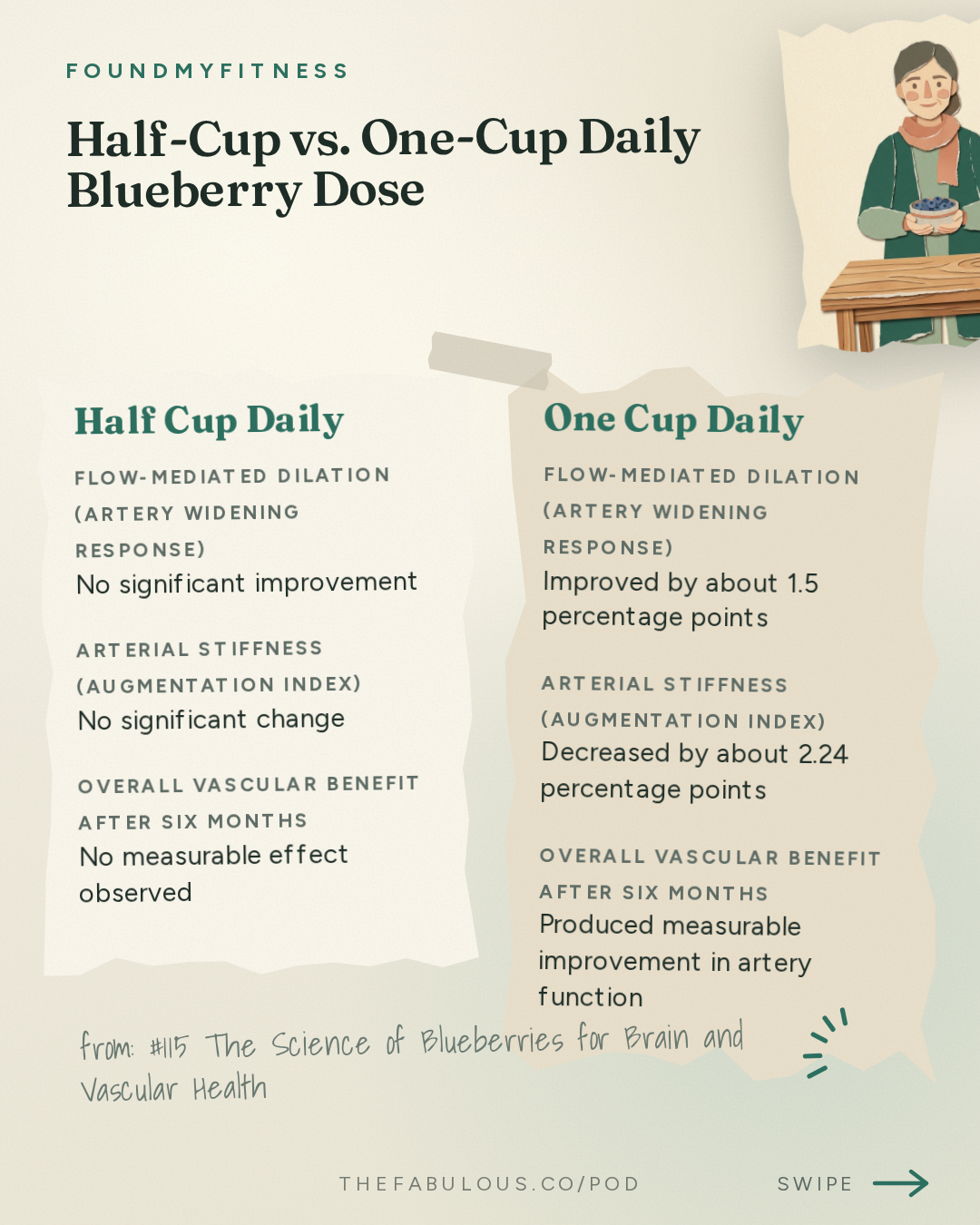
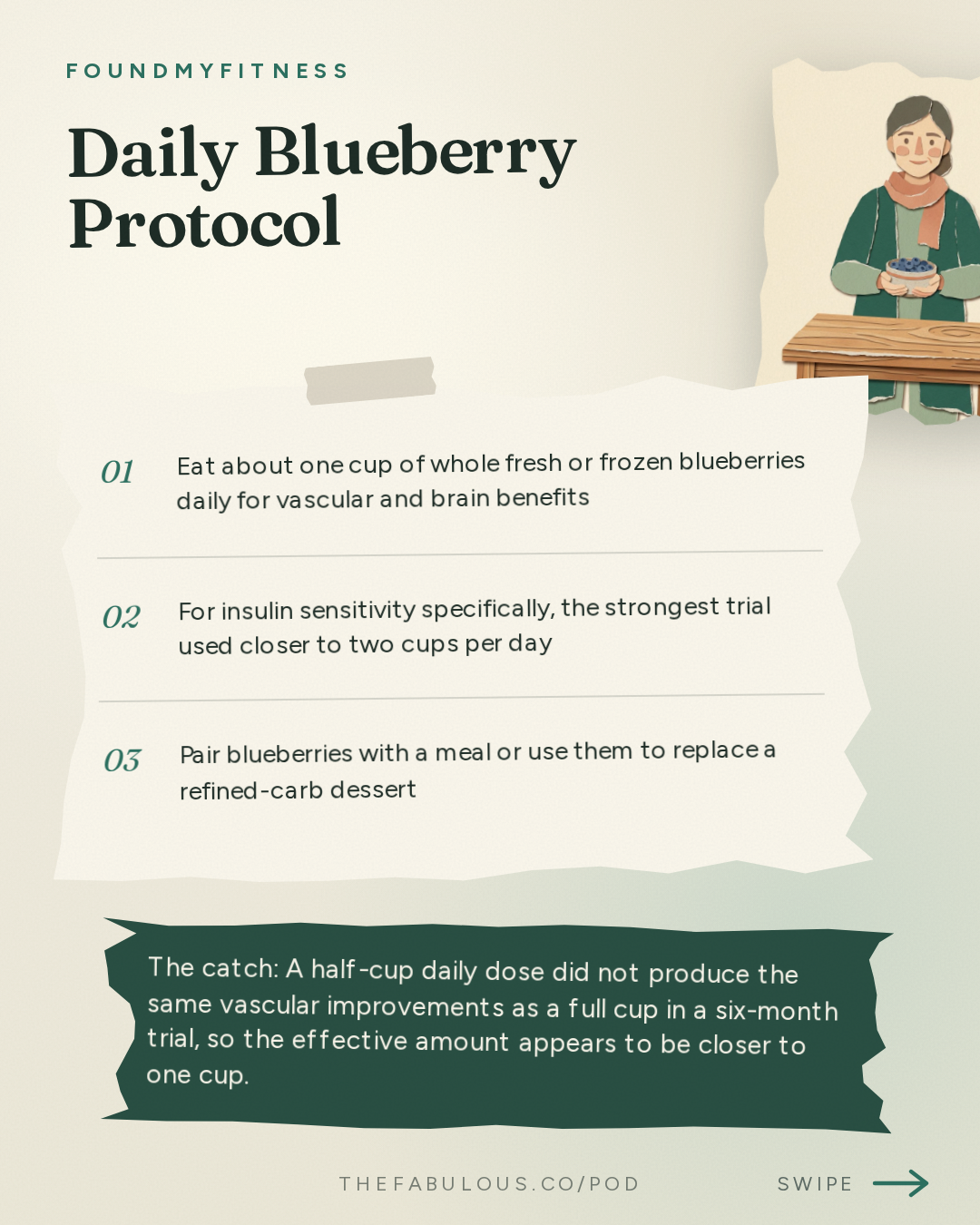
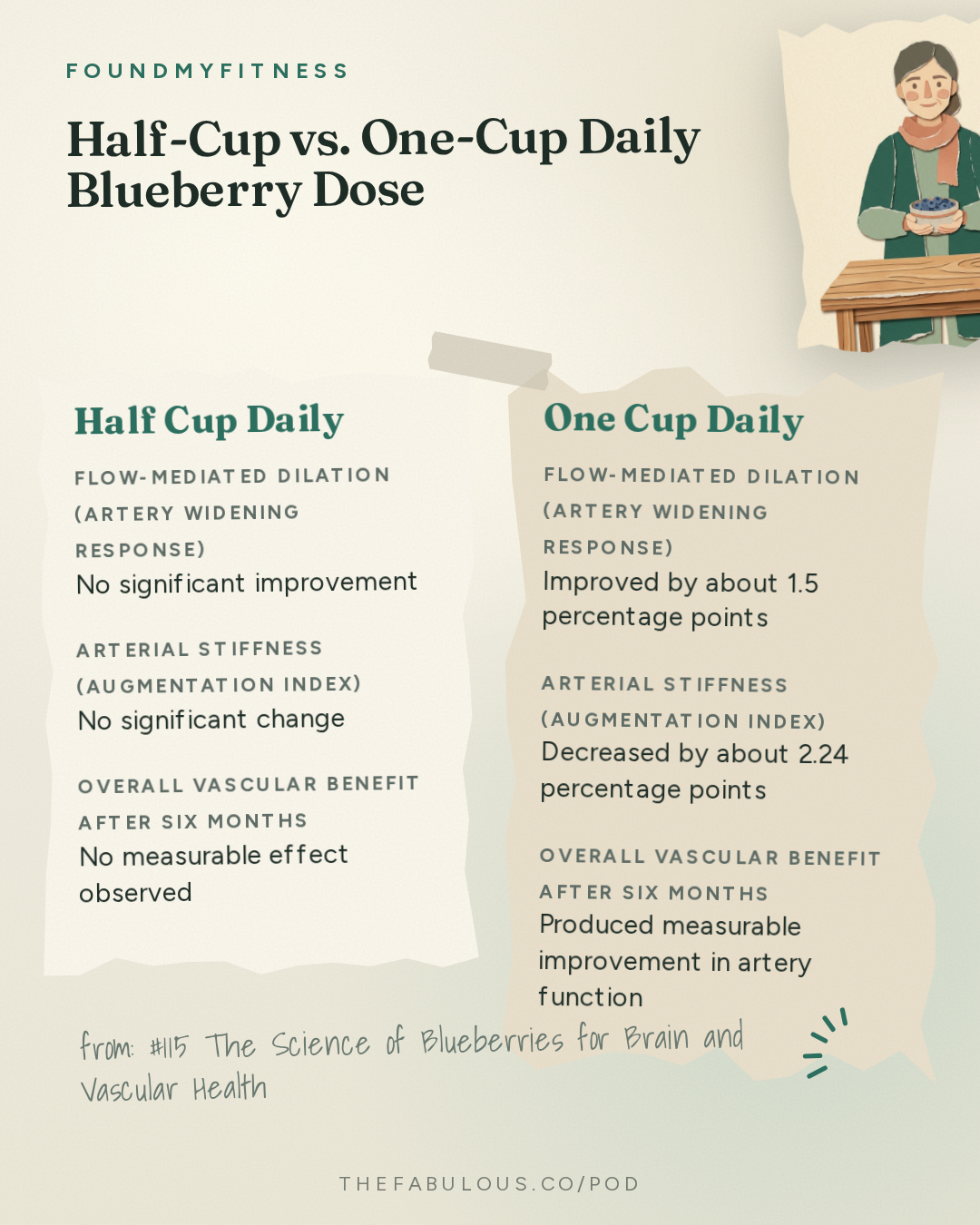
One trial she highlights makes the dose question concrete. In adults with metabolic syndrome, a six-month study compared a full cup of blueberries a day, a half cup, and a placebo. Only the full cup improved flow-mediated dilation and reduced arterial stiffness; the half cup did nothing measurable (25:56). That is a useful detail for anyone assuming that a few berries sprinkled on cereal count as a dose.
The brain data, while less definitive, follows a similar pattern. A 2025 meta-analysis of nine randomized trials in older adults with mild cognitive impairment found small improvements in episodic memory and language-related memory after blueberry supplementation (08:57). The long-running Nurses' Health Study found that women eating at least half a cup of blueberries weekly had a slower rate of cognitive decline, equivalent to being about 1.5 to 2.5 years younger cognitively (02:43), and a Framingham Heart Study analysis linked regular blueberry intake to roughly a one-third lower risk of dementia (12:42). A separate Danish cohort found a much smaller 16 percent reduction and no clear link to Alzheimer's specifically (14:17), a discrepancy Patrick attributes partly to weaker methodology in the Danish study, where diet was measured only once.
Metabolic effects are the murkiest part of the story, and Patrick is unusually candid about why. Blueberries rarely lower fasting glucose in a dramatic way. The more interesting finding is that they may help the body manage glucose with less insulin, particularly in people who are already insulin resistant. In one trial, adults with obesity and insulin resistance who consumed about two cups of blueberries daily for six weeks improved insulin sensitivity by 22 percent, measured with the gold-standard hyperinsulinemic euglycemic clamp (37:24). Patrick has a personal stake in this number: during her postdoctoral work in biochemist Bruce Ames' lab, she ran a similar trial using freeze-dried blueberry powder and could not reproduce the insulin sensitivity result, though her team lacked the clamp method and did see modest favorable shifts in HDL cholesterol and a methylation-related compound called SAM. It is a small, honest admission that not every promising finding replicates cleanly.
The Gut as a Chemical Factory
Much of what blueberries do may not happen in the bloodstream at all, but in the colon. Only a fraction of blueberry anthocyanins (the blue-purple pigments and the dominant polyphenol class in the fruit) gets absorbed intact. The rest travels to the gut microbiome, which strips off sugar groups and breaks apart ring structures, manufacturing new compounds that are not present in the original berry. One elegant set of human trials identified 63 distinct anthocyanin-derived metabolites circulating in blood after blueberry consumption, 14 of which were linked to improved artery widening (33:40). "The gut really is acting like this compound-producing factory," Patrick says. "It's metabolizing these anthocyanins, and it's making all these specialized metabolites" (33:15). Daily blueberry intake in that same research also shifted the expression of more than 600 genes in circulating immune cells (34:32), a scale of effect that is hard to square with the old antioxidant framing.
The gut connection also shows up clinically. In people with gastrointestinal disorders, six weeks of freeze-dried blueberry powder (about a cup's worth daily) produced clinically meaningful symptom relief in 53 percent of participants, compared to 30 percent on placebo (45:42), without changing stool consistency, suggesting the effect was not simply a laxative one.
The Banana Smoothie Problem
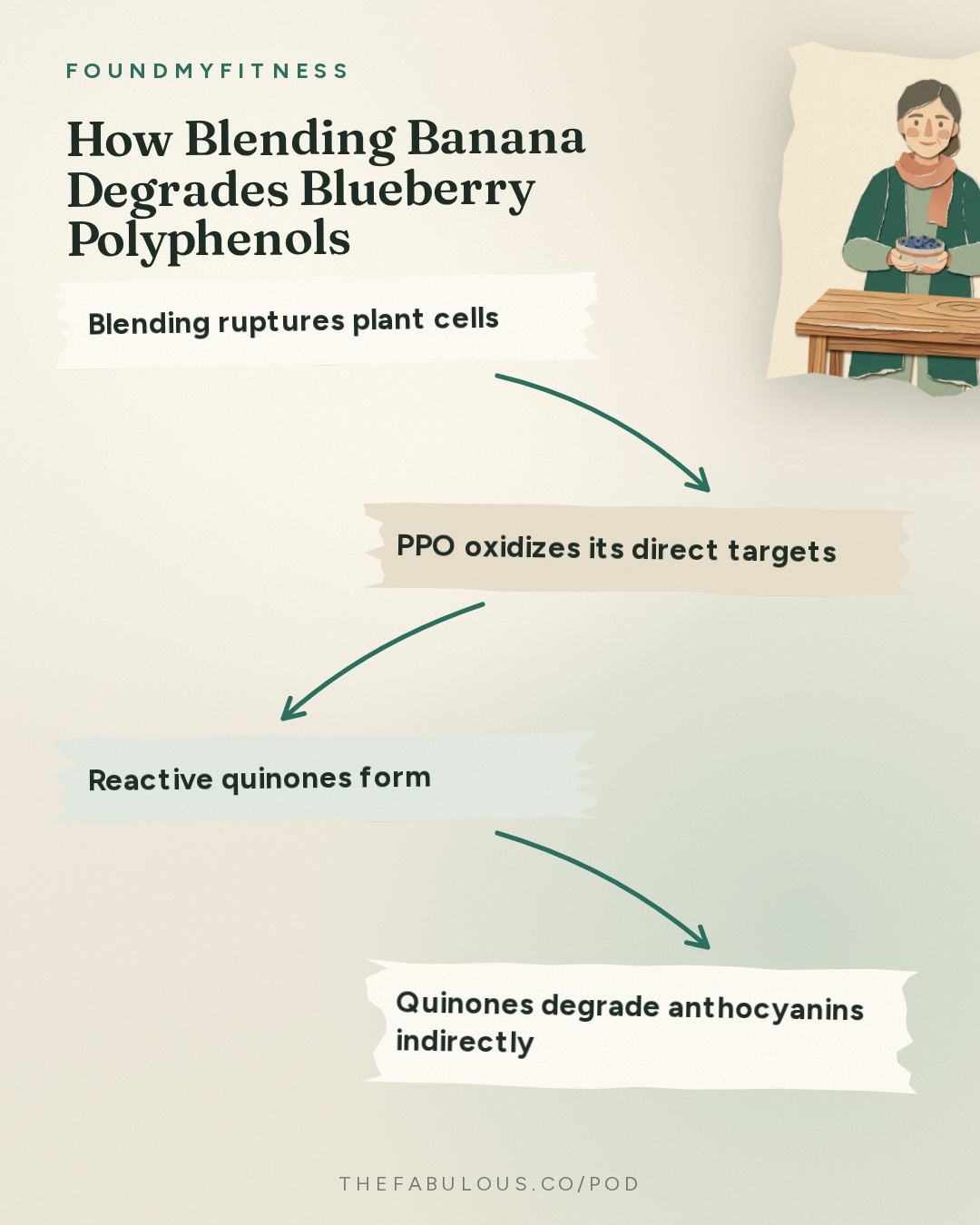
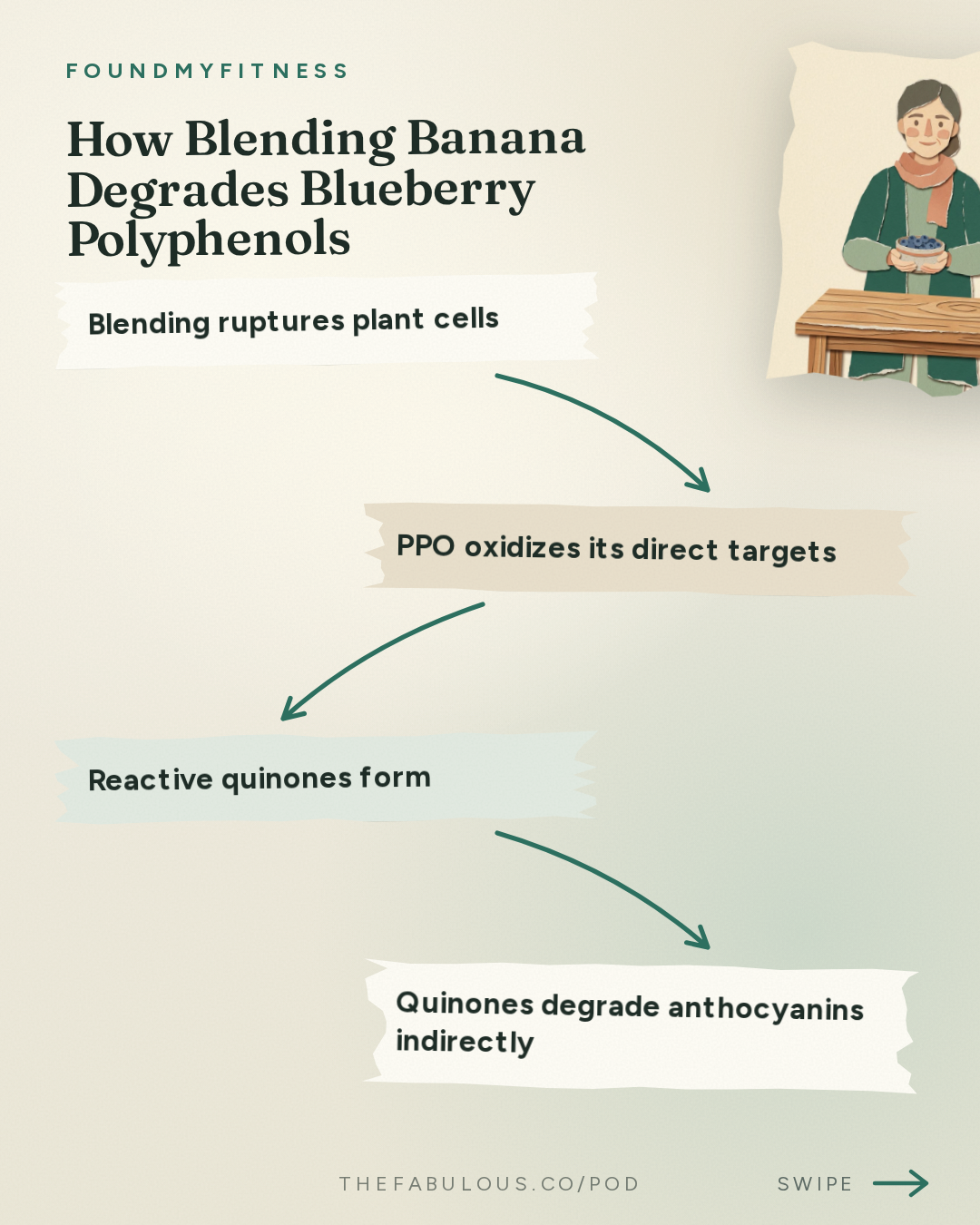
The episode's most practical digression concerns an enzyme called polyphenol oxidase, or PPO, the same chemistry responsible for a cut banana turning brown. PPO activity varies enormously by food: bananas carry roughly 3,258 kilounits per 100 grams, compared with about 24 kilounits in avocado (55:13). When a banana is blended into a blueberry smoothie, that enzyme comes into direct contact with blueberry polyphenols, including chlorogenic acid, the most abundant non-anthocyanin polyphenol in the fruit. PPO directly oxidizes chlorogenic acid into a reactive compound called a quinone, and in a blueberry model system, each oxidized chlorogenic acid molecule degraded about two anthocyanin molecules indirectly, even though anthocyanins are not a direct PPO target themselves (57:40).
The human evidence for this is thin but specific. A 2023 study blended a large ripe banana with a standardized dose of cocoa-derived epicatechin and compared it to a low-PPO mixed berry smoothie. Peak circulating epicatechin metabolites were 84 percent lower after the banana smoothie (60:26), and even sipping the two drinks separately, without blending, still produced a 37 percent reduction (61:26), suggesting the interaction continues after swallowing. No study has yet tested whether this measurably blunts blueberries' vascular or cognitive benefits, so Patrick is explicit that her choice is precautionary rather than proven: "I am not avoiding bananas. I'm choosing not to blend them with my blueberry smoothie. I'm deliberately trying to maximize for polyphenols" (67:06). She swaps in avocado for creaminess instead.
What emerges from the full episode is a picture of a very ordinary food with an unusually well-mapped mechanism. The headline number is almost disappointingly simple: about one cup of whole fresh or frozen blueberries a day, eaten consistently, is the dose behind most of the vascular, cognitive, and metabolic findings Patrick reviews (69:06). The more interesting part is not the dose. It is the growing understanding that a piece of fruit can function less like a sponge and more like a messenger, one whose signal, it turns out, is surprisingly sensitive to what else ends up in the blender.
Ask this episode anything
Pod's AI answers from the episode itself, with the minute mark so you can hear it yourself.
Or start with one of these
Ask this episode
Pod's AI listens to the whole episode to answer, and points you to the minute it comes from.
The rest of this answer, and any question after it
Answers come from the episode itself, never from a summary of it.
ContinueKey takeaways
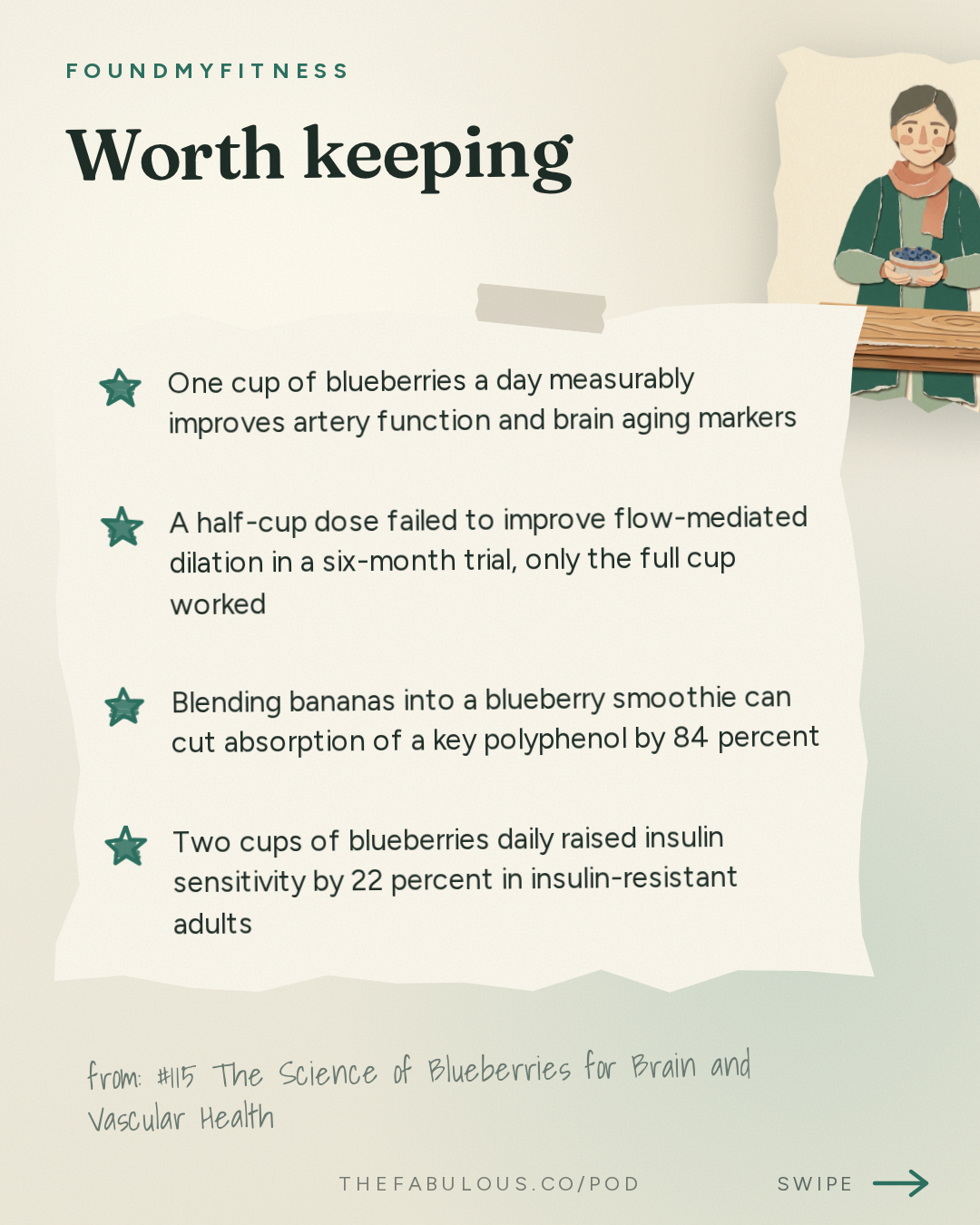
- One cup of blueberries a day measurably improves artery function and brain aging markers
- A half-cup dose failed to improve flow-mediated dilation in a six-month trial, only the full cup worked
- Blending bananas into a blueberry smoothie can cut absorption of a key polyphenol by 84 percent
- Two cups of blueberries daily raised insulin sensitivity by 22 percent in insulin-resistant adults
- Blueberry polyphenols act as signaling molecules that alter gene expression, not just as antioxidants
The episode in cards
By the numbers
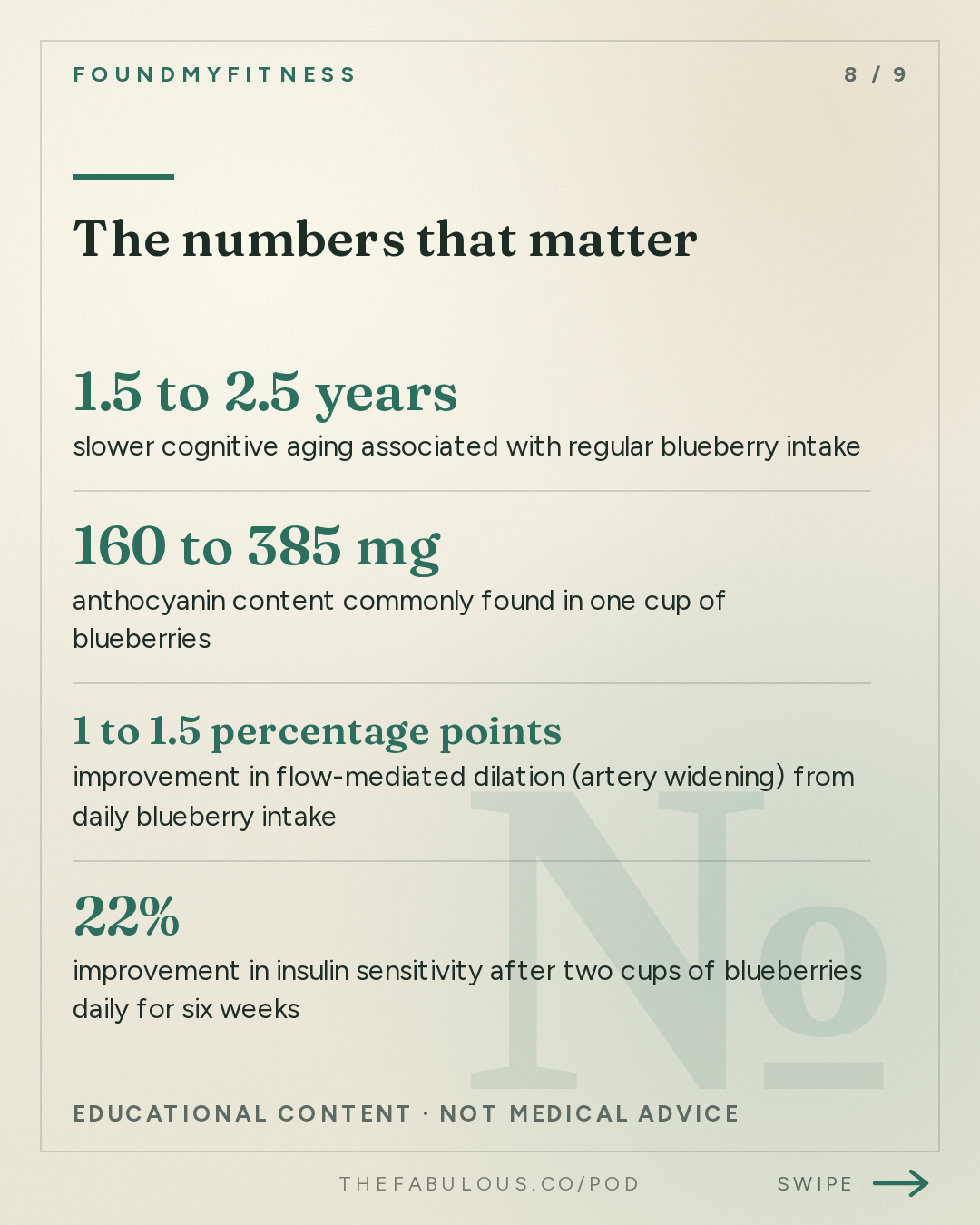
- 1.5 to 2.5 years slower cognitive aging associated with regular blueberry intake
- 160 to 385 mg anthocyanin content commonly found in one cup of blueberries
- 1 to 1.5 percentage points improvement in flow-mediated dilation (artery widening) from daily blueberry intake
- 22% percent improvement in insulin sensitivity after two cups of blueberries daily for six weeks
- 84% percent reduction in peak circulating epicatechin metabolites when blueberries are blended with banana
In their words
“The resulting metabolites of those polyphenols actually behave less like antioxidant sponges, and they act more like signaling molecules.”
“Heart disease does remain the leading cause of death in the United States. And cardiovascular disease does not generally begin with a heart attack. It develops over years, over decades.”
“I am not avoiding bananas. I'm choosing not to blend them with my blueberry smoothie. I'm deliberately trying to maximize for polyphenols.”
Protocols
-
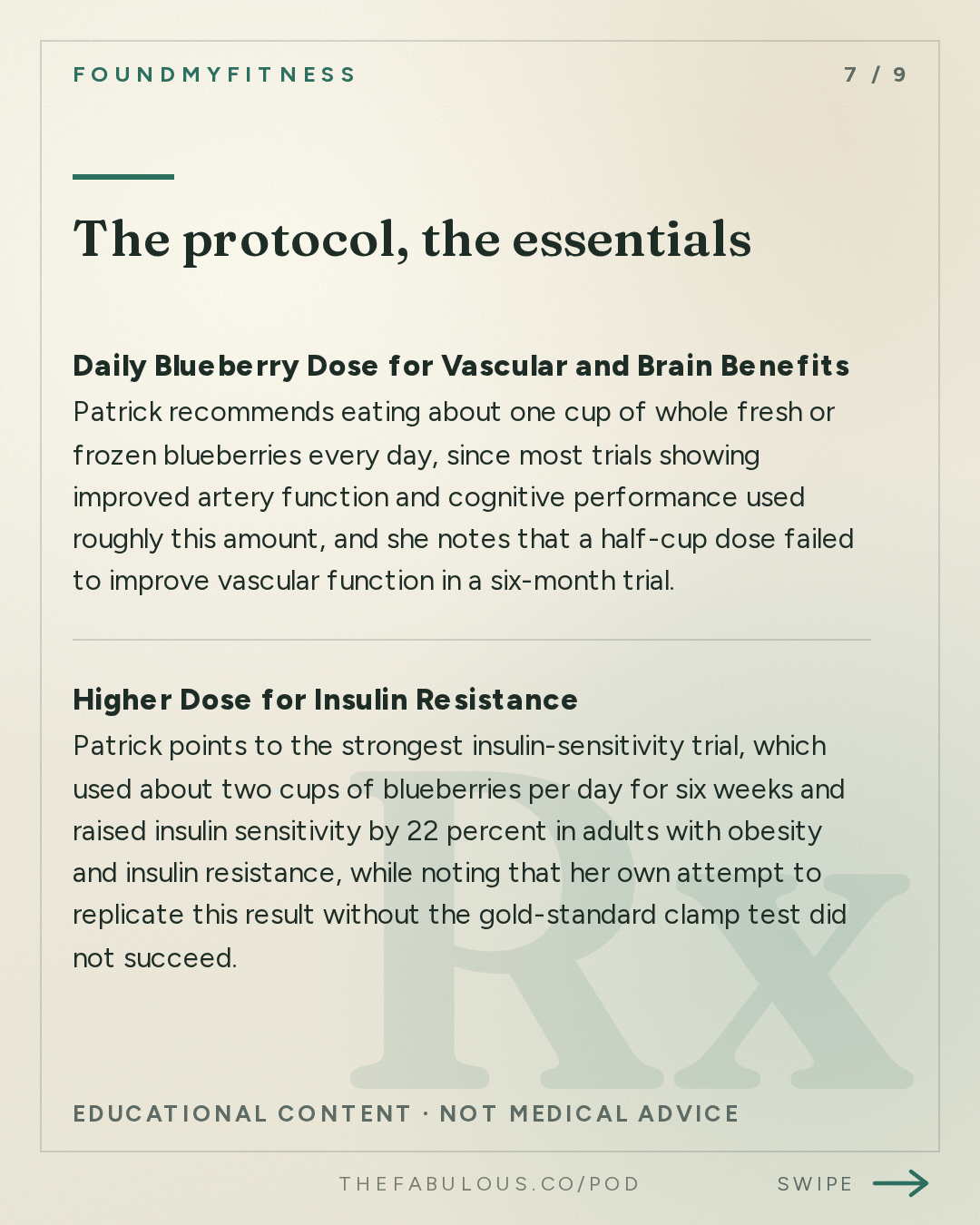
Daily Blueberry Dose for Vascular and Brain Benefits
Patrick recommends eating about one cup of whole fresh or frozen blueberries every day, since most trials showing improved artery function and cognitive performance used roughly this amount, and she notes that a half-cup dose failed to improve vascular function in a six-month trial.
daily
-
Higher Dose for Insulin Resistance
Patrick points to the strongest insulin-sensitivity trial, which used about two cups of blueberries per day for six weeks and raised insulin sensitivity by 22 percent in adults with obesity and insulin resistance, while noting that her own attempt to replicate this result without the gold-standard clamp test did not succeed.
daily for at least six weeks
-
Avoiding the Banana-Blueberry Smoothie Interaction
Patrick chooses not to blend ripe banana into her blueberry smoothie because banana's polyphenol oxidase enzyme directly oxidizes chlorogenic acid and epicatechin and indirectly degrades anthocyanins, and she swaps in avocado, which has much lower enzyme activity, to keep the texture without the interaction.
each time she makes a blueberry smoothie
Questions this episode answers
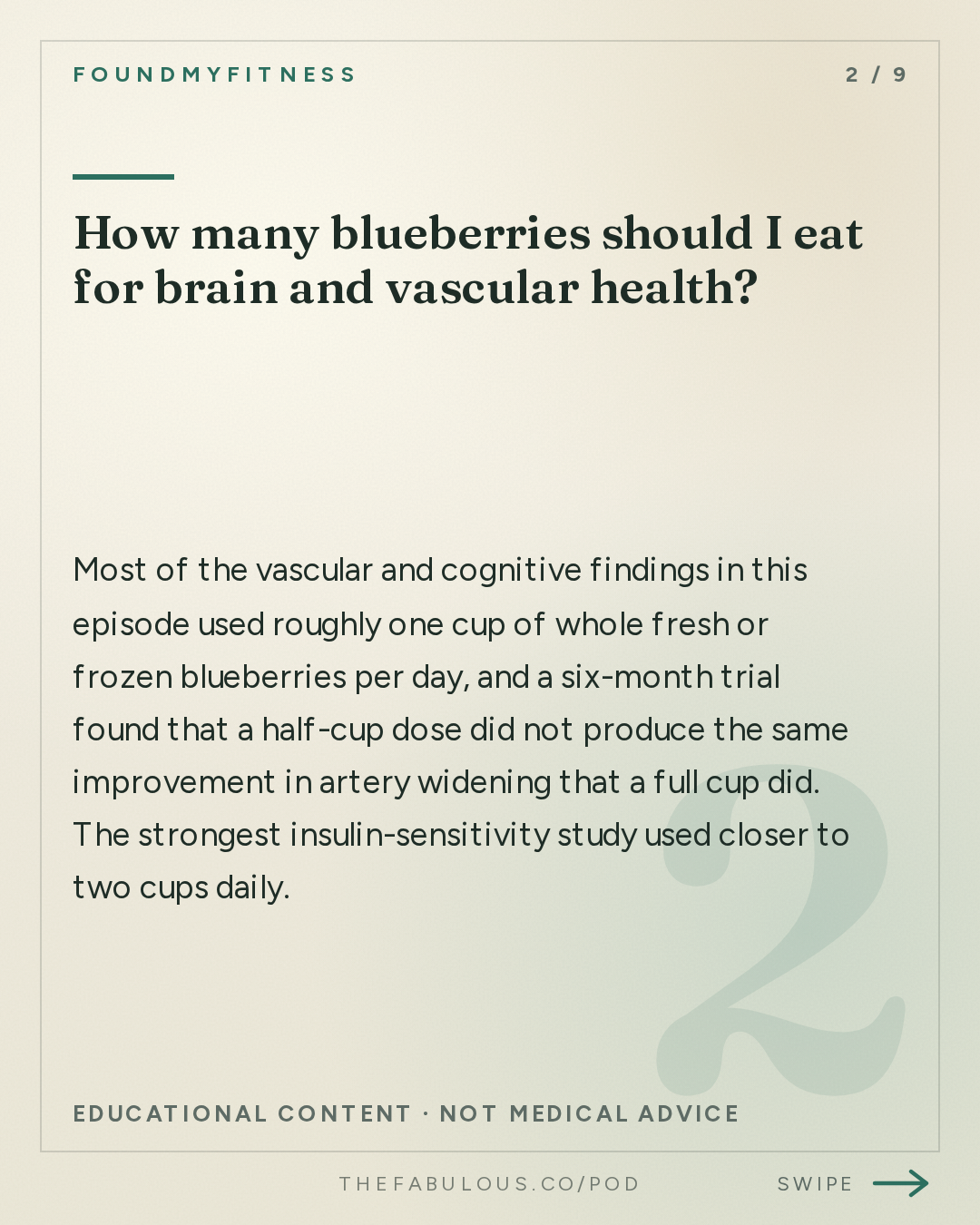
How many blueberries should I eat for brain and vascular health?
Most of the vascular and cognitive findings in this episode used roughly one cup of whole fresh or frozen blueberries per day, and a six-month trial found that a half-cup dose did not produce the same improvement in artery widening that a full cup did (25:56). The strongest insulin-sensitivity study used closer to two cups daily (37:24).
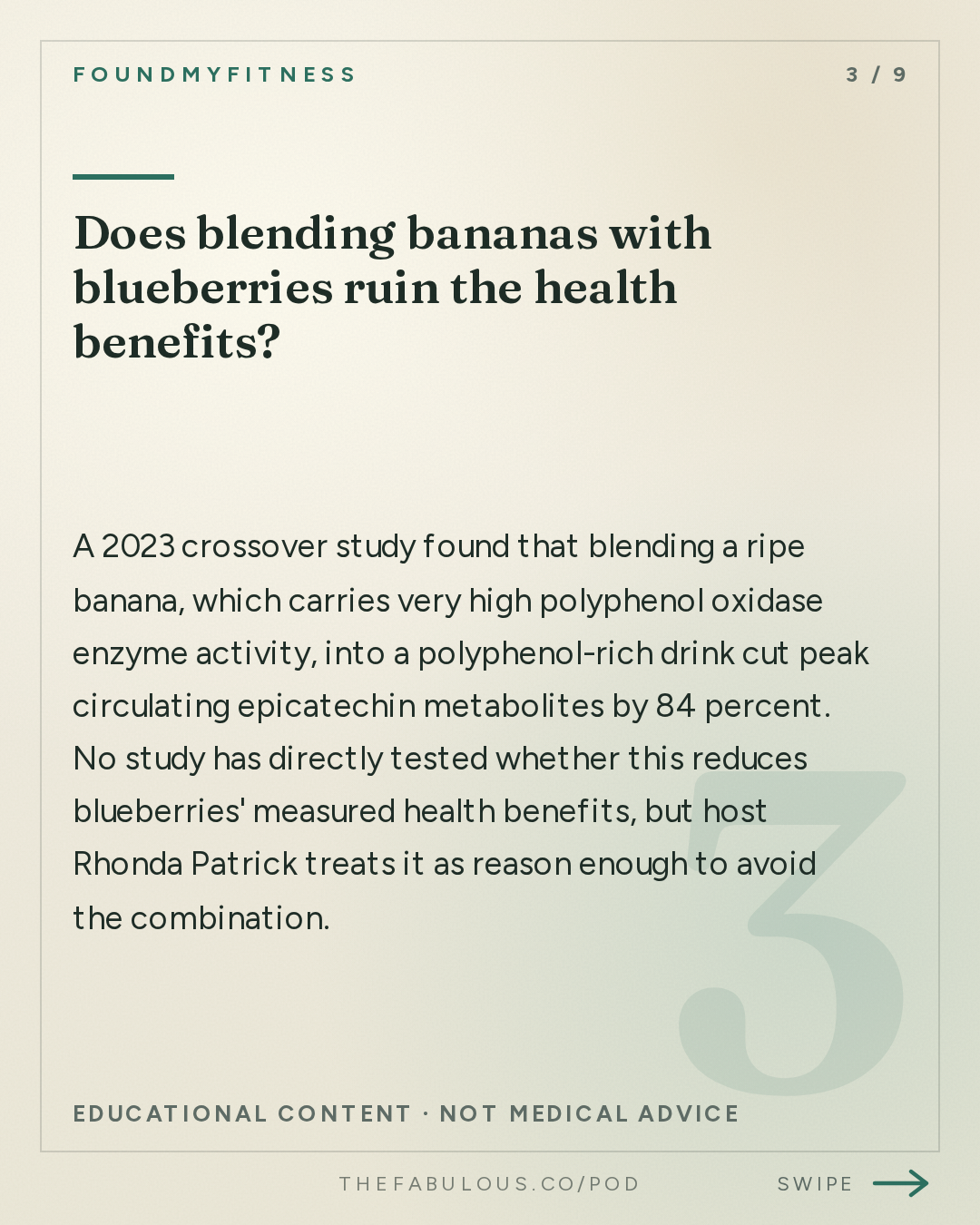
Does blending bananas with blueberries ruin the health benefits?
A 2023 crossover study found that blending a ripe banana, which carries very high polyphenol oxidase enzyme activity, into a polyphenol-rich drink cut peak circulating epicatechin metabolites by 84 percent (60:26). No study has directly tested whether this reduces blueberries' measured health benefits, but host Rhonda Patrick treats it as reason enough to avoid the combination (67:06).
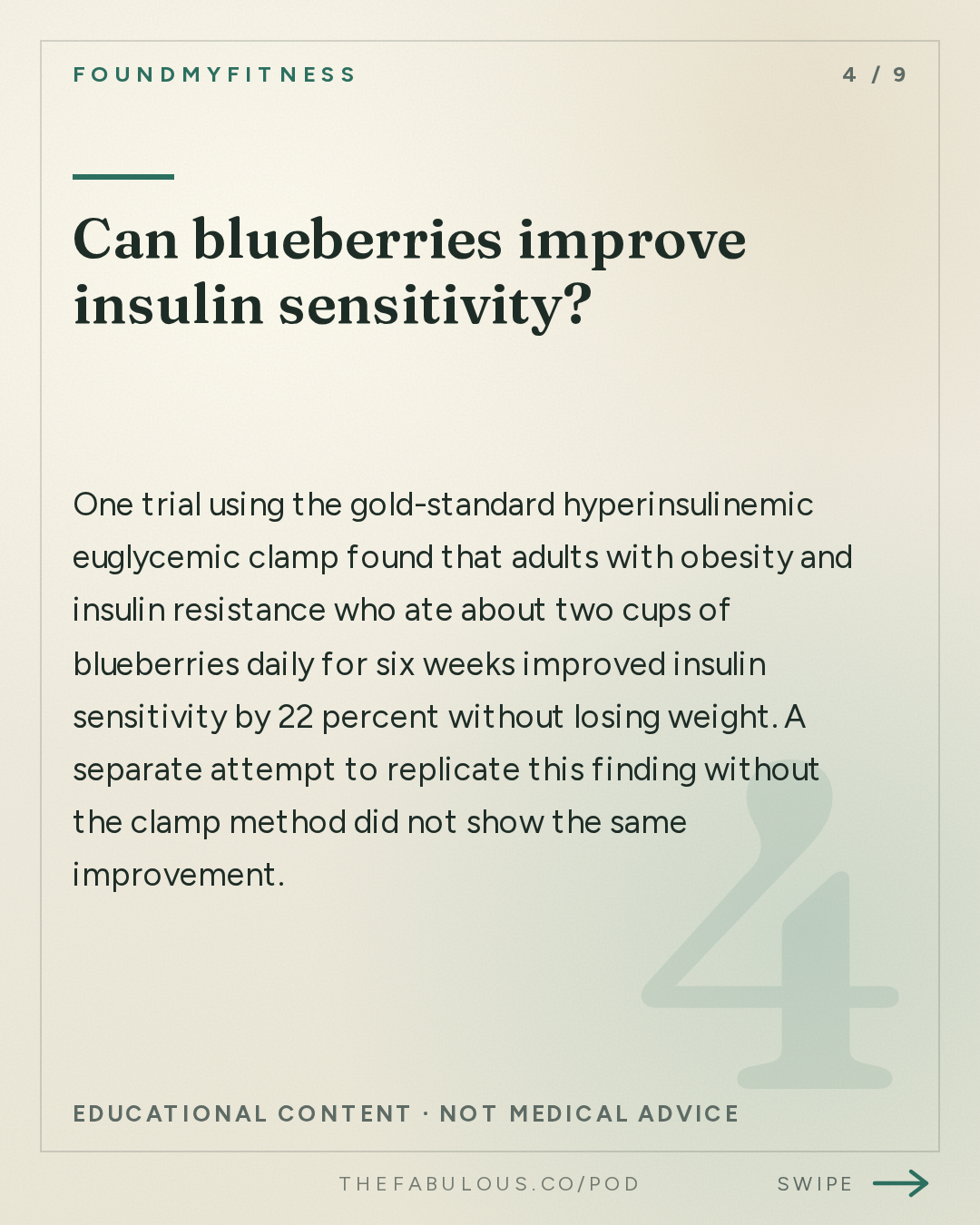
Can blueberries improve insulin sensitivity?
One trial using the gold-standard hyperinsulinemic euglycemic clamp found that adults with obesity and insulin resistance who ate about two cups of blueberries daily for six weeks improved insulin sensitivity by 22 percent without losing weight (37:24). A separate attempt to replicate this finding without the clamp method did not show the same improvement (37:48).
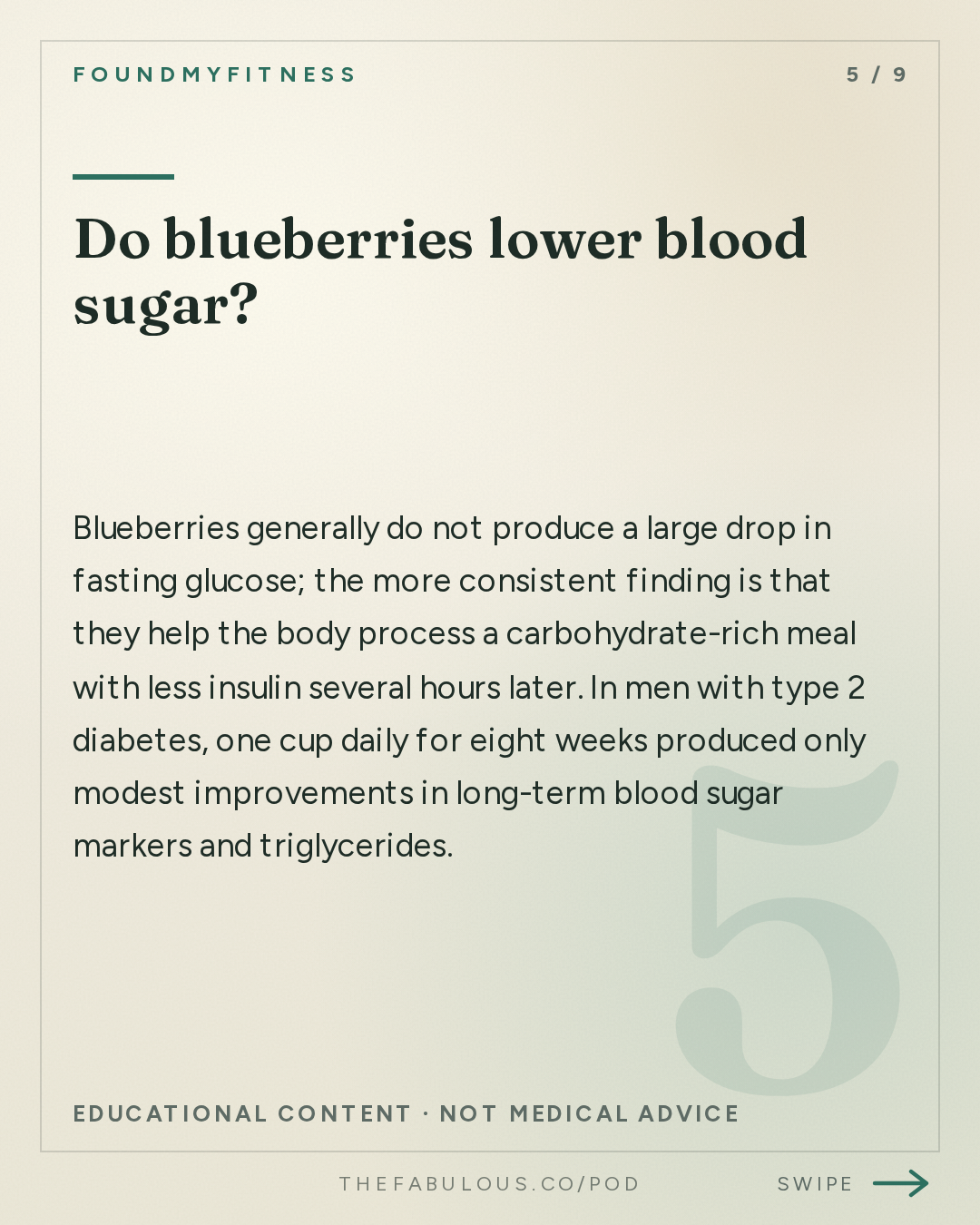
Do blueberries lower blood sugar?
Blueberries generally do not produce a large drop in fasting glucose; the more consistent finding is that they help the body process a carbohydrate-rich meal with less insulin several hours later (40:43). In men with type 2 diabetes, one cup daily for eight weeks produced only modest improvements in long-term blood sugar markers and triglycerides (39:45).
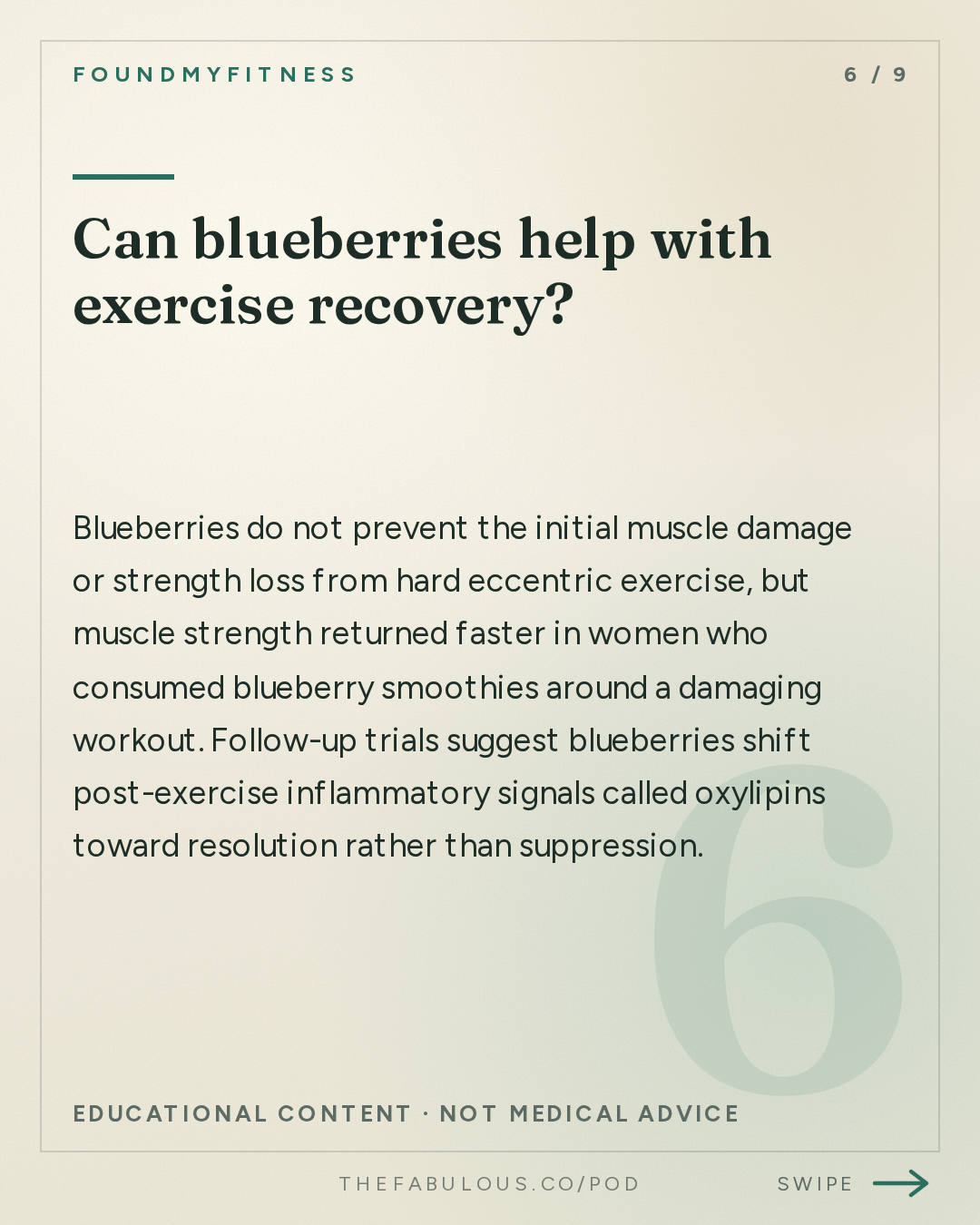
Can blueberries help with exercise recovery?
Blueberries do not prevent the initial muscle damage or strength loss from hard eccentric exercise, but muscle strength returned faster in women who consumed blueberry smoothies around a damaging workout (50:40). Follow-up trials suggest blueberries shift post-exercise inflammatory signals called oxylipins toward resolution rather than suppression (51:07).
The full read, in cards
Go deeper
- 2025 meta-analysis of randomized trials on blueberries and cognition — found small improvements in episodic memory and language memory in older adults with mild cognitive impairment
- Nurses' Health Study — linked regular blueberry intake to a slower rate of cognitive decline equivalent to 1.5 to 2 years younger
- Framingham Heart Study blueberry and dementia analysis — found about one-third lower dementia risk with occasional blueberry intake and a larger reduction at higher intake
- Danish cohort study on anthocyanin intake and dementia — found a much smaller 16 percent reduction in dementia risk with weaker dietary measurement methods
- 2023 banana smoothie polyphenol oxidase study — showed blending ripe banana with a polyphenol drink cut peak circulating epicatechin metabolites by 84 percent
- Bruce Ames lab blueberry insulin resistance trial — an eight-week trial that did not replicate the 22 percent insulin sensitivity improvement without using the clamp method
Mentioned
Dr. Rhonda Patrick · Bruce Ames · Joyce McCann · Framingham Heart Study · Nurses' Health Study · Anthocyanins · Polyphenol oxidase · Chlorogenic acid
More from this show and category

Richard Davidson's Meditation Neuroscience
Neuroscientist Richard Davidson says wellbeing is a trainable skill, not a fixed trait. He organizes this into four pillars (awareness, connection, insight, purpose) and shows five minutes of daily meditation for 28 days lowers IL-6, an inflammation marker, and shifts gut microbiome pathways; purpose best predicts longevity after age 70.

Derya Unutmaz: How AI Could Extend Human Lifespan
Immunologist Derya Unutmaz says AI could help medicine reach longevity escape velocity within 8 to 10 years (09:13), the point where treatments add more than a year of life per year. He describes reasoning models that outperform average doctors at diagnosis (49:20), predict disease years early (79:14), and could build personalized digital twins for testing treatments before humans take them.

JJ Thomas's Primal Physical Therapy Guide
Physical therapist JJ Thomas argues that pain is an alarm pointing to a movement problem elsewhere in the body, not proof that the hurting spot is broken. She treats patients with seven foundational movements (squat, hinge, push, pull, carry, reach, rotate) and dry needling at sites far from the pain, arguing most overuse injuries are really underuse injuries of neighboring muscles.
How Menopause Affects Gut Health and Bloating
Menopause changes gut health because falling estrogen slows motility, raises pain sensitivity, and shifts the microbiome's estrobolome. Harvard gastroenterologist Trisha Pasricha explains why bloating, IBS, and fecal incontinence rise after menopause, and lays out fiber, screening, and bidet protocols that actually help.
