
Saturated Fat, Red Meat & Seed Oils: The Real Data
#116 The Hype vs. Data on Saturated Fat, Red Meat, & Seed Oils | Dr. Dariush Mozaffarian
The brief
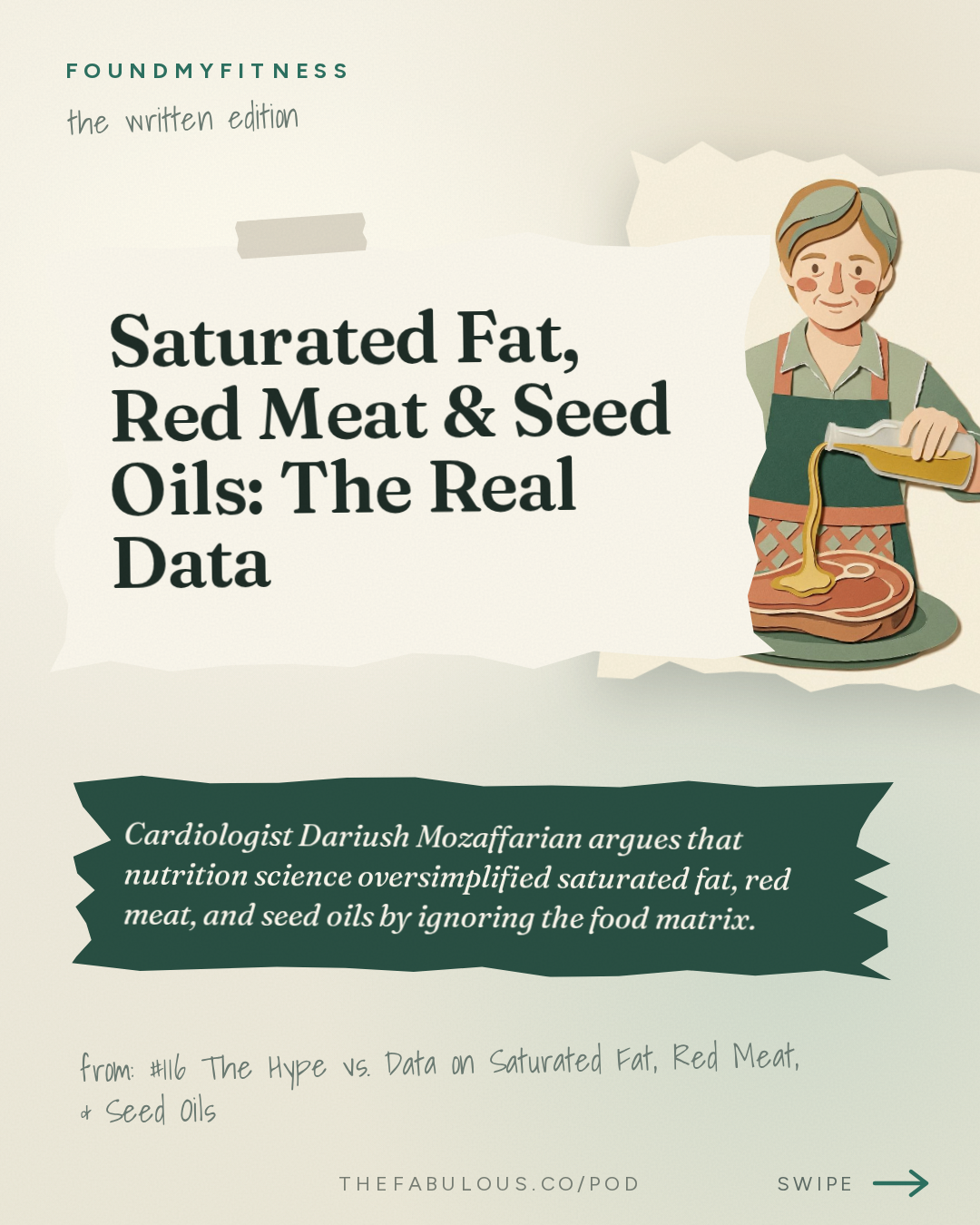
Cardiologist Dariush Mozaffarian argues that nutrition science oversimplified saturated fat, red meat, and seed oils by ignoring the food matrix. He traces modern obesity to falling resting energy expenditure and ultra-processing, not overeating, and calls for closing the FDA's GRAS additive loophole.
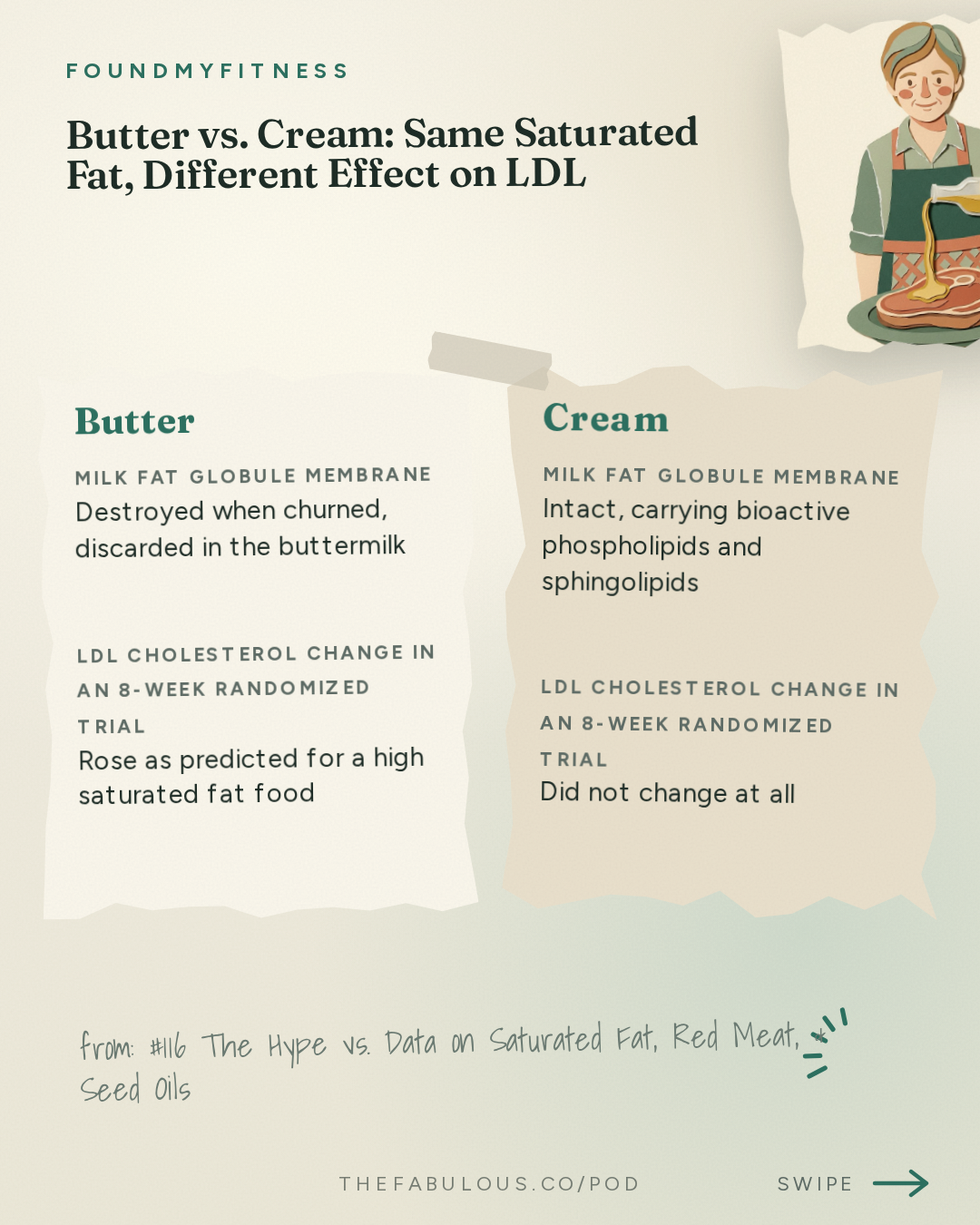
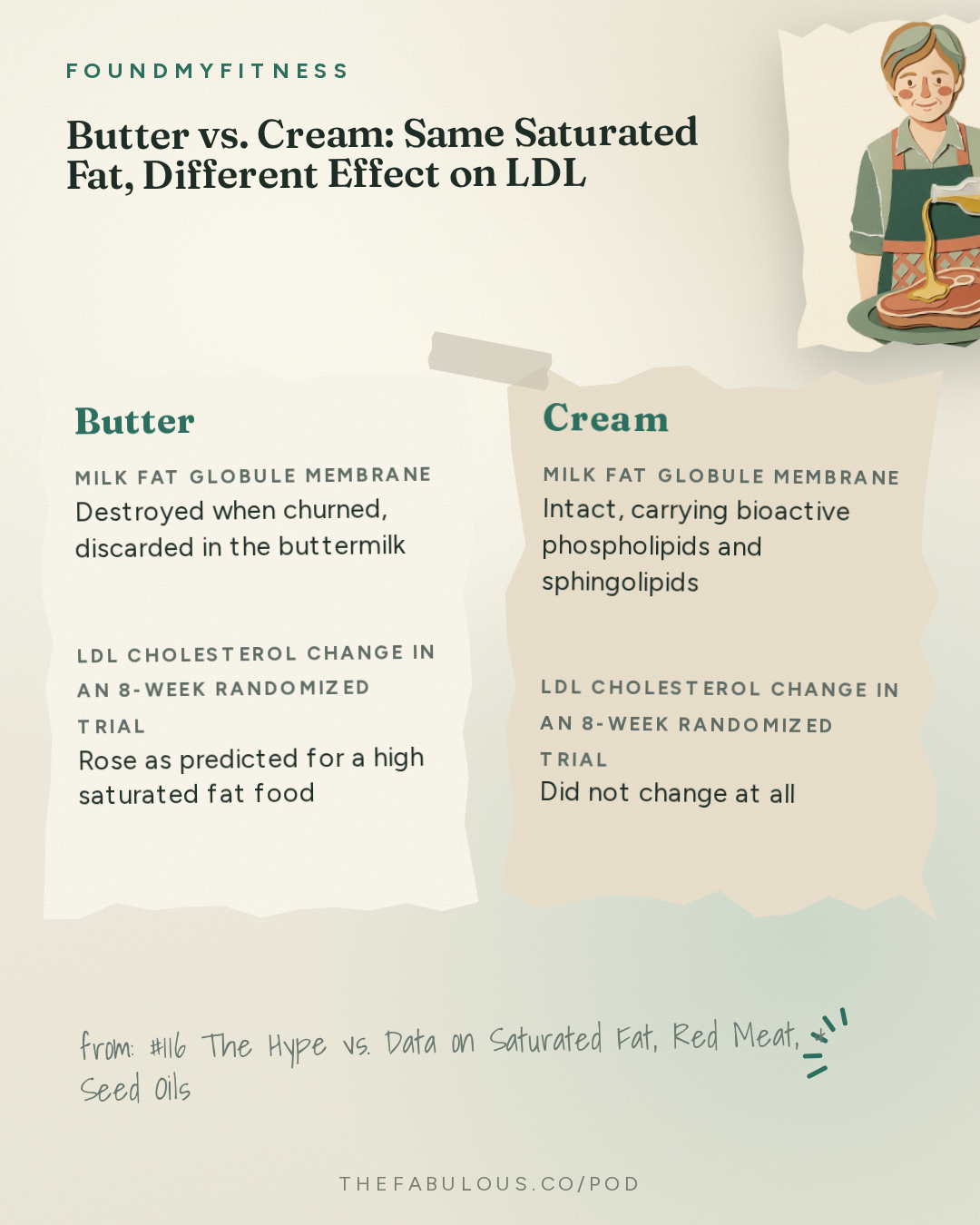
Take two spoonfuls of fat with the same amount of saturated fat: one from butter, one from cream. Feed them to people for eight weeks and something strange happens. The butter raises LDL cholesterol the way every textbook predicts. The cream does not move it at all. Same fatty acid, same calories, opposite result. That single finding, from a randomized trial run by Swedish researcher Ulf Riserus, is the kind of detail cardiologist and Tufts University nutrition scientist Dariush Mozaffarian uses to dismantle fifty years of thinking about fat as a single villain (19:52).
The explanation is what Mozaffarian calls the food matrix: the physical structure of a food and the way its nutrients sit together. Milk fat does not float free in liquid. It is wrapped in a membrane made of phospholipids and sphingolipids, the same kind of membrane that makes breast milk so valuable to infants. Cream and cheese keep that membrane. Butter, made by churning the fat until it separates, throws it away in the buttermilk (14:00). The membrane binds cholesterol in the gut and feeds the microbiome in a favorable way, so it blunts the LDL-raising effect that saturated fat would otherwise have. Butter, stripped of it, behaves the way the old guidelines assumed all saturated fat behaves.
"LDL cholesterol is clearly one top risk factor for heart disease. Not the only one. Blood pressure matters, inflammation matters, glucose matters." (Dariush Mozaffarian, [11:19])
Mozaffarian is careful here. He is not saying LDL cholesterol is a myth. He is saying that reducing a food to one number, saturated fat grams, and reducing a disease to one biomarker, LDL, erases everything else a food is doing in the body. A traditional Mediterranean diet gets about 45 percent of its calories from fat, far above what most guidelines have recommended, and it is one of the best-studied diets for heart health (68:16). The fat is simply attached to olives, nuts, and fish instead of being isolated and judged on its own.
How a Field Learned to Blame One Molecule
To understand how nutrition science narrowed its gaze this way, Mozaffarian goes back further than the 1980 low-fat guidelines most people point to. He traces it to three forces that reshaped the global food system across the twentieth century. The first was the discovery of vitamins. Before 1930, nobody knew what a vitamin was. A niacin deficiency called pellagra killed roughly 100,000 people in the American South in the 1910s, and investigators assumed it was an infectious disease until physician Joseph Goldberger proved it was dietary, a finding he never lived to see confirmed (25:19). Once vitamins were isolated in the 1930s, governments learned they could fix a disease by adding a molecule to food. That success bred a habit: find the one nutrient responsible, then engineer it in or out.
The second force was a fear of mass starvation. After World War II, with the global population surging from one and a half billion in 1900 toward six billion by 2000, scientists feared farmland could not keep up. Plant geneticist Norman Borlaug spent a decade breeding high-yield wheat, then added synthetic nitrogen fertilizer and chemical pesticides, and multiplied the output of a single acre of farmland fifteen-fold (33:17). It averted famine. It also collapsed crop diversity down to a handful of commodity species that now supply about half the calories eaten on earth (32:53).
By 1980, having apparently solved vitamin deficiency and starvation with single-variable engineering, nutrition scientists turned to heart disease and asked the same kind of question: what is the one molecule to blame? The answer they settled on was saturated fat. Mozaffarian's point is that chronic disease does not work like a vitamin deficiency. There is no one nutrient whose removal cures it, and treating food like a drug with one active ingredient was, in his words, "the mistake."
That same nutrient-first logic shaped how red meat got judged, too, and the newer data complicates it. Red meat is only weakly linked to heart disease. It is more consistently linked to type 2 diabetes and to a specific cancer, distal colorectal cancer, and the likely culprit is not the fat but heme iron, the pigment that makes red meat red (51:39). Heme iron is essential at normal intake but becomes pro-oxidant in excess, damaging the insulin-producing beta cells of the pancreas, a mechanism also seen in people with the iron-overload disorder hemochromatosis (51:58). Mozaffarian's rule of thumb is one or two servings of unprocessed red meat a week, inside an otherwise healthy diet (50:13).
Seed oils get the opposite treatment from public opinion and from the data. Despite a wave of recent suspicion, Mozaffarian says decades of randomized trials, observational studies, and blood biomarker studies in humans, not rodents, show omega-6 fats from seed oils and nuts improve insulin resistance, lower LDL and triglycerides, raise HDL, and are not pro-inflammatory (65:09). The competition between omega-6 and omega-3 fats that shows up in rat studies simply does not translate to humans.
"If I had to pick one superfood, it would be nuts and seeds. Seed oils are really good for us as well." (Dariush Mozaffarian, [66:14])
Why the Country Got Cold
Where saturated fat and seed oils are a story about oversimplification, ultra-processed food is a story about structure loss. Mozaffarian points to a loophole almost nobody outside food policy knows about: the "Generally Regarded As Safe," or GRAS, pathway, created by Congress in 1958 so companies could add things like ginger without full FDA review. Industry now uses it for nearly everything. Ninety-nine percent of additives in the US food supply entered through GRAS, meaning the FDA often does not even know they exist until someone reads an ingredient label (88:12).
"Food stopped becoming food at some point. It became molecularly disassembled, you know, shot out through heat guns into shapes." (Dariush Mozaffarian, [89:11])
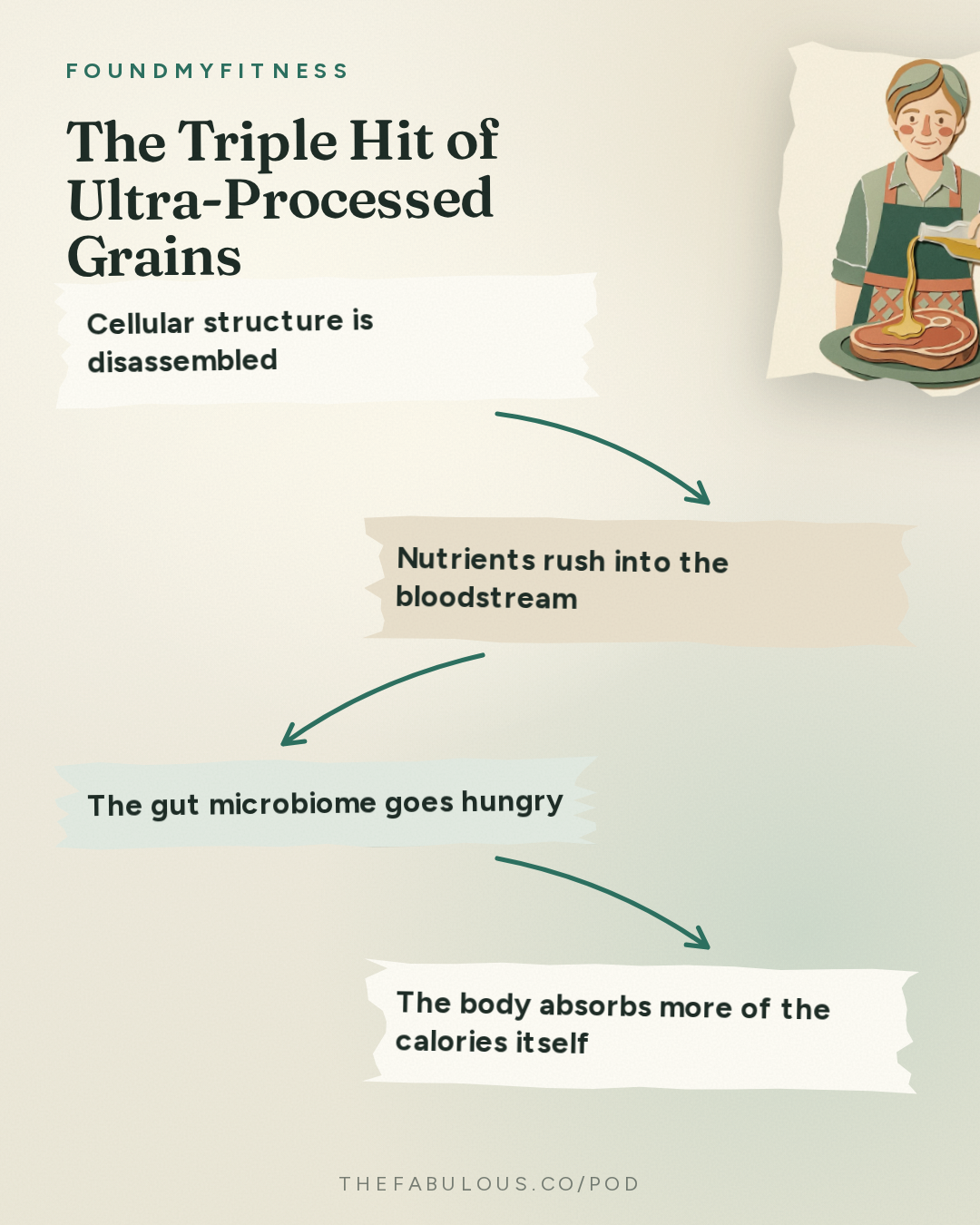
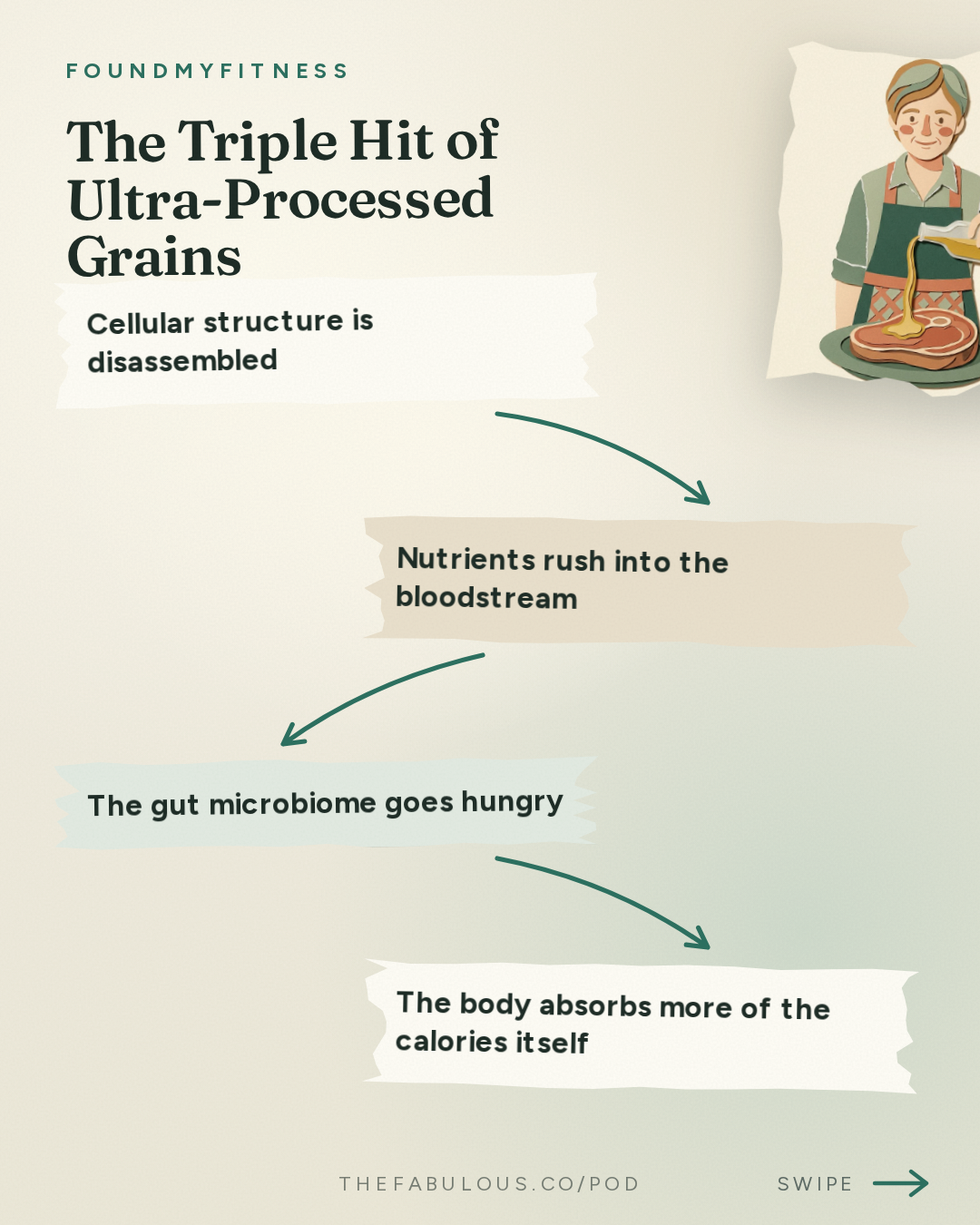
That disassembly matters biologically, not just symbolically. When a grain's natural cellular architecture is ground apart and reassembled, as in a commercial whole-grain bread or cereal, it produces what Mozaffarian calls a triple hit. Nutrients rush into the bloodstream faster, because digestion in the stomach and small intestine speeds up. The gut microbiome, which normally ferments a share of undigested starch into beneficial metabolites, gets starved of its usual fuel. And the body itself absorbs a larger share of the calories that would otherwise have gone to feed its bacteria (95:33). Ultra-processed foods now supply roughly 60 percent of calories in the standard American diet (89:11).
This feeds into what Mozaffarian frames as the real, underappreciated driver of the obesity epidemic. Since 2000, average calorie intake in the United States has flattened, and physical activity has actually risen by every measure, including doubly labeled water studies. Yet obesity keeps climbing. The missing variable, he argues, is resting energy expenditure, the energy burned doing nothing, which has fallen by an average of 220 calories a day over that period (115:13). One mechanism is thermogenesis in brown fat, the heat-generating tissue that can be activated by compounds including omega-3s, curcumin, EGCG, and other polyphenols, all of which ultra-processed diets tend to lack (118:13). Boston Children's Hospital researcher David Ludwig's trials back this up: people on low-fat, calorie-restricted diets lose far more resting energy expenditure after weight loss than people on high-fat, low-starch diets, even at equal calorie intake (126:11).
"We're eating about the same amount of calories we were 25 years ago on average across the population, but we're gaining weight 'cause we're cold." (Dariush Mozaffarian, [118:33])
One in 11 American adults now weighs more than 300 pounds (132:14). Mozaffarian treats GLP-1 drugs as a genuine tool for that population, but insists they are FDA-approved as an adjunct to nutritional counseling, not a substitute for it, since most patients stop the drug within a year and regain weight, muscle and bone loss included, if their diet never changed (131:11).
His proposed fix is not more money so much as redirected money. The FDA spends about $15 million of its $7 billion budget on human nutrition specifically (108:18). US healthcare spending totals roughly $5 trillion a year (152:28). Shifting even a single-digit percentage of that toward food-as-medicine programs, alongside closing the GRAS loophole, he argues, would do more for chronic disease than any new diet fad. The lesson underneath all of it is less about any one ingredient than about structure: what processing removes, what a matrix protects, and what a body does with calories once the food around them has been taken apart.
Ask this episode anything
Pod's AI answers from the episode itself, with the minute mark so you can hear it yourself.
Or start with one of these
Ask this episode
Pod's AI listens to the whole episode to answer, and points you to the minute it comes from.
The rest of this answer, and any question after it
Answers come from the episode itself, never from a summary of it.
ContinueKey takeaways
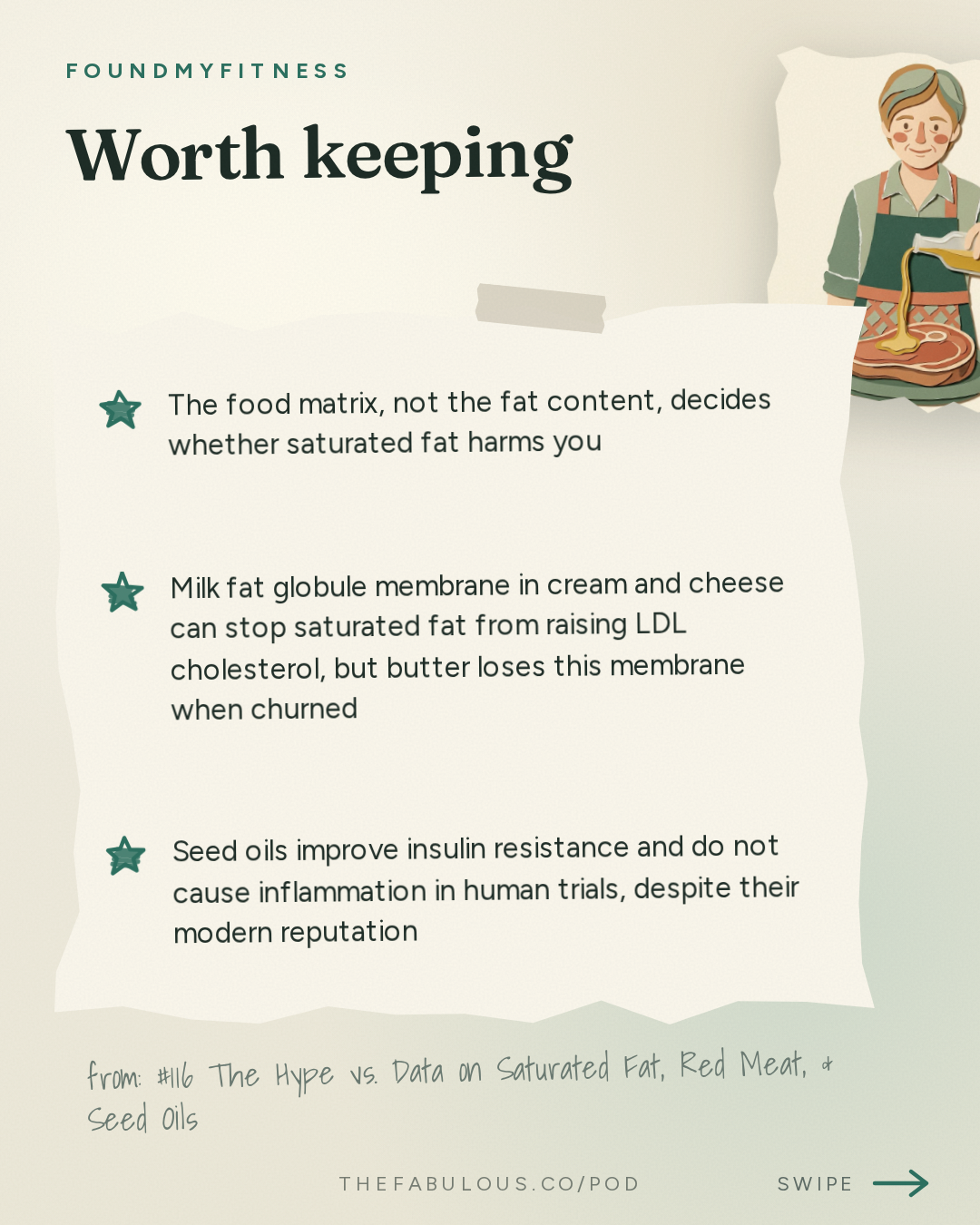
- The food matrix, not the fat content, decides whether saturated fat harms you
- Milk fat globule membrane in cream and cheese can stop saturated fat from raising LDL cholesterol, but butter loses this membrane when churned
- Seed oils improve insulin resistance and do not cause inflammation in human trials, despite their modern reputation
- Falling resting metabolic rate, not increased eating, explains most US weight gain since 2000, says cardiologist Dariush Mozaffarian
- Ninety-nine percent of US food additives enter the supply through the FDA's GRAS loophole, skipping full safety review
The episode in cards

By the numbers
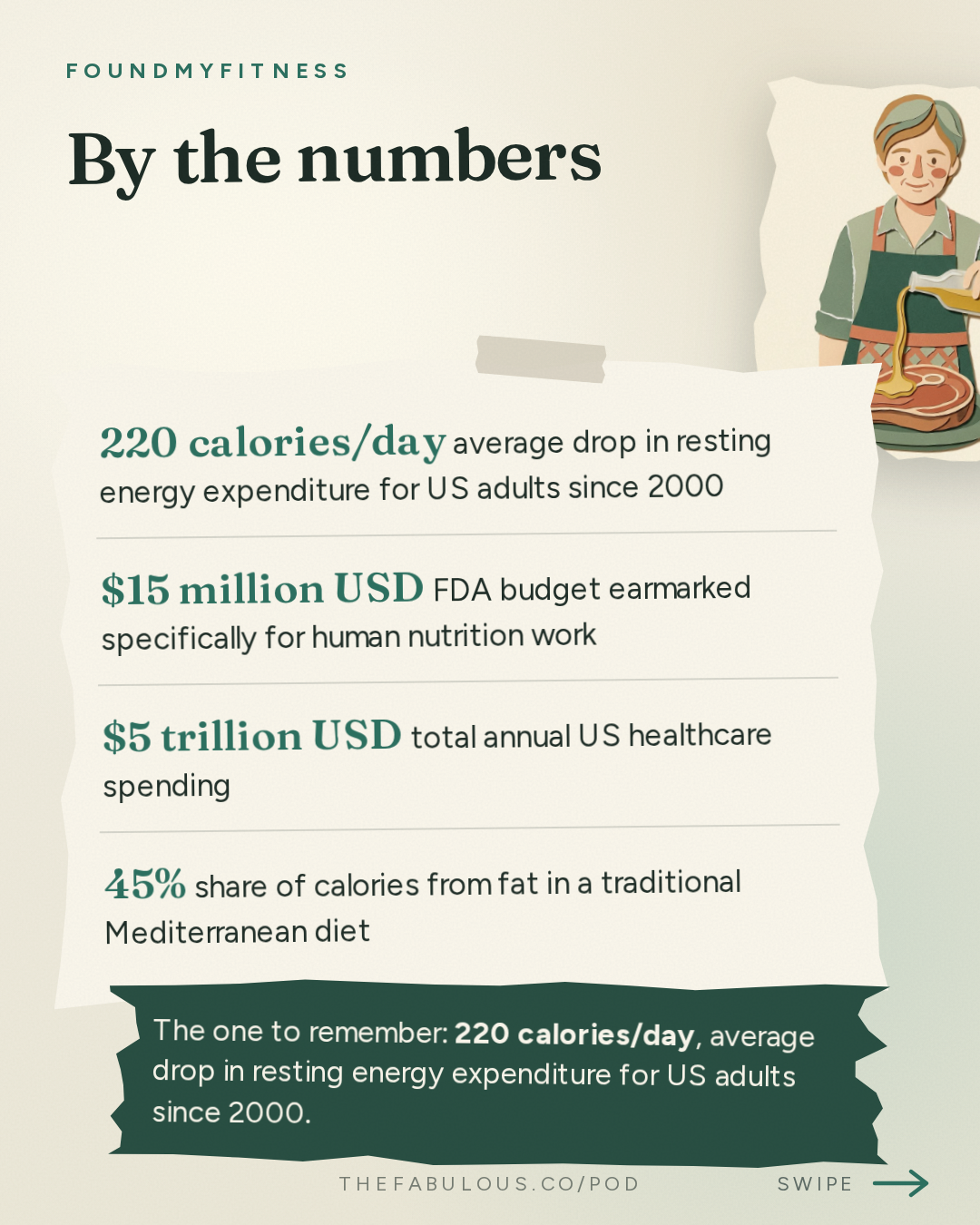
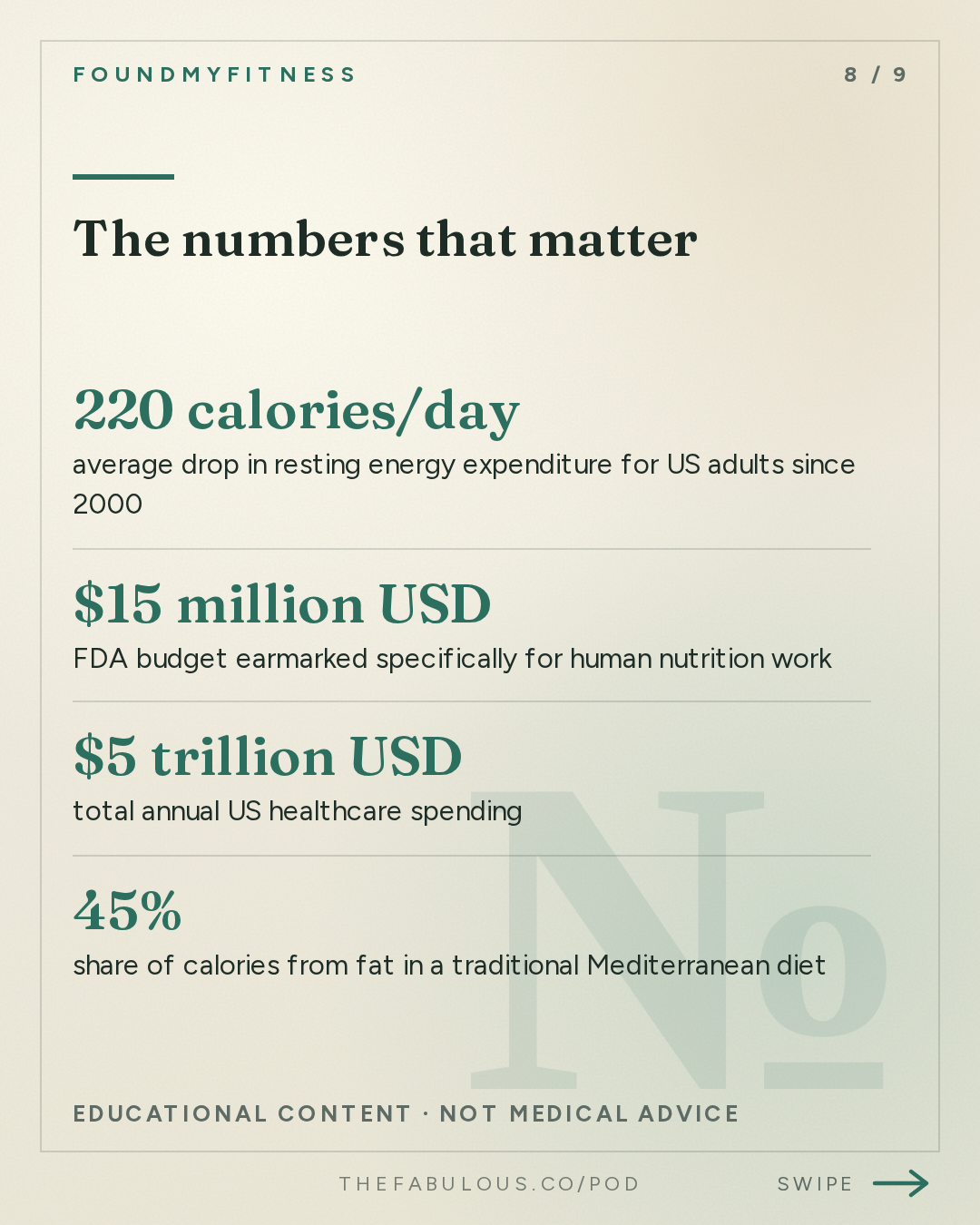
- 220 calories/day average drop in resting energy expenditure for US adults since 2000
- $15 million USD FDA budget earmarked specifically for human nutrition work
- $5 trillion USD total annual US healthcare spending
- 45% % share of calories from fat in a traditional Mediterranean diet
In their words
“LDL cholesterol is clearly one top risk factor for heart disease. Not the only one. Blood pressure matters, inflammation matters, glucose matters.”
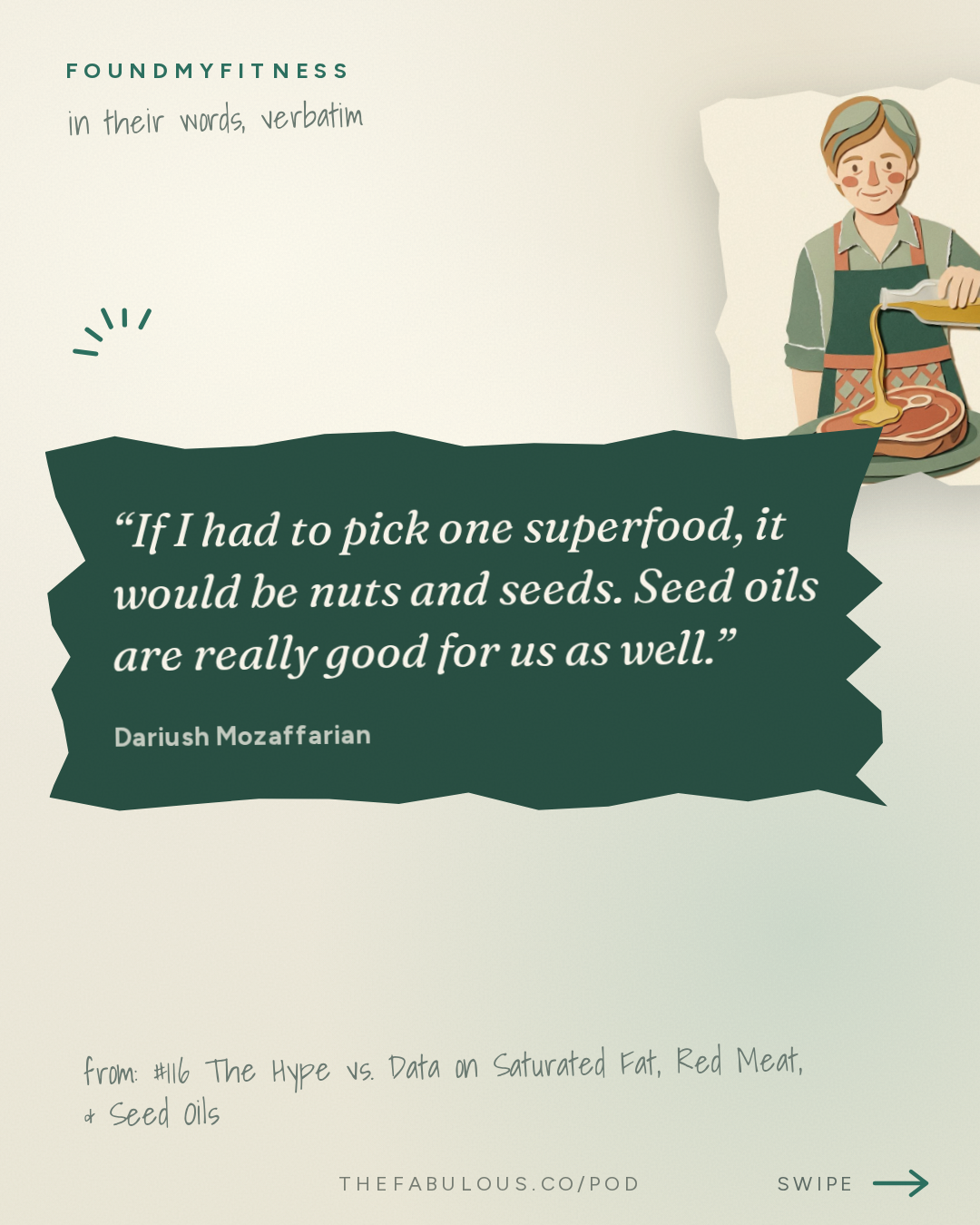
“If I had to pick one superfood, it would be nuts and seeds. Seed oils are really good for us as well.”
“Food stopped becoming food at some point. It became molecularly disassembled, you know, shot out through heat guns into sh- shapes”
“We're all eating about the same amount of calories we were 25 years ago on average across the population, but we're gaining weight 'cause we're cold”
Protocols
-
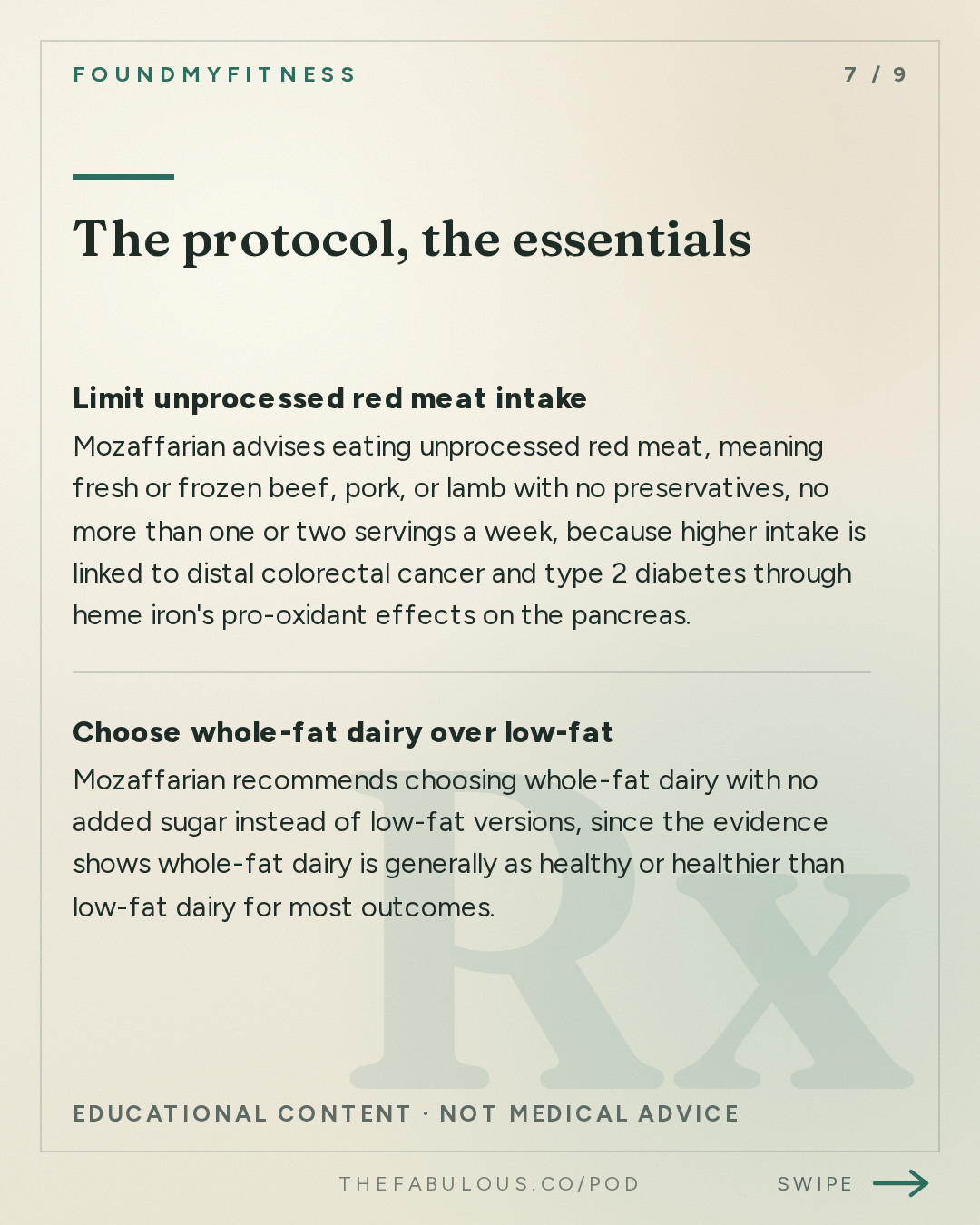
Limit unprocessed red meat intake
Mozaffarian advises eating unprocessed red meat, meaning fresh or frozen beef, pork, or lamb with no preservatives, no more than one or two servings a week, because higher intake is linked to distal colorectal cancer and type 2 diabetes through heme iron's pro-oxidant effects on the pancreas.
1-2 servings per week
-
Choose whole-fat dairy over low-fat
Mozaffarian recommends choosing whole-fat dairy with no added sugar instead of low-fat versions, since the evidence shows whole-fat dairy is generally as healthy or healthier than low-fat dairy for most outcomes.
default choice when buying dairy
-
Check the carbohydrate-to-fiber ratio on labels
Mozaffarian tells people to look for at least one gram of fiber for every 10 grams of carbohydrate on a nutrition label, and to favor products with an even better ratio, such as 5-to-1, when comparing packaged foods like cereals or bars.
every time reading a food label
-
Pair GLP-1 medication with nutrition counseling
Mozaffarian prescribes GLP-1 medications only as an adjunct to nutritional and lifestyle counseling, never as a replacement for it, because most patients regain weight and lose muscle and bone mass if they stop the drug without having changed their underlying diet.
for the full duration of medication use
Questions this episode answers
Does saturated fat actually raise heart disease risk?
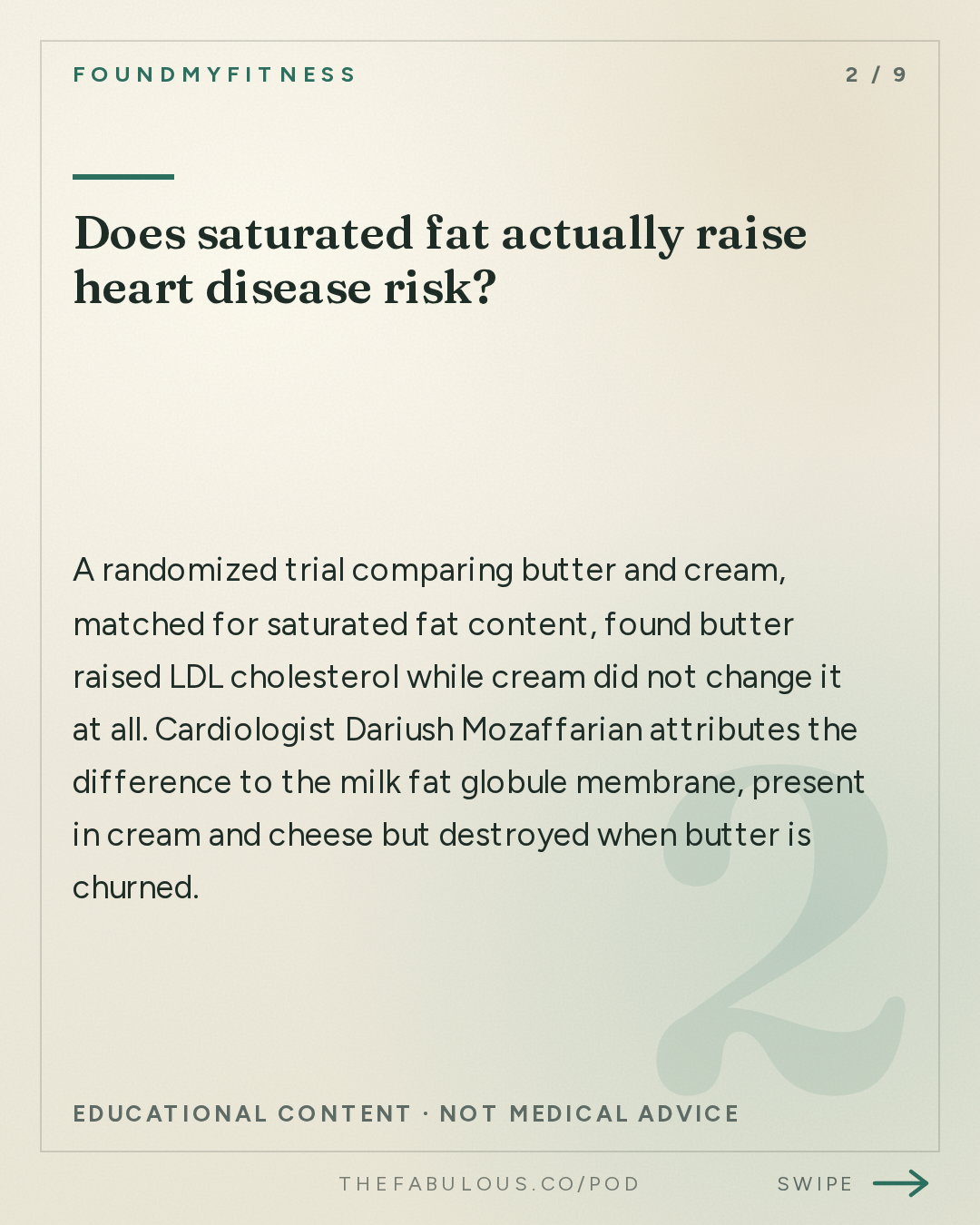
A randomized trial comparing butter and cream, matched for saturated fat content, found butter raised LDL cholesterol while cream did not change it at all (19:52). Cardiologist Dariush Mozaffarian attributes the difference to the milk fat globule membrane, present in cream and cheese but destroyed when butter is churned (14:00).
Are seed oils inflammatory?
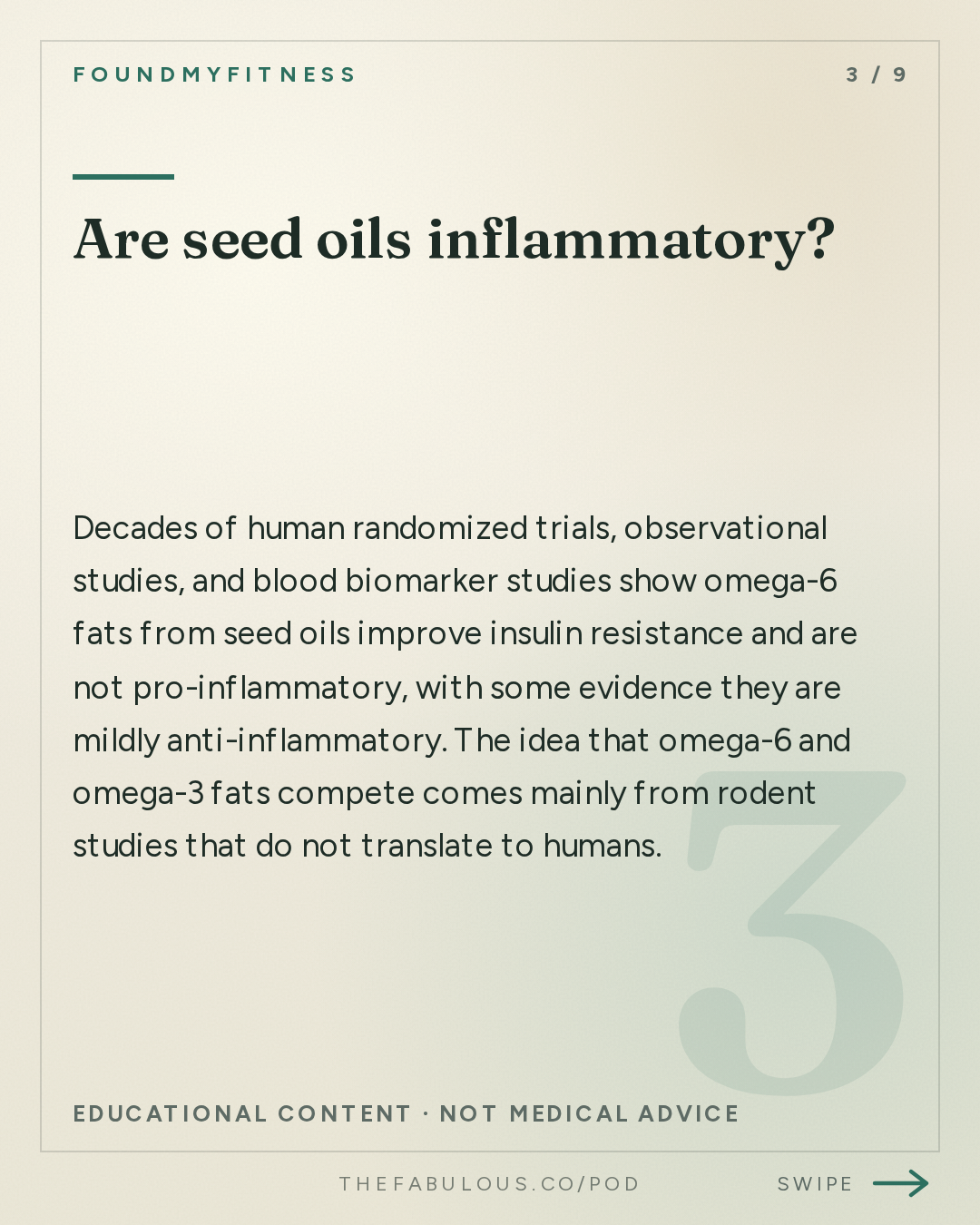
Decades of human randomized trials, observational studies, and blood biomarker studies show omega-6 fats from seed oils improve insulin resistance and are not pro-inflammatory, with some evidence they are mildly anti-inflammatory (65:09). The idea that omega-6 and omega-3 fats compete comes mainly from rodent studies that do not translate to humans (64:20).
Is red meat linked to heart disease or something else?
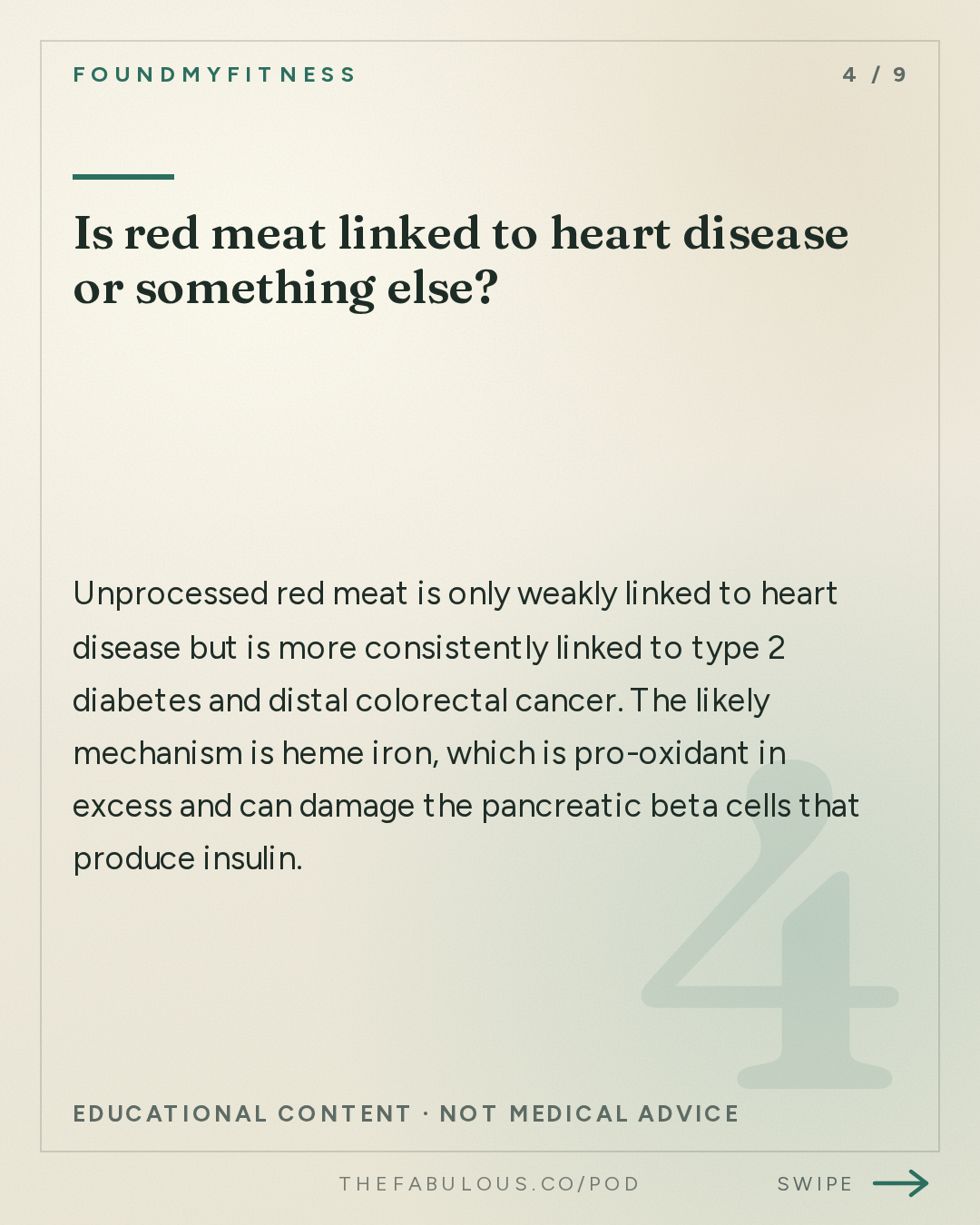
Unprocessed red meat is only weakly linked to heart disease but is more consistently linked to type 2 diabetes and distal colorectal cancer (51:39). The likely mechanism is heme iron, which is pro-oxidant in excess and can damage the pancreatic beta cells that produce insulin (51:58).
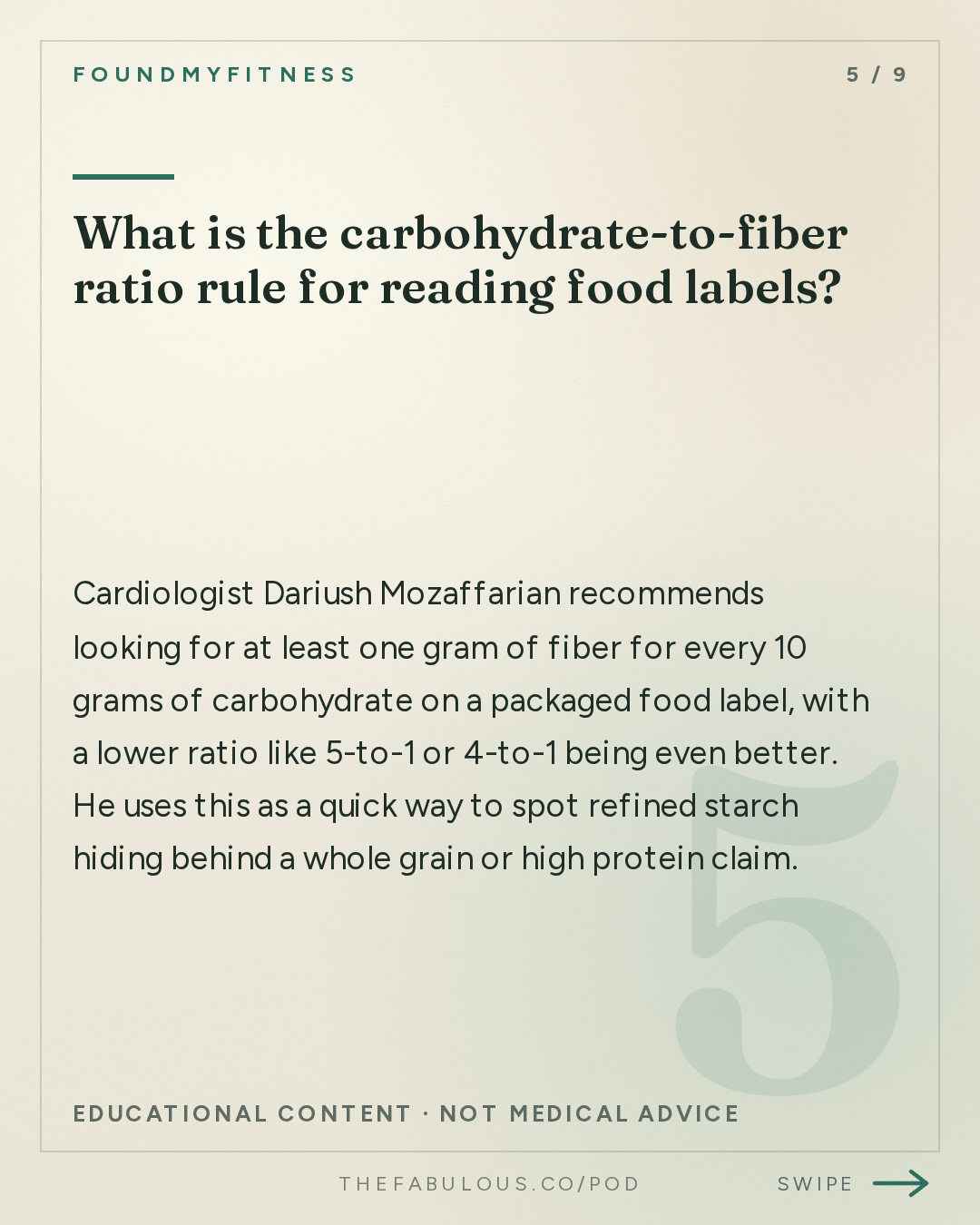
What is the carbohydrate-to-fiber ratio rule for reading food labels?
Cardiologist Dariush Mozaffarian recommends looking for at least one gram of fiber for every 10 grams of carbohydrate on a packaged food label, with a lower ratio like 5-to-1 or 4-to-1 being even better (102:49). He uses this as a quick way to spot refined starch hiding behind a whole grain or high protein claim.
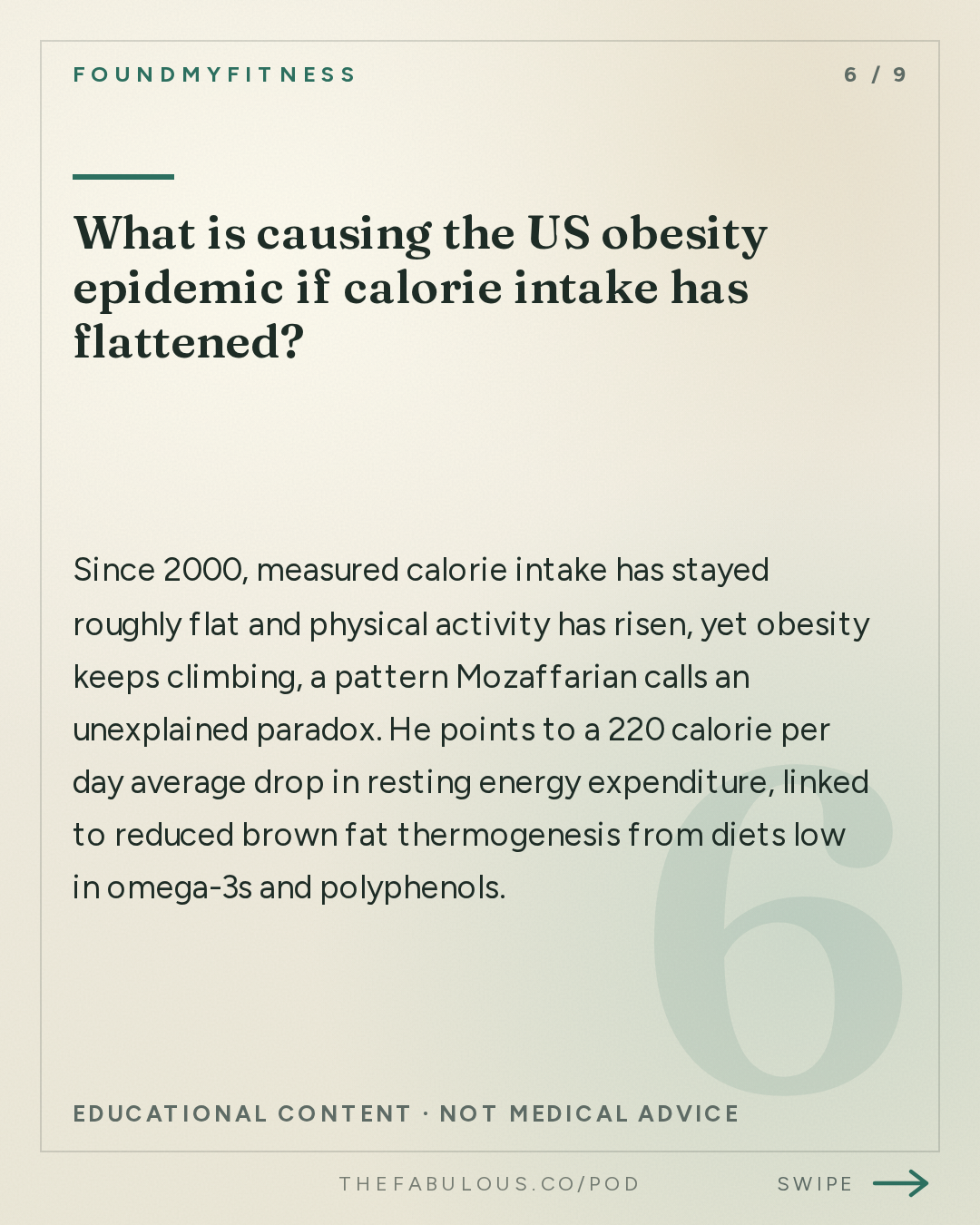
What is causing the US obesity epidemic if calorie intake has flattened?
Since 2000, measured calorie intake has stayed roughly flat and physical activity has risen, yet obesity keeps climbing, a pattern Mozaffarian calls an unexplained paradox (113:46). He points to a 220 calorie per day average drop in resting energy expenditure, linked to reduced brown fat thermogenesis from diets low in omega-3s and polyphenols (115:13, 118:13).
What is the FDA's GRAS loophole?
The Generally Regarded As Safe, or GRAS, pathway lets companies review their own food additives using hired scientists instead of submitting them for FDA approval, and 99 percent of US food additives now enter the supply this way (88:12). The FDA often does not even know these additives exist until someone finds them listed on an ingredient label (88:31).
The full read, in cards
Go deeper
- Food Is Medicine — Mozaffarian's forthcoming book covering nutrition science history, practical dietary guidance, and food policy solutions
- Riserus butter vs. cream trial — Eight-week randomized controlled trial in Europe showing cream, unlike butter, did not raise LDL cholesterol despite equal saturated fat content
- NOVA food classification system — Carlos Monteiro's four-tier classification defining ultra-processed food by additives and industrial techniques not used in home kitchens
- The Population Bomb — Paul Ehrlich's 1968 book predicting mass famine that the Green Revolution's crop breeding helped avert
- David Ludwig resting energy expenditure trials — Randomized trials showing low-fat calorie-restricted diets lower resting energy expenditure after weight loss far more than high-fat, low-starch diets
Mentioned
Dariush Mozaffarian · Norman Borlaug · David Ludwig · Food Is Medicine · Tufts University · FDA · Joseph Goldberger · The Population Bomb · NIH · Carlos Monteiro · Ulf Riserus · Paul Ehrlich · USDA
More from this show and category

Blueberries for Brain and Vascular Health
Blueberries measurably improve artery function and may slow cognitive aging by roughly 1.5 to 2.5 years, with benefits appearing most reliably at about one cup a day. Effects look strongest for vascular health, more mixed for blood sugar, and vulnerable to a surprising kitchen variable: blending with ripe banana.

Richard Davidson's Meditation Neuroscience
Neuroscientist Richard Davidson says wellbeing is a trainable skill, not a fixed trait. He organizes this into four pillars (awareness, connection, insight, purpose) and shows five minutes of daily meditation for 28 days lowers IL-6, an inflammation marker, and shifts gut microbiome pathways; purpose best predicts longevity after age 70.

Derya Unutmaz: How AI Could Extend Human Lifespan
Immunologist Derya Unutmaz says AI could help medicine reach longevity escape velocity within 8 to 10 years (09:13), the point where treatments add more than a year of life per year. He describes reasoning models that outperform average doctors at diagnosis (49:20), predict disease years early (79:14), and could build personalized digital twins for testing treatments before humans take them.

IBD vs IBS: Colon Cancer Risk Explained
NBC correspondent Chloe Melas went undiagnosed with ulcerative colitis for years after doctors dismissed her rectal bleeding as hemorrhoids. She explains why inflammatory bowel disease (IBD) raises colon cancer risk while irritable bowel syndrome (IBS) does not, why women wait over a year for an IBD diagnosis, and how most Americans fall far short of their daily fiber needs.
