
IBD vs IBS: Colon Cancer Risk Explained
Dismissed as Hemorrhoids, Diagnosed as Stage 3 or 4 Colon Cancer | NBC's Chloe Melas
▶ Listen to the full episode More from The Dr. Gabrielle Lyon Show
The brief
NBC correspondent Chloe Melas went undiagnosed with ulcerative colitis for years after doctors dismissed her rectal bleeding as hemorrhoids. She explains why inflammatory bowel disease (IBD) raises colon cancer risk while irritable bowel syndrome (IBS) does not, why women wait over a year for an IBD diagnosis, and how most Americans fall far short of their daily fiber needs.
Picture an elevator in Park City, Utah, during the Sundance Film Festival. A young woman in white jeans watches the floor numbers tick down with excruciating slowness, already past the point of holding on. She loses control of her bowels before the doors open. That woman is NBC correspondent Chloe Melas, and she tells the story not for shock value but because it is, in her words, the thing nobody says out loud. Never trust a fart, her daughter now tells her, and the line gets a laugh, but behind it sits a decade of blood, urgency, and a body nobody had properly diagnosed (53:00).
Melas was 25 when she first noticed bright red blood on the toilet paper and assumed, like most people would, that it was a hemorrhoid (06:00). It was not. The inflammation that started as proctitis, a localized irritation of the rectum, spread across her colon because she was not consistent with her medication, and she was eventually diagnosed with ulcerative colitis, one of the two major forms of inflammatory bowel disease, or IBD (03:36). The other is Crohn's disease, which can inflame any part of the digestive tract from mouth to anus. For over ten years, Melas did not have what she calls a normal bowel movement (00:00).
Two Different Problems, One Confused Public
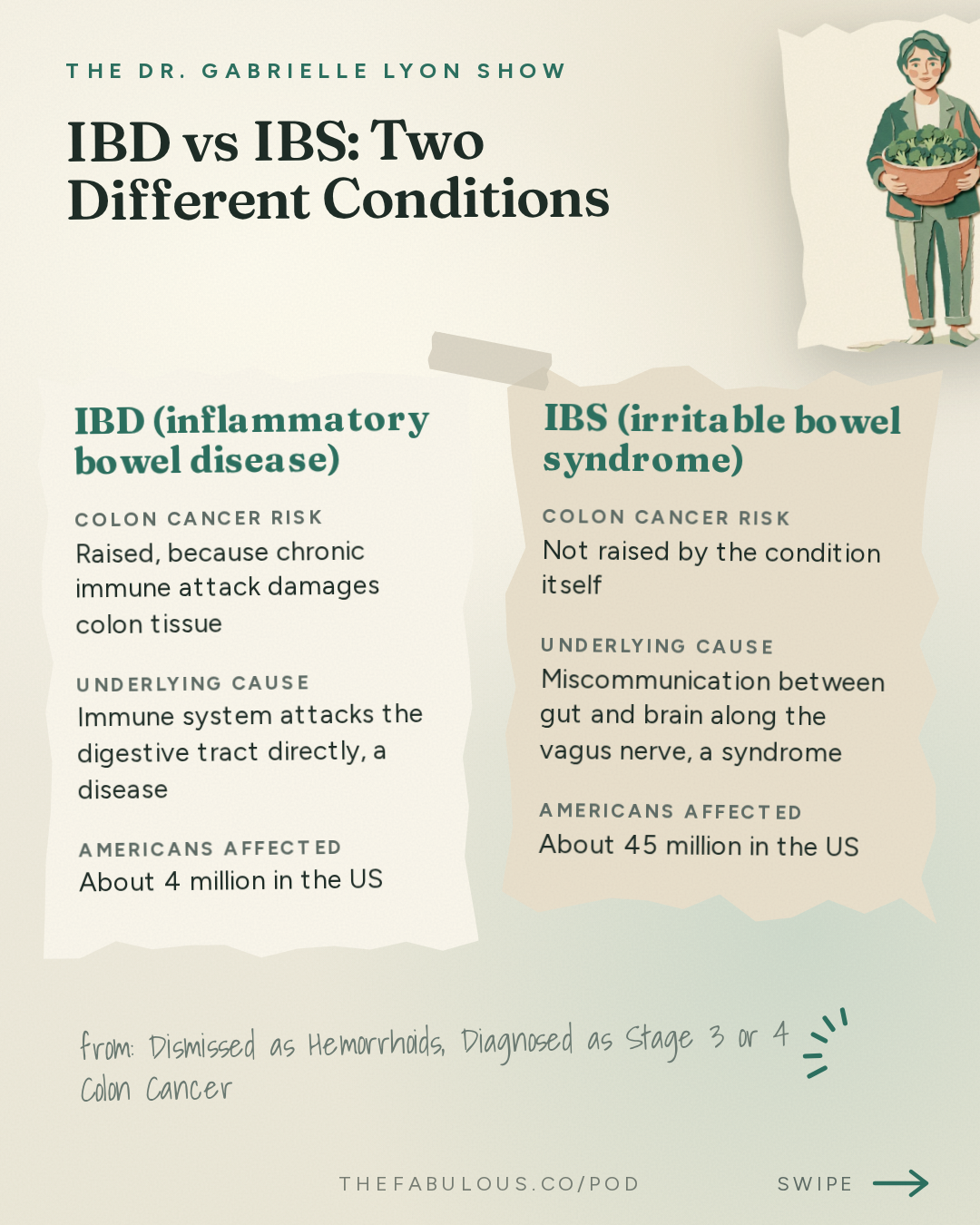
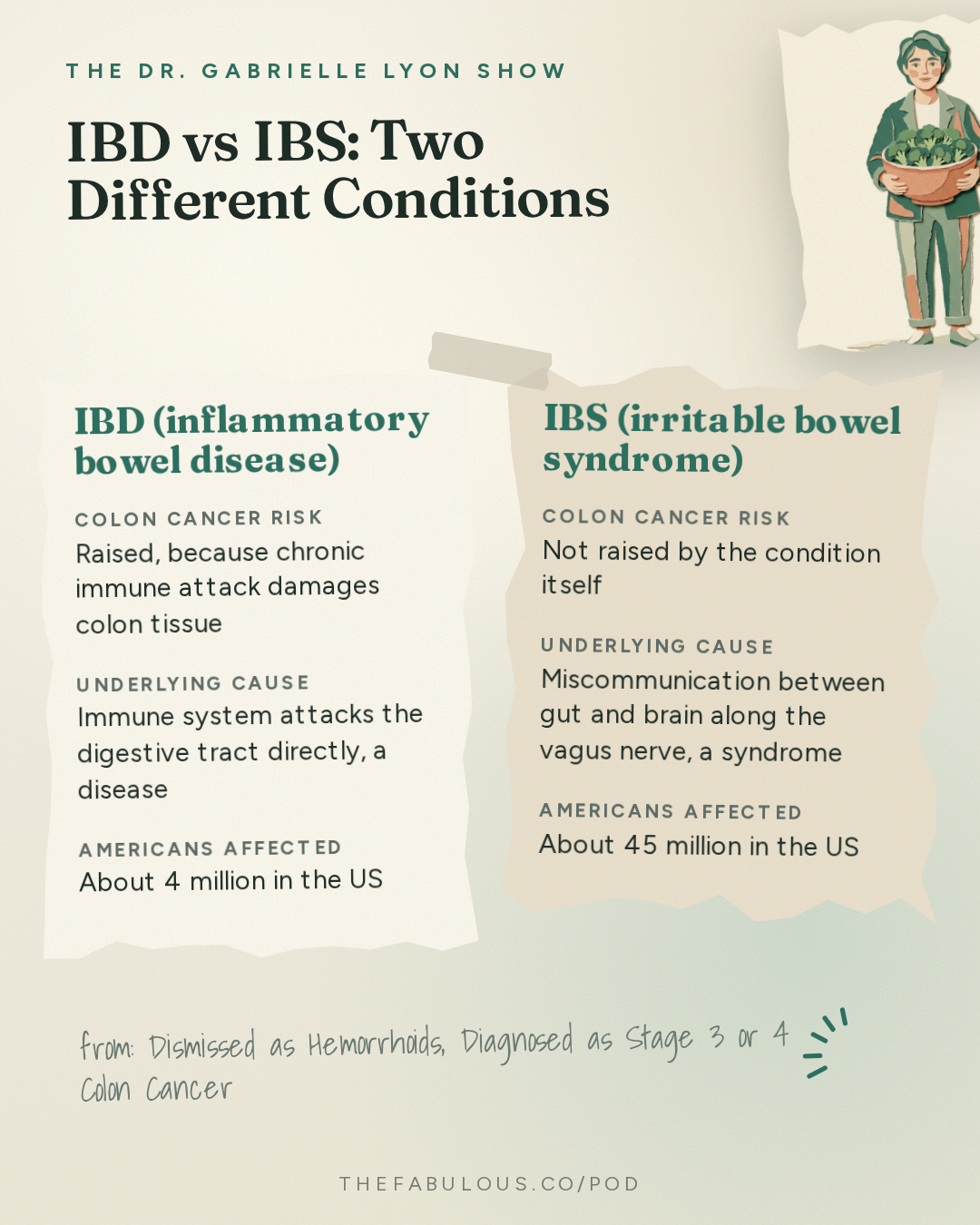
The confusion Melas ran into constantly, including from people close to her, is the assumption that IBD and IBS are the same thing. They are not. IBD is a disease: the immune system attacks the digestive tract directly, causing visible, physical damage that shows up on a colonoscopy. IBS, irritable bowel syndrome, is classified as a syndrome, a collection of symptoms like bloating, cramping, and diarrhea that is thought to stem from miscommunication between the gut and the brain along the vagus nerve (04:30). The distinction matters beyond semantics. As Melas puts it, IBS
does not increase your risk of colon cancer like IBD does(04:58). Roughly 45 million Americans live with IBS; about 4 million live with IBD (10:19). The gap between those numbers, Melas argues, is partly because IBD is under-diagnosed. People assume uncomfortable symptoms are just IBS, or lactose intolerance, or stress, and never get the colonoscopy that would catch something more serious, including celiac disease, diverticulitis, or colon cancer itself (37:05).
That delay falls disproportionately on women. Dr. Lyon cites a multi-center study of 190 newly diagnosed IBD patients: the average time from a woman's first doctor visit to an actual diagnosis was over a year, compared with four and a half months for men with Crohn's disease, and six months versus three months for ulcerative colitis (21:05). The symptoms do not present differently between sexes. What differs is how seriously they get taken; a woman describing stomach pain is often told it is anxiety. A 2025 qualitative study of women with IBS or IBD that Dr. Lyon references found that embarrassment itself becomes a barrier, discouraging women from seeking care in the first place and straining relationships and daily life along the way (19:00).
The stakes behind that delay are rising. Colon cancer, Melas says, is now the number one cancer killer of men and women under 50 in the United States, and both IBD and IBS rates are climbing (08:36). The recommended age for an initial screening colonoscopy has been lowered to 45, but Melas is blunt that the real barrier is cultural squeamishness, not medical risk.
If someone can look in our vagina, they should be able to look at our colon.(43:10) Colon cancer is slow-growing, which means it is also, in most cases, catchable early, if people stop treating a colonoscopy like a last resort.
What a Normal Bowel Movement Actually Requires
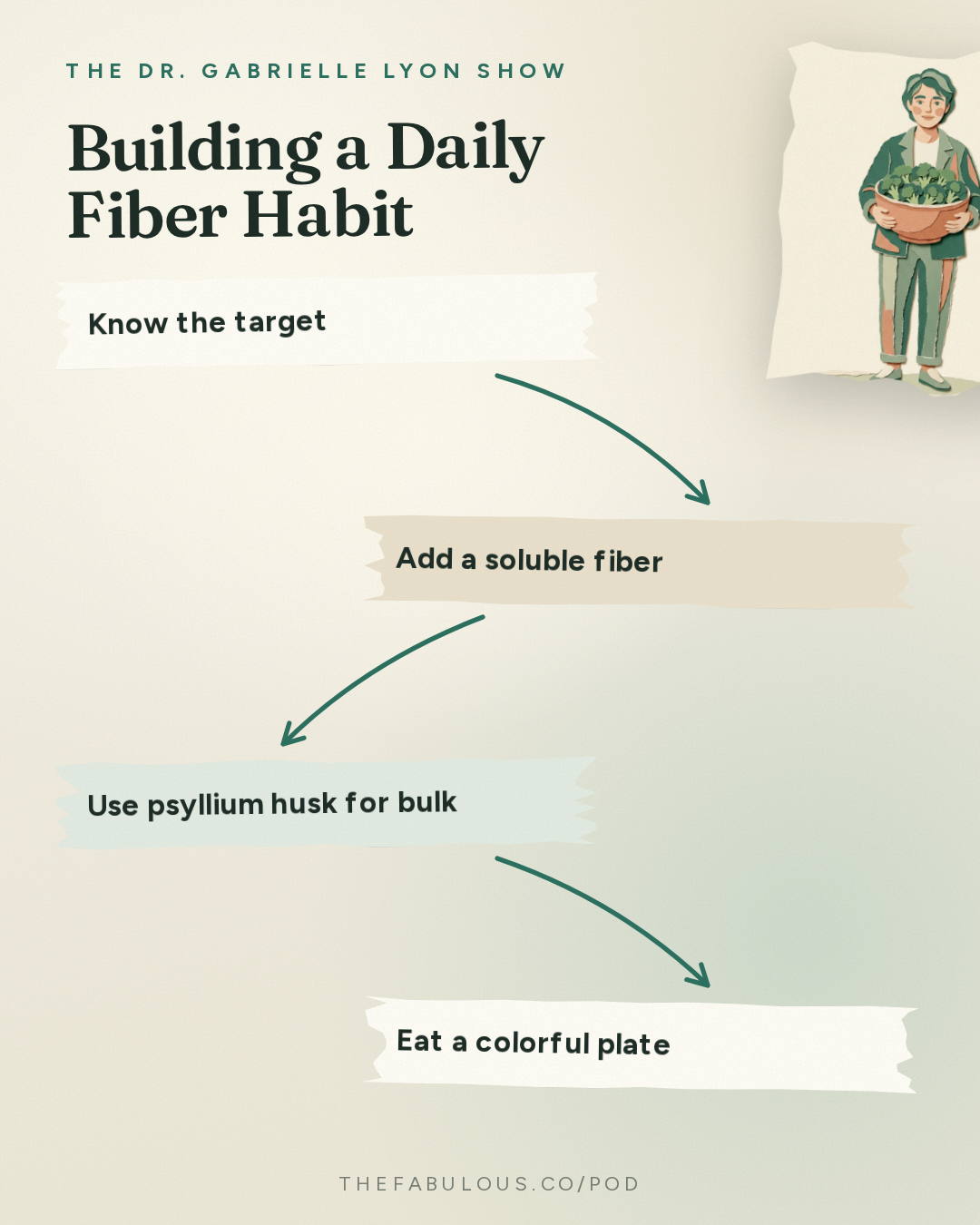
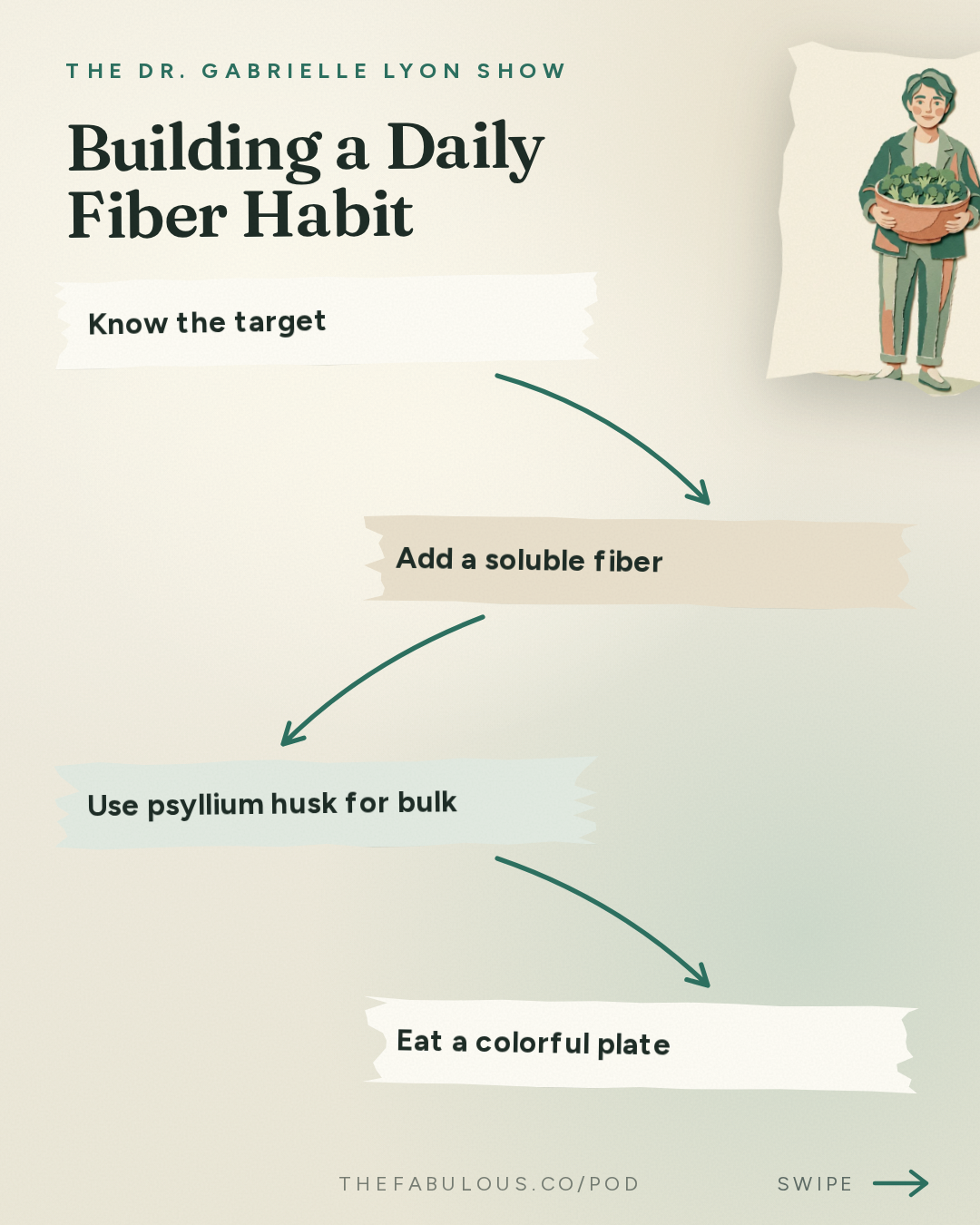
One gap nobody mentioned to Melas for fifteen years, across multiple doctors, was fiber. Women need roughly 30 grams of fiber a day, men roughly 40, yet the average American gets only 16 to 17 grams (23:58, 28:46). Melas assumed she was fine because she ate salads. Then she learned that an entire apple, skin, core, and all, contains only about 4 grams of fiber (24:21). Closing that gap with food alone is harder than it sounds, which is why she turned to psyllium husk, an insoluble fiber that does not dissolve in water but instead turns gel-like, acting, as she describes it, like a scrubber that gathers debris and bulks up stool as it moves through the intestines (32:10). She calls it, somewhat jokingly, nature's natural GLP-1, since adequate fiber also supports cholesterol levels, satiety, and weight management (32:33). Not every fiber works the same way for every gut; Melas found that inulin and chicory root left her doubled over with gas, while psyllium husk gave her what she calls, without irony, beautiful bowel movements (29:20).
Melas also believes her twenties set the stage for her diagnosis, not through any single cause but through an accumulation of urgent care visits and repeated rounds of antibiotics, including Cipro and Flagyl, prescribed for minor infections (33:52). It was after one round of Cipro that she first noticed blood in her stool. Her theory, which she is careful to call personal belief rather than settled science, is that repeated antibiotic use wiped out her gut flora, the bacterial population that keeps the digestive tract functioning, without anything in her diet or lifestyle to rebuild it (34:24). Protein played a role too. Enterocytes, the cells lining the gut, rely on an essential amino acid called threonine to produce mucin, the protective mucus layer inside the intestines, which is part of why a low protein diet can leave the gut unable to repair itself (46:07).
Celiac disease adds another layer of complication, because it is often mistaken for simple gluten sensitivity. Melas spoke with Dr. Benjamin Lebwohl, a Columbia University gastroenterologist and past president of the Society for the Study of Celiac Disease, who explained that celiac disease is a genetic autoimmune condition: the body treats gluten as a foreign invader, and if a parent or child has it, there is a 10 percent chance of developing it too (42:20). The practical catch is that testing requires eating gluten beforehand. Anyone already avoiding gluten before a blood test risks a false negative, since the antibodies the test looks for will not be present (40:53). Self-diagnosing a gluten-free lifestyle, however common it has become, can mean missing the actual diagnosis.
Perhaps the most striking fact in the whole conversation is historical. Beginning in the 1930s, ulcerative colitis was classified as a psychosomatic disease, meaning doctors believed a patient's psychological profile caused the physical illness, rather than treating it as a disease process in its own right (63:14). That framework shaped decades of dismissive care, and traces of it linger every time a woman's stomach pain gets waved off as stress. Melas and her co-author, Judy Battalion, call their book a bowel movement movement, and the phrase works as more than wordplay. The goal is not just better fiber habits or earlier colonoscopies, though both matter. It is permission to say, plainly, that the stool in the toilet is a daily health report, and that reading it honestly, rather than flushing past it in embarrassment, is sometimes the difference between a hemorrhoid and a disease that has already been building for years.
Ask this episode anything
Pod's AI answers from the episode itself, with the minute mark so you can hear it yourself.
Or start with one of these
Ask this episode
Pod's AI listens to the whole episode to answer, and points you to the minute it comes from.
The rest of this answer, and any question after it
Answers come from the episode itself, never from a summary of it.
ContinueKey takeaways
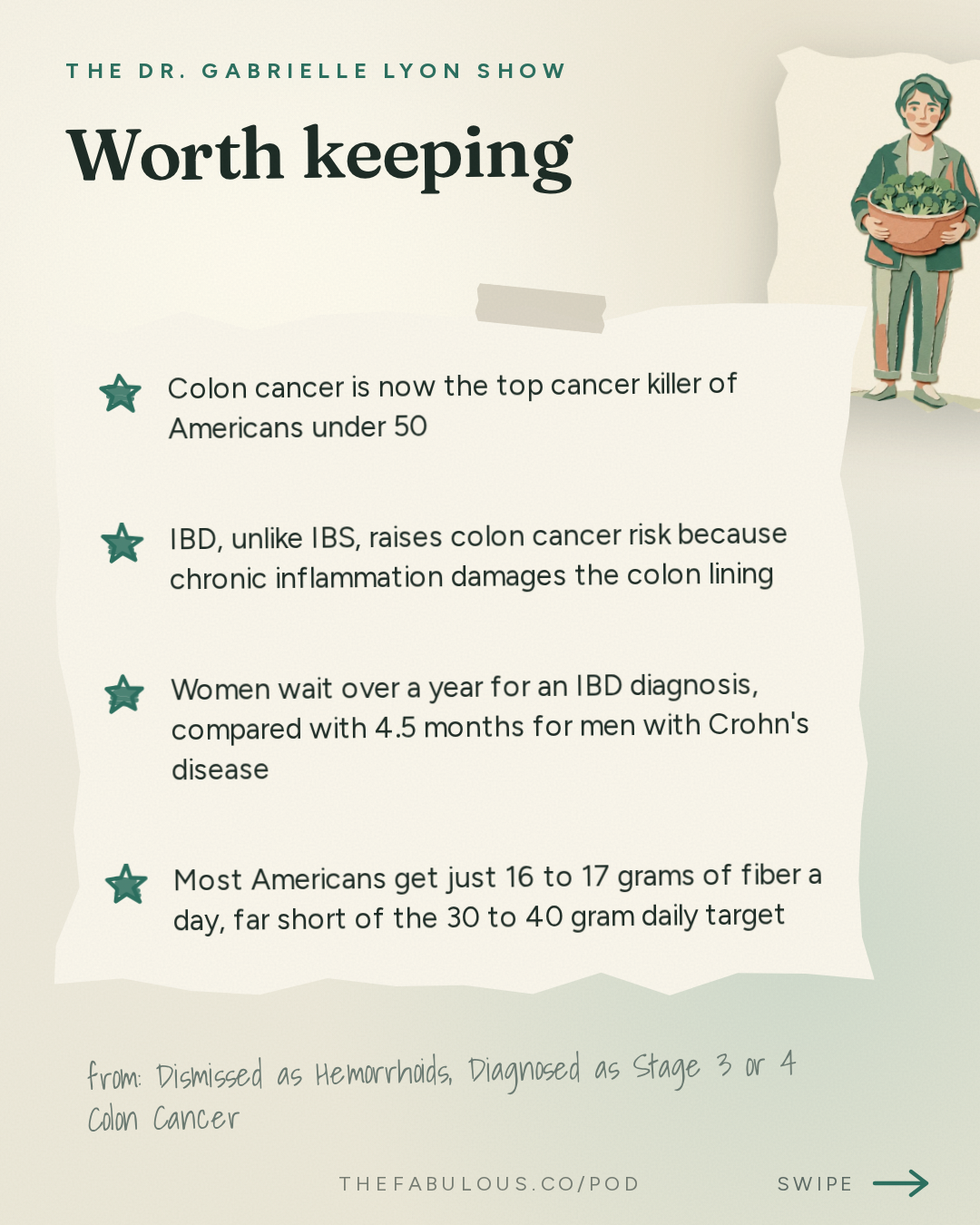
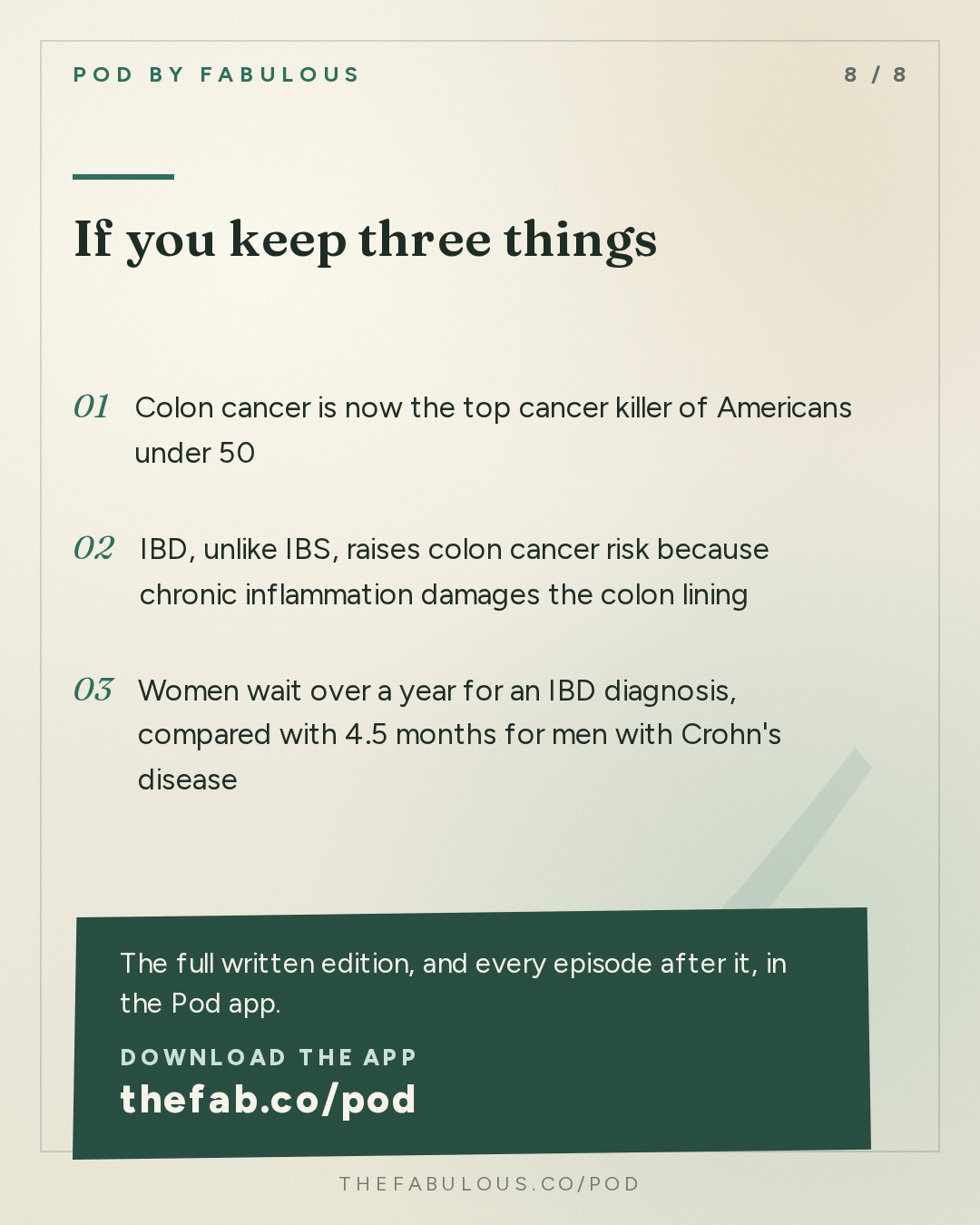
- Colon cancer is now the top cancer killer of Americans under 50
- IBD, unlike IBS, raises colon cancer risk because chronic inflammation damages the colon lining
- Women wait over a year for an IBD diagnosis, compared with 4.5 months for men with Crohn's disease
- Most Americans get just 16 to 17 grams of fiber a day, far short of the 30 to 40 gram daily target
- Antibiotics like Cipro and Flagyl can wipe out gut bacteria and may help trigger IBD
The episode in cards

By the numbers
- 45 years current recommended age to start screening colonoscopies
- 10% percent genetic risk of developing celiac disease if a parent or child has it
In their words
“Your stool, your poop, is your daily health report card.”
“Colon cancer- It is the number one cancer killer of men and women under the age of 50 in the US”
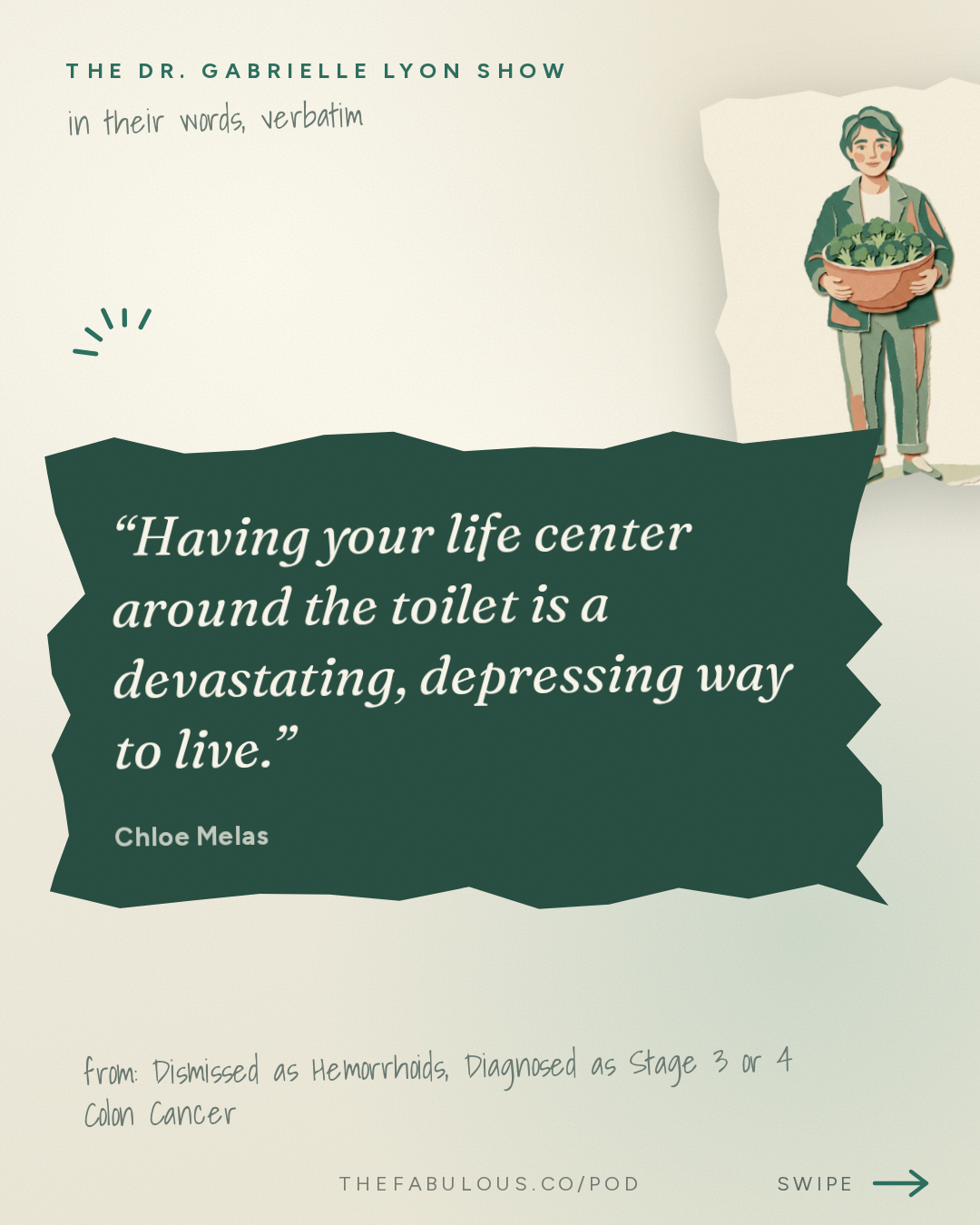
“Having your life center around the toilet is a devastating, depressing way to live.”
“We're not raising kids. We're raising adults.”
Protocols
-
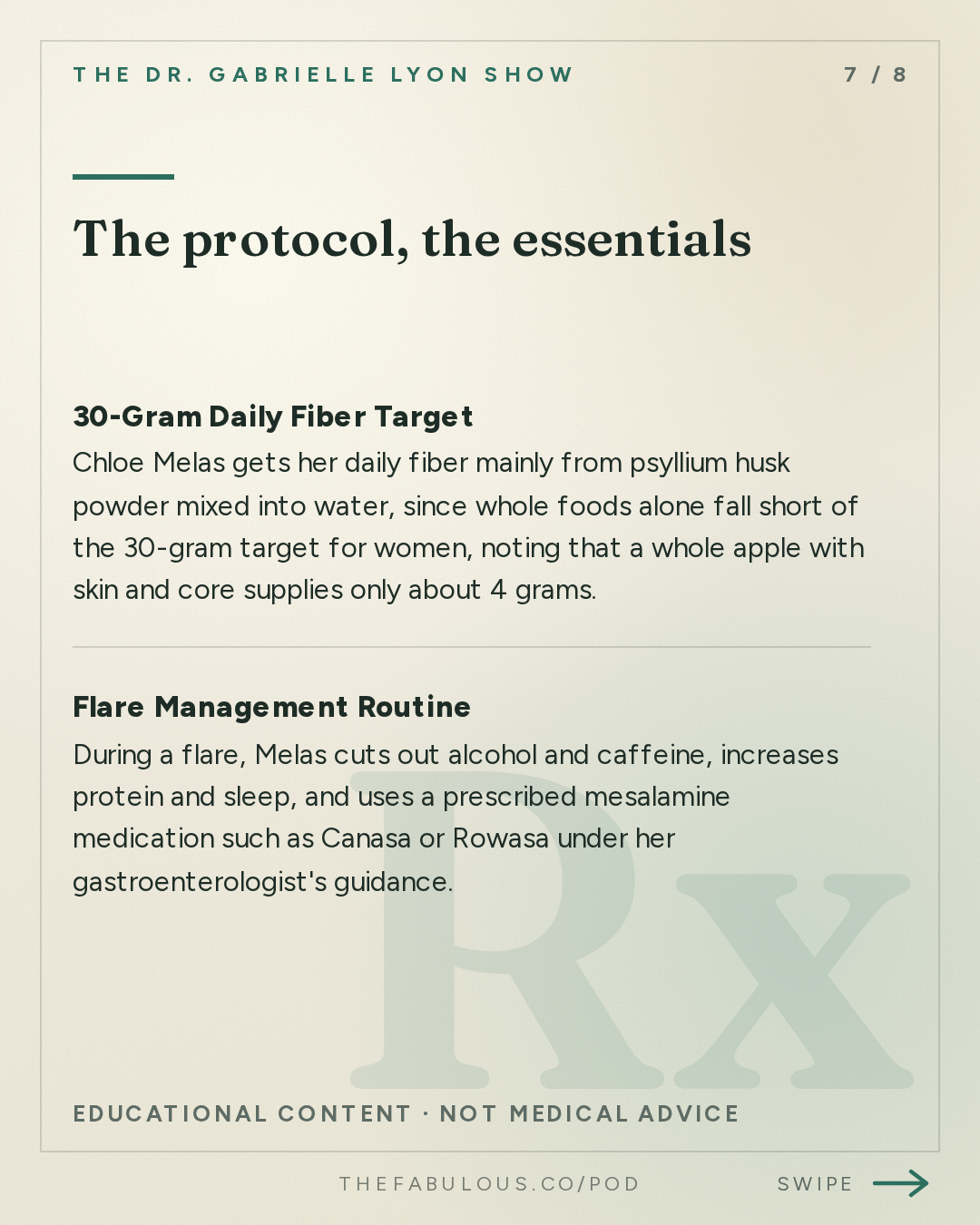
30-Gram Daily Fiber Target
Chloe Melas gets her daily fiber mainly from psyllium husk powder mixed into water, since whole foods alone fall short of the 30-gram target for women, noting that a whole apple with skin and core supplies only about 4 grams.
daily
-
Flare Management Routine
During a flare, Melas cuts out alcohol and caffeine, increases protein and sleep, and uses a prescribed mesalamine medication such as Canasa or Rowasa under her gastroenterologist's guidance.
during flares
-
Cold-and-Straw Colonoscopy Prep
Melas chills her colonoscopy prep liquid in the refrigerator for several hours and drinks it quickly through a straw to get through it without vomiting.
before each colonoscopy
-
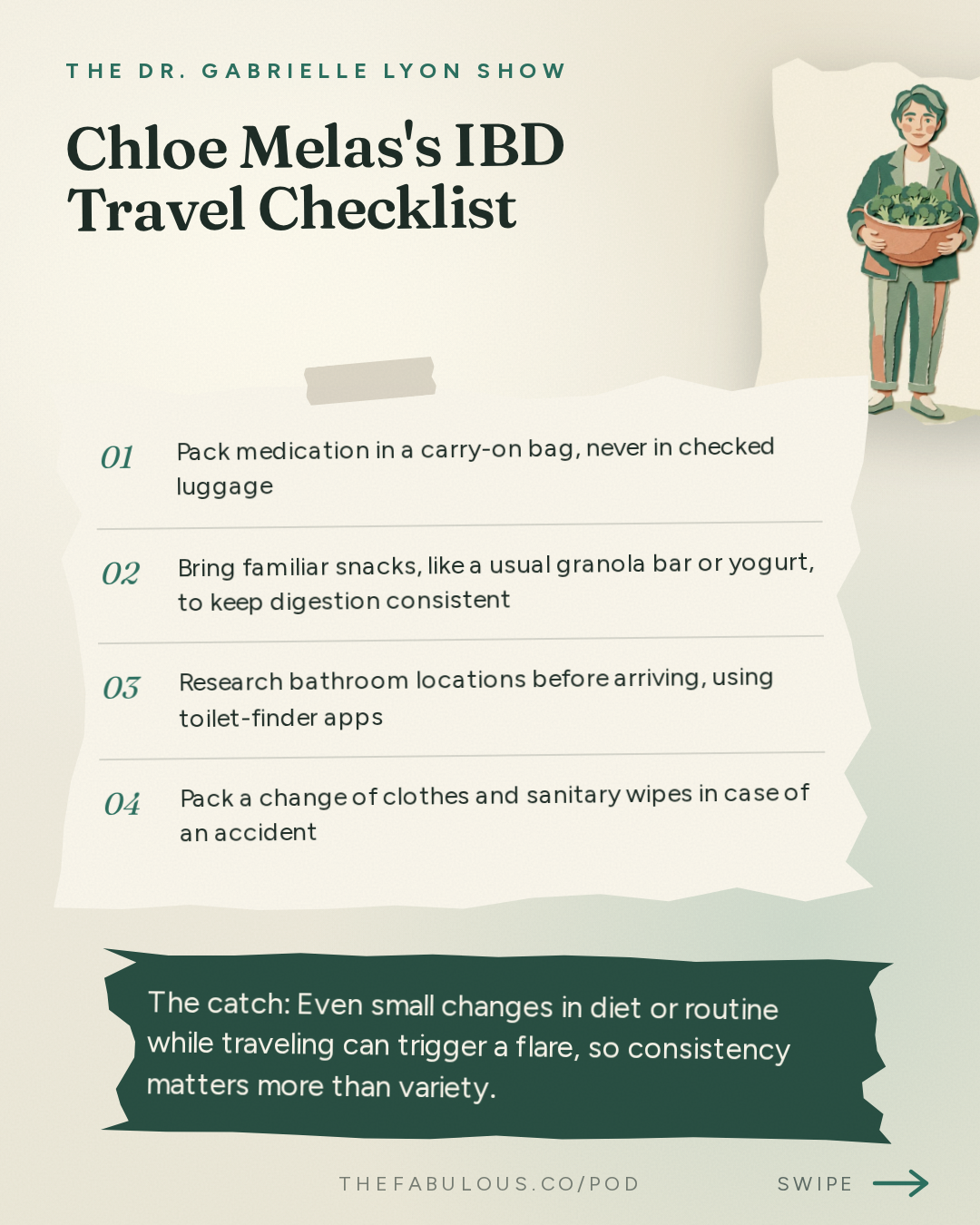
Carry-On Medication Rule
Melas always packs her IBD medication in her carry-on bag rather than checked luggage, because a lost suitcase could leave her without treatment while traveling, especially abroad.
every trip
Questions this episode answers
What is the difference between IBD and IBS?
Inflammatory bowel disease (IBD) is an autoimmune condition where the immune system attacks the digestive tract, while irritable bowel syndrome (IBS) is a functional disorder tied to miscommunication between the gut and brain along the vagus nerve. Only IBD raises colon cancer risk, a distinction NBC correspondent Chloe Melas says is often lost on patients (04:58).
Does IBS increase colon cancer risk?
No. Unlike inflammatory bowel disease (IBD), irritable bowel syndrome (IBS) does not raise colon cancer risk, even though it affects an estimated 45 million Americans compared with about 4 million who have IBD (04:58).
What are warning signs of colon cancer in young adults?
Colon cancer is now the number one cancer killer of men and women under 50 in the United States, and persistent blood in the stool that gets dismissed as a hemorrhoid can be an early warning sign, as NBC correspondent Chloe Melas describes from her own reporting (08:36).
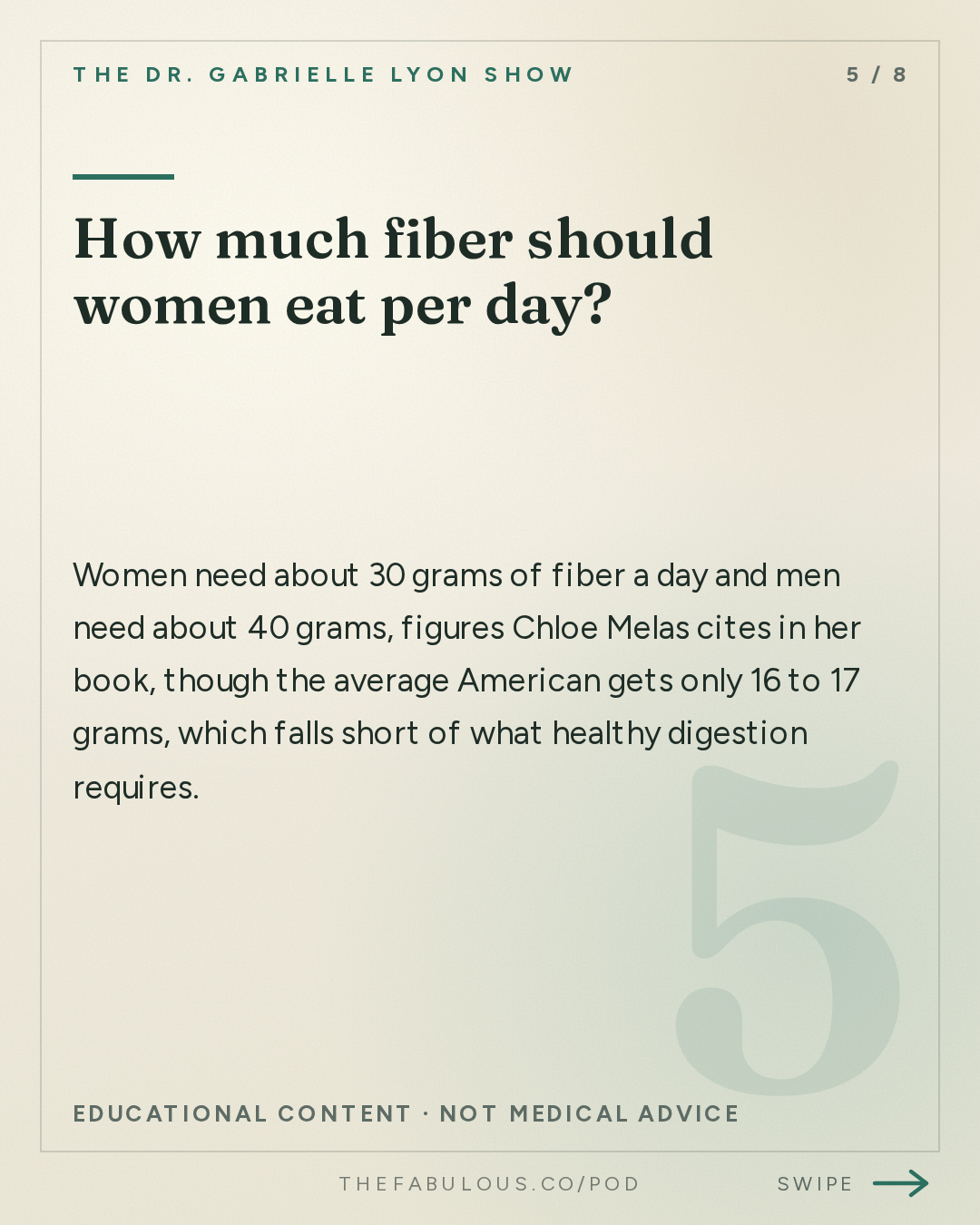
How much fiber should women eat per day?
Women need about 30 grams of fiber a day and men need about 40 grams, figures Chloe Melas cites in her book, though the average American gets only 16 to 17 grams, which falls short of what healthy digestion requires (23:58).
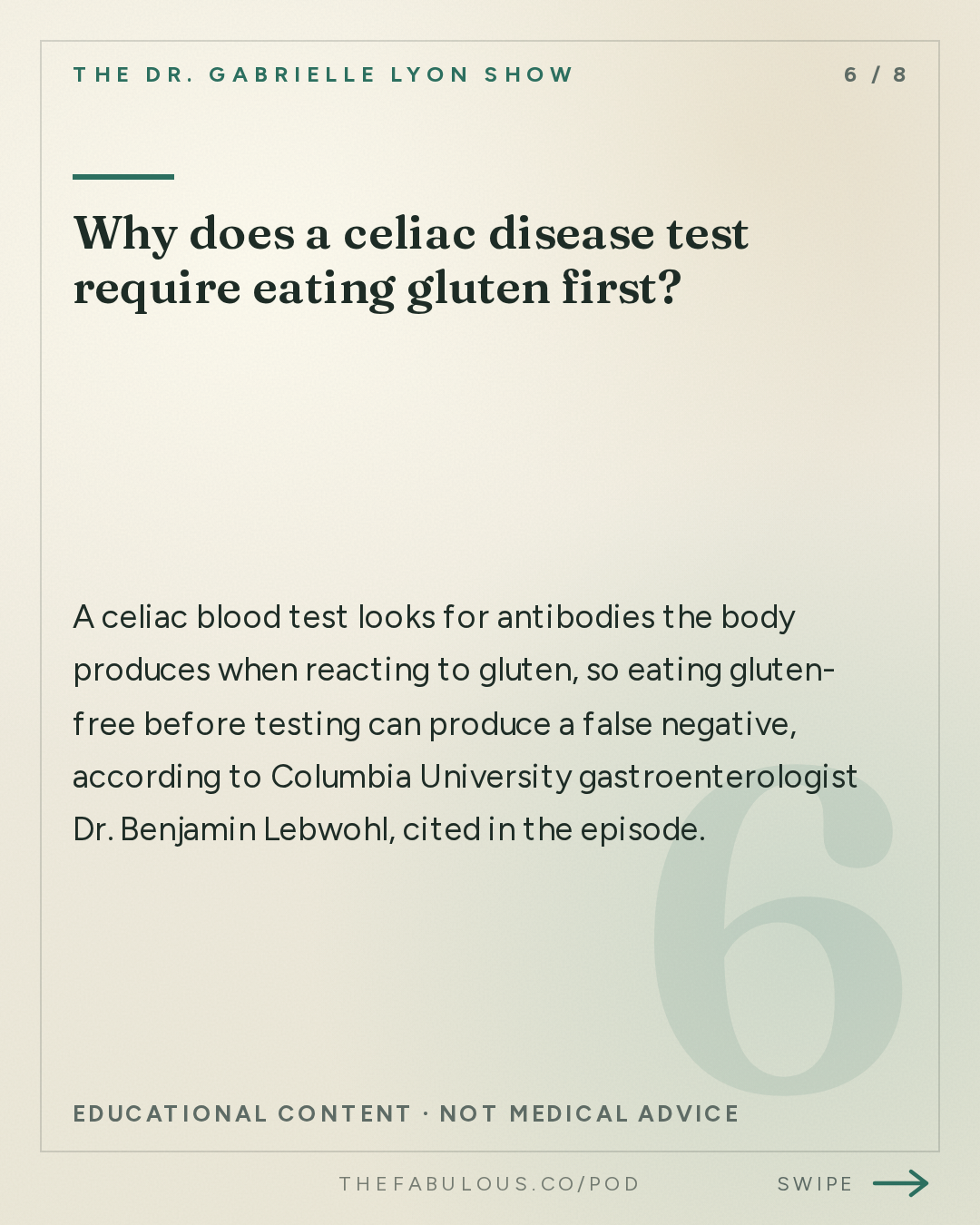
Why does a celiac disease test require eating gluten first?
A celiac blood test looks for antibodies the body produces when reacting to gluten, so eating gluten-free before testing can produce a false negative, according to Columbia University gastroenterologist Dr. Benjamin Lebwohl, cited in the episode (42:20).
Why do women wait longer than men for an IBD diagnosis?
A multi-center study of 190 newly diagnosed IBD patients found women waited over a year for diagnosis compared with 4.5 months for men with Crohn's disease, a gap Chloe Melas links to doctors dismissing women's stomach symptoms as anxiety (21:05).
The full read, in cards
Go deeper
- The Girls' Guide to Guts — Chloe Melas and Judy Battalion's book on living with IBD and IBS, including diagnostic tools and personal stories
- 2025 qualitative study of women with IBS or IBD — found embarrassment is a major barrier to women seeking help for gut symptoms
- Multi-center study of 190 newly diagnosed IBD patients — found women wait over a year for diagnosis versus 4.5 months for men with Crohn's disease
Mentioned
Chloe Melas · The Girls' Guide to Guts · Judy Battalion · Bristol Stool Chart · Dr. William Lee · Dr. Benjamin Lebwohl · Tiny Health · BioMe · NBC News
More from this show and category
Retatrutide Triumph-1 Trial Results Explained
Retatrutide's Triumph-1 phase 3 trial produced an average 25% body weight loss at the highest dose over 80 weeks, with some lean mass loss that tracks in line with other obesity drugs rather than exceeding it. Preserving muscle depends on resistance training and adequate protein, not the drug itself.
Beef vs Soy Protein: What Muscle Research Shows
Muscle physiologist Dr. David Church found that four ounces of beef raised blood amino acids more than eight ounces of a soy-based patty, and that testosterone builds muscle mainly by recycling amino acids inside cells rather than boosting new synthesis. He also argues true protein needs run near 1.27 g/kg a day, well above the 0.8 g/kg RDA.
Essential Amino Acids and Muscle Protein Synthesis
The body doesn't have a protein requirement, it has an essential amino acid requirement: nine amino acids it cannot make itself (01:33). Animal foods pack more of them per gram than plants do (07:39), aging raises the dose needed to trigger muscle building (17:27), and about 30 grams of protein usually clears the 2.5-gram leucine threshold that switches on recovery (11:35).
Eating Before Bed: What Pre-Sleep Protein Research Shows
A small protein snack 30 minutes before bed does not spoil fat metabolism, and exercise erases any downside. Florida State researcher Dr. Mike Ormsbee's microdialysis and bariatric-diet studies show resistance training protects muscle during severe calorie cuts, casein and whey work equally well, and extra protein is not stored as fat.
