
Retatrutide Triumph-1 Trial Results Explained
Does Retatrutide Cause Muscle Loss? The TRIUMPH-1 Phase 3 Results Explained
▶ Listen to the full episode More from The Dr. Gabrielle Lyon Show
The brief
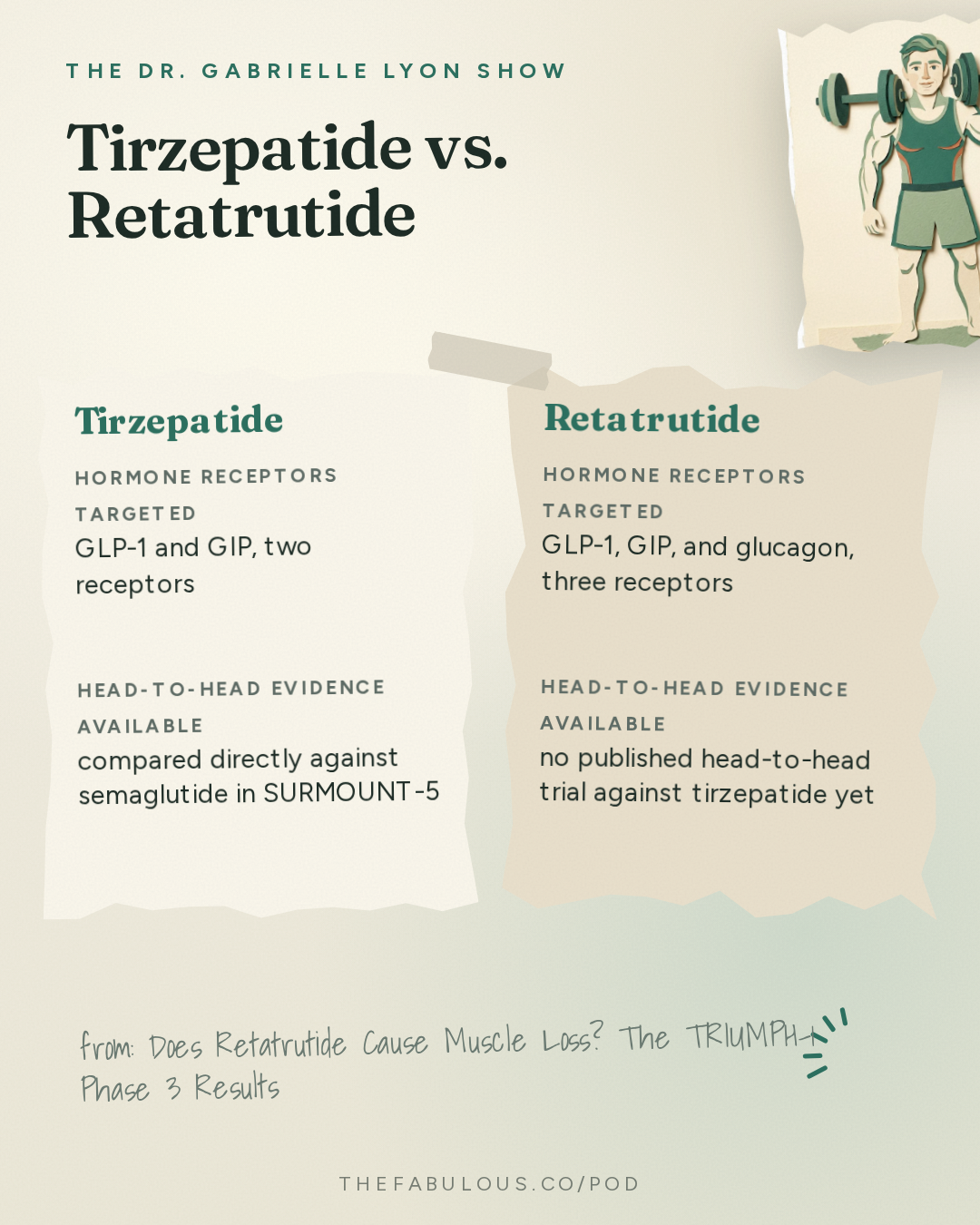
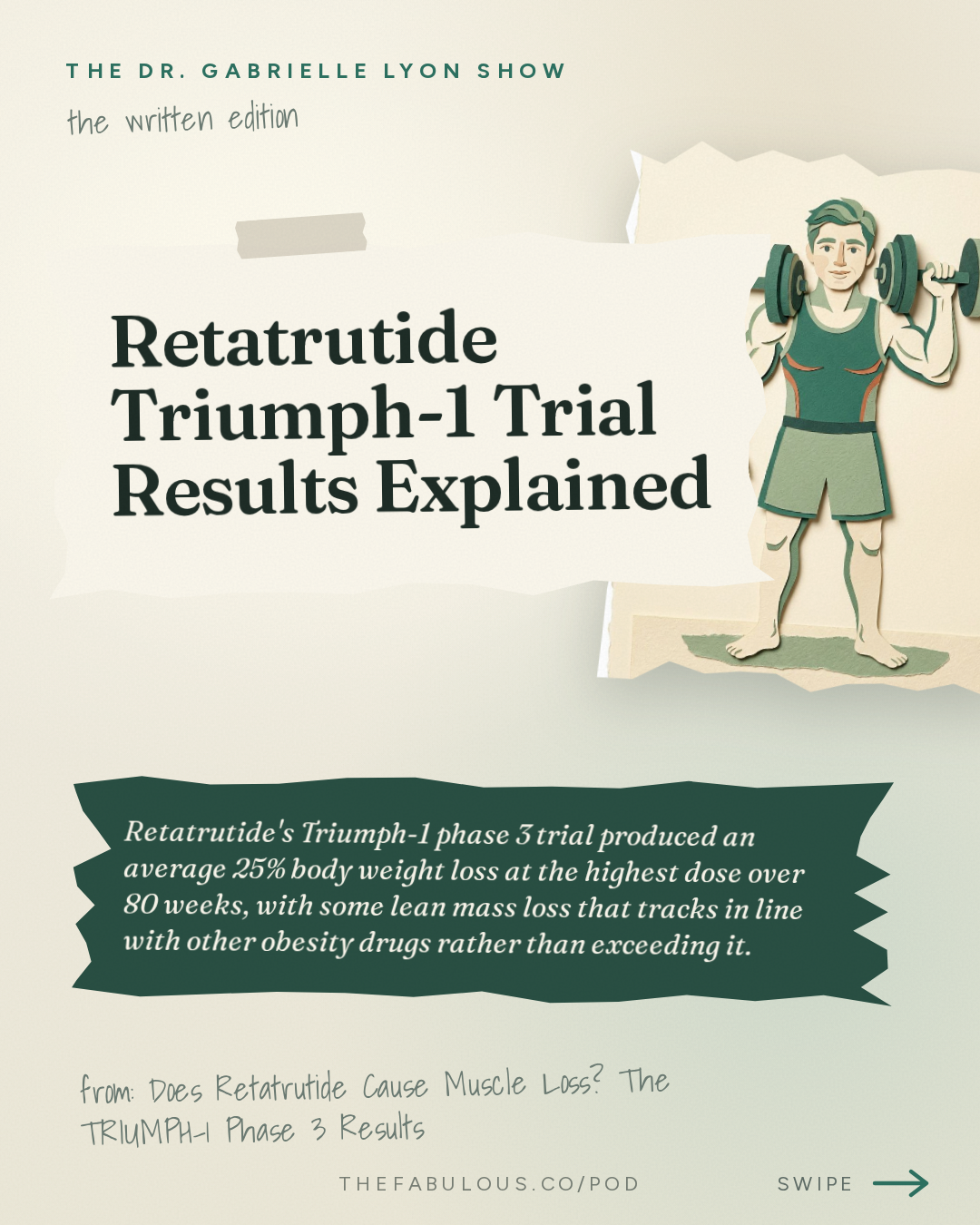
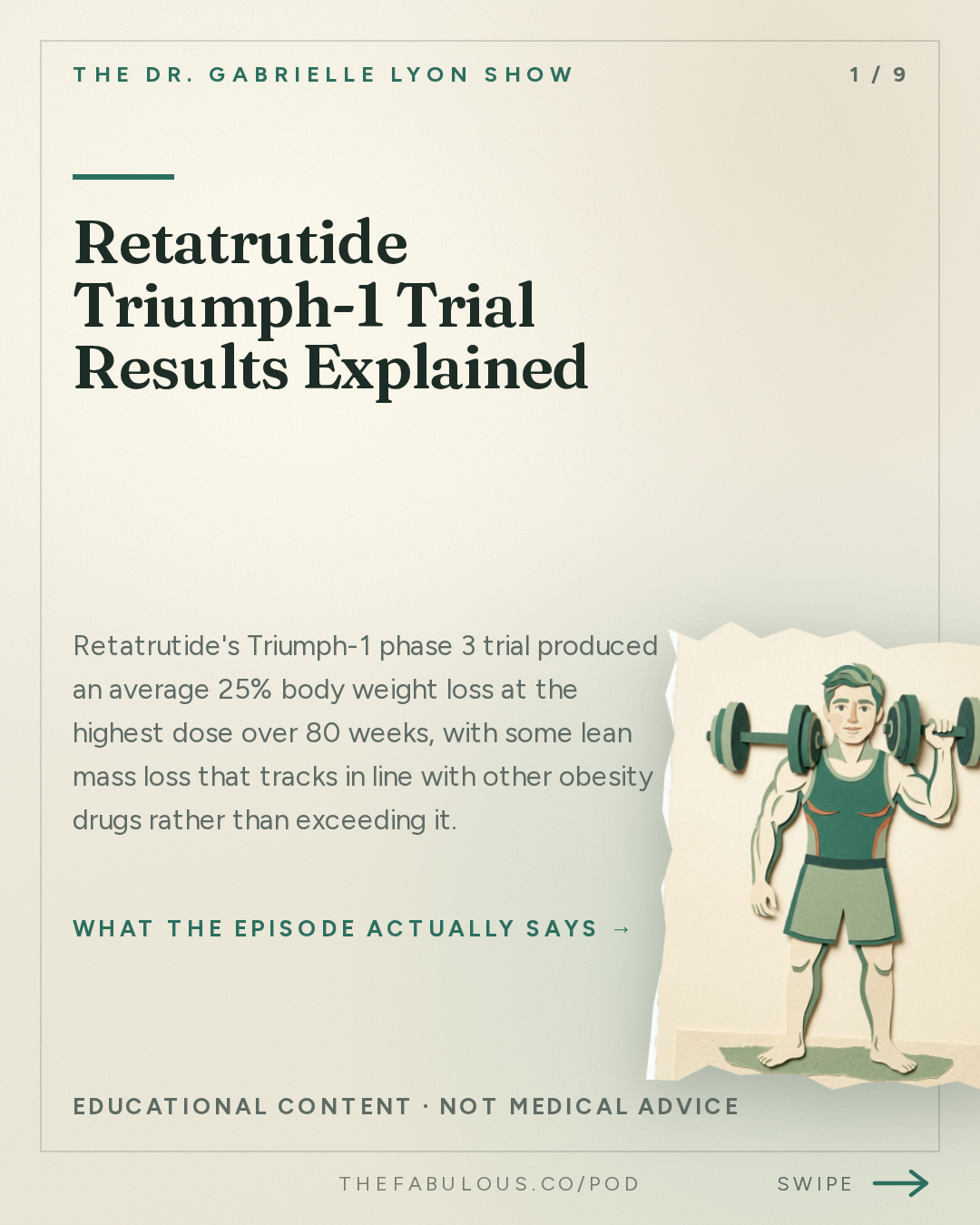
Retatrutide's Triumph-1 phase 3 trial produced an average 25% body weight loss at the highest dose over 80 weeks, with some lean mass loss that tracks in line with other obesity drugs rather than exceeding it. Preserving muscle depends on resistance training and adequate protein, not the drug itself.
Some people in a major obesity drug trial asked their doctors to stop the medication. Not because it made them sick, but because it worked too well. At the highest dose of a new drug called retatrutide, 5.3% of participants reduced or discontinued treatment because they had already lost more weight than they wanted (26:37). That detail, tucked near the end of a landmark paper, says more about the current moment in obesity medicine than any single efficacy number. The question used to be whether a drug could move the scale at all. Now the question is how to turn an unprecedented tool into something a body can actually use well.
On her show, physician Gabrielle Lyon walks through that paper, a phase three trial called Triumph-1, published in the New England Journal of Medicine (01:01). A phase three trial is the large, late stage study drug companies run before asking regulators for approval. It tests whether a drug works in the population it is meant to treat and gathers safety data from hundreds or thousands of people (02:25). Triumph-1 tested retatrutide, nicknamed Retta, in adults with obesity who did not have diabetes.
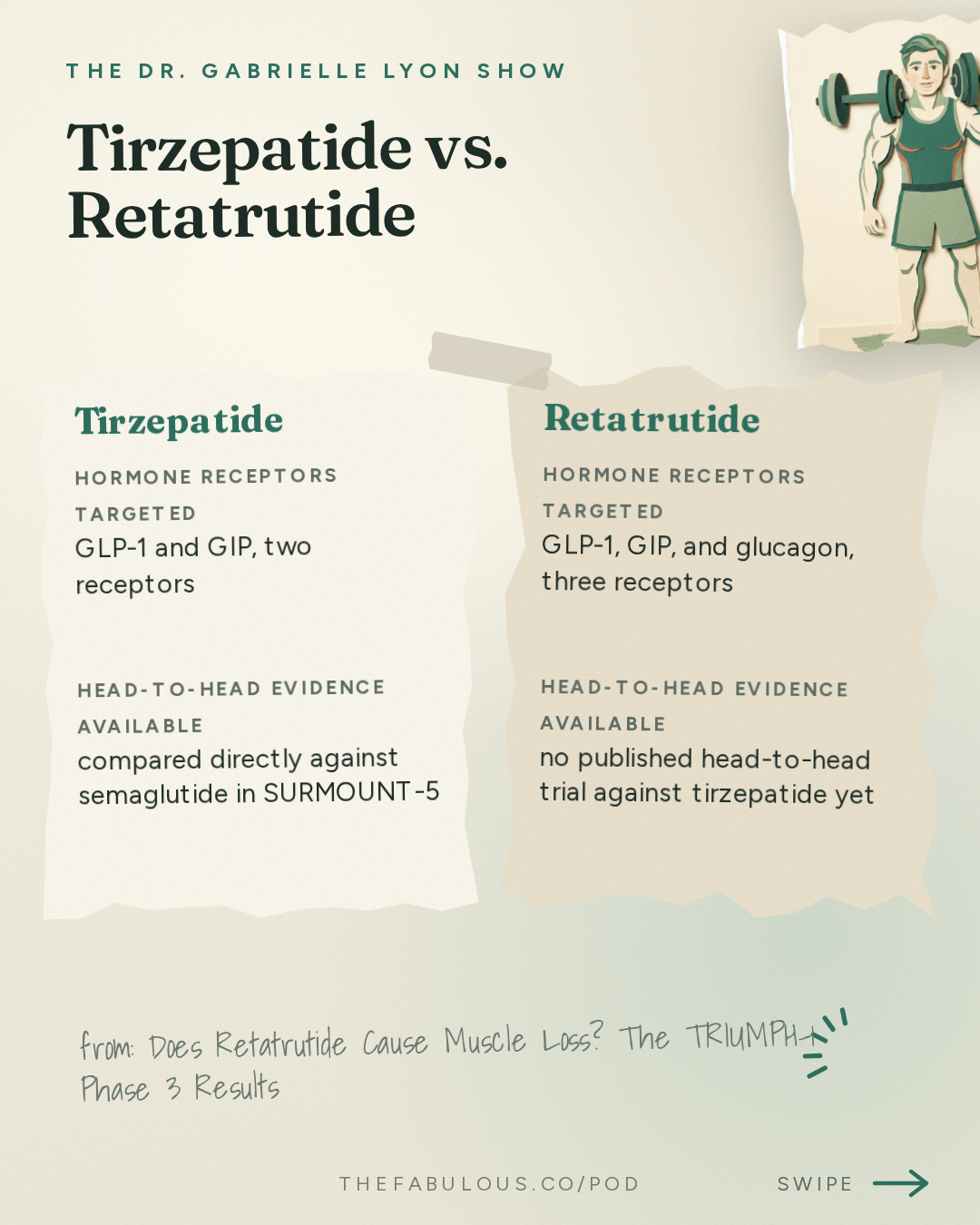
What separates Retta from the drugs already on pharmacy shelves is chemistry. Semaglutide works on one hormone receptor, GLP-1, which acts on the brain to lower appetite and slows how fast the stomach empties (03:33, 04:09). Tirzepatide added a second receptor, GIP, which sharpens the GLP-1 effect in the brain and pancreas. Retatrutide adds a third: glucagon, a hormone normally released during fasting to raise blood sugar and mobilize fat for fuel (04:41). Stacking three receptor targets instead of one or two is why Lyon calls it a triple hormone agonist, and why the weight loss numbers look so different from anything that came before it.
Triumph-1 enrolled 2,339 adults across 131 sites in 11 countries, randomly assigned to weekly injections of 4, 9, or 12 milligrams of retatrutide, or placebo, for 80 weeks (07:26). Everyone received counseling on diet and exercise, but the study did not prescribe a specific calorie target, so whatever weight came off reflects the drug's effect on appetite and metabolism rather than a diet plan layered on top. Built into the trial were two sub-studies, one in 547 people with moderate to severe knee osteoarthritis and another in 243 people with obstructive sleep apnea (07:56), letting researchers ask not just whether the drug shrank people, but whether that shrinkage changed how their joints and breathing behaved.
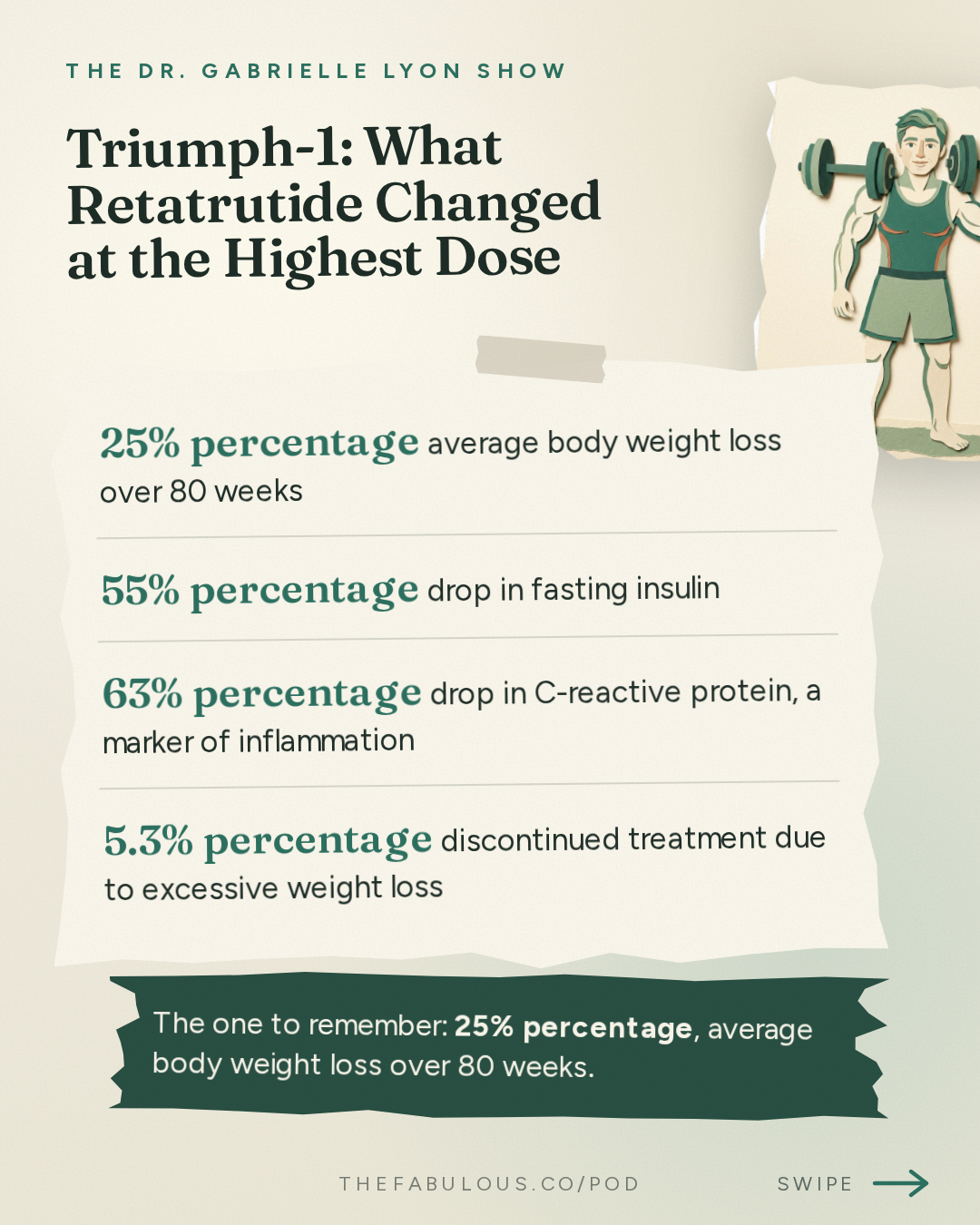
The headline numbers are the reason the episode exists. At the highest dose, participants lost an average of 25% of their body weight over 80 weeks (05:10). More than a third lost at least 30%. One in five lost at least 35% (05:10). The average participant started at 248 pounds with a BMI around 40 (05:39), so a 25% loss means roughly 62 pounds gone, with the most extreme responders losing closer to 87 pounds. Over half of the highest dose group brought their BMI from the obese range down below 30, and about a quarter ended the trial with a BMI under 25, the normal weight threshold (11:28). A later extension phase pushed the mean loss closer to 30% at 104 weeks (12:33), suggesting the 80 week numbers may understate what is achievable. For comparison, bariatric surgery typically produces 15% to 30% weight loss depending on the procedure (10:04). A once weekly injection now sits in the same range as surgery.
The physiological changes that came with that weight loss were broad. At the 12 milligram dose, waist circumference fell by 8.5 inches, systolic blood pressure dropped 10 mm Hg, triglycerides fell 38%, fasting insulin fell 55%, and C-reactive protein, a blood marker of systemic inflammation, dropped 63% (13:41). Lyon is careful to note that some of this may reflect the drug acting directly on tissue, and some may simply be what happens to a body carrying sixty fewer pounds of mechanical and metabolic load.
"Obesity mechanically loads the joints, the respiratory physiology. It creates a ton of weight. It alters insulin sensitivity. It increases ectopic and visceral fat." Gabrielle Lyon [15:06]
The Muscle Question
But Lyon's real interest is not the scale. It is what kind of weight comes off. Triumph-1 itself did not run body composition scans, so the best available data on lean mass comes from an earlier phase two sub-study, done in people with type 2 diabetes rather than the obesity-only population studied in Triumph-1 (16:43). In that sub-study, lean mass fell by up to 12.5%, or roughly 14 pounds, at an 8 milligram dose. Worked out as a share of total weight lost, that puts muscle and other fat-free tissue at somewhere between 30% and 40% of what came off, which sounds alarming until it is placed next to the rest of the field. A separate review found retatrutide's relative lean mass loss sits within the range reported for other obesity drugs already in use (17:47), and across dieting in general, regardless of drug, roughly 20% to 40% of weight lost is typically fat-free mass, which includes organs and bone as well as muscle (18:11). Retatrutide is not uniquely hard on muscle. Neither is any other current approach to weight loss, drug or diet.
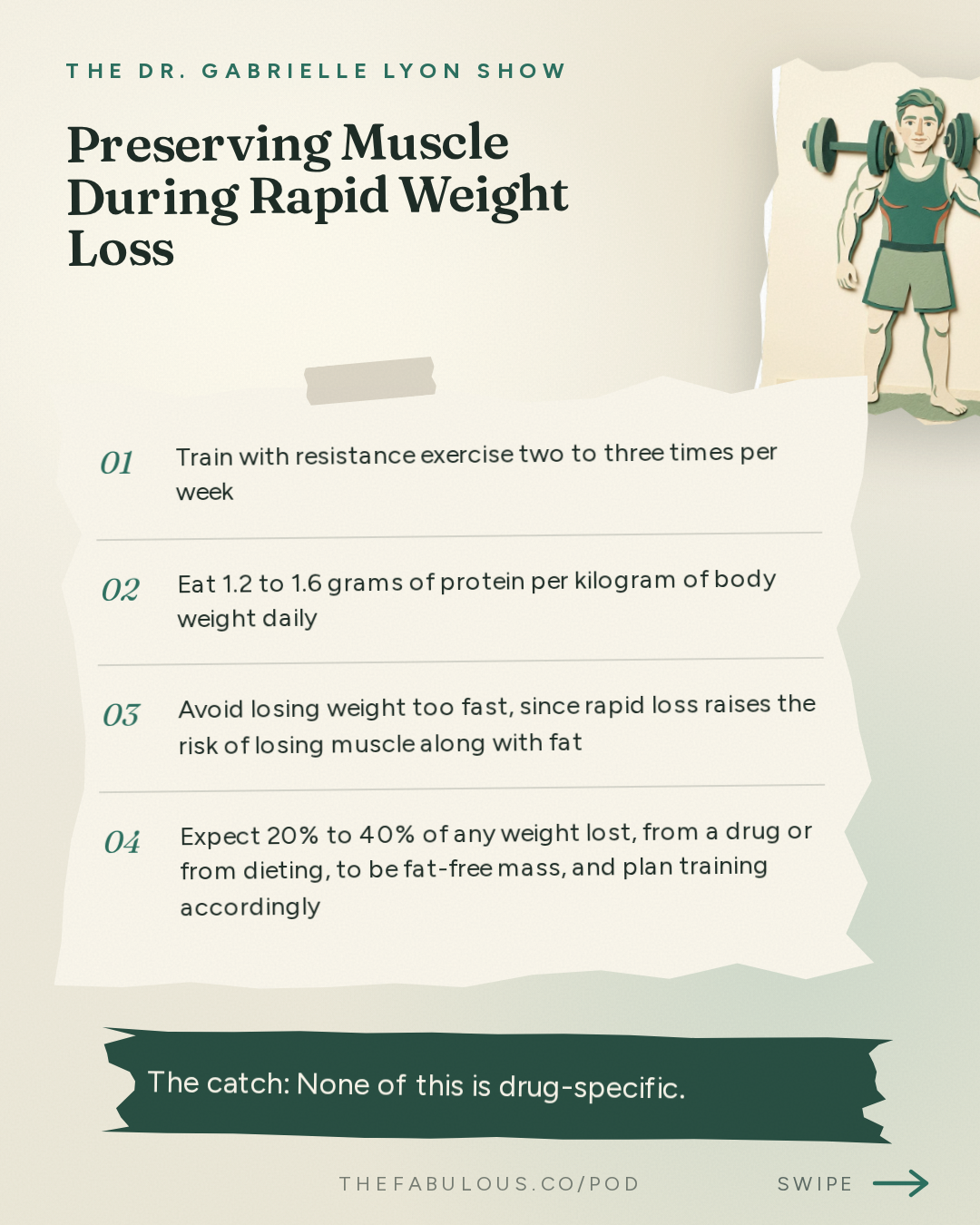
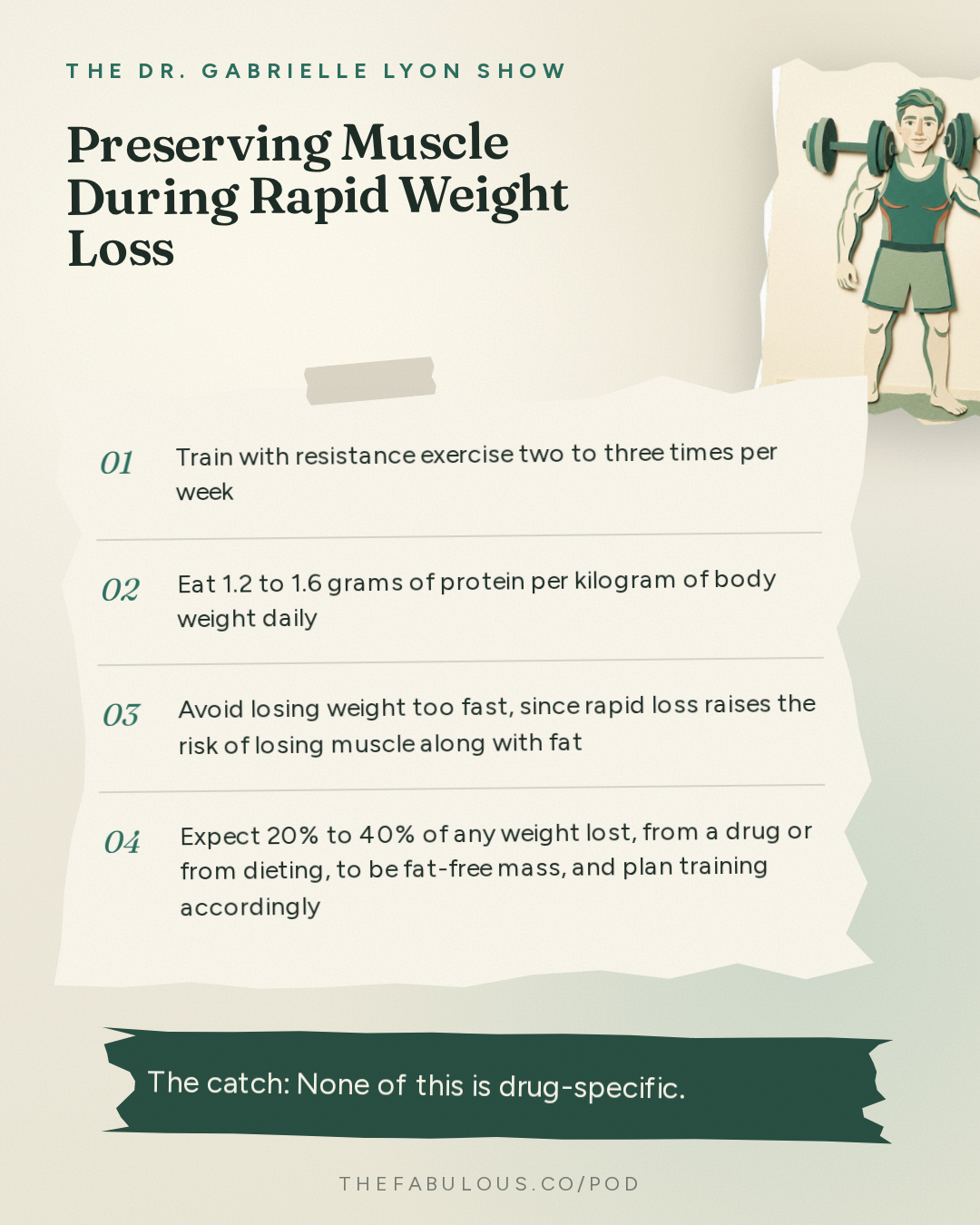
What does protect muscle, by Lyon's account, is not the drug. It is resistance training and protein, applied on purpose. She points to a controlled study by researcher Longland and colleagues, who put recreationally active young men on a 40% calorie deficit for four weeks while they trained six days a week, eating either 1.2 or 2.4 grams of protein per kilogram of body weight (19:06). Both groups gained fat-free mass during the deficit, a result that runs against the usual assumption that any calorie deficit costs muscle. The higher protein group gained significantly more lean mass on top of losing more fat (19:37). Separate meta-analysis data show resistance training alone can prevent most of the lean mass loss that caloric restriction would otherwise cause (20:15). Lyon's arithmetic: training two to three times a week and eating 1.2 to 1.6 grams of protein per kilogram of body weight are the two levers that decide whether weight loss costs muscle or spares it, no matter which drug, if any, is driving the deficit.
"If modern obesity medicine gives us an unprecedented ability to lose body weight, then our job becomes making the quality of that weight loss as good as possible." Gabrielle Lyon [20:39]
A Drug Race With No Finish Line Yet
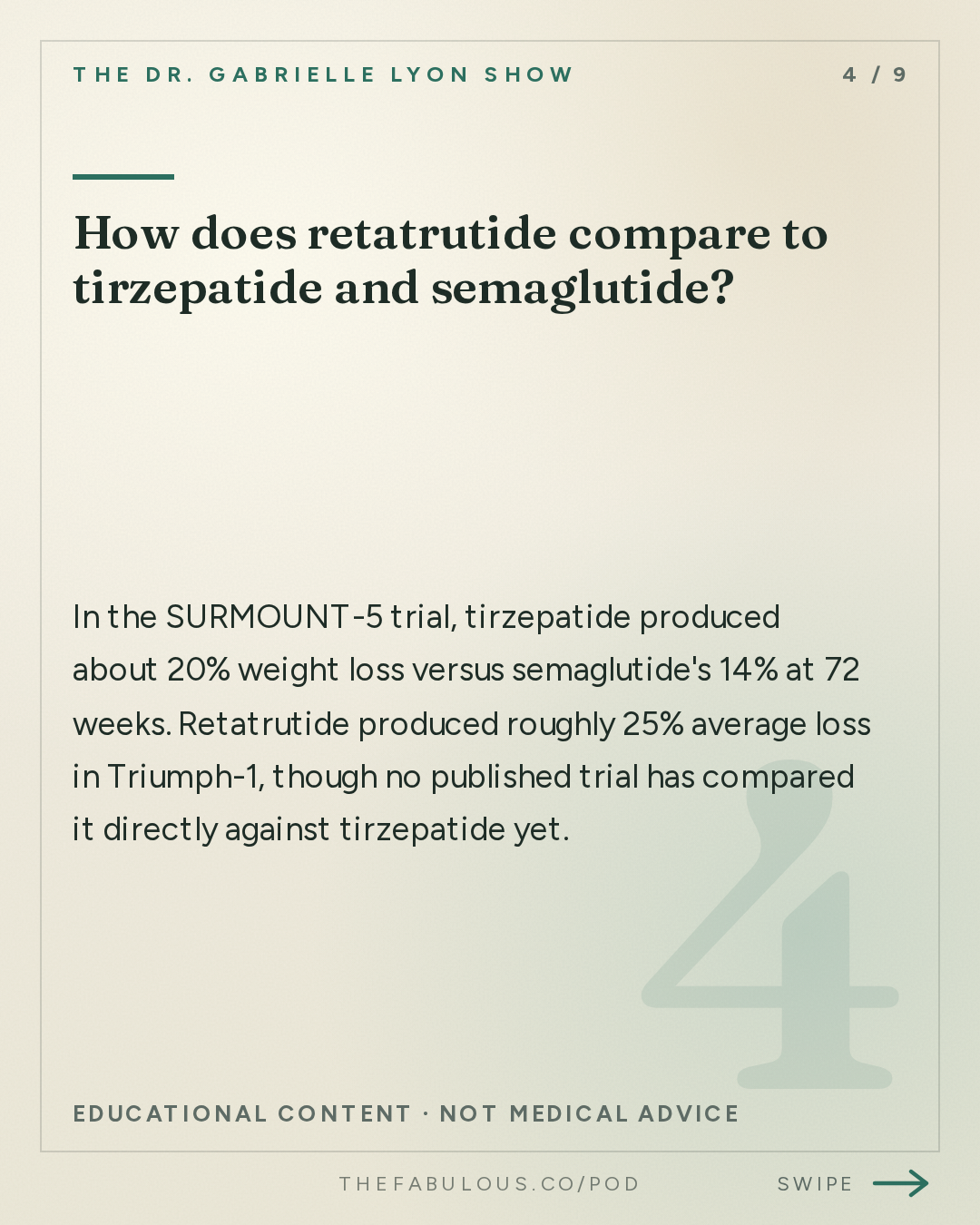
Retatrutide's position in the pharmacology lineup is itself a kind of experiment running in real time. In the SURMOUNT-5 trial, researchers compared tirzepatide directly against semaglutide and found tirzepatide produced about 20% weight loss versus semaglutide's 14% after 72 weeks (22:10). Retatrutide has not yet been tested head to head against tirzepatide, so Lyon's guess that it will land near 30% is informed speculation, not established data (24:37). The mechanistic story for why adding glucagon receptor activity helps is still mostly preclinical. In mouse studies, GLP-1 and GIP mainly cut how much the animals ate, while glucagon activity appeared to add extra weight loss through increased energy expenditure, meaning the body burning more fuel rather than simply eating less of it (23:00). Whether that holds in humans is not proven yet.
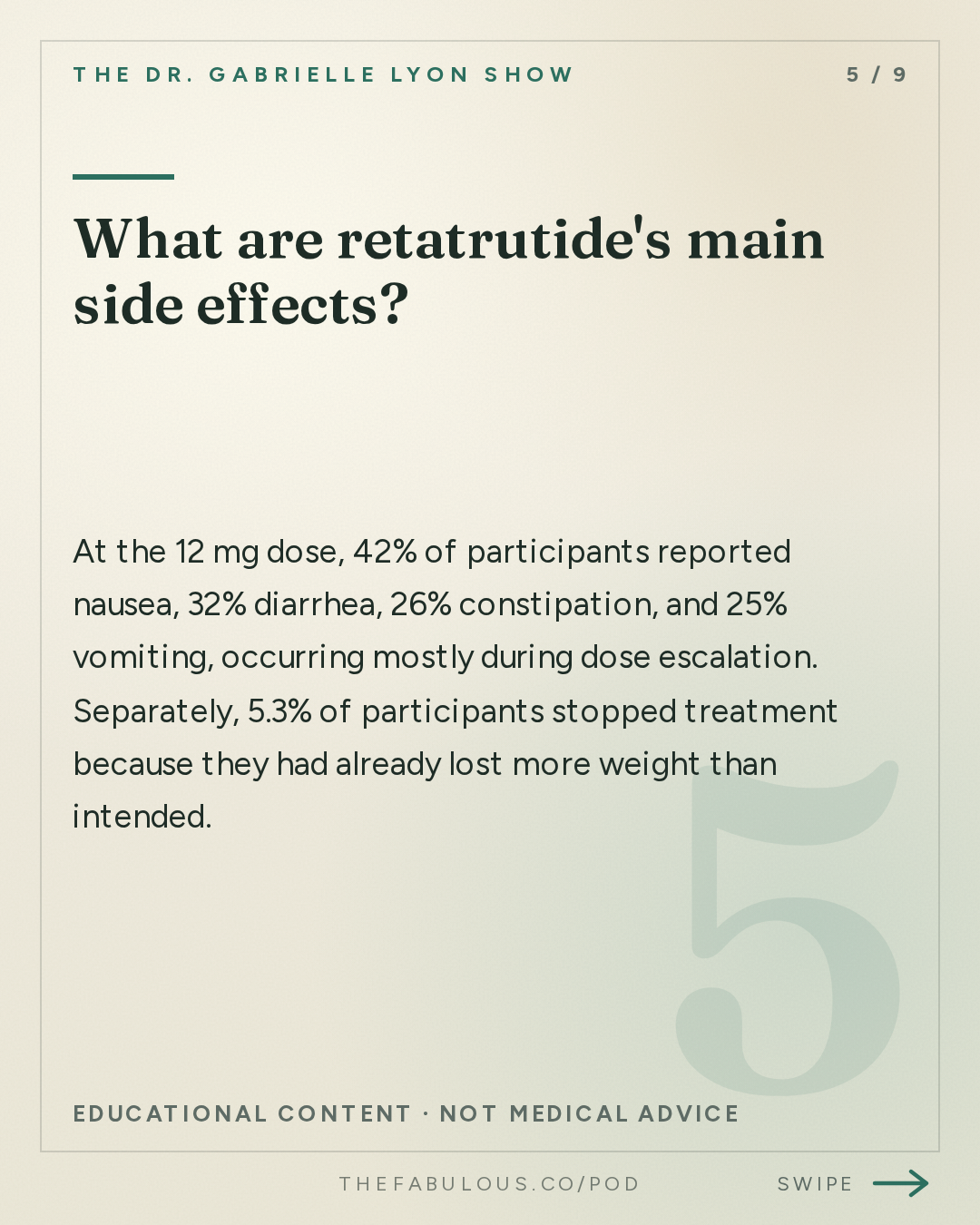
The trade-off for that power shows up in side effect rates. At the 12 milligram dose, 42% of participants reported nausea, 32% diarrhea, 26% constipation, and 25% vomiting, occurring mostly during the period when the dose was being raised (26:09). Those numbers track with what is already seen on semaglutide and tirzepatide. The more unusual finding is the 5.3% who stopped not from nausea, but from having lost enough, or too much, weight (26:37). As Lyon puts it, more drug is not automatically better medicine, and that principle applies doubly once muscle is part of the calculation.
Retatrutide remains investigational, not FDA-approved, and still completing phase three testing (28:38), which makes the social media chatter about buying it as a research chemical beside the point of what the trial actually shows. The larger lesson is that the arc from semaglutide's 14% to tirzepatide's 20% to retatrutide's 25% is moving fast enough that the old question, can a drug produce meaningful weight loss, is basically answered. The next question is what happens to the muscle, the bone, and the strength of someone who loses a third of their body weight in a year and a half, and whether medicine builds training and protein into that process on purpose, or leaves it to chance.
Ask this episode anything
Pod's AI answers from the episode itself, with the minute mark so you can hear it yourself.
Or start with one of these
Ask this episode
Pod's AI listens to the whole episode to answer, and points you to the minute it comes from.
The rest of this answer, and any question after it
Answers come from the episode itself, never from a summary of it.
ContinueKey takeaways
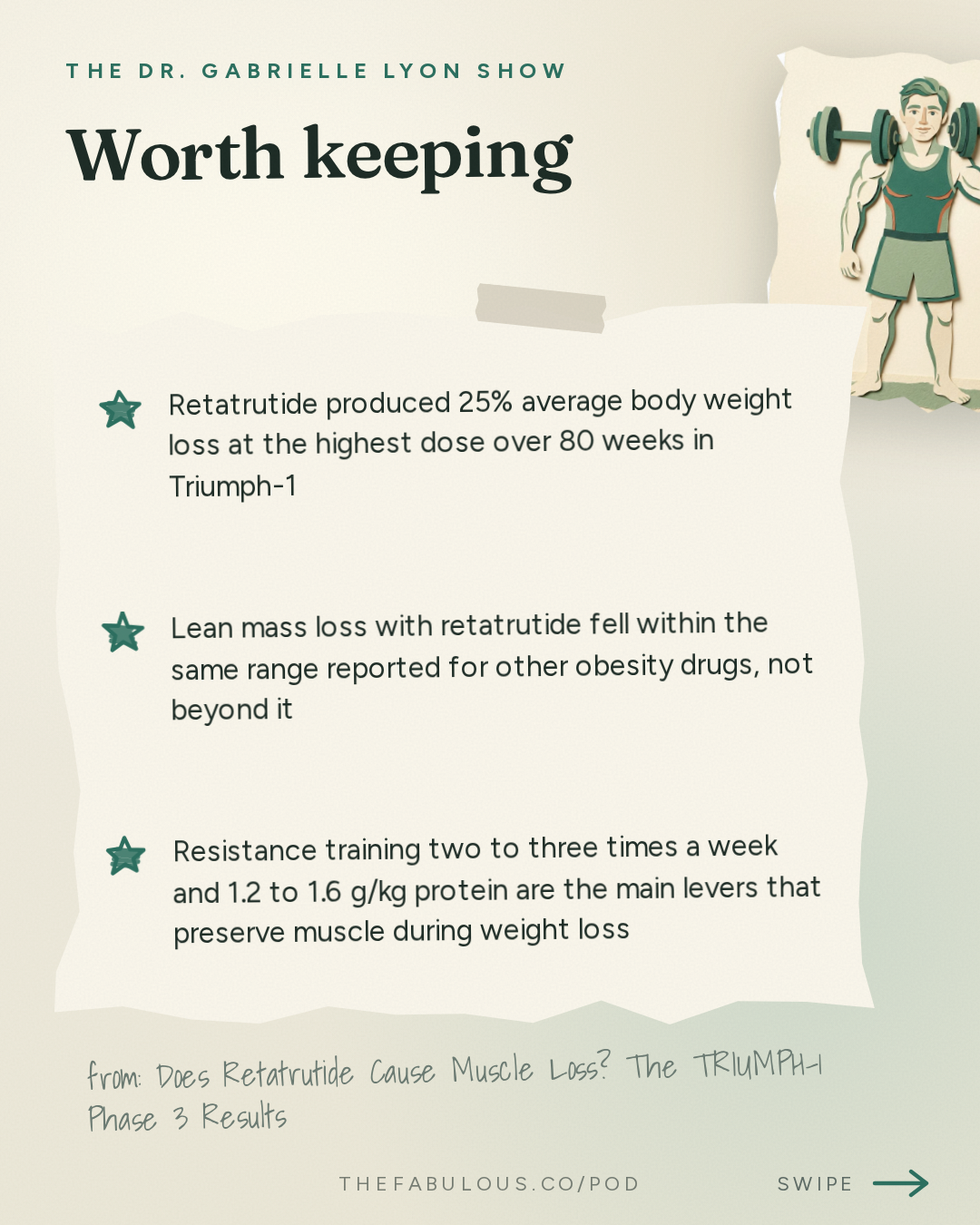
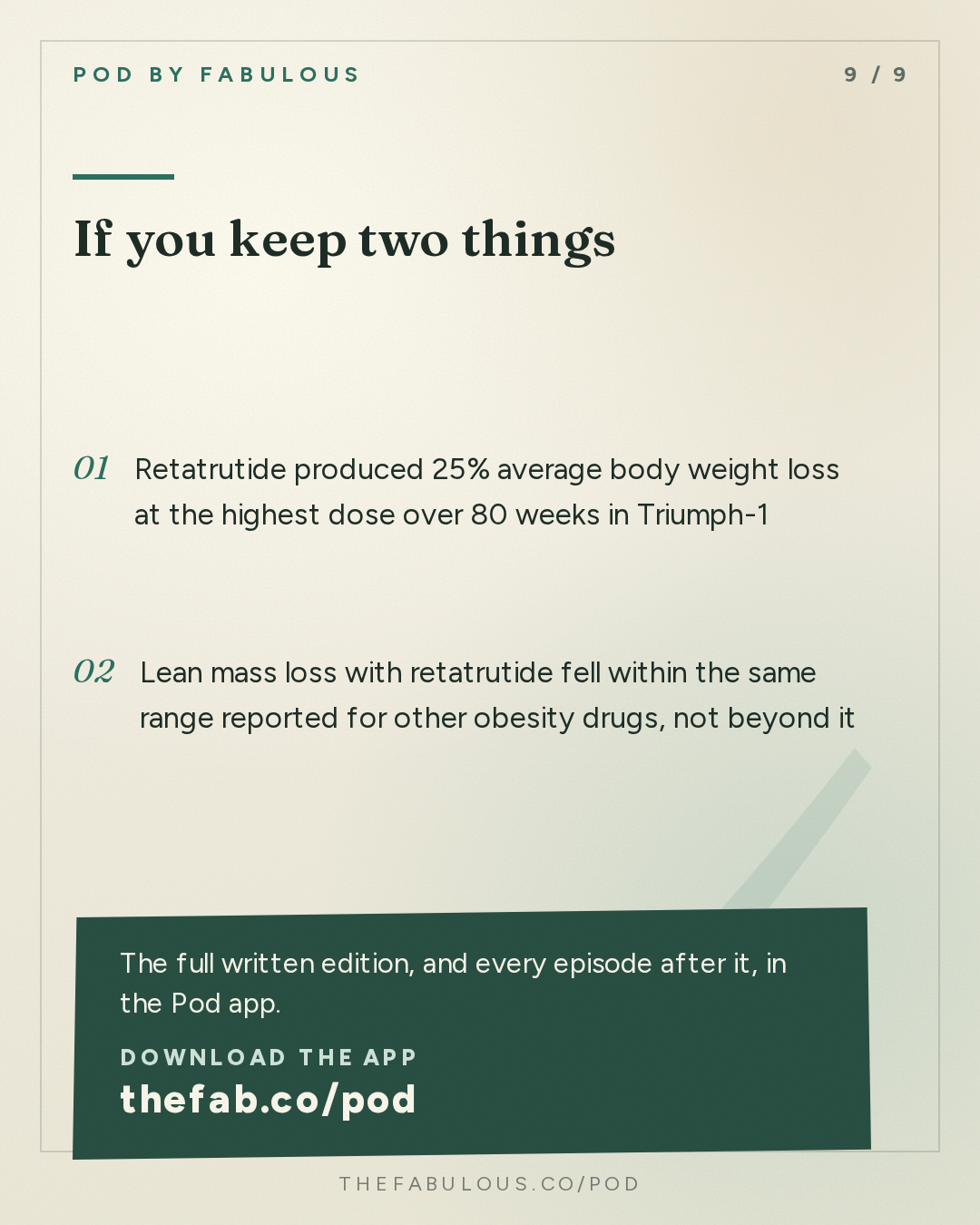
- Retatrutide produced 25% average body weight loss at the highest dose over 80 weeks in Triumph-1
- Lean mass loss with retatrutide fell within the same range reported for other obesity drugs, not beyond it
- Resistance training two to three times a week and 1.2 to 1.6 g/kg protein are the main levers that preserve muscle during weight loss
- 5.3% of participants on the highest dose stopped because they had already lost too much weight
- Retatrutide is not yet FDA-approved and remains an investigational drug still in phase three trials
The episode in cards
By the numbers
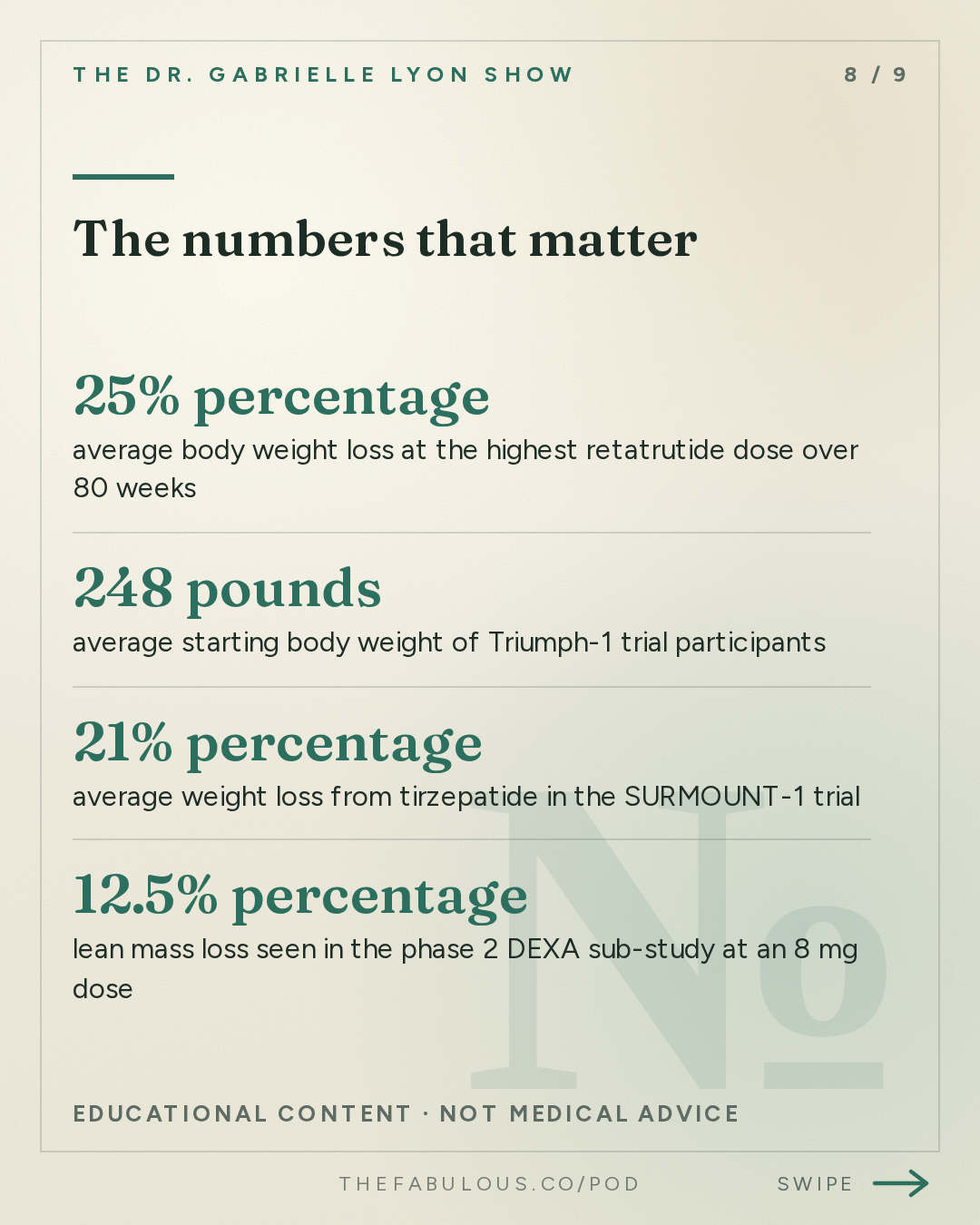
- 25% percentage average body weight loss at the highest retatrutide dose over 80 weeks
- 248 pounds average starting body weight of Triumph-1 trial participants
- 21% percentage average weight loss from tirzepatide in the SURMOUNT-1 trial
- 12.5% percentage lean mass loss seen in the phase 2 DEXA sub-study at an 8 mg dose
- 5.3% percentage participants who stopped treatment because they lost too much weight
In their words
“The value of these medications isn't simply fitting into smaller jeans. It improves people's health overall.”
“Obesity mechanically loads the joints, the respiratory physiology. It creates a ton of weight. It alters insulin sensitivity. It increases ectopic and visceral fat.”
“If modern obesity medicine gives us an unprecedented ability to lose body weight, then our job becomes making the quality of that weight loss as good as possible.”
“More drug is not automatically better medicine.”
Protocols
-
Preserve muscle during GLP-1 driven weight loss
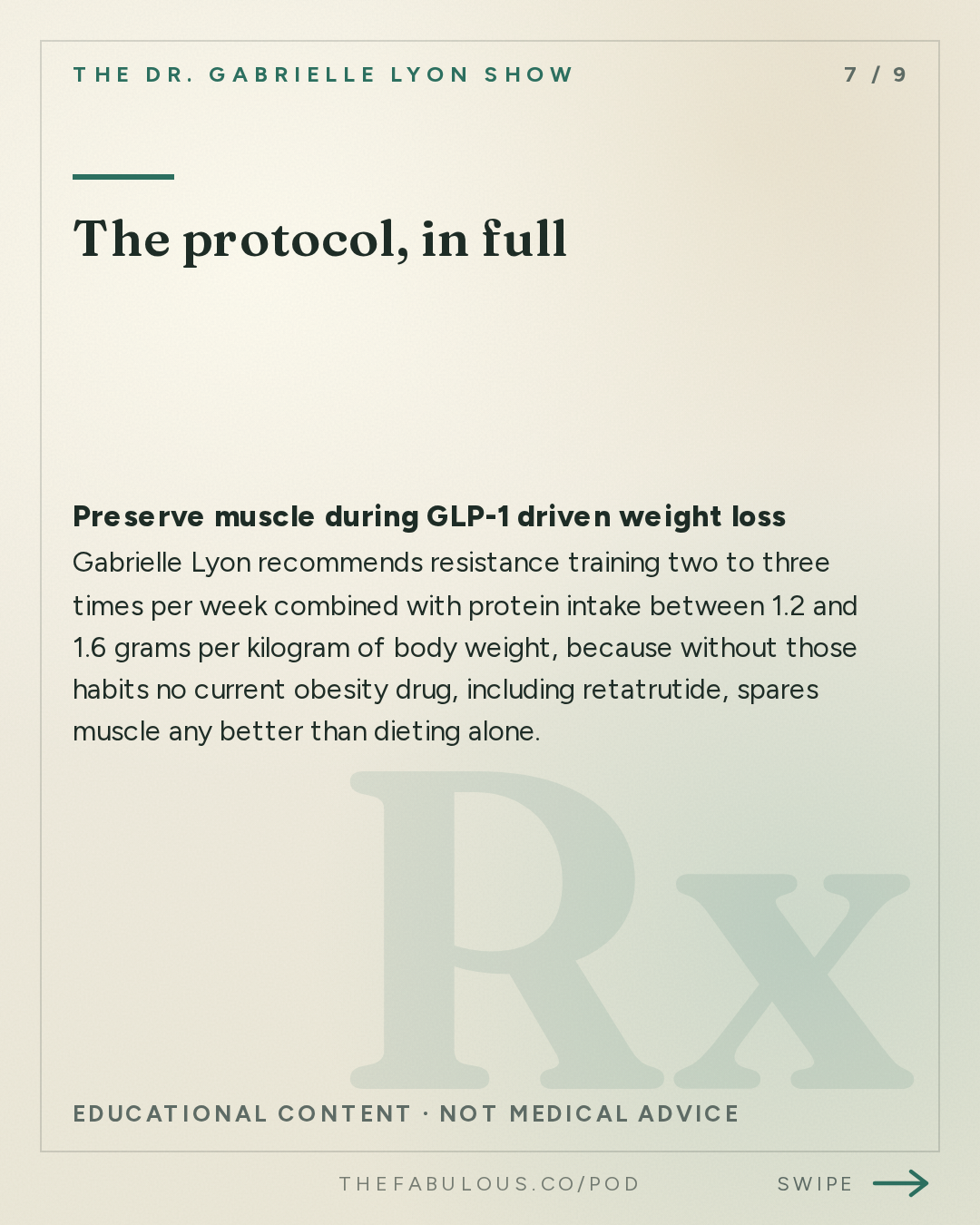
Gabrielle Lyon recommends resistance training two to three times per week combined with protein intake between 1.2 and 1.6 grams per kilogram of body weight, because without those habits no current obesity drug, including retatrutide, spares muscle any better than dieting alone.
2 to 3 resistance sessions per week, daily protein target
Questions this episode answers
Does retatrutide cause muscle loss?
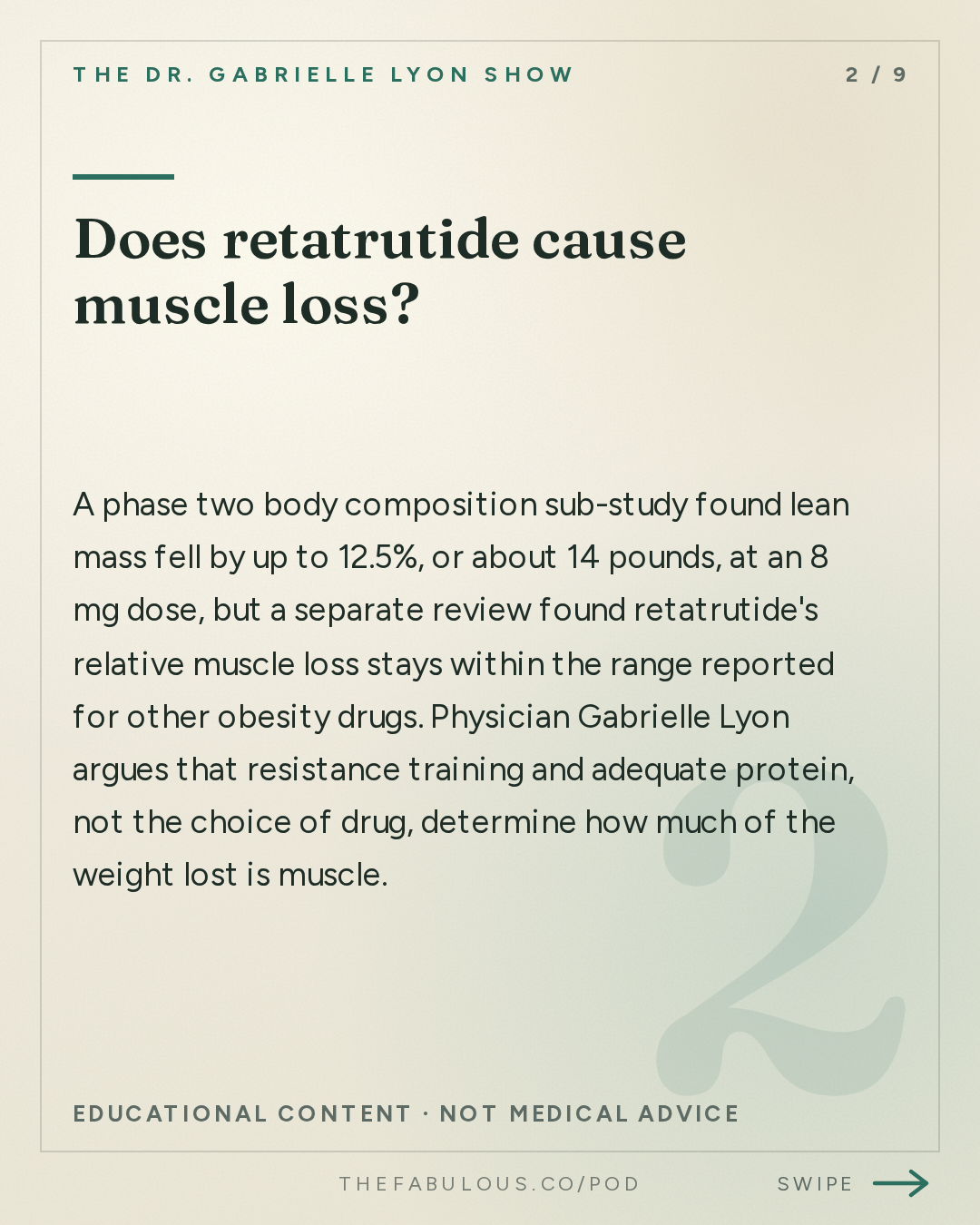
A phase two body composition sub-study found lean mass fell by up to 12.5%, or about 14 pounds, at an 8 mg dose (16:43), but a separate review found retatrutide's relative muscle loss stays within the range reported for other obesity drugs (17:47). Physician Gabrielle Lyon argues that resistance training and adequate protein, not the choice of drug, determine how much of the weight lost is muscle (19:37).
What were the Triumph-1 trial results for retatrutide?
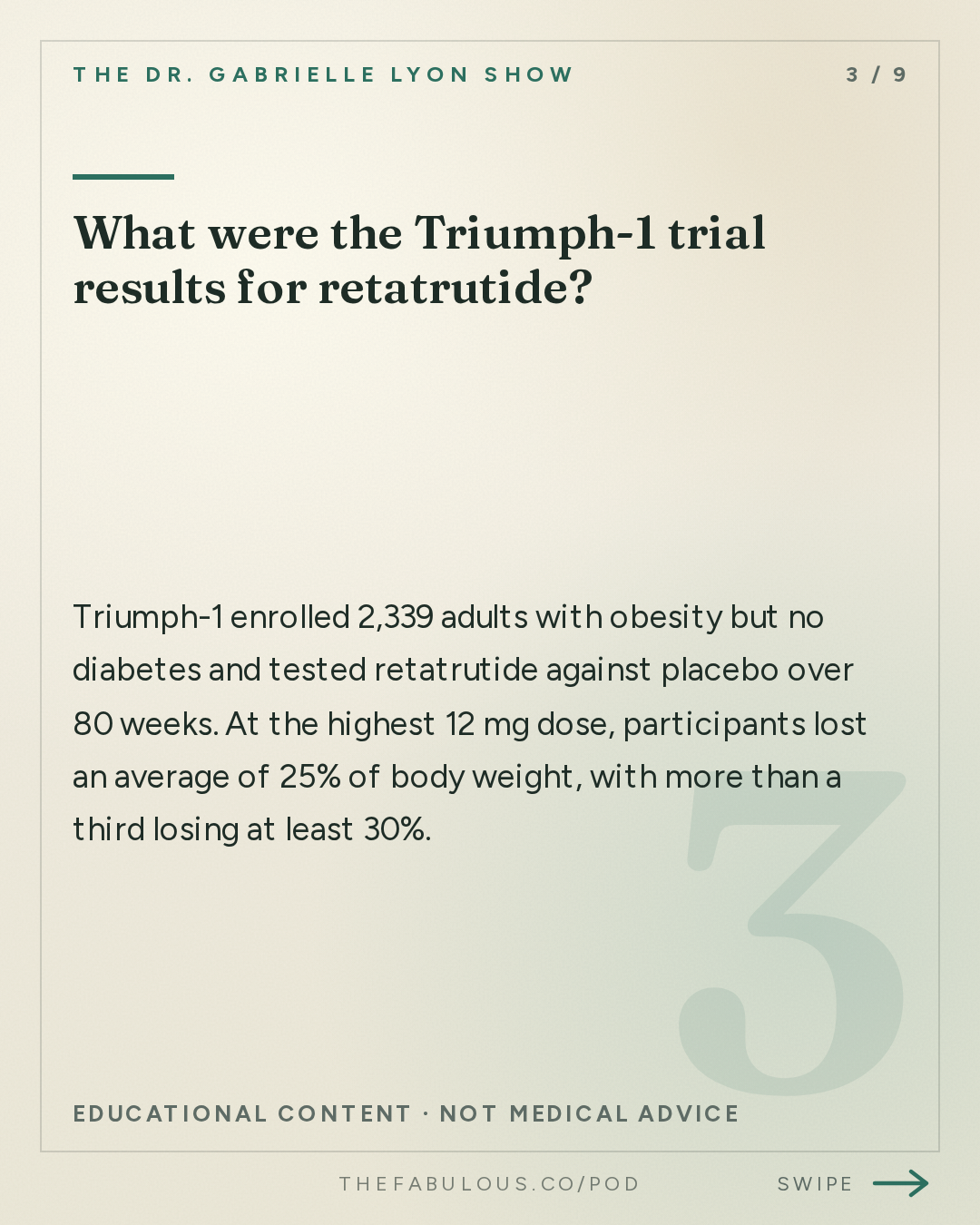
Triumph-1 enrolled 2,339 adults with obesity but no diabetes and tested retatrutide against placebo over 80 weeks (07:26). At the highest 12 mg dose, participants lost an average of 25% of body weight, with more than a third losing at least 30% (05:10).
How does retatrutide compare to tirzepatide and semaglutide?
In the SURMOUNT-5 trial, tirzepatide produced about 20% weight loss versus semaglutide's 14% at 72 weeks (22:10). Retatrutide produced roughly 25% average loss in Triumph-1 (05:10), though no published trial has compared it directly against tirzepatide yet (24:37).
What are retatrutide's main side effects?
At the 12 mg dose, 42% of participants reported nausea, 32% diarrhea, 26% constipation, and 25% vomiting, occurring mostly during dose escalation (26:09). Separately, 5.3% of participants stopped treatment because they had already lost more weight than intended (26:37).
Is retatrutide FDA-approved?
No. Retatrutide remains an investigational medication still completing phase three trials and is not approved for prescription use (28:38).
The full read, in cards
Go deeper
- Triumph-1 phase 3 trial — tested retatrutide against placebo in 2,339 adults with obesity without diabetes over 80 weeks
- New England Journal of Medicine — published the Triumph-1 trial results
- SURMOUNT-5 trial — directly compared tirzepatide and semaglutide, finding 20% versus 14% weight loss
- SURMOUNT-1 trial — showed tirzepatide produced about 21% average weight loss
- Longland et al. protein and resistance training study — found higher protein intake during a calorie deficit produced more lean mass gain alongside greater fat loss
- Phase 2 DEXA body composition sub-study — measured lean mass loss of up to 12.5% in people with type 2 diabetes on retatrutide
Mentioned
Retatrutide · Triumph-1 · New England Journal of Medicine · FDA · Semaglutide · Tirzepatide · SURMOUNT-5 · SURMOUNT-1 · Longland · Dr. El Serag
More from this show and category
Beef vs Soy Protein: What Muscle Research Shows
Muscle physiologist Dr. David Church found that four ounces of beef raised blood amino acids more than eight ounces of a soy-based patty, and that testosterone builds muscle mainly by recycling amino acids inside cells rather than boosting new synthesis. He also argues true protein needs run near 1.27 g/kg a day, well above the 0.8 g/kg RDA.
Essential Amino Acids and Muscle Protein Synthesis
The body doesn't have a protein requirement, it has an essential amino acid requirement: nine amino acids it cannot make itself (01:33). Animal foods pack more of them per gram than plants do (07:39), aging raises the dose needed to trigger muscle building (17:27), and about 30 grams of protein usually clears the 2.5-gram leucine threshold that switches on recovery (11:35).
Eating Before Bed: What Pre-Sleep Protein Research Shows
A small protein snack 30 minutes before bed does not spoil fat metabolism, and exercise erases any downside. Florida State researcher Dr. Mike Ormsbee's microdialysis and bariatric-diet studies show resistance training protects muscle during severe calorie cuts, casein and whey work equally well, and extra protein is not stored as fat.
How Much Protein Do Kids Really Need?
Growing kids need more protein than official guidelines suggest, and puberty is a brief window for building muscle and bone. Dr. Gabrielle Lyon cites research showing children ages 6 to 11 may need close to 1.5 g/kg of protein daily, that 40 to 60% of adult bone mass forms during puberty, and that supervised strength training is safe at any age once a child can follow instructions.
