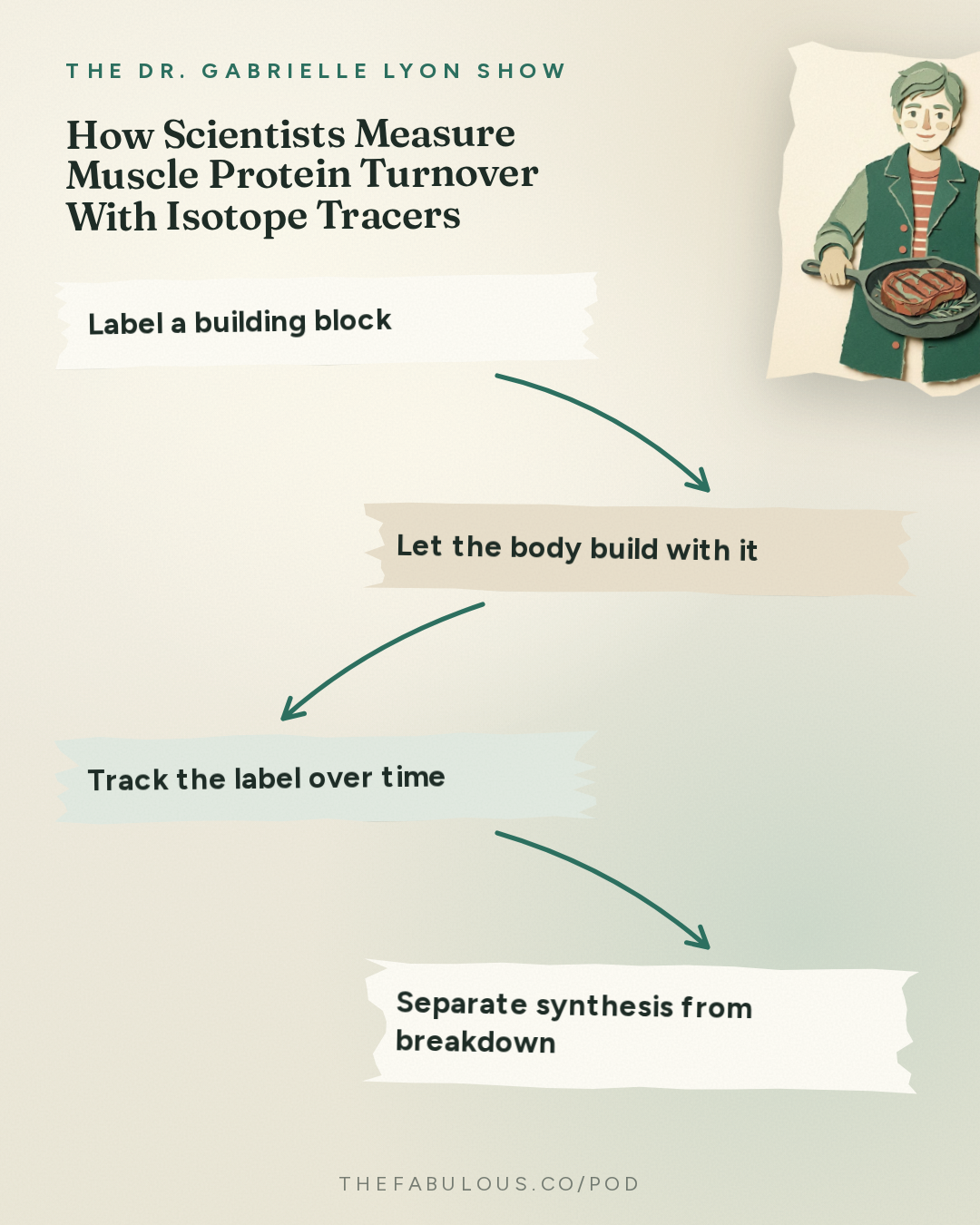
Beef vs Soy Protein: What Muscle Research Shows
Muscle Physiologist: It Took Two Soy Burgers to Approach the Muscle Response of One Beef Patty | Dr. David Church
▶ Listen to the full episode More from The Dr. Gabrielle Lyon Show
The brief
Muscle physiologist Dr. David Church found that four ounces of beef raised blood amino acids more than eight ounces of a soy-based patty, and that testosterone builds muscle mainly by recycling amino acids inside cells rather than boosting new synthesis. He also argues true protein needs run near 1.27 g/kg a day, well above the 0.8 g/kg RDA.
During the siege of the Warsaw ghetto, and later in the Belfast hunger studies, doctors watched something strange happen to starving bodies. Blood chemistry held steady long after the flesh around it had wasted away. The body was cannibalizing muscle to keep amino acids circulating in the blood, because the blood, not the muscle, is what keeps organs alive. Arkansas muscle physiologist Dr. David Church calls this the defining fact of his field: muscle will sacrifice itself to protect blood amino acid levels for as long as the organism survives (00:15).
"The muscle will maintain plasma amino acid concentrations until the organism dies." — Dr. David Church (00:15)
That single sentence explains a lot of what follows in a long conversation between Church and host Dr. Gabrielle Lyon about how muscle actually works at the molecular level, and why so much popular advice about protein, testosterone, and plant-based eating oversimplifies a system built on constant, almost violent turnover.
What Starvation and Hormones Reveal About Muscle
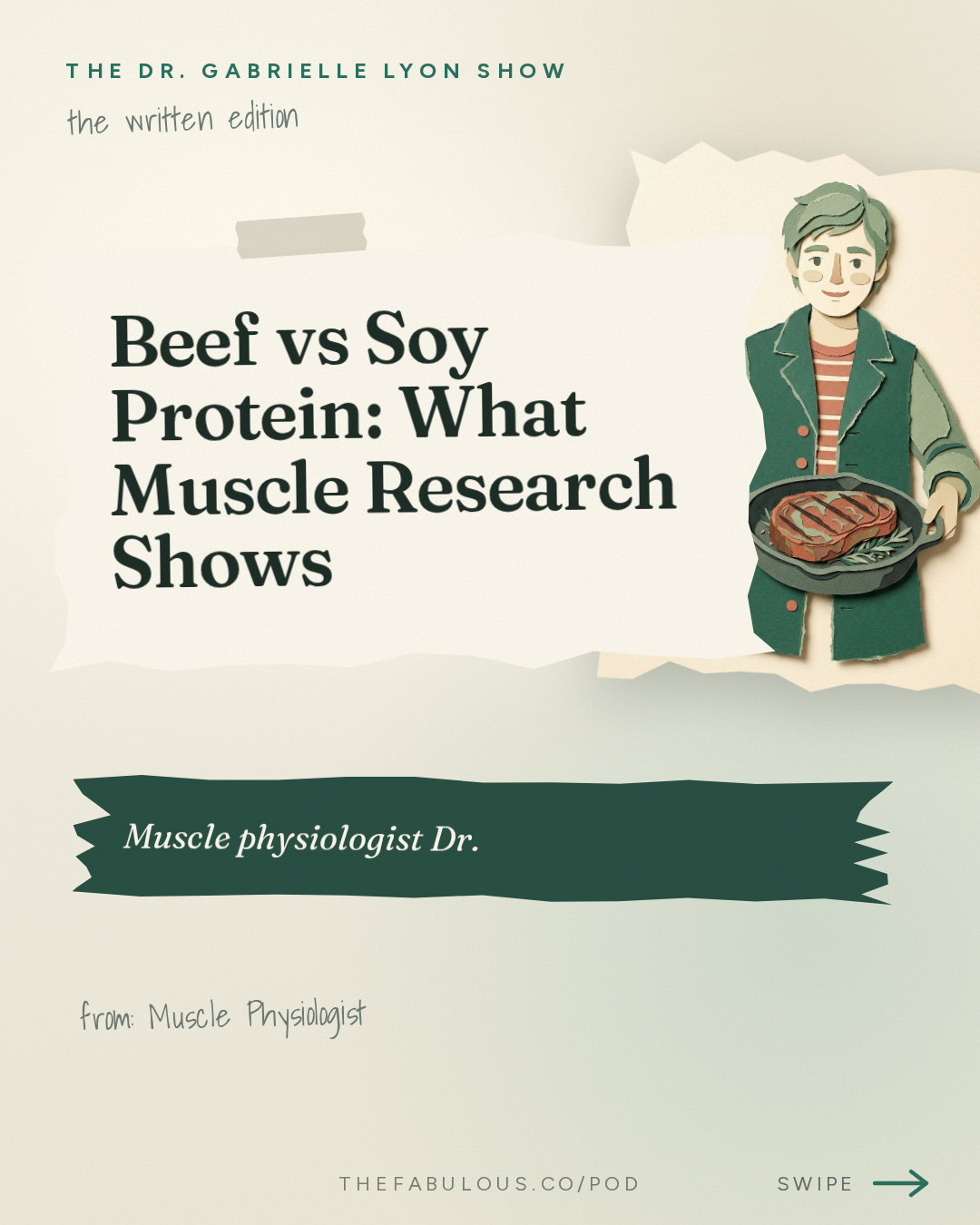
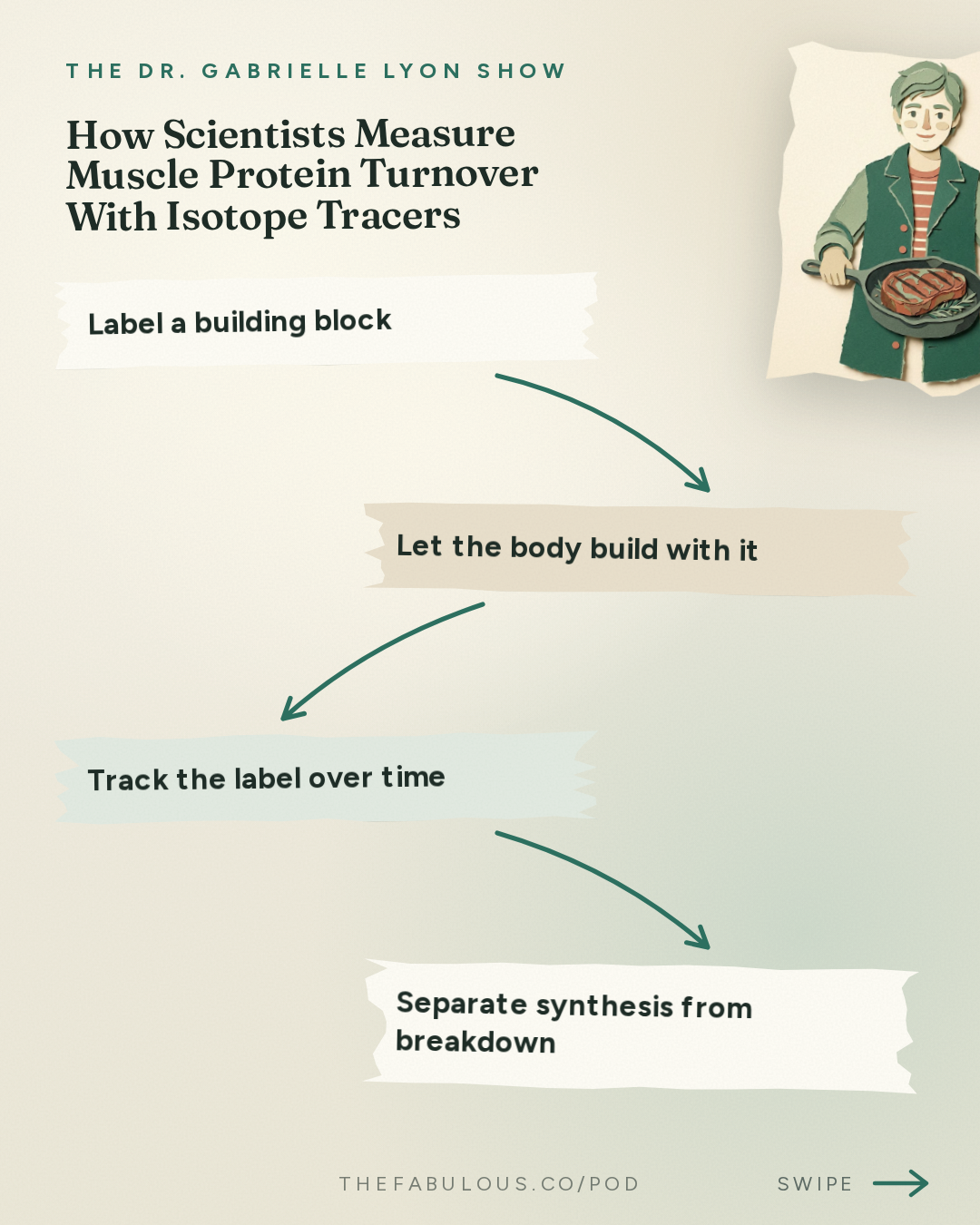
Muscle tissue is not a fixed structure. It is torn down and rebuilt continuously, a process researchers measure using isotope tracers, which Church explains with a Lego analogy borrowed from his two young children. Imagine a muscle protein as a Lego castle. Breakdown is what happens when the castle gets kicked over: the individual bricks, standing in for amino acids, scatter but stay on the rug, meaning they stay inside the muscle cell (15:42). Synthesis is building a new castle from those same bricks. The question that matters for health is not just how fast new castles get built (protein synthesis, the easier number to measure) but whether bricks are leaving the rug altogether, draining out of the muscle and into the bloodstream (muscle protein breakdown, which is far harder to track and requires rare techniques like arterial and venous blood sampling alongside tissue biopsies) (13:23).
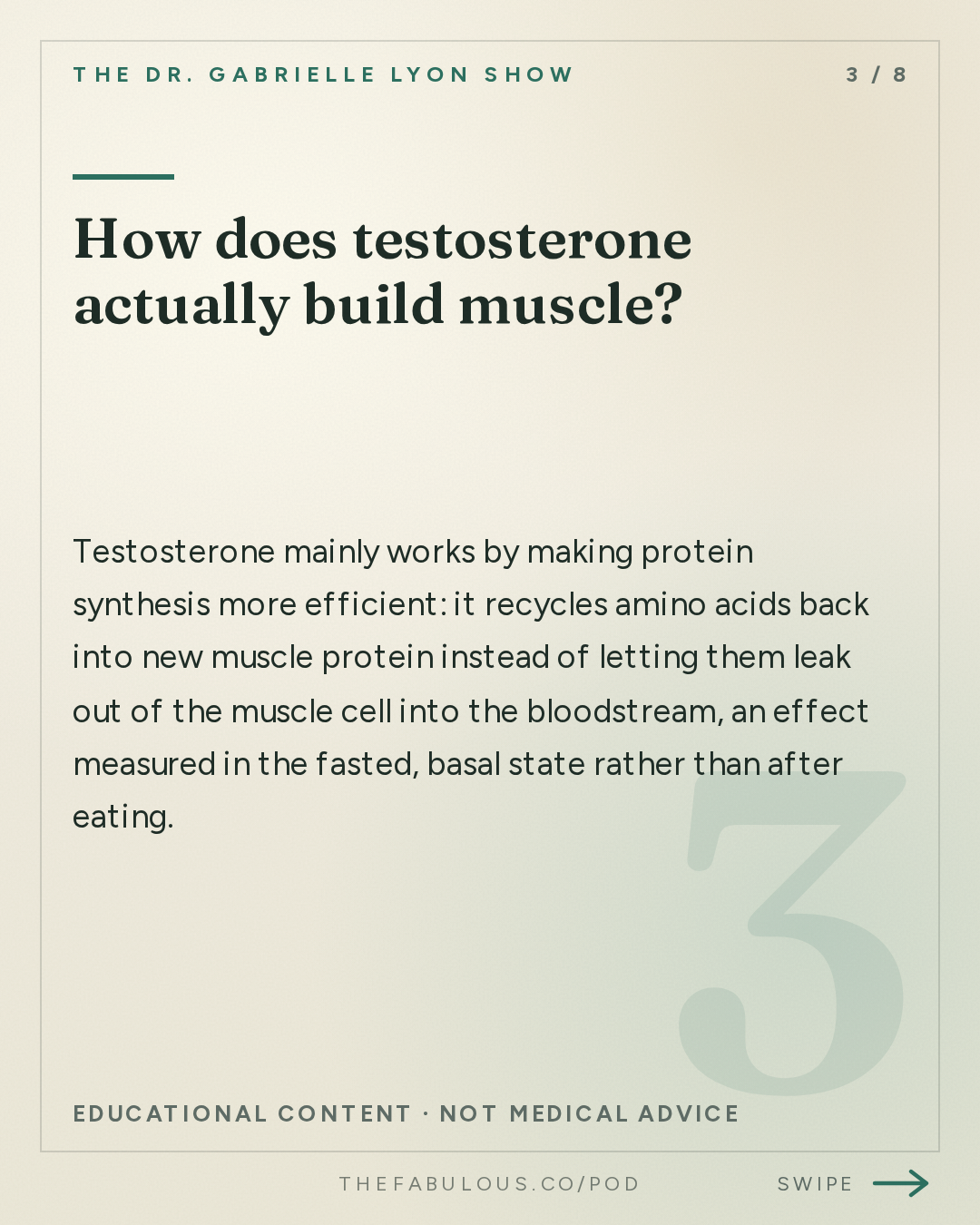
This distinction turns out to be the key to how testosterone works. Church's research shows testosterone does not mainly speed up new muscle building. Instead it makes protein synthesis more efficient by recycling amino acids back into new muscle proteins instead of letting them leak out of the cell (16:17).
"Instead of that amino acid effluxing, AKA leaving the muscle cell, it's recycled back into new proteins, into muscle proteins, that's how testosterone works actually for muscles." — Dr. David Church (16:17)
The clinical stakes of that mechanism showed up in a 21-day study Church ran at Pennington Biomedical Research Center with 18 military-age men held in a metabolic ward under a 55 percent energy deficit, a level of calorie restriction far steeper than what most people on GLP-1 weight-loss drugs experience (18 to 39 percent, by Church's accounting) (05:09). Both the testosterone group and the placebo group lost the same total weight. But the group getting testosterone lost it entirely as fat. The placebo group lost half of it as lean, fat-free mass (06:35).
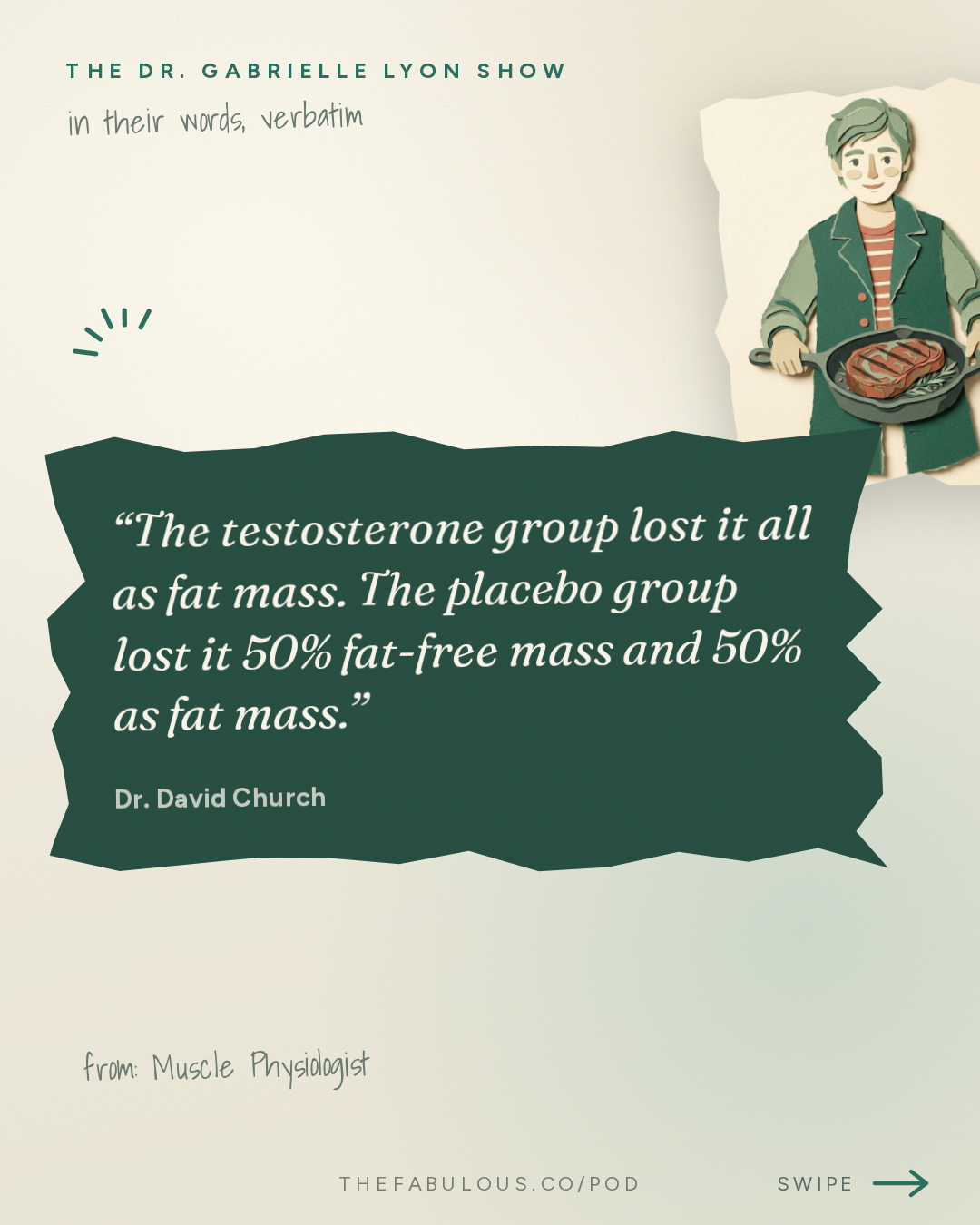
"The testosterone group lost it all as fat mass. The placebo group lost it 50% fat-free mass and 50% as fat mass." — Dr. David Church (06:35)
Church is careful to note the study found no difference in physical performance between groups over those 21 days, a reminder that body composition and performance are not the same outcome, even when hormone status is protecting muscle tissue (08:27).
Why a Beef Patty Beats a Soy Patty
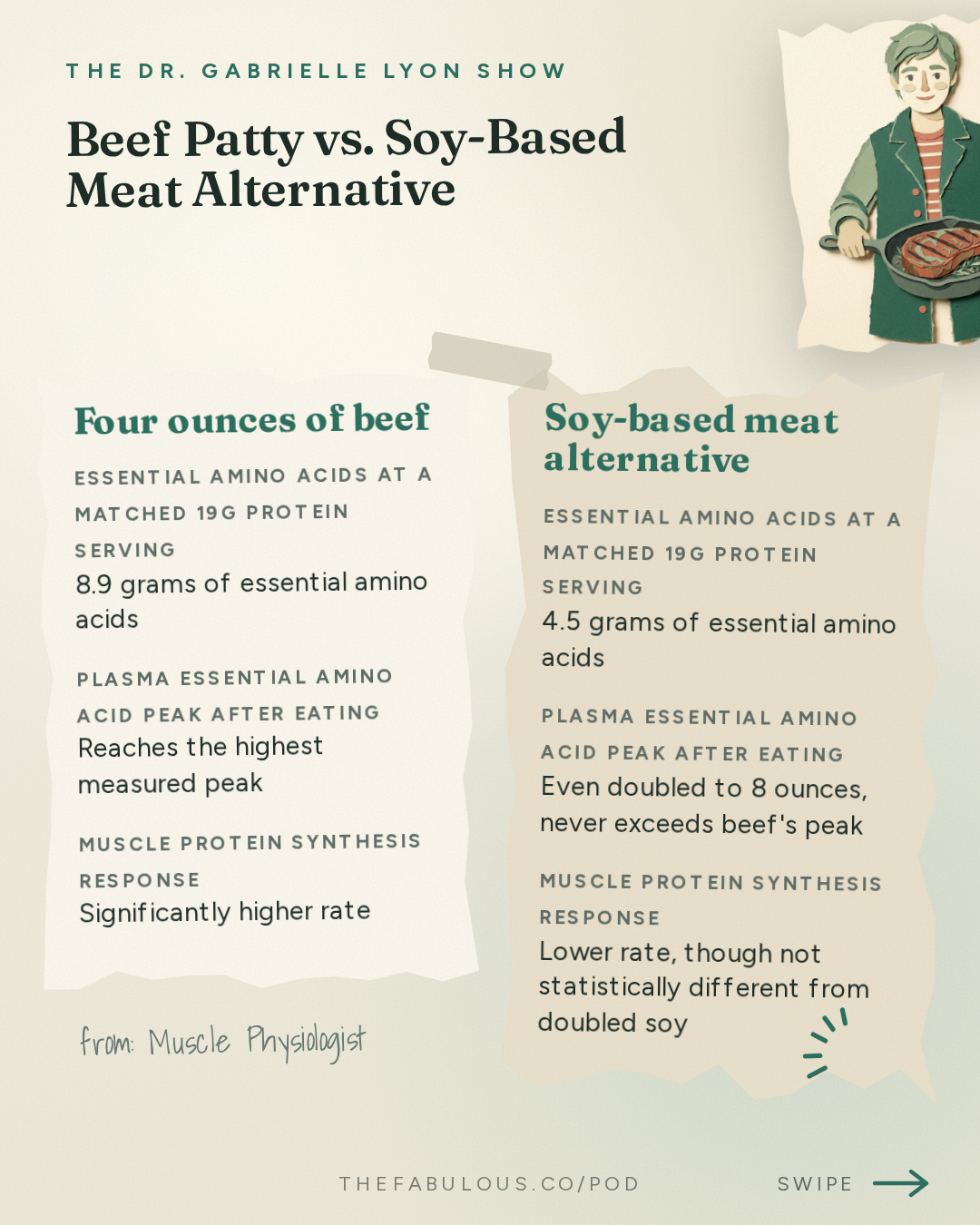
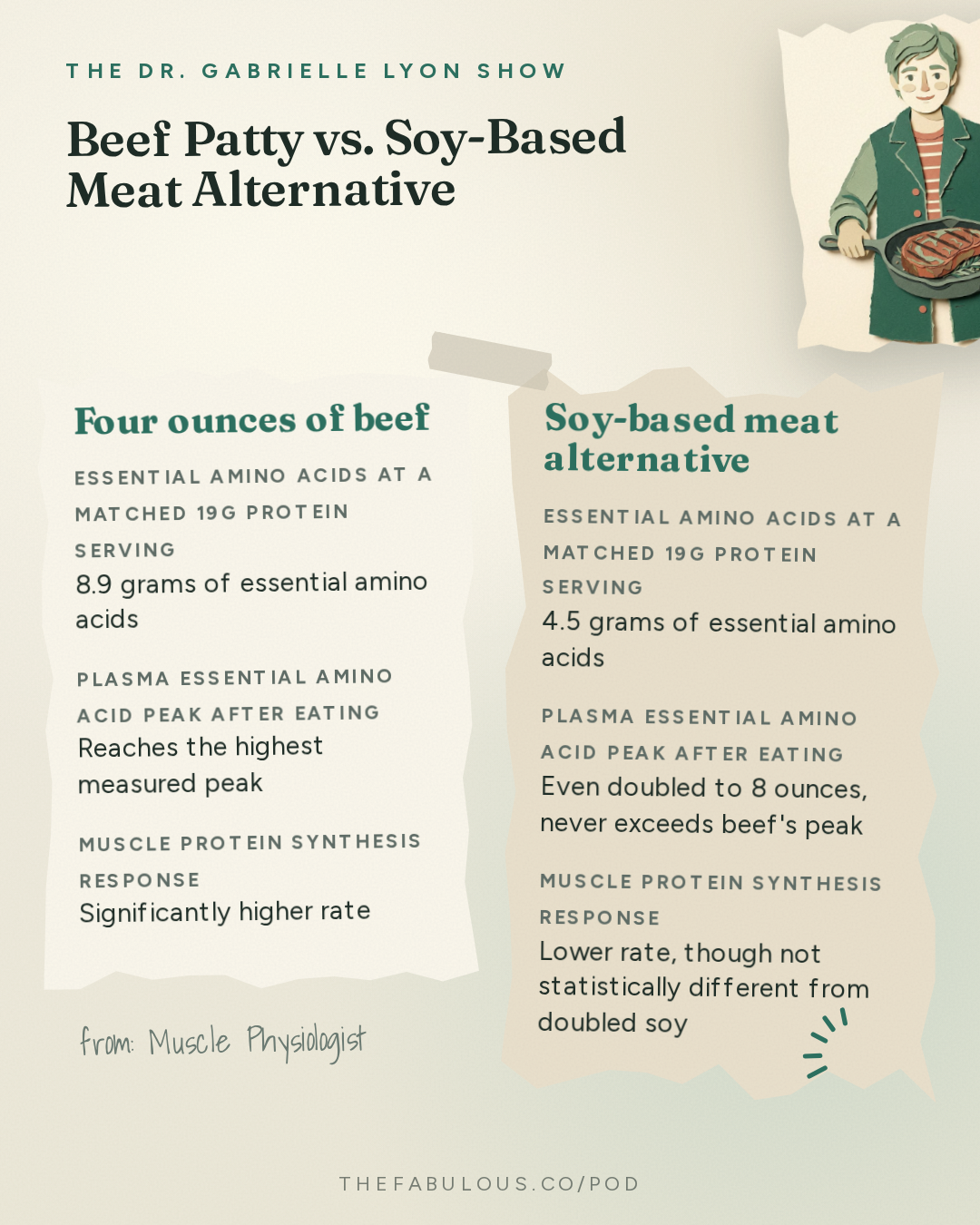
The conversation's most concrete finding concerns a head-to-head trial Church designed with longtime mentor Bob Wolfe, comparing a four-ounce ground beef patty to a soy-based meat alternative patty, both listed at 19 grams of protein by weight. Because soy has a lower share of essential amino acids (the amino acids the body cannot make and must get from food), Church calculated the beef patty actually delivered roughly 8.9 grams of essential amino acids against the soy patty's 4.5 grams. So his team also tested a doubled, eight-ounce soy serving designed to match the beef's essential amino acid content exactly (38:46).
The result surprised him. Blood essential amino acid levels after eating the doubled, eight-ounce soy serving never rose above what four ounces of beef produced (40:03).
"Eight ounces of soy was that the plasma essential amino acids never really got above the four ounces of beef. That's a big statement." — Dr. David Church (40:03)
Soy protein itself is not the likely culprit, Church says, since soy protein concentrate on its own produces a normal amino acid rise in the blood. His working theory, which he is careful to flag as speculation rather than a tested finding, is that binders used to hold plant-based patties together may interfere with how quickly the protein releases its amino acids during digestion (40:53). Muscle protein synthesis followed the same pattern: significantly higher after the beef patty than after the four-ounce soy patty, and still numerically higher than after the doubled soy serving, even though that difference did not reach statistical significance (42:30). The one number that reliably predicted the muscle response, in beef or soy, was how high blood essential amino acids peaked after eating, a correlation Church replicated from earlier research (42:30).
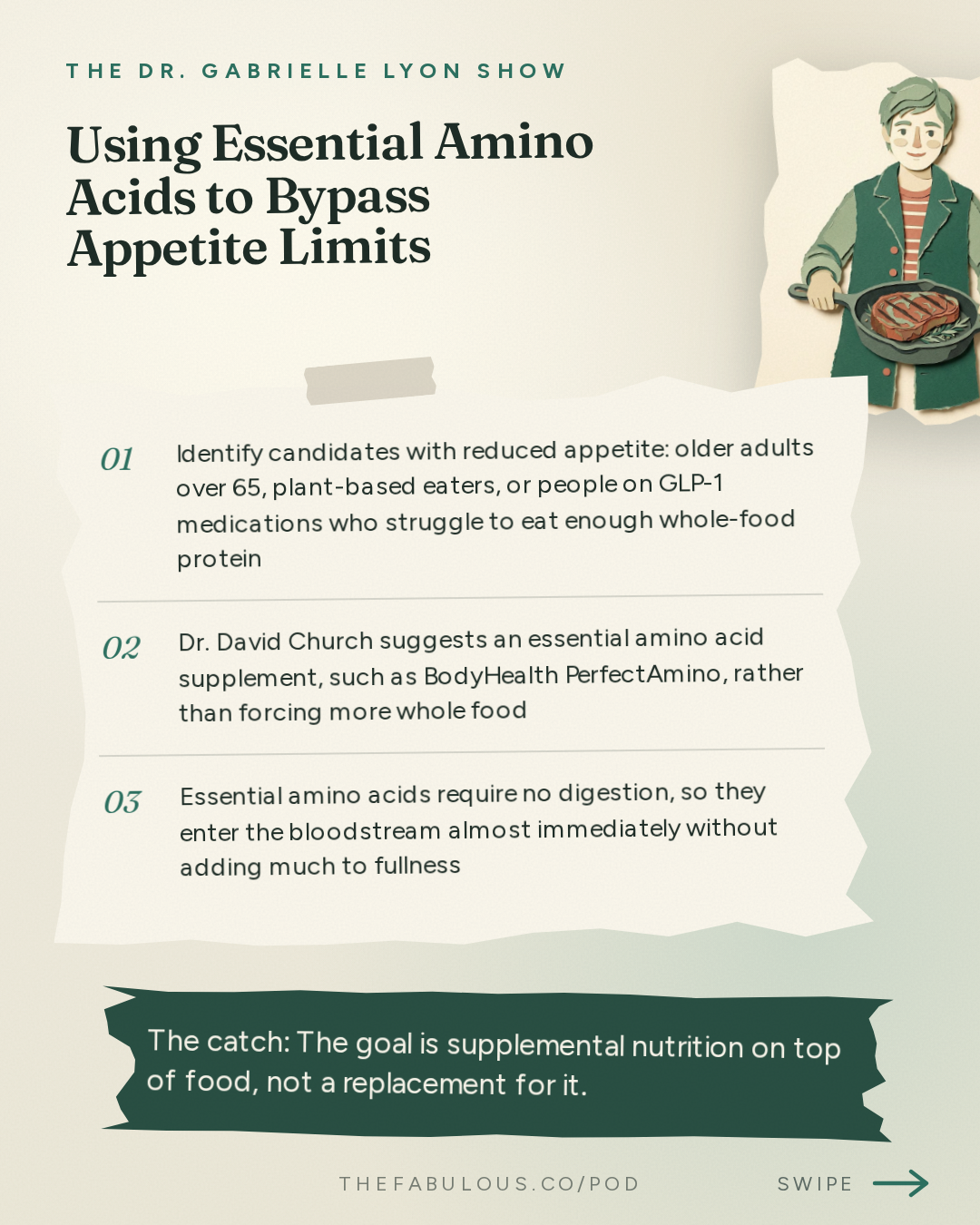
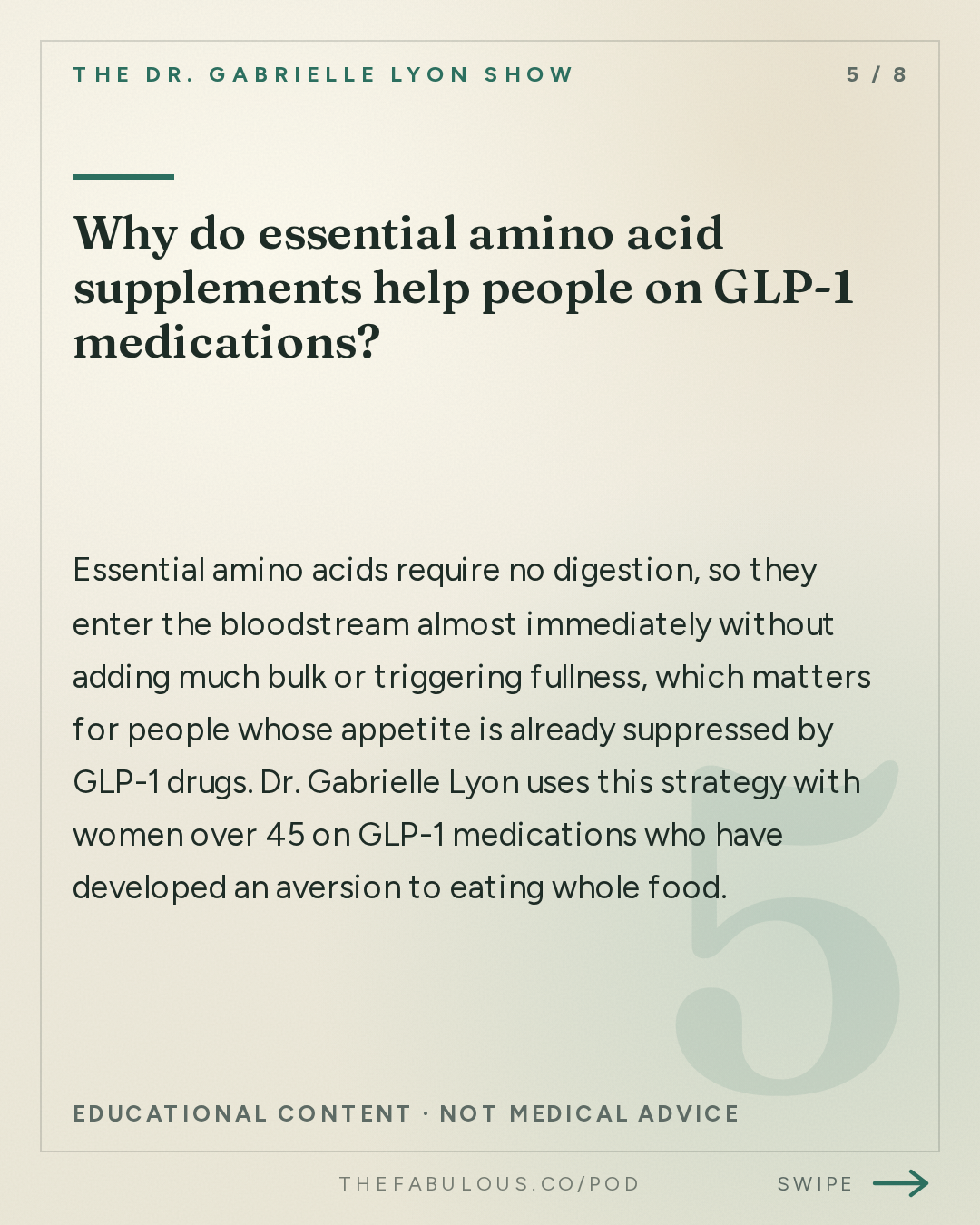
That finding matters beyond burger debates. It shapes how Church and Lyon think about older adults and people on GLP-1 medications, many of whom eat less food overall and need every gram of protein to count. Because essential amino acid supplements require no digestion, they enter the bloodstream quickly without adding much bulk or triggering fullness (50:09).
"Essential amino acids require no digestion. So when you ingest them, they're straight into the bloodstream, so it doesn't fill you up." — Dr. David Church (50:09)
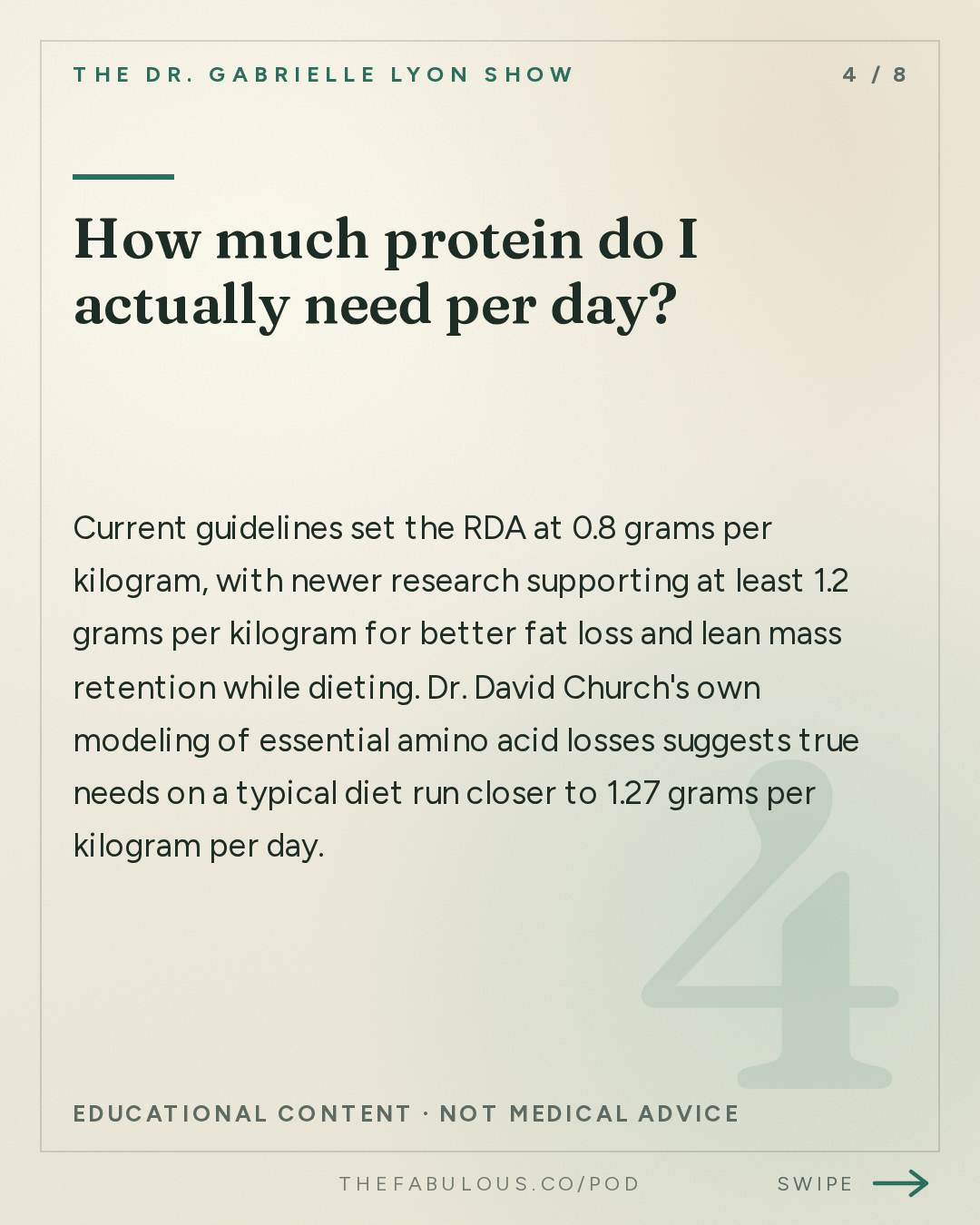
Church points to a rehabilitation study where 45 grams of essential amino acids produced roughly the same amino acid delivery as 100 grams of whey protein, about four scoops worth, while adding far fewer calories (50:41). That efficiency is also why Church is rethinking the official protein target altogether. Current guidelines set the RDA at 0.8 grams of protein per kilogram of body weight, with newer research supporting at least 1.2 grams per kilogram for better fat loss and lean mass retention during dieting, shown in a six-month trial called OptiMen involving frail older adults (24:47). But Church's own modeling, based on how much essential amino acid is lost from the body even during a full day without food (about 384 milligrams per kilogram per day, a rate that barely changes between four and 24 hours of fasting) suggests a typical omnivorous diet, with roughly a third of its protein as essential amino acids, needs closer to 1.27 grams of protein per kilogram daily just to cover true essential amino acid requirements (55:14). That estimate lines up independently with work from a Texas A&M lab using a different measurement method entirely, which Church takes as a good sign the number is real rather than an artifact of his particular approach (56:08).
None of this argues for more protein because more is inherently better. The point threading through Church's work, from starving mice to soy patties to GLP-1 patients who have lost their appetite for food entirely, is that muscle is a system built to protect the rest of the body first, and that figuring out exactly what it needs to do that job well is still, after decades of research, an unfinished project.
Ask this episode anything
Pod's AI answers from the episode itself, with the minute mark so you can hear it yourself.
Or start with one of these
Ask this episode
Pod's AI listens to the whole episode to answer, and points you to the minute it comes from.
The rest of this answer, and any question after it
Answers come from the episode itself, never from a summary of it.
ContinueKey takeaways
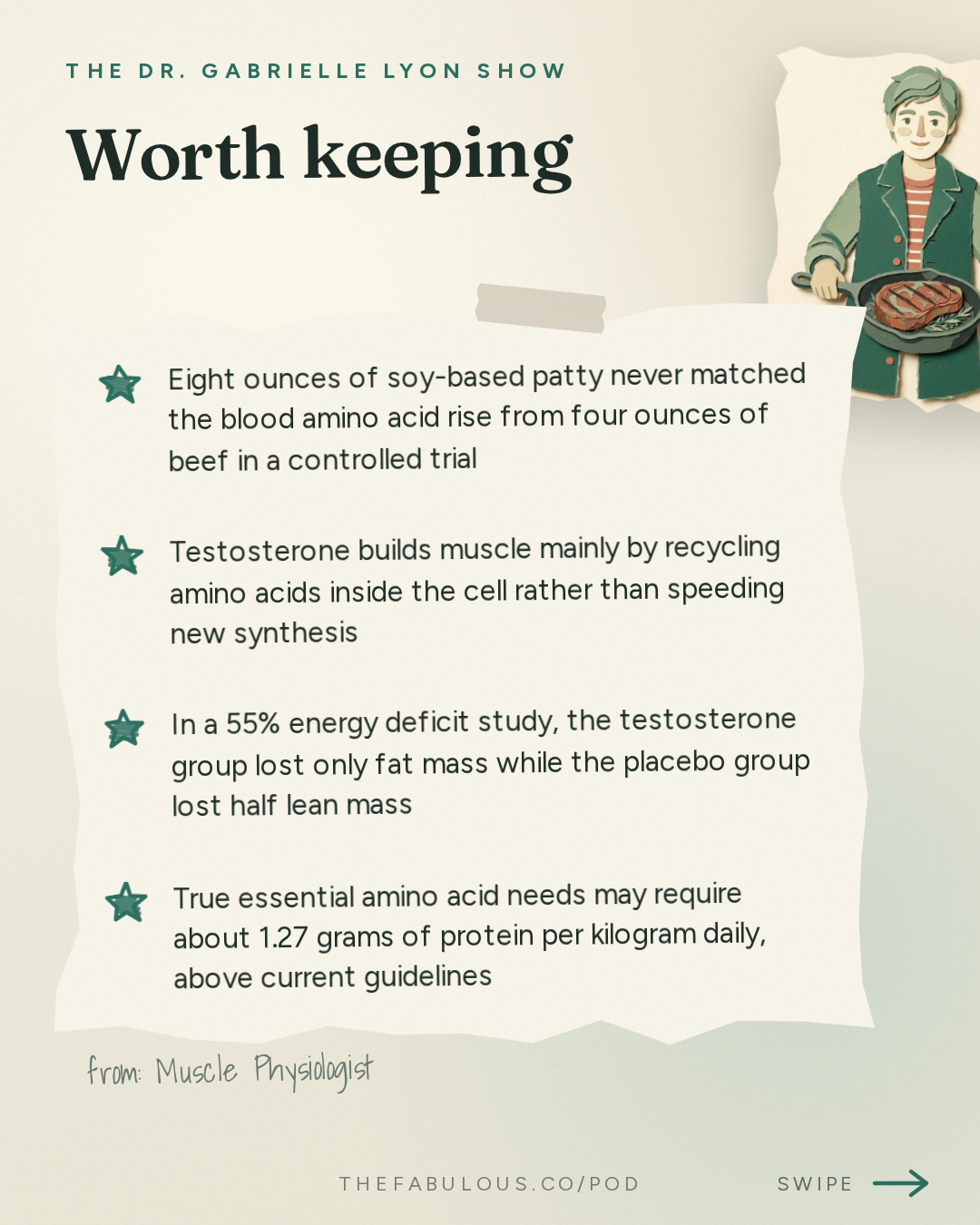
- Eight ounces of soy-based patty never matched the blood amino acid rise from four ounces of beef in a controlled trial
- Testosterone builds muscle mainly by recycling amino acids inside the cell rather than speeding new synthesis
- In a 55% energy deficit study, the testosterone group lost only fat mass while the placebo group lost half lean mass
- True essential amino acid needs may require about 1.27 grams of protein per kilogram daily, above current guidelines
- Essential amino acid supplements skip digestion and enter the blood fast, useful for low-appetite GLP-1 users
The episode in cards
By the numbers
- 55% energy deficit calorie deficit used in the Pennington Biomedical military metabolic ward study
- 48 hours duration window after one resistance workout during which muscle stays primed to take up dietary protein
In their words
“The muscle will maintain plasma amino acid concentrations- Unbelievable ... until the organism dies”
“The testosterone group lost it all as fat mass. The placebo group lost it 50% fat-free mass and 50% as fat mass.”
“Eight ounces of soy was that the plasma essential amino acids never really got above the four ounces of beef. That's a big statement.”
Protocols
-
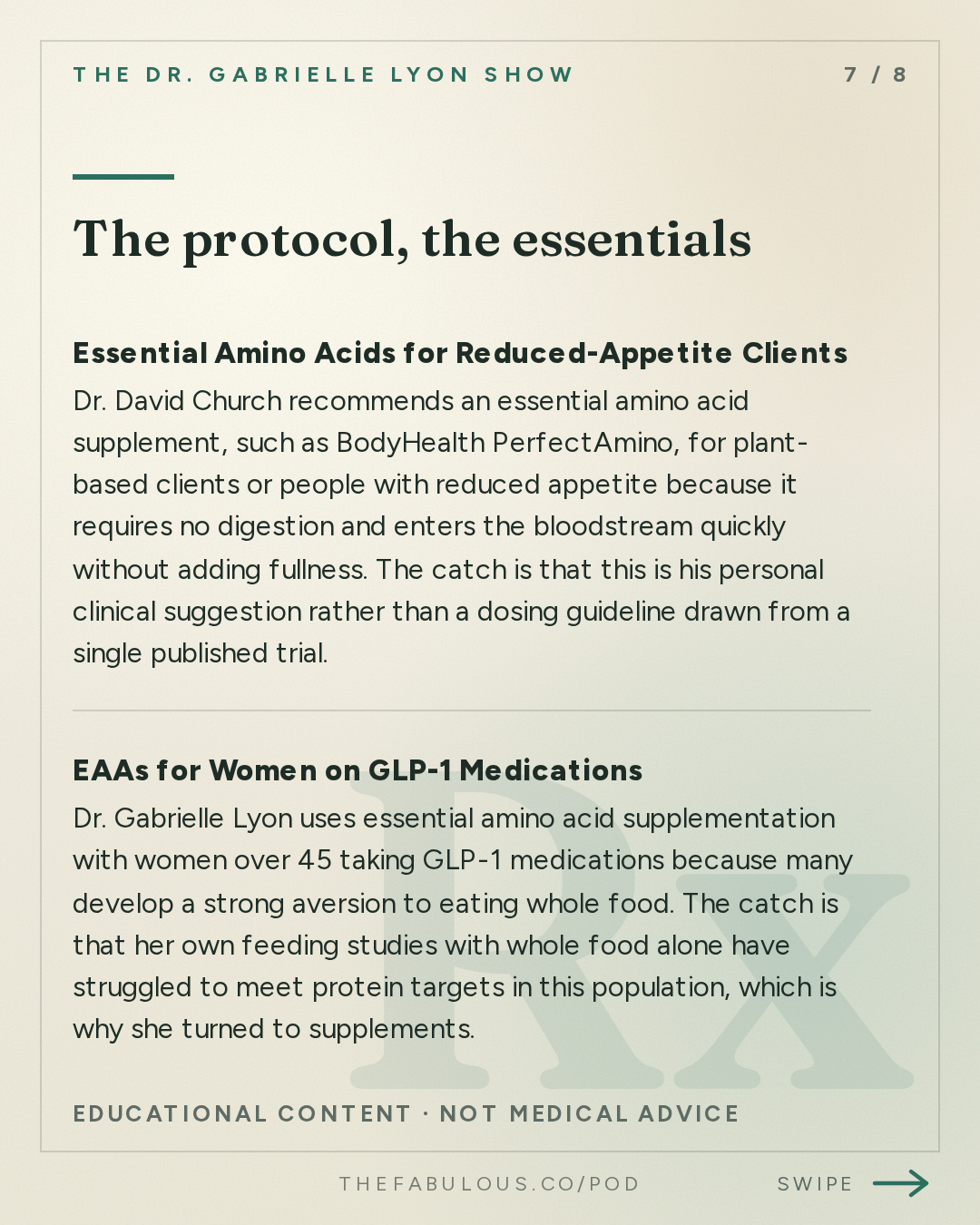
Essential Amino Acids for Reduced-Appetite Clients
Dr. David Church recommends an essential amino acid supplement, such as BodyHealth PerfectAmino, for plant-based clients or people with reduced appetite because it requires no digestion and enters the bloodstream quickly without adding fullness. The catch is that this is his personal clinical suggestion rather than a dosing guideline drawn from a single published trial.
taken alongside meals as needed
-
EAAs for Women on GLP-1 Medications
Dr. Gabrielle Lyon uses essential amino acid supplementation with women over 45 taking GLP-1 medications because many develop a strong aversion to eating whole food. The catch is that her own feeding studies with whole food alone have struggled to meet protein targets in this population, which is why she turned to supplements.
daily, in place of relying on whole food alone
-
Protein Target for Fat Loss With Lean Mass Retention
Research discussed by Dr. David Church supports at least 1.2 grams of protein per kilogram of body weight per day to improve fat loss and help maintain lean mass during calorie restriction, based on the six-month OptiMen trial in older adults. The catch is that this benefit showed up over six months of controlled feeding, not in short trials, so DEXA scans in three-month studies are often too insensitive to detect it.
daily
Questions this episode answers
Does plant protein build muscle as well as animal protein?
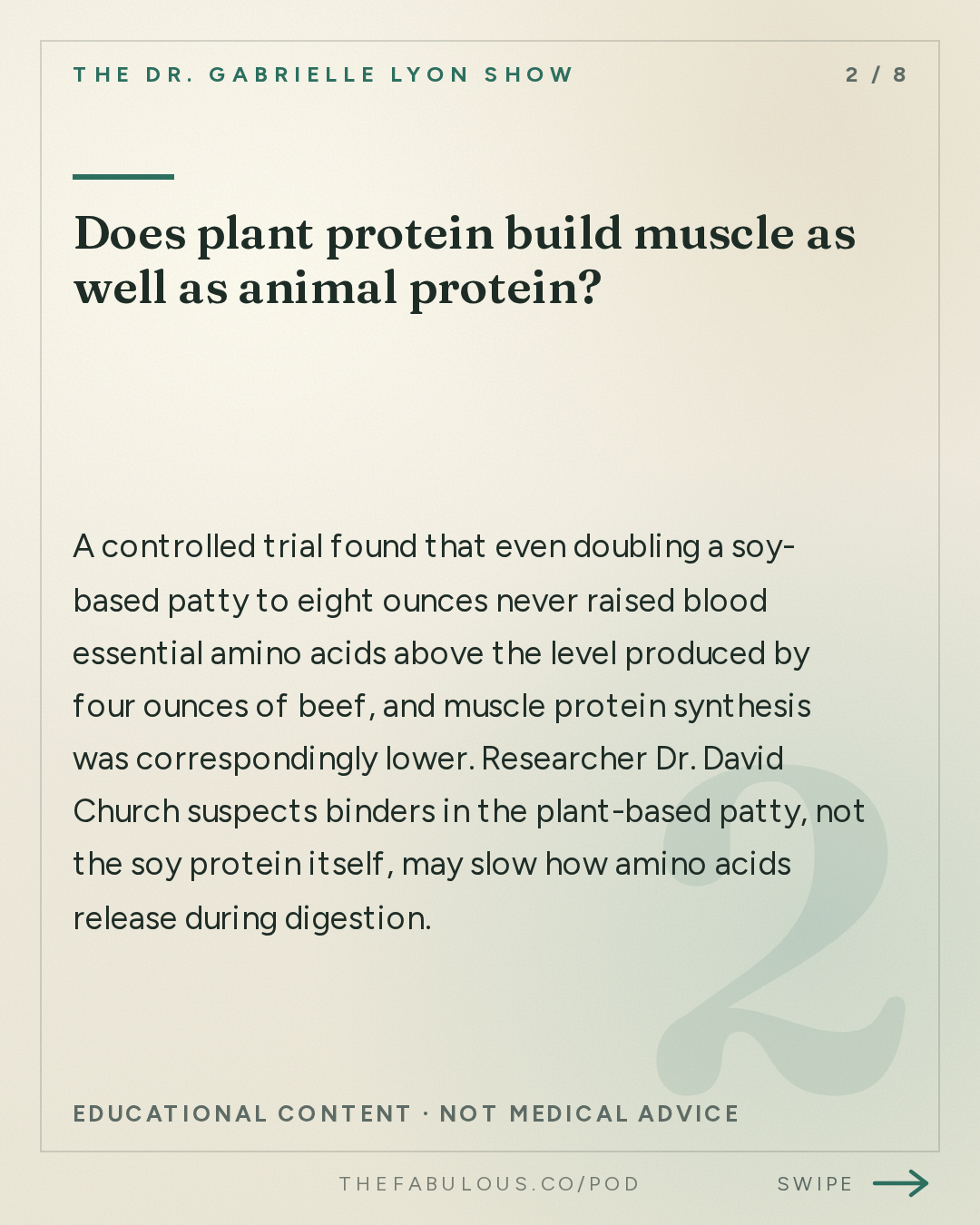
A controlled trial found that even doubling a soy-based patty to eight ounces never raised blood essential amino acids above the level produced by four ounces of beef, and muscle protein synthesis was correspondingly lower (40:03). Researcher Dr. David Church suspects binders in the plant-based patty, not the soy protein itself, may slow how amino acids release during digestion (40:53).
How does testosterone actually build muscle?
Testosterone mainly works by making protein synthesis more efficient: it recycles amino acids back into new muscle protein instead of letting them leak out of the muscle cell into the bloodstream, an effect measured in the fasted, basal state rather than after eating (16:17, 14:37).
How much protein do I actually need per day?
Current guidelines set the RDA at 0.8 grams per kilogram, with newer research supporting at least 1.2 grams per kilogram for better fat loss and lean mass retention while dieting (24:22). Dr. David Church's own modeling of essential amino acid losses suggests true needs on a typical diet run closer to 1.27 grams per kilogram per day (55:14).
Why do essential amino acid supplements help people on GLP-1 medications?
Essential amino acids require no digestion, so they enter the bloodstream almost immediately without adding much bulk or triggering fullness, which matters for people whose appetite is already suppressed by GLP-1 drugs (50:09). Dr. Gabrielle Lyon uses this strategy with women over 45 on GLP-1 medications who have developed an aversion to eating whole food (48:44).
Does eating extra protein turn into body fat?
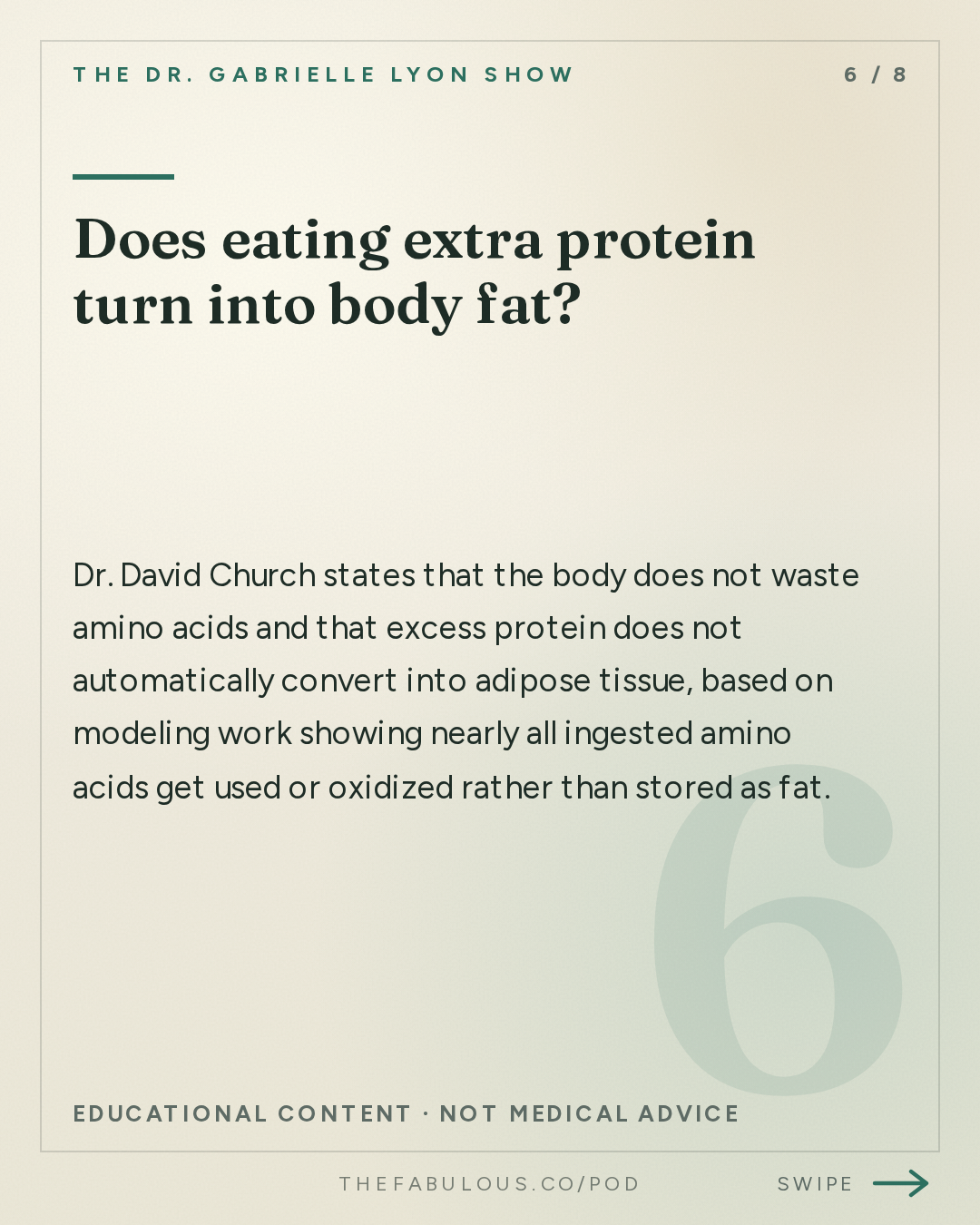
Dr. David Church states that the body does not waste amino acids and that excess protein does not automatically convert into adipose tissue, based on modeling work showing nearly all ingested amino acids get used or oxidized rather than stored as fat (55:49).
The full read, in cards
Go deeper
- Underappreciated Role of Muscle in Health and Disease (2006) — Bob Wolfe's paper arguing muscle buffers whole-body metabolic stress by releasing amino acids during starvation and illness
- OptiMen trial — Found 1.2 grams per kilogram of protein produced greater fat mass loss than 0.8 grams per kilogram over six months in frail older adults
- 2001 Journal of Physiology nandrolone muscle memory study — Found mice given testosterone pellets early in life kept greater muscle mass and satellite cell content after androgens were withdrawn and the animals aged
- Beef versus soy-based meat alternative trial — Found eight ounces of a soy patty failed to raise plasma essential amino acids above the level produced by four ounces of beef
- Arctic Norway ski training study — Found soldiers given protein or carbohydrate supplements ate less food calorie for calorie, undercutting the intended supplemental benefit
Mentioned
Dr. David Church · Dr. Gabrielle Lyon · Dr. Jay Hoffman · Bob Wolfe · Stuart Phillips · Stefan Pasiakos · Bettina Mittendorfer · Charlotte Peterson · Chris Fry · Lee Margolis · Pennington Biomedical Research Center · PerfectAmino · OptiMen Trial · GLP-1
More from this show and category
Essential Amino Acids and Muscle Protein Synthesis
The body doesn't have a protein requirement, it has an essential amino acid requirement: nine amino acids it cannot make itself (01:33). Animal foods pack more of them per gram than plants do (07:39), aging raises the dose needed to trigger muscle building (17:27), and about 30 grams of protein usually clears the 2.5-gram leucine threshold that switches on recovery (11:35).
Eating Before Bed: What Pre-Sleep Protein Research Shows
A small protein snack 30 minutes before bed does not spoil fat metabolism, and exercise erases any downside. Florida State researcher Dr. Mike Ormsbee's microdialysis and bariatric-diet studies show resistance training protects muscle during severe calorie cuts, casein and whey work equally well, and extra protein is not stored as fat.
How Much Protein Do Kids Really Need?
Growing kids need more protein than official guidelines suggest, and puberty is a brief window for building muscle and bone. Dr. Gabrielle Lyon cites research showing children ages 6 to 11 may need close to 1.5 g/kg of protein daily, that 40 to 60% of adult bone mass forms during puberty, and that supervised strength training is safe at any age once a child can follow instructions.
Mozaffarian: How Food Made Us Sick
Cardiologist Dariush Mozaffarian says the food system, not willpower, is driving disease: 14 of 15 US adults already have a diet-related condition. He explains why saturated fat was wrongly blamed, how ultra-processed carbs work, and offers a 10-to-1 carb-to-fiber rule for judging packaged food.
