
Eating Before Bed: What Pre-Sleep Protein Research Shows
Dr. Mike Ormsbee: Eating Before Bed - What Probes in Belly Fat Revealed About Protein Snacks
▶ Listen to the full episode More from The Dr. Gabrielle Lyon Show
The brief
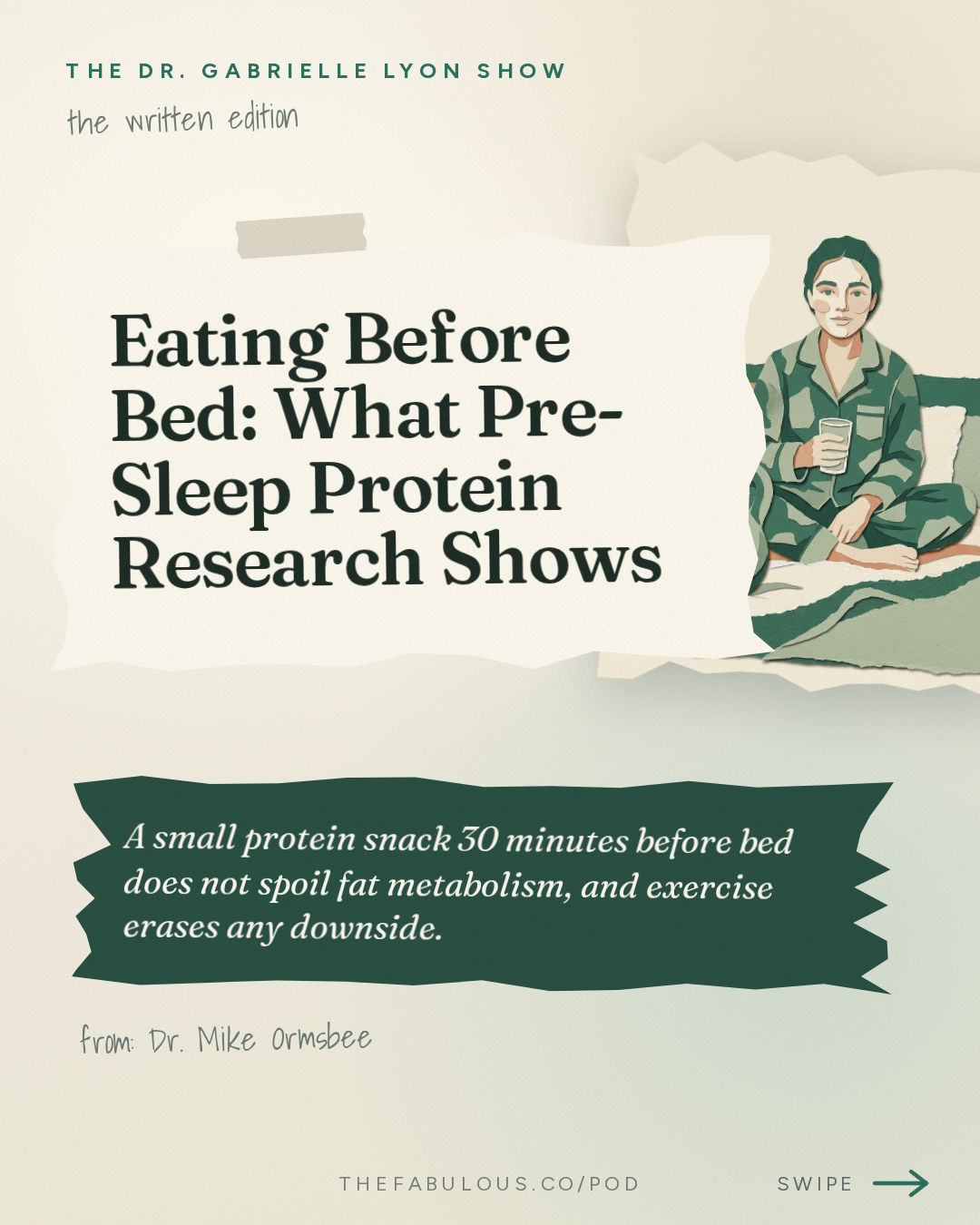
A small protein snack 30 minutes before bed does not spoil fat metabolism, and exercise erases any downside. Florida State researcher Dr. Mike Ormsbee's microdialysis and bariatric-diet studies show resistance training protects muscle during severe calorie cuts, casein and whey work equally well, and extra protein is not stored as fat.
A small flexible tube under the skin of the belly looks, in Dr. Mike Ormsbee's own description, "almost like a belly piercing" (06:40). Ormsbee, a researcher at Florida State University, has spent two decades asking what happens inside fat tissue while people sleep, and the tube is how he finds out. Push a thin cannula into the fat just under the skin, leave it there overnight, and measure what leaks out. That technique, called microdialysis, is the quiet mechanism behind one of the more contested questions in nutrition: should anyone eat before bed?
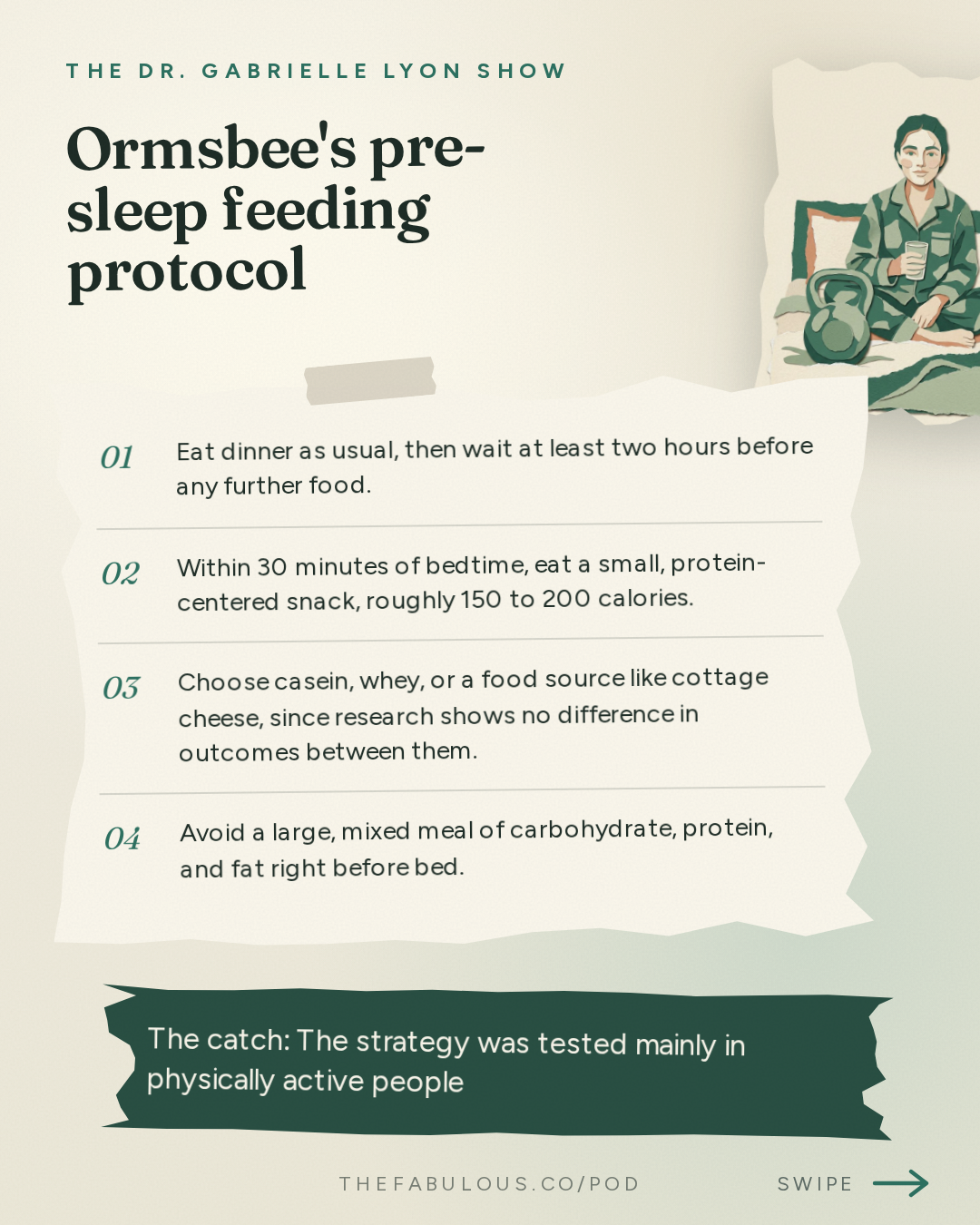
The sound bite most people know is "don't eat before bed." Ormsbee's answer starts with a question of his own: don't eat what? His lab defines pre-sleep feeding narrowly. It means a meal at least two hours after dinner, then a small, protein-centered snack within 30 minutes of getting into bed (03:33). It does not mean a second dinner. A large, mixed meal of carbohydrate, protein, and fat late at night can disrupt heart rate variability and sleep in some labs, he says, and that is not what his studies test.
"What we define pre-sleep feeding as is as two hours after dinner and within 30 minutes before going to bed." (Dr. Mike Ormsbee, 03:33)
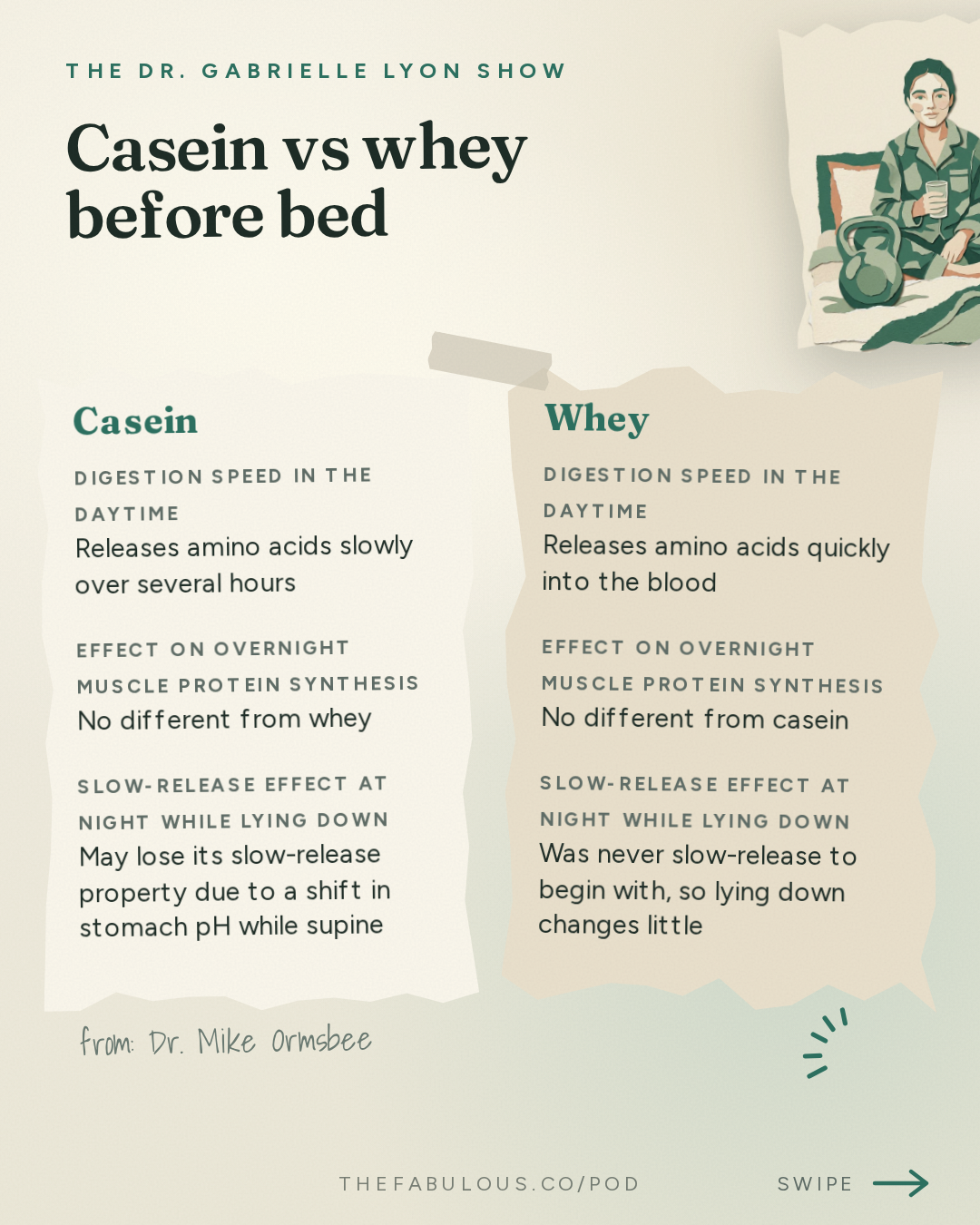
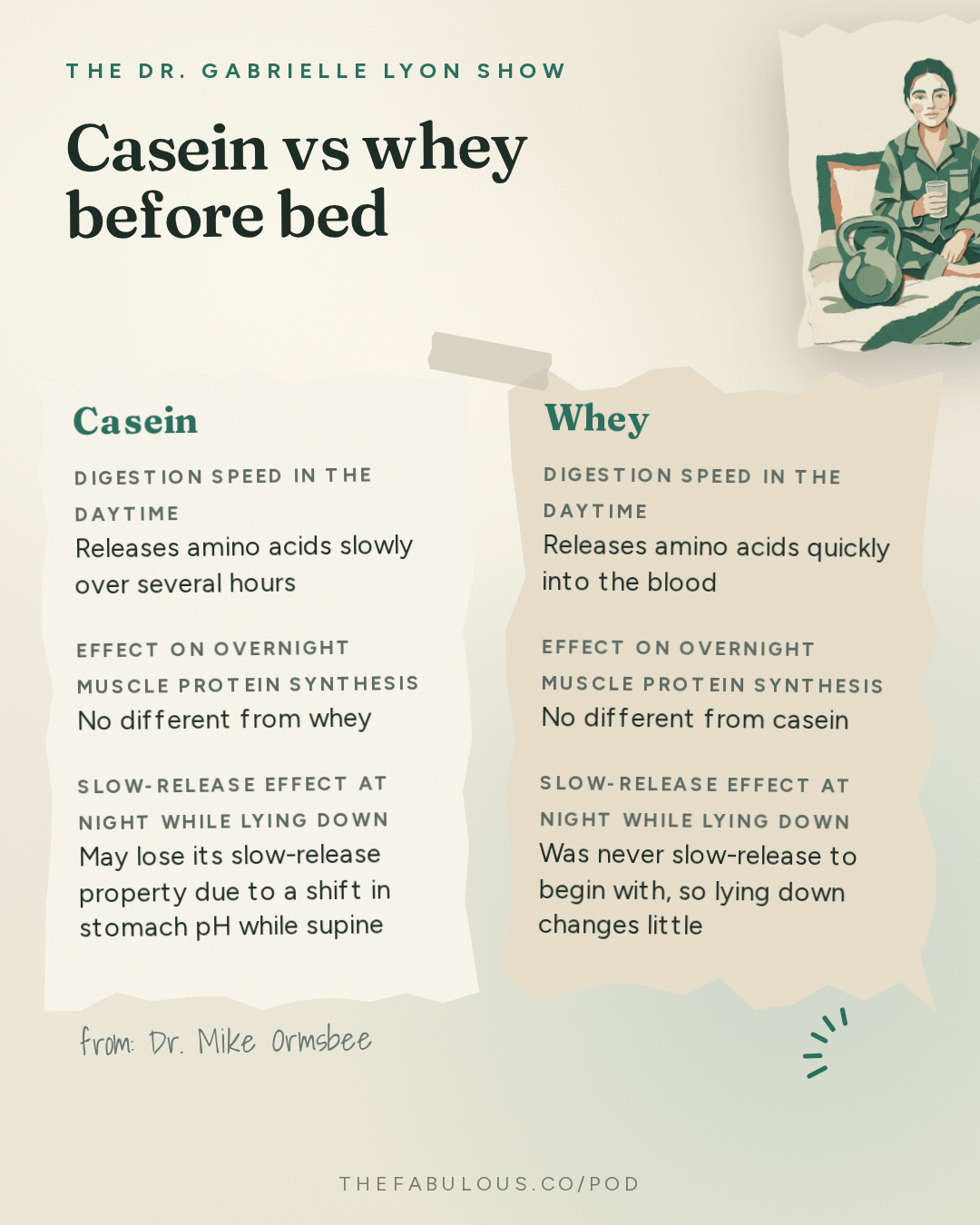
Within that narrow window, the protein source turns out not to matter much. For years the field assumed casein, the slow-digesting milk protein, was the obvious choice overnight, since it trickles amino acids into the blood for hours. But newer work from Ormsbee's lab and from researcher Luke Van Loon's group found casein and whey produce no difference in overnight muscle protein synthesis (08:39). Stranger still, Ormsbee suspects the slow-release property of casein may not survive the night at all. Lying flat changes stomach pH slightly, he says, which may interfere with how casein clots and digests (76:31). If that is right, the daytime distinction between a fast protein and a slow one mostly disappears once someone is horizontal.
Exercise as the bigger lever
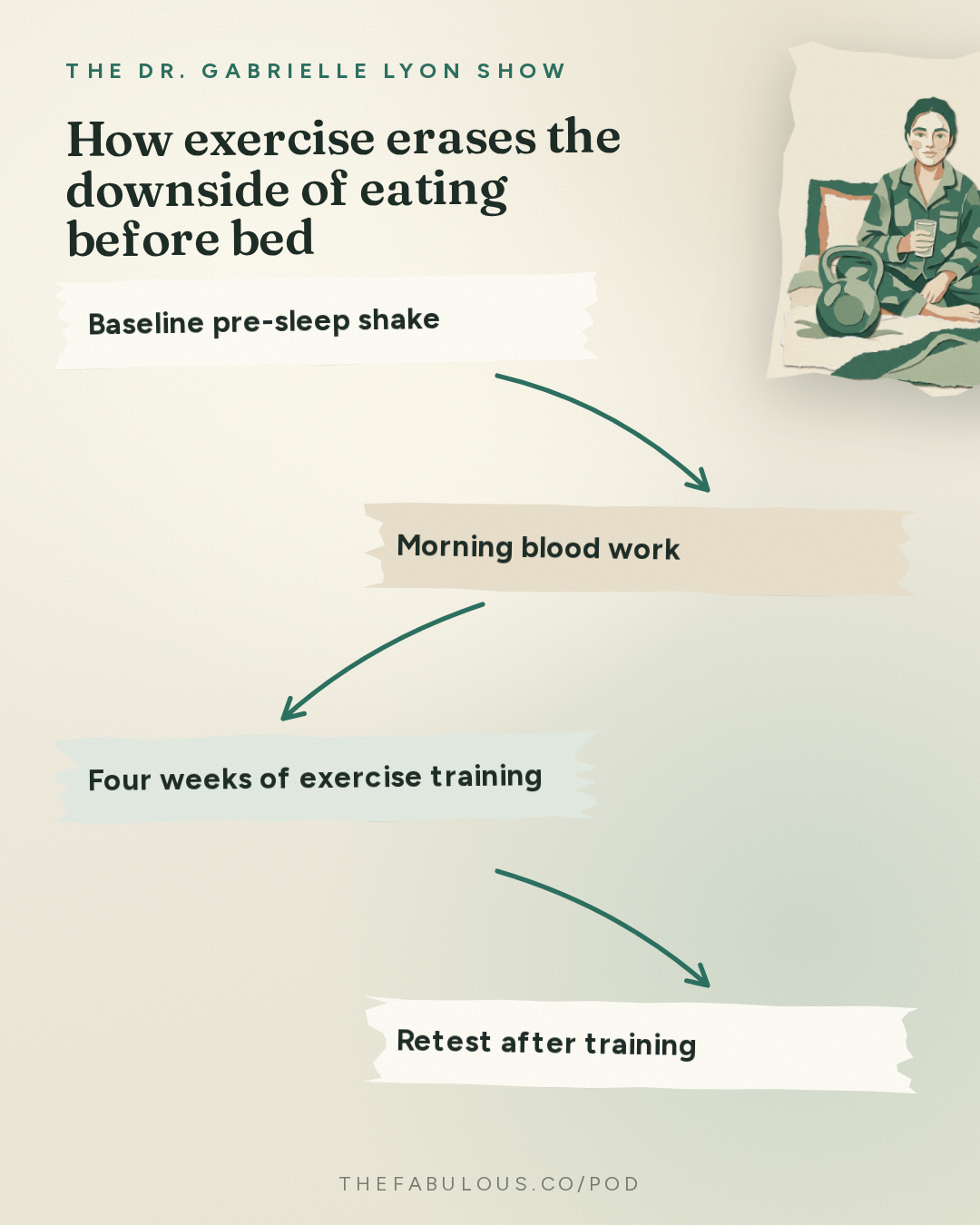
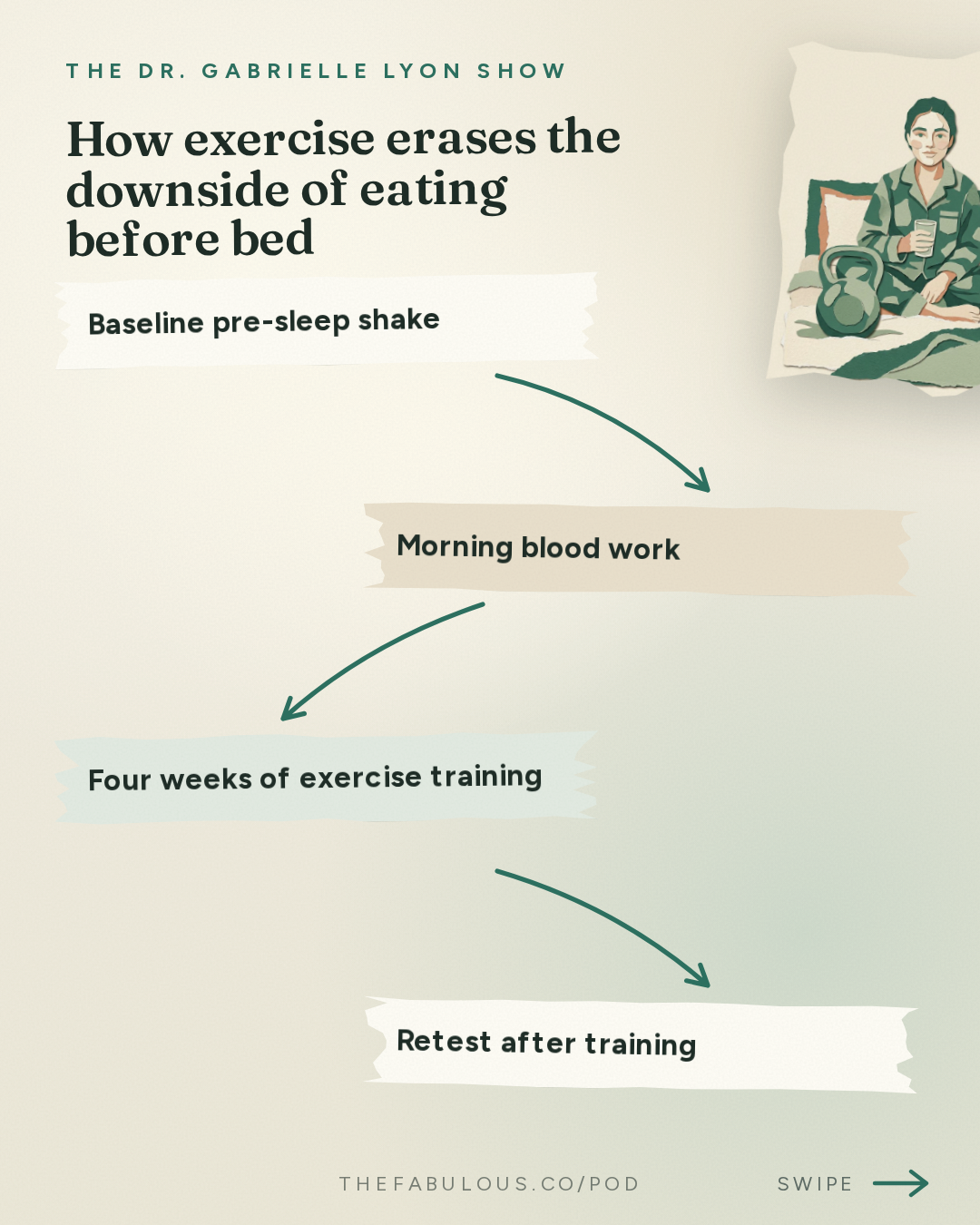
The more striking finding in Ormsbee's research is not about protein type. It is about what cancels any downside of eating late. In an early study, his lab gave pre-sleep shakes, casein, whey, or carbohydrate, to young, sedentary women with obesity. The next morning, insulin and glucose were elevated no matter which drink they had taken (09:51). Then the same women completed four weeks of exercise training. The negative response disappeared entirely.
"The exercise itself was just such a blunt instrument to control metabolism that the pre-sleep feeding no longer had any sort of deleterious effect at all." (Dr. Mike Ormsbee, 09:51)
Other data point the same way. A 2013 study by researcher James Betts's group restricted people to fewer than 4,000 steps a day. The team then overfed both an exercising and a non-exercising group by 50 percent (11:01). Both groups gained weight. But insulin roughly doubled in the sedentary group, while it stayed close to normal in the group that ran 45 minutes a day. In a study from Ormsbee's doctoral student Brett Cross, just three nights of 30 percent sleep deprivation produced measurable changes in vascular health markers, changes that exercise during that window blunted (12:37). Ormsbee has a name for this pattern: "sometimes I like to refer to it as, uh, sort of like our metabolic apology to our poor lifestyle choices" (13:15).
That apology seems to run deeper than calorie burn. Resistance training triggers an acute rise in growth hormone, which Ormsbee describes as both anabolic, meaning it helps build muscle, and lipolytic, meaning it helps break down fat for fuel (33:53). An older study comparing a Nautilus weight-training session to walking at four miles an hour found significantly higher growth hormone and catecholamine responses from the resistance training (16:00). Ormsbee's working theory, built on years of this kind of evidence, is that muscle and fat communicate during training. "We now know that the muscle actually talks to the fat, tells the fat that that should be going down while muscle mass is increasing," he says (19:28).
When calories get extreme
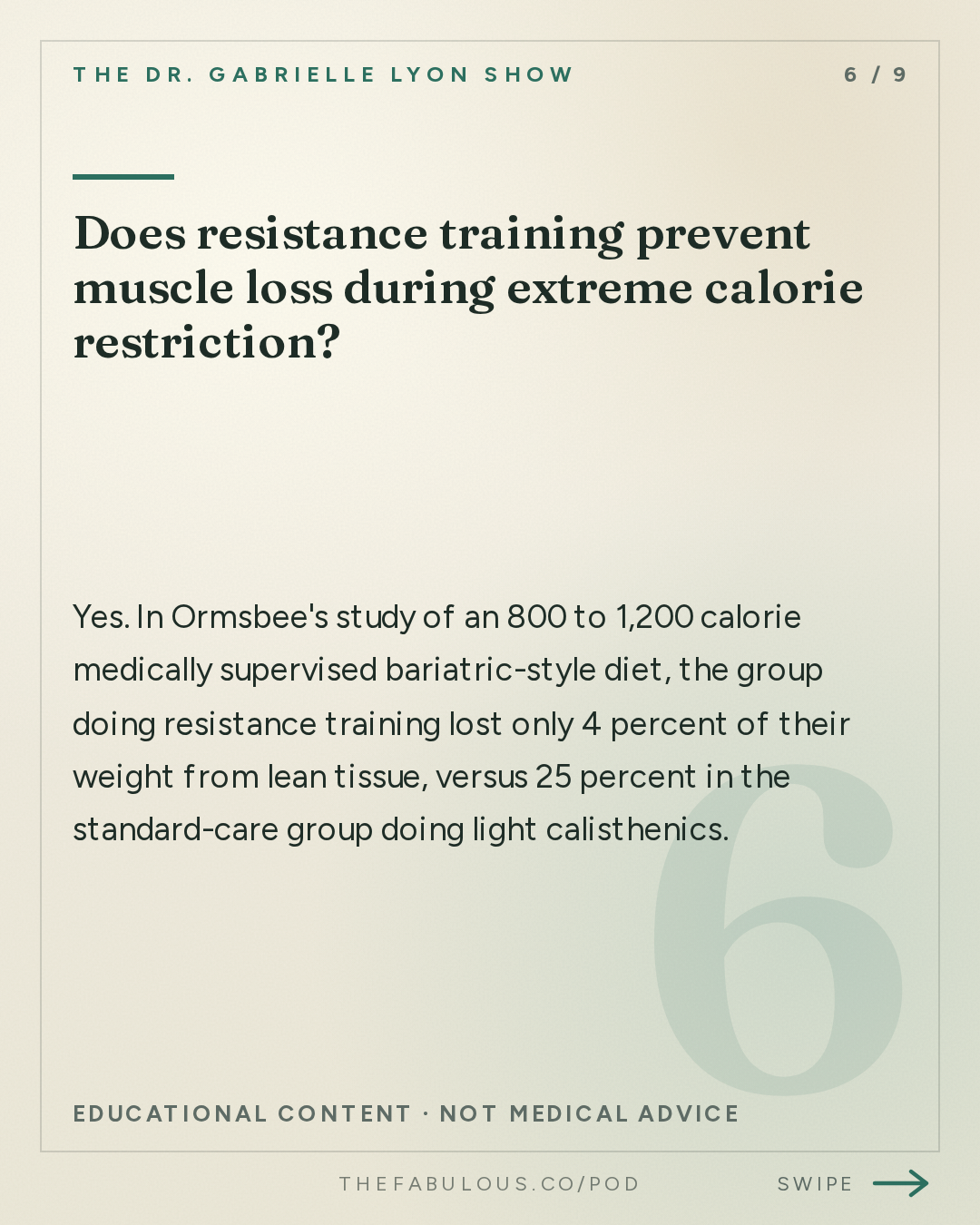
The clearest demonstration of that idea came from a study Ormsbee ran with people preparing for bariatric surgery. The medically prescribed diet was 800 calories a day, so low that his research team had to petition their ethics board to add protein, since patients were getting only about 0.3 to 0.4 grams per kilogram of body weight, far below what protects muscle (41:11). With added protein, calories landed around 1,100 to 1,200. One group did standard bariatric care, essentially supervised movement in a conference room. The other trained with weights.
"The group that just did standard of care lost a ton of weight, but almost 25 percent of it was from their lean tissue." (Dr. Mike Ormsbee, 42:19)
In the resistance-trained group, lean tissue made up only 4 percent of the weight lost (42:19). The study was small, fewer than fourteen people finished it, but Ormsbee considers it one of the more important findings of his career, especially now that GLP-1 medications are producing rapid, large-scale weight loss in millions of people. The muscle-loss problem, he argues, has not gone away just because the tool for losing weight has changed.
Not every thread in Ormsbee's research resolves so neatly. His group has been testing alpha lactalbumin, a whey-derived protein rich in tryptophan, for its effect on sleep. Published studies using a 93 percent pure form of the protein found improvements in how quickly people fell asleep and how long they slept (52:16). When Ormsbee's team unblinded their own supplement, they discovered it was only about 44 percent pure, which may explain why they saw no benefit at all (52:16). It is a small, almost mundane detail, but it says something about supplement research generally: a named ingredient on a label does not guarantee the dose that actually worked in the trial that made it famous.
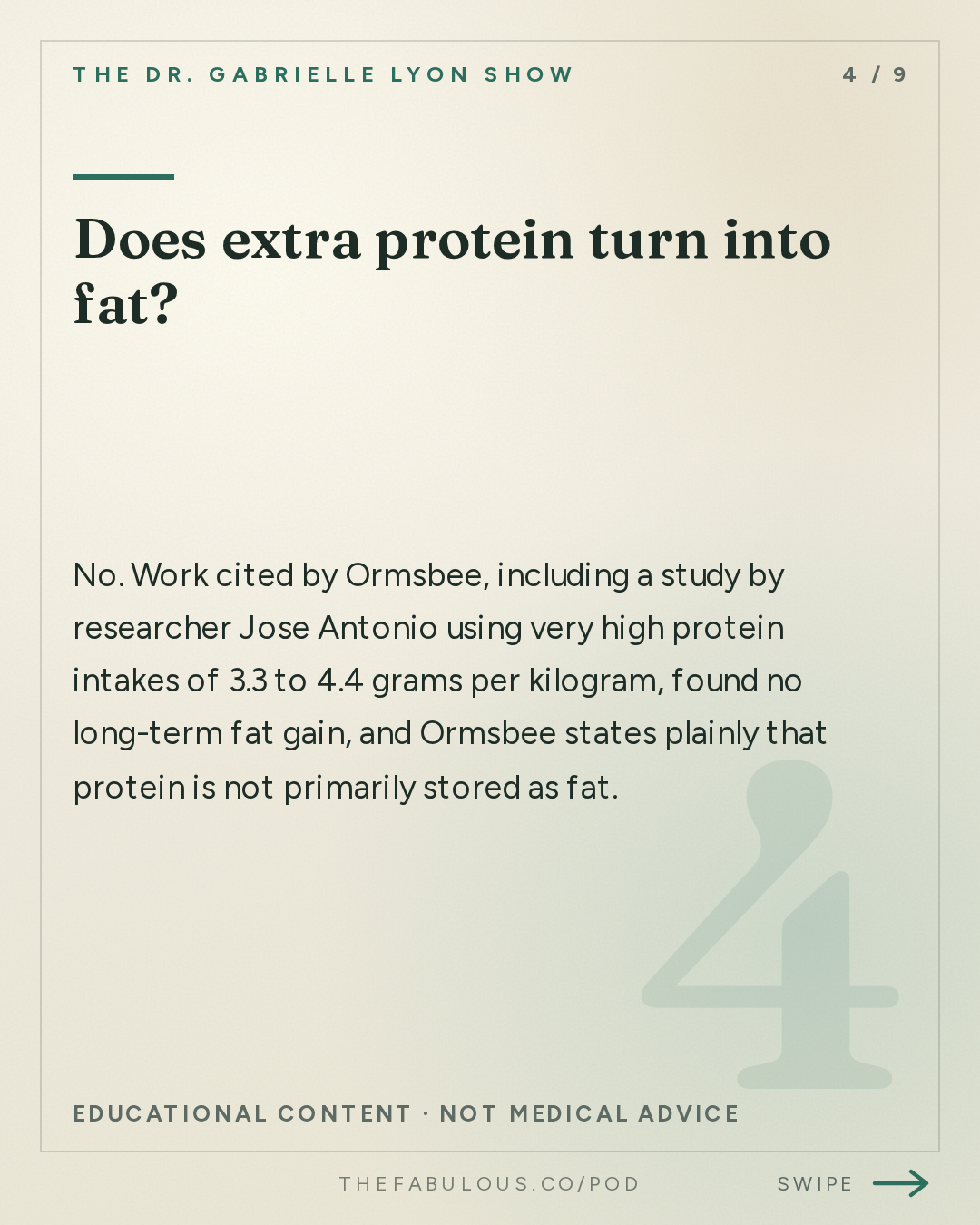
Ormsbee is also direct about a myth he hears from clinicians, not just the public. At a scientific conference in Boston, physicians untrained in nutrition told Gabrielle Lyon, the show's host, that excess protein is converted to and stored as body fat. Ormsbee disagrees, citing work from researcher Jose Antonio showing that very high protein intakes, in the range of 3.3 to 4.4 grams per kilogram, produced no long-term fat gain (60:55). "Additional protein does not get stored primarily as fat," he says. "This is not the primary disposal place of protein" (60:12).
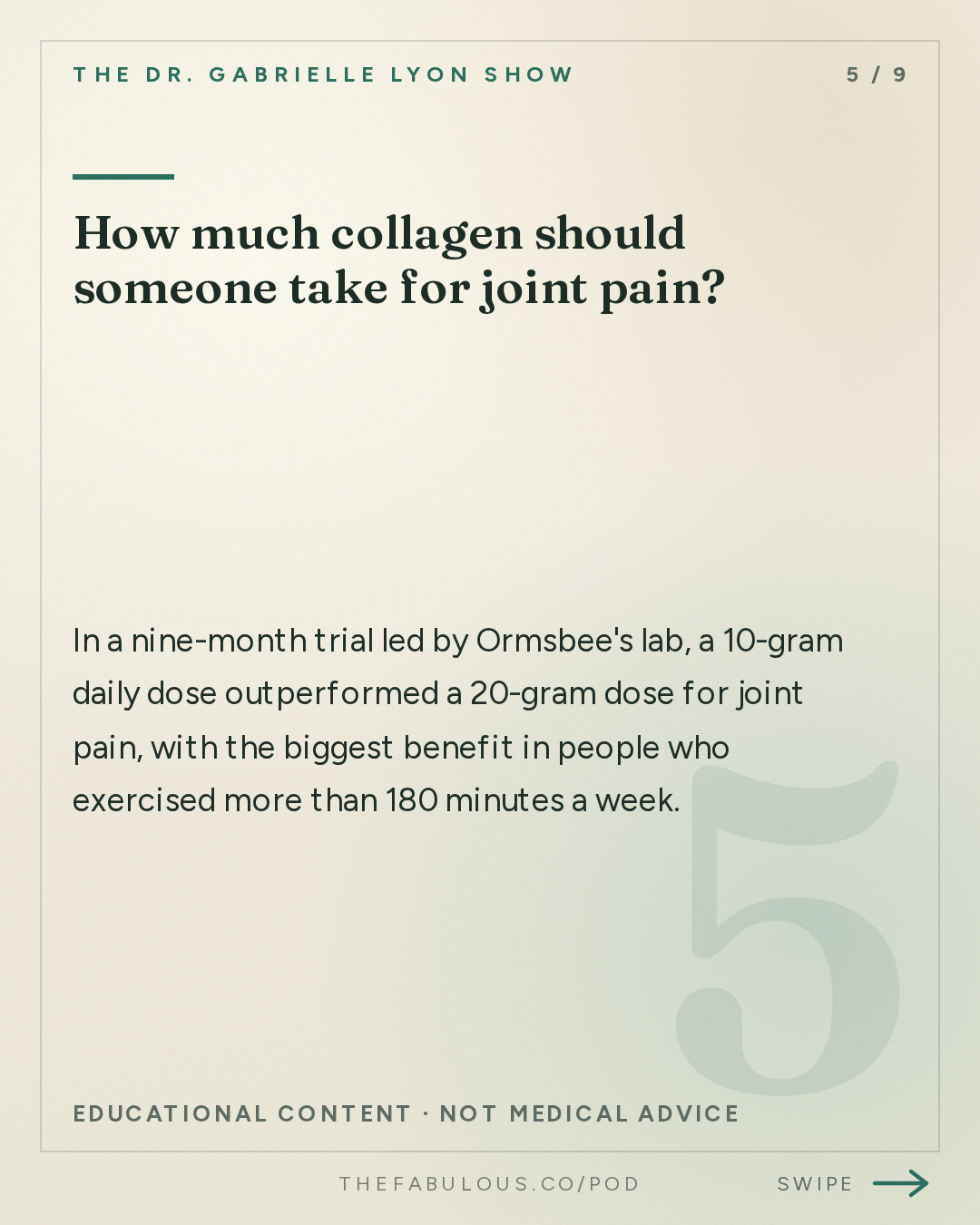
One supplement did change his mind after years of skepticism. Collagen, a protein low in the amino acids that build muscle, struck Ormsbee as nutritionally incomplete when he first encountered it. Then his lab ran what may be the longest collagen trial on record, nine consecutive months comparing no collagen, 10 grams a day, and 20 grams a day (67:50). Oddly, the 10-gram dose outperformed the 20-gram dose on joint pain, and the effect was strongest in people who already exercised more than 180 minutes a week, a pattern Ormsbee partly attributes to blood flow that carries amino acids to the joints (69:29). He now takes 10 grams of collagen daily himself.
What runs under all of it, the pre-sleep snack, the bariatric trial, the alpha lactalbumin purity problem, the collagen reversal, is the same habit of mind: ask what, how much, and compared to what, before accepting a rule. Ormsbee's next project tests exogenous ketones on decision-making in SWAT team members during a live-fire exercise under exhaustion (73:07), approached the same way as everything else. "I like to run these studies and then figure out what I think once we run it," he says, and it is close to a thesis statement for the whole conversation.
Ask this episode anything
Pod's AI answers from the episode itself, with the minute mark so you can hear it yourself.
Or start with one of these
Ask this episode
Pod's AI listens to the whole episode to answer, and points you to the minute it comes from.
The rest of this answer, and any question after it
Answers come from the episode itself, never from a summary of it.
ContinueKey takeaways
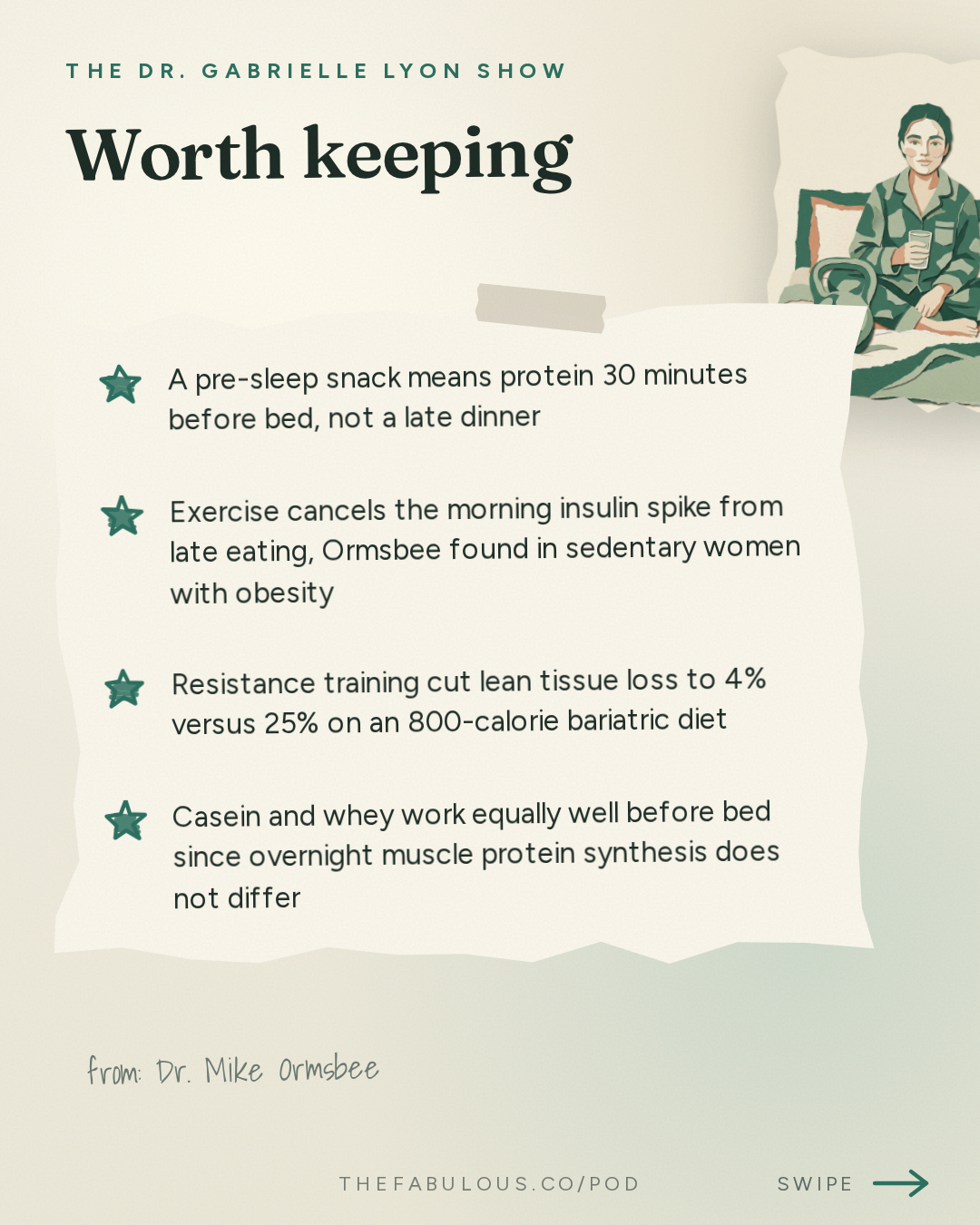
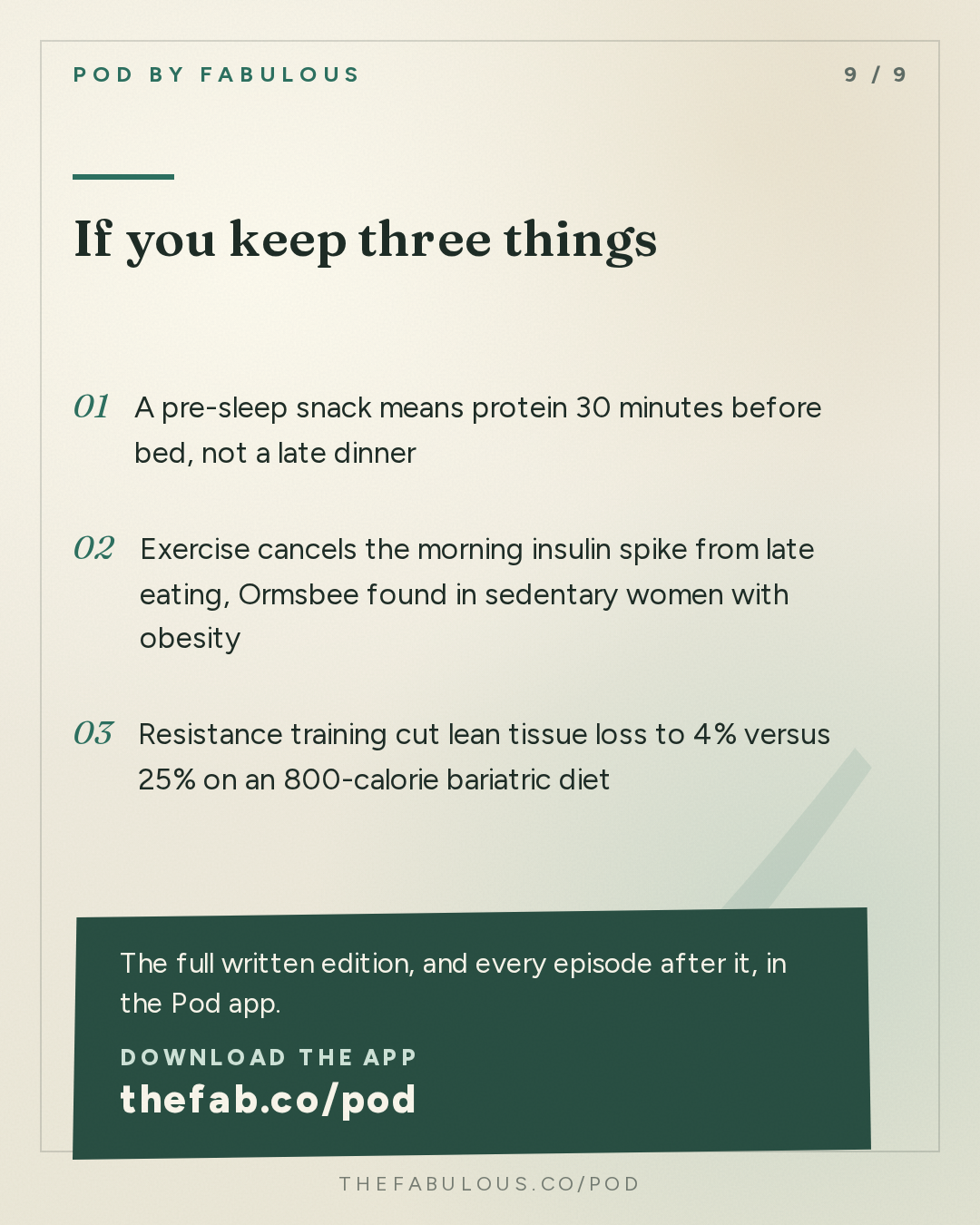
- A pre-sleep snack means protein 30 minutes before bed, not a late dinner
- Exercise cancels the morning insulin spike from late eating, Ormsbee found in sedentary women with obesity
- Resistance training cut lean tissue loss to 4% versus 25% on an 800-calorie bariatric diet
- Casein and whey work equally well before bed since overnight muscle protein synthesis does not differ
- Extra protein is not mainly stored as fat, despite a claim Ormsbee heard from physicians at a conference
The episode in cards
By the numbers
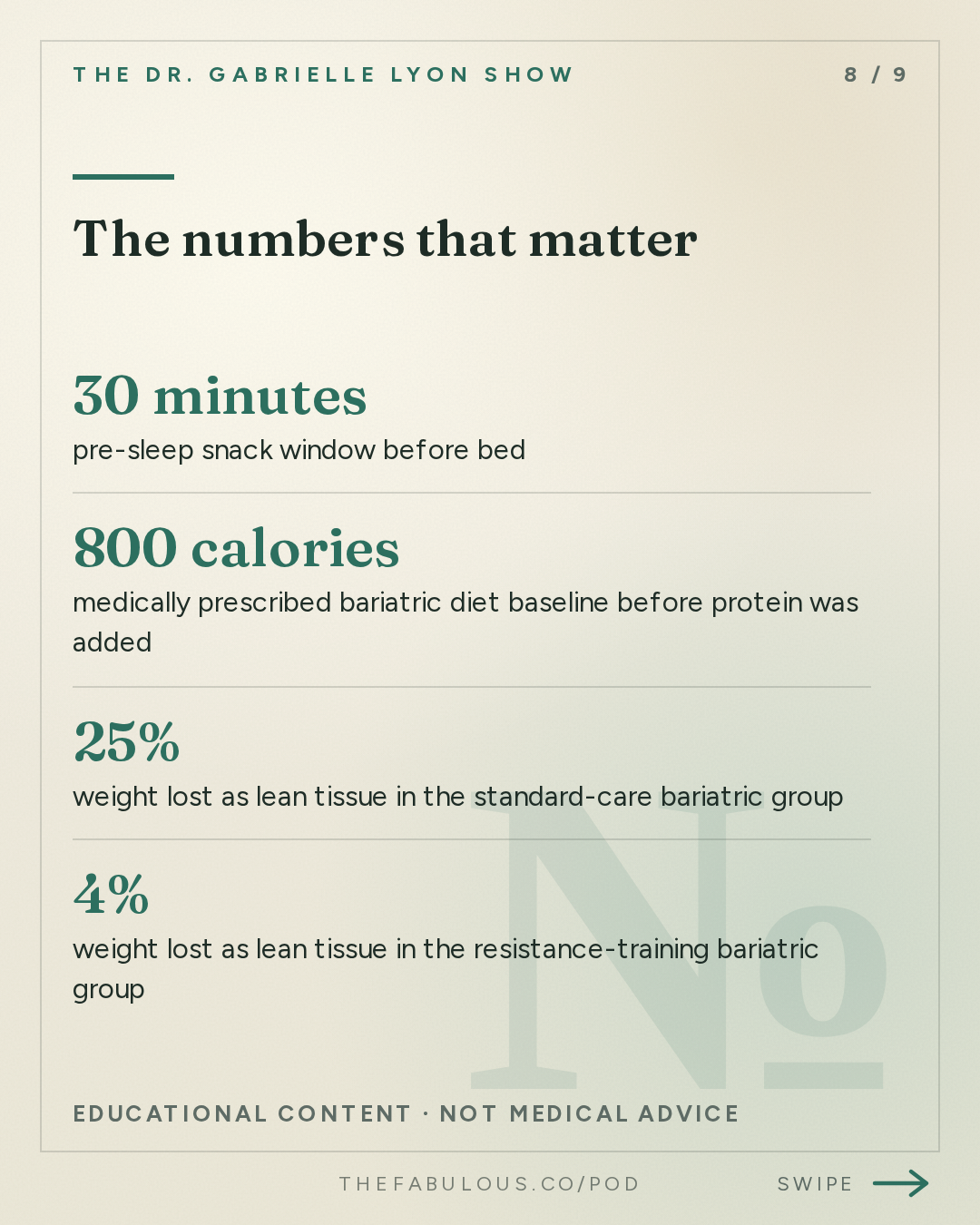
- 30 minutes pre-sleep snack window before bed
- 800 calories medically prescribed bariatric diet baseline before protein was added
- 25% percent weight lost as lean tissue in the standard-care bariatric group
- 4% percent weight lost as lean tissue in the resistance-training bariatric group
- 93% percent alpha lactalbumin purity used in studies that showed a sleep benefit
- 10 grams daily collagen dose that outperformed 20 grams for joint pain
In their words
“What we define pre-sleep feeding as is as two hours after dinner and within 30 minutes before going to bed.”
“The exercise itself was just such a blunt instrument to control metabolism that the pre-sleep feeding no longer had any sort of deleterious effect at all.”
“Sometimes I like to refer to it as, uh, sort of like our metabolic apology to our poor lifestyle choices.”
“The group that just did standard of care lost a ton of weight, but almost 25% of it was from their, their lean tissue”
Protocols
-
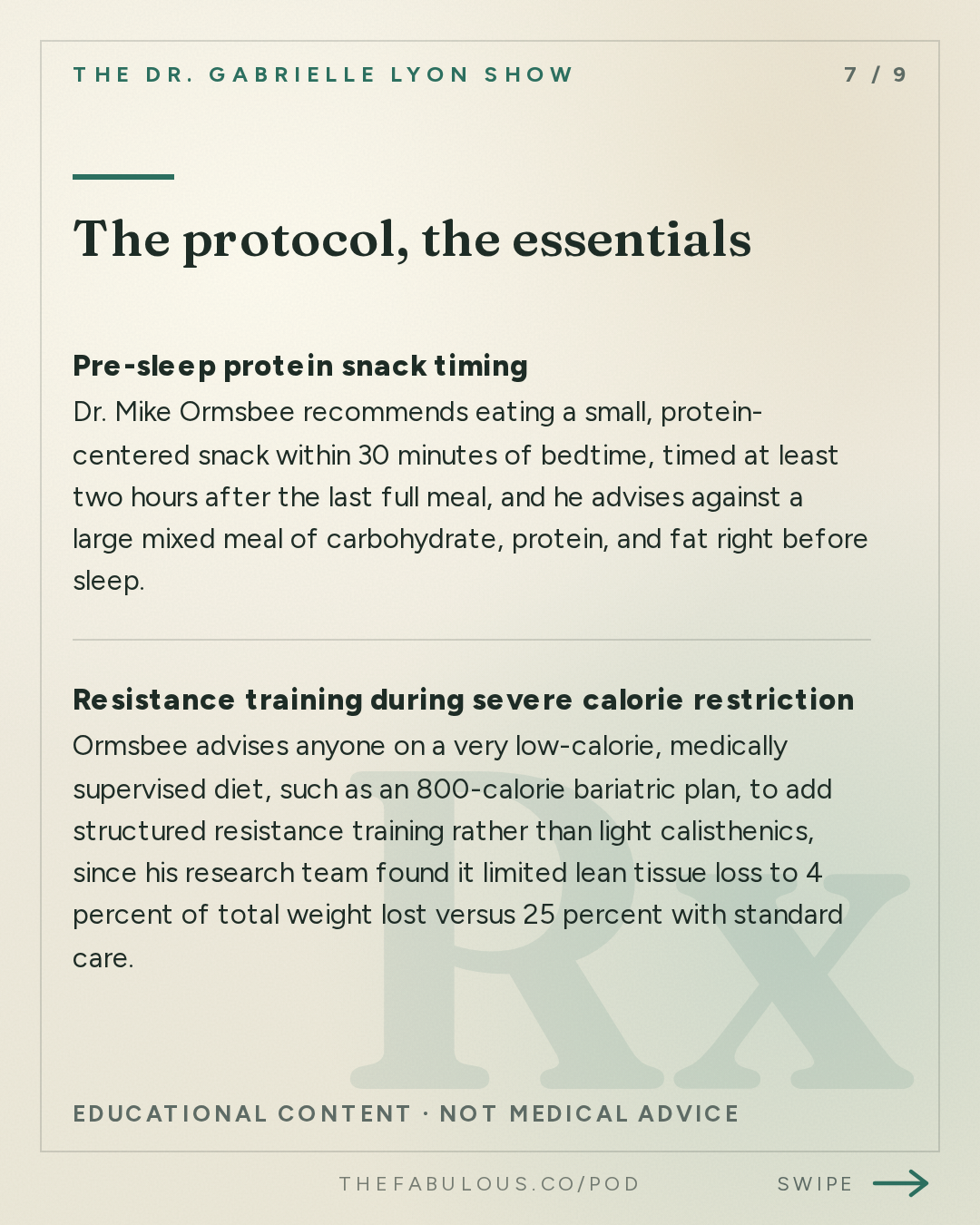
Pre-sleep protein snack timing
Dr. Mike Ormsbee recommends eating a small, protein-centered snack within 30 minutes of bedtime, timed at least two hours after the last full meal, and he advises against a large mixed meal of carbohydrate, protein, and fat right before sleep.
Nightly, before bed
-
Resistance training during severe calorie restriction
Ormsbee advises anyone on a very low-calorie, medically supervised diet, such as an 800-calorie bariatric plan, to add structured resistance training rather than light calisthenics, since his research team found it limited lean tissue loss to 4 percent of total weight lost versus 25 percent with standard care.
Throughout the weight-loss program
-
Splitting protein across the day for older adults
Ormsbee advises older adults to spread protein intake across several smaller meals rather than eating one large bolus, because limited appetite restricts how much can be eaten in a single sitting and split dosing better preserves lean tissue.
Multiple times daily
-
Personal collagen dose for joint support
Ormsbee takes 10 grams of collagen daily for joint support, a dose his nine-month trial found outperformed 20 grams, and he notes the benefit was strongest in people who exercised more than 180 minutes a week.
Daily
Questions this episode answers
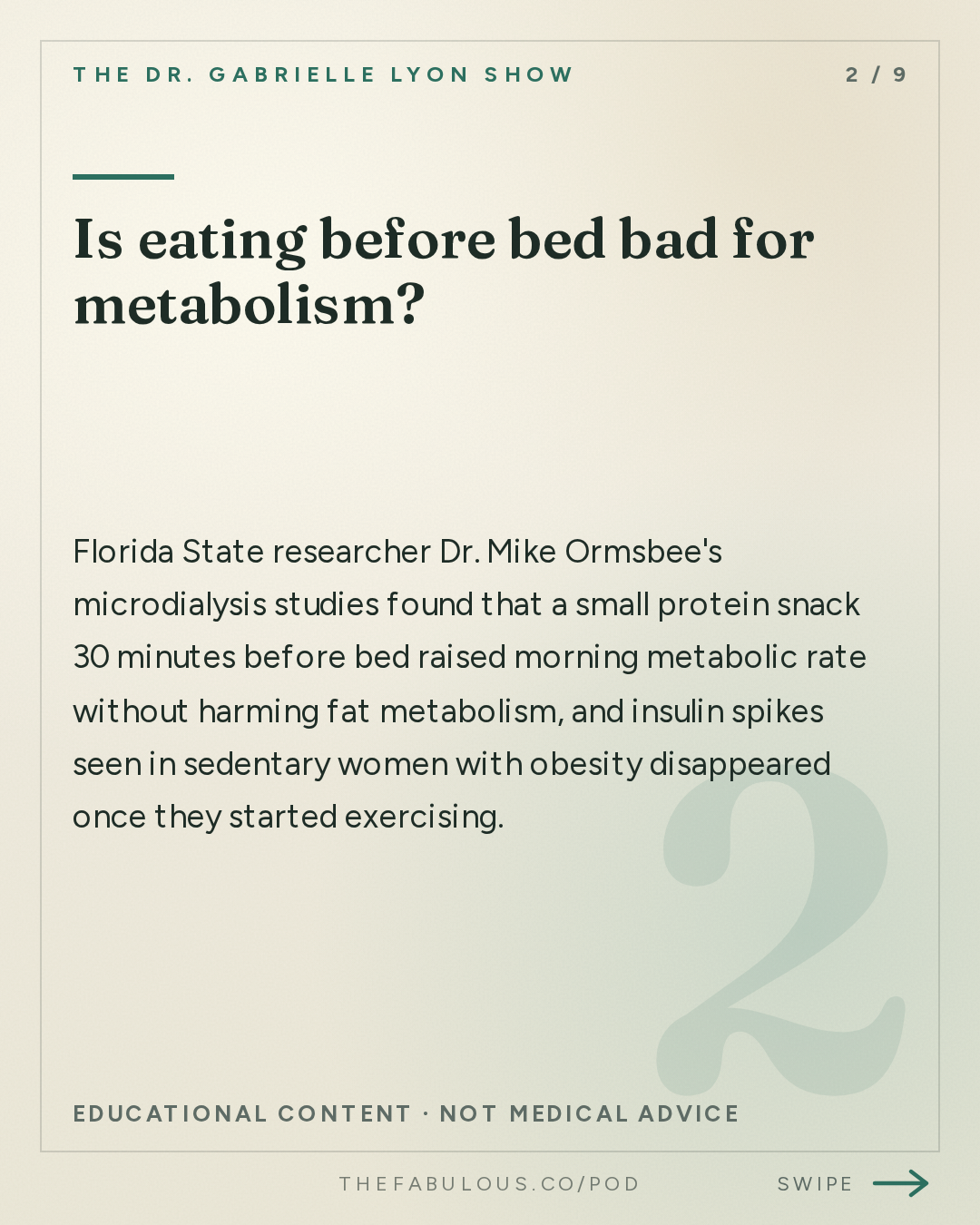
Is eating before bed bad for metabolism?
Florida State researcher Dr. Mike Ormsbee's microdialysis studies found that a small protein snack 30 minutes before bed raised morning metabolic rate without harming fat metabolism (04:59), and insulin spikes seen in sedentary women with obesity disappeared once they started exercising (09:51).
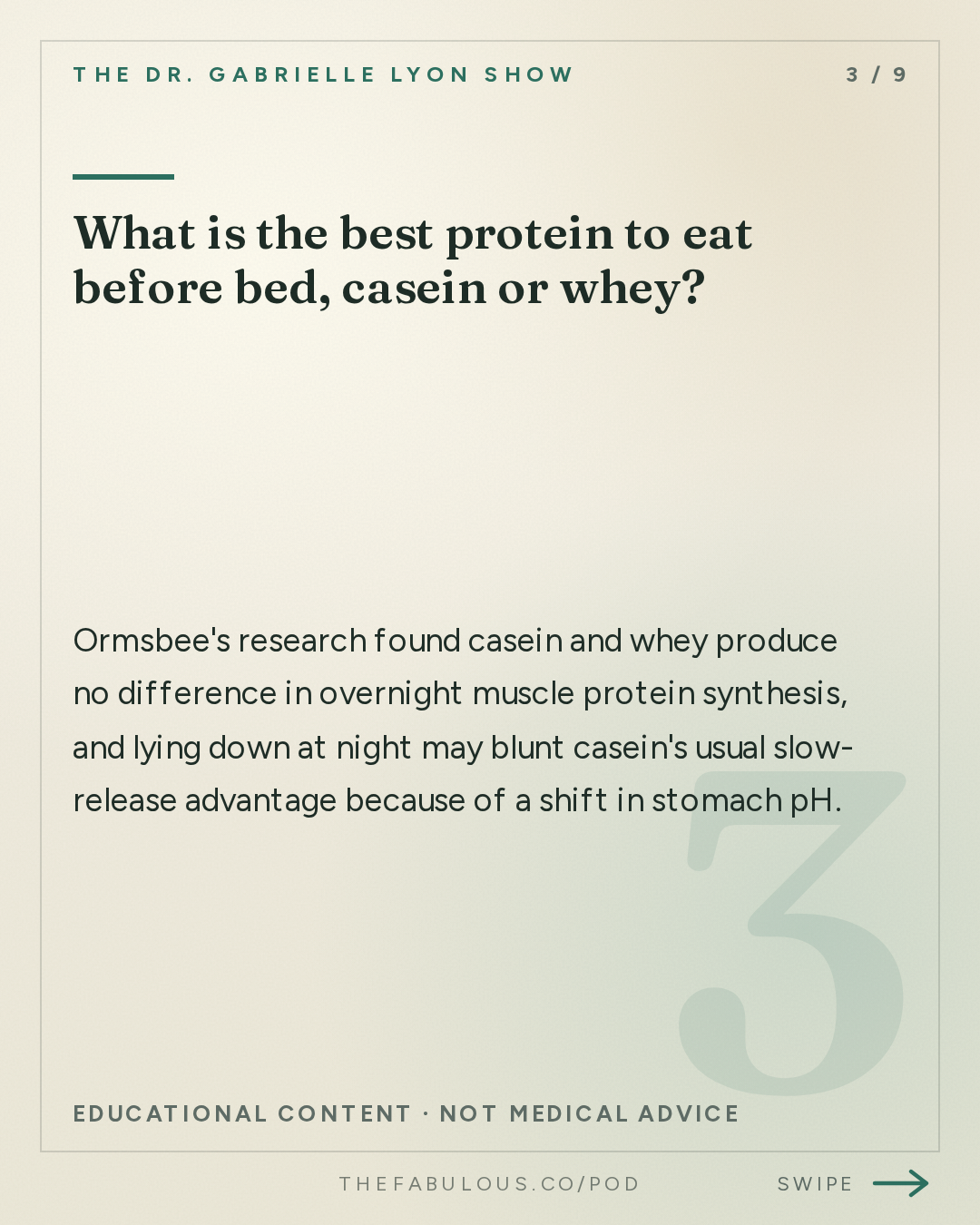
What is the best protein to eat before bed, casein or whey?
Ormsbee's research found casein and whey produce no difference in overnight muscle protein synthesis (08:39), and lying down at night may blunt casein's usual slow-release advantage because of a shift in stomach pH (76:31).
Does extra protein turn into fat?
No. Work cited by Ormsbee, including a study by researcher Jose Antonio using very high protein intakes of 3.3 to 4.4 grams per kilogram, found no long-term fat gain (60:55), and Ormsbee states plainly that protein is not primarily stored as fat (60:12).
How much collagen should someone take for joint pain?
In a nine-month trial led by Ormsbee's lab, a 10-gram daily dose outperformed a 20-gram dose for joint pain, with the biggest benefit in people who exercised more than 180 minutes a week (69:29).
Does resistance training prevent muscle loss during extreme calorie restriction?
Yes. In Ormsbee's study of an 800 to 1,200 calorie medically supervised bariatric-style diet, the group doing resistance training lost only 4 percent of their weight from lean tissue, versus 25 percent in the standard-care group doing light calisthenics (42:19).
What is alpha lactalbumin and does it improve sleep?
Alpha lactalbumin is a tryptophan-rich milk protein. Studies using a 93 percent pure form found improvements in sleep onset and total sleep time, but Ormsbee's own trial used a product that turned out to be only about 44 percent pure and showed no benefit (52:16), which the team suspects explains the null result.
The full read, in cards
Go deeper
- James Betts's 2013 overfeeding and step-restriction study — Overfeeding by 50% while restricting steps nearly doubled insulin in the non-exercising group but not in the group that ran 45 minutes daily
- Five-year NIH R01 resistance vs. endurance training trial — Matched caloric expenditure between resistance and endurance training in post-menopausal women with obesity and prediabetes to compare fat metabolism outcomes
- Nine-month collagen dosing trial — Compared 0, 10, and 20 grams of daily collagen for nine months and found 10 grams worked better than 20 grams for joint pain, especially in active participants
- Jose Antonio high-protein intake study — Found no long-term fat gain from very high protein intakes of 3.3 to 4.4 grams per kilogram of body weight
- 800-calorie bariatric diet resistance training study — Compared resistance training to standard care during a medically supervised 800 to 1,200 calorie diet and found far less lean tissue loss with resistance training
Mentioned
Dr. Mike Ormsbee · Luke Van Loon · Florida State University · Don Layman · James Betts · Bob Hickner · Stu Phillips · Jose Antonio · Keith Barr · Gabrielle Lyon · alpha lactalbumin · Body for Life · DEXA
More from this show and category
How Much Protein Do Kids Really Need?
Growing kids need more protein than official guidelines suggest, and puberty is a brief window for building muscle and bone. Dr. Gabrielle Lyon cites research showing children ages 6 to 11 may need close to 1.5 g/kg of protein daily, that 40 to 60% of adult bone mass forms during puberty, and that supervised strength training is safe at any age once a child can follow instructions.
Mozaffarian: How Food Made Us Sick
Cardiologist Dariush Mozaffarian says the food system, not willpower, is driving disease: 14 of 15 US adults already have a diet-related condition. He explains why saturated fat was wrongly blamed, how ultra-processed carbs work, and offers a 10-to-1 carb-to-fiber rule for judging packaged food.
How Much Protein Do You Really Need?
The standard protein recommendation of 0.8 grams per kilogram prevents deficiency, not optimal health. Researchers at Protein Summit 3.0 debated a higher range, 1.1 to 1.6 grams per kilogram, for better metabolic outcomes, noting needs shift by age, activity, and health status (07:15).
Is Anesthesia Safe? What Really Happens in the OR
Anesthesiologist Dr. Tiffany Moon says healthy patients face under 0.1% mortality risk from elective surgery, lower than the odds of a car crash (25:28, 25:56). The bigger variables are body fat, which changes how drugs distribute, and vital-sign stability during the procedure, not whether someone wakes up at all (05:09, 24:10).
