
Is Anesthesia Safe? What Really Happens in the OR
Dr. Tiffany Moon: Is Anesthesia Safe? What Patients Fear vs. What Actually Happens
▶ Listen to the full episode More from The Dr. Gabrielle Lyon Show
The brief
Anesthesiologist Dr. Tiffany Moon says healthy patients face under 0.1% mortality risk from elective surgery, lower than the odds of a car crash (25:28, 25:56). The bigger variables are body fat, which changes how drugs distribute, and vital-sign stability during the procedure, not whether someone wakes up at all (05:09, 24:10).
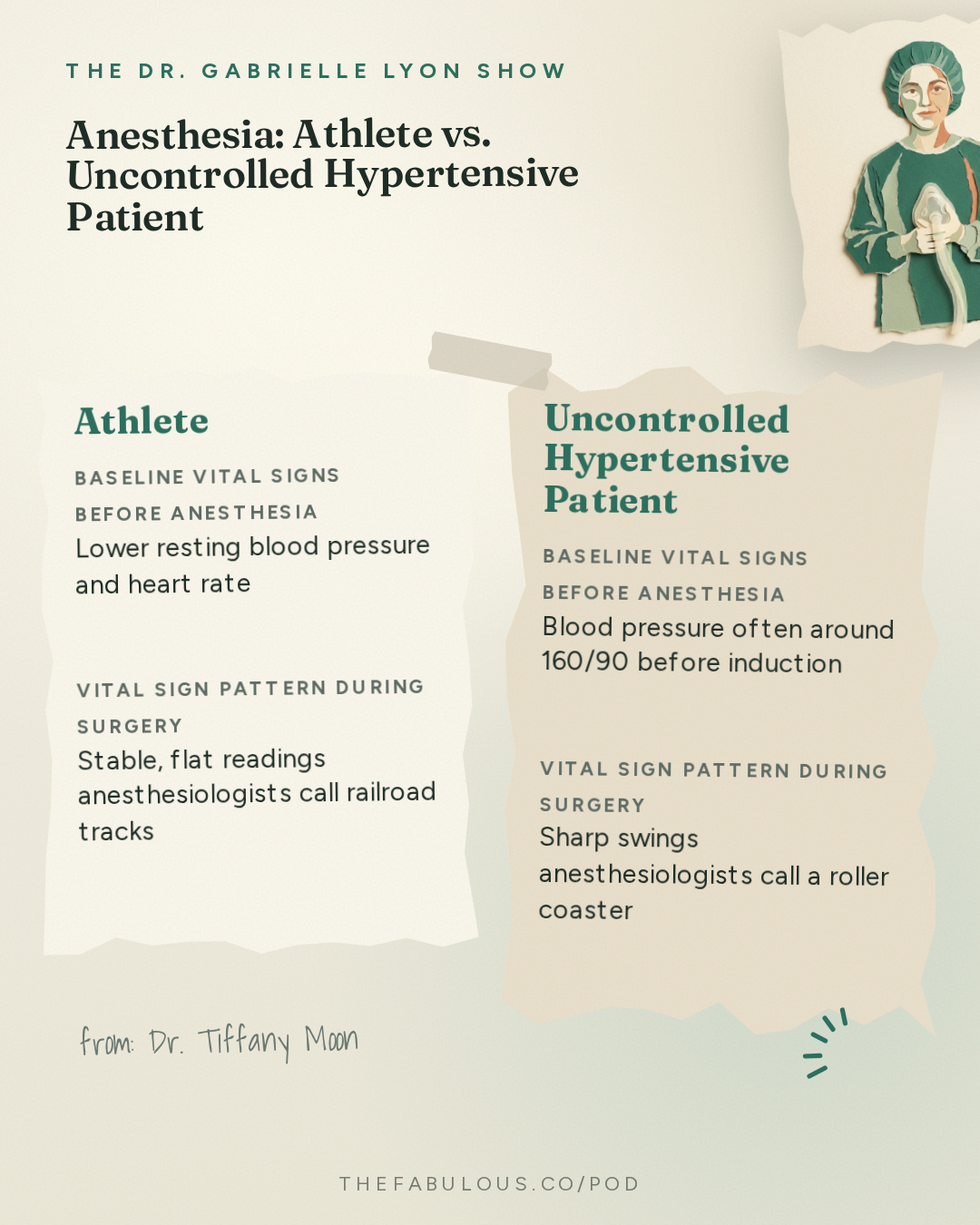
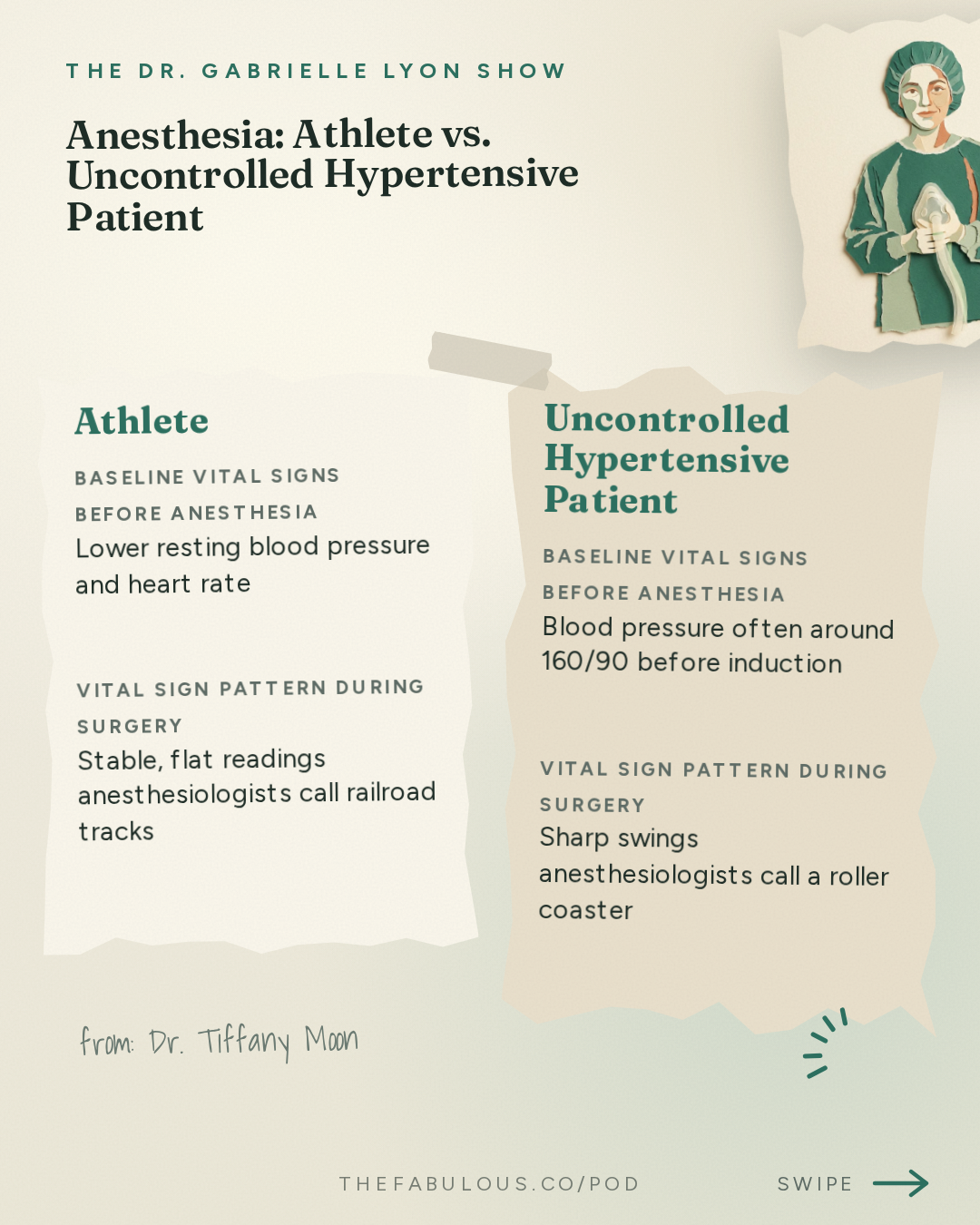
Two anesthesia records can describe the same hour of surgery and look nothing alike. One is flat and even, a pattern anesthesiologists call railroad tracks: blood pressure and heart rate barely move. The other looks like a roller coaster, spiking and dropping as the body struggles to keep up. The difference, says anesthesiologist Dr. Tiffany Moon, often comes down to what a patient did with the decades before they ever got near an operating room (00:00, 24:10).
Moon is an associate professor of anesthesiology at UT Southwestern in Dallas and has spent almost 15 years at Parkland, a level one trauma center that mostly treats gunshot wounds and car wrecks (02:54, 03:15, 12:09). She also spent one season on Real Housewives of Dallas, a detour her institution once called an embarrassment and that she says instead gave her a platform to talk about the science she had already been doing for a decade (12:09).
Her own definition of the job is plain.
"I would describe anesthesiology as the marriage of physiology and pharmacology, right?" Dr. Tiffany Moon, [03:40]
The work, as she describes it, is to secure a patient's airway, keep blood pressure steady, and then flip a kind of switch so the patient wakes with no memory of any of it. She calls it 80 percent science and 20 percent art, because no two patients respond to the same drug the same way (03:40, 04:00).
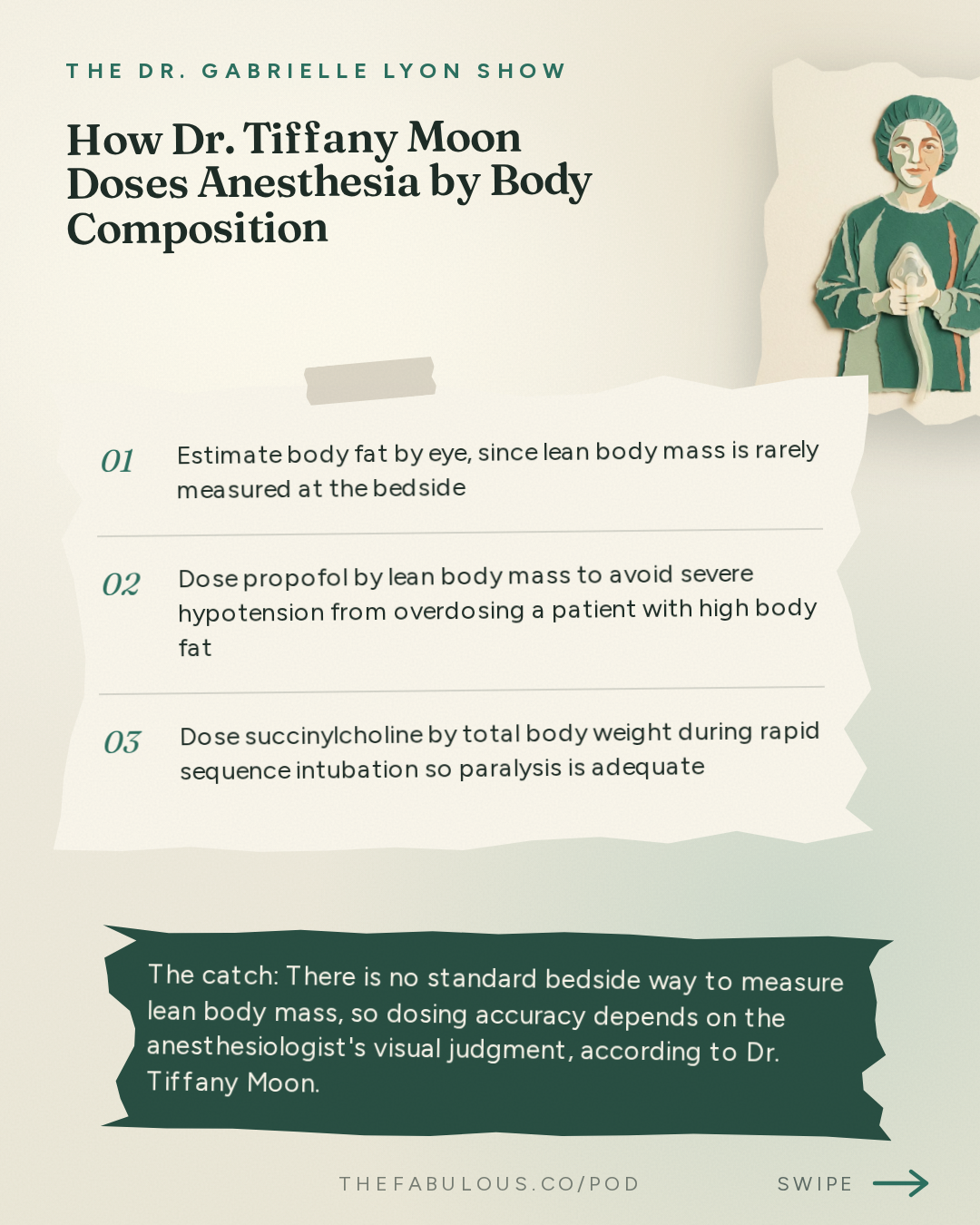
Body composition turns out to matter more than most patients realize. At Parkland, a BMI of 35 to 40, the range that defines severe obesity, is so ordinary that Moon says her alarm does not go off until 40 (04:43). That matters for dosing because some anesthesia drugs are lipophilic, meaning they dissolve into fat rather than water. In a patient with 50 percent or more body fat, far above the roughly 25 percent typical for a woman, those drugs pool in fatty tissue, a reservoir Moon calls a sink, and keep releasing long after they should have worn off (05:09). Two common drugs are dosed in opposite ways, and mixing them up has consequences. Propofol, used to put patients to sleep, should be dosed by lean body mass, the weight of muscle and bone without fat; dose it by total weight in a 150-kilogram patient and the resulting overdose causes severe hypotension, a dangerous drop in blood pressure (07:55). Succinylcholine, used to paralyze patients for emergency intubation, works the other way: it has to be dosed by total body weight, because underdosing can leave someone only partly paralyzed during a procedure meant to put them fully under (06:35). There is no bedside device that measures lean body mass directly, so Moon estimates it by eye.
A newer complication comes from GLP-1 drugs, the class that includes Ozempic and Wegovy, which slow stomach emptying. The early guidance was to hold all GLP-1 medications before surgery. Now roughly a quarter of Moon's patients are on one, and many arrive for emergency surgery with no warning, so holding the drug was never an option (08:35). Her workaround is a gastric ultrasound: a probe shows whether food is still sitting in the stomach, appearing as echo-dense and snowflake-like, distinct from liquid, which looks dark (09:12). If the stomach looks full, she skips standard mask ventilation and moves straight to rapid sequence induction, inserting the breathing tube as fast as possible to shrink the window in which stomach contents could be inhaled into the lungs (09:49).
The Fear and the Record
The complication patients ask about most is cognitive decline after anesthesia. It is real, Moon says, and it is worst after cardiopulmonary bypass, the heart-lung machine used in open heart surgery that takes over circulation while the heart is stopped. During that time, cerebral perfusion, the flow of blood to the brain, drops sharply, a state anesthesiologists bluntly call pump head (22:05, 22:47). Outside of bypass surgery, the usual cause of postoperative confusion is a stretch of low blood pressure that left the brain short on oxygen, which is why Moon spends most operations pushing blood pressure up rather than down. By her own estimate, she gives a vasopressor, a drug that raises blood pressure, in about 90 percent of her cases (23:05).
Fitness shows up on the anesthesia record itself. A person who is fit tends to arrive with lower resting blood pressure and heart rate, and those numbers barely move during surgery, the railroad tracks pattern. A person with uncontrolled high blood pressure, who has not been taking medication, can arrive at 160 over 90 and then watch it crash once anesthesia begins, because there is little of what Moon calls autoregulatory reserve, the body's built-in ability to hold blood pressure steady under stress (24:10). Surgery itself, she says, is a major physiologic insult no matter how routine it looks from outside the operating room.
What tends to frighten people most, dying on the table, is the least likely outcome. For a healthy person having elective surgery, Moon puts the mortality risk at under 0.1 percent (25:28).
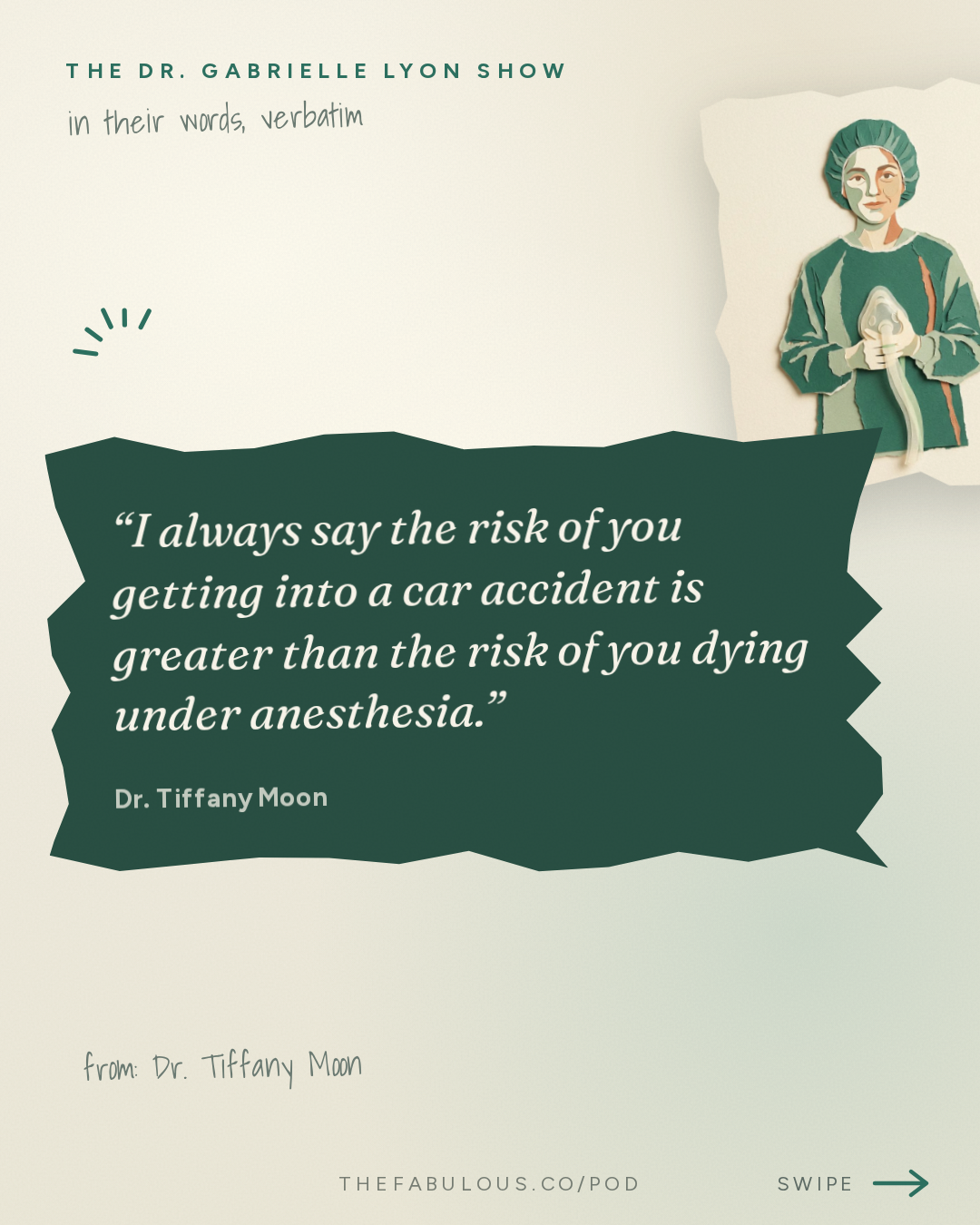
"I always say the risk of you getting into a car accident is greater than the risk of you dying under anesthesia." Dr. Tiffany Moon, [25:56]
Drug innovation in the field has been slow. One of the few true additions in the last decade is sugammadex, used to reverse the paralysis given during major surgery so patients can breathe on their own again at the end (27:19). Fentanyl remains the daily workhorse, a synthetic opioid about 100 times stronger than morphine, which, unlike fentanyl, occurs naturally in the opium poppy (29:03). Moon separates medical use from addiction risk sharply: a patient with no history of drug problems who gets fentanyl for a painful knee replacement is not meaningfully at risk of becoming addicted (31:13). For people who cannot take opioids at all, because of a past addiction or because they are on an opioid blocker like Suboxone, there is now Jornavex, a non-opioid drug that blocks a specific sodium channel, the pathway nerves use to carry pain signals, before the signal ever reaches the brain (33:15).
One of the stranger facts of anesthesia is that unconsciousness is not the same as feeling nothing. During a hysterectomy, Moon watches a patient's heart rate spike the moment a surgeon reaches the most stimulating part of the procedure, even though the patient is fully asleep and will remember none of it.
"There's pain sensation, which is not the same thing as consciousness. The body still feels pain even though you're not conscious and you don't remember it." Dr. Tiffany Moon, [35:25]
She tries to anticipate those moments and give pain medication before they happen, partly for comfort and partly because an unmanaged pain response during surgery can trigger hyperalgesia, a state in which the nervous system overreacts to pain afterward and can lead to chronic pain (36:19). Doses are not one-size-fits-all: redheads, she says, need about 10 percent more anesthesia than average (37:35), and patients who use stimulants like cocaine or amphetamines are harder to put under because those drugs raise norepinephrine, a chemical that keeps the nervous system on high alert (38:06).
The Checklist That Never Ends
Moon's professional precision did not stay in the operating room. For years she applied the same standard to her own life: a checklist of achievements she believed would eventually add up to happiness. Top college, top medical school, marriage, children, a research grant, a Birkin bag. She wrote about undoing that pattern in her book The Joy Prescription (40:19). The breaking point came on an ordinary workday. While she was running two clinical trials and taking trauma call, her toddler's nanny texted that her daughter had taken her first steps, a moment Moon had missed entirely (55:52).
She describes getting her first research grant as proof that hard work paid off, and then feeling nothing. The academic honors she had chased for years, the teaching awards, the path toward department chair, did not deliver the satisfaction she expected once she actually had them (56:14). That disappointment, worked through over years of therapy, pushed her toward a different measure of success: going part time, taking more frequent small trips instead of one elaborate vacation a year, and being less scripted with her children (59:43). She is also blunt about structural problems in her field: women in medicine, she says, are paid less than men for the same work, and the same competitiveness that reads as leadership in a man often gets read as abrasiveness in a woman (49:32).
Fifteen years into a career built on controlling what can be controlled, the airway, the blood pressure, the dose per kilogram, Moon is now moving toward a kind of medicine with less certainty and more time: longevity care, where the patient is awake, motivated, and sticking around for the follow-up visit (66:34). The same instinct that keeps a frightened patient's vital signs on the railroad tracks turned out to be the one she eventually had to apply to her own life: not panic, not perfection, just steady attention to what the body, and the life around it, actually needs.
Ask this episode anything
Pod's AI answers from the episode itself, with the minute mark so you can hear it yourself.
Or start with one of these
Ask this episode
Pod's AI listens to the whole episode to answer, and points you to the minute it comes from.
The rest of this answer, and any question after it
Answers come from the episode itself, never from a summary of it.
ContinueKey takeaways
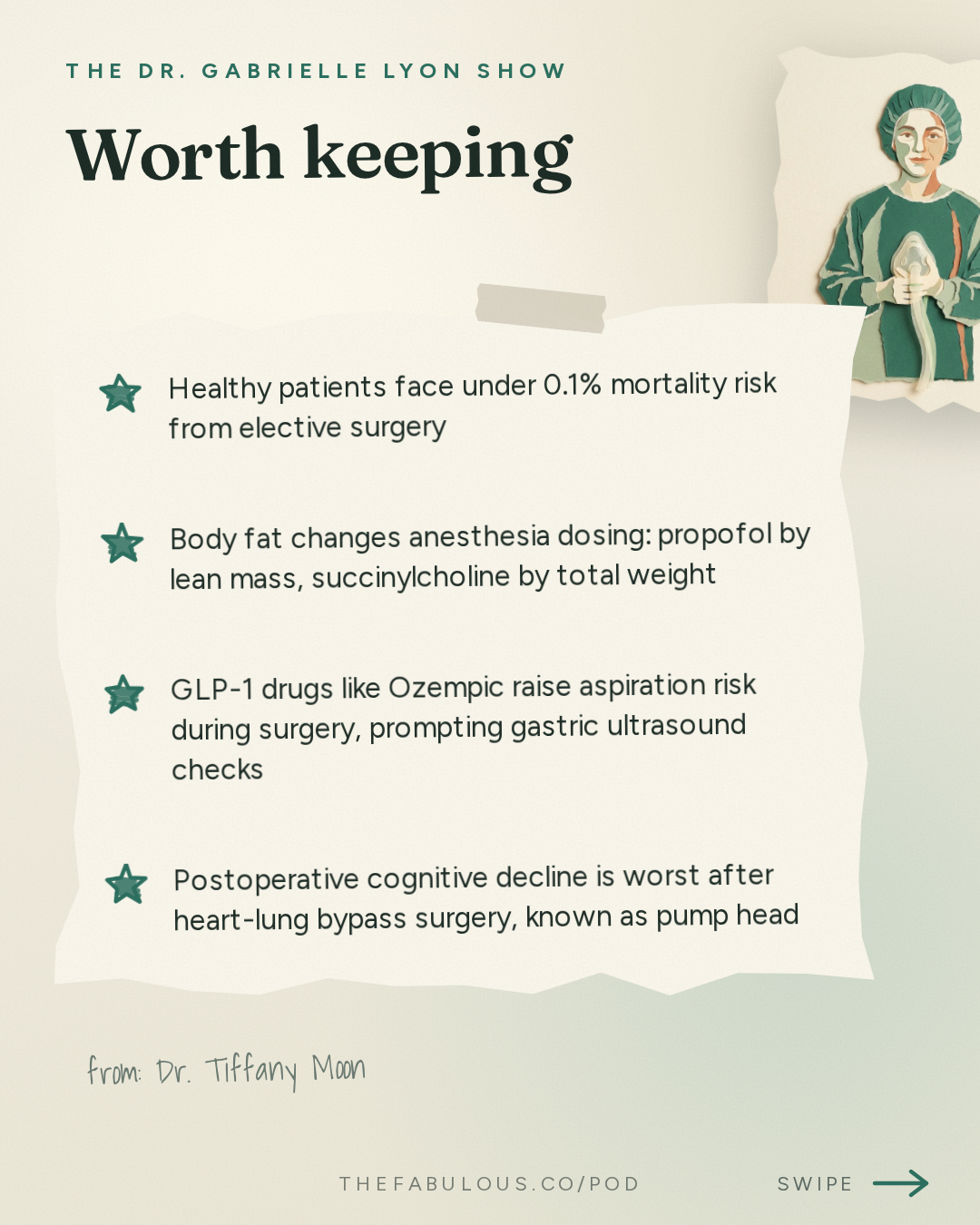
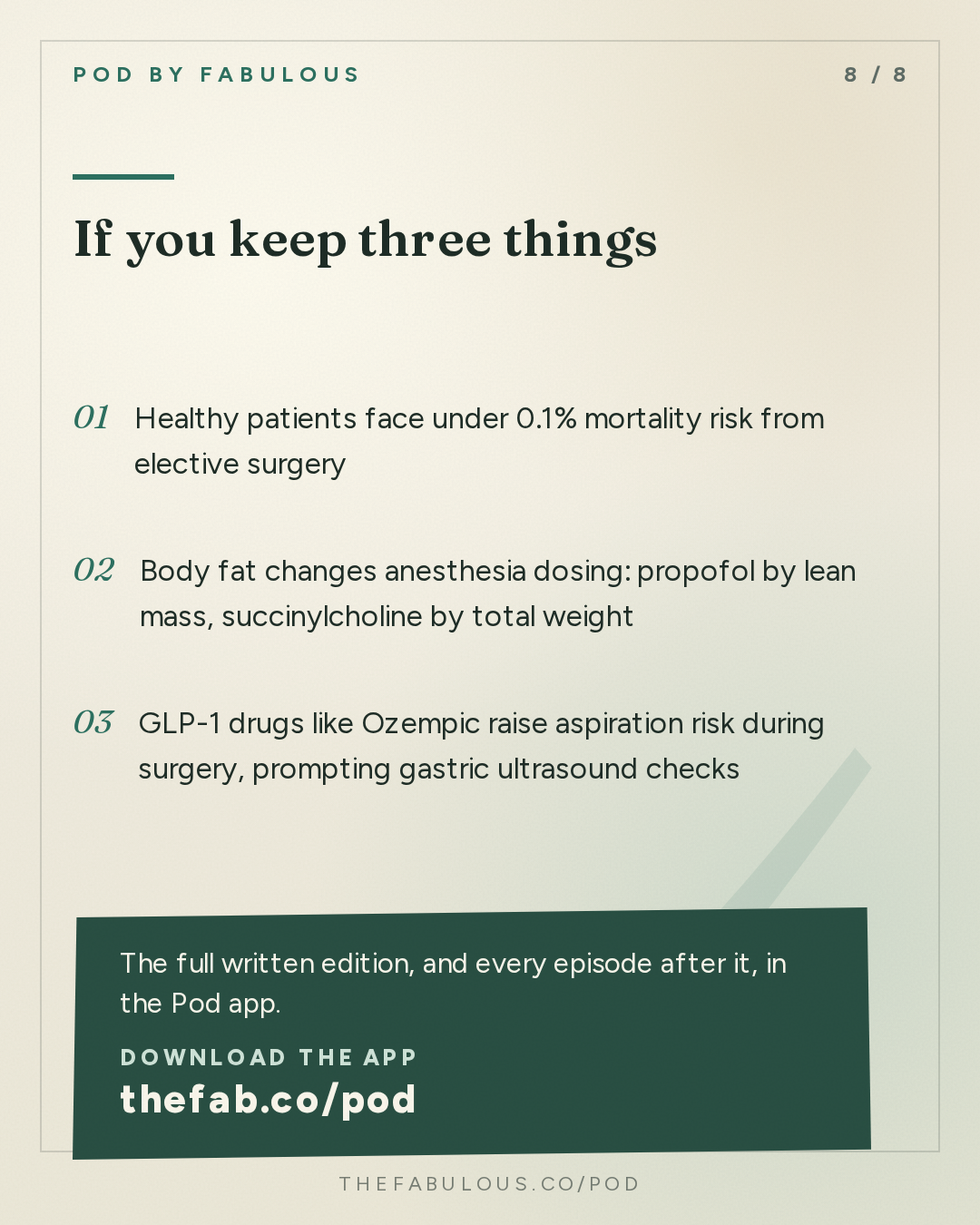
- Healthy patients face under 0.1% mortality risk from elective surgery
- Body fat changes anesthesia dosing: propofol by lean mass, succinylcholine by total weight
- GLP-1 drugs like Ozempic raise aspiration risk during surgery, prompting gastric ultrasound checks
- Postoperative cognitive decline is worst after heart-lung bypass surgery, known as pump head
- Jornavex blocks pain signals at the nerve without using opioids, unlike fentanyl
The episode in cards


By the numbers
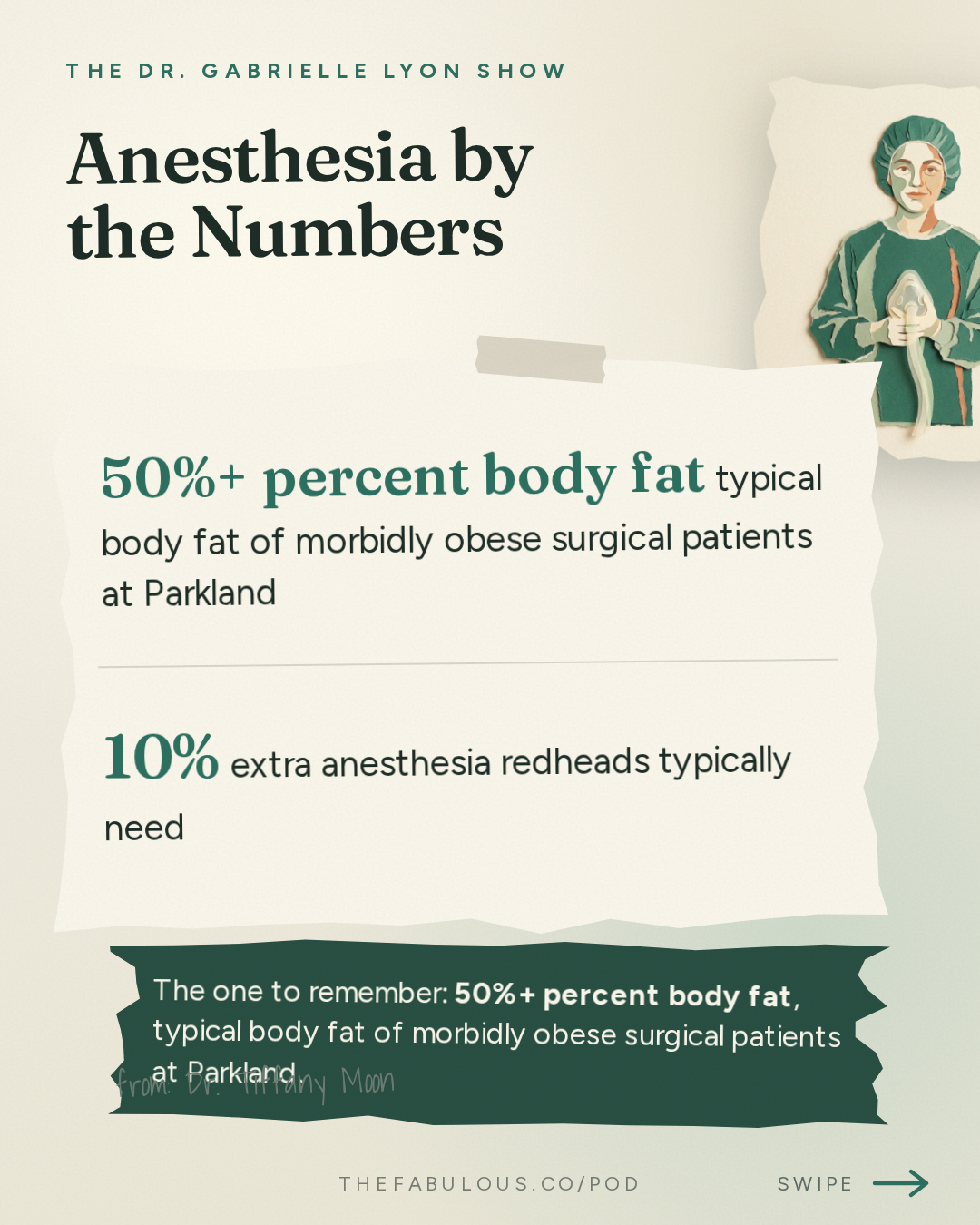
- 50%+ percent body fat typical body fat of morbidly obese surgical patients at Parkland Hospital
- 10% extra anesthesia redheads typically need compared with average patients
In their words
“I would describe anesthesiology as the marriage of physiology and pharmacology, right?”
“I always say the risk of you getting into a car accident is greater than the risk of you dying under anesthesia.”
“There's pain sensation, which is not the same thing as consciousness. The body still feels pain even though you're not conscious and you don't remember it.”
“Good on paper does not mean good in the OR.”
“There was almost no other time in my life where I got to feel that immediate gratification, right? Because everything else in life was delayed gratification.”
Protocols
-
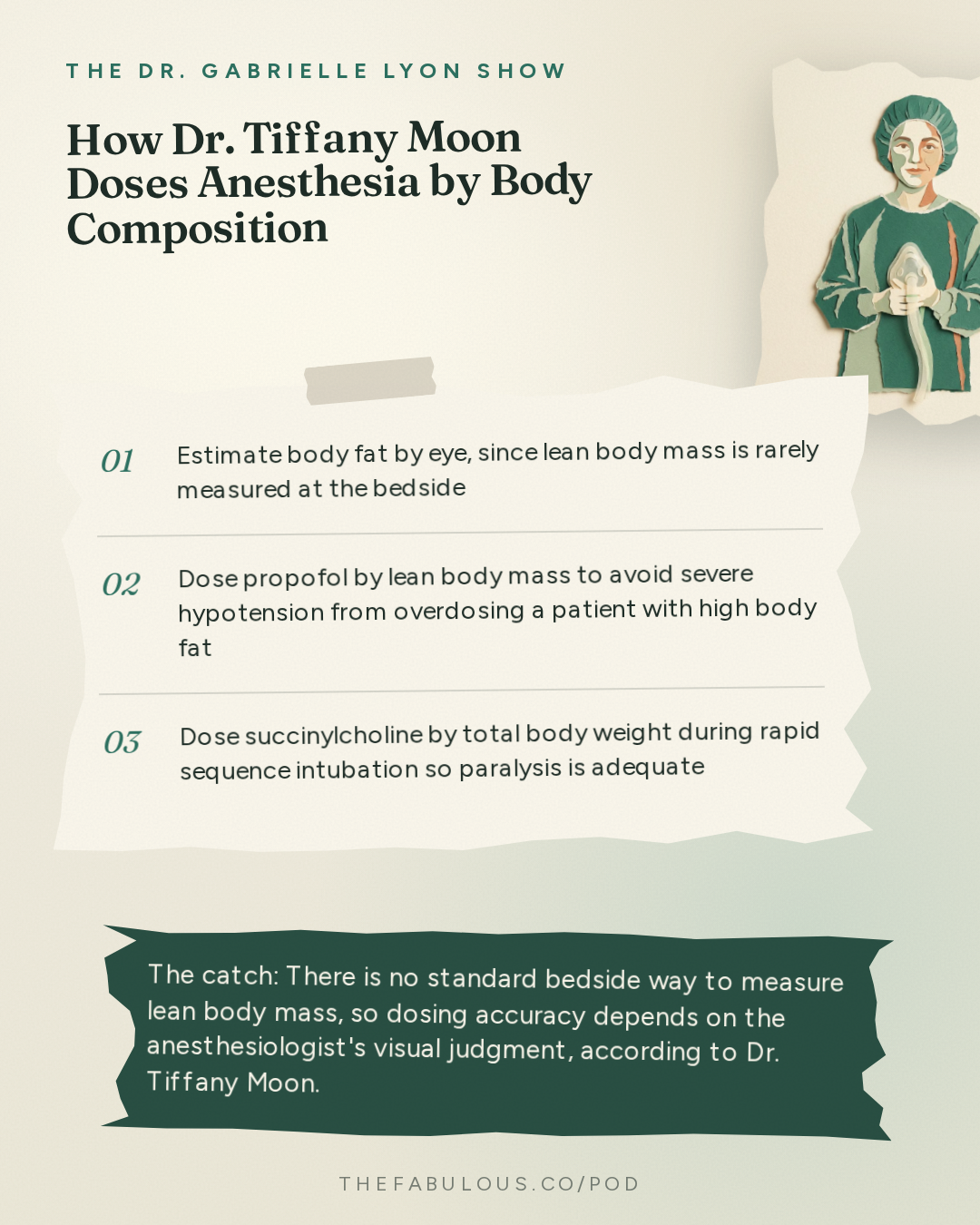
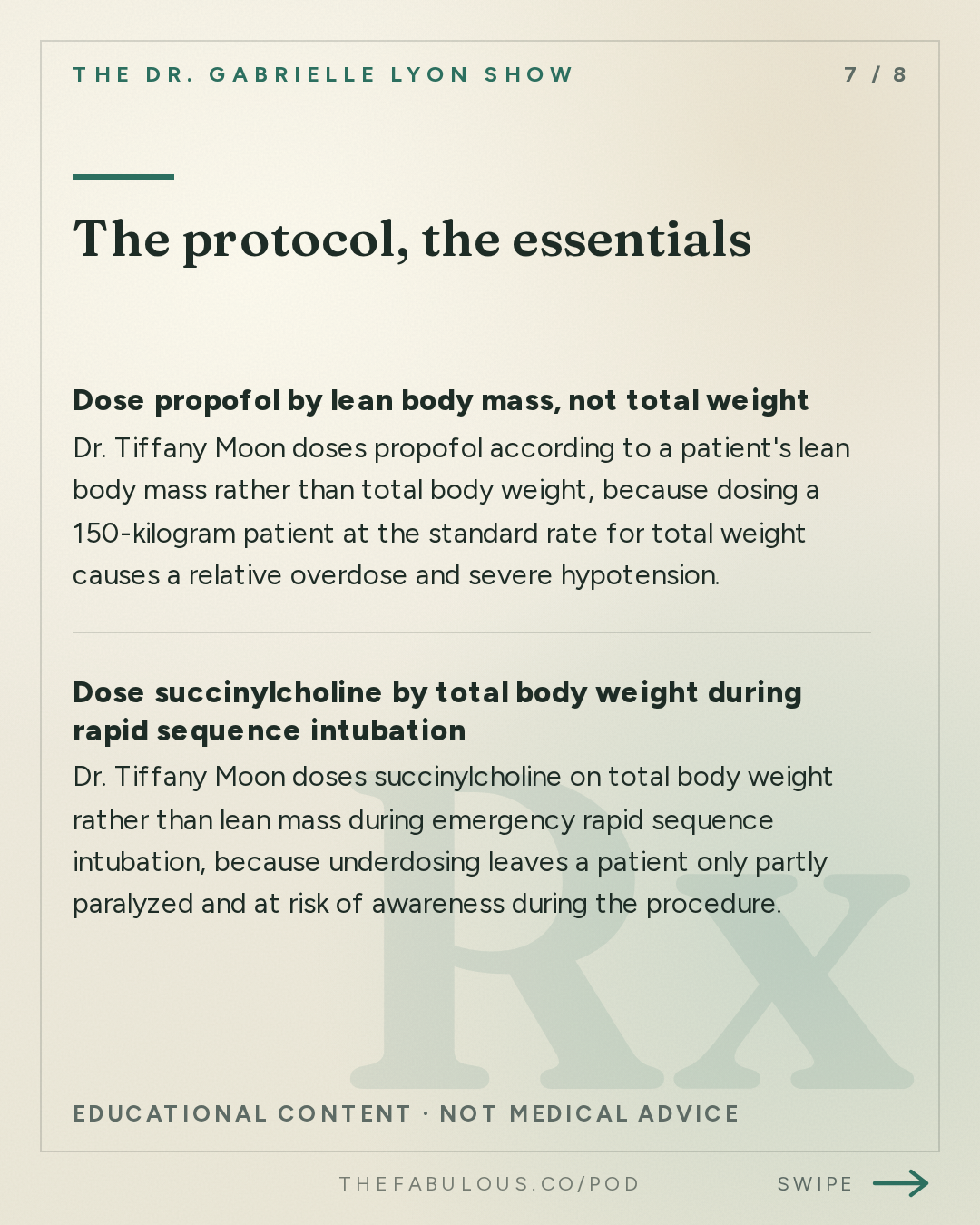
Dose propofol by lean body mass, not total weight
Dr. Tiffany Moon doses propofol according to a patient's lean body mass rather than total body weight, because dosing a 150-kilogram patient at the standard rate for total weight causes a relative overdose and severe hypotension.
every induction in a patient with high body fat
-
Dose succinylcholine by total body weight during rapid sequence intubation
Dr. Tiffany Moon doses succinylcholine on total body weight rather than lean mass during emergency rapid sequence intubation, because underdosing leaves a patient only partly paralyzed and at risk of awareness during the procedure.
every rapid sequence intubation
-
Check gastric ultrasound before anesthetizing patients on GLP-1 medications
Dr. Tiffany Moon uses gastric ultrasound to look for echo-dense, snowflake-like food in the stomach of patients who have not held GLP-1 medications, and she switches to rapid sequence induction instead of mask ventilation if the stomach looks full.
before induction in GLP-1 patients, especially emergency cases
Questions this episode answers
Is anesthesia safe for surgery?
For a healthy patient having elective surgery, anesthesiologist Dr. Tiffany Moon puts the mortality risk at under 0.1%, lower than the risk of a car accident (25:28, 25:56). Risk rises mainly with a patient's underlying health and the urgency of the procedure, not with anesthesia itself.
Why do obese patients need different anesthesia doses?
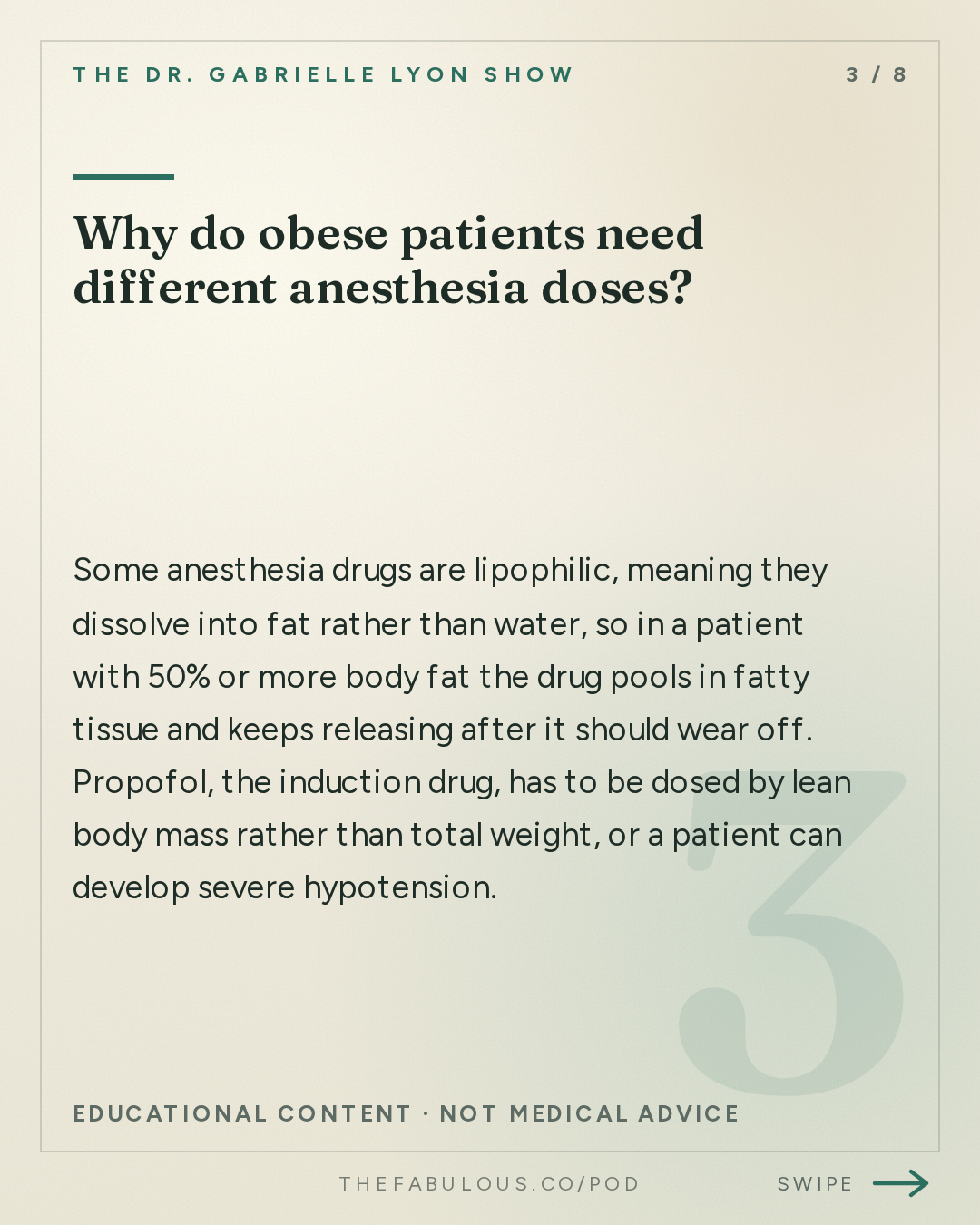
Some anesthesia drugs are lipophilic, meaning they dissolve into fat rather than water, so in a patient with 50% or more body fat the drug pools in fatty tissue and keeps releasing after it should wear off (05:09). Propofol, the induction drug, has to be dosed by lean body mass rather than total weight, or a patient can develop severe hypotension (07:55).
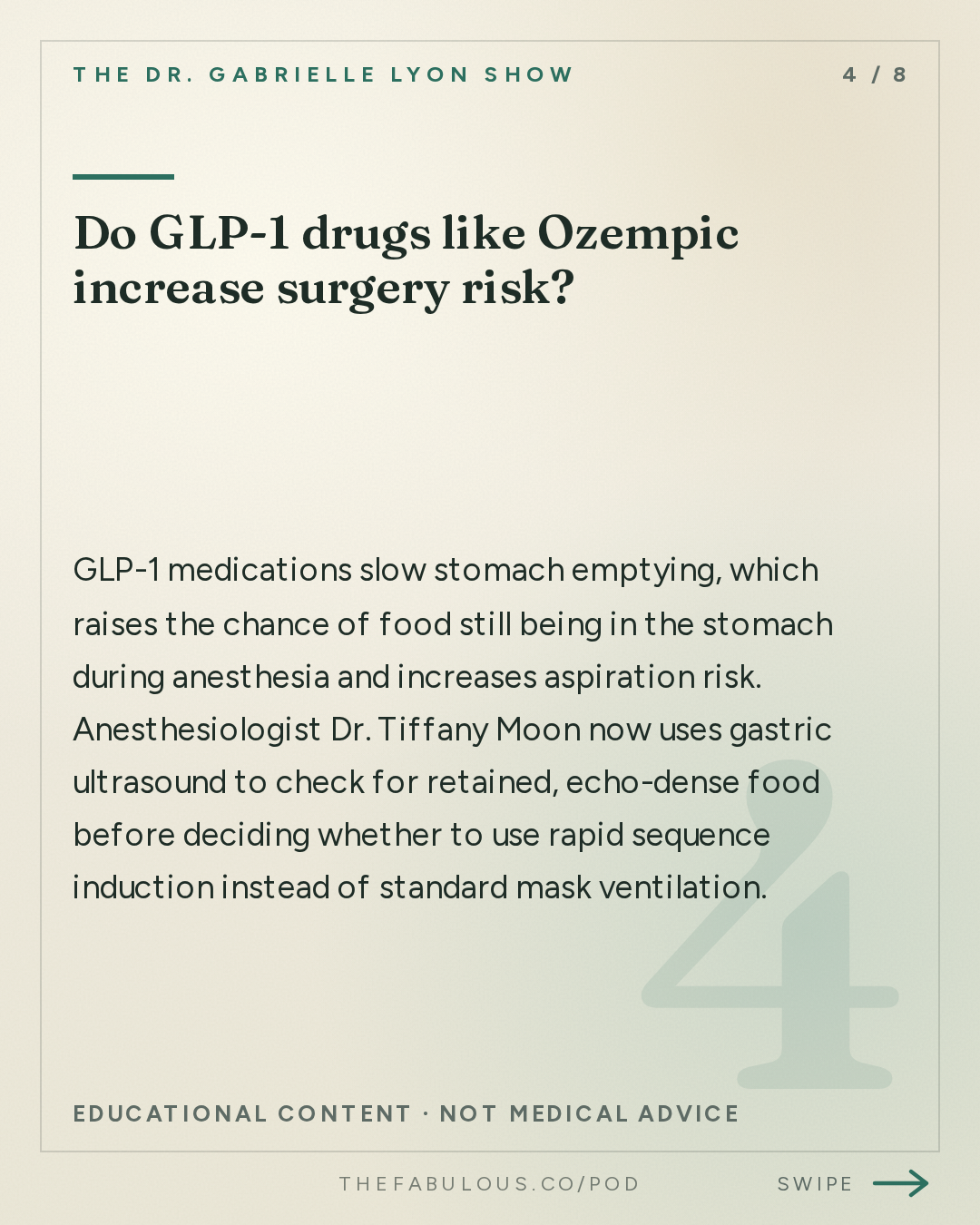
Do GLP-1 drugs like Ozempic increase surgery risk?
GLP-1 medications slow stomach emptying, which raises the chance of food still being in the stomach during anesthesia and increases aspiration risk (08:35). Anesthesiologist Dr. Tiffany Moon now uses gastric ultrasound to check for retained, echo-dense food before deciding whether to use rapid sequence induction instead of standard mask ventilation (09:12, 09:49).
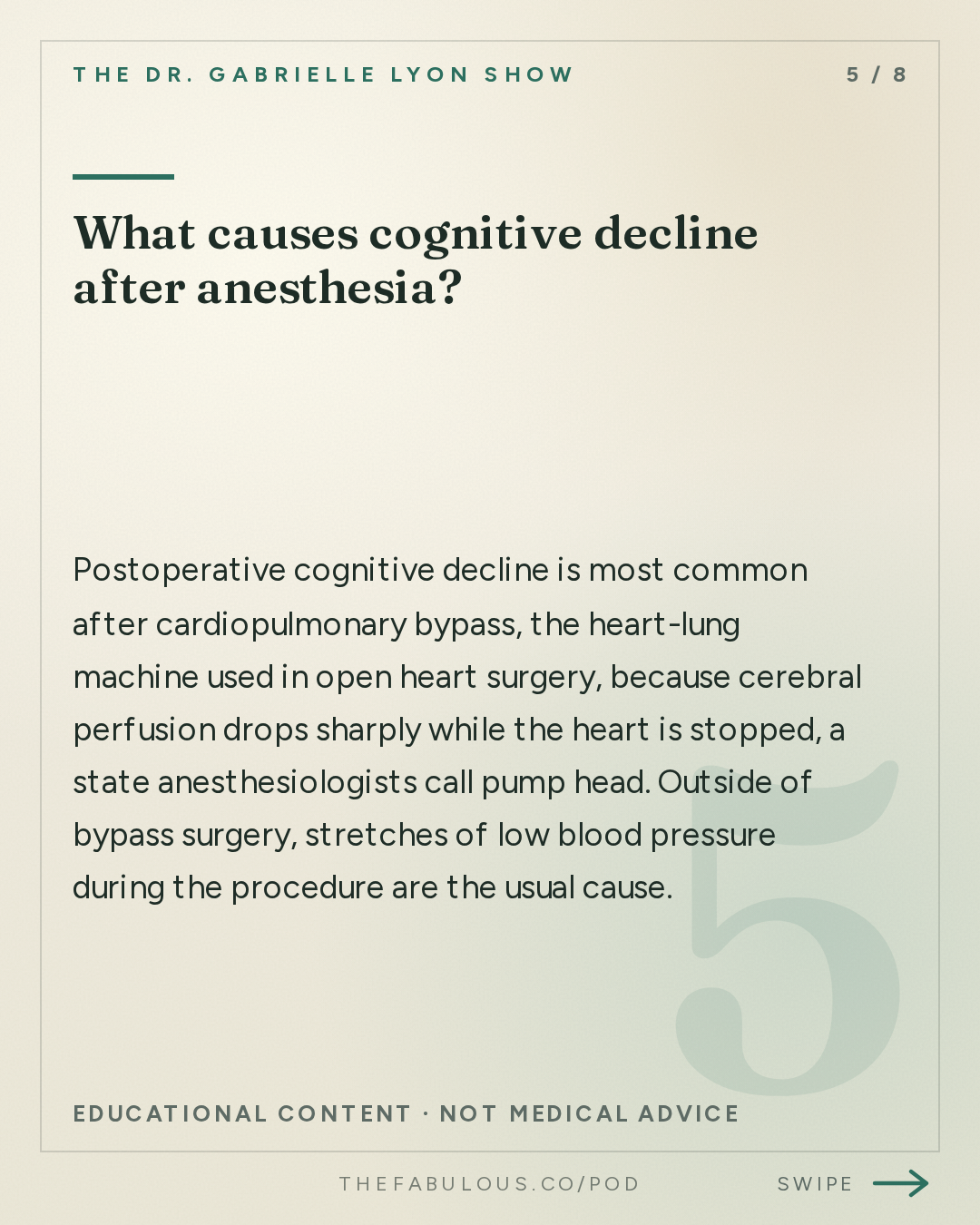
What causes cognitive decline after anesthesia?
Postoperative cognitive decline is most common after cardiopulmonary bypass, the heart-lung machine used in open heart surgery, because cerebral perfusion drops sharply while the heart is stopped, a state anesthesiologists call pump head (22:05, 22:47). Outside of bypass surgery, stretches of low blood pressure during the procedure are the usual cause.
What is Jornavex and how does it differ from opioid painkillers?
Jornavex is a non-opioid drug that selectively blocks a sodium channel, the pathway nerves use to send pain signals, stopping the signal before it reaches the brain (33:15). Because it does not act on opioid receptors, anesthesiologist Dr. Tiffany Moon says it is an option for patients with a history of addiction or those on an opioid blocker like Suboxone (34:14).
Do redheads really need more anesthesia?
Yes. Anesthesiologist Dr. Tiffany Moon says redheads need about 10% more anesthesia than average patients to reach an adequate depth (37:35). Patients who use stimulants like cocaine or amphetamines also need more, because those drugs raise norepinephrine and put the nervous system in a more alert state (38:06).
The full read, in cards



Go deeper
- The Joy Prescription — Dr. Tiffany Moon's book on dismantling a checklist mentality toward achievement and perfectionism
Mentioned
Dr. Tiffany Moon · UT Southwestern · Parkland Hospital · Jornavex · Sugammadex · The Joy Prescription · Real Housewives of Dallas · Fentanyl
More from this show and category
Hormones and Attraction: What the Science Shows
Hormones shape attraction traits mostly during puberty, not day to day. A masculine face doesn't reveal current testosterone, and the ovulatory-shift theory, that women prefer masculine men mainly near ovulation, lacks support. Perceived physical strength explains 70% of women's attractiveness ratings for men's bodies, making muscle, unlike facial bone structure, the one hormone-built trait people can still train.
JJ Thomas's Primal Physical Therapy Guide
Physical therapist JJ Thomas argues that pain is an alarm pointing to a movement problem elsewhere in the body, not proof that the hurting spot is broken. She treats patients with seven foundational movements (squat, hinge, push, pull, carry, reach, rotate) and dry needling at sites far from the pain, arguing most overuse injuries are really underuse injuries of neighboring muscles.
Building Muscle in Menopause: What Studies Show
No, it is not too late: postmenopausal women gained up to eight pounds of muscle in 12 weeks of structured lifting. Hormone therapy does not build muscle on its own, but it can amplify gains from resistance training, and the protein target for bone and muscle protection is roughly double the standard RDA.

Surgical Prehabilitation Protocol Guide
Prehabilitation, the practice of preparing the body before surgery instead of only recovering after it, can measurably change outcomes. Duke University surgeon Rebecca Knackstedt recommends 2 grams of protein per kilogram of body weight daily (34:26), a vitamin D level near 70 ng/mL (25:47), targeted muscle training, and five days of immunonutrition before major operations (69:01) to cut complications and speed healing.
