
How Much Protein Do You Really Need?
How Much Protein Do You Need? Top Scientists Still Disagree
▶ Listen to the full episode More from The Dr. Gabrielle Lyon Show
The brief
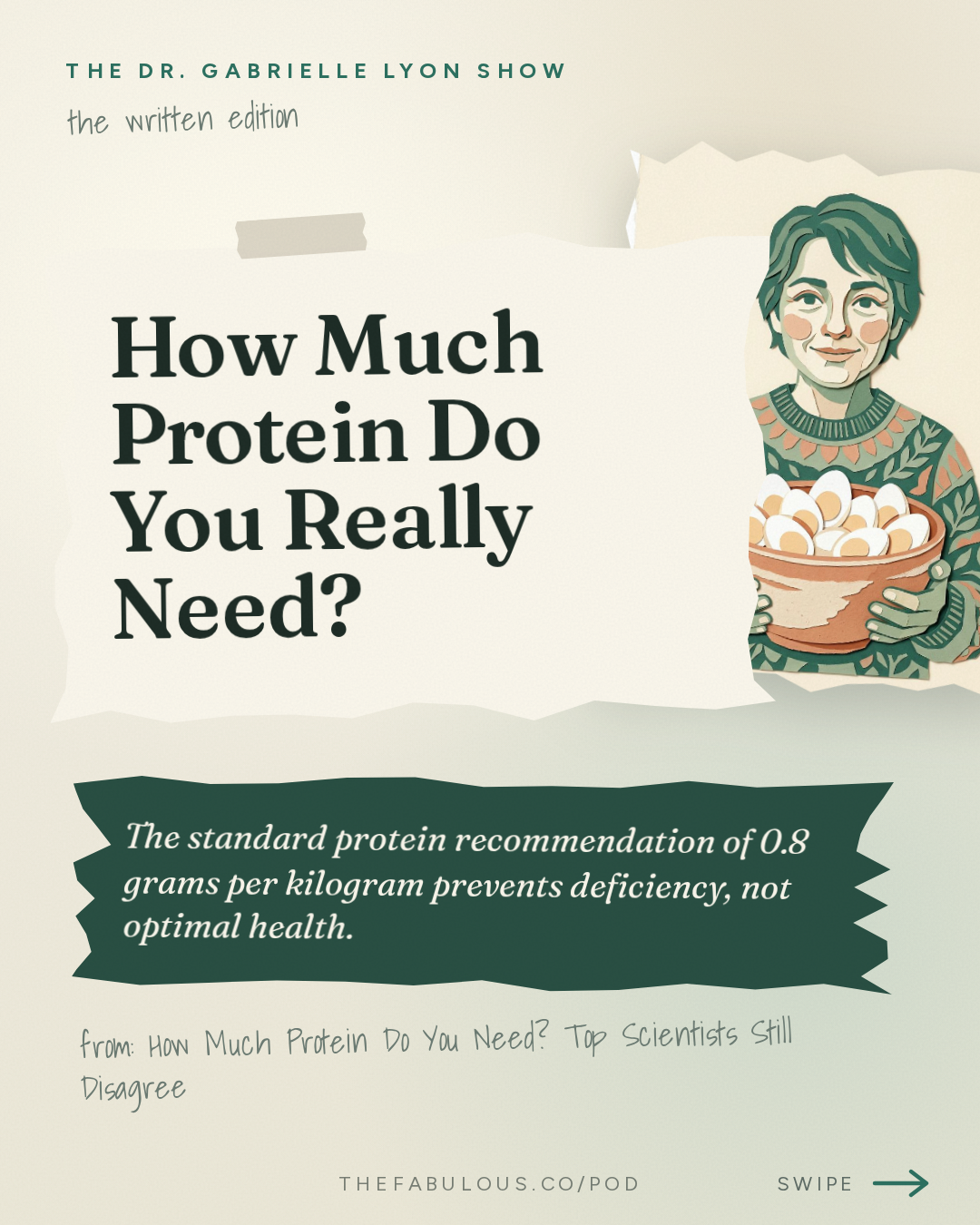
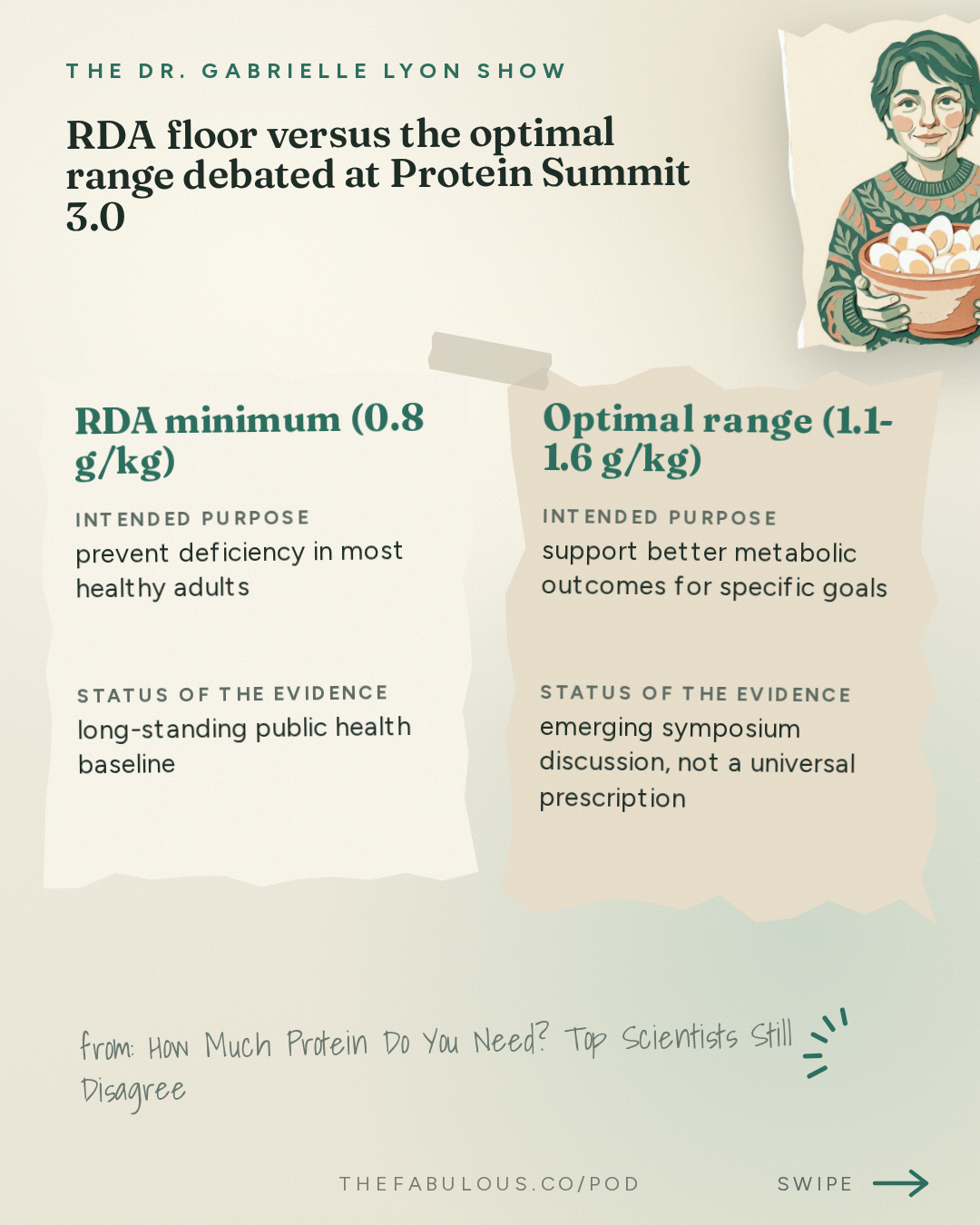
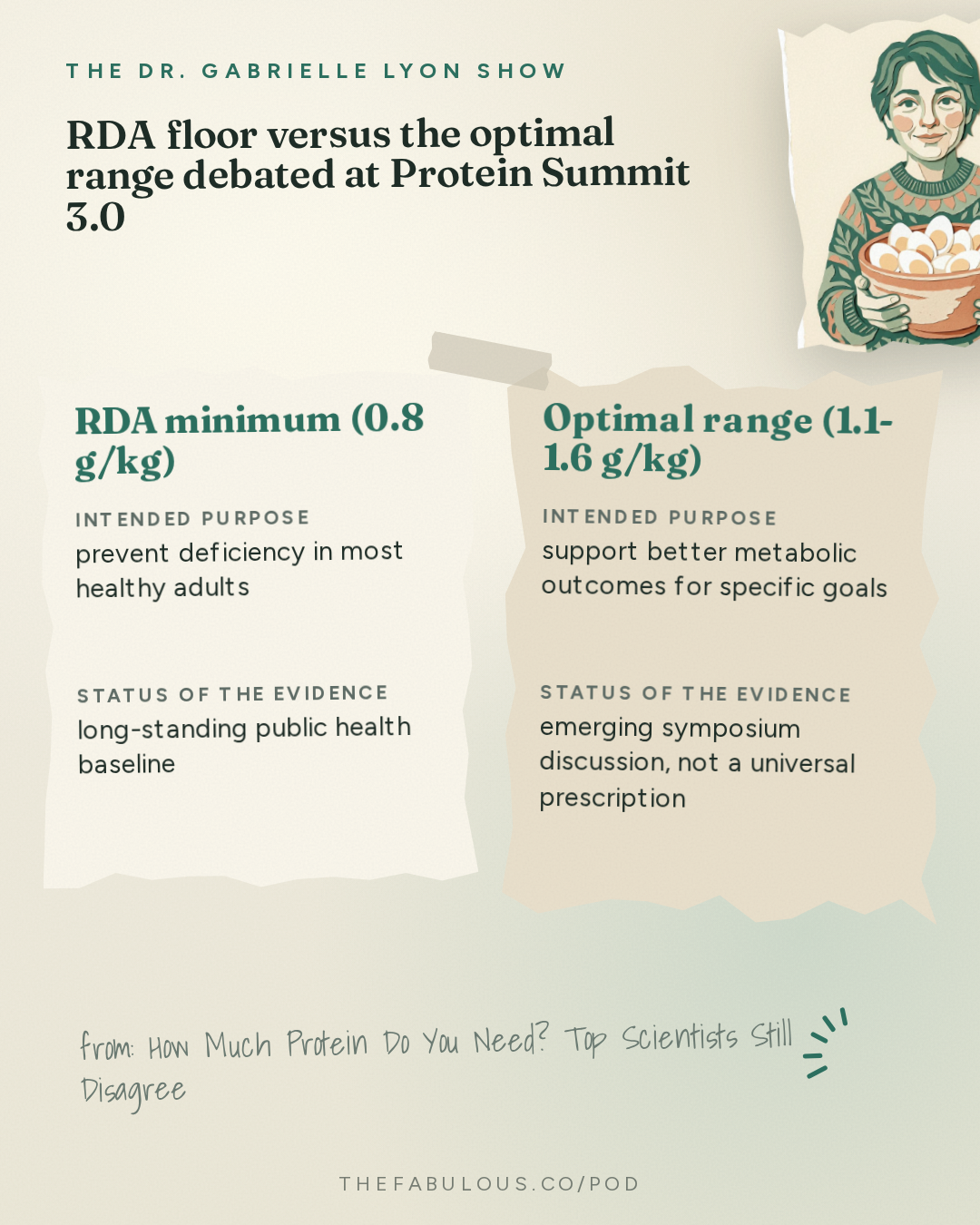
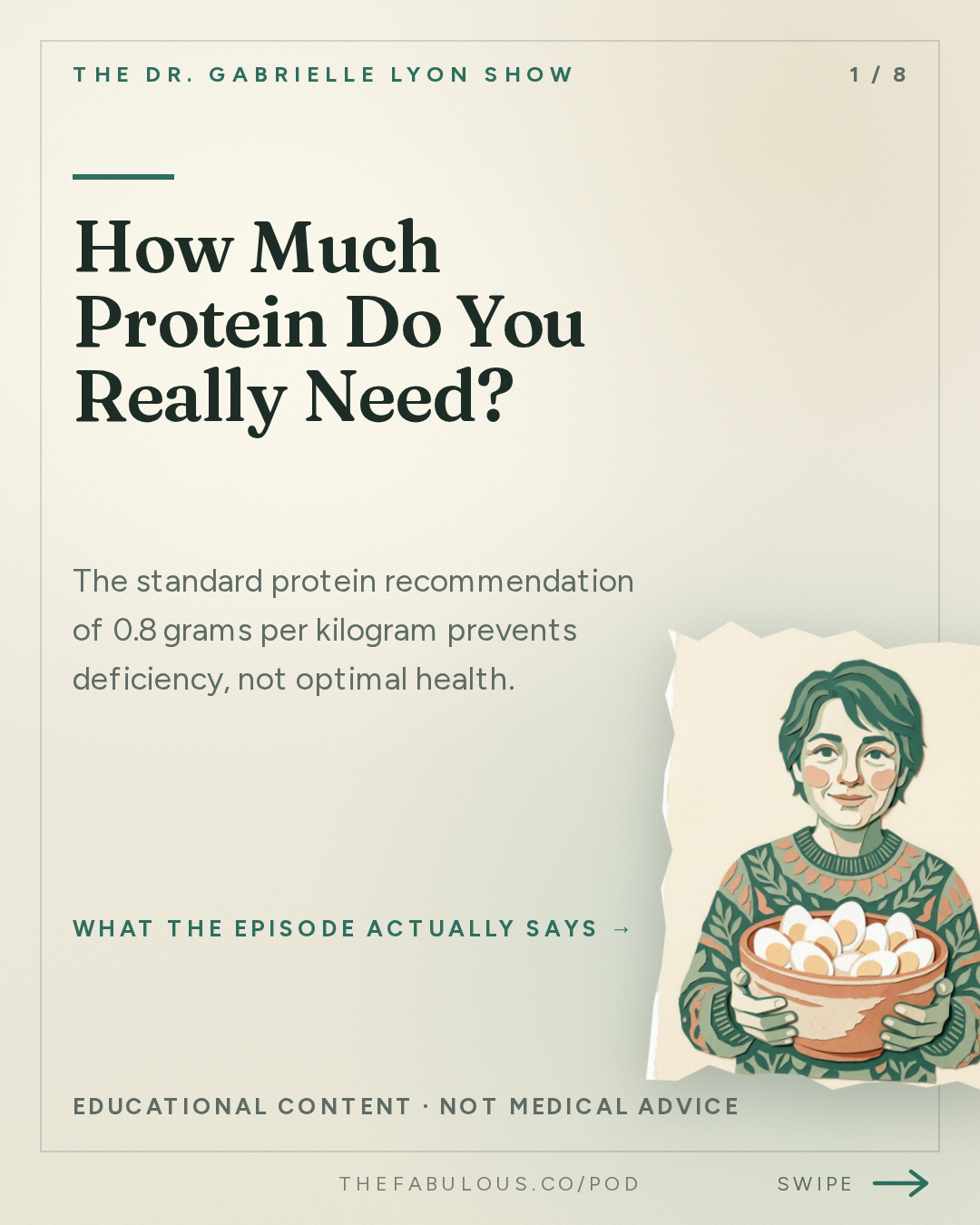
The standard protein recommendation of 0.8 grams per kilogram prevents deficiency, not optimal health. Researchers at Protein Summit 3.0 debated a higher range, 1.1 to 1.6 grams per kilogram, for better metabolic outcomes, noting needs shift by age, activity, and health status (07:15).
Walk through a grocery store, or even a Home Depot checkout line, and a strange contest is underway. Cereal, coffee, cookies, chips, and jerky all compete to print the biggest protein number on the box. The marketplace looks settled. The science is not. Physician Dr. Gabrielle Lyon, who is fellowship trained in nutritional sciences and geriatrics and has studied protein for twenty years (00:40), recently attended Protein Summit 3.0, a research symposium at Texas A&M in College Station that brought together established scientists, early career researchers, and food industry representatives (01:24). Their conclusion was not that protein is good or bad. It was something more useful: protein is essential, but what it does depends on which amino acids are involved, who is eating them, and what else is on the plate.
That claim is worth sitting with, because it overturns the simplest version of the protein story, the one where protein equals muscle. Protein breaks down into amino acids, and those amino acids do far more than build tissue. They also act as signals that tell cells what to do (02:43). The body has no real storage tank for extra amino acids the way it stores fat, so whatever comes in each day gets used, converted, or broken down almost immediately. That breakdown process is called oxidation, and it sounds wasteful, but it often is not. Oxidized amino acids can trigger hormonal signals, feed energy metabolism, or build compounds the body needs elsewhere (03:10).
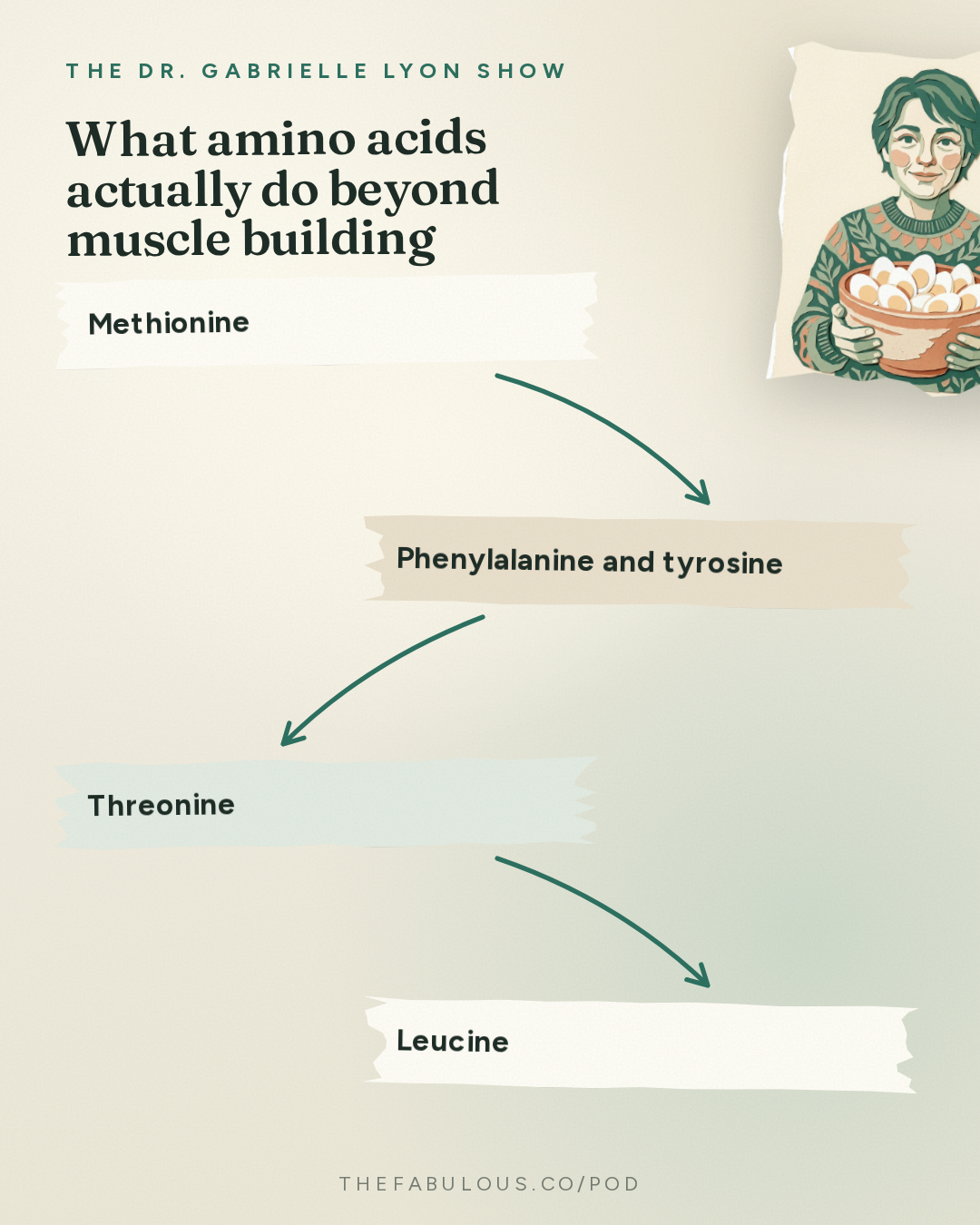
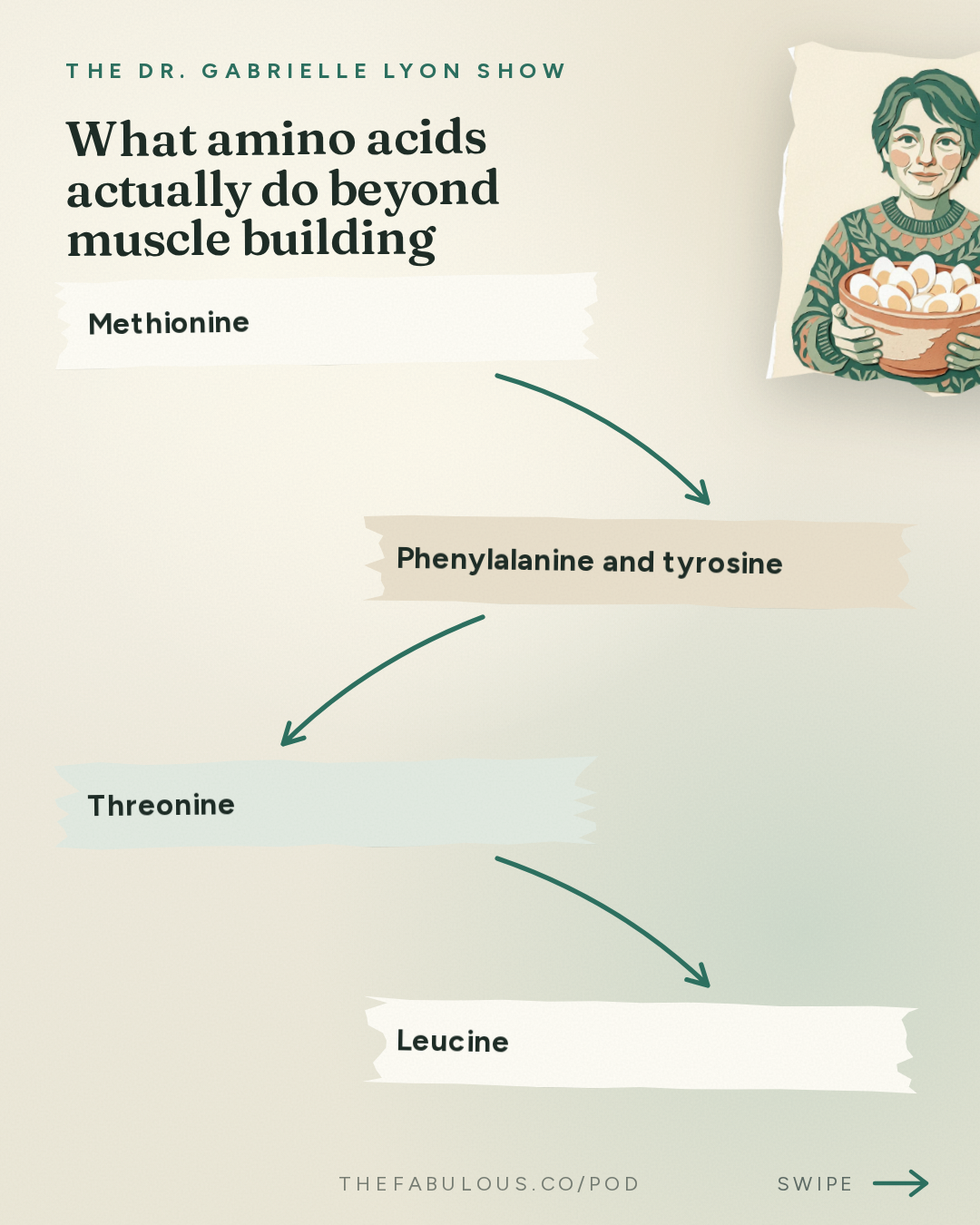
Four amino acids discussed at the summit make the point concrete. Methionine helps produce glutathione, sometimes called the master antioxidant, which may matter more as its levels decline with age (03:45). Phenylalanine and tyrosine feed into dopamine production, the brain chemical tied to motivation and focus, though eating more protein is not a shortcut to better mood (04:15). Threonine is used heavily by the gut itself to build mucin, the protective lining of the digestive tract, before it ever reaches the rest of the body (04:45). And leucine, Lyon's favorite, activates a cellular pathway called mTOR that drives protein synthesis, while also touching insulin release and fat metabolism (05:25). As Lyon put it:
The better question is, "What useful job did the body assign it?" (03:30) — Dr. Gabrielle Lyon
Treating protein as one undifferentiated number hides all of this. Which raises the oldest and most contested question in the field: how much is actually needed.
Minimum adequate versus optimal
The familiar adult target is 0.8 grams of protein per kilogram of body weight per day. For someone who weighs 70 kilograms, about 154 pounds, that comes out to roughly 54 grams a day (06:18). That number was built to cover basic needs for most healthy adults, not to optimize any particular outcome. One speaker at the summit argued that a number of metabolic outcomes improve somewhere closer to 1.1 to 1.6 grams per kilogram per day, though the panel was careful to say this should not become a new blanket prescription, just a signal that context matters (07:15).
Context is the whole argument. A 60 year old postmenopausal woman trying to preserve muscle is not the same case as a 35 year old man recovering from a hard training block, yet both have historically been handed the same gram target (07:49). Part of the problem is where the evidence comes from. Much of the research underlying current guidance draws on narrow populations, mostly healthy younger men, which limits how confidently it can be applied to older adults, women at different life stages, or people managing chronic disease (08:45). The panel also pushed back on ranking study types against each other. Tightly controlled lab studies can isolate a mechanism, but people do not live in metabolic wards. Free-living studies capture the mess of real appetite, budgets, and schedules, but they are harder to control. The two should inform each other rather than compete.
Scientific rigor is possible in both controlled and free-living research, but one paper, one randomized can trial can never be the answer or give an answer (10:16) — Dr. Gabrielle Lyon
The protein cookie problem
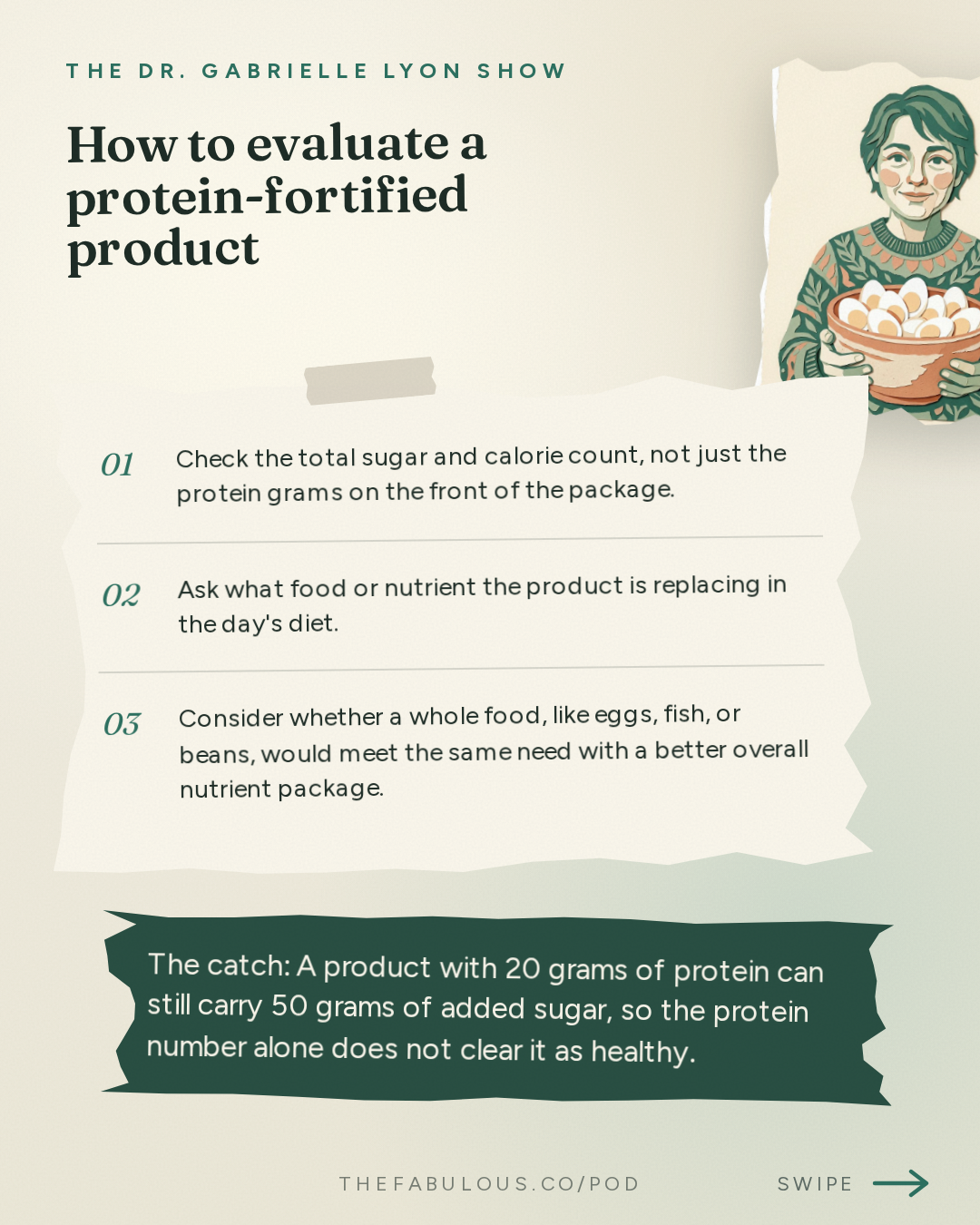
If the first half of the summit was about how much protein, the second half was about what comes attached to it. Protein fortification is one of the fastest growing corners of the food industry and one of the least studied. Adding protein to a product can genuinely help an older adult with a weak appetite or a shift worker without access to a full meal. But it can also create what Lyon calls a health halo: a drink carrying 20 grams of protein might also carry 50 grams of added sugar and calories (12:55). As Lyon summarized it:
Adding protein doesn't cancel the rest of the nutrition label (13:06) — Dr. Gabrielle Lyon
There is a quieter cost too, which researchers call displacement. Athletes who chase protein numbers sometimes end up short on iron, calcium, or vitamin D, not because protein is harmful but because the overall diet has narrowed (13:15). Lyon has a personal version of this story: a stretch in college eating large amounts of egg whites, which left her with a biotin deficiency, since raw egg whites contain a compound that binds biotin and blocks its absorption (13:58). Solving one nutritional problem created another.
This is why the summit kept returning to the idea of the food matrix, the full nutritional package that surrounds any given protein source. Beans, fish, dairy, and beef each deliver protein wrapped in a different set of nutrients, fiber, and compounds, which makes a simple gram for gram comparison misleading (14:48). People do not eat amino acid charts. They eat meals, made up of foods they can afford, prepare, and actually enjoy, which means future research has to track not just a nutrient's short-term effect but whether a dietary pattern survives six months of ordinary life.
Getting there is expensive. Multi-site studies that recruit diverse populations require contracts, shared data systems, and institutional coordination across universities like Washington University in St. Louis and Harvard, and that kind of infrastructure costs money public funding alone struggles to cover (16:17). Industry funding fills part of that gap, and one sponsor at the summit described new contract terms requiring raw data sharing to improve transparency, which is a meaningful shift given how skeptically industry funded nutrition research is often viewed (16:46). None of this means industry money taints a study. It means the bottleneck is logistical, not purely scientific.
What emerges from Protein Summit 3.0 is not a new number to replace the old one. It is an argument for better questions: protein good for whom, toward what outcome, from which foods, inside which overall diet. The 0.8 gram per kilogram baseline still works as a floor for avoiding deficiency. It was never built to be a ceiling for everyone's goals.
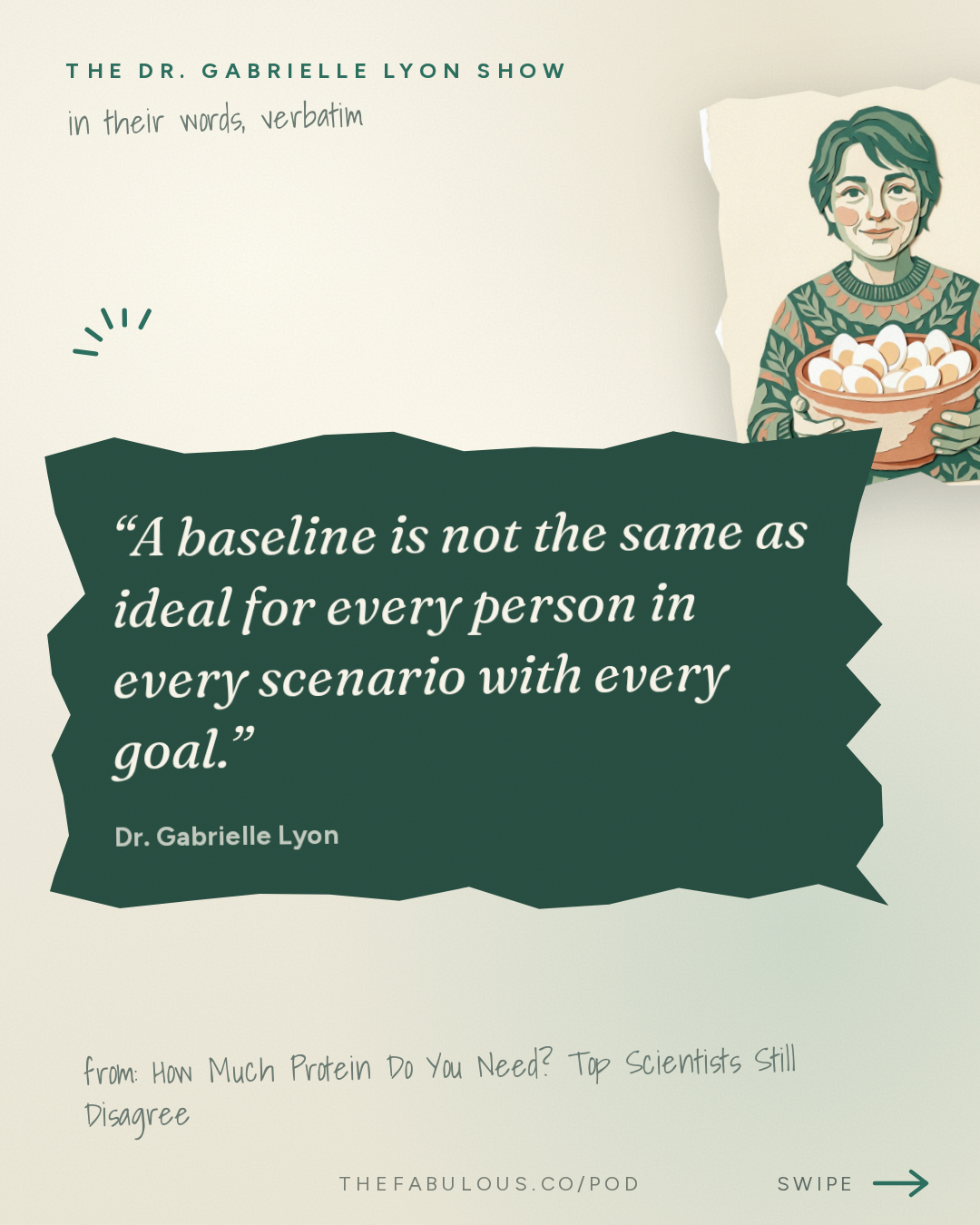
A baseline is not the same as ideal for every person in every scenario with every goal (20:28) — Dr. Gabrielle Lyon
Protein is not going anywhere from grocery shelves, and that is mostly good news. The next useful step is resisting the urge to judge a product, or a diet, by a single number printed on the front of the box.
Ask this episode anything
Pod's AI answers from the episode itself, with the minute mark so you can hear it yourself.
Or start with one of these
Ask this episode
Pod's AI listens to the whole episode to answer, and points you to the minute it comes from.
The rest of this answer, and any question after it
Answers come from the episode itself, never from a summary of it.
ContinueKey takeaways
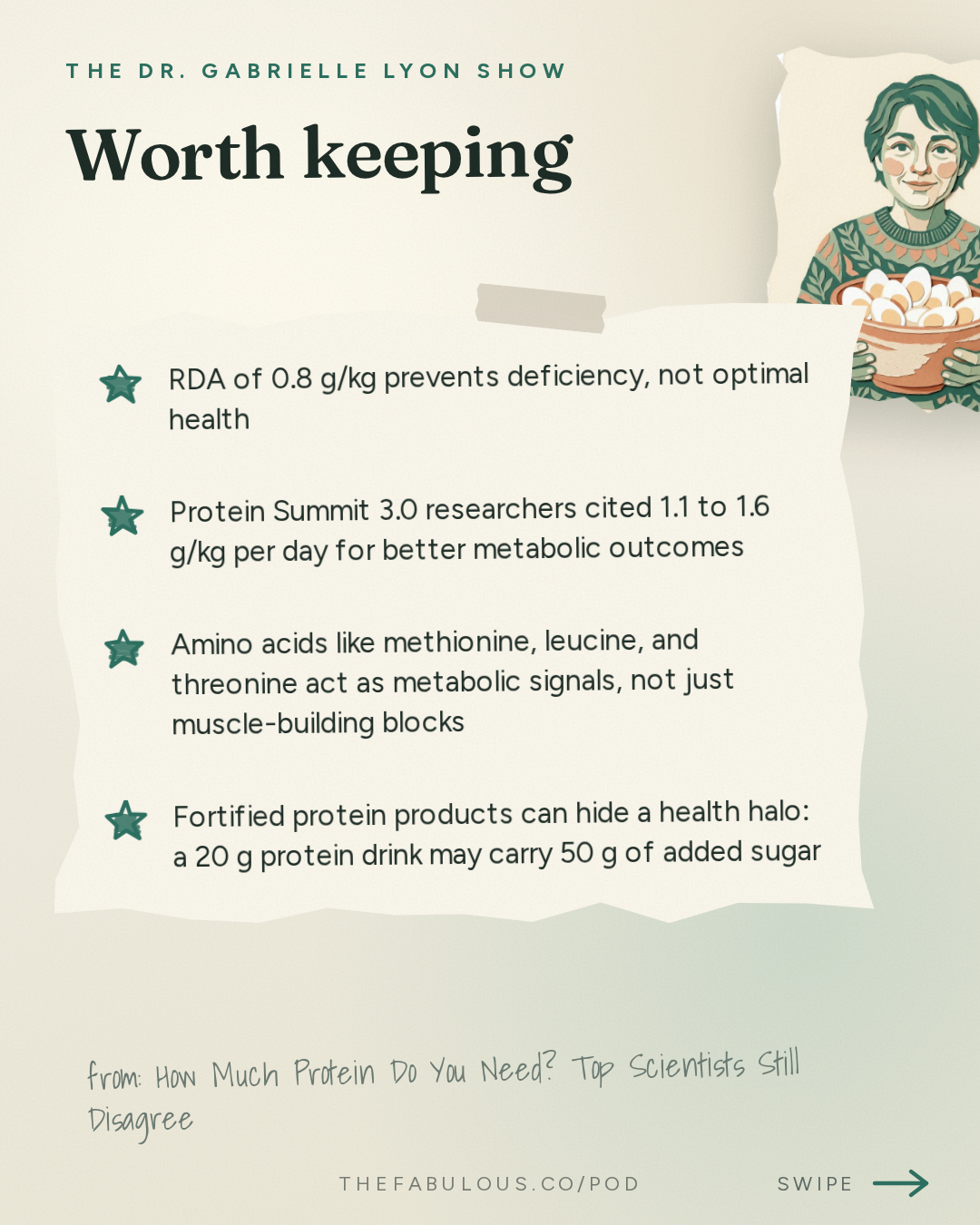
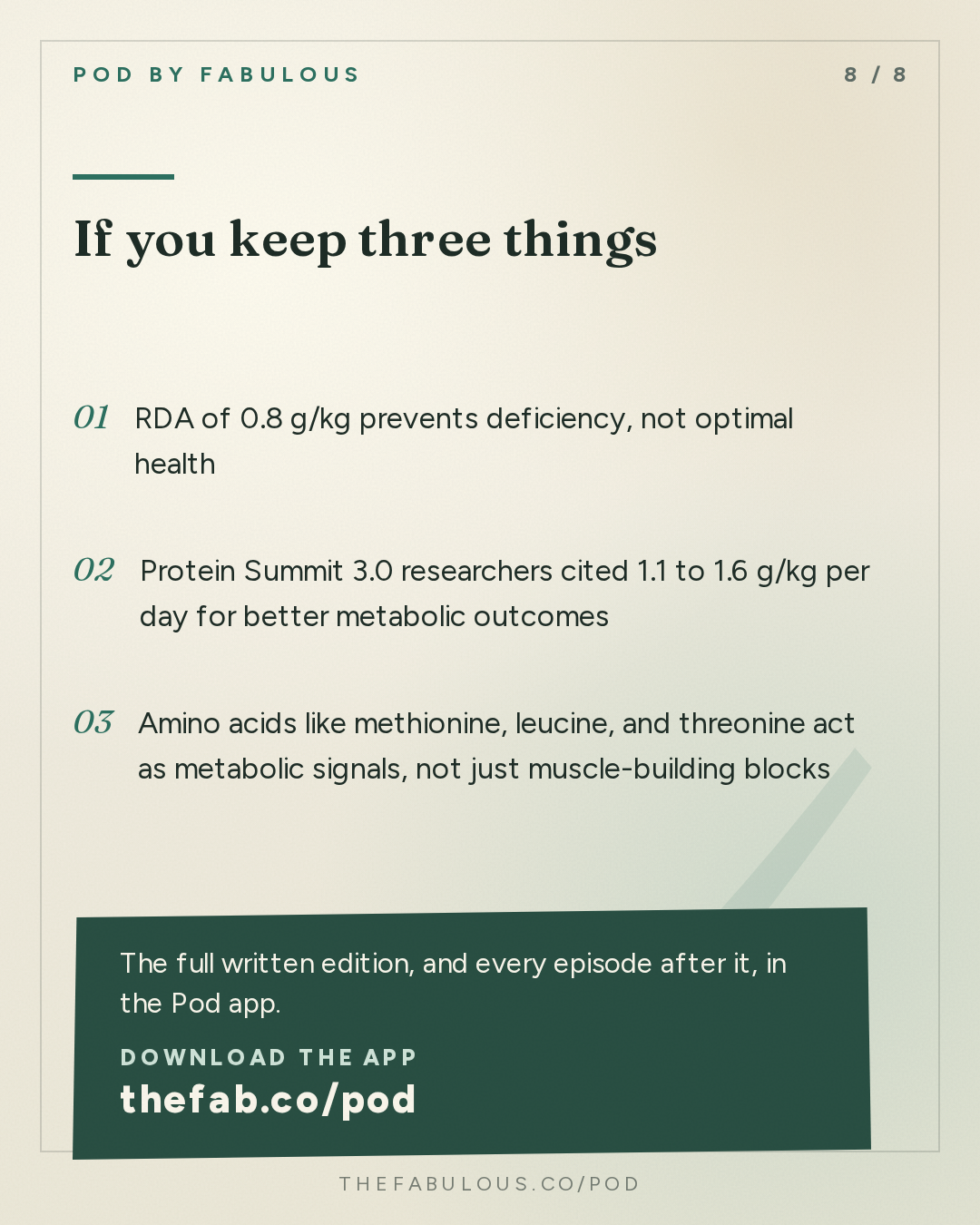
- RDA of 0.8 g/kg prevents deficiency, not optimal health (06:04)
- Protein Summit 3.0 researchers cited 1.1 to 1.6 g/kg per day for better metabolic outcomes (07:15)
- Amino acids like methionine, leucine, and threonine act as metabolic signals, not just muscle-building blocks (03:30)
- Fortified protein products can hide a health halo: a 20 g protein drink may carry 50 g of added sugar (12:55)
- Dr. Gabrielle Lyon warns against judging foods by protein grams alone, citing the whole food matrix (13:35)
The episode in cards

By the numbers
- 0.8 g/kg/day standard adult RDA for protein intake
- 54 grams protein target for a 70 kg adult under the RDA
In their words
“The one thing that they agreed on is that protein is essential, but its effects depend on the amino acids involved, the person eating the diet, and also the rest of the diet.”
“The better question is, "What useful job did the body assign it?"”
“Adding protein doesn't cancel the rest of the nutrition label.”
“A baseline is not the same as ideal for every person in every scenario with every goal.”
Protocols
-
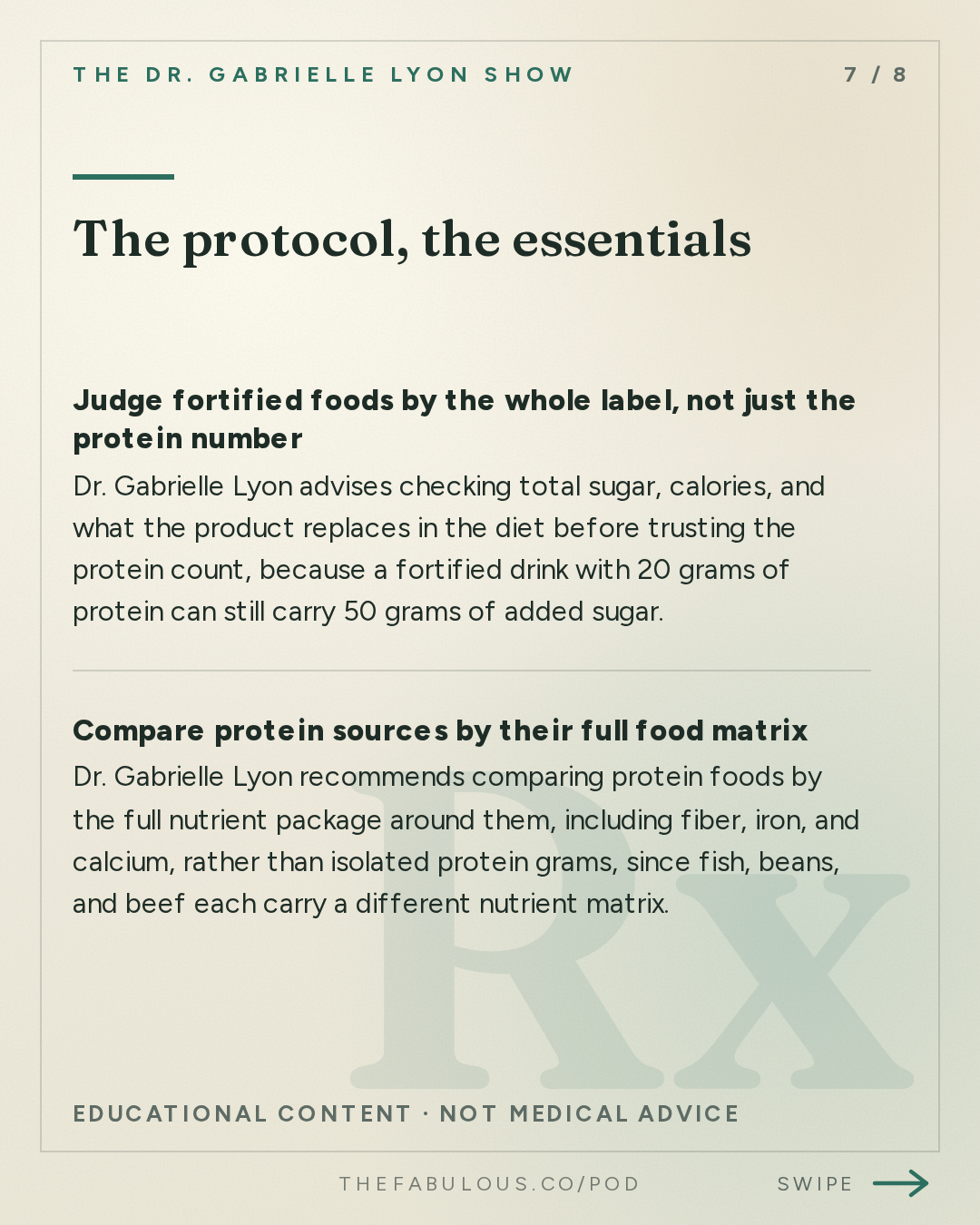
Judge fortified foods by the whole label, not just the protein number
Dr. Gabrielle Lyon advises checking total sugar, calories, and what the product replaces in the diet before trusting the protein count, because a fortified drink with 20 grams of protein can still carry 50 grams of added sugar.
Before buying a protein-fortified snack or drink
-
Compare protein sources by their full food matrix
Dr. Gabrielle Lyon recommends comparing protein foods by the full nutrient package around them, including fiber, iron, and calcium, rather than isolated protein grams, since fish, beans, and beef each carry a different nutrient matrix.
When planning daily meals
-
Match protein intake to life stage and goal
Dr. Gabrielle Lyon states that protein needs shift with age, activity level, and health status, so a 60 year old postmenopausal woman and a 35 year old active man should not default to the same gram target.
Reassess after major life changes such as menopause, illness, or a new training load
Questions this episode answers
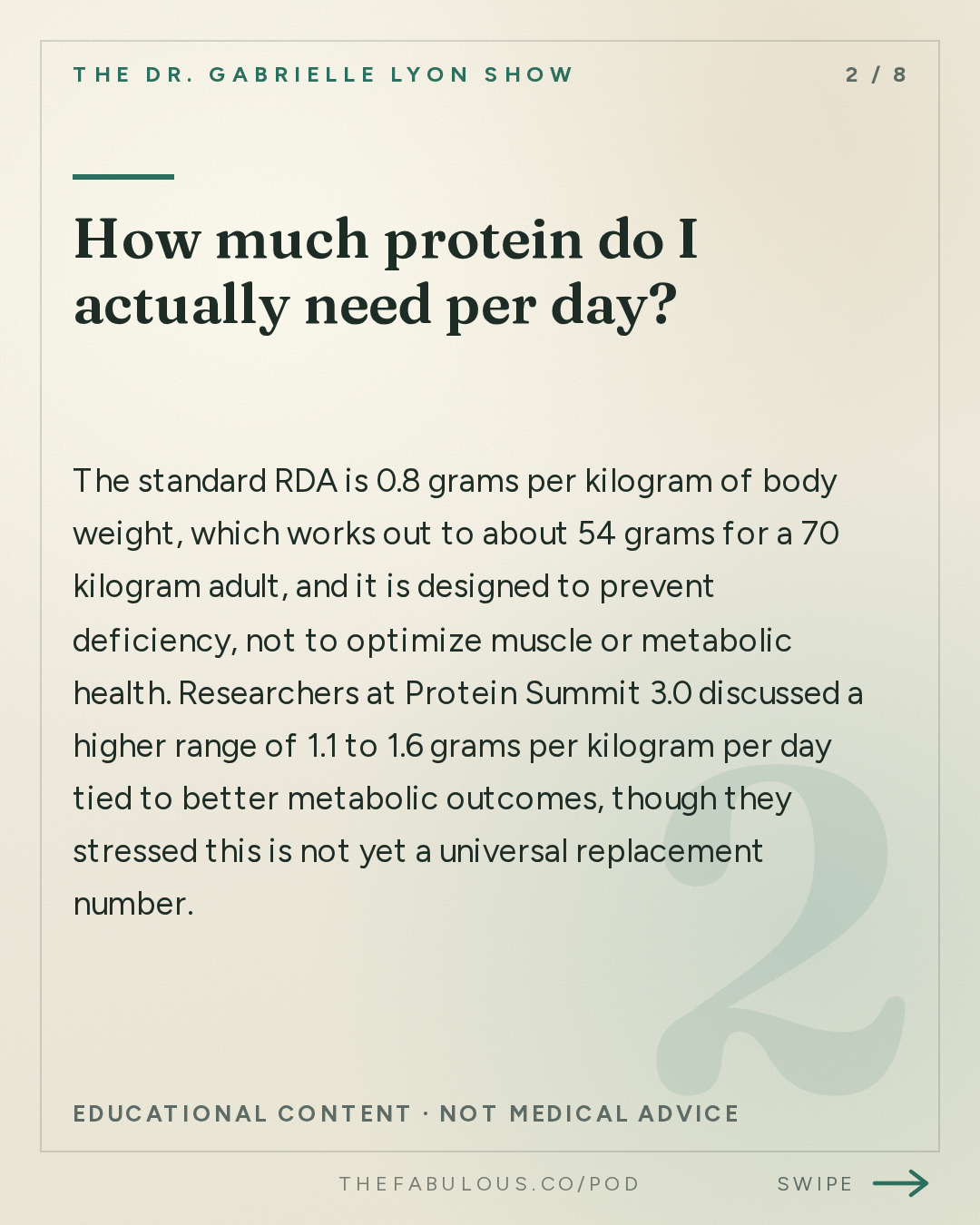
How much protein do I actually need per day?
The standard RDA is 0.8 grams per kilogram of body weight, which works out to about 54 grams for a 70 kilogram adult, and it is designed to prevent deficiency, not to optimize muscle or metabolic health (06:18). Researchers at Protein Summit 3.0 discussed a higher range of 1.1 to 1.6 grams per kilogram per day tied to better metabolic outcomes, though they stressed this is not yet a universal replacement number (07:15).
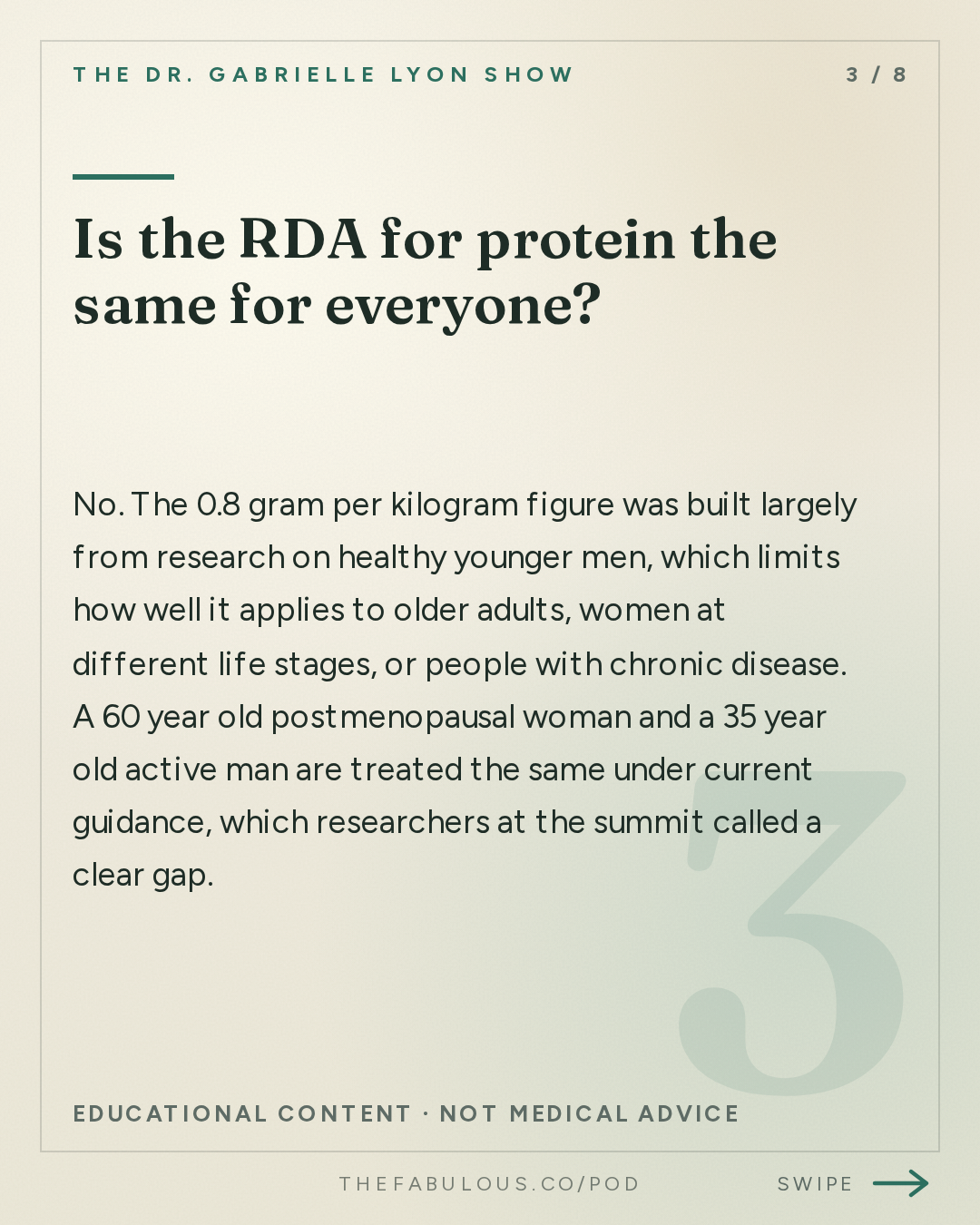
Is the RDA for protein the same for everyone?
No. The 0.8 gram per kilogram figure was built largely from research on healthy younger men, which limits how well it applies to older adults, women at different life stages, or people with chronic disease (08:45). A 60 year old postmenopausal woman and a 35 year old active man are treated the same under current guidance, which researchers at the summit called a clear gap (07:49).
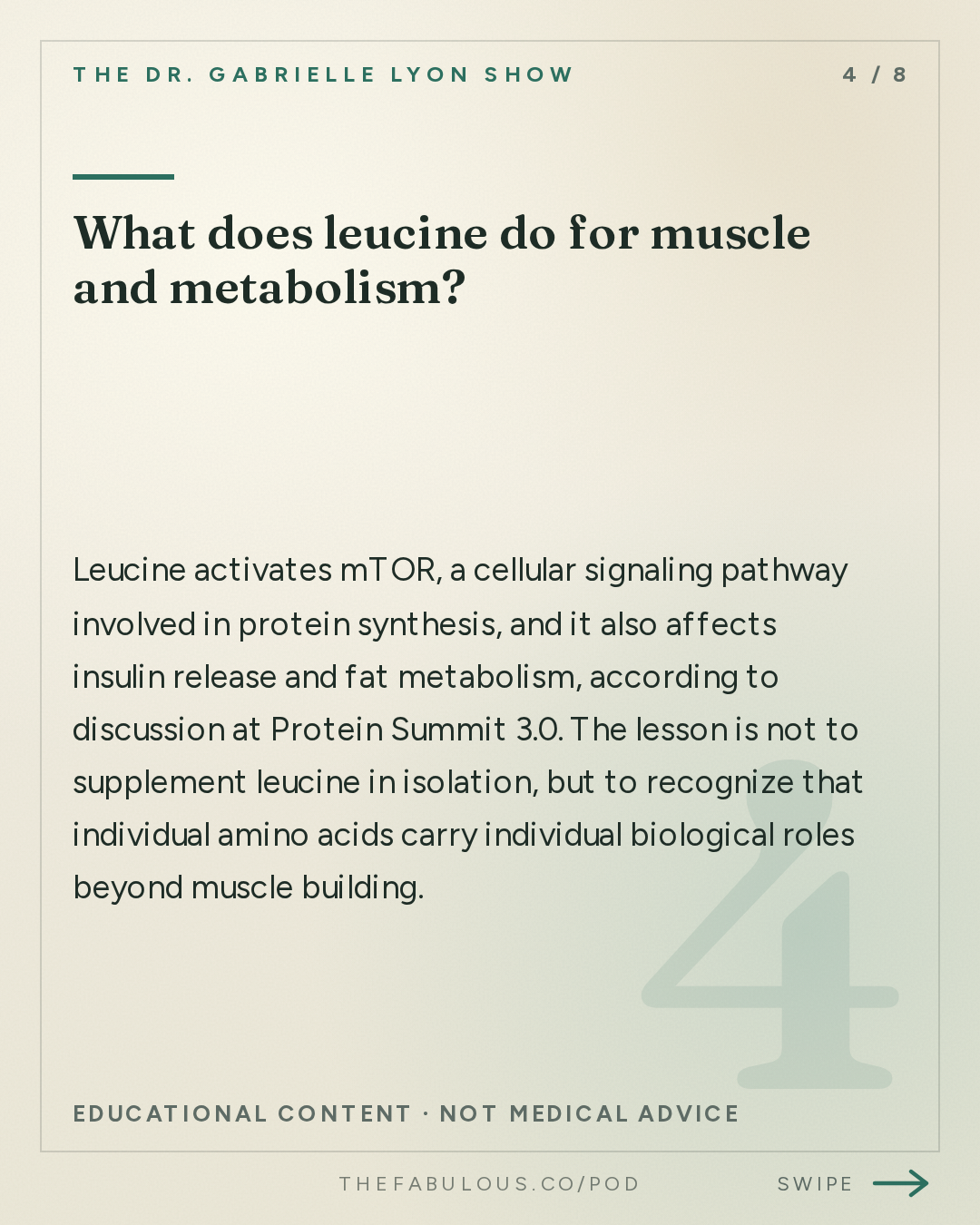
What does leucine do for muscle and metabolism?
Leucine activates mTOR, a cellular signaling pathway involved in protein synthesis, and it also affects insulin release and fat metabolism, according to discussion at Protein Summit 3.0 (05:25). The lesson is not to supplement leucine in isolation, but to recognize that individual amino acids carry individual biological roles beyond muscle building.
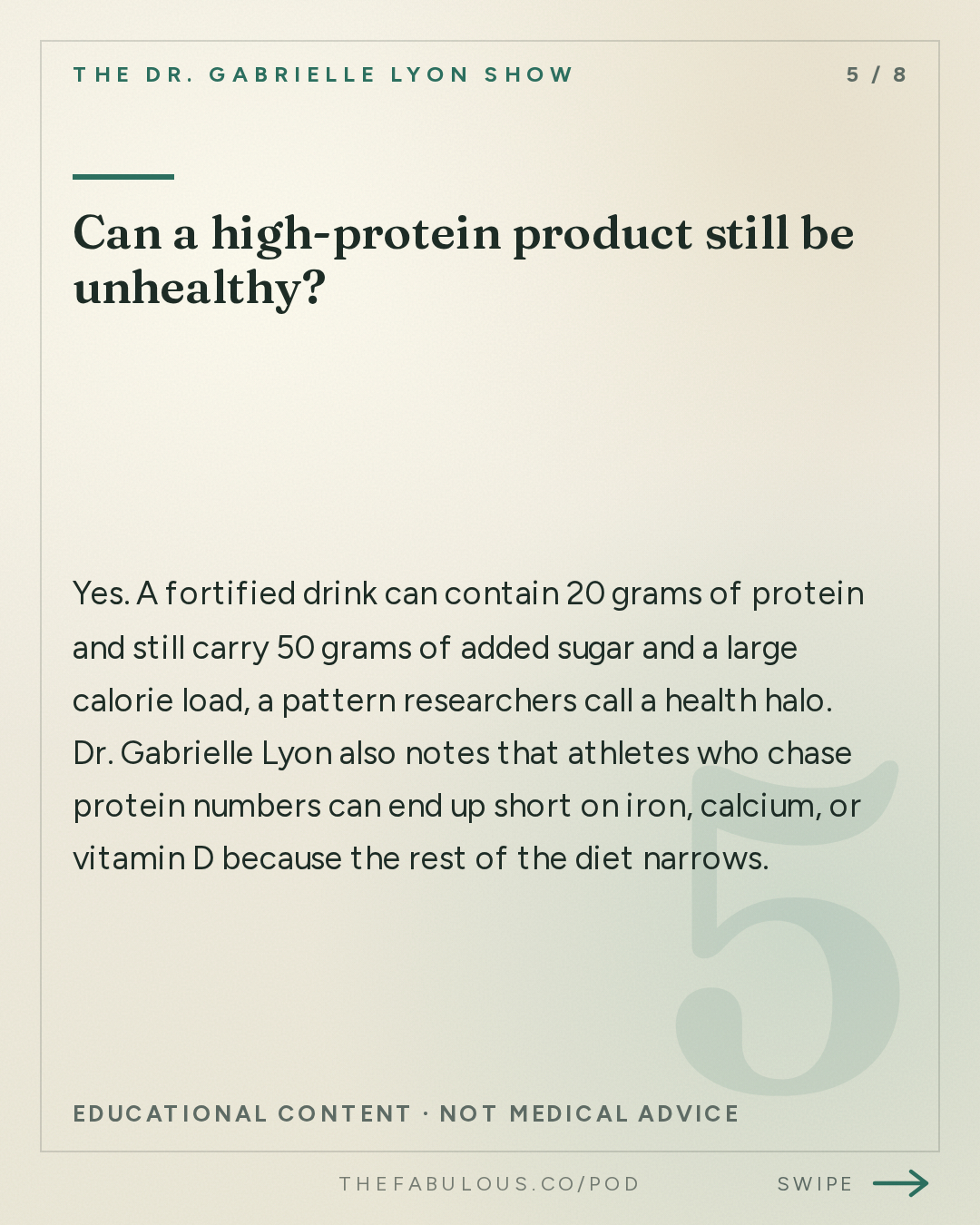
Can a high-protein product still be unhealthy?
Yes. A fortified drink can contain 20 grams of protein and still carry 50 grams of added sugar and a large calorie load, a pattern researchers call a health halo (12:55). Dr. Gabrielle Lyon also notes that athletes who chase protein numbers can end up short on iron, calcium, or vitamin D because the rest of the diet narrows (13:15).
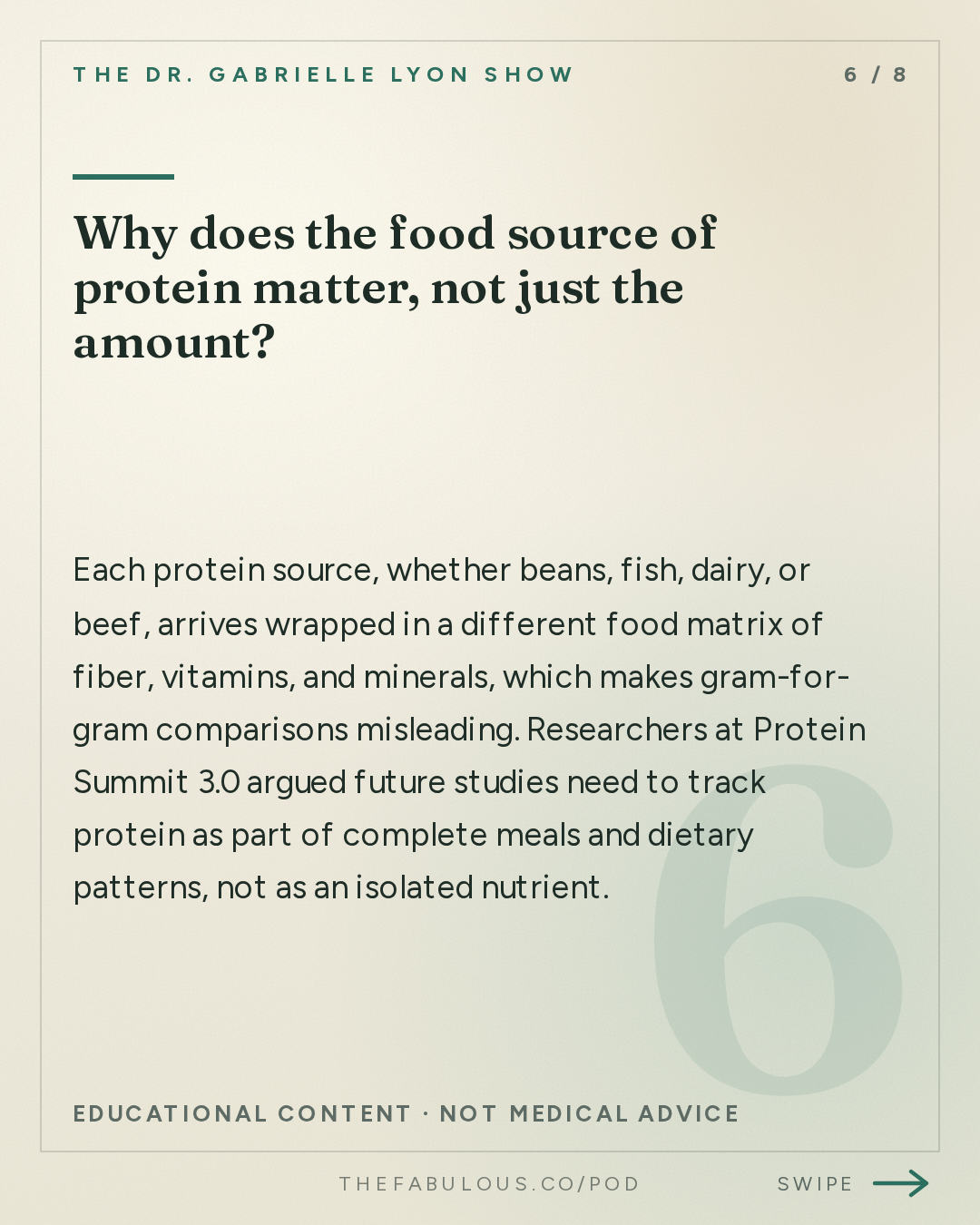
Why does the food source of protein matter, not just the amount?
Each protein source, whether beans, fish, dairy, or beef, arrives wrapped in a different food matrix of fiber, vitamins, and minerals, which makes gram-for-gram comparisons misleading (14:48). Researchers at Protein Summit 3.0 argued future studies need to track protein as part of complete meals and dietary patterns, not as an isolated nutrient.
The full read, in cards
Go deeper
- Protein Summit 3.0 — a research symposium at Texas A&M where scientists and food industry representatives debated minimum versus optimal protein intake
Mentioned
Dr. Gabrielle Lyon · Protein Summit 3.0 · Texas A&M · Methionine · Glutathione · Leucine · mTOR · Washington University in St. Louis · Harvard
More from this show and category
Is Anesthesia Safe? What Really Happens in the OR
Anesthesiologist Dr. Tiffany Moon says healthy patients face under 0.1% mortality risk from elective surgery, lower than the odds of a car crash (25:28, 25:56). The bigger variables are body fat, which changes how drugs distribute, and vital-sign stability during the procedure, not whether someone wakes up at all (05:09, 24:10).
Hormones and Attraction: What the Science Shows
Hormones shape attraction traits mostly during puberty, not day to day. A masculine face doesn't reveal current testosterone, and the ovulatory-shift theory, that women prefer masculine men mainly near ovulation, lacks support. Perceived physical strength explains 70% of women's attractiveness ratings for men's bodies, making muscle, unlike facial bone structure, the one hormone-built trait people can still train.
JJ Thomas's Primal Physical Therapy Guide
Physical therapist JJ Thomas argues that pain is an alarm pointing to a movement problem elsewhere in the body, not proof that the hurting spot is broken. She treats patients with seven foundational movements (squat, hinge, push, pull, carry, reach, rotate) and dry needling at sites far from the pain, arguing most overuse injuries are really underuse injuries of neighboring muscles.
Building Muscle in Menopause: What Studies Show
No, it is not too late: postmenopausal women gained up to eight pounds of muscle in 12 weeks of structured lifting. Hormone therapy does not build muscle on its own, but it can amplify gains from resistance training, and the protein target for bone and muscle protection is roughly double the standard RDA.
