
How Much Protein Do Kids Really Need?
How to Raise Strong Kids: Protein, Strength Training and Building Bone Before Adulthood
▶ Listen to the full episode More from The Dr. Gabrielle Lyon Show
The brief
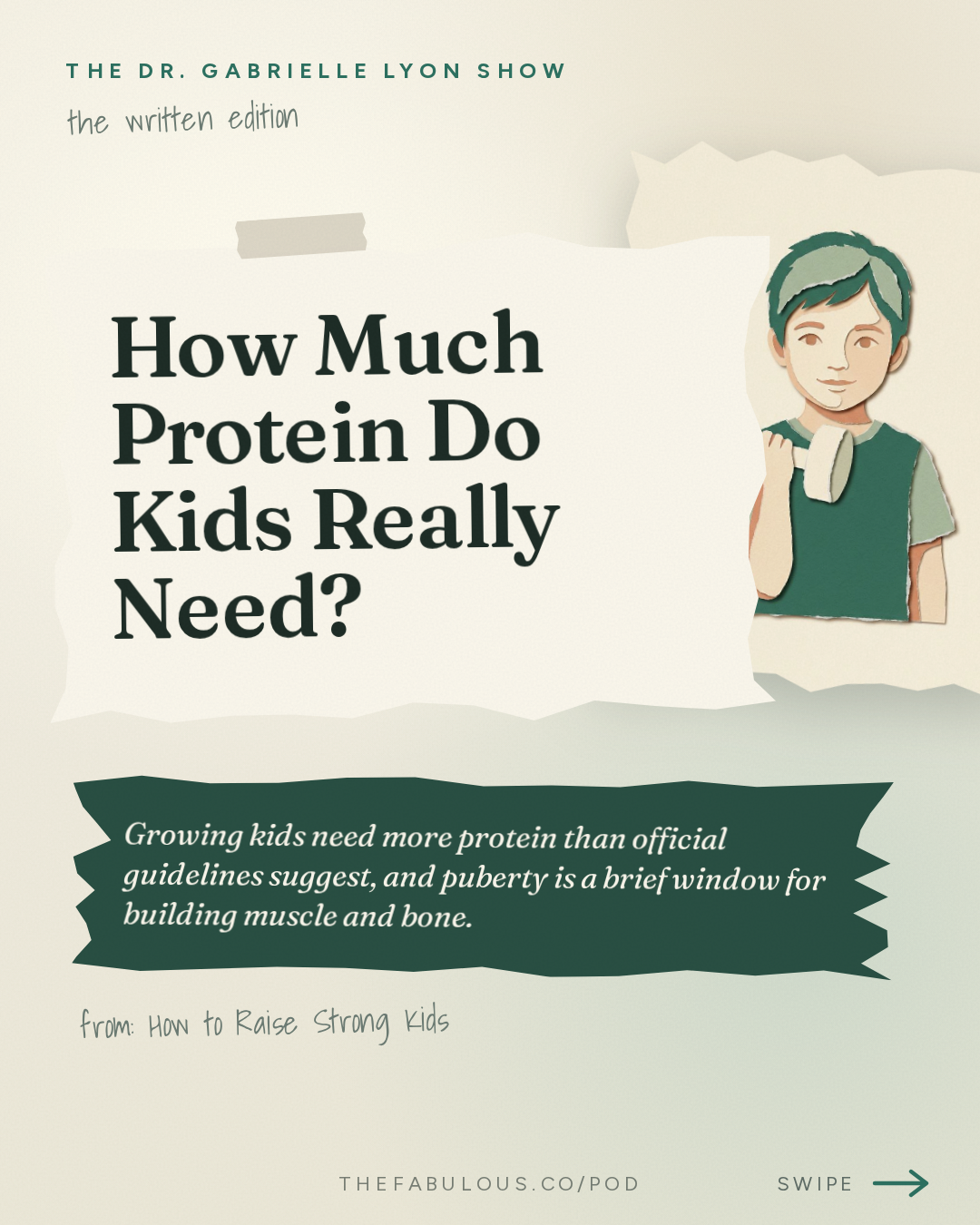
Growing kids need more protein than official guidelines suggest, and puberty is a brief window for building muscle and bone. Dr. Gabrielle Lyon cites research showing children ages 6 to 11 may need close to 1.5 g/kg of protein daily, that 40 to 60% of adult bone mass forms during puberty, and that supervised strength training is safe at any age once a child can follow instructions.
At the airport, nobody looks twice at a child staring into an iPad. But if that same child drops to the floor and does a set of push-ups, people stare like something has gone wrong. Dr. Gabrielle Lyon notices this double standard and uses it to ask a sharper question: why are kids, who run and climb and fidget all day, not more muscular? (14:08) The answer she lays out turns into a short course on how a growing body actually works, and why the protein advice most parents follow may be decades out of date.
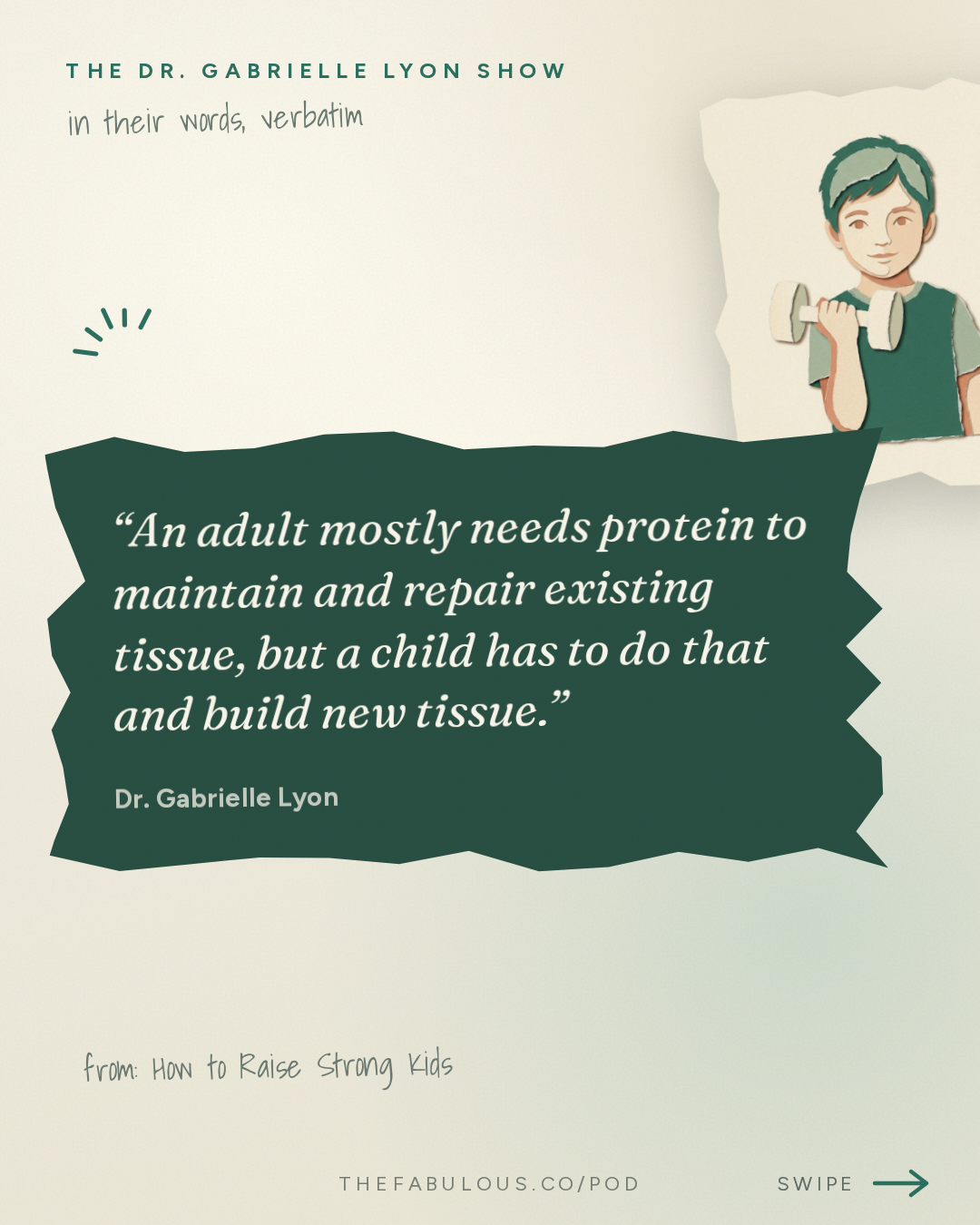
The starting point is a simple distinction. An adult eats protein mostly to repair the tissue already there. A child has to do that and build tissue that does not exist yet: more bone, more blood, more organ mass, more nervous system capacity. Lyon puts it plainly.
"An adult mostly needs protein to maintain and repair existing tissue, but a child has to do that and build new tissue." — Dr. Gabrielle Lyon [00:00]
She leans on a review by exercise physiologist Daniel Moore, who studies pediatric protein metabolism. Moore's work argues that children are not "little adults": because they are using amino acids for growth as well as upkeep, they may respond to protein differently than grown bodies do (02:55). That difference gets sharper at puberty. In one study tracking children from age 7 to 17, researchers watched what happened to leucine, an amino acid that acts as the main trigger for muscle building, as kids moved through puberty. Before puberty, more of it got burned for energy. During puberty, the body held onto more of it and used it for growth instead (03:48). Lyon describes the shift this way.
"The pubertal kids were becoming better at holding on to dietary amino acids and using them for growth, with less being broken down and used for energy production." — Dr. Gabrielle Lyon [03:48]
That is the biological argument for treating puberty as a limited, high-leverage window. The body is already trying to build. The question is whether it gets the raw material to do it.
A Protein Guideline Built on Old Methods
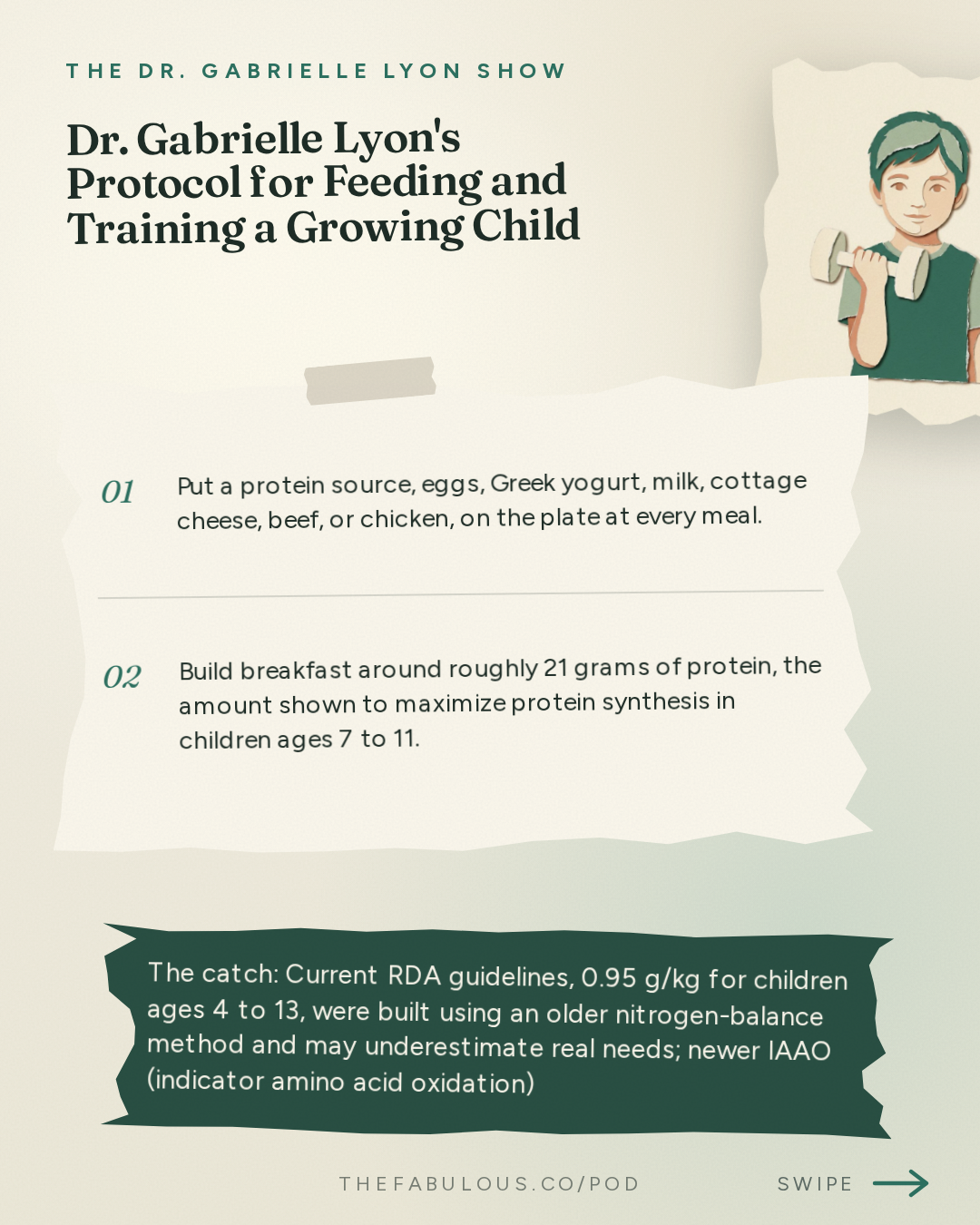
Here is where the episode gets practical. The current U.S. dietary reference intake sets protein at 0.95 grams per kilogram of body weight per day for children ages 4 to 13, and 0.85 grams per kilogram for teens 14 to 18 (05:13). Those numbers came largely from an older measurement called nitrogen balance, a technique that estimates protein needs from what the body excretes rather than how well it actually functions.
Newer research uses a different method, called indicator amino acid oxidation, or IAAO. It works by giving the body varying amounts of protein and finding the point past which extra protein stops improving amino acid use. One such study, done in healthy children ages 6 to 11, put the estimated requirement at roughly 1.3 grams per kilogram, with the recommended intake calculated at around 1.5 grams per kilogram, well above the 0.95 figure currently used for that age group (05:54). Lyon is careful to flag the limits of this data: the IAAO study involved only seven children, and the entire current RDA for this age group rests on just two older studies covering eight boys total (06:25). Even the dietary reference intake documentation says IAAO is the better method when it is available. The guidelines simply have not caught up.
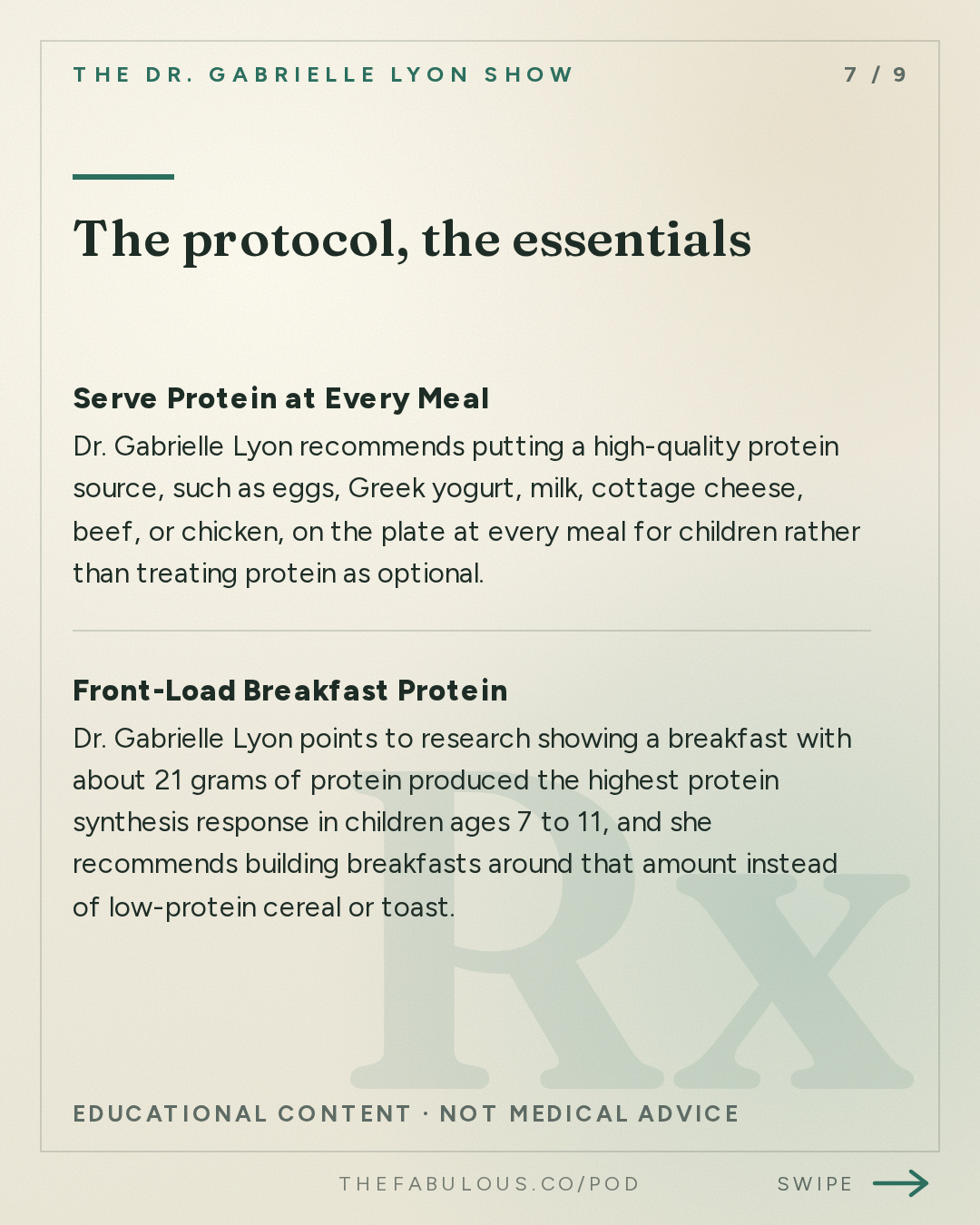
Activity level adds another layer the guidelines mostly ignore. One study had physically active 11-year-olds do 45 minutes of running, cycling, and sprints, then fed them different amounts of milk protein. Only the group getting about 0.3 grams per kilogram ended up in a positive whole-body protein balance, meaning they were building rather than breaking down tissue (08:39). A separate trial tested breakfasts of 0, 7, 14, or 21 grams of protein in children ages 7 to 11 after an overnight fast. Protein synthesis kept climbing as the dose went up, peaking with the 21-gram breakfast (09:08). Measured against a typical kid's breakfast of cereal or a waffle, that is a wide gap. Lyon's bottom line: stop treating protein as optional, and put a real source of it, eggs, Greek yogurt, milk, cottage cheese, meat, on the plate at every meal (09:55).
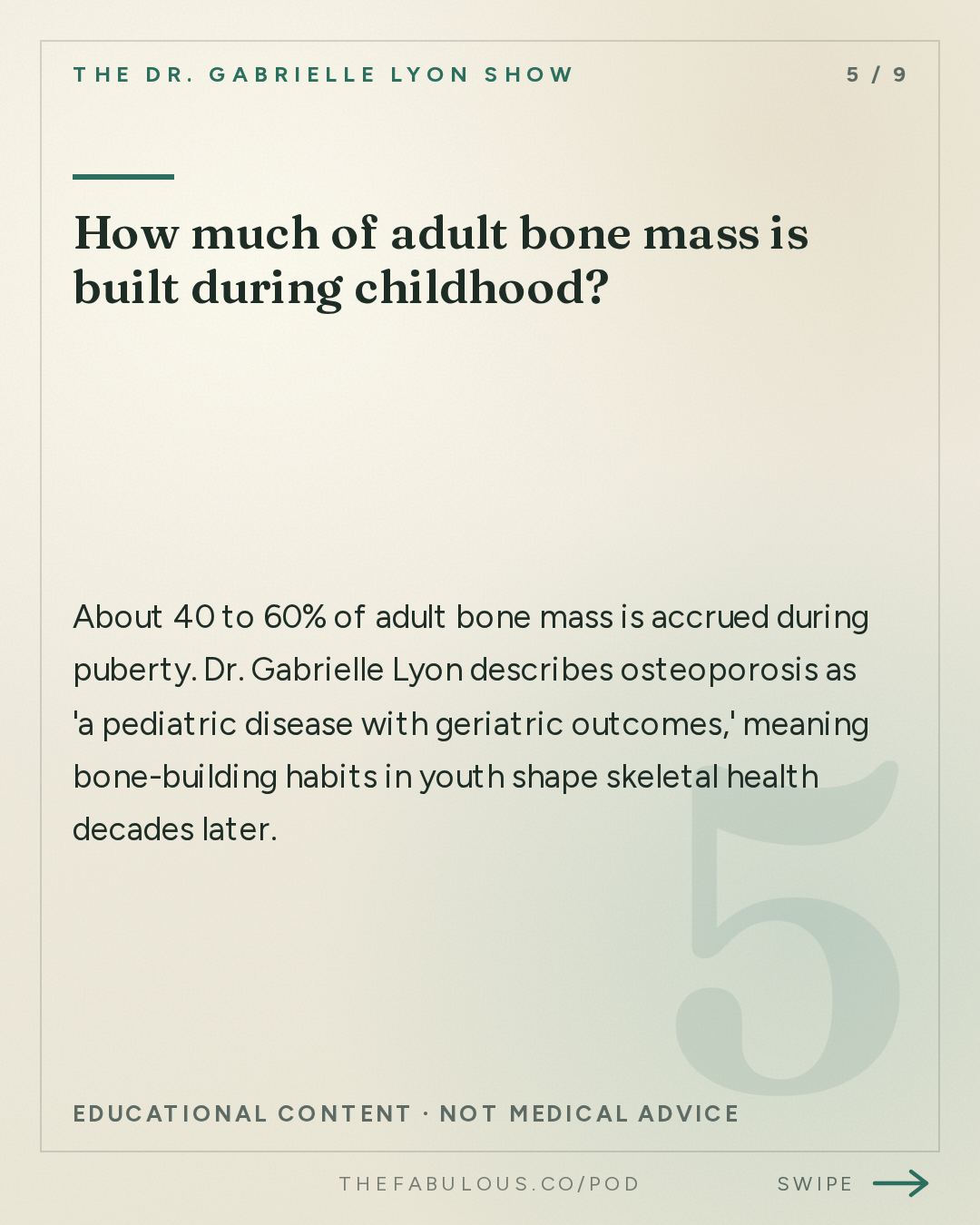
Bone tells a similar story on a longer timeline. Somewhere between 40 and 60 percent of adult bone mass is built during puberty (12:23). Lyon repeats a line from the bone research literature that is worth sitting with: osteoporosis is a pediatric disease with geriatric outcomes (00:30). The bone a person has at 65 was mostly decided decades earlier, through nutrition, calcium, vitamin D, magnesium, protein, and physical loading, not through anything done after menopause or in old age.
Strong Kids Without Bulky Kids
Which brings up the myth Lyon spends real time dismantling: that weights are dangerous for children. The American Academy of Pediatrics' current clinical guidance says supervised resistance training in kids and teens has a low injury rate, improves strength and physical literacy, and does not appear to impair growth or damage growth plates when it is properly programmed (13:46). A ten-year-old does not need to chase a one-rep max. Push-ups, squats, pull-ups, and climbing cover the ground.
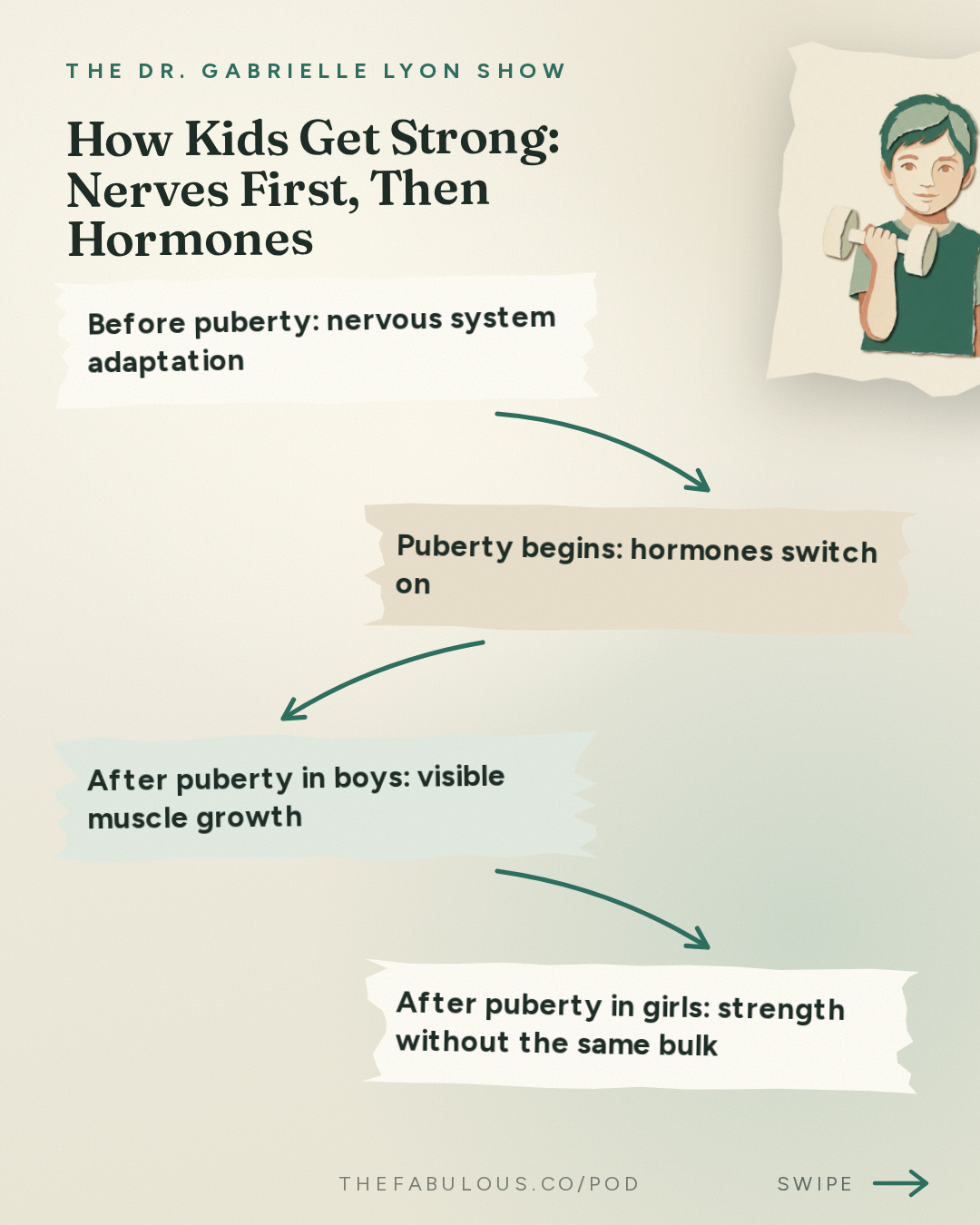
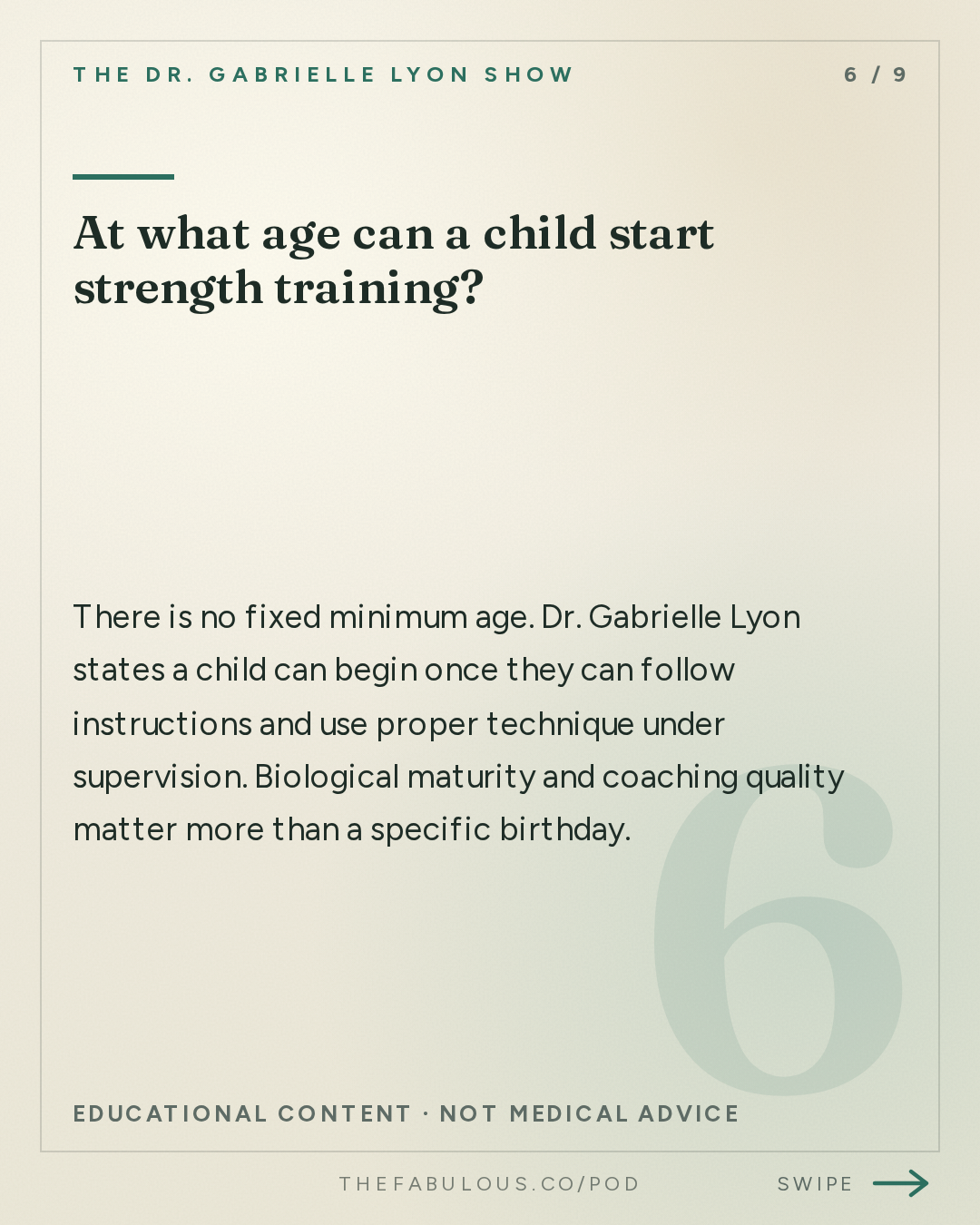
So why don't active kids look jacked the way an equally active adult would? The mechanism is tidy. Before puberty, strength gains come almost entirely from the nervous system, not from muscle growing larger. The brain and nerves get better at recruiting muscle fibers and firing them together, so a child gets measurably stronger while the muscle itself barely changes size (15:29). The AAP states it directly: gains in childhood strength are attributed to increased motor neuron recruitment, which raises strength without muscle hypertrophy, meaning visible muscle growth (16:01). The practical upshot, according to Lyon, is that there is no fixed minimum age to start training, so long as a child can follow instructions and use proper technique under supervision (16:32).
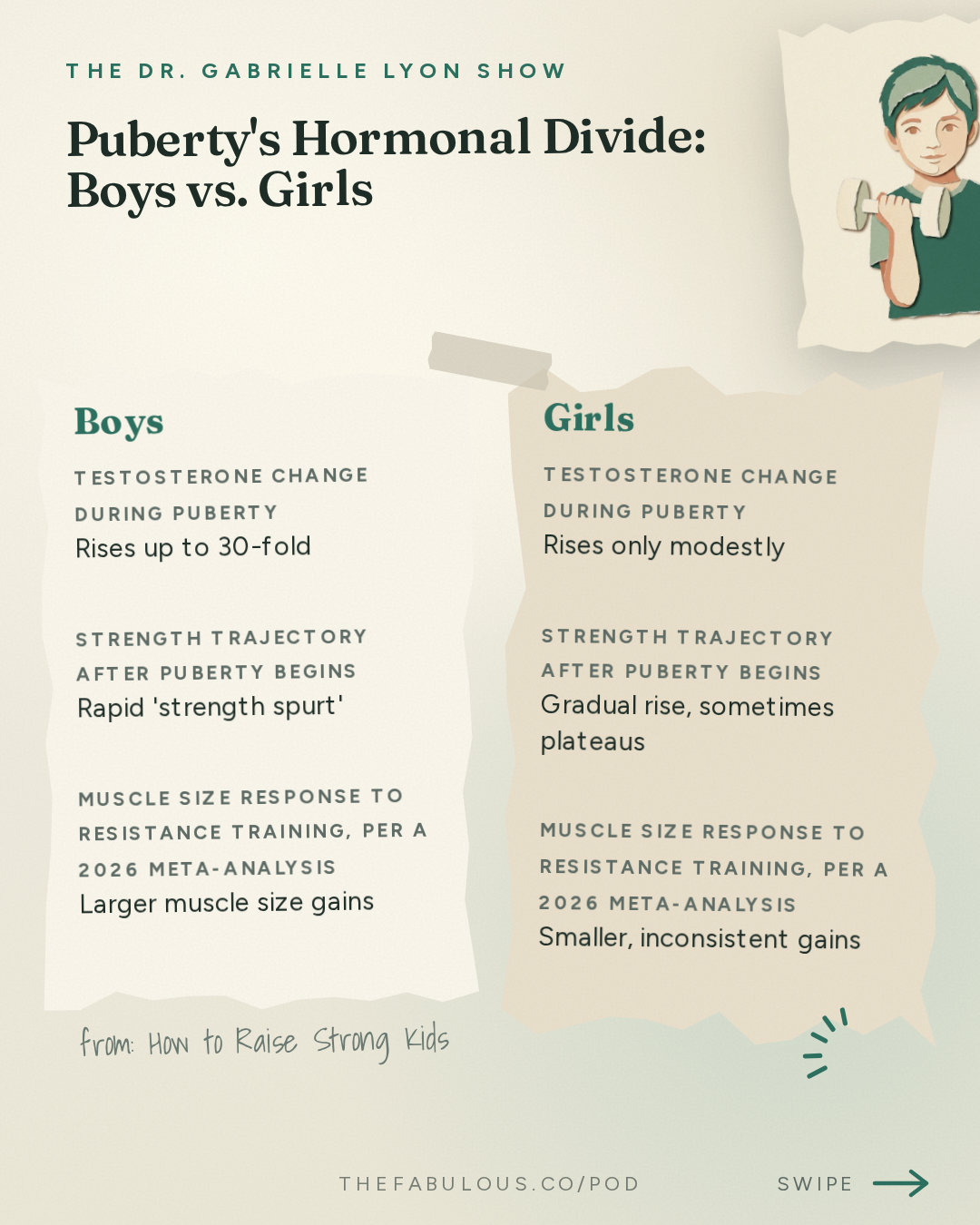
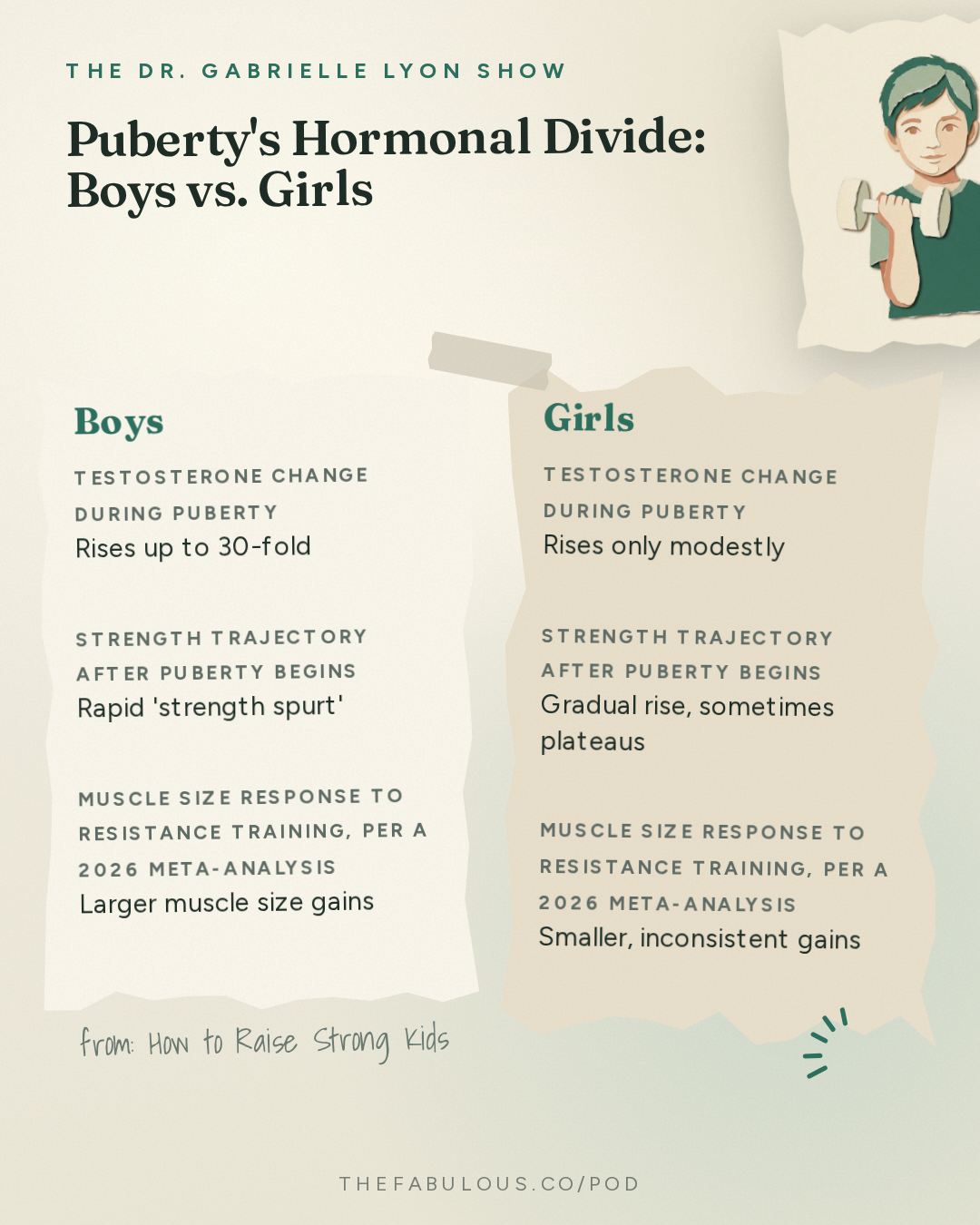
Puberty is the switch that turns on visible size. Rising testosterone, growth hormone, and IGF-1 (insulin-like growth factor 1) unlock the capacity to add muscle bulk, and this is where boys and girls diverge sharply. Testosterone rises up to 30-fold in boys during puberty but only modestly in girls (18:09), which produces what Lyon calls a male "strength spurt": a rapid jump in boys' strength that girls' strength does not match, rising more gradually and sometimes plateauing instead (18:09). A 2026 meta-analysis found larger muscle size gains in boys from resistance training and inconsistent effects in girls, though the authors caution this may reflect how few studies include girls rather than any hard biological ceiling (18:56). None of this means girls do not benefit. Estrogen supports muscle protein synthesis, satellite cell activity, and muscle repair, and girls given equivalent protein show a strong synthesis response of their own (19:22). Strength, coordination, and metabolic health improve in girls just as they do in boys. The size difference is hormonal, not a sign that training is wasted on female bodies.
The last piece is quieter but just as consequential: micronutrients. Iron needs climb during adolescence, to 11 milligrams a day for boys ages 14 to 18 and 15 milligrams for girls, largely because of menstrual losses (21:44). The same foods that supply high-quality protein, meat and seafood especially, also supply the more absorbable form of iron. Low-protein, low-nutrient diets in children have been linked to lower measured intelligence and fatigue (22:47), which makes this less a cosmetic nutrition issue and more a cognitive one.
Lyon's closing argument reframes childhood itself. In her book Forever Strong, she writes that the muscle a person carries later in life depends partly on the biological reserve built when they were young (24:23). The body is already trying to grow bone, build muscle, and wire a nervous system. The job of the adults around a child is not to engineer that process but to stop getting in its way: protein at every meal, movement that includes real resistance, sleep, and a relationship with food built on understanding rather than fear. Waiting until someone is forty and losing ground to start teaching them what strength feels like is, in her framing, a wasted decade that could have been spent building a reserve instead.
Ask this episode anything
Pod's AI answers from the episode itself, with the minute mark so you can hear it yourself.
Or start with one of these
Ask this episode
Pod's AI listens to the whole episode to answer, and points you to the minute it comes from.
The rest of this answer, and any question after it
Answers come from the episode itself, never from a summary of it.
ContinueKey takeaways
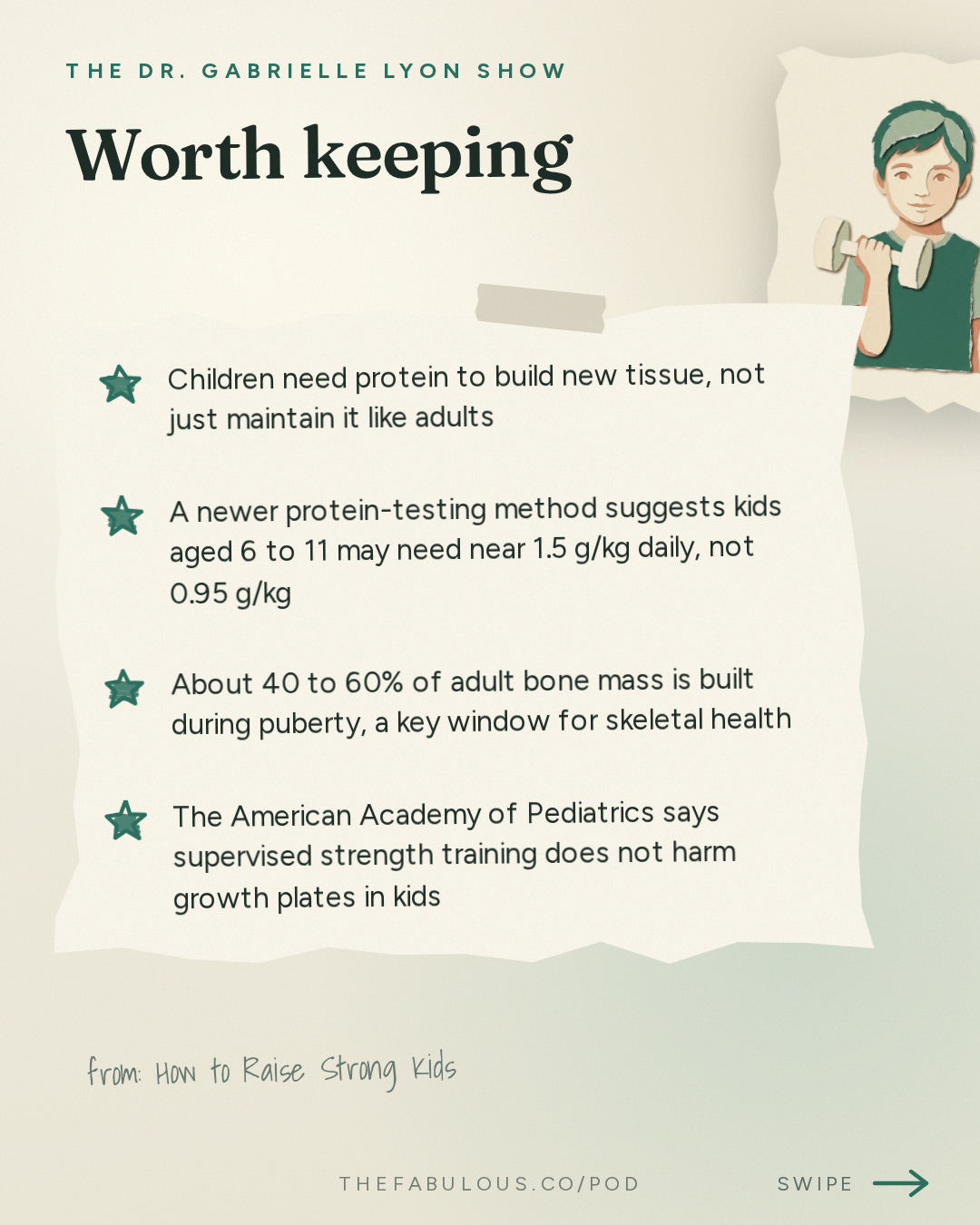
- Children need protein to build new tissue, not just maintain it like adults
- A newer protein-testing method suggests kids aged 6 to 11 may need near 1.5 g/kg daily, not 0.95 g/kg
- About 40 to 60% of adult bone mass is built during puberty, a key window for skeletal health
- The American Academy of Pediatrics says supervised strength training does not harm growth plates in kids
- Boys' testosterone rises up to 30-fold during puberty, driving a muscle and strength spurt girls do not get
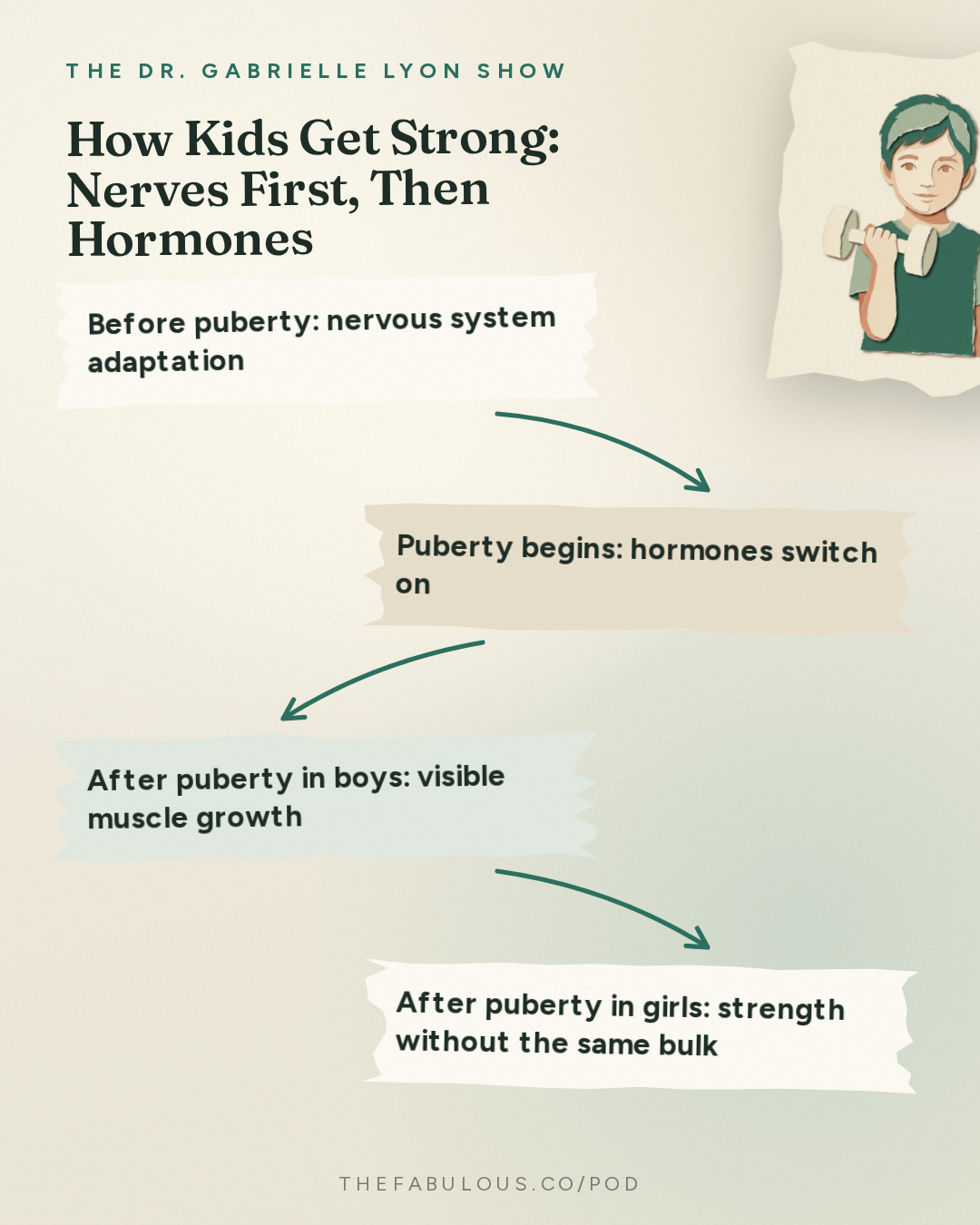
The episode in cards

By the numbers
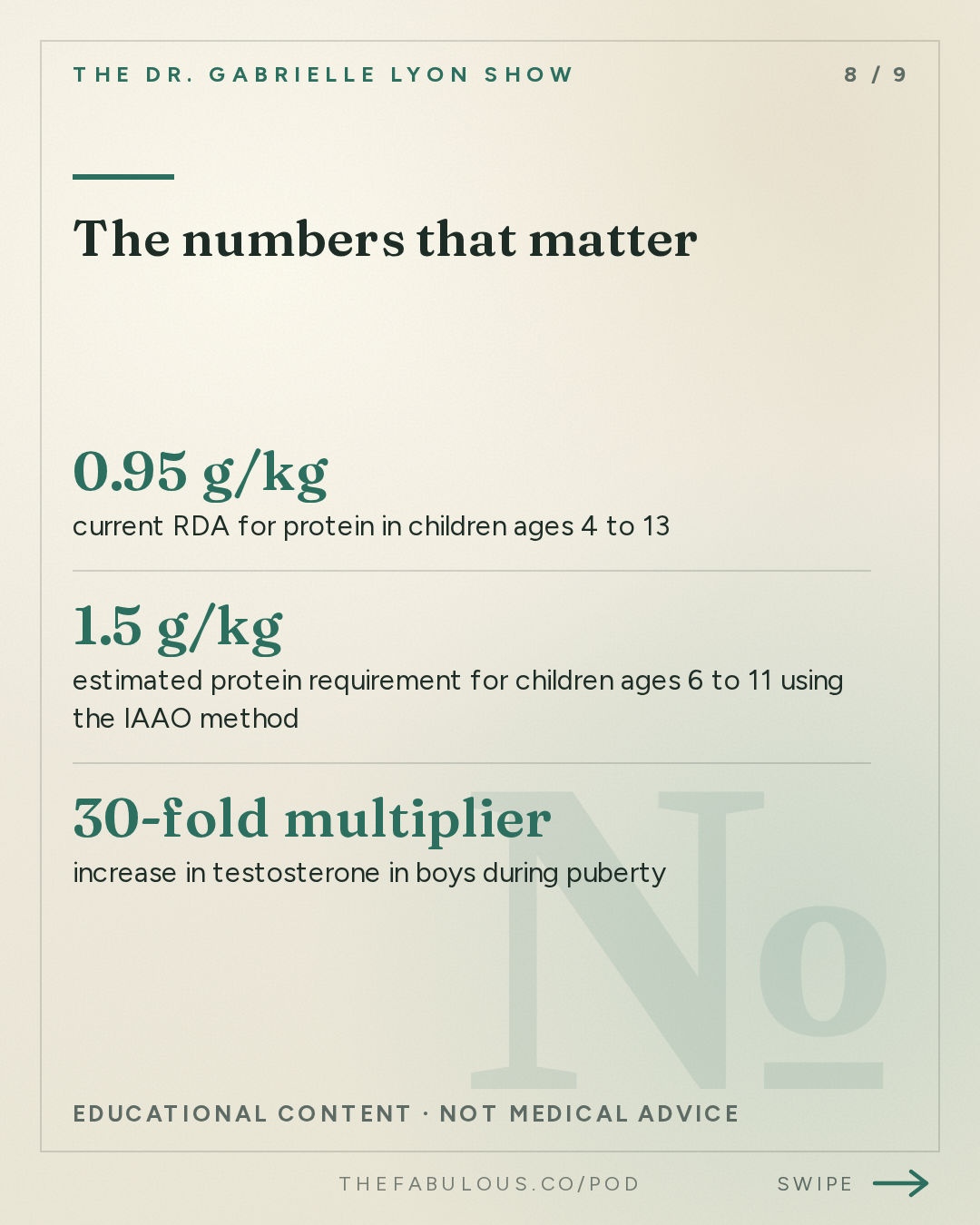
- 0.95 g/kg current RDA for protein in children ages 4 to 13
- 1.5 g/kg estimated protein requirement for children ages 6 to 11 using the IAAO method
- 30-fold multiplier increase in testosterone in boys during puberty
In their words
“An adult mostly needs protein to maintain and repair existing tissue, but a child has to do that and build new tissue.”
“Osteoporosis is a pediatric disease with geriatric outcomes.”
“The pubertal kids were becoming better at holding on to dietary amino acids and using them for growth, with less being broken down and used for energy production.”
“We do need to stop treating protein as optional for our children.”
“There is no minimum age to start training as long as a child can follow instructions and use proper technique with supervision.”
Protocols
-
Serve Protein at Every Meal
Dr. Gabrielle Lyon recommends putting a high-quality protein source, such as eggs, Greek yogurt, milk, cottage cheese, beef, or chicken, on the plate at every meal for children rather than treating protein as optional.
every meal
-
Front-Load Breakfast Protein
Dr. Gabrielle Lyon points to research showing a breakfast with about 21 grams of protein produced the highest protein synthesis response in children ages 7 to 11, and she recommends building breakfasts around that amount instead of low-protein cereal or toast.
daily, at breakfast
-
Start Strength Training Whenever a Child Is Ready
Dr. Gabrielle Lyon states there is no minimum age to begin strength training, as long as the child can follow instructions and use proper technique under supervision.
ongoing, once developmentally ready
-
Keep Youth Training Technique-Focused
Dr. Gabrielle Lyon cites the American Academy of Pediatrics' guidance that supervised exercises such as push-ups, squats, pull-ups, and climbing are appropriate for children, and she notes this kind of training does not appear to impair growth or damage growth plates when properly programmed.
each training session
Questions this episode answers
How much protein do children need per day?
Current U.S. guidelines set protein intake at 0.95 g/kg per day for children ages 4 to 13 (05:13), but a small study using the indicator amino acid oxidation (IAAO) method estimated the real requirement closer to 1.5 g/kg for children ages 6 to 11 (05:54). Dr. Gabrielle Lyon argues the older nitrogen-balance method behind the current RDA likely underestimates needs, especially for active kids.
Is it safe for kids to lift weights?
Yes. The American Academy of Pediatrics' clinical guidance states that properly supervised resistance training has a low injury rate in children and does not appear to impair growth or damage growth plates (13:46). Strength gains in young children come mainly from the nervous system learning to recruit muscle fibers, not from muscle growth itself (15:29).
Will strength training make girls bulky?
No. Testosterone, the hormone mainly responsible for muscle size gains, rises up to 30-fold in boys during puberty but only modestly in girls (18:09), so girls get stronger and more athletic without significant muscle bulk. A 2026 meta-analysis found larger muscle size gains in boys and inconsistent effects in girls, though researchers note this may reflect the small number of studies on girls rather than a biological limit (18:56).
How much of adult bone mass is built during childhood?
About 40 to 60% of adult bone mass is accrued during puberty (12:23). Dr. Gabrielle Lyon describes osteoporosis as 'a pediatric disease with geriatric outcomes,' meaning bone-building habits in youth shape skeletal health decades later (00:30).
At what age can a child start strength training?
There is no fixed minimum age. Dr. Gabrielle Lyon states a child can begin once they can follow instructions and use proper technique under supervision (16:32). Biological maturity and coaching quality matter more than a specific birthday.
The full read, in cards
Go deeper
- Daniel Moore's review of pediatric protein metabolism — argues children are not 'little adults' because growth adds extra demand for amino acids
- IAAO study of protein needs in children ages 6 to 11 — estimated protein requirements near 1.5 g/kg per day, above the current RDA
- American Academy of Pediatrics clinical guidance on youth resistance training — found low injury rates and no evidence that supervised training impairs growth or damages growth plates
- 2026 meta-analysis on resistance training and sex differences — found larger muscle size gains in boys and inconsistent effects in girls, with few female-only studies available
- Systematic review of 96 studies on childhood muscular fitness — linked greater muscular fitness in children to lower body fat and better cardiometabolic health
- Forever Strong — Dr. Gabrielle Lyon's book arguing that muscle carried later in life depends on the biological reserve built in youth
Mentioned
Daniel Moore · American Academy of Pediatrics · Forever Strong · IAAO · Leucine
More from this show and category
Mozaffarian: How Food Made Us Sick
Cardiologist Dariush Mozaffarian says the food system, not willpower, is driving disease: 14 of 15 US adults already have a diet-related condition. He explains why saturated fat was wrongly blamed, how ultra-processed carbs work, and offers a 10-to-1 carb-to-fiber rule for judging packaged food.
How Much Protein Do You Really Need?
The standard protein recommendation of 0.8 grams per kilogram prevents deficiency, not optimal health. Researchers at Protein Summit 3.0 debated a higher range, 1.1 to 1.6 grams per kilogram, for better metabolic outcomes, noting needs shift by age, activity, and health status (07:15).
Is Anesthesia Safe? What Really Happens in the OR
Anesthesiologist Dr. Tiffany Moon says healthy patients face under 0.1% mortality risk from elective surgery, lower than the odds of a car crash (25:28, 25:56). The bigger variables are body fat, which changes how drugs distribute, and vital-sign stability during the procedure, not whether someone wakes up at all (05:09, 24:10).
Hormones and Attraction: What the Science Shows
Hormones shape attraction traits mostly during puberty, not day to day. A masculine face doesn't reveal current testosterone, and the ovulatory-shift theory, that women prefer masculine men mainly near ovulation, lacks support. Perceived physical strength explains 70% of women's attractiveness ratings for men's bodies, making muscle, unlike facial bone structure, the one hormone-built trait people can still train.
