BETTER! with Dr. Stephanie Estima
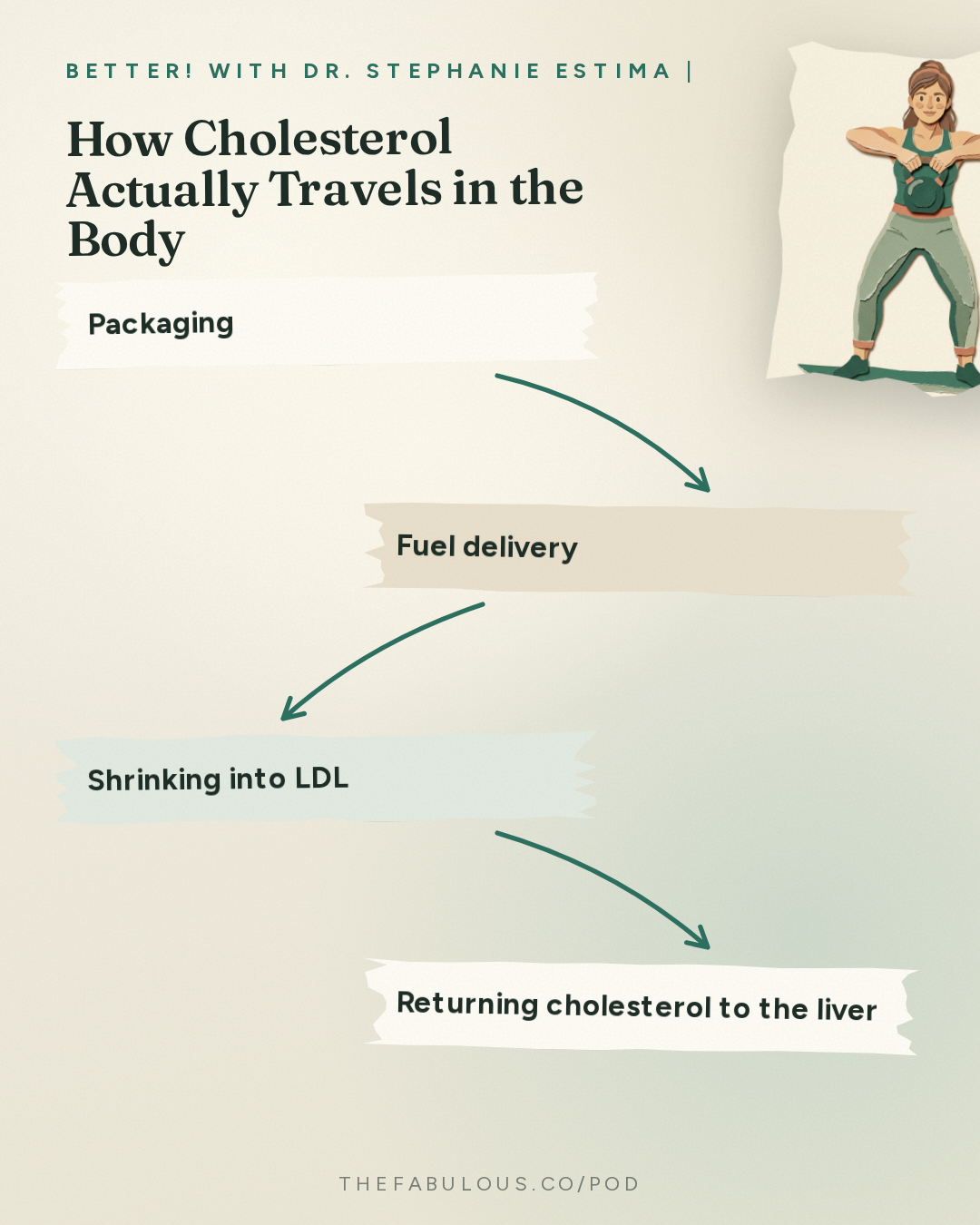
ApoB, Lp(a) and Women's Heart Risk After Menopause
The Heart Attack You Don’t See Coming After Menopause (Plus the Tests You Need) with Thomas Dayspring, MD
▶ Listen to the full episode More from BETTER! with Dr. Stephanie Estima
The brief
Lipidologist Thomas Dayspring says cholesterol in the artery wall is the one essential cause of atherosclerosis, the top killer of women after menopause. He explains why ApoB particle counts predict risk better than LDL cholesterol, why HDL doesn't cause heart disease, and why Lp(a) needs testing only once in a lifetime, with a possible recheck at menopause.
A heart attack rarely announces itself the way television suggests. Clinical lipidologist Thomas Dayspring, who has delivered more than 4,000 lectures on lipids and vascular biology (02:50), agrees with a point host Stephanie Estima puts bluntly: for most people, the first symptom of a heart attack is death (09:22). That line sounds designed to shock, but it is really an argument for prevention over drama. Atherosclerotic disease, the slow buildup of plaque inside artery walls, kills more women than every form of cancer combined (09:01), and it often gives no warning until the artery closes.
Dayspring's entire framework rests on one claim. You can skip the family history, skip the high blood pressure, skip the smoking, skip the diabetes, and still ask: what is the one ingredient without which plaque cannot form? His answer is cholesterol lodged inside the artery wall itself, not cholesterol floating in the blood.
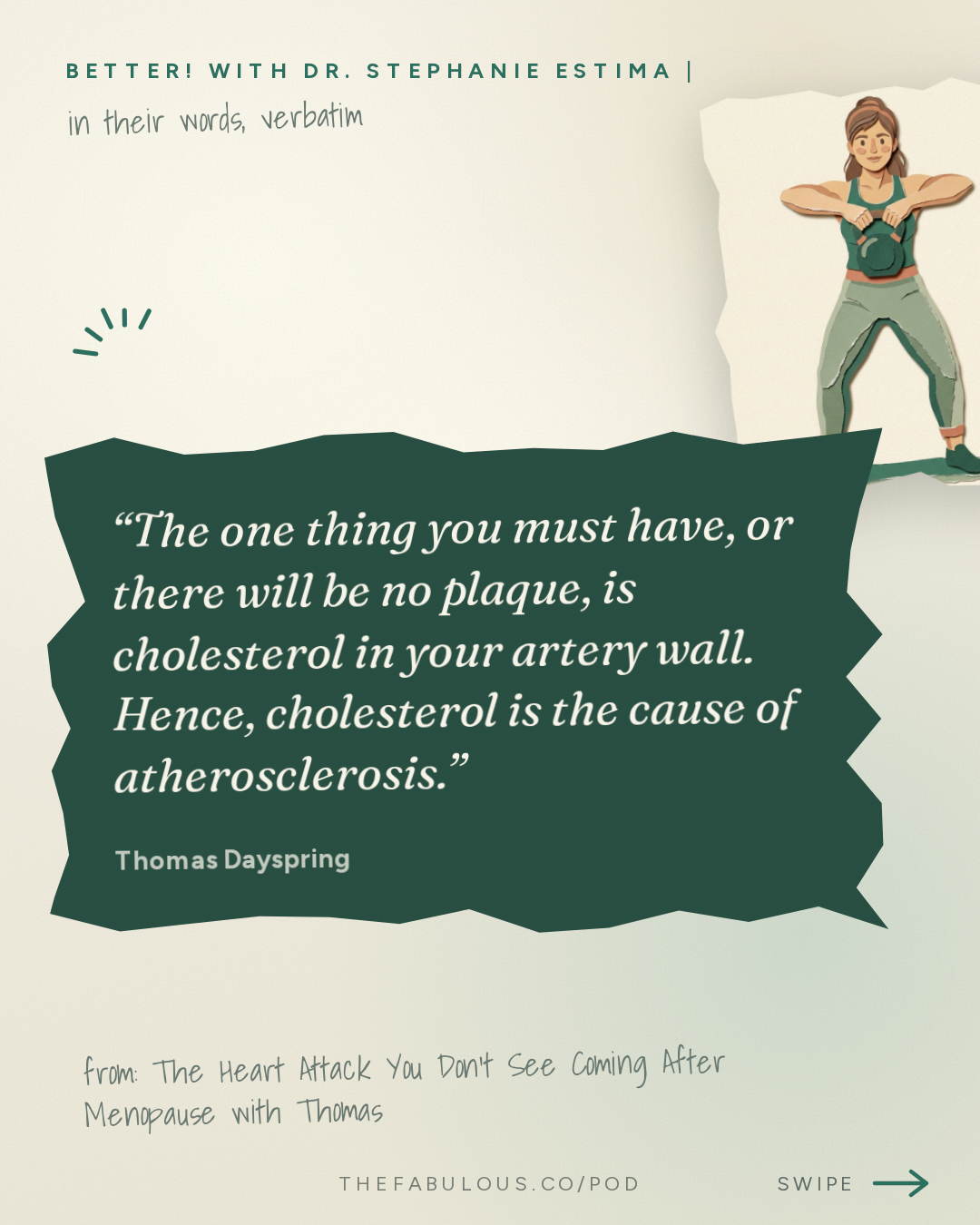
"The one thing you must have, or there will be no plaque, is cholesterol in your artery wall. Hence, cholesterol is the cause of atherosclerosis." — Thomas Dayspring [00:00]That distinction, between cholesterol in transit and cholesterol that has actually crossed into tissue, turns out to explain almost everything else in the conversation, including why standard cholesterol tests mislead so many patients.
The Particle, Not the Number
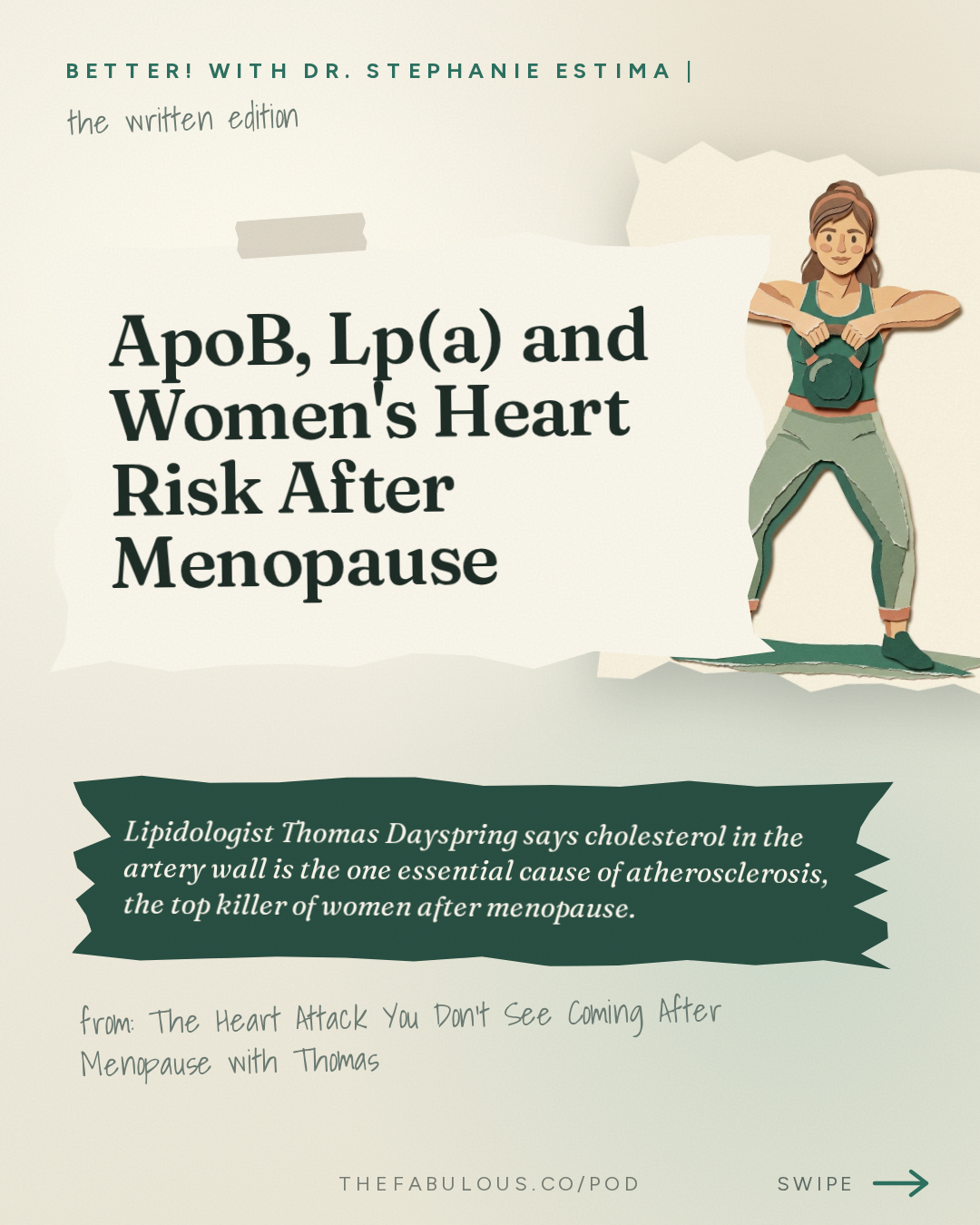
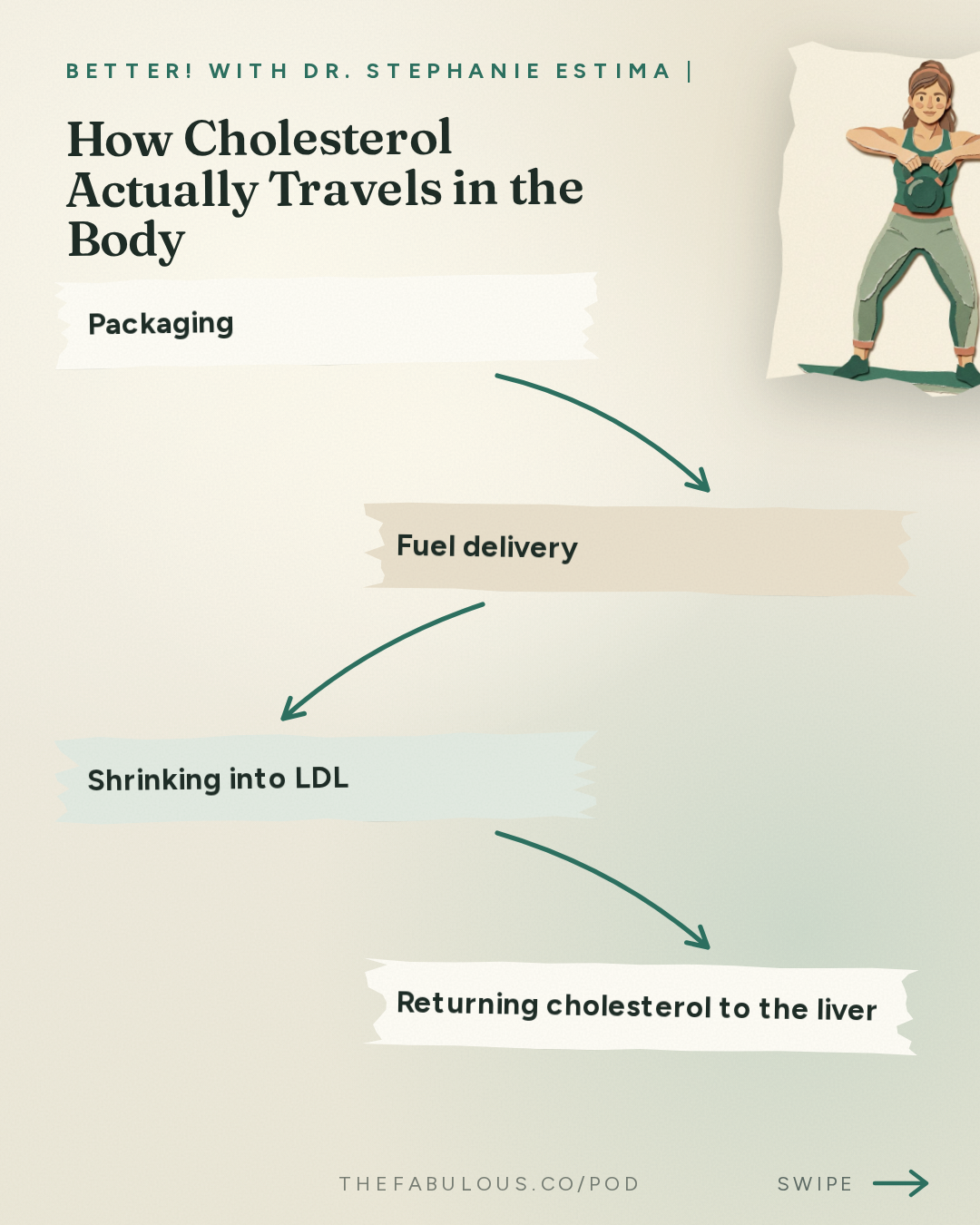
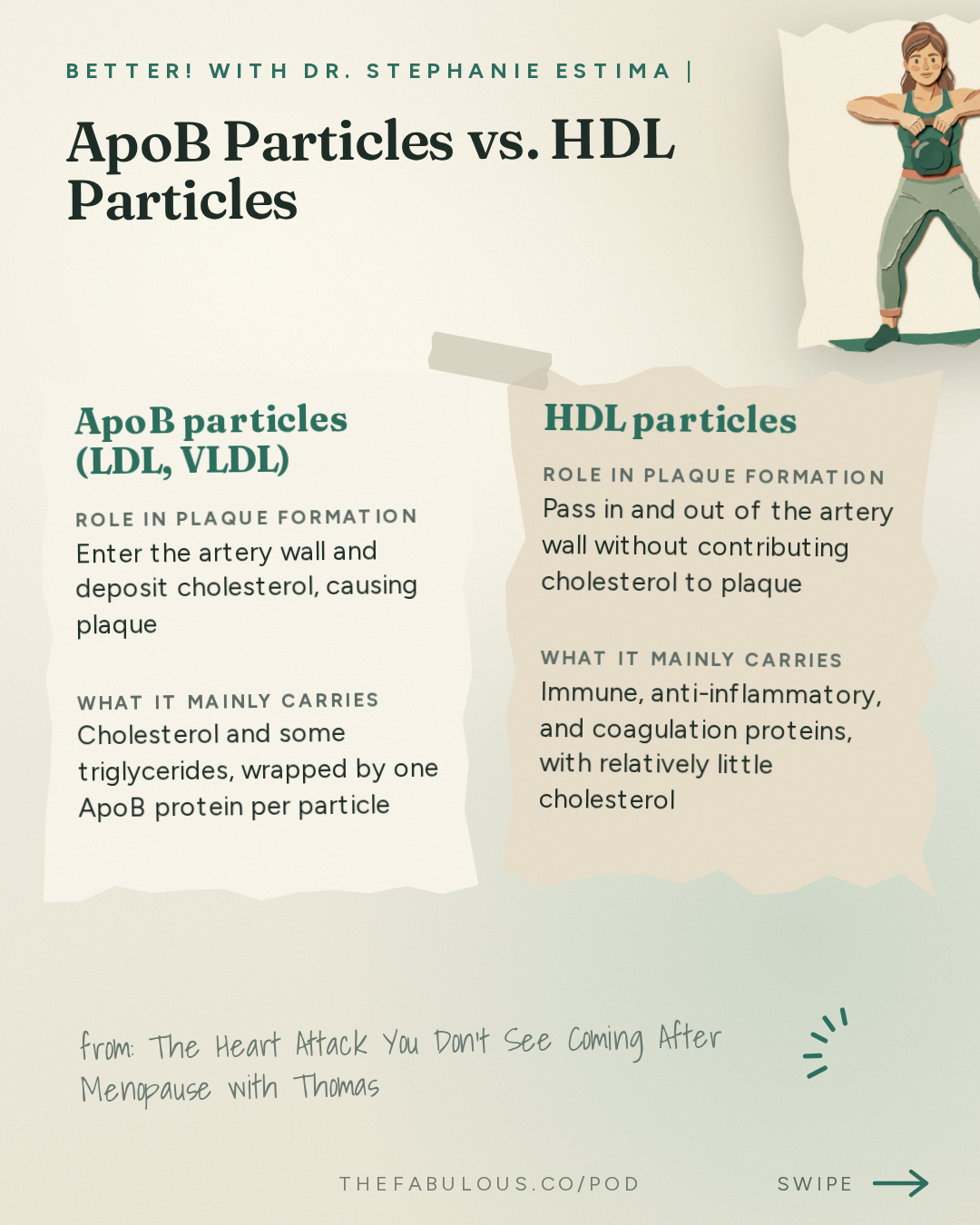
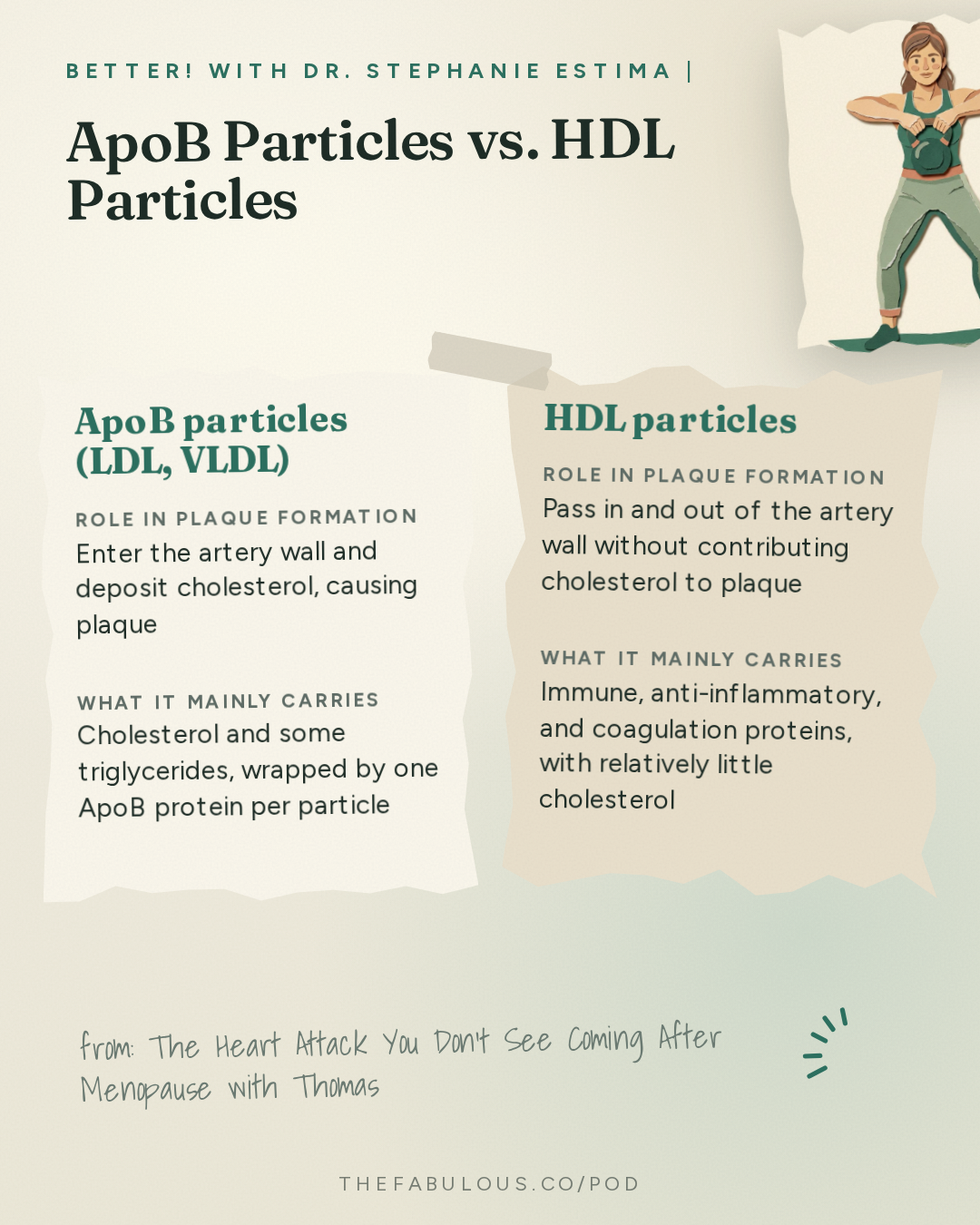
Cholesterol and triglycerides are fats, which means they do not dissolve in blood, which is mostly water. The body solves this by wrapping fats in a protein shell called a lipoprotein, the vehicle that actually moves through the bloodstream. The protein that wraps the dangerous lipoproteins, LDL (low-density lipoprotein) and VLDL (very low-density lipoprotein), is called apolipoprotein B, or ApoB. Every one of those particles carries exactly one ApoB molecule, so counting ApoB means counting the actual number of particles capable of entering an artery wall (17:08). About 95 percent of ApoB particles are LDL, because LDL lingers in plasma for three to five days while VLDL is cleared within four to six hours (18:50).
This matters because a standard lipid panel does not count particles. It measures the mass of cholesterol carried inside them, an indirect guess. Most of the time that guess tracks ApoB closely: a total cholesterol above 150 mg/dL (20:51) is a signal that ApoB is probably elevated too. But Dayspring describes a gap called discordance, where LDL cholesterol looks fine while ApoB is high, or the reverse. When the two disagree, he says, risk follows ApoB, not the cholesterol number (22:42). If a direct ApoB test isn't available, the better fallback is non-HDL cholesterol, total cholesterol minus HDL cholesterol, since anything not sitting in an HDL particle has to be sitting in an ApoB particle (21:48).
The flip side of this story is HDL, the so-called good cholesterol. Dayspring dismantles the label almost immediately. HDL particles are built around a different protein, ApoA1, and their job has very little to do with carrying cholesterol. They ferry immune proteins, anti-inflammatory proteins, and coagulation proteins around the body, more like a fleet of fire engines than a cholesterol delivery truck (28:30). Crucially, HDL particles are small enough to pass in and out of the artery wall without depositing cholesterol there, which is why Dayspring says flatly that they do not cause heart disease (28:02). A high HDL cholesterol number with dysfunctional particles offers no real protection, and a low HDL number is usually just a downstream sign of high triglycerides and high ApoB, not an independent threat (30:57).
The old shorthand falls apart further once you watch cholesterol move in real time. A molecule can sit inside an HDL particle one moment and get handed off to an LDL particle the next, through a transfer protein called CETP.
"That shows you the absurdity of the terms good and bad cholesterol, 'cause in one second, it's in your HDL particles, and 10 seconds later, it's in your LDL particles." — Thomas Dayspring [51:47]Even LDL's classic job description is wrong, Dayspring argues. LDL does not deliver cholesterol to hungry cells, because almost no cell needs it.
"Cells all synthesize all the cholesterol they need. They don't need cholesterol." — Thomas Dayspring [47:12]Instead, LDL mostly ferries unwanted cholesterol, handed off by HDL, back to the liver for disposal. The danger isn't that LDL fails at some delivery job. It's that once the number of these particles crosses a threshold, somewhere around 40 to 50 mg/dL of ApoB, they start pushing into the artery wall regardless of what they were built to do (56:35).
What a Test Can and Can't Tell
If plaque has already started, is it permanent? Dayspring says no, within limits. A coronary artery calcium scan, a quick CT scan costing roughly $100 to $200, detects calcium that the immune system deposits around plaque to wall it off, a late-stage marker (61:03). A CT angiogram, which costs over $1,000 and uses injected dye, can additionally spot non-calcified plaque, the softer kind more likely to rupture (62:04). One detail worth remembering: calcifications showing up on a routine mammogram should be treated as a sign of arterial disease until proven otherwise, even though they could also imply certain breast tissue pathologies (61:43).
The encouraging part is that plaque can shrink. Getting ApoB or LDL cholesterol down to roughly 50 to 60 mg/dL is usually enough to stop plaque from growing, but Dayspring says actual regression, the plaque shrinking over years, generally requires getting ApoB or LDL cholesterol below 40 mg/dL (64:29). He is emphatic that lifestyle comes first, specifically resistance training, since building muscle gives the body more tissue to burn the fatty acids delivered by VLDL and chylomicrons, which combats the insulin resistance that drives triglycerides up (70:18). Only when lifestyle changes don't get ApoB low enough does he add medication, though for anyone who has already had a stent or a bypass, both start on day one (67:01).
One biomarker breaks the usual rules entirely: lipoprotein(a), or Lp(a), an LDL particle with an extra, inherited protein attached that makes it more prone to clotting and inflammation (82:20). Because the gene is inherited from either parent and doesn't change with age or diet, Dayspring says it needs to be tested exactly once in a lifetime (85:52). The American Heart Association and National Lipid Association set the high-risk threshold at 120 nmol/L, while European guidelines use a stricter 105 nmol/L (85:24), and Dayspring sides with the stricter number. The one exception to "test once": estrogen loss during the menopause transition can nudge a borderline Lp(a) level upward, so he recommends a single recheck around that time (86:50).
That leads naturally to menopause hormone therapy, which Dayspring, the first physician in the United States certified in both clinical lipidology and menopausal medicine (93:20), treats carefully. Estrogen modestly lowers Lp(a) rather than raising it, the opposite of what happens during pregnancy, when estrogen is far higher and Lp(a) spikes, possibly as a clotting safeguard for childbirth (89:58). But he is clear that hormone therapy is not a lipid-lowering treatment in its own right; its cardiovascular benefit, where it exists, works through other pathways, and the picture gets murkier for women starting therapy well after menopause, where he recommends finding a menopause specialist rather than a cardiologist or general internist, since neither is typically trained in the overlap (92:42).
What ties the whole conversation together isn't a drug or a number, but a posture toward risk. Host Stephanie Estima closes with a line she keeps returning to in her own work.
"You can't medicate your way completely out of a problem that you behaved your way into." — Stephanie Estima [104:27]Dayspring's hours of mechanism, from chylomicrons to CETP, point at the same conclusion from a different angle: the particles are countable, the thresholds are known, and the biggest lever most people haven't pulled yet is simply asking for the right test.
Ask this episode anything
Pod's AI answers from the episode itself, with the minute mark so you can hear it yourself.
Or start with one of these
Ask this episode
Pod's AI listens to the whole episode to answer, and points you to the minute it comes from.
The rest of this answer, and any question after it
Answers come from the episode itself, never from a summary of it.
ContinueKey takeaways
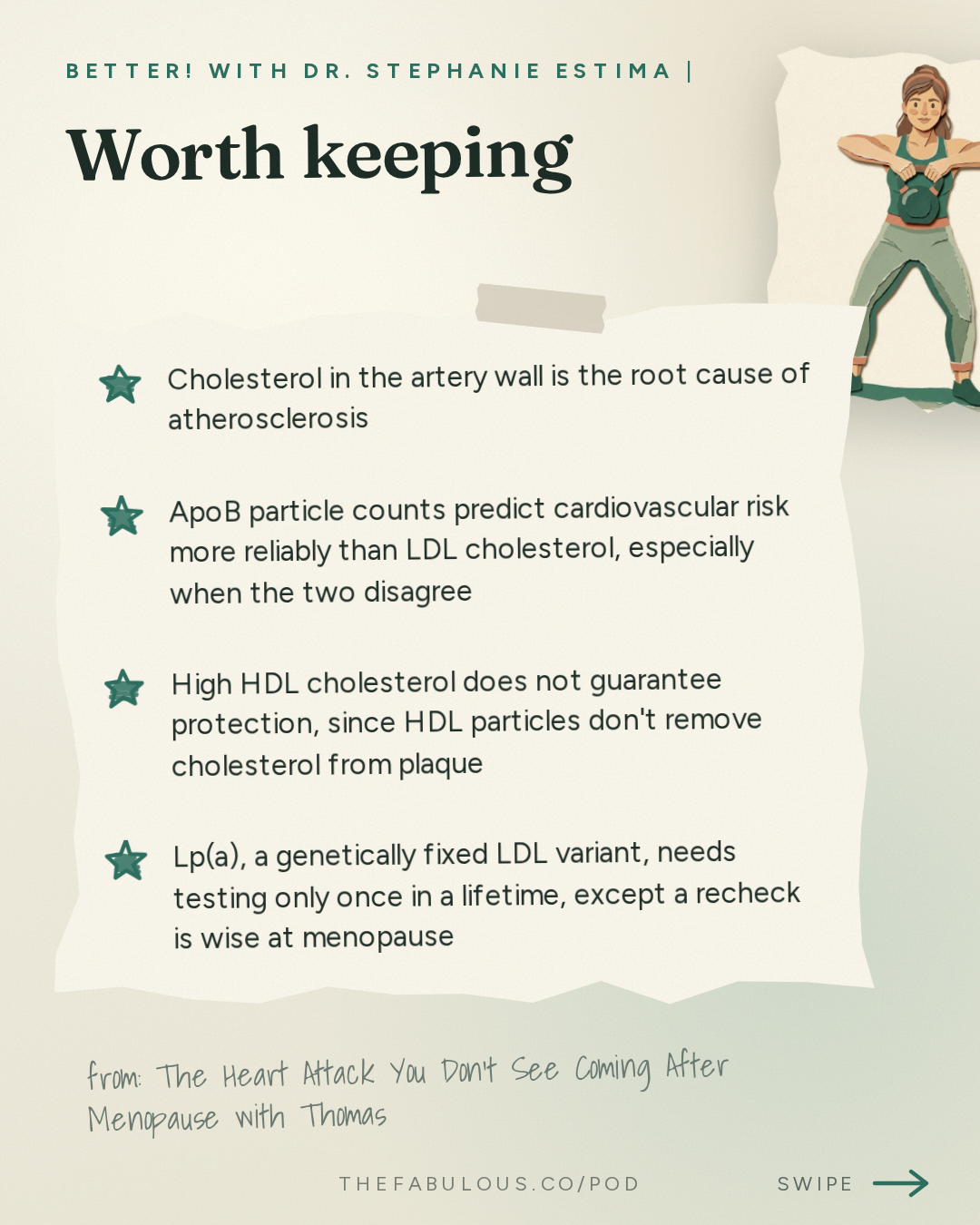
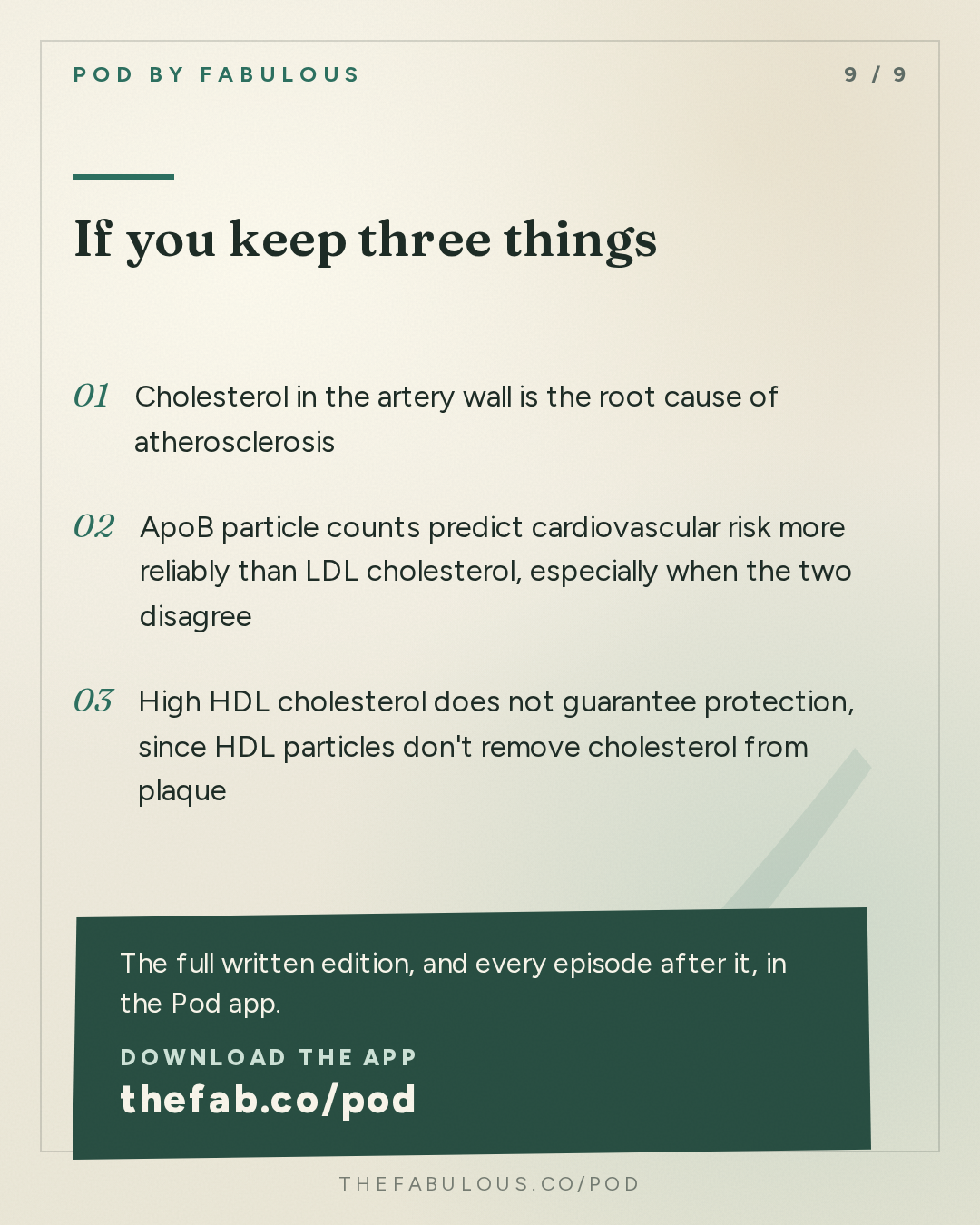
- Cholesterol in the artery wall is the root cause of atherosclerosis
- ApoB particle counts predict cardiovascular risk more reliably than LDL cholesterol, especially when the two disagree
- High HDL cholesterol does not guarantee protection, since HDL particles don't remove cholesterol from plaque
- Lp(a), a genetically fixed LDL variant, needs testing only once in a lifetime, except a recheck is wise at menopause
- Lowering ApoB or LDL cholesterol below 40 mg/dL can shrink existing arterial plaque over several years
The episode in cards

By the numbers
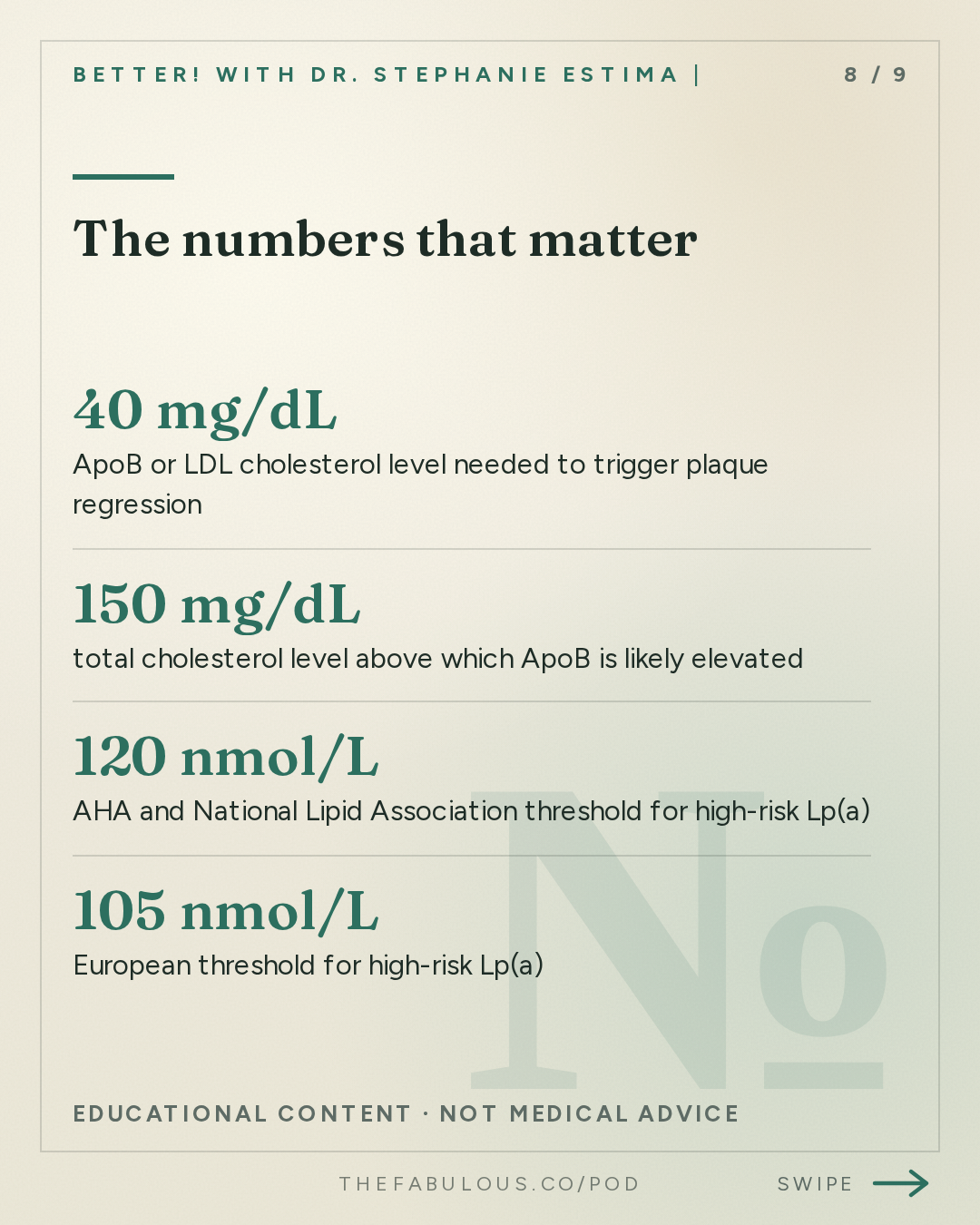
- 40 mg/dL ApoB or LDL cholesterol level needed to trigger plaque regression
- 150 mg/dL total cholesterol level above which ApoB is likely elevated
- 120 nmol/L AHA and National Lipid Association threshold for high-risk Lp(a)
- 105 nmol/L European threshold for high-risk Lp(a)
- 100 mg/dL upper limit of normal for triglycerides
In their words
“The one thing you must have, or there will be no plaque, is cholesterol in your artery wall. Hence, cholesterol is the cause of atherosclerosis.”
“The first symptom of a heart attack is death- Yes, it is ... in, in most cases.”
“Cells all synthesize all the cholesterol they need. Right. They don't need cholesterol”
“That shows you the absurdity of the terms good and bad cholesterol, 'cause in one second, it's in your HDL particles, and 10 seconds later, it's in your LDL particles.”
Protocols
-
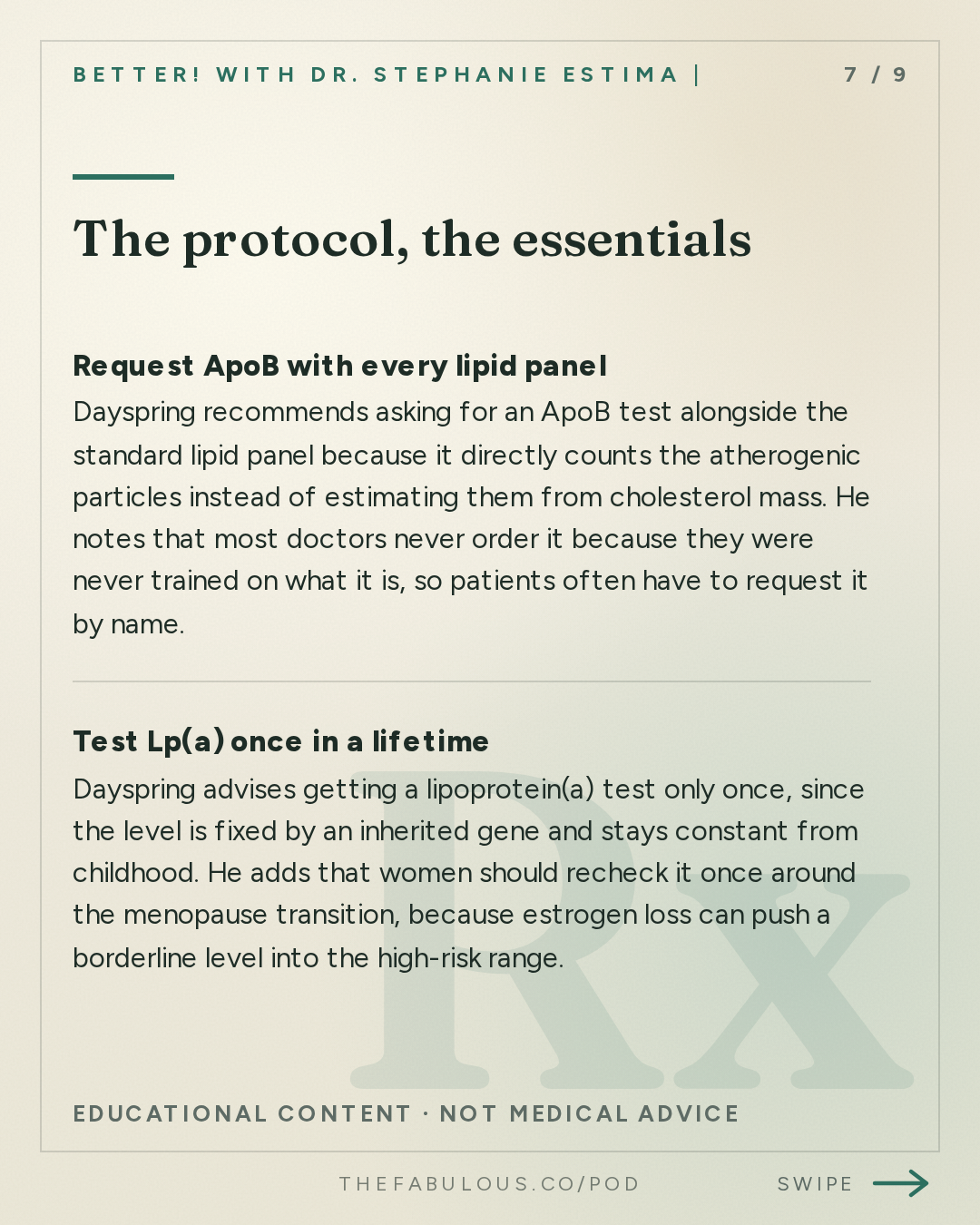
Request ApoB with every lipid panel
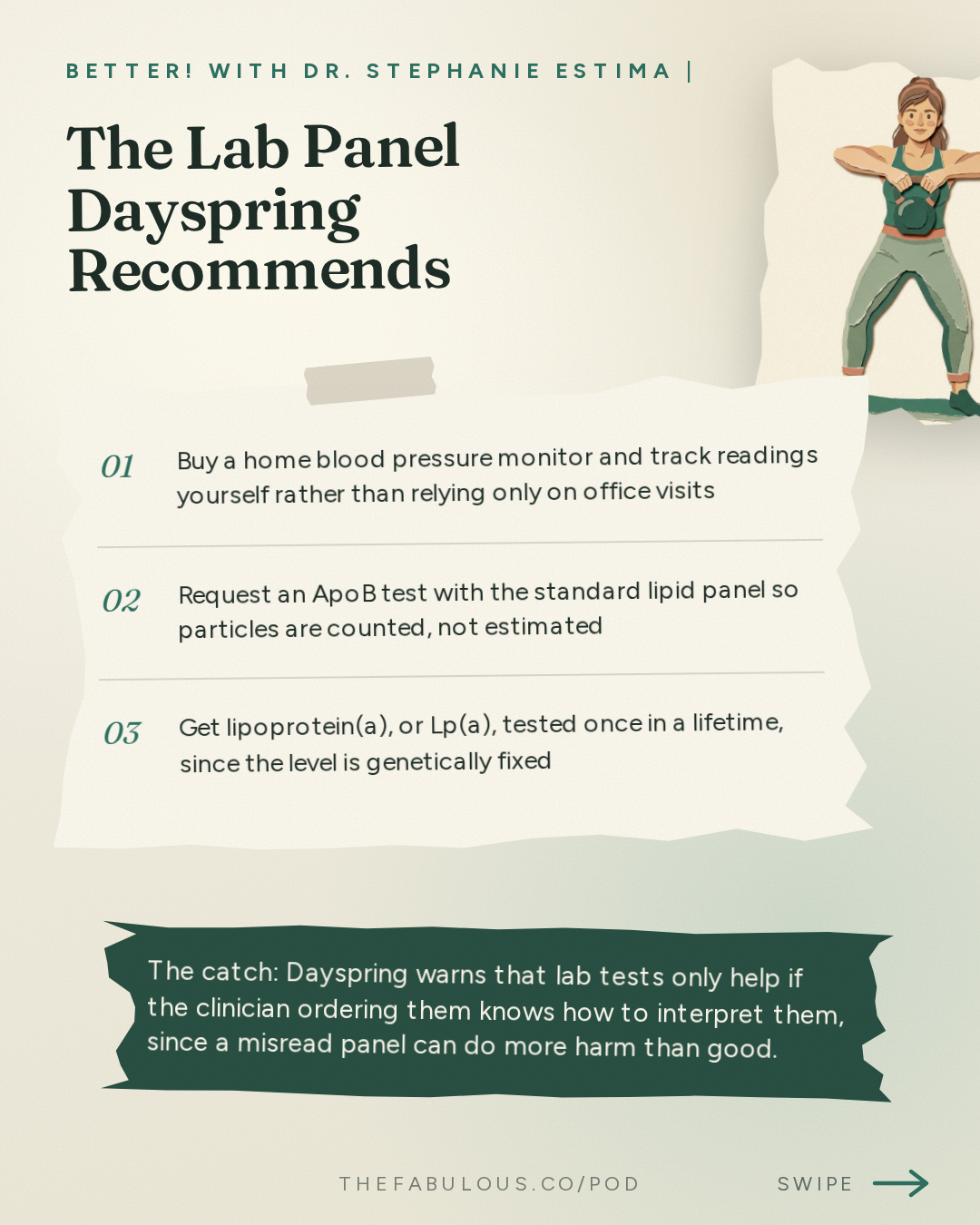
Dayspring recommends asking for an ApoB test alongside the standard lipid panel because it directly counts the atherogenic particles instead of estimating them from cholesterol mass. He notes that most doctors never order it because they were never trained on what it is, so patients often have to request it by name.
Every time lipids are checked
-
Test Lp(a) once in a lifetime
Dayspring advises getting a lipoprotein(a) test only once, since the level is fixed by an inherited gene and stays constant from childhood. He adds that women should recheck it once around the menopause transition, because estrogen loss can push a borderline level into the high-risk range.
Once in a lifetime, with an optional recheck at menopause
-
Build muscle to blunt the post-menopause triglyceride rise
Dayspring tells women to prioritize resistance training because muscle burns the fatty acids that chylomicrons and VLDL deliver, which counters the triglyceride increase that follows estrogen loss. He cautions that starting this earlier in life works better than waiting until the menopause transition.
Ongoing, ideally started well before menopause
-
Target ApoB below 40 to 50 mg/dL to reverse plaque
Dayspring states that lowering ApoB or LDL cholesterol below 40 mg/dL can shrink existing plaque over years, while 50 to 60 mg/dL is usually enough to stop plaque from progressing in lower-risk people. He warns that genetics, not lifestyle alone, determines how far a given patient's ApoB will fall, so some will still need medication.
Sustained, reassessed every few months
Questions this episode answers
What is ApoB and why does it matter more than LDL cholesterol?
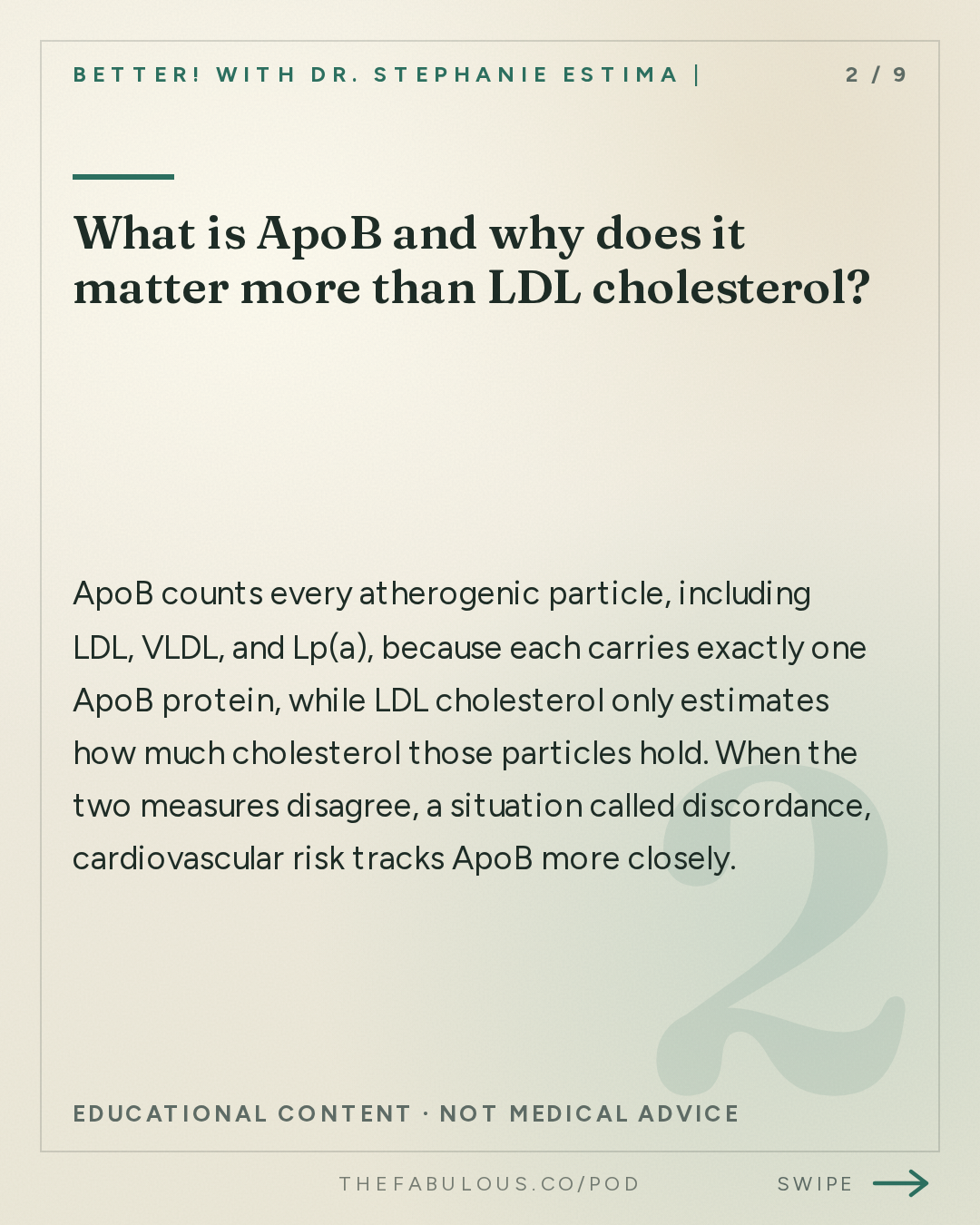
ApoB counts every atherogenic particle, including LDL, VLDL, and Lp(a), because each carries exactly one ApoB protein, while LDL cholesterol only estimates how much cholesterol those particles hold (17:41). When the two measures disagree, a situation called discordance, cardiovascular risk tracks ApoB more closely (22:42).
Does high HDL cholesterol protect against heart disease?
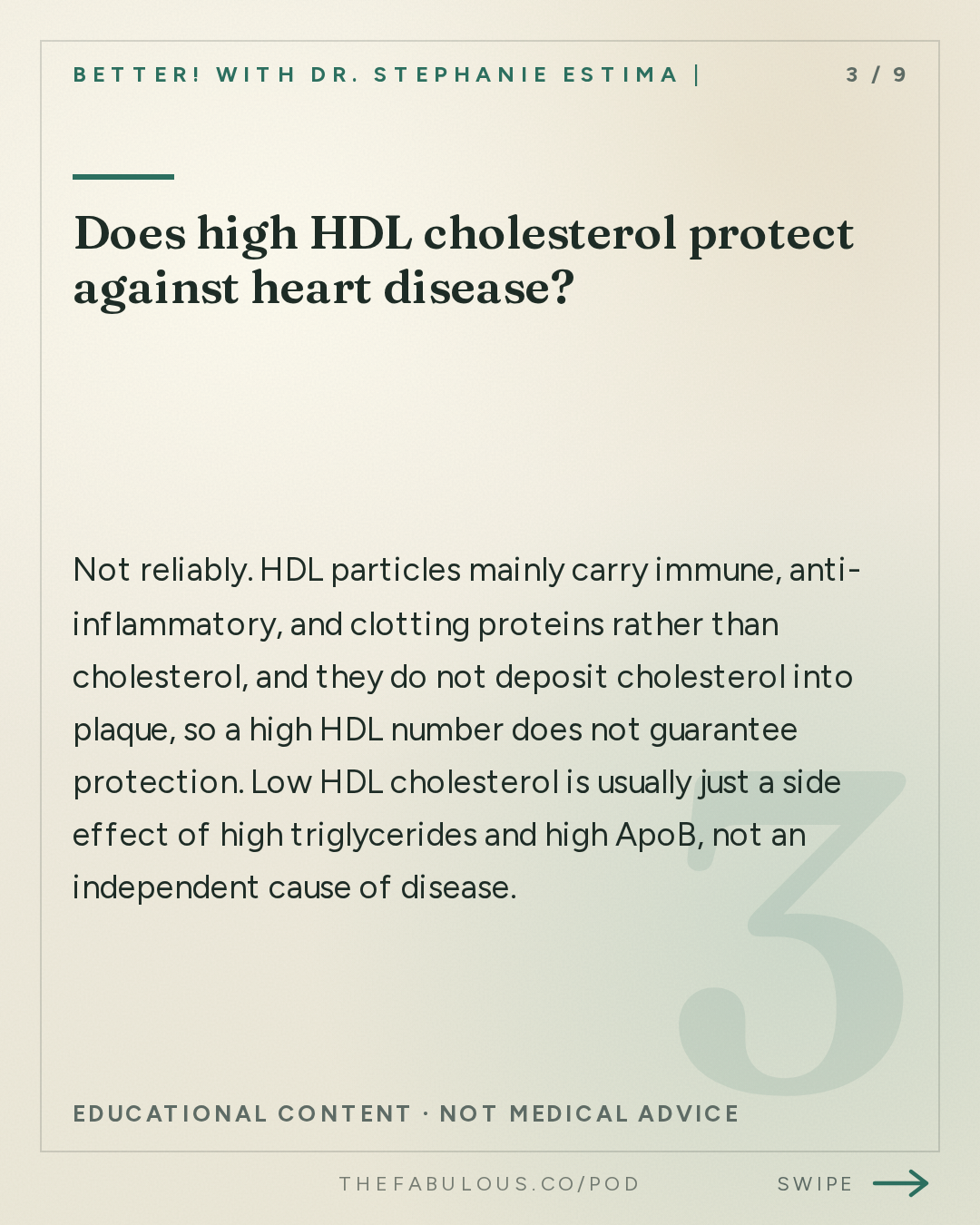
Not reliably. HDL particles mainly carry immune, anti-inflammatory, and clotting proteins rather than cholesterol, and they do not deposit cholesterol into plaque, so a high HDL number does not guarantee protection (28:02). Low HDL cholesterol is usually just a side effect of high triglycerides and high ApoB, not an independent cause of disease (30:57).
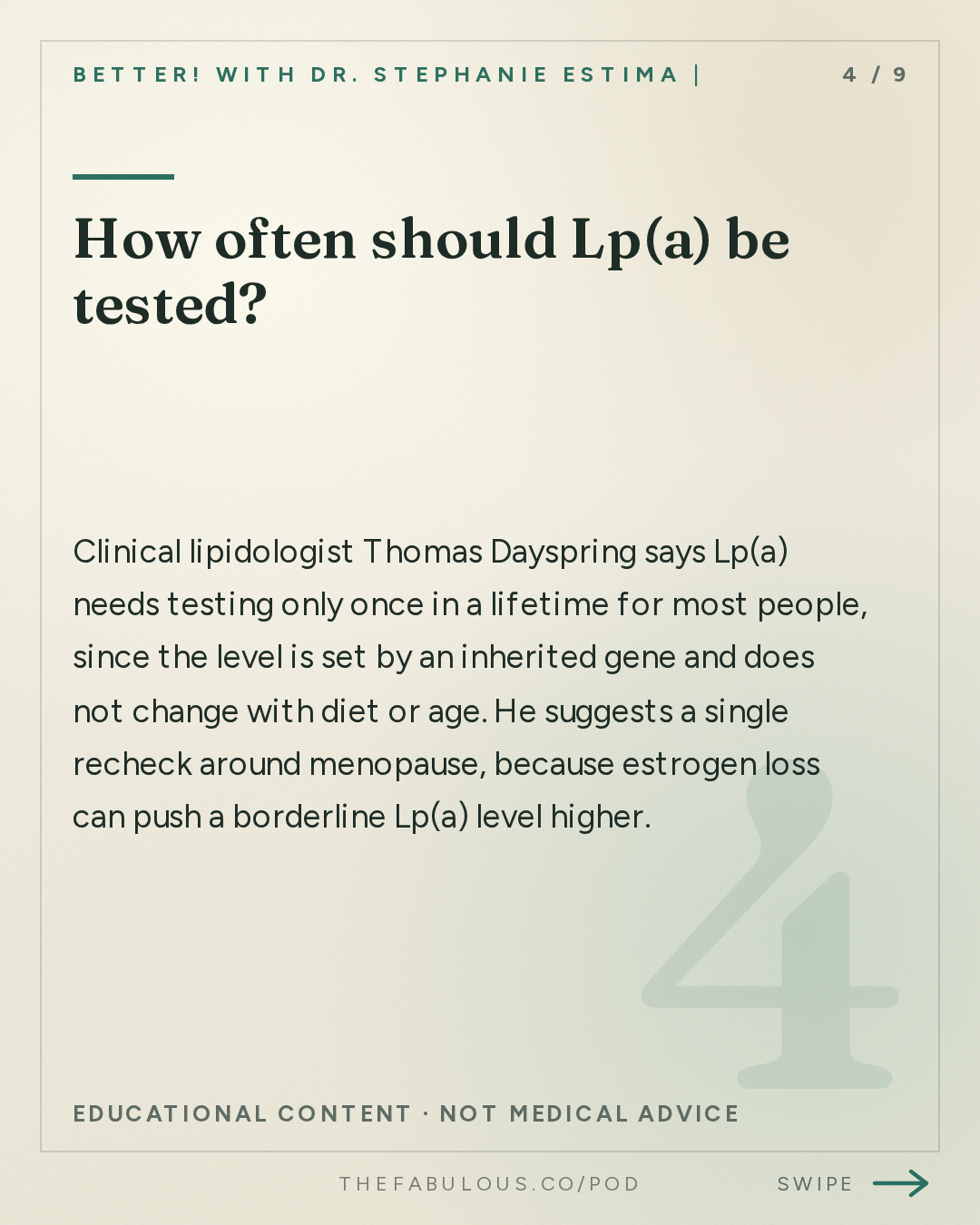
How often should Lp(a) be tested?
Clinical lipidologist Thomas Dayspring says Lp(a) needs testing only once in a lifetime for most people, since the level is set by an inherited gene and does not change with diet or age (85:52). He suggests a single recheck around menopause, because estrogen loss can push a borderline Lp(a) level higher (86:50).
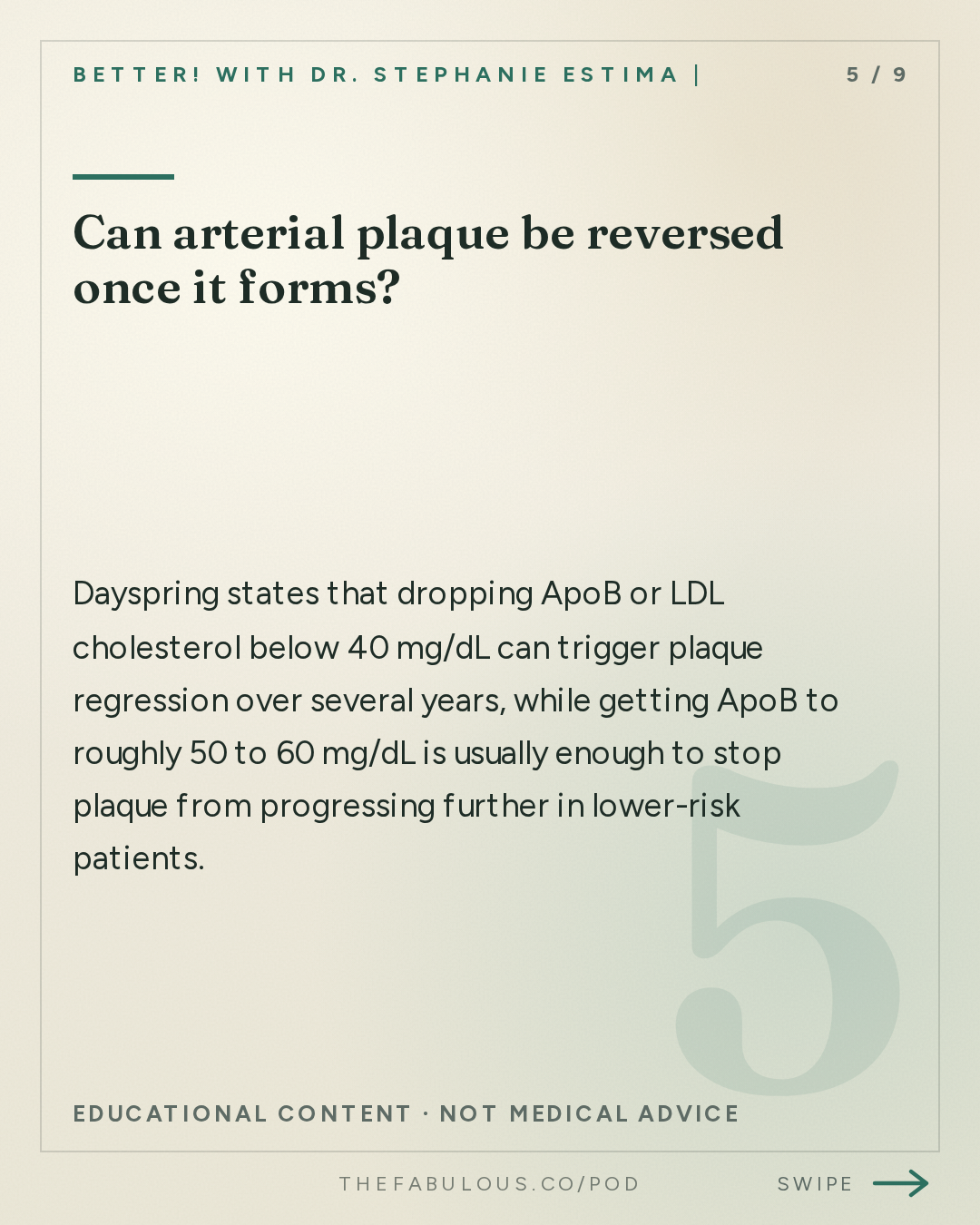
Can arterial plaque be reversed once it forms?
Dayspring states that dropping ApoB or LDL cholesterol below 40 mg/dL can trigger plaque regression over several years, while getting ApoB to roughly 50 to 60 mg/dL is usually enough to stop plaque from progressing further in lower-risk patients (64:29).
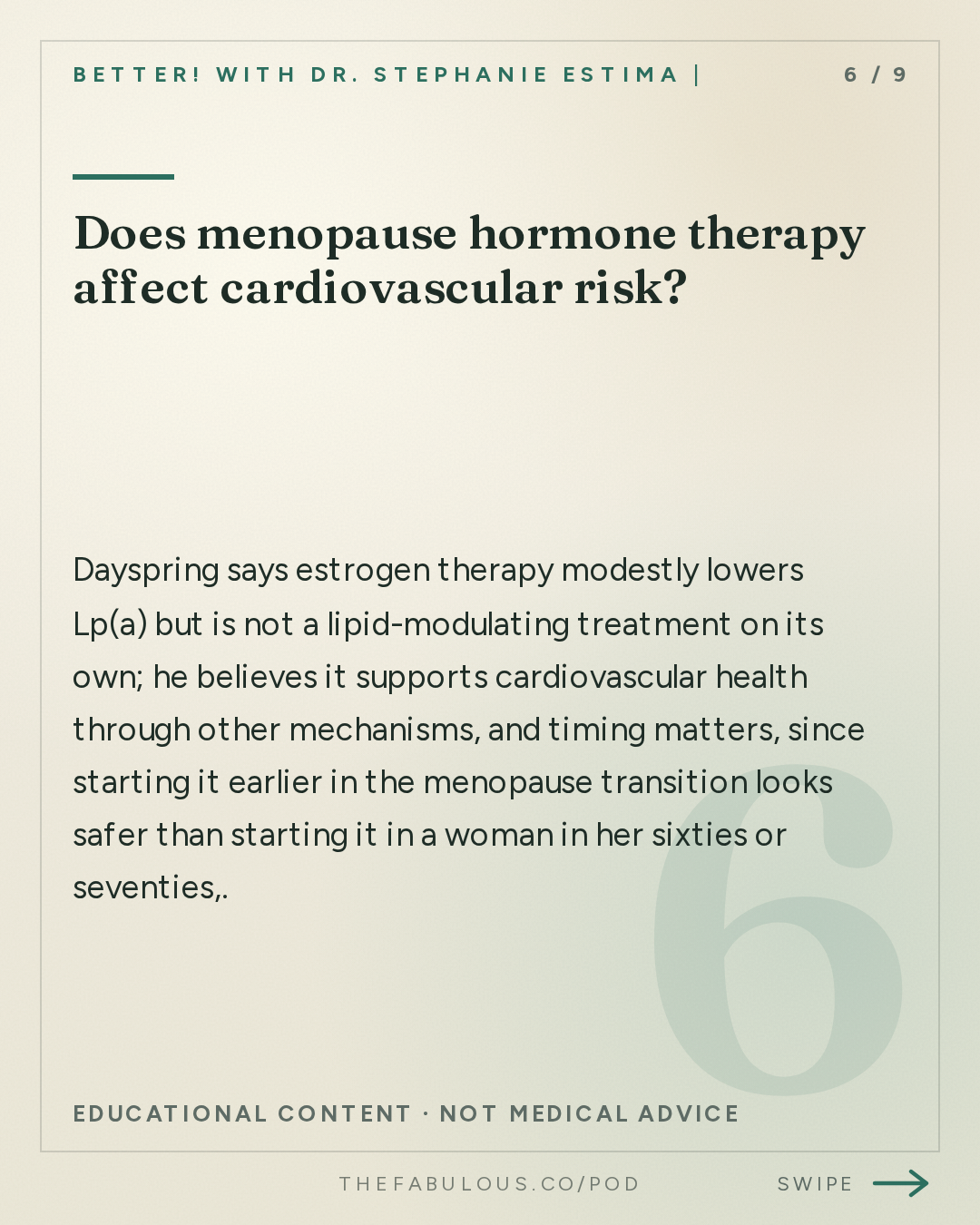
Does menopause hormone therapy affect cardiovascular risk?
Dayspring says estrogen therapy modestly lowers Lp(a) but is not a lipid-modulating treatment on its own; he believes it supports cardiovascular health through other mechanisms, and timing matters, since starting it earlier in the menopause transition looks safer than starting it in a woman in her sixties or seventies (90:20), (92:14).
What lab tests should women ask for to assess heart disease risk?
Dayspring recommends an ApoB test alongside the standard lipid panel, a one-time Lp(a), a hemoglobin A1C, a high-sensitivity CRP, and an omega-3 index, along with tracking blood pressure at home (94:02), (96:34).
The full read, in cards
Go deeper
- Breast arterial calcification studies — found calcifications visible on mammograms predict coronary atherosclerosis, not just breast pathology
- IL-6 antibody trial — showed an antibody that drove C-reactive protein to zero did not reduce heart attacks, indicating CRP is a marker rather than a cause
Mentioned
Thomas Dayspring · Stephanie Estima · ApoB · Lipoprotein (a) · CETP · Journal of Clinical Lipidology · American Heart Association · Menopause Society · National Lipid Association
More from this show and category

Hormones, Deep Sleep and Perimenopause
Neuroscientist Ariel Garten explains why perimenopause fractures deep sleep and how the brain cleans itself during it. She covers cool rooms, screen curfews, pink noise, and timed wake windows that rebuild deep sleep, steady emotional swings, and boost blood flow to the prefrontal cortex.

CBT for Emotional Eating and Body Image
Clinical psychologist Dr. Rachel Goldman explains how to tell physical hunger from emotional eating, and why labeling food 'good' or 'bad' quietly wrecks self-worth. She offers concrete CBT tools: name the feeling, wait ten minutes, plate the food, sit down, and treat a raisin like it deserves your full attention.

Joint Health in Menopause: Train, Don't Avoid
Cartilage is not a tire with a fixed tread, it's a sponge fed by movement, says Dr. Stephanie Estima. Joint cartilage has no blood supply, so compression and release during movement pump nutrients in and waste out. She argues declining estrogen drives what researchers now call Musculoskeletal Syndrome of Menopause, and that strength training, done without ego, protects joints better than avoidance or stretching alone.
Keith Baar's Tendon Isometric Protocol Explained
Tendons stop responding to exercise after about 10 minutes and need six to eight hours before another session helps. Physiologist Keith Baar's fix is the 3LD isometric: a 30-second, low-load hold that lets the tendon 'creep' and spread tension evenly, replacing both heavy lifting and the outdated RICE protocol for injury recovery.
