BETTER! with Dr. Stephanie Estima
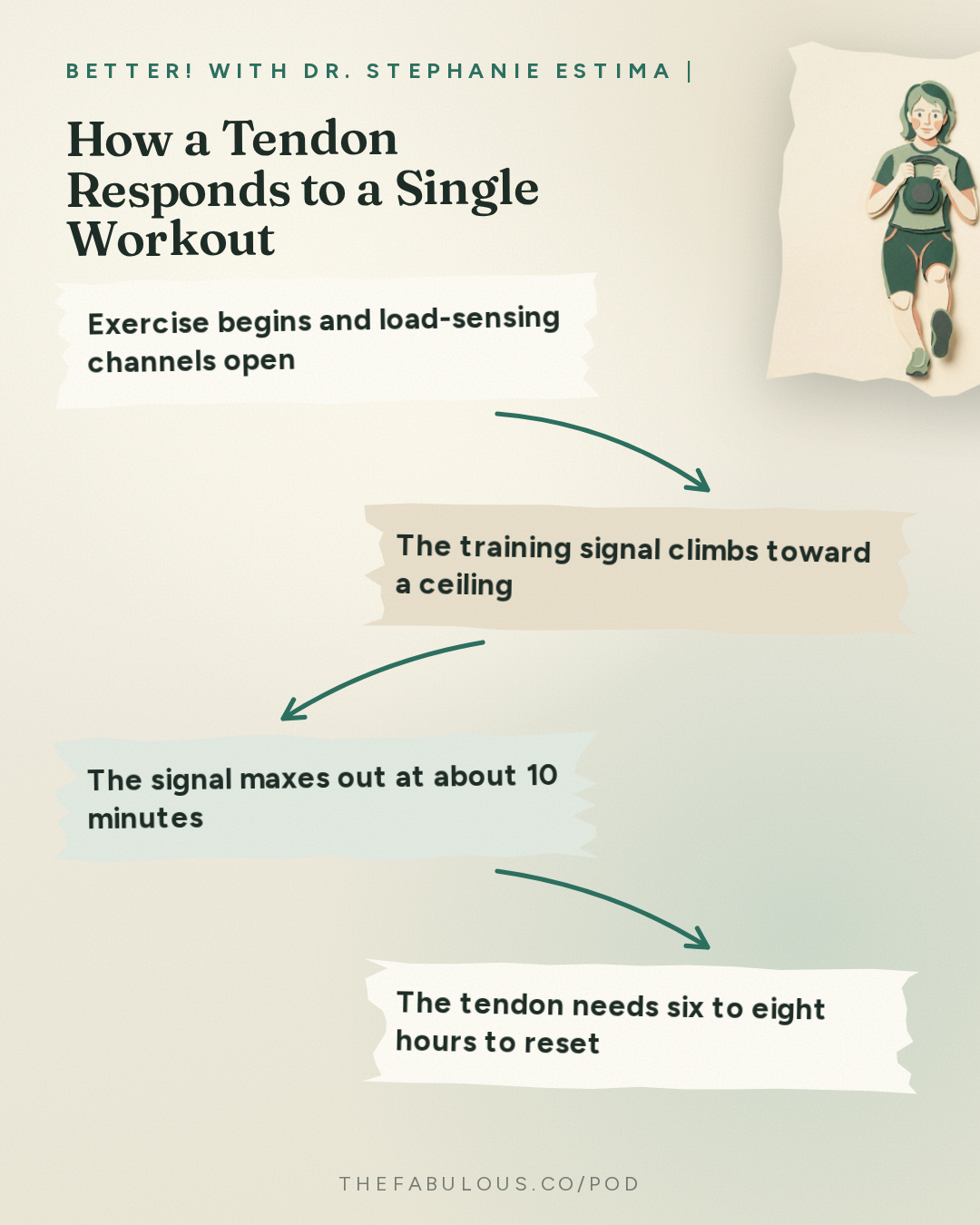
Keith Baar's Tendon Isometric Protocol Explained
Why Your Tendons Get Injured in Perimenopause (and How to Reverse It) with Dr. Keith Baar
▶ Listen to the full episode More from BETTER! with Dr. Stephanie Estima
The brief
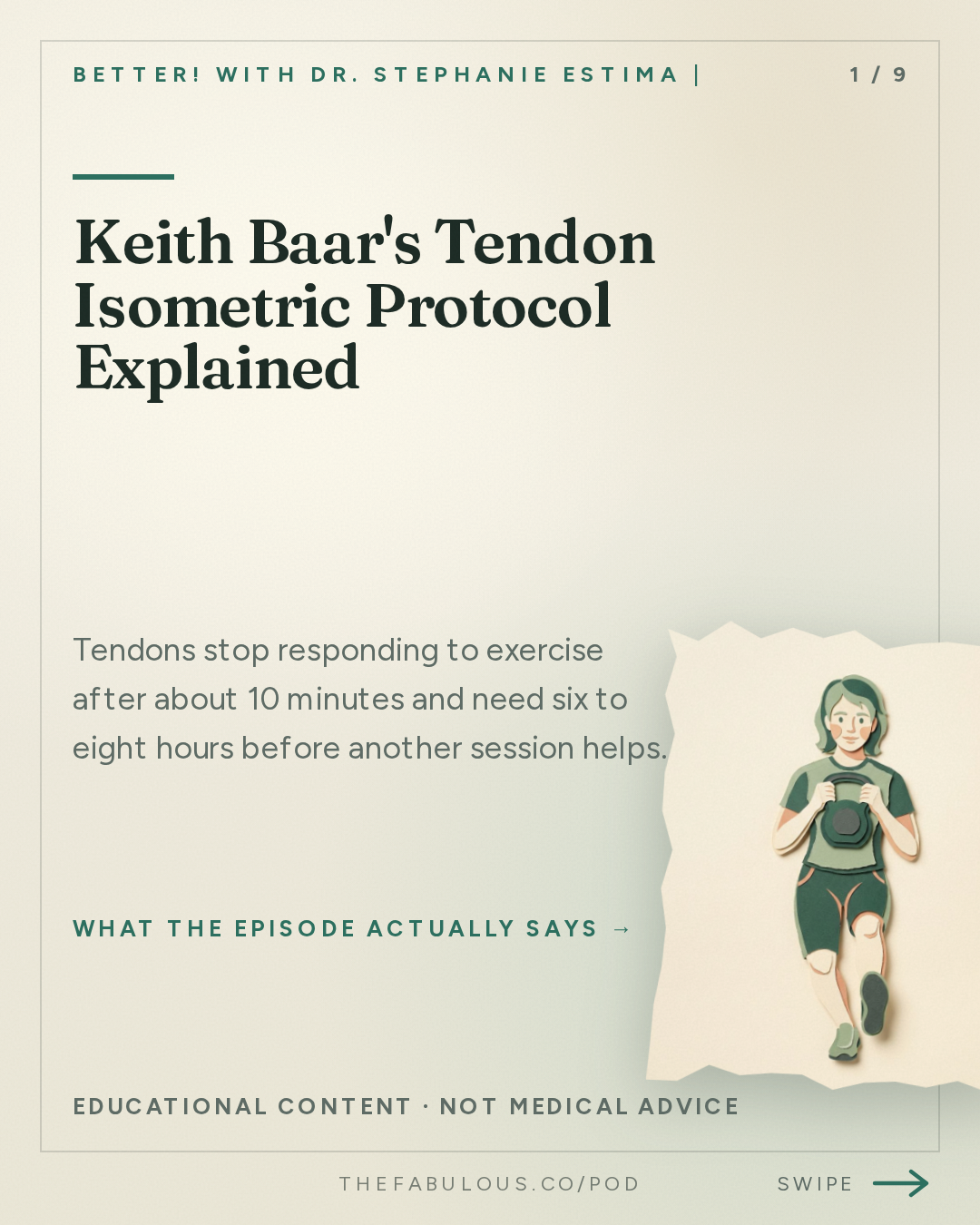
Tendons stop responding to exercise after about 10 minutes and need six to eight hours before another session helps. Physiologist Keith Baar's fix is the 3LD isometric: a 30-second, low-load hold that lets the tendon 'creep' and spread tension evenly, replacing both heavy lifting and the outdated RICE protocol for injury recovery.
Imagine handing an engineer two materials, a wet sponge and a block of granite, and asking her to bolt them together so the joint can carry a person's full body weight, over and over, for seventy years, without failing. She would, in the words of physiologist Keith Baar, 'break out into a cold sweat' (07:14). That absurd assignment is also an exact description of a tendon: the cord that has to attach something soft, the muscle, to something hard, the bone, and keep doing it for a lifetime.
Baar runs the Functional Molecular Biology Laboratory at the University of California, Davis (01:56), and for much of his career he trained athletes the way almost everyone still does: heavier is better. On this episode of BETTER! with Dr. Stephanie Estima, he opens by taking that back. "Heavy lifting is good for tendons... that, we've changed our mind about" (00:00), he says, adding that working with elite athletes had baked the assumption in before anyone tested it. What follows is an argument that muscle and tendon need almost opposite instructions, even though they share a limb.
A tendon connects muscle to bone and transmits force. A ligament connects bone to bone and resists unwanted motion, which is why a healthy ligament should be as stiff as possible while a tendon should not (08:12). Problems show up at the junctions.
"We pull muscles when the tendon is stiffer than the muscle is strong." — Keith Baar [09:38]That is Baar's compact explanation for why sprinters tear hamstrings: years of stiffness-building training leave the tendon unable to stretch through an awkward stride, so the muscle has to stretch instead, while contracting. Something has to give, and it is the muscle.
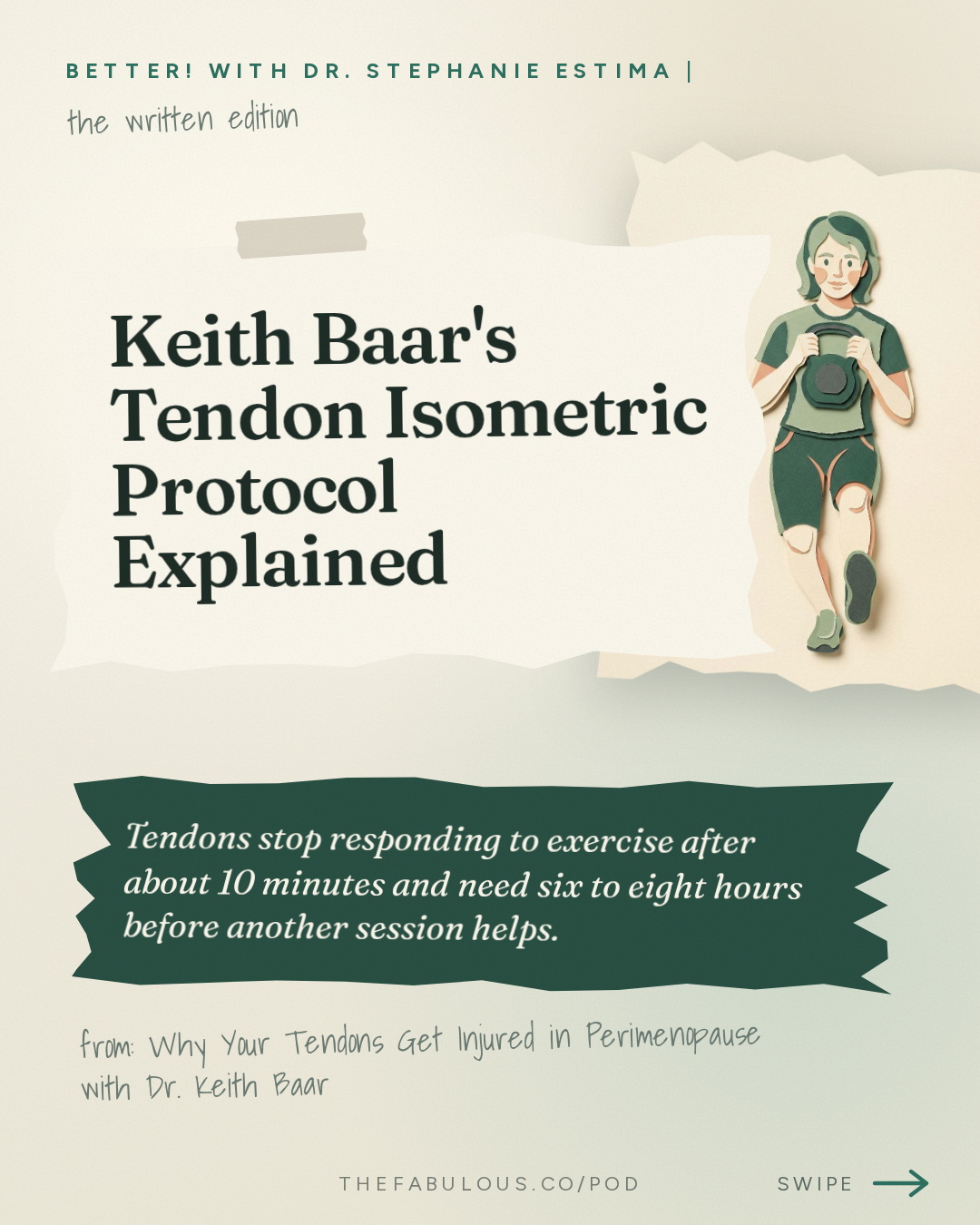
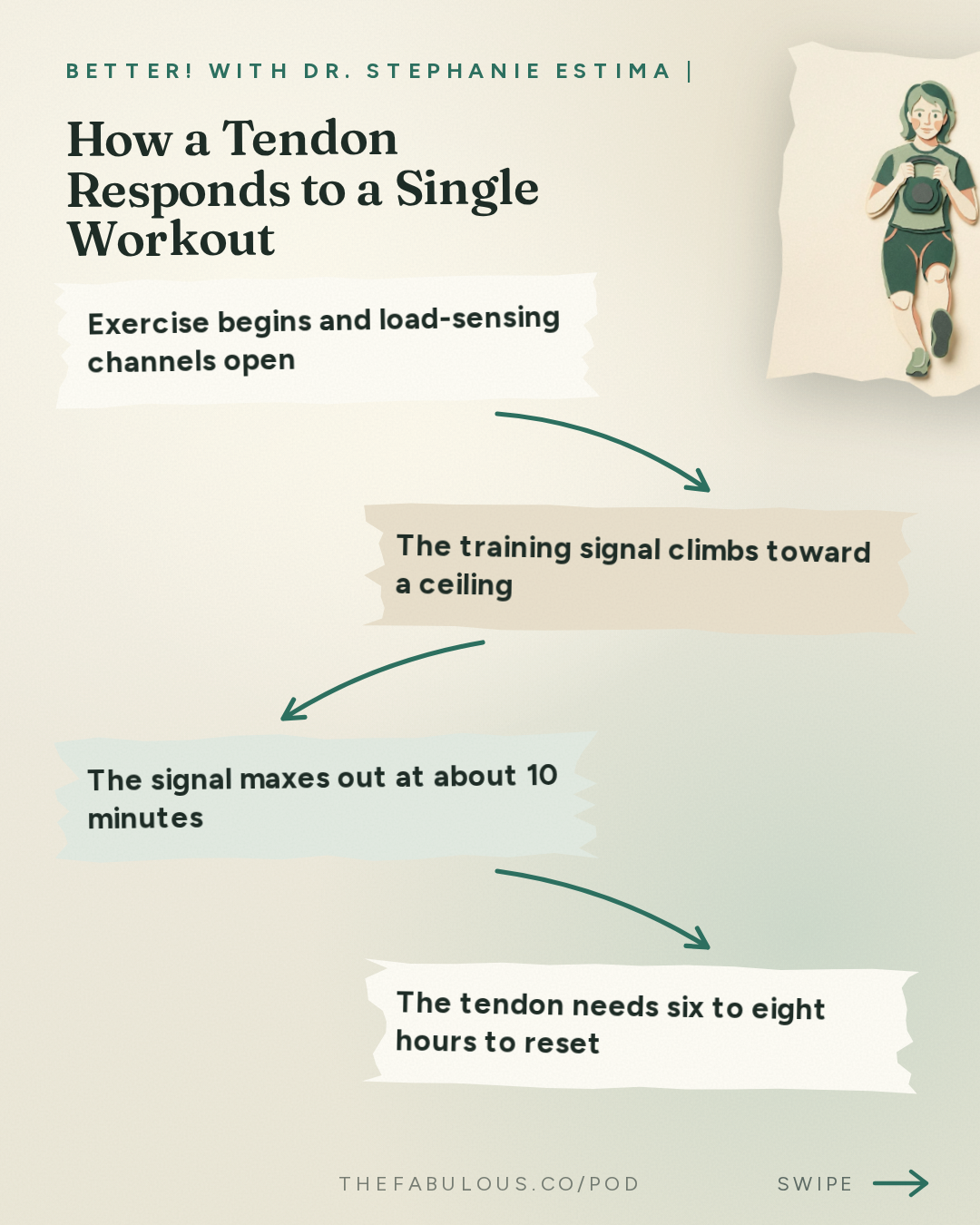
The more surprising finding concerns dosage. Muscle responds to exercise for as long as someone keeps lifting or running. Tendon, bone, and ligament do not. Baar's lab has found that connective tissue gets a maximal training signal within about ten minutes, no matter how many repetitions happen inside that window, and nothing extra accrues afterward. Bone is even quicker: roughly 40 loading repetitions, like jump landings, max out its benefit, though the fewest loads Baar has seen in human studies come from a Japanese group in which young women jumped as high as they could four times, three times a week, and still raised bone mineral density over time (15:56, 16:28). Everything done after those thresholds still helps the heart and the muscles. For the tendon, it is just wear and tear.
"Our connective tissues... they stop getting the positive signal after about 10 minutes, and then what happens is everything else is wear and tear." — Keith Baar [16:28]
Why does the signal cap out so fast? Baar compares it to smell. Walk into a smoky room and the nose registers it instantly, then stops registering it within a minute, because the receptors that sense change have already opened and saturated (27:46). Tendon cells work the same way: they sense change, not steady load, so once their channels are full, adding more exercise just overflows a tub that is already brimming (28:44). The system needs about six to eight hours to drain before it can respond to a fresh stimulus (30:08). That gives training a variable most people never program: architecture, meaning how the same total workout is arranged in time. Split one hour of exercise into two 30-minute sessions six to eight hours apart, and the tendon gets two full ten-minute doses instead of one, for identical total work (17:58).
The Hold That Hurts for a Reason
This is where isometrics, holds in which a muscle contracts without changing the joint angle, enter the picture, and where the familiar misery of a wall sit gets an explanation. A muscle alone can hold a position almost without effort, which is why rigor mortis, Baar points out, locks a dead muscle in full contraction at no energy cost (35:50). The burn comes from the tendon, which goes through a process called creep: under sustained load, the strongest, stiffest part of the tendon lengthens first, handing the load to the next-strongest section, and so on, until a long enough hold has spread tension evenly across the whole structure (36:09). Fast, explosive movements, by contrast, load only the tendon's strongest pockets for a fraction of a second and never recruit the rest (33:28).
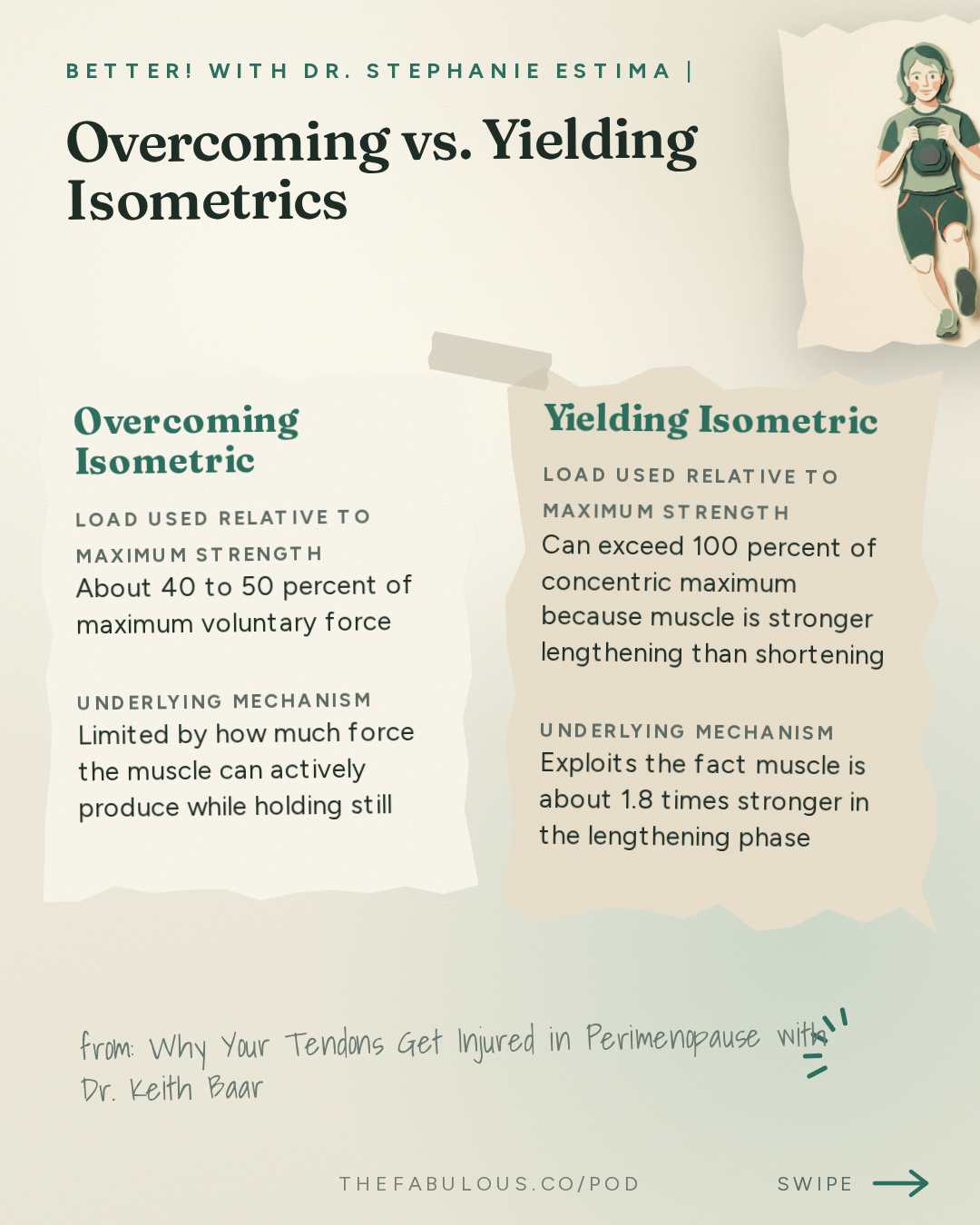
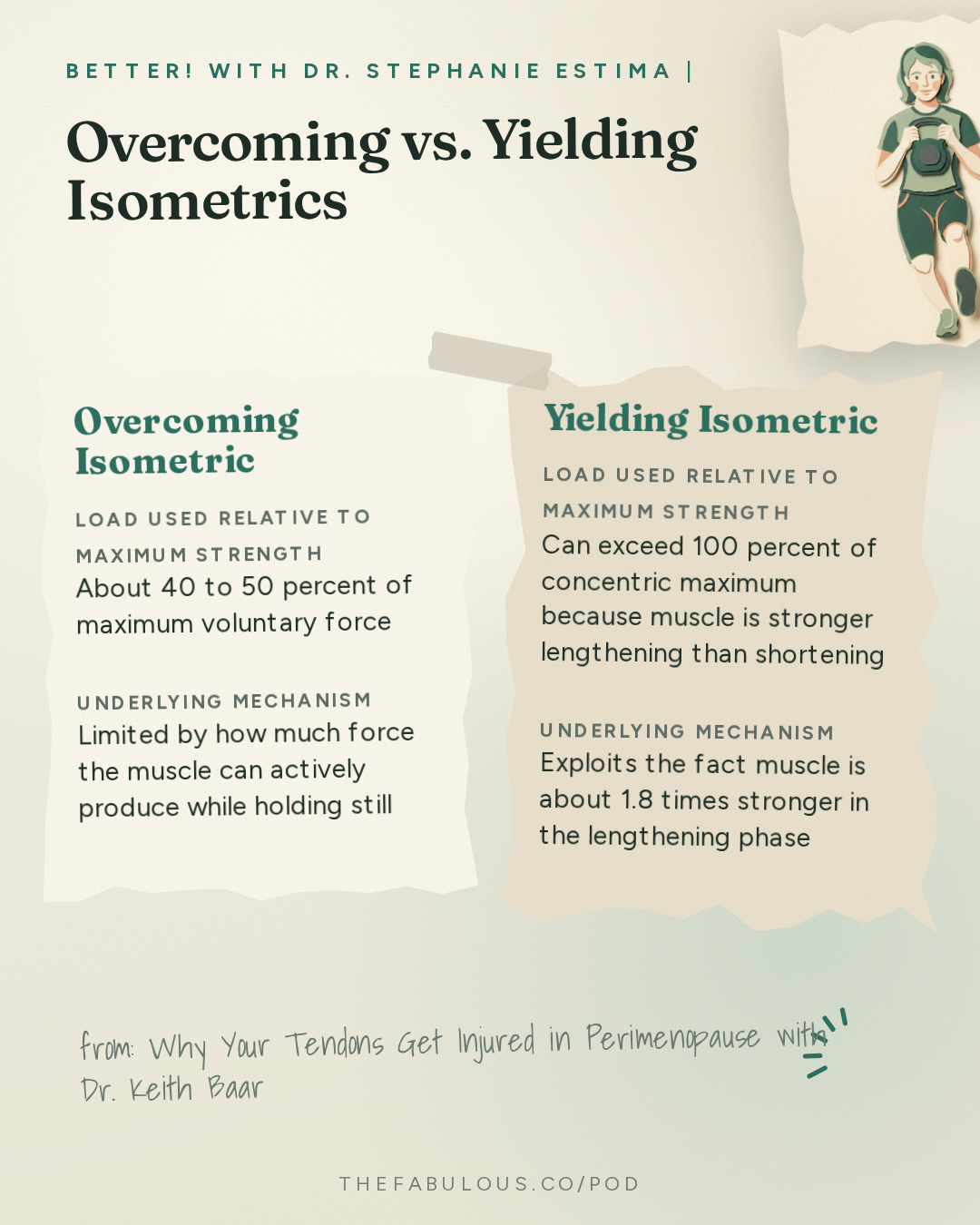
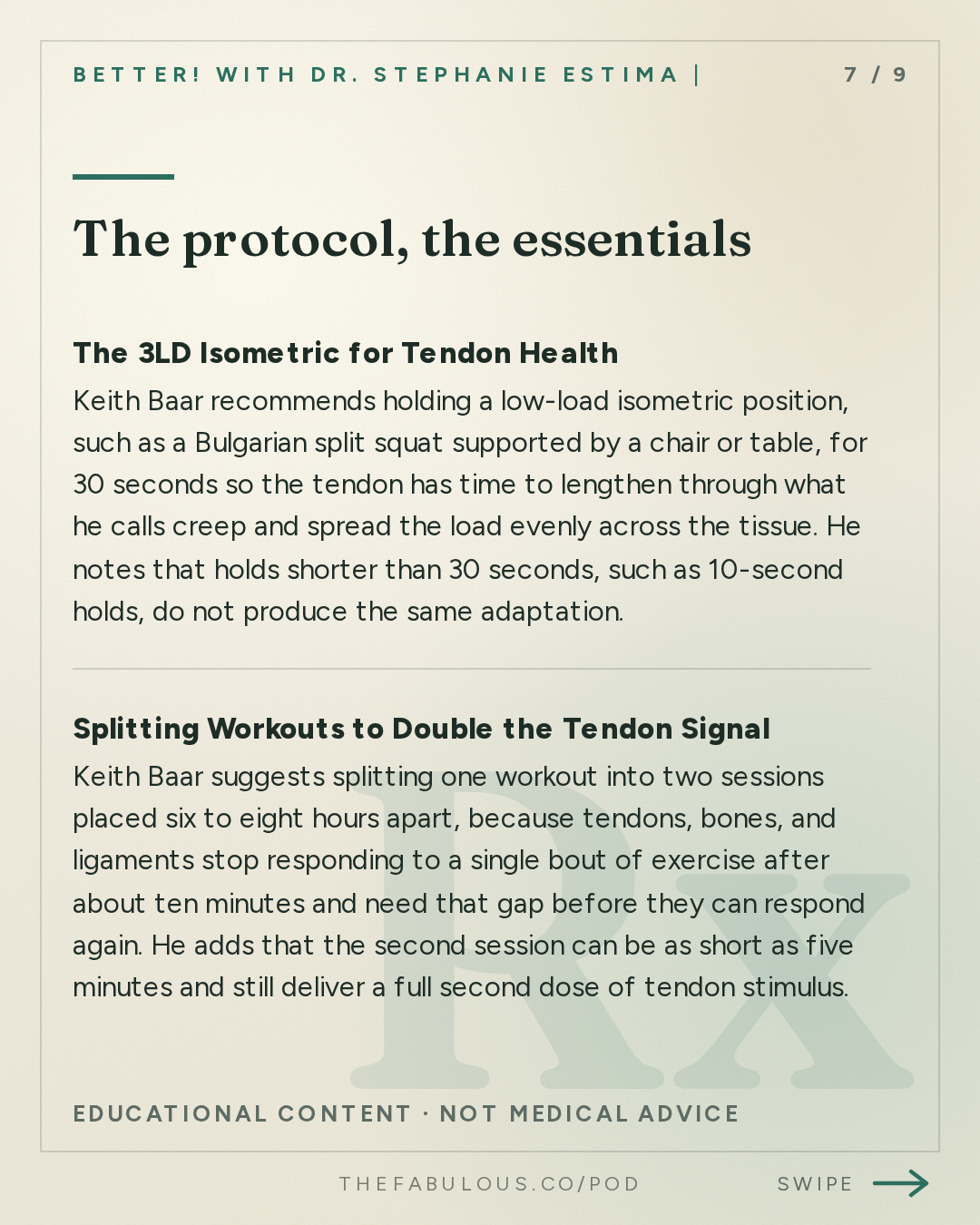
Baar's prescription is what he calls the 3LD protocol: low load, long duration. Four 30-second holds produce measurably better tendon adaptation than twelve 10-second holds at the same total load of 120 seconds (39:20). Below 30 seconds, the creep does not have time to spread through the tissue. He distinguishes two variants. An overcoming isometric pushes against an immovable resistance and is capped by how much force the muscle can actively generate; Baar now uses it at only 40 to 50 percent of maximum strength, coached by the cue "feel tension, not pain," or 'ooh,' not 'ow' (48:50). A yielding isometric, by contrast, controls a weight on the way down and can exceed full strength because muscle is about 1.8 times stronger lengthening than shortening (48:04); it was the old high-load approach to tendon rehab and is no longer Baar's first choice, though combining the two, light isometrics most days and one heavy session a week, produced an additive gain in grip strength in his studies with rock climbers (51:42).
"You don't win by getting the most load through your tendon. You win by holding that ooh state for longer period of time." — Keith Baar [77:10]
Hormones Write the Injury Report
The conversation's other thread is why rest, the default advice for an injured tendon, often backfires. A classic Japanese study, led by a researcher named Hayashi, rerouted load around an intact tendon using a wire and found that the unloaded tissue developed five times as many cells, with smaller, disorganized collagen that never lined up in one direction, the molecular signature of what gets called a scar (58:15). That is Baar's case against RICE, the rest-ice-compression-elevation protocol. "Rest" and "compression" together immobilize the tendon, and immobilized collagen grows mechanically inferior even without new damage (61:35). His replacement pairs two movements: a slow, rhythmic flex-and-extend to pump swelling fluid out of the tissue, and a slow-ramped isometric hold, built up over three to five seconds instead of snapped on suddenly, because sudden load, or 'jerk,' is usually what caused the injury in the first place.
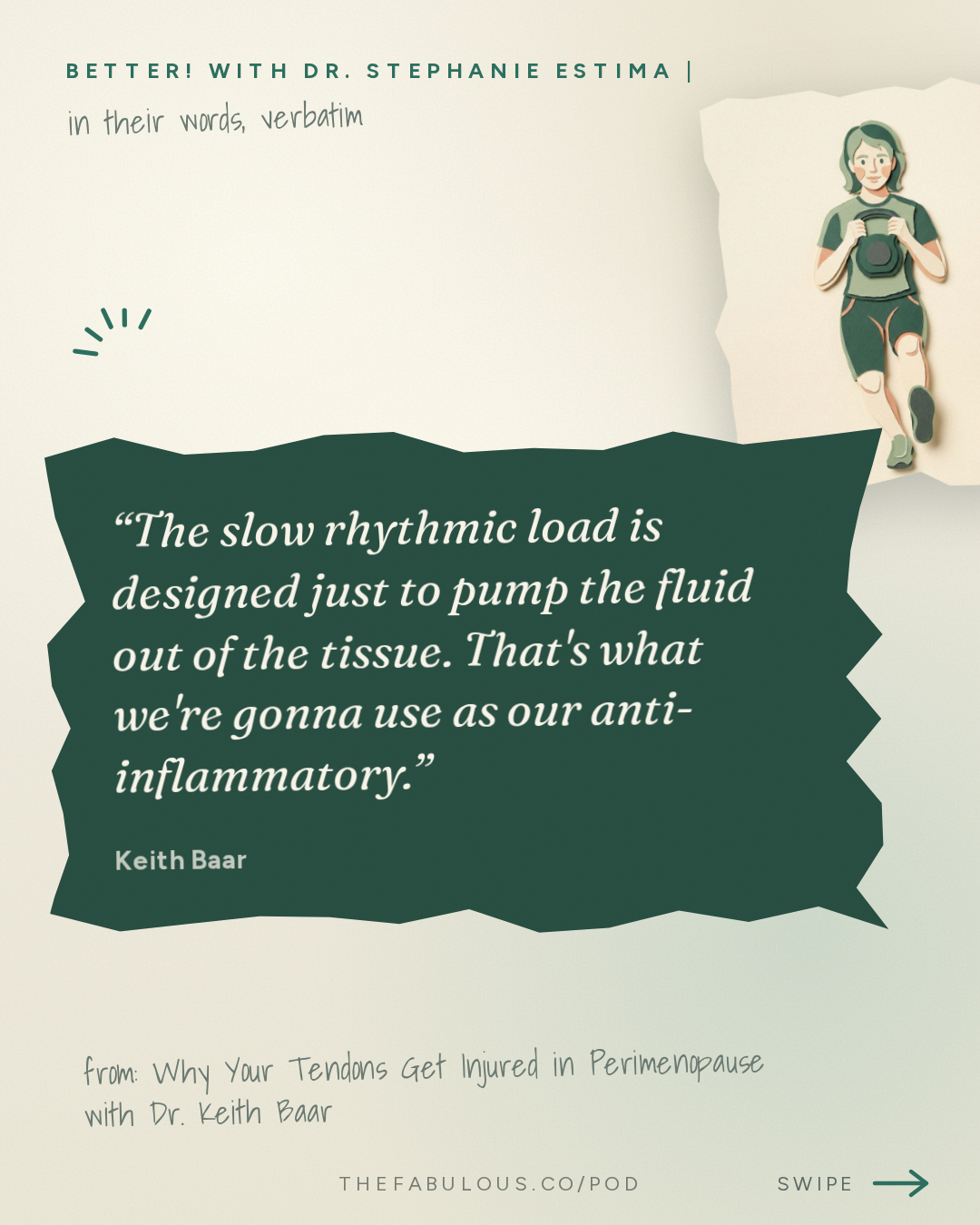
"Slow rhythmic load is designed just to pump the fluid out of the tissue. That's what we're gonna use as our anti-inflammatory." — Keith Baar [64:54]
Sex differences run through all of it. Baar's research shows estrogen inhibits the enzyme that cross-links collagen, which lowers tendon and ligament stiffness; testosterone does the opposite (77:55-78:25). The tradeoff cuts both ways: women get about four times more ACL ruptures than men in the same sport, but 70 percent fewer muscle pulls, because a looser tendon is less likely to outpace the muscle's strength (79:51). The ACL risk is not steady across a cycle. Knee laxity, how far the joint shifts under a standard test, rises measurably around ovulation, and roughly 70 percent of ACL ruptures cluster around that ovulatory or luteal estrogen surge (80:59). Illness alone, Baar's team has newly found, can also acutely loosen the knee for a few days (85:00), and oral contraceptives, by smoothing out the estrogen surge, are associated with about a 20 percent lower ACL rupture risk (86:48). Perimenopause complicates the picture further: as estrogen falls and testosterone's relative influence rises, tendons can stiffen in ways that mirror what happens to women on aromatase inhibitors for breast cancer, who commonly report new tendon and joint pain (81:00-81:34).
Two smaller claims round out the hour. Heels, Baar says, reproduce the knee position associated with osteoarthritis, a joint disease marked by cartilage breakdown (00:44). And BPC-157, a peptide popular in longevity circles, showed no direct positive effect on tendon or ligament tissue in his lab's engineered models, and sometimes made them worse (02:49). Neither claim is the headline, but both fit the episode's real argument: tendons are not small, dumb versions of muscle. They run on their own clock, their own dose, and their own chemistry, and training them well means learning to listen for the difference.
Ask this episode anything
Pod's AI answers from the episode itself, with the minute mark so you can hear it yourself.
Or start with one of these
Ask this episode
Pod's AI listens to the whole episode to answer, and points you to the minute it comes from.
The rest of this answer, and any question after it
Answers come from the episode itself, never from a summary of it.
ContinueKey takeaways
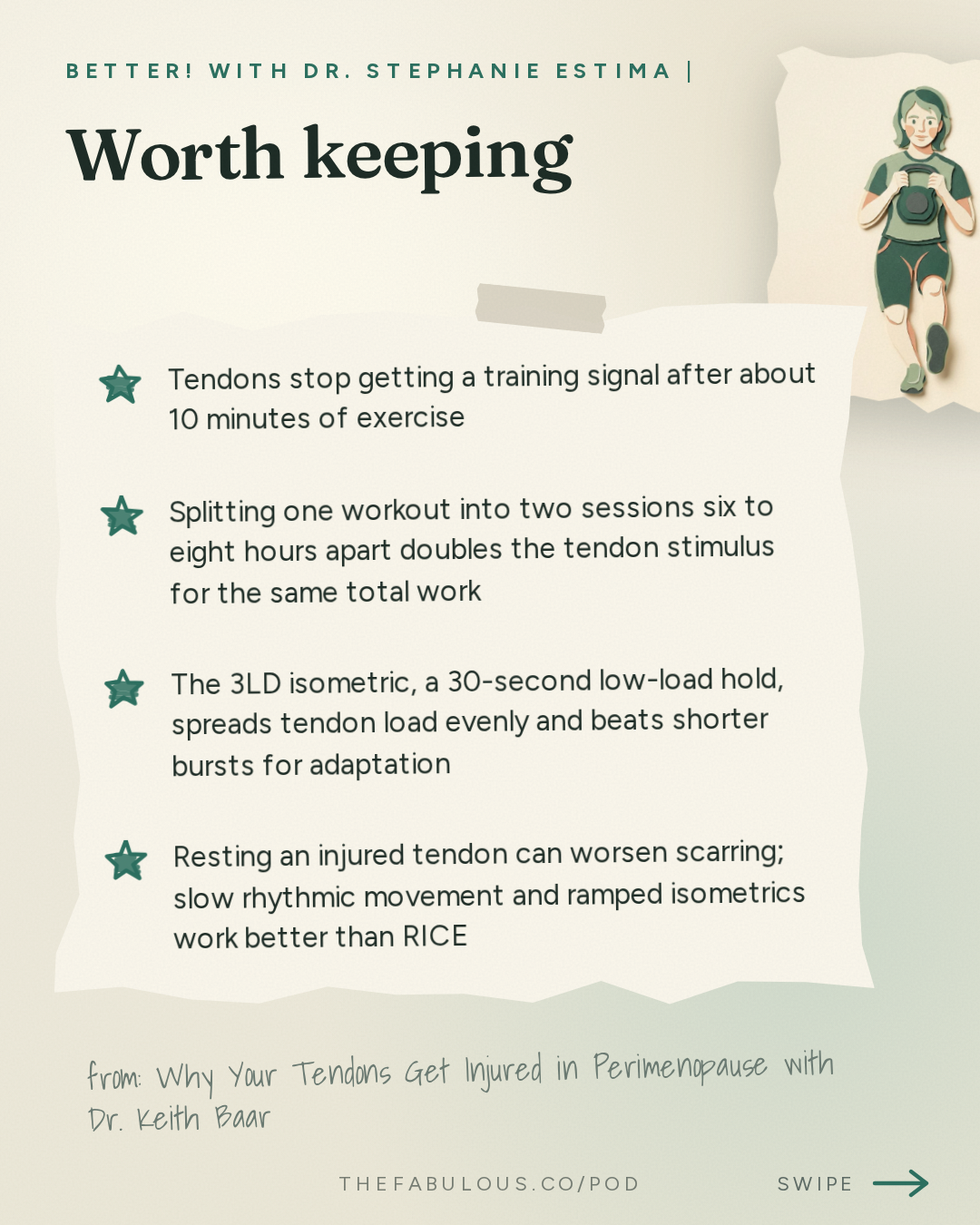
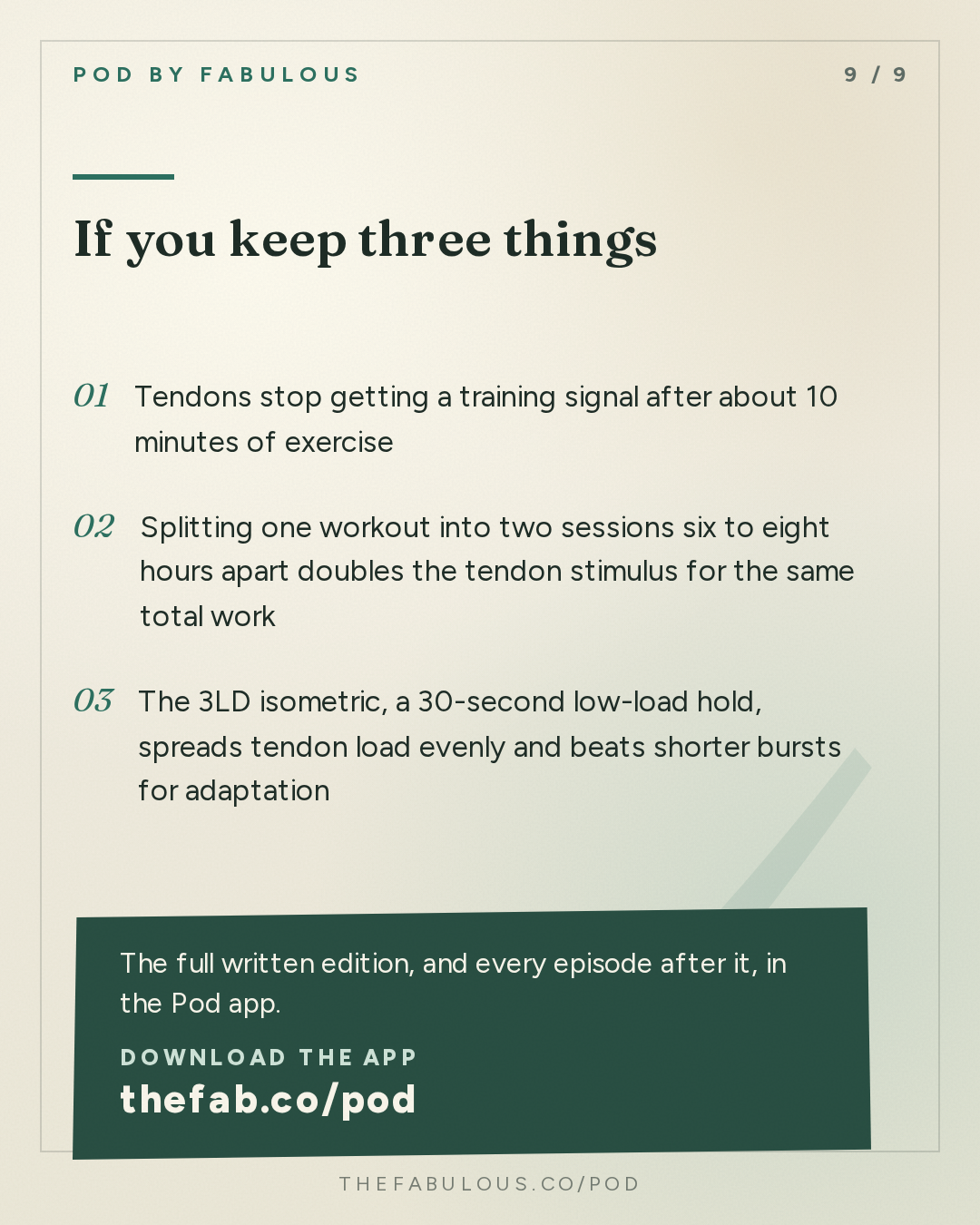
- Tendons stop getting a training signal after about 10 minutes of exercise
- Splitting one workout into two sessions six to eight hours apart doubles the tendon stimulus for the same total work
- The 3LD isometric, a 30-second low-load hold, spreads tendon load evenly and beats shorter bursts for adaptation
- Resting an injured tendon can worsen scarring; slow rhythmic movement and ramped isometrics work better than RICE
- Estrogen loosens tendons by blocking a collagen crosslinking enzyme, raising women's ACL rupture risk around ovulation
The episode in cards
By the numbers
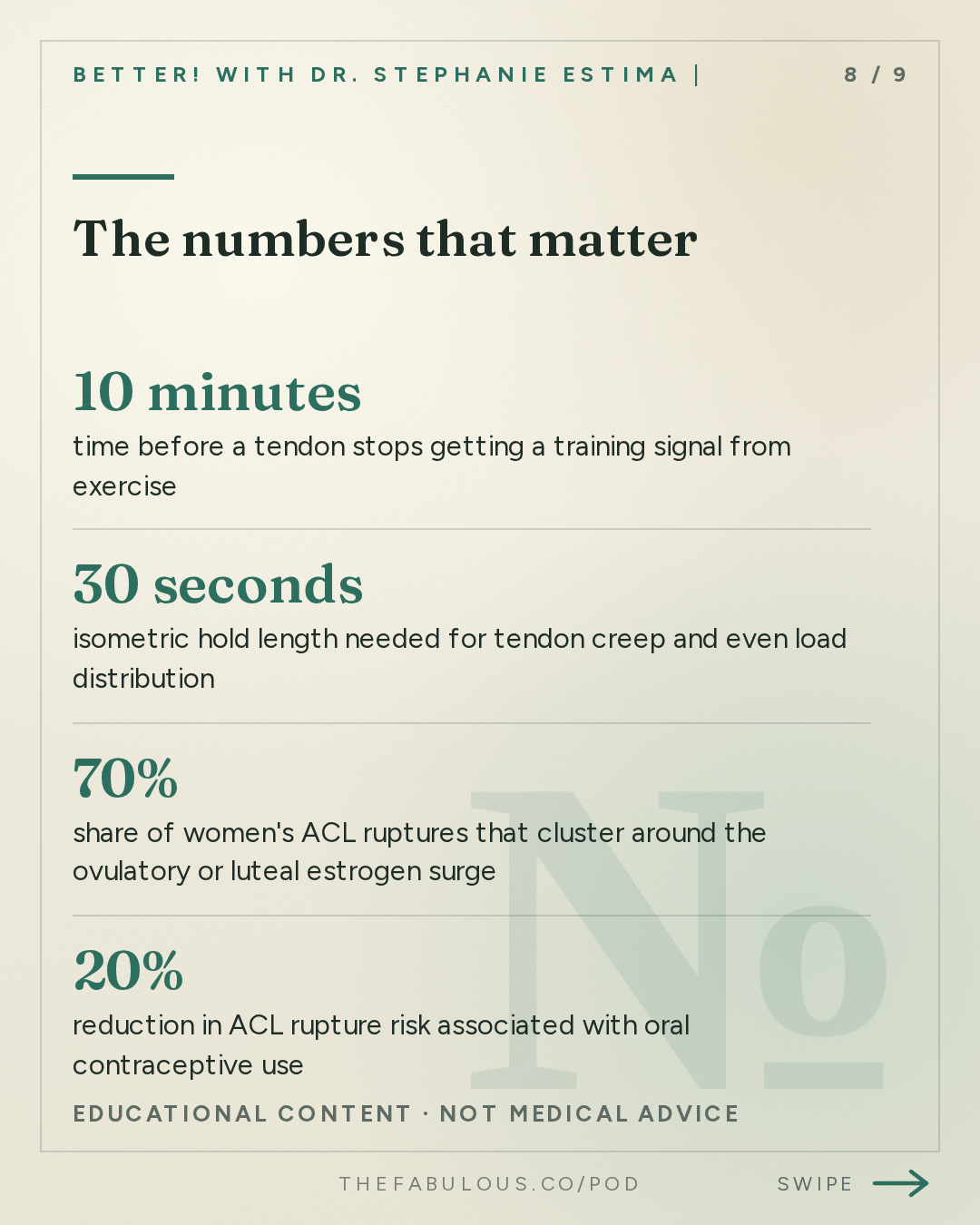
- 10 minutes time before a tendon stops getting a training signal from exercise
- 30 seconds isometric hold length needed for tendon creep and even load distribution
- 70% percent share of women's ACL ruptures that cluster around the ovulatory or luteal estrogen surge
- 20% percent reduction in ACL rupture risk associated with oral contraceptive use
In their words
“We pull muscles when the tendon is stiffer than the muscle is strong.”
“So if I do the same amount of work, but I split it into two sessions that are separated by six to eight hours, I'm going to get different stimuli for my tendons, ligaments, and all of those other structures.”
“The slow rhythmic load is designed just to pump the fluid out of the tissue. That's what we're gonna use as our anti-inflammatory.”
“You don't win by getting the most load through your tendon. You win by holding that ooh s- that ooh state for longer period”
Protocols
-
The 3LD Isometric for Tendon Health
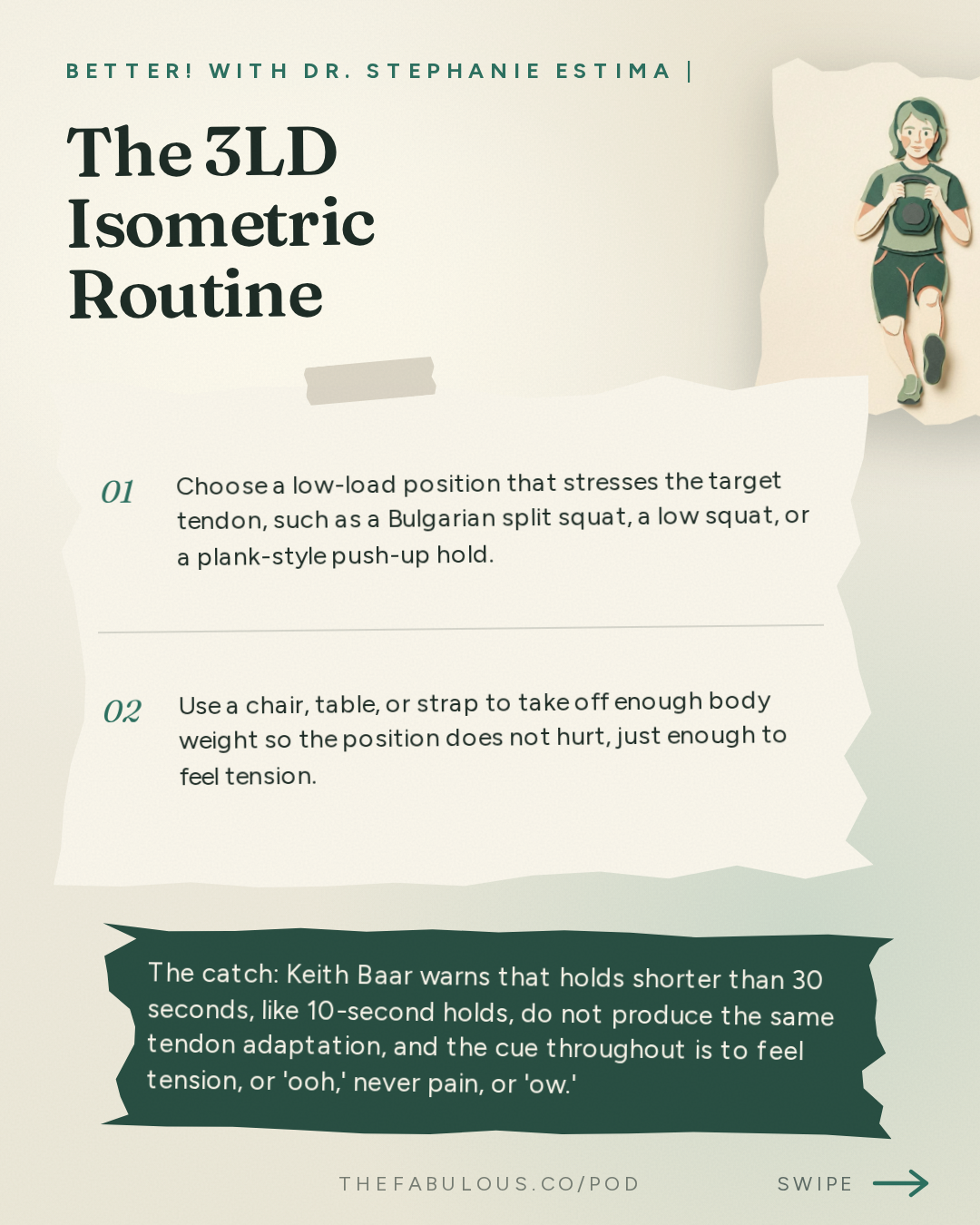
Keith Baar recommends holding a low-load isometric position, such as a Bulgarian split squat supported by a chair or table, for 30 seconds so the tendon has time to lengthen through what he calls creep and spread the load evenly across the tissue. He notes that holds shorter than 30 seconds, such as 10-second holds, do not produce the same adaptation.
Four 30-second holds per tendon, with a two-minute rest between holds, once or twice a day
-
Splitting Workouts to Double the Tendon Signal
Keith Baar suggests splitting one workout into two sessions placed six to eight hours apart, because tendons, bones, and ligaments stop responding to a single bout of exercise after about ten minutes and need that gap before they can respond again. He adds that the second session can be as short as five minutes and still deliver a full second dose of tendon stimulus.
Two sessions per day, six to eight hours apart
-
Overcoming Isometrics for Tendinopathy
Keith Baar has patients load an injured tendon at about 40 to 50 percent of their maximum strength and hold that position for 30 seconds, using the cue to feel tension, described as 'ooh,' rather than pain, described as 'ow.' He warns that going heavier than that range defeats the purpose, since the goal is even tension through the tissue rather than maximum load.
30-second holds, repeated a few times per session
-
Replacing RICE After a Tendon Injury
Keith Baar replaces rest and ice with two movements: a slow, rhythmic flex-and-extend motion to pump fluid out of the swollen tissue, and a low-jerk isometric hold built up gradually over three to five seconds to avoid the sudden load, or jerk, that caused the injury. He holds the ramped isometric for 30 seconds and releases it just as slowly, three or four times a day.
Several times daily, including the rhythmic pumping motion as needed
Questions this episode answers
What is the 3LD isometric protocol?
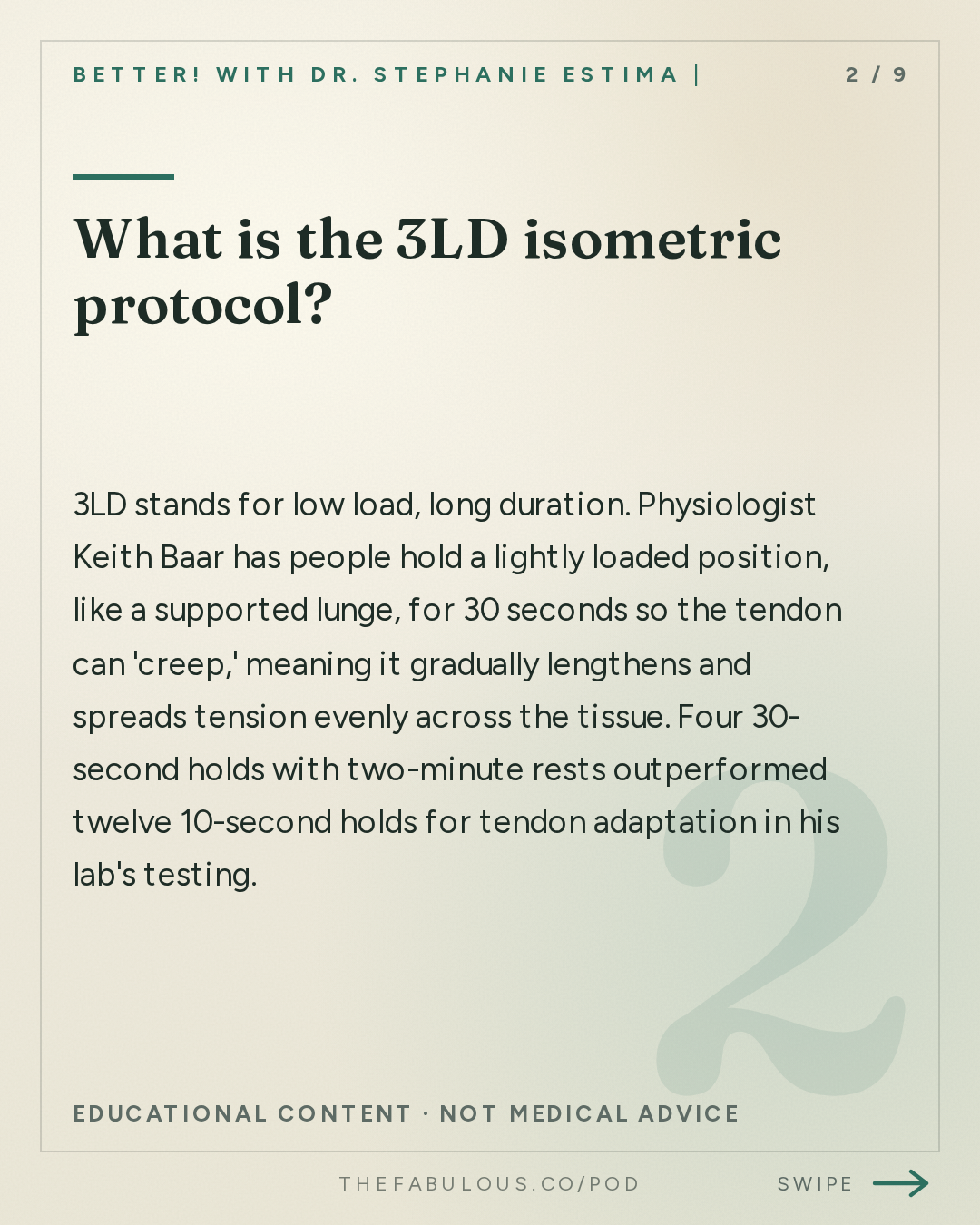
3LD stands for low load, long duration. Physiologist Keith Baar has people hold a lightly loaded position, like a supported lunge, for 30 seconds so the tendon can 'creep,' meaning it gradually lengthens and spreads tension evenly across the tissue (37:47). Four 30-second holds with two-minute rests outperformed twelve 10-second holds for tendon adaptation in his lab's testing (39:20).
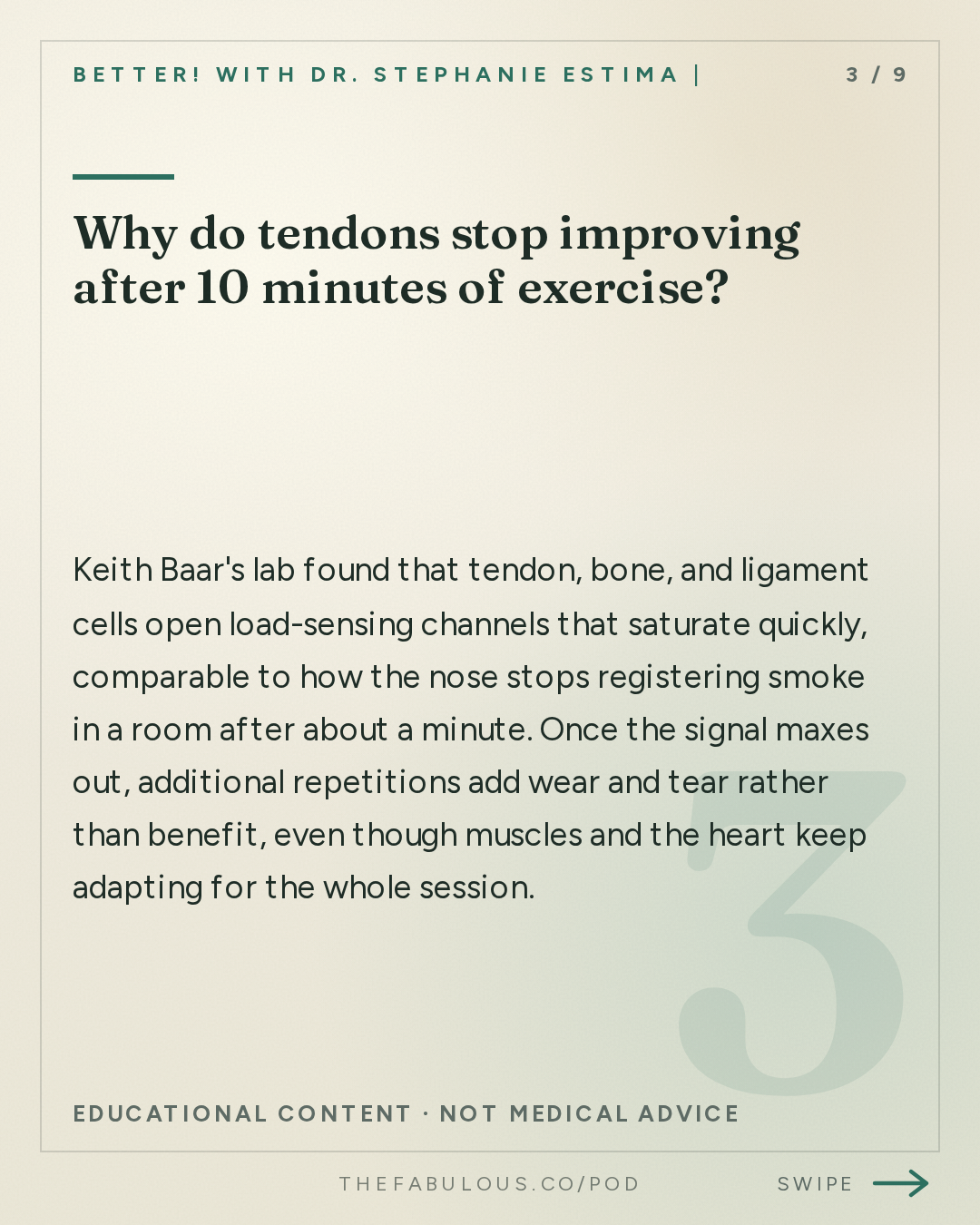
Why do tendons stop improving after 10 minutes of exercise?
Keith Baar's lab found that tendon, bone, and ligament cells open load-sensing channels that saturate quickly, comparable to how the nose stops registering smoke in a room after about a minute (15:56, 27:46). Once the signal maxes out, additional repetitions add wear and tear rather than benefit, even though muscles and the heart keep adapting for the whole session (16:28).
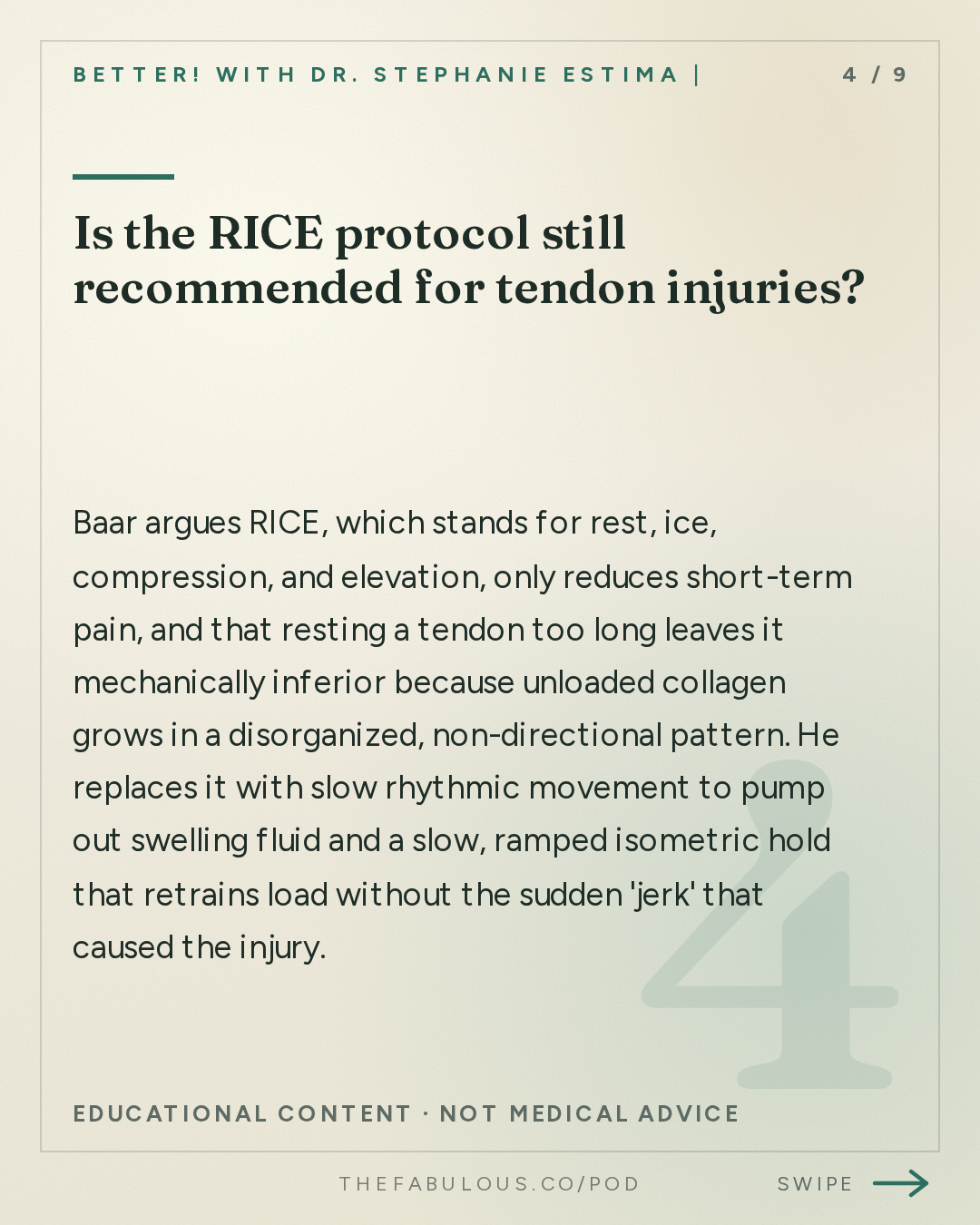
Is the RICE protocol still recommended for tendon injuries?
Baar argues RICE, which stands for rest, ice, compression, and elevation, only reduces short-term pain, and that resting a tendon too long leaves it mechanically inferior because unloaded collagen grows in a disorganized, non-directional pattern (58:15, 61:35). He replaces it with slow rhythmic movement to pump out swelling fluid and a slow, ramped isometric hold that retrains load without the sudden 'jerk' that caused the injury (64:54).
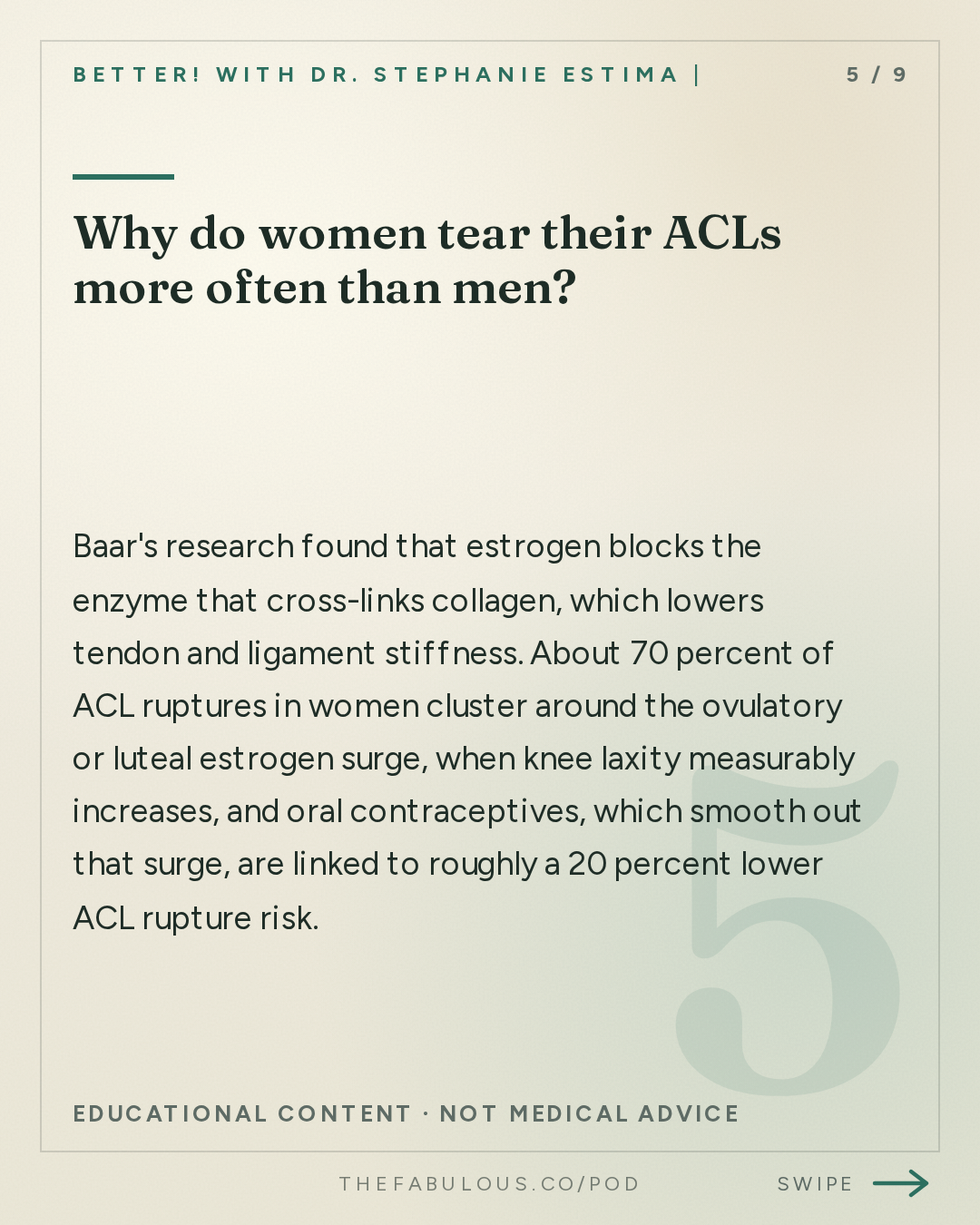
Why do women tear their ACLs more often than men?
Baar's research found that estrogen blocks the enzyme that cross-links collagen, which lowers tendon and ligament stiffness (77:55). About 70 percent of ACL ruptures in women cluster around the ovulatory or luteal estrogen surge, when knee laxity measurably increases (80:59), and oral contraceptives, which smooth out that surge, are linked to roughly a 20 percent lower ACL rupture risk (86:48).
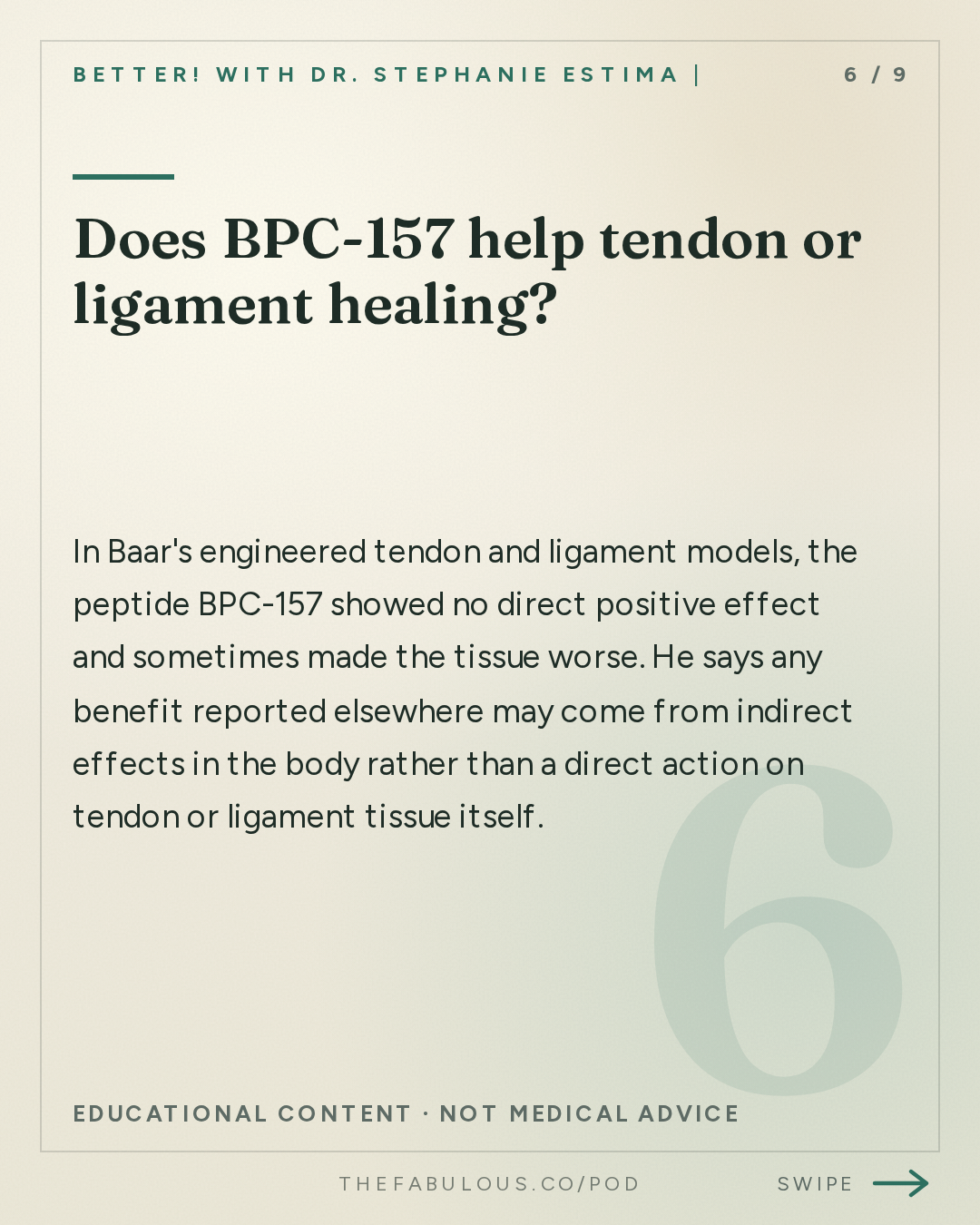
Does BPC-157 help tendon or ligament healing?
In Baar's engineered tendon and ligament models, the peptide BPC-157 showed no direct positive effect and sometimes made the tissue worse (02:49). He says any benefit reported elsewhere may come from indirect effects in the body rather than a direct action on tendon or ligament tissue itself.
Are heels bad for knee health?
Baar says wearing heels reproduces the knee position associated with osteoarthritis, a joint disease marked by cartilage breakdown, because the raised heel shifts the body into a position researchers have linked to higher OA prevalence (00:44). He and host Stephanie Estima recommend flat or minimalist shoes, especially during lower-body training.
The full read, in cards
Go deeper
- Hayashi wire-unloading tendon study — found that unloading a healthy tendon produced five times more cells and disorganized, non-directional collagen, the hallmark of a scar
- Japanese jump-training bone density study — young women jumping as high as possible four times, three times weekly, still raised bone mineral density over time
- Mette Hansen PhD research on hormone replacement and collagen — found collagen synthesis is affected by hormone replacement therapy
- Jill Cook study on menopausal runners — found smaller Achilles tendons in menopausal runners not using estrogen replacement compared with those using it
Mentioned
Keith Baar · Stephanie Estima · University of California, Davis · BPC-157 · Hayashi · Emil Abrahamson · Jill Cook · Mette Hansen · Sineux
More from this show and category
How to Build Glutes Without Growing Legs
Hip dips are permanent anatomy, not a fitness failure, says glute researcher and hip thrust inventor Bret Contreras. He explains why horizontal moves like hip thrusts and kickbacks are gentler on joints than squats, how women recover faster than men, and how a five-month training rotation builds glutes while sparing the legs.
Muscle Power vs Strength for Longevity
Psychophysiologist Paul Taylor says muscle power, not size or strength, best predicts how long people live. He tells Dr. Stephanie Estima that myokines, signaling molecules released by contracting muscle, act like an internal pharmacy, and he gives dosing-style guidance on power training, protein, omega-3, and cold plunge limits.

ADHD in Perimenopause: Why Symptoms Intensify
Dr. Jolene Brighten says ADHD in women often surfaces in perimenopause, when falling estrogen stops masking lifelong symptoms. Estrogen supports dopamine and acetylcholine, so its decline during the luteal phase and perimenopause worsens executive function, mood, and focus, explaining why many women are diagnosed only in their 30s and 40s.

Strength Training for Hypermobility, Done Safely
Hypermobile joints move past normal range because ligaments are too loose, so strength training, not stretching, is the primary fix. Dr. Stephanie Estima recommends training within 80% of available range of motion, using slow eccentrics and isometric holds, plus adequate protein and vitamin C to support connective tissue repair.
