
BETTER! with Dr. Stephanie Estima
ADHD in Perimenopause: Why Symptoms Intensify
Perimenopause Doesn't Cause ADHD, It Unmasks It: Reclaim Your Brain with Dr. Jolene Brighten
▶ Listen to the full episode More from BETTER! with Dr. Stephanie Estima
The brief
Dr. Jolene Brighten says ADHD in women often surfaces in perimenopause, when falling estrogen stops masking lifelong symptoms. Estrogen supports dopamine and acetylcholine, so its decline during the luteal phase and perimenopause worsens executive function, mood, and focus, explaining why many women are diagnosed only in their 30s and 40s.
A woman can run her household like a small airline, tracking her husband's appointments and her children's appointments down to the minute, and still not remember the last time she had a Pap smear or a breast exam. That is the image naturopathic endocrinologist Dr. Jolene Brighten opens with in conversation with host Dr. Stephanie Estima. Brighten, author of the new book ADHD in Women, calls this a quiet public health problem: women with ADHD lose an average of ten years of life expectancy, she says, largely because executive dysfunction causes them to miss the screening exams that catch disease early (00:00).
Her first move is to correct the name of the condition itself. "ADHD is always called attention deficit," she says. "As it turns out, there is no deficit. It's just that we have a hard time regulating our attention" (04:11). Under this reframe, the woman who can research cottage cheese recipes for three hours but takes two days to answer a text is not lazy or scattered. Her attention is simply flowing somewhere she did not choose.
"If you wanna sabotage an ADHD woman's day, put an appointment at 3:00 in the afternoon because women who struggle with something called time blindness will spend their entire day trying to make sure that they make it there on time." — Jolene Brighten [04:56]
Time blindness, the difficulty judging how long things take or how much time has passed, is one reason ADHD in women looks so different from the hyperactive little boy stereotype. Brighten describes women who learned early that mistakes were not just embarrassing but dangerous, costly to a job or a friendship, so they became straight-A students and people pleasers who hide doom piles behind a closed bedroom door (08:51). As girls move into puberty, she says, the condition often turns inward: constant self-monitoring, rehearsing conversations before a party, checking whether a facial expression looks normal. That internal performance is called masking, and it is exhausting (10:07).
The Estrogen Switch
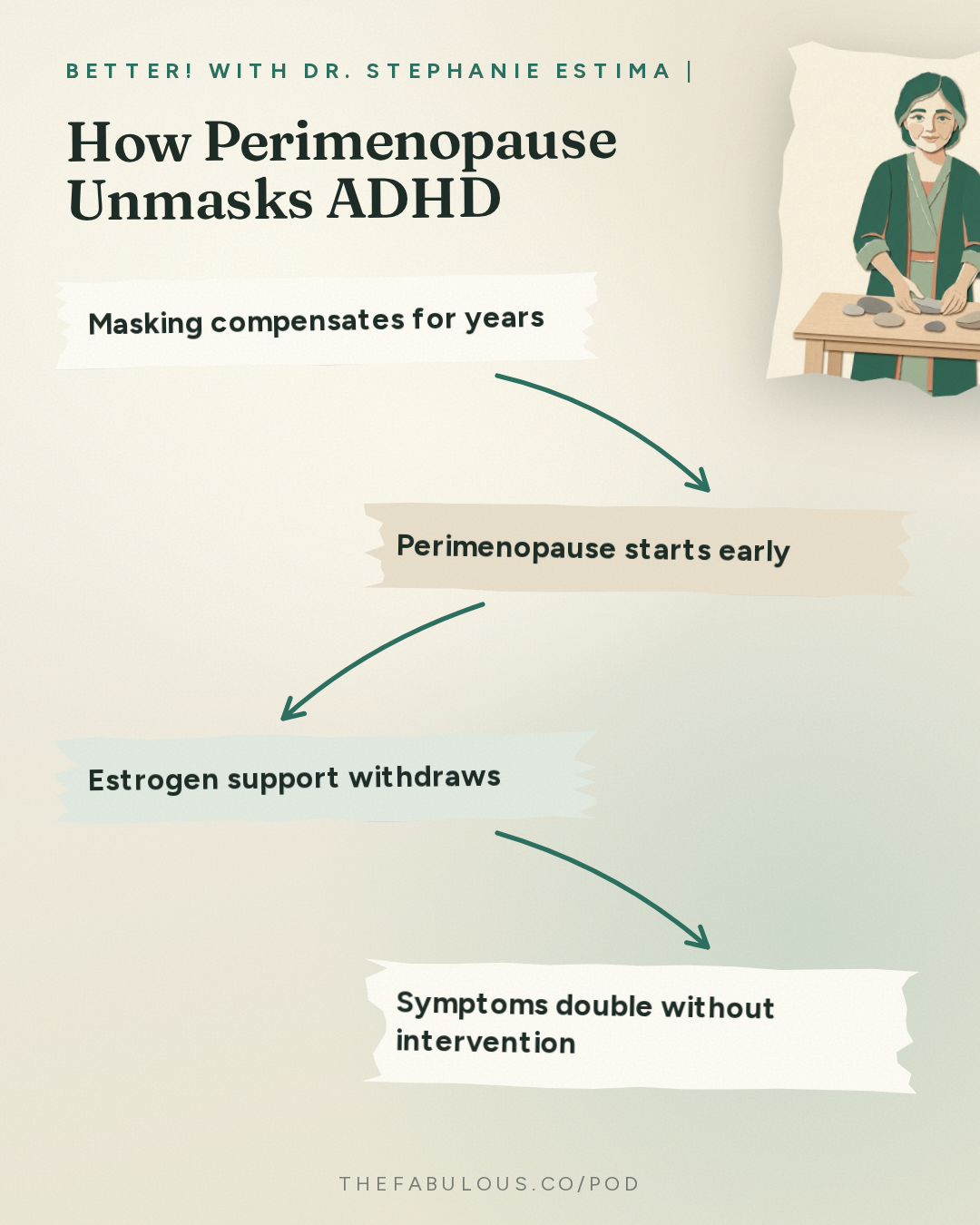
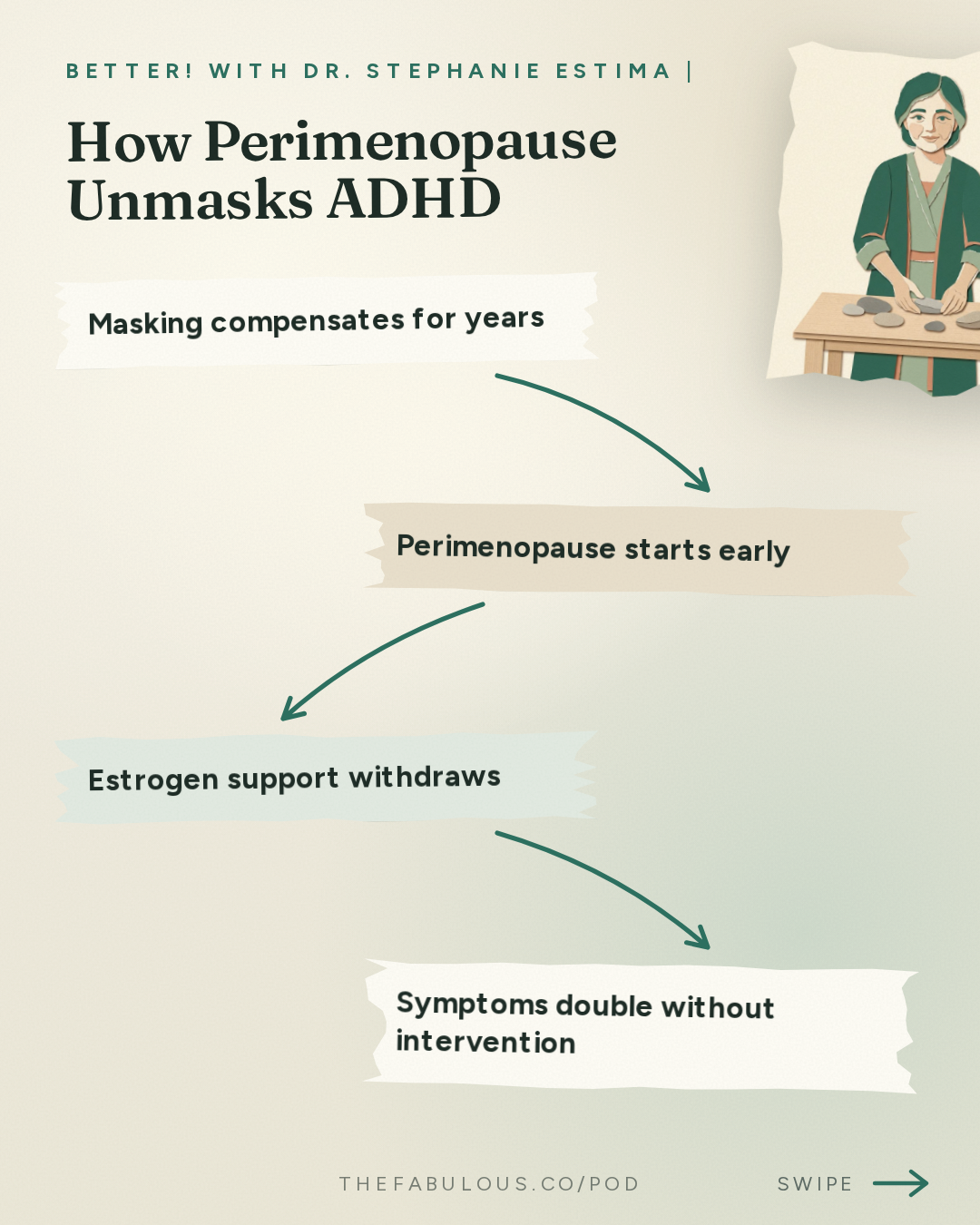
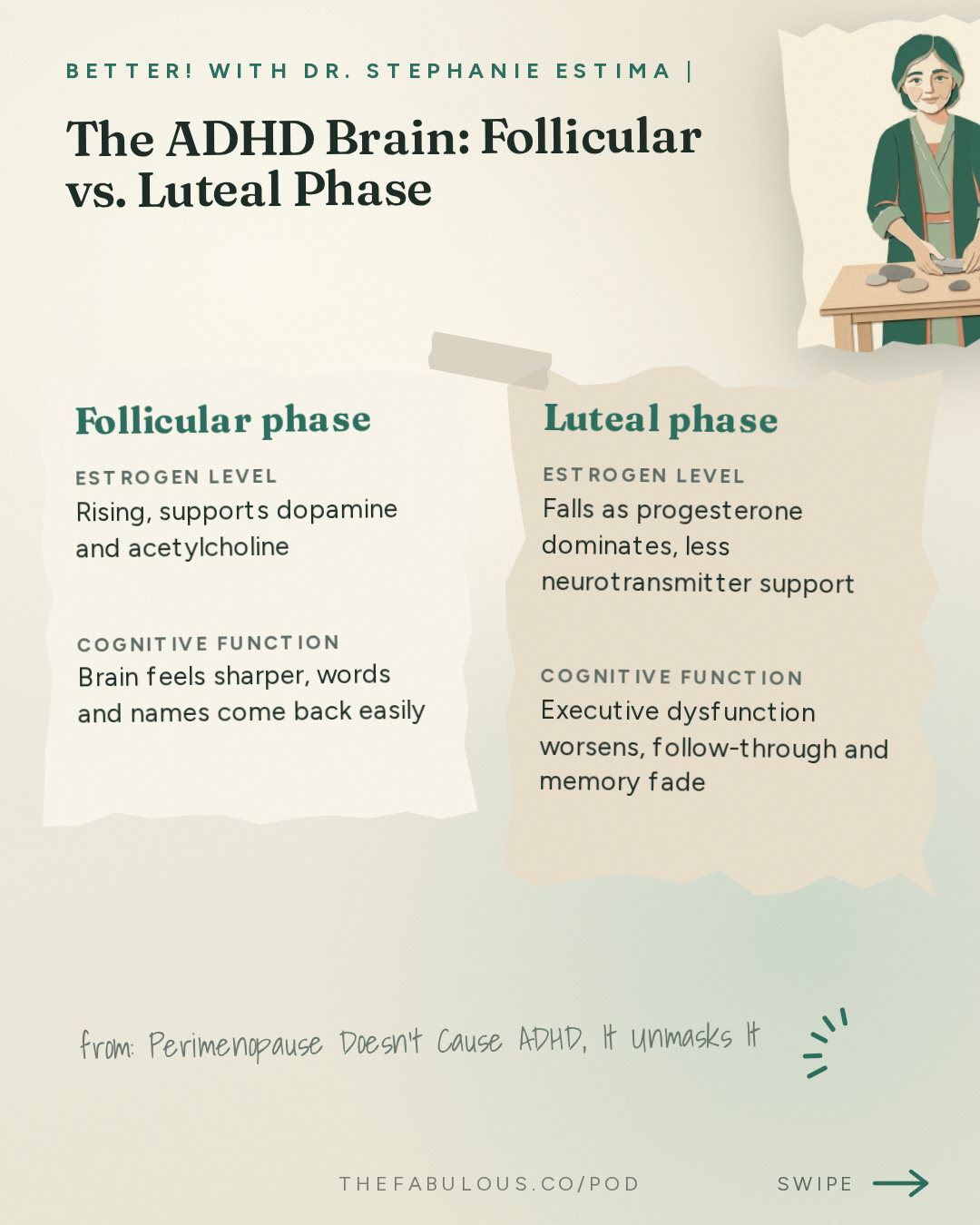
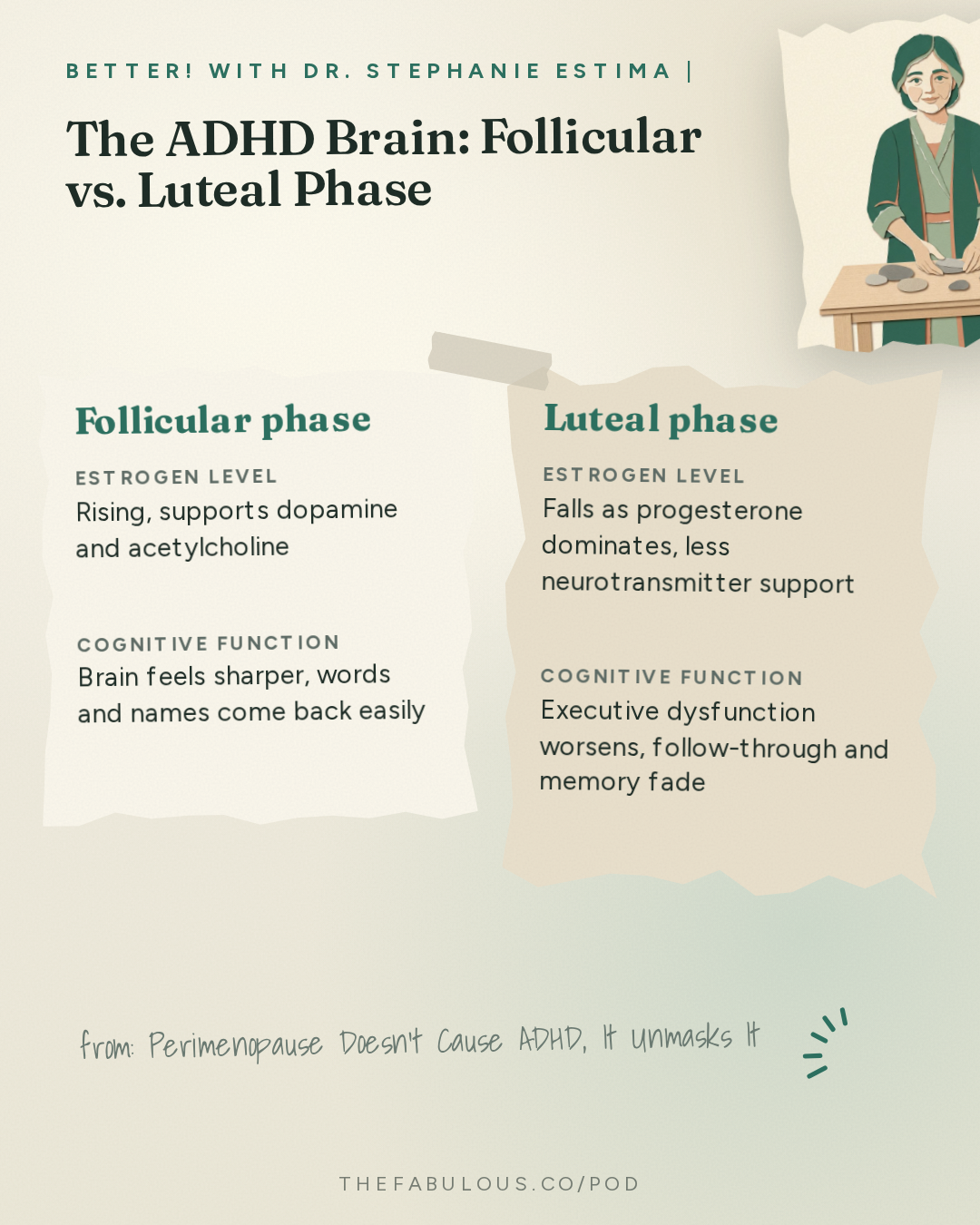
The conversation's real engine is hormonal. Estrogen, Brighten explains, supports the production and function of dopamine, norepinephrine, and acetylcholine, the brain chemicals behind motivation, focus, and memory retrieval. That is why stimulant medication can feel like it stops working in the days before a period: its effectiveness is tied to estrogen levels in the body (16:03). During the follicular phase, the first half of the cycle after a period starts, rising estrogen brings the ADHD brain back online, sharpening word recall and follow-through (16:26). About five to seven days after ovulation, as progesterone takes over and estrogen recedes, Brighten says the volume knob on ADHD symptoms gets cranked up (17:50).
This is where she draws a careful distinction. Premenstrual dysphoric disorder, or PMDD, is a severe mood condition, while premenstrual exacerbation, or PME, is existing ADHD symptoms simply getting harder before a period. ADHD women are roughly three times more likely to experience PMDD-like symptoms (14:41). A hormone-withdrawal study she cites found that progesterone, not low hormone levels, triggered the mood symptoms of PMDD, and estrogen triggered the physical ones, but strikingly, 30 percent of women still had PMDD symptoms even with no hormones in their system at all (27:10). The story, she says, is not purely about hormone levels. It is about how sensitively a particular brain responds to the ordinary rise and fall of estrogen and progesterone.
That sensitivity may have a cellular root. Brighten points to research showing ADHD brains carry a degree of mitochondrial dysfunction, meaning the tiny structures that generate cellular energy work less efficiently, producing more reactive oxygen species, or oxidative stress (36:12). In a rodent study, methylphenidate (brand name Ritalin) lowered oxidative stress and improved mitochondrial function in ADHD-induced rodent brains, while increasing oxidative stress in typical brains given the same dose (37:32). The implication, Brighten says, is that stimulant medication may work partly by repairing energy production in the brain, not only by raising dopamine.
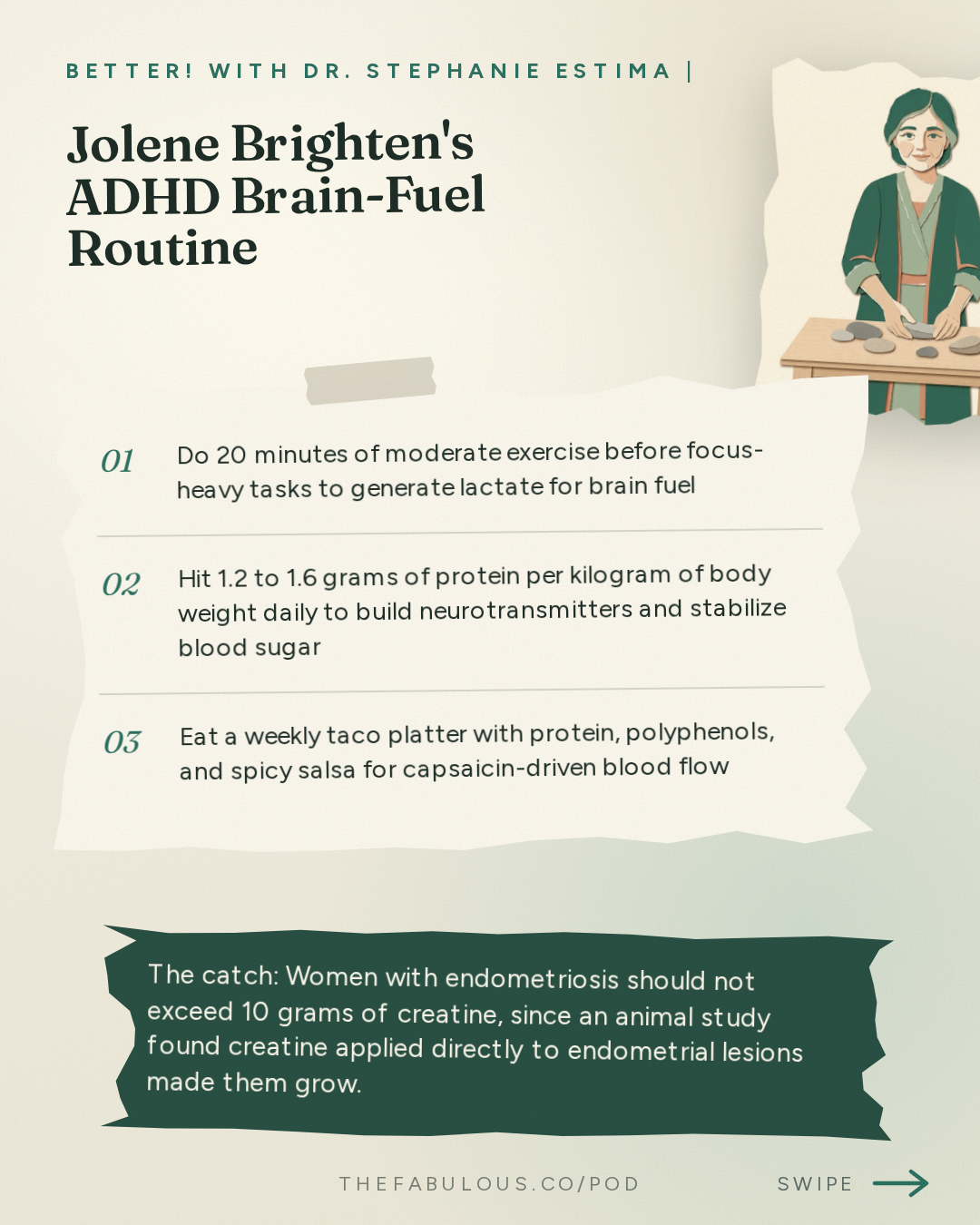
That energy framing carries into her exercise advice. "I want you to think about exercise as your crank generator," she says. "You literally have to move in order to generate energy" (39:17). The lactic acid produced during a workout becomes lactate once it reaches the brain, where it functions as an alternate fuel source for cells that cannot rely on glucose alone. A study she cites found that 20 minutes of moderate physical activity produced two to three hours of peak cognitive performance afterward (39:38). She also prescribes three specific foods each week: ghee, for its butyrate content, a short-chain fatty acid that helps seal the gut lining and the blood-brain barrier; potato salad, because cooling cooked potatoes creates resistant starch that feeds gut bacteria which in turn produce more butyrate; and a taco platter of protein, tomatoes, cabbage, beans, avocado, and spicy salsa, whose capsaicin increases blood flow to the brain and boosts dopamine and serotonin (40:08). She recommends ADHD patients target 1.2 to 1.6 grams of protein per kilogram of body weight daily, since research suggests they metabolize protein differently and need more of it to build neurotransmitters and stabilize blood sugar (41:24).
Unmasked at Midlife
All of this sets up Brighten's central claim about midlife. Perimenopause, she says, can arrive up to ten years earlier in women with ADHD, with roughly double the usual symptom severity (49:44). Sixty percent of women with ADHD report postpartum depression (50:06), and without intervention, about 25 percent of ADHD women carry their most severe symptoms through the rest of their postmenopausal lives (50:56). The condition itself is highly heritable: if both parents have ADHD, a child has about a 70 percent chance of inheriting it (56:18). But heritability is not destiny. Children raised on more ultra-processed food and saturated fat show a higher incidence of ADHD symptoms than those eating more plants and fiber, which Brighten frames as diet shaping the operating system rather than switching the condition on or off (61:41).
Sleep compounds all of it. Roughly 70 percent of people with ADHD have delayed sleep phase syndrome, meaning melatonin does not begin rising until close to 1:00 AM instead of the usual 9:00 to 10:00 PM (74:06). Brighten compares unresolved sleep debt to a dirty dishwasher: the lactate generated by exercise and daily cognitive effort needs the glymphatic system, the brain's waste-clearance network, to run overnight, and skipping sleep leaves the mess behind, producing brain fog the next day (73:47).
Her own supplement stack includes saffron, citicoline, and bacopa daily. She cites research finding saffron more effective than Ritalin specifically for hyperactivity, while Ritalin alone worked better for inattention (77:23). During the late luteal phase, the days just before a period, she raises her creatine dose from a baseline of five to seven grams up to 10 grams to buffer cognitive dips, dividing the dose if it causes stomach upset, and she cautions that women with endometriosis should not exceed 10 grams, since an animal study found creatine injected directly onto endometrial lesions made them grow (78:44).
The episode keeps returning to a single idea: the ADHD brain is not broken, it is differently wired and hormonally sensitive, and the systems around it, workplaces, medicine, and family expectation, were not built with that wiring in mind. As Brighten tells any woman diagnosed late in life:
"You are not the problem. The way society has treated you is the problem." — Jolene Brighten [60:07]
That line reframes everything that came before it. The missed Pap smears, the doom piles, the Costco receipts, the report cards that called a bright girl too talkative, none of it was a character flaw. It was a brain running on a different hormonal and metabolic schedule than the one the world expected, and finally, in Brighten's telling, a schedule that can be worked with instead of against.
Ask this episode anything
Pod's AI answers from the episode itself, with the minute mark so you can hear it yourself.
Or start with one of these
Ask this episode
Pod's AI listens to the whole episode to answer, and points you to the minute it comes from.
The rest of this answer, and any question after it
Answers come from the episode itself, never from a summary of it.
ContinueKey takeaways
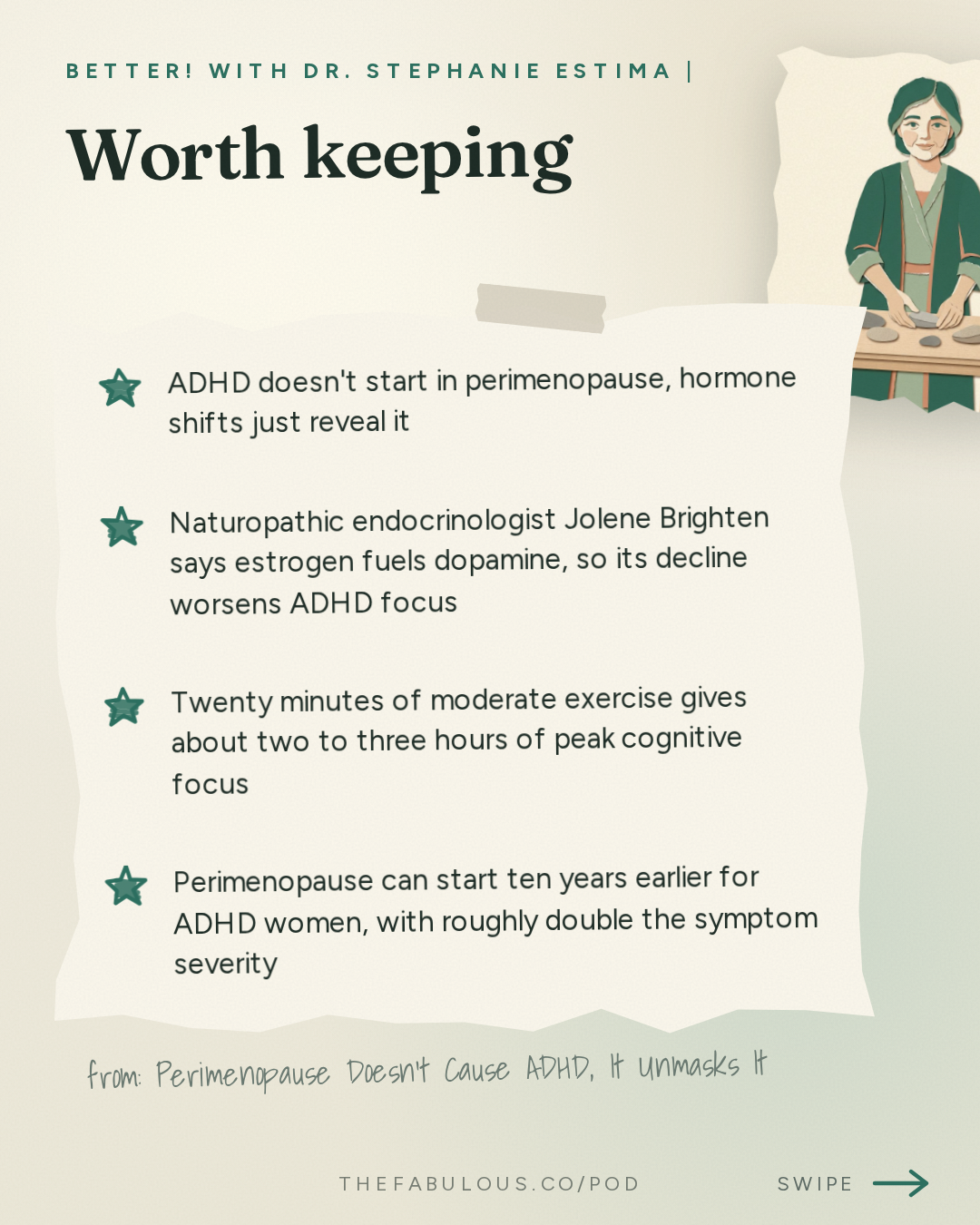
- ADHD doesn't start in perimenopause, hormone shifts just reveal it
- Naturopathic endocrinologist Jolene Brighten says estrogen fuels dopamine, so its decline worsens ADHD focus
- Twenty minutes of moderate exercise gives about two to three hours of peak cognitive focus
- Perimenopause can start ten years earlier for ADHD women, with roughly double the symptom severity
- Brighten takes saffron, citicoline, and bacopa daily, raising creatine to ten grams in the late luteal phase
The episode in cards

By the numbers
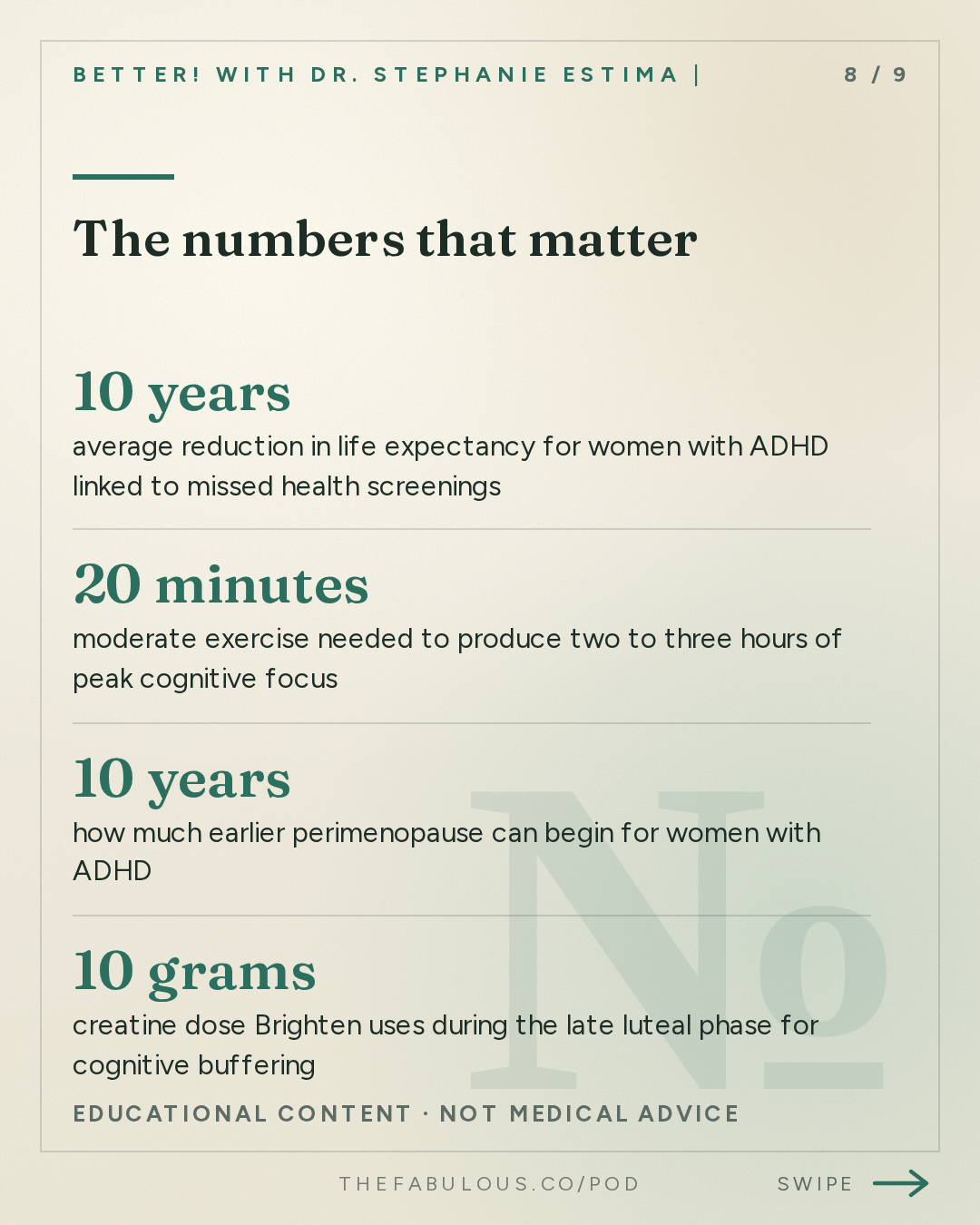
- 10 years average reduction in life expectancy for women with ADHD linked to missed health screenings
- 20 minutes moderate exercise needed to produce two to three hours of peak cognitive focus
- 10 years how much earlier perimenopause can begin for women with ADHD
- 10 grams creatine dose Brighten uses during the late luteal phase for cognitive buffering
In their words
“If you wanna sabotage an ADHD woman's day, put an appointment at 3:00 in the afternoon because women who struggle with something called time blindness will spend their entire day trying to make sure that they make it there on time.”
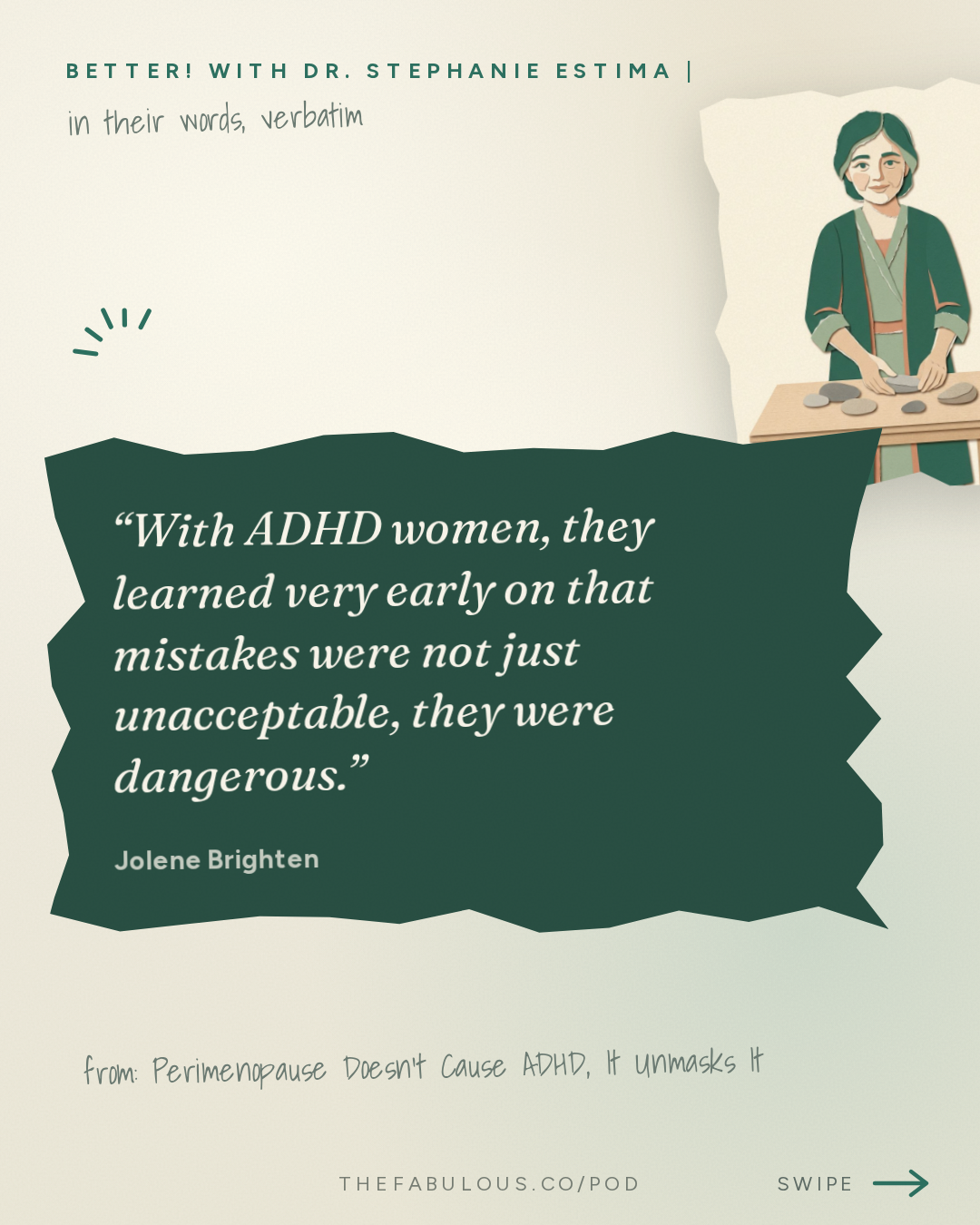
“With ADHD women, they learned very early on that mistakes were not just unacceptable, they were dangerous.”
“In the ADHD brain, ADHD stimulant medications may not just be working via dopamine and norepinephrine. It may actually be via mitochondrial support.”
“I want you to think about exercise as your crank generator. You literally have to move in order to generate energy.”
“You are not the problem. The way society has treated you is the problem.”
Protocols
-
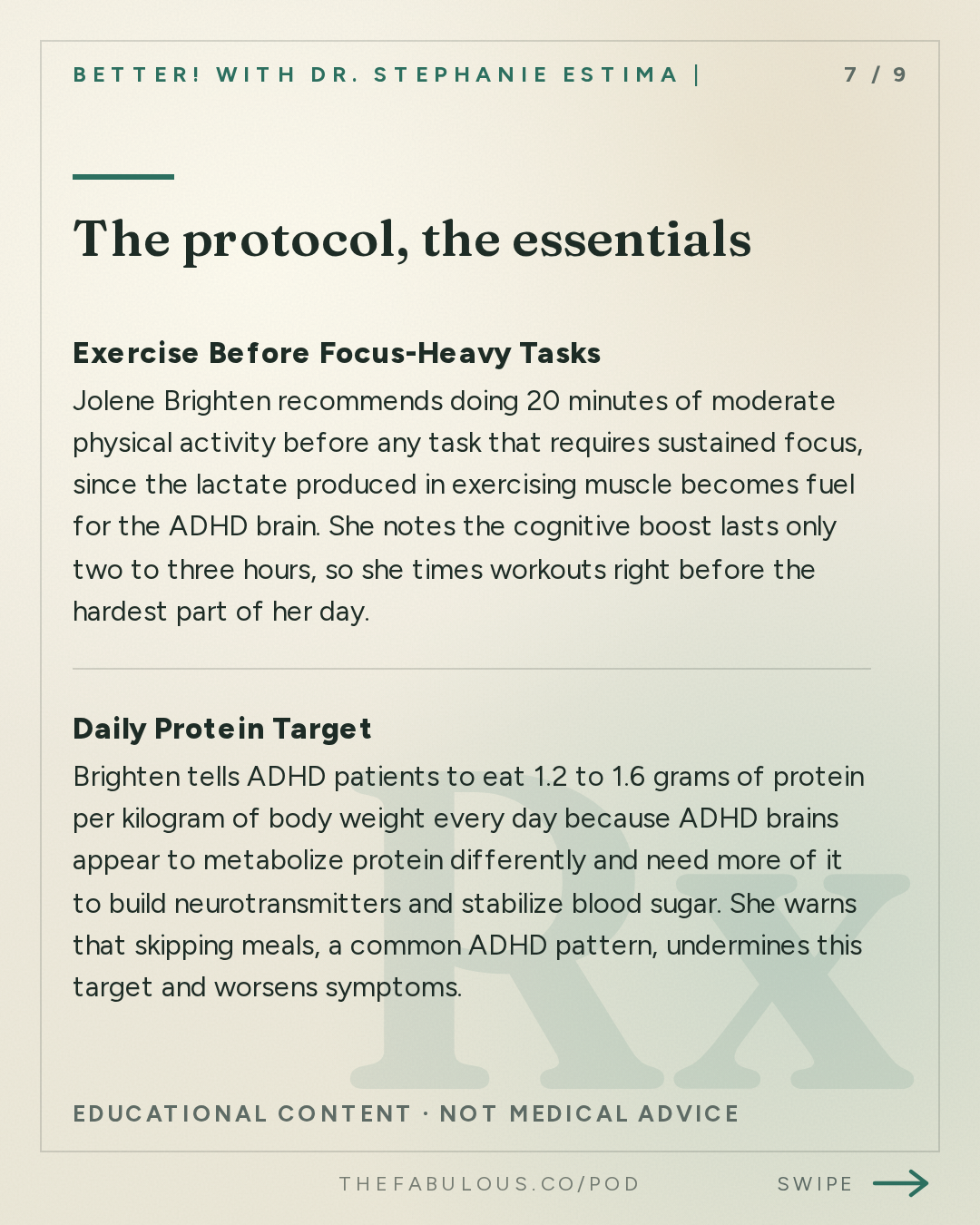
Exercise Before Focus-Heavy Tasks
Jolene Brighten recommends doing 20 minutes of moderate physical activity before any task that requires sustained focus, since the lactate produced in exercising muscle becomes fuel for the ADHD brain. She notes the cognitive boost lasts only two to three hours, so she times workouts right before the hardest part of her day.
before demanding cognitive tasks, as needed
-
Daily Protein Target
Brighten tells ADHD patients to eat 1.2 to 1.6 grams of protein per kilogram of body weight every day because ADHD brains appear to metabolize protein differently and need more of it to build neurotransmitters and stabilize blood sugar. She warns that skipping meals, a common ADHD pattern, undermines this target and worsens symptoms.
daily
-
Weekly Taco Platter
Brighten prescribes a weekly meal of ground beef, tomatoes, cilantro, cabbage, corn tortillas, beans, avocado, and spicy salsa to supply protein, polyphenols, resistant starch, and capsaicin. She notes the capsaicin needs repeated weekly doses to keep boosting blood flow and neurotransmitter activity in the brain.
weekly
-
Saffron, Citicoline, and Bacopa Stack
Brighten takes saffron, citicoline, and bacopa every day, citing research that found saffron worked better than Ritalin for hyperactivity specifically, while Ritalin alone worked better for inattention. She pairs the stack with zinc, since neurotransmitters require adequate zinc to function.
daily
-
Luteal-Phase Creatine Increase
Brighten raises her creatine dose from her usual 3 to 5 grams up to 10 grams during the late luteal phase to buffer the cognitive dip before her period, dividing the dose if it causes stomach upset. She cautions that women with endometriosis should not exceed 10 grams, since an animal study found creatine injected directly onto endometrial lesions made them grow.
during late luteal phase
Questions this episode answers
Why do ADHD symptoms get worse in perimenopause?
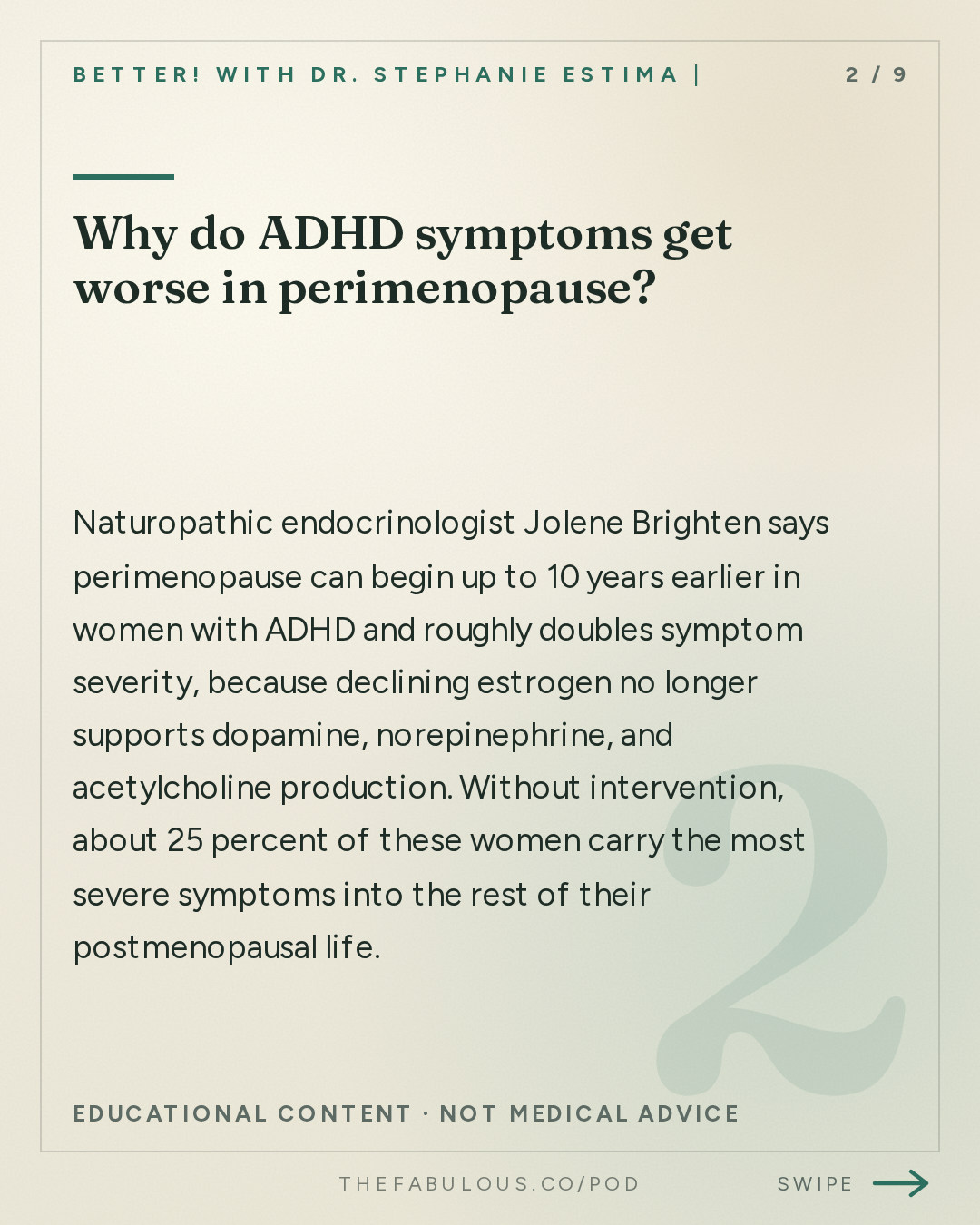
Naturopathic endocrinologist Jolene Brighten says perimenopause can begin up to 10 years earlier in women with ADHD and roughly doubles symptom severity, because declining estrogen no longer supports dopamine, norepinephrine, and acetylcholine production (49:44). Without intervention, about 25 percent of these women carry the most severe symptoms into the rest of their postmenopausal life (50:56).
Does the menstrual cycle affect ADHD medication?
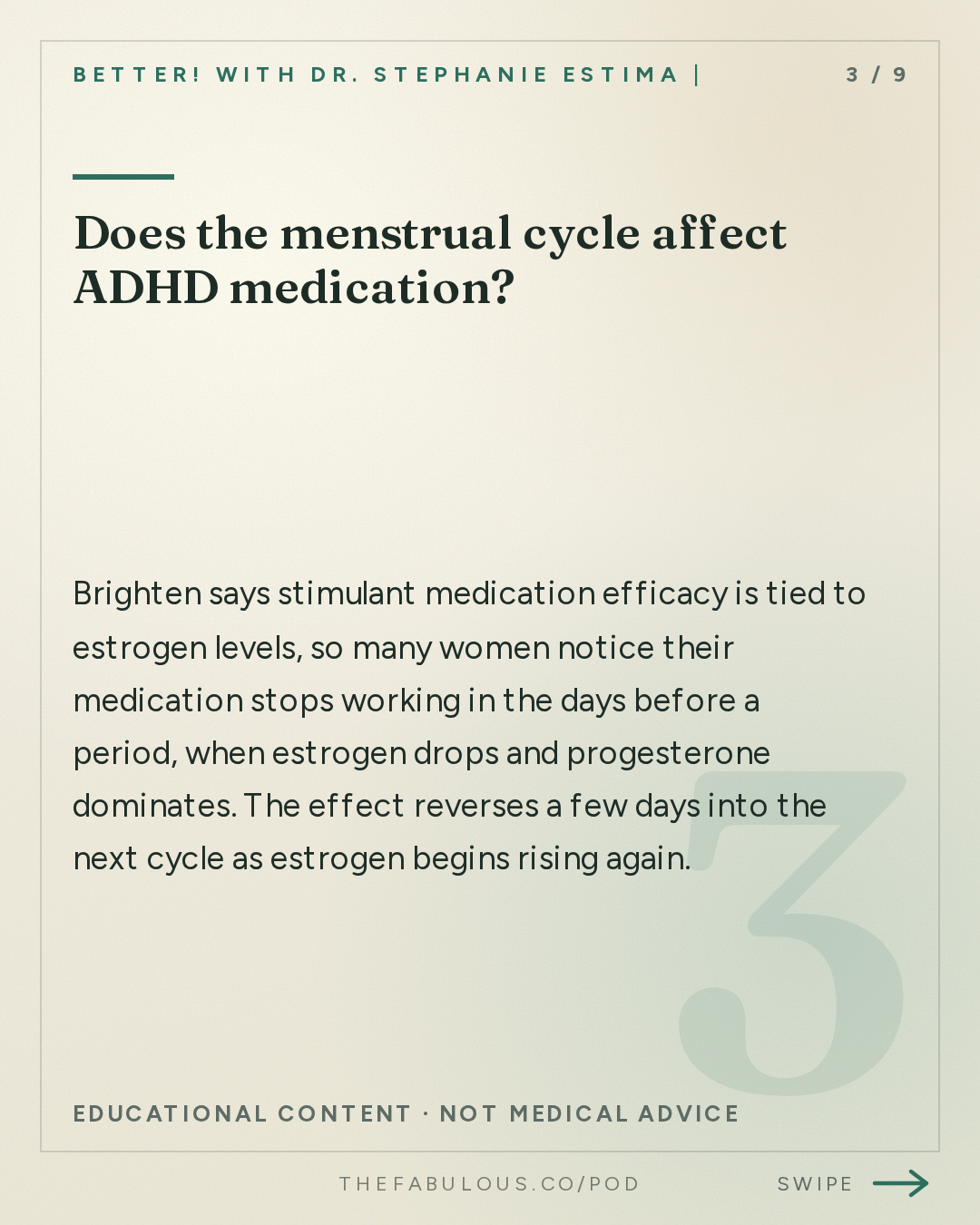
Brighten says stimulant medication efficacy is tied to estrogen levels, so many women notice their medication stops working in the days before a period, when estrogen drops and progesterone dominates (16:03, 18:56). The effect reverses a few days into the next cycle as estrogen begins rising again (16:26).
What is the difference between PMDD and premenstrual exacerbation of ADHD?
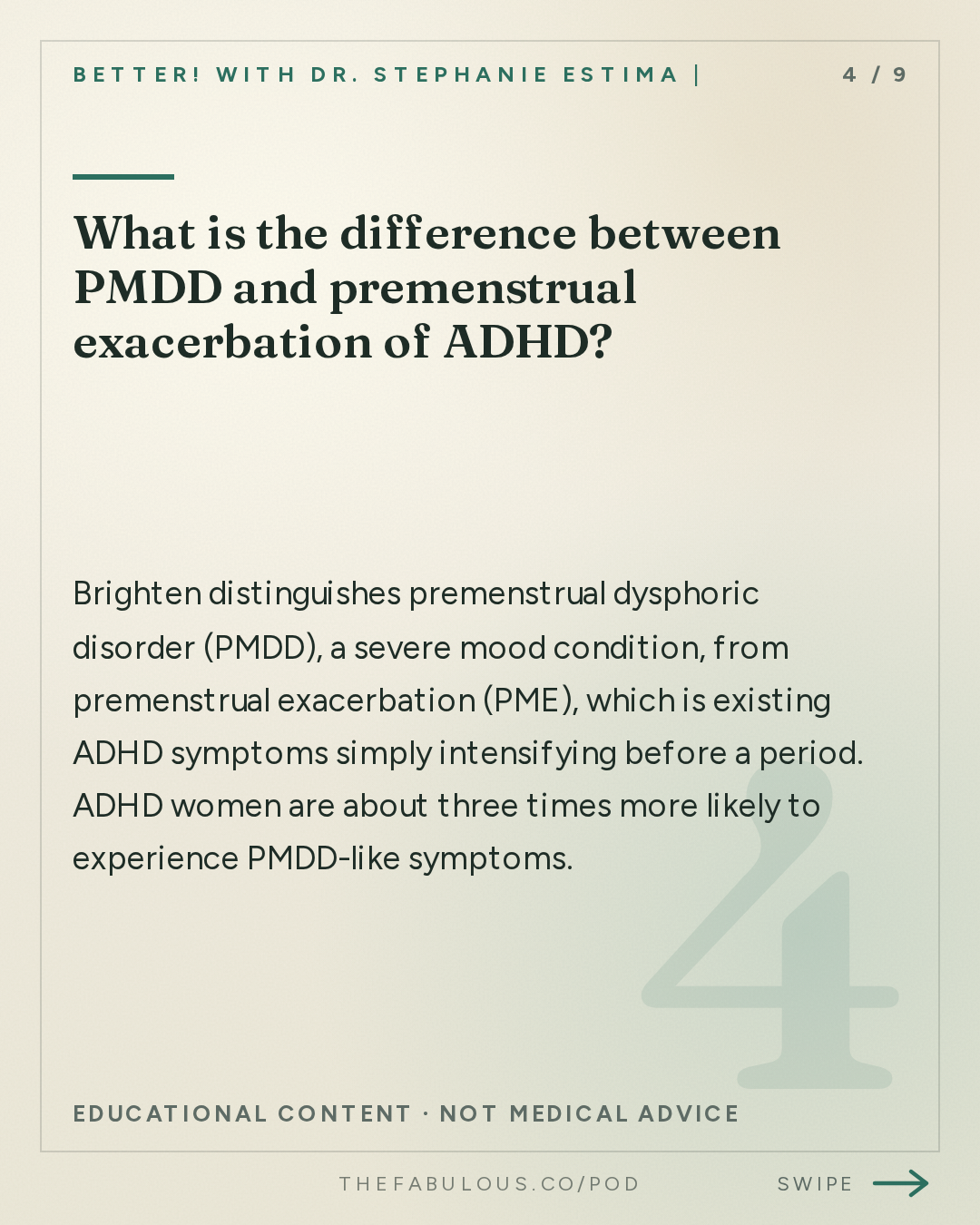
Brighten distinguishes premenstrual dysphoric disorder (PMDD), a severe mood condition, from premenstrual exacerbation (PME), which is existing ADHD symptoms simply intensifying before a period. ADHD women are about three times more likely to experience PMDD-like symptoms (14:41, 15:08).
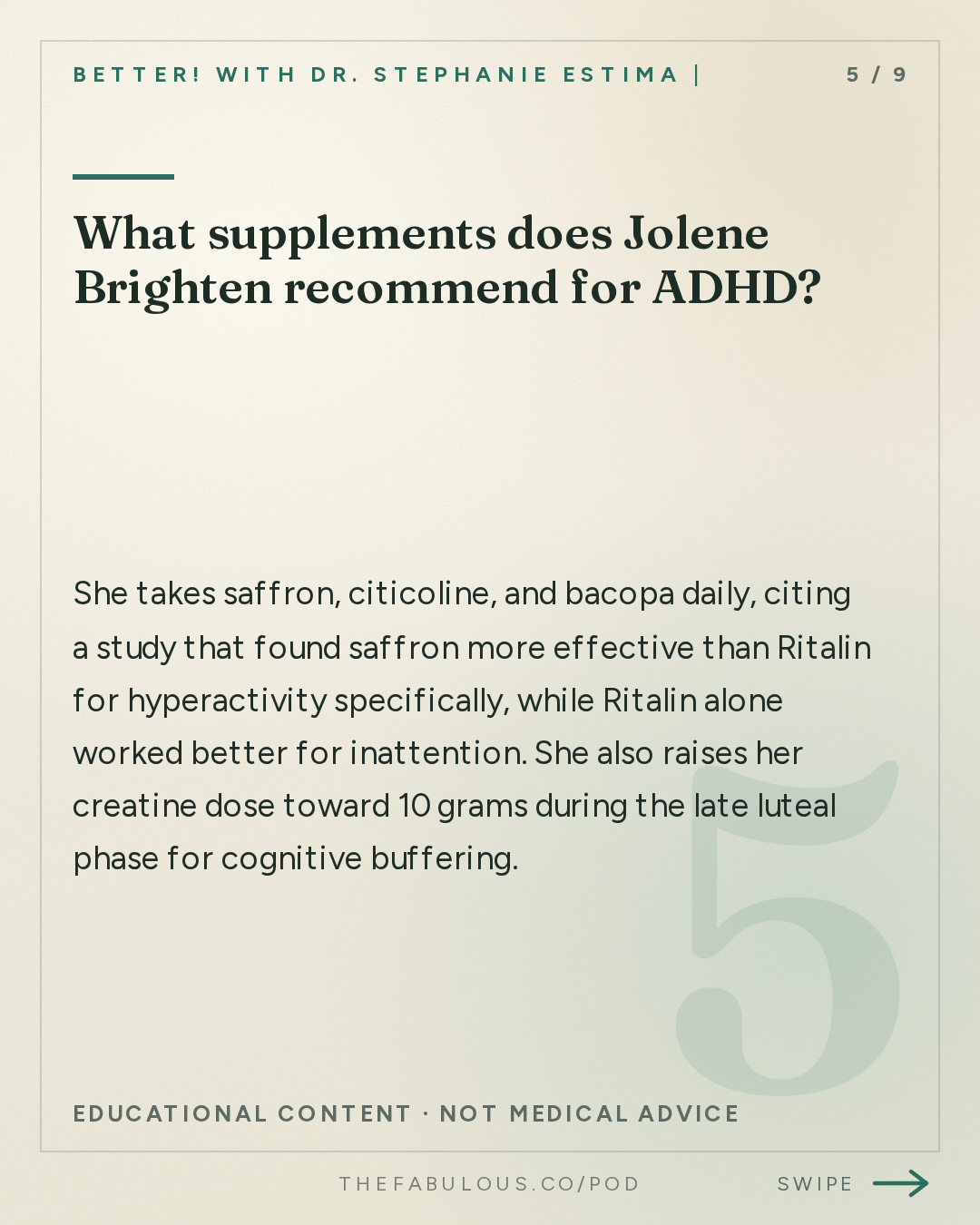
What supplements does Jolene Brighten recommend for ADHD?
She takes saffron, citicoline, and bacopa daily, citing a study that found saffron more effective than Ritalin for hyperactivity specifically, while Ritalin alone worked better for inattention (77:23). She also raises her creatine dose toward 10 grams during the late luteal phase for cognitive buffering (78:44).
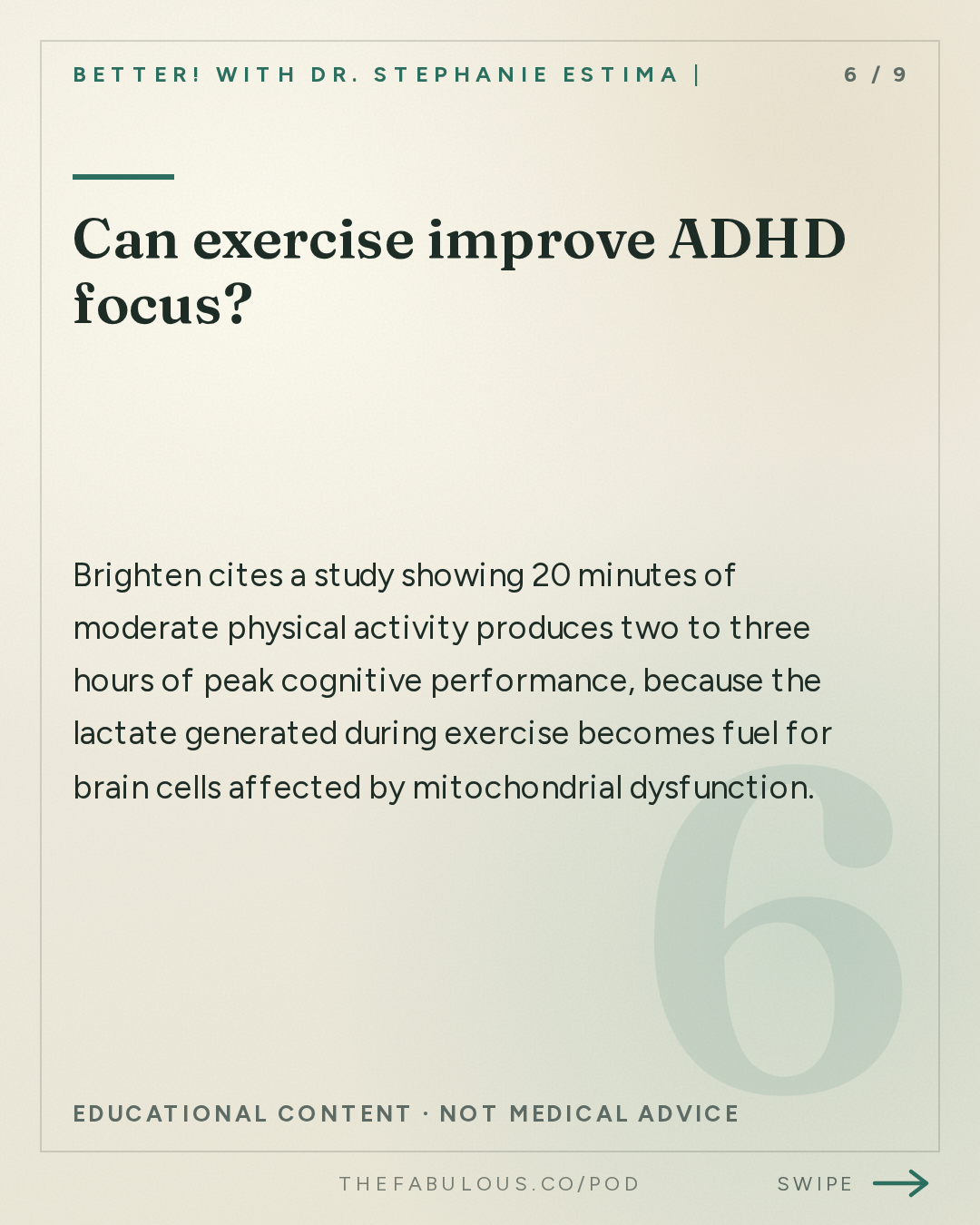
Can exercise improve ADHD focus?
Brighten cites a study showing 20 minutes of moderate physical activity produces two to three hours of peak cognitive performance, because the lactate generated during exercise becomes fuel for brain cells affected by mitochondrial dysfunction (39:17, 39:38).
How much protein should someone with ADHD eat?
Brighten recommends 1.2 to 1.6 grams of protein per kilogram of body weight daily, since research suggests ADHD brains metabolize protein differently and need more of it to produce neurotransmitters and stabilize blood sugar (41:24).
The full read, in cards
Go deeper
- ADHD in Women — Jolene Brighten's new book laying out hormonal ADHD profiles, a diagnostic quiz, and a 14-day reset protocol
- Rodent methylphenidate and mitochondrial function study — found methylphenidate lowered oxidative stress in ADHD-induced rodent brains but raised it in typical rodent brains
- Hormone add-back PMDD study — showed progesterone, not hormone levels alone, drove PMDD mood symptoms, while 30 percent of women still had symptoms with no hormones present
- Exercise and cognitive performance study — found 20 minutes of moderate exercise produced two to three hours of peak cognitive performance
Mentioned
Dr. Jolene Brighten · Dr. Stephanie Estima · ADHD in Women · Dr. Sarah Hill · Dr. Terry Jones · Dr. Michael Hall · Simone Biles · Ritalin · Saffron · Creatine · Bacopa
More from this show and category

Strength Training for Hypermobility, Done Safely
Hypermobile joints move past normal range because ligaments are too loose, so strength training, not stretching, is the primary fix. Dr. Stephanie Estima recommends training within 80% of available range of motion, using slow eccentrics and isometric holds, plus adequate protein and vitamin C to support connective tissue repair.

Physiology of Grief and Heart Attack Risk
Grief is not just an emotion, it is a measurable physiological event: a 21-times spike in heart attack risk in the first 24 hours after a loss, elevated cortisol for months, and a brain that keeps treating the dead as still out there somewhere.

Katy Bowman: Movement as Nutrition, Not Exercise
Biomechanist Katy Bowman argues movement is a nutrient the body requires daily, not a scheduled workout, and that modern convenience saves movement rather than time. She maps a movement pyramid from floor-sitting to sprinting, links bone strength to changing direction, and traces midlife foot pain to decades of repeated gait patterns.

Preeclampsia and Long-Term Heart Risk Explained
Pregnancy stresses the heart, kidneys, and metabolism so hard that its complications predict a woman's cardiovascular and diabetes risk decades later. Maternal-fetal medicine specialist Kathryn Gray explains how plasma volume surges 50%, how preeclampsia's placental biology works, and why half of gestational diabetes cases become type 2 diabetes.
