BETTER! with Dr. Stephanie Estima
Muscle Power vs Strength for Longevity
Skinny Is Where You Go to Die: Muscle Power & Myokines for Ageing Women with Dr. Paul Taylor
▶ Listen to the full episode More from BETTER! with Dr. Stephanie Estima
The brief
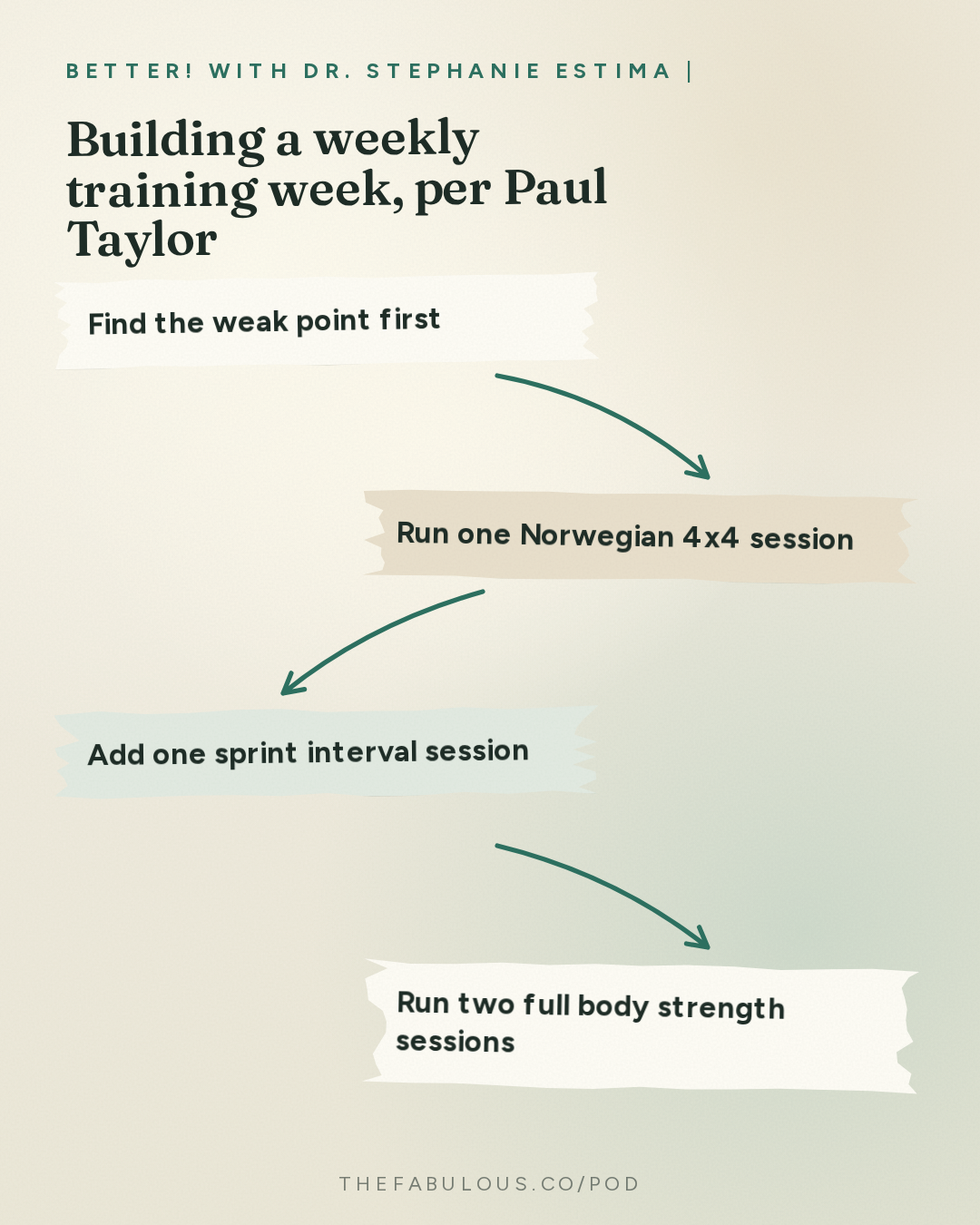
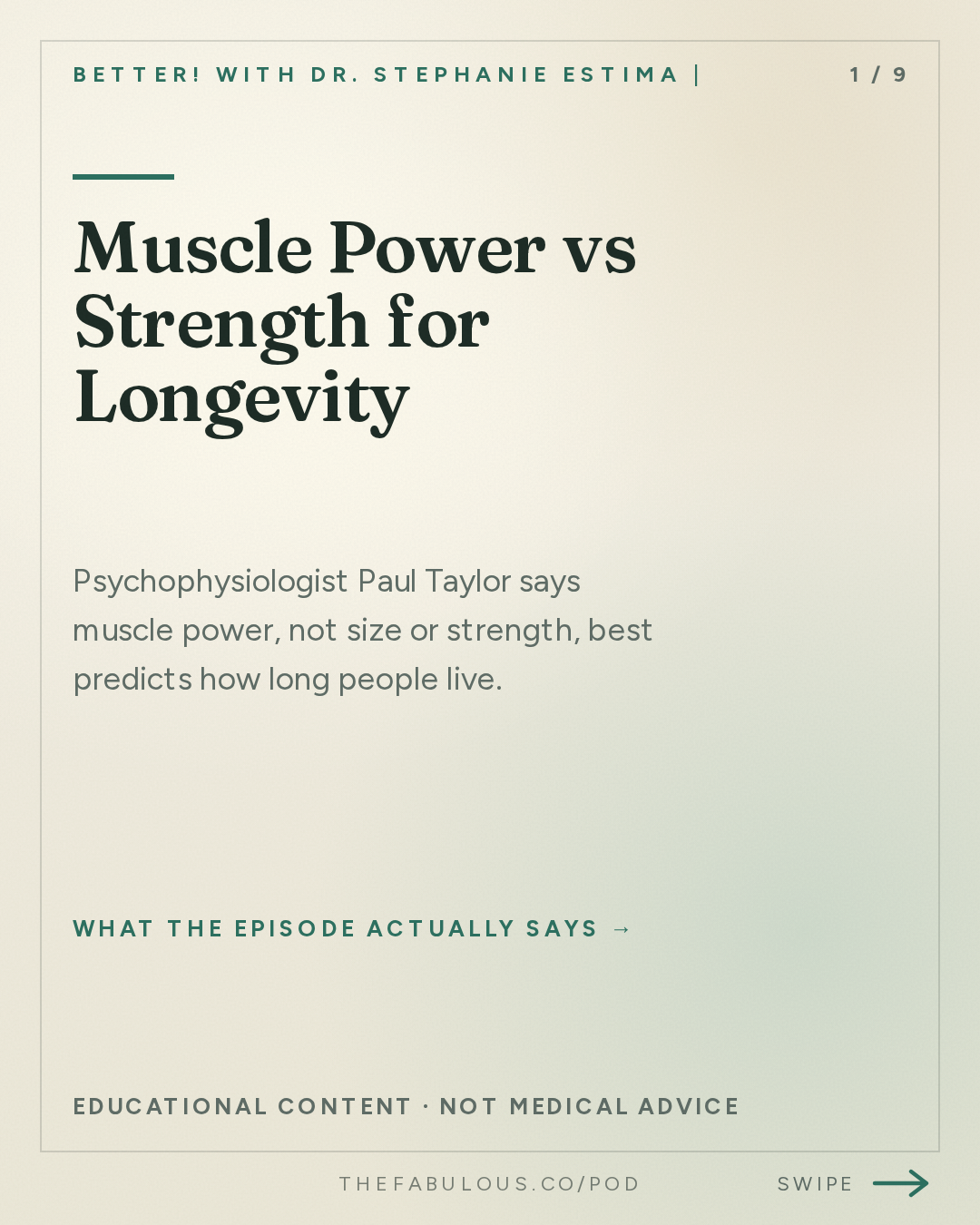
Psychophysiologist Paul Taylor says muscle power, not size or strength, best predicts how long people live. He tells Dr. Stephanie Estima that myokines, signaling molecules released by contracting muscle, act like an internal pharmacy, and he gives dosing-style guidance on power training, protein, omega-3, and cold plunge limits.
In the 1970s, a group of scientists sealed themselves inside a glass terrarium in California called Biosphere 2, meaning to grow every calorie they ate. The crops failed. The team ended up on an accidental diet of calorie restriction and low protein. When they emerged, some biomarkers of aging had improved. They had also lost their sex drive, their mood, and a good deal of muscle. Psychophysiologist Paul Taylor brings up this episode on Dr. Stephanie Estima's podcast, BETTER!, as the biggest accidental human experiment ever run on a low protein diet (79:39). His verdict: you might live longer that way, but, as he puts it, life will be crap (80:31).
That small, dry joke sits at the center of a much larger argument. Taylor, who holds a PhD in psychology plus a master's in exercise science and nutrition, spends nearly two hours making the case that the culture has the wrong scorecard for aging well. The scorecard most people use rewards thinness. The one Taylor wants people using rewards muscle, and specifically a quality of muscle that almost nobody measures: power.
The Pharmacy You Already Own
Start with the chemistry. Every time a muscle contracts, whether from lifting weights, doing housework, or walking the dog, it releases proteins and peptides called myokines. Scientists have identified more than 600 candidate myokines and understand what roughly 60 of them do (06:18). These molecules travel through the bloodstream and signal to organs well beyond the muscle itself.
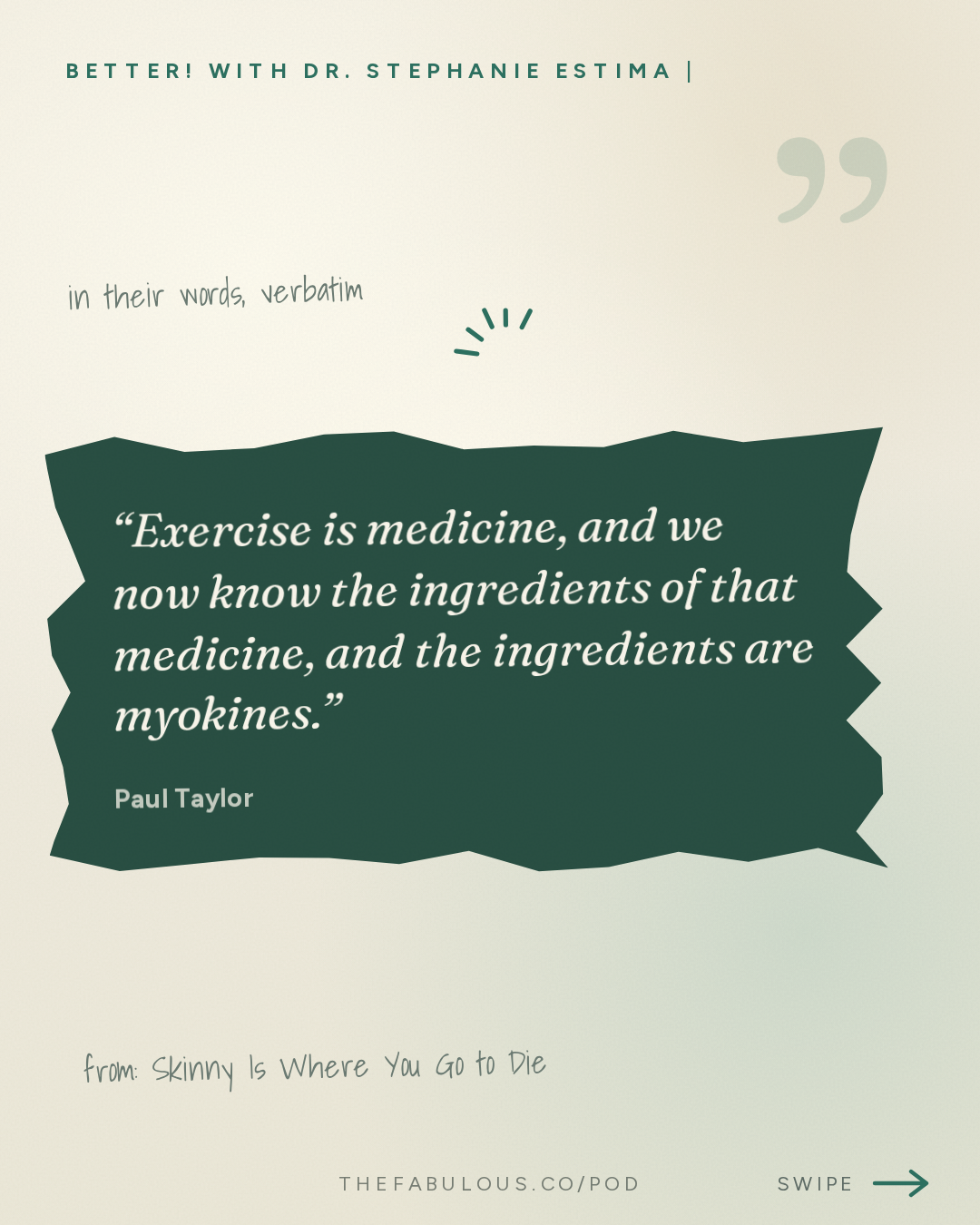
"Exercise is medicine, and we now know the ingredients of that medicine, and the ingredients are myokines." — Paul Taylor [06:18]
Two of these molecules, irisin and lactate, cross the blood-brain barrier and trigger the release of brain-derived neurotrophic factor, or BDNF, a protein that helps grow new brain cells even in old age and protects existing ones from damage (08:21). Taylor's example is blunt: if two people suffer an identical stroke, the one who had exercised that morning, and so had more BDNF circulating, will come away with less brain damage.
This is also why Taylor treats inactivity as more than a missed opportunity. He quotes a line from exercise physiologist Frank Booth's 2012 paper in the Journal of Applied Physiology: the human genome has not changed in 45,000 years, and it still expects high physical activity for normal function, not optimal function (11:17).
"The human genome requires and expects us to be highly physically active for normal functioning." — Paul Taylor, quoting Frank Booth [11:17]
To see what normal once looked like, Taylor points to a 2016 Harvard study of the Hadza, a hunter-gatherer community in Tanzania. Hadza women average around 10,500 steps a day, and the group as a whole logs about 945 minutes of moderate to vigorous activity every week (13:14). Public health guidelines recommend 150 to 300 minutes. Taylor's point isn't that everyone should hit Hadza numbers starting Monday. It's that current guidelines are a floor, not a finish line, and that the modern, sedentary default is itself doing active harm to mood, calling it, in Taylor's phrase, an active depressant (11:17) that works against the six separate feel-good brain chemical systems exercise switches on at once, including dopamine, serotonin, and norepinephrine (10:52).
Power, Not Just Strength
If myokines explain why movement matters, the second half of the conversation explains which movement matters most as people age. Muscle size matters for longevity. Muscle strength matters more than size. But the newest research Taylor cites puts muscular power ahead of both (22:38). Power is simply how fast force gets produced, force times distance divided by time. It's the quality that lets someone catch themselves after a trip instead of falling.
People lose power at roughly three times the rate they lose strength, and the loss hits women harder, since women tend to carry more slow-twitch fiber on average while men carry more fast-twitch fiber, the type that disappears fastest with age (25:19). Taylor's prescription is specific: train with 30 to 50 percent of a one-rep max, and move the weight as fast as possible on the lifting phase, whether that's a jump squat, a box jump, or simply exploding up out of a squat after a slow, controlled descent (23:48).
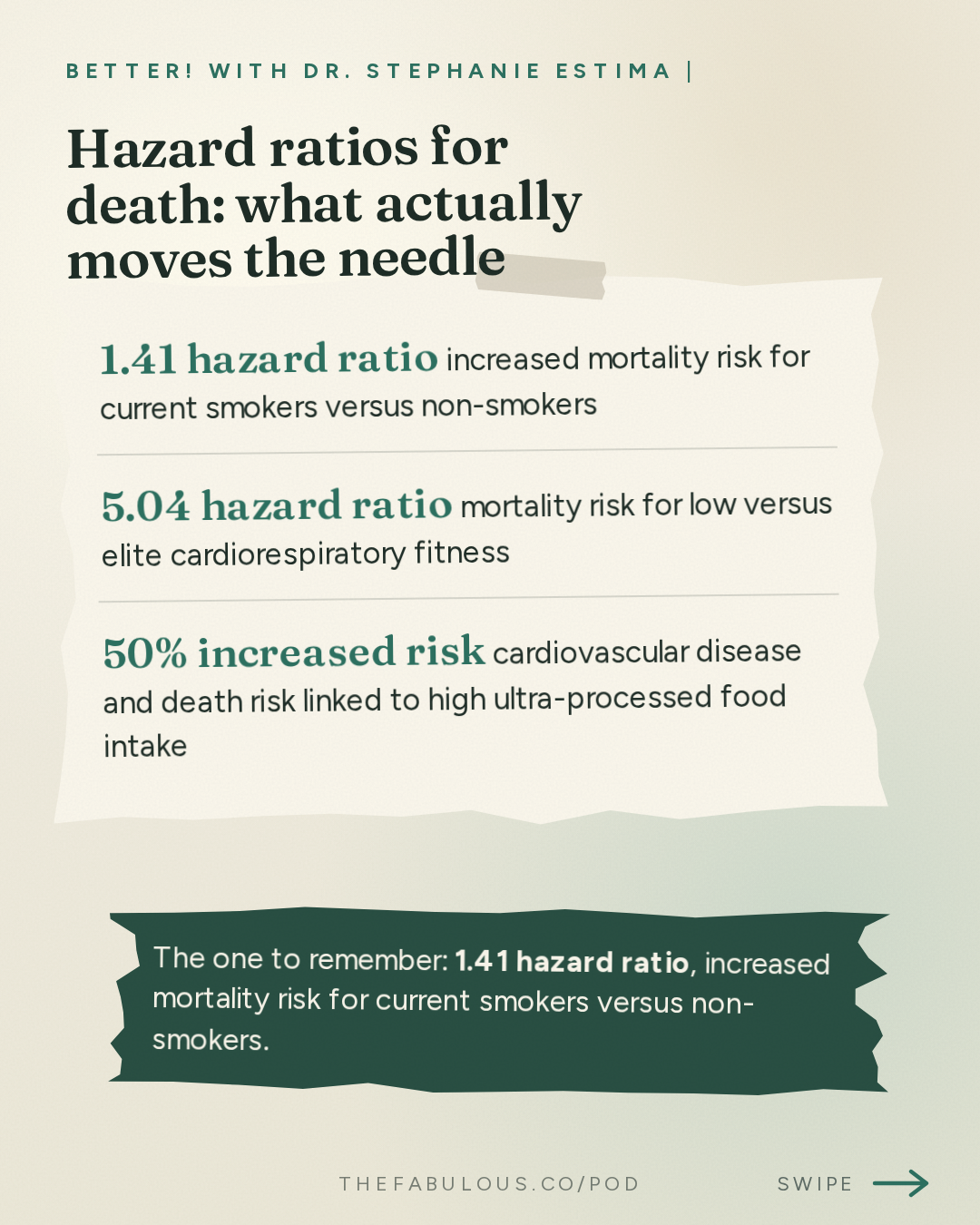
The numbers behind this recommendation are what make the conversation land. Drawing on hazard-ratio studies covering more than a million people, Taylor runs through comparative risks of death over 15 years: hypertension carries a hazard ratio of 1.21, coronary artery disease 1.29, diabetes 1.4, and being a current smoker 1.41 (90:10). Low cardiorespiratory fitness compared with elite fitness carries a hazard ratio of 5.04 (91:00). Low muscular power compared with high muscular power carries a hazard ratio of roughly 5 for men and 6 for women, meaning the gap between weak and powerful muscle predicts death more strongly than smoking does (100:41). Nobody's doctor measures grip strength or muscular power at a checkup. Taylor thinks that's a bigger miss than it sounds.
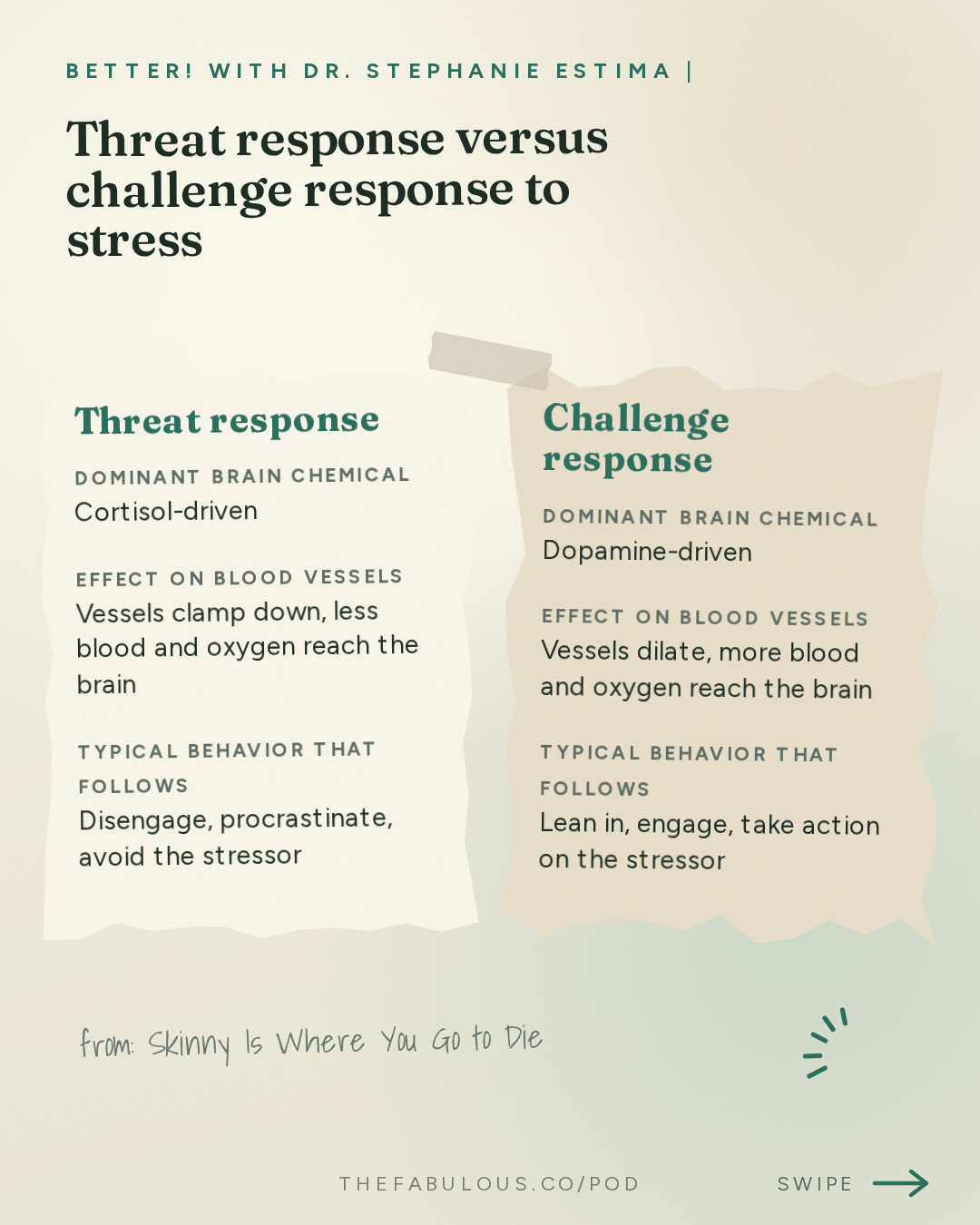
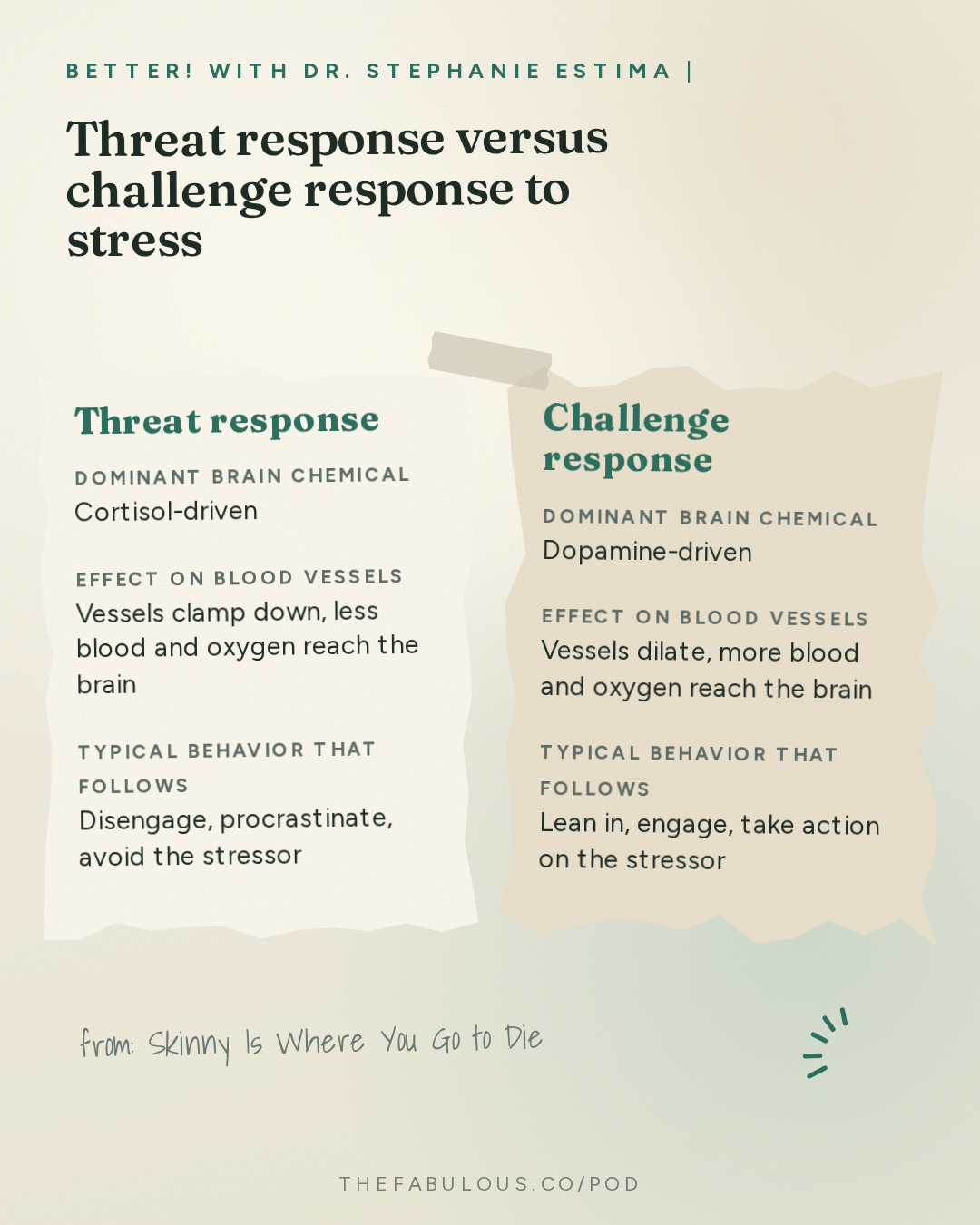
Stress gets the same treatment. Taylor distinguishes a threat response from a challenge response, drawing on research by University at Buffalo psychologist Mark Seery. Facing a stressor as a threat routes the body through the HPA axis and cortisol, which clamps down blood vessels and reduces blood and oxygen to the brain, producing shutdown, procrastination, and avoidance (51:58). Facing the same stressor as a challenge activates the sympathetic nervous system instead, dilating blood vessels and priming the body and brain to act (51:25). The chemical difference matters because of how long it lasts: adrenaline and noradrenaline have a half-life of one to two minutes, so their effects clear within about ten minutes, while cortisol's half-life runs over an hour, meaning a stressful event can leave someone chemically affected three or four hours later (52:22). Chronic occupational stress compounds this: Taylor cites workplace research showing it causes the amygdala, the brain's threat-processing region, to enlarge, while the frontal lobes, responsible for judgment and self-control, shrink (47:10). That combination makes a stressed brain more reactive to threats and less able to regulate the eating, drinking, and avoidance behaviors that follow.
Diet gets a simpler filter than most listeners will expect. Taylor's rule: if a food recently grew out of the ground, off a tree, or ran, flew, or swam, and humans haven't interfered with it much, eat it (66:17). He cites an umbrella review, a review of reviews, showing ultra-processed food intake carries class one evidence, rare in nutrition research, of raising cardiovascular disease and death risk by 50 percent, anxiety disorder risk by 48 percent, and common mental health disorder risk by 53 percent, across 32 total negative outcomes (67:38). On protein, Taylor recommends 1.6 to 2.0 grams per kilogram of body weight for people past 40, to counter anabolic resistance, the age-related decline in how efficiently muscle turns protein into new tissue, though he stresses protein alone does nothing without resistance training behind it (70:08). He also flags the omega-3 index, a blood test measuring omega-3 levels in red blood cells over roughly the prior three months: people with an index of 8 or higher live about five years longer on average than those at 5 or below (72:44).
Which brings the conversation back to Biosphere 2 and the Blue Zones, the regions researcher Dan Buettner popularized as longevity hotspots eating low protein diets. Taylor calls the framing "blue zone bullshit" and argues the underlying research has been misrepresented, comparing it to the fraudulent reputation now attached to Ancel Keys's six-country study on saturated fat (77:50). Whatever the regions' true dietary patterns, Taylor's objection isn't really about data forensics. It's about what a culture chooses to optimize for. Estima closes the episode returning to the same idea in her own words, describing thinness as a dead end for the qualities that make a life worth living.
"That is where you go to die, you know? Like, your power goes to die there, your strength goes to die there, your muscle size goes to die there." — Dr. Stephanie Estima [101:06]
Taken together, the episode makes a quiet but pointed substitution. Instead of asking how little a body can weigh, it asks how much force that body can produce, how fast it can produce it, and how well its chemistry recovers from stress. None of that shows up on a bathroom scale. All of it, according to the hazard ratios Taylor cites, shows up in how long someone actually lives.
Ask this episode anything
Pod's AI answers from the episode itself, with the minute mark so you can hear it yourself.
Or start with one of these
Ask this episode
Pod's AI listens to the whole episode to answer, and points you to the minute it comes from.
The rest of this answer, and any question after it
Answers come from the episode itself, never from a summary of it.
ContinueKey takeaways
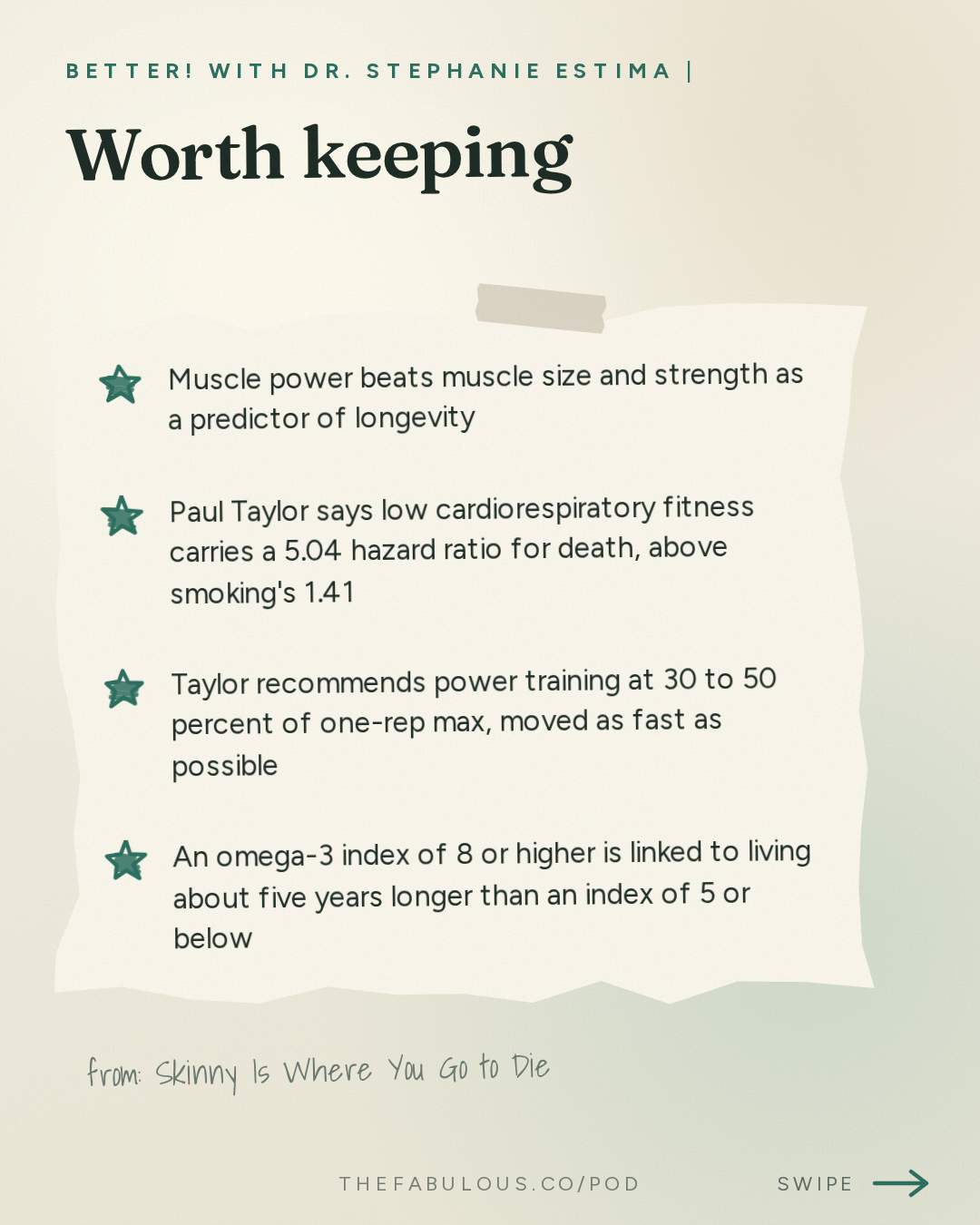
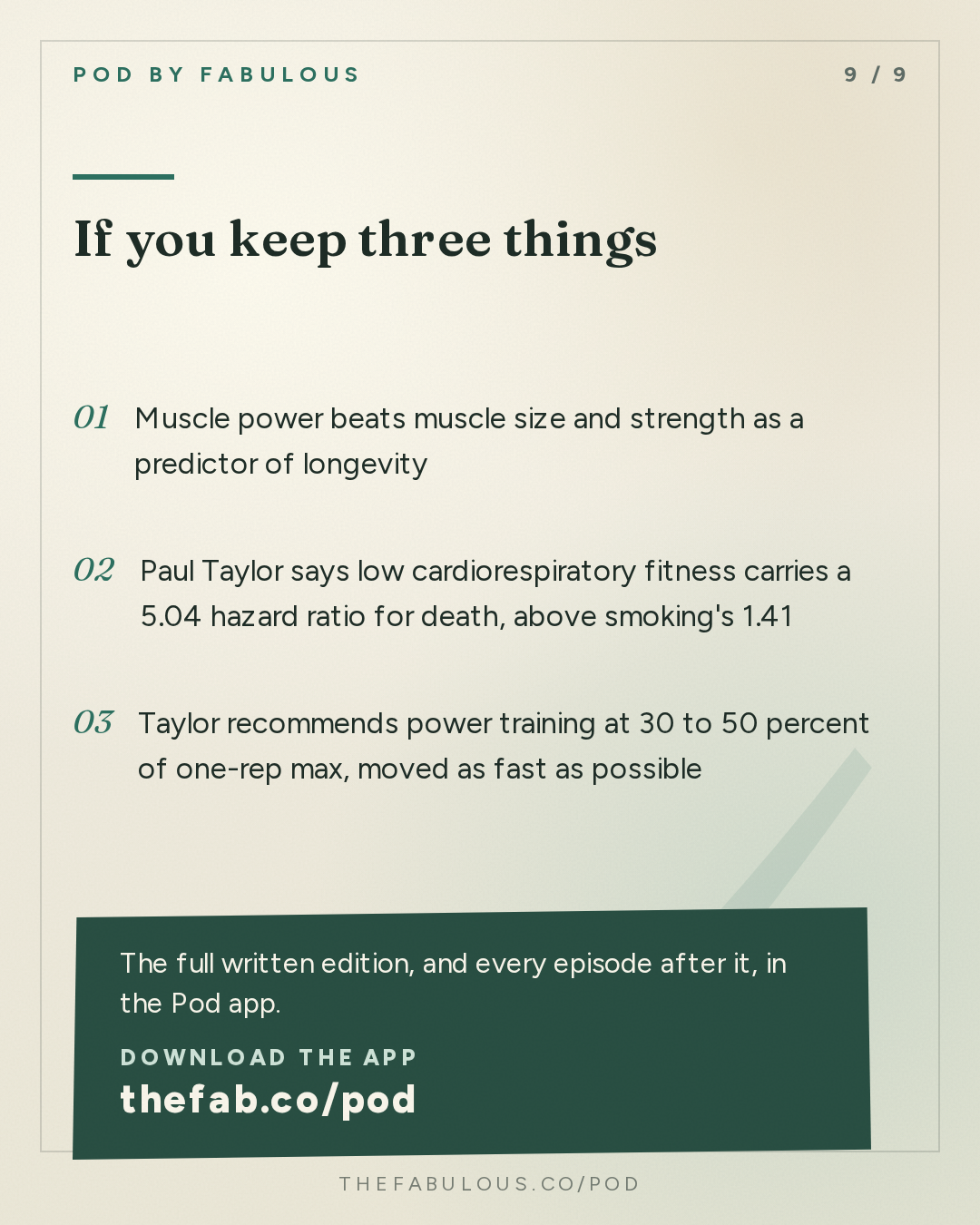
- Muscle power beats muscle size and strength as a predictor of longevity
- Paul Taylor says low cardiorespiratory fitness carries a 5.04 hazard ratio for death, above smoking's 1.41
- Taylor recommends power training at 30 to 50 percent of one-rep max, moved as fast as possible
- An omega-3 index of 8 or higher is linked to living about five years longer than an index of 5 or below
- Taylor calls the Blue Zones low-protein longevity story misrepresented and unsupported by the underlying data
The episode in cards

By the numbers
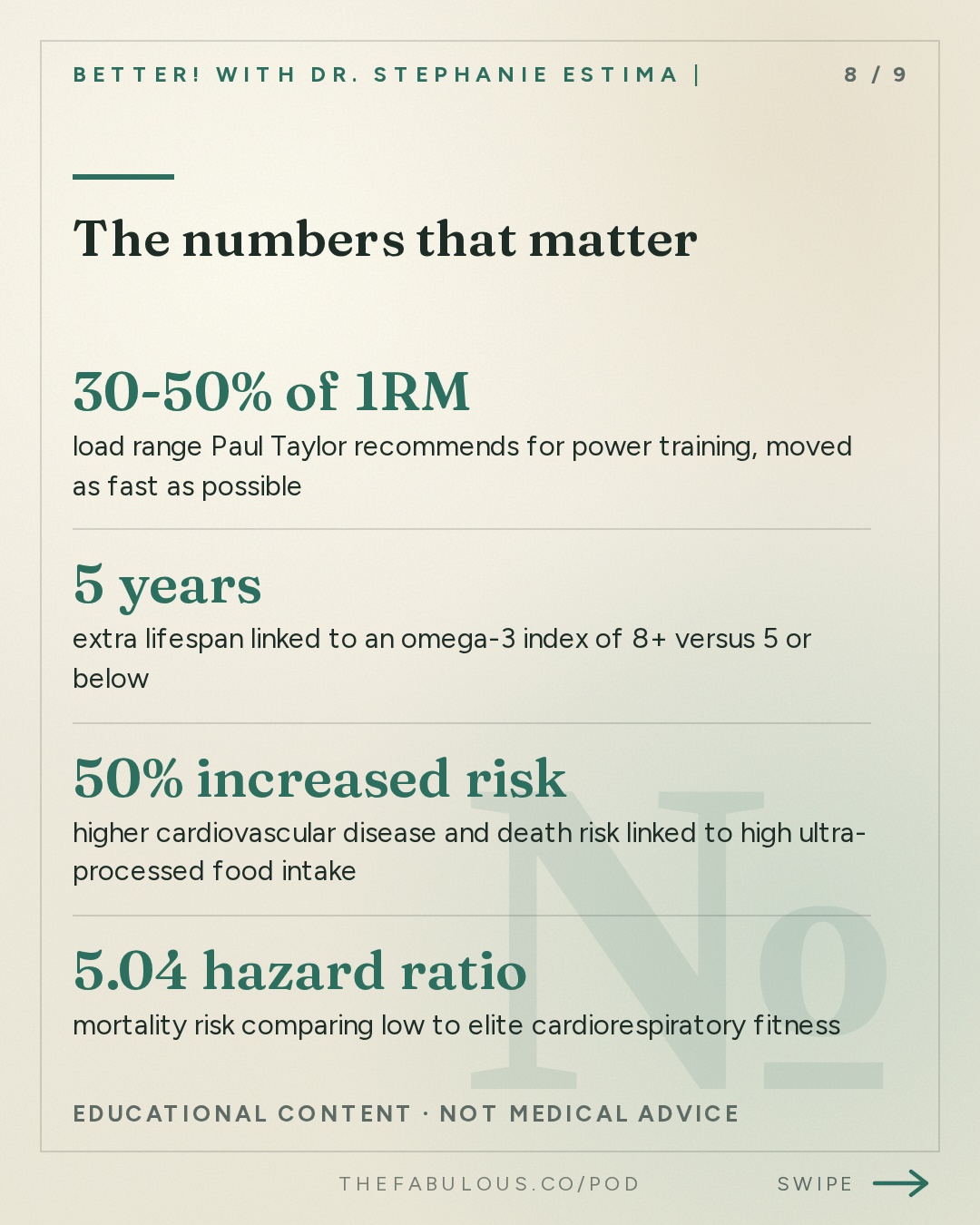
- 30-50% of 1RM load range Paul Taylor recommends for power training, moved as fast as possible
- 5 years extra lifespan linked to an omega-3 index of 8+ versus 5 or below
- 50% increased risk higher cardiovascular disease and death risk linked to high ultra-processed food intake
- 5.04 hazard ratio mortality risk comparing low to elite cardiorespiratory fitness
In their words
“Exercise is medicine, and we now know the ingredients of that medicine, and the ingredients are myokines.”
“The current human genome requires and expects us to be highly physically active for normal functioning."”
“It's a slower rise, but it's a longer, longer rise, and then there's not a crash associated with it, right?”
“That is where you go to die, you know? Like, your power goes to die there, your strength goes to die there, your muscle size goes to die there.”
Protocols
-
Power training for fading fast-twitch fibers
Paul Taylor recommends training with 30 to 50 percent of one-rep max and moving the weight as fast as possible on the lifting phase, since the goal is speed of force production rather than heavy load.
1 to 2 dedicated sessions a week, or the first set or two within a regular strength workout
-
Protein target to counter anabolic resistance
Paul Taylor recommends eating 1.6 to 2.0 grams of protein per kilogram of body weight once combined with resistance training, since protein intake alone will not rebuild muscle without a training stimulus.
daily, from the 40s onward
-
Cold plunge time cap
Paul Taylor recommends keeping cold plunges under eight minutes and exiting at the first sign of shivering, since shivering turns a beneficial stressor into one that suppresses immune function.
as desired, roughly 1 to several minutes per session
-
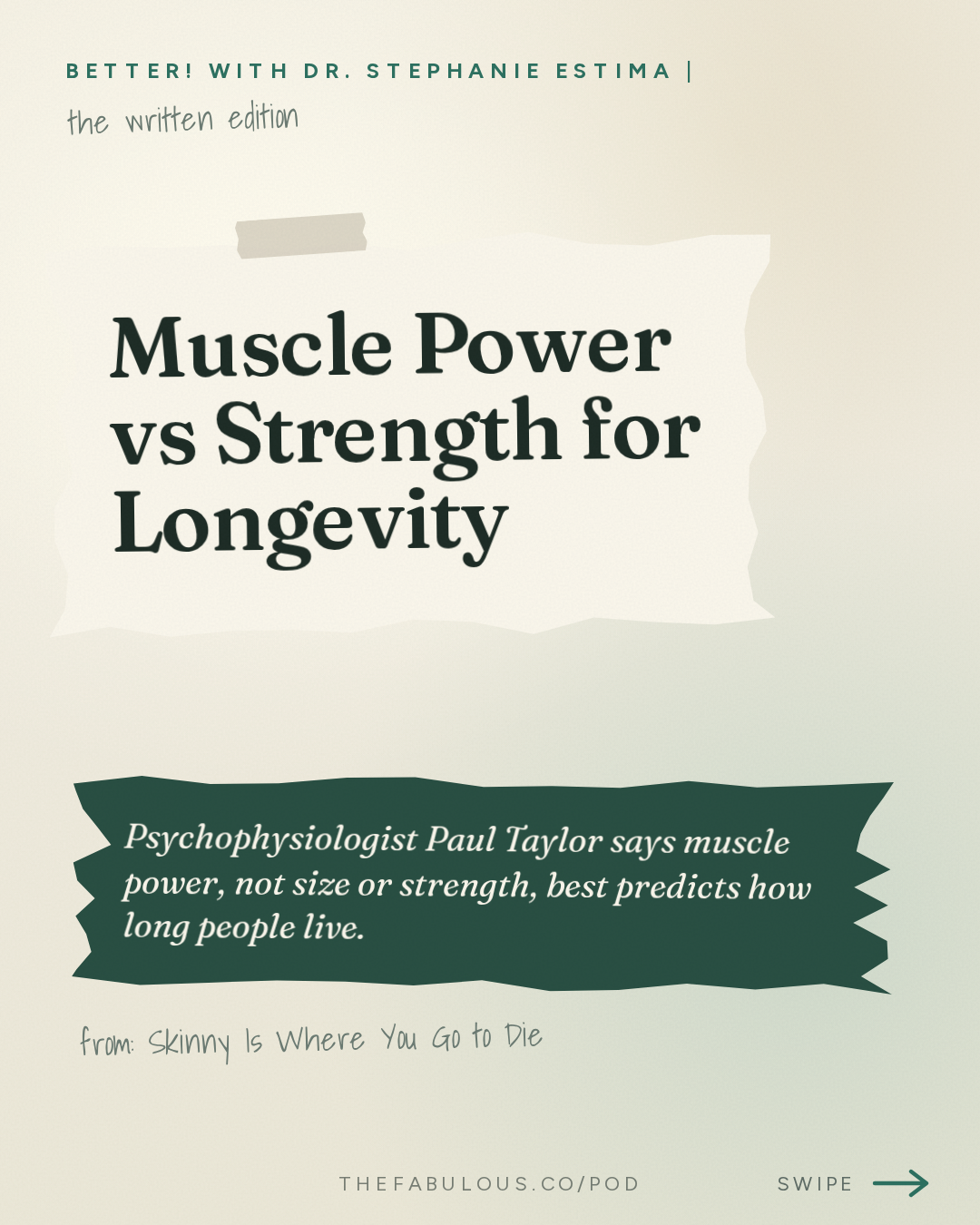
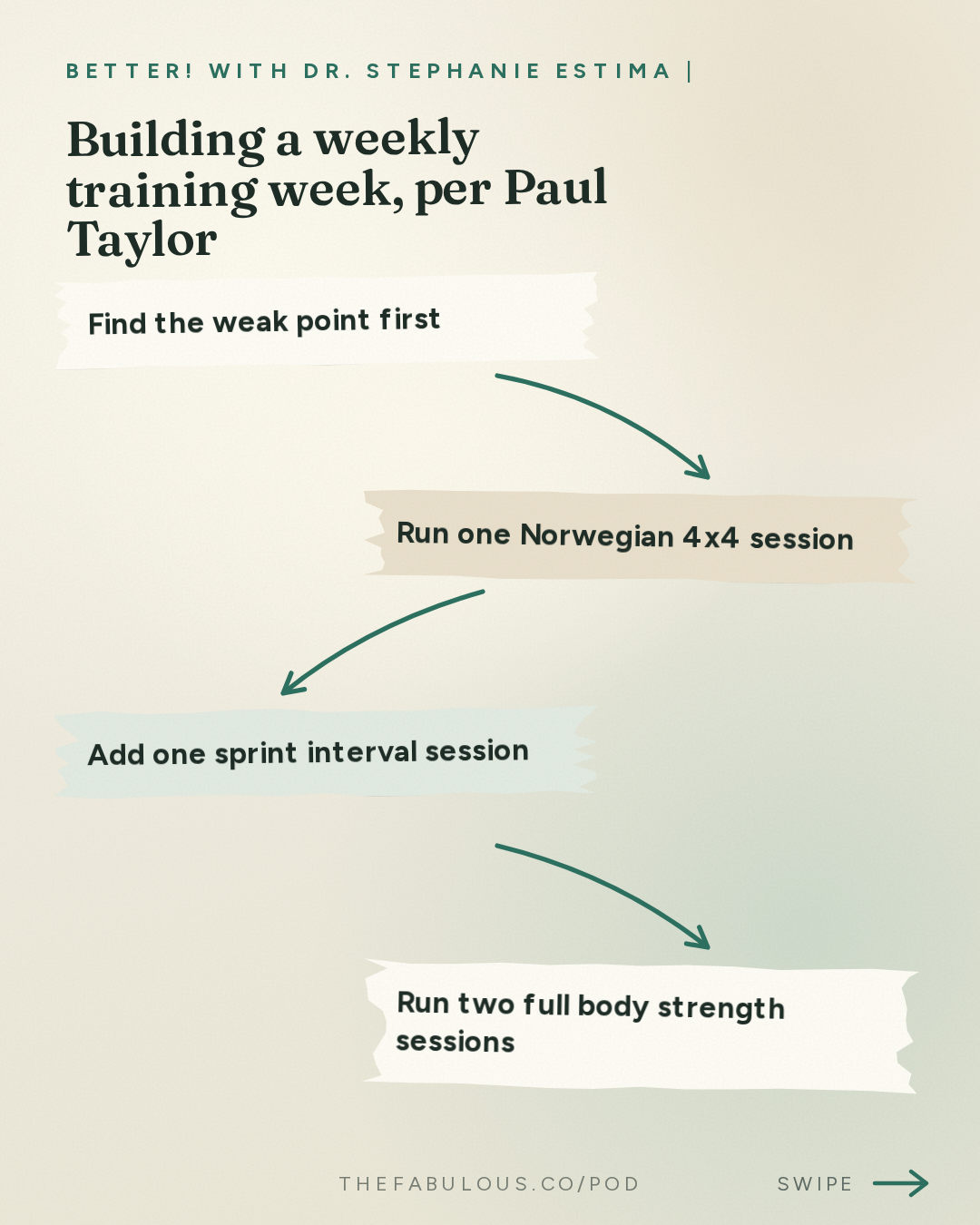
Norwegian 4x4 cardio session
Paul Taylor recommends four 4-minute intervals at about 95 percent of maximum effort with 3 minutes of easy recovery between each interval, totaling roughly 30 minutes with warmup and cooldown.
once a week as a baseline cardio investment
Questions this episode answers
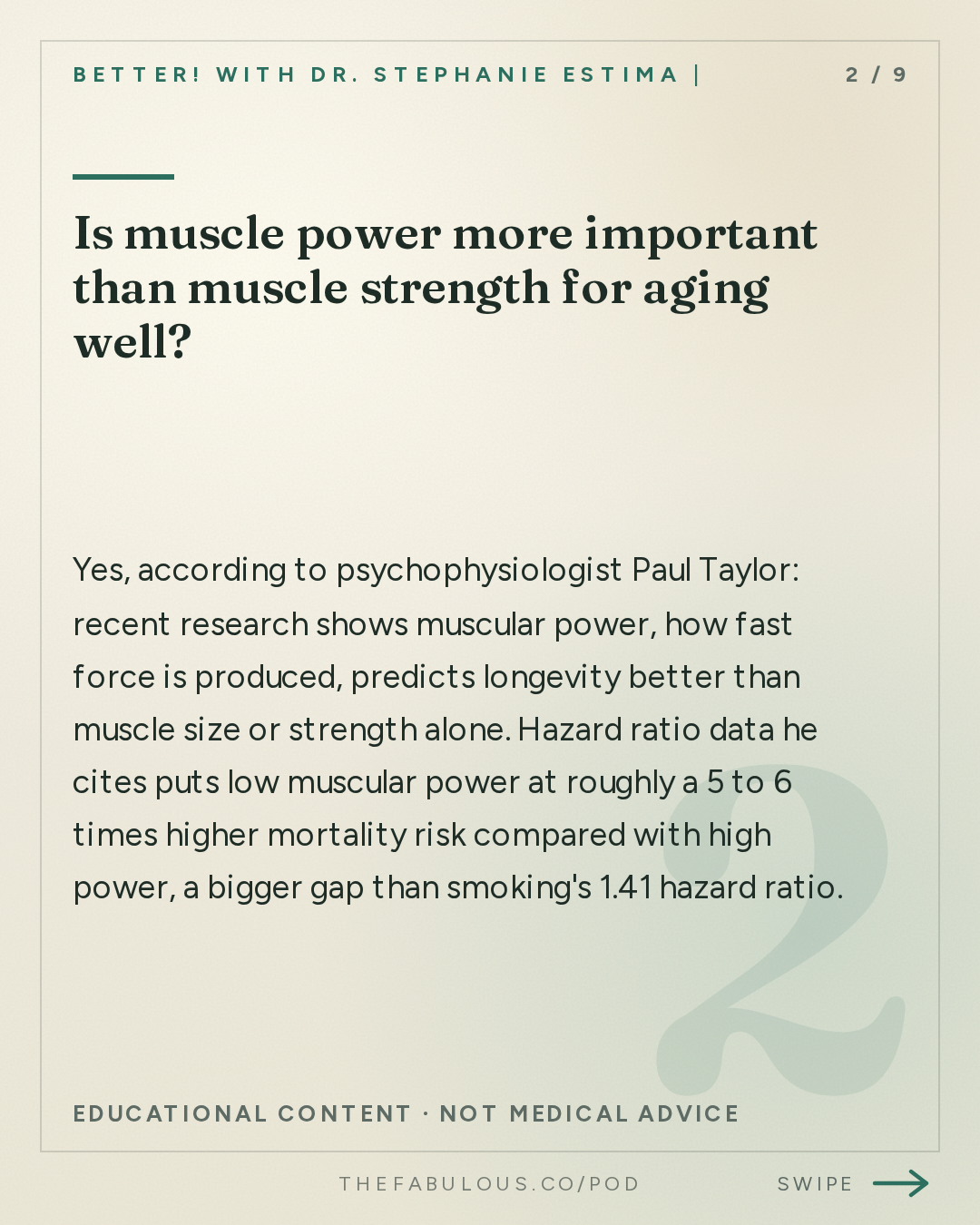
Is muscle power more important than muscle strength for aging well?
Yes, according to psychophysiologist Paul Taylor: recent research shows muscular power, how fast force is produced, predicts longevity better than muscle size or strength alone (22:38). Hazard ratio data he cites puts low muscular power at roughly a 5 to 6 times higher mortality risk compared with high power, a bigger gap than smoking's 1.41 hazard ratio (100:41).
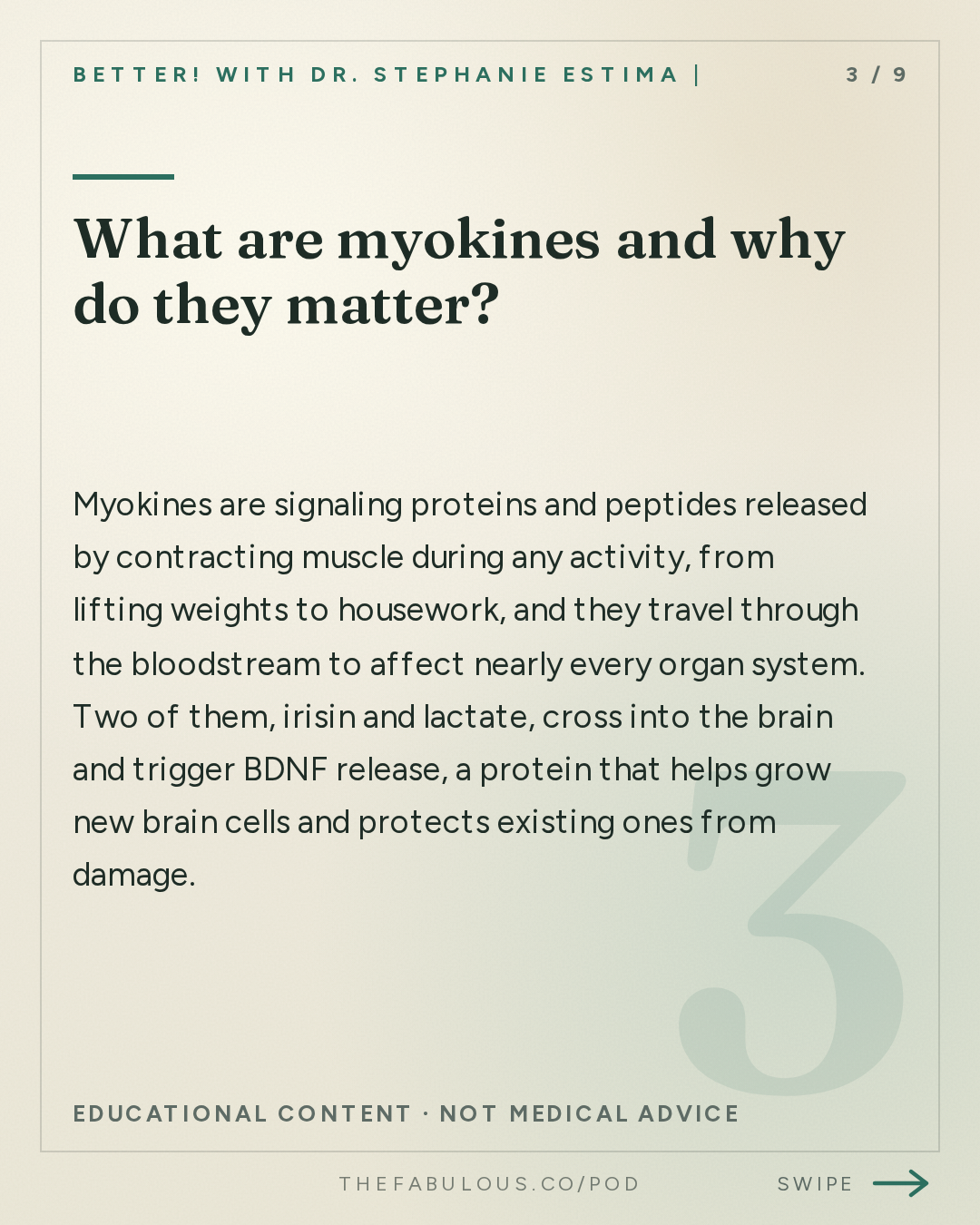
What are myokines and why do they matter?
Myokines are signaling proteins and peptides released by contracting muscle during any activity, from lifting weights to housework, and they travel through the bloodstream to affect nearly every organ system (05:15). Two of them, irisin and lactate, cross into the brain and trigger BDNF release, a protein that helps grow new brain cells and protects existing ones from damage (08:21).
Does cold plunging raise cortisol in women?
Paul Taylor says he has not found a published study showing a 2 to 5 minute cold plunge raises cortisol; it raises adrenaline and noradrenaline instead (35:27). His one caveat is time: staying in past the point of shivering, often around 8 minutes, turns the cold exposure into a stressor that suppresses immune function (38:03).
What is the Norwegian 4x4 interval training protocol?
It is four 4-minute intervals performed at about 95 percent of maximum effort, each followed by 3 minutes of easy recovery, for a session of roughly 25 to 30 minutes including warmup and cooldown. Paul Taylor calls it one of the best single weekly investments for improving cardiorespiratory fitness (92:45).
How much protein do women need after menopause?
Paul Taylor recommends 1.6 to 2.0 grams of protein per kilogram of body weight for aging adults, to counter anabolic resistance, the age-related decline in how efficiently muscle converts protein into new tissue (70:08). He stresses this only works alongside resistance training, since protein intake alone does not rebuild muscle.
Is the Blue Zones low-protein diet actually good for longevity?
Paul Taylor disputes the framing, arguing the underlying Blue Zones research has been misrepresented and comparing it to the now-discredited Ancel Keys six-country study on saturated fat (77:50). He also points to the Biosphere 2 experiment, where participants on an accidental low-protein, calorie-restricted diet showed some longevity markers but also lost muscle, mood, and libido (79:39).
The full read, in cards
Go deeper
- Death by Comfort — Paul Taylor's book arguing modern life strips out the hormetic stressors, like cold, heat, and hunger, that keep the body resilient
- Harvard study of Hadza physical activity (2016) — found Hadza hunter-gatherers log far more daily steps and vigorous activity minutes than typical Americans
- Umbrella review on ultra-processed foods — linked higher ultra-processed food intake to 32 negative health outcomes, including a 50 percent rise in cardiovascular death risk
- Frank Booth, Journal of Applied Physiology (2012) — argued the human genome still expects high physical activity for normal function since it hasn't changed in 45,000 years
- COSMOS study — found a Centrum multivitamin used as the control group improved older adults' cognitive function more than the cocoa flavonoid being tested
Mentioned
Dr. Paul Taylor · Dr. Stephanie Estima · Professor Frank Booth · Hadza · Professor Mike Tipton · Mark Seery · Bruce Ames · Walter Willett · Dan Buettner · Hardy's Daily Essentials · Centrum · Nordic Naturals · Vibrams · Death by Comfort · COSMOS study
More from this show and category

ADHD in Perimenopause: Why Symptoms Intensify
Dr. Jolene Brighten says ADHD in women often surfaces in perimenopause, when falling estrogen stops masking lifelong symptoms. Estrogen supports dopamine and acetylcholine, so its decline during the luteal phase and perimenopause worsens executive function, mood, and focus, explaining why many women are diagnosed only in their 30s and 40s.

Strength Training for Hypermobility, Done Safely
Hypermobile joints move past normal range because ligaments are too loose, so strength training, not stretching, is the primary fix. Dr. Stephanie Estima recommends training within 80% of available range of motion, using slow eccentrics and isometric holds, plus adequate protein and vitamin C to support connective tissue repair.

Physiology of Grief and Heart Attack Risk
Grief is not just an emotion, it is a measurable physiological event: a 21-times spike in heart attack risk in the first 24 hours after a loss, elevated cortisol for months, and a brain that keeps treating the dead as still out there somewhere.

Katy Bowman: Movement as Nutrition, Not Exercise
Biomechanist Katy Bowman argues movement is a nutrient the body requires daily, not a scheduled workout, and that modern convenience saves movement rather than time. She maps a movement pyramid from floor-sitting to sprinting, links bone strength to changing direction, and traces midlife foot pain to decades of repeated gait patterns.
