
The Overwhelm Recovery ProtocolWellness & Routines · ~5 min
About this template · Updated November 2026
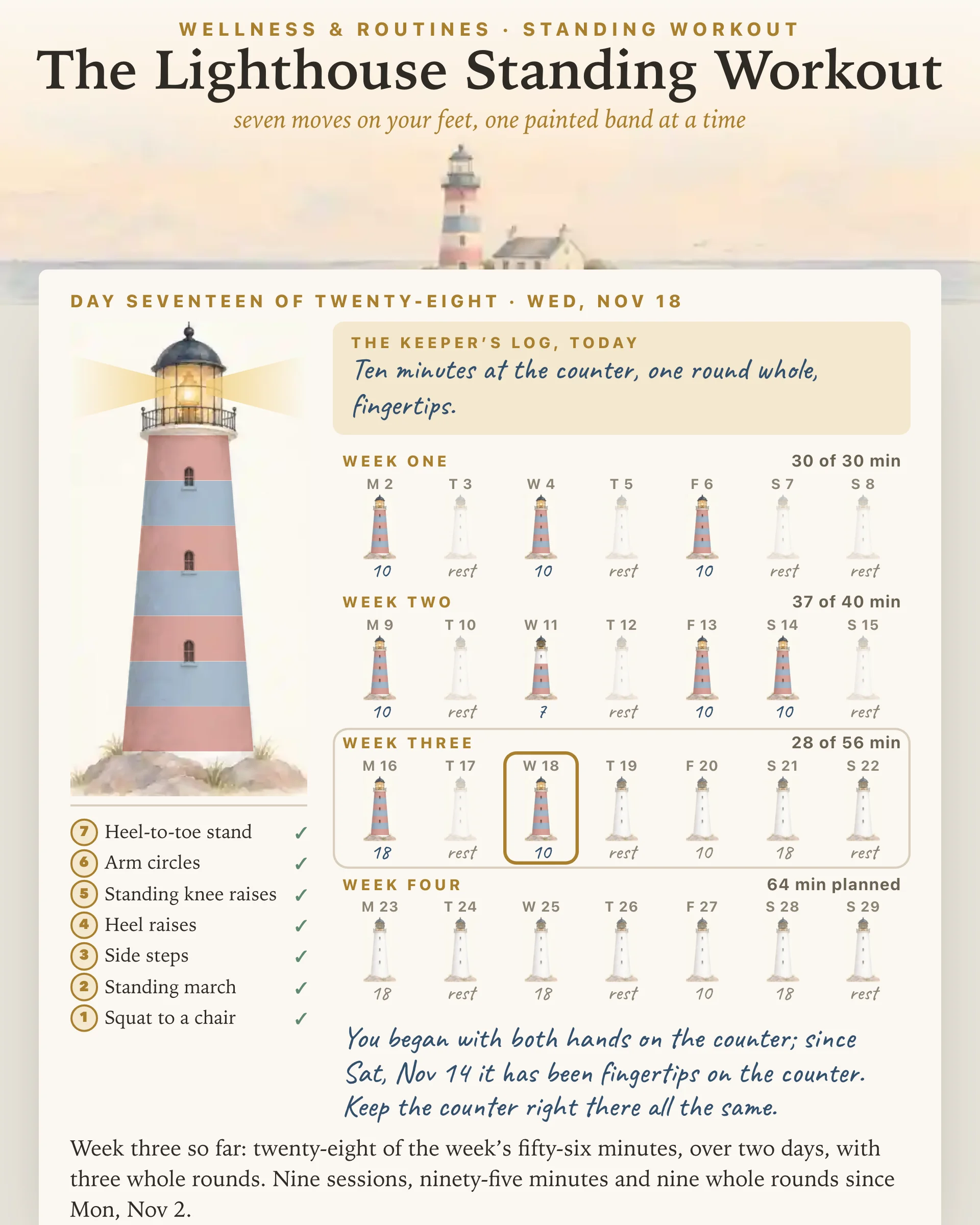
Standing exercises ask for nothing but a floor, your own two feet and something sturdy to hold. There is no getting down onto a mat and no struggle to get back up, which is often what keeps people from starting. Everything here happens upright, beside your kitchen counter, the back of a solid chair or a clear stretch of wall, in about ten minutes.
The routine works your legs, hips and balance together:
Every move comes with an easier version and a line saying where your hands go. Nothing asks you to let go of your support.
The worksheet is a white lighthouse with seven bands, one per move, from the squat at the bottom to the heel-to-toe stand under the lamp. Pick what you will hold on to and start a round. Two minutes of shoulder rolls, weight shifts and ankle circles come first. Then each move gets forty seconds while its band fills with paint, and twenty easy seconds to shake out and read the next cue. A final minute lets your breathing settle.
When all seven moves and the easy seconds between them run to the end, the lamp lights. A second round, which the plan brings in during weeks three and four, gives every band a second coat. The clock counts real time from your start, minus pauses, so a phone that locks in your pocket never loses your place. Stop early and your whole minutes still go in the log, a move cut short leaves its band bare, and an unfinished round leaves the lamp dark.
After each session the page asks how you held on: two hands, one hand, fingertips, or hands hovering just above. Over the weeks those answers become a short reading of how much support you have used. Both hands for all four weeks is a perfectly good way to do this routine; the reading helps you notice change and never coaxes you off the counter.
Week one asks for one round on three days, week two adds a fourth day, and weeks three and four add a second round on some days, so the longest sessions run eighteen minutes. Each day is a small lighthouse that fills as your minutes meet its plan.
A Cochrane review of 108 trials with more than 23,000 older people living in the community found that programs built mainly on balance and functional exercises cut the rate of falls by about a quarter compared with control groups. Its findings on fall-related fractures and hospital stays were far less certain. The trials tested whole programs, and the review cannot tell you what one particular routine will do for you, so this page makes no such promise.
In an early trial from New Zealand, women aged 80 and over who followed a home program of strength and balance exercises, set up by a physical therapist, had fewer falls over a year than women who received social visits instead, and their balance scores had improved by six months.
The World Health Organization's 2020 guidelines turn findings like these into a plain target: older adults should do varied activity that emphasizes balance and strength on three or more days a week. The plan here sits at three or four days for that reason.
Stand at something that will not slide: a counter, a heavy chair pushed against the wall, or the wall itself. Clear the floor, and wear shoes that grip or go barefoot rather than socks. If you have had a fall, get dizzy, have a new hip or knee, a heart or blood pressure condition, or pain that does not settle, talk with your doctor or a physical therapist before you begin. Stop any move that hurts, and sit down if you feel lightheaded.
Reach for it when you want strength and balance work without lying down. On days when ten minutes on your feet is too much, The Chair Circuit keeps you moving while seated. If balance is the part you most want to build, The Balance Ladder works through it in graded steps, and The Whole-House Strength Routine takes the leg work further. To see how steady you are on one foot from week to week, The Shorebird Shelf times a single leg balance at the counter.
They are strength and balance moves done on your feet, with no floor work and no equipment: rising from a chair, marching in place, stepping sideways, rising onto your toes, bringing a knee up, circling the arms and standing heel to toe. A counter or chair back stays within reach the whole time.
Moves that train the legs and balance at once suit most older adults: a squat to a chair, heel raises, side steps and a heel-to-toe stand. Do each one beside something sturdy you can grab, take the easier version on stiff days, and ask your doctor or a physical therapist first if you have had a fall or get dizzy.
Ten minutes makes a sound start: two minutes to warm up, a minute for each of seven moves and a minute to breathe at the end. This plan adds a second round on some days in weeks three and four, so the longest sessions run eighteen minutes, on three or four days a week.
Only on a day you feel steady, and only with the counter still right under your hands. Holding on is part of the exercise rather than a sign of weakness, and plenty of people keep one hand on it for months. Stop any move that hurts or leaves you lightheaded.
Trials of balance and functional exercise in older people living at home found fewer falls among those who took part, and the World Health Organization advises balance and strength work on three or more days a week. That evidence comes from whole programs followed over months, so it promises no particular result from any single routine.
By the team behind Fabulous, the science-based self-care app used by over 30 million people.


