
The Overwhelm Recovery ProtocolWellness & Routines · ~5 min
About this template · Updated November 2026
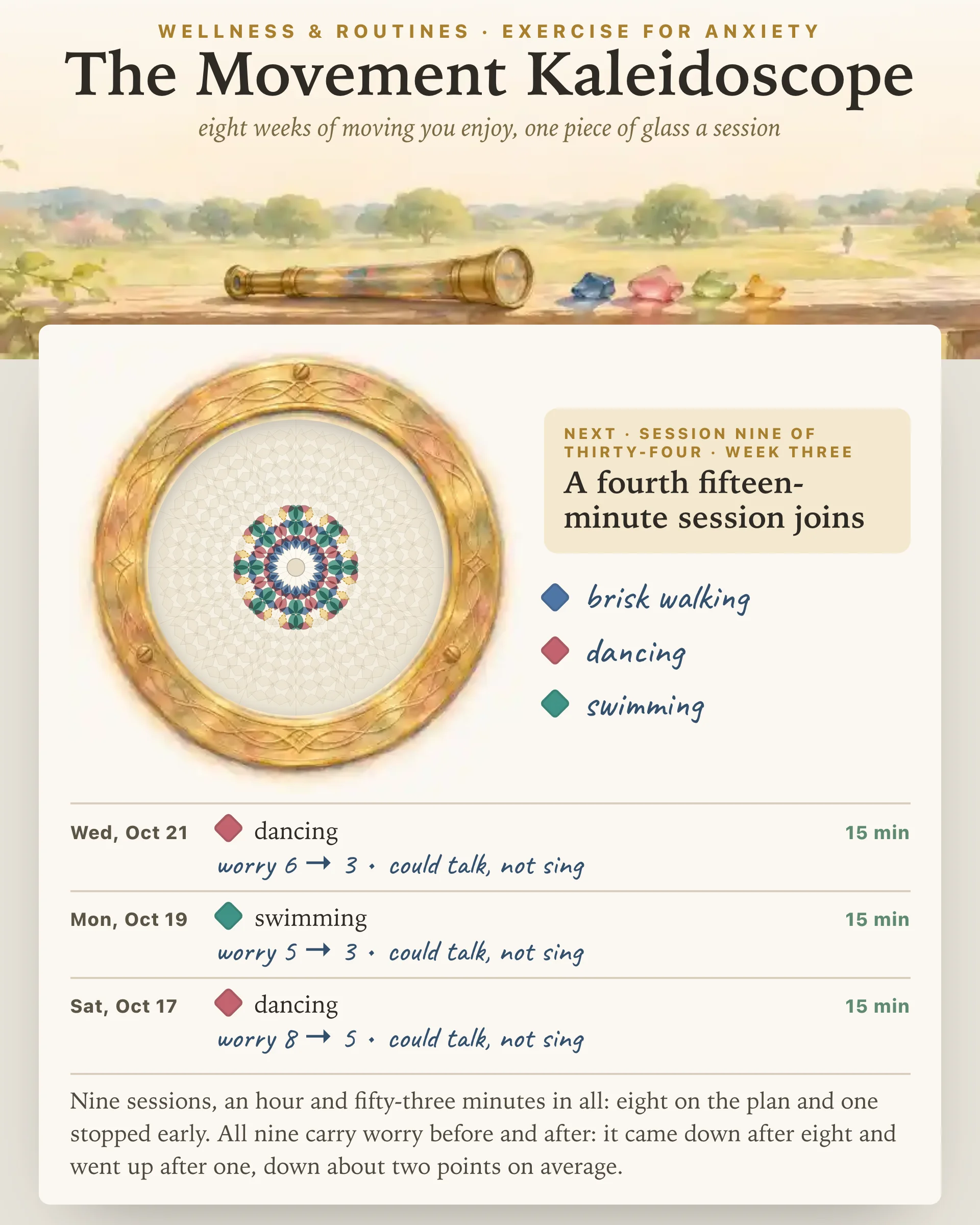
Anxiety keeps the body braced for something that rarely arrives: a quick pulse, shallow breath, muscles that never quite let go. Moving on purpose gives all that readiness a job to do. This page turns exercise for anxiety into an eight-week plan built from activities you already like, three to five sessions a week, growing from ten minutes to thirty, with a timer that keeps true time and a worry number you mark before and after each session.
The largest summary so far, from researchers at the University of South Australia, gathered 97 systematic reviews covering 1,039 trials and about 128,000 adults. Across healthy people, people with mental health conditions and people living with chronic illness, physical activity lowered anxiety symptoms by a moderate amount compared with usual care, and harder sessions tended to help more than easy ones. Read the fine print, though: 77 of those 97 reviews were rated critically low in quality, and longer programs showed smaller effects than shorter ones. The finding is encouraging, not settled, and it cannot tell you which activity will suit you.
A Swedish trial enrolled 286 primary care patients with anxiety syndromes and assigned them to twelve weeks of group exercise mixing cardio and strength work, at a lower or a moderate to high intensity, or to standard care. Both exercise groups improved more than the comparison group on anxiety and on low mood, with a trend favoring the harder program. The symptoms were self-rated, the sessions were group classes rather than a plan at home, and the study cannot say how long the change lasts.
None of this makes exercise a cure. It sits alongside therapy, medication or whatever your doctor recommends, never in place of it.
A pounding heart, quick breathing and warm skin are exactly what exercise produces, and to an anxious mind they can feel like the start of panic. A small study of 54 people who strongly feared those sensations gave them six twenty-minute treadmill sessions: the fear of anxiety itself fell at both a gentle and a hard pace, but only the harder sessions eased the fear of the body sensations. It was short, with a follow-up of one week, so treat it as a hint rather than a promise.
The plan follows that hint gently. Weeks one and two ask for a pace where you could still sing, so the body gets used to a quicker heartbeat while it still feels safe. From week three the aim is moderate effort: you can talk in sentences but could not sing. That is the talk test, and it needs no watch.
Chest pain, fainting, feeling about to faint or real trouble catching your breath while you exercise is never worry to push through: stop and get medical care.
Start by choosing your glass: up to four activities you would happily do again, such as brisk walking, cycling, dancing, swimming or a short strength circuit of sit-to-stands, wall push-ups, step-ups and marching, with a hand on a rail or counter for the step-ups. Each one becomes a color in the kaleidoscope.
Before a session, tap your worry from 0 to 10. Press begin, and the session runs a warm-up, the main stretch at the week's effort and a cool-down, always adding up to its length. The clock reads real time, so a phone locked in a pocket still counts correctly, and pauses do not count. End early and only the whole minutes you moved go in the log, marked stopped early, and that session comes up again.
Afterward, mark your worry again and how the talk test went. Each finished session drops its glass into its week's ring, from week one at the center to week eight at the rim. The reading compares your numbers only with your own: how often worry came down, by about how much, and after which activities. Two sessions in a row at only a few words prompt you to ease off; two whole sessions you could sing through, from week three on, suggest a little more pace.
The same plan serves exercise for stress, the everyday kind that builds over a busy week: let the number track tension instead.
Somatic Exercises for Anxiety offers ninety-second body practices for a spike in the moment, and The Salt and the Lake trains attention with short mindfulness exercises. The Calming Yoga Fern builds slow poses around a longer out-breath. This page is steady movement that lifts your heart rate, week after week. If you mostly walk, The Brisk Walking Metronome helps you find a brisk pace with your feet.
Talk to a doctor or physical therapist before starting if you have a heart or blood pressure condition, have had dizzy spells or a recent fall, have a joint replacement, or feel pain when you move, and stop any activity that hurts. If anxiety gets in the way of work, sleep or time with people, talk to a doctor or therapist; there are treatments that help, and this plan can sit beside them. If a dark stretch ever brings thoughts of suicide, set the plan aside and call or text 988 (in the US), or your local emergency number, right away.
The one you will keep doing. Studies have used walking, cycling, strength training and group classes, and no single activity has proven best for everyone. Pick something you enjoy that raises your heart rate a little, and use your own before and after numbers to see what suits you.
There is no single proven dose. In the largest review of the research, harder sessions tended to help more than very easy ones, and shorter programs showed bigger effects than long ones. This plan starts at three ten-minute sessions and builds to five thirty-minute sessions, the common goal of 150 minutes of moderate activity a week.
A racing heart and quick breathing are normal during exercise, and at first they can feel like the start of panic. Starting gently and building over weeks helps the body get used to them. Chest pain, fainting or real trouble breathing are different: stop and get medical care.
It seems to, in a similar way. The same large review found a moderate drop in psychological distress, which overlaps with everyday stress. Use the worry number to track tension instead, and the plan works the same.
No. Exercise works alongside care, never in place of it. If anxiety gets in the way of work, sleep or the people in your life, talk to a doctor or therapist about treatment, and keep moving as part of the plan you make together.
By the team behind Fabulous, the science-based self-care app used by over 30 million people.


