
The Overwhelm Recovery ProtocolWellness & Routines · ~5 min
About this template · Updated November 2026
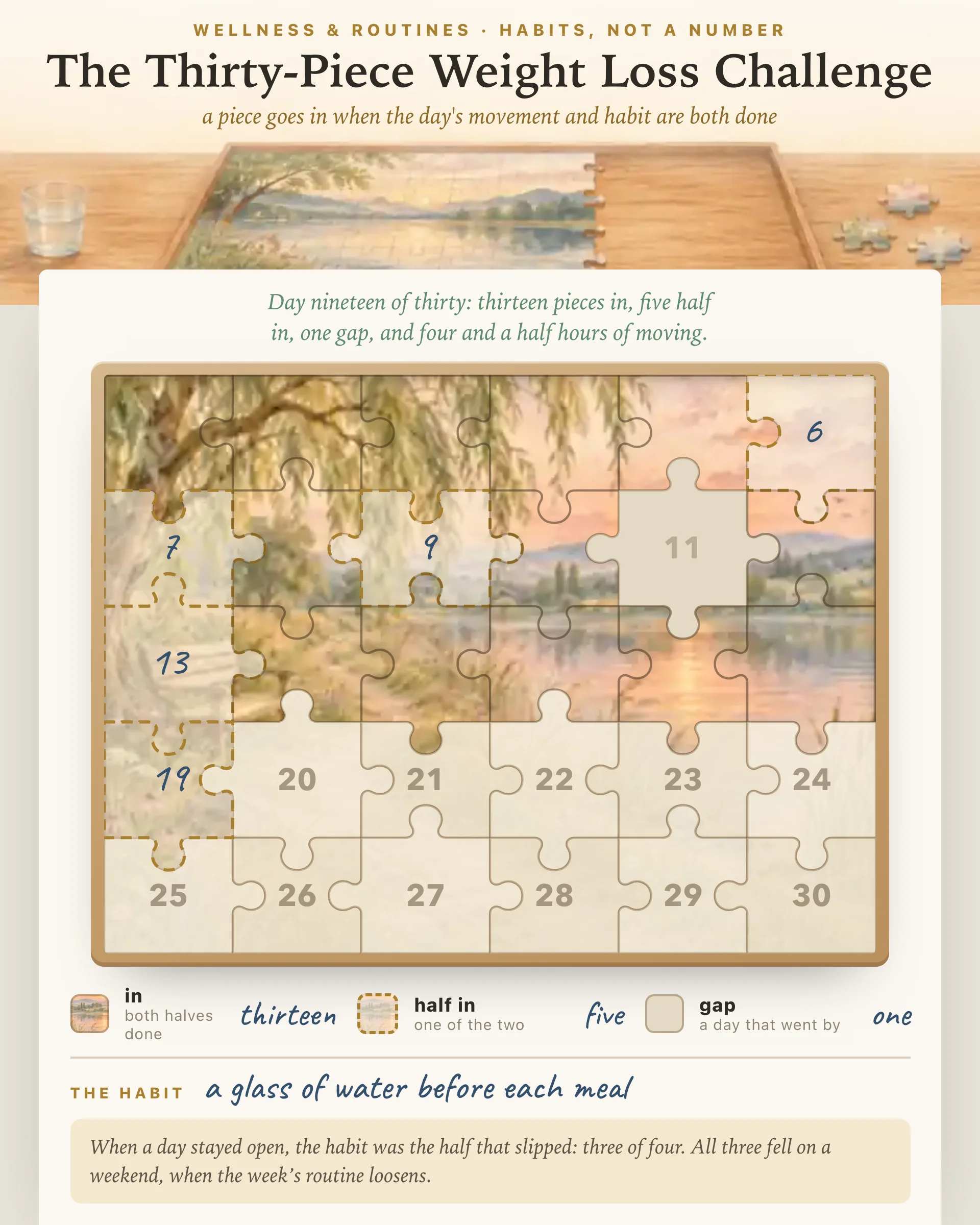
Most 30-day weight loss challenges hand you a number to chase. This one gives you two small things to do each day instead: one movement goal from a gentle plan, and one habit you choose yourself. When both are done, that day's piece goes into a painted puzzle, and by day thirty you can see at a glance which days held together.
Movement and eating work better together. A systematic review of trials that compared combined programs with diet-only or exercise-only programs found that after a year, programs that changed both led to more weight loss than changing eating alone, and exercise-only programs trailed combined ones at every point measured. So each day here has two halves: the movement, and one habit that touches food, drink or sleep.
Habits also outlast willpower. In a small trial of simple advice built around habit formation, adults given a leaflet of everyday tips and a checklist to mark them lost more weight over eight weeks than people on a waiting list. The idea was plain: repeat the same small actions at the same moments until they run on their own.
How long does that take? A study that followed people as they built one new daily behavior found that the time until it felt automatic ranged from eighteen days to two hundred fifty-four. So thirty days is a strong start, not a finish line. The same study found that missing a single day did not undo the progress, so a gap on this board never resets anything.
What the research does not say matters too. Averages hide a wide spread, the trials were small or short, and none can say what your body will do in a month. This page makes no promise about pounds; it helps you show up for the habits the evidence keeps pointing to.
First, pick one habit for the thirty days, such as a glass of water before each meal, lights out at the same time each night or the kitchen closed after dinner, or write your own in a few words. Choose the one you could still keep on a tired Tuesday.
Then set day one: today, or a few days back if you started earlier. Tap any of the thirty pieces to see its walk, workout or stretch, then mark the two halves: the movement, all of it or the minutes you managed, and whether you kept the habit.
Below the board, a short reading looks at the days that stayed open: whether the movement or the habit was the half that slipped, and whether those days bunch on weekends or on one kind of session. If you switch habits partway through, days already kept stay in with the words they had.
The workout is four moves for home: sit to stand from a chair, wall push-ups, step-ups on the bottom stair and heel raises at a counter. Stretch days stay easy on purpose.
The weigh-in stays closed unless you open it. If you weigh in, do it on days one, eight, fifteen, twenty-two and twenty-nine at the same point in your morning; each line is compared only with your own day one, never with a goal weight or a chart. One morning can shift with water, salt and sleep, so read the lines together, and close the section any week the number starts to steer your day.
For what a puzzle cannot hold, The Weight Loss Journal keeps a daily page for sleep, energy and changes a scale misses. To keep the number on paper, print the Weight Loss Tracker. If walking becomes your favorite half, The Step Cairn Trail builds your steps over eight weeks. And if yoga is the half you enjoy, The Yoga Block Tower stacks twenty to forty minute sessions over four weeks.
Talk with a doctor first if you have diabetes, a heart condition or high blood pressure, take medicine for blood sugar, are pregnant or had a baby in the past year, or are under eighteen. If you have had a fall, dizziness, a joint replacement or pain that keeps returning, a doctor or physical therapist can tell you which moves to adjust. If you have ever lived with an eating disorder, speak with your doctor or an eating disorder specialist before starting any weight loss plan, this one included. Stop any move that hurts, and keep a sturdy chair or counter within reach for the standing moves.
Open it each evening, mark both halves, and be kind to the days that stay open: most days, not perfect days, finish the picture.
It is a month of small daily commitments meant to make healthier routines feel ordinary. Here each day asks for two things: a walk, short workout or stretch from the plan, and one habit you chose at the start. A day counts only when both happen, and the puzzle shows which days did.
No honest plan can promise you a figure. Weight answers to food, sleep, stress, medicines and your own body, and one month is short. Trials that paired more movement with changes in eating saw more loss after a year than either change alone, so this challenge tracks the habits and leaves the scale optional.
Yes. The first four weeks here are a complete 28 day weight loss challenge that ends on its fullest week. Days twenty-nine and thirty add one more walk and one more short workout, so if you prefer four even weeks, call day twenty-eight your finish and treat the last two pieces as a bonus.
Anyone with diabetes or on medicine for blood sugar or blood pressure, a heart condition, a pregnancy or a baby in the past year, a past fall, dizziness, a joint replacement or pain that lingers, and anyone under eighteen. If you have ever lived with an eating disorder, speak with your doctor or an eating disorder specialist before any weight loss plan, this one included.
That day stays a gap in the picture and the next piece fits just the same. A study of how habits form found that missing one chance to repeat a new behavior did not set the habit back in any lasting way. If you did the walk and simply forgot to mark it, you can still fill in that piece.
By the team behind Fabulous, the science-based self-care app used by over 30 million people.


