
unPAUSED with Dr. Mary Claire Haver
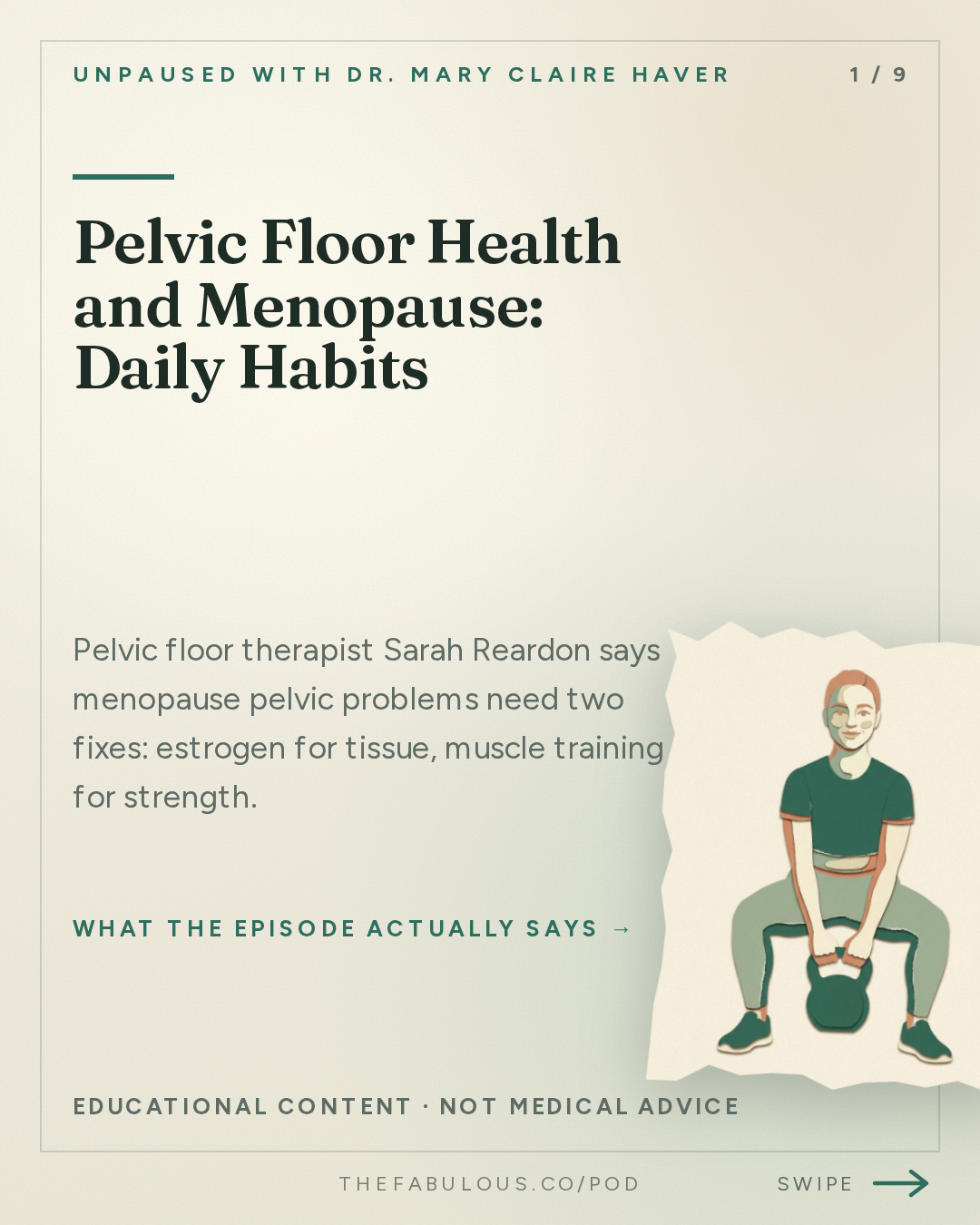
Pelvic Floor Health and Menopause: Daily Habits
Painful Sex, Dryness and Menopause with the Vagina Whisperer
▶ Listen to the full episode More from unPAUSED with Dr. Mary Claire Haver
The brief
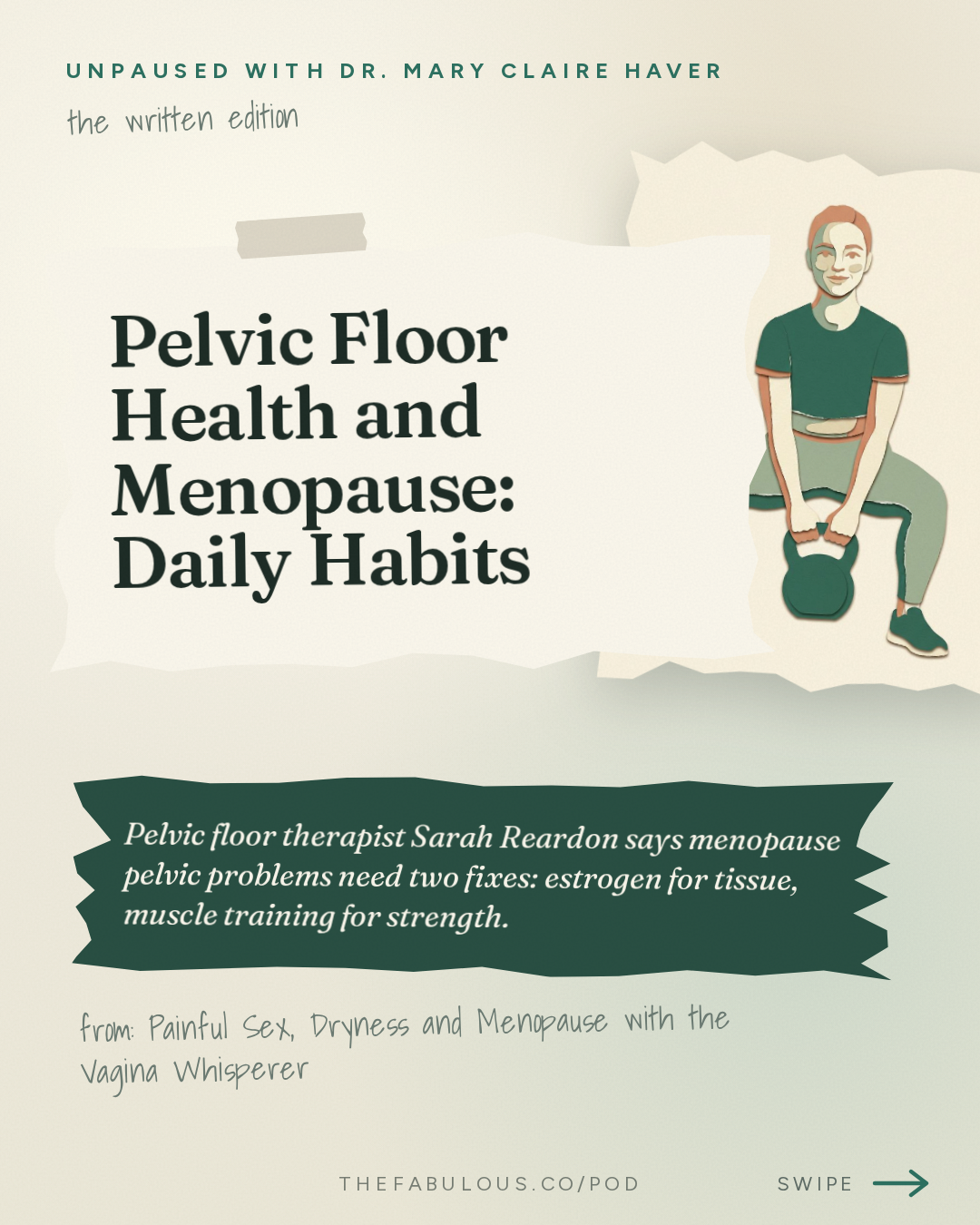
Pelvic floor therapist Sarah Reardon says menopause pelvic problems need two fixes: estrogen for tissue, muscle training for strength. She covers power peeing, Squatty Potties, pessaries, GSM, vaginismus, and why the $5 billion vaginal rejuvenation industry skips the muscle work that actually prevents prolapse and leakage.
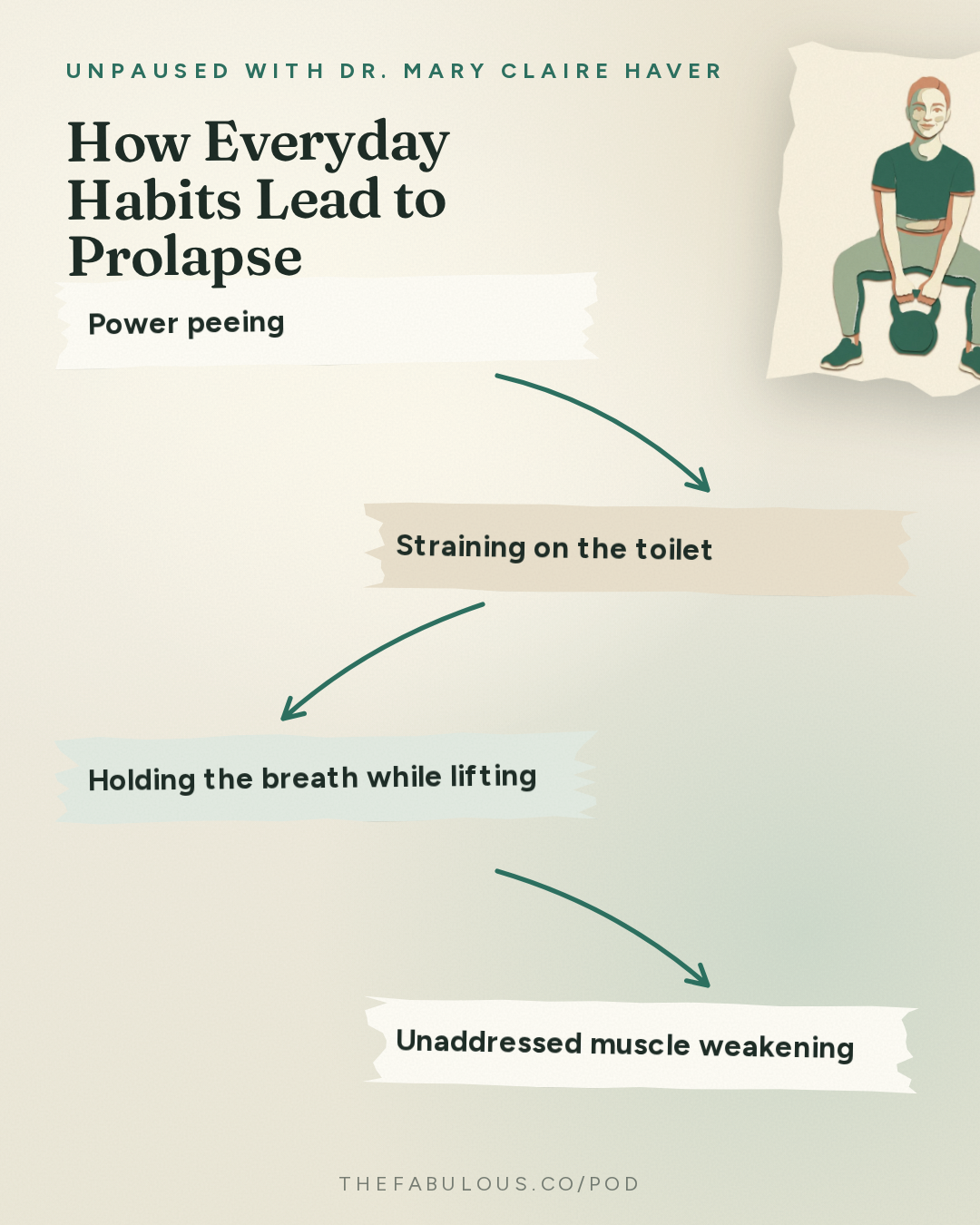
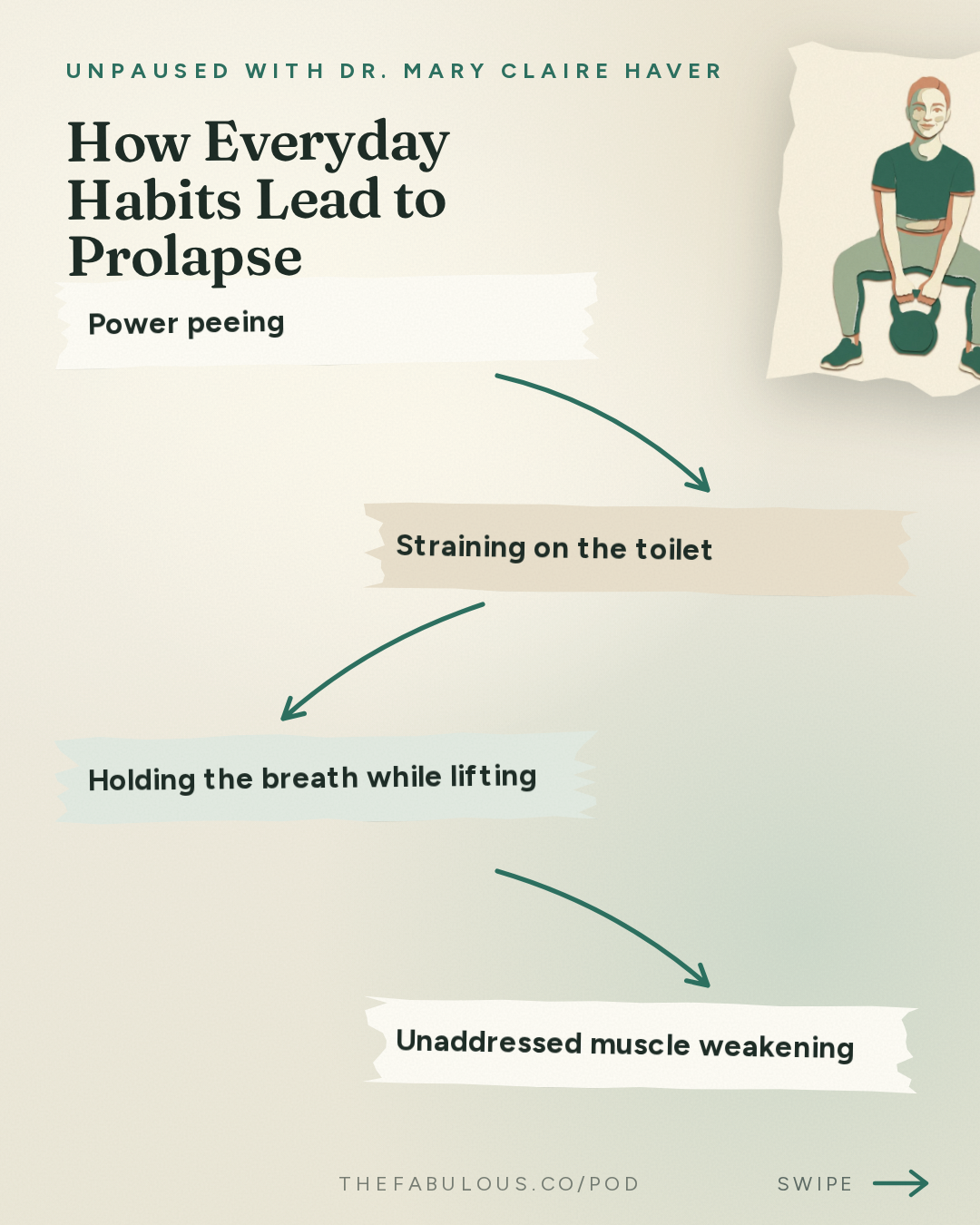
There is a term for something millions of women do several times a day without thinking about it: power peeing. Pelvic floor physical therapist Sarah Reardon, known online as The Vagina Whisperer, uses the phrase for the habit of pushing urine out fast to get back to the day faster. On the podcast unPAUSED, Reardon tells host Dr. Mary Claire Haver that this shortcut is quietly reshaping the body (05:01). Each push strains the ligaments and muscles that hold the bladder, uterus, and rectum in place. Repeated six to eight times a day, every day, for decades, that strain wears down the pelvic floor, the sling of muscle that spans the base of the pelvis and supports those organs.
"We should not be power peeing. Oh my God. That weakens your pelvic floor." - Sarah Reardon [05:01]
The fix sounds almost too small to matter: sit down, relax, breathe, and let the bladder, which is itself a muscle, push urine out on its own. Reardon says deep breathing activates the parasympathetic nervous system, the body's rest-and-digest mode, which lets the pelvic floor muscles loosen enough for urine to pass without force (05:42). It is the kind of detail that never comes up at a routine checkup, because no single doctor is assigned to the pelvic floor. A gynecologist handles the uterus, a urologist the bladder, a gastroenterologist the colon. The muscles and nerves that cross all three territories belong to nobody in particular, so dysfunction there usually goes unscreened until it becomes serious enough to require surgery.
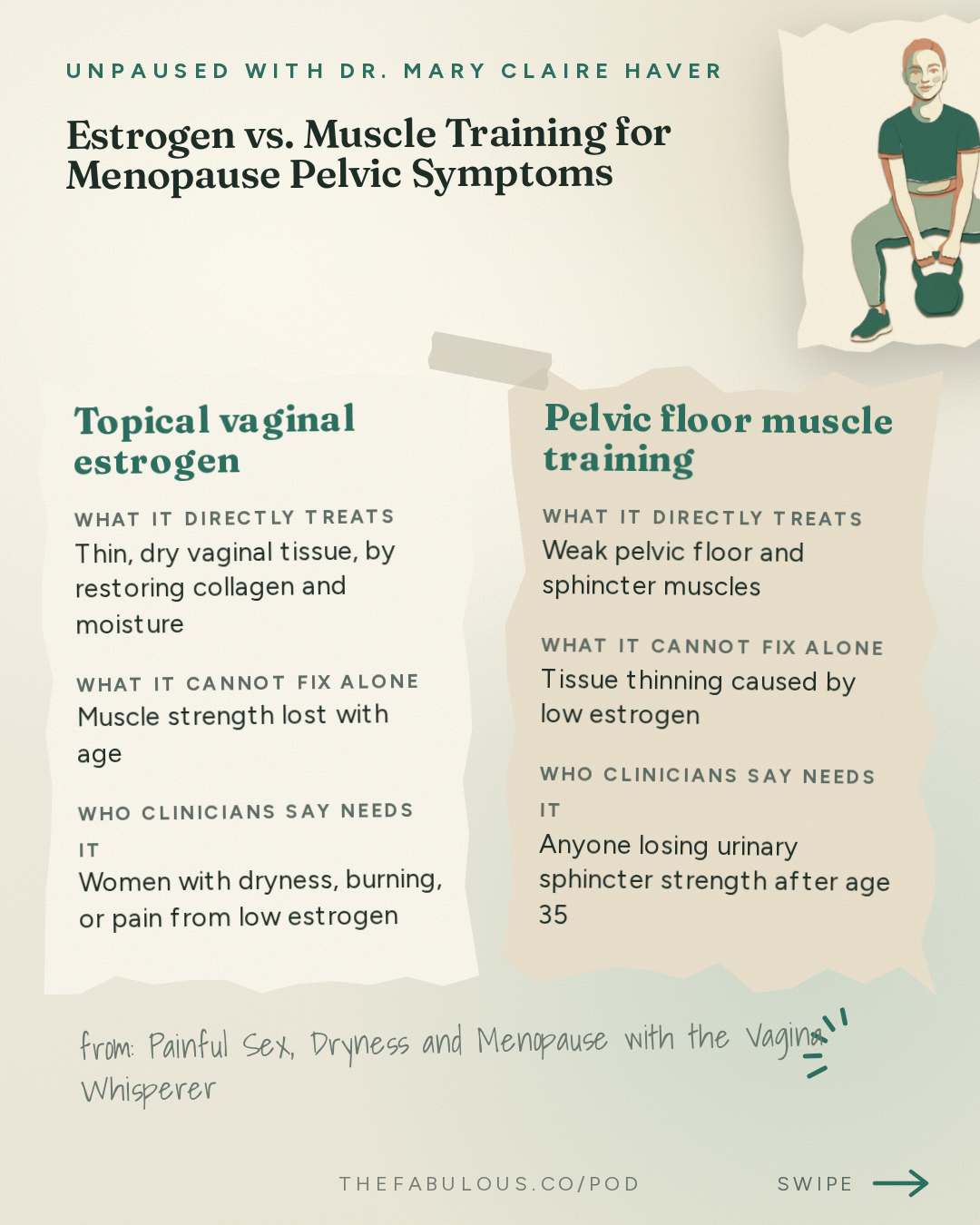
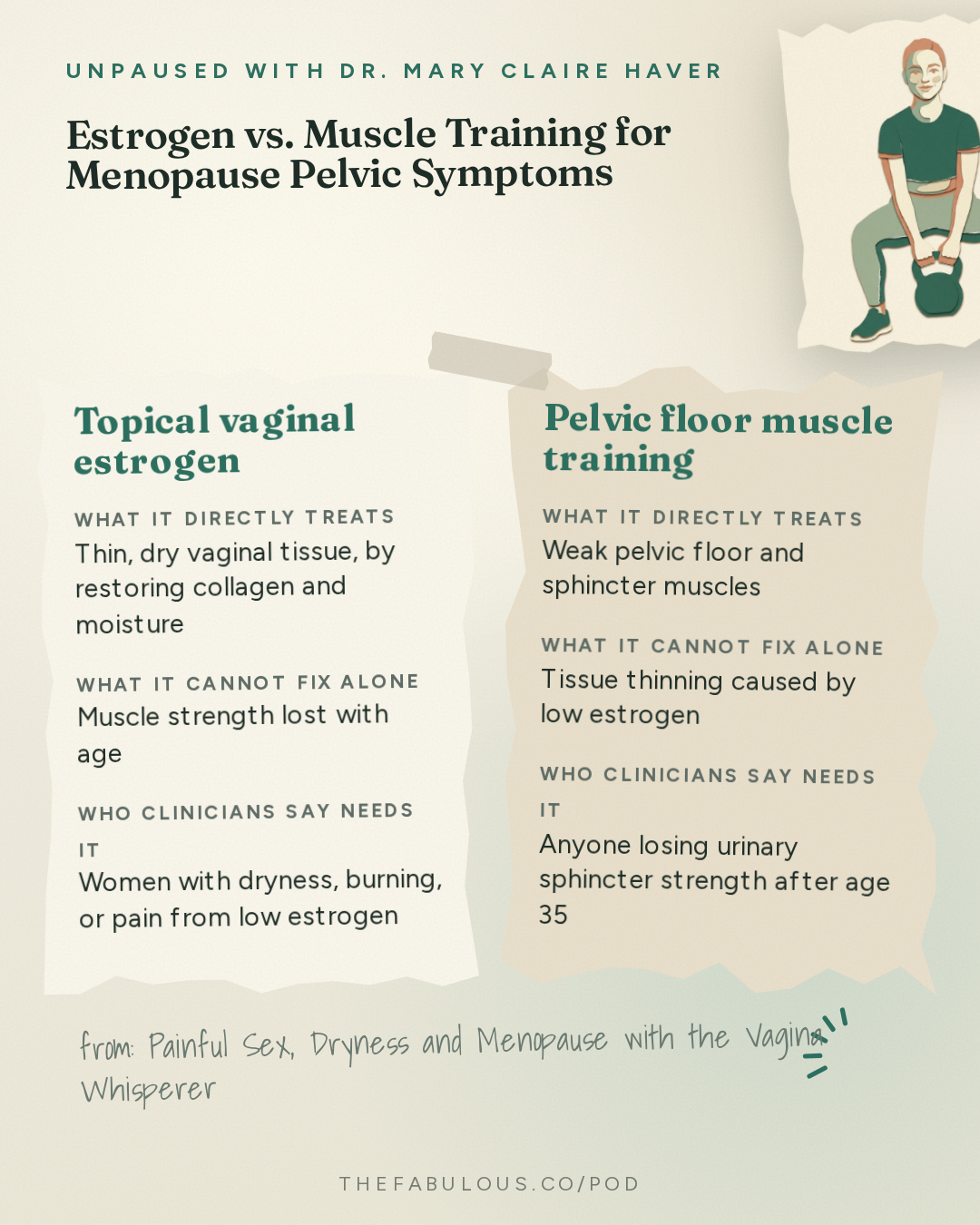
That gap matters more as women near menopause, because tissue and muscle fail on two separate tracks, and conflating them leads to the wrong fix. Low estrogen thins and dries vaginal tissue, a cluster of symptoms the Menopause Society calls genitourinary syndrome of menopause, or GSM, with reported prevalence ranging from 27 to 84 percent of postmenopausal women depending on which symptoms get counted (15:23). Topical vaginal estrogen treats that layer directly, restoring collagen and moisture. But estrogen cannot rebuild a muscle. Reardon says the external urinary sphincter, the muscle that helps seal off the bladder, loses strength every year after age 35 (21:10), independent of hormone levels. Treat the tissue without training the muscle, she argues, and women eventually end up in pads, falling in the bathroom, or in diapers in nursing homes, not because the tissue failed again but because the muscle was never addressed in the first place.
The Market That Skips the Muscle
That blind spot has created a business opportunity, and Reardon is blunt about it: vaginal rejuvenation is now a $5 billion industry (32:44), selling lasers, radiofrequency wands, jade eggs, and vibrating "Kegel chairs" that claim to deliver 30,000 Kegels in 30 minutes (33:54). Her objection is not that these devices are useless by definition. It is that they chase appearance and sensation while skipping the structural work underneath.
"It's like trying to put a chandelier in a house with no walls, that none of that matters if you have not built the foundation." - Sarah Reardon [33:29]
She describes her own sister-in-law being sold laser treatment for GSM symptoms that topical estrogen would have resolved for a fraction of the cost and without the pain (34:16). The deeper issue is incentive: a flood of social media content lets anyone with a pelvic floor credential, or none at all, present as an authority, and a visual fix is easier to sell than a quiet daily habit of sitting differently on the toilet.
Haver and Reardon spend real time on toilet mechanics, because so much pelvic floor damage starts there. Reardon recommends a footstool, commercially known as a Squatty Potty, that lifts the knees above hip height during a bowel movement (11:16). That position straightens the angle of the rectum and lets the pelvic floor relax instead of clench, which means less straining. Straining matters because, according to Reardon, chronic straining during bowel movements weakens the pelvic floor more than running, jumping, or coughing (09:57), the activities most women assume are the real threat. She also warns against sitting on the toilet scrolling a phone for more than five minutes (05:42), since prolonged pressure on the anal veins is a direct path to hemorrhoids, which she defines simply as a prolapsed, or bulging, vein in the anal sphincter (09:10).
Genetics plays a role too. Reardon notes that having a first-line relative, an aunt or a mother, who experienced prolapse raises a woman's own risk (04:36), and each vaginal birth adds further risk. None of that is within anyone's control. What is controllable, she argues, is the daily load placed on the pelvic floor afterward: how a woman urinates, defecates, and breathes while lifting something heavy. Holding the breath during exertion, Reardon explains, locks pressure inside the abdomen with nowhere to go but down, toward the pelvic floor, which she calls the path of least resistance (38:52). Exhaling while lifting releases that pressure instead of driving it downward, a habit she applies to everything from grocery bags to barbells.
When Tight Is the Problem, Not Weak
Not every pelvic floor problem is about weakness. Vaginismus, Reardon explains, is a muscle spasm of the outer third of the pelvic floor, the ring of muscle that closes the vaginal opening (25:20). When those muscles clench, insertion of anything, a finger, a tampon, a partner, feels like hitting a wall. The usual advice, "just relax," fails because the clenching is often an unconscious response to anticipated pain or past trauma, not a decision a woman can simply override. Reardon treats it the way a physical therapist treats any other muscle spasm: graded exposure using vaginal dilators, silicone trainers inserted gradually to teach the muscle that penetration does not have to hurt (27:13), paired with breathing and relaxation work.
Underneath both weakness and spasm sits one structure that rarely gets named: the pudendal nerve, which runs from the base of the spine through the pelvic muscles and carries sensation to the clitoris, labia, and anal opening, while also controlling the urinary and anal sphincters (27:44). Its name comes from the Latin for "to be ashamed," which Reardon says is no accident. A body part medicine was embarrassed to discuss for centuries simply was not studied, and that silence shows up today as chronic vulvar pain affecting 8 to 10 percent of women (28:59), a figure Reardon ties to a Boston population study in which 60 percent of affected women saw three or more doctors and nearly 40 percent never sought care at all. She tells the story of one patient whose years of labial pain, caused by nerve compression from a motorcycle seat, ended in two unnecessary surgeries to remove tissue that was never the actual source of the problem; pelvic floor therapy, not more surgery, eventually resolved it (30:24).
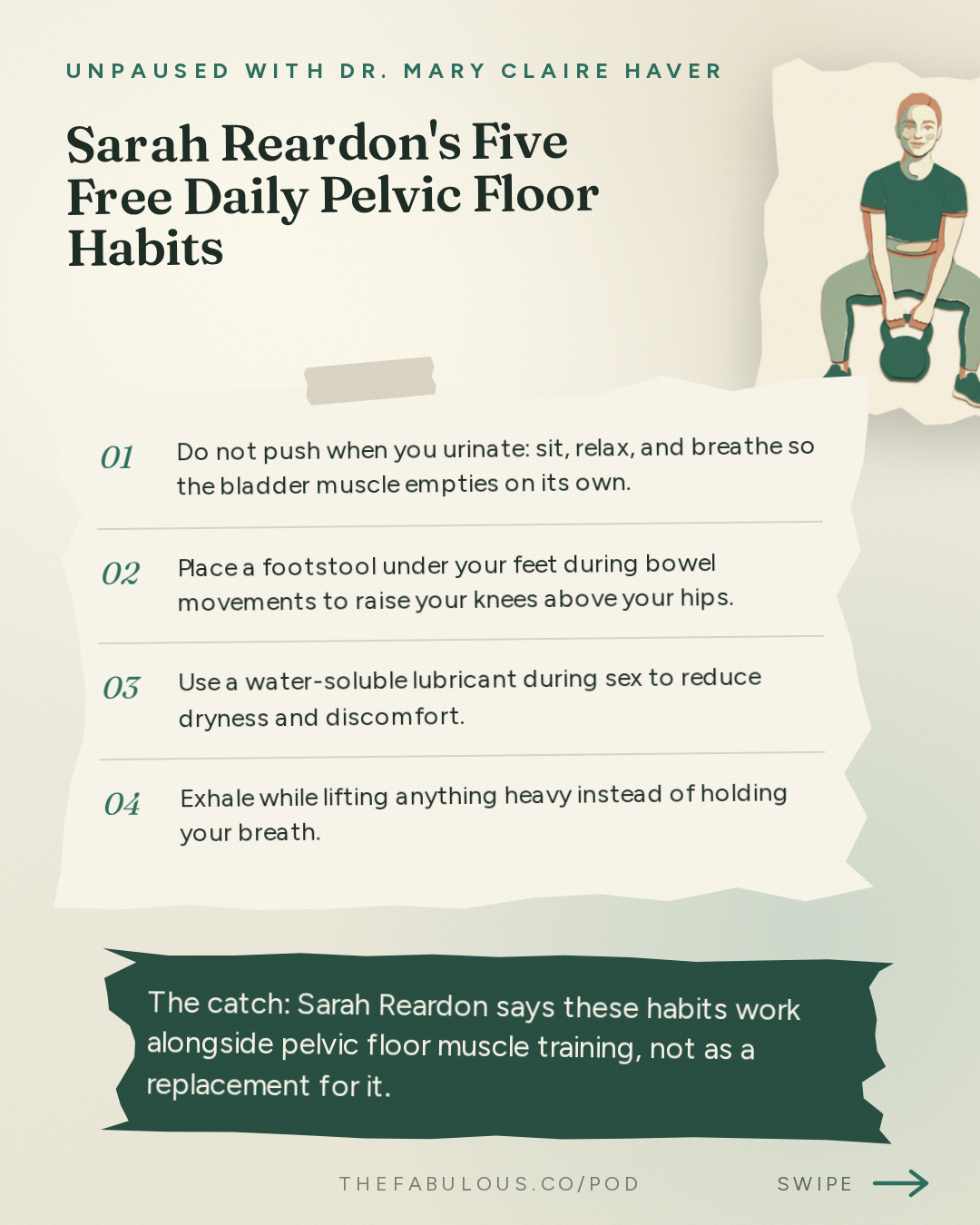
The conversation keeps circling back to a simple idea: pelvic floor function should be routine healthcare, checked the way teeth are checked, rather than something addressed only once surgery is already on the table. Reardon's five free daily habits, covered near the end of the episode, amount to a kind of maintenance checklist: do not push when urinating, use a footstool for bowel movements, use lubricant during sex, exhale during physical exertion, and support the perineum, the area between vagina and anus, if bowel movements feel incomplete (37:12). None of it requires a prescription. What it requires is treating the pelvic floor as a muscle group like any other, one that needs training before menopause arrives rather than after, so the second half of life does not have to be spent managing damage that decades of small, invisible habits caused in the first.
Ask this episode anything
Pod's AI answers from the episode itself, with the minute mark so you can hear it yourself.
Or start with one of these
Ask this episode
Pod's AI listens to the whole episode to answer, and points you to the minute it comes from.
The rest of this answer, and any question after it
Answers come from the episode itself, never from a summary of it.
ContinueKey takeaways
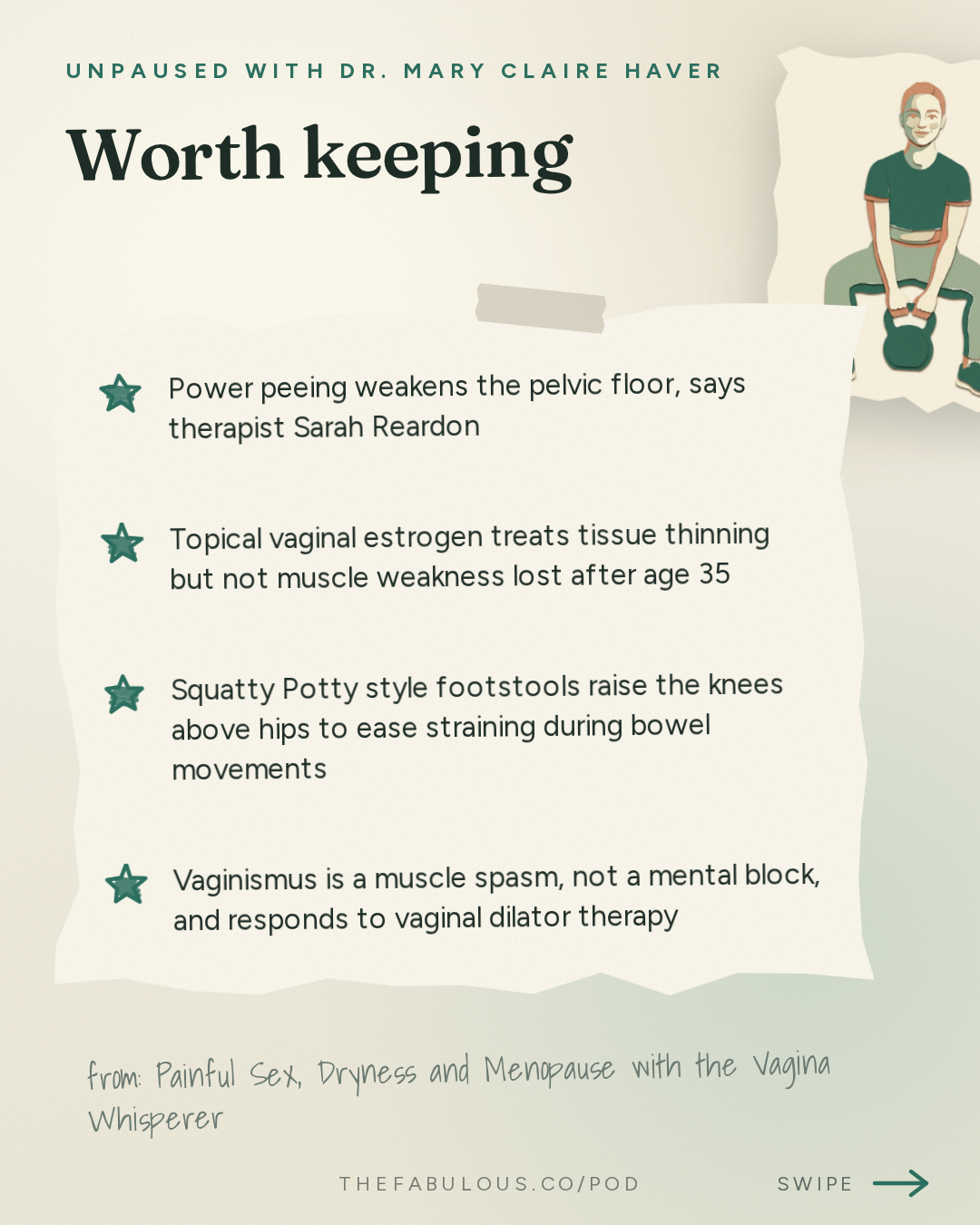
- Power peeing weakens the pelvic floor, says therapist Sarah Reardon
- Topical vaginal estrogen treats tissue thinning but not muscle weakness lost after age 35
- Squatty Potty style footstools raise the knees above hips to ease straining during bowel movements
- Vaginismus is a muscle spasm, not a mental block, and responds to vaginal dilator therapy
- The $5 billion vaginal rejuvenation industry sells aesthetics, not the muscle strength that prevents prolapse
The episode in cards

By the numbers
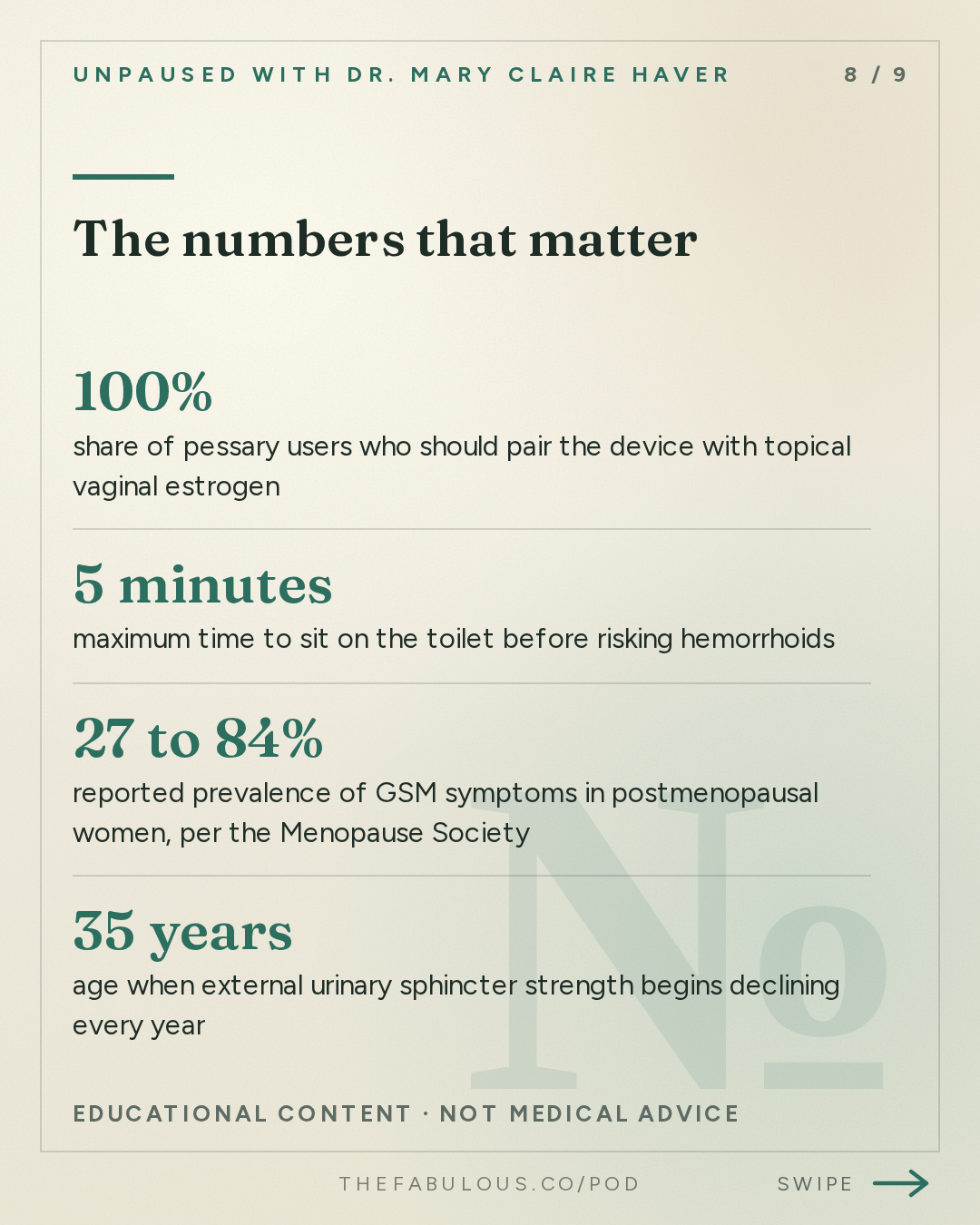
- 100% percent share of pessary users who should pair the device with topical vaginal estrogen
- 5 minutes maximum time to sit on the toilet before risking hemorrhoids
- 27 to 84% percent reported prevalence of GSM symptoms in postmenopausal women, per the Menopause Society
- 35 years age when external urinary sphincter strength begins declining every year
- 90% percent share of women who reach orgasm through clitoral rather than internal stimulation
- $5 billion USD size of the vaginal rejuvenation device and treatment market
In their words
“We should not be power peeing. Oh my God. That weakens your pelvic floor.”
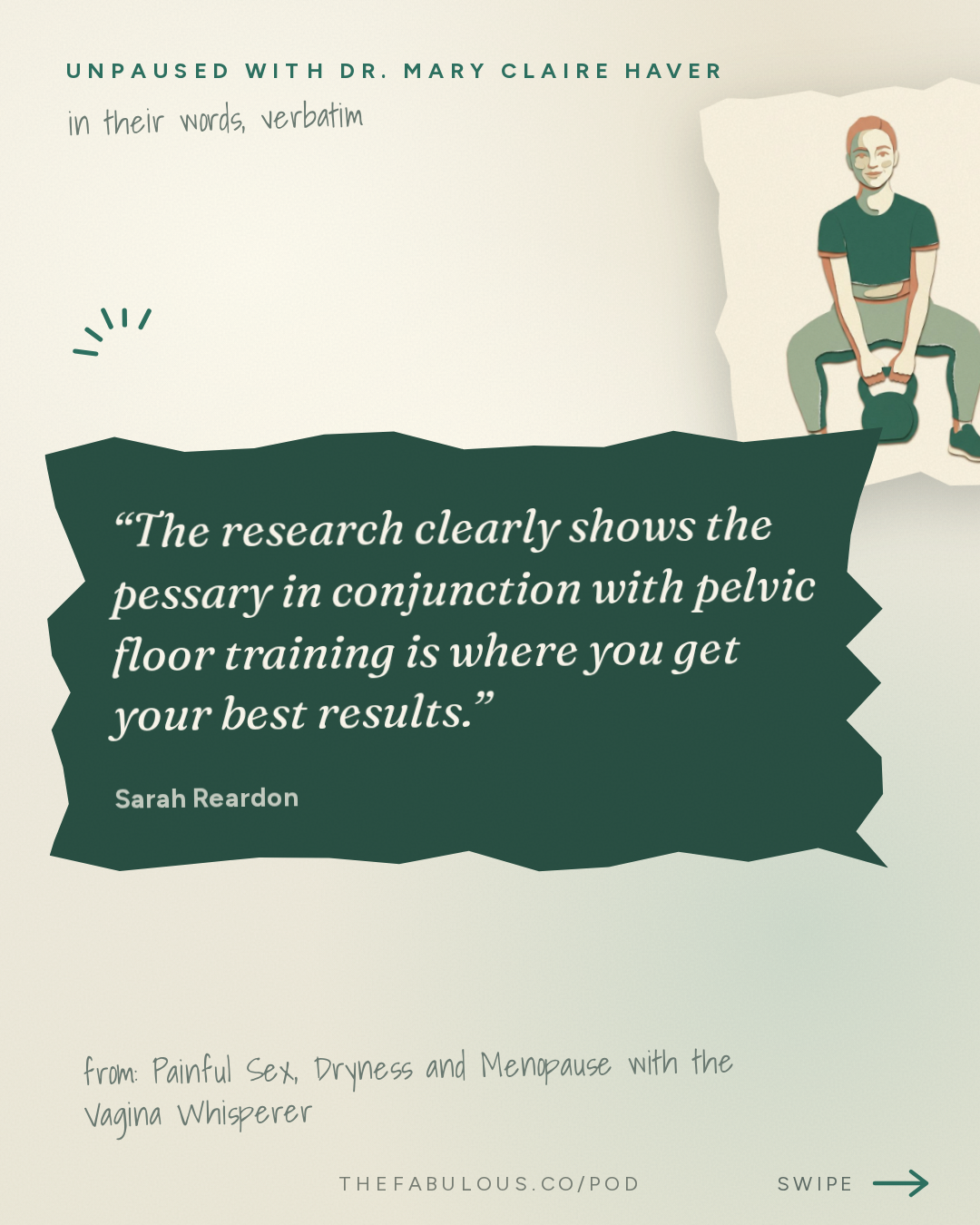
“The research clearly shows the pessary in conjunction with pelvic floor training is where you get your best results.”
“After the age of 35, you lose external urinary sphincter strength every year.”
“It's like trying to put a chandelier in a house with no walls, that none of that matters if you have not built the foundation.”
“You don't have to have a partner to have sexual activity, and orgasms are one of the top ways that you can keep these tissues healthy.”
Protocols
-
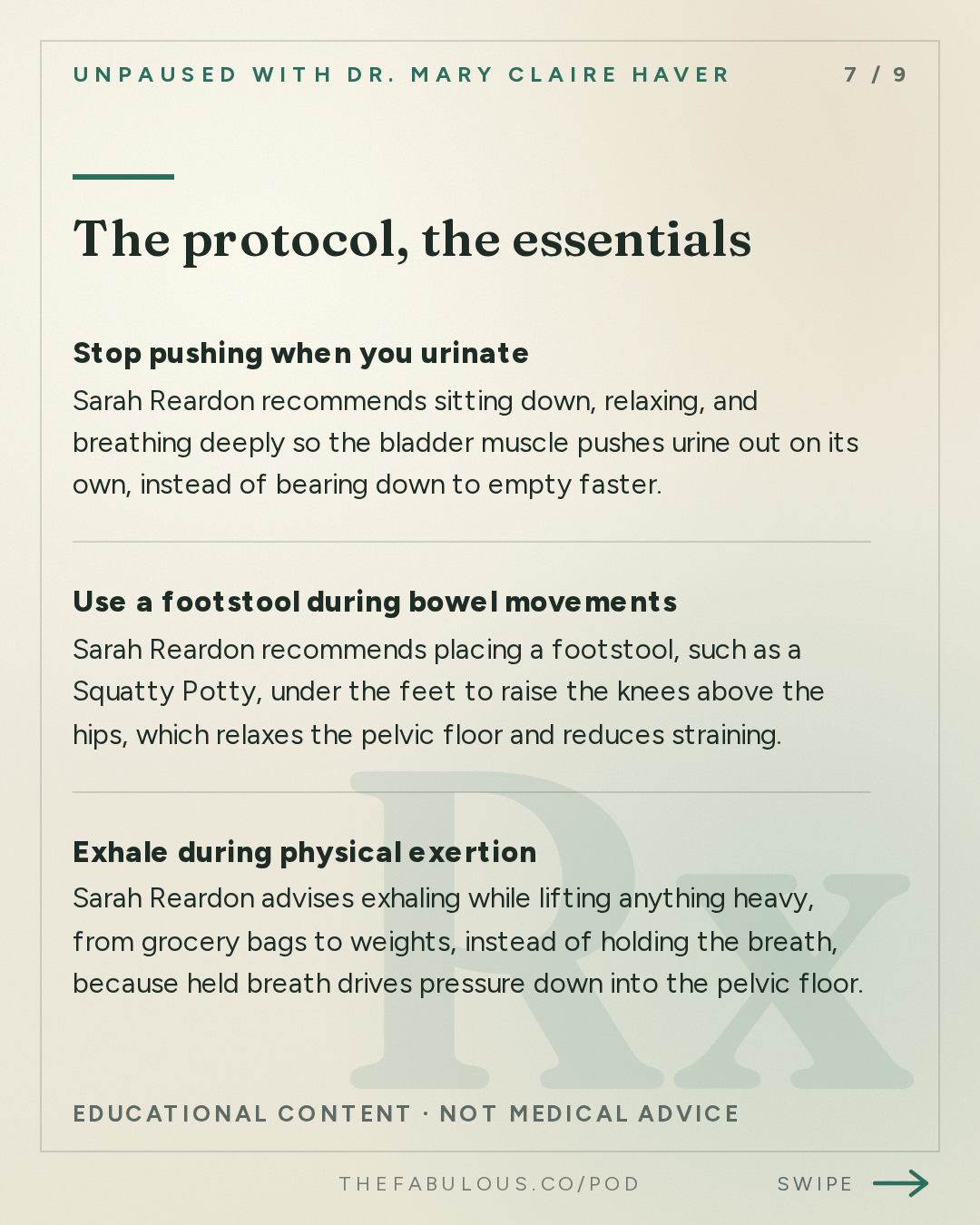
Stop pushing when you urinate
Sarah Reardon recommends sitting down, relaxing, and breathing deeply so the bladder muscle pushes urine out on its own, instead of bearing down to empty faster.
Every time you urinate, roughly 6 to 8 times a day
-
Use a footstool during bowel movements
Sarah Reardon recommends placing a footstool, such as a Squatty Potty, under the feet to raise the knees above the hips, which relaxes the pelvic floor and reduces straining.
Every bowel movement
-
Exhale during physical exertion
Sarah Reardon advises exhaling while lifting anything heavy, from grocery bags to weights, instead of holding the breath, because held breath drives pressure down into the pelvic floor.
Every time you lift something heavy
-
Pair a pessary with estrogen and training
Sarah Reardon states that a fitted pessary should always be combined with topical vaginal estrogen, to prevent tissue breakdown, and with ongoing pelvic floor training for the best results.
Daily estrogen use alongside continued pelvic floor training
-
Use vaginal dilators for stenosis or vaginismus
Sarah Reardon recommends inserting silicone vaginal dilators to keep vaginal tissue pliable and, for vaginismus, to gradually retrain the muscles through non-painful exposure.
Once or twice a week
Questions this episode answers
What is power peeing and why is it bad for the pelvic floor?
Pelvic floor physical therapist Sarah Reardon defines power peeing as pushing urine out quickly instead of letting the bladder muscle empty on its own. She says doing this 6 to 8 times a day strains the pelvic floor and ligaments over time, weakening the muscles that support the bladder and uterus (05:01).
What is genitourinary syndrome of menopause (GSM)?
The Menopause Society defines GSM as the cluster of symptoms, including vaginal dryness, pain with sex, and urinary urgency, caused by declining estrogen, with reported prevalence ranging from 27 to 84 percent of postmenopausal women depending on which symptoms are counted (15:23). Sarah Reardon says the condition is progressive and worsens without treatment (16:57).
Can topical estrogen alone fix pelvic floor problems?
No. Sarah Reardon says topical vaginal estrogen restores collagen and moisture in vaginal tissue but cannot rebuild muscle strength, since the external urinary sphincter loses strength every year after age 35 regardless of hormone levels (21:10). She recommends pairing estrogen with ongoing pelvic floor muscle training.
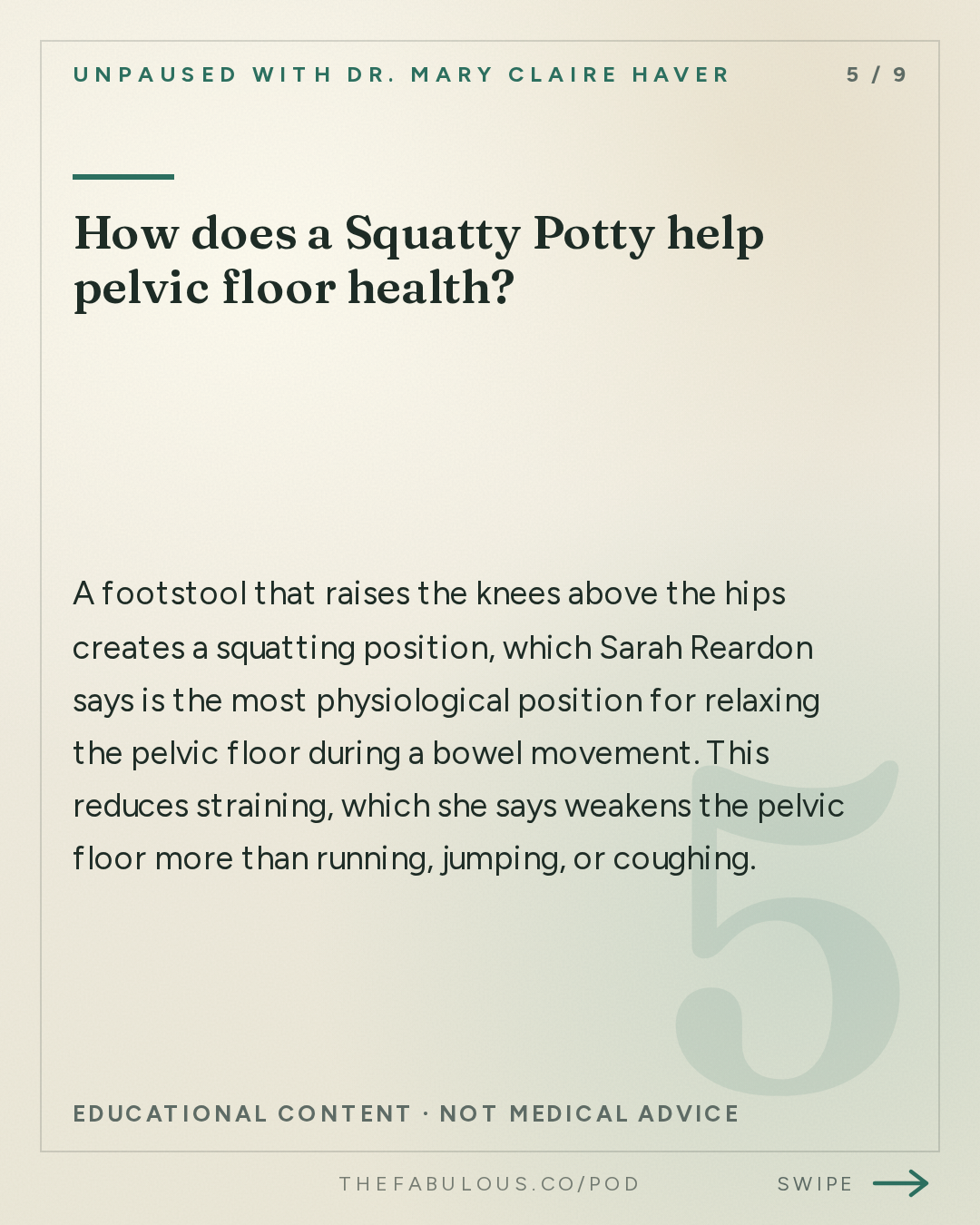
How does a Squatty Potty help pelvic floor health?
A footstool that raises the knees above the hips creates a squatting position, which Sarah Reardon says is the most physiological position for relaxing the pelvic floor during a bowel movement (11:16). This reduces straining, which she says weakens the pelvic floor more than running, jumping, or coughing (09:57).
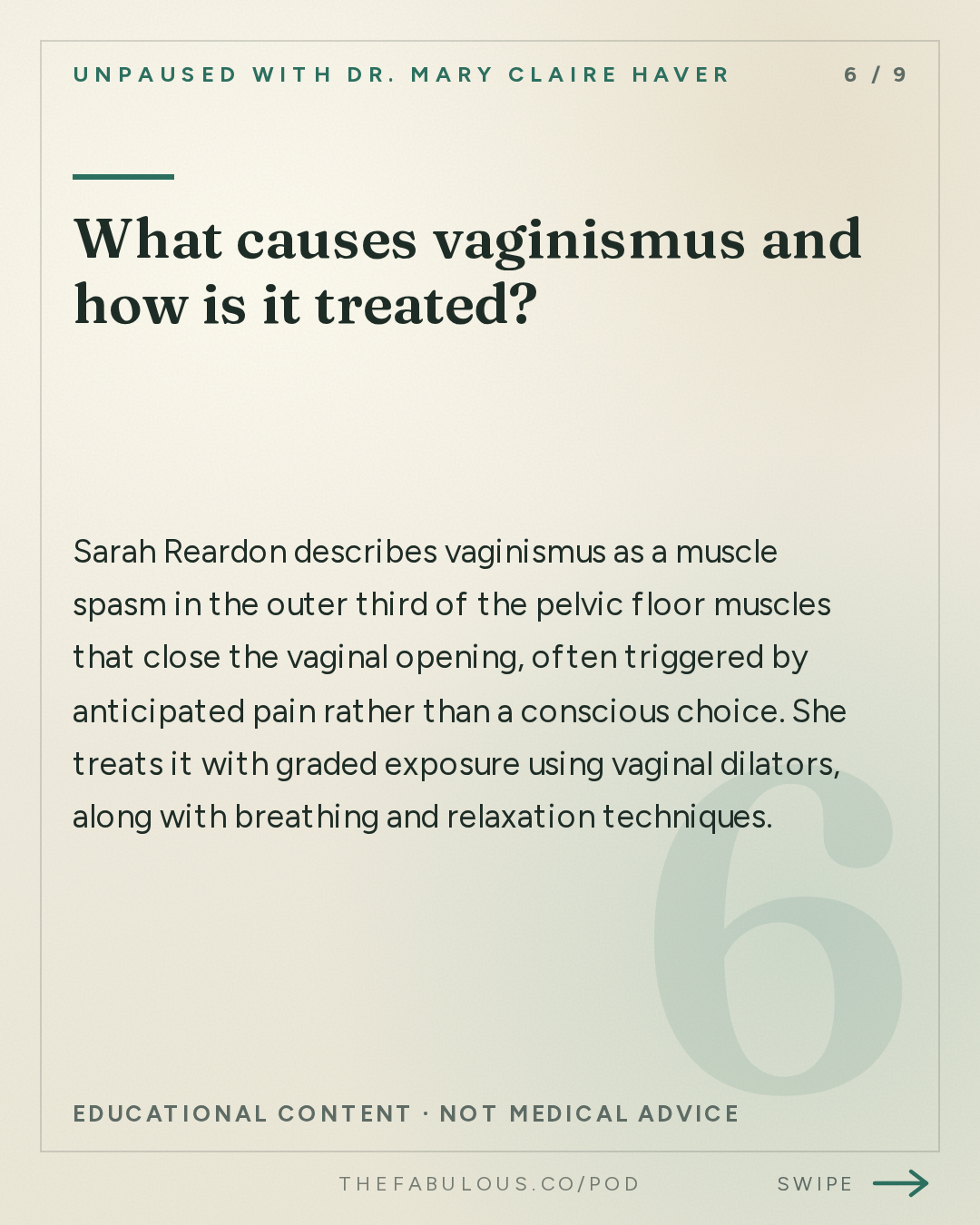
What causes vaginismus and how is it treated?
Sarah Reardon describes vaginismus as a muscle spasm in the outer third of the pelvic floor muscles that close the vaginal opening, often triggered by anticipated pain rather than a conscious choice (25:20). She treats it with graded exposure using vaginal dilators, along with breathing and relaxation techniques (27:13).
Does vaginal rejuvenation technology actually work?
Sarah Reardon says most vaginal rejuvenation devices, including lasers and vibrating Kegel chairs claiming 30,000 Kegels in 30 minutes, focus on aesthetics rather than the muscle strength and tissue health that prevent prolapse, and their effects fade once use stops (33:54). She notes the industry is worth $5 billion despite this limited long-term evidence (32:44).
The full read, in cards
Go deeper
- EMPOWER survey — found half of women with GSM symptoms never used any treatment and nearly three-quarters never told a clinician
- Boston population study on chronic vulvar pain — found chronic vulvar pain affects 8 to 10 percent of women, with 60 percent seeing three or more doctors and 40 percent never seeking care
- Floored — Sarah Reardon's book on pelvic floor health, source of the five free daily habits discussed in the episode
Mentioned
Dr. Mary Claire Haver · Sarah Reardon · Medicine Mama · Squatty Potty · The Menopause Society · Floored · The V Hive · rehab.com
More from this show and category

Pelvic Floor Therapy for Menopause Explained
Pelvic floor therapist Dr. Sarah Reardon says one in three women has a pelvic floor disorder, and most can self-refer for therapy without a doctor's note. She explains why verbal Kegel instructions fail more than half the time, how vaginal estrogen cuts recurrent UTI rates nearly twelvefold, and why nighttime bathroom trips raise fracture risk in menopause.

Mark Cuban on the Estrogen Patch Shortage
Estrogen patch prescriptions have nearly tripled in two years, while specialty manufacturing requirements keep supply from catching up. Entrepreneur Mark Cuban explains how his Cost Plus Drugs company sells at a flat 15% markup, and how pharmacy benefit managers can push a brand drug's price from $300 to $600 through rebate demands.

Postpartum OCD vs Psychosis: Key Differences
Postpartum OCD causes unwanted, intrusive thoughts about harming a baby, not a desire to act. CNN anchor Pamela Brown and OB-GYN Dr. Mary Claire Haver distinguish it from postpartum psychosis, a break from reality involving voices (42:59), and cover GLP-1 fertility effects, testosterone therapy, and vaginal estrogen's role preventing UTIs (35:52).

How Menopause Affects Gut Health and Bloating
Menopause changes gut health because falling estrogen slows motility, raises pain sensitivity, and shifts the microbiome's estrobolome. Harvard gastroenterologist Trisha Pasricha explains why bloating, IBS, and fecal incontinence rise after menopause, and lays out fiber, screening, and bidet protocols that actually help.
