unPAUSED with Dr. Mary Claire Haver
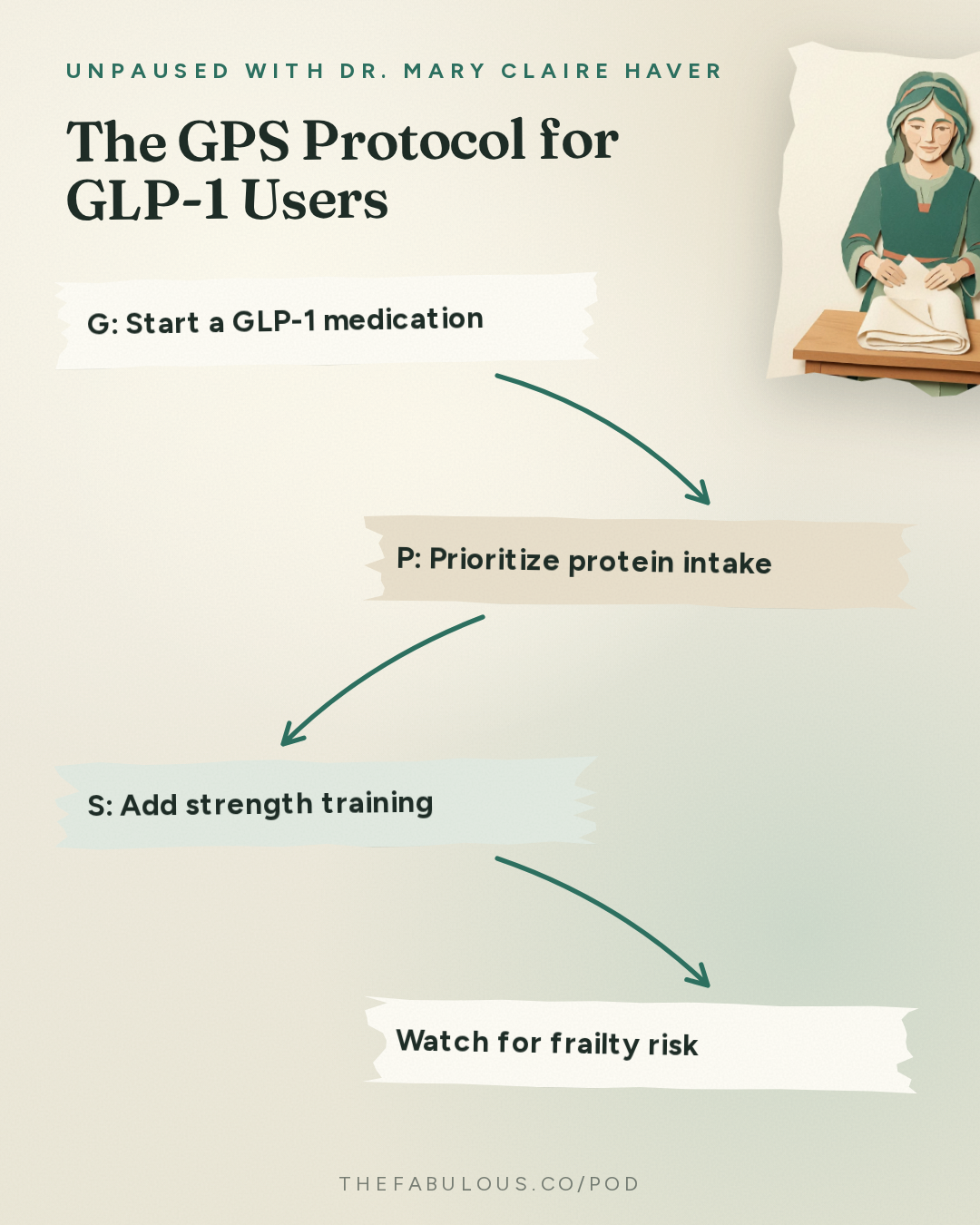
Postpartum OCD vs Psychosis: Key Differences
Women’s Health Issues Doctors Too Often Miss with CNN’s Pamela Brown
▶ Listen to the full episode More from unPAUSED with Dr. Mary Claire Haver
The brief
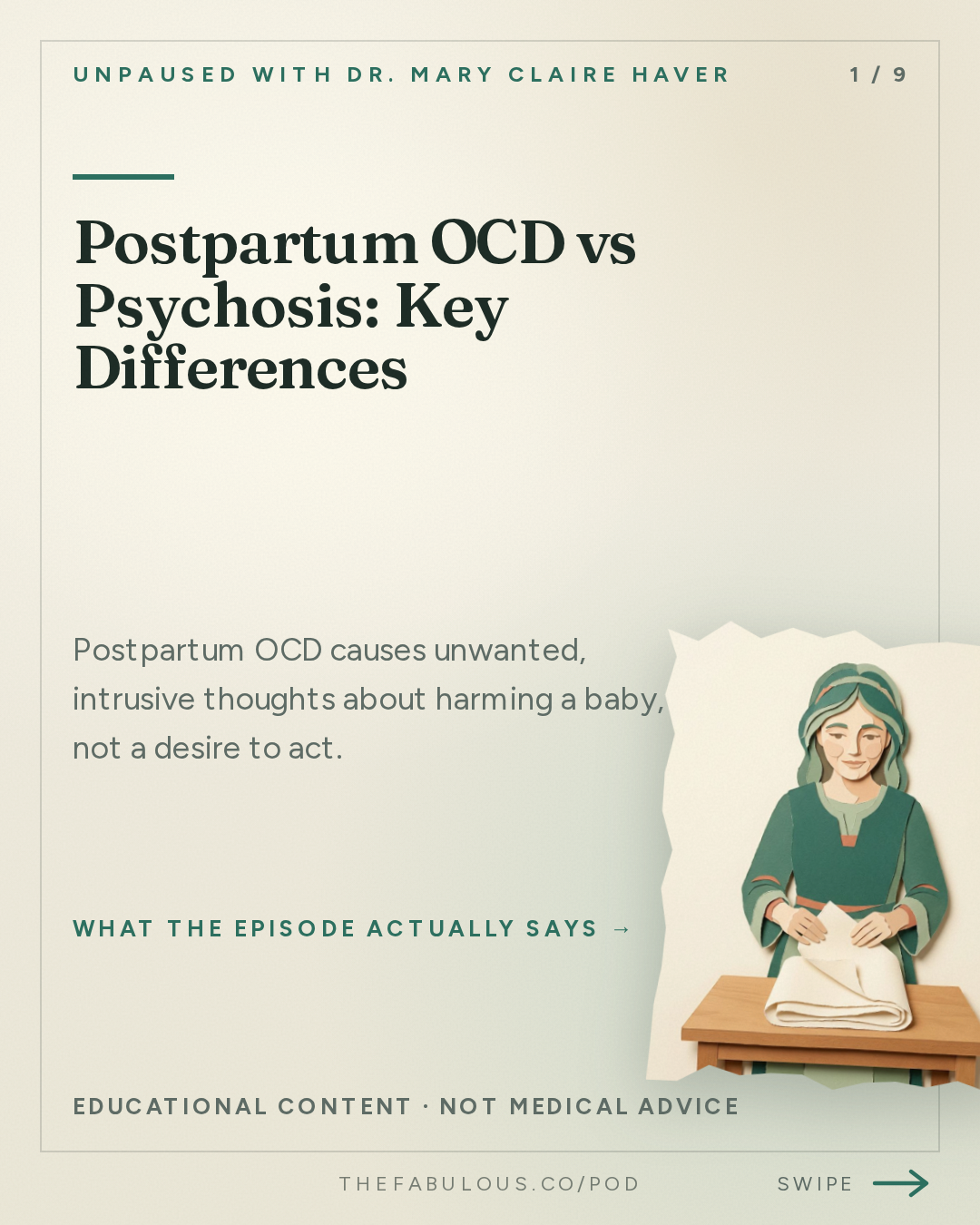
Postpartum OCD causes unwanted, intrusive thoughts about harming a baby, not a desire to act. CNN anchor Pamela Brown and OB-GYN Dr. Mary Claire Haver distinguish it from postpartum psychosis, a break from reality involving voices (42:59), and cover GLP-1 fertility effects, testosterone therapy, and vaginal estrogen's role preventing UTIs (35:52).
On a day in 2020, CNN correspondent Pamela Brown boarded Air Force One as the reporter assigned to the press pool, the rotating group of journalists who travel with the president and file a report the rest of the press corps relies on. Her notes from that day read like any other day's work. Nothing in them hints that she was, in her words, almost paralyzed. She had a toddler, a newborn, a mother who had just died during the pandemic, and a brain that had started producing a horror movie on a loop: visions of dropping her baby down the stairs, of losing control of the car. She told no one, not even her husband (05:57).
What Brown was living through had a name she did not yet know: postpartum OCD, short for obsessive-compulsive disorder, a condition in which a thought gets stuck and the brain treats it as a threat that must be solved rather than a thought that can be let go. She describes the mechanism plainly.
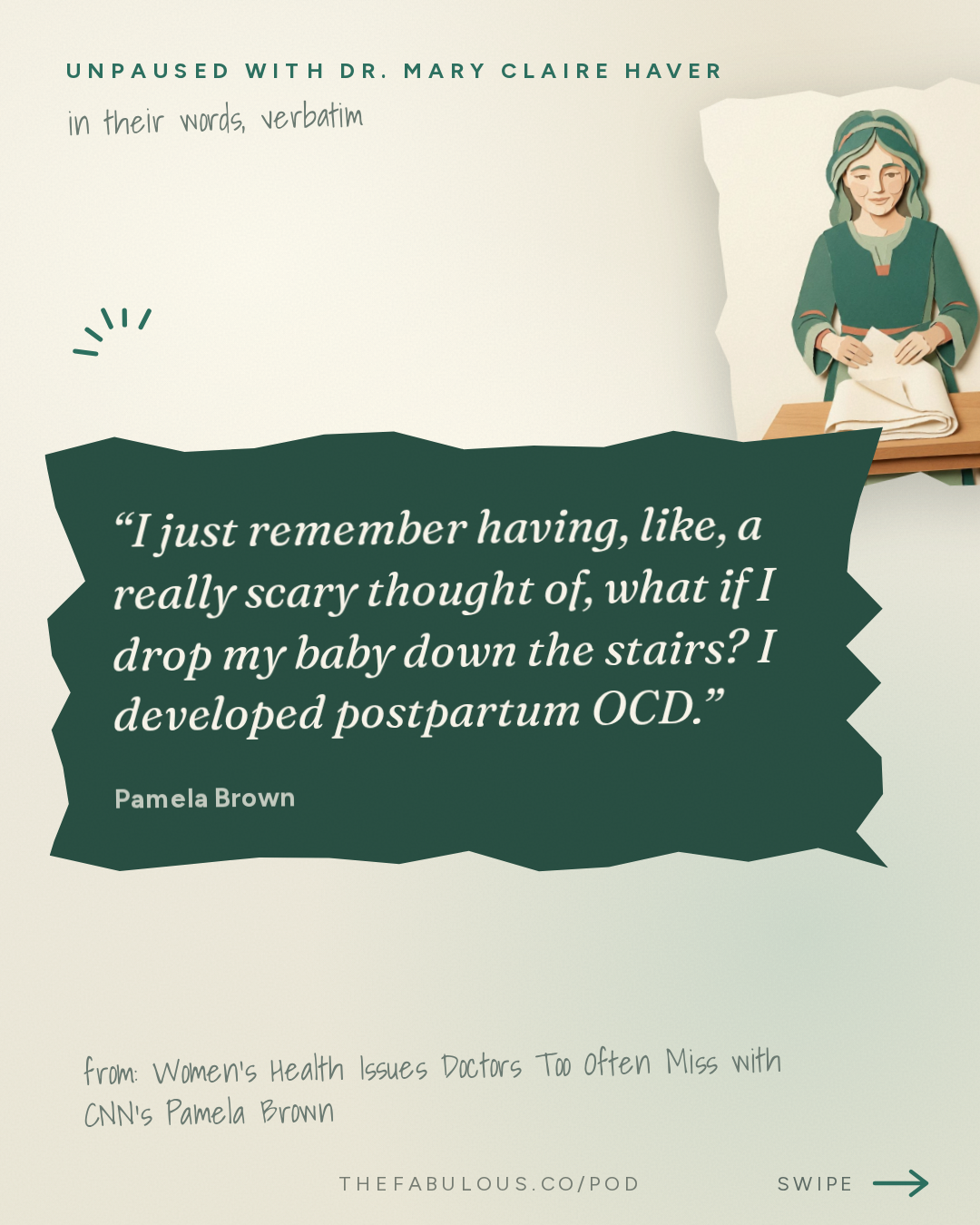
"I just remember having, like, a really scary thought of, what if I drop my baby down the stairs? I developed postpartum OCD." (00:00) — Pamela Brown
What finally broke the loop was not a doctor but a search engine. Brown found an article by a researcher named Dr. Jordan Levy that described her symptoms almost word for word. She emailed him. He wrote back. He told her she needed exposure therapy, a structured way of facing a feared thought without performing the reassurance rituals that feed it, and the fog started to lift (07:36). The experience left her with a question that would not go away: how many other women were suffering like this with nowhere credible to turn?
That question became Body Language, an eight-episode CNN streaming series Brown created, with the first four episodes airing now and four more in November (09:13). The series covers the territory doctors often rush past in a fifteen-minute visit: perimenopause, GLP-1 weight-loss drugs, egg freezing, PCOS and PMOS (two metabolic conditions that affect ovulation), thyroid disease, breast reductions, the fourth trimester, and Alzheimer's disease. Brown's co-guide through much of this territory is Dr. Mary Claire Haver, a board-certified OB-GYN and certified menopause practitioner, who appeared in the pilot episode and joined her again here to unpack what the reporting turned up.
One throughline across the conversation is that exercise is not optional cosmetic maintenance, it is neurological insurance. Alzheimer's disease shows up far more often in women than in men (11:15), and when Brown asked one of the doctors she interviewed what single habit most protects against it, the answer was simple: never go more than a few days without moving (11:43). Haver has started framing workouts to her patients the same way, not as a path to a certain look but as a transaction with the future.
The Math Behind Weight-Loss Drugs and Muscle
GLP-1 drugs, the class that includes semaglutide and tirzepatide, have produced a side effect almost nobody saw coming: pregnancies. Obesity, irregular periods, and metabolic conditions like PCOS and PMOS all suppress fertility. When a GLP-1 drug repairs the underlying metabolic problem, fertility can return before a patient has adjusted her expectations, or her contraception (14:05). Haver now routinely asks GLP-1 patients in perimenopause what they are doing for birth control, because the drug's benefit can arrive as a surprise.
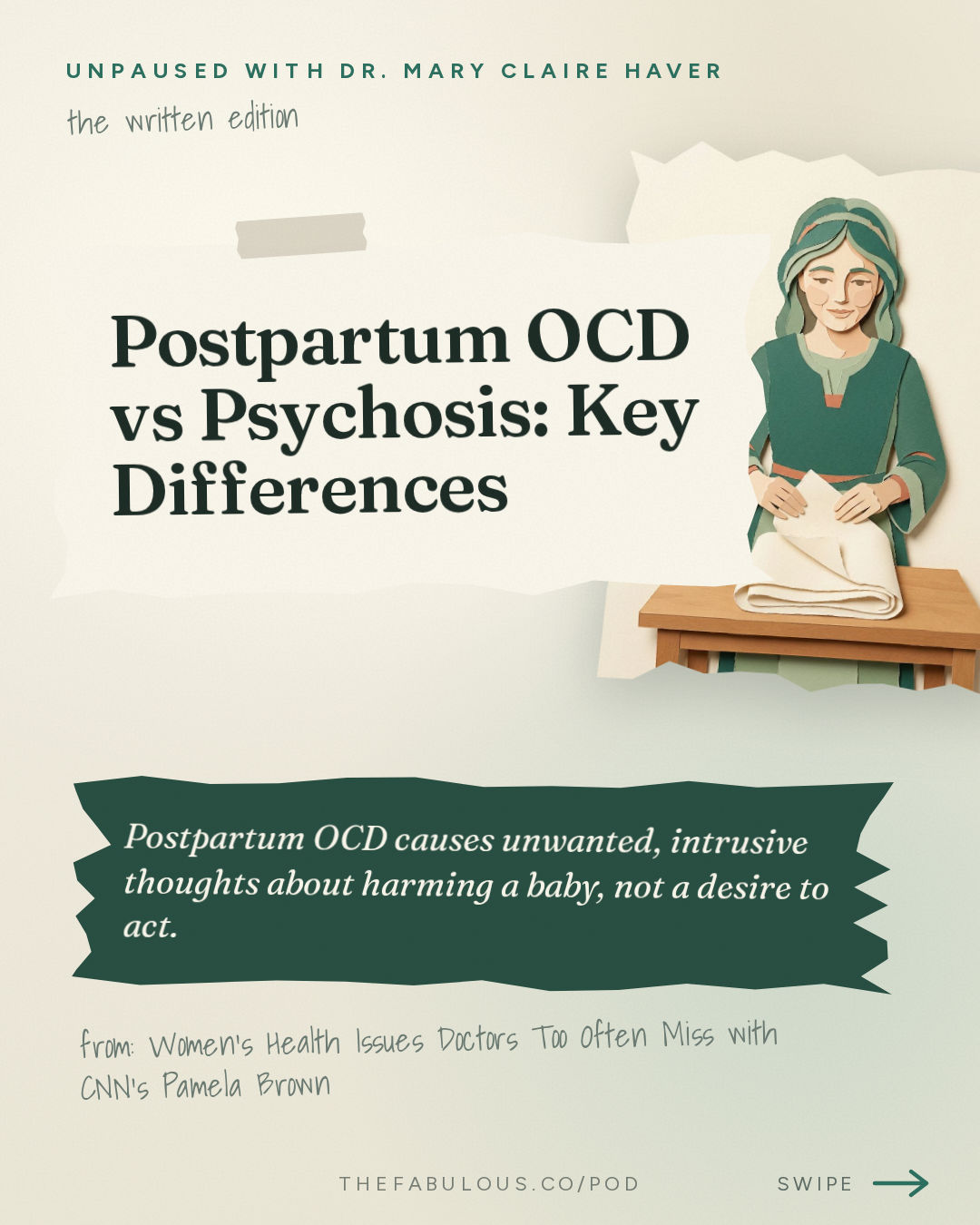
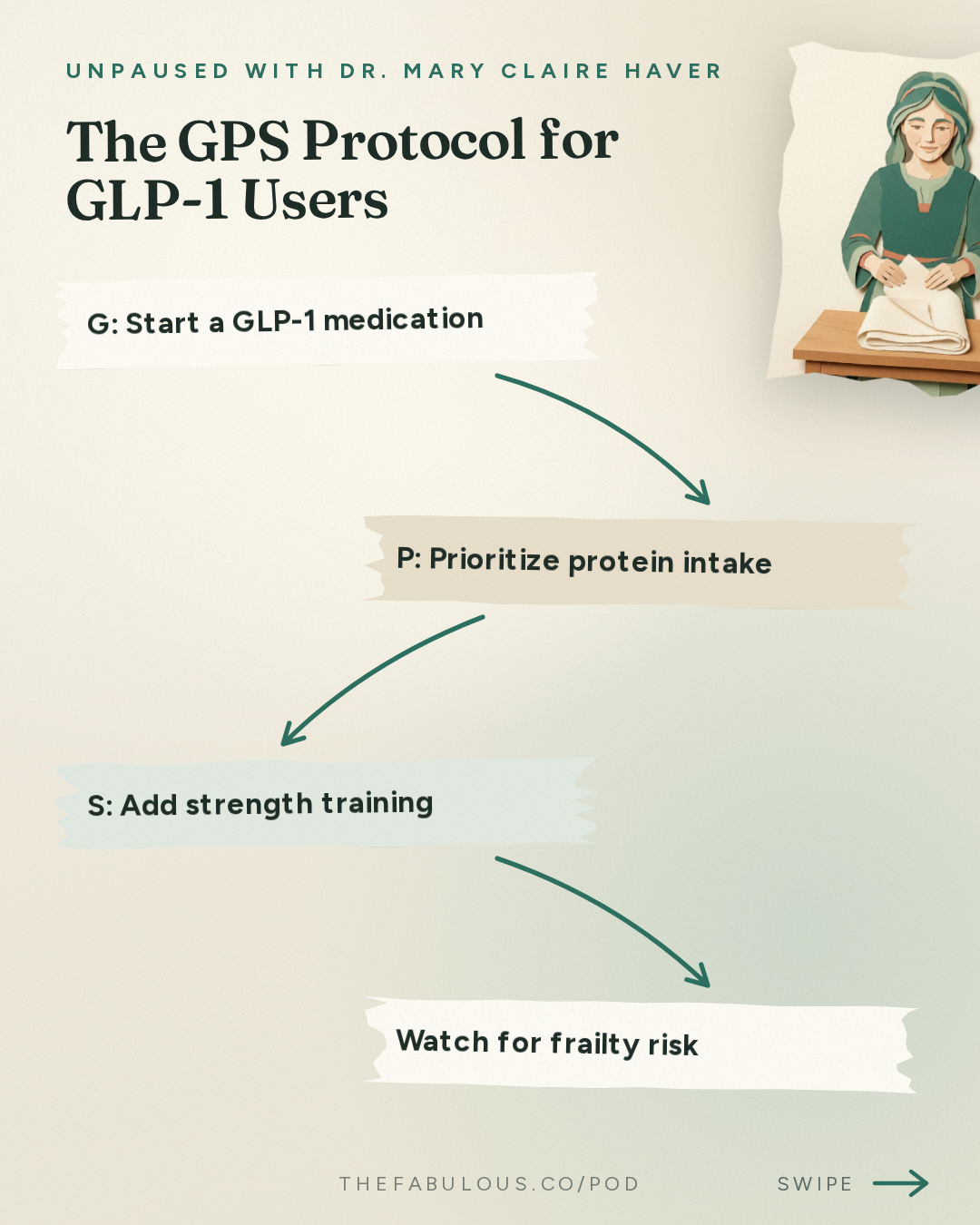
The other side effect worth planning for is muscle loss. Rapid weight loss without enough protein or resistance training strips lean mass along with fat, and Haver points to a framework from obesity physician Rocio Salas Weinryb that she calls non-negotiable: GLP-1, Protein, Strength training, or GPS (15:53). Skip the protein and the lifting, and the weight comes off along with the muscle and bone density a person will need decades later to stay independent.
The Parts of Medicine That Got Left Behind
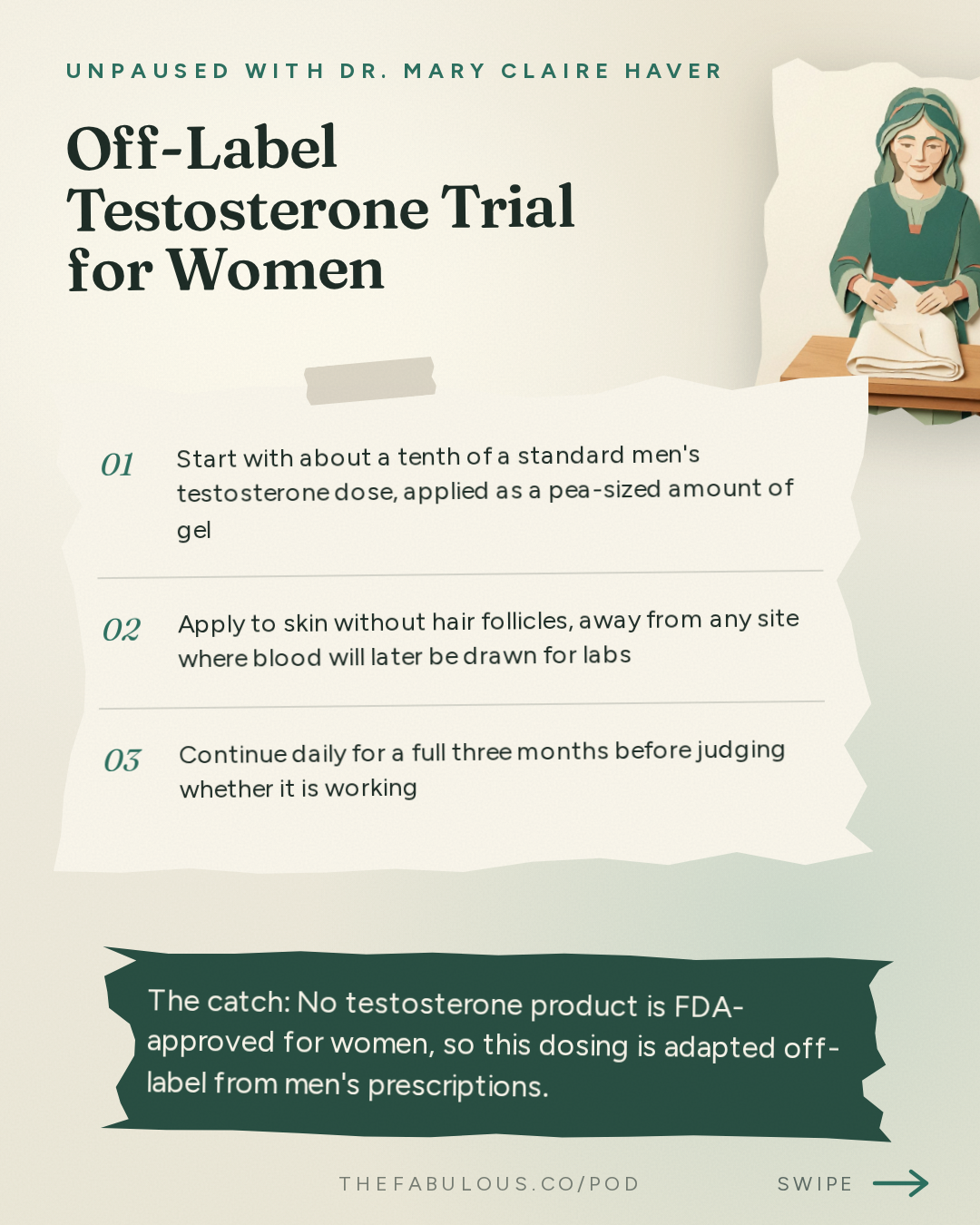
Two gaps in women's health came up that illustrate how uneven the research base still is. The first is testosterone. There is no testosterone product approved by the FDA, the agency that regulates drugs in the United States, specifically for women (25:43). Haver prescribes it anyway, borrowing from the men's formulation and cutting the dose to about a tenth of a standard male pump, applied as a pea-sized amount to skin without hair follicles. She asks patients to commit to three months before judging the result, and to recheck hormone levels if nothing has changed by then (27:36). She is candid about the limits of the evidence and equally candid about where she lands on it.
"Lack of research does not mean... you must accept the patient's clinical experience and let her make a decision for herself." (27:23) — Dr. Mary Claire Haver
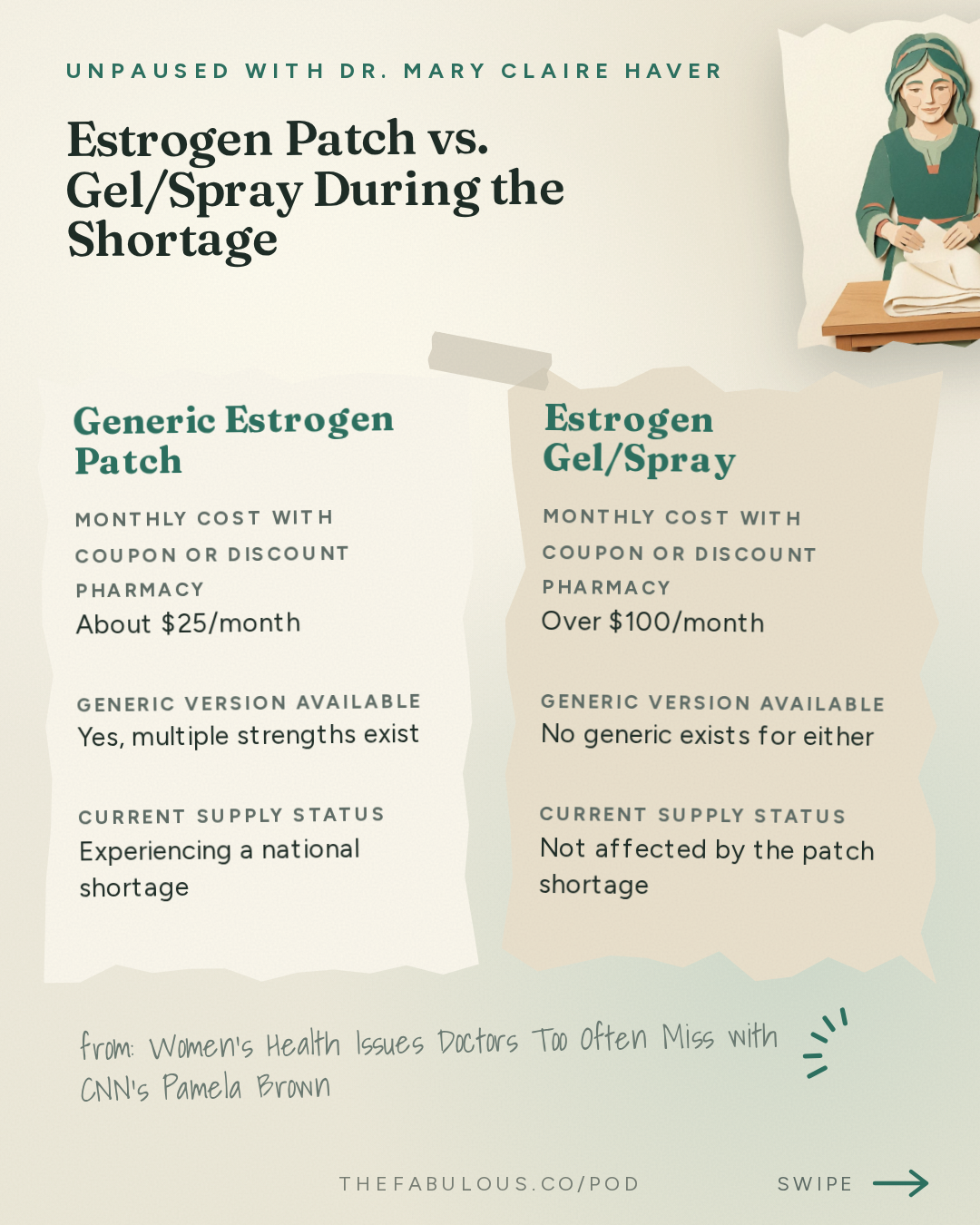
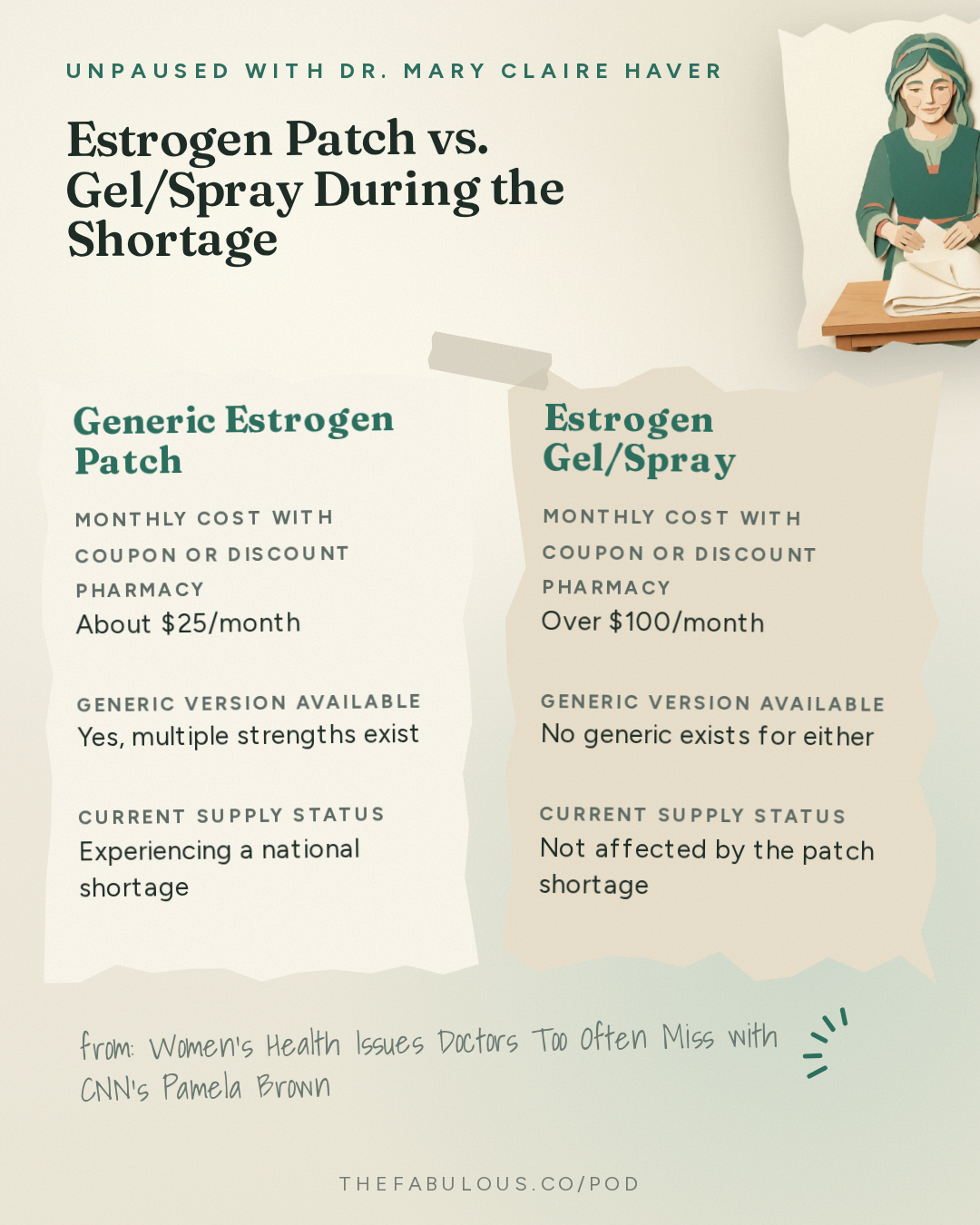
The second gap is more mundane and more consequential: a national shortage of estrogen patches. Patches are harder and less profitable to manufacture than pills, and demand jumped after the FDA removed a long-standing black box warning that had scared patients away from estrogen therapy (33:43). A coupon-assisted generic patch can run about $25 a month, while the gels and sprays many patients have switched to, none of which have a generic equivalent, often cost more than $100 a month (35:14). Haver has been part of a public letter-writing campaign to the FDA, which has since acknowledged working with pharmacies to increase supply.
Underneath both of these gaps sits a figure that deserves more attention than it gets: vaginal estrogen, applied locally rather than absorbed throughout the body, can prevent about half of urinary tract infections in postmenopausal women (35:52). Haver connects this directly to a more dangerous outcome. Among elderly women who arrive at the emergency room with a fractured hip, more than 65% already have a UTI at the time of diagnosis, and some clinicians suspect the resulting disorientation contributes to the fall itself (36:31). Her recommendation is blunt.
"The minute they're menopausal. They should just be on it prophylactically." (37:05) — Dr. Mary Claire Haver
The conversation closes where it began, with the difference between a thought a mother cannot stop having and a mind that has stopped tracking reality. Brown brings up the trial of Lindsey Clancy, a Massachusetts mother on trial in a case involving the deaths of her three children after what prosecutors and her defense both described as severe postpartum psychosis, a condition Haver connects historically to the 2001 case of Andrea Yates, who drowned her five children while in psychosis, hearing voices that told her the children needed saving from the devil (40:12). Both Brown and Haver want the distinction understood clearly, because conflating the two conditions keeps women like Brown silent out of fear.
"Intrusive thoughts does not make you any more harmful to anyone around you... Psychosis is you're entering a different reality." (42:59) — Pamela Brown
Brown also notes that many of Clancy's appointments were conducted over telehealth, raising the question of whether an in-person visit, one where a clinician could read her body language and feel her distress directly, might have changed the outcome (42:08). It is a fair question without a clean answer, and it sits uneasily next to the fact that telemedicine is also the reason many rural and overbooked women get any care at all.
What ties the hour together is not a single diagnosis or drug but a pattern: conditions that are common, sometimes life-threatening, and routinely under-discussed because the standard appointment is too short and the research base too thin. Brown turned her own period of silence into eight episodes of television. Haver turned a career of being undertrained in testosterone and vaginal estrogen into a practice built around naming what the data has not yet caught up to. Neither claims to have finished the job. Both seem to agree that the fix starts with saying the thing out loud.
Ask this episode anything
Pod's AI answers from the episode itself, with the minute mark so you can hear it yourself.
Or start with one of these
Ask this episode
Pod's AI listens to the whole episode to answer, and points you to the minute it comes from.
The rest of this answer, and any question after it
Answers come from the episode itself, never from a summary of it.
ContinueKey takeaways
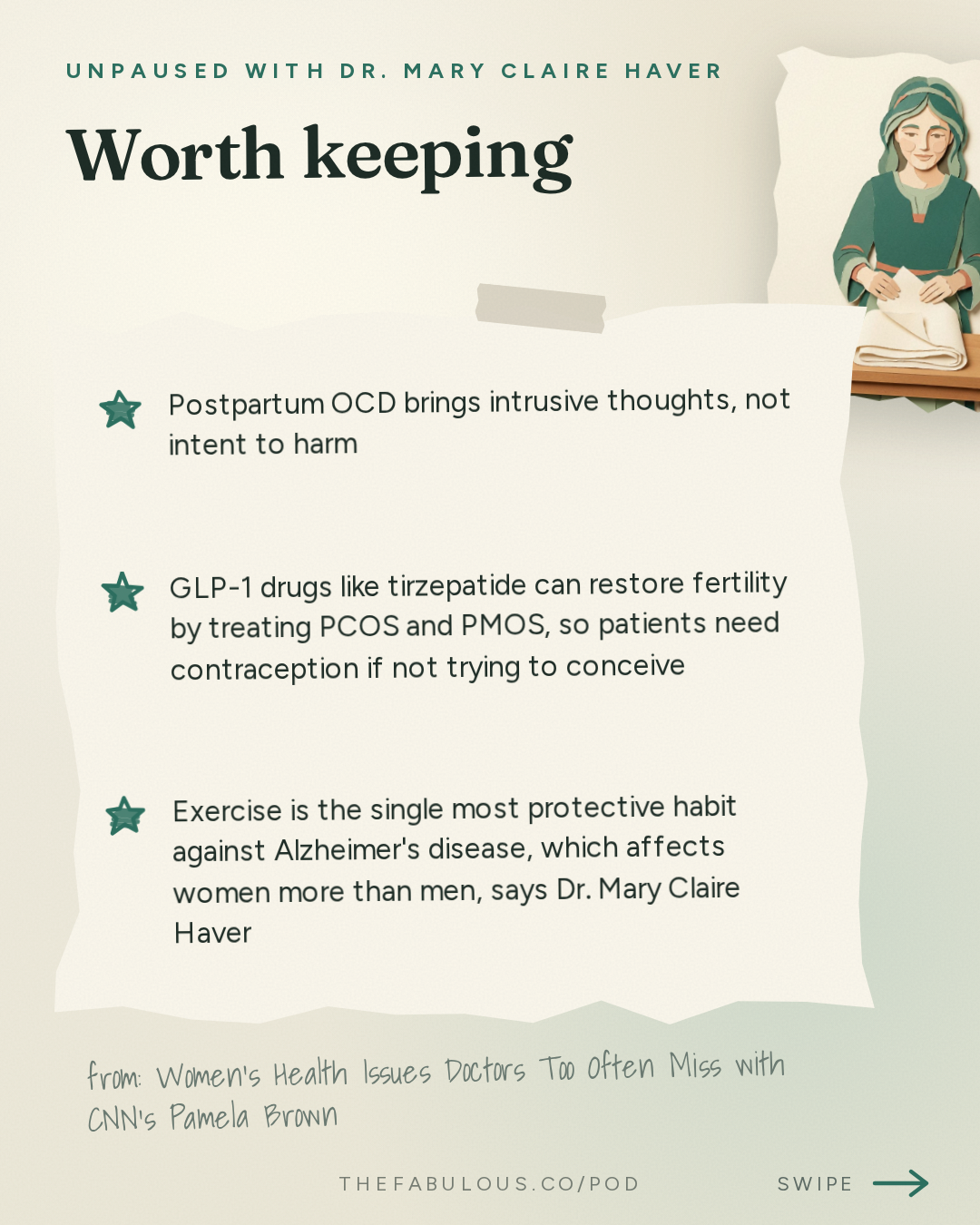
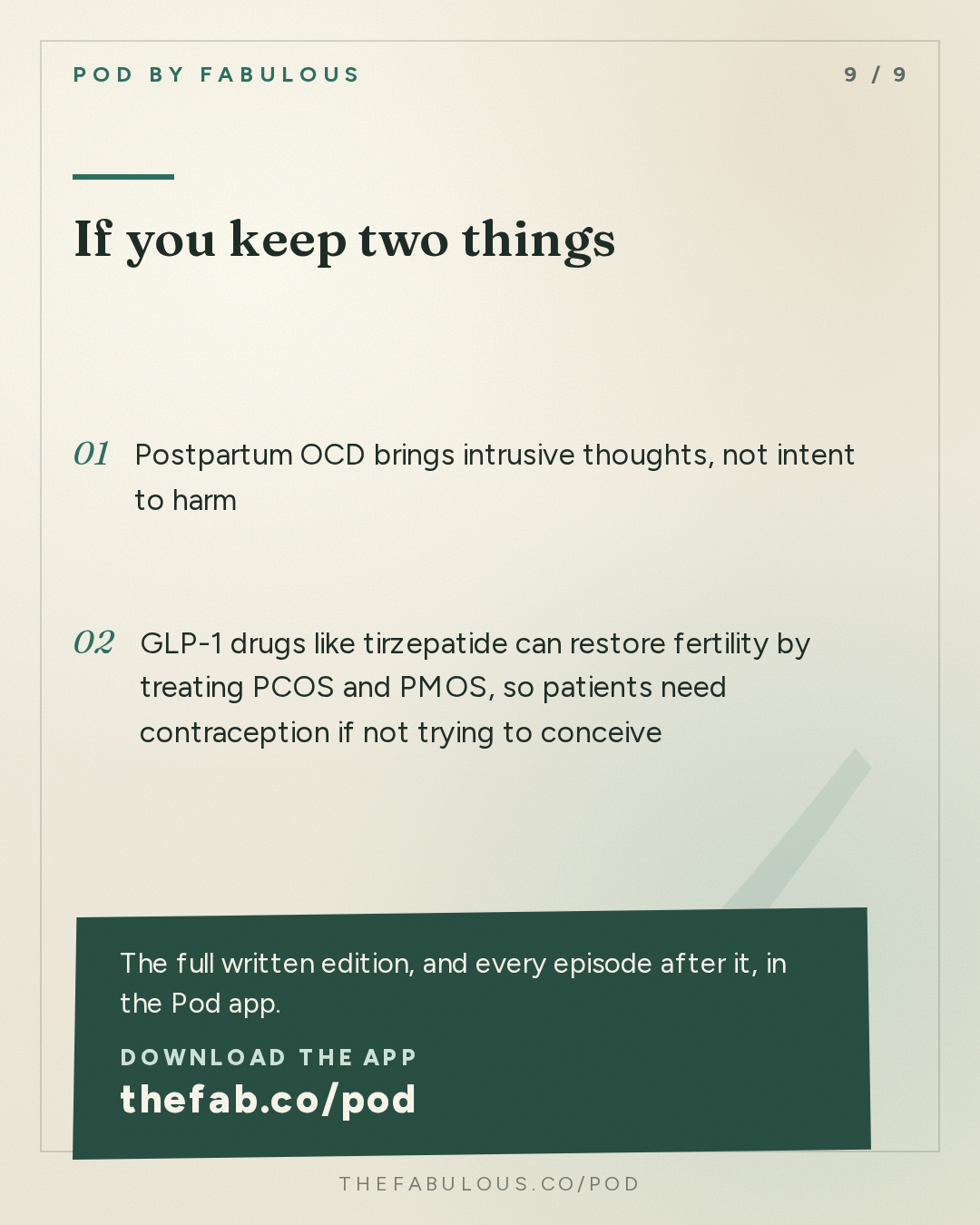
- Postpartum OCD brings intrusive thoughts, not intent to harm
- GLP-1 drugs like tirzepatide can restore fertility by treating PCOS and PMOS, so patients need contraception if not trying to conceive (14:05)
- Exercise is the single most protective habit against Alzheimer's disease, which affects women more than men, says Dr. Mary Claire Haver (11:15)
- Vaginal estrogen can prevent about half of UTIs in older women, and most hip fracture patients have a UTI at diagnosis, per Haver (35:52)
- No testosterone product is FDA-approved for women, so Haver prescribes a tenth of the standard men's dose off-label (27:36)
The episode in cards

By the numbers
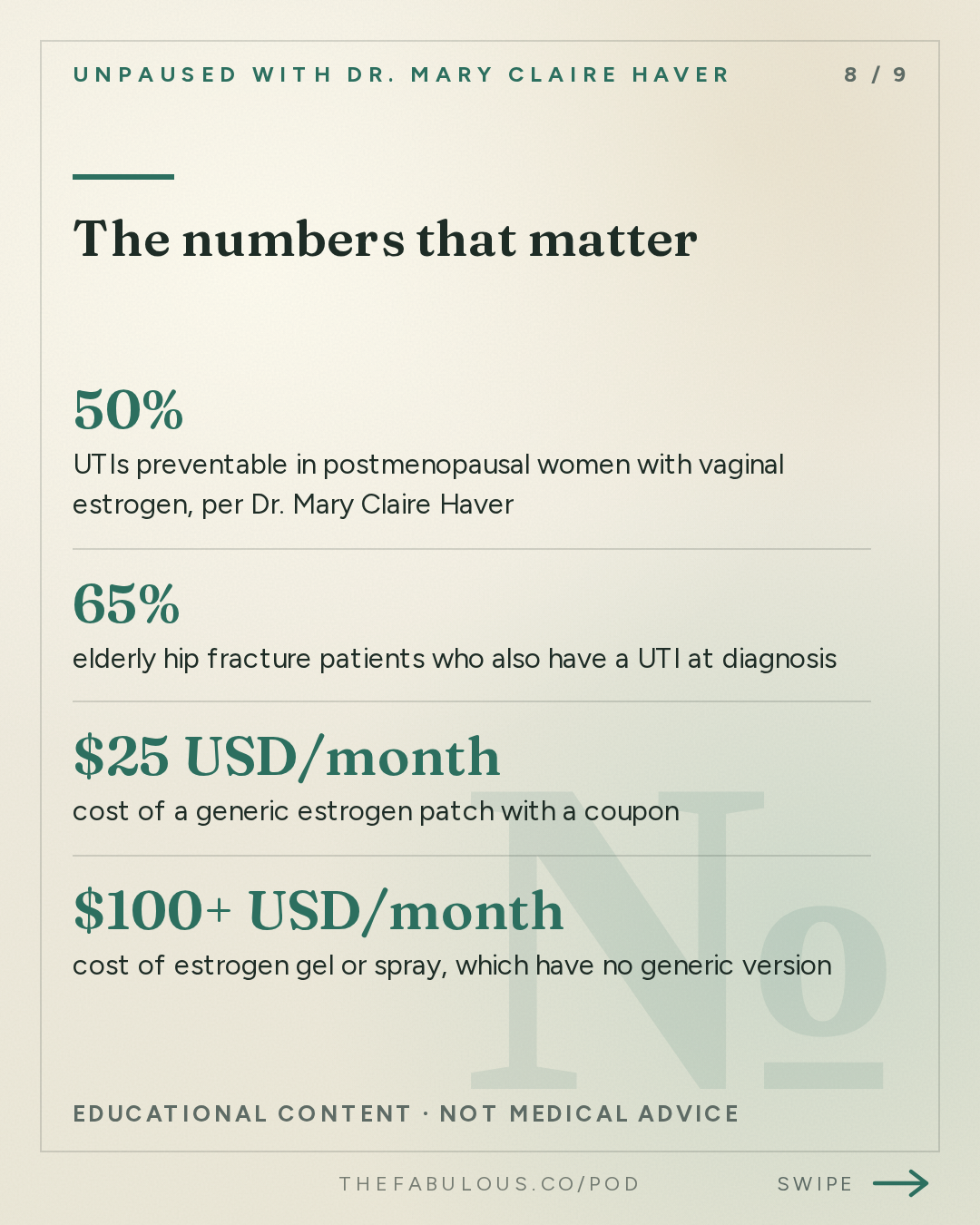
- 50% percent UTIs preventable in postmenopausal women with vaginal estrogen, per Dr. Mary Claire Haver
- 65% percent elderly hip fracture patients who also have a UTI at diagnosis
- $25 USD/month cost of a generic estrogen patch with a coupon
- $100+ USD/month cost of estrogen gel or spray, which have no generic version
In their words
“I just remember having, like, a really scary thought of, what if I drop my baby down the stairs? I developed postpartum OCD.”
“Lack of research does not mean, you know, you must accept the patient's clinical experience- Exactly ... and let her make a decision”
“The minute they're menopausal. They should just be on it prophylactically.”
Protocols
-
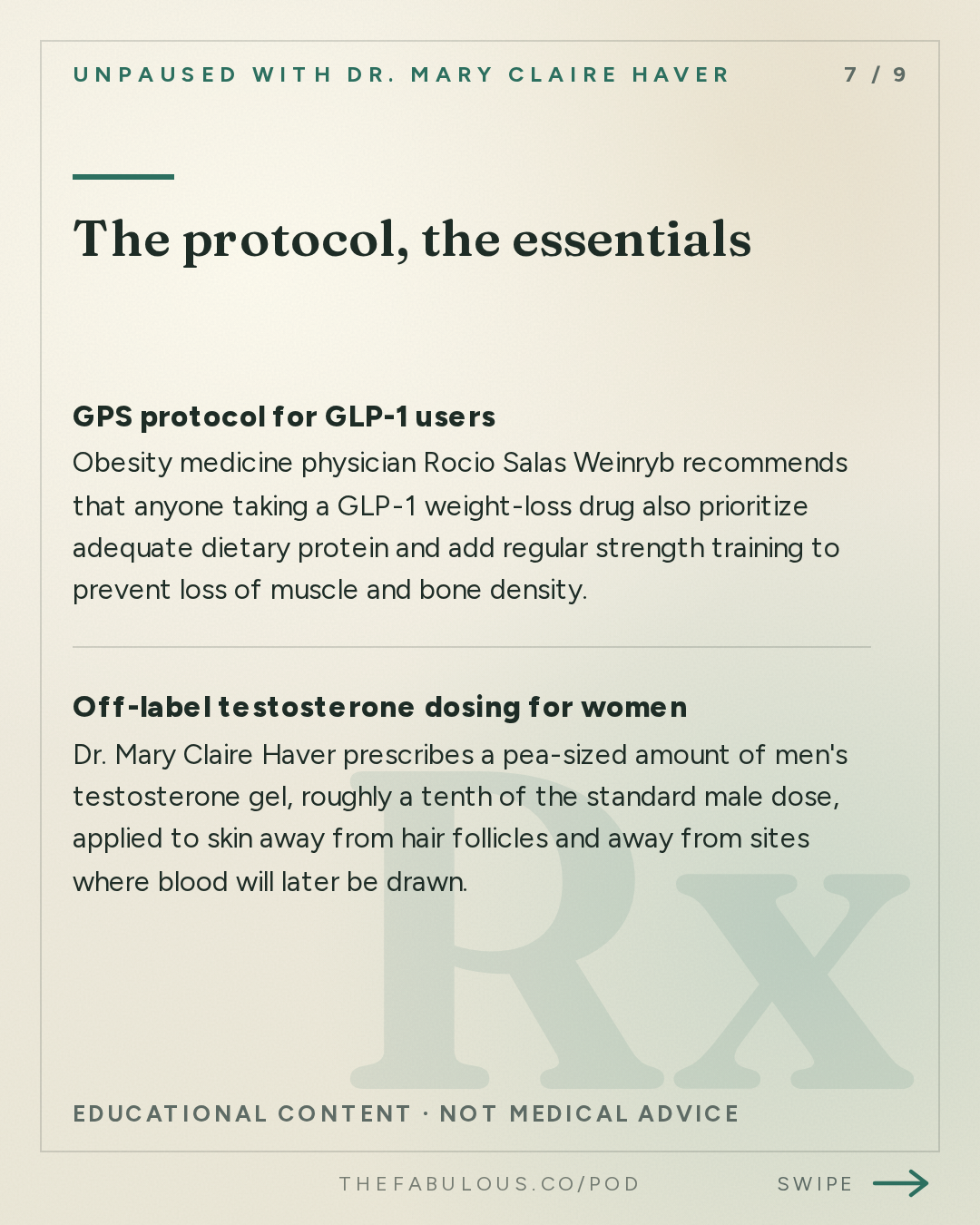
GPS protocol for GLP-1 users
Obesity medicine physician Rocio Salas Weinryb recommends that anyone taking a GLP-1 weight-loss drug also prioritize adequate dietary protein and add regular strength training to prevent loss of muscle and bone density.
Ongoing for the duration of GLP-1 treatment
-
Off-label testosterone dosing for women
Dr. Mary Claire Haver prescribes a pea-sized amount of men's testosterone gel, roughly a tenth of the standard male dose, applied to skin away from hair follicles and away from sites where blood will later be drawn.
Daily application, reassessed with bloodwork at three months if no improvement is noticed
-
Exercise for Alzheimer's prevention
Dr. Mary Claire Haver recommends never going more than a few days without some form of exercise, citing a colleague's advice that consistent movement is the single most important habit for lowering Alzheimer's risk.
Several times per week, without long gaps
-
Prophylactic vaginal estrogen
Dr. Mary Claire Haver recommends that women start vaginal estrogen as soon as they become perimenopausal or menopausal, rather than waiting for symptoms like dryness or recurrent urinary tract infections to appear.
Ongoing from the onset of menopause
Questions this episode answers
What is the difference between postpartum OCD and postpartum psychosis?
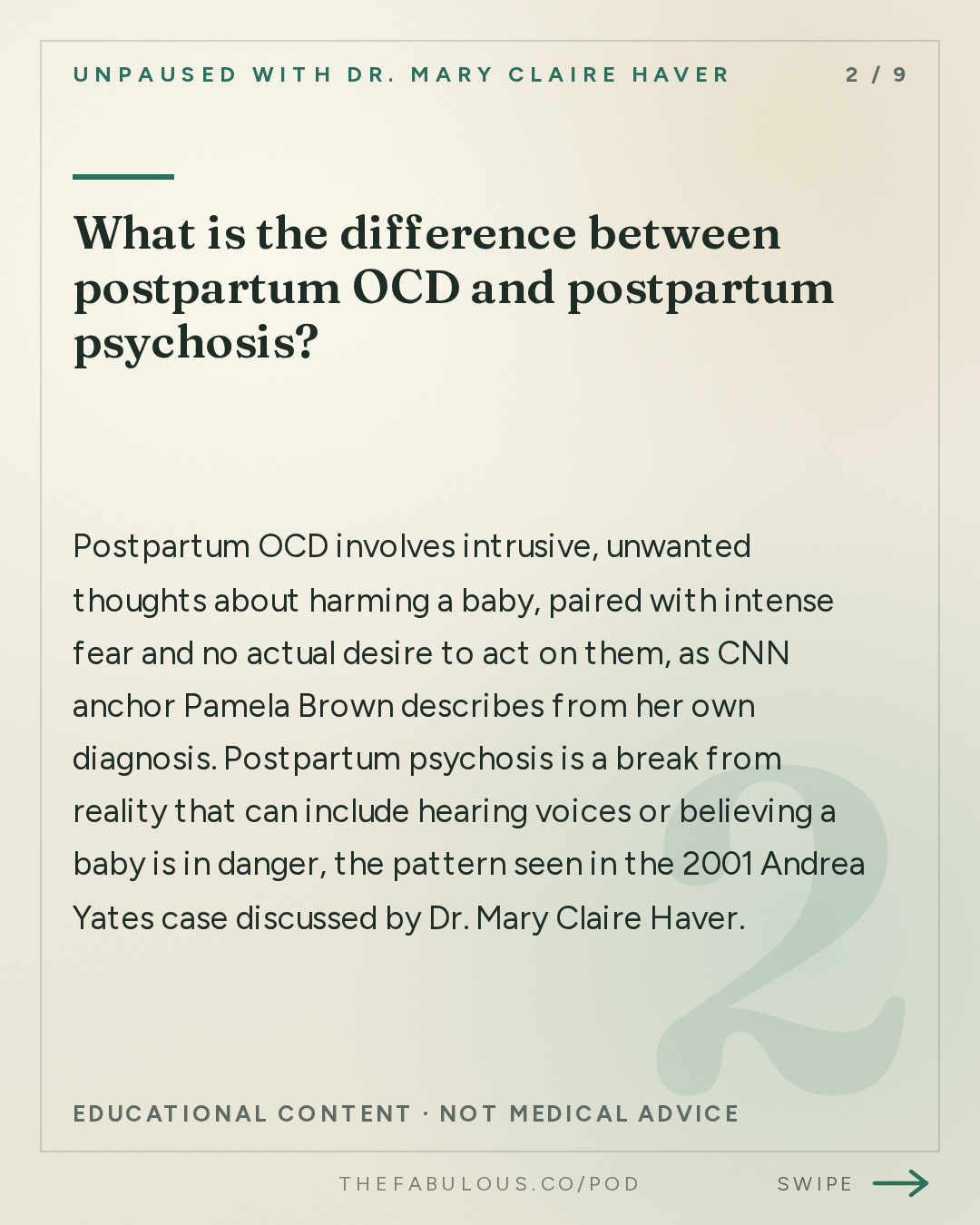
Postpartum OCD involves intrusive, unwanted thoughts about harming a baby, paired with intense fear and no actual desire to act on them, as CNN anchor Pamela Brown describes from her own diagnosis (42:59). Postpartum psychosis is a break from reality that can include hearing voices or believing a baby is in danger, the pattern seen in the 2001 Andrea Yates case discussed by Dr. Mary Claire Haver (40:12).
Can GLP-1 drugs like semaglutide or tirzepatide affect fertility?
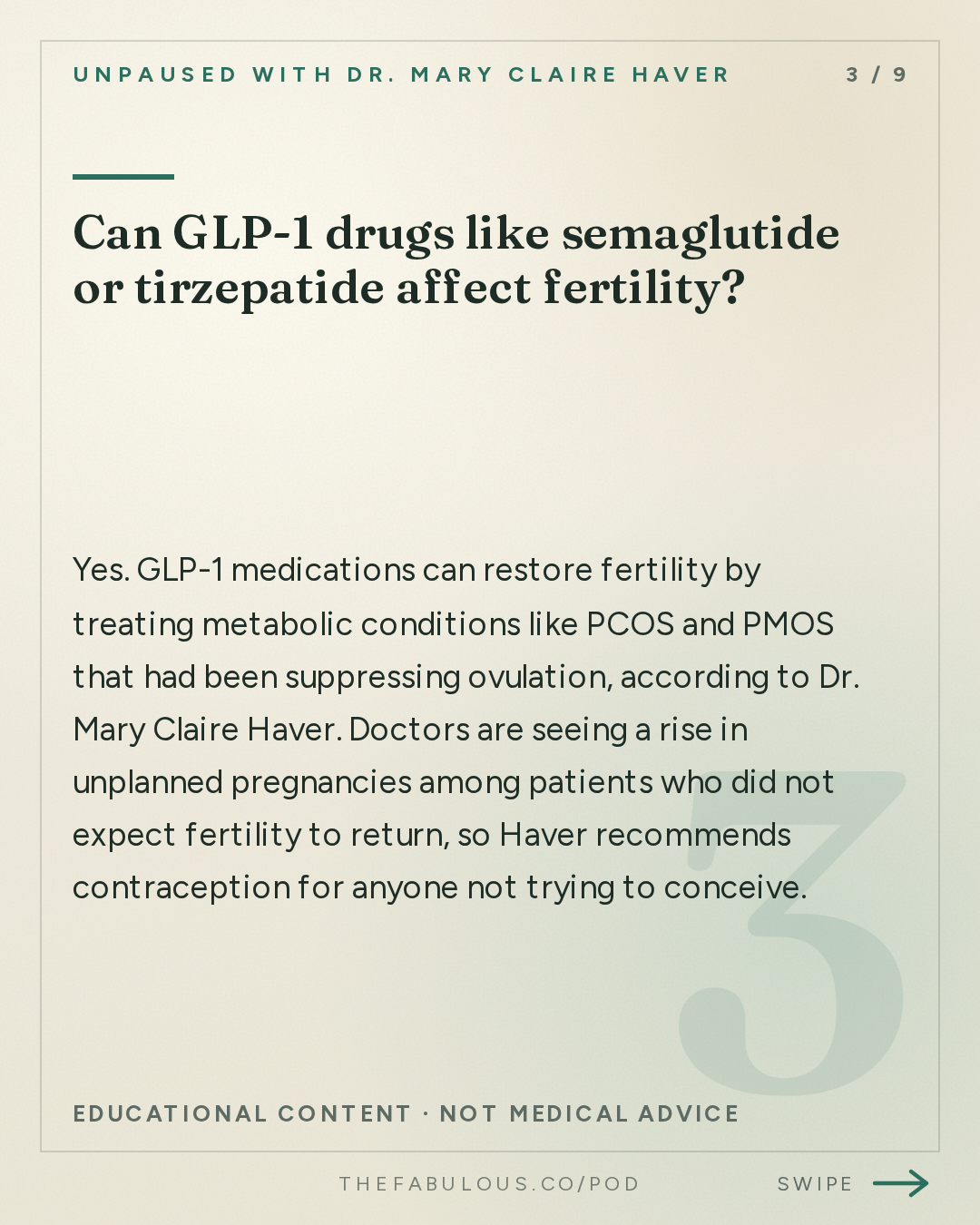
Yes. GLP-1 medications can restore fertility by treating metabolic conditions like PCOS and PMOS that had been suppressing ovulation, according to Dr. Mary Claire Haver (14:05). Doctors are seeing a rise in unplanned pregnancies among patients who did not expect fertility to return, so Haver recommends contraception for anyone not trying to conceive (15:05).
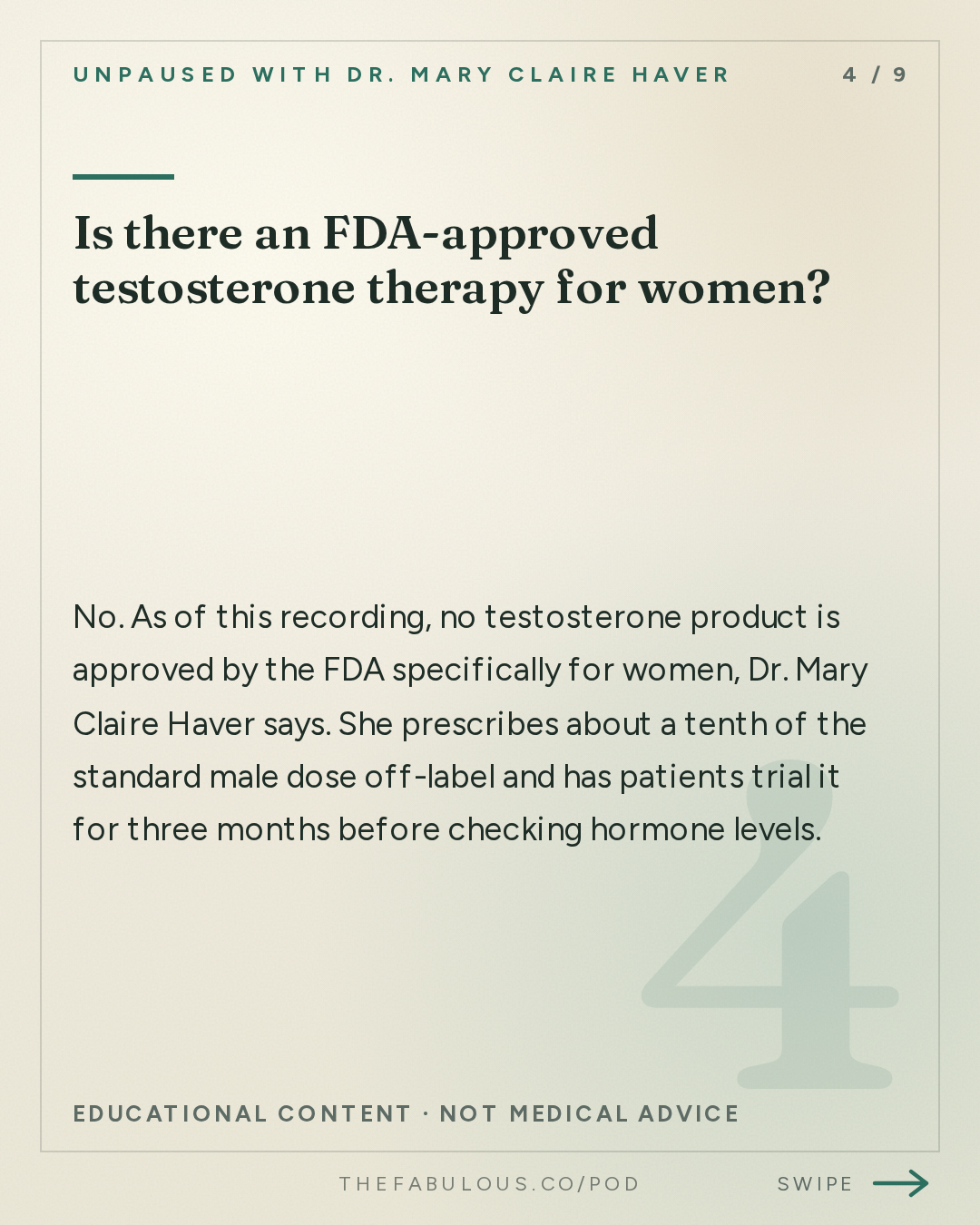
Is there an FDA-approved testosterone therapy for women?
No. As of this recording, no testosterone product is approved by the FDA specifically for women, Dr. Mary Claire Haver says (25:43). She prescribes about a tenth of the standard male dose off-label and has patients trial it for three months before checking hormone levels (27:36).
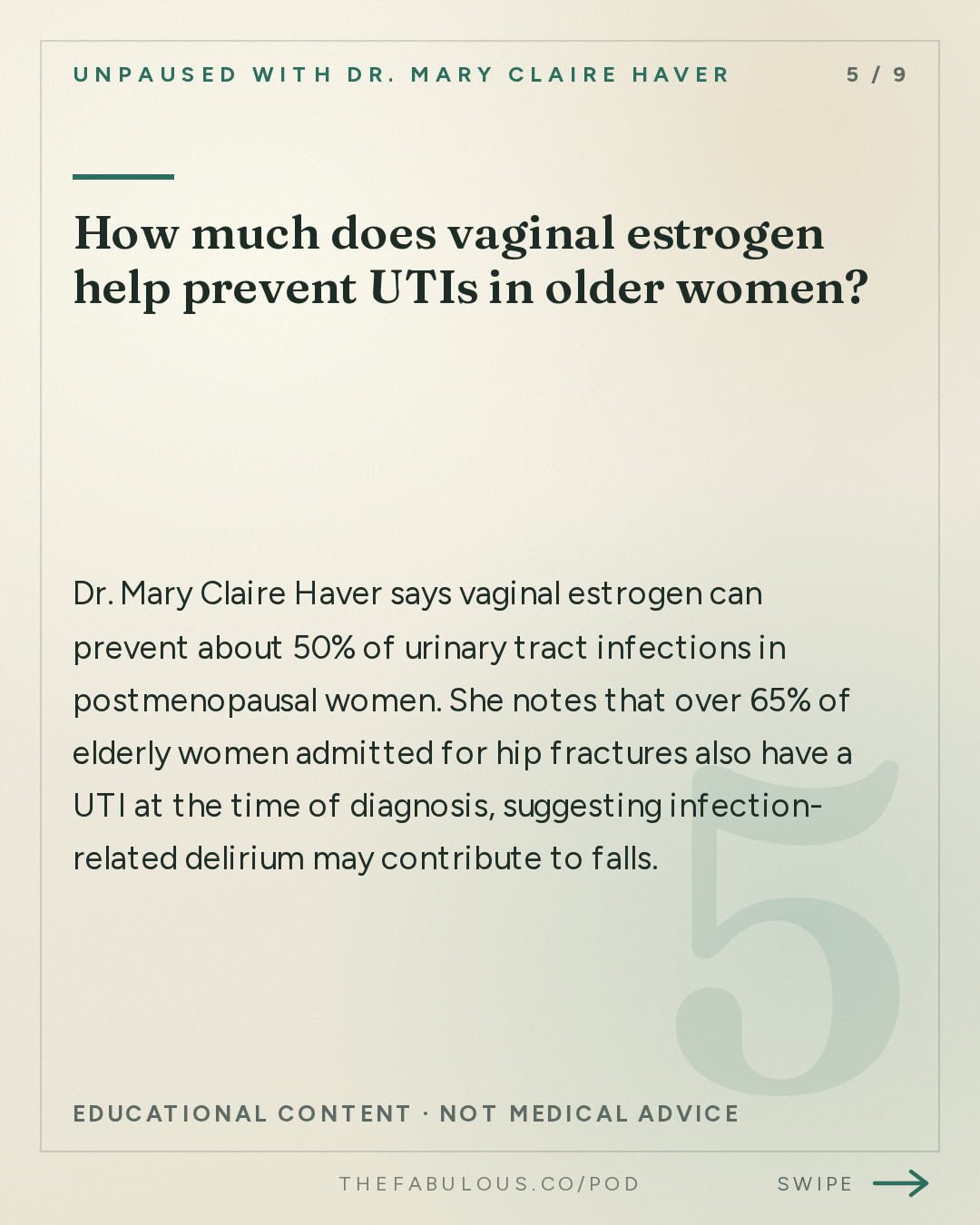
How much does vaginal estrogen help prevent UTIs in older women?
Dr. Mary Claire Haver says vaginal estrogen can prevent about 50% of urinary tract infections in postmenopausal women (35:52). She notes that over 65% of elderly women admitted for hip fractures also have a UTI at the time of diagnosis, suggesting infection-related delirium may contribute to falls (36:31).
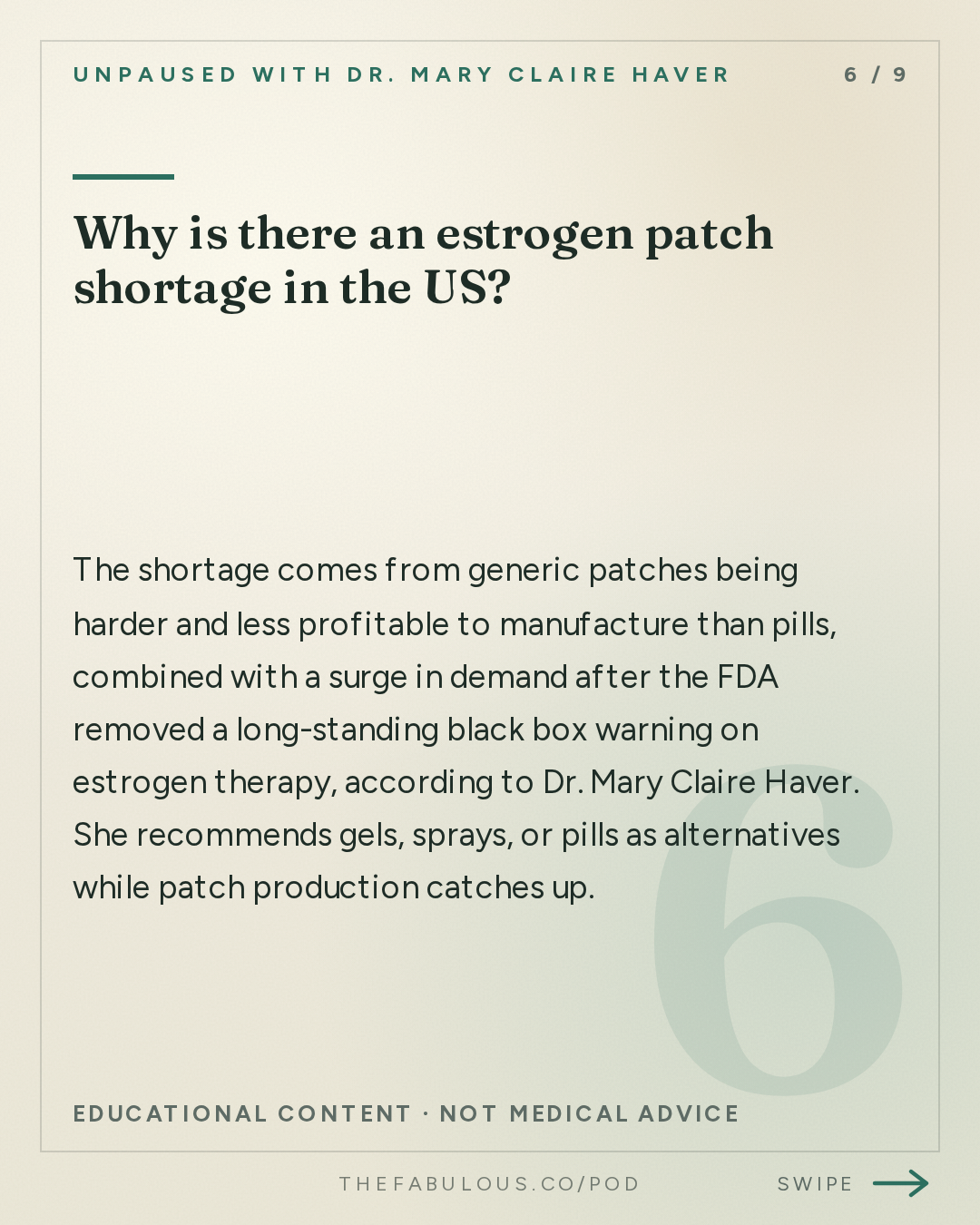
Why is there an estrogen patch shortage in the US?
The shortage comes from generic patches being harder and less profitable to manufacture than pills, combined with a surge in demand after the FDA removed a long-standing black box warning on estrogen therapy, according to Dr. Mary Claire Haver (33:43). She recommends gels, sprays, or pills as alternatives while patch production catches up (34:33).
The full read, in cards
Go deeper
- Article on postpartum OCD symptoms by Dr. Jordan Levy — Described intrusive thoughts and fear of accidentally harming a child, which matched Pamela Brown's own experience closely enough that she contacted the author directly
- Observational study on testosterone and mood in women — Found global improvements in mood and function among women using testosterone outside of sexual function, per Dr. Mary Claire Haver
Mentioned
Pamela Brown · Dr. Mary Claire Haver · Body Language · Dr. Jordan Levy · Lindsey Clancy · Rocio Salas Weinryb · FDA · Andrea Yates · Dr. Lisa Mosconi · Marty Makary · Dr. Gabrielle Lyons · ISSWSH
More from this show and category
How Menopause Affects Gut Health and Bloating
Menopause changes gut health because falling estrogen slows motility, raises pain sensitivity, and shifts the microbiome's estrobolome. Harvard gastroenterologist Trisha Pasricha explains why bloating, IBS, and fecal incontinence rise after menopause, and lays out fiber, screening, and bidet protocols that actually help.
Menopause Skin Changes: What Actually Helps
Dermatologist Erica Kelly tells Dr. Mary Claire Haver that menopausal skin needs lighter Botox doses, daily sunscreen, and realistic expectations for collagen and hair treatments. Hormone therapy may preserve skin firmness for decades, oral minoxidil treats hair loss but causes a two-month shed, and vaginal moisturizers differ from lubricants.
Menopause Skin Changes: Causes and Fixes
Menopause triggers a 30% collagen loss in skin within five years, driven by falling estrogen and steady testosterone levels. Dermatologist Erica Kelly explains the barrier breakdown behind dryness and jawline acne, and recommends sunscreen and retinoids as the best-evidenced treatments, with topical estriol and spironolactone for targeted fixes.
Gabrielle Lyon: Muscle Is the Longevity Organ
Dr. Gabrielle Lyon argues that skeletal muscle, not body fat, is the organ that determines how well women age. She explains that muscle drives glucose disposal, releases hormone-like myokines, and needs at least 100 grams of daily protein plus resistance training to stay healthy after midlife.
