
How Jesse Merrill Built Good Culture
Good Culture: How Jesse Merrill Made Cottage Cheese Cool
The brief
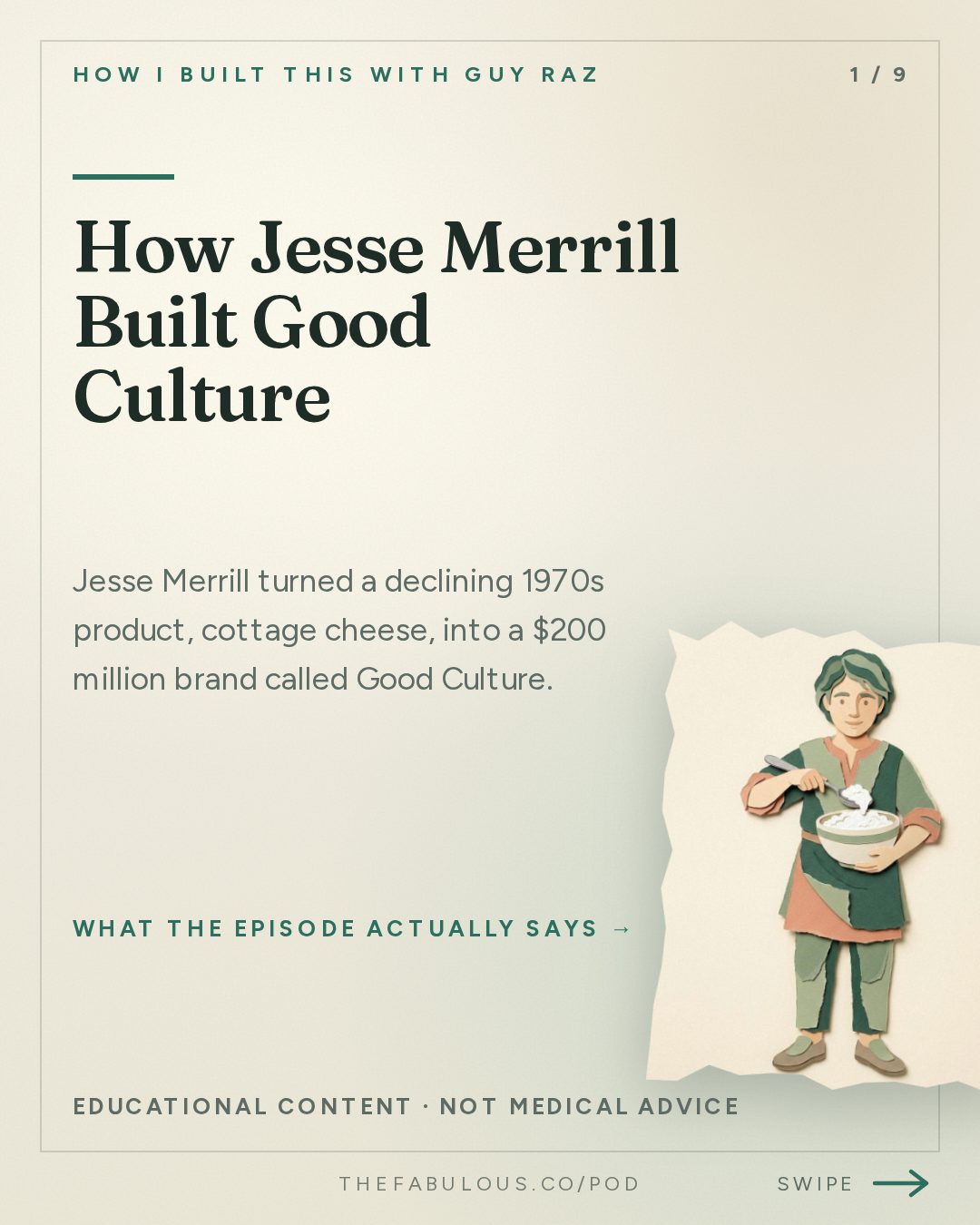
Jesse Merrill turned a declining 1970s product, cottage cheese, into a $200 million brand called Good Culture. He stripped out gums and preservatives, hit grueling retail velocity targets, and caught a 2023 TikTok cottage-cheese-ice-cream trend that pulled Gen Z into a category now worth $2.4 billion in the US.
Cottage cheese has an image problem that predates influencer culture by decades. Almost nobody thinks of it as exciting. Yet in the 1970s, cottage cheese actually outsold yogurt in the United States, before falling off for lack of innovation (40:03). That one buried fact in the category data is the quiet engine behind Jesse Merrill, who built a brand called Good Culture into a reported $200 million in annual sales by 2025 (06:29).
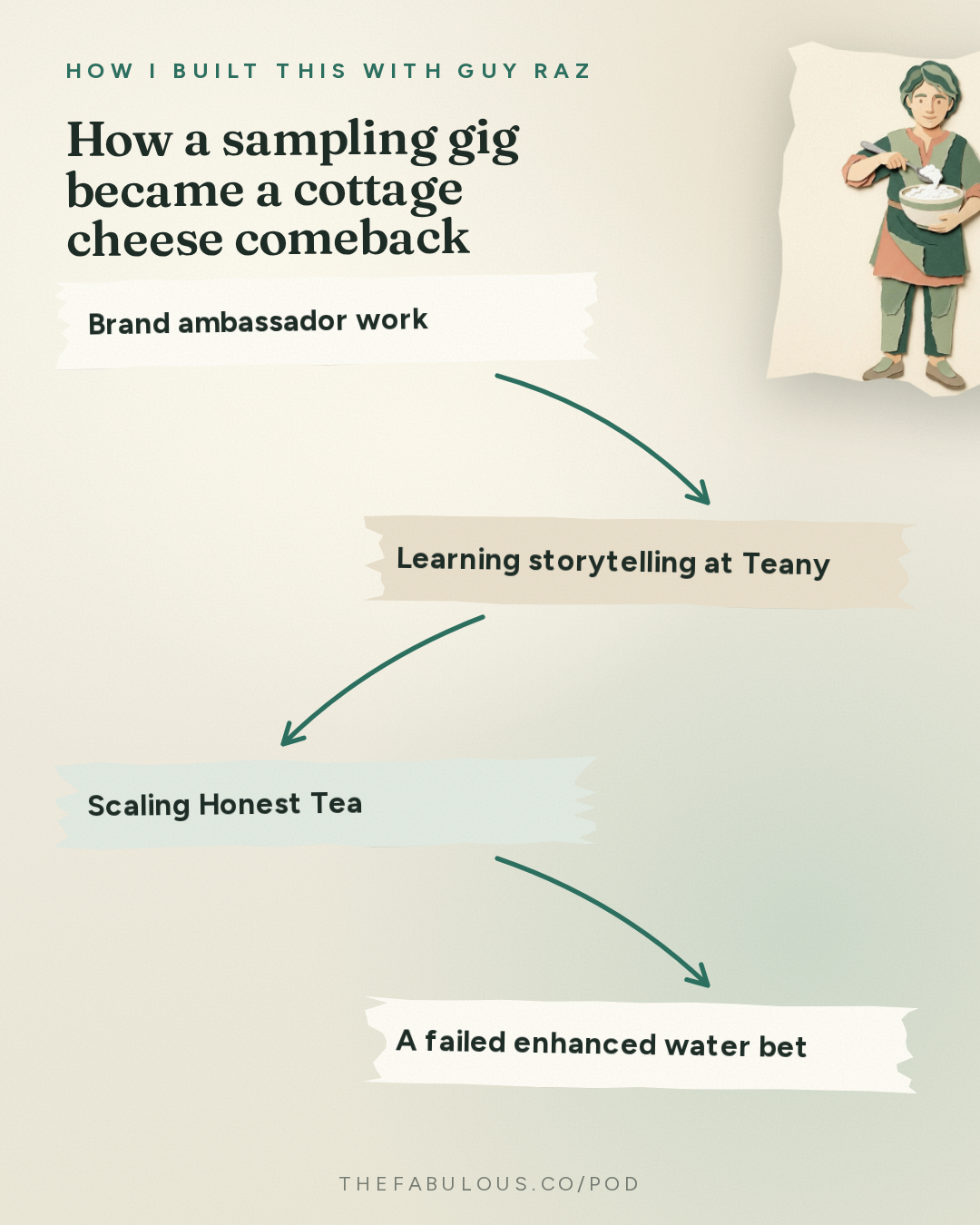
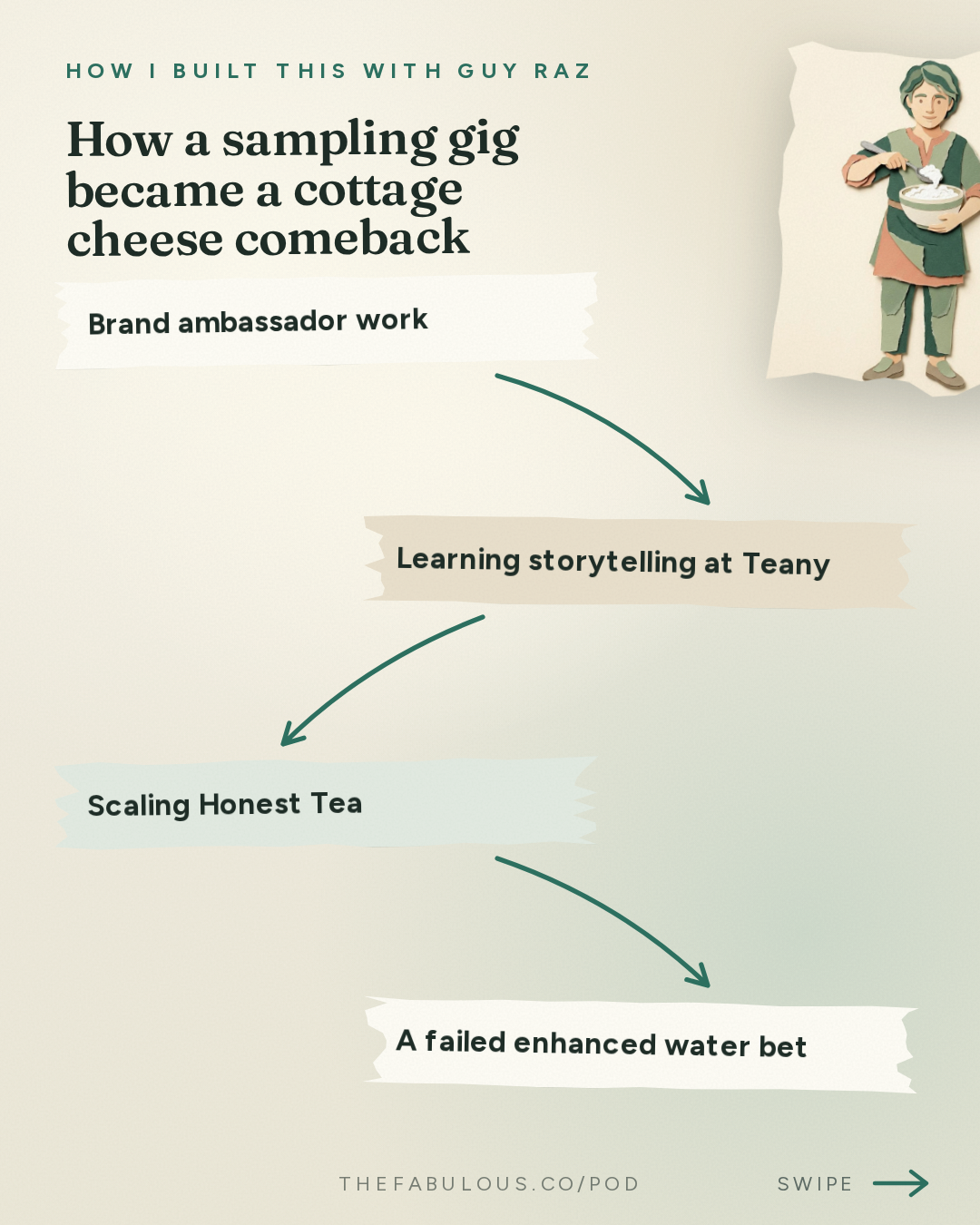
Merrill did not arrive by way of food science. He started as an office assistant to film director Jonathan Demme, then moved to Los Angeles to work as a production assistant for Spike Jonze on MTV's Jackass, back when nobody outside the crew knew what the show was (06:29). To make rent, he picked up shifts as a brand ambassador, handing out KY lubricant samples on a San Diego boardwalk and pouring Amstel Light for college students in Tempe, Arizona, work that paid $20 to $30 an hour, more than his film job (10:57). A chance introduction led him to run marketing for Teany, a small bottled tea brand backed personally by the musician Moby. There, he says, he discovered that brand building and filmmaking rely on the same instinct.
From Teany, a rival brand called him directly. That brand was Honest Tea, then a company doing six or seven million dollars a year, run by founder and CEO Seth Goldman. Merrill took a marketing role, moved to Goldman's headquarters in Bethesda, Maryland, and helped launch the Honest Kids line. Over roughly four and a half years, the company grew to about $75 to $80 million in revenue before Coca-Cola bought it in 2011 (23:39). The acquisition led him to his next job: Activate Drinks, an enhanced-water startup founded by Anders Eisner, son of former Disney CEO Michael Eisner. Activate's gimmick was a twist cap that held powdered vitamins separately from the water, a feature meant to compete with VitaminWater, which had just sold to Coca-Cola for $4.2 billion (24:35). The cap required two twists and a shake, too much friction for shoppers to learn. Investor Tata Group pulled back further funding, and the company sold after topping out at roughly $5 million in revenue (26:48).
It was in the gap after Activate that Merrill's own body intervened. In 2015 he was diagnosed with ulcerative colitis, an autoimmune condition that attacks the gut. He dropped 20 pounds before seeing a doctor (30:23). Told he would need steroids for life, he pushed back, and instead tried an elimination approach called the autoimmune paleo diet, cutting out nuts, seeds, caffeine, alcohol, and grain, and eating mostly grass-fed, organic meat (34:21). Within about a week and a half, his symptoms eased. He still keeps emergency medication on hand for a flare, but says he almost never needs it.
Learning brand by doing brand
The idea for Good Culture arrived through his wife, who was eating a lot of cottage cheese while pregnant. Merrill looked at the nutrition label and noticed cottage cheese had more protein and less sugar per cup than Greek yogurt (40:03). Then he looked at the category: a product that was bigger than yogurt in the 1970s, now mostly private-label and stagnant. He and Eisner, now his co-founder and chairman, mapped the idea against what they called the mega trends of the moment: high protein, low sugar, gut health, clean label, mission-led, founder-led. "Okay, well, guess what? We check all these boxes," Merrill recalled telling investors, some of whom didn't learn the product was cottage cheese until after they were already convinced (41:39).
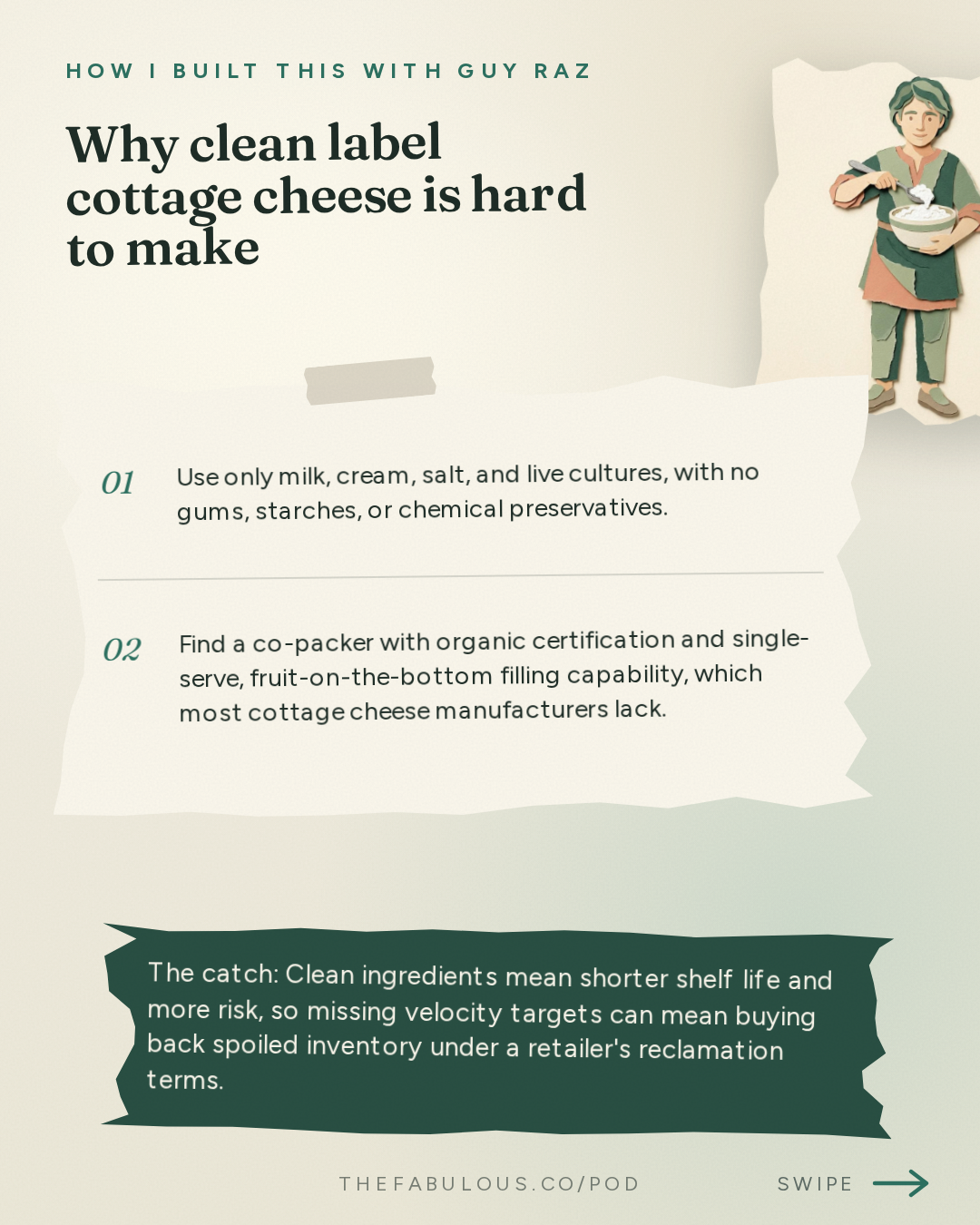
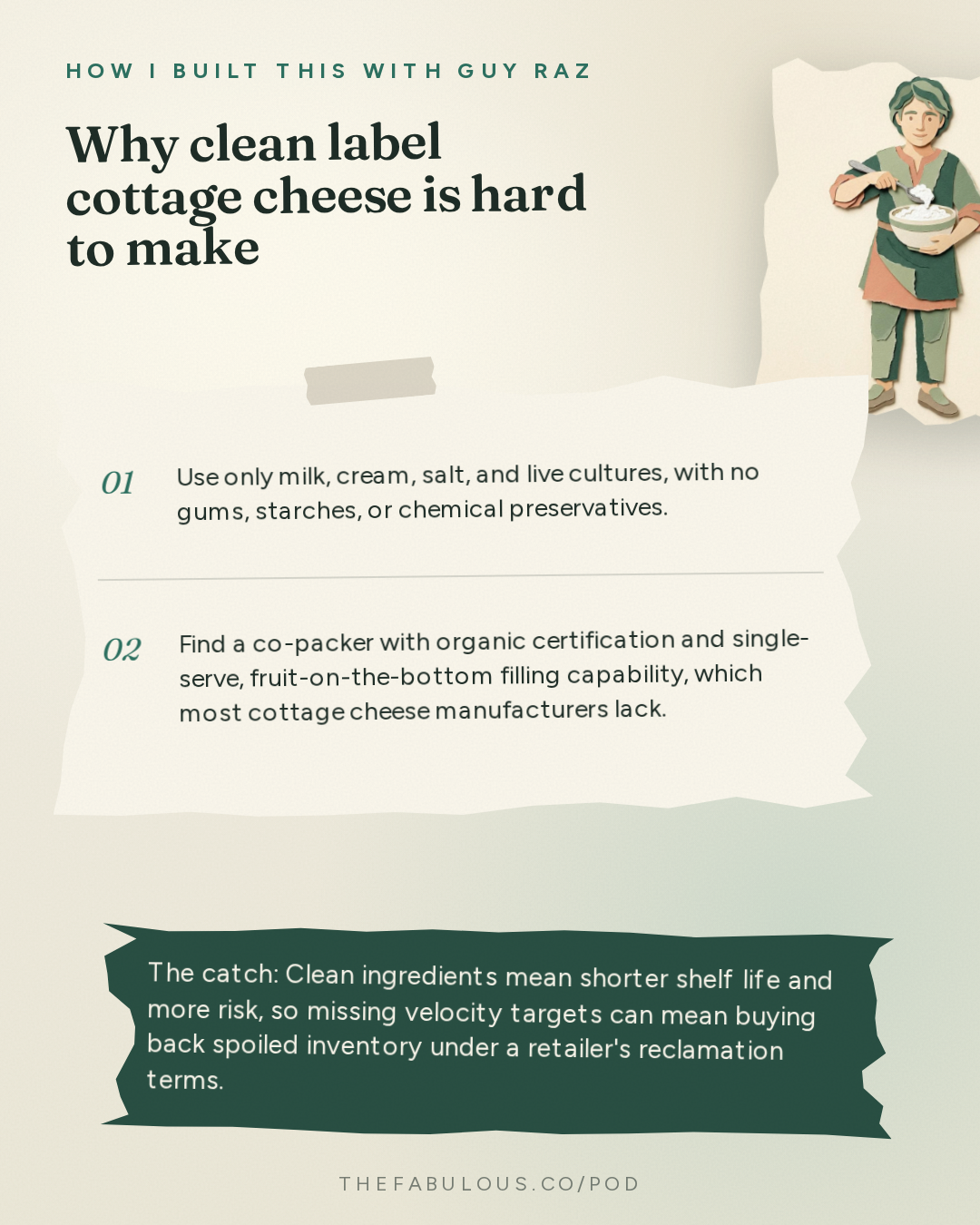
Turning that thesis into a jar was harder than the pitch. "Clean label" is a marketing phrase, not a regulated standard, but for Merrill it meant something specific: milk, cream, salt, and live cultures, nothing else (46:15). Most remaining cottage cheese manufacturers had already shifted to yogurt, and the ones still in the category wanted volume a startup couldn't offer, plus they lacked organic certification or the single-serve, fruit-on-the-bottom filling lines Merrill needed. He eventually found a small co-packer in Wisconsin willing to experiment. Even then, the first full production run, days before the Expo West trade show in March 2015, came out soupy instead of thick and creamy, forcing a scramble to fix the formula (48:22). The tradeoff for going additive-free was a short shelf life, about 45 days total, which left only around 30 days once product reached a store shelf (56:44).
That short window collided with a brutal retail reality. Good Culture launched into 55 Whole Foods stores in one region and all Sprouts locations after Expo West (52:39), and to keep that shelf space, retailers required selling 8 to 10 tubs per store per week. During the first six months on a shelf, a new brand is on "reclamation," meaning anything unsold has to be bought back by the company.
"When you launch into a Whole Foods, you're on full reclamation, right, for like six months. So like anything that doesn't sell, you have to buy back." — Jesse Merrill [00:03]
Merrill describes personally driving to stores, checking expiration codes, and calling brand ambassadors to clear shelves before product spoiled. It worked well enough to hold distribution. Revenue reached about $2 million in 2016, the brand's first full year (60:45), and by 2021, helped by influencer seeding, PR, and wider placement in chains like Kroger and Walmart, sales hit $70 million (61:47). Customers who tried it kept saying some version of the same thing.
"The number one piece of feedback that we would receive from folks that started buying it regularly was, 'I don't like cottage cheese, but I love Good Culture.'" — Jesse Merrill [55:59]
The right message, the right moment
In 2023, a health influencer named Lainey Kate posted a video blending Good Culture cottage cheese with honey to make a high-protein ice cream, 60 grams of protein in a single batch (05:10). The video spread, and other creators began one-upping it, turning cottage cheese into flatbreads, bagels, smoothies, scrambled eggs, even pasta sauce. Merrill had spent years seeding influencers before this happened, which is part of why he describes the moment the way he does.
"Virality is the right message, you know, meeting the right moment, and that's what happened here, right?" — Jesse Merrill [65:38]
What made the moment unusual is who showed up. Good Culture's original thesis targeted aging-out Gen X and millennial shoppers. Instead, Gen Z adopted cottage cheese through TikTok with no persuasion required, treating it as simply cool rather than something that needed explaining (67:08). Merrill jokes that he went "from being the lame cottage cheese dad to being the cool cottage cheese dad" (69:31).
The surge strained supply across the whole category, not just one brand. The US cottage cheese market, which had been shrinking for decades, grew to $2.4 billion (70:30), and per-capita consumption climbed back toward, though still below, its 1970s peak. Good Culture says it currently meets less than 50 percent of consumer demand for its product (73:55), a capacity problem rather than a demand problem. The company has brought on new dedicated manufacturing facilities and, in 2025, partnered with private equity firm L Catterton in a deal to sell a majority stake, set to close in 2026, while Merrill stayed on as CEO to keep running day-to-day operations.
Asked to weigh luck against grind, Merrill credits the latter. "There were several nights where I would lie awake wondering whether or not this thing would survive," he says of the years before anyone cared about cottage cheese. The data that made the opportunity obvious, cottage cheese's lost 1970s popularity, had been sitting in plain sight the whole time. What changed was not the product. What changed was someone willing to spend years making the case before the internet made it for him.
Ask this episode anything
Pod's AI answers from the episode itself, with the minute mark so you can hear it yourself.
Or start with one of these
Ask this episode
Pod's AI listens to the whole episode to answer, and points you to the minute it comes from.
The rest of this answer, and any question after it
Answers come from the episode itself, never from a summary of it.
ContinueKey takeaways
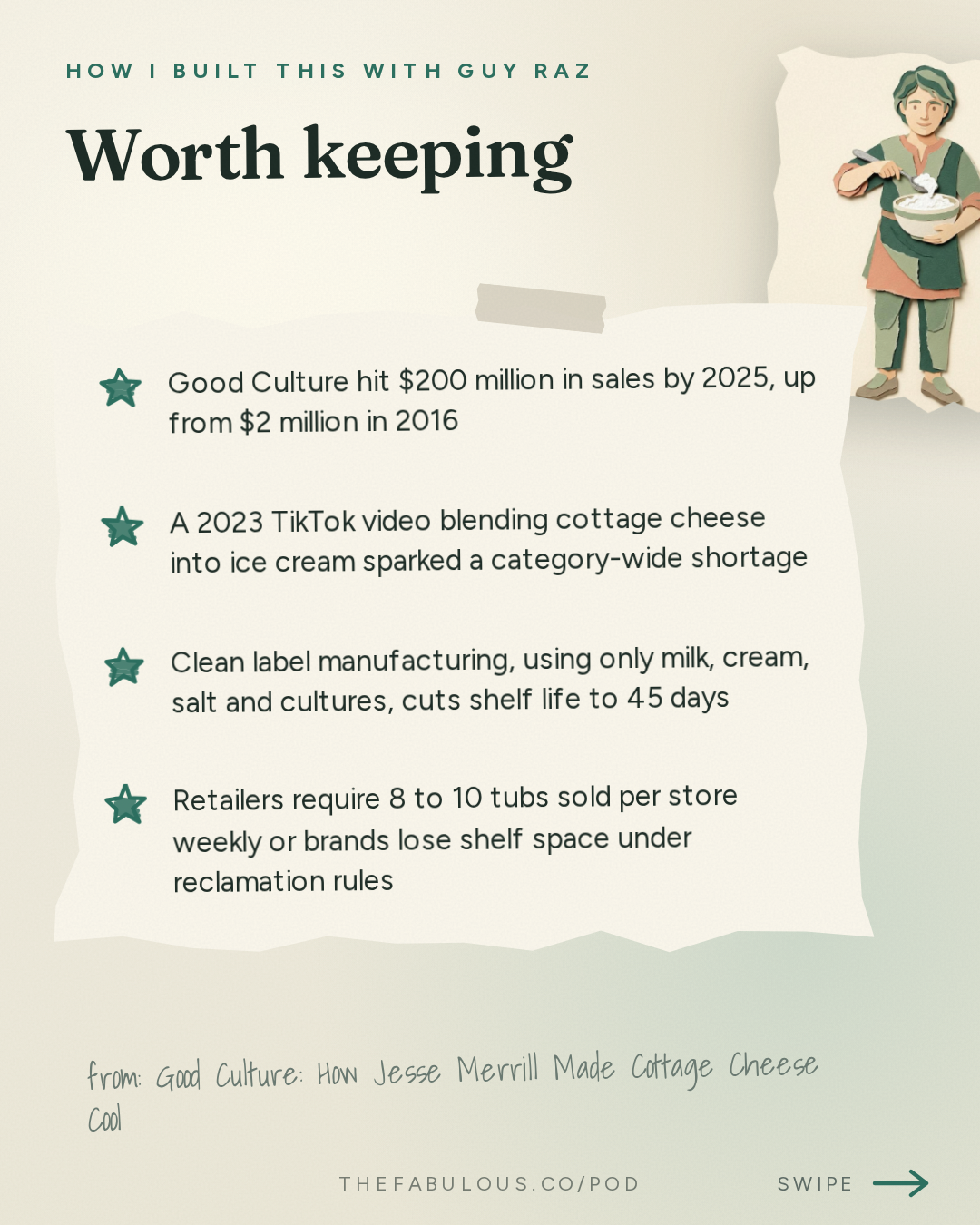
- Good Culture hit $200 million in sales by 2025, up from $2 million in 2016
- A 2023 TikTok video blending cottage cheese into ice cream sparked a category-wide shortage
- Clean label manufacturing, using only milk, cream, salt and cultures, cuts shelf life to 45 days
- Retailers require 8 to 10 tubs sold per store weekly or brands lose shelf space under reclamation rules
- Jesse Merrill manages his ulcerative colitis through an autoimmune paleo diet instead of daily medication
The episode in cards
By the numbers
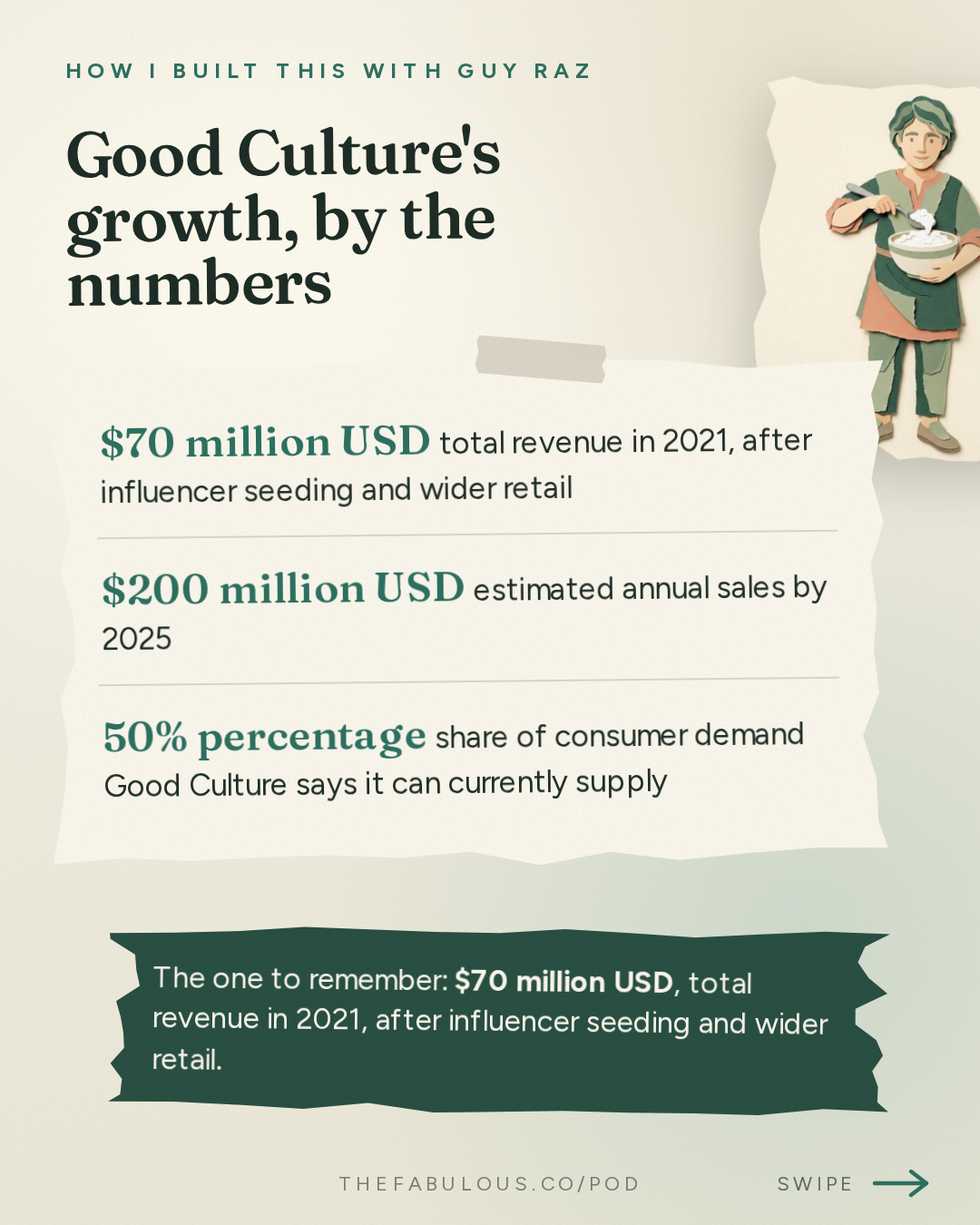
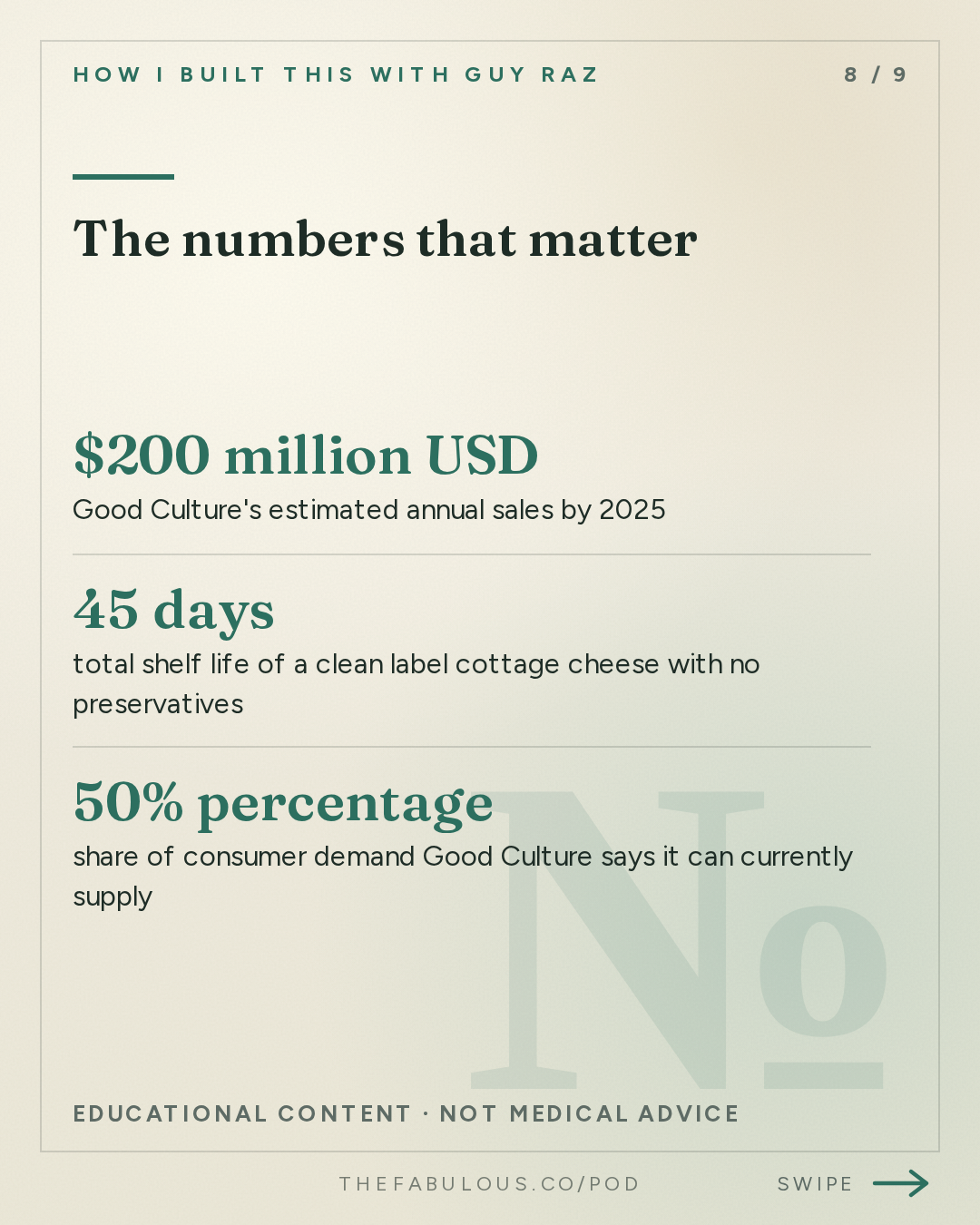
- $200 million USD Good Culture's estimated annual sales by 2025
- 45 days total shelf life of a clean label cottage cheese with no preservatives
- 50% percentage share of consumer demand Good Culture says it can currently supply
In their words
“When you launch into a Whole Foods, you're on full reclamation, right, for like six months. So like anything that doesn't sell, you have to buy back.”
“The number one piece of feedback that we would receive from folks that started buying it regularly was, 'I don't like cottage cheese, but I love Good Culture.'”
“Virality is the right message, you know, meeting the right moment, and that's what happened here, right?”
“I went from being the lame cottage cheese dad to being the cool cottage cheese dad.”
Protocols
-
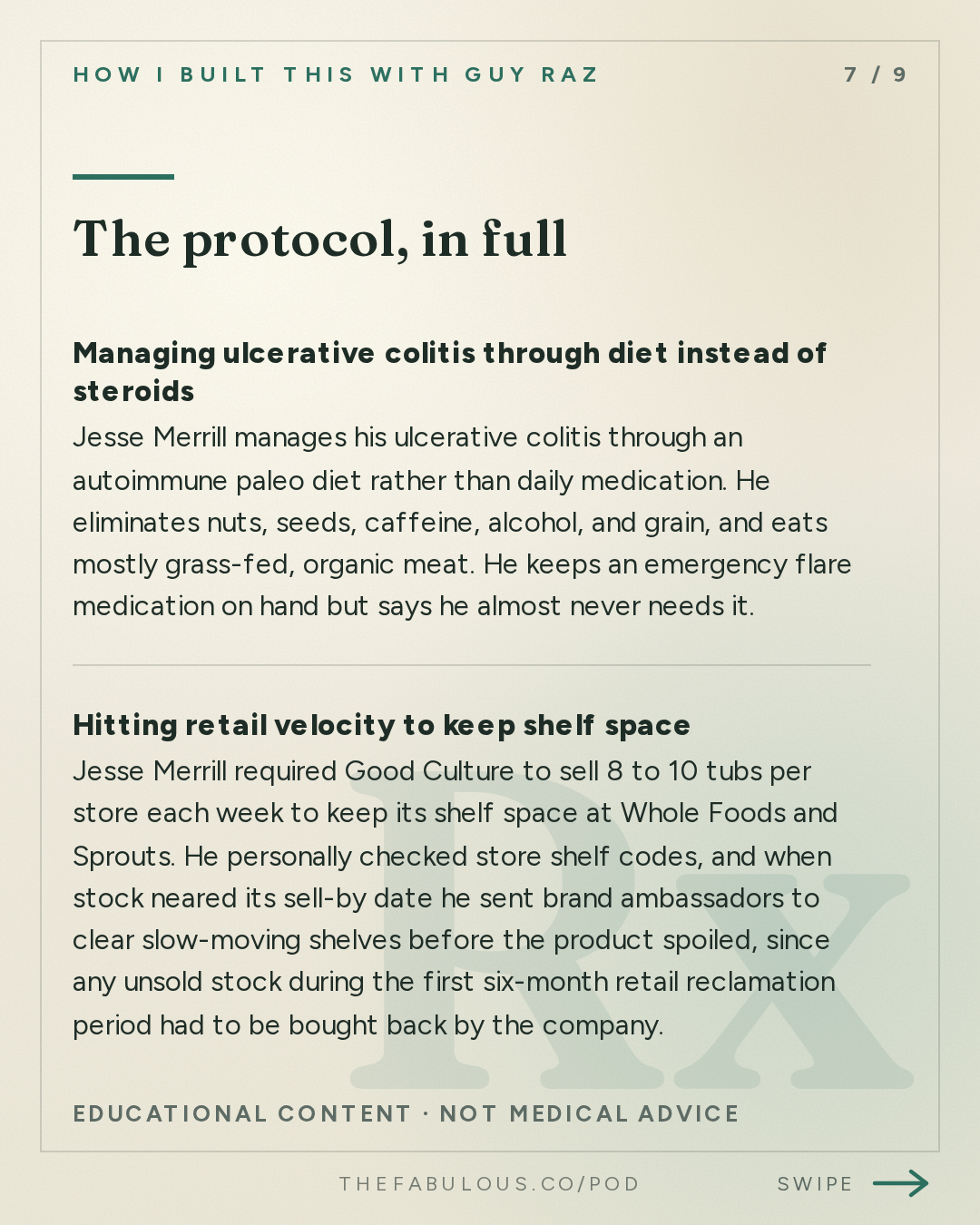
Managing ulcerative colitis through diet instead of steroids
Jesse Merrill manages his ulcerative colitis through an autoimmune paleo diet rather than daily medication. He eliminates nuts, seeds, caffeine, alcohol, and grain, and eats mostly grass-fed, organic meat. He keeps an emergency flare medication on hand but says he almost never needs it.
Ongoing daily diet, with medication reserved for flare-ups only
-
Hitting retail velocity to keep shelf space
Jesse Merrill required Good Culture to sell 8 to 10 tubs per store each week to keep its shelf space at Whole Foods and Sprouts. He personally checked store shelf codes, and when stock neared its sell-by date he sent brand ambassadors to clear slow-moving shelves before the product spoiled, since any unsold stock during the first six-month retail reclamation period had to be bought back by the company.
Weekly monitoring, during the first six-month retail reclamation window
Questions this episode answers
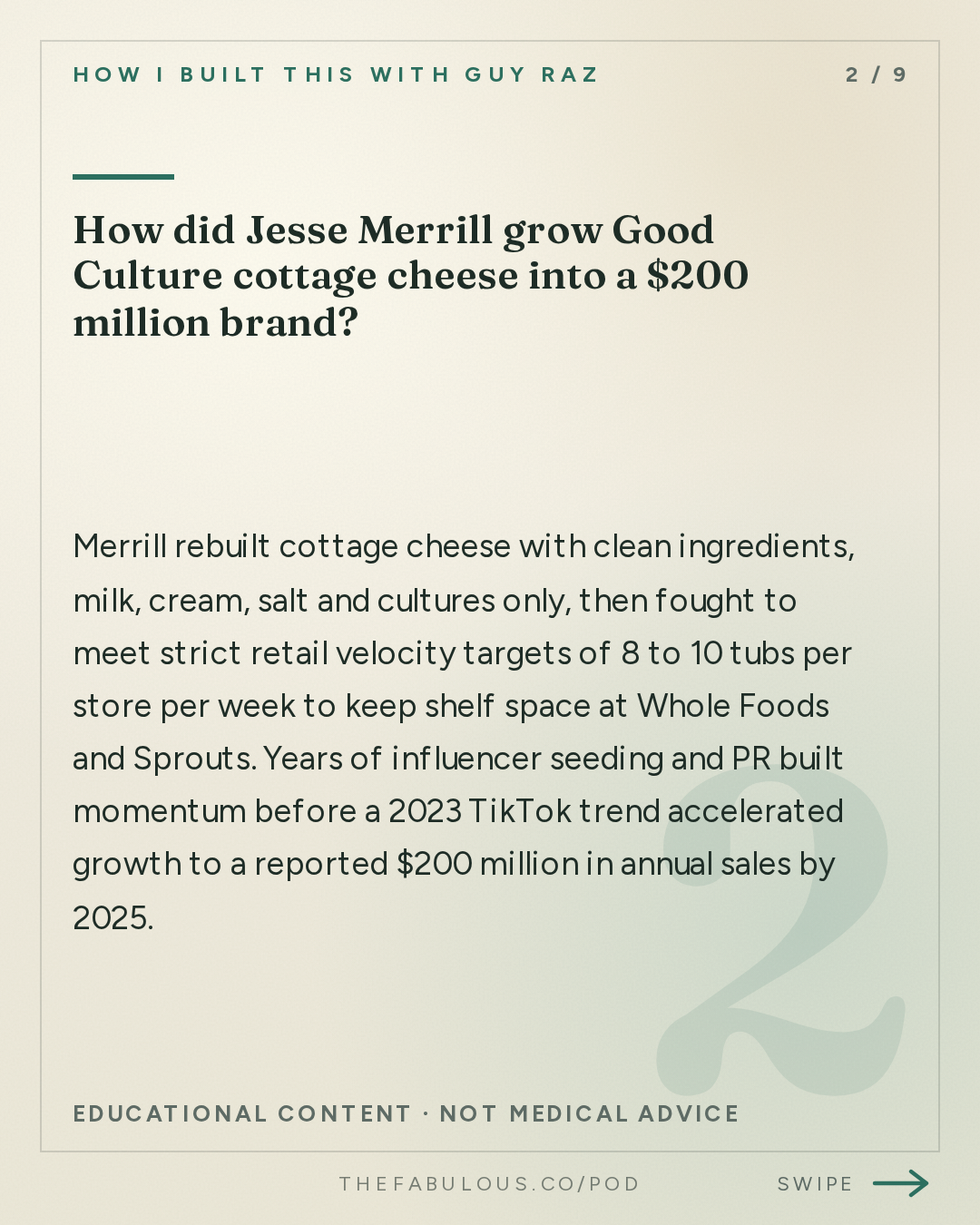
How did Jesse Merrill grow Good Culture cottage cheese into a $200 million brand?
Merrill rebuilt cottage cheese with clean ingredients, milk, cream, salt and cultures only, then fought to meet strict retail velocity targets of 8 to 10 tubs per store per week to keep shelf space at Whole Foods and Sprouts (00:03). Years of influencer seeding and PR built momentum before a 2023 TikTok trend accelerated growth to a reported $200 million in annual sales by 2025 (06:29).
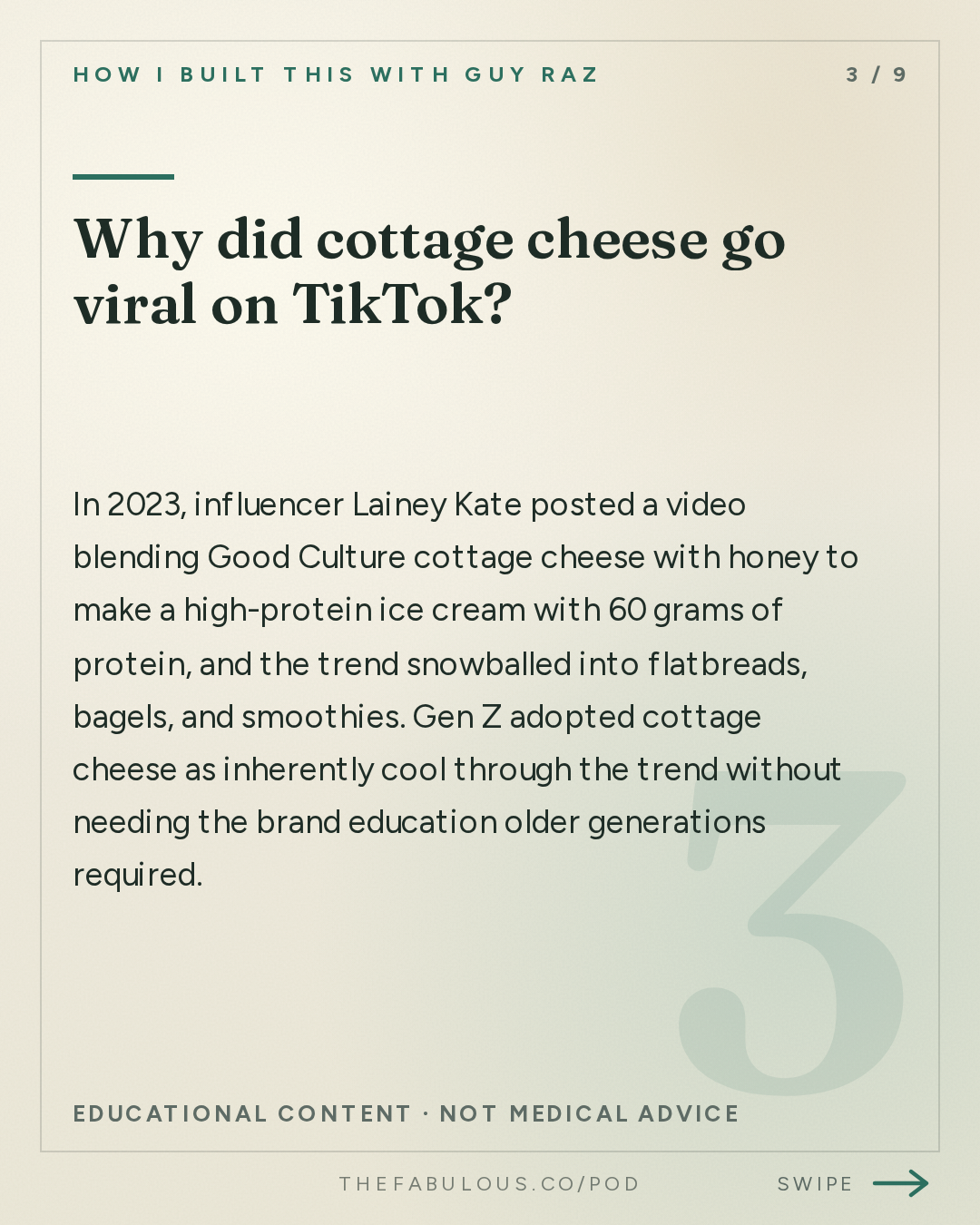
Why did cottage cheese go viral on TikTok?
In 2023, influencer Lainey Kate posted a video blending Good Culture cottage cheese with honey to make a high-protein ice cream with 60 grams of protein, and the trend snowballed into flatbreads, bagels, and smoothies (05:10). Gen Z adopted cottage cheese as inherently cool through the trend without needing the brand education older generations required (67:08).
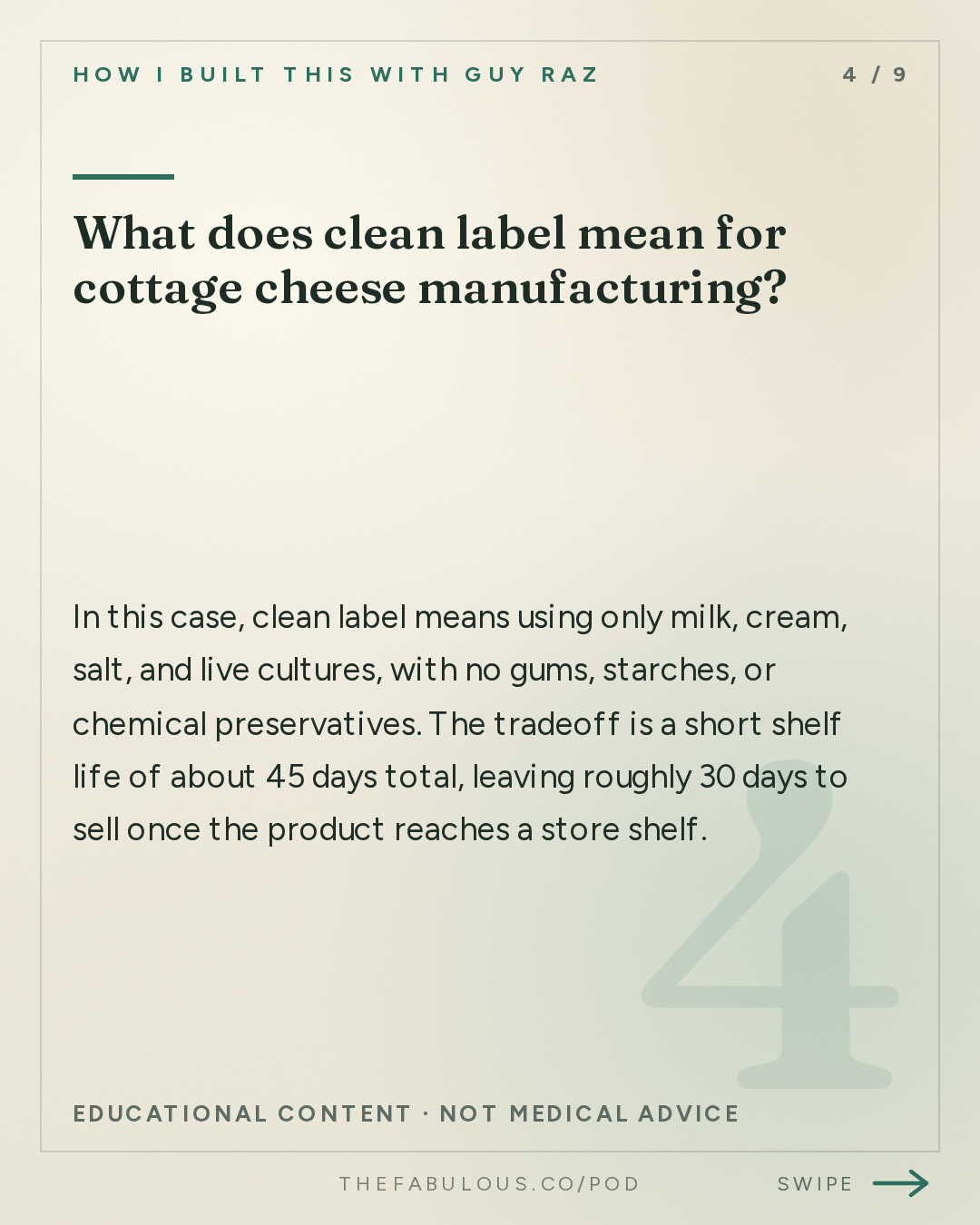
What does clean label mean for cottage cheese manufacturing?
In this case, clean label means using only milk, cream, salt, and live cultures, with no gums, starches, or chemical preservatives (46:15). The tradeoff is a short shelf life of about 45 days total, leaving roughly 30 days to sell once the product reaches a store shelf (56:44).
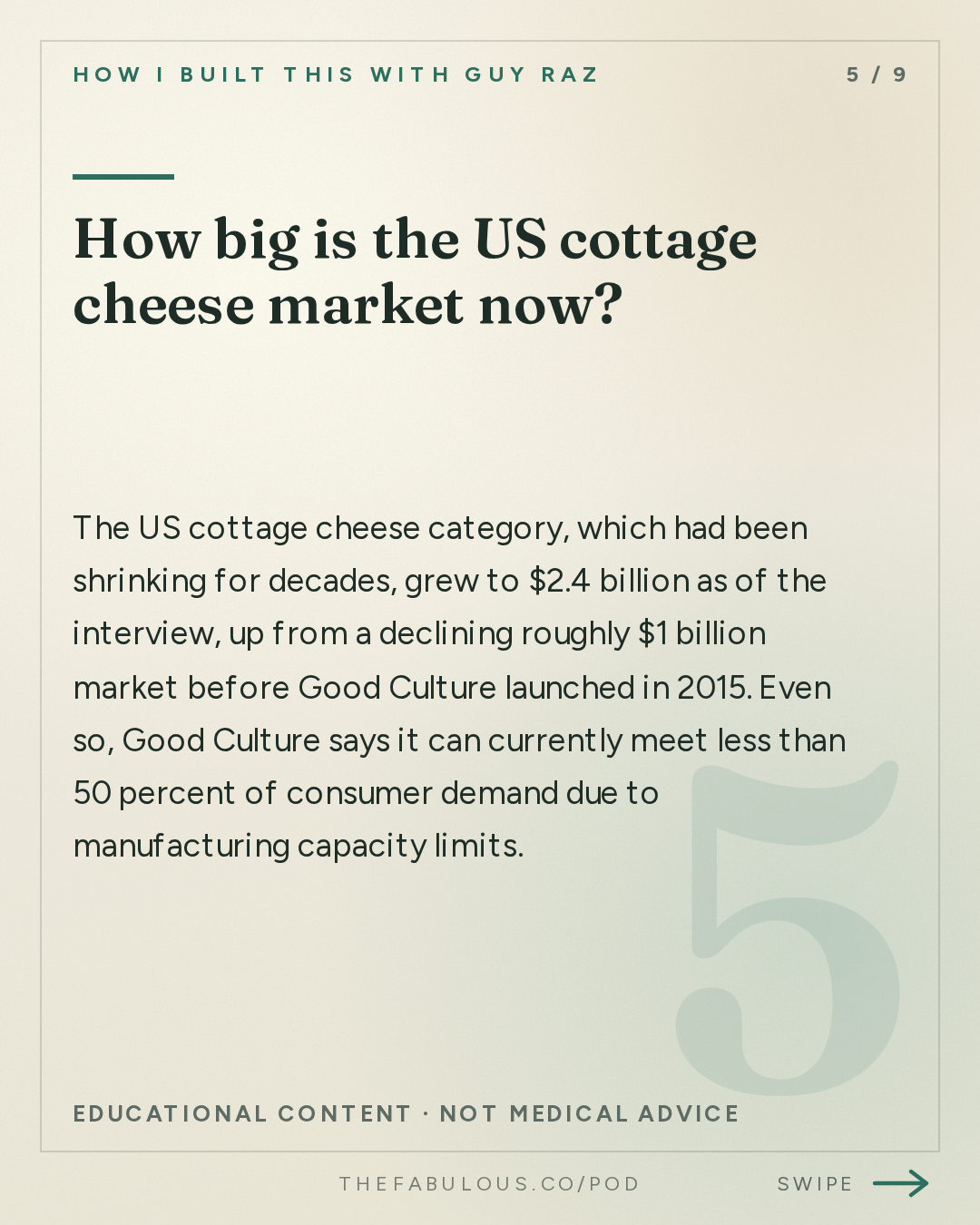
How big is the US cottage cheese market now?
The US cottage cheese category, which had been shrinking for decades, grew to $2.4 billion as of the interview, up from a declining roughly $1 billion market before Good Culture launched in 2015 (70:30). Even so, Good Culture says it can currently meet less than 50 percent of consumer demand due to manufacturing capacity limits (73:55).
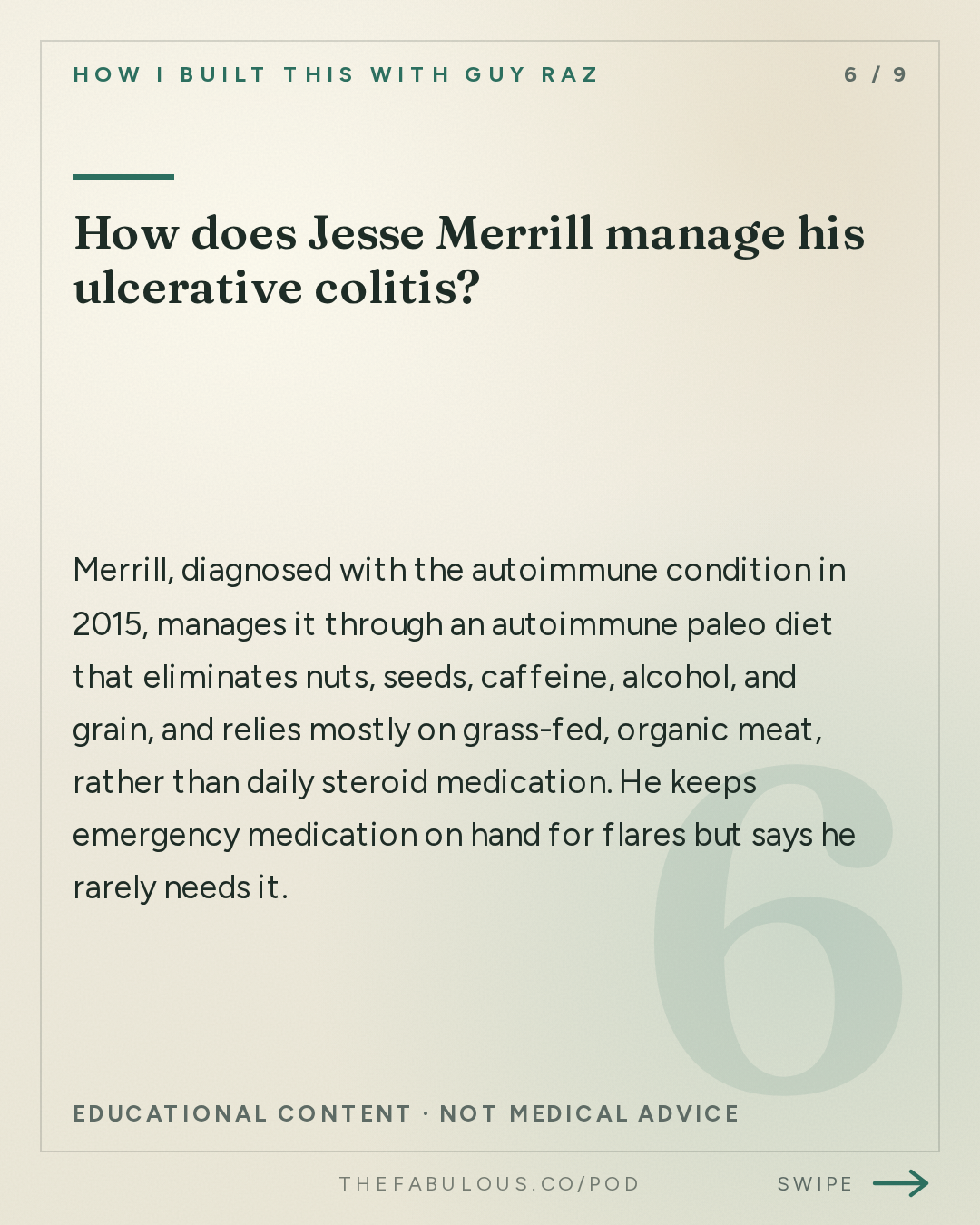
How does Jesse Merrill manage his ulcerative colitis?
Merrill, diagnosed with the autoimmune condition in 2015, manages it through an autoimmune paleo diet that eliminates nuts, seeds, caffeine, alcohol, and grain, and relies mostly on grass-fed, organic meat, rather than daily steroid medication (34:21). He keeps emergency medication on hand for flares but says he rarely needs it.
The full read, in cards
Mentioned
Jesse Merrill · Good Culture · Moby · Seth Goldman · Honest Tea · L Catterton · Whole Foods · Spike Jonze · Lainey Kate · Anders Eisner · Jonathan Demme · Activate Drinks
More from this show and category
How Ron Shaich Built Panera Bread
Ron Shaich turned a shoplifting dispute at Clark University into Panera Bread, a chain now worth billions, by repeatedly betting everything on a bigger idea before the old one had stopped working. He sold his profitable Au Bon Pain chain in 1999 to go all in on Panera, a bet that turned $3-a-share stock into $315 a share.
How Dr. Squatch Built a $1.5 Billion Soap Brand
Jack Haldrup turned a $1,500 soap side hustle into Dr. Squatch, which Unilever bought for $1.5 billion in 2025. The hinge moments were ditching Google ads for Facebook, surviving a forced rebrand and a partner buyout, and shooting a $15,000 video that drew 120 million views and became the company's main sales engine.
How Michael Dell Built Dell From His Dorm Room
Michael Dell found marriage license records as a teenager, used them to sell newspapers, then applied the same instinct to undercut IBM on price. At 19 he ran a $50,000-to-$80,000-a-month computer business from his dorm room at UT Austin, and by 21 his company, Dell Computer Corporation, had $66 million in annual sales.
Brian Chesky's Founder Mode Explained
Airbnb CEO Brian Chesky says he was a great founder but a terrible CEO until the 2020 pandemic forced a hands-on style he calls founder mode. After Airbnb lost 80% of its business in eight weeks, he stopped deferring to veteran executives and began skip-leveling for raw information, a shift that still shapes how he runs the company.
