
How Jesse Merrill Built Good Culture
Good Culture: How Jesse Merrill Made Cottage Cheese Cool
The brief
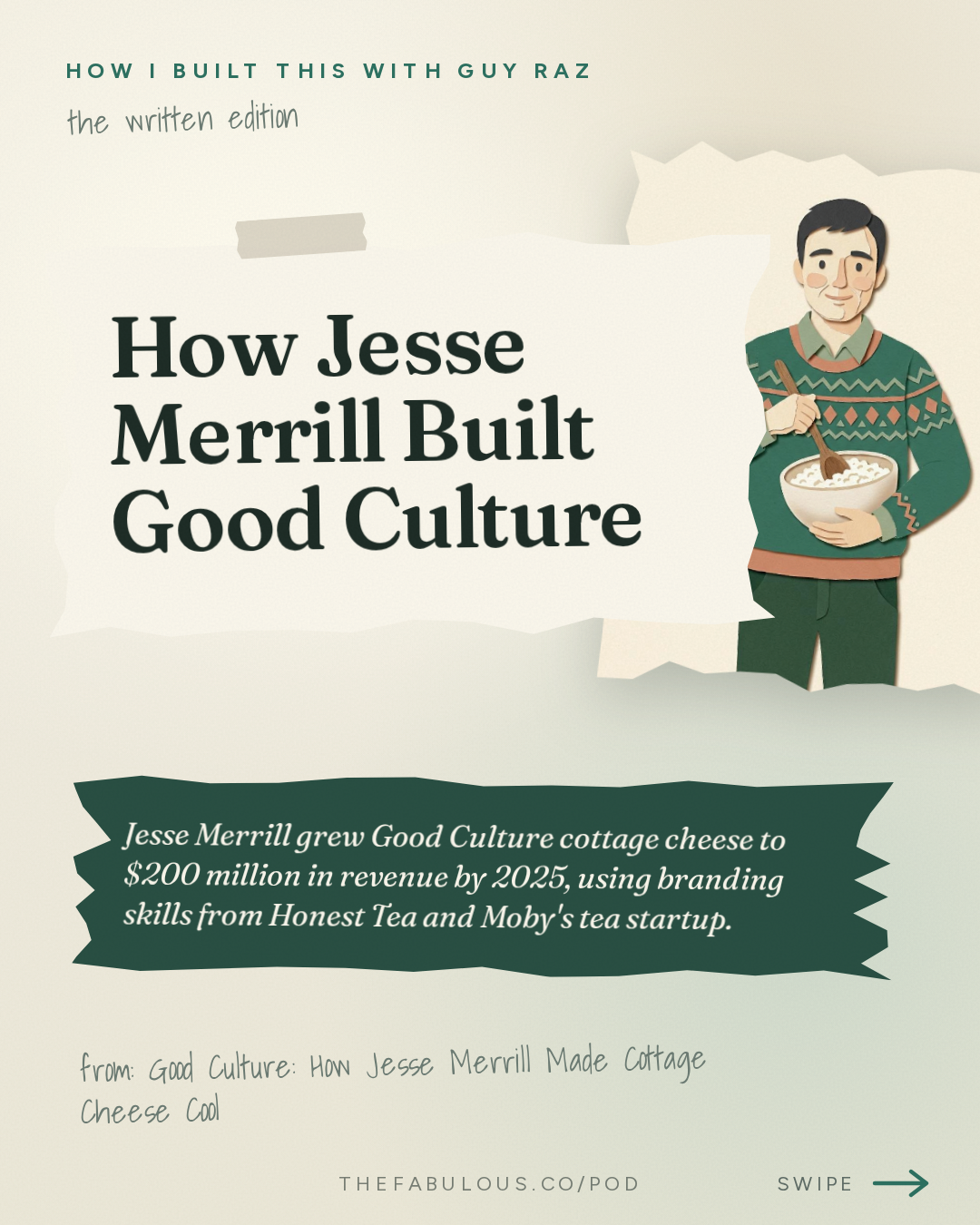
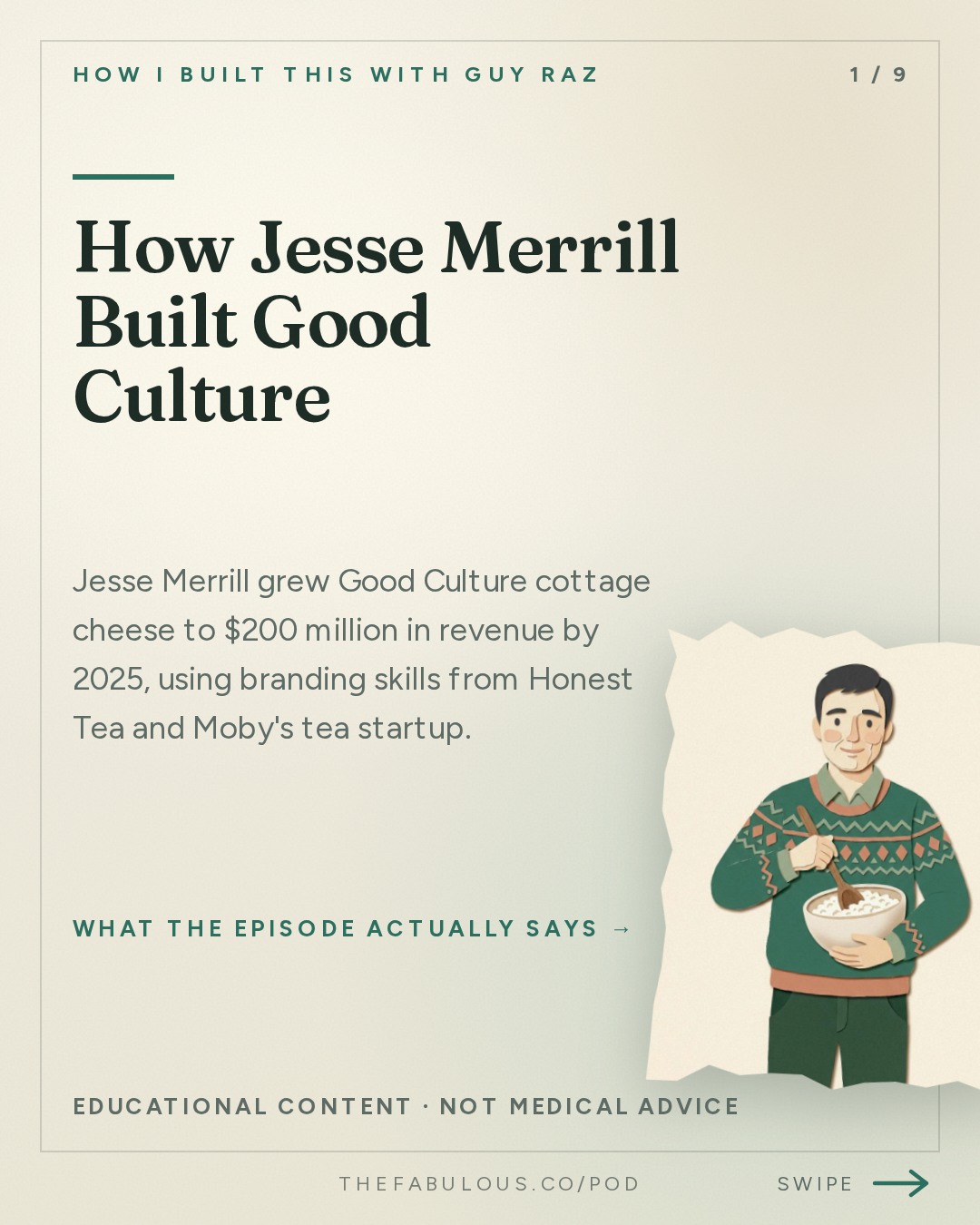
Jesse Merrill grew Good Culture cottage cheese to $200 million in revenue by 2025, using branding skills from Honest Tea and Moby's tea startup. A 2015 ulcerative colitis diagnosis led him to cottage cheese's protein and sugar profile, and a 2023 TikTok ice cream hack made the category go viral before he sold a majority stake to private equity firm L Catterton.
Here is a detail most shoppers never think about: when a small brand lands a deal with Whole Foods, the grocery chain does not simply take the risk off the founder's hands. For the first six months, the brand is on what the industry calls full reclamation. Anything that does not sell, the brand has to buy back (00:03). It is less a partnership than a loan with a ticking clock, and it is one of the quiet mechanisms that decides which food startups survive long enough to matter.
Jesse Merrill learned to live inside that clock. He is the founder of Good Culture, a cottage cheese brand that will do roughly $200 million in revenue by the end of 2025 (04:46), built from a category that had been shrinking since the Carter administration. His path there did not run through food school or a hedge fund. It ran through a director's office, a stunt show, and a string of drink startups that taught him, one failure and one small win at a time, what actually makes a brand stick.
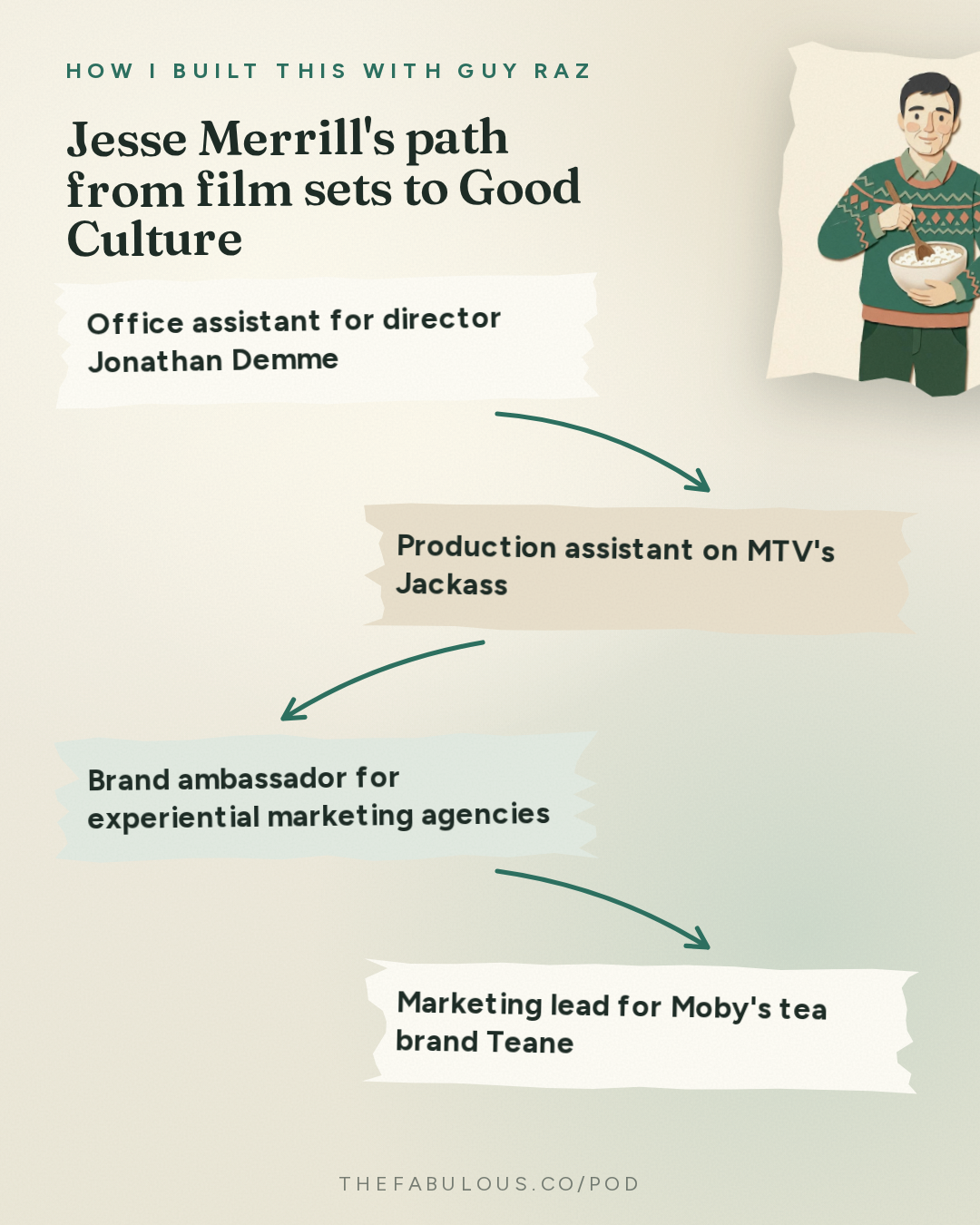
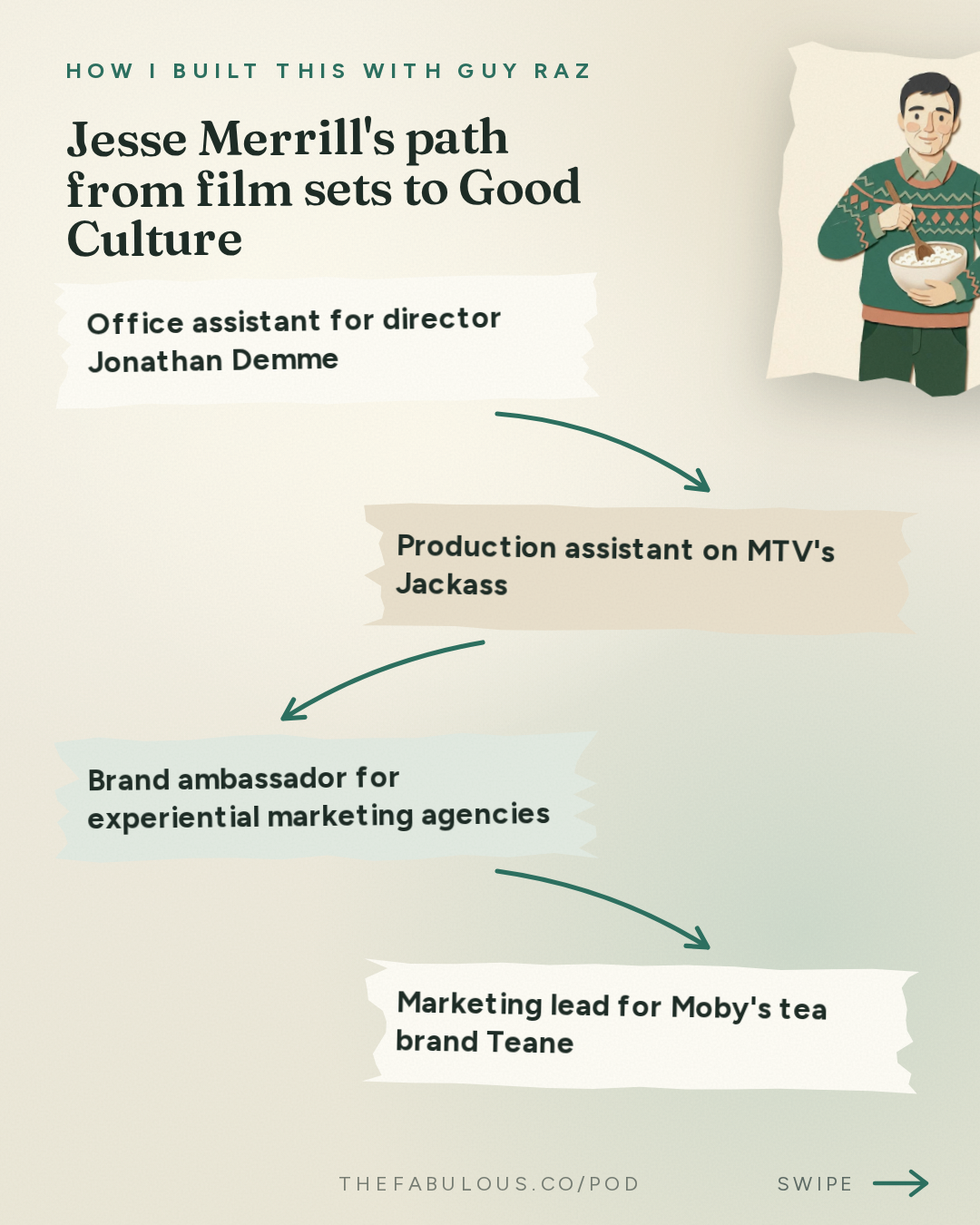
Merrill's first job after college was as an assistant to filmmaker Jonathan Demme, fetching coffee and reading scripts (04:46). Wanting to be closer to an actual set, he took a connection to director Spike Jonze and moved to Los Angeles to work as a production assistant on MTV's Jackass, back when, as Merrill puts it, nobody knew what Jackass was yet (05:42). To make real money, he started moonlighting as a brand ambassador, handing out samples on behalf of agencies, a job category that still pays $20 to $30 an hour today (09:07). His first client was a lubricant brand, handed out on a San Diego boardwalk. His own description of that era is blunt and funny at once.
I was slinging KY for a bit. Um, but, you know, worked my way up. So initially it was very transactional. [08:06]
That transactional hustle turned into an education almost by accident. A contact introduced him to the musician Moby, who was trying to take his Lower East Side tea brand, Teane, beyond his own vegan cafe (11:16). Because the company was tiny, Merrill ended up doing sales, supply chain work, and retail pitching, not just marketing. He calls it his crash course in brand building, and the lesson that stuck was almost literary: a brand, like a film, needs a story that resonates widely, or it will not become a hit.
From there he moved to Honest Tea, then a sub-$10-million company fighting Teane for the same bodega shelf space (17:16). He was drawn in by co-founder Seth Goldman, whom he describes with real warmth.
Seth Goldman was the real deal. Genuine article from a mission-led standpoint. He led with heart. [18:10]
Over four and a half years at Honest Tea, Merrill helped push revenue to roughly $75 to $80 million before the company sold to Coca-Cola in 2011 (17:39). That sale became his entry point to a new project, Activate Drinks, an enhanced-water brand built with Anders Eisner, son of former Disney CEO Michael Eisner. Activate tried to compete with Vitaminwater, which had just sold to Coca-Cola for $4.2 billion (22:34), using a twist-cap that kept powdered vitamins separate from the water until the moment of drinking. The mechanism was clever but created friction. Customers had to be taught how to open the bottle correctly, and the company topped out around $5 million in revenue before its biggest investor pulled back and the Eisner family sold it in 2014 (21:58).
It was in the gap after Activate that two things happened at once. Merrill began thinking seriously about cottage cheese, and his own body forced the question of food and inflammation onto him directly. In early 2015 he was diagnosed with ulcerative colitis, an autoimmune disease in which the body attacks the gut as though it were a pathogen. He lost 20 pounds in a matter of weeks (28:33) and was told the standard path was lifelong medication. He pushed back on his doctor with a question that turned out to matter for more than just his own health.
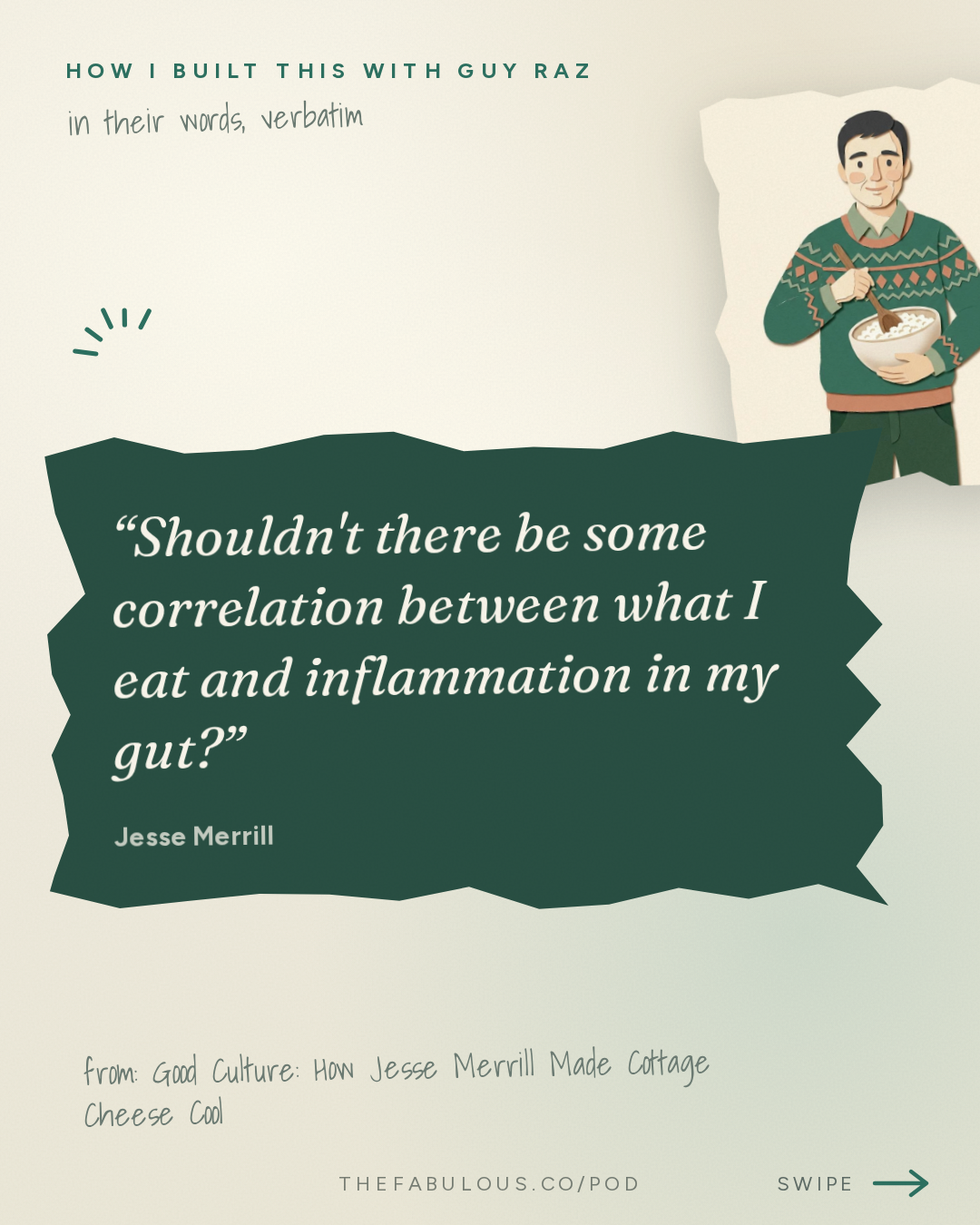
Shouldn't there be some correlation between what I eat and inflammation in my gut? [31:37]
A diet, a doubt, and a shelf full of curds
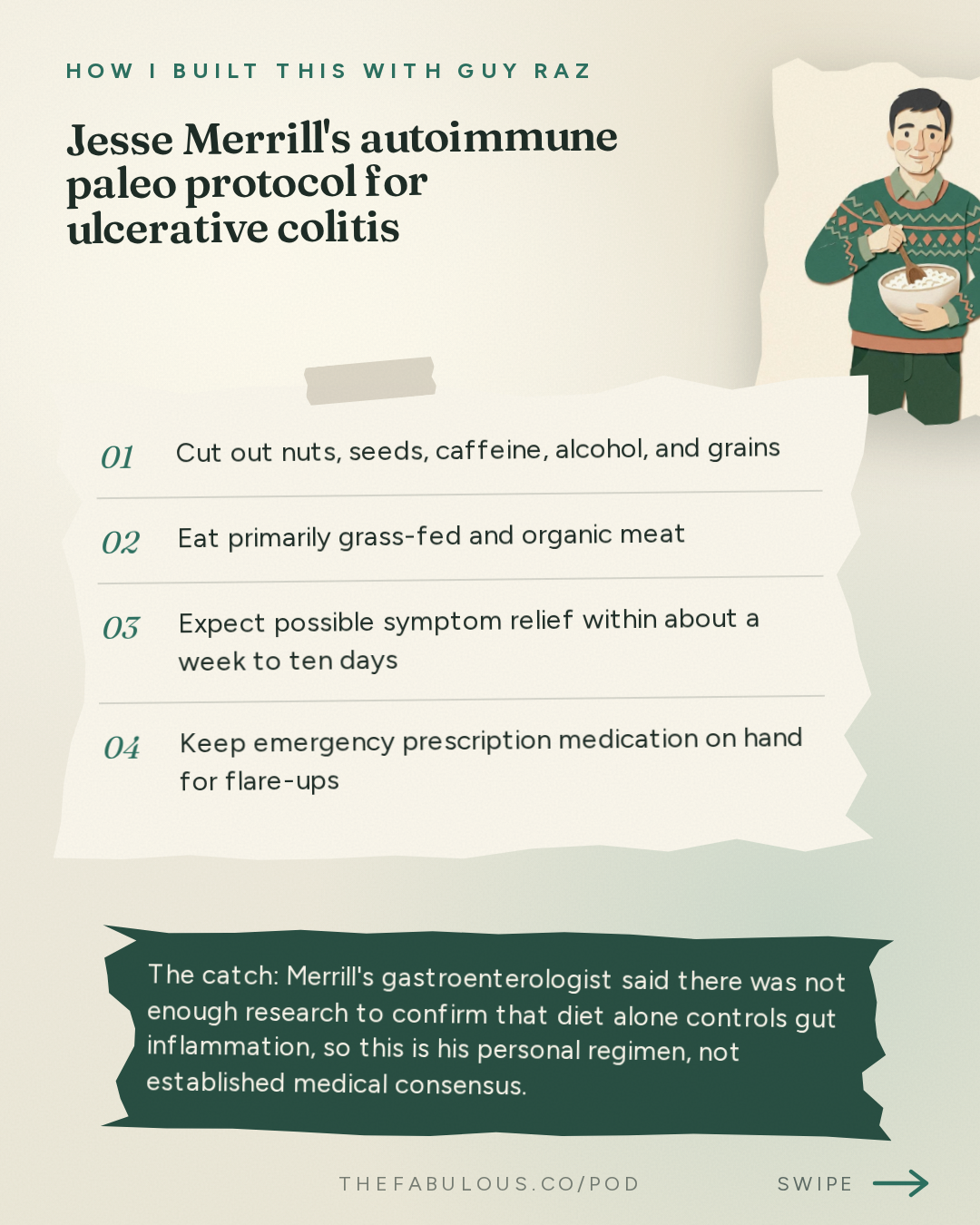
His doctor said the research did not support that claim. A functional medicine doctor disagreed, and put Merrill on an autoimmune paleo diet, cutting out nuts, seeds, caffeine, alcohol, and grains, and replacing most meals with grass-fed and organic meat (32:31). Within about a week to ten days, he says the symptoms eased, the bloating went away, and his energy came back (33:17). He still keeps prescription medication on hand for flare-ups, because his gastroenterologist never endorsed diet as a substitute for the drug, only as something he chose to try first.
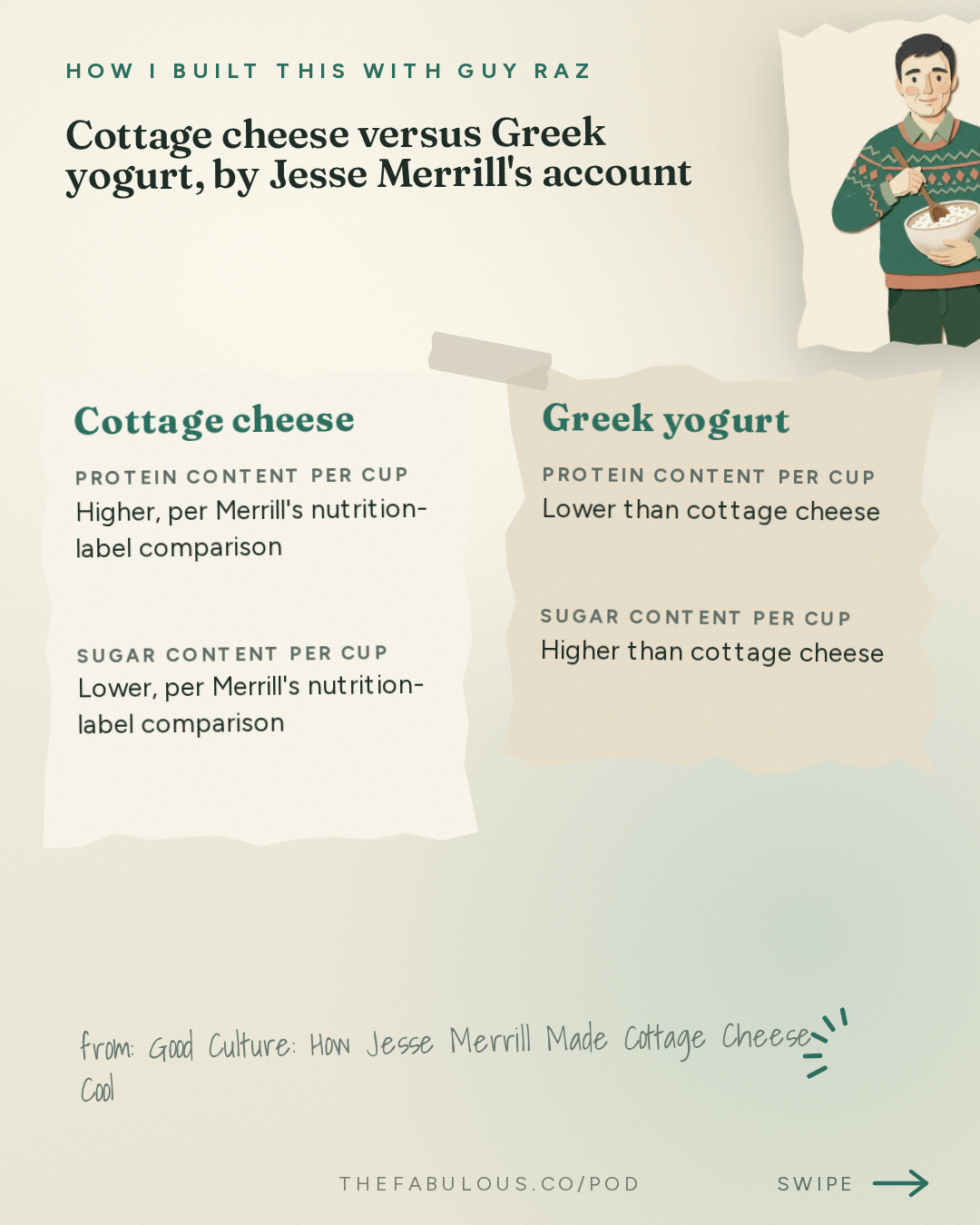
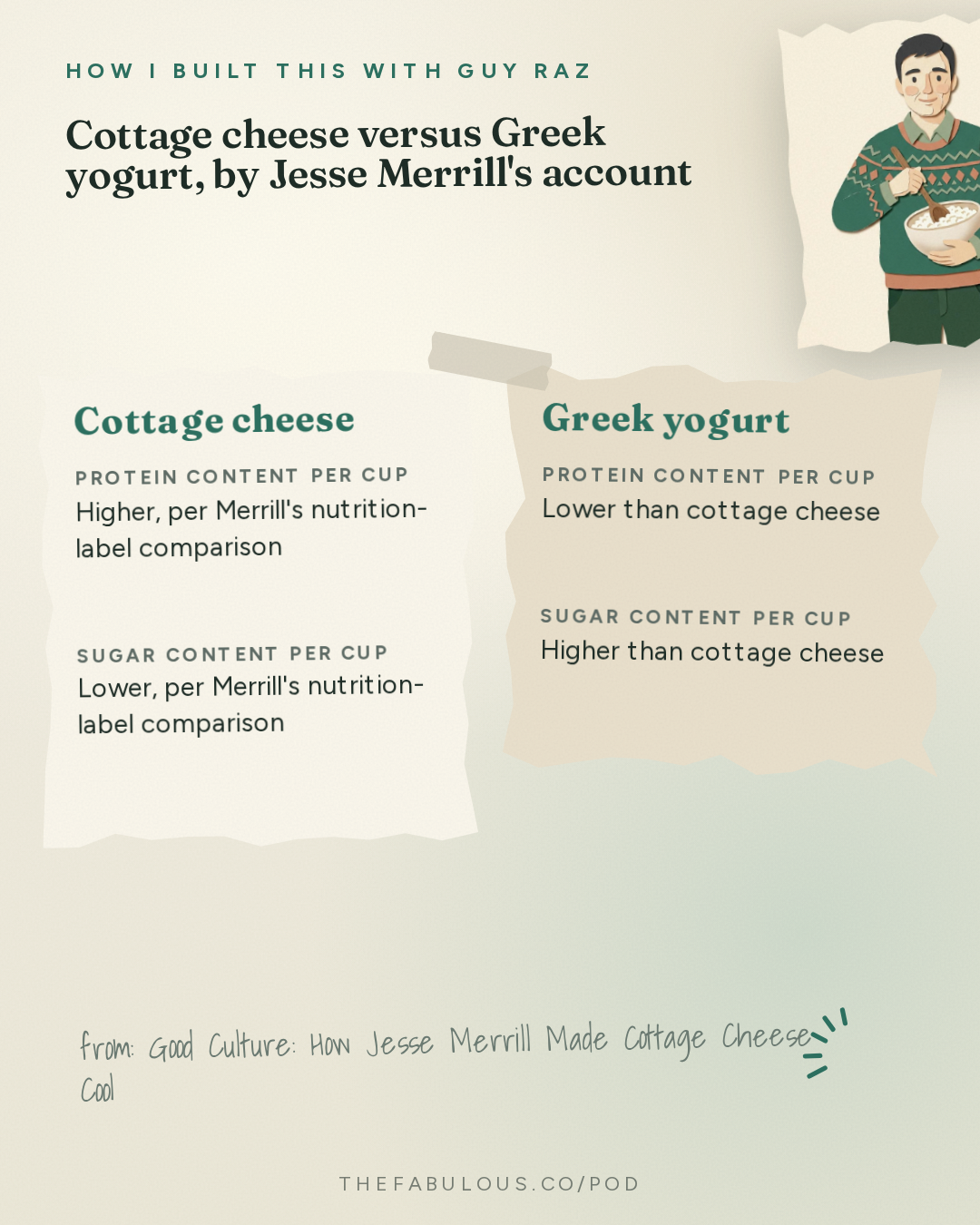
The idea for the company did not come from his own illness directly. It came from watching his pregnant wife eat cottage cheese and noticing the nutrition label: more protein and less sugar per cup than Greek yogurt (36:48). When he checked the category's history, he found that cottage cheese had actually outsold yogurt in the 1970s before innovation stalled and the category went flat for decades (37:06). To Merrill, that combination, high protein, low sugar, an aging and ignored category, lined up neatly with what he calls the food industry's current mega-trends: protein, low sugar, gut health, and clean ingredient labels (38:20).
Turning that insight into an actual product was the hard part. Merrill wanted a clean label, meaning no gums, starches, or chemical preservatives, just milk, cream, salt, and live cultures. Most co-packers refused, because clean-label manufacturing is harder to control and less efficient without the stabilizers that make production predictable (43:16). He eventually found a small co-packer in Wisconsin willing to experiment, and even then the product that looked perfect in lab samples turned soupy the first time it ran through industrial equipment, just weeks before its public debut at the Expo West trade show in March 2015.
Shelf life, velocity, and the TikTok moment
The clean label that made the product appealing also made it fragile. Good Culture launched with only a 45-day shelf life, which meant stores effectively had about 30 days to sell through stock before a brand was on the hook for it (53:43). To keep shelf space at Whole Foods and Sprouts, Merrill needed to hit roughly 8 to 10 units sold per store per week, a number that sounds modest until you remember that only a fraction of shoppers even walk past the cottage cheese case (54:26). He describes driving to stores himself, checking expiration codes, and calling in what he calls a SWAT team to clear shelves before product spoiled.
Growth was steady but unglamorous for years: about $2 million in revenue in 2016, climbing to roughly $70 million by 2021 through wider retail distribution and influencer seeding (56:16). Then, in 2023, an influencer named Lainey Kate posted a video blending frozen Good Culture cottage cheese with honey to make high-protein ice cream (60:52). The video spread fast, other creators began one-upping it with flatbreads, bagels, and smoothies, and demand outran the category's entire manufacturing capacity. Merrill sums up the mechanism simply.
Virality is the right message meeting the right moment. [61:00]
The effect reached well beyond his own brand. The U.S. cottage cheese category, worth about $1 billion when Good Culture launched, had grown to $2.4 billion by the time of this conversation (65:44), and per capita consumption climbed from about 1.5 pounds to roughly 2.5 pounds, still short of the 1970s peak of around 5 pounds (66:02). Merrill also noticed something he had not planned for: his own kids, Gen Z and indifferent to cottage cheese for years, suddenly cared, because they had discovered it on TikTok through someone they considered cool, not through their dad.
By 2025, demand was outpacing supply so badly that Merrill says Good Culture is servicing less than half of total demand even while doing north of $200 million in revenue. Rather than raise more venture capital, he brought in private equity firm L Catterton, which took a majority stake, with Merrill staying on as CEO to focus on supply chain, brand, and product (70:43). Looking back on a decade that moved from grinding obscurity to overnight scarcity, Merrill resists the idea that luck explains it.
I don't ever take a deep breath. I don't ever feel comfortable, even today, because I know there's just so much more work to be done. [75:13]
It is a strange thing to hear from someone running a brand people now fight over on social media. But it tracks with everything that came before: a career built less on a single insight than on years of unglamorous reps, in bodegas, in trade show booths, and eventually in a Wisconsin manufacturing plant, waiting for the right message to meet its moment.
Ask this episode anything
Pod's AI answers from the episode itself, with the minute mark so you can hear it yourself.
Or start with one of these
Ask this episode
Pod's AI listens to the whole episode to answer, and points you to the minute it comes from.
The rest of this answer, and any question after it
Answers come from the episode itself, never from a summary of it.
ContinueKey takeaways
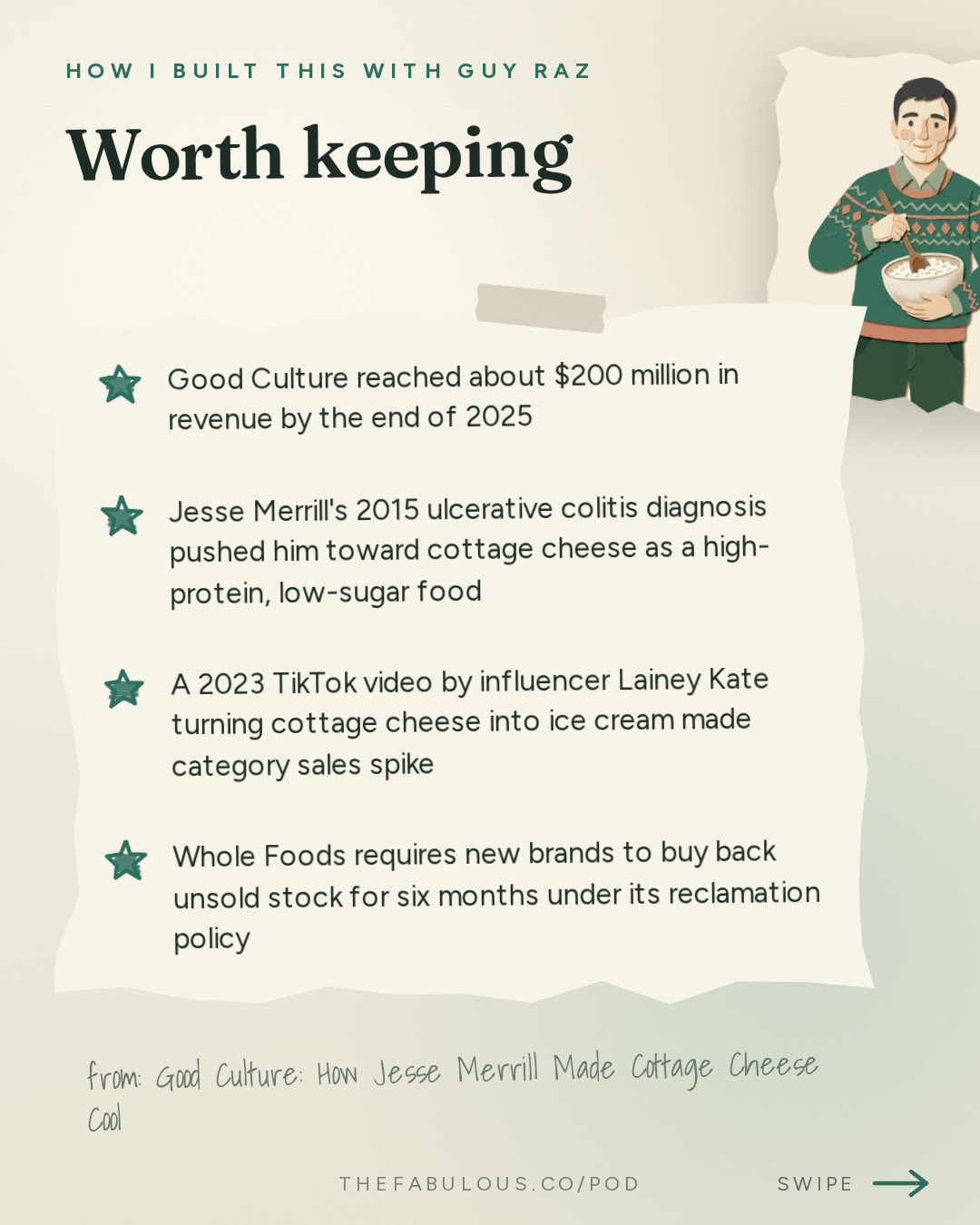
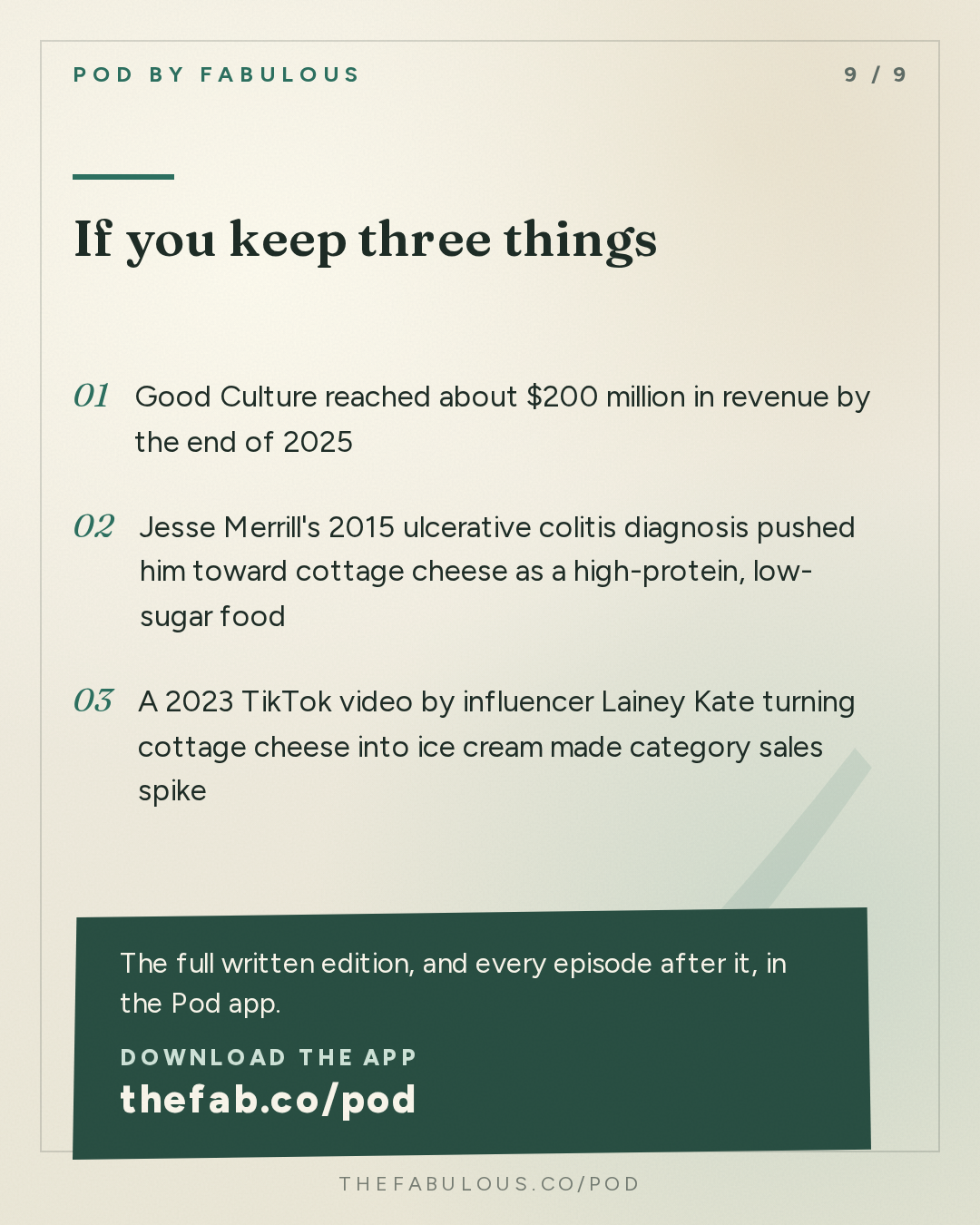
- Good Culture reached about $200 million in revenue by the end of 2025
- Jesse Merrill's 2015 ulcerative colitis diagnosis pushed him toward cottage cheese as a high-protein, low-sugar food
- A 2023 TikTok video by influencer Lainey Kate turning cottage cheese into ice cream made category sales spike
- Whole Foods requires new brands to buy back unsold stock for six months under its reclamation policy
- Good Culture sold a majority stake to private equity firm L Catterton in 2025 to fund supply chain expansion
The episode in cards
By the numbers
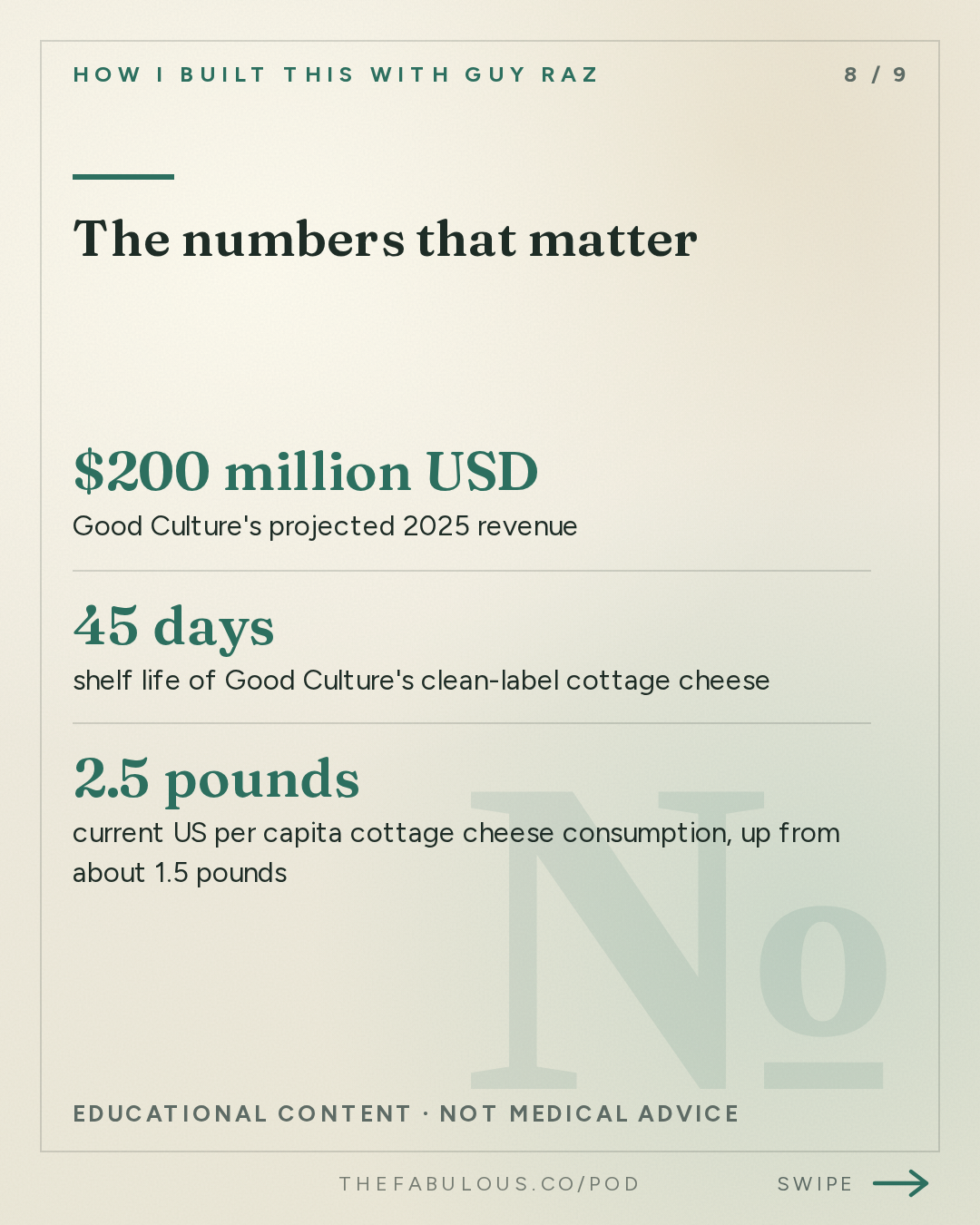
- $200 million USD Good Culture's projected 2025 revenue
- 45 days shelf life of Good Culture's clean-label cottage cheese
- 2.5 pounds current US per capita cottage cheese consumption, up from about 1.5 pounds
In their words
“Slinging KY for a, for a bit. Um, but, you know, worked my way up. So initially it was very transactional”
“Shouldn't there be some correlation between what I eat and inflammation in my gut?”
“We want to bring in younger Gen X and millennials into the category to help drive growth. Overnight, Gen Z jumps in”
“I don't ever take a deep breath. I don't ever feel comfortable, even today, um, because I know there's just so much more work to, to be”
“I went from being the lame cottage cheese dad to being the cool cottage cheese dad. Um-”
Protocols
-
Jesse Merrill's autoimmune paleo approach to ulcerative colitis
Jesse Merrill, founder of Good Culture, removed nuts, seeds, caffeine, alcohol, and grains from his diet and ate mostly grass-fed and organic meat after his 2015 ulcerative colitis diagnosis. He still keeps prescription medication on hand for flare-ups, because his gastroenterologist told him there was not enough research to confirm that diet alone controls gut inflammation.
Daily, maintained since 2015
Questions this episode answers
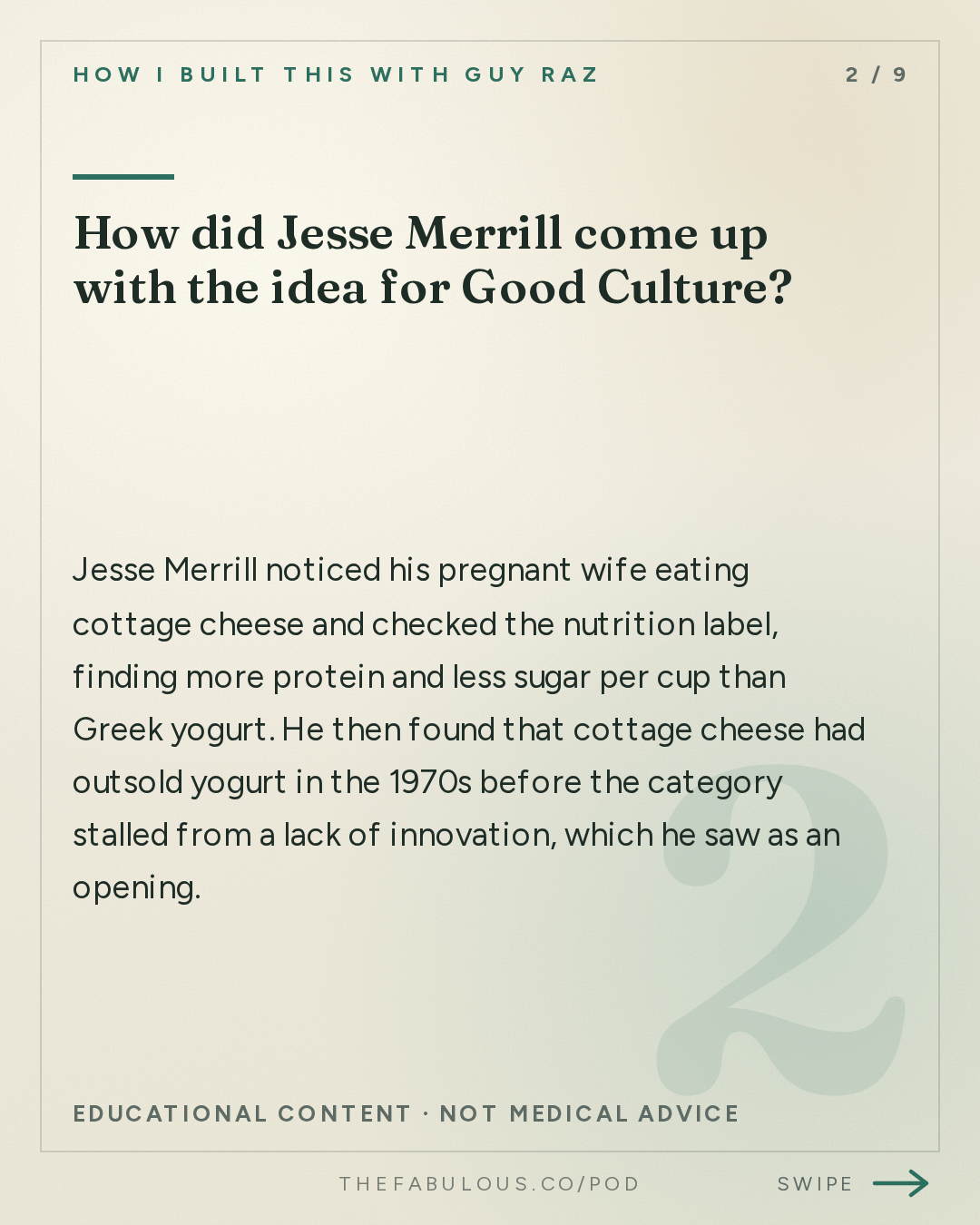
How did Jesse Merrill come up with the idea for Good Culture?
Jesse Merrill noticed his pregnant wife eating cottage cheese and checked the nutrition label, finding more protein and less sugar per cup than Greek yogurt (36:48). He then found that cottage cheese had outsold yogurt in the 1970s before the category stalled from a lack of innovation (37:06), which he saw as an opening.
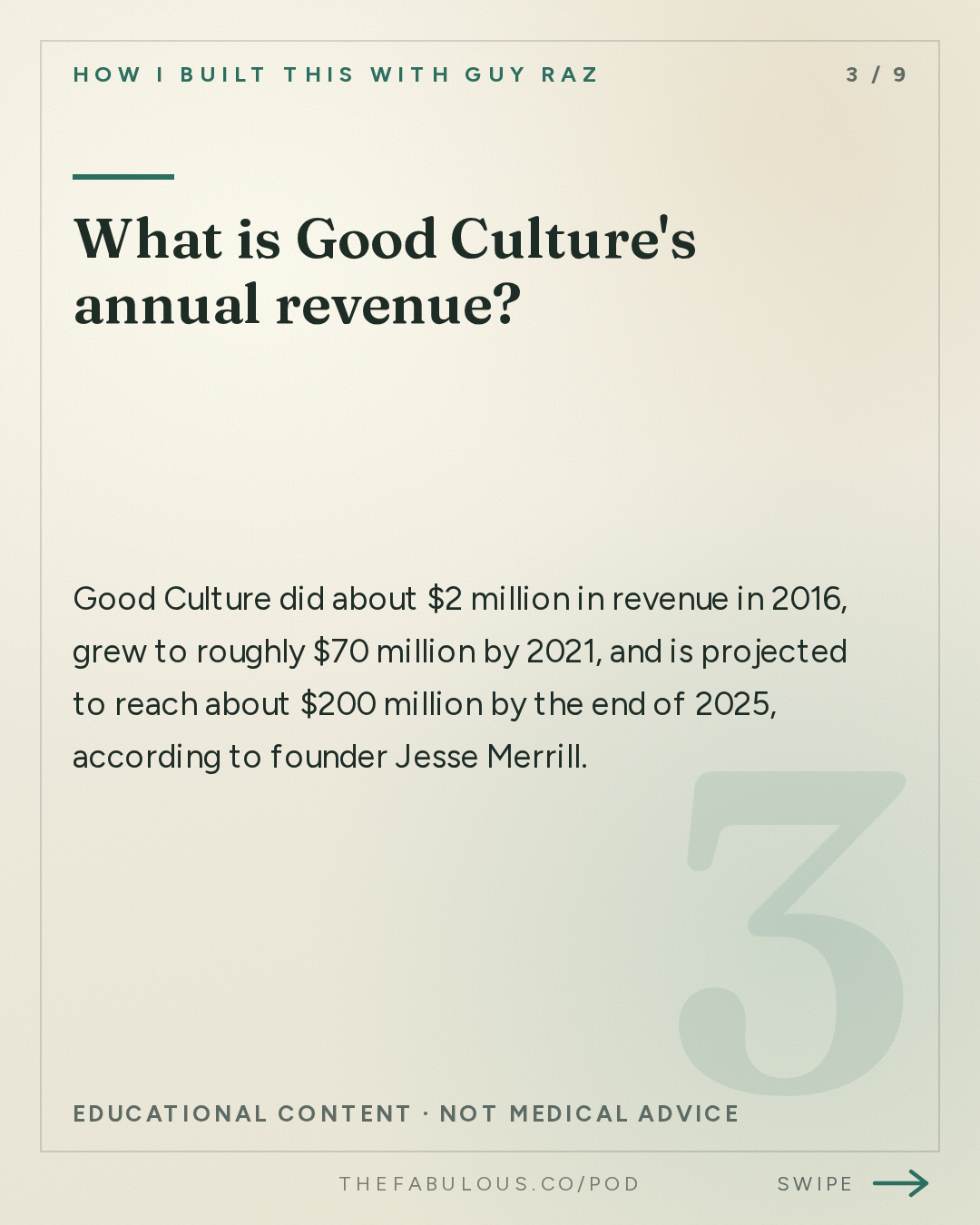
What is Good Culture's annual revenue?
Good Culture did about $2 million in revenue in 2016, grew to roughly $70 million by 2021 (56:48), and is projected to reach about $200 million by the end of 2025 (04:46), according to founder Jesse Merrill.
Does diet alone manage ulcerative colitis for Jesse Merrill?
Merrill says an autoimmune paleo diet, cutting nuts, seeds, caffeine, alcohol, and grains in favor of grass-fed meat, eased his symptoms within about a week to ten days (33:17). His gastroenterologist told him there was not enough research to confirm a diet-inflammation link (31:37), and Merrill still keeps emergency medication on hand for flares.
Why did cottage cheese go viral on TikTok?
In 2023, influencer Lainey Kate posted a video blending frozen Good Culture cottage cheese with honey to make high-protein ice cream (60:52). The hack spread to other recipes like bagels and smoothies, and demand for cottage cheese outran manufacturing capacity across the category.
What is Whole Foods reclamation for new food brands?
Under Whole Foods' reclamation policy, a new brand must buy back any unsold stock for the first six months on shelf (00:03). To keep that shelf space, Good Culture needed to sell about 8 to 10 units per store per week (54:26), which founder Jesse Merrill said was harder to hit than it sounds.
Who owns Good Culture now?
Private equity firm L Catterton took a majority stake in Good Culture in 2025 to help fund supply chain expansion, while founder Jesse Merrill stayed on as CEO (70:43).
The full read, in cards
Mentioned
Jesse Merrill · Moby · Seth Goldman · Anders Eisner · L Catterton · Honest Tea · Whole Foods · Lainey Kate · Spike Jonze · Jonathan Demme · Good Culture · Activate Drinks
More from this show and category
Ron Shaich's Panera Bread Origin Story
Ron Shaich sold his own flagship chain, Au Bon Pain, to bet everything on a smaller concept, Panera Bread, which climbed from about $3 a share to $315 a share. The pivot grew out of a 1993 deal for 19 St. Louis Bread Company stores and a 'third place' strategy built around cheap real estate and room to linger, not just recipes.
How Jesse Merrill Built Good Culture
Jesse Merrill turned a declining 1970s product, cottage cheese, into a $200 million brand called Good Culture. He stripped out gums and preservatives, hit grueling retail velocity targets, and caught a 2023 TikTok cottage-cheese-ice-cream trend that pulled Gen Z into a category now worth $2.4 billion in the US.
How Ron Shaich Built Panera Bread
Ron Shaich turned a shoplifting dispute at Clark University into Panera Bread, a chain now worth billions, by repeatedly betting everything on a bigger idea before the old one had stopped working. He sold his profitable Au Bon Pain chain in 1999 to go all in on Panera, a bet that turned $3-a-share stock into $315 a share.
How Dr. Squatch Built a $1.5 Billion Soap Brand
Jack Haldrup turned a $1,500 soap side hustle into Dr. Squatch, which Unilever bought for $1.5 billion in 2025. The hinge moments were ditching Google ads for Facebook, surviving a forced rebrand and a partner buyout, and shooting a $15,000 video that drew 120 million views and became the company's main sales engine.
