Ron Shaich's Panera Bread Origin Story
Panera: Ron Shaich. The Big Bet That Changed Fast Food (2018)
The brief
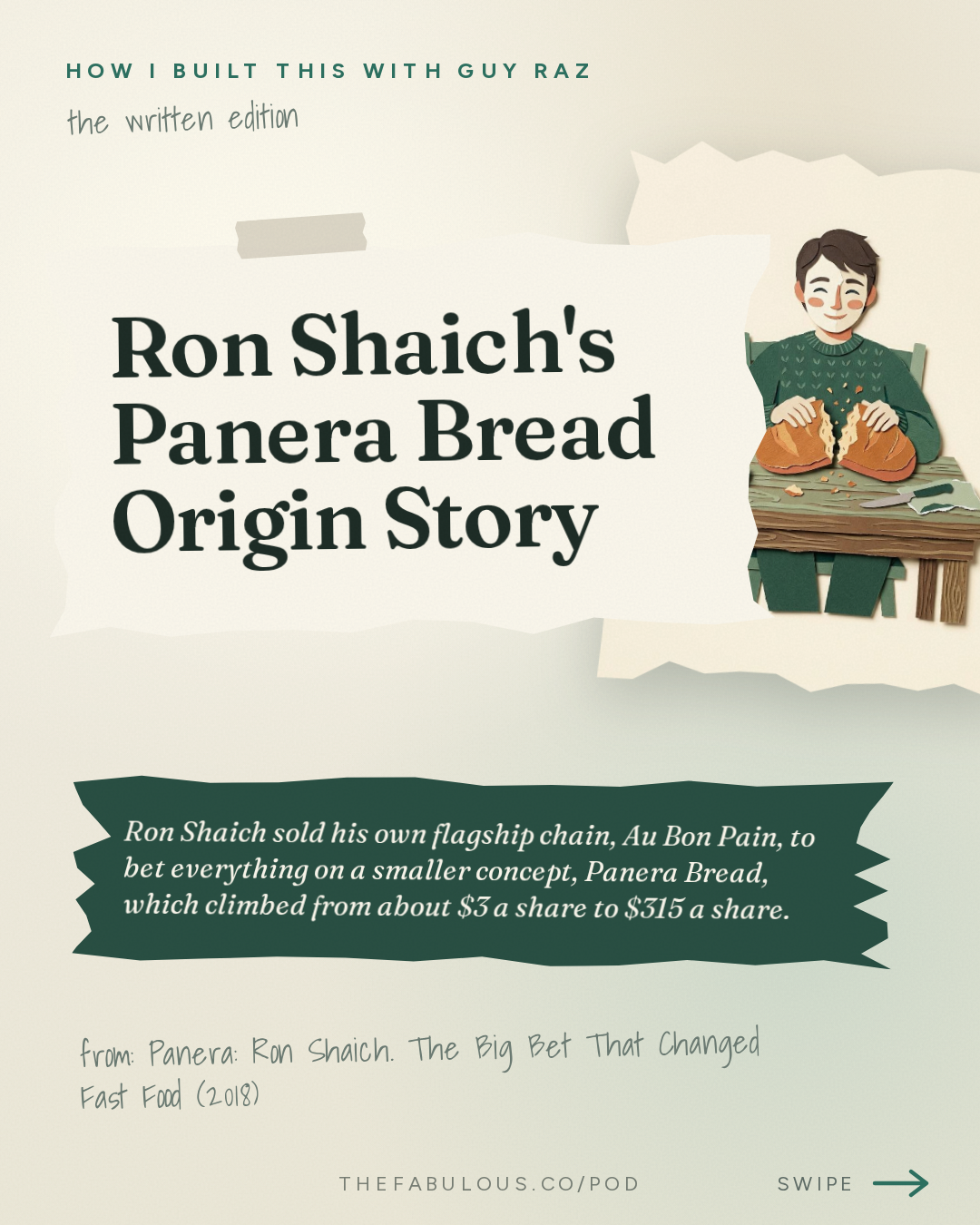
Ron Shaich sold his own flagship chain, Au Bon Pain, to bet everything on a smaller concept, Panera Bread, which climbed from about $3 a share to $315 a share. The pivot grew out of a 1993 deal for 19 St. Louis Bread Company stores and a 'third place' strategy built around cheap real estate and room to linger, not just recipes.
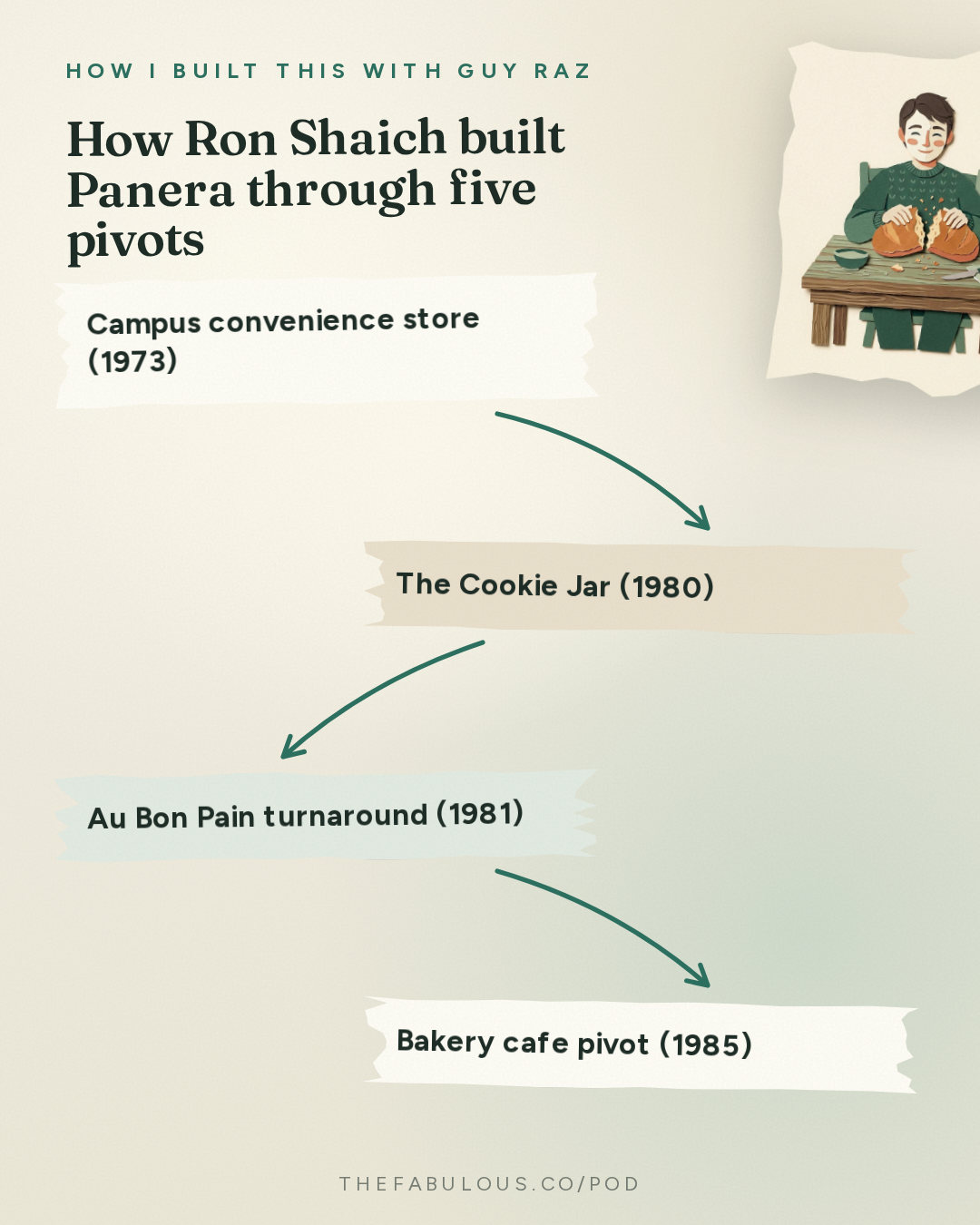
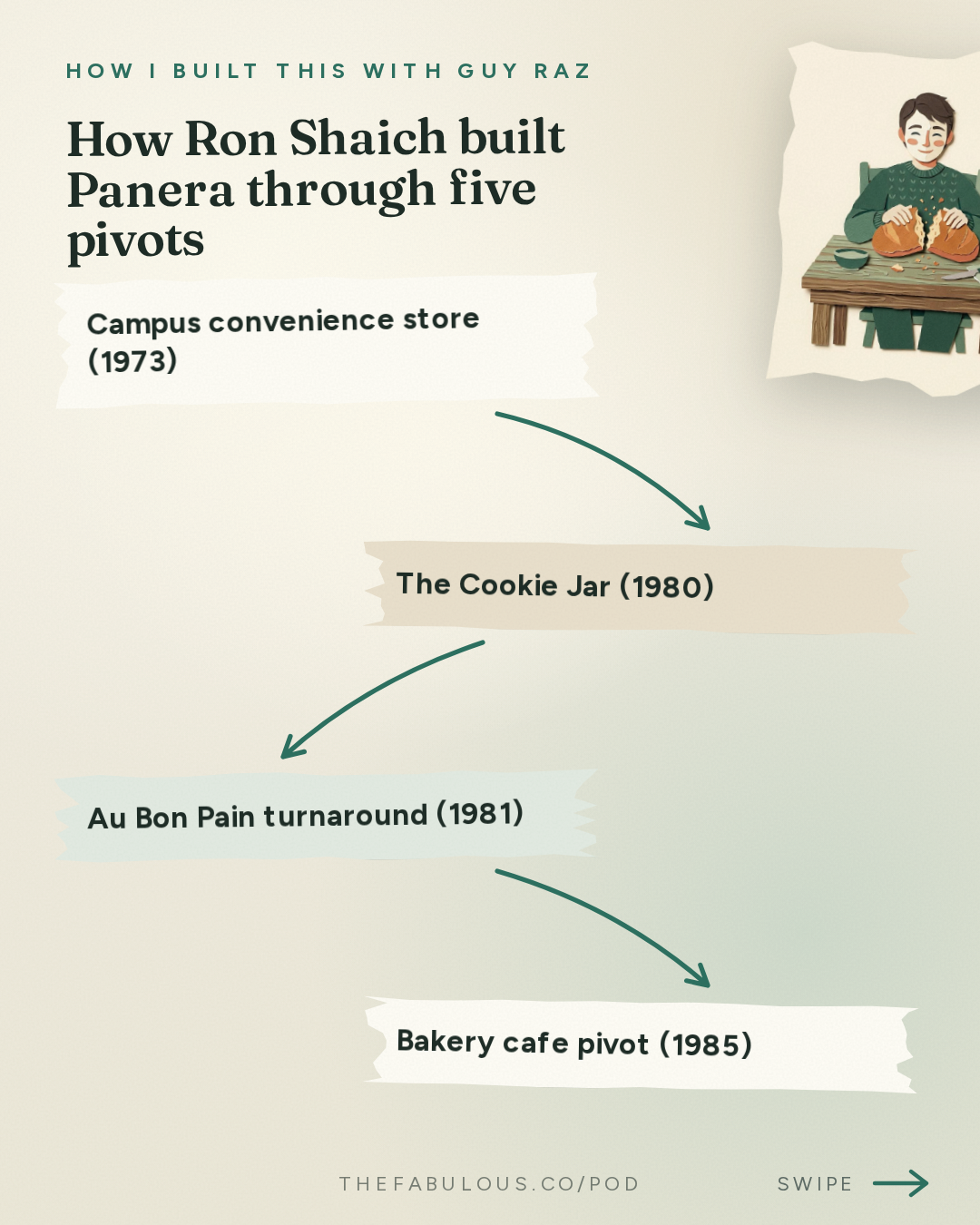
In the early 1970s, a few college students got tossed out of a convenience store near Clark University in Worcester, Massachusetts, on suspicion of shoplifting. They hadn't stolen anything. They had just been shopping. One of them, a politics major named Ron Shaich, decided the group didn't need that store anyway. They could run their own. He took the idea to a student vote, won it, and spent a summer managing a makeshift campus store (04:39). It is a strange seed for a company that would later sell a billion dollars a year in soup and bread, but Shaich's career turns out to be a string of these pivots, each one larger than the last, each one driven by the same instinct: find the thing people actually want, then rebuild the business around it.
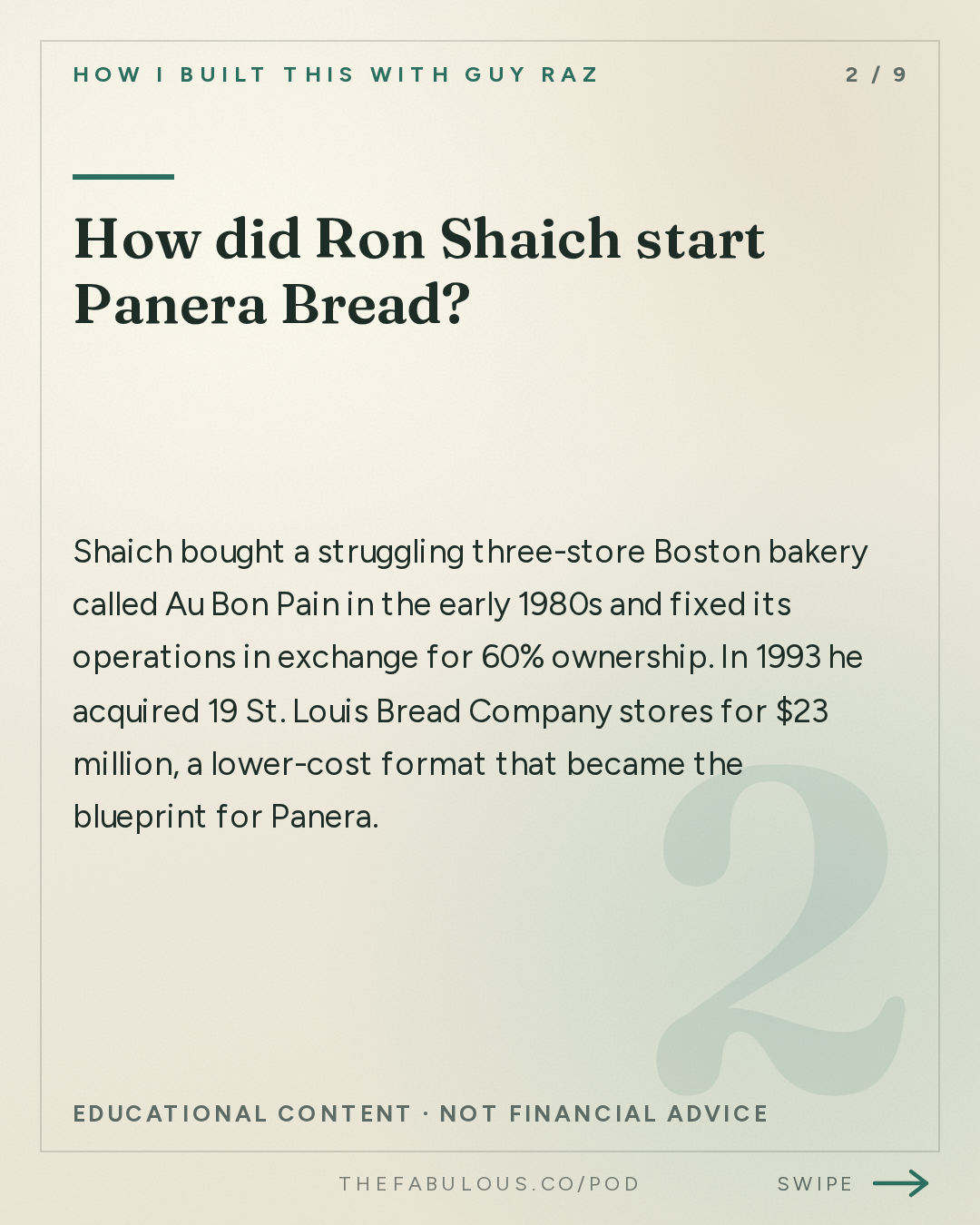
After Harvard Business School, Shaich took a job running cookie stores in shopping malls for a Midwest chain. He wanted to try an urban location instead of a mall. His bosses said no. So he quit, moved to Boston, and discovered that nobody would lease him space, because he had no credibility and no balance sheet (08:42). His father lent him $75,000 against a $25,000 inheritance, and that $100,000 became the money behind a 400 square foot shop called The Cookie Jar. On opening day, 50,000 people walked past the store. Shaich made $400 (10:17). It was not enough. But it put him in daily contact with a struggling three-location Boston bakery called Au Bon Pain, whose croissants he loved and whose operations, he realized, were a mess. He offered the owners a deal: give him 60% of the company, and he would fix it (14:16).
Fixing it meant improvising constantly, sometimes badly. Shaich's team once tried to dry frozen spinach for croissants by running it through clothes dryers, until one blew its top and coated 3,000 square feet of production space in spinach (00:31). But the improvising paid off, because Shaich was paying close attention to something nobody else at the company had bothered to notice.
The Baguette Was Never the Point
Working the sales counter himself in the mid-1980s, Shaich kept watching customers do something odd. They would buy a baguette, ask him to slice it, then pull out deli meat and cheese they had brought from a supermarket and build their own sandwich on the spot. The insight that followed is the one that made his career.
"You didn't have to be a Harvard MBA to say, 'Wow, the real thing here is that the baguette is not the end. It's the platform to sell sandwiches.'" — Ron Shaich [19:57]
Au Bon Pain stopped being a bakery and became a bakery cafe, serving roast beef and Boursin, turkey and brie, on its own bread. The second day after the new format opened in Boston's Copley Place mall, 50 people were lined up before the doors opened (20:47). Shaich had stumbled into what the industry would later call fast casual: a tier between drive-through fast food and sit-down dining, aimed at office workers who wanted something better than a burger but didn't have an hour for lunch (21:14). Big companies noticed. Pepsi launched a competing chain called La Petite Boulangerie. Sara Lee bought a rival called Michelle's Baguette and announced 400 new stores. Both had bigger budgets and better resumes on staff. Both eventually failed, because, in Shaich's telling, their people were managing a division, while his people were building something they actually cared about (22:08). Au Bon Pain went public in 1991 with Morgan Stanley underwriting the offering (23:18).
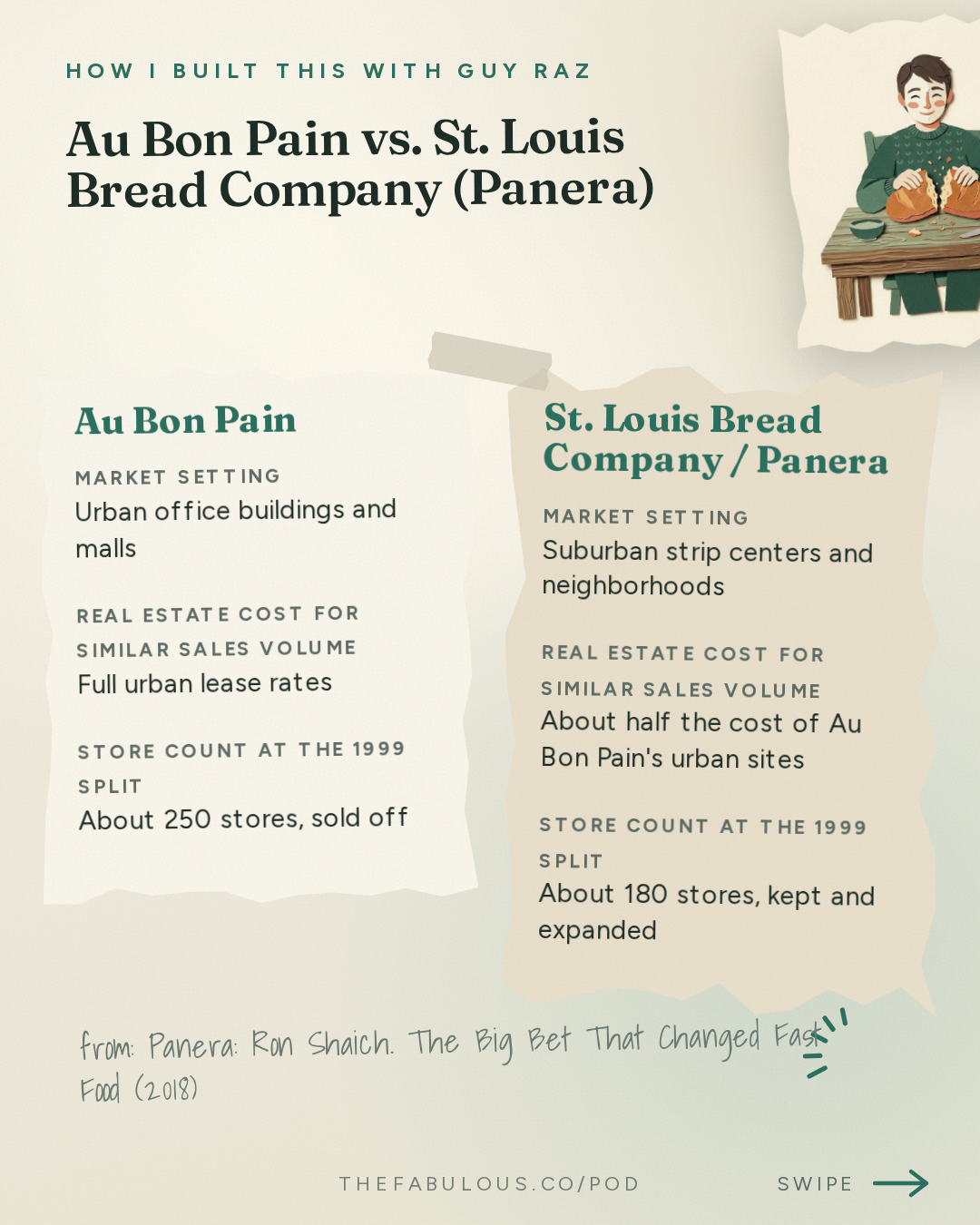
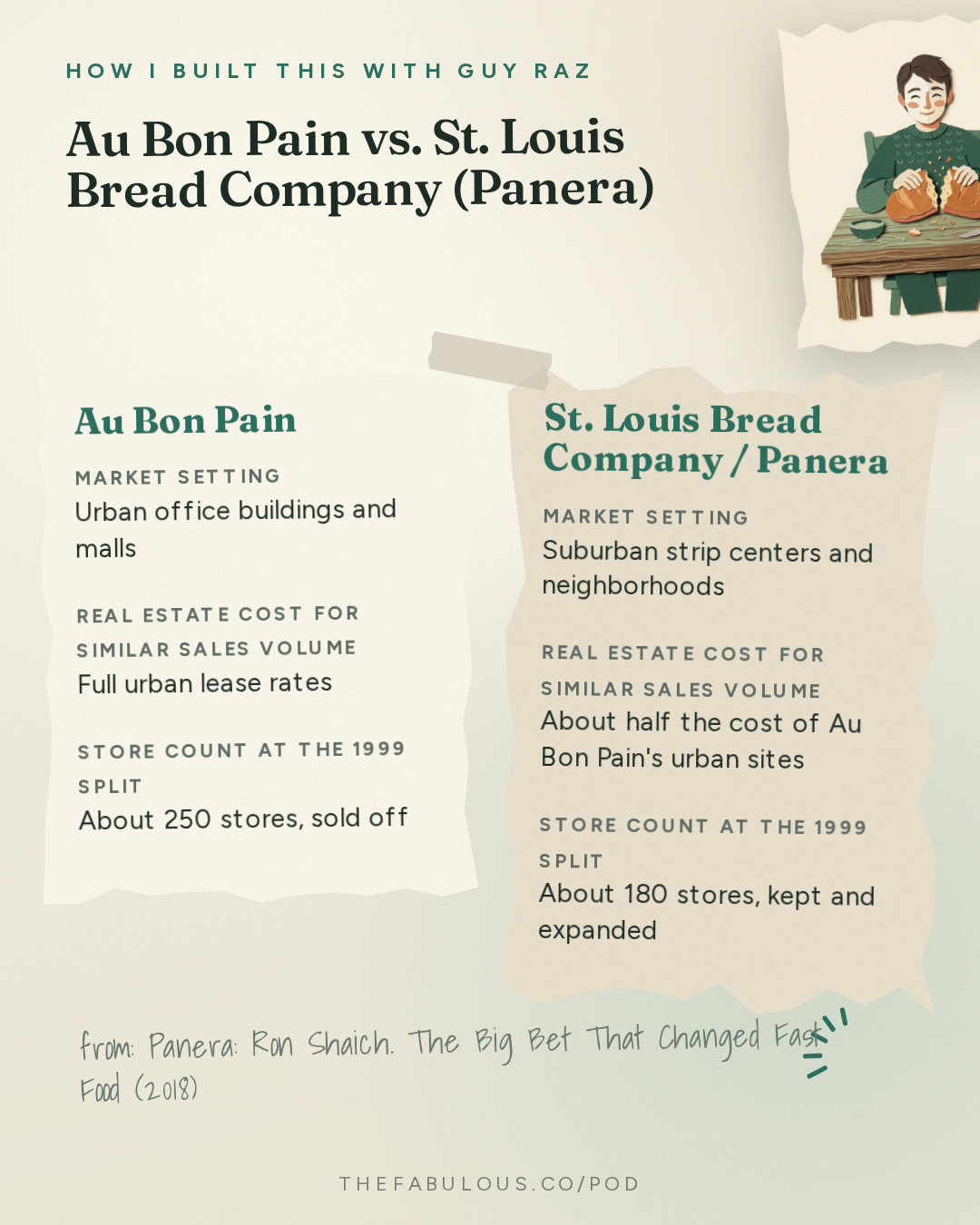
Two years later, an investment bank introduced Shaich to the owners of a small St. Louis sandwich chain. The 19 stores of St. Louis Bread Company were generating sales nearly as high as Au Bon Pain's, in real estate that cost about half as much, because they sat in suburban strip centers rather than dense urban blocks (24:31). Shaich bought the chain for $23 million in November 1993, intending it as a suburban counterpart to Au Bon Pain's urban business. He spent two years studying what made it work before renaming it Panera Bread, reasoning that "St. Louis" made people think of beer and Clydesdale horses, not artisan bread (26:16). The underlying strategy was what he and others would call the "third place," a term also associated with Starbucks founder Howard Schultz: a space beyond home and office where people could sit for an hour with a laptop, a Bible study group, or a team meeting. The difference from Starbucks, Shaich says, was square footage. Panera built bigger stores specifically so groups of six to ten people could stay a while, rather than the tighter, headphones-on seating typical of a coffee shop (25:30).
The Bet That Nearly Broke the Board
By 1998, Panera was one of four divisions inside the publicly traded Au Bon Pain company, alongside Au Bon Pain itself, an international arm, and a manufacturing unit. Shaich had about 150 Panera stores and a nagging sense that the company's structure was holding back its best asset. A friend asked him a simple question: what would he do if Panera owned Au Bon Pain, instead of the other way around? Shaich's answer was immediate. He would sell everything except Panera and put all the company's money and best people behind it (28:15).
His board did not agree easily. Shaich held two votes. The venture capitalists who had financed the company held three, and all of them had invested specifically in Au Bon Pain, the business he now wanted to sell. The negotiations were, in his words, heated (29:14). He won. Over roughly a year and a half, the company sold off Au Bon Pain (about 250 stores) and its other divisions, keeping only the smaller Panera operation (about 180 stores), then renamed the entire public company Panera Bread.
"I wasn't downsizing. I was focusing." — Ron Shaich [30:48]
At the time, Panera's stock traded around three or four dollars a share. It eventually sold for $315 a share (31:34). By 2003, Panera was doing a billion dollars in annual sales (31:34). The bet that had split his board looked, in hindsight, like the obvious move. It had not felt that way while it was happening.
Panera kept making contrarian bets after the split. During the 2008 financial crisis, while rivals cut costs as their sales fell, Panera opened a new store roughly every three days, taking advantage of real estate and construction costs that had both dropped about 20 percent (33:07). Shaich says the company tripled its stock price through the recession by investing while others retreated (34:01).
Eventually, though, Shaich concluded that the public markets themselves had become the obstacle. Even holding 17% of Panera's voting stock, he worried about what would happen once he was no longer around to push back against short-term pressure. Public company CEOs, he argues, tend to react to quarterly demands by cutting costs rather than making the multi-year bets that build real value in a company with 100,000 employees (36:57). In 2017, Panera was sold to the German holding company JAB Holding and taken private again, and Shaich stepped down as CEO.
What he offers instead of a tidy lesson about strategy is something closer to a warning. Asked whether he can finally relax and enjoy what he built, Shaich doesn't pretend the money isn't real. But he is blunt about what it cost to get there.
"The business owns you. You don't own it." — Ron Shaich [38:31]
He still thinks about restaurants in the shower, he says, and when he's trying to sleep. These days he chairs the fast-casual chain Cava (38:59). The convenience store that got him kicked out for shopping, the cookie shop that lost money, the bakery held together with a hanger and an auto mechanic's wrench: none of it looks like a plan from the outside. It looks more like a man who kept noticing what customers were actually doing, and kept rebuilding around it, one uncomfortable pivot at a time.
Ask this episode anything
Pod's AI answers from the episode itself, with the minute mark so you can hear it yourself.
Or start with one of these
Ask this episode
Pod's AI listens to the whole episode to answer, and points you to the minute it comes from.
The rest of this answer, and any question after it
Answers come from the episode itself, never from a summary of it.
ContinueKey takeaways
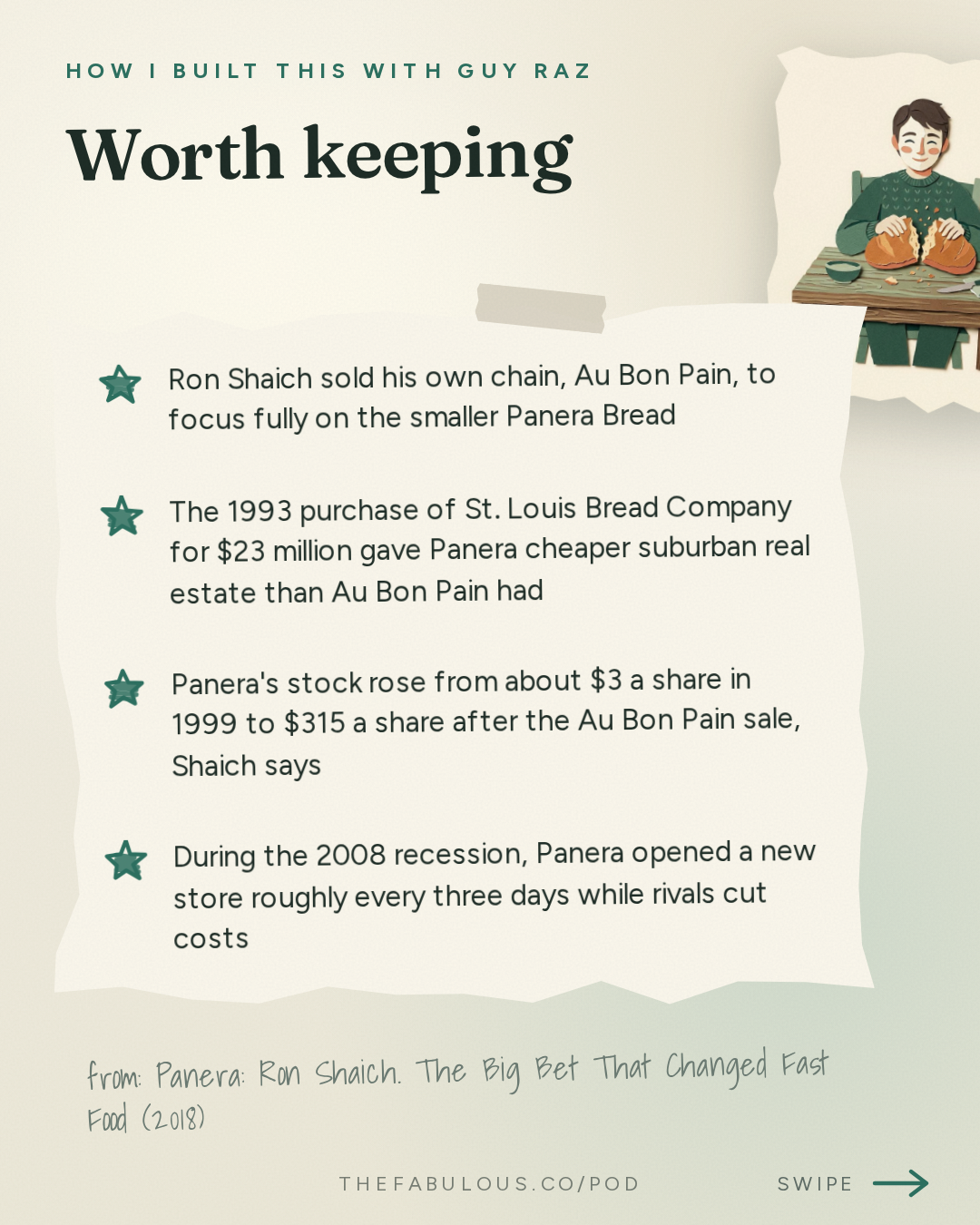
- Ron Shaich sold his own chain, Au Bon Pain, to focus fully on the smaller Panera Bread
- The 1993 purchase of St. Louis Bread Company for $23 million gave Panera cheaper suburban real estate than Au Bon Pain had
- Panera's stock rose from about $3 a share in 1999 to $315 a share after the Au Bon Pain sale, Shaich says
- During the 2008 recession, Panera opened a new store roughly every three days while rivals cut costs
- Shaich designed Panera's larger seating areas for groups, calling it the 'third place' model that differed from tighter-format rivals like Starbucks
The episode in cards
By the numbers
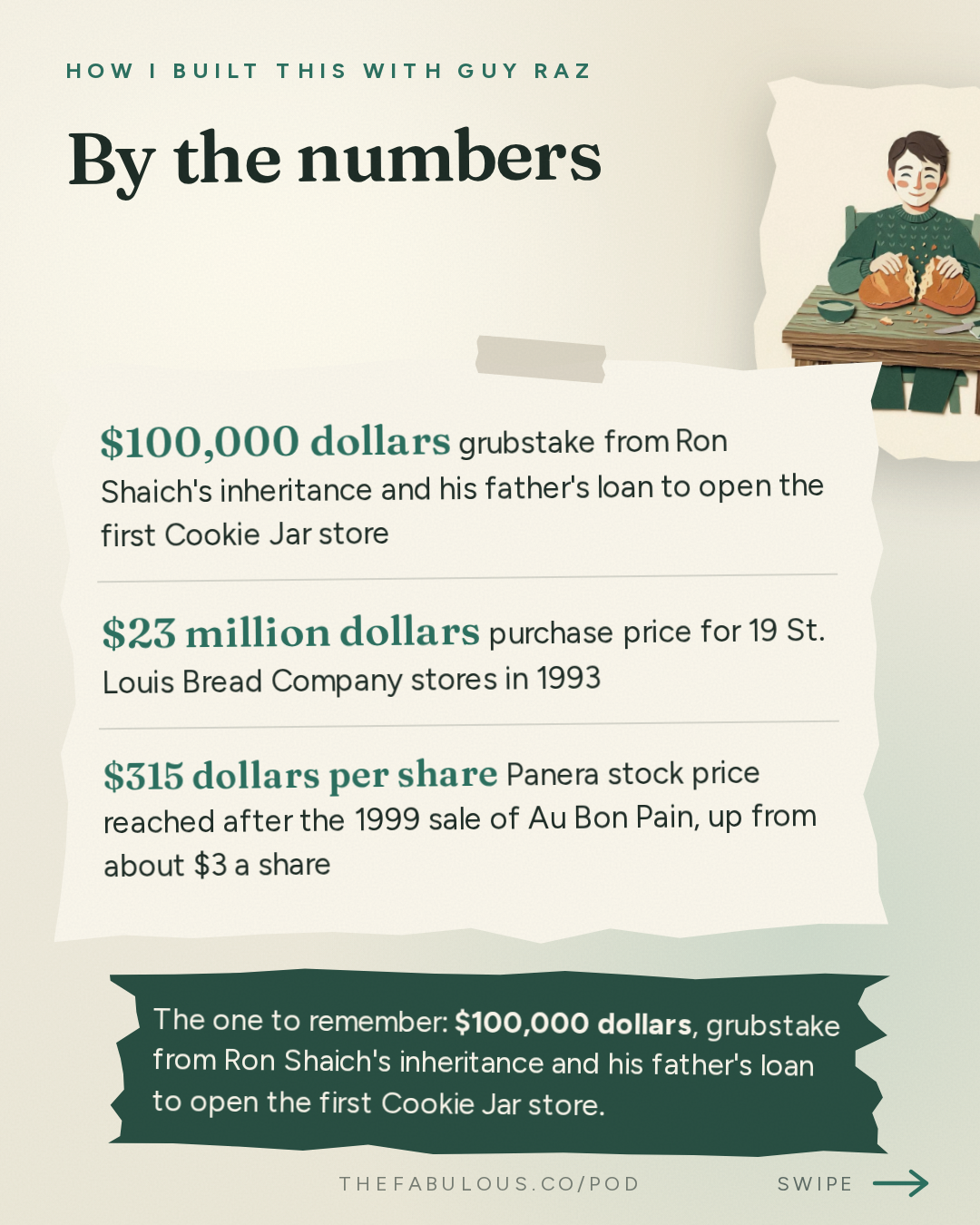
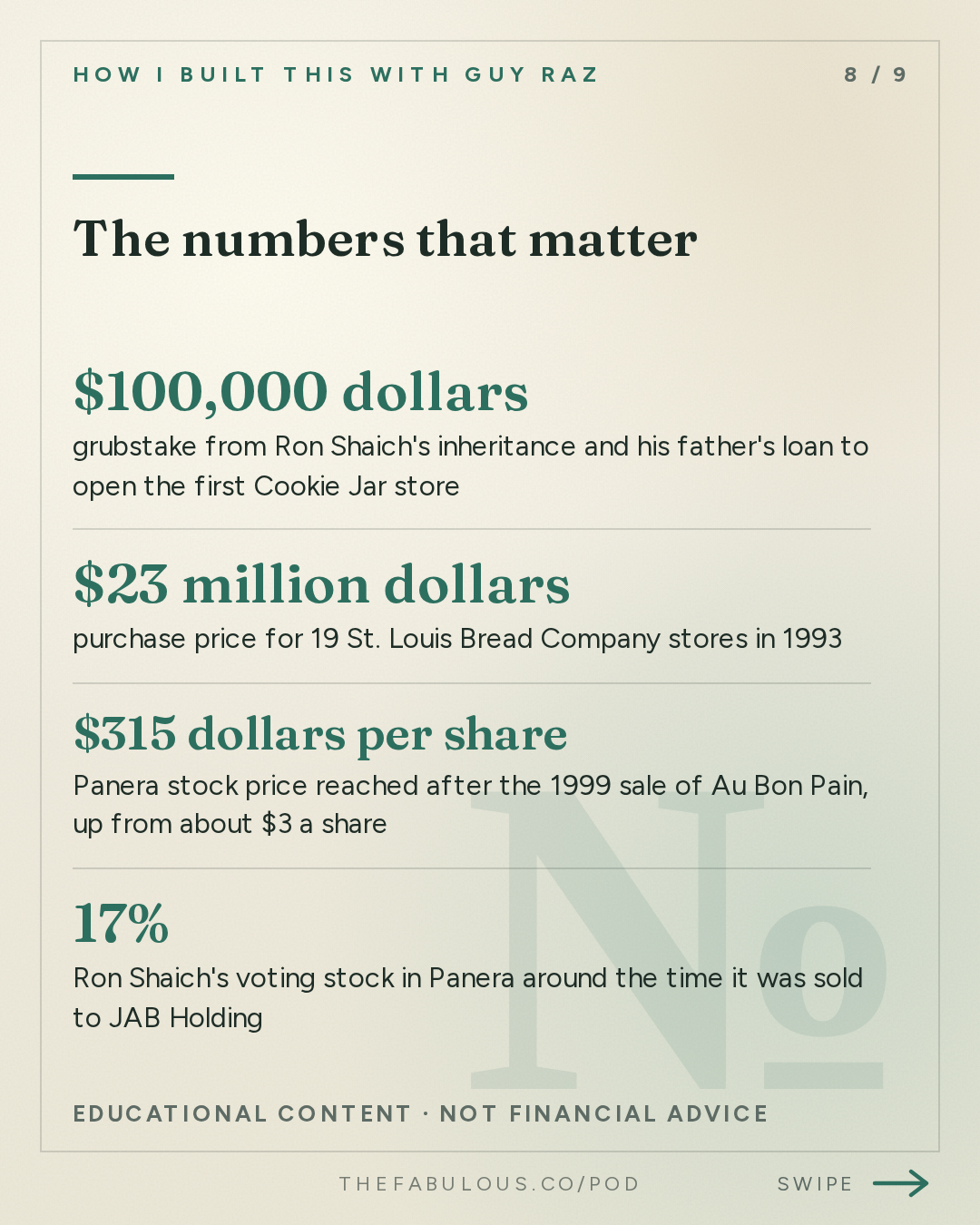
- $100,000 dollars grubstake from Ron Shaich's inheritance and his father's loan to open the first Cookie Jar store
- $23 million dollars purchase price for 19 St. Louis Bread Company stores in 1993
- $315 dollars per share Panera stock price reached after the 1999 sale of Au Bon Pain, up from about $3 a share
- 17% percent Ron Shaich's voting stock in Panera around the time it was sold to JAB Holding
In their words
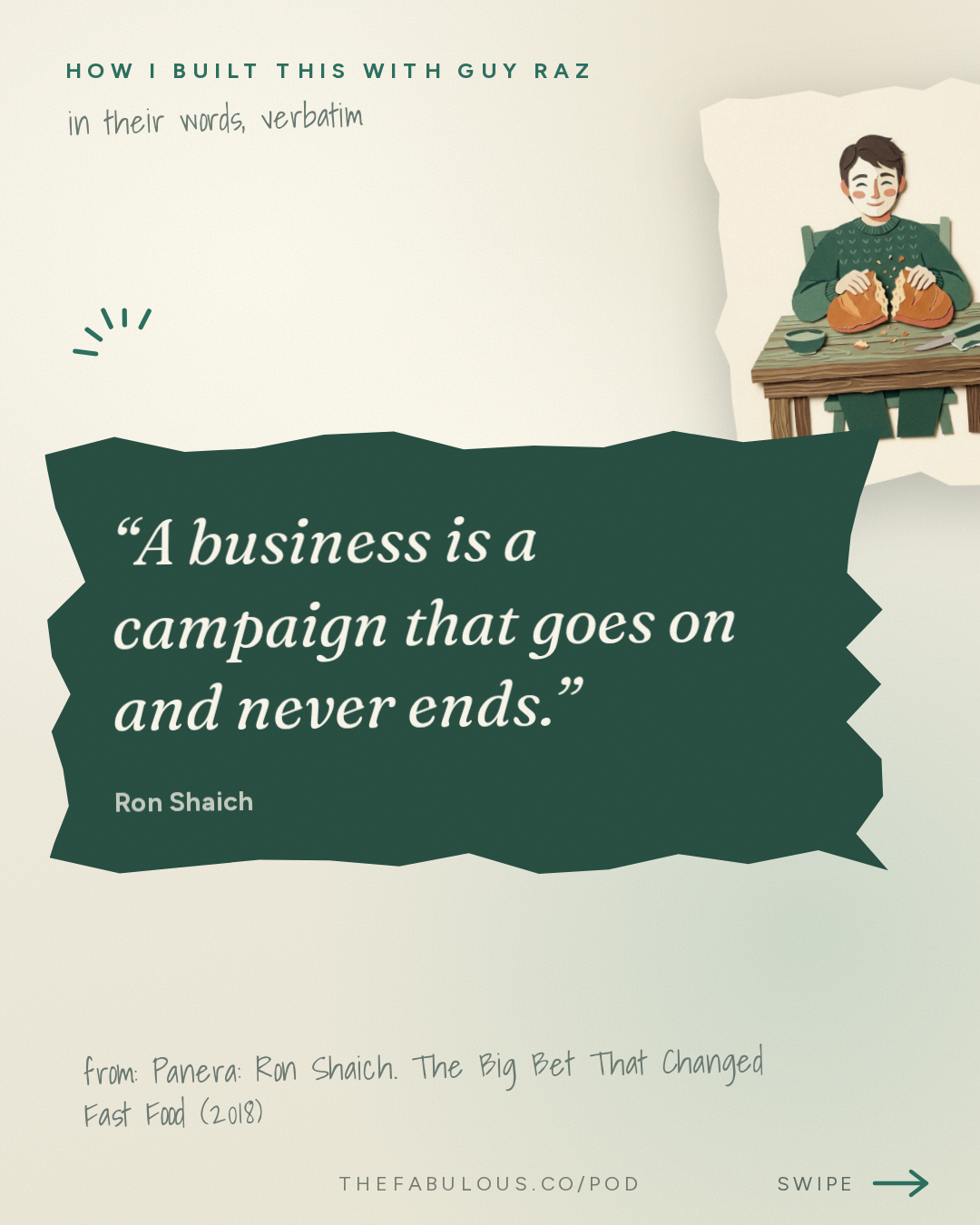
“A business is a campaign that goes on and never ends.”
“The baguette is not the end." Hmm. "It's the platform to sell sandwiches."”
“I wasn't downsizing. I was focusing.”
“The business owns you. You don't own it.”
Protocols
-
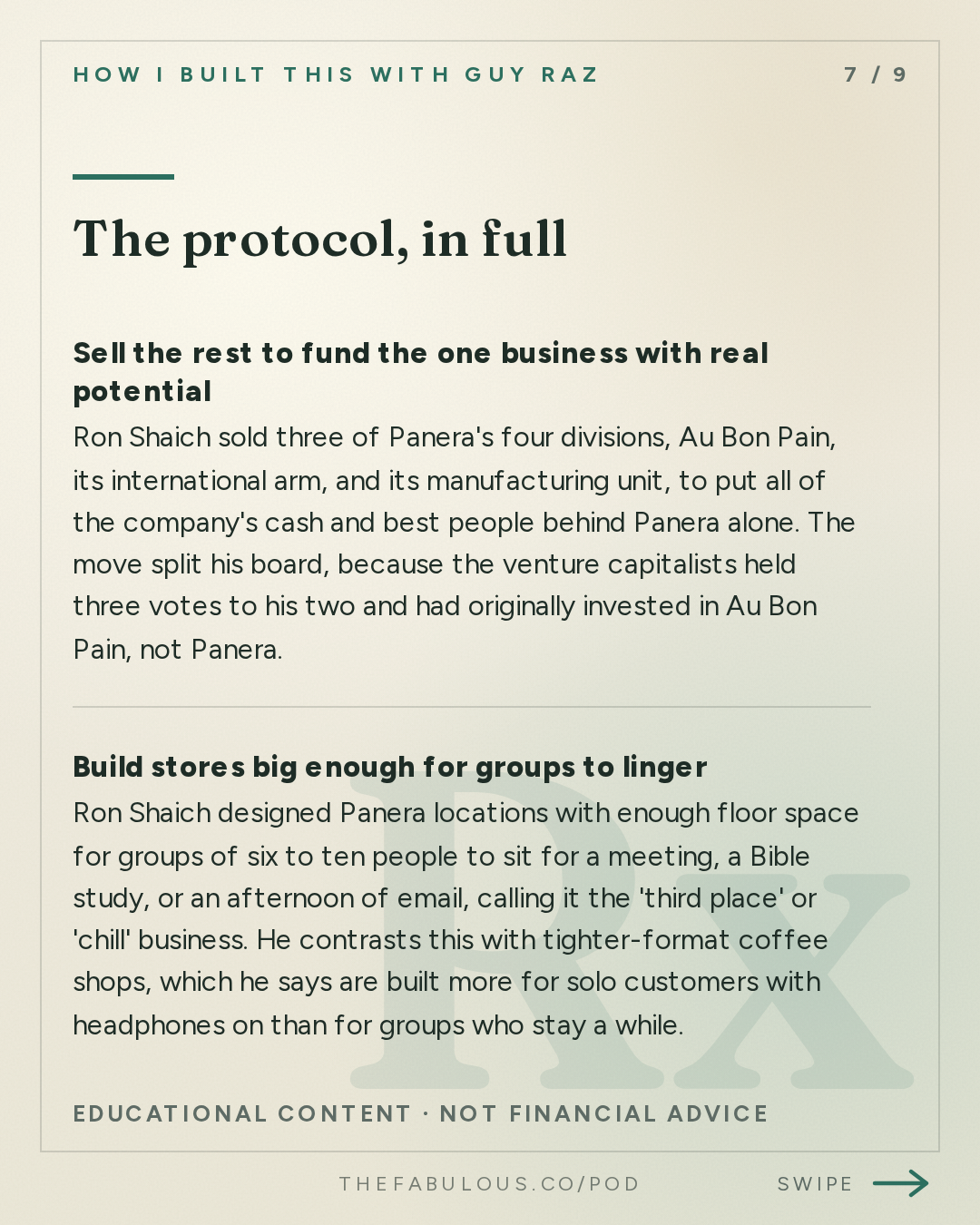
Sell the rest to fund the one business with real potential
Ron Shaich sold three of Panera's four divisions, Au Bon Pain, its international arm, and its manufacturing unit, to put all of the company's cash and best people behind Panera alone. The move split his board, because the venture capitalists held three votes to his two and had originally invested in Au Bon Pain, not Panera.
one-time strategic decision, executed over about a year and a half
-
Build stores big enough for groups to linger
Ron Shaich designed Panera locations with enough floor space for groups of six to ten people to sit for a meeting, a Bible study, or an afternoon of email, calling it the 'third place' or 'chill' business. He contrasts this with tighter-format coffee shops, which he says are built more for solo customers with headphones on than for groups who stay a while.
standard for new store design
Questions this episode answers
How did Ron Shaich start Panera Bread?
Shaich bought a struggling three-store Boston bakery called Au Bon Pain in the early 1980s and fixed its operations in exchange for 60% ownership (14:16). In 1993 he acquired 19 St. Louis Bread Company stores for $23 million, a lower-cost format that became the blueprint for Panera (24:31).
Why did Ron Shaich sell Au Bon Pain?
By 1998 Shaich ran four divisions including Au Bon Pain, but a friend asked what he would do if Panera owned Au Bon Pain instead of the reverse (28:15). Shaich sold Au Bon Pain and two other divisions to put all the company's money and best people behind Panera alone, a decision that split his board before the stock eventually rose from about $3 a share to $315 a share (31:14).
What is the 'third place' retail concept Panera used?
It refers to a space, beyond home and work, where people linger over food for meetings or just to sit with a laptop. Shaich designed Panera's stores with room for groups of six to ten people, unlike the tighter seating at chains like Starbucks, which he describes as built more for solo customers with headphones on (25:30).
How did Panera grow during the 2008 financial crisis?
While competitors cut costs as sales fell, Panera used its strong balance sheet to expand, opening a new store roughly every three days during the recession, when real estate and construction costs had both dropped about 20 percent (33:07). Shaich says the company tripled its stock price through that period (34:01).
Why did Panera go private again under JAB Holding?
Shaich says public markets created short-term pressure that pushed CEOs toward cost-cutting instead of the multi-year bets Panera needed, even though he personally controlled 17% of the voting stock (36:17). Panera was sold to the German company JAB Holding, going private again after Shaich stepped down as CEO in 2017 (36:17).
The full read, in cards
Mentioned
Ron Shaich · Panera Bread · Au Bon Pain · Howard Schultz · Clark University · Harvard Business School · The Original Cookie Company · Lou Kane · St. Louis Bread Company · Morgan Stanley · JAB Holding · Cava
More from this show and category
How Jesse Merrill Built Good Culture
Jesse Merrill grew Good Culture cottage cheese to $200 million in revenue by 2025, using branding skills from Honest Tea and Moby's tea startup. A 2015 ulcerative colitis diagnosis led him to cottage cheese's protein and sugar profile, and a 2023 TikTok ice cream hack made the category go viral before he sold a majority stake to private equity firm L Catterton.
How Jesse Merrill Built Good Culture
Jesse Merrill turned a declining 1970s product, cottage cheese, into a $200 million brand called Good Culture. He stripped out gums and preservatives, hit grueling retail velocity targets, and caught a 2023 TikTok cottage-cheese-ice-cream trend that pulled Gen Z into a category now worth $2.4 billion in the US.
How Ron Shaich Built Panera Bread
Ron Shaich turned a shoplifting dispute at Clark University into Panera Bread, a chain now worth billions, by repeatedly betting everything on a bigger idea before the old one had stopped working. He sold his profitable Au Bon Pain chain in 1999 to go all in on Panera, a bet that turned $3-a-share stock into $315 a share.
How Dr. Squatch Built a $1.5 Billion Soap Brand
Jack Haldrup turned a $1,500 soap side hustle into Dr. Squatch, which Unilever bought for $1.5 billion in 2025. The hinge moments were ditching Google ads for Facebook, surviving a forced rebrand and a partner buyout, and shooting a $15,000 video that drew 120 million views and became the company's main sales engine.
