Plant-Based Diet vs Animal Protein for Muscle
Plant-Based Diets and Muscle: What Two New Trials Found in Older Adults
▶ Listen to the full episode More from The Dr. Gabrielle Lyon Show
The brief
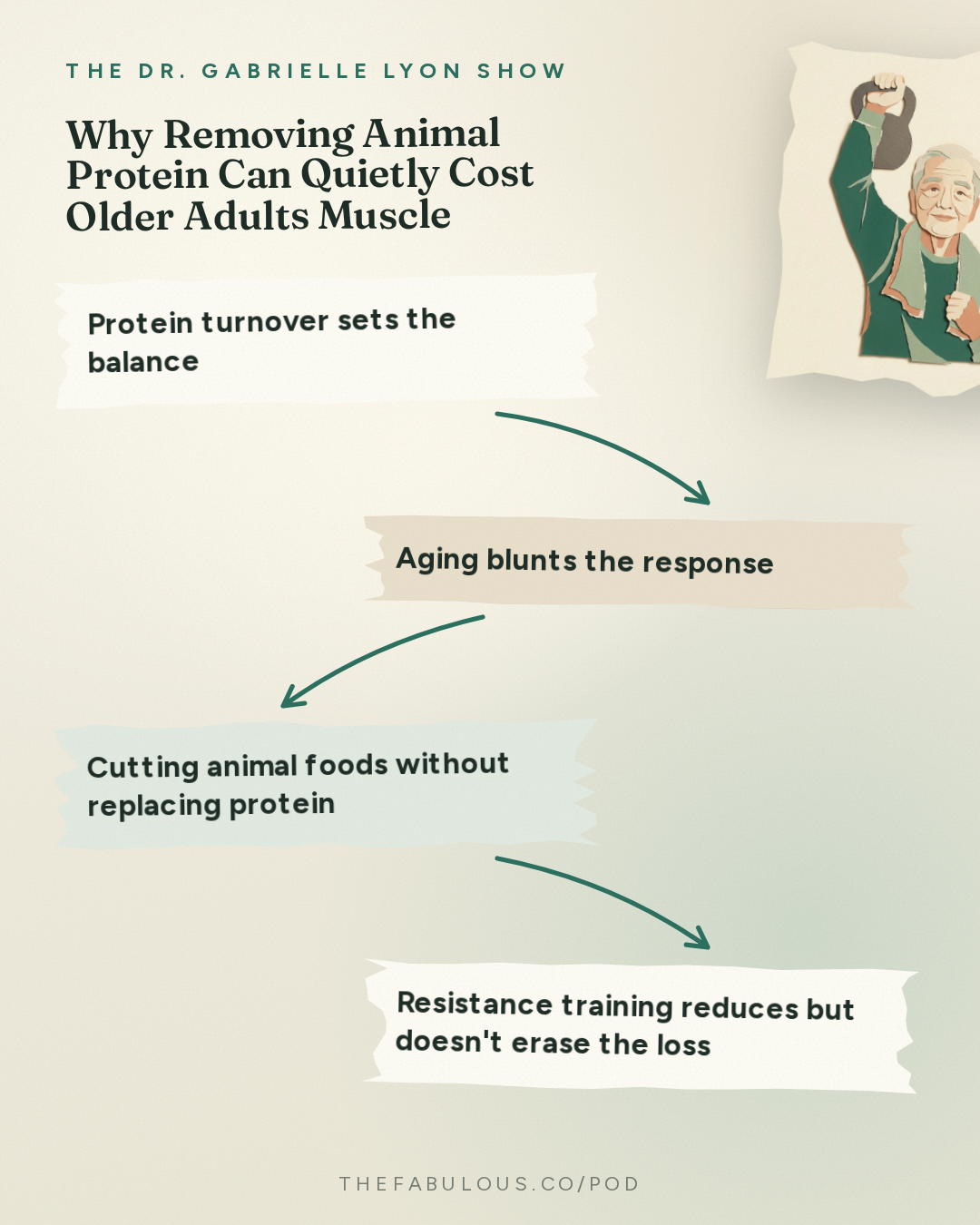
A vegan diet that drops protein intake can shrink older adults' muscle in just 12 weeks, even with resistance training. A protein-matched vegetarian diet combined with training still built muscle, though less than an omnivorous diet, showing that total protein and amino acid quality, not plant versus animal labels, determine the outcome.
Muscle, once lost in old age, is stubborn about coming back. That single fact is why two randomized trials published months apart in the American Journal of Clinical Nutrition matter so much, and why they seem, at first glance, to contradict each other. In one, older adults who went vegan lost real, measurable muscle in twelve weeks. In the other, older adults on a vegetarian diet gained muscle over the same span. Same age group, same rough timeframe, opposite headlines. The explanation is not that one diet is secretly good and the other secretly bad. It is that both studies were testing the same underlying variable, protein, and only one of them controlled for it.
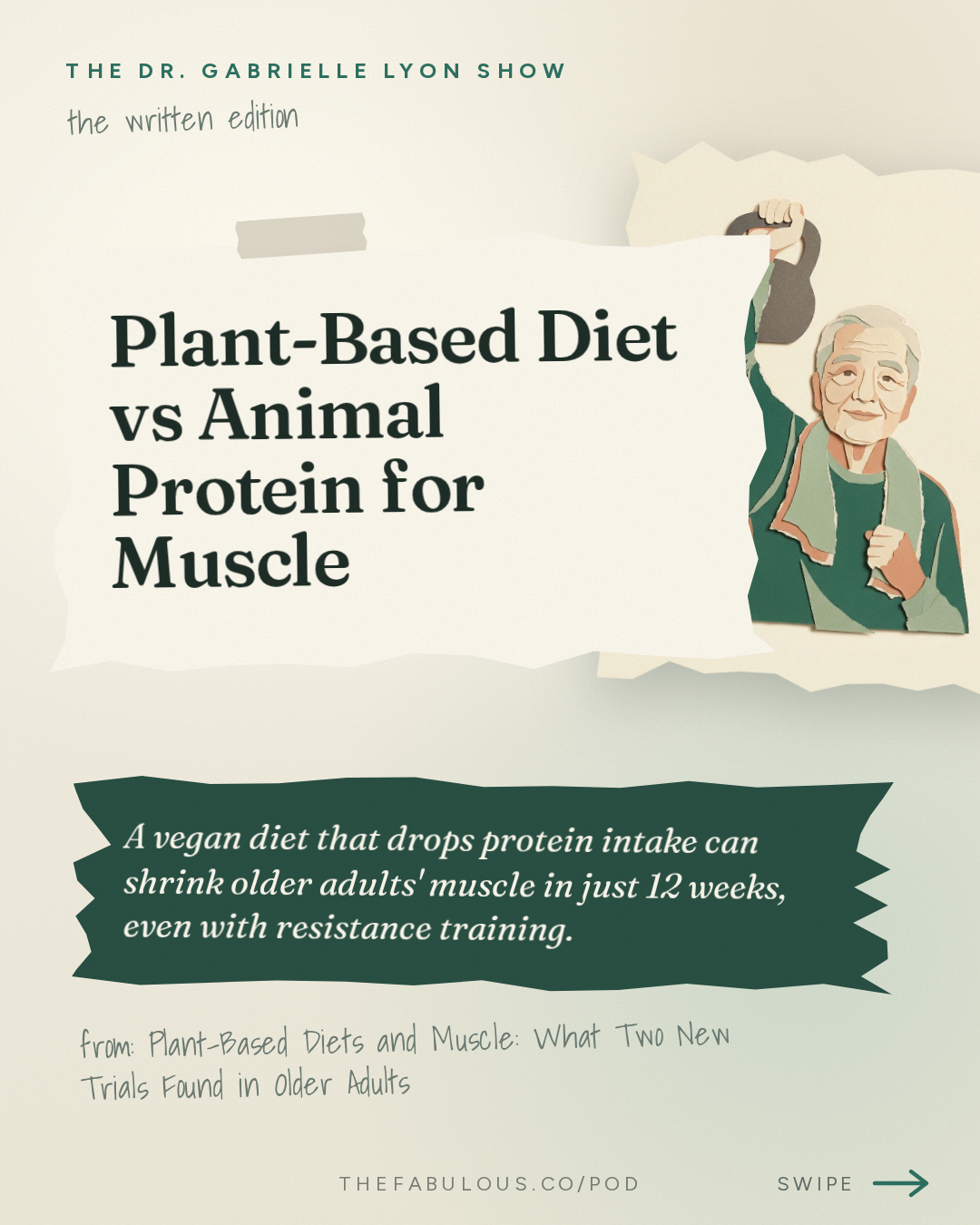
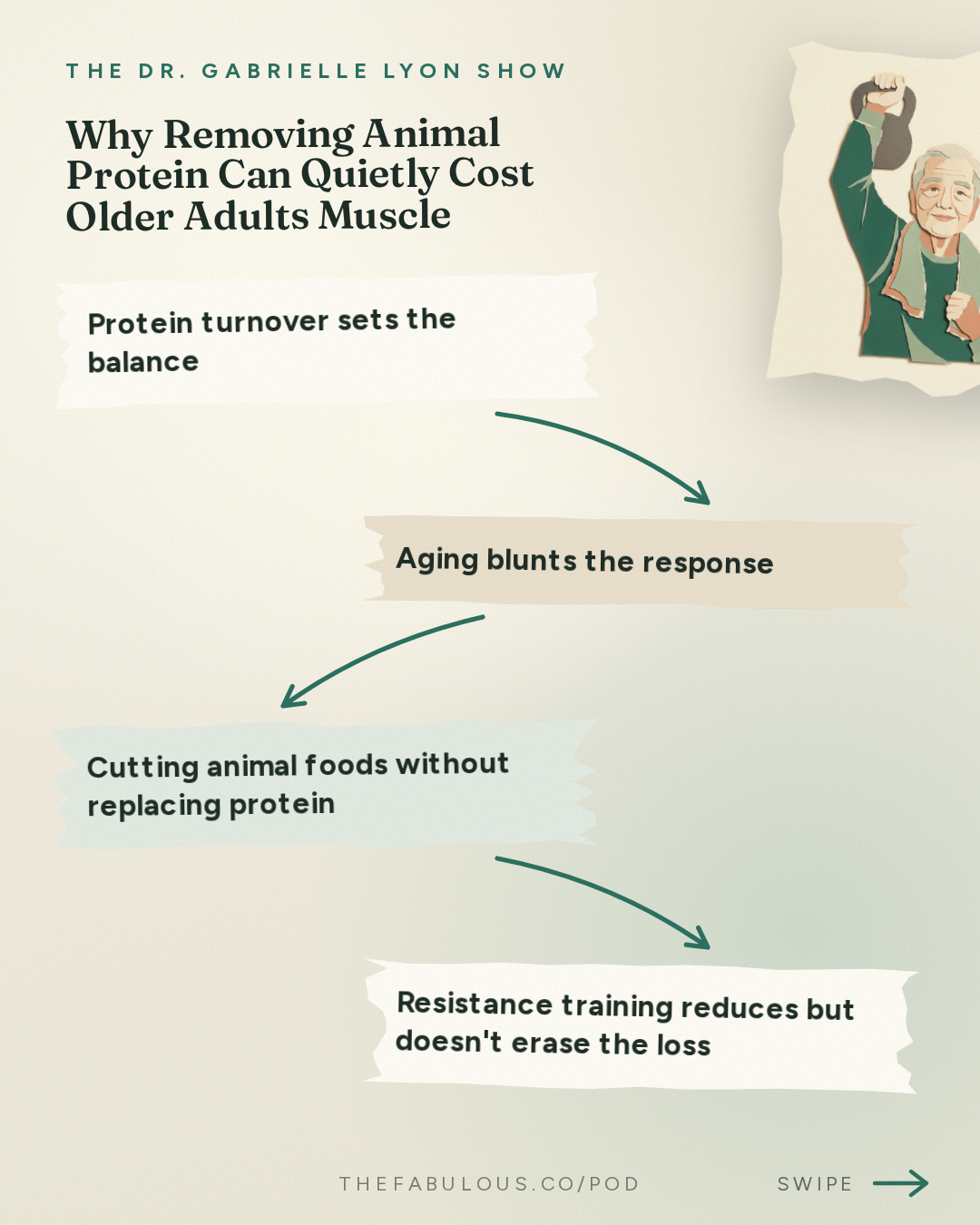
To understand why protein matters so much more after a certain age, it helps to know what researchers call anabolic resistance. Muscle tissue is never static. It is constantly being broken down and rebuilt, a cycle called protein turnover. When the building side wins, muscle grows. When breakdown wins, muscle shrinks. Two forces push that balance in favor of building: dietary protein, which supplies the raw amino acids, and resistance training, which gives muscle a reason to use them (03:25). As people age, muscle becomes less responsive to both signals. It takes more protein, or a harder training stimulus, or both, to get the same anabolic result that used to come easily (03:50). This is not a reason to give up on plant-based eating. It is a reason to take the math seriously.
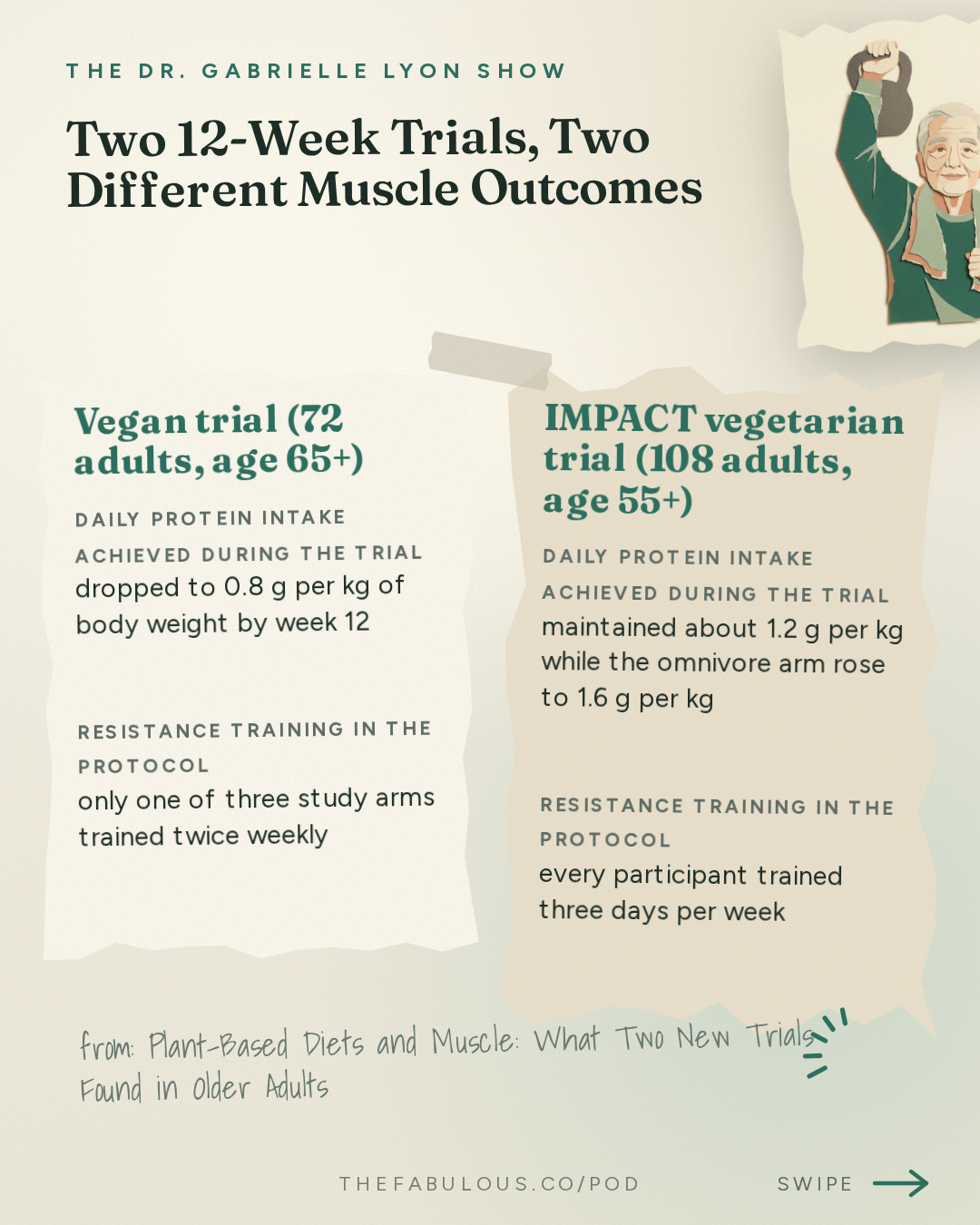
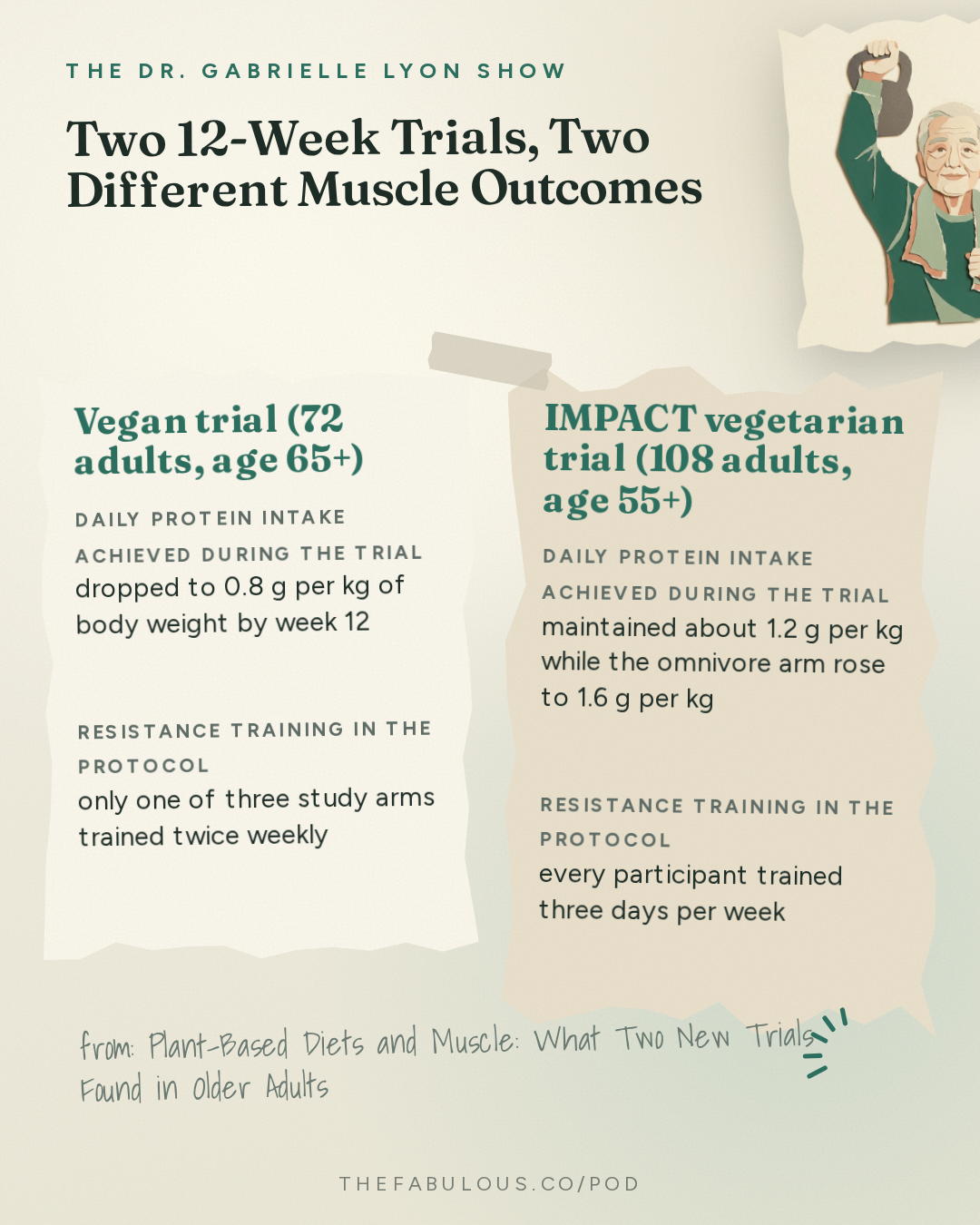
The first trial recruited 72 healthy adults aged 65 and older, habitual meat eaters, and split them into three groups: an omnivore control, a vegan group, and a vegan group that also lifted weights twice a week (04:48). Instead of relying on a bathroom scale or a basic body-composition device, the researchers used MRI to measure actual thigh muscle volume and DEXA scans to track appendicular lean mass, the muscle in the arms and legs. They even used a deuterated-water technique to estimate how fast new muscle protein was being made. This is about as rigorous as diet research gets.
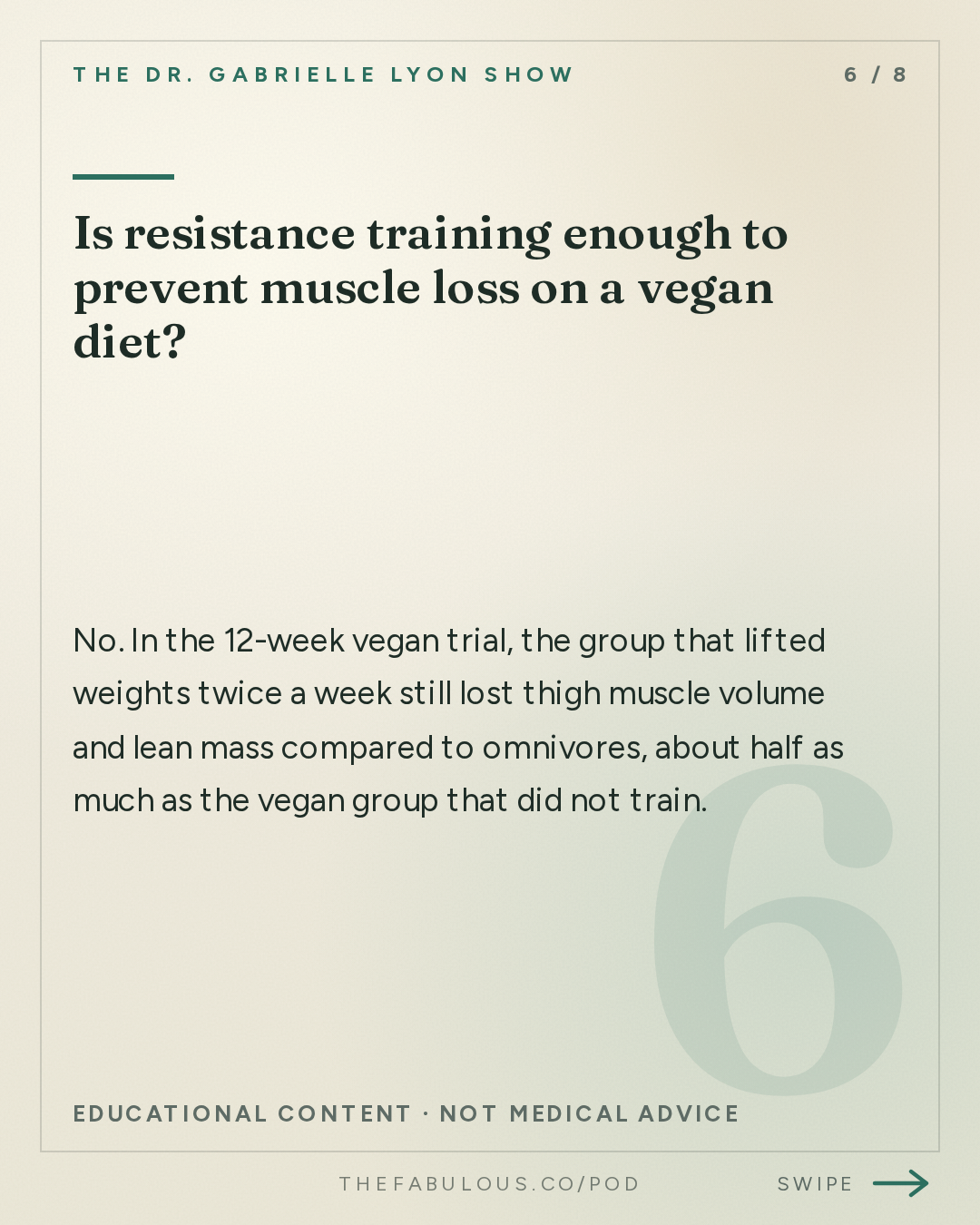
What they found was not subtle. All three groups started eating around one gram of protein per kilogram of body weight. By the end of the twelve weeks, the vegan groups had drifted down to about 0.8 grams per kilogram, because swapping meat, eggs, dairy, and fish for plant foods does not automatically replace the protein those foods were providing (06:11). The vegan-only group lost roughly 610 milliliters of thigh muscle volume, about 5 percent of where they started, along with 1.15 kilograms of appendicular lean mass, a bit over two pounds (06:36). Their rate of new muscle protein synthesis ran 14 percent lower than the omnivores (07:05). The vegan group that trained twice weekly lost about half as much, which is meaningful, but they still lost.
"Resistance training substantially reduced the muscle losses associated with switching to a completely vegan diet, but it didn't prevent them." Dr. Gabrielle Lyon, [07:35]
That line is the hinge of the whole episode. Exercise is powerful, but it cannot fully compensate for a diet that quietly strips away protein.
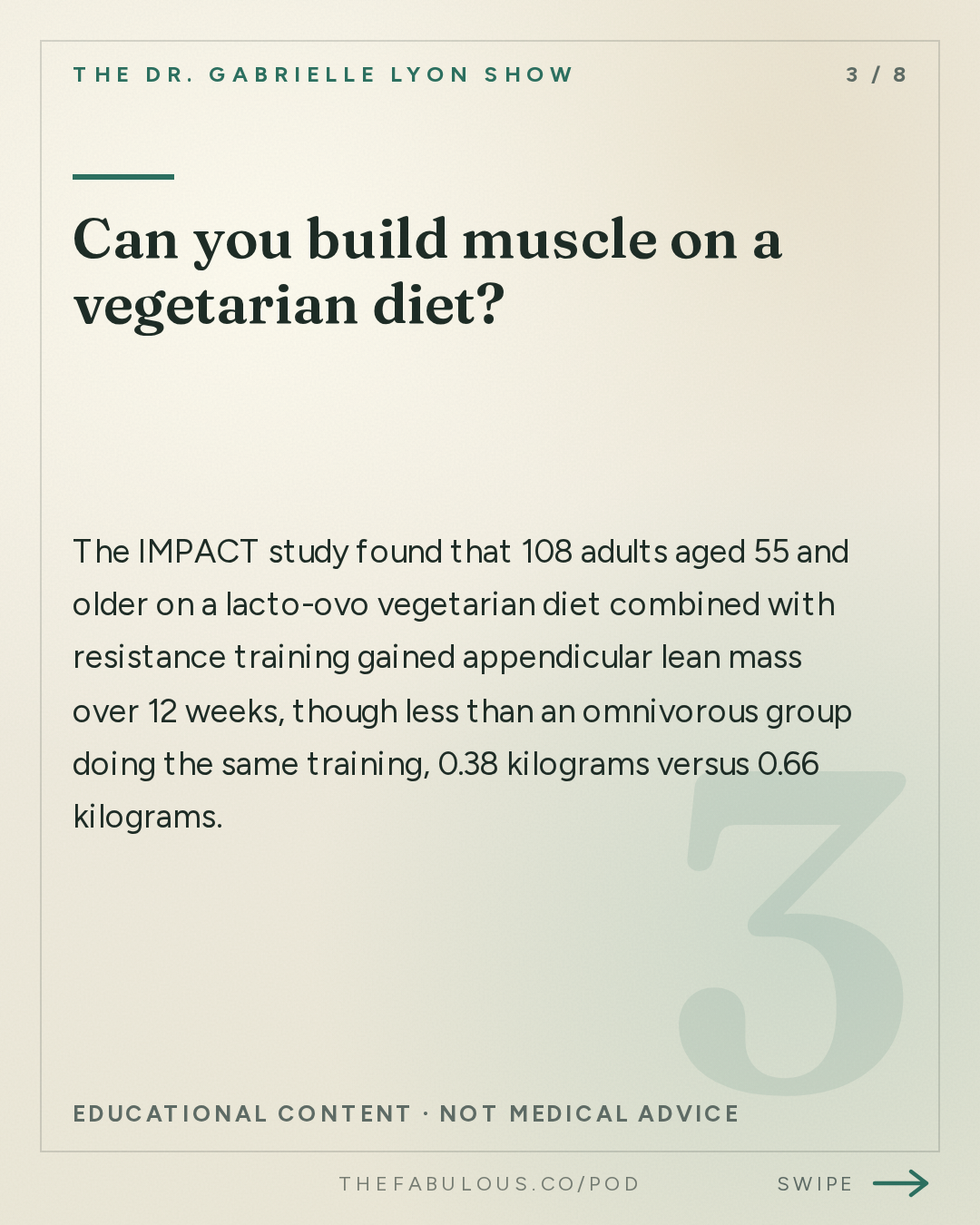
The second trial, called IMPACT, asked a sharper question: what happens if you design a vegetarian diet on purpose to hit a real protein target? Researchers recruited 108 adults aged 55 and older, all of whom trained three days a week, and split them into a lacto-ovo vegetarian group (eggs and dairy allowed, at least 60 percent of protein from plants) and an omnivore group (at least 60 percent from animal foods) (08:39). Both groups were coached to eat at least 1.2 grams of protein per kilogram, spread across meals. The vegetarians held that line. The omnivores, left to their own devices, drifted up to 1.6 grams per kilogram (09:37). Both groups gained muscle. But the gains were not equal: appendicular lean mass rose 0.38 kilograms in the vegetarian group versus 0.66 kilograms in the omnivore group, a statistically significant gap (10:04). Strength gains, interestingly, were similar between the two.
Put the two trials side by side and a pattern emerges. Remove animal protein without replacing it, and muscle shrinks, even with some training. Replace it deliberately and keep protein high, and muscle still grows, just not quite as fast as when protein intake climbs even higher on an omnivorous pattern. The difference is not spiritual. It is arithmetic.
The Amino Acid Math
The deeper reason animal protein has an edge comes down to amino acids, the building blocks the body actually extracts from protein.
"The human body doesn't require dietary protein because it recognizes a chicken breast or a soybean. It requires protein because it needs amino acids." Dr. Gabrielle Lyon, [11:33]
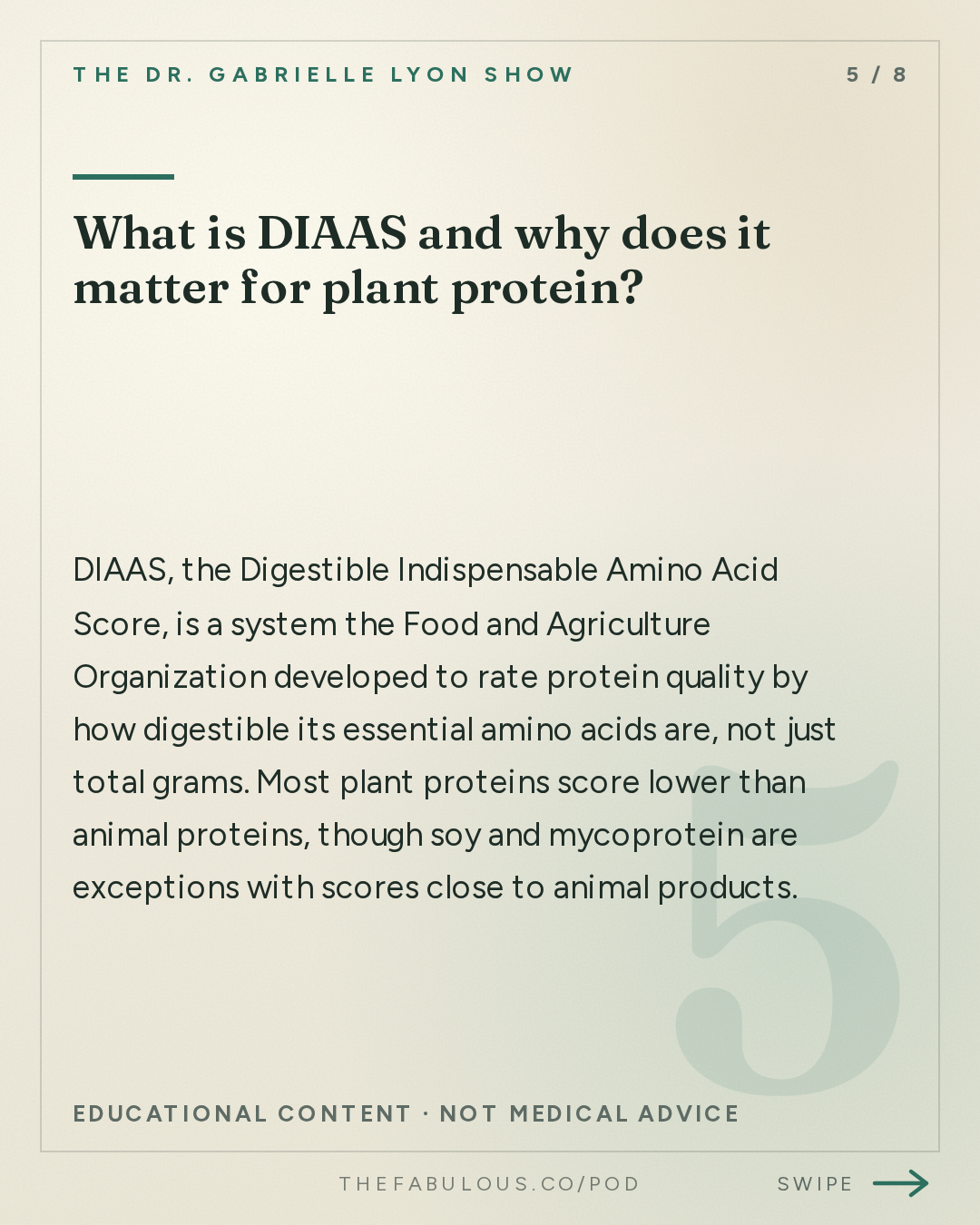
There are nine essential amino acids the body cannot make on its own. Animal proteins, like steak, tend to be highly digestible and carry a favorable mix of all nine. Many plant proteins, like quinoa, run lower in certain essential amino acids, creating a bottleneck for muscle building even when the total gram count looks fine on a label (12:26). This is the logic behind DIAAS, the Digestible Indispensable Amino Acid Score, a system the Food and Agriculture Organization built specifically to grade protein by how much usable amino acid content it actually delivers, not just by its crude protein grams (12:46).
But quality stops mattering as much once quantity is high enough. Earlier research cited in the episode found that when vegan and omnivore trainees were matched on total protein, using soy protein isolate for the vegans, their gains in muscle and strength came out roughly equal (14:00). A later trial pushed protein even higher using mycoprotein, a plant ingredient derived from mushrooms with a DIAAS score close to animal protein, and again found comparable results between groups (15:12). Soy and mycoprotein, it turns out, are the rare plant exceptions that behave more like animal protein in the body (19:22).
Setting a Number You Can Act On
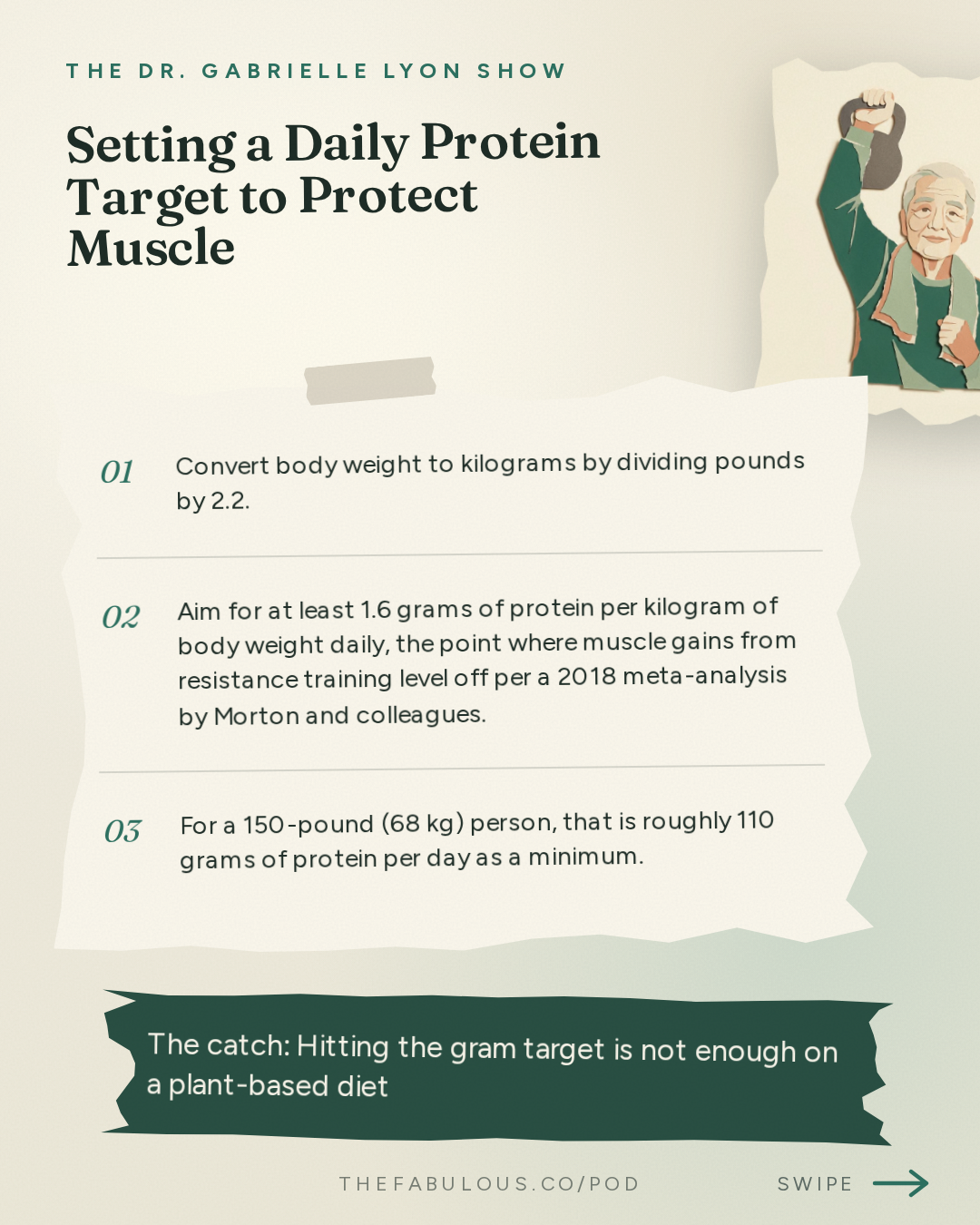
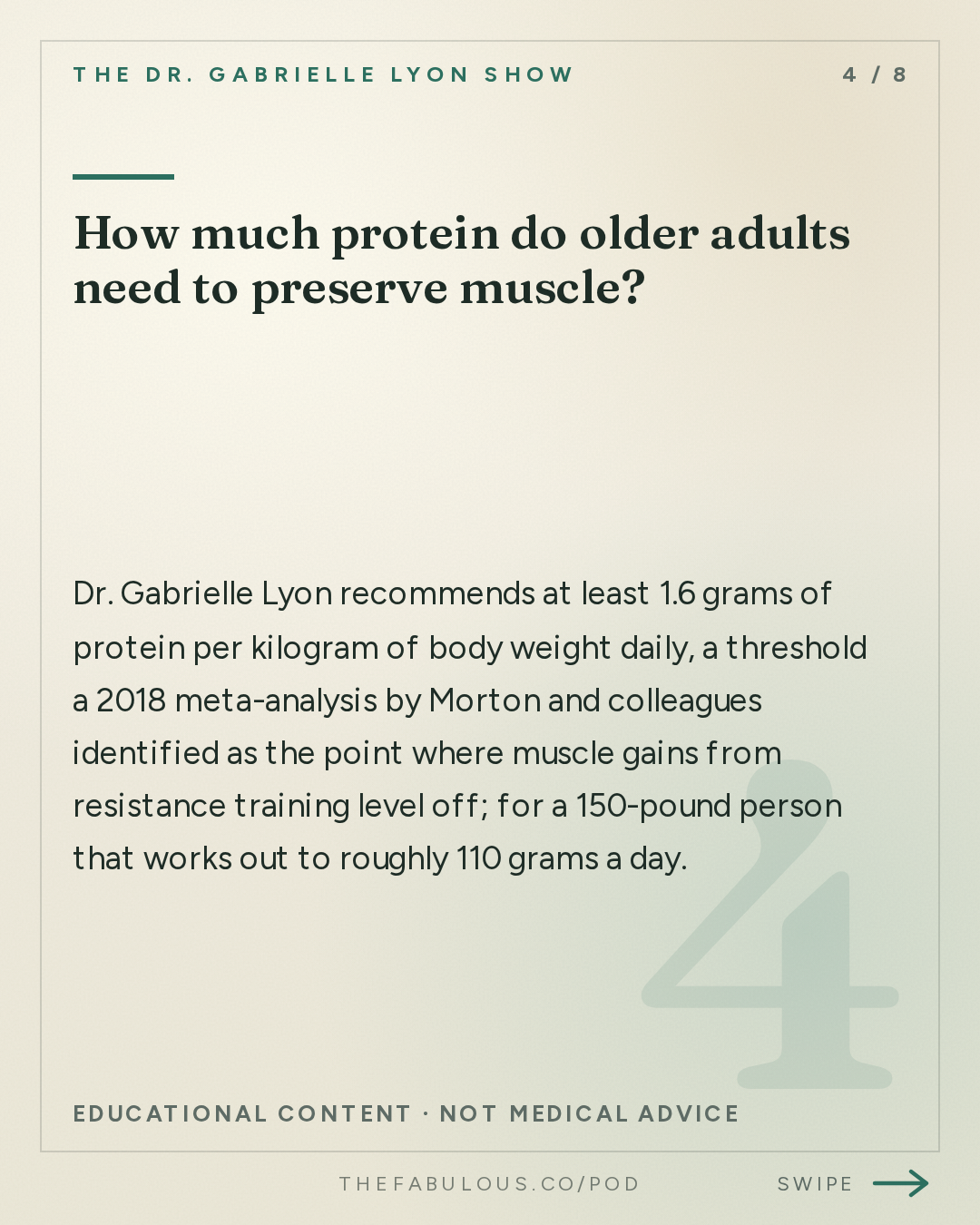
All of this converges on a practical target. Dr. Gabrielle Lyon recommends thinking about protein in grams per kilogram of body weight, never as a percentage of daily calories, and aiming for at least 1.6 grams per kilogram as a starting point (18:23). That figure comes from a 2018 meta-analysis by exercise scientist Morton and colleagues, which found 1.6 grams per kilogram was roughly where muscle gains from resistance training leveled off. For someone weighing 150 pounds, about 68 kilograms, that works out to roughly 110 grams of protein a day as a floor, not a ceiling (18:55).
For anyone eating mostly or entirely plant-based, hitting that number takes more planning than it does on an omnivorous diet, where protein quantity and quality tend to arrive together. Swapping chickpeas for chicken is not a one-to-one trade, since chickpeas carry less protein per calorie and a lower quality profile, which means the rest of the meal has to make up the difference (16:48). Tofu, tempeh, edamame, mycoprotein, and concentrated plant protein powders are useful tools here precisely because they close that gap without requiring enormous servings of whole foods (17:55). Fiber, which comes bundled with most whole plant proteins, also lowers how much of that protein the body can actually absorb, which is another reason processed or concentrated plant protein sources earn their place in a vegan or vegetarian diet built for muscle (19:22).
None of this is an argument against eating plants. It is an argument against treating "more plants" as a health goal in itself, disconnected from what it does to the tissue that keeps older adults strong, mobile, and metabolically resilient.
"Your biology doesn't care whether your protein came from plants or animals. It does seem to care about the quantity and availability of the essential amino acids." Dr. Gabrielle Lyon, [20:16]
That is the real lesson sitting underneath both trials. A diet can be lower in saturated fat, higher in fiber, better for the planet, and still quietly erode the muscle an older adult will need to carry groceries, climb stairs, and recover from illness a decade from now. The question worth asking is not whether a diet is plant-based or animal-based. It is whether it delivers enough usable amino acid to keep the body's building side winning.
Ask this episode anything
Pod's AI answers from the episode itself, with the minute mark so you can hear it yourself.
Or start with one of these
Ask this episode
Pod's AI listens to the whole episode to answer, and points you to the minute it comes from.
The rest of this answer, and any question after it
Answers come from the episode itself, never from a summary of it.
ContinueKey takeaways
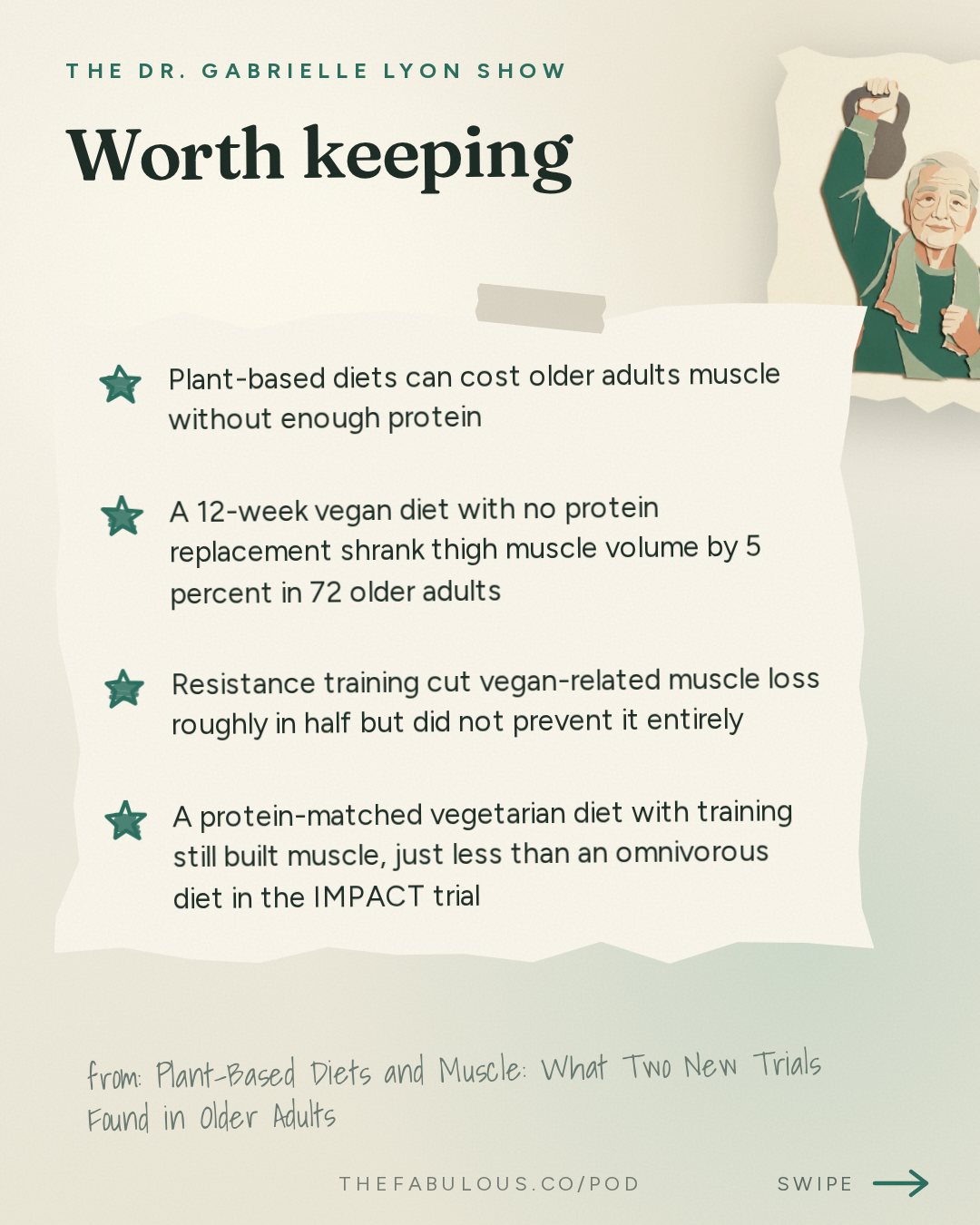
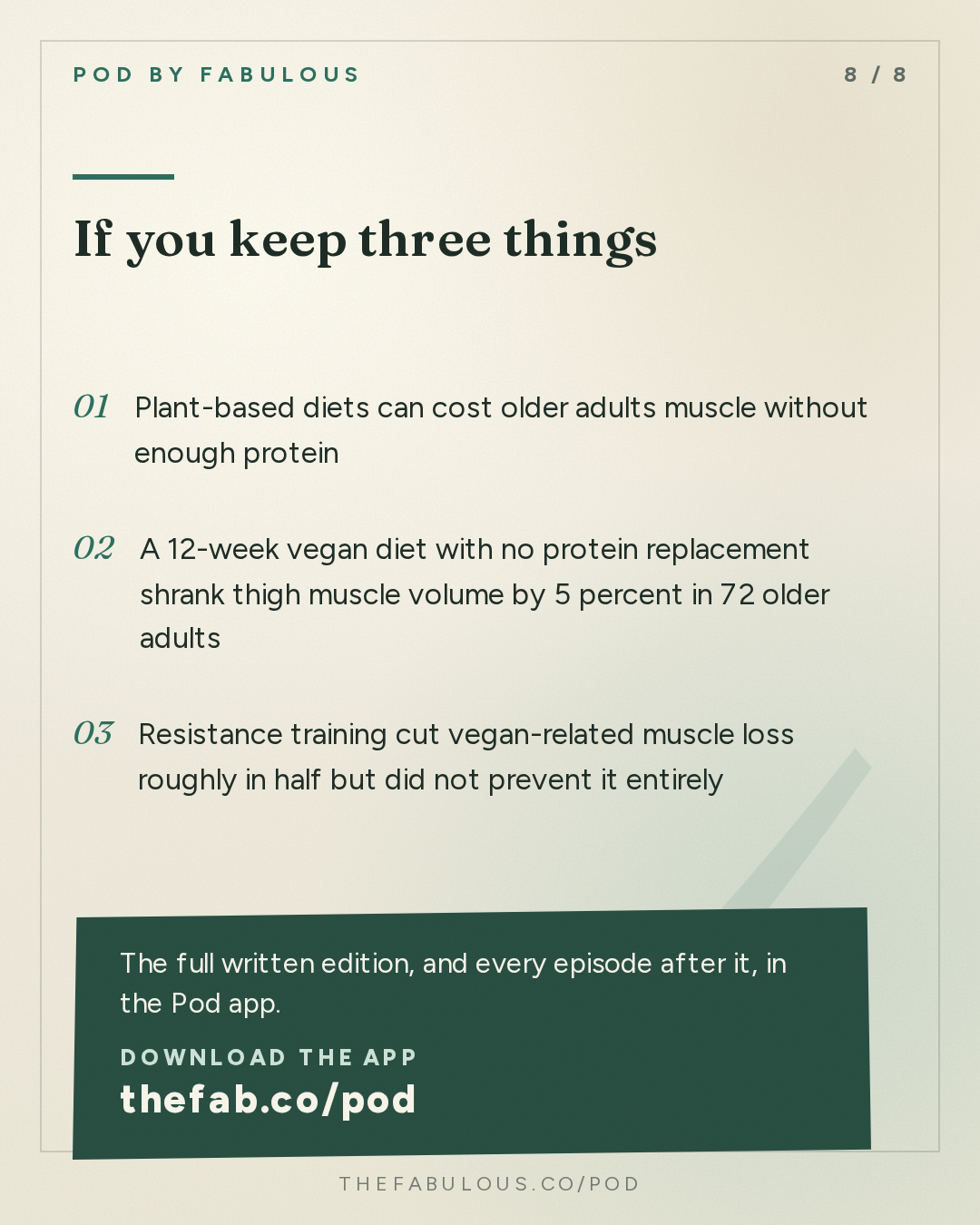
- Plant-based diets can cost older adults muscle without enough protein
- A 12-week vegan diet with no protein replacement shrank thigh muscle volume by 5 percent in 72 older adults
- Resistance training cut vegan-related muscle loss roughly in half but did not prevent it entirely
- A protein-matched vegetarian diet with training still built muscle, just less than an omnivorous diet in the IMPACT trial
- 1.6 grams of protein per kilogram of body weight is the threshold where muscle gains from training level off
The episode in cards
By the numbers
- 5% percent starting thigh muscle volume lost by the vegan-only group of 65-plus adults over 12 weeks
- 14% percent lower muscle protein synthesis rate in the vegan-only group compared to omnivores
In their words
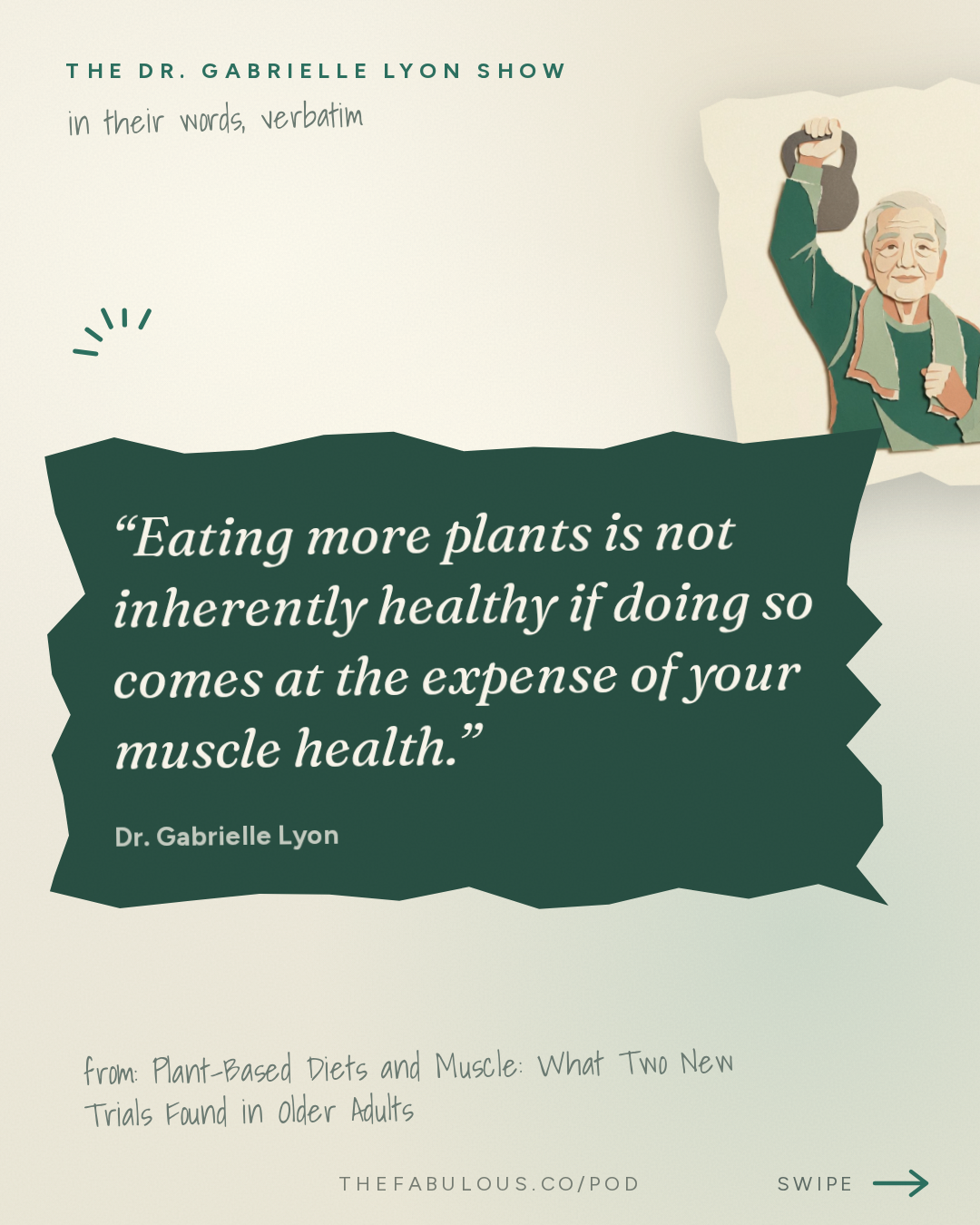
“Eating more plants is not inherently healthy if doing so comes at the expense of your muscle health.”
“Resistance training substantially reduced the muscle losses associated with switching to a completely vegan diet, but it didn't prevent them.”
“The human body doesn't require dietary protein Because it recognizes a chicken breast or a soybean. It requires protein because it needs amino acids”
“Your biology doesn't care whether your protein came from plants or animals. It does seem to care about the quantity and availability of the essential amino acids.”
Protocols
-
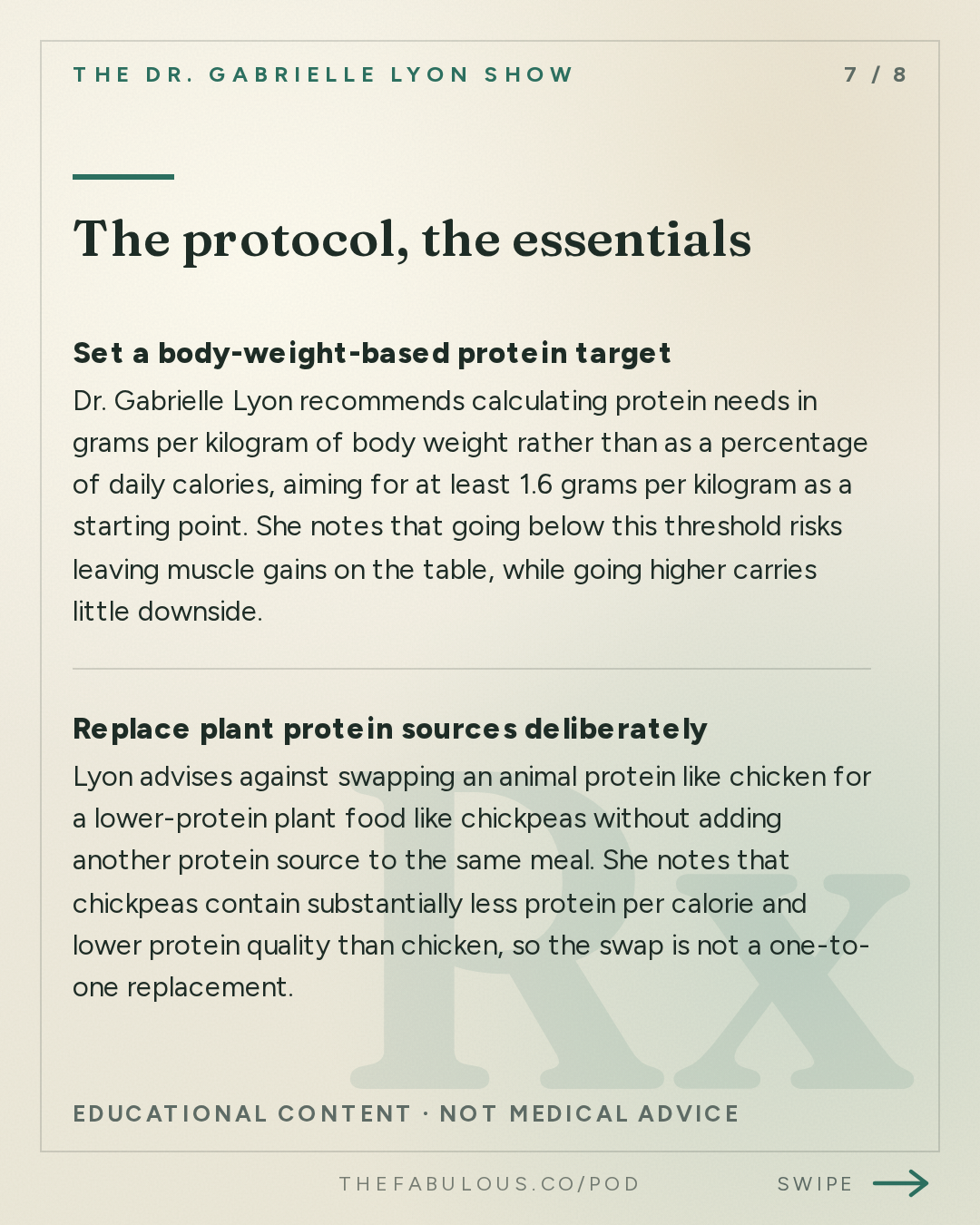
Set a body-weight-based protein target
Dr. Gabrielle Lyon recommends calculating protein needs in grams per kilogram of body weight rather than as a percentage of daily calories, aiming for at least 1.6 grams per kilogram as a starting point. She notes that going below this threshold risks leaving muscle gains on the table, while going higher carries little downside.
Daily
-
Replace plant protein sources deliberately
Lyon advises against swapping an animal protein like chicken for a lower-protein plant food like chickpeas without adding another protein source to the same meal. She notes that chickpeas contain substantially less protein per calorie and lower protein quality than chicken, so the swap is not a one-to-one replacement.
Each meal when eating plant-based
-
Favor high-quality plant proteins when going meat-free
Lyon recommends building plant-based meals around soy, tofu, tempeh, edamame, mycoprotein, and concentrated plant protein powders, since these have more favorable essential amino acid profiles than foods like quinoa. She cautions that these sources still need to be eaten in sufficient quantity, since fiber in whole plant foods can lower how much of their protein the body actually absorbs.
Daily
Questions this episode answers
Does a vegan diet cause muscle loss in older adults?
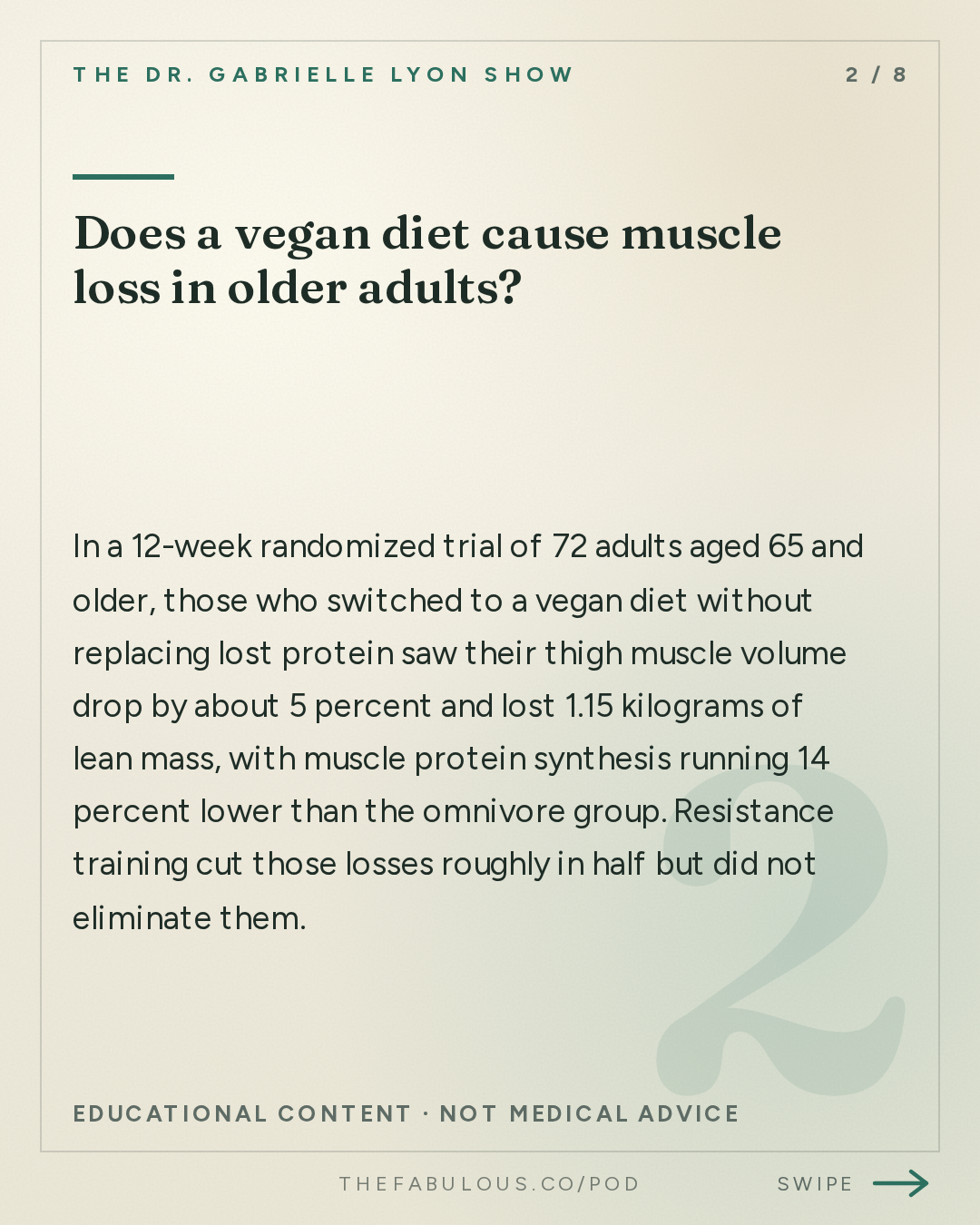
In a 12-week randomized trial of 72 adults aged 65 and older, those who switched to a vegan diet without replacing lost protein saw their thigh muscle volume drop by about 5 percent and lost 1.15 kilograms of lean mass, with muscle protein synthesis running 14 percent lower than the omnivore group (06:36). Resistance training cut those losses roughly in half but did not eliminate them (07:35).
Can you build muscle on a vegetarian diet?
The IMPACT study found that 108 adults aged 55 and older on a lacto-ovo vegetarian diet combined with resistance training gained appendicular lean mass over 12 weeks, though less than an omnivorous group doing the same training, 0.38 kilograms versus 0.66 kilograms (10:04).
How much protein do older adults need to preserve muscle?
Dr. Gabrielle Lyon recommends at least 1.6 grams of protein per kilogram of body weight daily, a threshold a 2018 meta-analysis by Morton and colleagues identified as the point where muscle gains from resistance training level off; for a 150-pound person that works out to roughly 110 grams a day (18:23).
What is DIAAS and why does it matter for plant protein?
DIAAS, the Digestible Indispensable Amino Acid Score, is a system the Food and Agriculture Organization developed to rate protein quality by how digestible its essential amino acids are, not just total grams. Most plant proteins score lower than animal proteins, though soy and mycoprotein are exceptions with scores close to animal products (12:26, 15:12).
Is resistance training enough to prevent muscle loss on a vegan diet?
No. In the 12-week vegan trial, the group that lifted weights twice a week still lost thigh muscle volume and lean mass compared to omnivores, about half as much as the vegan group that did not train (07:35).
The full read, in cards
Go deeper
- A Self-Selected Vegan Diet Reduces Skeletal Muscle Mass in Healthy Older Adults: A Randomized Controlled Trial — found that older adults who switched to vegan eating lost thigh muscle volume and lean mass over 12 weeks compared to omnivores
- IMPACT study — found that a protein-matched vegetarian diet with resistance training built muscle in older adults, though less than an omnivorous diet
- Morton et al. 2018 meta-analysis — identified 1.6 grams of protein per kilogram of body weight as the point where muscle gains from resistance training level off
- Food and Agriculture Organization DIAAS framework — scores protein quality by digestibility of essential amino acids rather than crude protein grams
Mentioned
Dr. Donald Layman · American Journal of Clinical Nutrition · IMPACT · Food and Agriculture Organization · DIAAS · DEXA · MRI · Morton and colleagues
More from this show and category
IBD vs IBS: Colon Cancer Risk Explained
NBC correspondent Chloe Melas went undiagnosed with ulcerative colitis for years after doctors dismissed her rectal bleeding as hemorrhoids. She explains why inflammatory bowel disease (IBD) raises colon cancer risk while irritable bowel syndrome (IBS) does not, why women wait over a year for an IBD diagnosis, and how most Americans fall far short of their daily fiber needs.
Retatrutide Triumph-1 Trial Results Explained
Retatrutide's Triumph-1 phase 3 trial produced an average 25% body weight loss at the highest dose over 80 weeks, with some lean mass loss that tracks in line with other obesity drugs rather than exceeding it. Preserving muscle depends on resistance training and adequate protein, not the drug itself.
Beef vs Soy Protein: What Muscle Research Shows
Muscle physiologist Dr. David Church found that four ounces of beef raised blood amino acids more than eight ounces of a soy-based patty, and that testosterone builds muscle mainly by recycling amino acids inside cells rather than boosting new synthesis. He also argues true protein needs run near 1.27 g/kg a day, well above the 0.8 g/kg RDA.
Essential Amino Acids and Muscle Protein Synthesis
The body doesn't have a protein requirement, it has an essential amino acid requirement: nine amino acids it cannot make itself (01:33). Animal foods pack more of them per gram than plants do (07:39), aging raises the dose needed to trigger muscle building (17:27), and about 30 grams of protein usually clears the 2.5-gram leucine threshold that switches on recovery (11:35).
