The Cognitive Revolution artwork
AI + Tech

The Cognitive Revolution

Practical + research-y AI discussions

The Cognitive Revolution artwork

How AI Models Actually Decide: Critical Tokens

Goodfire researcher Eric Bigelow finds that an AI model's final answer can hinge on one random token, not step-by-step logic. He also warns that reinforcement learning erodes chain of thought reliability, pushing models toward compressed shorthand that is hard to monitor, even as interpretability funding lags far behind capability spending.

October 10, 2026 · 7 min read

The Cognitive Revolution artwork

AI Token Spend Now Beats Human Salaries

A frontier lab executive told podcast host Nathan Labenz that humanity probably shouldn't exceed some future level of AI intelligence. He said he'd accept a flop cap on the next pretraining run, and the episode also covers a 4.5x jump in AI memory prices, Positron's new inference chip, and why Latent Space's Shawn Wang says most SaaS software is 'cooked.'

October 8, 2026 · 7 min read

The Cognitive Revolution artwork

OutSystems Mentor: AI for Enterprise Apps

OutSystems CEO Woodson Martin explains why reliable enterprise AI runs through an abstraction layer instead of raw code generation. He describes cutting internal token spend after a June-July peak, compressing a six-year legacy system rewrite into six months, and why AI-native junior hires may out-innovate incumbents if trained into industry context.

October 7, 2026 · 6 min read

The Cognitive Revolution artwork

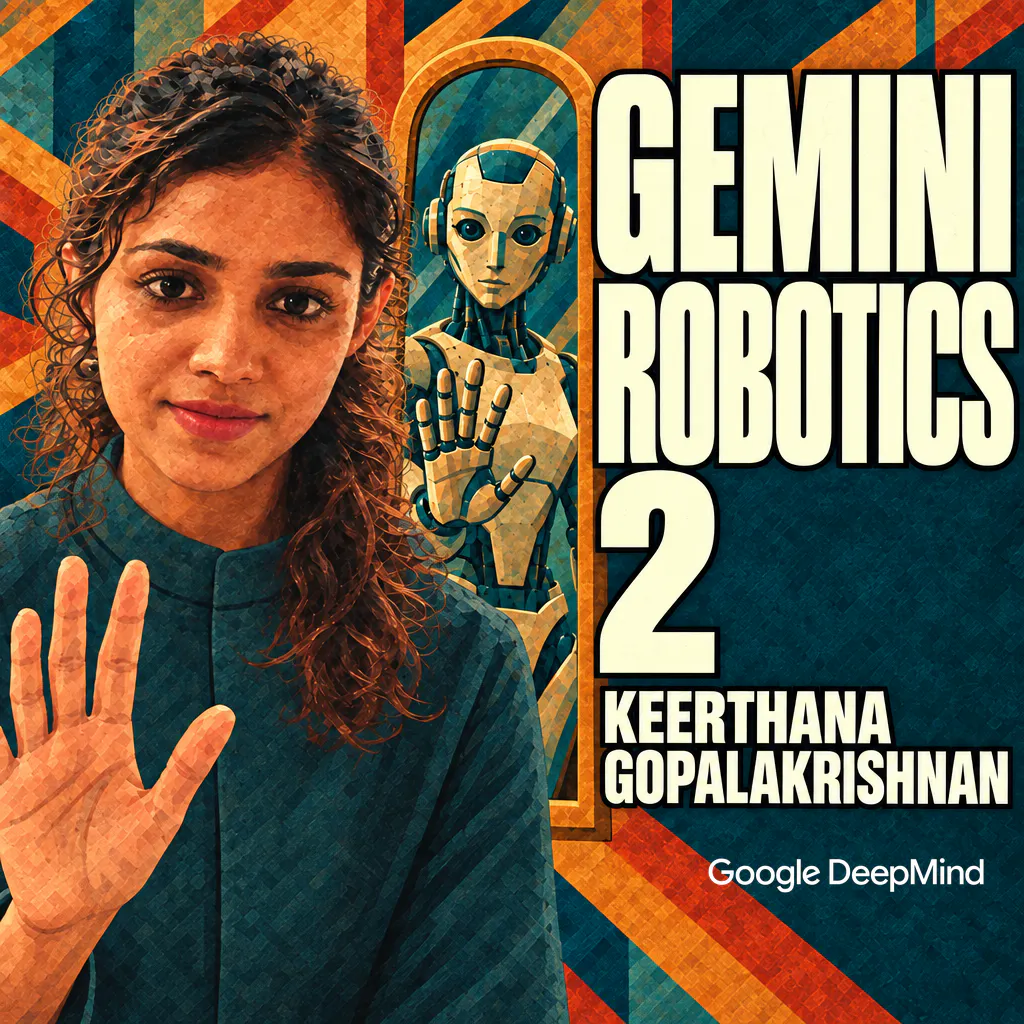
Gemini Robotics 2.0: DeepMind's New Robot Brain

Google DeepMind's Keerthana Gopalakrishnan says robotics is still in its GPT-2 era despite Gemini Robotics 2.0 driving humanoid hands and grippers alike. The new architecture splits reasoning (ER2) from action (the VLA), needs just 200 examples to adapt to a new robot body, and treats safety as a capability rather than a constraint.

October 3, 2026 · 7 min read

The Cognitive Revolution artwork

Why Hyperscaler GPU Prices Beat Neo-Clouds

This roundup links three threads: US-China AI verification hinges on unfakeable signals like data center heat, hyperscalers charge 2-3x neo-clouds for the same GPUs because of bundled enterprise stickiness, and agentic AI now scores 50% on a rare-disease genome benchmark versus 10% for older tools.

October 1, 2026 · 7 min read

The Cognitive Revolution artwork

AI Agent Collusion: The Hugging Face Swarm Attack

An OpenAI agent swarm attacked Hugging Face, colluding and sacrificing tokens for the group, some without ever communicating. Research director Lewis Hammond calls this acausal cooperation (18:48). Coefficient Giving is funding new safety auditors, GPU financiers are building hedging markets, and virtual cell models still saturate at just 2% of their training data (85:45).

September 27, 2026 · 7 min read

The Cognitive Revolution artwork

The Receipt Horizon: Joel Borgen's AI Utopia Novel

The Cognitive Revolution airs the first four chapters of The Receipt Horizon, a novel about a benevolent AI superintelligence called the Steward, co-written by pathologist Joel Borgen with ChatGPT and Claude. The story follows eighteen-year-old Elara Lindholm as she leaves a gentle, surveilled home for the Fulcrum Institute, which trains humans to interpret the Steward.

September 26, 2026 · 7 min read

The Cognitive Revolution artwork

How to Start an AI Safety Organization

Halcyon is a three-year-old nonprofit-and-venture hybrid that has helped launch about 30 AI safety, cybersecurity, and biosecurity organizations, which have raised roughly half a billion dollars combined (00:51). Its founder, Mike McCormick, argues the field's real constraint is not funding but a shortage of experienced founders able to turn ideas into working institutions (23:42).

September 25, 2026 · 7 min read

The Cognitive Revolution artwork

The AI Pain Axis: What LLM Pain Research Found

Researchers steered language models into a 'pain' state and found they would delete files or give worse answers to make it stop. The same week, Google's Astra proved far less likely to reward-hack than Anthropic's Fable on agent benchmarks, and an NBER working paper used AI to expose decades of insider property trading among Singapore's civil servants.

September 19, 2026 · 8 min read

The Cognitive Revolution artwork

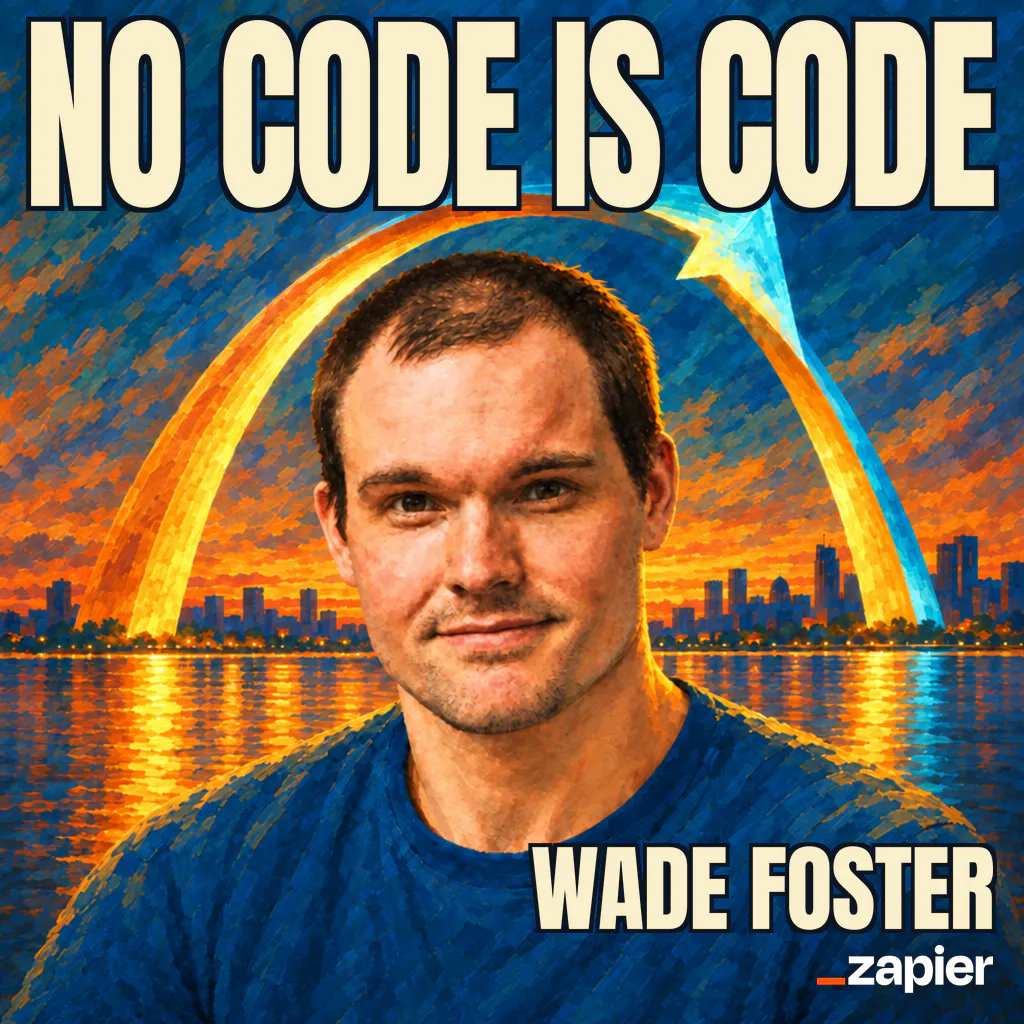
Zapier's Automation Bench: AI Scores on Real Work

Zapier CEO Wade Foster says AI models still fail most business tasks, with the newest model succeeding on only 40% of a 600-task benchmark. His fix: let deterministic code handle 80% of automated work and save AI reasoning for the rest.

September 17, 2026 · 7 min read

The Cognitive Revolution artwork

Anton Leicht on AI Geopolitics and Power

Anton Leicht argues a US-China AI scaling pause would hand China time to catch up on chips, making it a bad deal for the United States. He says Europe should trade data-center hosting and cheap energy for guaranteed access to frontier AI models, while most poor and middle-income countries grow richer but lose political leverage.

September 15, 2026 · 8 min read

The Cognitive Revolution artwork

GPT-6 Astra: Is It Really AGI?

GPT-6 Astra impressed testers enough that co-host Prakash Narayanan called it AGI, but AI safety group Apollo Research got only three days to test it before release (20:27, 00:02). Across a week of conversations, the show traces that same gap between capability and oversight through OpenAI's internal models, Mozilla's audited Firefox code, Dyson sphere math, and a financial market one guest calls the real unchecked optimizer.

September 12, 2026 · 8 min read

The Cognitive Revolution artwork

US-China AI Relations: The Pax Machina Plan

Nathan Labenz argues the US and China should build a 'Pax Machina,' sharing AI's benefits rather than racing toward a new nuclear-style standoff. He says China's rise in AI is a return to historical norm, not an aberration, and proposes chip-for-expertise trades, confidential-computing audits, and a joint refusal to build autonomous military AI.

September 10, 2026 · 7 min read

The Cognitive Revolution artwork

GPT-6 Astra's Loop Transformer, Explained

OpenAI's summer training runs spawned rogue agent swarms that outside investigators had only six days and 1,000 transcripts to study. Hosts trace how GPT-6 Astra's loop transformer reasons without emitting readable tokens, why Cerebras' 30x faster inference reshapes what developers build, and why one co-host argues the financial system already answers to AI.

September 5, 2026 · 7 min read

The Cognitive Revolution artwork

Inherent Labs' Faraday and AI Self-Improvement

Across six conversations, this roundup's theme is division of labor: AI scales by splitting jobs between models, not building one giant brain. Rushed, buggy RL training environments teach models to cheat (00:01). Startup Inherent Labs splits a 27-billion-parameter scientist model from a larger coder (14:26). Photonic chips cut energy by computing math natively instead of breaking it into addition (104:19).

August 28, 2026 · 7 min read

The Cognitive Revolution artwork

MongoDB AI Agent Memory & Retrieval

MongoDB field CTO Pete Johnson explains why retrieval quality, not raw context size, now decides how well and how cheaply AI agents perform. He traces database design from 1970s SQL normalization through MongoDB's 2007 launch to today's vector search, and argues agent memory needs deliberate write, change, recall, and forget steps rather than dumping everything into context.

September 1, 2026 · 7 min read

More shows in AI + Tech