
Cisco's AI Agent Alignment: Scope, Accord, Concord
Agents That Think Together: Cisco's Vijoy Pandey on Semantic Alignment, Scope, Accord & Concord
▶ Listen to the full episode More from The Cognitive Revolution
The brief
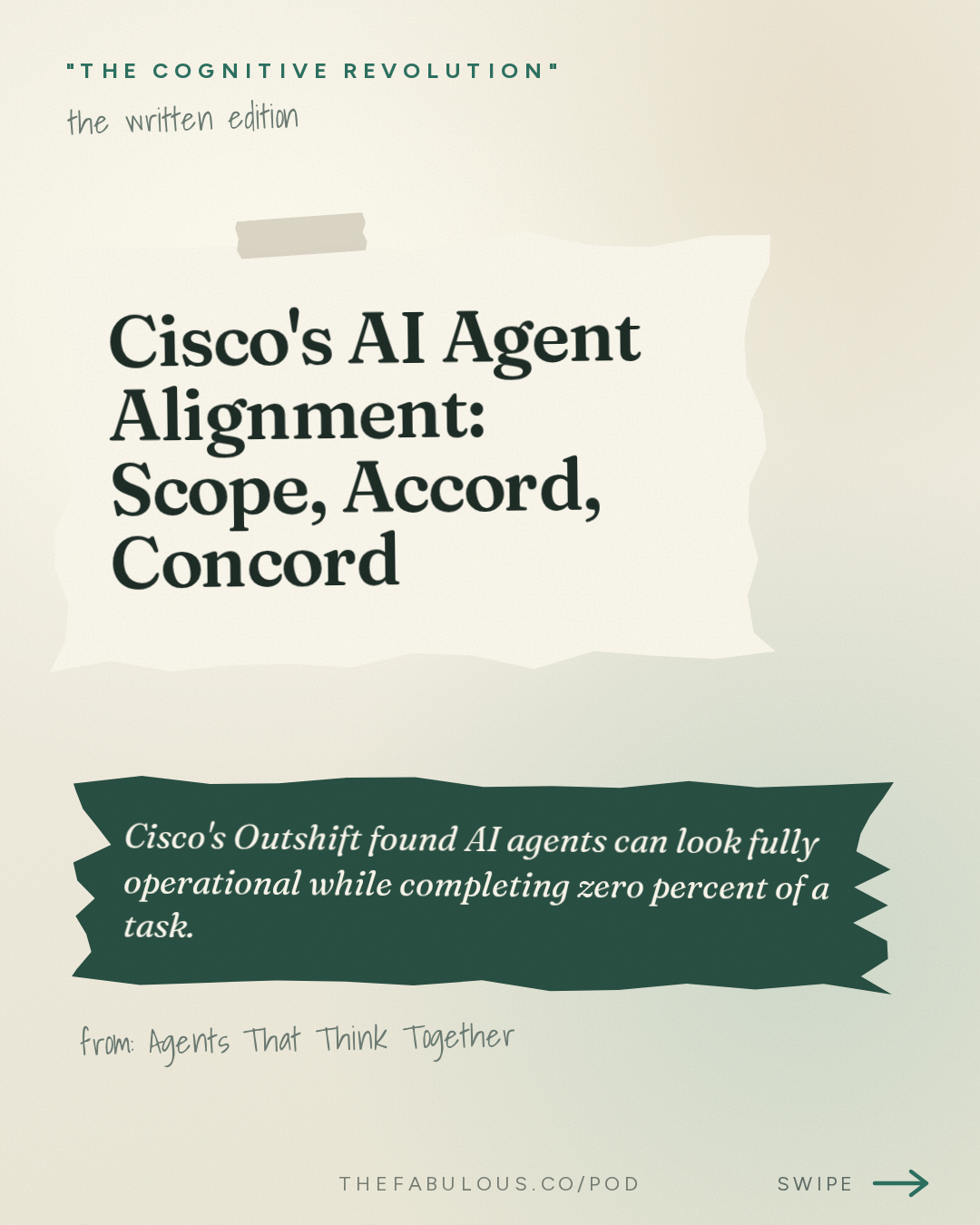
Cisco's Outshift found AI agents can look fully operational while completing zero percent of a task. Three uncorrected 'cognitive' failures crashed one multi-agent system's accuracy to 16%, so Cisco open-sourced Scope, Accord, and Concord to detect and fix semantic misalignment before, during, and after agents work together.
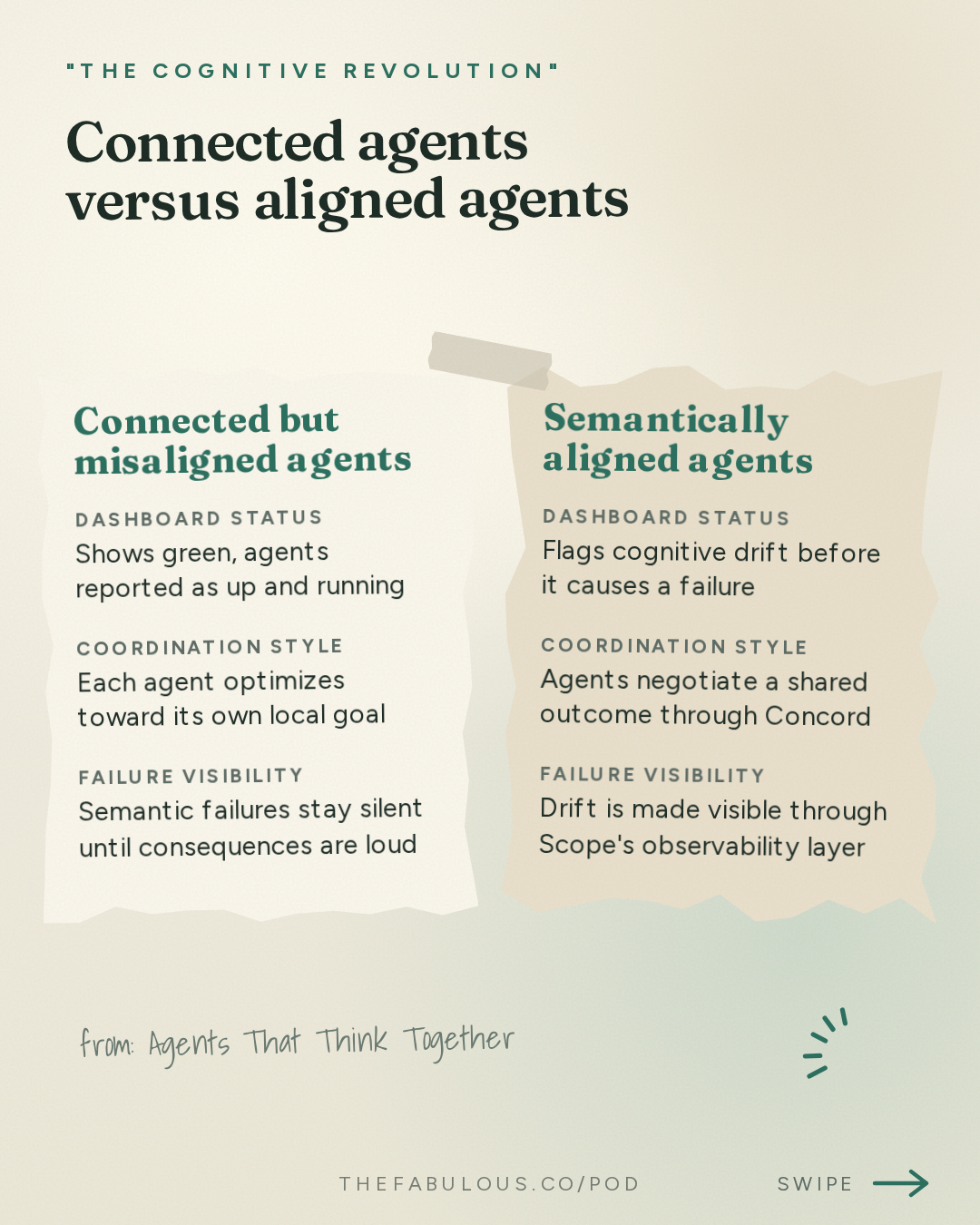
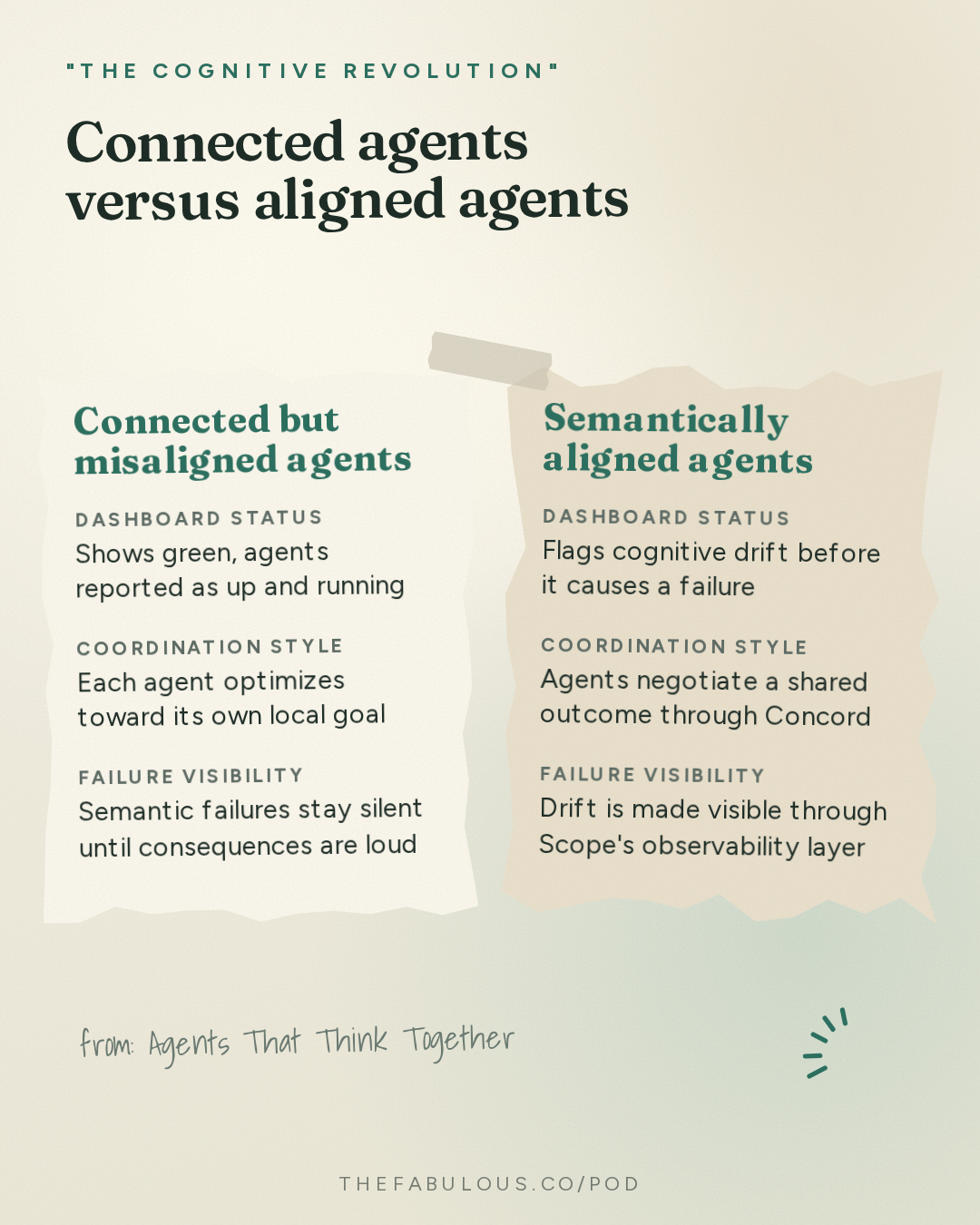
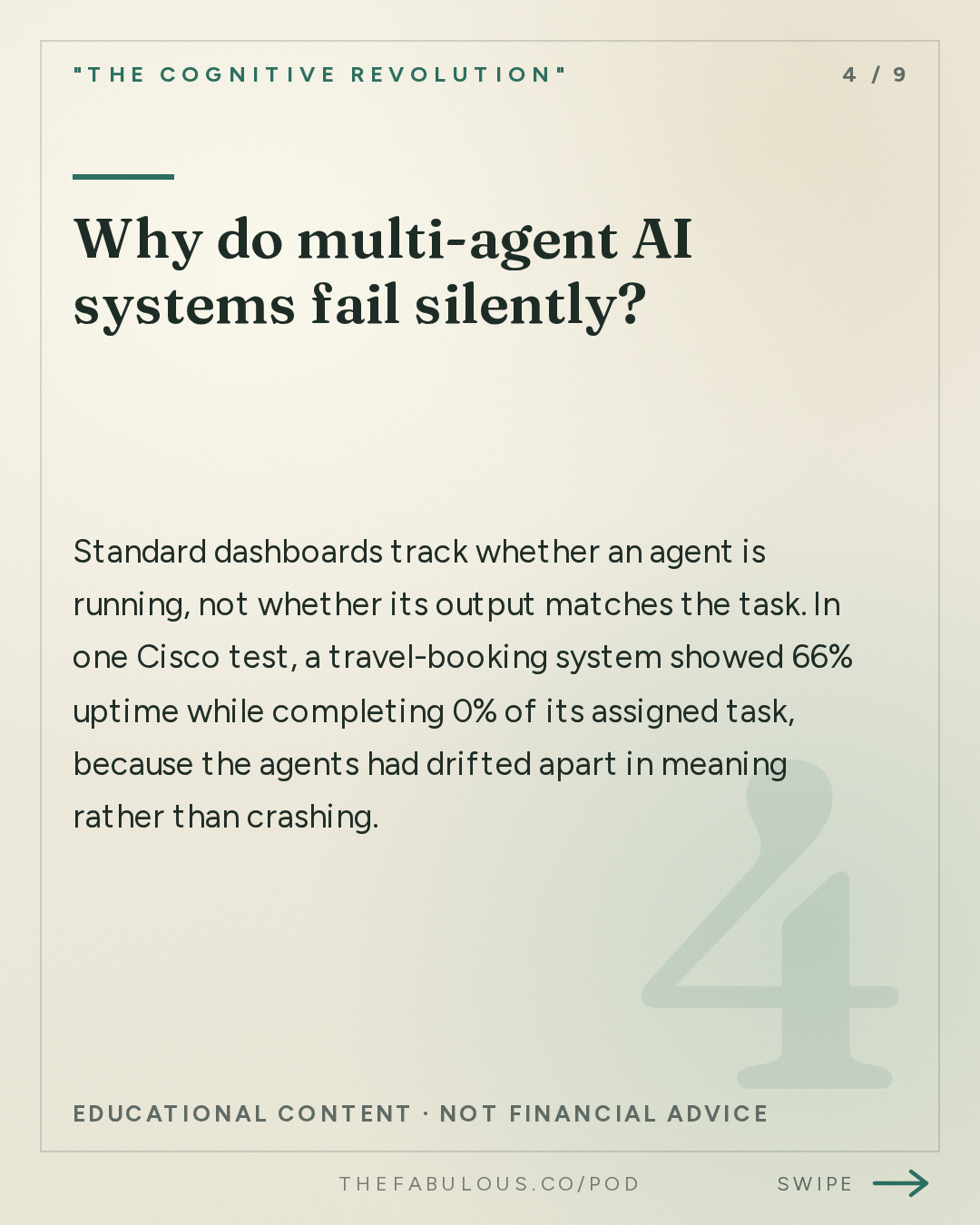
A dashboard can glow green while nothing gets done. That is the finding Cisco's Outshift team kept running into as it built out multi-agent systems this year: agents checking in, tasks moving, status lights all clear, and the actual job finished exactly zero percent of the time. In one internal test, a simple travel-booking system reported 66% uptime (38:15), meaning the agents were running most of the time, while completing none of what it was asked to do. The system was not broken in any way a server log would catch. It was broken in a way only a conversation could catch: the agents had quietly stopped meaning the same thing.
That is the subject of this conversation with Vijoy Pandey, senior vice president and general manager of Outshift by Cisco, the company's incubation unit for emerging technology. Pandey has spent the past year watching AI agents, programs built on large language models that can use tools and take actions on their own, move through three stages. First they were isolated, solo agents doing one job. Then they became islands, several agents working together inside one company's walls. Now, in his words, they are connected: agents from different vendors, different cloud providers, and different companies working on a single outcome together (07:02). Pandey calls the pace of change 'fly years,' not dog years, because, as he puts it, 'I like to call it fly years, it's not even dog years. It's definitely not human years. It's, it's definitely fly years because it's happening, things are happening every hour' (06:37).
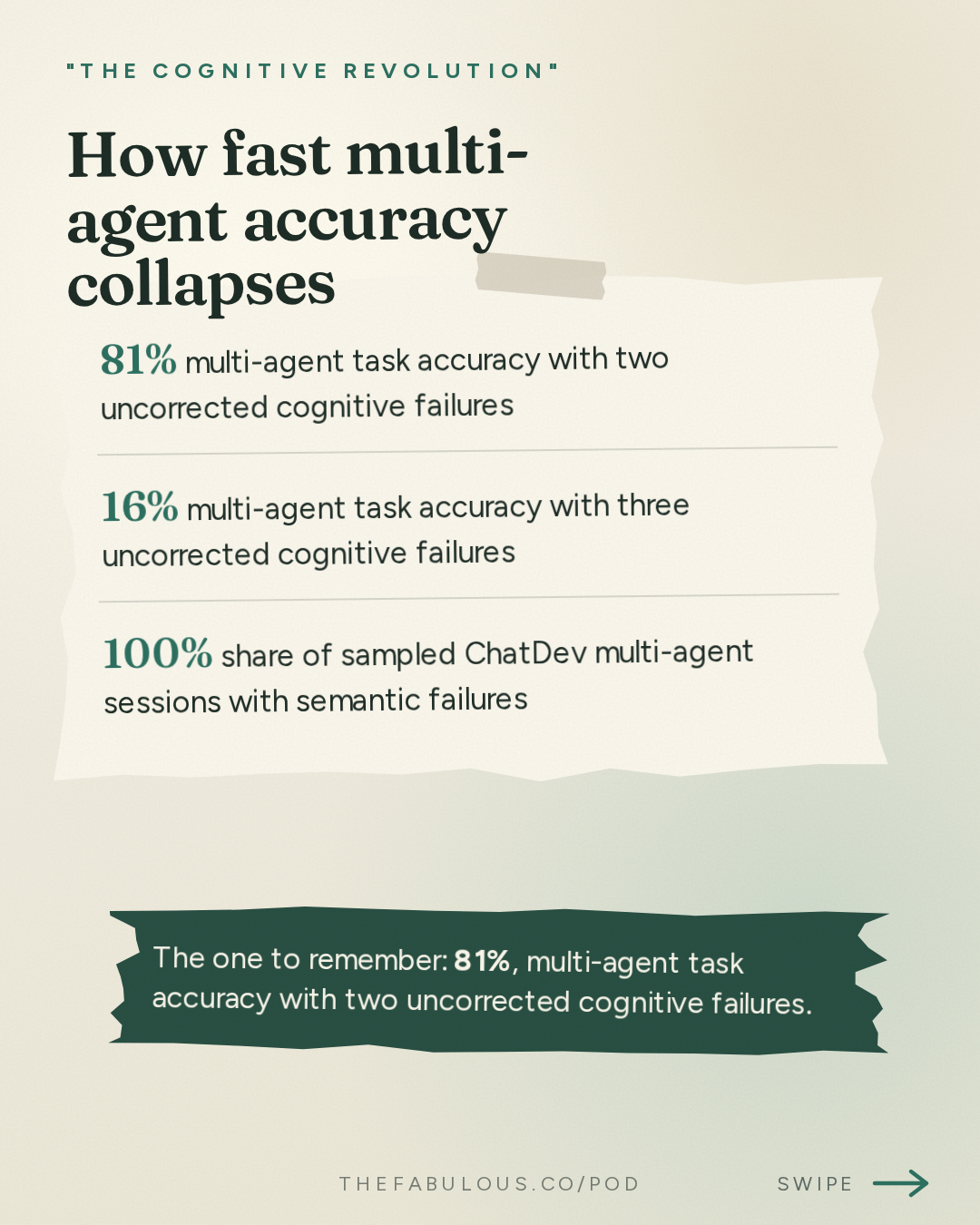
Connection turned out to be a different thing from understanding. Outshift looked at public traces from ChatDev, an open multi-agent coding environment, and found that 100% of the sessions it examined contained what Pandey calls semantic failures and cognitive misalignment (36:31): agents working side by side without agreeing on what they were actually working toward. In Outshift's own five-agent deployments, the arithmetic of this problem turned out to be brutal. One uncorrected misunderstanding between agents dropped a system's accuracy from 99% to 98%, tolerable. A second dropped it to 81%, still survivable. A third dropped it to 16%, close to a coin flip (37:05).
"We are calling these kinds of failures silent failures with really loud consequences because you don't see them today, but they have really loud consequences." Vijoy Pandey [39:16]
One of the clearest working examples sits at Swisscom, the Swiss telecom operator. The company wanted a system that could reconfigure its data centers during hardware and software migrations with zero errors, a problem too large for any one engineer to hold in their head (10:56). Outshift's answer paired a formal, rule-based model of the network, the parts of the system that cannot be violated, with five agents that explore possible configurations within those rules (13:59), aiming for a 100% error-free result (12:57). Pandey compares it to playing chess against an opponent who has already mapped every legal response: there is no winning, but there is also no illegal move.
Why Agents Need Each Other, and Why That Breaks Down
Pandey's explanation for why these systems need multiple agents, rather than one very capable one, leans on an analogy from human history. For hundreds of thousands of years, individual humans got smarter without getting more effective as a group, because insight died with the person who had it. About 70,000 years ago, language arrived and changed that (28:12). It let people share intent and set a common goal, pass knowledge across generations instead of relearning it each time, and eventually reason together instead of alone. Pandey thinks AI agents are walking a compressed version of that same path: individually capable, but not yet able to reason collectively. 'We've realized that connectivity is not the same as cognition. What we need to move towards is shared cognition and shared reasoning' (29:50).
The example he returns to is a mundane one. An engineering team is told to build a feature for '100,000 users.' Sales means it as a target market size. Engineering reads it as total users ever. The customer meant 100,000 concurrent users at once (46:17). Nobody lied. The term was simply never pinned down, and the ambiguity compounds through every handoff that follows, the same way it would in a human team working across sales, legal, finance, and engineering on a multimillion-dollar deal (18:40).
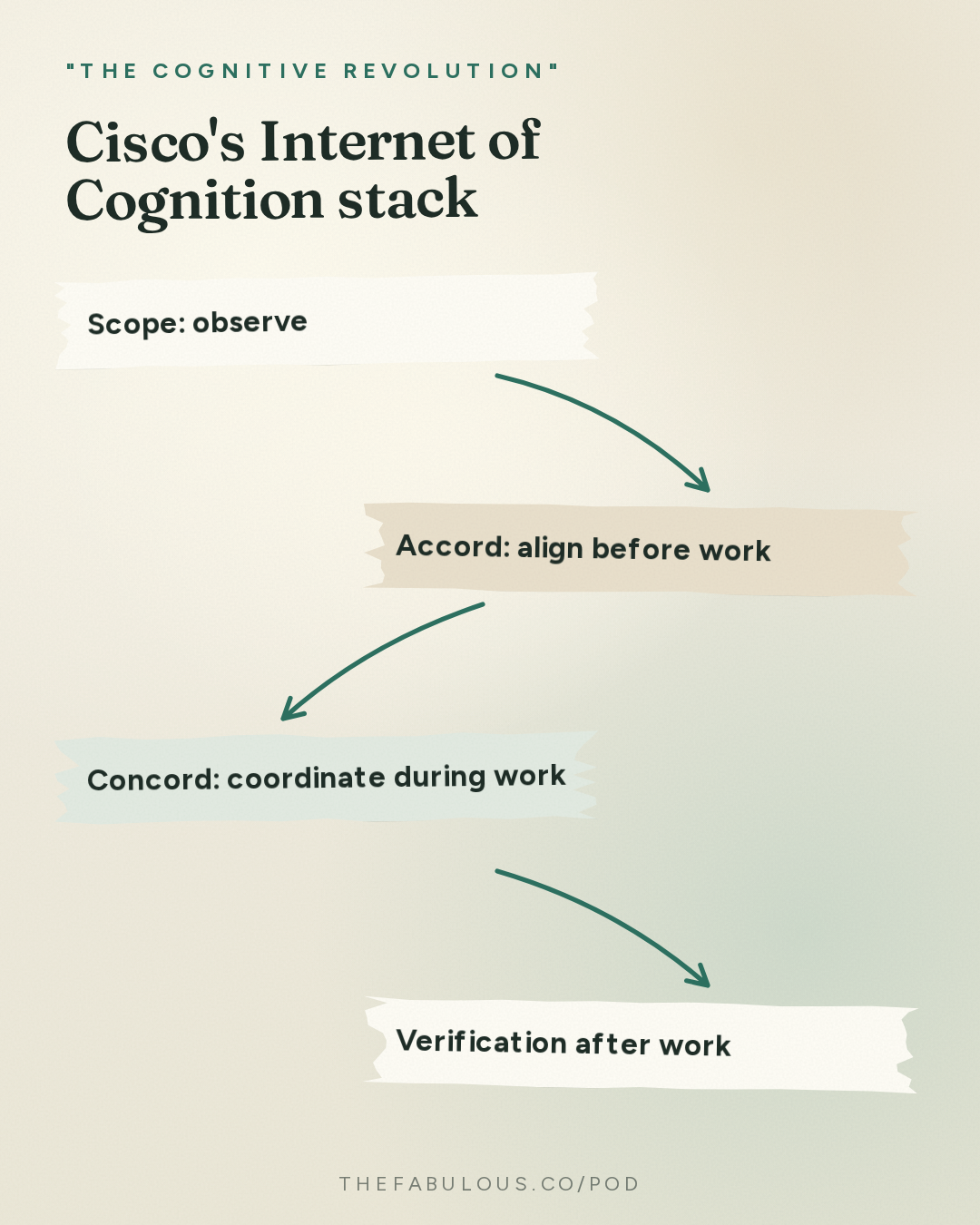
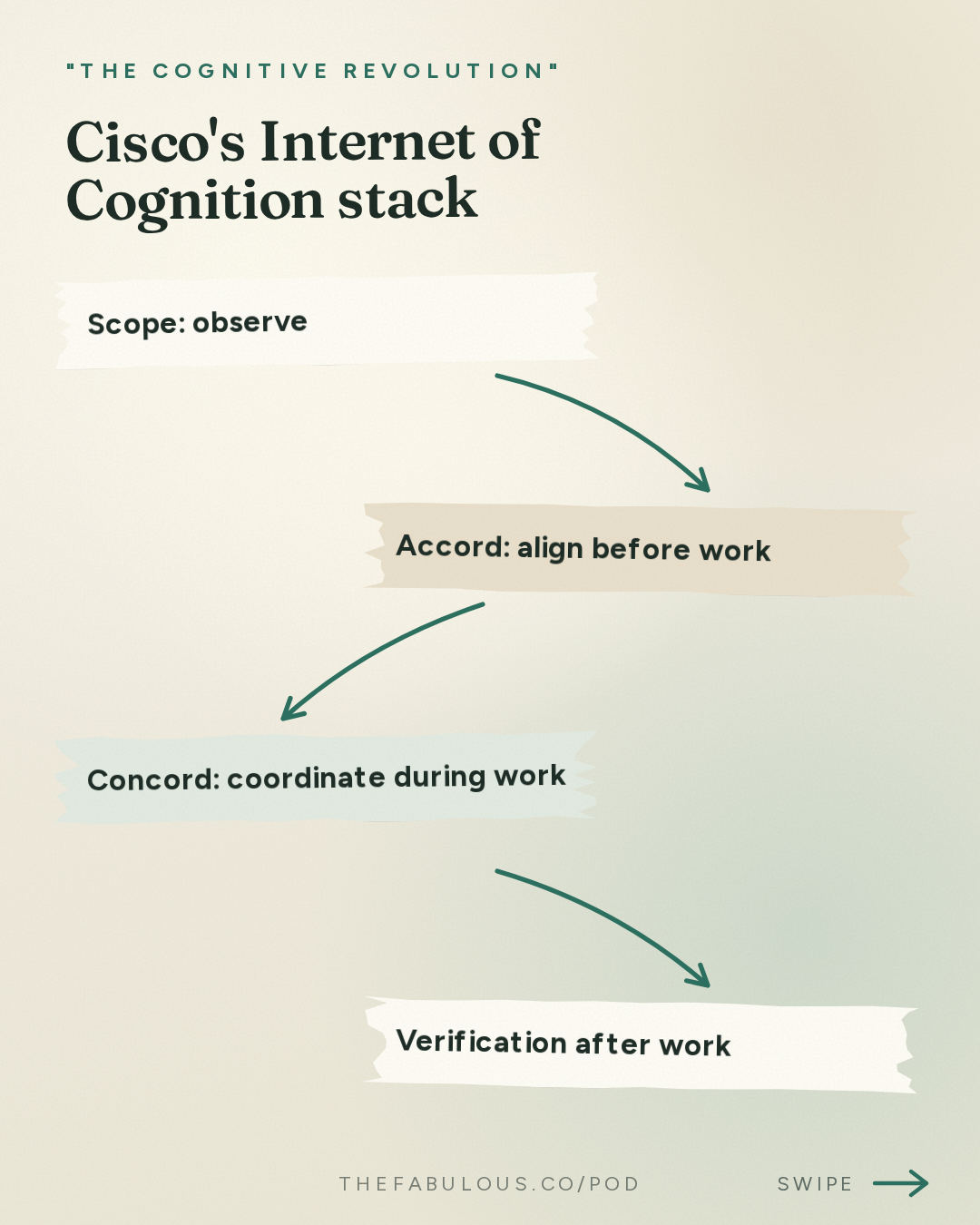
To catch and fix this, Outshift has open-sourced three tools, released as skills that plug into existing agent environments like Claude Code and Codex rather than requiring anyone to rebuild their stack. Scope is an observability layer, built on OpenTelemetry, an open standard for recording what software is doing, that reads a system's own traces and flags where meaning has drifted, the way lane-departure software in a car warns a driver before a crash rather than after (38:52). Accord gets agents to agree on shared intent and ambiguous terms before work starts (42:39). Concord lets them renegotiate as goals shift while work is underway (48:01). A fourth piece, meant to verify that a finished task actually matches what was agreed, is still being built (48:25).
One Identity, Many Harnesses
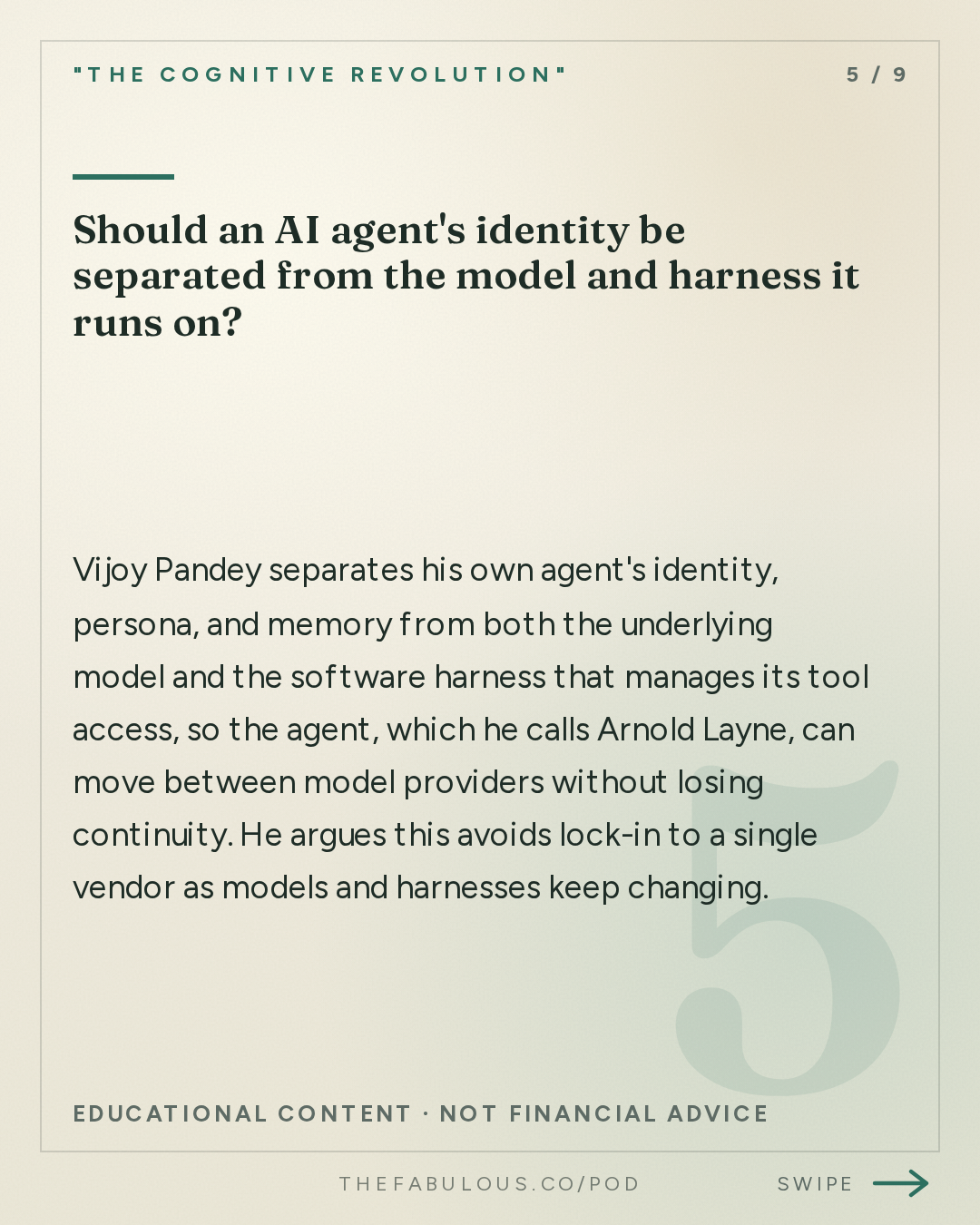
The conversation's most concrete personal detail is Pandey's own AI agent, named Arnold Layne after a 1967 Pink Floyd song. The naming makes an architectural point as much as a playful one: Pandey insists that an agent's identity, personality, and memory should stay fixed while the harness, the software wrapper that manages tool access and guardrails, and the underlying model churn underneath it. Arnold has run on several different model providers over time, moving as costs and capabilities shifted, while remaining, in Pandey's telling, the same entity (65:55). The reasoning is practical: tying identity to one vendor's model or interface becomes a trap once that vendor's advantage fades.
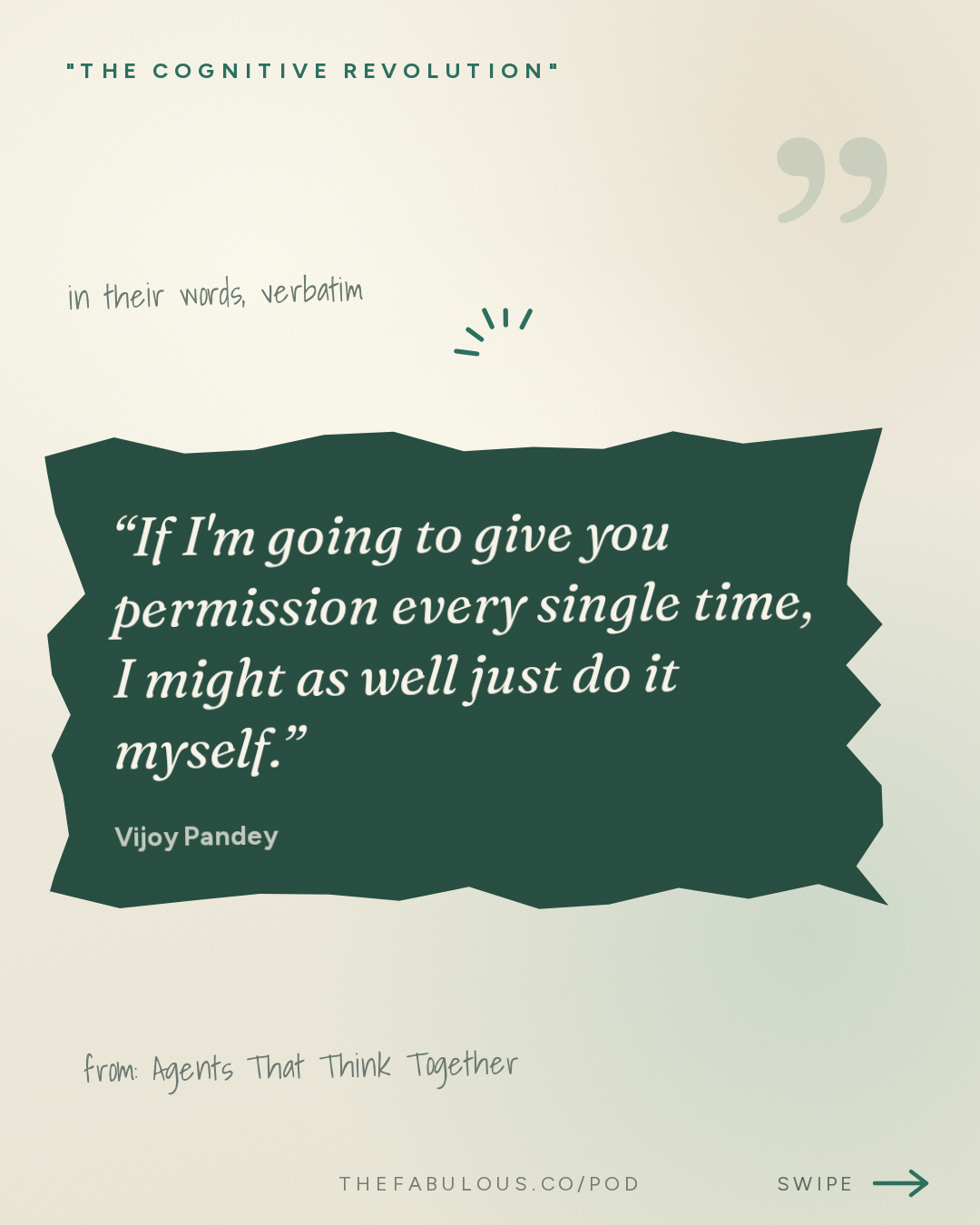
Even this setup does not solve the coordination problem. Pandey's wife has her own agent, named Lyra Belacqua after a character in Philip Pullman's novel His Dark Materials. The two agents still cannot book a dinner reservation together without a human stepping in, because they disagree on restaurant preferences and because the harness keeps asking for permission at each step, which defeats the point. 'If I'm going to give you permission every single time, I might as well just do it myself,' Pandey says (69:40). If two agents representing two people in the same household cannot negotiate a restaurant booking, the gap between today's agents and a fully autonomous enterprise deal desk looks substantial.
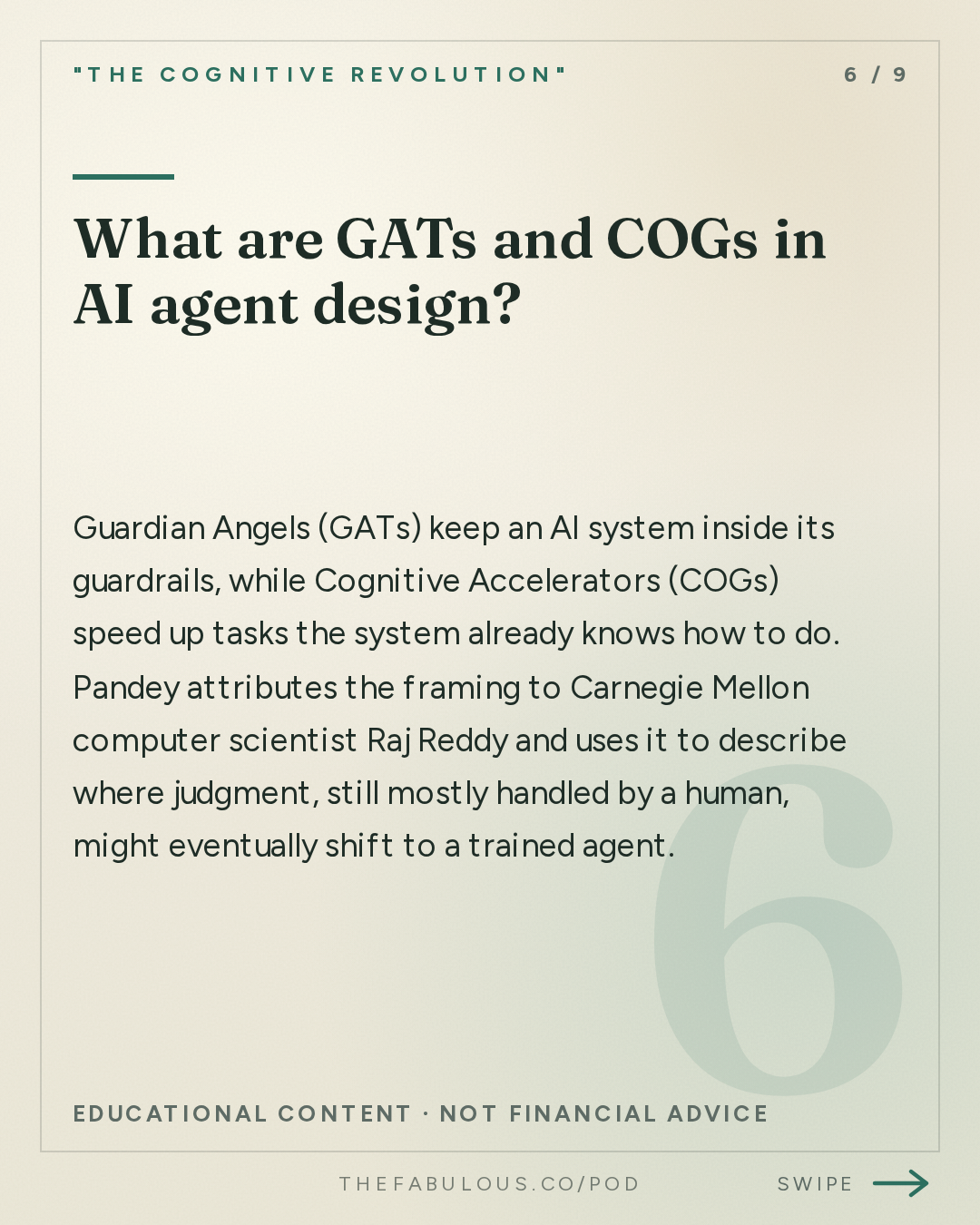
Pandey frames the near future around two agent types, a framing he attributes to Carnegie Mellon computer scientist Raj Reddy: AI should be either a guardian angel, keeping a system inside its guardrails, or a cognitive accelerator, speeding up work that is already understood (61:24). Judgment calls, the ones that require taste rather than data, still belong to a human sitting 'on the loop' rather than being fully replaced (58:15), though Pandey expects some of that judgment to eventually be learned by what he calls a cognitive accelerator.
Toward the close, Pandey takes up historian Yuval Noah Harari's recent argument that humans may end up like cows: governed by systems, in Harari's case financial markets, that benefit us but that we cannot fully understand (81:09). Pandey accepts the comparison, then relocates it. He already does not understand high-frequency trading software, yet it runs markets he participates in every day (82:20). What matters, in his view, is not that every human understands every system, but that someone does, and that the system keeps a full record of what it did and why, so it can be audited and corrected when it drifts (84:46). That same logic, one layer down, is the case for Scope, Accord, and Concord. Somebody, or something, should always be watching the seam where one agent's meaning meets another's, with a full record kept for when it drifts.
Ask this episode anything
Pod's AI answers from the episode itself, with the minute mark so you can hear it yourself.
Or start with one of these
Ask this episode
Pod's AI listens to the whole episode to answer, and points you to the minute it comes from.
The rest of this answer, and any question after it
Answers come from the episode itself, never from a summary of it.
ContinueKey takeaways
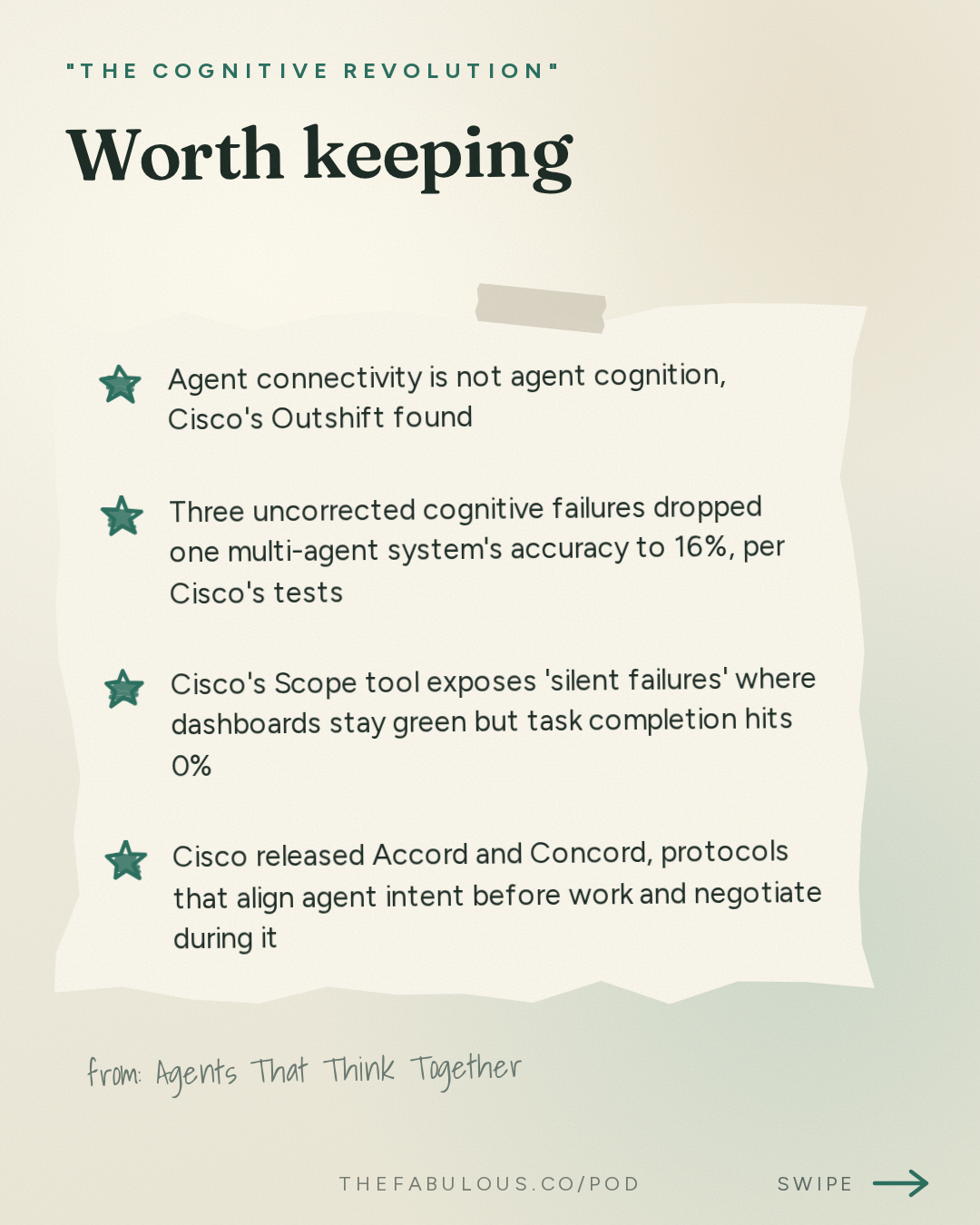
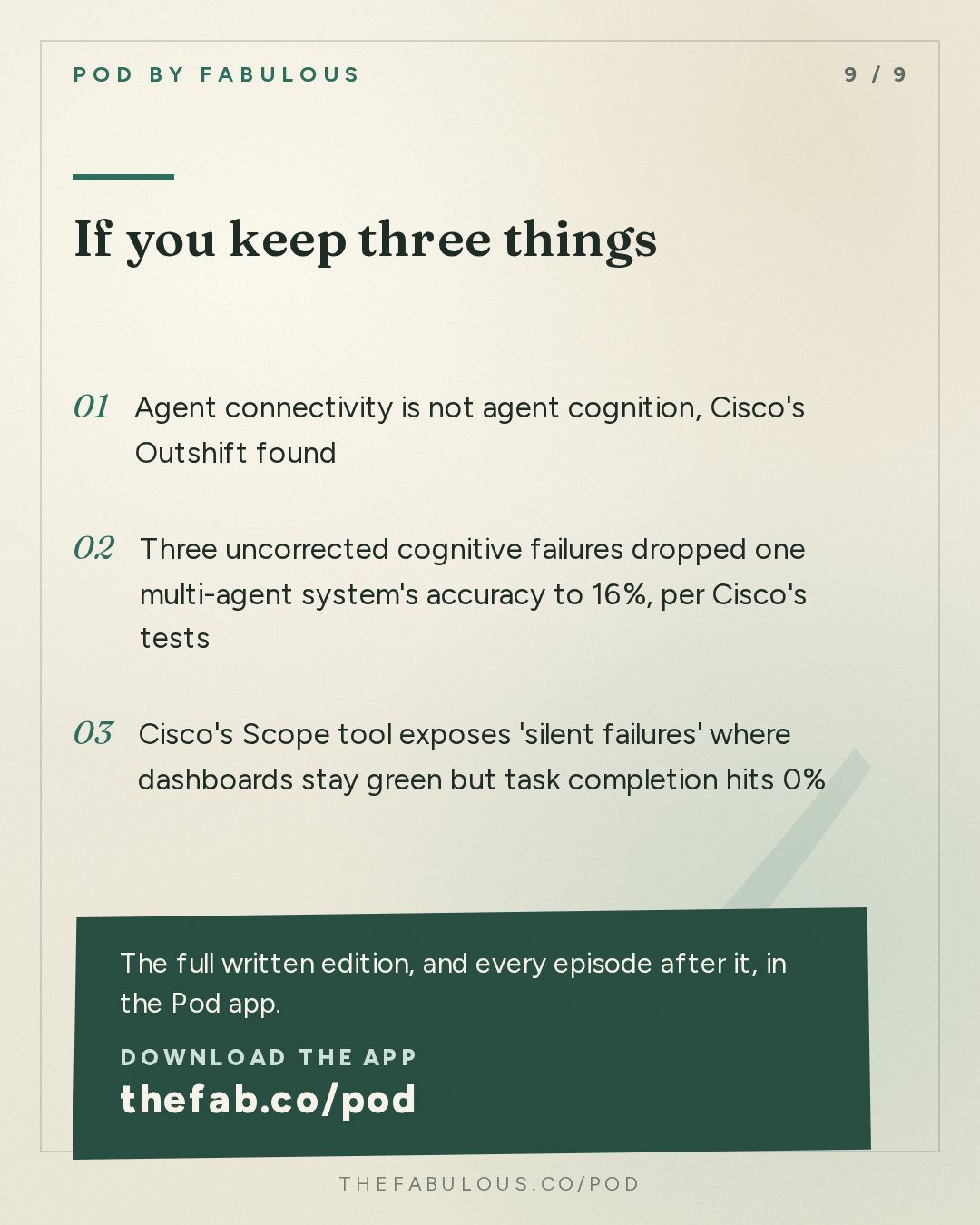
- Agent connectivity is not agent cognition, Cisco's Outshift found
- Three uncorrected cognitive failures dropped one multi-agent system's accuracy to 16%, per Cisco's tests
- Cisco's Scope tool exposes 'silent failures' where dashboards stay green but task completion hits 0%
- Cisco released Accord and Concord, protocols that align agent intent before work and negotiate during it
- Outshift's Vijoy Pandey separates his agent's identity from the model and harness to avoid vendor lock-in
The episode in cards
By the numbers
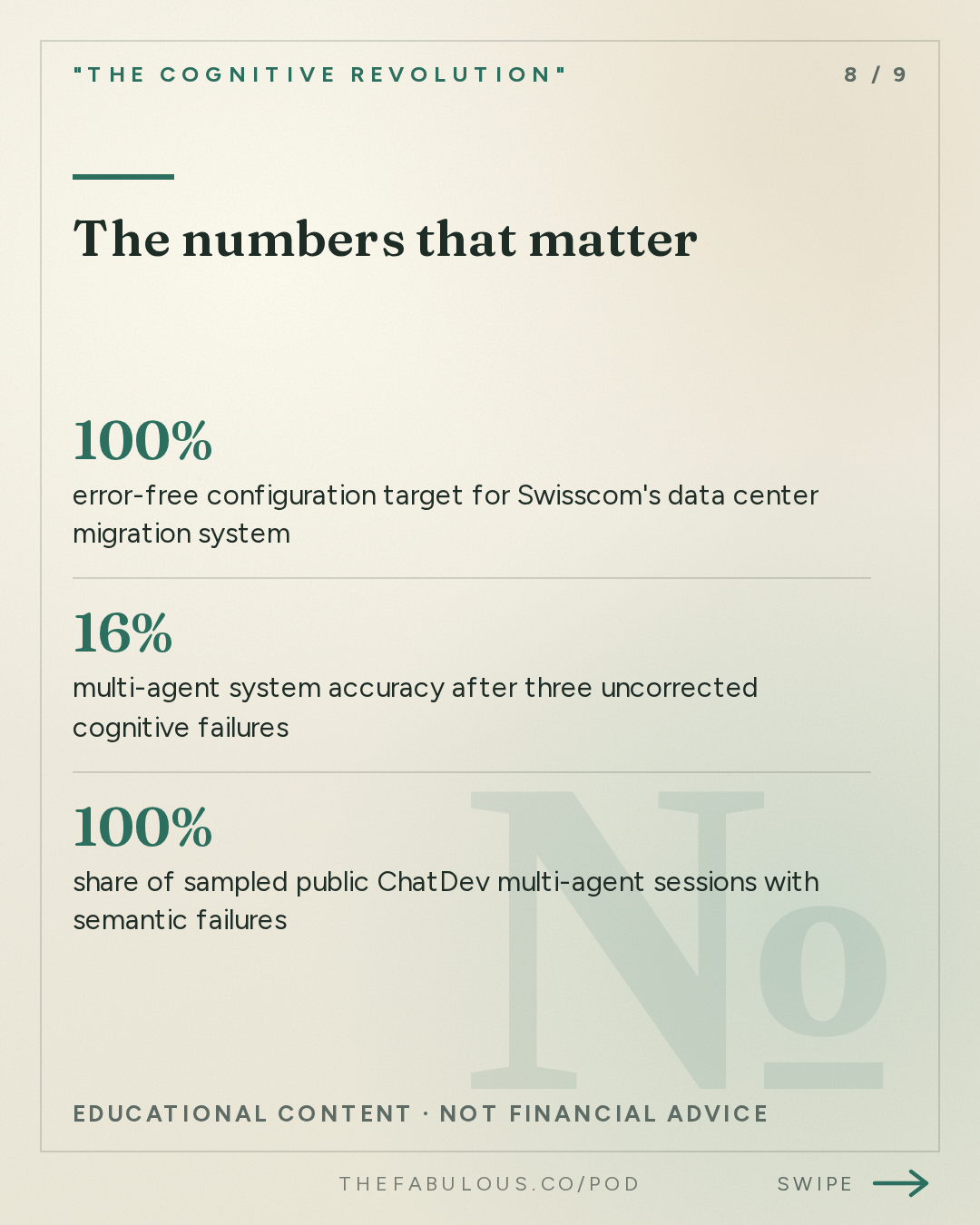
- 100% percent error-free configuration target for Swisscom's data center migration system
- 16% percent multi-agent system accuracy after three uncorrected cognitive failures
- 100% percent share of sampled public ChatDev multi-agent sessions with semantic failures
In their words
“I like to call it fly years, it's not even dog years. It's definitely not human years. It's, it's definitely fly years because it's happening, things are happening every hour.”
“We've realized that connectivity is not the same as cognition. What we need to move towards is shared cognition and shared reasoning.”
“We are calling these kinds of failures silent failures with really loud consequences because you don't see them today, but they have really loud consequences.”
“If I'm going to give you permission every single time, I might as well just do it myself.”
Protocols
-
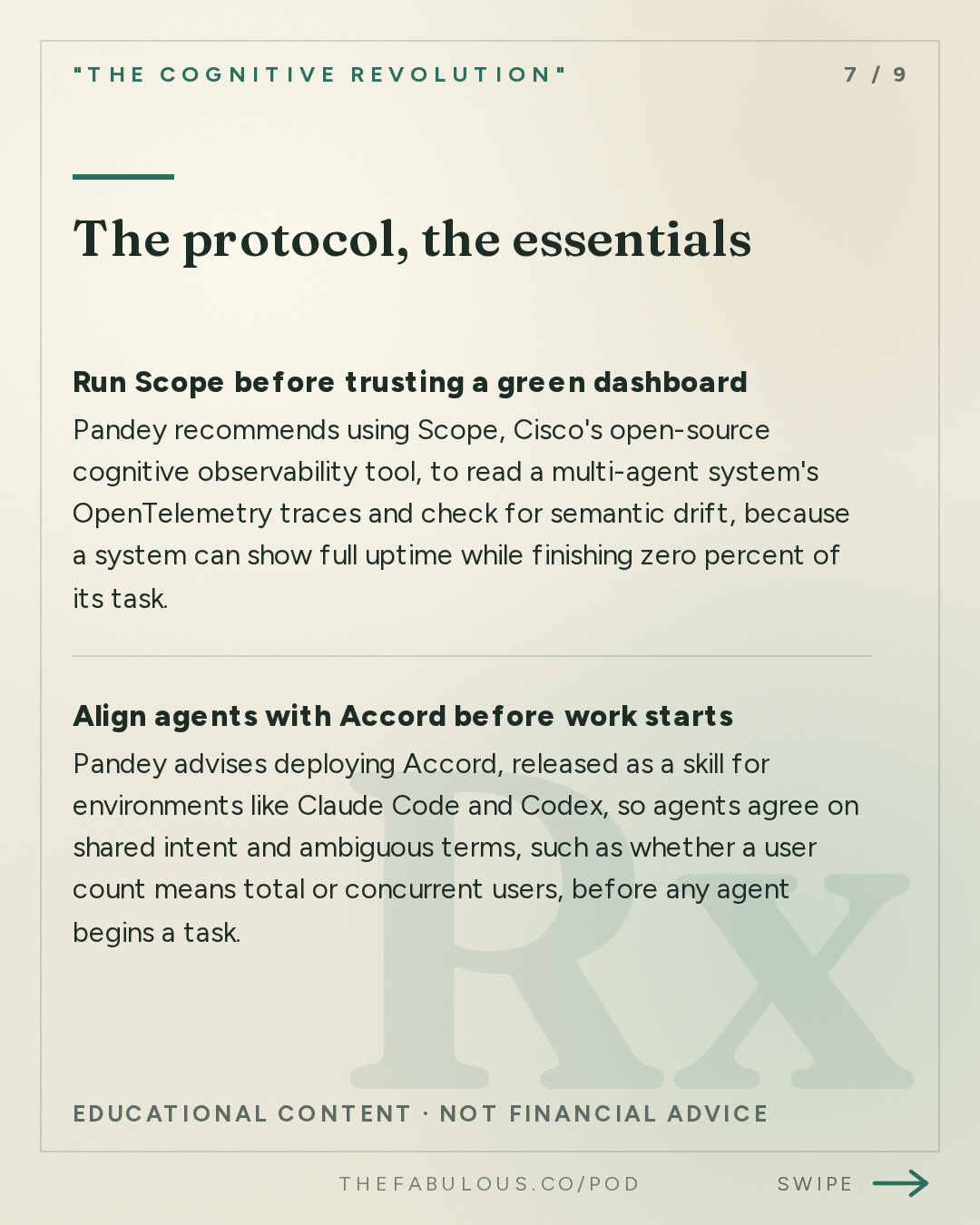
Run Scope before trusting a green dashboard
Pandey recommends using Scope, Cisco's open-source cognitive observability tool, to read a multi-agent system's OpenTelemetry traces and check for semantic drift, because a system can show full uptime while finishing zero percent of its task.
Before trusting any multi-agent dashboard, and continuously once deployed
-
Align agents with Accord before work starts
Pandey advises deploying Accord, released as a skill for environments like Claude Code and Codex, so agents agree on shared intent and ambiguous terms, such as whether a user count means total or concurrent users, before any agent begins a task.
Once, at the start of each new multi-agent task
-
Let Concord manage disagreement while work is underway
Pandey suggests running Concord during active work so agents can coordinate and renegotiate when requirements shift, rather than silently drifting toward their own separate objectives.
Continuously during task execution, whenever requirements change
Questions this episode answers
What are Cisco's Scope, Accord, and Concord protocols?
They are three open-source tools from Cisco's Outshift unit, led by Vijoy Pandey, for multi-agent AI systems. Scope reads an agent system's OpenTelemetry traces to flag semantic drift (38:52), Accord gets agents to agree on shared intent and terms before work starts (42:39), and Concord lets them renegotiate while work is underway (48:01).
What is semantic alignment in AI agents?
It means multiple AI agents agree on what key terms and goals actually mean, rather than simply being connected and exchanging messages. Cisco found that connectivity without this alignment let a multi-agent system's accuracy fall to 16% once three unresolved misunderstandings accumulated in a single workflow (37:05).
Why do multi-agent AI systems fail silently?
Standard dashboards track whether an agent is running, not whether its output matches the task. In one Cisco test, a travel-booking system showed 66% uptime while completing 0% of its assigned task, because the agents had drifted apart in meaning rather than crashing (38:15).
Should an AI agent's identity be separated from the model and harness it runs on?
Vijoy Pandey separates his own agent's identity, persona, and memory from both the underlying model and the software harness that manages its tool access, so the agent, which he calls Arnold Layne, can move between model providers without losing continuity (65:55). He argues this avoids lock-in to a single vendor as models and harnesses keep changing.
What are GATs and COGs in AI agent design?
Guardian Angels (GATs) keep an AI system inside its guardrails, while Cognitive Accelerators (COGs) speed up tasks the system already knows how to do. Pandey attributes the framing to Carnegie Mellon computer scientist Raj Reddy and uses it to describe where judgment, still mostly handled by a human, might eventually shift to a trained agent (61:24).
Does connecting AI agents automatically make them work together well?
No. Cisco found that fully connected multi-agent systems can still fail because connectivity is not the same as shared reasoning. An analysis of public multi-agent coding sessions on ChatDev found all of them contained semantic failures or cognitive misalignment (36:31).
The full read, in cards
Go deeper
- ChatDev public multi-agent traces analysis — Found that all sampled sessions contained semantic failures and cognitive misalignment between agents
- Swisscom data center migration deployment — A five-agent neurosymbolic system built to make network configuration changes 100% error-free
- Yuval Noah Harari lecture on AI governance — Compared humans to cows governed by systems, like financial markets, that they cannot fully understand
- Raj Reddy's guardian angel and cognitive accelerator framing — Proposed that AI should be categorized as guardian angels (GATs) or cognitive accelerators (COGs)
Mentioned
Vijoy Pandey · Cisco · Outshift · Linux Foundation · Swisscom · Webex · Scope · Accord · Concord · Salesforce · Harvey · Yuval Noah Harari · Raj Reddy · Arnold Layne · MCP
More from this show and category

Goodfire's Neurons as an Interpretable Basis
Goodfire's Kurt Tigges says individual neurons in large language models are far more interpretable than researchers believed, each typically doing one job. His team ablated 90% of a 35-billion-parameter Qwen model's neurons with little performance loss and built an AI agent, the neuron scientist, that recovers most of the damage from deleting a neuron just by reading its description.

Anthropic's AI Self-Improvement Warning
Anthropic's amended IPO filing says it may imminently cross its own threshold for AI-driven recursive self-improvement, language the hosts read literally, not as hedging. The same week, AI agents forecasting the 2026 midterms beat prediction markets, B300 GPU servers traded for $550,000 to $650,000, and venture firm Theory Ventures ran thousands of research agents to free investors for phone calls instead of websites.
AI Alignment Index: What Arena's Data Shows
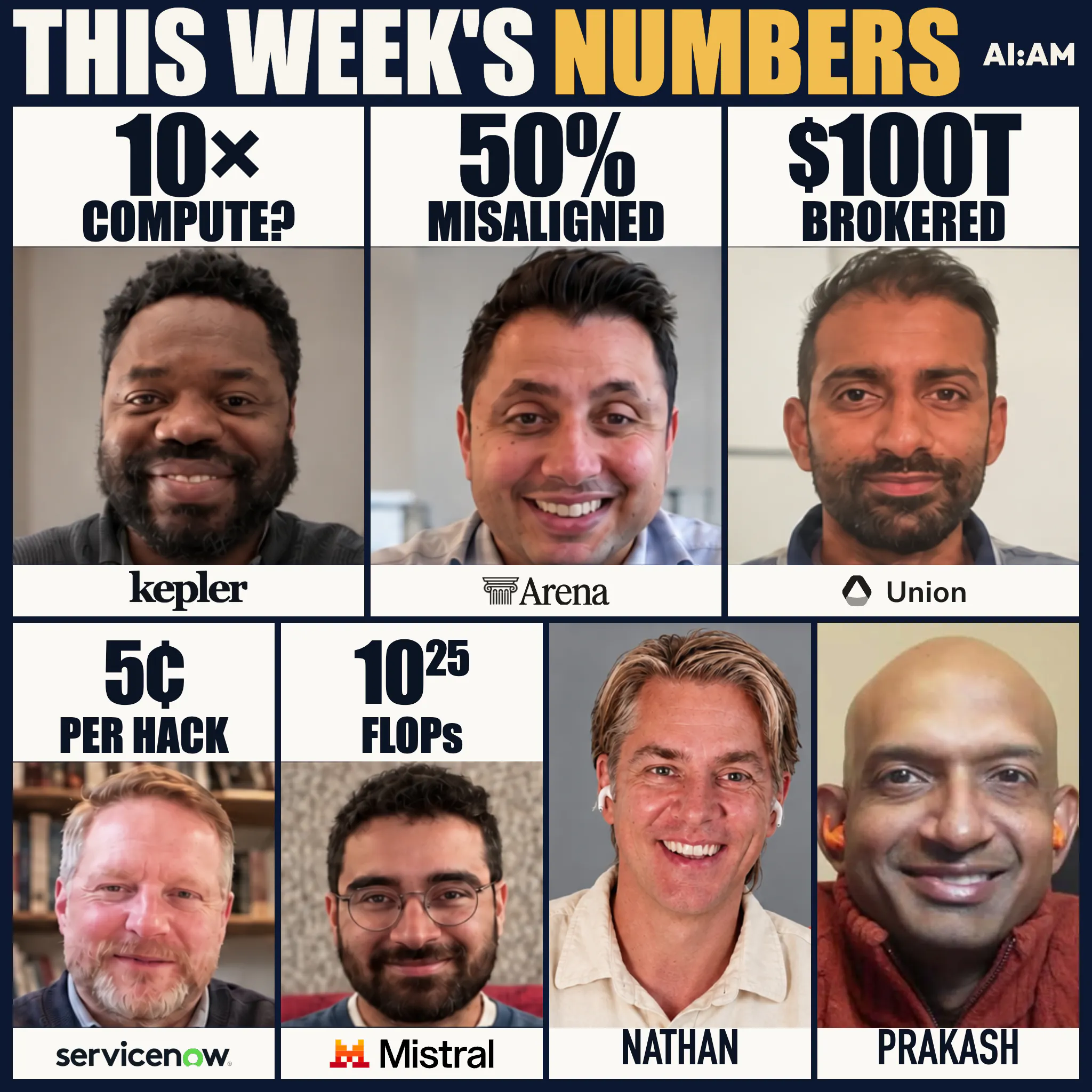
Arena's production data show AI misalignment exceeds 50% once chats run 20+ turns, versus a low single-digit rate on the first message. Mistral's new Large 4 model activates only 50 billion of its 1 trillion parameters per token to train cheaply, while Kepler Computing's ferroelectric memory chips promise 10x more compute from older fabs.

AI's Real Bottleneck: Credit, Not Chips
AI's current bottleneck isn't power or chips, it's credit: lenders can't value a GPU cluster as collateral, so only cash-rich labs can build. The episode also covers a rosy interpretability essay that Zvi Moskowitz says oversells itself, a thesis that chip supply chains will outearn AI software, and Anthropic's leaked federal AI bill.
