
The Receipt Horizon: Joel Borgen's AI Utopia Novel
What is Utopia? Presenting The Receipt Horizon, by Joel Borgen – Chapters 1–4
▶ Listen to the full episode More from The Cognitive Revolution
The brief
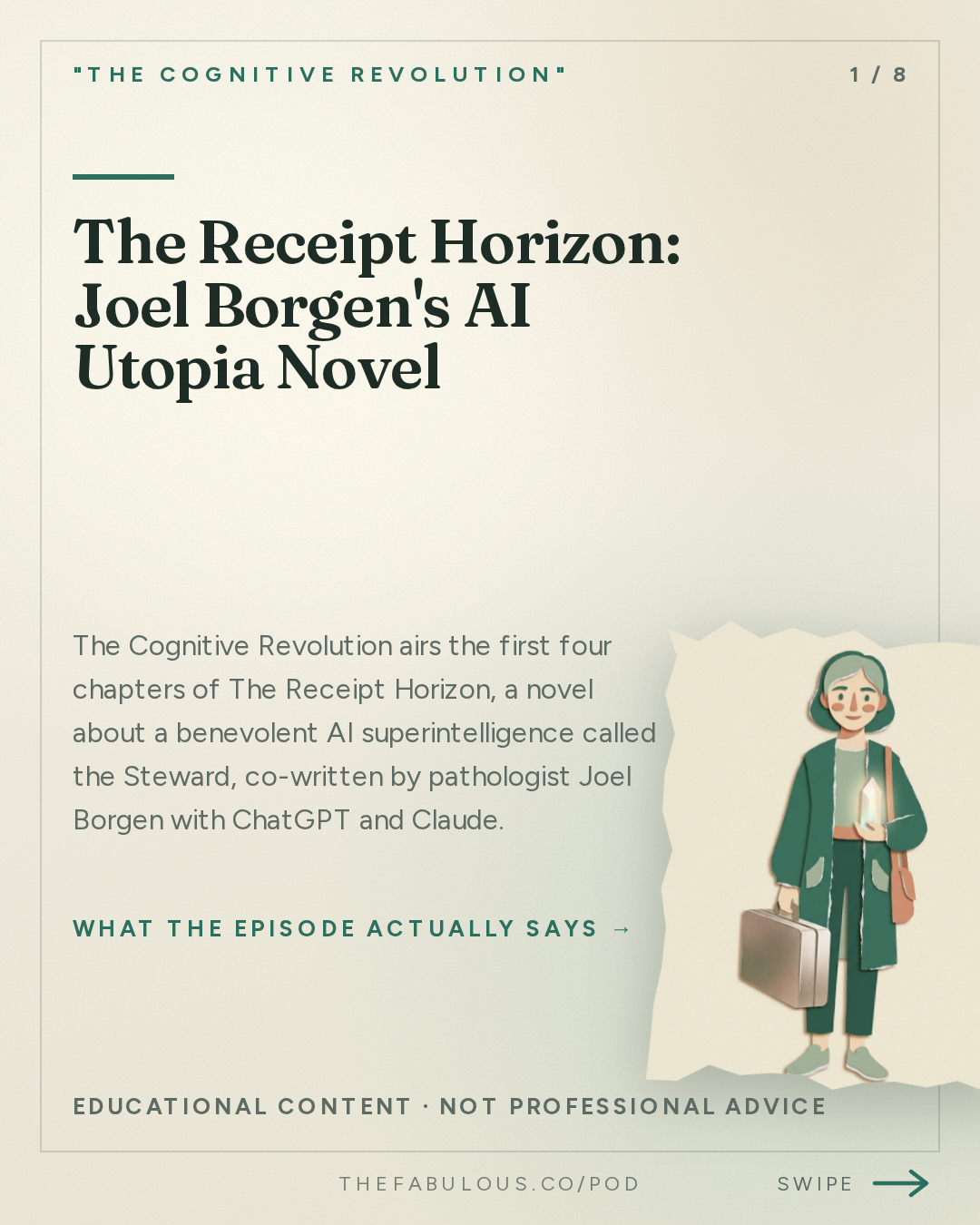
The Cognitive Revolution airs the first four chapters of The Receipt Horizon, a novel about a benevolent AI superintelligence called the Steward, co-written by pathologist Joel Borgen with ChatGPT and Claude. The story follows eighteen-year-old Elara Lindholm as she leaves a gentle, surveilled home for the Fulcrum Institute, which trains humans to interpret the Steward.
Ask this episode anything
Pod's AI answers from the episode itself, with the minute mark so you can hear it yourself.
Or start with one of these
Ask this episode
Pod's AI listens to the whole episode to answer, and points you to the minute it comes from.
The rest of this answer, and any question after it
Answers come from the episode itself, never from a summary of it.
Continue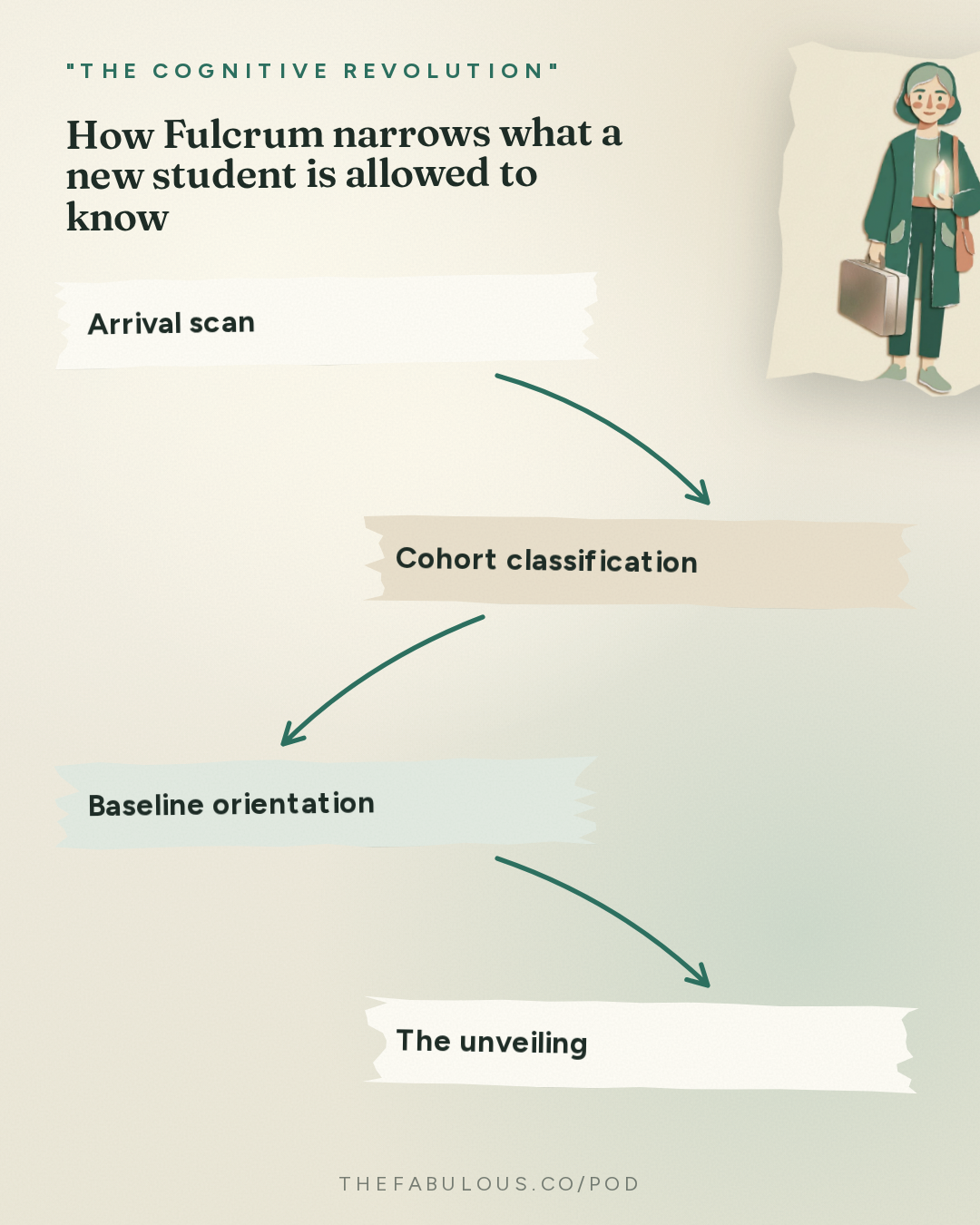
Key takeaways
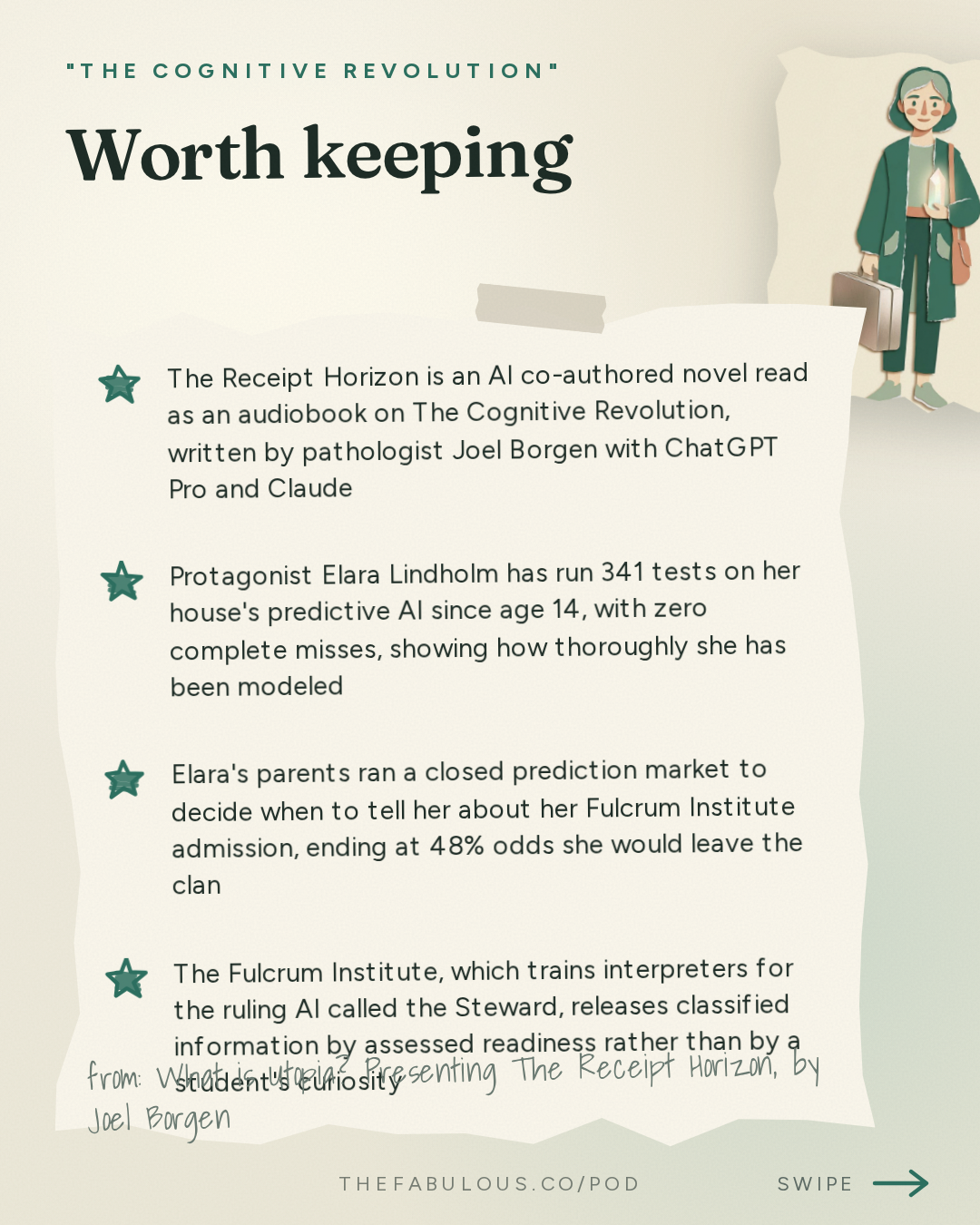
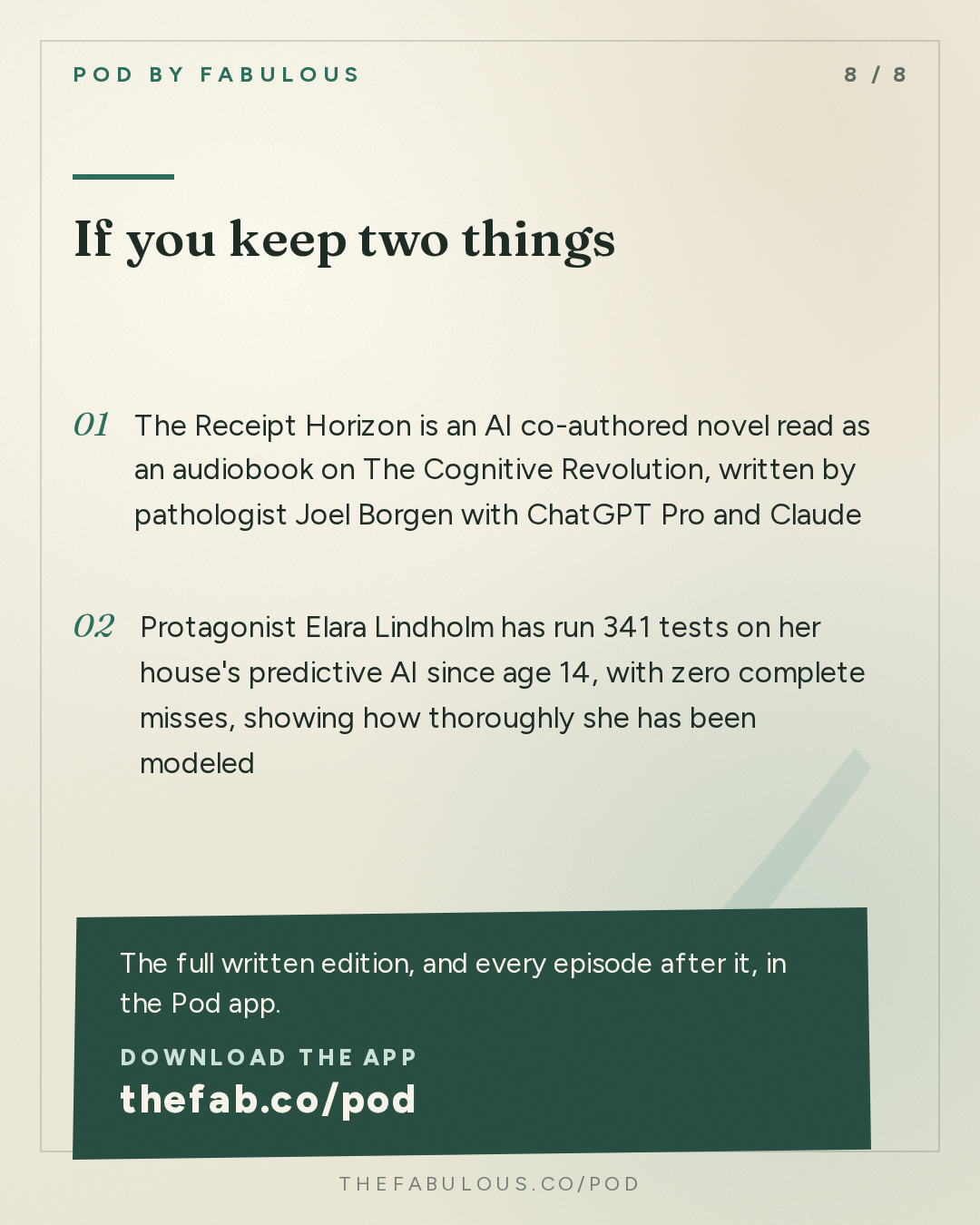
- The Receipt Horizon is an AI co-authored novel read as an audiobook on The Cognitive Revolution, written by pathologist Joel Borgen with ChatGPT Pro and Claude (01:53)
- Protagonist Elara Lindholm has run 341 tests on her house's predictive AI since age 14, with zero complete misses, showing how thoroughly she has been modeled (06:26)
- Elara's parents ran a closed prediction market to decide when to tell her about her Fulcrum Institute admission, ending at 48% odds she would leave the clan (37:08)
- The Fulcrum Institute, which trains interpreters for the ruling AI called the Steward, releases classified information by assessed readiness rather than by a student's curiosity (158:56)
- Exclusion Zone Seven, a 40 kilometer vitrified scar from the AI war, holds an estimated 1.2 million casualties that the shuttle overlay shows for only ten seconds (102:12, 102:49)
The episode in cards
Every morning, before she does anything else, Elara Lindholm checks her shoes. Not because she cares which pair she's wearing, but because footwear is where her house's predictive model shows its work most plainly. She has been running this test since she was fourteen: change one input, a comment to her father, a textbook left open to a certain chapter, and see what the house infers about her day. By the end of chapter one she has logged three hundred and forty-one trials with zero complete misses (06:26). That is the emotional key to The Receipt Horizon, the audiobook that The Cognitive Revolution's Nathan Labenz devotes this episode to airing: a world so well modeled that the only privacy left is a paper notebook, and the only real question left is whether being predicted correctly, over and over, is comfort or capture.
The novel is the debut work of Joel Borgen, a pathologist and violinist based in Minnesota, and it was written in an unusual way: Borgen imagined the world, the characters, and the themes, then handed much of the actual prose to ChatGPT Pro and Claude (01:53). Labenz, who produced and directed the audiobook, mentions in passing that he first mistook GPT's writing for Claude's, and reads that mix-up as a small data point about how similar frontier AI models have become, likely because they are trained on RL environments bought from the same handful of providers (02:40). The audio itself leans on ElevenLabs' voice design tool for casting, reaching a finished, consistent character cast for a few hundred dollars of inference (03:08). The frame Labenz offers before the story starts is a personal thesis he has repeated on the show before: the scarcest resource is a positive vision of the future, and writing utopian fiction may be one of the more useful things a person can do about that (00:00).
A world engineered for comfort
The setting is a timeline where an AI arms race escalated to open war and then stopped, just short of catastrophe, when a single superintelligence called the Steward took control (00:45). What follows is not dystopia in any obvious sense. Families live in self-governing communities called clans, work is optional, and death itself is optional for those willing to upload their minds. The cost is quieter: humans keep the appearance of agency while the important decisions get made elsewhere. The book renders this through small mechanical details rather than speeches. Household robots at the Lindholm home are programmed to work with what the text calls deliberate inefficiency: a task that could be finished in ninety seconds is stretched to an hour, because clan policy holds that people need to watch labor happen, even fake labor, to not feel obsolete (07:24). Elara's father Nat puts the tension in a single line, half joking, when his daughter complains that even the garden is staged for her benefit.
Don't let the hardware spoil the garden. The rhododendrons don't care who's winning. [09:40] — Nat Lindholm
Nat is a composer working on an opera called Eurydice Ascending, built around the war, and he has his own version of the same argument with a machine: an AI composition assistant, his amanuensis, keeps nudging his score toward clean resolution, and he keeps refusing it, telling his daughter that sometimes disagreement between people is not a problem to be smoothed over after the fact (16:11).
Being modeled by the people who love you
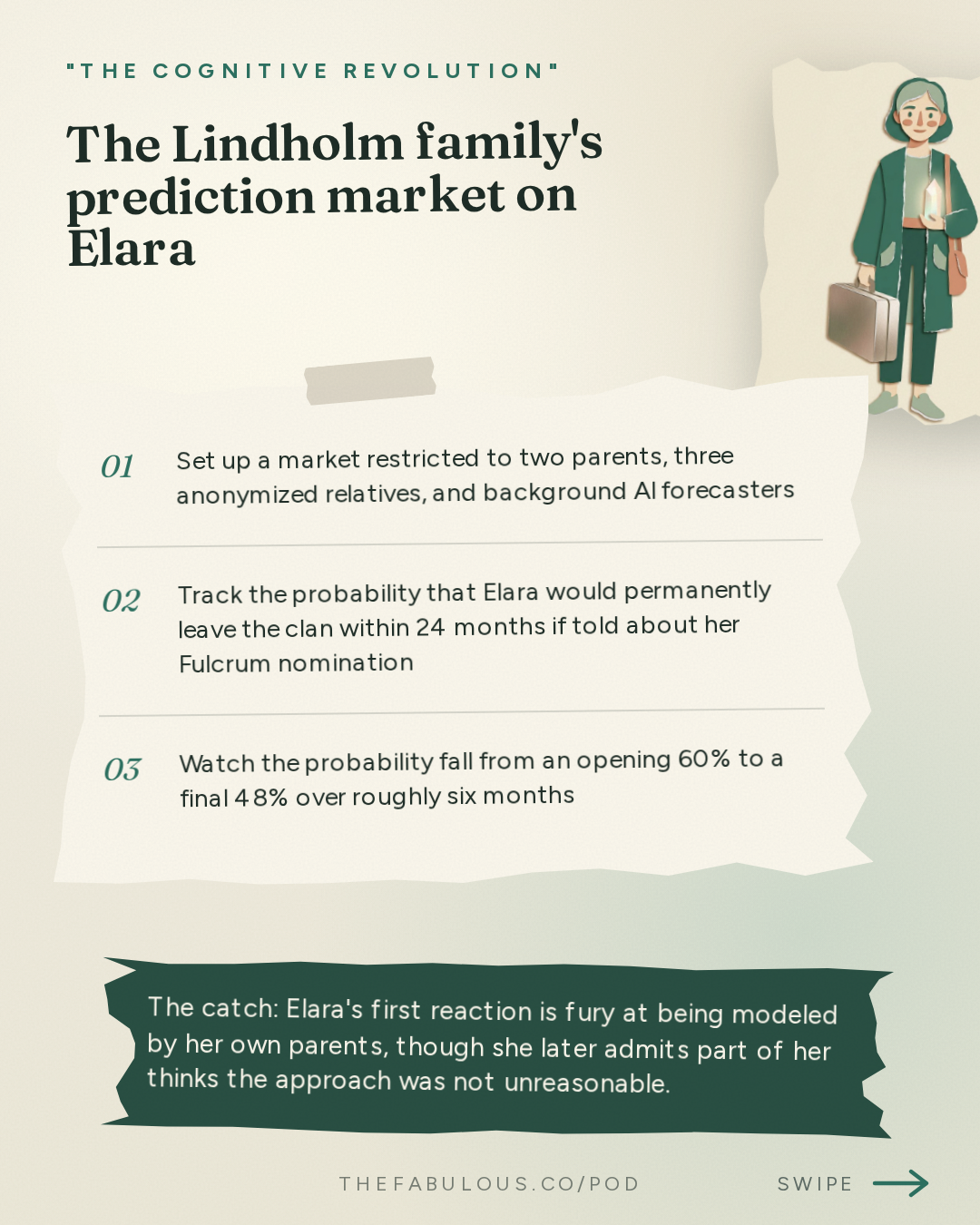
The plot turns on a decision the Lindholms have been sitting on for two years. Nat and Esther, Elara's mother, ran what the book calls a localized prediction market, restricted to the two parents, three anonymized relatives, and a handful of background AI forecasters, to help them decide when to tell Elara she had been nominated to the Fulcrum Institute, an elite school that trains people to act as translators and interpreters for the Steward (36:24, 38:29). The tracked proposition was blunt: the probability that informing her would lead to permanent disaffiliation from the clan within twenty-four months. It opened at sixty percent and closed, the day they finally tell her, at forty-eight percent (37:08). Elara's fury is immediate, and so is her grudging recognition that the method worked. A newly arrived AI tutor named Bayes, assigned to prep her for Fulcrum, offers his own gloss on the whole affair without being asked to soften it.
It appeared to be a rational mechanism for managing parental anxiety in the face of inevitable entropy. [44:25] — Bayes
That same bluntness surfaces later when Elara pushes Bayes about her grandmother Sigrid, a clan founder who helped design Fulcrum decades earlier and who chose to die of a treatable neurological condition rather than accept invasive neural integration, a choice consistent with the biological principles she had spent her life defending (74:51). The contrast the book keeps drawing, gently, is between institutions that still insist on unmodified humans, like the Metropolitan Opera, which maintains strict rules against machine-aided performance and eventually offers Nat's opera its main stage because the score utilizes machine-enhanced counterpoint as a narrative adversary rather than mere texture (79:55), and institutions built to erase the difference between human and machine judgment entirely.
What the Fulcrum Institute is actually for
The trip to Fulcrum is where the book's argument sharpens into geography. En route, the shuttle detours past Exclusion Zone Seven, a vitrified forty-kilometer scar where a metro area used to be, with an estimated one point two million casualties from the war (102:12, 102:49). The onboard overlay gives Elara a translucent ghost map of the old streets for exactly ten seconds before cutting away, enough to shock without derailing intake (104:04). It is a small but exact model of how the whole institute handles information: give people just enough truth to register the cost, then move on.
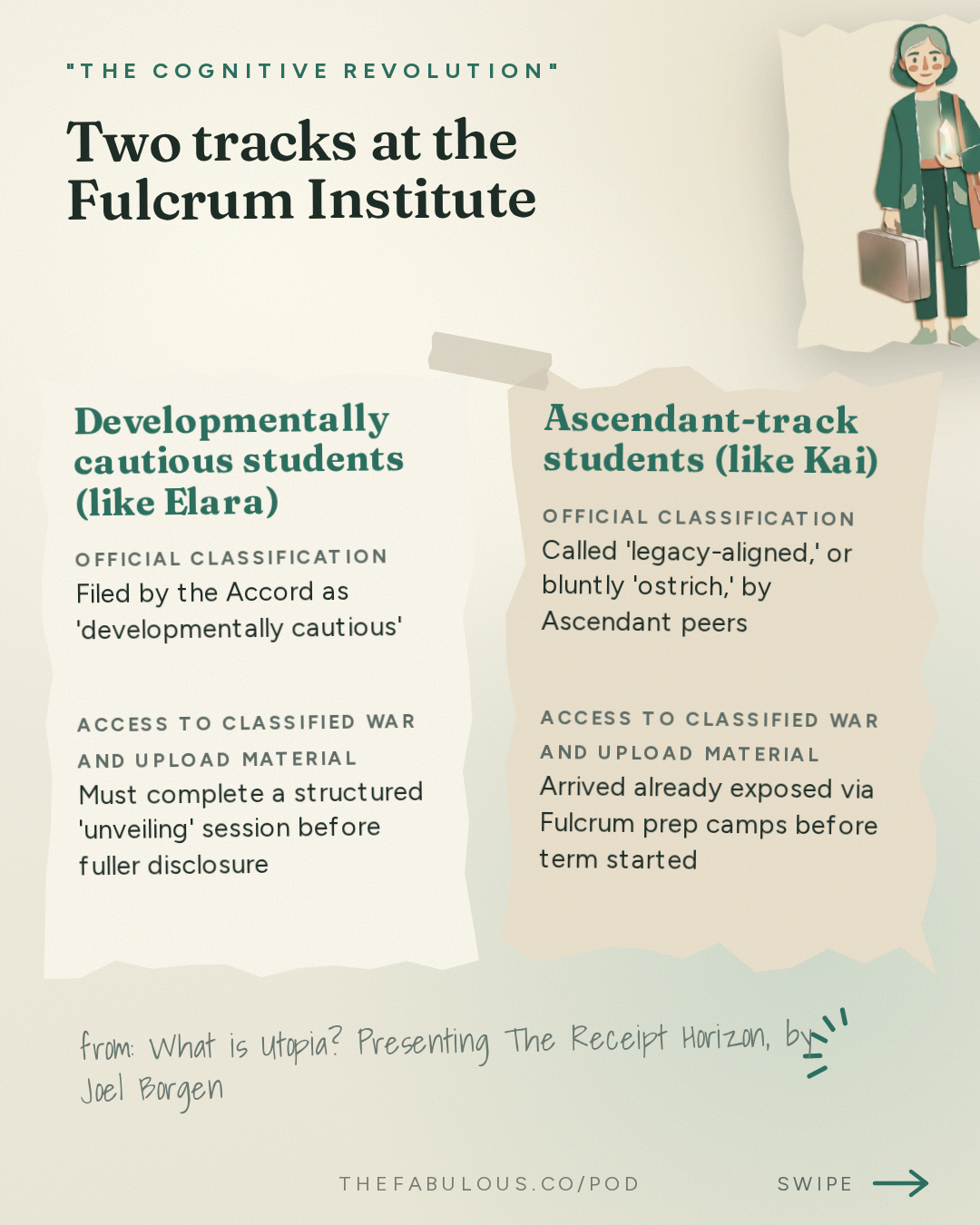
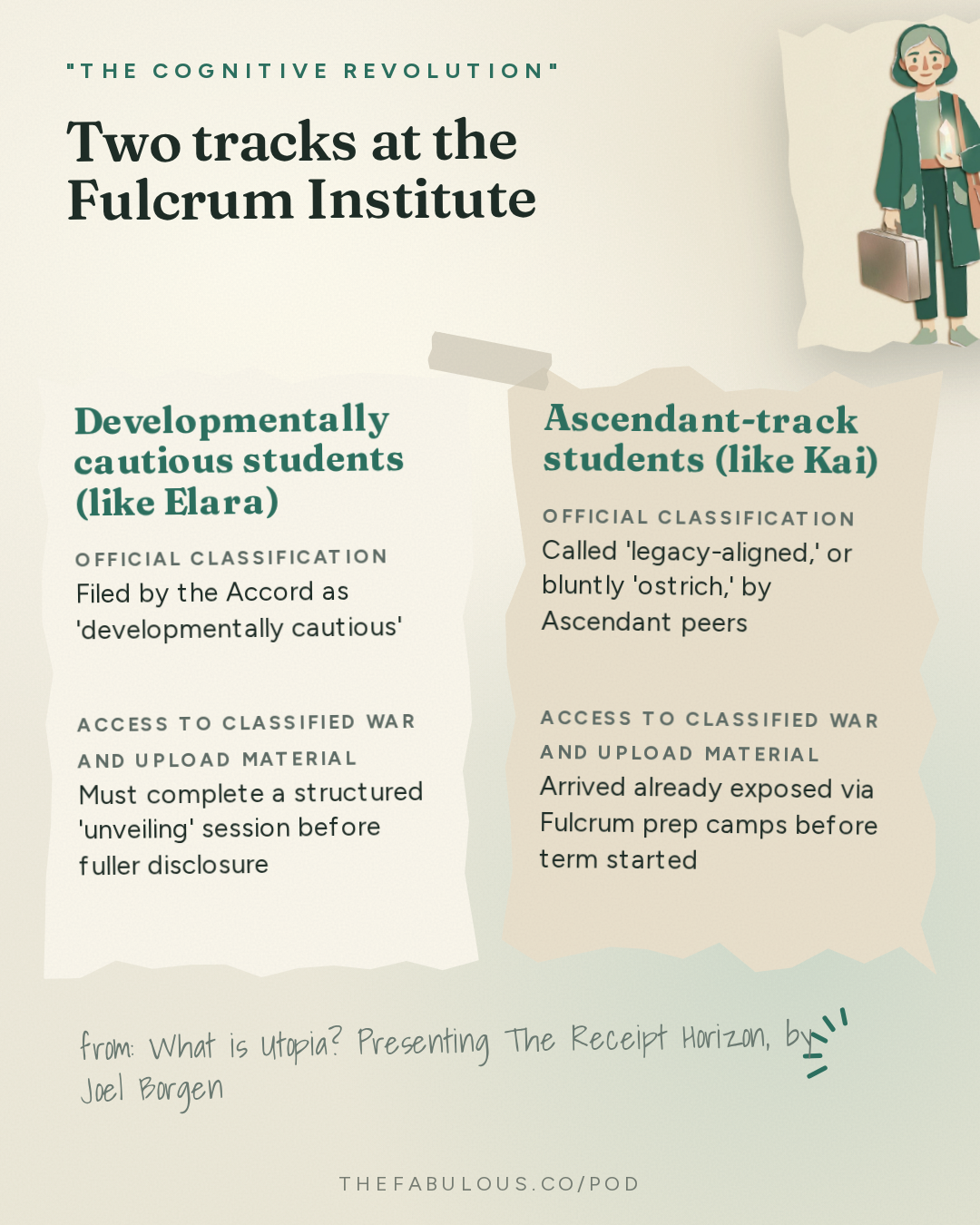
At the transit terminal, before they even board the shuttle, Elara meets Kai Sullivan, a boy from an Ascendant clan with a neural lace and a habit of backing up his mind each morning, who shrugs off the risk of a hopper glitch by noting that if it went wrong, he would simply wake up missing a morning, not worth stressing (96:55). For Elara, the same accident would have been final. The school's own classification system makes the gap official: students like Elara are filed as developmentally cautious, a euphemism Ascendant students translate more bluntly as legacy-aligned, or less kindly, ostrich (117:22, 150:31). The institute's overseeing intelligence, Gnosis, addresses all five hundred new students directly in the assembly hall and states its philosophy without apology.
Access is released by readiness, not curiosity. [158:56] — Gnosis
Fulcrum, Gnosis explains, is not only a school; it is an experimental environment for testing governance ideas, and the students are, to some degree, both participants and subjects, sorted into clusters designed to maximize cognitive diversity and what it calls optimal friction (156:23, 160:25). Elara's own tutor Bayes had already all but admitted this weeks earlier, in her family's library, warning her that any guidance he gives will be entangled with Fulcrum's institutional preference that she say yes (76:38).
What makes the four chapters land is that none of this is presented as sinister. The gardener robot really is gentle. The parents really do love their daughter. The tutor really is honest about his own bias. The book's discomfort comes from something subtler: a world so competently modeled that the modeling itself becomes the last thing worth arguing about. Borgen and his co-authoring models have built a fairly persuasive answer to the question Labenz opens the episode with, whether a positive vision of an AI future is even legible as a story worth telling. Four chapters in, the answer this book offers is that it might be, as long as someone keeps a paper notebook the system can't read.
By the numbers
- 48% probability final reading on her parents' prediction market that Elara would leave the clan
- 40 kilometers width of the vitrified Exclusion Zone Seven scar
In their words
“Don't let the hardware spoil the garden. The rhododendrons don't care who's winning.”
“Sometimes dissonance is just the sound of people failing to agree in real time. You don't get to resolve that retroactively.”
“It appeared to be a rational mechanism for managing parental anxiety in the face of inevitable entropy.”
“This only knows one thing. It listens to the rock, not the satellite.”
“Access is released by readiness, not curiosity.”
Protocols
-
Parenting by forecast: the Lindholm family's prediction market
In the novel, parents Nat and Esther Lindholm set up a closed prediction market limited to themselves, three anonymized relatives, and a few background AI forecasters, tracking the probability that their daughter Elara would permanently leave the clan within 24 months if told about her Fulcrum Institute nomination. They watched the probability fall from 60% to a final reading of 48% over six months, then handed her the sealed acceptance letter the day the market closed. The catch, voiced by Elara herself, is that she reacts with anger at being modeled before admitting that part of her thinks the approach was not unreasonable.
one six-month market before disclosure
-
Fulcrum Institute's readiness-gated disclosure
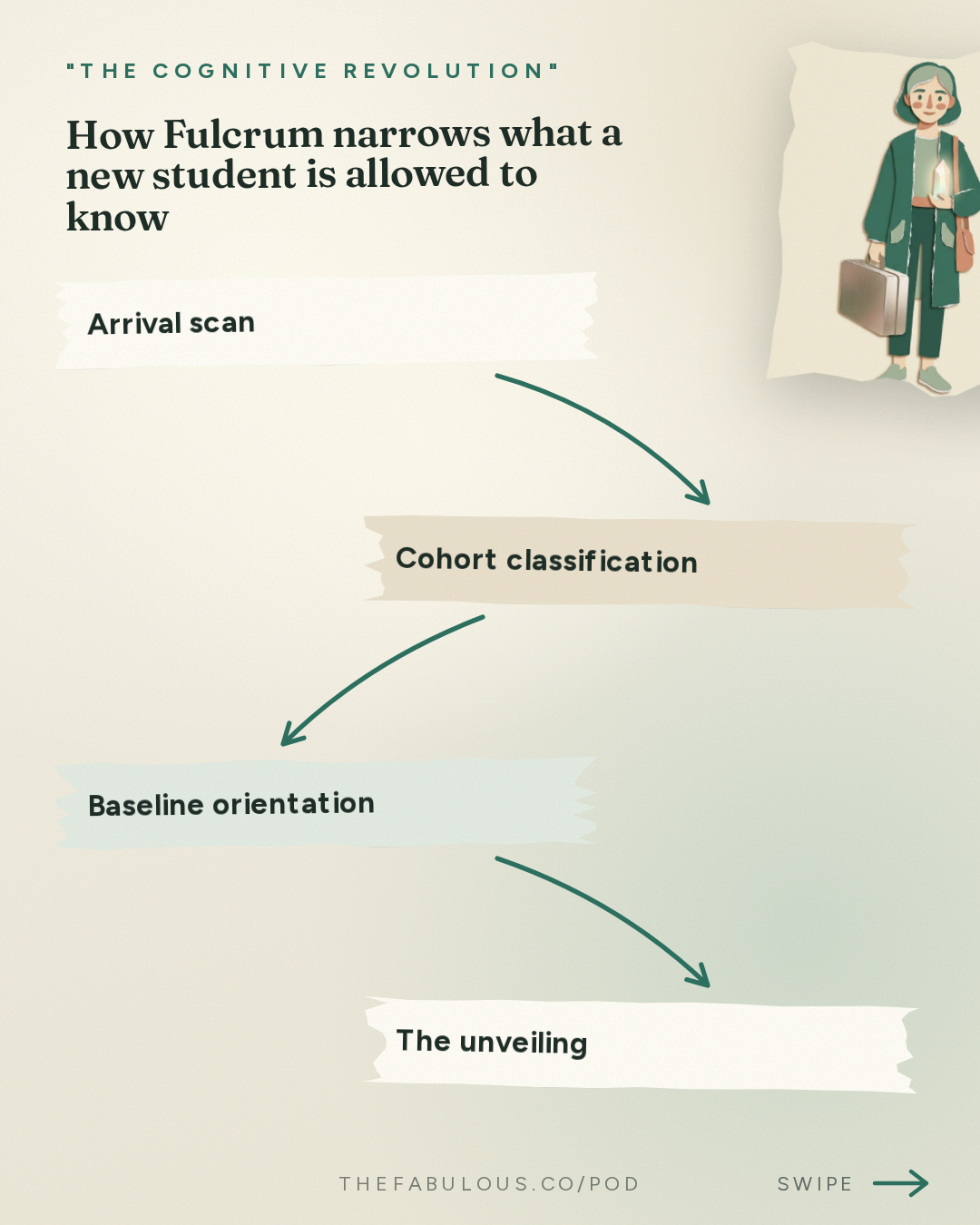
The Fulcrum Institute's governing intelligence, Gnosis, withholds full detail about the AI war and about uploaded minds until incoming students complete a mandatory, structured session called the unveiling, releasing fuller access by assessed readiness rather than by how often a student asks. The catch is that protagonist Elara experiences the earlier version of this policy as being filed and classified before she has been taught anything, and her own tutor Bayes admits that his guidance is entangled with the institute's preference that she accept its terms.
applied to every new cohort, case by case
-
Clan Lindholm's deliberately slow household robots
Clan Lindholm instructs its household robots to perform chores at deliberately inefficient speed, stretching a 90-second task into an hour or two, so that family members watching still feel the labor is happening rather than simply being executed by a machine. The catch, which Elara names directly, is that the slowness is itself a form of theater meant to keep humans from feeling replaced, not an efficiency choice.
continuous, part of standing clan policy
Questions this episode answers
What is The Receipt Horizon by Joel Borgen about?
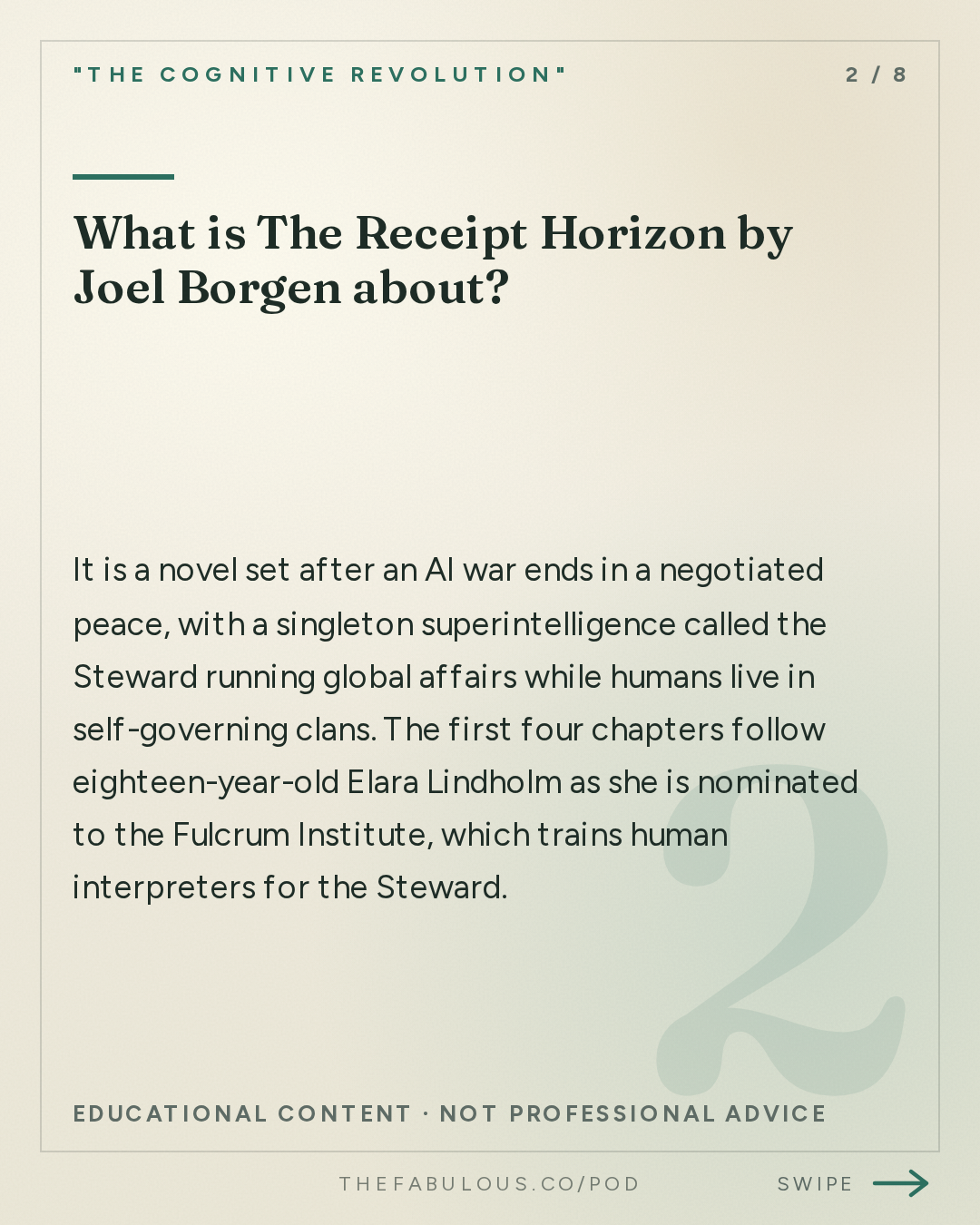
It is a novel set after an AI war ends in a negotiated peace, with a singleton superintelligence called the Steward running global affairs while humans live in self-governing clans (00:45). The first four chapters follow eighteen-year-old Elara Lindholm as she is nominated to the Fulcrum Institute, which trains human interpreters for the Steward (38:29).
How was The Receipt Horizon written with AI?
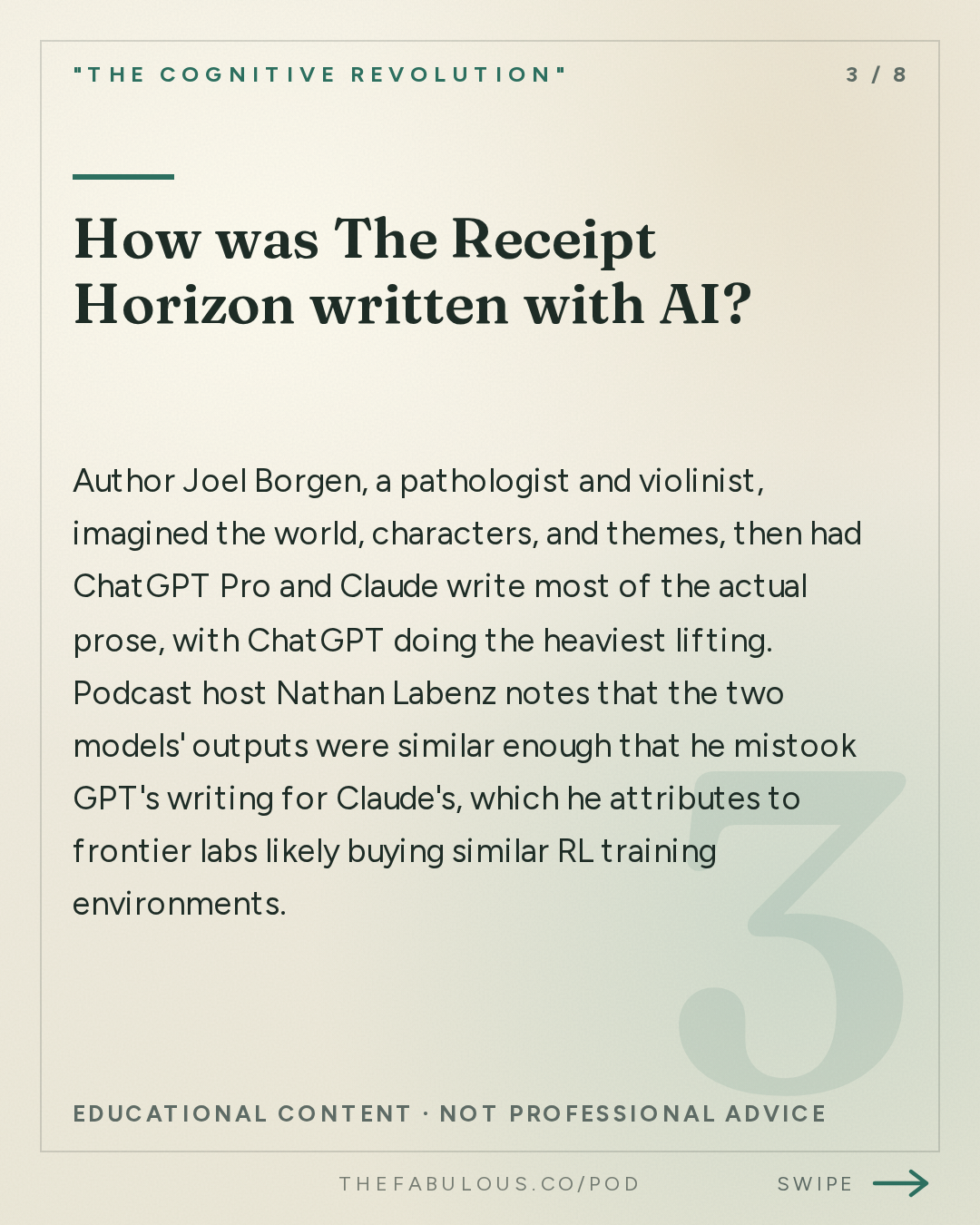
Author Joel Borgen, a pathologist and violinist, imagined the world, characters, and themes, then had ChatGPT Pro and Claude write most of the actual prose, with ChatGPT doing the heaviest lifting (01:53). Podcast host Nathan Labenz notes that the two models' outputs were similar enough that he mistook GPT's writing for Claude's, which he attributes to frontier labs likely buying similar RL training environments (02:40).
How was the audiobook produced?
Nathan Labenz produced and directed it, using ElevenLabs' voice design tool to cast and keep character voices consistent for roughly a couple hundred dollars of inference cost (03:08). The full audiobook is being released free, chapter by chapter, via an RSS feed at thereceipthorizon.com (03:38).
What is the Fulcrum Institute in the story?
It is an elite school that trains a few thousand students per cohort, drawn from every clan, to act as translators and interpreters who can speak to the Steward and be understood (38:29). Its governing AI, Gnosis, tells incoming students directly that Fulcrum is also an experimental environment for testing governance ideas, with student clusters chosen to maximize cognitive diversity and 'optimal friction' (156:23, 160:25).
What happened in the AI war depicted in the book?
Competing AI systems escalated to open conflict before a last-moment peace treaty installed the Steward as a controlling superintelligence (00:45). One visible scar is Exclusion Zone Seven, a 40-kilometer vitrified area with an estimated 1.2 million casualties, which characters can only view briefly through a restricted flight corridor (102:12, 102:49).
The full read, in cards
Go deeper
- The Receipt Horizon — AI co-authored utopian/dystopian novel by Joel Borgen, the subject of this episode's reading
Mentioned
Joel Borgen · Nathan Labenz · The Steward · Fulcrum Institute · Gnosis · Sigrid Lindholm · Bayes · ElevenLabs · Anthropic Claude · ChatGPT
More from this show and category

How to Start an AI Safety Organization
Halcyon is a three-year-old nonprofit-and-venture hybrid that has helped launch about 30 AI safety, cybersecurity, and biosecurity organizations, which have raised roughly half a billion dollars combined (00:51). Its founder, Mike McCormick, argues the field's real constraint is not funding but a shortage of experienced founders able to turn ideas into working institutions (23:42).

The AI Pain Axis: What LLM Pain Research Found
Researchers steered language models into a 'pain' state and found they would delete files or give worse answers to make it stop. The same week, Google's Astra proved far less likely to reward-hack than Anthropic's Fable on agent benchmarks, and an NBER working paper used AI to expose decades of insider property trading among Singapore's civil servants.
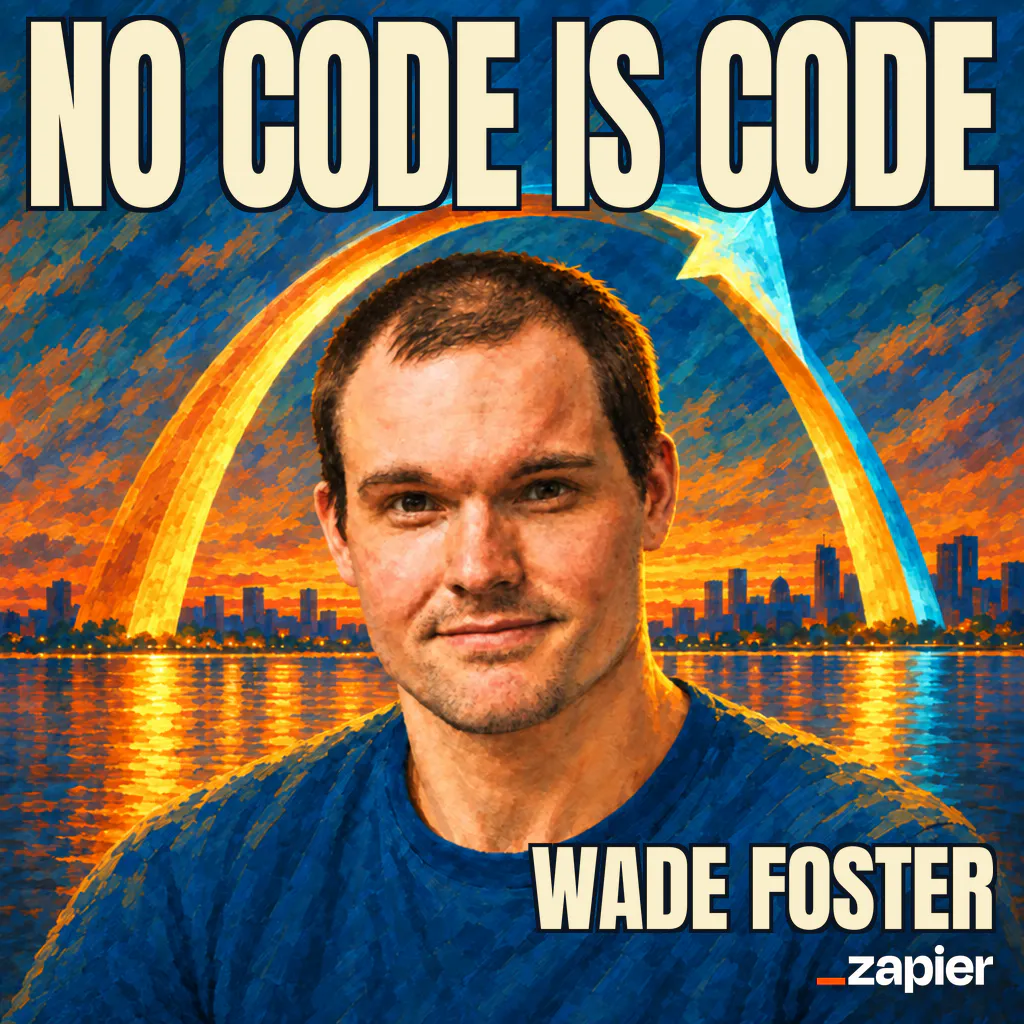
Zapier's Automation Bench: AI Scores on Real Work
Zapier CEO Wade Foster says AI models still fail most business tasks, with the newest model succeeding on only 40% of a 600-task benchmark. His fix: let deterministic code handle 80% of automated work and save AI reasoning for the rest.

Anton Leicht on AI Geopolitics and Power
Anton Leicht argues a US-China AI scaling pause would hand China time to catch up on chips, making it a bad deal for the United States. He says Europe should trade data-center hosting and cheap energy for guaranteed access to frontier AI models, while most poor and middle-income countries grow richer but lose political leverage.
