Personal Fat Threshold Theory Explained
Your Fat Has a Storage Limit
The brief
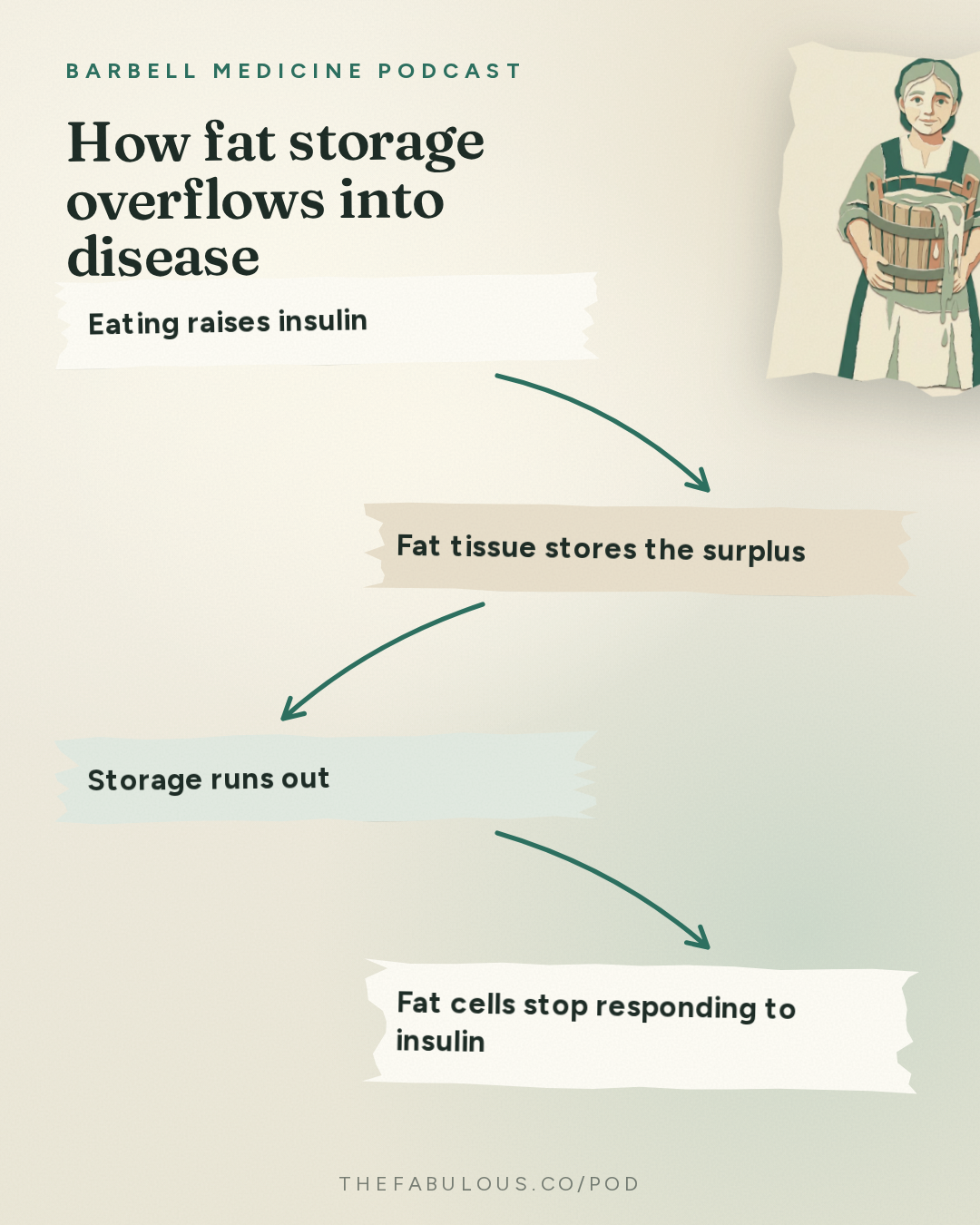
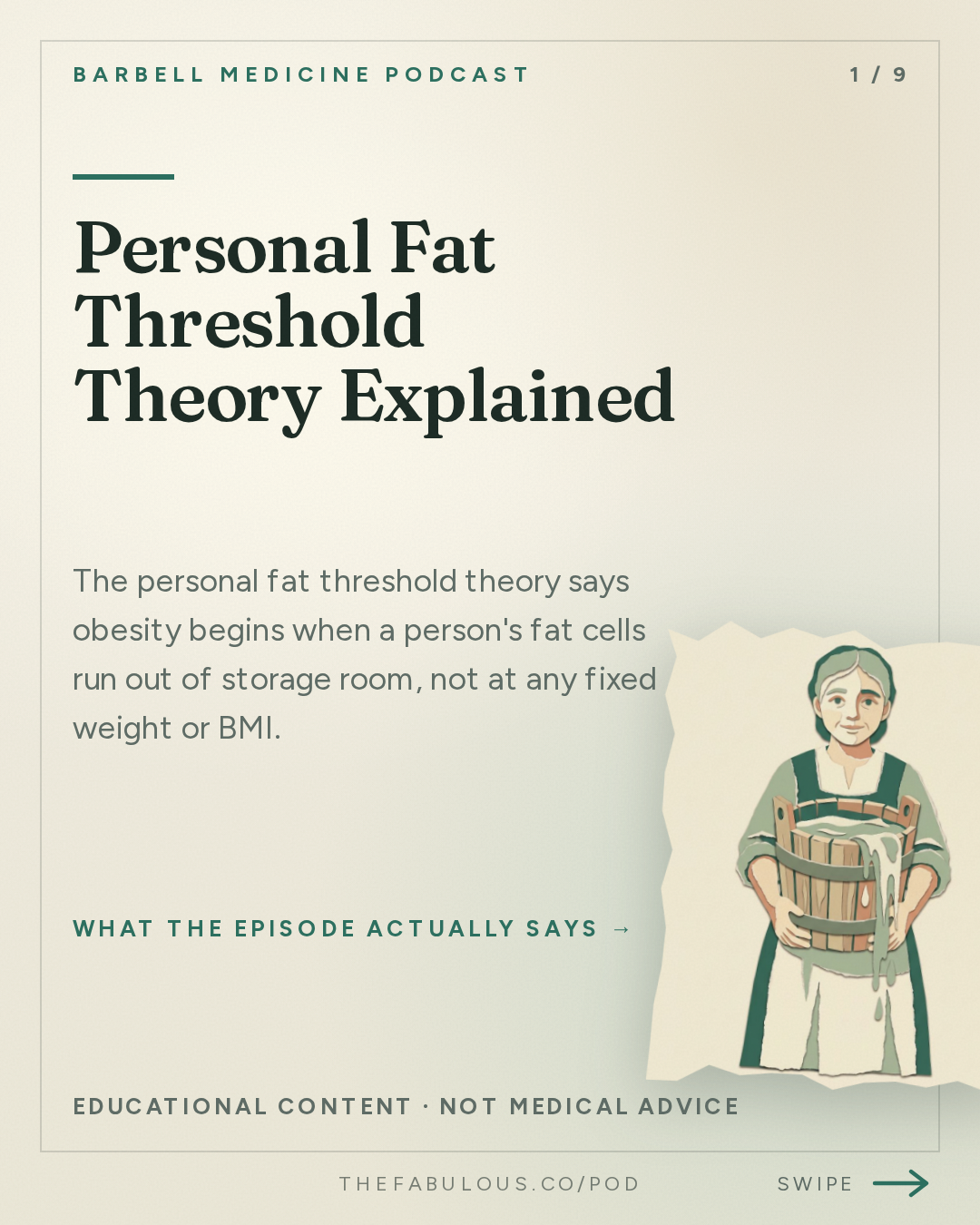
The personal fat threshold theory says obesity begins when a person's fat cells run out of storage room, not at any fixed weight or BMI. Once storage fills up, fatty acids leak into the liver, muscle, and pancreas, causing insulin resistance. Removing fat surgically does not reverse this; restoring storage capacity does.
In 2004, in an operating room in St. Louis, surgeons spent an afternoon removing about ten kilograms of fat from the abdomens of fifteen women (00:19). Eight had normal blood sugar, seven had type 2 diabetes. The researcher running the study, Dr. Samuel Klein, wanted to answer a question that had divided obesity science for decades: does body fat itself cause the diseases that travel with it? If so, removing it should help. Twelve weeks later, and again four years later, Klein checked every marker that mattered: insulin sensitivity, blood pressure, cholesterol, inflammation. None of it moved (00:58). Ten kilograms of fat came out, and the disease stayed exactly where it started.
"10 kilos of fat were taken out of the human, and the disease didn't notice." (Dr. Jordan Feigenbaum, [01:16])
That result should have settled something. Instead it produced a more specific theory: maybe it wasn't the fat under the skin, called subcutaneous fat, that mattered, but the fat packed around the organs, called visceral fat, which drains directly into the liver through a vein most people never think about. That idea organized the field for thirty years. Two follow-up experiments, led by researcher Fabrini in 2010, tested it directly. Patients getting gastric bypass surgery either had a structure called the omentum, an apron of visceral fat over the intestines, removed or left alone. A separate group had only the omentum removed with no other treatment. In both experiments, removing the visceral fat changed nothing (16:07, 16:26). Visceral fat is still real trouble: it makes proteins that thicken blood and raise blood pressure, and too little of a protective hormone called adiponectin (02:03). But cutting it out does not fix the underlying disease. It is a downstream symptom, not the original cause.
A Garage With a Fixed Number of Spaces
Podcast host Dr. Jordan Feigenbaum builds his alternative around a model that already has a name in the research literature: the personal fat threshold (10:20). It starts with insulin, the hormone the pancreas releases after eating, which travels through the blood telling tissues to absorb incoming fuel and, for fat cells specifically, to hold onto what they already have (06:33). Fat tissue works like a garage, storing boxes of energy that would otherwise cause trouble sitting in the blood. Garage size differs from person to person and is largely fixed by adulthood. The number of fat cells someone has is mostly set by the end of adolescence, something researchers proved using leftover radioactive carbon from nuclear testing in the 1950s and 1960s, which lets scientists date the birth of a cell the way tree rings date a trunk. About one in ten fat cells gets replaced every year, but the total count holds steady for life (14:00).
"The garage never gets more parking spaces. You can't really expand it. Whatever you were given is what you're working with." (Dr. Jordan Feigenbaum, [14:21])
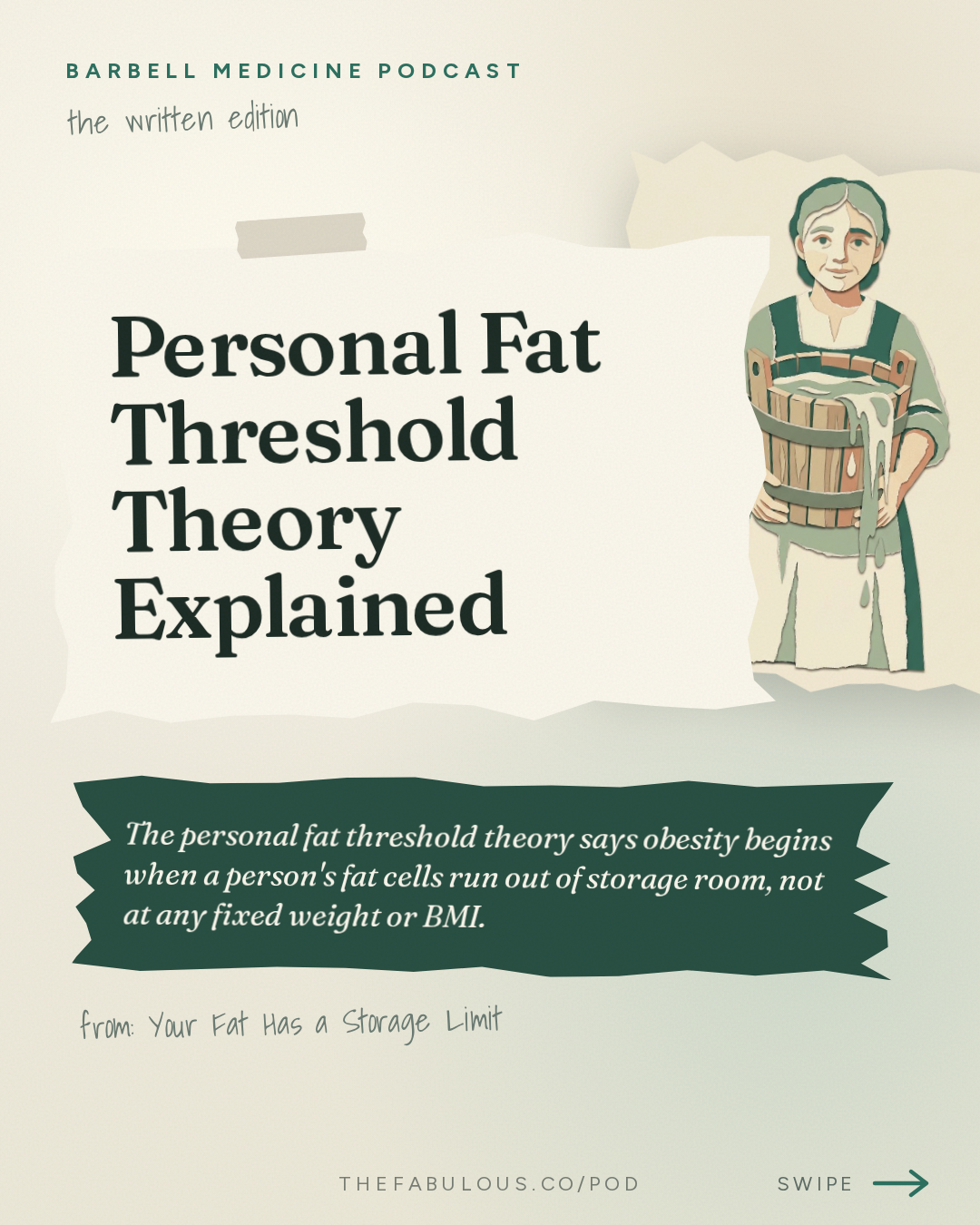
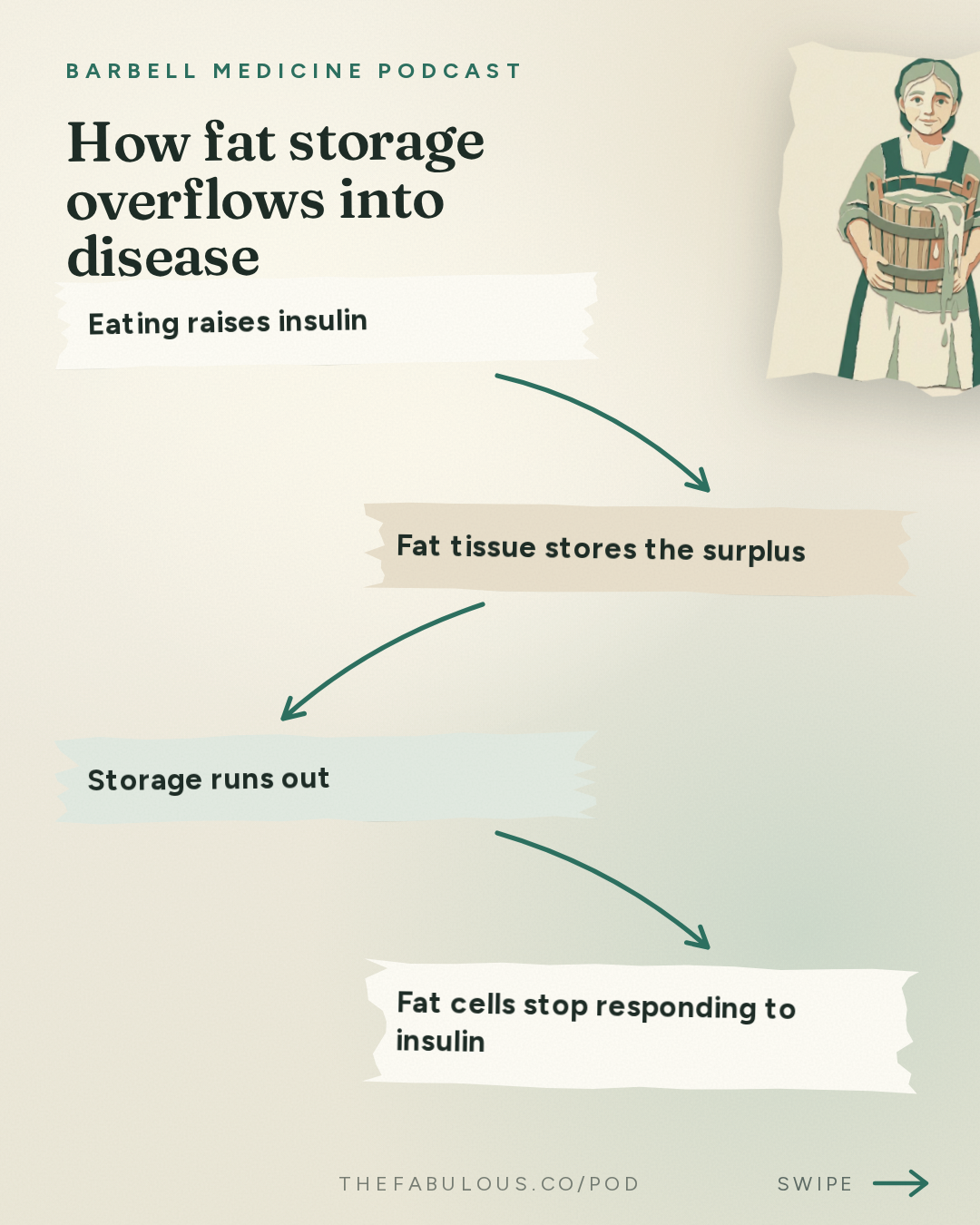
As long as the boxes fit, plenty of body fat can sit there without causing disease. Trouble starts once the garage is full and fuel keeps arriving. Full fat cells stop responding to insulin's signal to hold on, so they leak fatty acids into the blood all day (13:02). A 2005 tracer study found that only about 15 percent of the fat inside a fatty liver comes directly from food. Close to 60 percent leaked out of the person's own overflowing fat tissue (12:39). That fat lands in the liver, the pancreas, the kidneys, and the muscle around the heart, tissues never built to store fuel. Doctors call this ectopic fat, meaning fat sitting in the wrong place (11:20). It is what actually triggers insulin resistance: a cell already packed with more fuel than it can burn has no reason to let more in, so it stops answering insulin's knock (11:39).
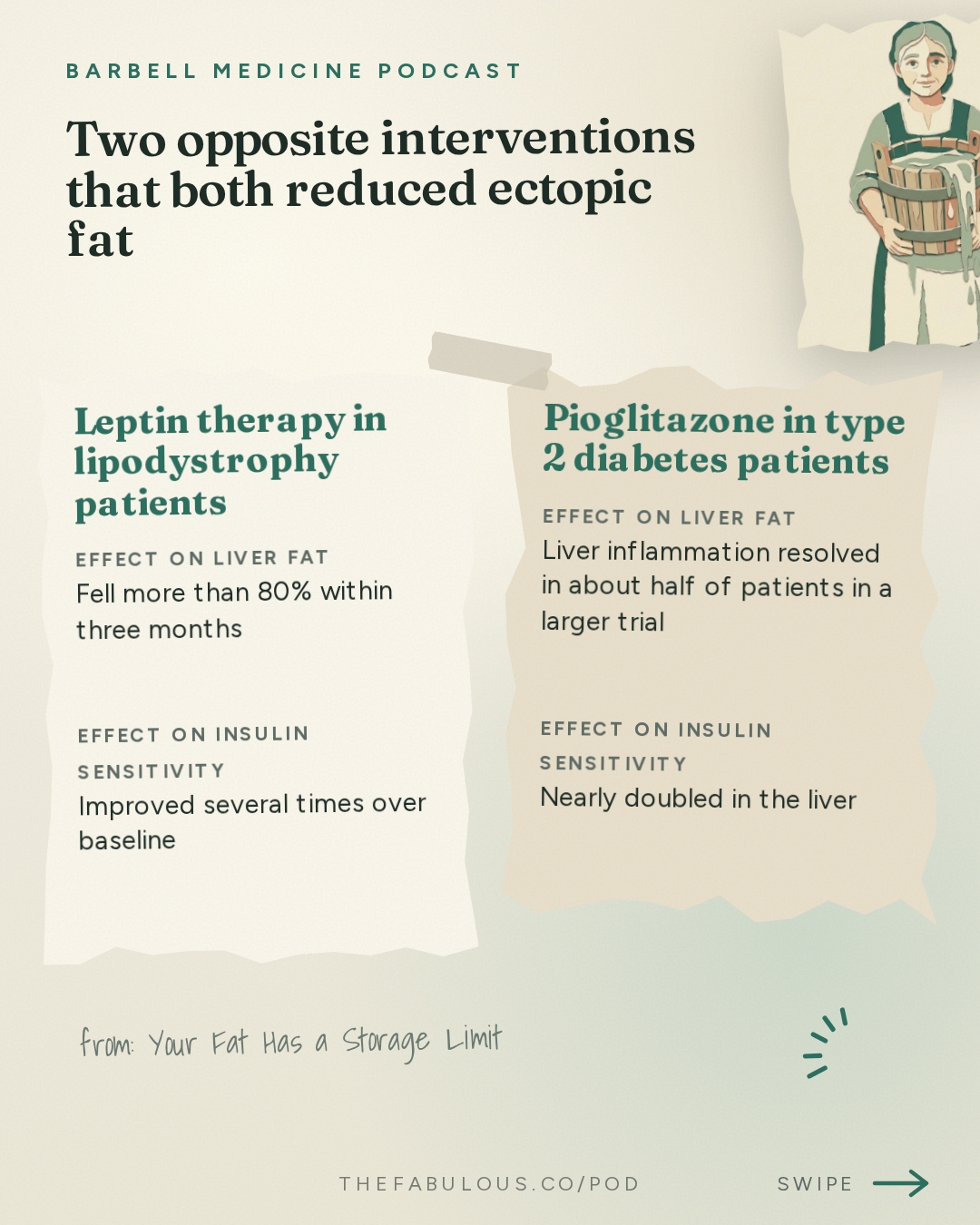
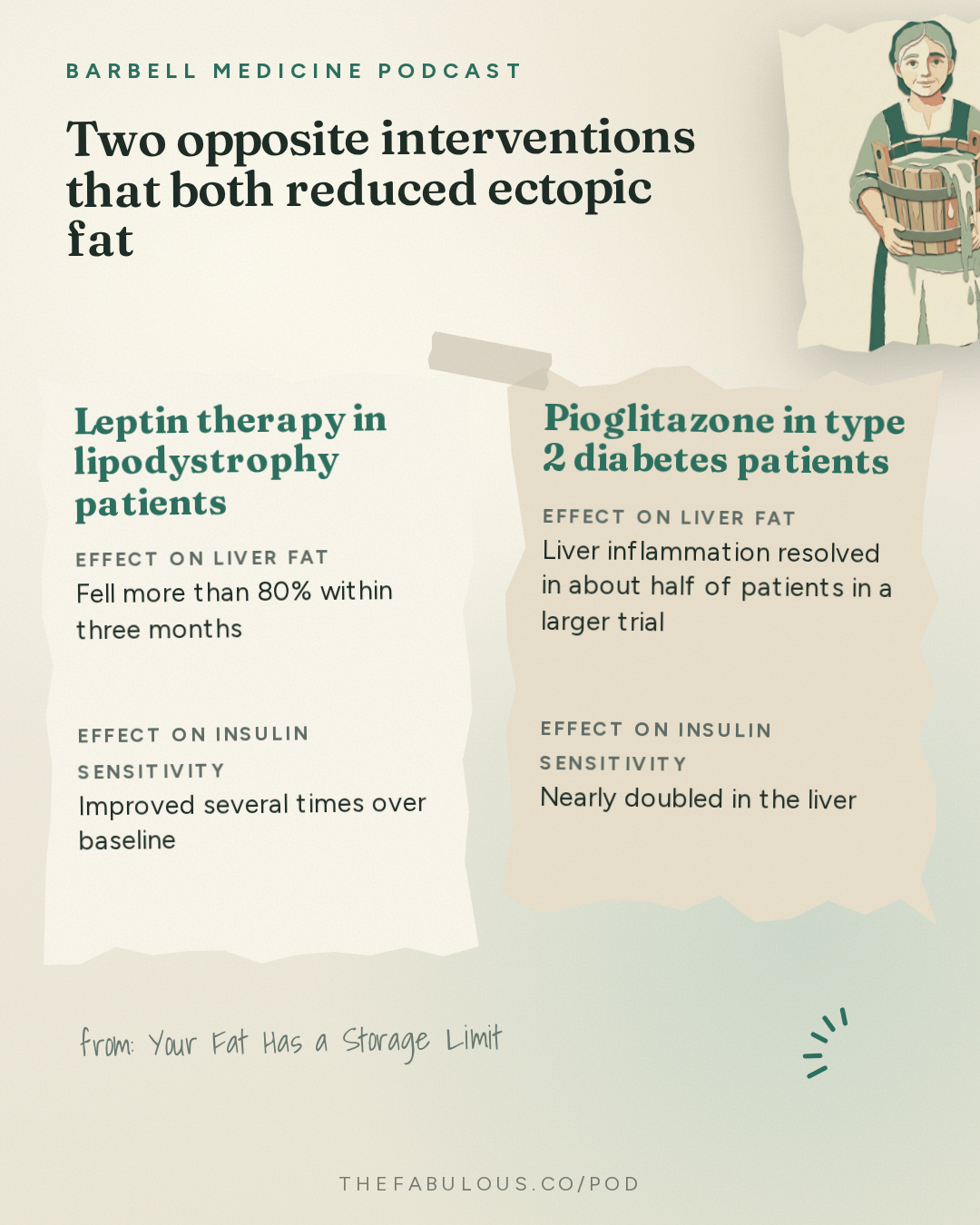
Two natural experiments make the case that location, not total fat mass, drives the disease. People born with congenital generalized lipodystrophy have almost no fat tissue anywhere on their bodies, yet by adolescence most develop severe insulin resistance and damaged, fatty livers (23:02). In 2002, a Yale and NIH research group gave three of these patients injections of leptin, the hormone fat tissue normally produces to tell the brain how much storage exists. Over three months, with no change in body weight, their liver fat fell more than 80 percent, their muscle fat dropped by about a third, and all three came off diabetes medication (26:46). The opposite experiment ran in reverse. A drug called pioglitazone tells fat cells under the skin to build more storage. Patients with type 2 diabetes who took it gained about three kilograms of fat, and their livers handled insulin nearly twice as well as before, while fat around their organs actually went down (28:21). Weight went up, and the disease improved anyway.
None of this proves the theory by itself. Feigenbaum is careful to note that every model gets patched to survive bad results, and the trick is telling a good patch from a bad one. He borrows an example from nineteenth-century astronomy: the French astronomer who correctly predicted the existence of Neptune from irregularities in Uranus's orbit later invented a fictional planet, Vulcan, to explain a similar irregularity in Mercury's orbit. Same method, one triumph and one dead end (31:22).
"A theory that's working right makes new predictions that then come true. A theory that's dying only explains away the things that already went wrong." (Dr. Jordan Feigenbaum, [32:03])
By that standard, the storage model has some support. It predicted that normal-weight people could put diabetes into remission after losing a small share of body weight, which has been observed. It predicted that genes controlling storage capacity should affect disease risk, and a genetic study of roughly 30,000 people found that gene variants linked to higher liver fat causally raise the risk of type 2 diabetes by about a quarter (33:29).
Why the Usual Numbers Miss the Point
This matters because the tools doctors use to screen for this disease were not built to see it. Body mass index, or BMI, weight divided by height squared, correctly identifies excess fat about 95 percent of the time when it comes back above 30, but that same cutoff misses roughly half of people who genuinely carry too much fat (04:06). Waist circumference does a little better at catching people and a little worse at being right when it flags them. Across 31 studies covering 300,000 adults, adding a waist measurement to BMI improved accuracy by only three to five percentage points (04:48). In 2025 the Lancet Commission on Clinical Obesity, with 58 commissioners signing on, restricted BMI to population-level screening and required that any individual diagnosis be confirmed with a direct fat measurement or waist ratio (37:35).
The gap shows up starkly in lean patients. Feigenbaum describes a 41-year-old man with a normal BMI of 24 who lifts three times a week and has a blood sugar marker called A1c of 7.1, consistent with type 2 diabetes (35:07). A previous doctor told him his liver enzymes were normal and that he could not have a fatty liver because he wasn't overweight. Both claims were wrong. In a study of 100 people with type 2 diabetes and normal liver enzymes, three-quarters turned out to have fatty liver on a scan, including about two-thirds of those who were not obese (35:48). A separate 20-year Swedish study of 646 biopsy-confirmed fatty liver patients found the risk of severe liver disease ran from about twice normal, in people with no scarring yet, up to roughly 100 times normal in those with cirrhosis. Inflammation markers added no extra predictive value once scarring was already known (37:12).
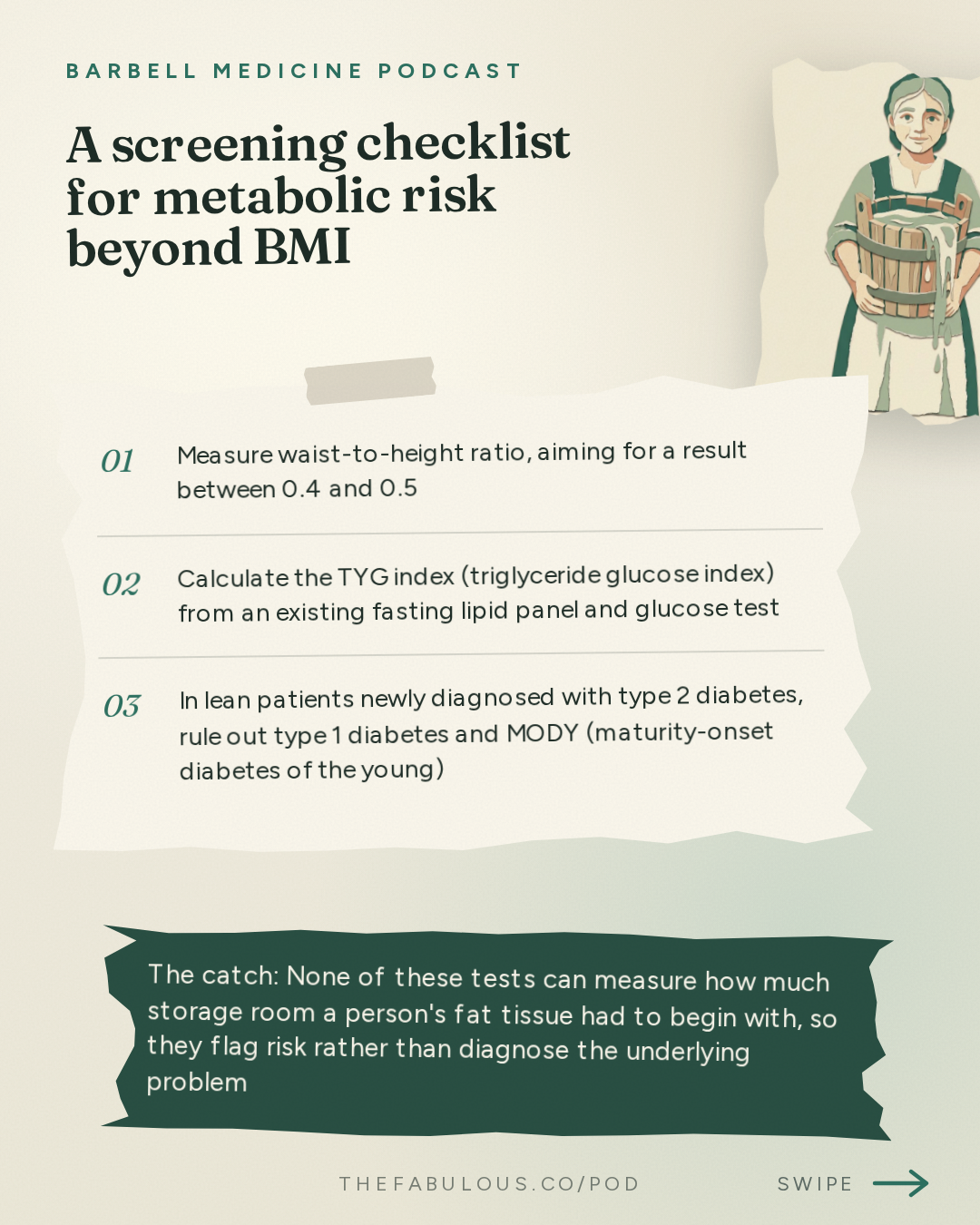
Feigenbaum's practical suggestions follow from this. He recommends checking a waist-to-height ratio, aiming for a number between 0.4 and 0.5 (41:02), and calculating the TYG index, a number built from a routine fasting lipid panel and glucose test that costs nothing extra and outperforms the more common triglyceride-to-HDL ratio, especially in Black patients, who often develop insulin resistance without the elevated triglycerides that ratio depends on (42:21). For lean patients with a new diabetes diagnosis, he recommends ruling out type 1 diabetes and a rare inherited form called MODY, since one study found that one in six lean patients labeled type 2 actually had something else (43:48). And when fatty liver is suspected, he recommends the FIB4 score, a formula built from age, two liver enzymes, and platelet count, followed by elastography, an ultrasound that estimates liver stiffness, rather than a biopsy (45:07).
None of these tools, old or new, can measure the one thing that actually determines risk: how much room a particular person's fat tissue had to begin with. Two people can carry the same thirty kilograms of fat, and one has spare capacity while the other is already spilling fat into the liver and the pancreas. That distinction reframes obesity not as a number on a scale but as a mismatch between fuel arriving and room to store it.
"The overflow is the disease we call obesity. It's the point where somebody's storage runs out and starts spilling into organs that were never built to hold it." (Dr. Jordan Feigenbaum, [46:06])
The practical upshot is almost anticlimactic: anything that keeps fuel from piling up over a long stretch helps, whether that means losing fat or, as Feigenbaum previews for a future episode, exercising in a way that pulls fat out of the liver without changing the number on the scale at all (46:53). The scale, it turns out, was never really the story.
Ask this episode anything
Pod's AI answers from the episode itself, with the minute mark so you can hear it yourself.
Or start with one of these
Ask this episode
Pod's AI listens to the whole episode to answer, and points you to the minute it comes from.
The rest of this answer, and any question after it
Answers come from the episode itself, never from a summary of it.
ContinueKey takeaways
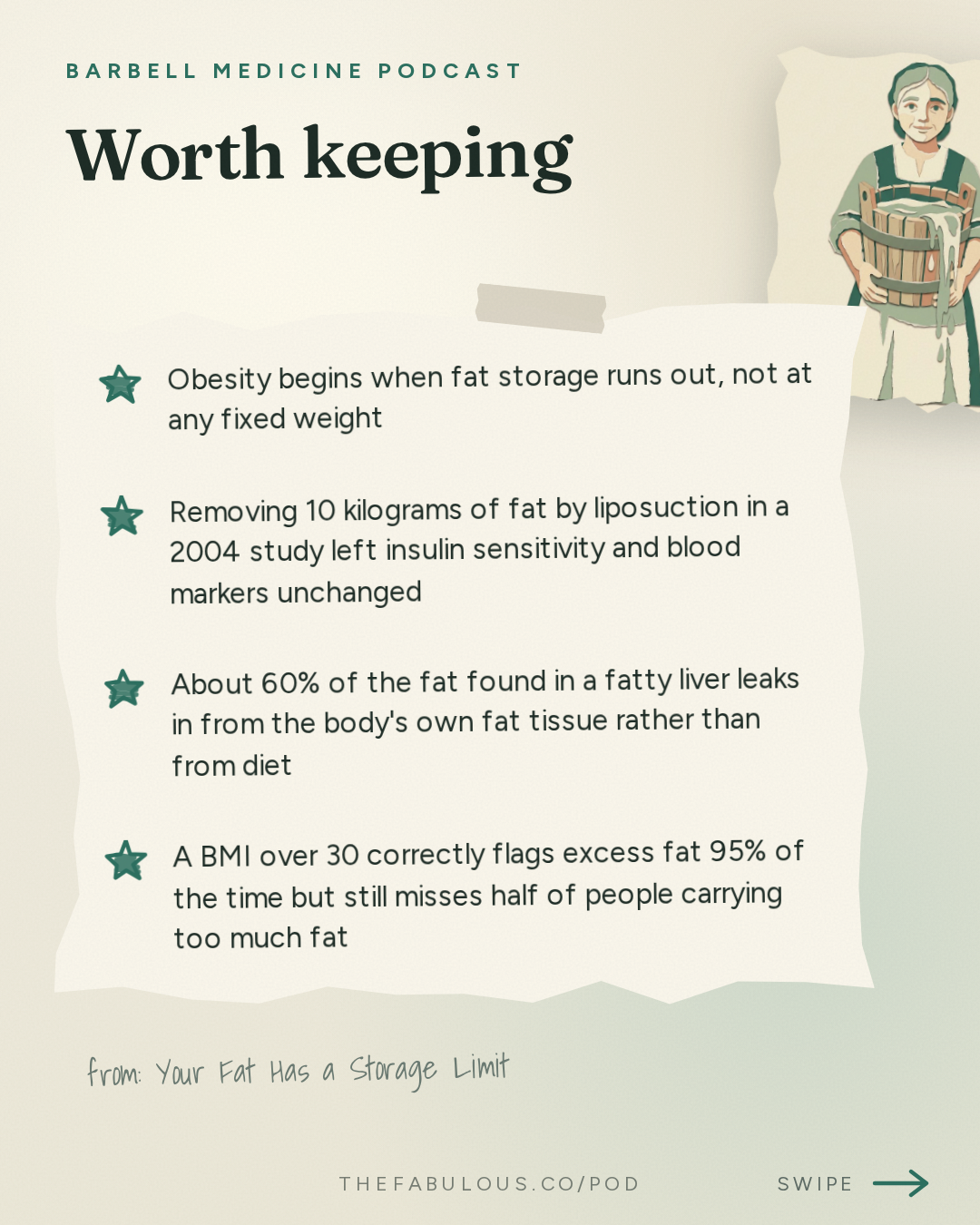
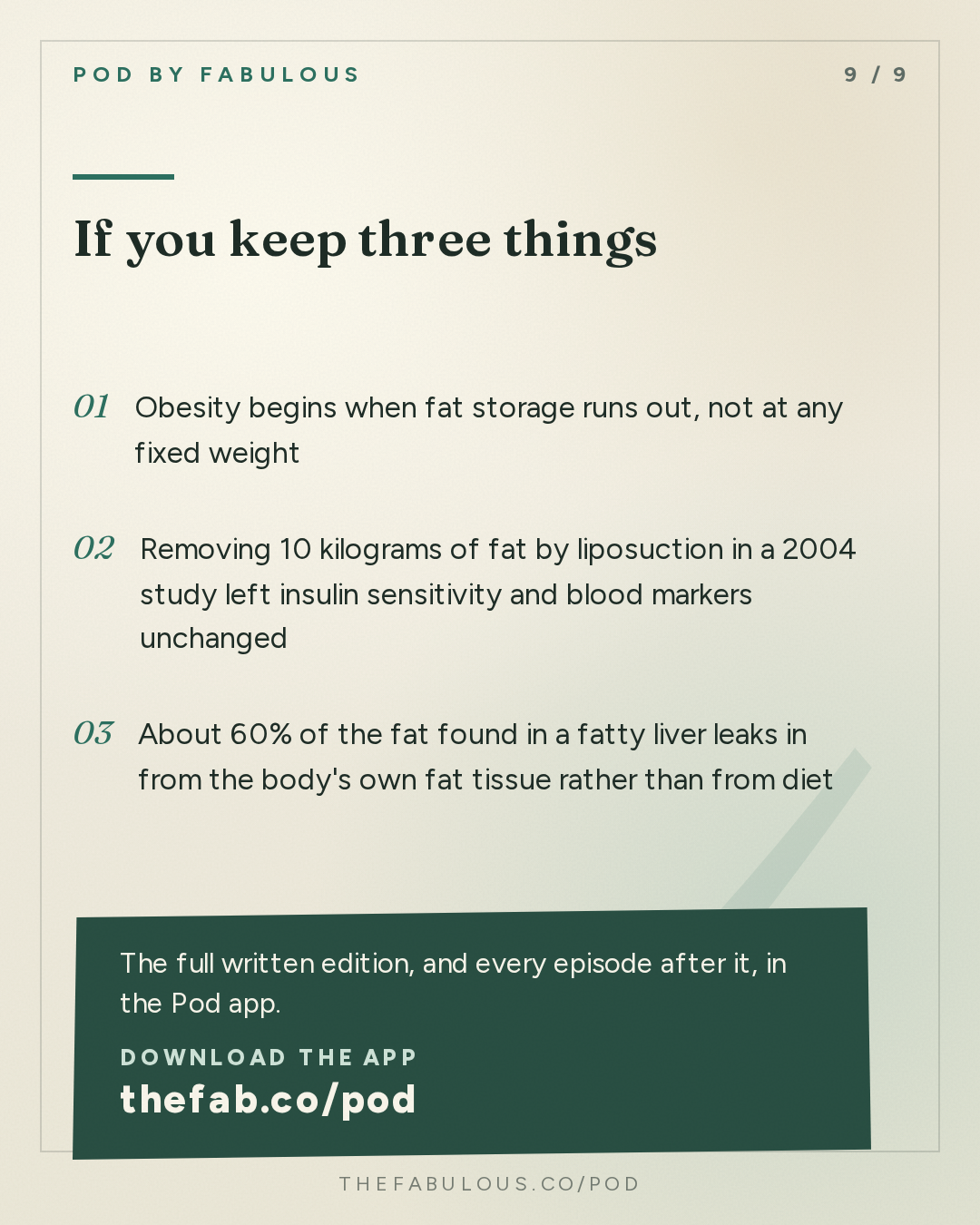
- Obesity begins when fat storage runs out, not at any fixed weight
- Removing 10 kilograms of fat by liposuction in a 2004 study left insulin sensitivity and blood markers unchanged
- About 60% of the fat found in a fatty liver leaks in from the body's own fat tissue rather than from diet
- A BMI over 30 correctly flags excess fat 95% of the time but still misses half of people carrying too much fat
- Leptin injections reversed liver disease in patients with almost no fat tissue without adding any body fat
The episode in cards

By the numbers
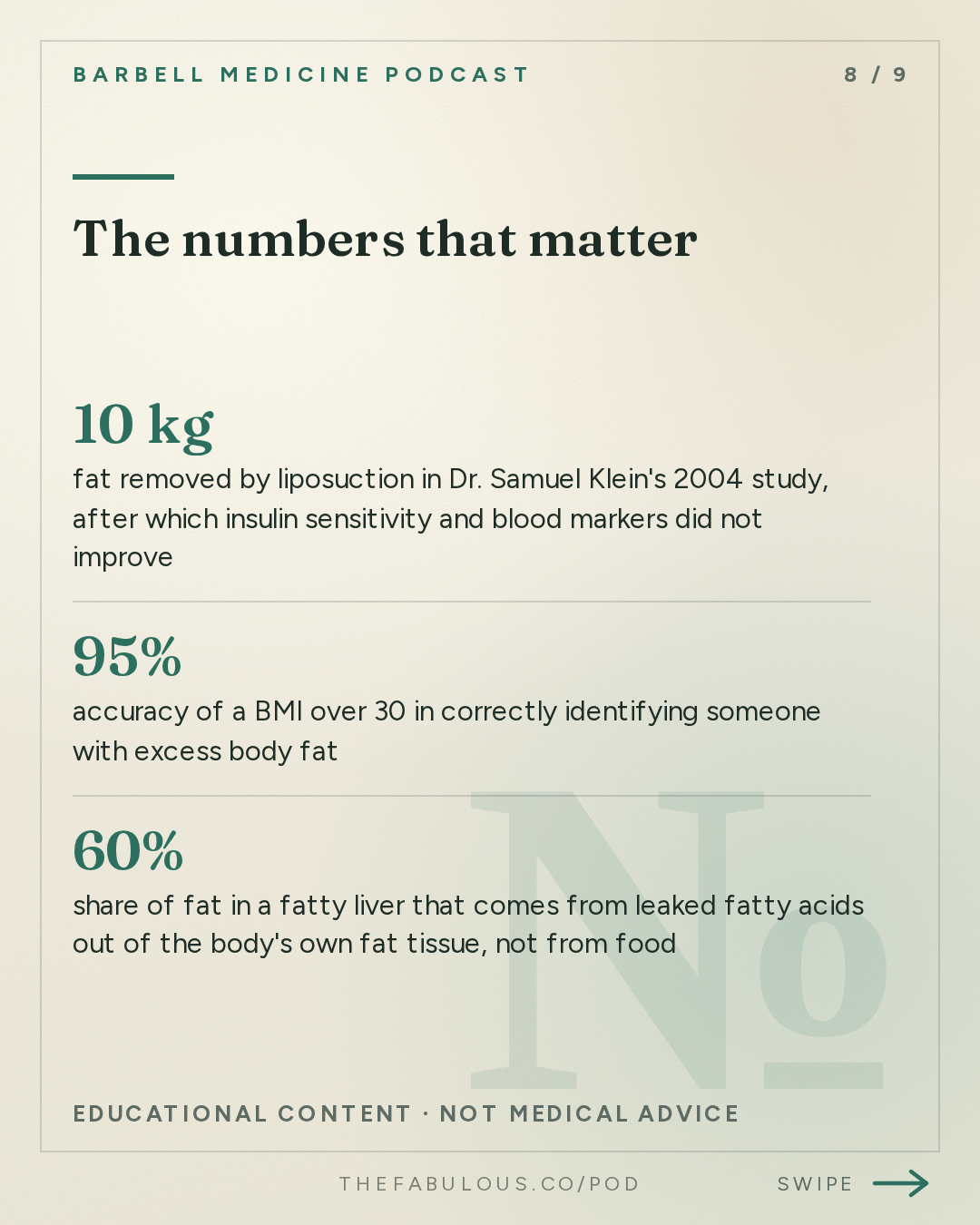
- 10 kg fat removed by liposuction in Dr. Samuel Klein's 2004 study, after which insulin sensitivity and blood markers did not improve
- 95% percent accuracy of a BMI over 30 in correctly identifying someone with excess body fat
- 60% percent share of fat in a fatty liver that comes from leaked fatty acids out of the body's own fat tissue, not from food
In their words
“10 kilos of fat were taken out of the human, and the disease didn't notice.”
“The garage never gets more parking spaces. You can't really expand it. Whatever you were given is what you're working with.”
“A theory that's working right makes new predictions that then come true. A theory that's dying only explains away the things that already went wrong”
“The overflow is the disease we call obesity. It's the point where somebody's storage runs out and starts spilling into organs that were never built to hold it.”
Protocols
-
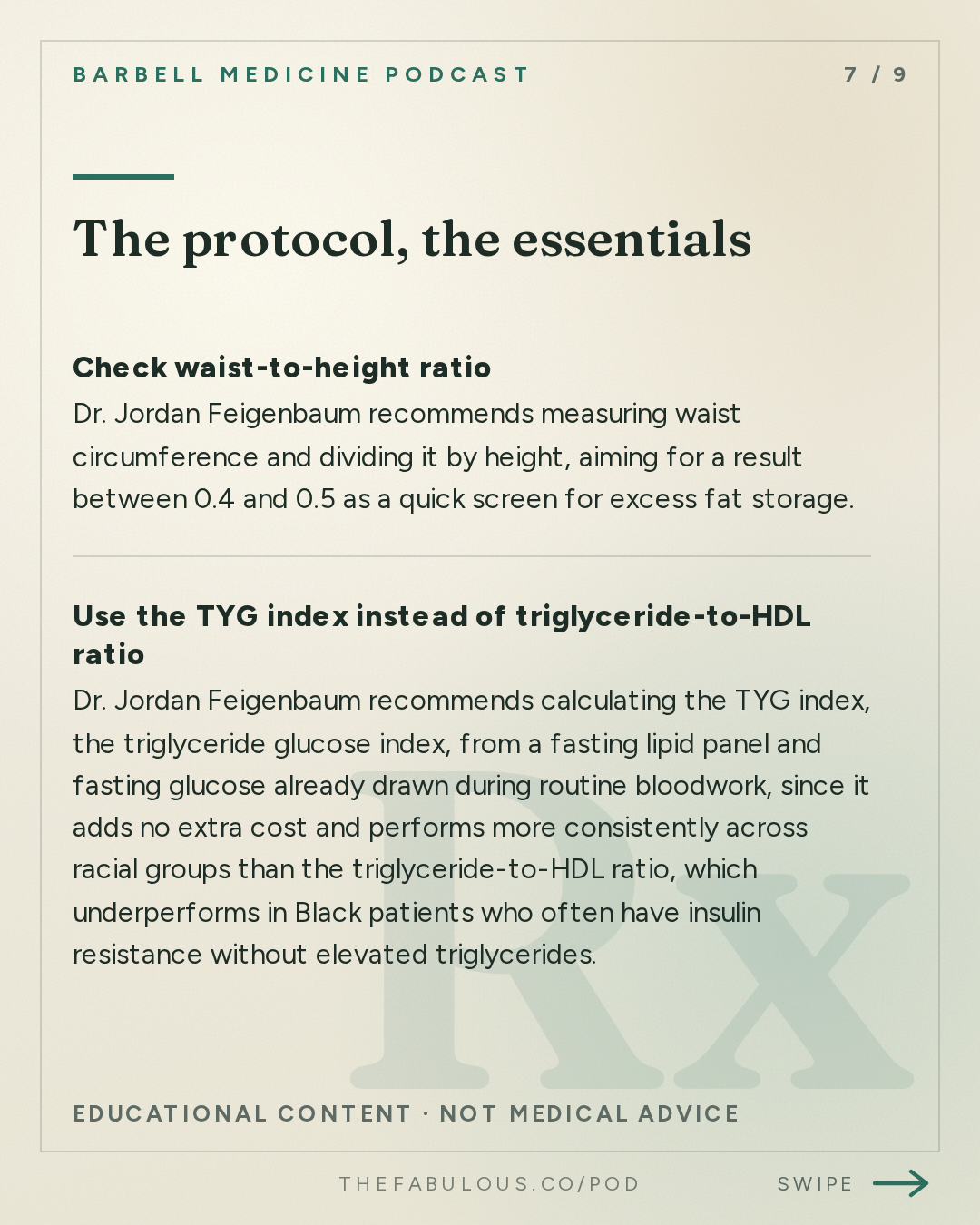
Check waist-to-height ratio
Dr. Jordan Feigenbaum recommends measuring waist circumference and dividing it by height, aiming for a result between 0.4 and 0.5 as a quick screen for excess fat storage.
as part of routine metabolic screening
-
Use the TYG index instead of triglyceride-to-HDL ratio
Dr. Jordan Feigenbaum recommends calculating the TYG index, the triglyceride glucose index, from a fasting lipid panel and fasting glucose already drawn during routine bloodwork, since it adds no extra cost and performs more consistently across racial groups than the triglyceride-to-HDL ratio, which underperforms in Black patients who often have insulin resistance without elevated triglycerides.
alongside routine fasting bloodwork
-
Rule out type 1 diabetes and MODY in lean patients
Dr. Jordan Feigenbaum recommends that clinicians confirm a type 2 diabetes diagnosis in lean patients by ruling out type 1 diabetes and MODY, a rare inherited single-gene form of diabetes that runs in families, because one study found that one in six lean patients labeled type 2 actually had a different condition.
at initial diagnosis in lean patients
-
Use FIB4 then elastography to check for liver scarring
Dr. Jordan Feigenbaum recommends calculating the FIB4 score, a formula using age, two liver enzymes, and platelet count from existing bloodwork, and following an elevated result with elastography, an ultrasound that measures liver stiffness, rather than a liver biopsy.
when fatty liver is suspected
Questions this episode answers
What is the personal fat threshold theory?
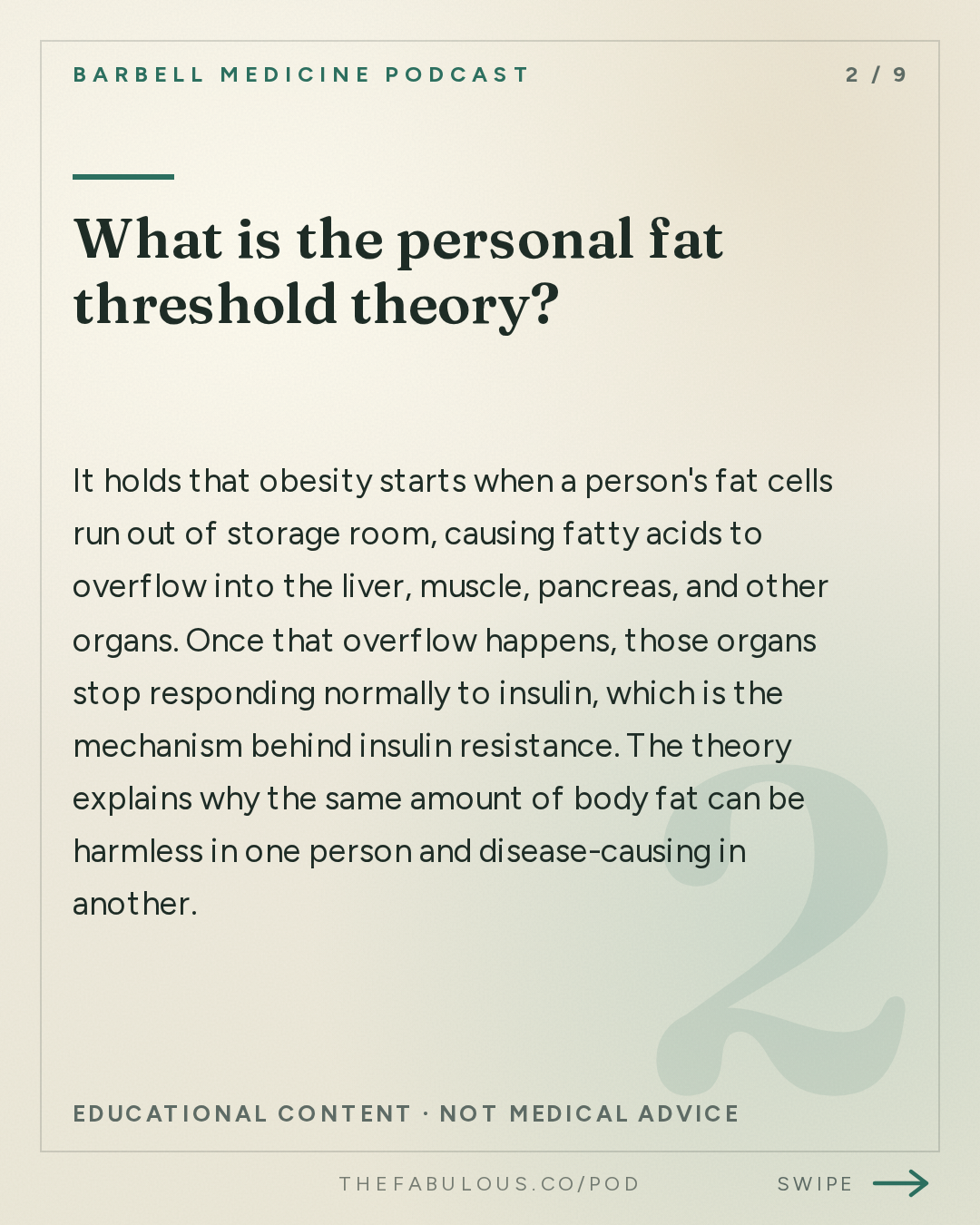
It holds that obesity starts when a person's fat cells run out of storage room, causing fatty acids to overflow into the liver, muscle, pancreas, and other organs (10:20). Once that overflow happens, those organs stop responding normally to insulin, which is the mechanism behind insulin resistance (11:39). The theory explains why the same amount of body fat can be harmless in one person and disease-causing in another.
Does BMI accurately measure body fat?
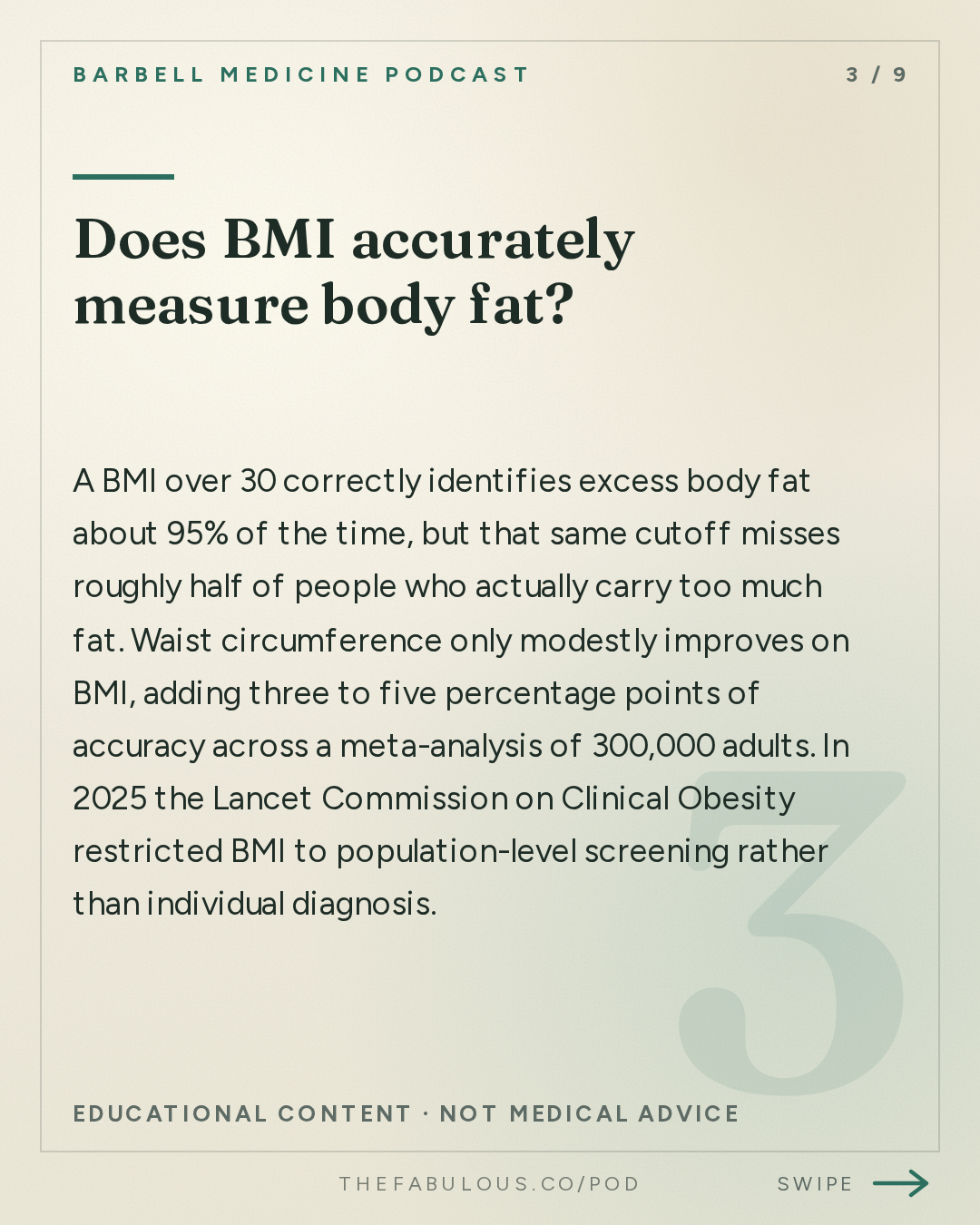
A BMI over 30 correctly identifies excess body fat about 95% of the time, but that same cutoff misses roughly half of people who actually carry too much fat (04:06). Waist circumference only modestly improves on BMI, adding three to five percentage points of accuracy across a meta-analysis of 300,000 adults (04:48). In 2025 the Lancet Commission on Clinical Obesity restricted BMI to population-level screening rather than individual diagnosis (37:35).
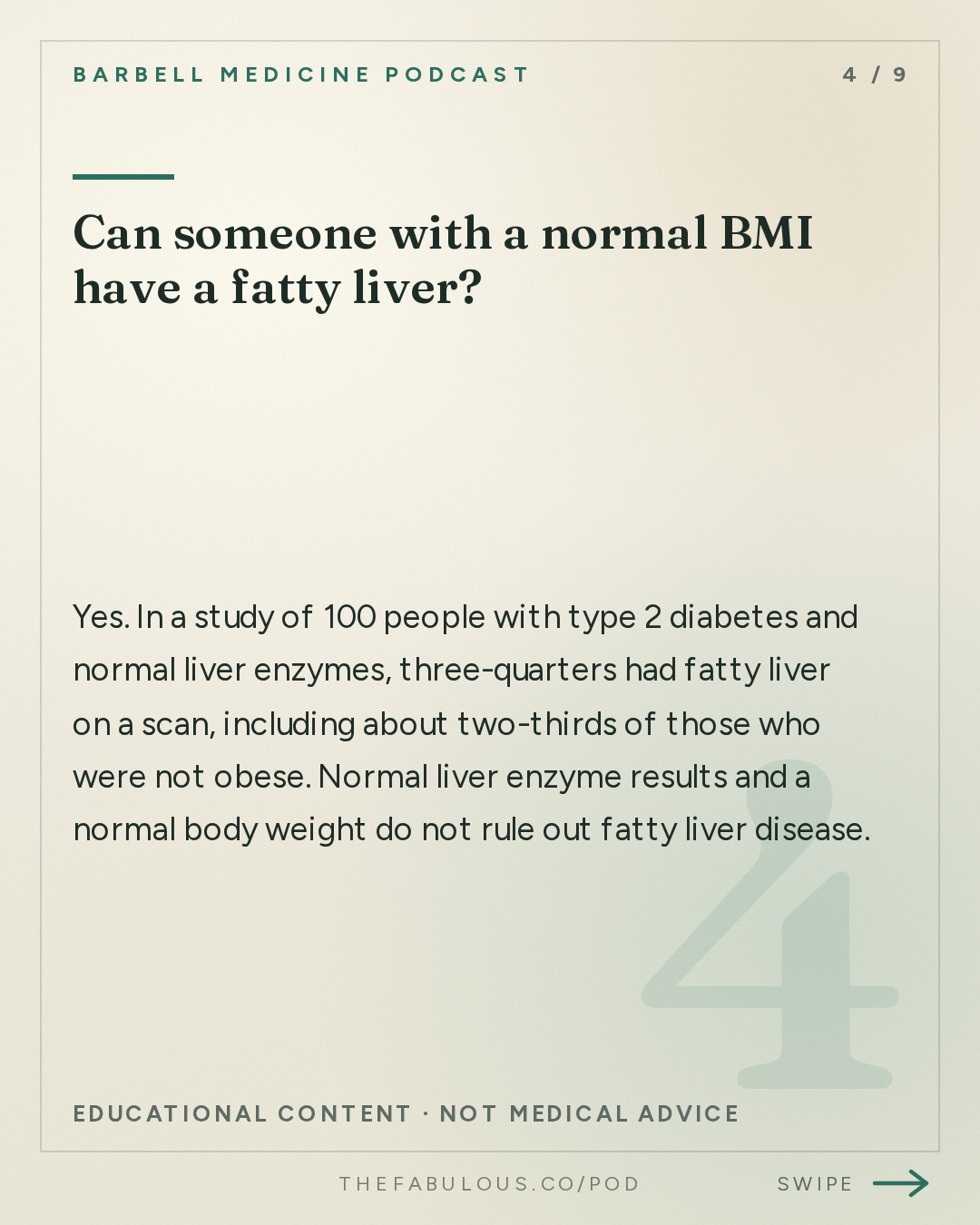
Can someone with a normal BMI have a fatty liver?
Yes. In a study of 100 people with type 2 diabetes and normal liver enzymes, three-quarters had fatty liver on a scan, including about two-thirds of those who were not obese (35:48). Normal liver enzyme results and a normal body weight do not rule out fatty liver disease.
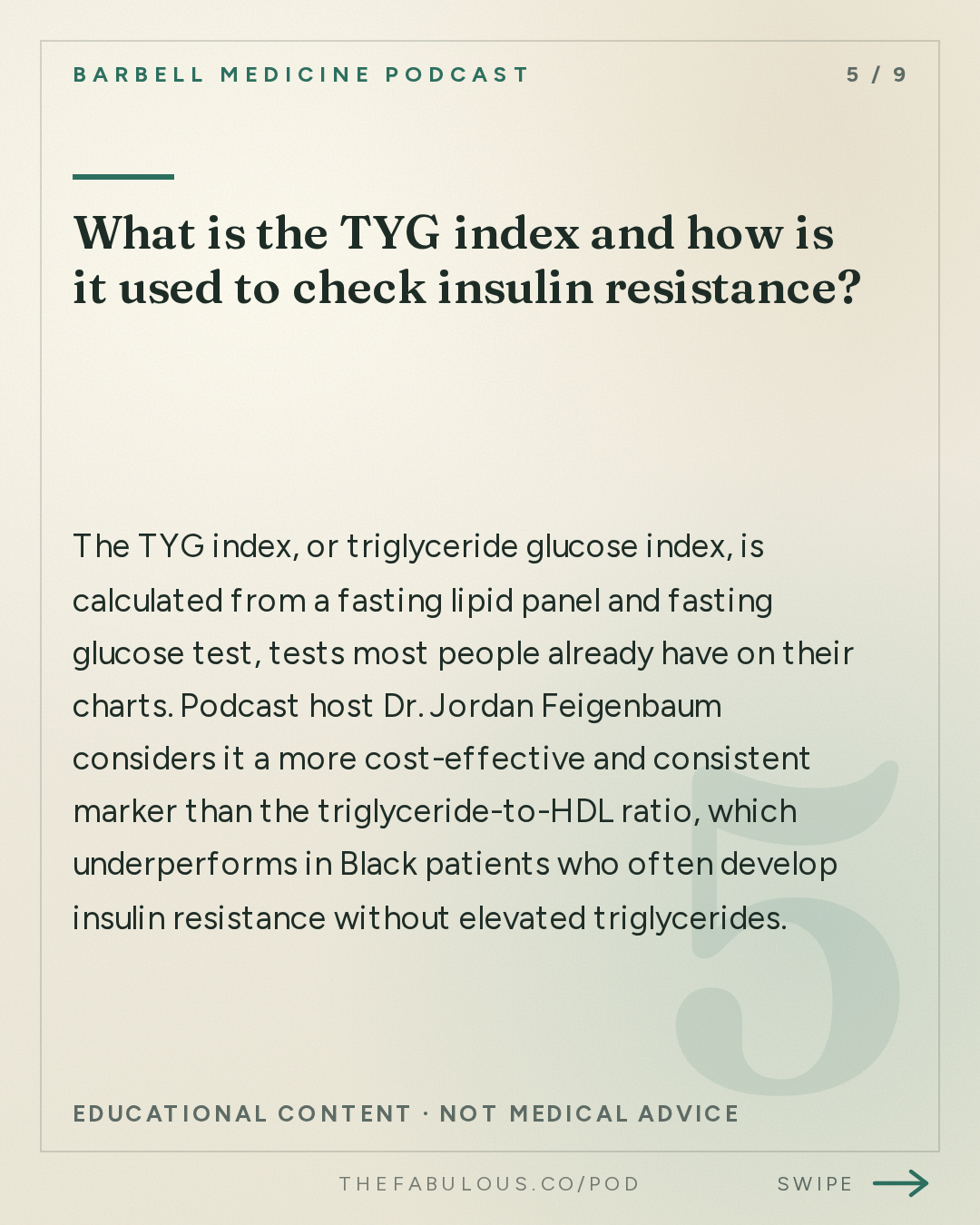
What is the TYG index and how is it used to check insulin resistance?
The TYG index, or triglyceride glucose index, is calculated from a fasting lipid panel and fasting glucose test, tests most people already have on their charts (41:21). Podcast host Dr. Jordan Feigenbaum considers it a more cost-effective and consistent marker than the triglyceride-to-HDL ratio, which underperforms in Black patients who often develop insulin resistance without elevated triglycerides (42:21).
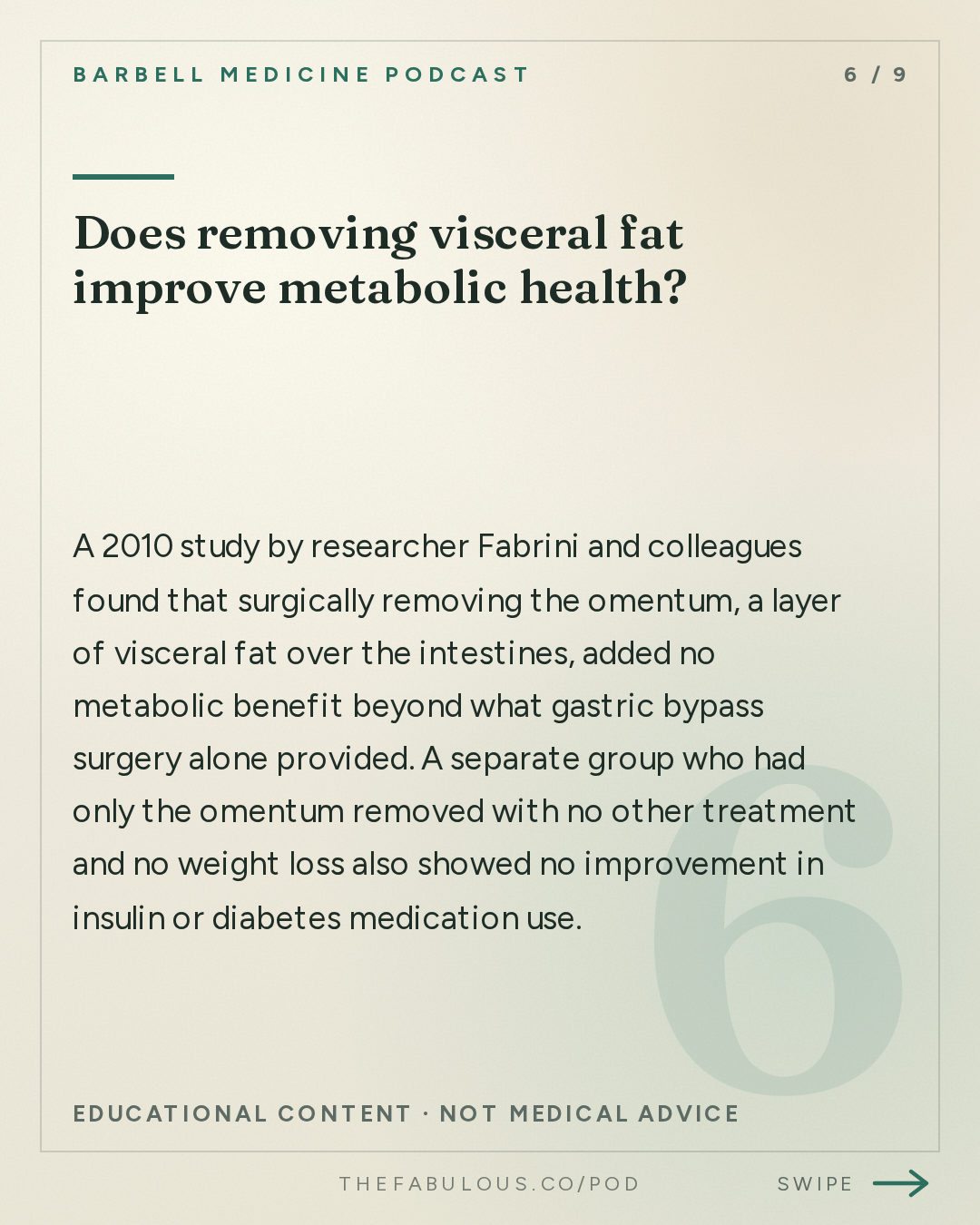
Does removing visceral fat improve metabolic health?
A 2010 study by researcher Fabrini and colleagues found that surgically removing the omentum, a layer of visceral fat over the intestines, added no metabolic benefit beyond what gastric bypass surgery alone provided (16:07). A separate group who had only the omentum removed with no other treatment and no weight loss also showed no improvement in insulin or diabetes medication use (16:26).
The full read, in cards
Go deeper
- Samuel Klein's 2004 liposuction study — removing 10 kg of subcutaneous fat did not improve insulin sensitivity or blood markers in 15 women
- Fabrini et al. 2010 omentum removal study — found that surgically removing visceral fat added no metabolic benefit beyond gastric bypass alone
- 2002 Yale and NIH leptin replacement study in lipodystrophy patients — leptin injections reversed liver fat and insulin resistance in patients with no body fat, without changing body weight
- Pioglitazone randomized trial in type 2 diabetes — the drug caused fat gain while improving liver insulin sensitivity and resolving liver inflammation in about half of patients
- Mendelian randomization study of liver fat genes — found that genetically higher liver fat causally raises type 2 diabetes risk by about a quarter
- Lancet Commission on Clinical Obesity (2025) — redefined obesity to require confirmation of excess fat beyond BMI and split diagnosis into clinical and pre-clinical categories
Mentioned
Dr. Samuel Klein · Dr. Jordan Feigenbaum · Dr. Kevin Hall · Ancel Keys · Adolphe Quetelet · Urbain Le Verrier · Lancet Commission on Clinical Obesity · Pioglitazone · Retatrutide · DEXA scan · Leptin · TYG index
More from this show and category

How Much Lifting Is Enough for Health?
Public health guidelines recommend lifting twice a week, but the study behind that number found three days worked better. Jordan Feigenbaum argues lifting doesn't hurt the heart, carries lower injury risk than running, and shows no real ceiling for strength, bone density, or metabolic benefits, so most people should train roughly double the current guideline.
Why Lifting Heavy Was Called Dangerous
In 1985 a panel of obstetricians banned pregnant women from raising their heart rate past 140 beats per minute, a number invented by consensus, not data (00:01). The same pattern, rules built on vibes rather than evidence, shaped a century of bans on heavy lifting for women, children, and anyone squatting below parallel, until later studies quietly reversed nearly all of them.

Is Training Safe in Wildfire Smoke?
Exercise still protects health during wildfire smoke, and lifting is safer than cardio because it barely raises breathing rate. Training right at failure isn't required for muscle growth either, since easier sets and even indirect fractional sets still add measurable stimulus, so individual response matters more than hitting an exact rep-in-reserve number.
Do You Need a Calorie Surplus to Build Muscle?
No: men above roughly 20% body fat can build muscle in a modest calorie deficit by spending stored fat as fuel. Sports scientist Eric Helms says below about 12% body fat the reverse happens, so a small surplus helps; in between, calorie balance barely matters if training and protein are dialed in.
