How Much Lifting Is Enough for Health?
How Much Lifting is Enough? How Much is Too Much?
The brief
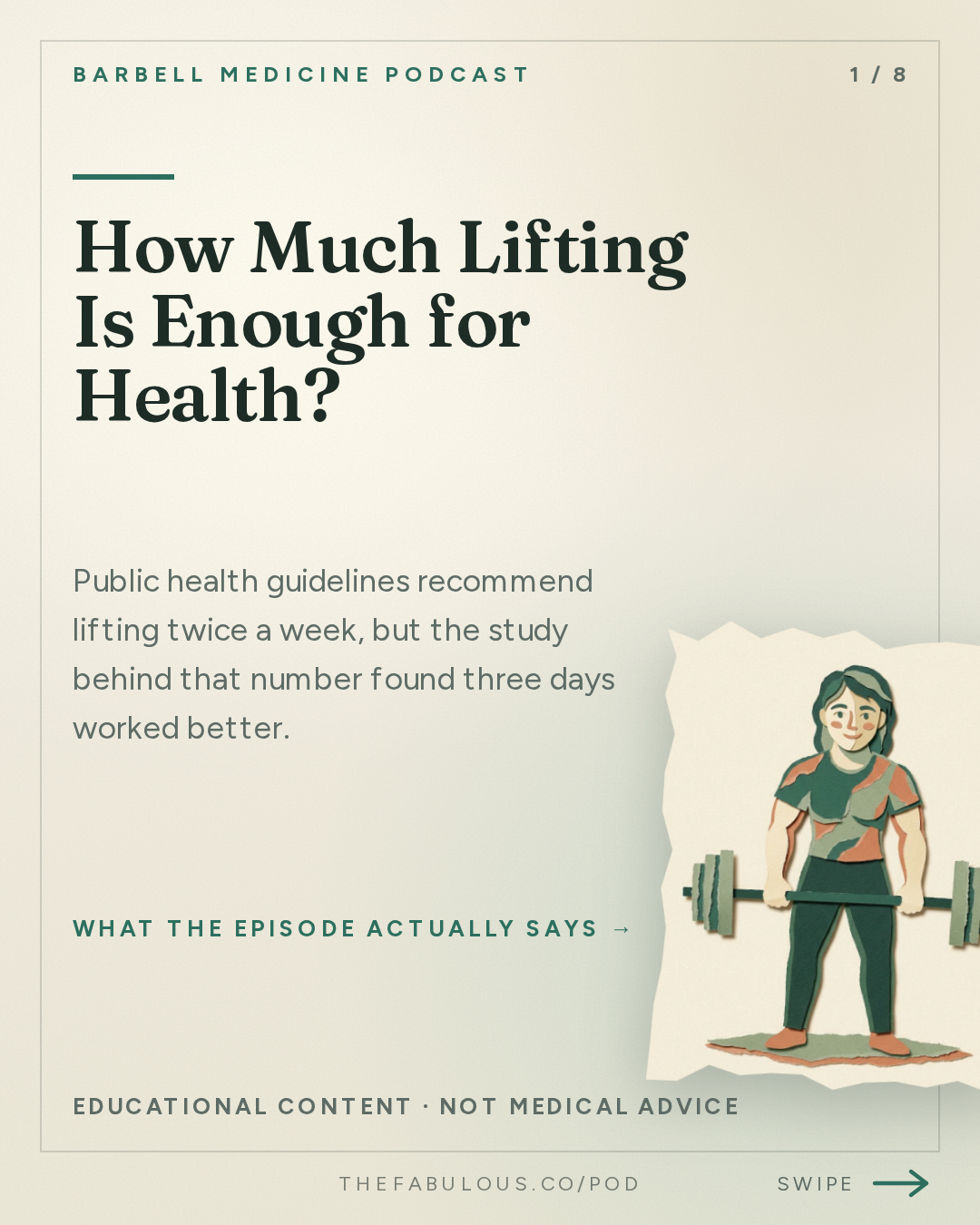
Public health guidelines recommend lifting twice a week, but the study behind that number found three days worked better. Jordan Feigenbaum argues lifting doesn't hurt the heart, carries lower injury risk than running, and shows no real ceiling for strength, bone density, or metabolic benefits, so most people should train roughly double the current guideline.
In 1989, 117 sedentary adults in their twenties walked into a lab at the University of Florida and did exactly one exercise: a single set of leg extensions, seven to ten reps, pushed to failure. Some trained twice a week, some trained three times, and some didn't train at all. After eighteen weeks, the three-day group got 28 percent stronger. The two-day group got 21 percent stronger (00:31). That gap, oddly, is the reason public health guidelines across the English-speaking world now tell adults to lift weights twice a week.
The study's own authors admitted more training worked better. They recommended less anyway, reasoning that longer sessions cause people to quit (00:53). When the American College of Sports Medicine wrote this into its first resistance training guideline the following year, its key supporting citation was a personal letter from the chairman of its own revision committee, who happened to be the third author of the very study that found three days beat two (01:57). A fitness recommendation built this way later got relabeled a health recommendation, without anyone running the health version of the experiment (02:22).
Jordan Feigenbaum, a physician and co-founder of Barbell Medicine, spends this episode pulling that thread. His organizing idea is that exercise science keeps conflating two separate questions: how much training changes the body, and how much of that change actually buys health (02:42). Frequency, he points out, is mostly bookkeeping.
"Exercise frequency, which is how many days per week you exercise, is mostly just a tool to distribute the training in a way that fits your schedule." — Jordan Feigenbaum [01:25]
Even the definition of "strength training" is unstable. A 2022 analysis of the UK's Active Lives survey, with over 250,000 respondents, found that the share of adults meeting the lifting guideline swung from 28 percent of men down to 5.6 percent of adults depending on which activities counted (05:25). Same people, same survey, five-fold difference, just from changing the definition.
The Heart That Never Thickened
Much of the fear around lifting traces to the heart. The idea that resistance training pathologically thickens the heart wall, known as the Morgenroth hypothesis, comes from a 1975 study of 56 athletes using early ultrasound. Wrestlers and shot putters showed walls 13 to 14 millimeters thick, which researchers compared to disease states like high blood pressure, despite never measuring anyone's blood pressure (10:36). That one-to-two millimeter difference, in a tiny sample, on primitive equipment, became a textbook fact.
Later, better studies dismantled it. A 1991 survey of nearly 1,000 elite athletes found the thickest heart walls belonged to rowers, an endurance sport, not strength athletes (12:18). A follow-up study of 100 long-term strength athletes topped out at 12 millimeters, which is normal (13:04). A 2011 trial using cardiac MRI, the gold standard, found wall thickness changed in endurance trainees but not in lifters after six months of supervised training (13:54). The hypothesis is debunked (15:28).
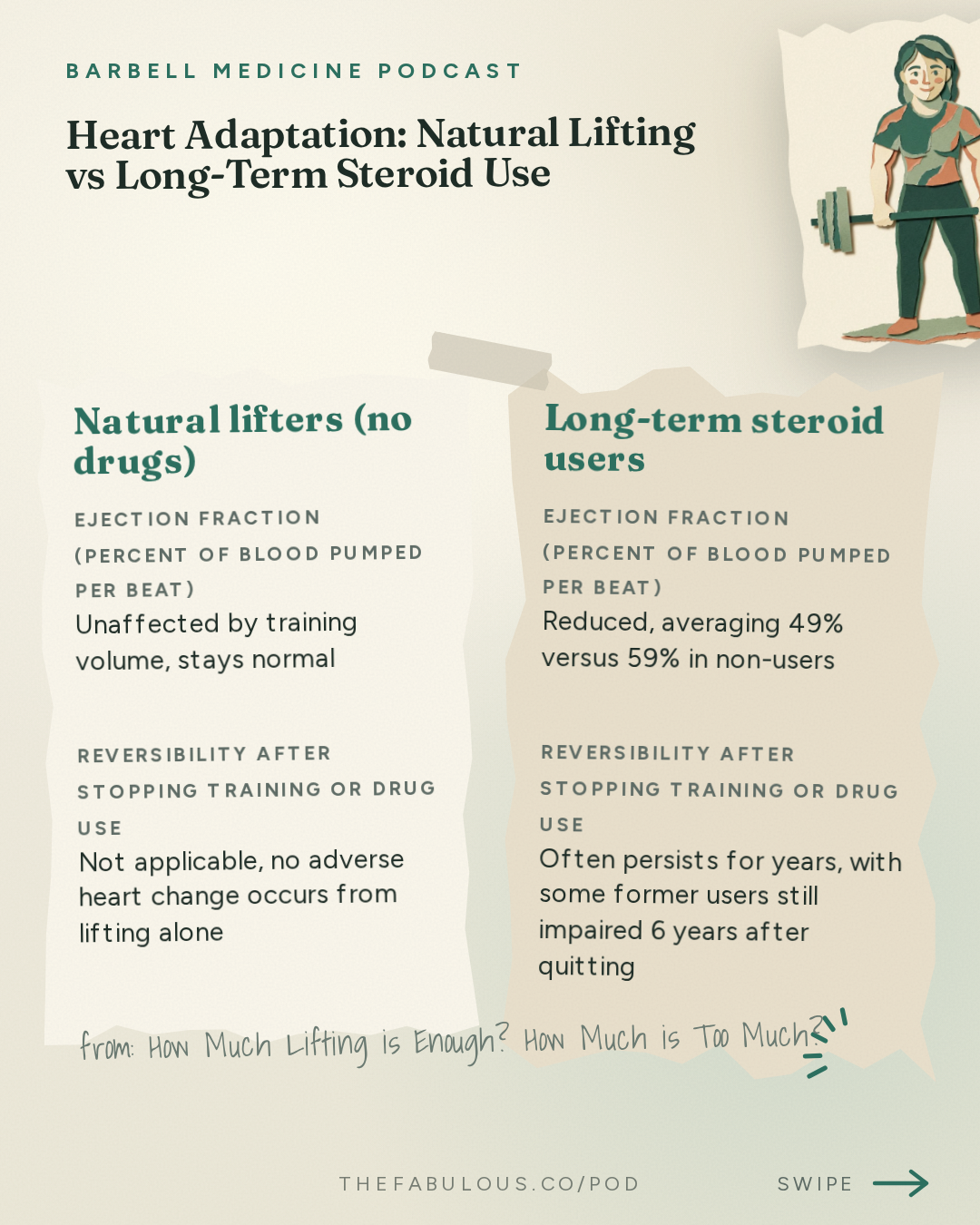
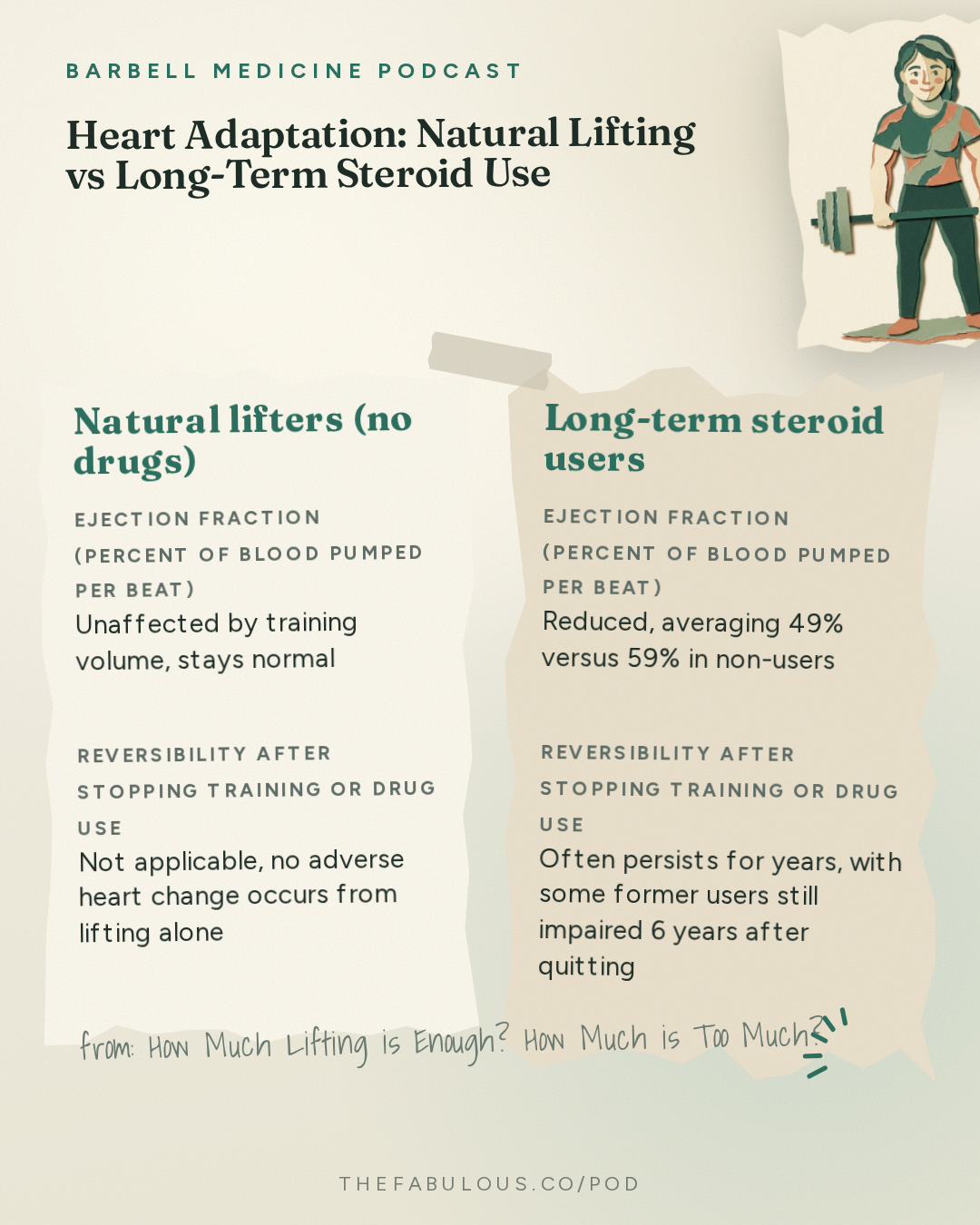
Steroids are a different story. A Dutch study of men on a four-month testosterone cycle found heart mass and wall thickness rose and ejection fraction, the percentage of blood the heart pumps out per beat, fell by about five points, but training hours in the gym didn't explain any of it (16:17). A Norwegian study of long-term steroid users found their heart muscle mass ran about 30 percent higher than non-user lifters, while ejection fraction averaged 49 percent against 59 percent in controls, with some former users still impaired six years after quitting (17:28). The damage tracks the drug, not the barbell.
Injury fears don't hold up either. Resistance training carries an injury rate of two to four per 1,000 participation hours, lower than running's eight to ten per 1,000 hours for experienced runners (19:24). The average lifting injury resolves in under two weeks, which points to overuse strain rather than the catastrophic disc failures people picture (20:10). Even sudden cardiac arrest is rarer and more survivable at gyms than at bowling alleys or ice rinks, partly because gyms tend to have more bystanders who notice and more defibrillators on the wall (20:49).
A newer worry is the so-called J-shaped curve, the idea that some lifting helps but more lifting hurts. A 2022 meta-analysis in Japan found any lifting was linked to 15 percent lower all-cause mortality, with the benefit peaking around 40 minutes per week and crossing into theoretical harm above 140 minutes (23:23). But every estimate above the midpoint carried a massive margin of error, including no effect at all, and the paper's own authors called the apparent extra risk unclear (24:19). A year later, a cardiology review rebranded that uncertainty as possible harm and wrote it into a 150-minute cap (25:38). The underlying data simply can't support that conclusion, partly because almost nobody in these surveys lifts very much to begin with, and partly because a single self-reported number collected once, years before death, tells us nothing about whether the person actually got stronger from it (26:45).
Where the Benefits Run Out
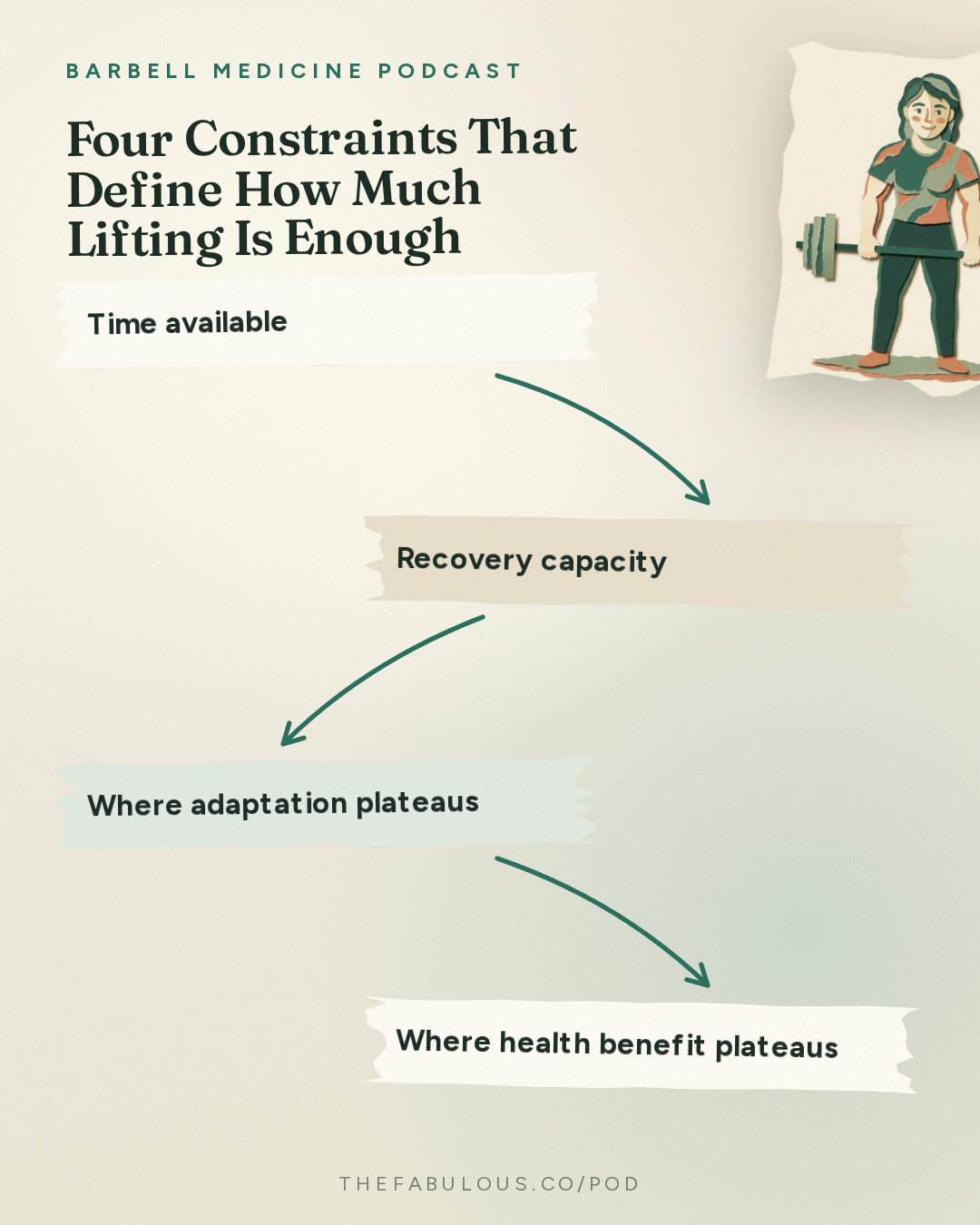
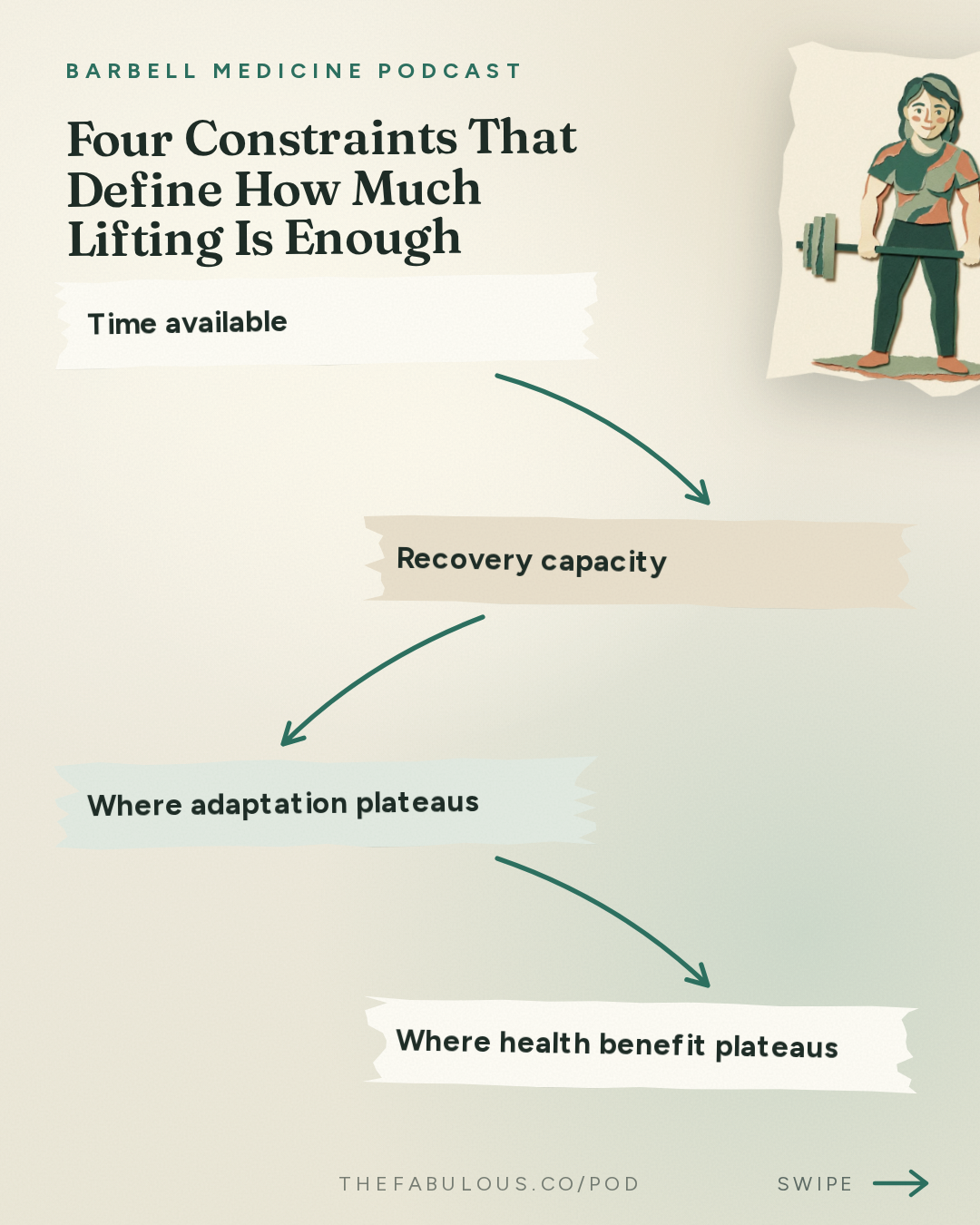
So if lifting is safe and the warnings about overdoing it don't hold up, how much is actually enough? Feigenbaum walks through four adaptations and asks where more training stops paying off.
Strength keeps climbing with volume, with diminishing returns but, according to a new ACSM position stand, no true ceiling (37:30). The best health data, a Swedish study of 1.1 million military conscripts, found mortality risk flattened after the fourth strength decile (38:03), and a Cooper Institute study of nearly 9,000 men found the same plateau. But the people in the "strongest" groups in these studies were leg-pressing around 330 pounds, hardly strong by a lifter's standard (40:23). Feigenbaum suspects the real ceiling is simply untested.
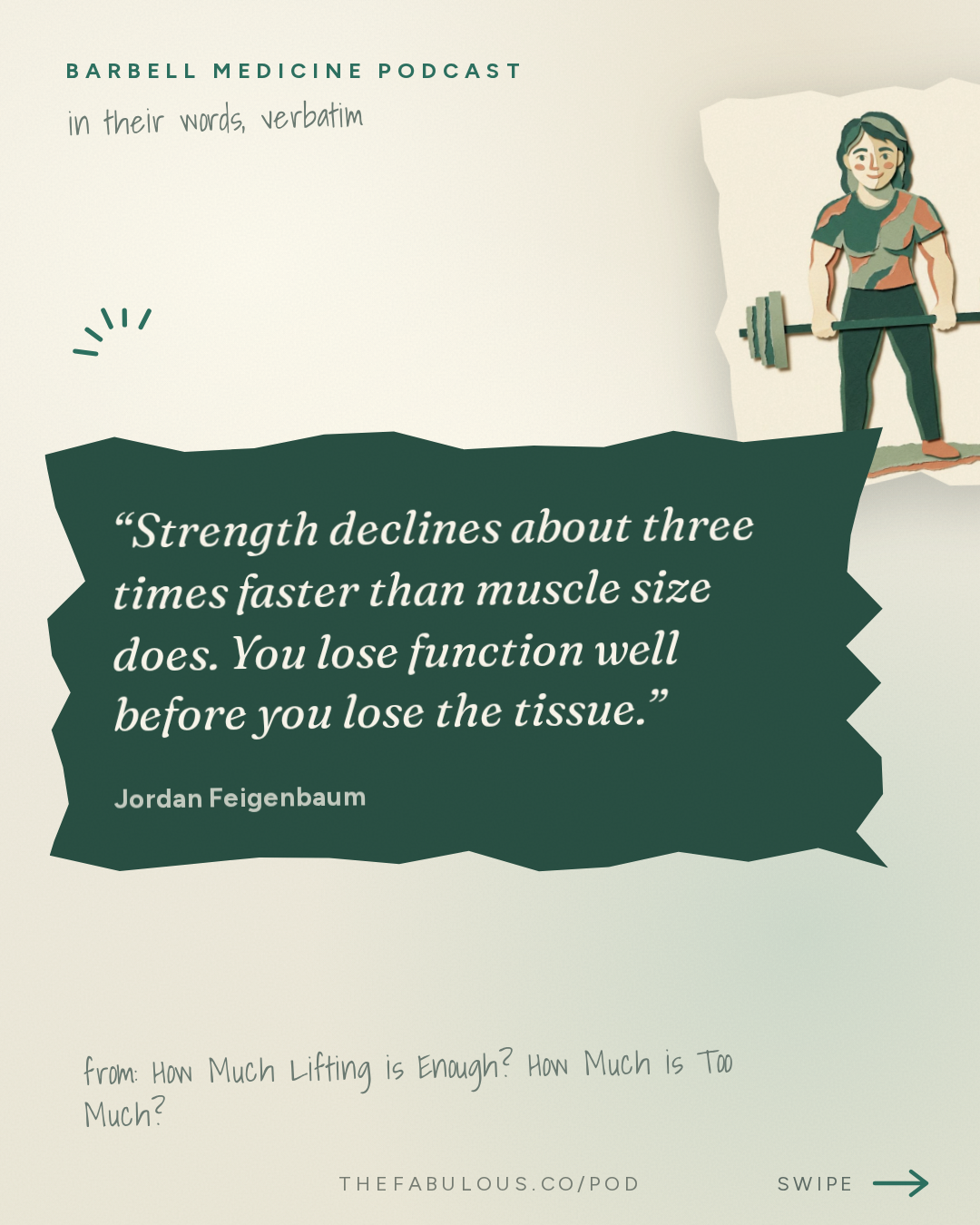
"Strength declines about three times faster than muscle size does. You lose function well before you lose the tissue." — Jordan Feigenbaum [48:30]
Muscle mass itself turns out to be a poor predictor of health. A pooled analysis of 18,800 older adults found grip strength and walking speed predicted falls, fractures, and death, while lean mass measured by DEXA scan predicted almost nothing (47:17). Strength is the leading indicator. Mass is the lagging one.
Bone is the best-characterized case. Classic turkey wing-bone experiments from the 1980s found bone needs strain above roughly 1,000 to 3,000 microstrain, a measure of how much the bone deforms under load, to trigger new growth (51:50). Lifting at about 65 percent of a one-rep max clears that bar. In the Lift More trial, post-menopausal women lifting heavy twice a week for eight months raised spine bone density by 2.9 percent while a control group lost 1.2 percent, with one minor back spasm as the only adverse event (54:24).
Metabolic effects move fastest and fade fastest. A single lifting session boosts insulin sensitivity, meaning the body's own insulin moves glucose into muscle more efficiently, by increasing GLUT4 transporters on the muscle cell surface. That effect lasts about one to three days before resetting, regardless of how much muscle someone carries (60:35).
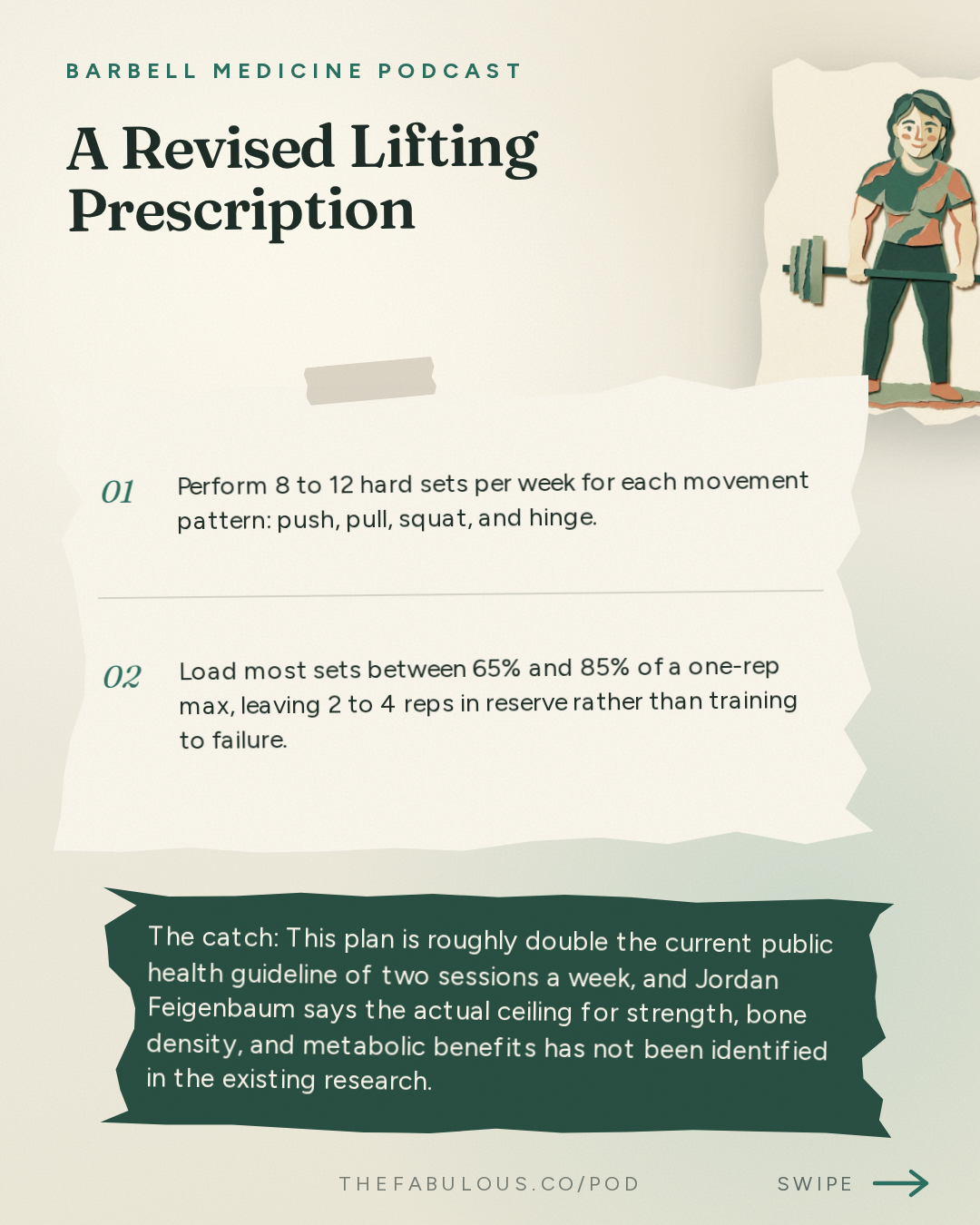
From all this, Feigenbaum lands on a concrete target: roughly 8 to 12 hard sets per movement pattern a week (push, pull, squat, hinge), most of it at 65 to 85 percent of a one-rep max.
"For volume, somewhere between eight and 12 hard sets per movement pattern per week, push, pull, squat, and hinge with a list of examples underneath each one. That's about double what the guidelines ask for." — Jordan Feigenbaum [69:14]
The federal guidelines call themselves minimums, but for cardio they explicitly say benefits keep rising beyond the stated range. For lifting, that sentence never appears (67:19). Feigenbaum's closing argument is that the data never found where lifting's benefits stop, only where the studies stopped looking.
Ask this episode anything
Pod's AI answers from the episode itself, with the minute mark so you can hear it yourself.
Or start with one of these
Ask this episode
Pod's AI listens to the whole episode to answer, and points you to the minute it comes from.
The rest of this answer, and any question after it
Answers come from the episode itself, never from a summary of it.
ContinueKey takeaways
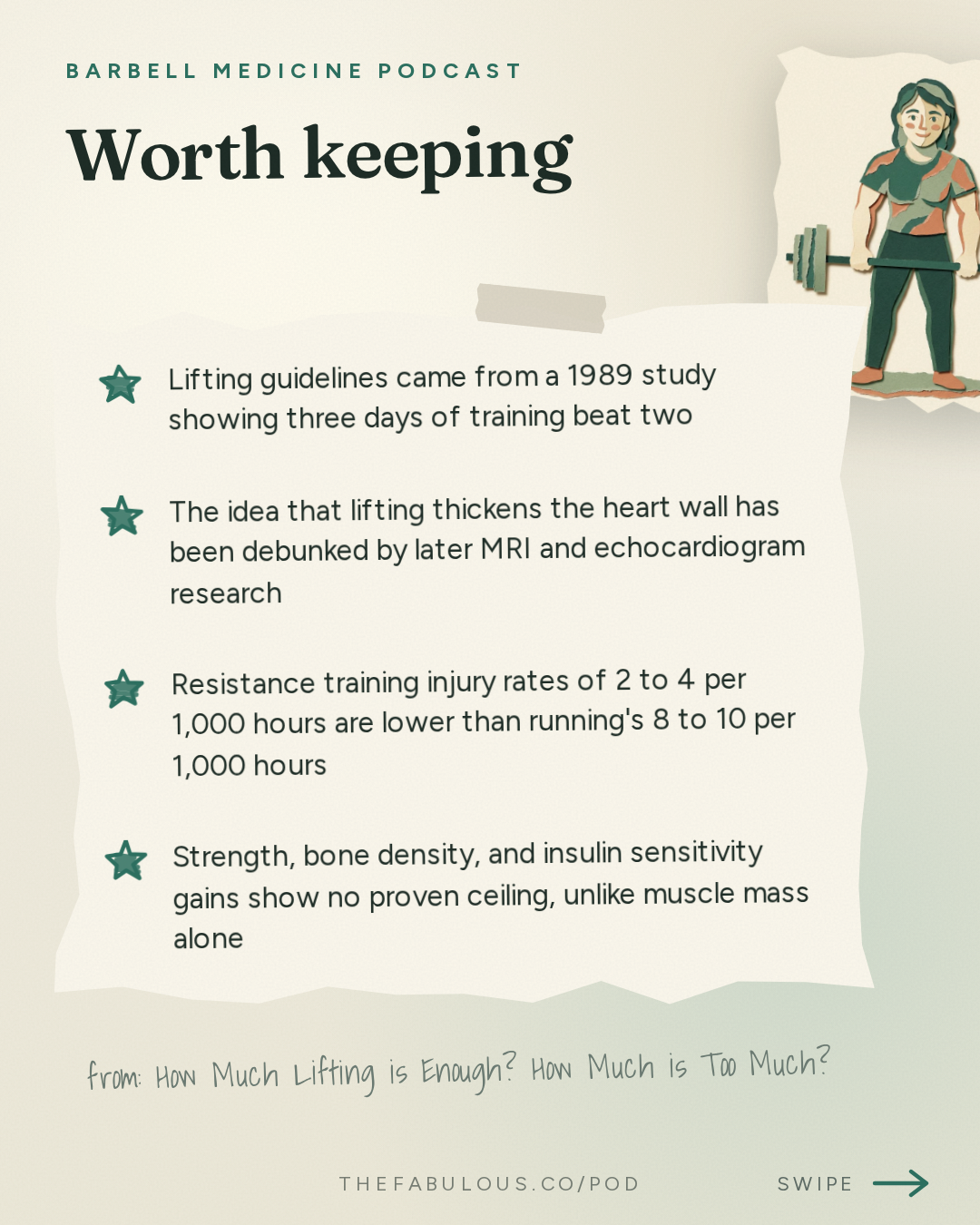
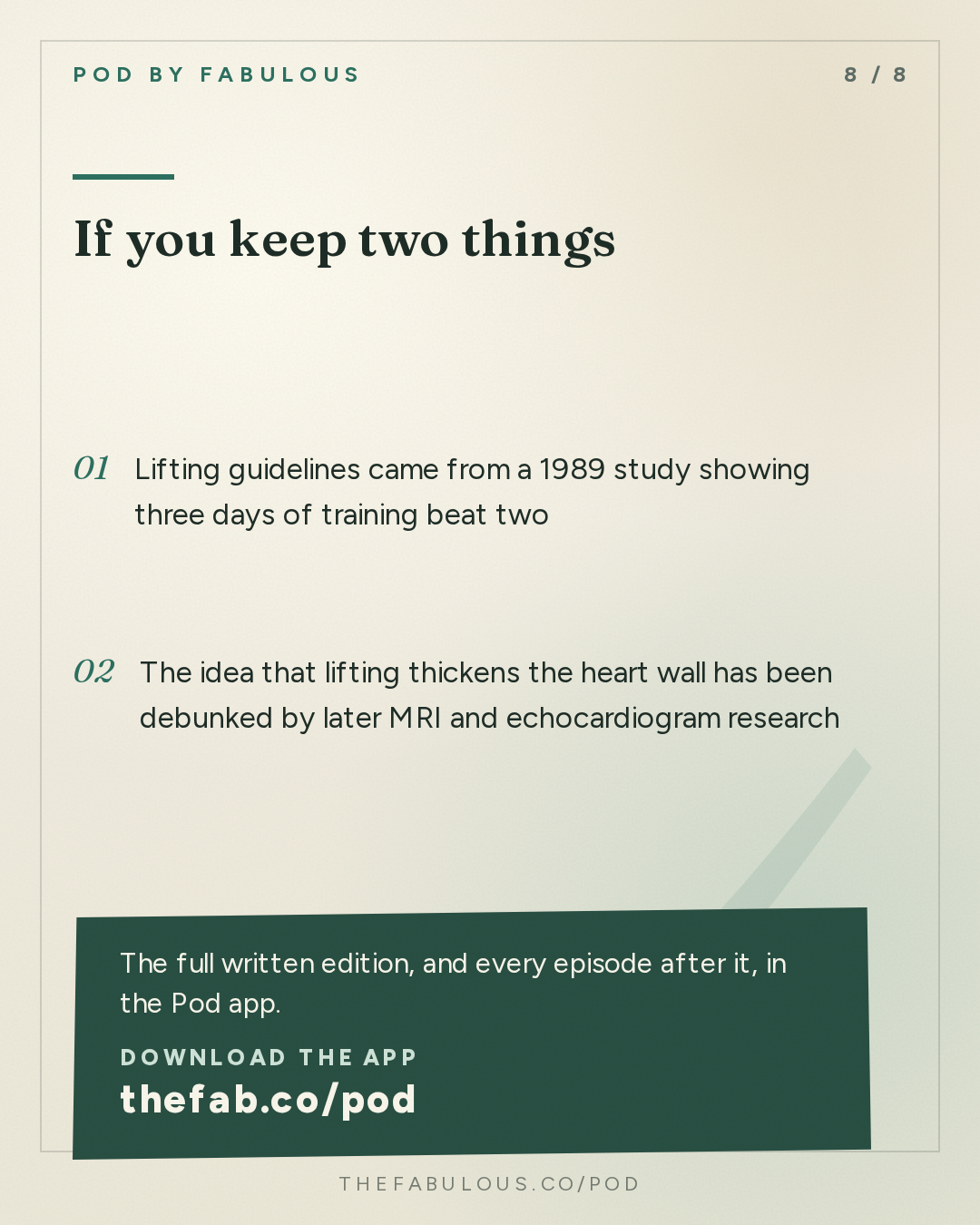
- Lifting guidelines came from a 1989 study showing three days of training beat two
- The idea that lifting thickens the heart wall has been debunked by later MRI and echocardiogram research
- Resistance training injury rates of 2 to 4 per 1,000 hours are lower than running's 8 to 10 per 1,000 hours
- Strength, bone density, and insulin sensitivity gains show no proven ceiling, unlike muscle mass alone
- Jordan Feigenbaum recommends 8 to 12 hard sets per movement pattern weekly, roughly double current guidelines
The episode in cards
By the numbers
- 15% lower all-cause mortality associated with any amount of lifting versus none
- 1-3 days how long a single lifting session raises insulin sensitivity before it resets
In their words
“Exercise frequency, which is how many days per week you exercise, is mostly just a tool to distribute the training in a way that fits your schedule.”
“Your grip strength is basically BMI for your muscle.”
“Strength declines about three times faster than muscle size does. You lose function well before you lose the tissue.”
“For volume, somewhere between eight and 12 hard sets per movement pattern per week, push, pull, squat, and hinge with a list of examples underneath each one. That's about double what the guidelines ask for.”
Protocols
-
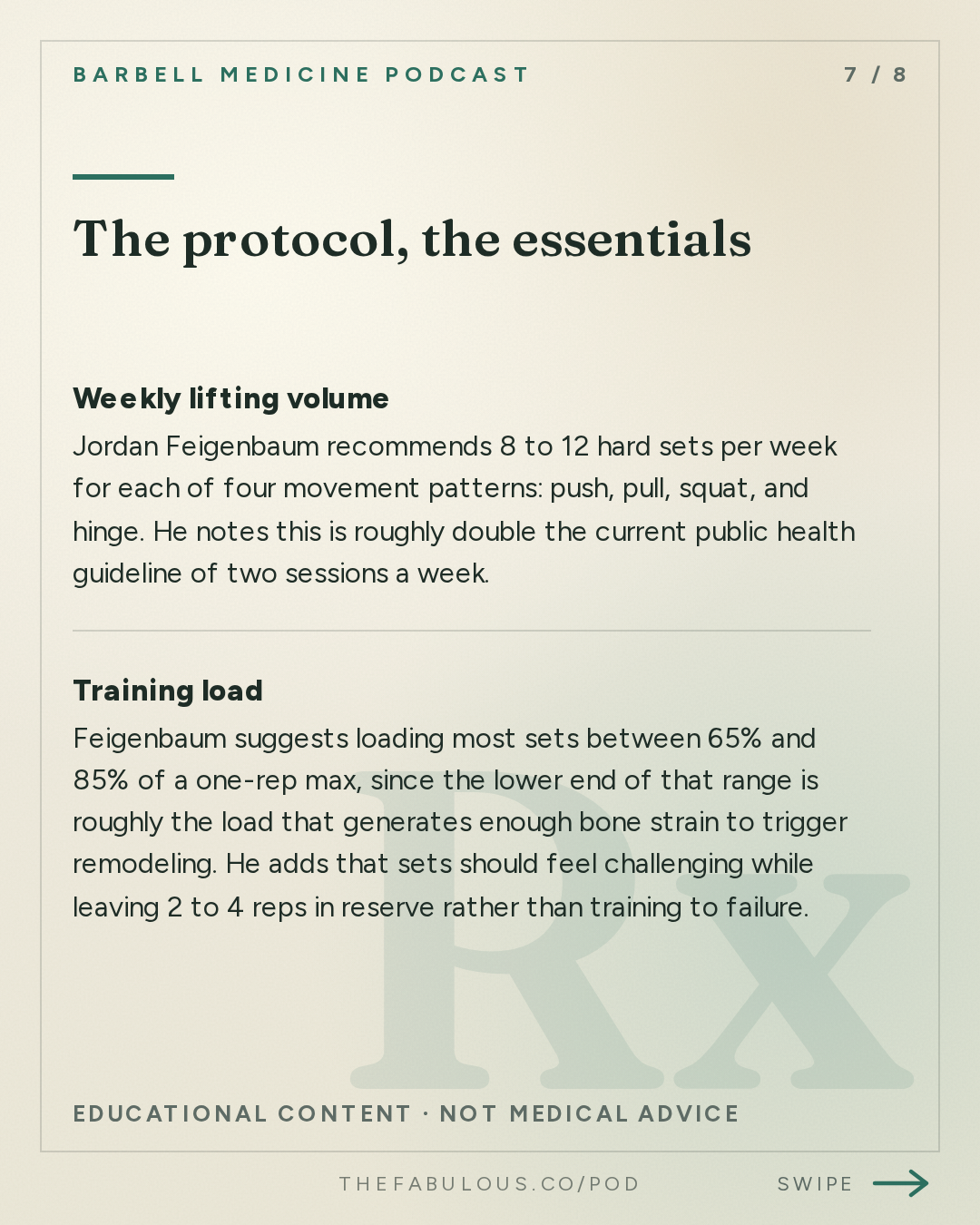
Weekly lifting volume
Jordan Feigenbaum recommends 8 to 12 hard sets per week for each of four movement patterns: push, pull, squat, and hinge. He notes this is roughly double the current public health guideline of two sessions a week.
weekly, split across however many sessions fit a schedule
-
Training load
Feigenbaum suggests loading most sets between 65% and 85% of a one-rep max, since the lower end of that range is roughly the load that generates enough bone strain to trigger remodeling. He adds that sets should feel challenging while leaving 2 to 4 reps in reserve rather than training to failure.
most sets, most sessions
-
Bone density protocol for post-menopausal women
Researchers in the Lift More trial had post-menopausal women with low bone density perform five sets of five reps at about 85% of one-rep max in the deadlift, squat, and overhead press, twice a week for eight months, combined with impact loading. Spine bone mineral density rose 2.9% in the training group, while the control group lost 1.2% over the same period.
twice weekly for 8 months
Questions this episode answers
How much weightlifting is enough for health?
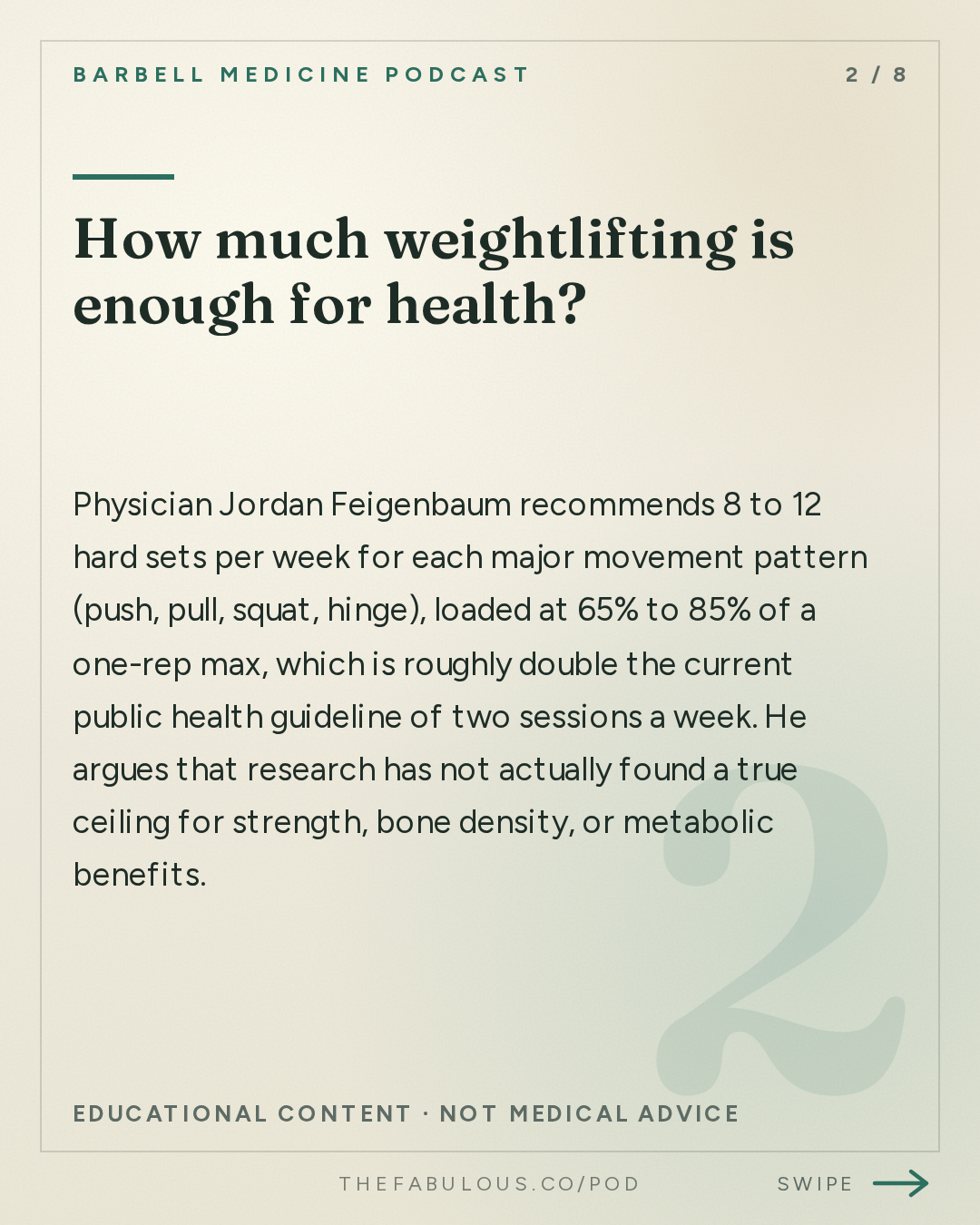
Physician Jordan Feigenbaum recommends 8 to 12 hard sets per week for each major movement pattern (push, pull, squat, hinge), loaded at 65% to 85% of a one-rep max, which is roughly double the current public health guideline of two sessions a week (69:14). He argues that research has not actually found a true ceiling for strength, bone density, or metabolic benefits.
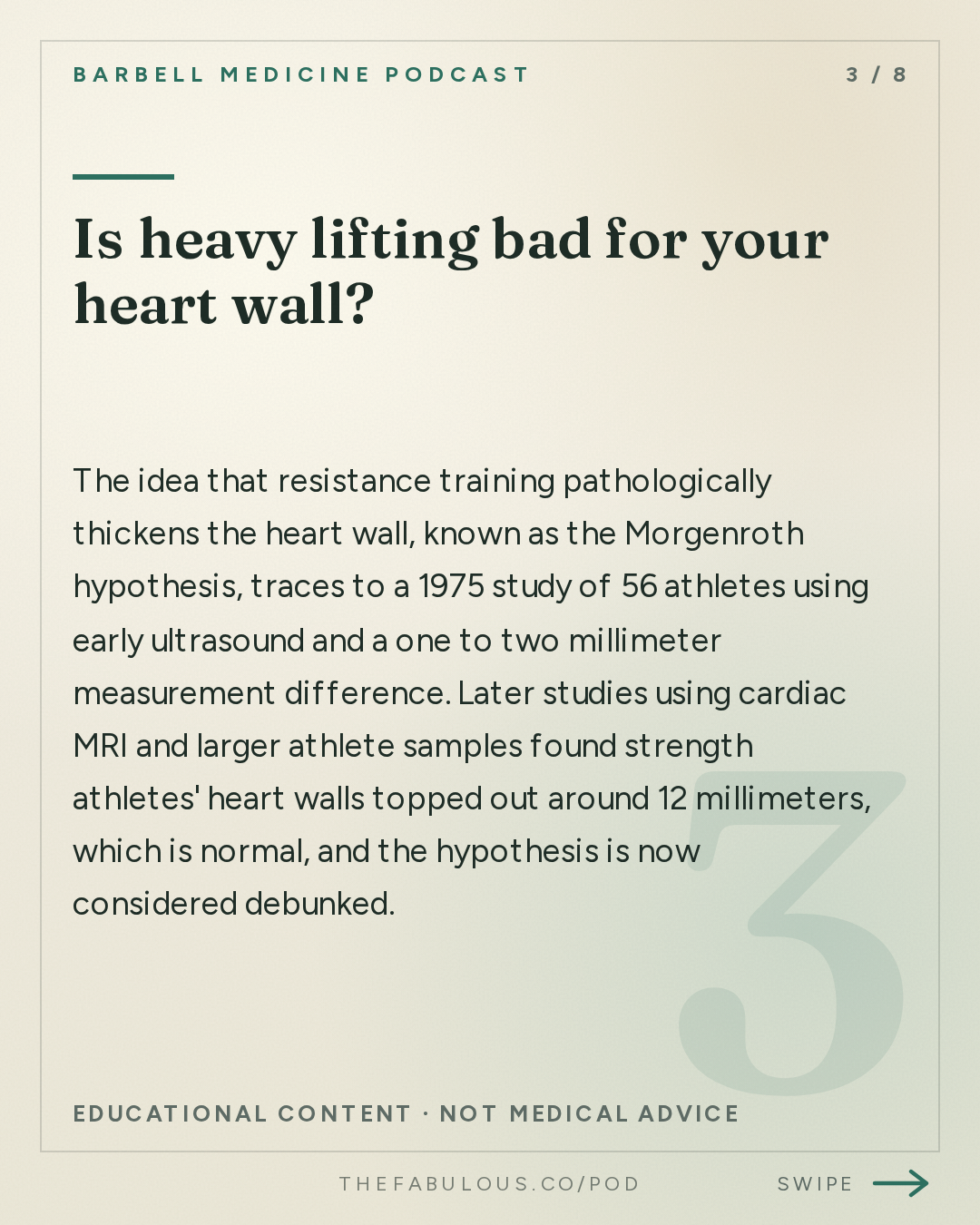
Is heavy lifting bad for your heart wall?
The idea that resistance training pathologically thickens the heart wall, known as the Morgenroth hypothesis, traces to a 1975 study of 56 athletes using early ultrasound and a one to two millimeter measurement difference (10:15). Later studies using cardiac MRI and larger athlete samples found strength athletes' heart walls topped out around 12 millimeters, which is normal, and the hypothesis is now considered debunked (15:28).
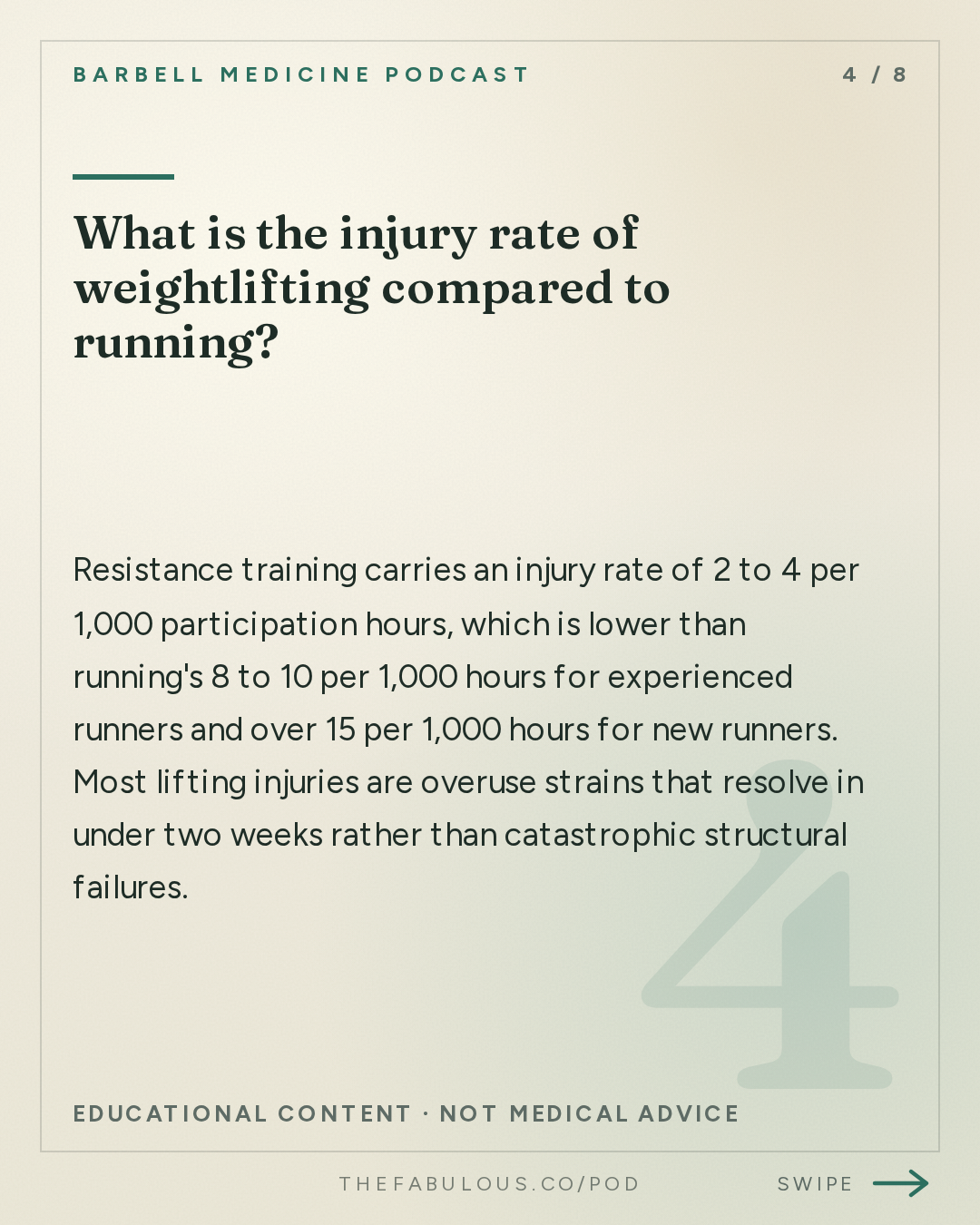
What is the injury rate of weightlifting compared to running?
Resistance training carries an injury rate of 2 to 4 per 1,000 participation hours, which is lower than running's 8 to 10 per 1,000 hours for experienced runners and over 15 per 1,000 hours for new runners (19:24). Most lifting injuries are overuse strains that resolve in under two weeks rather than catastrophic structural failures (20:10).
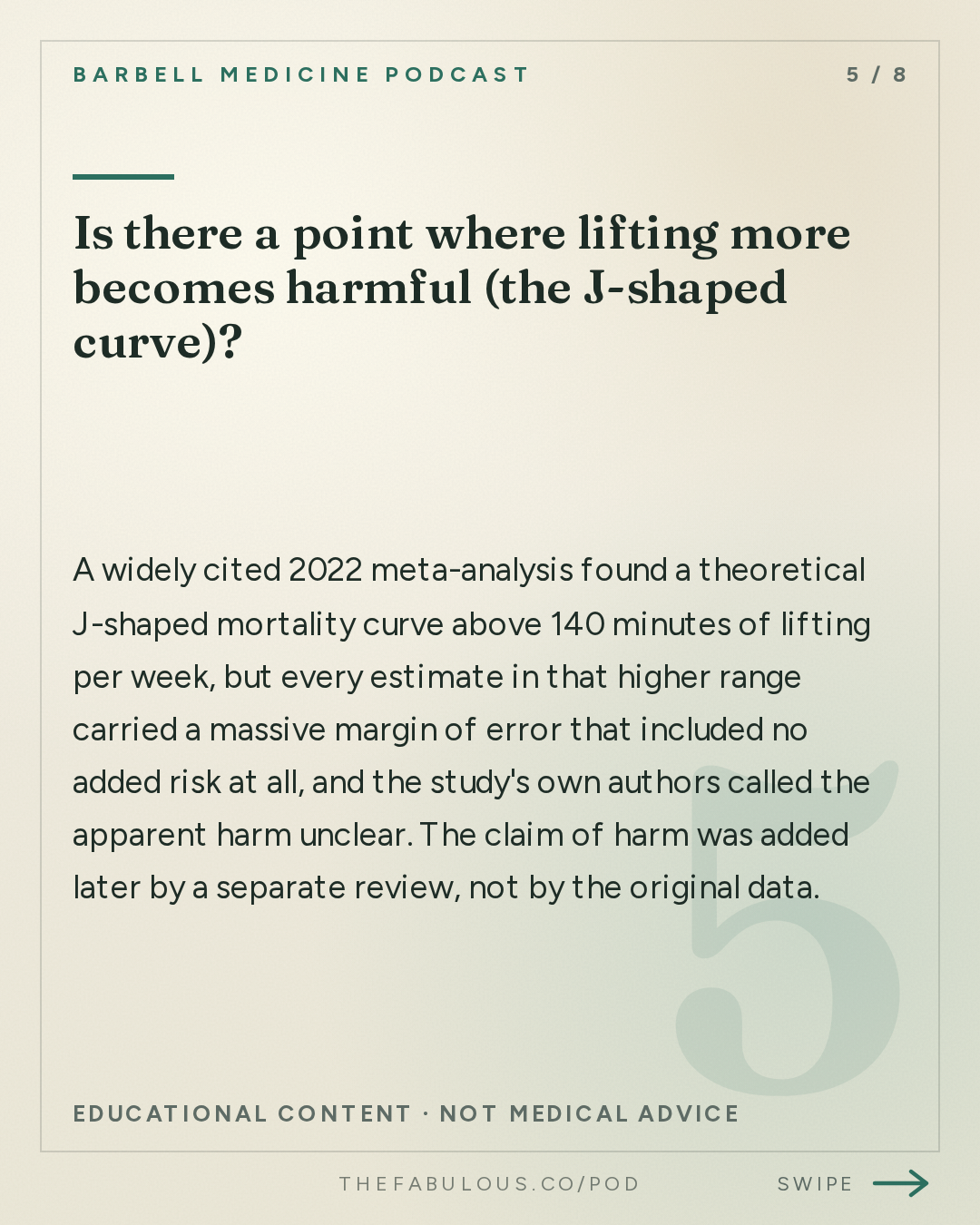
Is there a point where lifting more becomes harmful (the J-shaped curve)?
A widely cited 2022 meta-analysis found a theoretical J-shaped mortality curve above 140 minutes of lifting per week, but every estimate in that higher range carried a massive margin of error that included no added risk at all, and the study's own authors called the apparent harm unclear (24:19). The claim of harm was added later by a separate review, not by the original data.
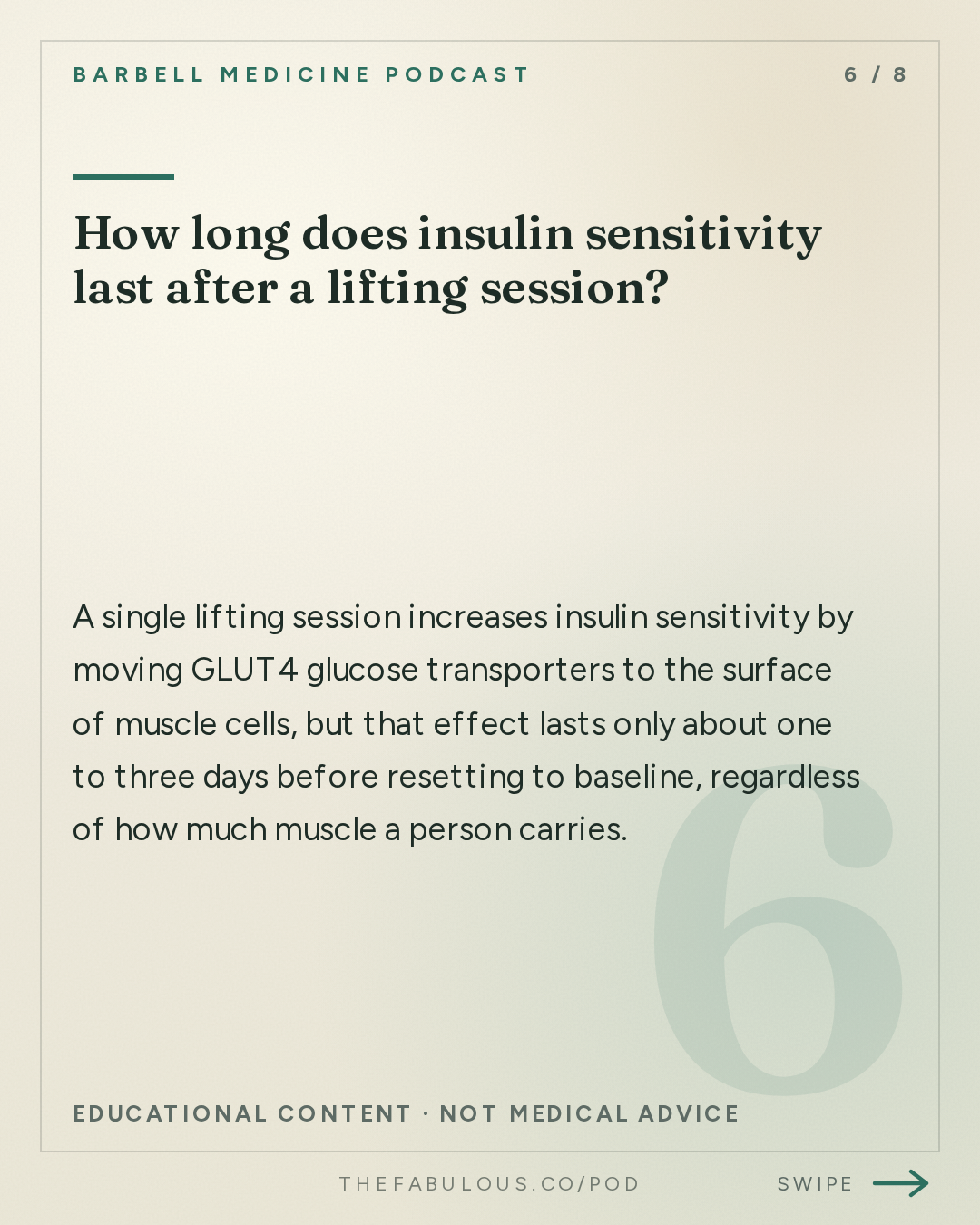
How long does insulin sensitivity last after a lifting session?
A single lifting session increases insulin sensitivity by moving GLUT4 glucose transporters to the surface of muscle cells, but that effect lasts only about one to three days before resetting to baseline, regardless of how much muscle a person carries (60:35).
What lifting protocol builds bone density?
Bone needs strain above roughly 1,000 to 3,000 microstrain, a measure of how much the bone deforms under load, to trigger new growth, a threshold generally cleared around 65% of a one-rep max (51:50). In the Lift More trial, post-menopausal women lifting heavy twice a week for eight months raised spine bone density by 2.9% (54:24).
The full read, in cards
Go deeper
- 1989 University of Florida leg extension study — Found three days of lifting beat two days in strength gains, yet guidelines later kept the lower number
- 2022 UK Active Lives survey analysis — Showed guideline adherence swinging from 5.6% to 28% depending on how strength training was defined
- 1975 echocardiogram study of 56 athletes — Originated the Morgenroth hypothesis that lifting thickens the heart wall, based on a tiny sample and crude ultrasound measurement
- 1991 and 1993 elite athlete echocardiogram studies — Found strength athletes' heart walls topped out at 12mm, within the normal range
- 2022 Japanese meta-analysis on lifting dose and mortality — Found a 15% mortality reduction from any lifting; its uncertain J-shaped tail was later misread as evidence of harm from more training
- Swedish military conscript study (1.1 million men) — Found mortality risk plateaued after the fourth strength decile, among men who were not very strong to begin with
- Lift More trial — Had post-menopausal women lift heavy twice weekly for 8 months, raising spine bone density by 2.9%
- Signal — Book by Jordan Feigenbaum and Austin Baraki on testosterone physiology, testing, and treatment
Mentioned
Jordan Feigenbaum · Austin Baraki · American College of Sports Medicine · M.L. Pollock · Cooper Institute · GLUT4 · Signal
More from this show and category
Why Lifting Heavy Was Called Dangerous
In 1985 a panel of obstetricians banned pregnant women from raising their heart rate past 140 beats per minute, a number invented by consensus, not data (00:01). The same pattern, rules built on vibes rather than evidence, shaped a century of bans on heavy lifting for women, children, and anyone squatting below parallel, until later studies quietly reversed nearly all of them.
Is Training Safe in Wildfire Smoke?
Exercise still protects health during wildfire smoke, and lifting is safer than cardio because it barely raises breathing rate. Training right at failure isn't required for muscle growth either, since easier sets and even indirect fractional sets still add measurable stimulus, so individual response matters more than hitting an exact rep-in-reserve number.
Do You Need a Calorie Surplus to Build Muscle?
No: men above roughly 20% body fat can build muscle in a modest calorie deficit by spending stored fat as fuel. Sports scientist Eric Helms says below about 12% body fat the reverse happens, so a small surplus helps; in between, calorie balance barely matters if training and protein are dialed in.

Is Obesity Really a Muscle Disease?
Obesity is not simply a muscle shortage: lean mass on a DEXA scan predicts no falls, fractures, or death in 18,800 older adults (21:44). Barbell Medicine host Dr. Jordan Feigenbaum argues the real damage comes from where fat lands, what molecular form it takes, and how fast it moves, drawing on GLUT4 transporter mechanics and GLP-1 trial data.
