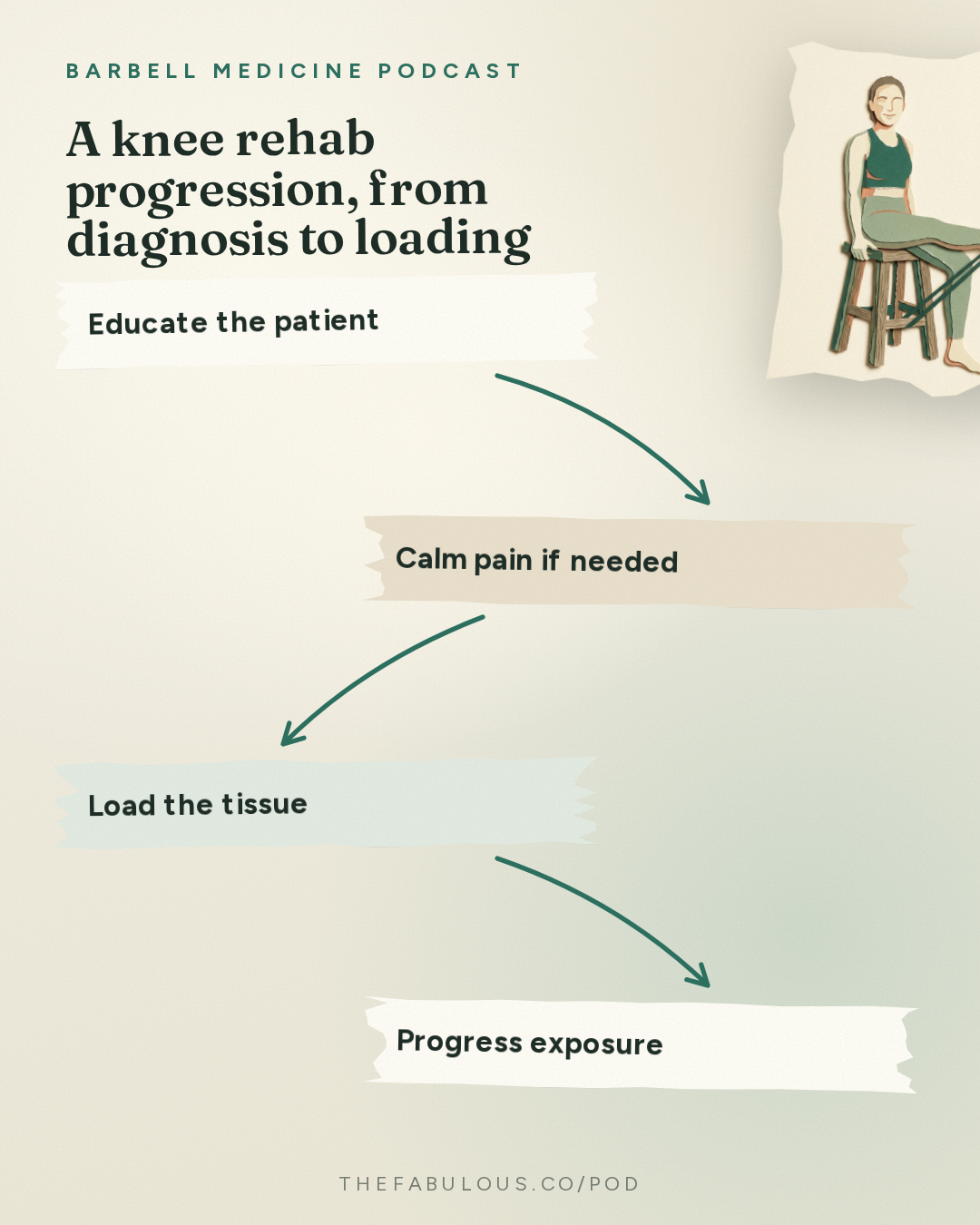
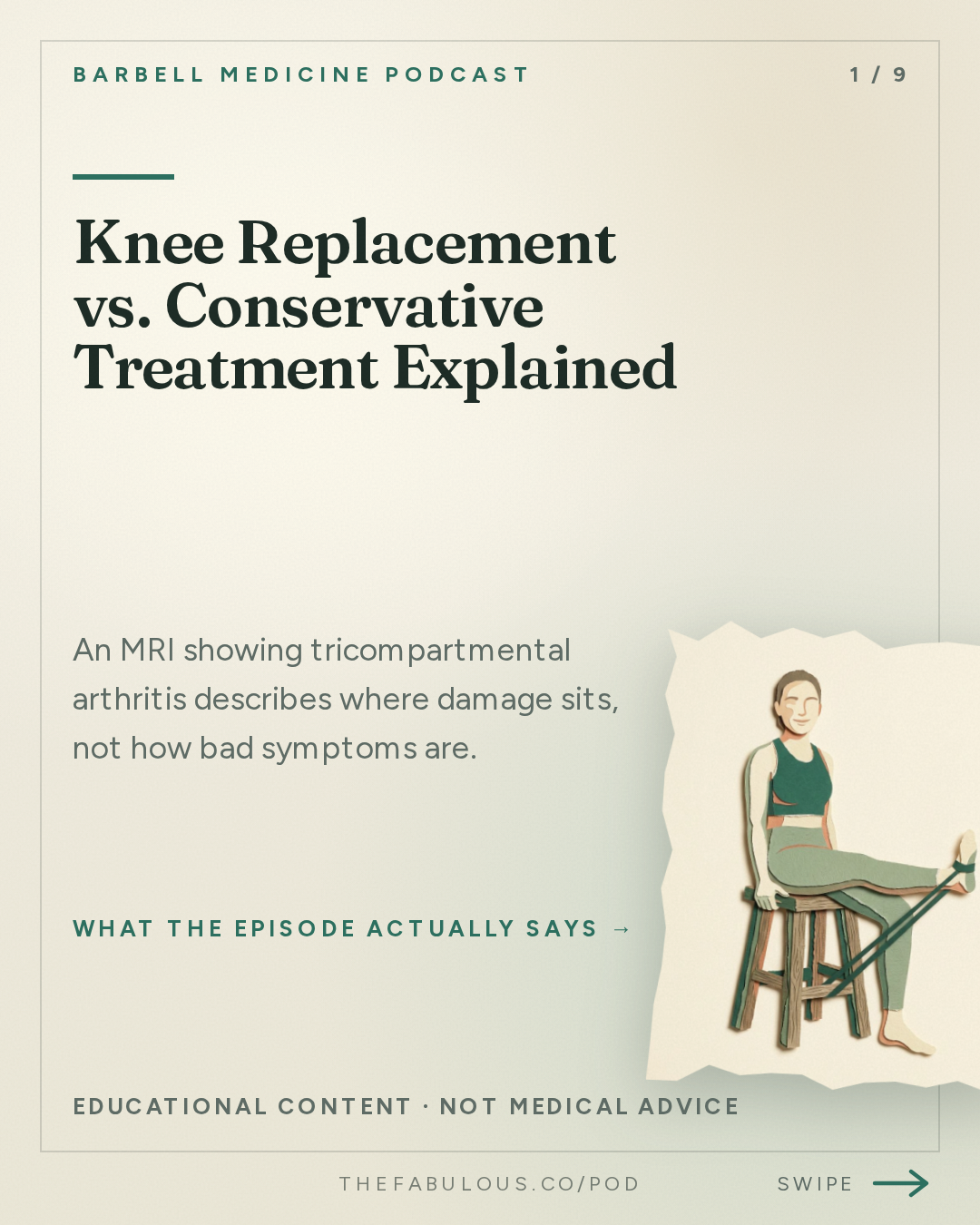
Knee Replacement vs. Conservative Treatment Explained
Your Knee Hurts. Do You Need Surgery? Knee Arthritis, Injections, and ACL Rehab
The brief
An MRI showing tricompartmental arthritis describes where damage sits, not how bad symptoms are. Barbell Medicine physicians Jordan Feigenbaum and Austin Baraki argue surgery should follow failed physical therapy, not imaging alone. Steroid shots buy short-term relief for rehab, not a cure, and open chain exercises like knee extensions are safe early in ACL recovery when properly dosed.
A patient reads a radiology report and finds the word "tricompartmental." It sounds like a verdict. In fact, as physicians Jordan Feigenbaum and Austin Baraki explain on their podcast, it is just geography. The knee has three compartments, the inner and outer halves of the joint and the space behind the kneecap, and "tricompartmental" simply means arthritis showed up in all three on imaging (01:20). It says nothing about pain, nothing about function, nothing about what to do next. That gap, between what a scan shows and what a person feels, is the entire subject of this episode.
The case that opens the show belongs to a 54-year-old subscriber whose MRI turned up tricompartmental arthritis, a small meniscus tear, and a Baker's cyst, a pocket of joint fluid that collects behind the knee (00:00). The patient's doctor had said that if quality of life became an issue, a knee replacement would be the next step. Baraki's first reaction is almost procedural: none of those findings, he points out, are symptoms. "None of those things are symptoms," he says (02:37), and then asks the obvious question nobody in the report seems to have asked: what actually led this person to get imaging done in the first place?
That question matters because the same MRI finding means different things in different contexts. A meniscus tear found incidentally in someone with no pain is just anatomy. The identical tear in someone with months of worsening, activity-limiting pain is a different story entirely. Baraki's rule of thumb is that the imaging has to line up with the clinical picture, what he calls the syndrome, not just sit there as a label (03:00). The patient's own phrase, that the arthritis "came out of nowhere," is the detail he zeroes in on. True arthritis does not behave that way. It builds. A knee that feels fine one day and becomes severely painful the next is more likely signaling something acute, like gout or its cousin pseudogout, a crystal-induced joint inflammation that can strike suddenly even in a joint with chronic, previously silent arthritic changes. Baraki mentions diagnosing knee pseudogout in a 75-year-old patient the week before, someone whose imaging showed longstanding arthritis but who had no baseline symptoms until the attack (04:33). The imaging was old news. The pain was new news. Treating them as the same story would have been a mistake.
The Bar for Surgery
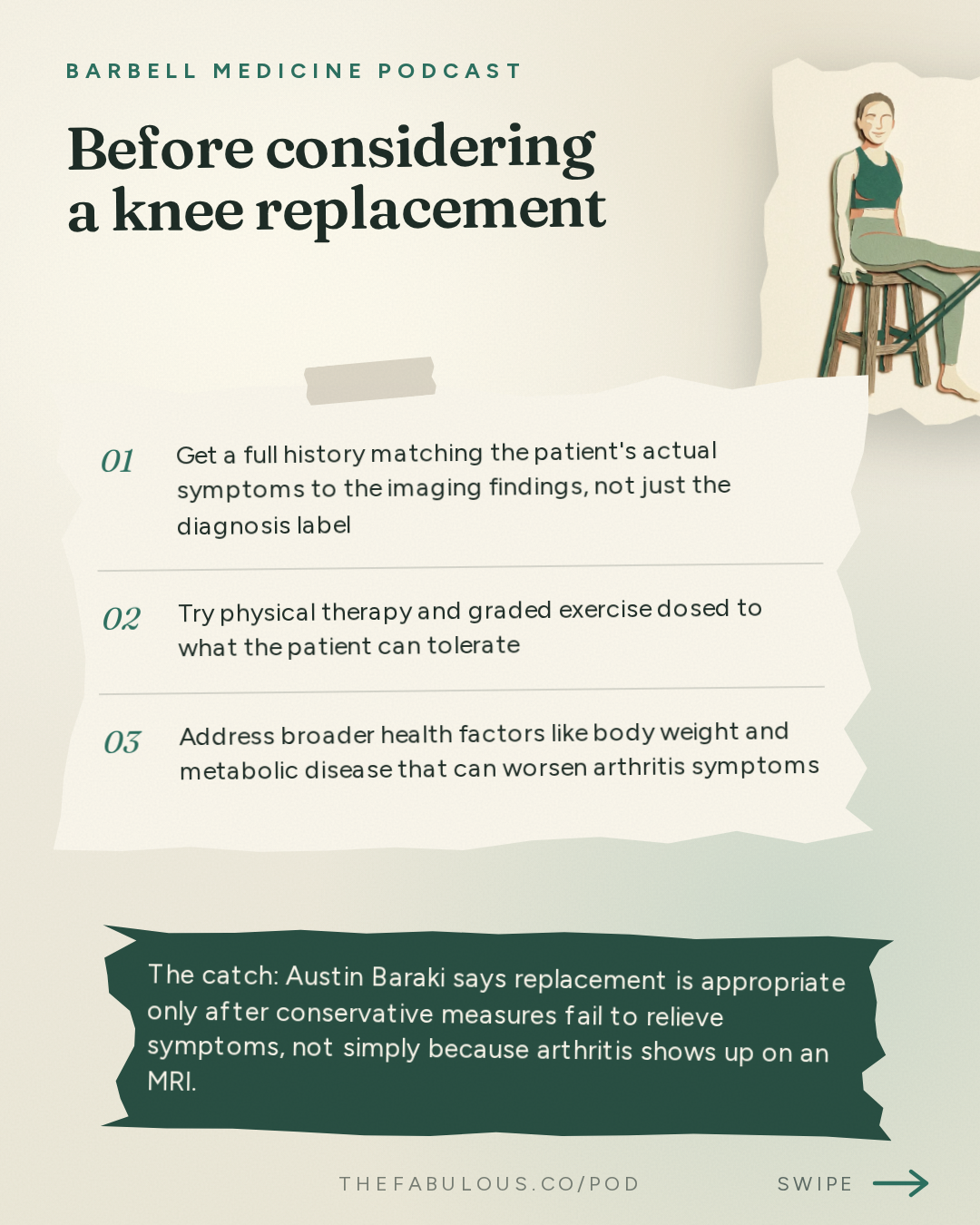
This distinction has consequences because it changes what counts as the next step. Baraki disagrees openly with the advice the subscriber received, that quality-of-life decline should trigger a knee replacement. He argues that surgery becomes reasonable only after conservative options, properly tried, have failed: physical therapy dosed to the right intensity, attention to general health factors like body weight and metabolic disease that can worsen arthritis symptoms, and a real course of graded exercise (05:13). Skip straight to surgery without that trial, and you don't know whether you needed it. For patients in their mid-50s without major complicating conditions like diabetes or kidney disease, Baraki notes that knee replacement outcomes are generally very good when surgery is actually warranted (05:44). The point isn't that replacement is wrong. It's that it is a last resort, not a first offer.
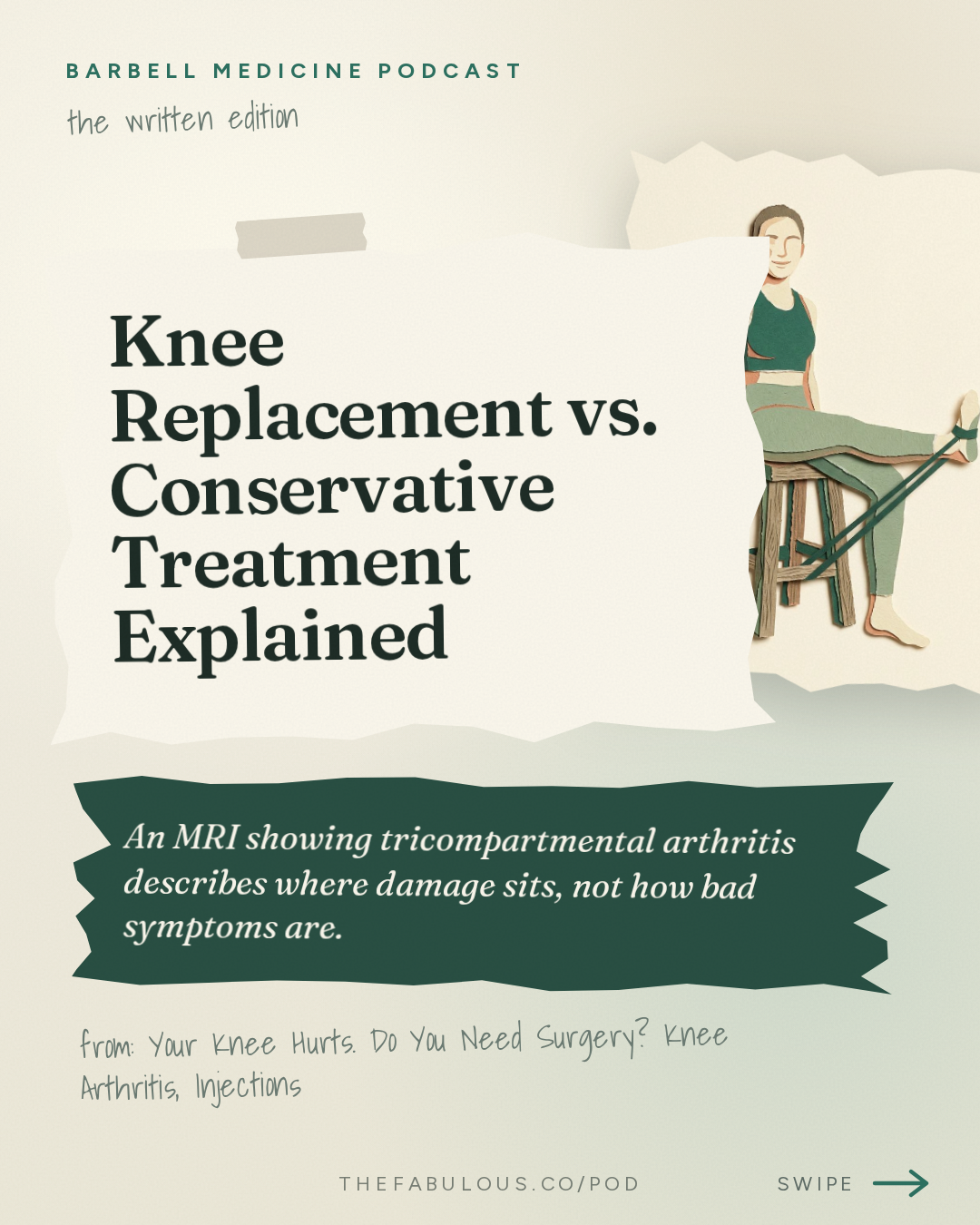
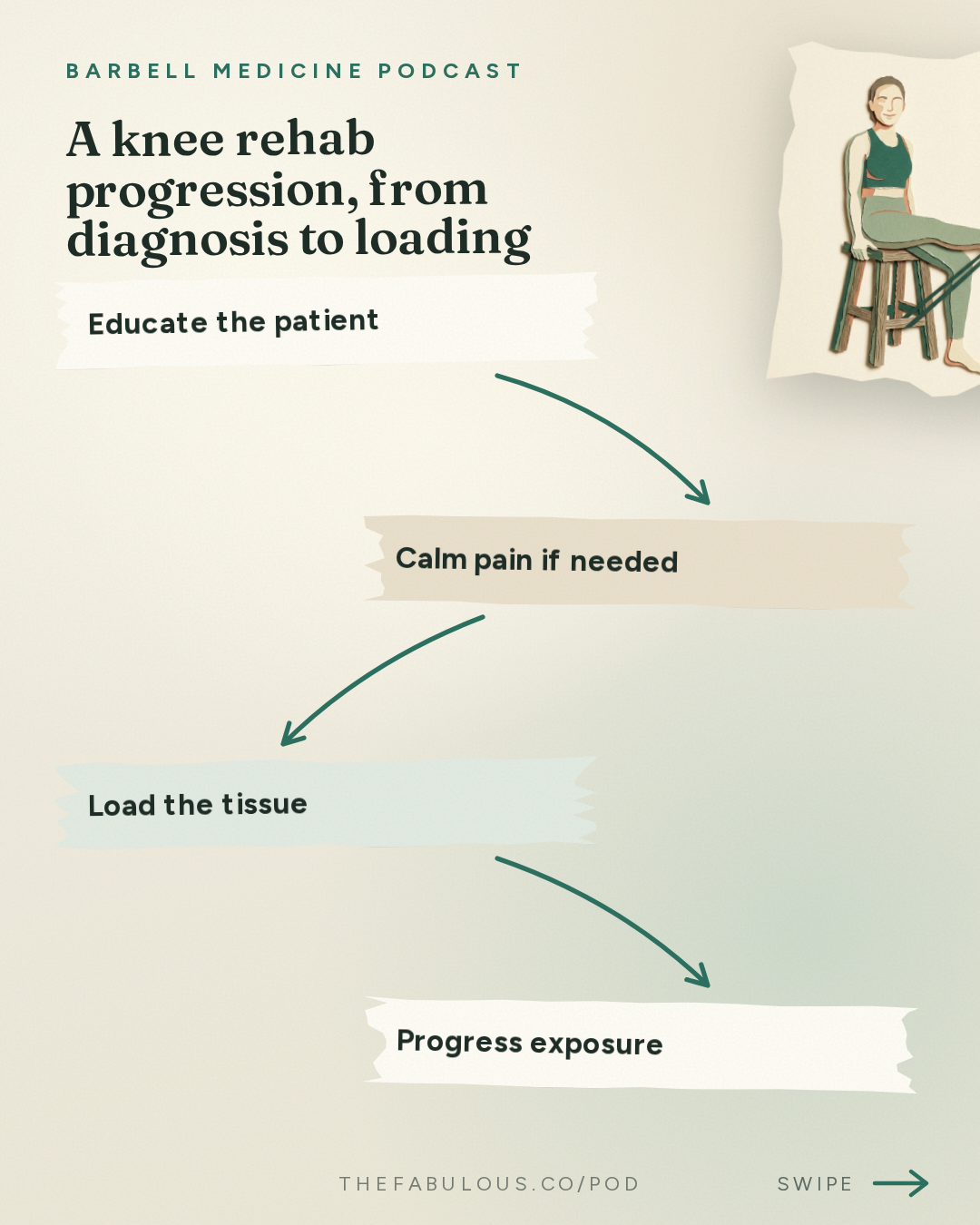
Feigenbaum adds a practical worry about the alternative the subscriber proposed in their question, which was to simply train upper body and core and leave the knee alone. He calls this a real risk, not just for performance but for the joint itself: detraining and reduced mobility can leave a person worse prepared for whatever comes next, surgical or not (08:26). Guidelines across the board start somewhere more basic than surgery or total avoidance: education about what is actually going on, something that doesn't appear to have happened in this case (09:16). From there, the task is finding a tolerable entry point, working with a rehab professional to figure out what loading the knee can handle right now, and progressing from there toward unrestricted training.
Where do injections fit into that progression? Baraki treats the category with the same skepticism he applies to supplements marketed on vague promise. Corticosteroid injections into the joint have real, if modest and short-term, value: they can calm pain enough that a patient can actually participate in physical therapy (10:17). The trouble starts with repetition. Getting a new steroid shot every three months for years, Baraki says, is not advisable, because frequent, long-term use is thought to carry real downsides for joint cartilage (11:06).
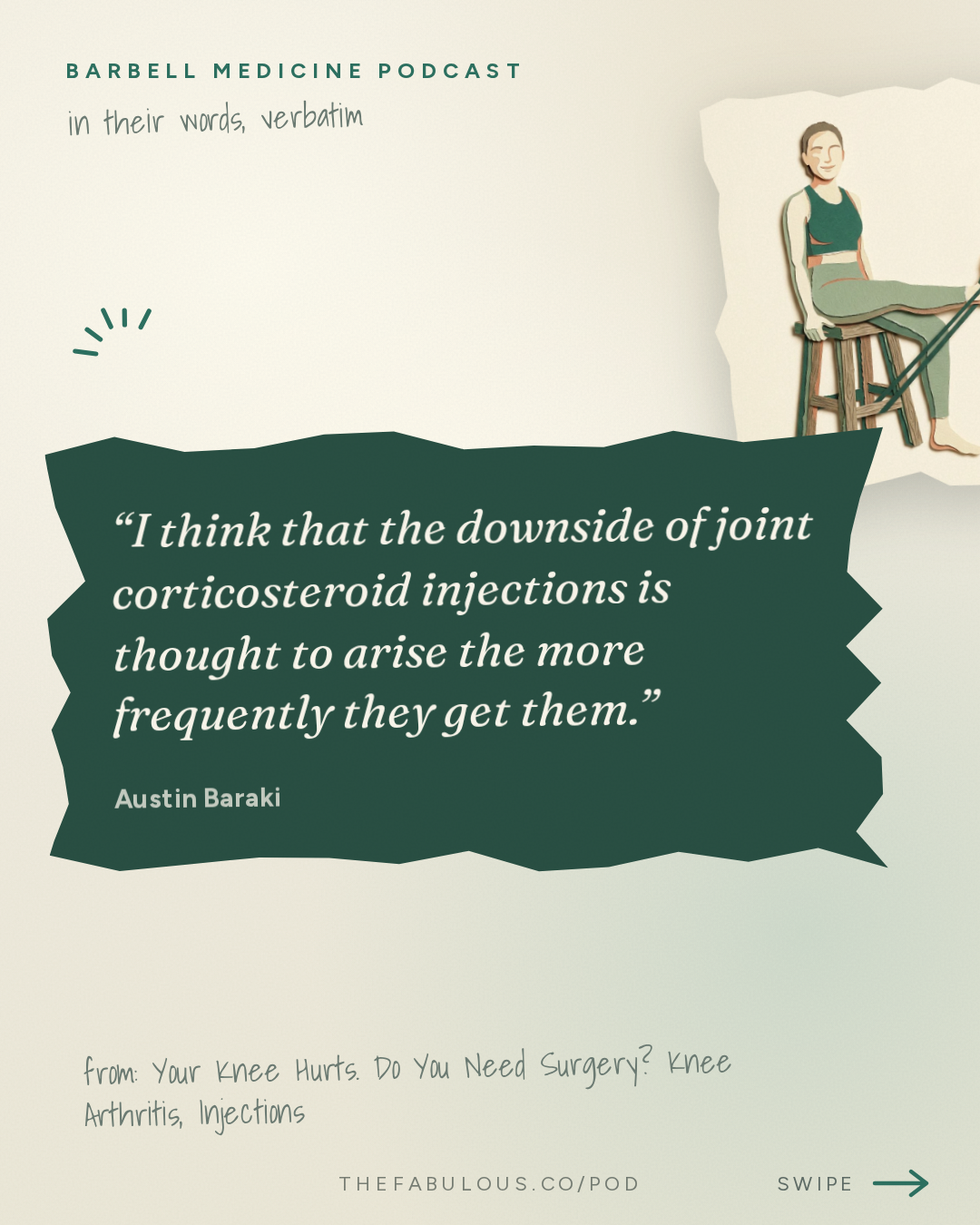
"I think that the downside of joint corticosteroid injections is thought to arise the more frequently they get them." — Austin Baraki [11:06]
Other injections fare worse under scrutiny. Hyaluronic acid and platelet-rich plasma, or PRP, a treatment that uses concentrated platelets from a patient's own blood, don't convince him at all. He's particularly unmoved by the argument, common among practitioners who brand themselves in "regenerative medicine," that PRP's inconsistent results are excusable because there are so many different formulations and preparation methods (11:56). His standard is simple: a reliable, double-blinded trial, and he's on board. Until then, he isn't (12:24). The broader lesson he draws is not that every injection is useless but that the whole point of any intervention, whether an anti-inflammatory, a shot, or surgery, is to get a patient back toward unrestricted activity, not to put them on a recurring maintenance schedule indefinitely.
What Actually Moves the Needle
The back half of the episode turns from diagnosis to training mechanics, and the tone shifts from skepticism to something closer to permission. A listener describes a rarer case: congenital structural defects in the knee, tendon tissue surgically transferred from the thigh to stabilize the joint, and a doctor's advice to avoid resistance training entirely and run only in straight lines. Feigenbaum's answer leans on a general principle: resistance training is rarely contraindicated for musculoskeletal conditions (17:26). A well-designed program applies stress to drive adaptation, and if a graft has had time to heal, normal daily activity is already exposing it to stress. Structured training is just a more controlled version of the same thing.
"Resistance training is merely a scaling of those stresses in various constrained ways." — Jordan Feigenbaum [17:44]
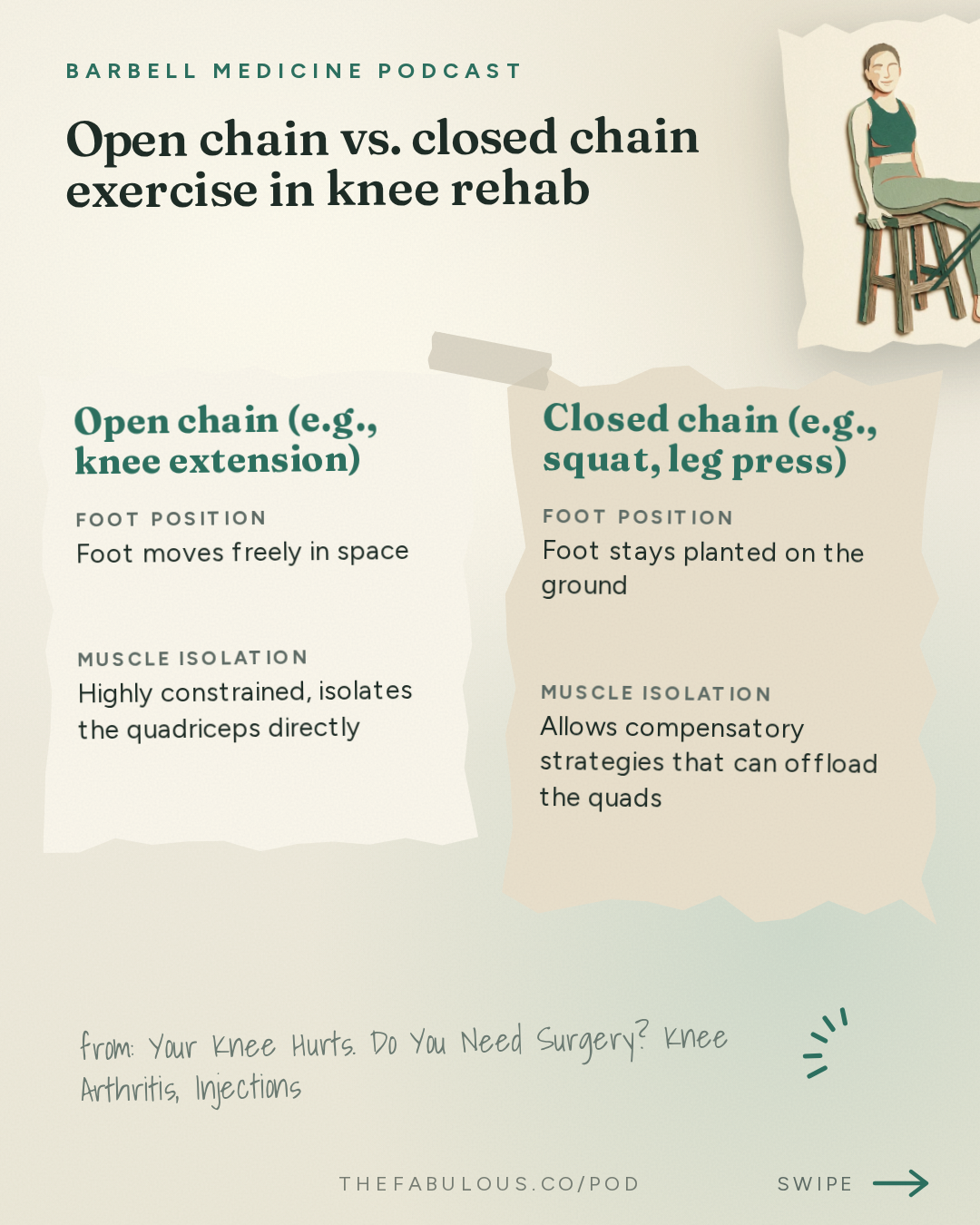
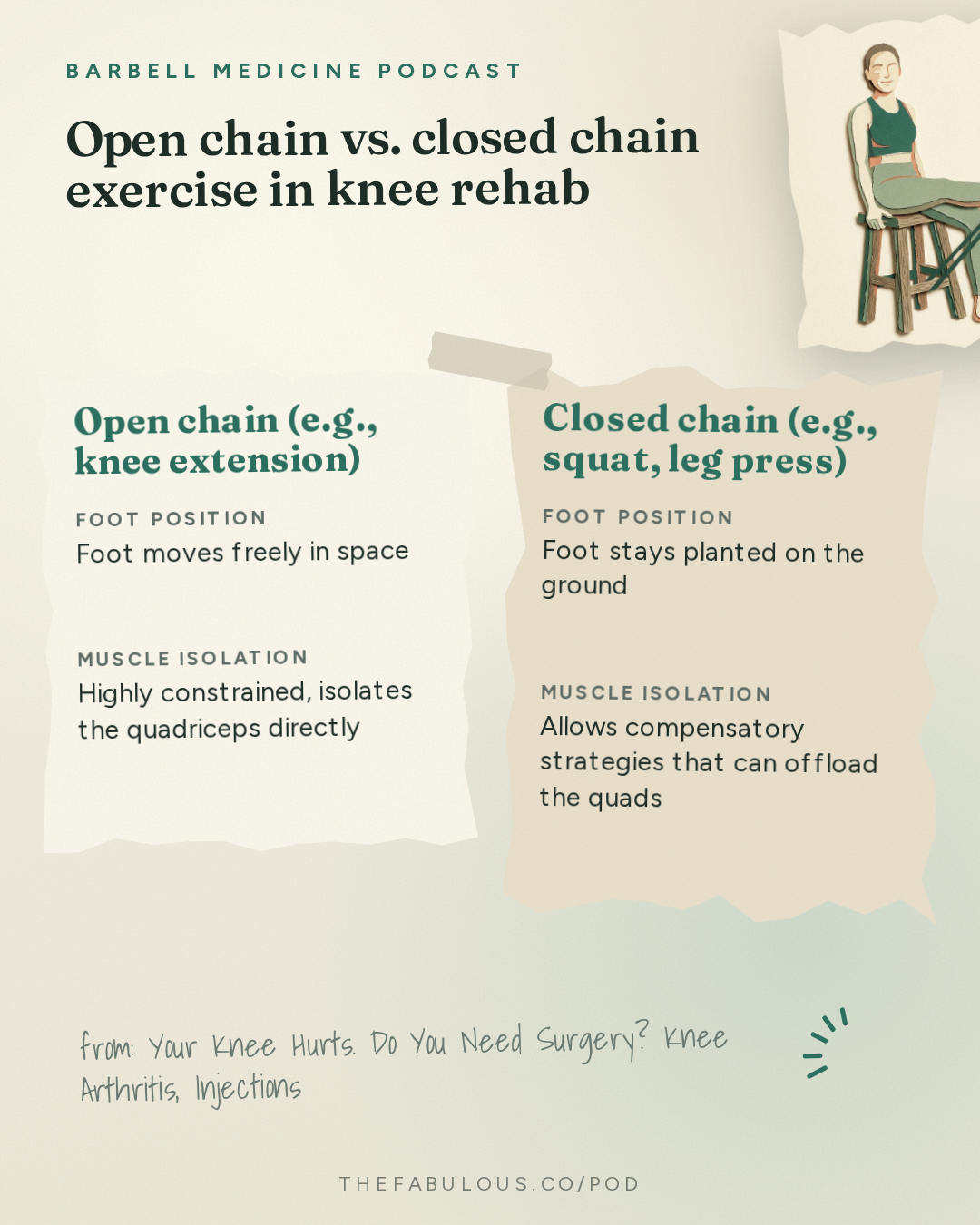
For someone who feels resistance in deep knee flexion, the fix isn't avoidance but exposure, using something like a pin squat, a squat performed to a fixed depth set by a rack pin, to gradually extend range of motion over time (18:04). The same logic applies to the long-running argument about open versus closed chain exercise after knee surgery. Open chain exercises, like a knee extension, let the foot move freely; closed chain exercises, like a squat or leg press, keep the foot planted. Surgeons used to steer patients away from open chain work early in recovery for fear of overstressing a graft, but Feigenbaum says the evidence no longer supports that caution; what matters is the magnitude of the stress, not simply whether the chain is open or closed (19:49). Knee extensions are, in fact, one of the most constrained ways to isolate and strengthen the quadriceps, which matters because quad strength is a primary outcome measure in ACL rehab (20:12). Closed chain exercises carry their own hidden cost: athletes can find compensatory strategies that let other muscles take over and offload the very tissue rehab is trying to target, a pattern documented in a paper published earlier this year by researcher Graham (20:12).
"We should absolutely incorporate open chain exercises in rehab when and how hard we are dosing them tends to matter more." — Jordan Feigenbaum [20:33]
None of this amounts to a reckless embrace of load. Feigenbaum is careful to note that early rehab doesn't need to run at maximum effort, rated on the 0-to-10 perceived exertion scale known as RPE, to be useful; the goal is ramping up exposure over time while respecting healing timelines (20:33). What unites the whole episode, from the frightened subscriber with the scary-sounding MRI report to the patient with a tendon graft told to avoid turning corners while running, is a refusal to let a label stand in for a conversation. A diagnosis names where a problem lives. It doesn't decide, by itself, what a person is allowed to do about it.
Ask this episode anything
Pod's AI answers from the episode itself, with the minute mark so you can hear it yourself.
Or start with one of these
Ask this episode
Pod's AI listens to the whole episode to answer, and points you to the minute it comes from.
The rest of this answer, and any question after it
Answers come from the episode itself, never from a summary of it.
ContinueKey takeaways
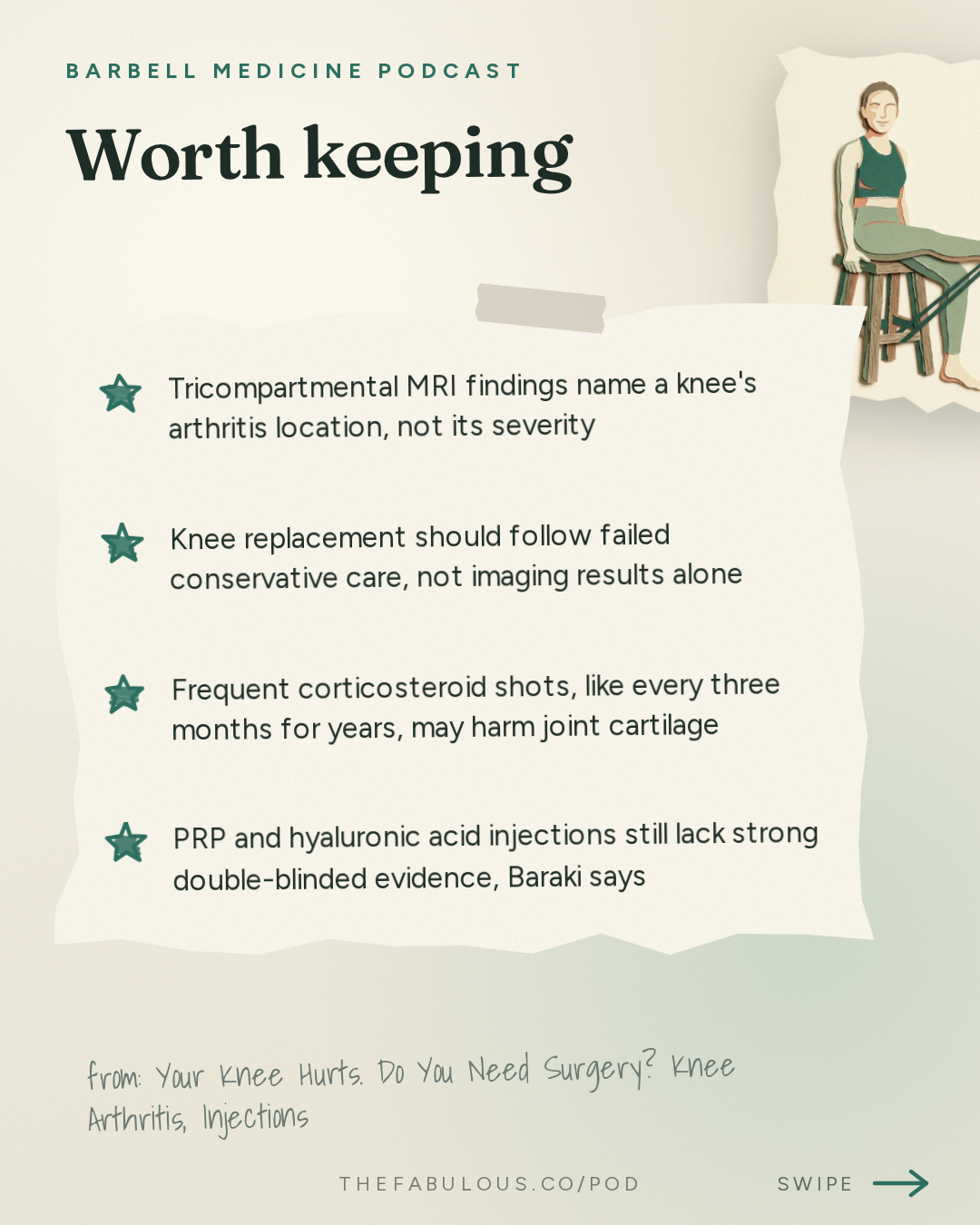
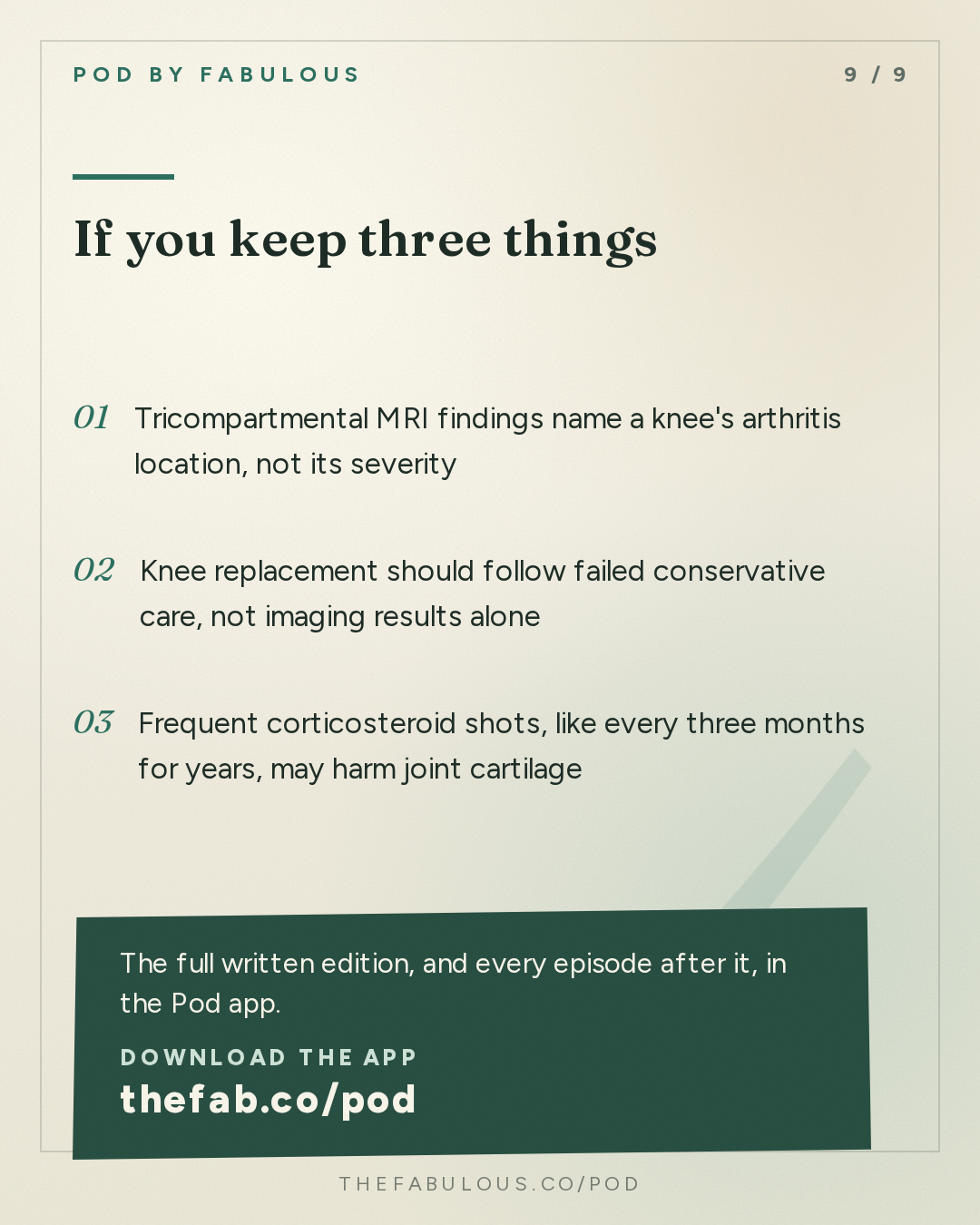
- Tricompartmental MRI findings name a knee's arthritis location, not its severity
- Knee replacement should follow failed conservative care, not imaging results alone
- Frequent corticosteroid shots, like every three months for years, may harm joint cartilage
- PRP and hyaluronic acid injections still lack strong double-blinded evidence, Baraki says
- Open chain exercises like knee extensions are safe early in ACL rehab when properly dosed
The episode in cards

By the numbers
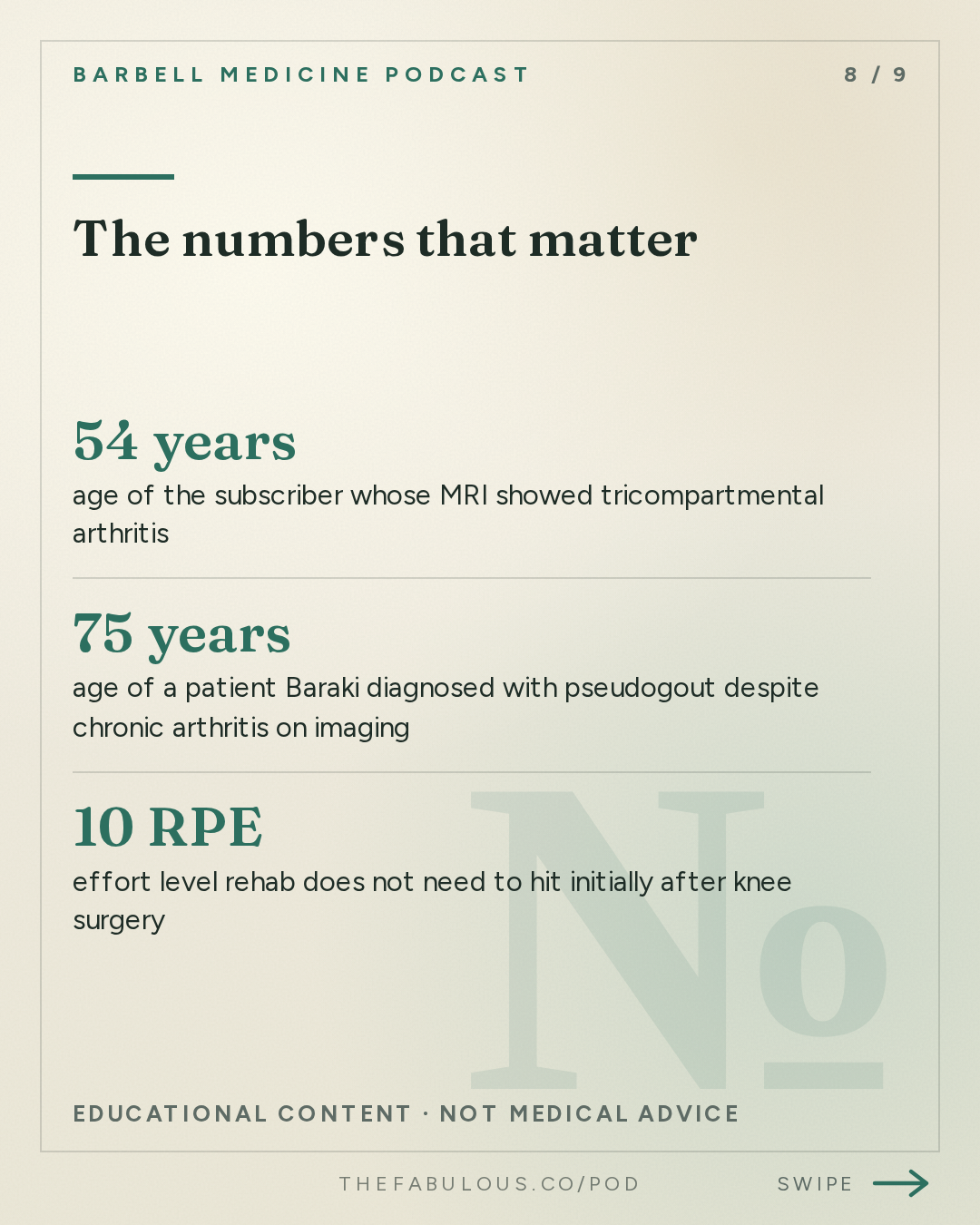
- 54 years age of the subscriber whose MRI showed tricompartmental arthritis
- 75 years age of a patient Baraki diagnosed with pseudogout despite chronic arthritis on imaging
- 10 RPE effort level rehab does not need to hit initially after knee surgery
In their words
“None of those things are symptoms.”
“I think that the downside of joint corticosteroid injections is thought to arise the more frequently they get them.”
“Resistance training is merely a scaling of those stresses in various constrained ways.”
“We should absolutely incorporate open chain exercises in rehab when and how hard we are dosing them tends to matter more.”
Protocols
-
Exhaust conservative care before considering knee replacement
Austin Baraki says a knee replacement should be reserved for symptoms that remain severe and limiting despite properly dosed physical therapy, graded exercise, and attention to broader health factors like body weight and metabolic disease.
Before any surgical referral
-
Limit repeat corticosteroid injections
Baraki says a single corticosteroid injection can calm knee pain enough to let a patient engage effectively in physical therapy, but he advises against getting a new injection every three months for years, since frequent long-term use is thought to harm joint cartilage.
Occasional use to enable rehab, not a recurring quarterly schedule
-
Use pin squats to rebuild knee flexion range
Feigenbaum recommends using a pin squat, a squat performed to a depth set by a rack pin, to gradually chip away at deeper ranges of knee flexion over time rather than avoiding depth altogether.
Progressive, session by session
-
Incorporate open chain exercises early in ACL rehab
Feigenbaum says open chain exercises such as knee extensions are safe to use early after ACL surgery because they isolate and strengthen the quadriceps in a highly constrained way, and he adds that how often and how hard the exercise is dosed matters more than whether it is open or closed chain.
Early and throughout rehab, dosed to tolerance rather than maximum effort
Questions this episode answers
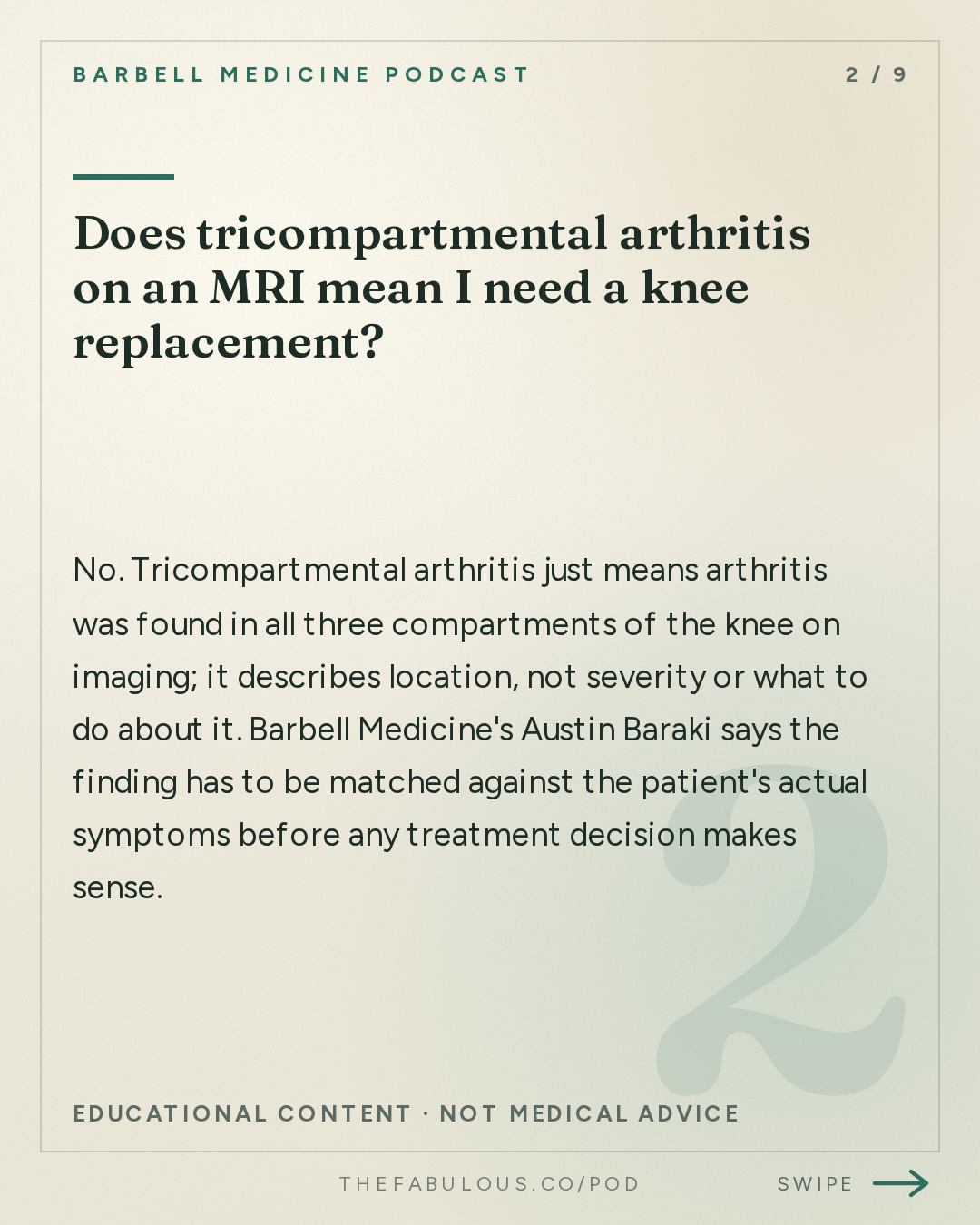
Does tricompartmental arthritis on an MRI mean I need a knee replacement?
No. Tricompartmental arthritis just means arthritis was found in all three compartments of the knee on imaging; it describes location, not severity or what to do about it (01:20). Barbell Medicine's Austin Baraki says the finding has to be matched against the patient's actual symptoms before any treatment decision makes sense (03:00).
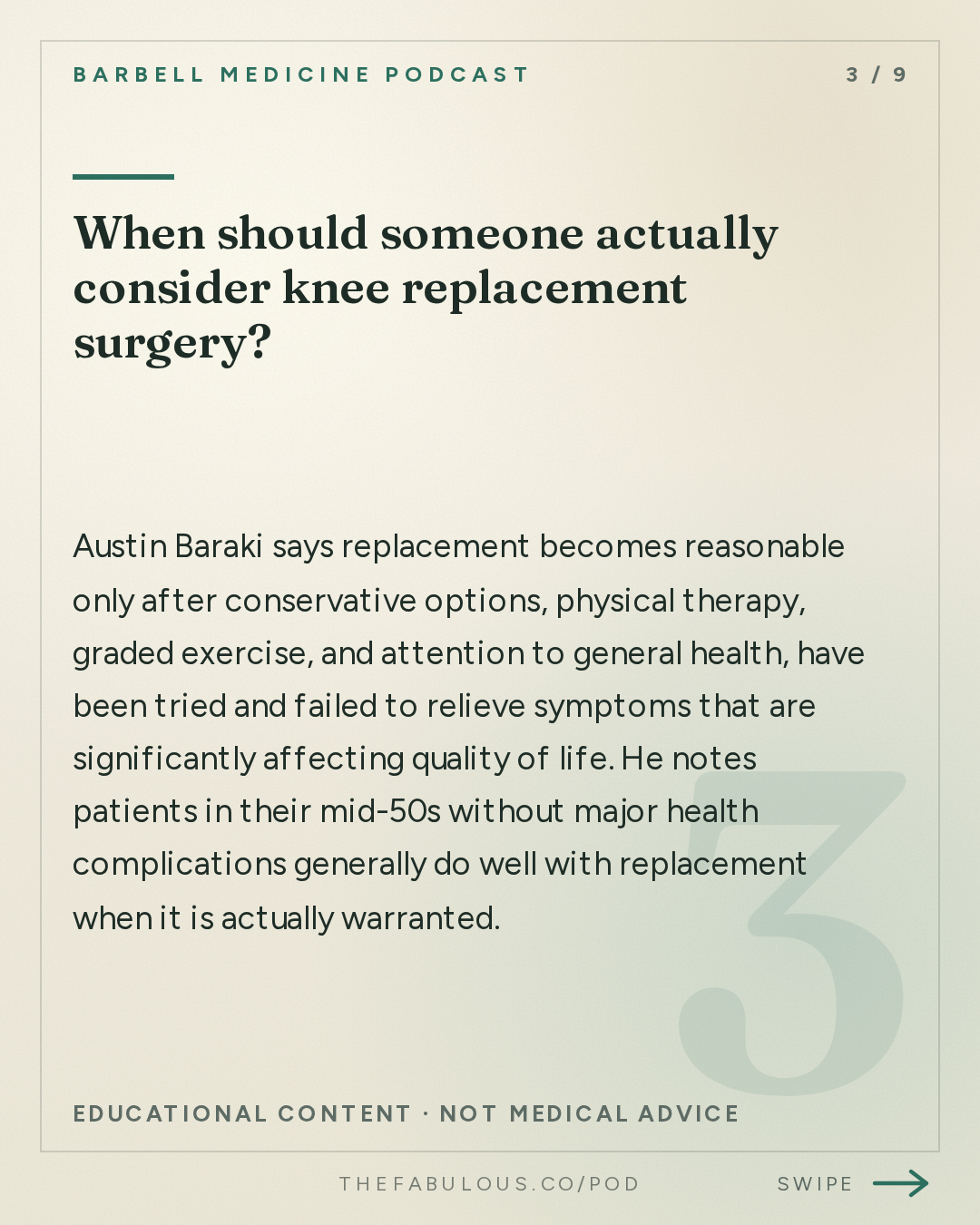
When should someone actually consider knee replacement surgery?
Austin Baraki says replacement becomes reasonable only after conservative options, physical therapy, graded exercise, and attention to general health, have been tried and failed to relieve symptoms that are significantly affecting quality of life (05:13). He notes patients in their mid-50s without major health complications generally do well with replacement when it is actually warranted (05:44).
Do corticosteroid injections help knee arthritis?
They can provide short-term pain relief that helps a patient engage more effectively in physical therapy (10:17). Austin Baraki warns that getting injections repeatedly, such as every three months for years, is not advisable because frequent long-term use is thought to carry risks to joint cartilage (11:06).
Is there good evidence for PRP or hyaluronic acid injections for knee arthritis?
Austin Baraki says no, the evidence for both is weak, and practitioners who defend PRP's inconsistent results by pointing to its many different formulations are not addressing the core problem of poor-quality evidence (11:56). He says he would support PRP if a reliable, double-blinded trial proved it works (12:24).
Are open chain exercises like knee extensions safe after ACL surgery?
Yes. Jordan Feigenbaum says research no longer supports avoiding open chain exercises like knee extensions early in ACL rehab, since they are one of the most constrained ways to isolate and strengthen the quadriceps, a key outcome measure after reconstruction (19:49, 20:12). He says how much and how hard the exercise is dosed matters more than whether it is open or closed chain (20:33).
Can someone with a tendon graft in their knee still do resistance training?
Jordan Feigenbaum says resistance training is rarely contraindicated for musculoskeletal conditions, including a healed tendon graft, since a well-designed program is just a controlled version of stresses the knee already experiences in daily life (17:26, 17:44). He recommends building range of motion gradually with tools like a pin squat rather than avoiding movement entirely (18:04).
The full read, in cards
Go deeper
- Graham et al. paper on closed chain compensatory strategies — found that closed chain exercise lets athletes develop compensatory strategies that offload the target tissue being rehabbed
Mentioned
Jordan Feigenbaum · Austin Baraki · Baker's cyst · Graham · PRP · Barbell Medicine
More from this show and category
Stuart McGill's Deadlift Fracture Claim, Debunked
Barbell Medicine hosts debunk Stuart McGill's claim that deadlift PRs fracture spinal vertebrae, pointing to powerlifting's low injury rate (03:36). They also dismiss spinal engine theory and argue eccentric-overload machines like the Voltra do not add muscle mass beyond matched training load (19:52).
Does Creatine Actually Work? What the Science Shows
Creatine modestly boosts strength and muscle size, with effect sizes far smaller than lifting itself, and does not damage healthy kidneys. Claims about cognition, depression, Parkinson's, Huntington's, menopause, and bone density do not hold up in the best-run trials (14:24, 26:47, 48:26, 51:20).

Is Collagen Protein a Scam? What the Evidence Shows
Collagen counts as protein but scores zero on the standard protein quality test because it lacks the essential amino acid tryptophan entirely. Claims that it beats whey for muscle, tendons, joints, skin, or nails rely on flawed trials, mismatched placebos, and a statistical mix-up between standard error and standard deviation.

Is Huberman's Protocols Book Scientifically Accurate?
Barbell Medicine doctors Jordan Feigenbaum and Austin Baraki fact-check Andrew Huberman's book Protocols and find its own citations often contradict its advice. The 540-page book claims a once-weekly, low-volume lifting plan, cold plunges, cortisol hacks and nicotine pouches all work every time, but the hosts count zero protocols that hold up and at least eight financial conflicts of interest.
