
The Overwhelm Recovery ProtocolWellness & Routines · ~5 min
About this template · Updated November 2026
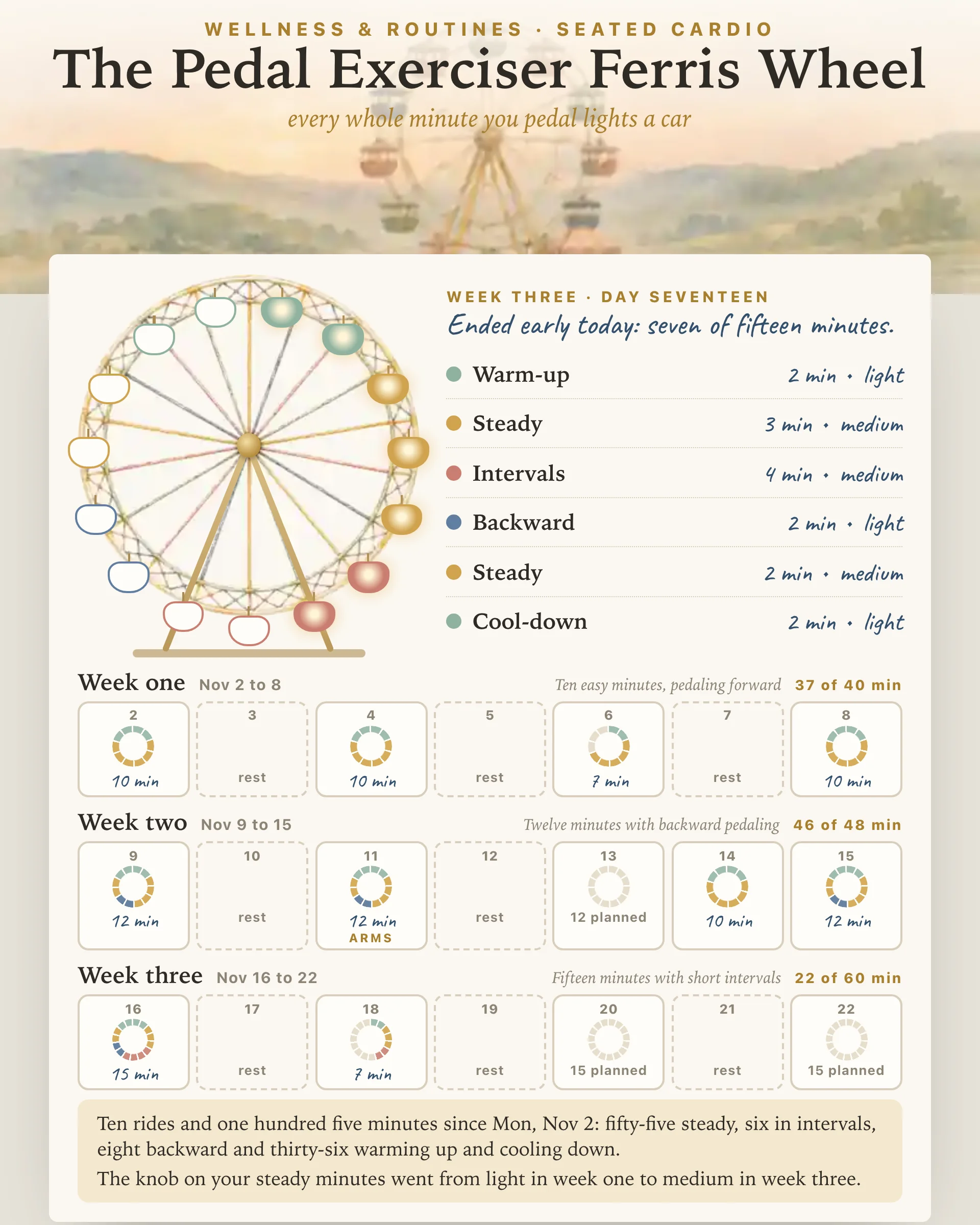
A pedal exerciser is about the simplest piece of cardio equipment there is: two pedals on a small frame that sits on the floor in front of a chair, with a knob that makes each turn lighter or harder. Because you stay seated, it suits days when standing for long is hard and knees that dislike impact. What it lacks is structure. Most people pedal at one speed until they get bored, and a week later the unit lives under the couch.
This page gives each ride a shape and makes it something you can watch. Your ride is a small Ferris wheel with one car for every minute. Two easy minutes warm you up, the middle holds the blocks you choose, and two slow minutes close it. As the timer runs, the wheel turns once over the whole ride and each car lights when its minute is pedaled.
Before your first ride, check with a doctor or physical therapist if you have had a fall or dizzy spells, a knee or hip replacement, a heart or blood pressure condition, or pain in your knees, hips or back. Pedal from a sturdy chair without wheels set against a wall, with the unit on a non-slip mat so it cannot creep away. Stop if anything hurts, and end the ride if you feel chest pain, faintness or breathlessness that seems wrong.
Between the warm-up and the cool-down you can stack up to six blocks of three kinds:
Each block has its own length, one to ten minutes, and its own knob setting: light, medium or firm. A ride runs up to thirty minutes. Every day starts from the ride the plan suggests, and anything you change holds for that day only, so the plan can keep growing under you.
To pedal with your arms, set the unit on a sturdy table, sit facing it, and turn the pedals with both hands. Arms tire sooner than legs, so lighten the knob.
The clock reads real time from the moment you tap start, less any pause, so a phone that locks keeps honest time and a pause never counts. The cue under the clock changes with every block and every half of an interval.
Only finished work goes on the log. Stop early and the ride keeps the whole minutes you pedaled, so stopping at seven minutes and forty seconds keeps seven. An interval counts once its easy half is over; one you stop partway through, in either half, does not. Under a minute saves nothing at all.
Week one is ten easy minutes on four days, pedaling forward with the knob light. Week two grows to twelve minutes and brings in two minutes of backward pedaling. Week three reaches fifteen minutes with four short intervals, and in week four two rides stretch to twenty minutes with six intervals and three backward minutes. Rest days sit between the rides, each with an easy ten on offer.
Each day on the board is a small ring: the minutes you pedaled fill it in the color of their kind, and the minutes still planned stay pale. Below the weeks, a short reading adds up your minutes by kind, sets this week against its plan, and follows the knob on your steady minutes.
The World Health Organization's 2020 guidelines ask adults for 150 to 300 minutes of moderate activity a week, recommend muscle-strengthening work for every age group, and add that some activity is better than none and that cutting down on sitting helps. Pedaling from a chair can carry part of the aerobic share and break up long spells of sitting.
Evidence on pedal exercisers themselves is thin and mostly small. In a four-week workplace study, eighteen employees in desk-bound jobs who were given a pedal machine used it on about twelve of their twenty working days, for around twenty-three minutes each time, and found it workable at a desk. That shows people will use one; it does not show health changes.
For very old adults, a pedal exerciser may not be enough on its own. A randomized trial with people older than eighty compared three months of chair-based pedaling, elastic band work and gentle joint movements. Only the band group gained strength and balance. So treat these rides as cardio and a break from sitting, and pair them with strength and balance work rather than expecting the pedals to do everything.
If you have a full stationary bike, The Stationary Bike Console lays out longer rides with hills and levels. The Chair Cardio Mixtape keeps your heart rate up with seated marches and punches when you would rather move your whole body, and The Chair Circuit adds the seated strength work the research above says is worth having.
Begin with ten easy minutes: two to warm up with the knob light, six at a pace you could chat through, and two to slow down. Ride that four days in the first week, add a few minutes of backward pedaling in week two, and try short intervals, half a minute quick and half a minute easy, in week three.
Ten to twenty minutes on most days is a sensible place for a beginner to land, with rest days in between. The World Health Organization suggests 150 to 300 minutes of moderate activity a week for adults, and pedaling can supply part of that next to walking and some strength work.
Turning the pedals in reverse changes the pattern your legs work in and breaks up a long steady stretch. It is optional. If a knee complains when you pedal backward, keep turning forward gently for those minutes instead.
Yes. Set the unit on a sturdy table, sit facing it in a chair without wheels, and turn the pedals with both hands. Arms tire sooner than legs, so lighten the knob and expect shorter rides at first.
Talk to a doctor or physical therapist first if you have had a fall or dizzy spells, a knee or hip replacement, a heart or blood pressure condition, or ongoing pain in your knees, hips or back. Stop if anything hurts, and end the ride for chest pain, faintness or breathlessness that feels wrong.
By the team behind Fabulous, the science-based self-care app used by over 30 million people.


